
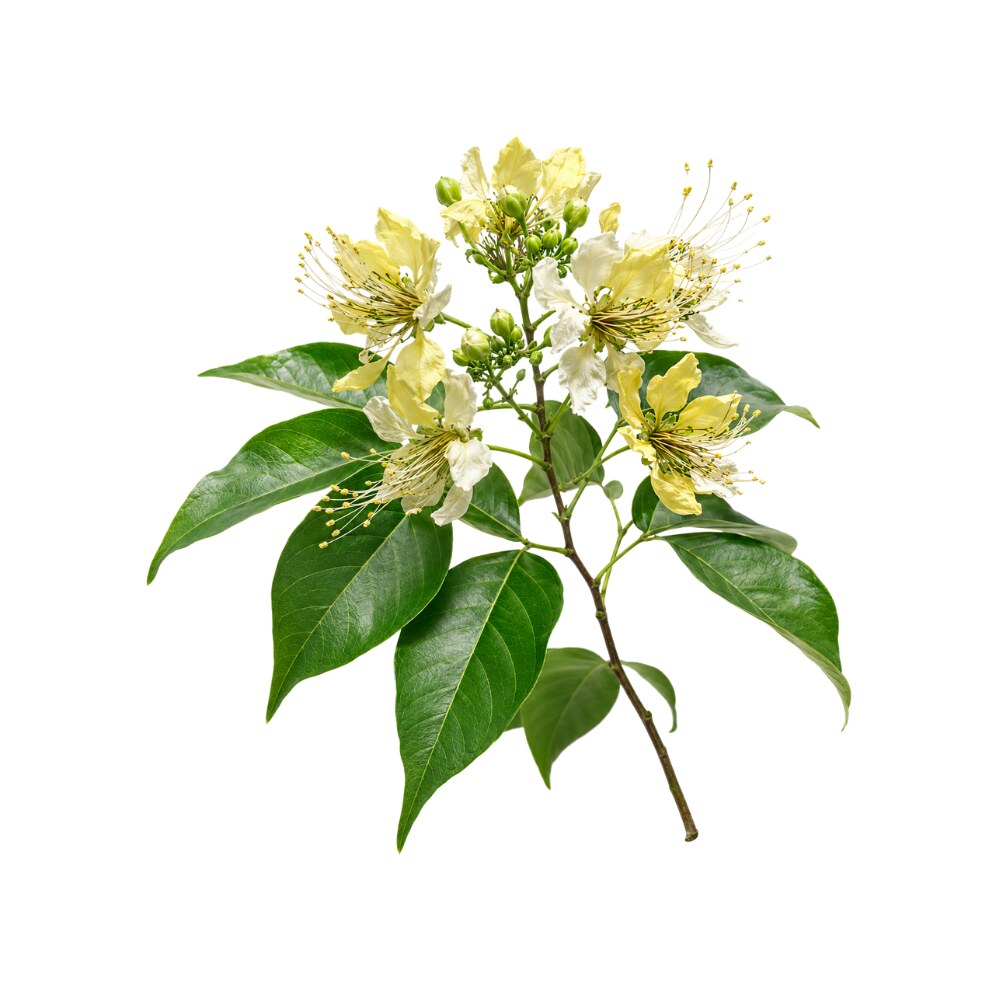
Materia Medica
Crataeva
Crataeva nurvala
Crataeva, or varuna, is a small tree of India and Southeast Asia whose stem bark is a classical Ayurvedic remedy for kidney and bladder stones and other urinary complaints. The bark's best-known constituent is the triterpene lupeol.
What Is Crataeva?
Crataeva is a small tree of India and Southeast Asia whose stem bark is one of the classical urinary remedies of Ayurveda. In Ayurveda it is varuna, and in English it is sometimes called the three-leaved caper. The bark is taken above all for kidney and bladder stones.
The tree grows in open forests, often beside streams and lakes, from India and Sri Lanka to Indonesia and southern China 29Reference 29Crateva magna (Loureiro) CandolleView study →. In India it is regarded as a sacred tree 16Reference 16In vitroCrataeva magna: antioxidant activity and inhibition of key enzymes relevant to hyperglycemia — in vitroView study →.
The bark’s best-known constituent is the triterpene lupeol. Research has focused on stone formation in rats, and two human trials have tested products that combine the bark with other herbs 6,
The tree’s accepted botanical name is now Crateva magna, with Crataeva nurvala treated as a synonym 29Reference 29Crateva magna (Loureiro) CandolleView study →.
How Is Crataeva Used?
Crataeva is used as the dried stem bark.
- Bark decoction or powder: the traditional Ayurvedic preparation, taken for urinary stones and urinary complaints.
- Standardised bark extract: sold for urinary stones and bladder and prostate symptoms. One such extract, standardised to 1.5% lupeol, is combined with horsetail and Lindera aggregata root in a product for overactive bladder 17,
18Reference 17RCTUrox (Crataeva nurvala stem bark, Equisetum arvense, Lindera aggregata) for overactive bladder and urinary incontinence — phase 2 randomised, double-blind, placebo-controlled trialView study →Reference 18RCTRandomised, double-blind, placebo-controlled trial protocol of a herbal combination for nocturnal enuresis in children — clinical trial protocolView study → .
Traditional Uses
Ayurvedic Medicine
The drug is varuna, the stem bark, taken as a decoction or a powder.
Its central use is for urinary stones, described in Ayurveda under the heading ashmari 4Reference 4AnimalUrolithic property of Varuna (Crataeva nurvala): an experimental study — animal modelView study →. The bark is used to break down stones and gravel, to prevent their return, and as a diuretic, and it is also given to protect the kidneys 20Reference 20AnimalProtective action of Crateva nurvala extracts against renal ischaemia-reperfusion injury — animal modelView study →.
It is prescribed for painful or difficult urination, urinary retention and urinary tract infection.
The bark is bitter and astringent. It is also used as a digestive, as an anti-inflammatory, and on the skin for abscesses, boils and swellings.
South Asian Folk Medicine
Across South Asia the plant is used for inflammation, rheumatic fever, gastric irritation and constipation 26Reference 26AnimalLeaves of Crataeva nurvala modulate locomotor and anxiety behaviours possibly through the GABAergic system — animal modelView study →. Other recorded uses include fever, as a laxative, as a tonic and as a contraceptive 24Reference 24AnimalAntinociceptive effect of methanolic extract of Crataeva nurvala leaves — animal modelView study →. In folk practice the stem bark is also used for urinary stones and for memory problems 25Reference 25AnimalNootropic activity of Crataeva nurvala against scopolamine-induced cognitive impairment — animal modelView study →.
Indications
- Kidney and bladder stones [stem bark; Ayurveda]
- Painful or difficult urination and urinary retention [stem bark; Ayurveda]
- Urinary tract infection [stem bark; Ayurveda]
- Overactive bladder and urinary incontinence [stem bark extract, in a combination product]
- Enlarged prostate symptoms [stem bark extract; modern use]
- Inflammation and rheumatic complaints [bark and leaf; South Asian folk medicine]
- Constipation and gastric irritation [South Asian folk medicine]
- Abscesses, boils and swellings [bark, applied to the skin; Ayurveda]
Botany
Crataeva is a tree of the caper family (Capparaceae), usually 4–20 m tall 29Reference 29Crateva magna (Loureiro) CandolleView study →. Its twigs are greyish brown with round lenticels 29Reference 29Crateva magna (Loureiro) CandolleView study →.
Its leaves are compound, with three leaflets on a long stalk 29Reference 29Crateva magna (Loureiro) CandolleView study →. The leaflets are lance-shaped, 7–18 cm long, glossy brownish green above and dusty grey beneath 29Reference 29Crateva magna (Loureiro) CandolleView study →.
The flowers grow in loose clusters of about 20 to 30 at the ends of new branches 29Reference 29Crateva magna (Loureiro) CandolleView study →. Each has four white, clawed petals and 11–17 slender stamens 2.5–5 cm long 29Reference 29Crateva magna (Loureiro) CandolleView study →.
The fruit is an oblong berry 2.5–5 cm long, which dries to a thin grey-yellow crust. It holds 30–50 dark brown seeds 29Reference 29Crateva magna (Loureiro) CandolleView study →. In this genus the seeds sit in a pungent, strong-smelling pulp 29Reference 29Crateva magna (Loureiro) CandolleView study →.
The stem bark is the medicinal part. In India the leaves and root bark are also used, and the young fruit is eaten 29Reference 29Crateva magna (Loureiro) CandolleView study →.
The plant has been published under several names. Flora of China treats Crataeva nurvala as a synonym of Crateva magna, and keeps the related Crateva religiosa as a separate species 29Reference 29Crateva magna (Loureiro) CandolleView study →. Older texts and trade material may use any of these names for varuna bark.
Distribution
Crataeva grows in open forests, often along streams and lakes, below 1,000 m 29Reference 29Crateva magna (Loureiro) CandolleView study →. Its range covers India, Sri Lanka and Bangladesh, Myanmar, Thailand, Laos and Cambodia, Malaysia and Indonesia, and southern China 29Reference 29Crateva magna (Loureiro) CandolleView study →.
Growing Conditions
Cultivation snapshot for Crataeva
- Tropical to subtropical tree — needs frost-free, warm conditions and does not tolerate hard freezes.
- Naturally a riverside and streambank plant; prefers reliable moisture and does well near water.
- Grows in a range of soils, including dry, rocky, boulder-strewn ground in its sub-Himalayan range, so it is not fussy once established.
- Best in full sun to light shade; deciduous, dropping its leaves before its main flush of flowers.
Grow it yourself
Farm Wiki is our cultivation-focused sister site, also run by Justin Cooke.
Pharmacology & Research
A few dozen studies have been published on crataeva, most of them from India and most in rats or cell cultures. Much of the work uses the triterpene lupeol, isolated from the stem bark, rather than the bark itself.
The most consistent finding is against calcium-oxalate stone formation. Several rat studies of the bark decoction and of lupeol show less oxalate in the urine, less crystal deposit in the kidney and less kidney damage 1,
Two placebo-controlled human trials have been published. Both were positive, and both tested products that combine crataeva with other herbs 6,
Much of the nervous-system and pain research used leaf extracts, while the traditional medicine is the stem bark.
-
Best-supported: antiurolithiatic action on calcium-oxalate stones, consistent across rat models and lupeol isolates 1,
2, ; anti-inflammatory activity in adjuvant-arthritis and macrophage models 8,3, 4, 5Reference 1AnimalEffect of Crataeva nurvala in experimental urolithiasis — animal modelView study →Reference 2AnimalEffect of lupeol, a pentacyclic triterpene, on urinary enzymes in hyperoxaluric rats — animal modelView study →Reference 3AnimalProtective effect of triterpenes on calcium oxalate crystal-induced peroxidative changes in experimental urolithiasis — animal modelView study →Reference 4AnimalUrolithic property of Varuna (Crataeva nurvala): an experimental study — animal modelView study →Reference 5AnimalEffect of Crataeva nurvala on the biochemistry of the small intestinal tract of normal and stone-forming rats — animal modelView study → 9, ; broad antioxidant/free-radical scavenging by the bark 13,10Reference 8In vitroAnti-inflammatory effects of Crataeva nurvala are mediated via inactivation of ERK but not NF-κB — in vitroView study →Reference 9AnimalEffect of triterpenes from Crataeva nurvala stem bark on lipid peroxidation in adjuvant-induced arthritis — animal modelView study →Reference 10AnimalAnticomplement activity of triterpenes from Crataeva nurvala stem bark in adjuvant arthritis — animal modelView study → 14, .15Reference 13In vitroScreening of antioxidant potential of selected barks of Indian medicinal plants — in vitroView study →Reference 14AnimalModulatory effects of Crataeva nurvala bark against testosterone- and NMU-induced oxidative damage in prostate — animal modelView study →Reference 15AnimalCrataeva nurvala bark extract modulates oxidative-stress gene expression and restores antioxidant enzymes in kidney and heart of 2K1C rats — animal modelView study → -
Emerging, worth watching: protection of the kidney and heart by lupeol and bark extracts against drug-, ischaemia- and clip-induced injury 15,
19, ; two positive human RCTs of crataeva-containing combinations for urinary stones and overactive bladder 6,20Reference 15AnimalCrataeva nurvala bark extract modulates oxidative-stress gene expression and restores antioxidant enzymes in kidney and heart of 2K1C rats — animal modelView study →Reference 19AnimalEffect of lupeol isolated from Crataeva nurvala stem bark against free-radical-induced nephrotoxicity in rats — animal modelView study →Reference 20AnimalProtective action of Crateva nurvala extracts against renal ischaemia-reperfusion injury — animal modelView study → 17Reference 6RCTA prospective, randomized, controlled study of the Ayurvedic formulation “varuna and banana stem” in urinary stones — randomised controlled trialView study →Reference 17RCTUrox (Crataeva nurvala stem bark, Equisetum arvense, Lindera aggregata) for overactive bladder and urinary incontinence — phase 2 randomised, double-blind, placebo-controlled trialView study → . - Mechanistically thin: nootropic, anxiolytic/sedative and antiproliferative findings rest on single studies, cell lines or leaf preparations rather than the medicinal bark.
Most of the evidence is for lupeol or for combination products. Lupeol occurs in many plants, so a finding for lupeol is not necessarily a finding for crataeva bark. No trial has tested crataeva on its own in people, and there is no standardised single-herb dose.
1. Antiurolithiatic
The stem-bark decoction studied here is the traditional preparation. In rats, the decoction lowered the liver enzyme glycolate oxidase, which makes oxalate, and reduced stone-forming deposits in the kidney 1Reference 1AnimalEffect of Crataeva nurvala in experimental urolithiasis — animal modelView study →. It also lowered small-intestinal Na⁺/K⁺-ATPase activity 5Reference 5AnimalEffect of Crataeva nurvala on the biochemistry of the small intestinal tract of normal and stone-forming rats — animal modelView study →.
Oral lupeol, the bark’s marker triterpene, at 25 mg/kg reduced urinary oxalate and markers of kidney tubule damage in rats given ammonium oxalate for 15 days 2Reference 2AnimalEffect of lupeol, a pentacyclic triterpene, on urinary enzymes in hyperoxaluric rats — animal modelView study →.
In a bladder-stone model, lupeol and the related triterpene betulin equally reduced crystal-induced oxidative damage in the kidney and bladder. Both restored superoxide dismutase, catalase and glutathione peroxidase 3Reference 3AnimalProtective effect of triterpenes on calcium oxalate crystal-induced peroxidative changes in experimental urolithiasis — animal modelView study →. The authors proposed that inhibiting crystal aggregation is part of the mechanism 3Reference 3AnimalProtective effect of triterpenes on calcium oxalate crystal-induced peroxidative changes in experimental urolithiasis — animal modelView study →.
A rat model with a stone surgically implanted in the bladder also responded to the decoction 4Reference 4AnimalUrolithic property of Varuna (Crataeva nurvala): an experimental study — animal modelView study →.
In a double-blind trial of 77 patients, an Ayurvedic product of varuna plus banana stem reduced the size of 5–10 mm stones by 33%, against a 5% increase on placebo, and lowered pain scores 6Reference 6RCTA prospective, randomized, controlled study of the Ayurvedic formulation “varuna and banana stem” in urinary stones — randomised controlled trialView study →. A review places lupeol among the pentacyclic triterpenes with potential against kidney stones 7Reference 7ReviewAntiurolithiatic effects of pentacyclic triterpenes — reviewView study →.
Gap: both human trials used a multi-herb formula, so varuna’s own contribution is unproven and no standardised single-herb dose exists.
2. Anti-Inflammatory
In rats with adjuvant arthritis, a model of rheumatoid inflammation, oral lupeol and its synthetic ester lupeol linoleate (50 mg/kg for 8 days) corrected lipid peroxidation and antioxidant enzyme changes 9Reference 9AnimalEffect of triterpenes from Crataeva nurvala stem bark on lipid peroxidation in adjuvant-induced arthritis — animal modelView study →. The ester worked better than lupeol 9Reference 9AnimalEffect of triterpenes from Crataeva nurvala stem bark on lipid peroxidation in adjuvant-induced arthritis — animal modelView study →. It also reduced paw thickness and complement activity more than both lupeol and indomethacin 10Reference 10AnimalAnticomplement activity of triterpenes from Crataeva nurvala stem bark in adjuvant arthritis — animal modelView study →.
In LPS-stimulated macrophages, an ethanol bark extract cut nitric oxide and IL-6, and lowered IL-1β gene expression 8Reference 8In vitroAnti-inflammatory effects of Crataeva nurvala are mediated via inactivation of ERK but not NF-κB — in vitroView study →. The effect ran through reduced ERK activity, not NF-κB, and the extract did not suppress COX-2 or TNF-α 8Reference 8In vitroAnti-inflammatory effects of Crataeva nurvala are mediated via inactivation of ERK but not NF-κB — in vitroView study →.
Computer and cell screens have found bark compounds that act on inflammatory pathways 11Reference 11In vitroDevelopment of an anti-inflammatory drug from Crataeva nurvala — in silico and in vitroView study →. A 2026 study of Crateva magna, the accepted name for this plant, reported anti-arthritic effects through TNF signalling in cells and in rats with adjuvant arthritis 12Reference 12In vitroCrateva magna ameliorates rheumatoid arthritis via TNF-signalling — in silico, in vitro and in vivo (animal model)View study →.
No human anti-inflammatory trial exists.
3. Antioxidant
Among five Indian medicinal barks tested in vitro, crataeva bark had the highest phenolic and tannin content and the strongest superoxide dismutase-like activity 13Reference 13In vitroScreening of antioxidant potential of selected barks of Indian medicinal plants — in vitroView study →.
In rats, an ethanol bark extract (150 mg/kg) protected the prostate against oxidative damage from testosterone and a chemical carcinogen 14Reference 14AnimalModulatory effects of Crataeva nurvala bark against testosterone- and NMU-induced oxidative damage in prostate — animal modelView study →. Another ethanol bark extract (100 mg/kg for four weeks) lowered oxidative-stress markers and restored catalase and superoxide dismutase in the kidneys of rats with two-kidney, one-clip hypertension 15Reference 15AnimalCrataeva nurvala bark extract modulates oxidative-stress gene expression and restores antioxidant enzymes in kidney and heart of 2K1C rats — animal modelView study →.
Leaf and stem bark published as C. magna, the accepted name for this plant, showed antioxidant activity and inhibited α-glucosidase, an enzyme involved in blood-sugar control 16Reference 16In vitroCrataeva magna: antioxidant activity and inhibition of key enzymes relevant to hyperglycemia — in vitroView study →.
All of this is preclinical, with no human data.
4. Overactive Bladder / LUTS
The best human evidence for a urinary use comes from Urox®, a proprietary blend of crataeva stem bark, horsetail (Equisetum arvense) stem and Lindera aggregata root 17Reference 17RCTUrox (Crataeva nurvala stem bark, Equisetum arvense, Lindera aggregata) for overactive bladder and urinary incontinence — phase 2 randomised, double-blind, placebo-controlled trialView study →. The crataeva extract is standardised to 1.5% lupeol 18Reference 18RCTRandomised, double-blind, placebo-controlled trial protocol of a herbal combination for nocturnal enuresis in children — clinical trial protocolView study →.
In a phase 2, randomised, double-blind, placebo-controlled trial of 150 adults over 8 weeks, the blend reduced daytime urinary frequency (7.7 against 11.0 a day on placebo), nocturia, urgency and incontinence 17Reference 17RCTUrox (Crataeva nurvala stem bark, Equisetum arvense, Lindera aggregata) for overactive bladder and urinary incontinence — phase 2 randomised, double-blind, placebo-controlled trialView study →. The trial was funded by the product’s maker, and one author holds the patent 17Reference 17RCTUrox (Crataeva nurvala stem bark, Equisetum arvense, Lindera aggregata) for overactive bladder and urinary incontinence — phase 2 randomised, double-blind, placebo-controlled trialView study →.
A trial protocol extends the same blend to bedwetting in children aged 6 to 14 18Reference 18RCTRandomised, double-blind, placebo-controlled trial protocol of a herbal combination for nocturnal enuresis in children — clinical trial protocolView study →.
Gap: both trials tested a three-herb combination, so nothing here belongs to varuna specifically. No single-herb overactive-bladder study exists.
5. Nephroprotective
Lupeol isolated from the stem bark (40–80 mg/kg for 10 days) lowered blood urea nitrogen, creatinine and lipid peroxidation, and raised glutathione and catalase, in rats with cisplatin kidney damage 19Reference 19AnimalEffect of lupeol isolated from Crataeva nurvala stem bark against free-radical-induced nephrotoxicity in rats — animal modelView study →.
Given before a one-hour block of blood flow to the kidney, both leaf and bark extracts reduced kidney damage, oxidative stress and inflammatory markers 20Reference 20AnimalProtective action of Crateva nurvala extracts against renal ischaemia-reperfusion injury — animal modelView study →. The bark and leaf extracts had similar chemical profiles, with flavonoids the main class 20Reference 20AnimalProtective action of Crateva nurvala extracts against renal ischaemia-reperfusion injury — animal modelView study →.
A bark extract also protected the kidneys in the two-kidney, one-clip hypertension model 15Reference 15AnimalCrataeva nurvala bark extract modulates oxidative-stress gene expression and restores antioxidant enzymes in kidney and heart of 2K1C rats — animal modelView study →.
Gap: all rodent, all short-term.
6. Cardioprotective
A single research group found that lupeol and lupeol linoleate (50 mg/kg for 10 days) offset cyclophosphamide heart toxicity in rats 21,
The work is on the isolated constituent in one chemotherapy-toxicity model.
7. Hepatoprotective
Lupeol (100 mg/kg for 7 days) reduced aflatoxin B1 liver damage in rats and restored liver antioxidant status, about as well as silymarin at the same dose 23Reference 23AnimalLupeol ameliorates aflatoxin-B1-induced peroxidative hepatic damage in rats — animal modelView study →.
This is a single animal study of the isolated constituent, with no whole-bark or human data.
8. Analgesic
A methanol extract of crataeva leaves (50–200 mg/kg) relieved pain in mice in hot-plate, tail-immersion and acetic-acid writhing tests, with up to about 66% inhibition of writhing 24Reference 24AnimalAntinociceptive effect of methanolic extract of Crataeva nurvala leaves — animal modelView study →. Naloxone reversed part of the effect, pointing to opioid involvement 24Reference 24AnimalAntinociceptive effect of methanolic extract of Crataeva nurvala leaves — animal modelView study →.
Gap: one study, using leaf extract rather than the stem bark the herb is actually taken as — so it says nothing about the traditional preparation.
9. Nootropic
An ethanol stem-bark extract improved learning and memory in rats with scopolamine-induced amnesia on elevated-plus-maze and Y-maze tasks 25Reference 25AnimalNootropic activity of Crataeva nurvala against scopolamine-induced cognitive impairment — animal modelView study →. It lowered brain acetylcholinesterase activity in a dose-dependent way, comparable to piracetam 25Reference 25AnimalNootropic activity of Crataeva nurvala against scopolamine-induced cognitive impairment — animal modelView study →.
A single rodent study, unreplicated, with no human cognitive data.
10. Anxiolytic / Sedative
Methanol leaf extracts reduced movement and showed anxiety-reducing behaviour in mice across open-field, hole-cross, elevated-plus-maze and light-dark tests 26,
Both studies used leaf extract rather than the medicinal bark. One also reported toxicity in a brine-shrimp assay 27Reference 27AnimalIn vivo sedative and cytotoxic activities of methanol extract of Crataeva nurvala leaves — animal modelView study →.
11. Antiproliferative
Chemical work on the stem bark yielded two new compounds, the quinolone alkaloid crataemine and the steroidal glycoside crataenoside. Both were toxic to HeLa, PC-3 and MCF-7 cancer cells and blocked migration and colony formation in HeLa and PC-3 cells 28Reference 28In vitroA new cytotoxic quinolone alkaloid and a pentacyclic steroidal glycoside from Crataeva nurvala stem bark — in vitroView study →.
This is in-vitro work on isolated constituents only, with no whole-extract or animal tumour data.
Mechanisms
Lupeol is a pentacyclic triterpene isolated from the stem bark and used as its marker. In rats it has been studied for lowering urinary oxalate and protecting kidney tissue from crystal damage, and for antioxidant effects in the kidney, heart and liver.
The bark extracts themselves have been studied for inflammatory signalling in macrophages, which ran through ERK rather than NF-κB. Leaf and bark extracts have also been studied for effects on acetylcholinesterase and the GABA system.
| Mechanism | Drives | Key compounds |
|---|---|---|
| Oxalate-synthesis suppression (glycolate oxidase ↓), crystal-induced damage ↓ | antiurolithiatic | lupeol, betulin, bark decoction |
| Free-radical scavenging, SOD/catalase/GPx restoration, lipid-peroxidation ↓ | antioxidantnephroprotectivecardioprotectivehepatoprotective | lupeol, phenolics, tannins |
| ERK inactivation, iNOS/NO ↓, IL-6/IL-1β ↓ (NF-κB and COX-2 not affected) | anti-inflammatory | ethanol bark extract |
| Anticomplement activity | anti-inflammatory (adjuvant arthritis) | lupeol linoleate |
| Intestinal Na⁺/K⁺-ATPase ↓ | antiurolithiatic | bark decoction |
| Acetylcholinesterase ↓ / GABAergic tone | nootropicanxiolytic | bark and leaf extracts |
Clinical Trials
Two placebo-controlled trials have been published, and both tested combinations containing crataeva: a varuna and banana-stem product for stones 6Reference 6RCTA prospective, randomized, controlled study of the Ayurvedic formulation “varuna and banana stem” in urinary stones — randomised controlled trialView study →, and the three-herb Urox blend for overactive bladder 17Reference 17RCTUrox (Crataeva nurvala stem bark, Equisetum arvense, Lindera aggregata) for overactive bladder and urinary incontinence — phase 2 randomised, double-blind, placebo-controlled trialView study →. A children’s bedwetting trial of the same blend has a published protocol 18Reference 18RCTRandomised, double-blind, placebo-controlled trial protocol of a herbal combination for nocturnal enuresis in children — clinical trial protocolView study →. No single-herb trial has been reported.
| Completed | Planned | Terminated | Preclinical |
|---|---|---|---|
| 2 | 1 | 0 | ~30 |
Last checked: July 2026.
Phytochemistry
The triterpene lupeol has been isolated from the stem bark and is used to standardise bark extracts; one commercial extract is standardised to 1.5% 2,
The bark is rich in phenolics and tannins. In one comparison of Indian medicinal barks it had 195 mg gallic-acid equivalents of phenolics and 218 mg catechin equivalents of tannins per gram of extract, the highest of the five tested 13Reference 13In vitroScreening of antioxidant potential of selected barks of Indian medicinal plants — in vitroView study →. Bark and leaf extracts have similar chemical profiles, with 42 compounds identified and flavonoids the main class 20Reference 20AnimalProtective action of Crateva nurvala extracts against renal ischaemia-reperfusion injury — animal modelView study →.
Two new compounds have been isolated from the stem bark: the quinolone alkaloid crataemine and the steroidal glycoside crataenoside 28Reference 28In vitroA new cytotoxic quinolone alkaloid and a pentacyclic steroidal glycoside from Crataeva nurvala stem bark — in vitroView study →.
Other reported constituents include the triterpenes betulinic acid and lupeol acetate, the sterols β-sitosterol and stigmasterol, the glucosinolate glucocapparin, and the alkaloid cadabicine.
Constituent Summary
Amounts refer to the stem bark.
Triterpene4 compounds1 with data
Glucosinolate1 compoundno data
Alkaloid1 compoundno data
Dosage
Traditional practice uses the stem bark, or the root bark, as a decoction or liquid extract.
The two human trials used combination products, so neither gives a dose for crataeva on its own 6,
Research doses:
| Indication | Preparation | Dose | Source |
|---|---|---|---|
| Antiurolithiatic | Stem-bark decoction (rat) | oral, repeated dosing | 1, |
| Antiurolithiatic | Isolated lupeol (rat) | 25 mg/kg/day, 15 days | 2Reference 2AnimalEffect of lupeol, a pentacyclic triterpene, on urinary enzymes in hyperoxaluric rats — animal modelView study → |
| Overactive bladder / LUTS | Urox® 3-herb blend, bark extract std. 1.5% lupeol (human) | daily, 8 weeks | 17Reference 17RCTUrox (Crataeva nurvala stem bark, Equisetum arvense, Lindera aggregata) for overactive bladder and urinary incontinence — phase 2 randomised, double-blind, placebo-controlled trialView study → |
| Nocturnal enuresis (protocol) | Urox® blend, 420 mg capsules (children 6–14) | 1–2 capsules/day | 18Reference 18RCTRandomised, double-blind, placebo-controlled trial protocol of a herbal combination for nocturnal enuresis in children — clinical trial protocolView study → |
| Urinary stones | Varuna + banana-stem Ayurvedic formula (human) | per protocol, 3 months | 6Reference 6RCTA prospective, randomized, controlled study of the Ayurvedic formulation “varuna and banana stem” in urinary stones — randomised controlled trialView study → |
| Nephroprotective | Isolated lupeol (rat) | 40–80 mg/kg/day, 10 days | 19Reference 19AnimalEffect of lupeol isolated from Crataeva nurvala stem bark against free-radical-induced nephrotoxicity in rats — animal modelView study → |
| Anti-inflammatory | Lupeol / lupeol linoleate (rat) | 50 mg/kg/day, 8 days | 9Reference 9AnimalEffect of triterpenes from Crataeva nurvala stem bark on lipid peroxidation in adjuvant-induced arthritis — animal modelView study → |
Traditional Dosage
| System | Preparation | Dose |
|---|---|---|
| Western herbal | Liquid extract (1:2), stem/root bark | 40–100 mL/week |
| Western herbal | Dried bark decoction | 3–6 g/day |
Safety & Pregnancy
Crataeva bark is generally well tolerated. The cautions are established kidney disease and pregnancy, where safety has not been established.
- Kidney disease. Use with care in established kidney disease.
- Pregnancy. Safety in pregnancy has not been established.
- See a doctor for stones and prostate symptoms. A stone with fever, severe pain or blocked urine flow needs urgent care, and prostate symptoms need a diagnosis first.
- Generally well tolerated. No side effects led anyone to stop treatment in the 150-person trial of a crataeva combination.
Full Safety & Interactions Detail
Tolerance. In the 8-week trial of the Urox® blend in 150 adults, no significant side effects led anyone to withdraw 17Reference 17RCTUrox (Crataeva nurvala stem bark, Equisetum arvense, Lindera aggregata) for overactive bladder and urinary incontinence — phase 2 randomised, double-blind, placebo-controlled trialView study →.
Kidney disease. Caution is advised in established kidney disease.
Stones and prostate. A kidney stone causing fever, severe pain or blocked urine flow is an emergency. Prostate symptoms should be diagnosed before they are self-treated.
Research gaps. No formal human toxicology or drug-interaction studies have been done on the bark.
Safety in pregnancy has not been established for crataeva, so it is best avoided unless supervised by a qualified practitioner. Use while breastfeeding has not been studied.
References
- Varalakshmi, P., et al. (1990). Effect of Crataeva nurvala in experimental urolithiasis — animal model. Journal of Ethnopharmacology. https://pubmed.ncbi.nlm.nih.gov/2335959/
- Malini, M. M., et al. (1995). Effect of lupeol, a pentacyclic triterpene, on urinary enzymes in hyperoxaluric rats — animal model. Japanese Journal of Medical Science & Biology. https://pubmed.ncbi.nlm.nih.gov/8718554/
- Malini, M. M., et al. (2000). Protective effect of triterpenes on calcium oxalate crystal-induced peroxidative changes in experimental urolithiasis — animal model. Pharmacological Research. https://pubmed.ncbi.nlm.nih.gov/10704264/
- Agarwal, S., et al. (2010). Urolithic property of Varuna (Crataeva nurvala): an experimental study — animal model. Ayu. https://pubmed.ncbi.nlm.nih.gov/22131740/
- Varalakshmi, P., et al. (1991). Effect of Crataeva nurvala on the biochemistry of the small intestinal tract of normal and stone-forming rats — animal model. Journal of Ethnopharmacology. https://pubmed.ncbi.nlm.nih.gov/1827653/
- Patankar, S., et al. (2008). A prospective, randomized, controlled study of the Ayurvedic formulation “varuna and banana stem” in urinary stones — randomised controlled trial. Journal of Alternative and Complementary Medicine. https://pubmed.ncbi.nlm.nih.gov/19040391/
- Lobine, D., et al. (2020). Antiurolithiatic effects of pentacyclic triterpenes — review. Drug Development Research. https://pubmed.ncbi.nlm.nih.gov/32314397/
- Cho, Y. C., et al. (2015). Anti-inflammatory effects of Crataeva nurvala are mediated via inactivation of ERK but not NF-κB — in vitro. Journal of Ethnopharmacology. https://pubmed.ncbi.nlm.nih.gov/25571844/
- Geetha, T., et al. (1998). Effect of triterpenes from Crataeva nurvala stem bark on lipid peroxidation in adjuvant-induced arthritis — animal model. Pharmacological Research. https://pubmed.ncbi.nlm.nih.gov/9602466/
- Geetha, T., et al. (1999). Anticomplement activity of triterpenes from Crataeva nurvala stem bark in adjuvant arthritis — animal model. General Pharmacology. https://pubmed.ncbi.nlm.nih.gov/10323491/
- Nithin Krishna, K., et al. (2024). Development of an anti-inflammatory drug from Crataeva nurvala — in silico and in vitro. Journal of Pharmacy & Bioallied Sciences. https://pubmed.ncbi.nlm.nih.gov/38882780/
- Pattanaik, S. K., et al. (2026). Crateva magna ameliorates rheumatoid arthritis via TNF-signalling — in silico, in vitro and in vivo (animal model). Journal of Ethnopharmacology. https://pubmed.ncbi.nlm.nih.gov/41197929/
- Kumari, A., et al. (2008). Screening of antioxidant potential of selected barks of Indian medicinal plants — in vitro. Biomedical and Environmental Sciences. https://pubmed.ncbi.nlm.nih.gov/18478975/
- Kumar, D. G., et al. (2012). Modulatory effects of Crataeva nurvala bark against testosterone- and NMU-induced oxidative damage in prostate — animal model. Pharmacognosy Magazine. https://pubmed.ncbi.nlm.nih.gov/24082632/
- Jahan, I., et al. (2023). Crataeva nurvala bark extract modulates oxidative-stress gene expression and restores antioxidant enzymes in kidney and heart of 2K1C rats — animal model. Evidence-Based Complementary and Alternative Medicine. https://pubmed.ncbi.nlm.nih.gov/37593003/
- Loganayaki, N., et al. (2012). Crataeva magna: antioxidant activity and inhibition of key enzymes relevant to hyperglycemia — in vitro. Journal of Bioscience and Bioengineering. https://pubmed.ncbi.nlm.nih.gov/22196938/
- Schoendorfer, N., et al. (2018). Urox (Crataeva nurvala stem bark, Equisetum arvense, Lindera aggregata) for overactive bladder and urinary incontinence — phase 2 randomised, double-blind, placebo-controlled trial. BMC Complementary and Alternative Medicine. https://pubmed.ncbi.nlm.nih.gov/29385990/
- Schloss, J., et al. (2019). Randomised, double-blind, placebo-controlled trial protocol of a herbal combination for nocturnal enuresis in children — clinical trial protocol. BMC Pediatrics. https://pubmed.ncbi.nlm.nih.gov/31706286/
- Shirwaikar, A., et al. (2004). Effect of lupeol isolated from Crataeva nurvala stem bark against free-radical-induced nephrotoxicity in rats — animal model. Indian Journal of Experimental Biology. https://pubmed.ncbi.nlm.nih.gov/15339033/
- Choucry, M. A., et al. (2018). Protective action of Crateva nurvala extracts against renal ischaemia-reperfusion injury — animal model. Journal of Ethnopharmacology. https://pubmed.ncbi.nlm.nih.gov/29217496/
- Sudharsan, P. T., et al. (2005). Cardioprotective effect of lupeol and its ester on cyclophosphamide-induced oxidative stress — animal model. Human & Experimental Toxicology. https://pubmed.ncbi.nlm.nih.gov/16004198/
- Sudharsan, P. T., et al. (2005). Role of lupeol and its ester on cyclophosphamide-induced hyperlipidaemic cardiomyopathy in rats — animal model. Journal of Pharmacy and Pharmacology. https://pubmed.ncbi.nlm.nih.gov/16259776/
- Preetha, S. P., et al. (2006). Lupeol ameliorates aflatoxin-B1-induced peroxidative hepatic damage in rats — animal model. Comparative Biochemistry and Physiology C. https://pubmed.ncbi.nlm.nih.gov/16730236/
- Moniruzzaman, M., et al. (2014). Antinociceptive effect of methanolic extract of Crataeva nurvala leaves — animal model. BMC Complementary and Alternative Medicine. https://pubmed.ncbi.nlm.nih.gov/25248349/
- Bhattacharjee, A., et al. (2015). Nootropic activity of Crataeva nurvala against scopolamine-induced cognitive impairment — animal model. EXCLI Journal. https://pubmed.ncbi.nlm.nih.gov/27065767/
- Moniruzzaman, M., et al. (2018). Leaves of Crataeva nurvala modulate locomotor and anxiety behaviours possibly through the GABAergic system — animal model. BMC Complementary and Alternative Medicine. https://pubmed.ncbi.nlm.nih.gov/30340574/
- Ali, M. S., et al. (2014). In vivo sedative and cytotoxic activities of methanol extract of Crataeva nurvala leaves — animal model. Pakistan Journal of Biological Sciences. https://pubmed.ncbi.nlm.nih.gov/24897802/
- Sinha, S., et al. (2013). A new cytotoxic quinolone alkaloid and a pentacyclic steroidal glycoside from Crataeva nurvala stem bark — in vitro. European Journal of Medicinal Chemistry. https://pubmed.ncbi.nlm.nih.gov/23354071/
- Zhang M, Tucker GC. Crateva magna (Loureiro) Candolle. In: Flora of China Editorial Committee (eds.), Flora of China, Vol. 7 (Capparaceae) — [flora]. eFloras. http://www.efloras.org/florataxon.aspx?flora_id=2&taxon_id=250090173



