Materia Medica
Psyllium
Plantago ovata
Psyllium is the seed husk of Plantago ovata, a small annual plantain. The husk is a gel-forming soluble fibre, used as a bulk laxative and to lower LDL cholesterol.
What Is Psyllium?
Psyllium is the seed husk of Plantago ovata, a small annual plantain, and one of the richest natural sources of gel-forming soluble fibre. It is the bulk-forming fibre in many laxatives, and it is taken to lower LDL cholesterol.
The plant is native from the Mediterranean to Central Asia and Pakistan 18,
The husk holds a branched polysaccharide called arabinoxylan that swells into a gel in water. Meta-analyses of randomised trials have found that it lowers LDL cholesterol, relieves constipation and improves blood sugar in type 2 diabetes 1,
Psyllium is a different product from the plantain leaf (Plantago major and P. lanceolata) used on wounds and bites.
How Is Psyllium Used?
Psyllium is taken as the milled husk, or as the whole seed, stirred into water or juice and drunk before it gels, or as capsules. It works as a fibre in the gut, so it is not made into a tea or tincture.
- Husk in water — 7–11 g a day for constipation, in one to three doses, with about 30 mL of liquid for each gram 17Reference 17ReviewCommunity herbal monograph on Plantago ovata Forssk., seminis tegumentum (ispaghula husk), EMA/HMPC/199774/2012 — regulatory monograph. https://www.ema.europa.eu/en/documents/herbal-monograph/final-community-herbal-monograph-plantago-ovata-forssk-seminis-tegumentum_en.pdfView study →.
- For cholesterol — 7–20 g a day 17Reference 17ReviewCommunity herbal monograph on Plantago ovata Forssk., seminis tegumentum (ispaghula husk), EMA/HMPC/199774/2012 — regulatory monograph. https://www.ema.europa.eu/en/documents/herbal-monograph/final-community-herbal-monograph-plantago-ovata-forssk-seminis-tegumentum_en.pdfView study →.
- Before meals — for blood sugar and appetite 7,
14Reference 7Meta-analysisPsyllium fiber improves glycemic control proportional to loss of glycemic control: a meta-analysis of data in euglycemic subjects, patients at risk of type 2 diabetes mellitus, and patients being treated for type 2 diabetes mellitus — meta-analysisView study →Reference 14Meta-analysisPsyllium is a natural nonfermented gel-forming fiber that is effective for weight loss: a comprehensive review and meta-analysis — meta-analysisView study → .
The laxative effect usually starts 12–24 hours after a dose, and can take 2–3 days to reach its full effect 17Reference 17ReviewCommunity herbal monograph on Plantago ovata Forssk., seminis tegumentum (ispaghula husk), EMA/HMPC/199774/2012 — regulatory monograph. https://www.ema.europa.eu/en/documents/herbal-monograph/final-community-herbal-monograph-plantago-ovata-forssk-seminis-tegumentum_en.pdfView study →.
Traditional Uses
Ayurvedic Medicine
Psyllium husk is isabgol, a household gut remedy used in both directions. Stirred into water or milk, it is taken as a gentle bulk laxative for constipation, and the same gel adds form to loose stool, so it is also given for diarrhoea and dysentery. It is used as a demulcent to soothe an irritated gut lining, and appears in traditional regimens for piles and for cooling the digestive tract.
Unani Medicine
Unani practice on the Indian subcontinent uses isabgol in the same way: as a bulking, soothing gut remedy taken in water, for constipation, loose stool and an irritated bowel lining.
Western Herbal & Modern Use
Western herbal practice adopted the husk and whole seed as a bulk-forming laxative and soothing fibre, taken with plenty of water. Its use to lower cholesterol and blood sugar came later, from modern clinical research.
In the European Union, ispaghula husk has well-established use for habitual constipation, for softening the stool after anal or rectal surgery and with fissures or haemorrhoids, and as added fibre in constipation-predominant irritable bowel syndrome and high cholesterol 17Reference 17ReviewCommunity herbal monograph on Plantago ovata Forssk., seminis tegumentum (ispaghula husk), EMA/HMPC/199774/2012 — regulatory monograph. https://www.ema.europa.eu/en/documents/herbal-monograph/final-community-herbal-monograph-plantago-ovata-forssk-seminis-tegumentum_en.pdfView study →.
Indications
- Raised LDL and total cholesterol [husk]
- Constipation [husk; EU well-established use]
- Painful bowel movements with anal fissures or haemorrhoids, or after anal surgery [husk; EU well-established use]
- Diarrhoea and loose stool [husk; Ayurveda, Unani]
- Irritable bowel syndrome [husk]
- Blood-sugar control in type 2 diabetes [husk, before meals]
- Mild high blood pressure [husk]
- Weight loss [husk, before meals]
- Irritated gut lining [husk; Ayurveda, Unani]
Botany
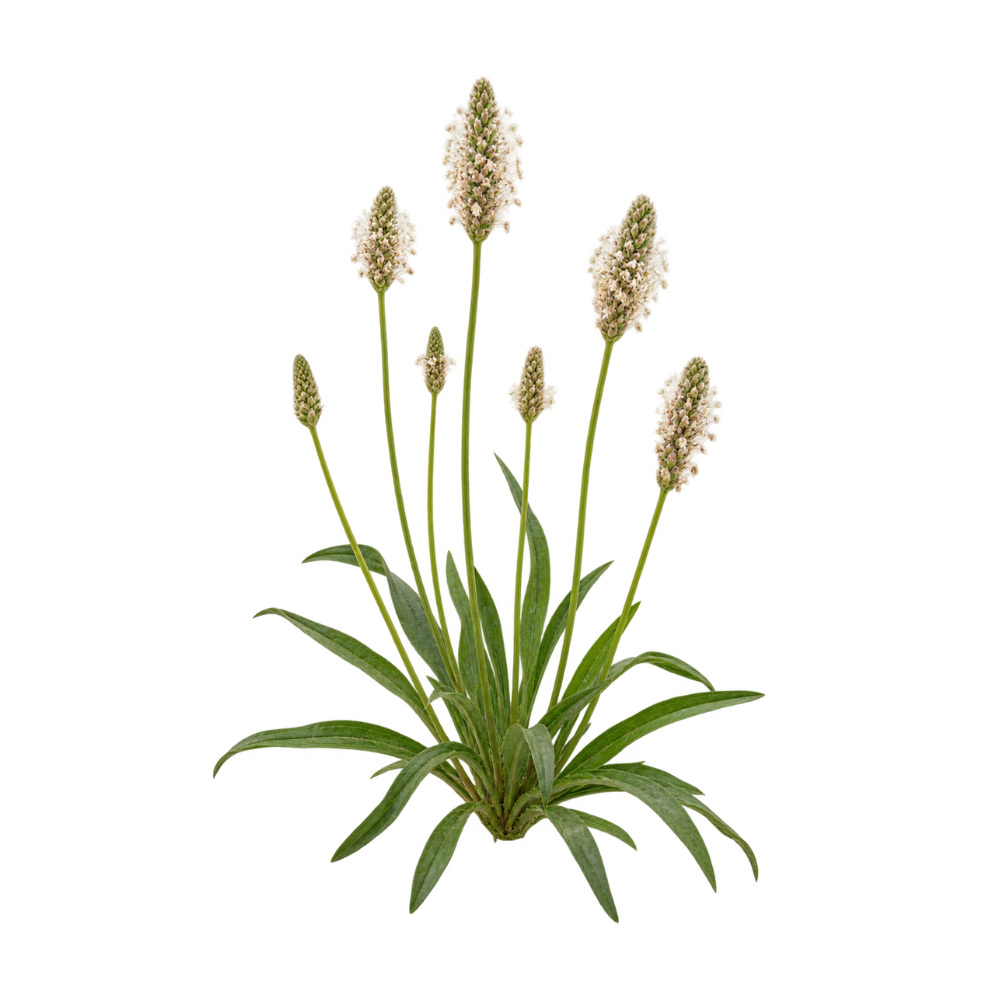
Psyllium is a small annual herb in the plantain family (Plantaginaceae) 18Reference 18Plantago ovata Forsskål — species description, habitat and distribution — floraView study →. It grows up to 5–10 cm tall and is covered in soft, woolly white hairs 18,
Its leaves are narrow and linear, 3–15 cm long and only 1–6 mm wide, with three veins, and they grow in rosettes 18,
The tiny white flowers are borne in dense, egg-shaped spikes 0.5–2 cm long, which lengthen to about 5 cm as they fruit 18Reference 18Plantago ovata Forsskål — species description, habitat and distribution — floraView study →. Each fruit is a small capsule that splits open around the middle and holds two seeds 18Reference 18Plantago ovata Forsskål — species description, habitat and distribution — floraView study →.
The seeds are yellowish-brown, boat-shaped and 2.5–3 mm long, with a groove on one face 18,
Distribution
Psyllium is native to the Mediterranean region and ranges east to the deserts of Central Asia, Afghanistan and Pakistan 18,
In China it grows locally at field edges and in grassland, from near sea level to 1,500 m 18Reference 18Plantago ovata Forsskål — species description, habitat and distribution — floraView study →.
Growing Conditions
Cultivation snapshot for Psyllium
ZoneUSDA 8–11 as a sown crop; it needs a dry, warm growing season.
- Full sun on light, well-drained sandy soil in the dry subtropics — it is a broadacre field crop, sown direct and harvested for seed.
- Dry weather at harvest is the requirement. Rain on the ripening crop degrades the husk, which is the marketed part, so cultivation concentrates in reliably dry regions — chiefly Gujarat and Rajasthan in India, the dominant producer and exporter, and Iran.
Grow it yourself
Farm Wiki is our cultivation-focused sister site, also run by Justin Cooke.
Pharmacology & Research
Psyllium husk has a large body of human research. Meta-analyses of randomised controlled trials support its use for lowering cholesterol, relieving constipation and improving blood sugar in type 2 diabetes. Smaller effects have been found on blood pressure and body weight, along with benefit in irritable bowel syndrome 1,
Its effects come from the gel the husk forms in the gut. The husk is 85% water-soluble fibre, and only part of it is fermented in the colon 17Reference 17ReviewCommunity herbal monograph on Plantago ovata Forssk., seminis tegumentum (ispaghula husk), EMA/HMPC/199774/2012 — regulatory monograph. https://www.ema.europa.eu/en/documents/herbal-monograph/final-community-herbal-monograph-plantago-ovata-forssk-seminis-tegumentum_en.pdfView study →.
A pooled analysis of 28 randomised trials found that about 10 g a day lowered LDL cholesterol by 0.33 mmol/L 1Reference 1Meta-analysisEffect of psyllium (Plantago ovata) fiber on LDL cholesterol and alternative lipid targets, non-HDL cholesterol and apolipoprotein B: a systematic review and meta-analysis of randomized controlled trials — meta-analysisView study →.
-
Best-supported: LDL and apoB reduction (~0.33 mmol/L / ~13 mg/dL LDL at ~10 g/day across 28 RCTs, graded moderate quality for LDL and high for apoB) 1,
3Reference 1Meta-analysisEffect of psyllium (Plantago ovata) fiber on LDL cholesterol and alternative lipid targets, non-HDL cholesterol and apolipoprotein B: a systematic review and meta-analysis of randomized controlled trials — meta-analysisView study →Reference 3Meta-analysisTime- and dose-dependent effect of psyllium on serum lipids in mild-to-moderate hypercholesterolemia: a meta-analysis of controlled clinical trials — meta-analysisView study → ; chronic-constipation relief at doses >10 g/day 6Reference 6Meta-analysisThe effect of fiber supplementation on chronic constipation in adults: an updated systematic review and meta-analysis of randomized controlled trials — meta-analysisView study →; glycaemic improvement in type 2 diabetes (FBG ~-37 mg/dL, HbA1c ~-1%) 7Reference 7Meta-analysisPsyllium fiber improves glycemic control proportional to loss of glycemic control: a meta-analysis of data in euglycemic subjects, patients at risk of type 2 diabetes mellitus, and patients being treated for type 2 diabetes mellitus — meta-analysisView study →. -
Emerging, worth watching: small but consistent blood-pressure lowering (~2 mmHg systolic) 12,
13Reference 12Meta-analysisThe effect of psyllium supplementation on blood pressure: a systematic review and meta-analysis of randomized controlled trials — meta-analysisView study →Reference 13Meta-analysisThe effect of psyllium consumption on blood pressure: systematic review and dose-response meta-analysis of randomized controlled trials — meta-analysisView study → and weight/waist reduction (~2 kg) when dosed before meals 14Reference 14Meta-analysisPsyllium is a natural nonfermented gel-forming fiber that is effective for weight loss: a comprehensive review and meta-analysis — meta-analysisView study →. - Mechanistically thin: ulcerative-colitis maintenance rests on a single open-label trial 15Reference 15RCTRandomized clinical trial of Plantago ovata seeds (dietary fiber) as compared with mesalamine in maintaining remission in ulcerative colitis — randomised controlled trialView study →; antidiarrhoeal / stool-firming use is traditional rather than trial-tested.
- The caveat: the effects are modest and belong to the gel-forming husk taken with water.
The effects are real but modest. Psyllium lowers LDL cholesterol by about 7% when added to a low-fat diet, and it works alongside diet and medicines rather than in place of them 4,
1. Cholesterol & apoB Reduction
A systematic review and meta-analysis of 28 randomised controlled trials (1,924 participants, median dose about 10.2 g/day) found that psyllium lowered LDL cholesterol by 0.33 mmol/L (about 13 mg/dL). It also lowered non-HDL cholesterol and apolipoprotein B, a marker of the number of atherogenic particles. The evidence was graded moderate quality for LDL and high quality for apoB 1Reference 1Meta-analysisEffect of psyllium (Plantago ovata) fiber on LDL cholesterol and alternative lipid targets, non-HDL cholesterol and apolipoprotein B: a systematic review and meta-analysis of randomized controlled trials — meta-analysisView study →.
Other meta-analyses agree. Across 8 trials, 10.2 g/day added to a low-fat diet lowered LDL by 7% 4Reference 4Meta-analysisCholesterol-lowering effects of psyllium intake adjunctive to diet therapy in men and women with hypercholesterolemia: meta-analysis of 8 controlled trials — meta-analysisView study →. Across 21 studies, LDL fell by 0.28 mmol/L, with a significant dose-response between 3 and 20.4 g/day 3Reference 3Meta-analysisTime- and dose-dependent effect of psyllium on serum lipids in mild-to-moderate hypercholesterolemia: a meta-analysis of controlled clinical trials — meta-analysisView study →. A 2024 analysis of 29 Plantago trials (2,769 participants) found LDL down 0.35 mmol/L and total cholesterol down 0.28 mmol/L, with no effect on HDL or triglycerides 5Reference 5Meta-analysisPlantago consumption significantly reduces total cholesterol and low-density lipoprotein cholesterol in adults: a systematic review and meta-analysis — systematic reviewView study →.
Oat, psyllium and pectin fibre lower cholesterol by similar amounts per gram of soluble fibre 2Reference 2Meta-analysisCholesterol-lowering effects of dietary fiber: a meta-analysis — meta-analysisView study →.
Gap: the absolute reduction is modest (about 13 mg/dL), and effects are specific to the gel-forming husk taken with water.
2. Constipation & Laxation
An updated meta-analysis of fibre supplements in chronic constipation (16 RCTs, 1,251 participants) found that 66% responded to fibre against 41% on control. Psyllium and pectin had significant effects. The response was better only at doses above 10 g/day, and stool frequency improved with higher doses taken for at least 4 weeks 6Reference 6Meta-analysisThe effect of fiber supplementation on chronic constipation in adults: an updated systematic review and meta-analysis of randomized controlled trials — meta-analysisView study →.
The husk holds water in the bowel, increasing stool bulk and forming a lubricating layer that eases passage. Its laxative effect usually starts within 12–24 hours 17Reference 17ReviewCommunity herbal monograph on Plantago ovata Forssk., seminis tegumentum (ispaghula husk), EMA/HMPC/199774/2012 — regulatory monograph. https://www.ema.europa.eu/en/documents/herbal-monograph/final-community-herbal-monograph-plantago-ovata-forssk-seminis-tegumentum_en.pdfView study →.
The same water-holding gel gives form to loose stool, which is the basis of the traditional use for diarrhoea. That use has not been tested in dedicated trials.
Flatulence is more common on fibre than on placebo 6Reference 6Meta-analysisThe effect of fiber supplementation on chronic constipation in adults: an updated systematic review and meta-analysis of randomized controlled trials — meta-analysisView study →.
3. Glycaemic Control (Type 2 Diabetes)
A meta-analysis identified 35 randomised controlled trials over three decades in people with normal blood sugar, pre-diabetes and treated type 2 diabetes 7Reference 7Meta-analysisPsyllium fiber improves glycemic control proportional to loss of glycemic control: a meta-analysis of data in euglycemic subjects, patients at risk of type 2 diabetes mellitus, and patients being treated for type 2 diabetes mellitus — meta-analysisView study →.
In people treated for type 2 diabetes, psyllium taken before meals lowered fasting blood glucose by 37 mg/dL and HbA1c by 0.97 percentage points 7Reference 7Meta-analysisPsyllium fiber improves glycemic control proportional to loss of glycemic control: a meta-analysis of data in euglycemic subjects, patients at risk of type 2 diabetes mellitus, and patients being treated for type 2 diabetes mellitus — meta-analysisView study →.
The benefit was proportional to baseline blood sugar. There was no significant lowering in people with normal glucose, a modest effect in pre-diabetes, and the largest effect in treated type 2 diabetes 7Reference 7Meta-analysisPsyllium fiber improves glycemic control proportional to loss of glycemic control: a meta-analysis of data in euglycemic subjects, patients at risk of type 2 diabetes mellitus, and patients being treated for type 2 diabetes mellitus — meta-analysisView study →.
The gel slows the movement of glucose to the gut wall, which blunts the rise after a meal. That is why the dose is timed to meals.
Gap: part of the pooled data came from the clinical records of Procter & Gamble, which makes the psyllium product Metamucil 7Reference 7Meta-analysisPsyllium fiber improves glycemic control proportional to loss of glycemic control: a meta-analysis of data in euglycemic subjects, patients at risk of type 2 diabetes mellitus, and patients being treated for type 2 diabetes mellitus — meta-analysisView study →.
4. Irritable Bowel Syndrome
In a double-blind trial of 80 adults with IBS, 82% on ispaghula husk rated treatment satisfactory against 53% on placebo, and constipation and transit time improved. Abdominal pain and bloating improved equally in both groups 8Reference 8RCTDouble blind study of ispaghula in irritable bowel syndrome — randomised controlled trialView study →. A smaller crossover trial of 20 patients found better global symptoms and more satisfying bowel movements, with no change in pain 9Reference 9RCTIspaghula therapy in irritable bowel syndrome: improvement in overall well-being is related to reduction in bowel dissatisfaction — randomised controlled trialView study →.
In a randomised double-blind trial in children, psyllium reduced the number of abdominal-pain episodes more than placebo, without changing pain intensity, breath hydrogen, gut permeability or the microbiome 10Reference 10RCTPsyllium fiber reduces abdominal pain in children with irritable bowel syndrome in a randomized, double-blind trial — randomised controlled trialView study →. In a second paediatric trial of 81 children, 43.9% on psyllium reached remission after 4 weeks, against 9.7% on placebo 11Reference 11RCTEfficacy of oral psyllium in pediatric irritable bowel syndrome: a double-blind randomized control trial — randomised controlled trialView study →.
In the EU, ispaghula husk has well-established use as an adjuvant in constipation-predominant IBS 17Reference 17ReviewCommunity herbal monograph on Plantago ovata Forssk., seminis tegumentum (ispaghula husk), EMA/HMPC/199774/2012 — regulatory monograph. https://www.ema.europa.eu/en/documents/herbal-monograph/final-community-herbal-monograph-plantago-ovata-forssk-seminis-tegumentum_en.pdfView study →.
The trials are older or small, with subjective endpoints, and psyllium eases some IBS symptoms rather than resolving the syndrome.
5. Blood Pressure
Two meta-analyses of randomised trials found a small lowering of systolic blood pressure. An 11-trial analysis (592 participants) found systolic pressure down 2.04 mmHg, with a stronger effect in people with higher starting pressure 12Reference 12Meta-analysisThe effect of psyllium supplementation on blood pressure: a systematic review and meta-analysis of randomized controlled trials — meta-analysisView study →.
A later dose-response analysis (14 trials, 802 participants) found systolic pressure down 2.24 mmHg, with a linear relationship to dose and duration. Diastolic pressure did not change significantly 13Reference 13Meta-analysisThe effect of psyllium consumption on blood pressure: systematic review and dose-response meta-analysis of randomized controlled trials — meta-analysisView study →.
The effect is small, and diastolic pressure is unchanged.
6. Weight & Satiety
A meta-analysis of 6 randomised trials (354 overweight or obese participants, mean dose 10.8 g/day, mean 4.8 months) found that psyllium taken just before meals reduced body weight by 2.1 kg, BMI by 0.8 kg/m² and waist circumference by 2.2 cm compared with control 14Reference 14Meta-analysisPsyllium is a natural nonfermented gel-forming fiber that is effective for weight loss: a comprehensive review and meta-analysis — meta-analysisView study →.
In two randomised, double-blind, placebo-controlled crossover studies in healthy volunteers, 6.8 g and 10.2 g of psyllium before breakfast and lunch reduced hunger and the desire to eat between meals 16Reference 16RCTSatiety effects of psyllium in healthy volunteers — randomised controlled trialView study →.
The evidence base is small, the effect is modest, and taking the dose before meals appears to matter.
7. Ulcerative Colitis (Maintenance)
An open-label, multicentre randomised trial in 105 patients in remission compared Plantago ovata seed (10 g twice daily) with mesalamine and with the two combined. After 12 months, treatment failure was 40% on seed, 35% on mesalamine and 30% on the combination, and the chance of staying in remission was similar across the three arms 15Reference 15RCTRandomized clinical trial of Plantago ovata seeds (dietary fiber) as compared with mesalamine in maintaining remission in ulcerative colitis — randomised controlled trialView study →.
Faecal butyrate rose significantly on the seed. Butyrate is a short-chain fatty acid produced when fibre is fermented in the colon, and it fuels the cells of the colon lining 15Reference 15RCTRandomized clinical trial of Plantago ovata seeds (dietary fiber) as compared with mesalamine in maintaining remission in ulcerative colitis — randomised controlled trialView study →.
Gap: a single unblinded trial with no placebo arm, not replicated.
Mechanisms
The husk is an arabinoxylan fibre that swells into a gel, absorbing up to 40 times its weight in water 17Reference 17ReviewCommunity herbal monograph on Plantago ovata Forssk., seminis tegumentum (ispaghula husk), EMA/HMPC/199774/2012 — regulatory monograph. https://www.ema.europa.eu/en/documents/herbal-monograph/final-community-herbal-monograph-plantago-ovata-forssk-seminis-tegumentum_en.pdfView study →. Human enzymes cannot break its sugar bonds, so it passes through the small intestine largely intact 17Reference 17ReviewCommunity herbal monograph on Plantago ovata Forssk., seminis tegumentum (ispaghula husk), EMA/HMPC/199774/2012 — regulatory monograph. https://www.ema.europa.eu/en/documents/herbal-monograph/final-community-herbal-monograph-plantago-ovata-forssk-seminis-tegumentum_en.pdfView study →.
In the colon it is fermented only to a limited extent, raising short-chain fatty acids such as butyrate 15,
| Mechanism | Drives | Key compounds |
|---|---|---|
| Viscous gel binds bile acids → increased faecal bile-acid loss → hepatic LDL-receptor up-regulation | cholesterol & apoB reduction | arabinoxylan soluble fibre |
| Gel holds water in the colon → increased stool bulk, water content and normalised transit | laxationstool normalisationIBS | arabinoxylan mucilage |
| Increased chyme viscosity → slowed glucose diffusion to the gut wall | glycaemic controlsatietyweight | arabinoxylan soluble fibre |
| Partial colonic fermentation → butyrate production feeding colonocytes | ulcerative-colitis maintenance | arabinoxylan (fermentable fraction) |
Clinical Trials
Psyllium has been studied extensively in people, with meta-analyses covering cholesterol, constipation, blood sugar, blood pressure and body weight.
| Completed | Planned | Terminated | Preclinical |
|---|---|---|---|
| Numerous RCTs + several meta-analyses | Ongoing | — | Limited |
Last checked: August 2026.
Phytochemistry
Psyllium husk is mostly soluble fibre, rich in mucilage. Its mucilage content is higher than that of other Plantago species, and 85% of the husk is water-soluble fibre 17Reference 17ReviewCommunity herbal monograph on Plantago ovata Forssk., seminis tegumentum (ispaghula husk), EMA/HMPC/199774/2012 — regulatory monograph. https://www.ema.europa.eu/en/documents/herbal-monograph/final-community-herbal-monograph-plantago-ovata-forssk-seminis-tegumentum_en.pdfView study →.
The mucilage is a highly branched arabinoxylan, a polysaccharide built from the sugars arabinose and xylose. Its sugars are joined by β-linkages that human digestive enzymes cannot break 17Reference 17ReviewCommunity herbal monograph on Plantago ovata Forssk., seminis tegumentum (ispaghula husk), EMA/HMPC/199774/2012 — regulatory monograph. https://www.ema.europa.eu/en/documents/herbal-monograph/final-community-herbal-monograph-plantago-ovata-forssk-seminis-tegumentum_en.pdfView study →.
Less than 10% of the mucilage is broken down in the stomach, releasing free arabinose 17Reference 17ReviewCommunity herbal monograph on Plantago ovata Forssk., seminis tegumentum (ispaghula husk), EMA/HMPC/199774/2012 — regulatory monograph. https://www.ema.europa.eu/en/documents/herbal-monograph/final-community-herbal-monograph-plantago-ovata-forssk-seminis-tegumentum_en.pdfView study →. In the colon the fibre is only partly fermented: in laboratory tests, 72% of it remained unfermented 17Reference 17ReviewCommunity herbal monograph on Plantago ovata Forssk., seminis tegumentum (ispaghula husk), EMA/HMPC/199774/2012 — regulatory monograph. https://www.ema.europa.eu/en/documents/herbal-monograph/final-community-herbal-monograph-plantago-ovata-forssk-seminis-tegumentum_en.pdfView study →.
The husk has no small-molecule active constituents of note.
Dosage
In the trials, psyllium is given as milled husk stirred into water. The total daily dose matters, and for blood sugar and appetite, so does taking it before meals.
| Indication | Preparation | Dose | Est. dried-herb equivalent | Source |
|---|---|---|---|---|
| Cholesterol & apoB | Milled husk with water | ~10 g/day (median across 28 RCTs; dose-response 3–20 g/day) | 10 g (as given) | 1, |
| Constipation | Milled husk with water | >10 g/day, ≥4 weeks | 10 g+ (as given) | 6Reference 6Meta-analysisThe effect of fiber supplementation on chronic constipation in adults: an updated systematic review and meta-analysis of randomized controlled trials — meta-analysisView study → |
| Glycaemic control (T2DM) | Milled husk, before meals | before meals | — | 7Reference 7Meta-analysisPsyllium fiber improves glycemic control proportional to loss of glycemic control: a meta-analysis of data in euglycemic subjects, patients at risk of type 2 diabetes mellitus, and patients being treated for type 2 diabetes mellitus — meta-analysisView study → |
| Blood pressure | Milled husk with water | Linear dose/duration response | — | 12, |
| Weight & satiety | Milled husk, before meals | ~10.8 g/day, ~4.8 months | ~11 g (as given) | 14, |
| Ulcerative colitis (maintenance) | Plantago ovata seed (not husk) | 10 g twice daily, 12 months | 20 g (as given) | 15Reference 15RCTRandomized clinical trial of Plantago ovata seeds (dietary fiber) as compared with mesalamine in maintaining remission in ulcerative colitis — randomised controlled trialView study → |
The last row uses the seed, not the husk.
The EU monograph gives 7–11 g a day for constipation for adults and adolescents, and 3–8 g for children aged 6–12. For high cholesterol it gives 7–20 g a day, and does not recommend this use under age 12 17Reference 17ReviewCommunity herbal monograph on Plantago ovata Forssk., seminis tegumentum (ispaghula husk), EMA/HMPC/199774/2012 — regulatory monograph. https://www.ema.europa.eu/en/documents/herbal-monograph/final-community-herbal-monograph-plantago-ovata-forssk-seminis-tegumentum_en.pdfView study →. Take each gram with about 30 mL of water, not just before bed 17Reference 17ReviewCommunity herbal monograph on Plantago ovata Forssk., seminis tegumentum (ispaghula husk), EMA/HMPC/199774/2012 — regulatory monograph. https://www.ema.europa.eu/en/documents/herbal-monograph/final-community-herbal-monograph-plantago-ovata-forssk-seminis-tegumentum_en.pdfView study →.
Build the dose up gradually, because flatulence is more common on fibre than placebo 6Reference 6Meta-analysisThe effect of fiber supplementation on chronic constipation in adults: an updated systematic review and meta-analysis of randomized controlled trials — meta-analysisView study →. A lipid recheck at 8–12 weeks shows whether it is working.
Traditional Dosage
| System | Preparation | Dose |
|---|---|---|
| Ayurveda / Unani (isabgol) | Husk stirred into water or milk | 1–2 teaspoons (≈5–10 g), once or twice daily |
| Western herbal | Husk or whole seed with plenty of water | 5–10 g, 1–3× daily as a bulk laxative or demulcent |
Safety & Pregnancy
Psyllium is among the safest supplements in wide use. The cautions are about taking it with enough water, spacing it from medicines, and allergy.
- Take with plenty of water. Taken with too little liquid, psyllium can block the throat, oesophagus or bowel. Never take it dry.
- Space it from medicines. Take other medicines at least half an hour to an hour before or after psyllium.
- Allergy. Psyllium contains potent allergens. People who handle the powder at work can become sensitised by breathing it in.
- Introduce gradually. Flatulence and bloating are more common on fibre than placebo 6Reference 6Meta-analysisThe effect of fiber supplementation on chronic constipation in adults: an updated systematic review and meta-analysis of randomized controlled trials — meta-analysisView study →.
- Very little is absorbed. The fibre stays in the gut, and its interactions come from slowing the absorption of other medicines 17Reference 17ReviewCommunity herbal monograph on Plantago ovata Forssk., seminis tegumentum (ispaghula husk), EMA/HMPC/199774/2012 — regulatory monograph. https://www.ema.europa.eu/en/documents/herbal-monograph/final-community-herbal-monograph-plantago-ovata-forssk-seminis-tegumentum_en.pdfView study →.
Full Safety & Interactions Detail
Fluid. Take about 30 mL of water for each gram. With too little fluid, bulk-forming fibre can obstruct the throat and oesophagus, causing choking, or block the bowel. Warning signs include chest pain, vomiting, and difficulty swallowing or breathing 17Reference 17ReviewCommunity herbal monograph on Plantago ovata Forssk., seminis tegumentum (ispaghula husk), EMA/HMPC/199774/2012 — regulatory monograph. https://www.ema.europa.eu/en/documents/herbal-monograph/final-community-herbal-monograph-plantago-ovata-forssk-seminis-tegumentum_en.pdfView study →.
Who should not take it. Psyllium is not for people with difficulty swallowing or throat problems, narrowing of the gut, a blocked or paralysed bowel, or megacolon. It should not be used with a sudden change in bowel habit lasting more than two weeks, undiagnosed rectal bleeding, or faecal impaction. Stop it and see a doctor if abdominal pain or irregular stools develop 17Reference 17ReviewCommunity herbal monograph on Plantago ovata Forssk., seminis tegumentum (ispaghula husk), EMA/HMPC/199774/2012 — regulatory monograph. https://www.ema.europa.eu/en/documents/herbal-monograph/final-community-herbal-monograph-plantago-ovata-forssk-seminis-tegumentum_en.pdfView study →.
Medicines. Psyllium can delay the absorption of minerals, vitamin B12, cardiac glycosides, coumarin anticoagulants, carbamazepine and lithium, so take them at least half an hour to an hour apart. People with diabetes or taking thyroid hormone may need their dose adjusted under medical supervision. Use it with drugs that slow the gut, such as opioids, only under medical supervision 17Reference 17ReviewCommunity herbal monograph on Plantago ovata Forssk., seminis tegumentum (ispaghula husk), EMA/HMPC/199774/2012 — regulatory monograph. https://www.ema.europa.eu/en/documents/herbal-monograph/final-community-herbal-monograph-plantago-ovata-forssk-seminis-tegumentum_en.pdfView study →.
Allergy. Psyllium can cause rhinitis, conjunctivitis, bronchospasm, skin rashes and, in some cases, anaphylaxis. Repeated inhalation of the powder, for example by healthcare workers and carers, can sensitise, more often in people with atopy 17Reference 17ReviewCommunity herbal monograph on Plantago ovata Forssk., seminis tegumentum (ispaghula husk), EMA/HMPC/199774/2012 — regulatory monograph. https://www.ema.europa.eu/en/documents/herbal-monograph/final-community-herbal-monograph-plantago-ovata-forssk-seminis-tegumentum_en.pdfView study →.
Children and older people. For constipation it is not recommended under age 6, and for cholesterol not under age 12. Frail or elderly people should use it under medical supervision 17Reference 17ReviewCommunity herbal monograph on Plantago ovata Forssk., seminis tegumentum (ispaghula husk), EMA/HMPC/199774/2012 — regulatory monograph. https://www.ema.europa.eu/en/documents/herbal-monograph/final-community-herbal-monograph-plantago-ovata-forssk-seminis-tegumentum_en.pdfView study →.
In pregnancy, psyllium may be considered if necessary, when a change of diet has not helped. Data come from fewer than 300 pregnancies 17Reference 17ReviewCommunity herbal monograph on Plantago ovata Forssk., seminis tegumentum (ispaghula husk), EMA/HMPC/199774/2012 — regulatory monograph. https://www.ema.europa.eu/en/documents/herbal-monograph/final-community-herbal-monograph-plantago-ovata-forssk-seminis-tegumentum_en.pdfView study →. It may be used while breastfeeding on the same terms. Where a laxative is needed in either case, bulk-forming fibre is preferred over other kinds. Take it with plenty of water.
References
- Jovanovski, E., et al. (2018). Effect of psyllium (Plantago ovata) fiber on LDL cholesterol and alternative lipid targets, non-HDL cholesterol and apolipoprotein B: a systematic review and meta-analysis of randomized controlled trials — meta-analysis. American Journal of Clinical Nutrition, 108(5), 922–932. https://pubmed.ncbi.nlm.nih.gov/30239559/
- Brown, L., et al. (1999). Cholesterol-lowering effects of dietary fiber: a meta-analysis — meta-analysis. American Journal of Clinical Nutrition, 69(1), 30–42. https://pubmed.ncbi.nlm.nih.gov/9925120/
- Wei, Z. H., et al. (2009). Time- and dose-dependent effect of psyllium on serum lipids in mild-to-moderate hypercholesterolemia: a meta-analysis of controlled clinical trials — meta-analysis. European Journal of Clinical Nutrition, 63(7), 821–827. https://pubmed.ncbi.nlm.nih.gov/18985059/
- Anderson, J. W., et al. (2000). Cholesterol-lowering effects of psyllium intake adjunctive to diet therapy in men and women with hypercholesterolemia: meta-analysis of 8 controlled trials — meta-analysis. American Journal of Clinical Nutrition, 71(2), 472–479. https://pubmed.ncbi.nlm.nih.gov/10648260/
- Zhu, R., et al. (2024). Plantago consumption significantly reduces total cholesterol and low-density lipoprotein cholesterol in adults: a systematic review and meta-analysis — systematic review. Nutrition Research, 126, 123–137. https://pubmed.ncbi.nlm.nih.gov/38688104/
- van der Schoot, A., et al. (2022). The effect of fiber supplementation on chronic constipation in adults: an updated systematic review and meta-analysis of randomized controlled trials — meta-analysis. American Journal of Clinical Nutrition, 116(4), 953–969. https://pubmed.ncbi.nlm.nih.gov/35816465/
- Gibb, R. D., et al. (2015). Psyllium fiber improves glycemic control proportional to loss of glycemic control: a meta-analysis of data in euglycemic subjects, patients at risk of type 2 diabetes mellitus, and patients being treated for type 2 diabetes mellitus — meta-analysis. American Journal of Clinical Nutrition, 102(6), 1604–1614. https://pubmed.ncbi.nlm.nih.gov/26561625/
- Prior, A., & Whorwell, P. J. (1987). Double blind study of ispaghula in irritable bowel syndrome — randomised controlled trial. Gut, 28(11), 1510–1513. https://pubmed.ncbi.nlm.nih.gov/3322956/
- Jalihal, A., & Kurian, G. (1990). Ispaghula therapy in irritable bowel syndrome: improvement in overall well-being is related to reduction in bowel dissatisfaction — randomised controlled trial. Journal of Gastroenterology and Hepatology, 5(5), 507–513. https://pubmed.ncbi.nlm.nih.gov/2129822/
- Shulman, R. J., et al. (2017). Psyllium fiber reduces abdominal pain in children with irritable bowel syndrome in a randomized, double-blind trial — randomised controlled trial. Clinical Gastroenterology and Hepatology, 15(5), 712–719. https://pubmed.ncbi.nlm.nih.gov/27080737/
- Menon, J., et al. (2023). Efficacy of oral psyllium in pediatric irritable bowel syndrome: a double-blind randomized control trial — randomised controlled trial. Journal of Pediatric Gastroenterology and Nutrition, 76(1), 14–19. https://pubmed.ncbi.nlm.nih.gov/36136861/
- Clark, C. C. T., et al. (2020). The effect of psyllium supplementation on blood pressure: a systematic review and meta-analysis of randomized controlled trials — meta-analysis. Korean Journal of Internal Medicine, 35(6), 1385–1399. https://pubmed.ncbi.nlm.nih.gov/32066221/
- Gholami, Z., et al. (2024). The effect of psyllium consumption on blood pressure: systematic review and dose-response meta-analysis of randomized controlled trials — meta-analysis. Food Science & Nutrition, 12(10), 7075–7087. https://pubmed.ncbi.nlm.nih.gov/39479650/
- Gibb, R. D., et al. (2023). Psyllium is a natural nonfermented gel-forming fiber that is effective for weight loss: a comprehensive review and meta-analysis — meta-analysis. Journal of the American Association of Nurse Practitioners, 35(8), 468–476. https://pubmed.ncbi.nlm.nih.gov/37163454/
- Fernández-Bañares, F., et al. (1999). Randomized clinical trial of Plantago ovata seeds (dietary fiber) as compared with mesalamine in maintaining remission in ulcerative colitis — randomised controlled trial. American Journal of Gastroenterology, 94(2), 427–433. https://pubmed.ncbi.nlm.nih.gov/10022641/
- Brum, J. M., et al. (2016). Satiety effects of psyllium in healthy volunteers — randomised controlled trial. Appetite, 105, 27–36. https://pubmed.ncbi.nlm.nih.gov/27166077/
- European Medicines Agency, Committee on Herbal Medicinal Products (2013). Community herbal monograph on Plantago ovata Forssk., seminis tegumentum (ispaghula husk), EMA/HMPC/199774/2012 — regulatory monograph. https://www.ema.europa.eu/en/documents/herbal-monograph/final-community-herbal-monograph-plantago-ovata-forssk-seminis-tegumentum_en.pdf
- Cui, H., Li, Z., Wei, L., & Hoggard, R. K. (2011). Plantago ovata Forsskål — species description, habitat and distribution — flora. In Wu, Z. Y., Raven, P. H., & Hong, D. Y. (eds.), Flora of China, Vol. 19. http://www.efloras.org/florataxon.aspx?flora_id=2&taxon_id=250095355
- Kazmi, S. M. A. Plantago ovata Forssk. — species description and distribution — flora. In Ali, S. I., & Qaiser, M. (eds.), Flora of Pakistan. http://www.efloras.org/florataxon.aspx?flora_id=5&taxon_id=250095355