
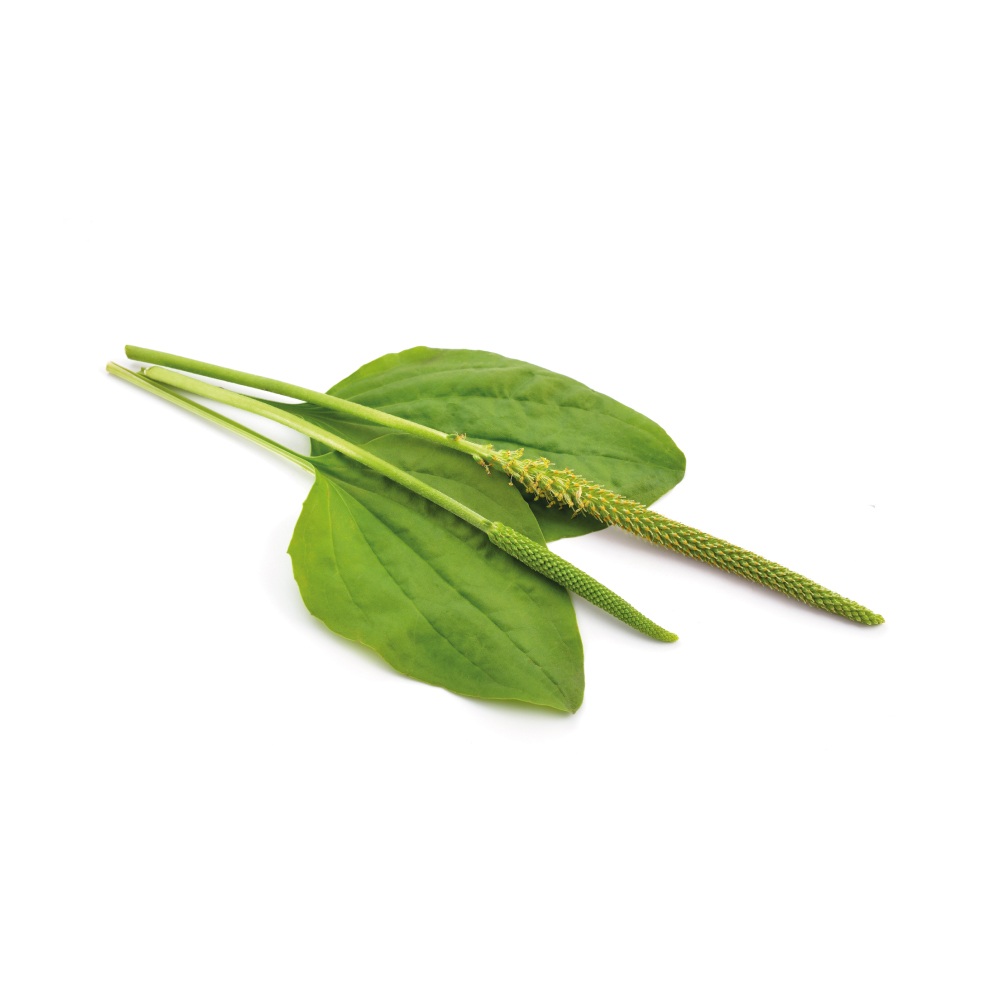
Materia Medica
Plantain
Plantago major
Plantain is a common rosette-forming weed whose leaf is a classic soothing and wound-healing remedy, used fresh on bites, stings and cuts and taken as a tea for irritated throats and stomachs. The leaf carries the iridoid aucubin, mucilage and the phenylpropanoid plantamajoside.
What Is Plantain?
Plantain is a low, rosette-forming perennial weed whose leaf is one of the classic healing plants of folk medicine. The fresh leaf is crushed onto bites, stings, cuts and splinters, and the dried leaf is taken as a tea for irritated throats, coughs and stomachs.
Plantago major is native to Europe and temperate Asia and is now naturalized through much of the world 37Reference 37Plantago major Linnaeus — species description, habitat and distribution — floraView study →. It grows in lawns, paths, meadows and waste ground. The name is shared with the cooking banana, an unrelated tropical fruit.
The leaf carries the iridoid aucubin, soothing mucilage and the phenylpropanoid plantamajoside 20Reference 20In vitroPlantago major and Plantago lanceolata exhibit antioxidant and Borrelia burgdorferi-inhibiting activities — in vitroView study →. Small human trials of plantain gels, ointments and syrups for skin ulcers, burns and mouth sores have mostly reported benefit 1,
Psyllium husk, a bulk laxative, comes from the seed of a different species in the same genus, Plantago ovata 39Reference 39Plantago ovata Forsskål — species description, habitat and distribution — floraView study →.
How Is Plantain Used?
Plantain leaf is used both on the skin and by mouth.
- Fresh leaf — crushed or chewed and applied directly to bites, stings, splinters and small cuts.
- Poultice, infused oil and salve — for irritated or broken skin, often combined with calendula, chickweed or comfrey.
- Leaf tea — 3–5 g of dried leaf, one to three times daily, for sore throats, coughs and an irritated stomach.
- Tincture (1:5) — 2–5 mL up to three times daily.
- Syrup or mouthwash — used in trials for mouth sores during cancer treatment 15,
16Reference 15RCTEfficacy of Plantago major L. syrup on radiation-induced oral mucositis in head-and-neck cancer patients: a randomized, double-blind, placebo-controlled trialView study →Reference 16RCTEfficacy of Plantago major, chlorhexidine 0.12% and sodium bicarbonate 5% in oral mucositis in cancer patients: a randomised triple-blind phase III trialView study → . - Cough syrups — combined with mallow, elecampane and Helichrysum in a children’s cough syrup 30Reference 30RCTEfficacy and safety of the syrup “KalobaTUSS®” as a treatment for cough in children: a randomized, double-blind, placebo-controlled trialView study →.
Traditional Uses
Western Herbal Medicine
In Western herbal medicine plantain leaf is a vulnerary, demulcent, anti-inflammatory and drawing herb.
Its traditional indications include wounds, insect bites, skin irritation, splinters, boils, sore throat, reflux, coughs and inflammatory digestive complaints. It was also used for chronic inflammatory skin conditions and irritated mucous membranes.
European & North American Folk Medicine
Folk medicine across Europe and North America used plantain for wounds, infections, insect bites, burns and inflammation.
The fresh leaves were often chewed and applied straight to a bite or injury. Because the plant grows almost everywhere people do, it was one of the most familiar first-aid plants in rural medicine.
Persian Medicine
In traditional Persian medicine, Plantago major is used to treat stomach and intestinal ulcers and bleeding 12Reference 12AnimalEvaluation of anti-inflammatory effects of leaf and seed extracts of Plantago major on acetic acid-induced ulcerative colitis in ratsView study →.
Turkish Folk Medicine
In Türkiye, the subspecies P. major subsp. intermedia is used for wounds, abscesses, constipation, pain, ulcers, haemorrhoids and gynaecological complaints 14Reference 14In vitroPhytochemical investigation and evaluation of anti-inflammatory and wound-healing activities of Plantago major subsp. intermedia — in vitro / animal modelView study →.
Taiwanese Folk Medicine
In Taiwan, P. major and the related P. asiatica are folk remedies for infections of the respiratory, urinary and digestive tracts 31Reference 31In vitroIn vitro cytotoxic, antiviral and immunomodulatory effects of Plantago major and Plantago asiaticaView study →.
Indications
- Insect bites and stings [fresh leaf; folk use]
- Minor wounds, cuts and splinters [fresh leaf, poultice]
- Boils [leaf poultice; Western herbal medicine]
- Pressure ulcers and diabetic foot ulcers [leaf gel]
- Burns [leaf ointment]
- Irritated skin [leaf, infused oil, salve]
- Mouth sores from cancer treatment [leaf syrup, mouthwash] Caution: A placebo-controlled trial of plantain syrup in 46 radiotherapy patients found less severe mucositis and pain. A second trial, in chemotherapy patients, found the extract no better than a sodium bicarbonate or chlorhexidine rinse 15,
16 . - Sore throat [leaf tea]
- Cough [leaf tea, syrup]
- Reflux and digestive irritation [leaf tea]
- Stomach and intestinal ulcers [leaf; Persian medicine]
Botany
Plantain is a stemless perennial herb in the plantain family (Plantaginaceae) with numerous fibrous roots 37Reference 37Plantago major Linnaeus — species description, habitat and distribution — floraView study →. All its leaves grow from the base in a flat rosette.
The leaves are broadly oval to broadly elliptic, usually 3–18 cm long and 2–11 cm wide, on stalks 1–10 cm long 37Reference 37Plantago major Linnaeus — species description, habitat and distribution — floraView study →. Each leaf has five or seven strong parallel veins that run from the base to the tip, and its edge is smooth or has a few distant teeth 37Reference 37Plantago major Linnaeus — species description, habitat and distribution — floraView study →.
The flowers grow on slender, narrow spikes, usually 1–20 cm long, that rise on leafless stalks 37Reference 37Plantago major Linnaeus — species description, habitat and distribution — floraView study →. The flowers are tiny, stalkless and white, with the stamens sticking out beyond the petals 37Reference 37Plantago major Linnaeus — species description, habitat and distribution — floraView study →. They open from June to August 37Reference 37Plantago major Linnaeus — species description, habitat and distribution — floraView study →.
Each flower forms a small capsule, 2–3 mm long, that splits open around its middle 37Reference 37Plantago major Linnaeus — species description, habitat and distribution — floraView study →. It holds usually 12–24 tiny brown seeds 37Reference 37Plantago major Linnaeus — species description, habitat and distribution — floraView study →.
Ribwort or narrowleaf plantain (P. lanceolata) is a close relative with narrow, lance-shaped leaves 6–20 cm long and short, dense flower heads on long grooved stalks 38Reference 38Plantago lanceolata Linnaeus — species description — floraView study →. Herbalists use its leaf in much the same way, and its extracts share the same main constituents 20Reference 20In vitroPlantago major and Plantago lanceolata exhibit antioxidant and Borrelia burgdorferi-inhibiting activities — in vitroView study →.
Psyllium comes from Plantago ovata, an annual with narrow, woolly leaves whose capsules each hold two seeds 39Reference 39Plantago ovata Forsskål — species description, habitat and distribution — floraView study →. It is grown for its seeds, the source of psyllium husk 39Reference 39Plantago ovata Forsskål — species description, habitat and distribution — floraView study →.
Distribution
Plantain is native to Europe and to northern, central and southwestern Asia, including China, India, Nepal and Pakistan 37Reference 37Plantago major Linnaeus — species description, habitat and distribution — floraView study →. It is widely naturalized throughout much of the rest of the world 37Reference 37Plantago major Linnaeus — species description, habitat and distribution — floraView study →.
It grows in meadows, wet places and waste ground, from near sea level to 2,800 m 37Reference 37Plantago major Linnaeus — species description, habitat and distribution — floraView study →. It is a familiar weed of lawns, paths and trampled ground.
Growing Conditions
Cultivation snapshot for Plantain
- Thrives in full sun to part shade and tolerates poor, compacted or trampled soil that defeats most plants.
- Prefers moist ground but withstands drought, mowing and heavy foot traffic once its rosette is established.
- Self-sows freely from its tall seed spikes; expect it to spread on its own wherever soil is disturbed.
- Needs no special care — it is effectively unkillable in most temperate gardens and lawns.
Grow it yourself
Farm Wiki is our cultivation-focused sister site, also run by Justin Cooke.
Pharmacology & Research
More than 150 studies have been published on Plantago major, most of them in cell cultures and rodents. The human trials test topical leaf preparations for skin ulcers and burns, and syrups and mouthwashes for mouth sores during cancer treatment.
Anti-inflammatory activity is the most often reproduced finding in animals, alongside antioxidant, wound-healing and mild antimicrobial effects. Luteolin, plantamajoside, acteoside and aucubin are the constituents most studied.
The leaf and the seed have been studied separately, and they give different results 12,
-
Best-supported: topical wound, ulcer and burn healing, backed by small human trials 1,
2, and supportive rodent studies 6Reference 6AnimalThe healing effect of Plantago major and Aloe vera mixture in excisional full-thickness skin wounds: stereological study — rat, in vivoView study →; anti-inflammatory activity, well-replicated in rodents and cell models 10,3, 4Reference 1RCTClinical and phytochemical studies of Plantago major in pressure ulcer treatment: A randomized controlled trialView study →Reference 2RCTThe effect of Plantago major hydroalcoholic extract on the healing of diabetic foot and pressure ulcers — randomised controlled trialView study →Reference 3RCTEfficacy of Aloe vera/Plantago major gel in diabetic foot ulcer: a randomized double-blind clinical trialView study →Reference 4ObservationalTherapeutic efficacy of great plantain (Plantago major L.) in the treatment of second-degree burn wounds: a case-control studyView study → 11, .12, 13, 14Reference 10AnimalIn vivo anti-inflammatory activities of Plantago major extract and fractions — rat/mouse, in vivoView study →Reference 11AnimalAnti-rheumatoid activity of a hexane-insoluble fraction from Plantago major in female Wistar ratsView study →Reference 12AnimalEvaluation of anti-inflammatory effects of leaf and seed extracts of Plantago major on acetic acid-induced ulcerative colitis in ratsView study →Reference 13In vitroIn vitro anti-inflammatory activity of Plantago major L. on phospholipase A₂ from snake venomView study →Reference 14In vitroPhytochemical investigation and evaluation of anti-inflammatory and wound-healing activities of Plantago major subsp. intermedia — in vitro / animal modelView study → -
Emerging, worth watching: reduction of radiotherapy-induced oral mucositis in one small placebo-controlled trial 15Reference 15RCTEfficacy of Plantago major L. syrup on radiation-induced oral mucositis in head-and-neck cancer patients: a randomized, double-blind, placebo-controlled trialView study →, though a second trial found no advantage 16Reference 16RCTEfficacy of Plantago major, chlorhexidine 0.12% and sodium bicarbonate 5% in oral mucositis in cancer patients: a randomised triple-blind phase III trialView study →; aucubin-driven hepatoprotection mapped in detail in non-plantain models 25,
26Reference 25In vitroAucubin inhibits hepatic stellate cell activation through stimulating the Nrf2/Smad7 axis — mouse, in vivo / in vitroView study →Reference 26In vitroAucubin as a natural potential anti-acute-hepatitis candidate: inhibitory potency and hepatoprotective mechanism — mouse, in vivo / in vitroView study → . -
Mechanistically thin: anticancer and immunomodulatory claims rest on cell lines and constituent-level inference, often with seeds or roots more active than leaf 33,
34Reference 33In vitroAnticancer effects of Plantago major extract on colorectal and gastric cancer cell lines: an in vitro study and molecular docking analysisView study →Reference 34In vitroEffects of Plantago major extracts and its chemical compounds on proliferation of cancer cells and cytokine production of LPS-activated THP-1 macrophages — in vitroView study → . - The caveat: almost no standalone leaf-extract data in humans beyond topical use; no standardised oral dose; leaf and seed are distinct medicines routinely conflated.
Leaf and seed are different medicines, and preparations vary widely. The trials used gels, ointments, syrups and combination products at different strengths, and several of the strongest animal and cell results come from seed or root rather than leaf.
1. Wound & Skin Healing
Small human trials of topical leaf preparations report benefit. A triple-blind randomised trial in 130 patients with stage-1 pressure ulcers found better healing with a quercetin-standardised P. major formulation 1Reference 1RCTClinical and phytochemical studies of Plantago major in pressure ulcer treatment: A randomized controlled trialView study →.
An open-label randomised trial found a 10% leaf-extract gel sped the healing of diabetic foot and pressure ulcers: 64% of patients healed completely, against 20% with the comparison dressing 2Reference 2RCTThe effect of Plantago major hydroalcoholic extract on the healing of diabetic foot and pressure ulcers — randomised controlled trialView study →.
A combination Aloe vera and P. major gel outperformed a placebo gel in 40 patients with diabetic foot ulcers 3Reference 3RCTEfficacy of Aloe vera/Plantago major gel in diabetic foot ulcer: a randomized double-blind clinical trialView study →.
In a case-control study of 15 patients with second-degree burns, a 10% ointment healed wounds in a similar time to silver sulfadiazine (11.7 against 13 days), with similar pain relief and infection control 4Reference 4ObservationalTherapeutic efficacy of great plantain (Plantago major L.) in the treatment of second-degree burn wounds: a case-control studyView study →.
A systematic review of four animal wound studies was more cautious. The best wound contraction came from 10–50% preparations, but every study carried a high risk of bias, and the review found no firm evidence of effect 5Reference 5Systematic reviewThe effect of Plantago major on wound healing in preclinical studies: a systematic review — animal models, insufficient evidence, all at high risk of biasView study →.
In rats, a gel of 5% plantain and 5% aloe increased fibroblast numbers, collagen and new blood vessels in skin wounds 6Reference 6AnimalThe healing effect of Plantago major and Aloe vera mixture in excisional full-thickness skin wounds: stereological study — rat, in vivoView study →. In cultured fibroblasts, a microencapsulated leaf infusion increased collagen I and III and sped scratch-wound closure 7Reference 7In vitroAntioxidant, anti-inflammatory effects and ability to stimulate wound healing of a common-plantain extract in alginate gel formulations — in vitroView study →.
Results are not uniform: in rats with mouth wounds, none of the nano-emulsified extracts sped overall healing 8Reference 8AnimalThe healing effect of nano-emulsified Plantago major L. extract on oral wounds in a Wistar rat modelView study →.
Gap: human trials are small (n≈15–130), several open-label or combination products, and preparations differ (gel, ointment, syrup, dressing), so no standard topical formulation or dose is established.
2. Anti-Inflammatory
In rats, a dichloromethane extract of P. major and its two hexane fractions reduced carrageenan paw swelling by about 47–56% at 560 mg/kg, and reduced leukocyte migration in mice 10Reference 10AnimalIn vivo anti-inflammatory activities of Plantago major extract and fractions — rat/mouse, in vivoView study →. The fatty acids oleic, linoleic and palmitic acid were identified as possible active compounds 10Reference 10AnimalIn vivo anti-inflammatory activities of Plantago major extract and fractions — rat/mouse, in vivoView study →.
In rats with adjuvant arthritis, a hexane-insoluble fraction reduced paw swelling, the arthritis score and TNF-α and IL-6 11Reference 11AnimalAnti-rheumatoid activity of a hexane-insoluble fraction from Plantago major in female Wistar ratsView study →.
In rats with acetic-acid colitis, a high dose of leaf extract given by injection lowered the ulcer index and tissue IL-6, TNF-α, PGE₂, IL-1β, MPO and MDA. The seed extract gave only modest protection 12Reference 12AnimalEvaluation of anti-inflammatory effects of leaf and seed extracts of Plantago major on acetic acid-induced ulcerative colitis in ratsView study →.
In vitro, a leaf extract inhibited snake-venom phospholipase A₂ by about 45% 13Reference 13In vitroIn vitro anti-inflammatory activity of Plantago major L. on phospholipase A₂ from snake venomView study →. Compounds isolated from P. major subsp. intermedia, among them aucubin, acteoside and martynoside, inhibited nitric-oxide production in cells 14Reference 14In vitroPhytochemical investigation and evaluation of anti-inflammatory and wound-healing activities of Plantago major subsp. intermedia — in vitro / animal modelView study →.
There is no standalone human anti-inflammatory trial, and the active animal doses (hundreds of mg/kg of concentrated fractions) are far above what a leaf tea or tincture delivers.
3. Oral Mucositis
A double-blind, placebo-controlled trial in 46 patients having radiotherapy for head and neck cancer found that P. major syrup, taken for 7 weeks, significantly reduced both the severity of mucositis and pain 15Reference 15RCTEfficacy of Plantago major L. syrup on radiation-induced oral mucositis in head-and-neck cancer patients: a randomized, double-blind, placebo-controlled trialView study →.
A randomised triple-blind trial in 50 chemotherapy patients compared a P. major extract rinse with chlorhexidine 0.12% and with extra sodium bicarbonate. The plantain rinse was no better than either, and the authors suggested reconsidering its use 16Reference 16RCTEfficacy of Plantago major, chlorhexidine 0.12% and sodium bicarbonate 5% in oral mucositis in cancer patients: a randomised triple-blind phase III trialView study →.
Two systematic reviews of natural products for mucositis from cancer treatment include plantain among the agents that reduced severity 17,
The trials are small and use non-standardised syrups and rinses.
4. Antioxidant
Plantain leaf is antioxidant in vitro, in line with its polyphenol, flavonoid and phenylpropanoid content. Hydroalcoholic extracts of both P. major and P. lanceolata showed considerable antioxidant capacity, with plantamajoside and acteoside the most abundant non-volatile constituents 20Reference 20In vitroPlantago major and Plantago lanceolata exhibit antioxidant and Borrelia burgdorferi-inhibiting activities — in vitroView study →.
In rats with testicular torsion, a leaf extract given by injection (50 or 100 mg/kg) prevented the rise in lipid peroxidation and limited tissue damage after the blood supply was restored 19Reference 19AnimalAntioxidant property of Plantago major leaf extracts reduces testicular torsion/detorsion-induced ischemia/reperfusion injury in ratsView study →.
A microencapsulated leaf infusion also had antioxidant effects in fibroblast cultures 7Reference 7In vitroAntioxidant, anti-inflammatory effects and ability to stimulate wound healing of a common-plantain extract in alginate gel formulations — in vitroView study →.
These readouts are almost entirely chemical or cell-based — there is no human biomarker trial, and whole-herb dosing to a meaningful systemic antioxidant effect is unquantified.
5. Antimicrobial
Leaf extracts show broad but moderate antimicrobial activity in vitro. An ethanolic leaf extract produced inhibition zones of 9.9–22.2 mm, growing with concentration, against drug-resistant Pseudomonas aeruginosa from burn wounds 21Reference 21In vitroAntibacterial activity of ethanolic extracts of Plantago major leaves against Pseudomonas aeruginosa from burn infections — in vitroView study →. Against the tooth-decay bacterium Streptococcus mutans, an extract gave zones of about 10 mm, smaller than chlorhexidine’s 15 mm 22Reference 22In vitroAntimicrobial effect of Plantago major extract against Streptococcus mutans in dental caries formation — in vitroView study →.
A dichloromethane root extract inhibited Salmonella paratyphi, with a lowest inhibitory concentration of 1.5 mg/mL 23Reference 23In vitroSeparation of crude methanol extract of Plantago major root: phytochemicals and biological activities — in vitroView study →.
Extracts of P. major and P. lanceolata cut the viability of stationary-phase Borrelia burgdorferi, the Lyme disease bacterium, to as low as 15%, and the leaf extracts reduced biofilm formation by 30% 20Reference 20In vitroPlantago major and Plantago lanceolata exhibit antioxidant and Borrelia burgdorferi-inhibiting activities — in vitroView study →.
A review catalogues antibacterial, antiviral and antifungal activity across P. major preparations 24Reference 24ReviewAntimicrobial and other biomedical properties of extracts from Plantago major — reviewView study →.
All of it is in vitro with modest potency (MICs in the mg/mL range for crude extracts); no clinical antimicrobial use is validated.
6. Hepatoprotective
The liver findings rest on the iridoid aucubin, which plantain leaf contains but which has been studied chiefly as an isolated compound. Aucubin blocked hepatic stellate-cell activation through the Nrf2/Smad7 axis and eased carbon-tetrachloride liver fibrosis in mice 25Reference 25In vitroAucubin inhibits hepatic stellate cell activation through stimulating the Nrf2/Smad7 axis — mouse, in vivo / in vitroView study →. It also protected against LPS-induced acute hepatitis 26Reference 26In vitroAucubin as a natural potential anti-acute-hepatitis candidate: inhibitory potency and hepatoprotective mechanism — mouse, in vivo / in vitroView study →.
A review of aucubin’s pharmacology and toxicology confirms its anti-fibrotic and liver-protective profile and notes its poor oral bioavailability in rats 27Reference 27ReviewA review of the pharmacology and toxicology of aucubinView study →.
The only human liver trial used P. major seed. In a double-blind trial in 74 people with non-alcoholic fatty liver disease, 2 g of seed taken twice daily for 12 weeks lowered ALT, AST and triglycerides against placebo 28Reference 28RCTThe efficacy of Plantago major seed on liver enzymes in non-alcoholic fatty liver disease: a randomized double-blind clinical trialView study →.
Gap: no leaf-extract human hepatoprotection data; the mechanism is compelling but demonstrated with isolated aucubin in other species, and aucubin’s low oral bioavailability limits extrapolation to a leaf tea.
7. Respiratory Support
A narrative review reports effects of P. major in animal models of inflammation, asthma and COPD, and clinical reports of reduced cough and wheeze in asthmatic patients, while noting that clinical studies are limited 29Reference 29ReviewThe therapeutic effects of Plantago major and its main constituents on respiratory diseases: a narrative reviewView study →.
The strongest controlled human data come from a combination syrup. In a randomised, double-blind trial in 106 children with acute cough, KalobaTUSS®, which contains P. major with mallow, elecampane and Helichrysum in acacia honey, reduced day- and night-time cough and shortened its duration 30Reference 30RCTEfficacy and safety of the syrup “KalobaTUSS®” as a treatment for cough in children: a randomized, double-blind, placebo-controlled trialView study →.
Gap: essentially no monopreparation human respiratory trial; clinical evidence is confounded by multi-herb formulations.
8. Immunomodulatory
Plantain’s immune effects run in both directions depending on dose. Hot-water extracts of P. major and P. asiatica enhanced lymphocyte proliferation and interferon-γ secretion at low concentrations (<50 µg/mL) but suppressed them at higher concentrations 31Reference 31In vitroIn vitro cytotoxic, antiviral and immunomodulatory effects of Plantago major and Plantago asiaticaView study →.
P. major extract and its constituents aucubin and baicalein inhibited the neutrophil respiratory burst, reducing reactive-oxygen output 32Reference 32In vitroThe effects of Plantago major on the activation of the neutrophil respiratory burst — in vitroView study →.
All the data are in vitro, with no human immune-outcome study.
9. Anticancer
Antiproliferative activity appears repeatedly in cell lines. A leaf extract reduced the viability of gastric (AGS) and colorectal (Caco-2) cancer cells, raising intracellular ROS and activating caspase-3/7, while sparing normal fibroblasts. Docking pointed to apigenin, aucubin, baicalein, caffeic acid and luteolin 33Reference 33In vitroAnticancer effects of Plantago major extract on colorectal and gastric cancer cell lines: an in vitro study and molecular docking analysisView study →.
Across breast, cervical, lung and oral cancer lines, P. major seed extracts were the most active. Root extracts matched leaf and stalk, and of the isolated compounds ursolic acid was stronger than oleanolic acid or aucubin 34Reference 34In vitroEffects of Plantago major extracts and its chemical compounds on proliferation of cancer cells and cytokine production of LPS-activated THP-1 macrophages — in vitroView study →.
In mice, P. major extract inhibited Ehrlich ascites tumours 35Reference 35AnimalIn vivo antitumoral effect of Plantago major L. extract on Balb/C mice with Ehrlich ascites tumourView study →. Hot-water extracts of P. major and P. asiatica also showed antileukaemia and anticarcinoma activity in vitro 31Reference 31In vitroIn vitro cytotoxic, antiviral and immunomodulatory effects of Plantago major and Plantago asiaticaView study →.
Gap: no human data; effects are cell-line dominant, the most active material is often seed or root rather than the medicinal leaf, and concentrations tested exceed plausible tissue exposure.
Mechanisms
Plantain’s flavonoids and iridoids have been studied for their effects on inflammatory signalling, including NF-κB, COX-2, TNF-α and phospholipase A₂. Its phenylpropanoid glycosides, plantamajoside and acteoside, are radical scavengers.
Leaf extracts have also been studied for stimulating fibroblasts and collagen production, the effects linked to its topical wound healing.
| Mechanism | Drives | Key compounds |
|---|---|---|
| NF-κB ↓, TNF-α / IL-6 ↓, COX-2 ↓ | anti-inflammatorywound healingmucositis | luteolin, apigenin, aucubin, ursolic acid |
| Phospholipase A₂ inhibition | anti-inflammatory | flavonoids, tannins |
| ROS scavenging, Nrf2 / HO-1 ↑ | antioxidanthepatoprotective | plantamajoside, acteoside, caffeic acid |
| Fibroblast proliferation, collagen I/III ↑, re-vascularisation | wound & skin healing | leaf extract |
| TGF-β / Smad7 modulation, stellate-cell deactivation | hepatoprotective (antifibrotic) | aucubin |
| Membrane / biofilm disruption | antimicrobial | iridoid glycosides, acteoside |
| Caspase-3/7 ↑ | anticancer | apigenin, baicalein, aucubin |
Clinical Trials
The human trials are small. They test topical gels and ointments for ulcers and burns, and syrups and rinses for mouth sores and cough, and several are open-label or use multi-herb products. Several registered “Plantago” trials are of psyllium (P. ovata) seed rather than plantain leaf.
| Completed | Planned | Terminated | Preclinical |
|---|---|---|---|
| ~9 | 0 | 0 | ~180 |
Last checked: July 2026.
Phytochemistry
Plantain leaf carries iridoid glycosides, mucilage and phenolic compounds. The iridoids aucubin and catalpol are characteristic of the genus Plantago.
The leaf also holds soothing mucilage, astringent tannins and flavonoids such as luteolin and apigenin.
Plantamajoside and acteoside are the most abundant non-volatile constituents of both P. major and P. lanceolata leaf extracts 20Reference 20In vitroPlantago major and Plantago lanceolata exhibit antioxidant and Borrelia burgdorferi-inhibiting activities — in vitroView study →. The most abundant volatiles are β-caryophyllene, D-limonene and α-caryophyllene 20Reference 20In vitroPlantago major and Plantago lanceolata exhibit antioxidant and Borrelia burgdorferi-inhibiting activities — in vitroView study →.
The leaf also contains isoverbascoside, the positional isomer of acteoside, which carries its caffeic-acid ester at the 6′ rather than the 4′ position of the sugar core. Martynoside and aucubin have been isolated from P. major subsp. intermedia 14Reference 14In vitroPhytochemical investigation and evaluation of anti-inflammatory and wound-healing activities of Plantago major subsp. intermedia — in vitro / animal modelView study →.
The seed and root differ from the leaf. Seed extracts were the most active part in cancer-cell and cytokine assays, and ursolic acid was stronger than oleanolic acid or aucubin 34Reference 34In vitroEffects of Plantago major extracts and its chemical compounds on proliferation of cancer cells and cytokine production of LPS-activated THP-1 macrophages — in vitroView study →.
Constituent Summary
Values are percentages of dried leaf and vary with subspecies, growing conditions and harvest time. † marks the iridoid markers of Plantago.
Polysaccharide1 compound1 with data
Tannin1 compound1 with data
Phenylpropanoid3 compounds2 with data
Phenolic Acid1 compoundno data
Dosage
Most trials of plantain were topical, using gels, ointments, syrups and rinses at a stated extract strength. The one trial taken by mouth for a systemic effect used plantain seed, not leaf 28Reference 28RCTThe efficacy of Plantago major seed on liver enzymes in non-alcoholic fatty liver disease: a randomized double-blind clinical trialView study →.
Research Doses
| Indication | Preparation | Dose | Est. dried-herb equivalent | Source |
|---|---|---|---|---|
| Pressure ulcer (topical) | Quercetin-standardised P. major formulation | Applied to lesion over 14 days | — (topical) | 1Reference 1RCTClinical and phytochemical studies of Plantago major in pressure ulcer treatment: A randomized controlled trialView study → |
| Diabetic foot / pressure ulcer (topical) | 10% hydroalcoholic gel | Once daily, 2 weeks | — (topical) | 2Reference 2RCTThe effect of Plantago major hydroalcoholic extract on the healing of diabetic foot and pressure ulcers — randomised controlled trialView study → |
| Second-degree burn (topical) | 10% ointment | Applied during hospitalisation | — (topical) | 4Reference 4ObservationalTherapeutic efficacy of great plantain (Plantago major L.) in the treatment of second-degree burn wounds: a case-control studyView study → |
| Radiation oral mucositis | Leaf syrup (oral rinse/swallow) | Over 7 weeks radiotherapy | Not stated | 15Reference 15RCTEfficacy of Plantago major L. syrup on radiation-induced oral mucositis in head-and-neck cancer patients: a randomized, double-blind, placebo-controlled trialView study → |
| Anti-inflammatory (rat) | Dichloromethane extract | 560 mg/kg | — (animal) | 10Reference 10AnimalIn vivo anti-inflammatory activities of Plantago major extract and fractions — rat/mouse, in vivoView study → |
| NAFLD (seed, not leaf) | Ground seed powder | 2 g twice daily, 12 weeks | — (seed) | 28Reference 28RCTThe efficacy of Plantago major seed on liver enzymes in non-alcoholic fatty liver disease: a randomized double-blind clinical trialView study → |
Traditional Dosage
| System | Preparation | Dose |
|---|---|---|
| Western herbal | Dried leaf infusion | 3–5 g, one to three times daily |
| Western herbal | Tincture (1:5, 25% ethanol) | 2–5 mL, up to three times daily |
| Western herbal | Fresh leaf poultice | Applied topically as needed for bites/wounds |
| Western herbal | Infused oil / salve | Applied topically as needed |
Safety & Pregnancy
Plantain leaf is well tolerated on the skin and by mouth. Its cautions are an uncommon allergy and where it is gathered.
- Well tolerated. No side effects were reported in the topical ulcer trials 1,
3Reference 1RCTClinical and phytochemical studies of Plantago major in pressure ulcer treatment: A randomized controlled trialView study →Reference 3RCTEfficacy of Aloe vera/Plantago major gel in diabetic foot ulcer: a randomized double-blind clinical trialView study → . - Rare allergy. Plantain pollen is a known hay-fever allergen, so people sensitive to it may react.
- Clean sourcing. Plants from roadsides and trafficked ground can take up pollutants, so gather from clean sites.
Full Safety & Interactions Detail
Tolerability. Plantain leaf is well tolerated on the skin and by mouth. The topical pressure-ulcer and foot-ulcer trials reported no side effects 1,
Allergy. Allergic reactions are uncommon. Plantago pollen is a recognised airborne allergen, so people with hay fever may cross-react.
Interactions. No drug interaction has been reported for the leaf, and none has been studied. A review of the iridoid aucubin reports good tolerance and no serious adverse reactions to date 27Reference 27ReviewA review of the pharmacology and toxicology of aucubinView study →.
Sourcing. Plantain grows on paths, verges and trafficked ground, where it can take up heavy metals and other pollutants. Gather it only from clean sites.
Not established. Plantain leaf is traditionally regarded as a gentle herb, but it has not been studied in pregnancy or while breastfeeding.
Tea made from the leaf is in line with traditional use. Concentrated extracts and medicinal doses have not been assessed in pregnancy.
References
- Ghiasian M, et al. (2021). Clinical and phytochemical studies of Plantago major in pressure ulcer treatment: A randomized controlled trial. Complementary Therapies in Clinical Practice. https://pubmed.ncbi.nlm.nih.gov/33548748/
- Ghanadian M, et al. (2024). The effect of Plantago major hydroalcoholic extract on the healing of diabetic foot and pressure ulcers — randomised controlled trial. The International Journal of Lower Extremity Wounds. https://pubmed.ncbi.nlm.nih.gov/35044254/
- Najafian Y, et al. (2019). Efficacy of Aloe vera/Plantago major gel in diabetic foot ulcer: a randomized double-blind clinical trial. Current Drug Discovery Technologies. https://pubmed.ncbi.nlm.nih.gov/29336265/
- Keshavarzi A, et al. (2022). Therapeutic efficacy of great plantain (Plantago major L.) in the treatment of second-degree burn wounds: a case-control study. International Journal of Clinical Practice. https://pubmed.ncbi.nlm.nih.gov/35966146/
- Cardoso FCI, et al. (2021). The effect of Plantago major on wound healing in preclinical studies: a systematic review — animal models, insufficient evidence, all at high risk of bias. Wound Management & Prevention. https://pubmed.ncbi.nlm.nih.gov/33448940/
- Ashkani-Esfahani S, et al. (2019). The healing effect of Plantago major and Aloe vera mixture in excisional full-thickness skin wounds: stereological study — rat, in vivo. World Journal of Plastic Surgery. https://pubmed.ncbi.nlm.nih.gov/30873362/
- Bâldea I, et al. (2023). Antioxidant, anti-inflammatory effects and ability to stimulate wound healing of a common-plantain extract in alginate gel formulations — in vitro. Gels. https://pubmed.ncbi.nlm.nih.gov/37998991/
- Jahanimoghadam F, et al. (2024). The healing effect of nano-emulsified Plantago major L. extract on oral wounds in a Wistar rat model. BMC Complementary Medicine and Therapies. https://pubmed.ncbi.nlm.nih.gov/39227926/
- Anaya-Mancipe JM, et al. (2023). Electrospun nanofibers loaded with Plantago major L. extract for potential use in cutaneous wound healing — in vitro. Pharmaceutics. https://pubmed.ncbi.nlm.nih.gov/37111535/
- Triastuti A, et al. (2022). In vivo anti-inflammatory activities of Plantago major extract and fractions — rat/mouse, in vivo. Research in Pharmaceutical Sciences. https://pubmed.ncbi.nlm.nih.gov/36704431/
- Triastuti A, et al. (2022). Anti-rheumatoid activity of a hexane-insoluble fraction from Plantago major in female Wistar rats. Journal of Traditional and Complementary Medicine. https://pubmed.ncbi.nlm.nih.gov/35493315/
- Farid A, et al. (2022). Evaluation of anti-inflammatory effects of leaf and seed extracts of Plantago major on acetic acid-induced ulcerative colitis in rats. Journal of Ethnopharmacology. https://pubmed.ncbi.nlm.nih.gov/35934192/
- Yarleque-Chocas M, et al. (2023). In vitro anti-inflammatory activity of Plantago major L. on phospholipase A₂ from snake venom. Revista Peruana de Medicina Experimental y Salud Pública. https://pubmed.ncbi.nlm.nih.gov/37991036/
- Bacanak H, et al. (2026). Phytochemical investigation and evaluation of anti-inflammatory and wound-healing activities of Plantago major subsp. intermedia — in vitro / animal model. BMC Complementary Medicine and Therapies. https://pubmed.ncbi.nlm.nih.gov/42056969/
- Soltani GM, et al. (2020). Efficacy of Plantago major L. syrup on radiation-induced oral mucositis in head-and-neck cancer patients: a randomized, double-blind, placebo-controlled trial. Complementary Therapies in Medicine. https://pubmed.ncbi.nlm.nih.gov/32507421/
- Cabrera-Jaime S, et al. (2018). Efficacy of Plantago major, chlorhexidine 0.12% and sodium bicarbonate 5% in oral mucositis in cancer patients: a randomised triple-blind phase III trial. European Journal of Oncology Nursing. https://pubmed.ncbi.nlm.nih.gov/29353631/
- Pranadwista ZF, Nur’aeny N. (2023). Effectiveness of natural-based products for radiation-induced oral mucositis therapy: a systematic review. Cancer Treatment and Research Communications. https://pubmed.ncbi.nlm.nih.gov/37209466/
- Wen S, et al. (2023). Update on the treatment of chemotherapy- and radiotherapy-induced buccal mucositis: a systematic review. Acta Odontológica Latinoamericana. https://pubmed.ncbi.nlm.nih.gov/37314054/
- Moradi-Ozarlou M, et al. (2020). Antioxidant property of Plantago major leaf extracts reduces testicular torsion/detorsion-induced ischemia/reperfusion injury in rats. Veterinary Research Forum. https://pubmed.ncbi.nlm.nih.gov/32537104/
- Laanet PR, et al. (2024). Plantago major and Plantago lanceolata exhibit antioxidant and Borrelia burgdorferi-inhibiting activities — in vitro. International Journal of Molecular Sciences. https://pubmed.ncbi.nlm.nih.gov/39000214/
- Turki Monawer A, Mammani IMA. (2023). Antibacterial activity of ethanolic extracts of Plantago major leaves against Pseudomonas aeruginosa from burn infections — in vitro. Journal of Infection in Developing Countries. https://pubmed.ncbi.nlm.nih.gov/36897894/
- Souza HMM, et al. (2026). Antimicrobial effect of Plantago major extract against Streptococcus mutans in dental caries formation — in vitro. Brazilian Dental Journal. https://pubmed.ncbi.nlm.nih.gov/41538511/
- Rahamouz-Haghighi S, Sharafi A. (2025). Separation of crude methanol extract of Plantago major root: phytochemicals and biological activities — in vitro. Natural Product Research. https://pubmed.ncbi.nlm.nih.gov/38470177/
- Zhakipbekov K, et al. (2023). Antimicrobial and other biomedical properties of extracts from Plantago major — review. Pharmaceuticals. https://pubmed.ncbi.nlm.nih.gov/37631007/
- Shi X, et al. (2023). Aucubin inhibits hepatic stellate cell activation through stimulating the Nrf2/Smad7 axis — mouse, in vivo / in vitro. European Journal of Pharmacology. https://pubmed.ncbi.nlm.nih.gov/37607604/
- Huang H, et al. (2022). Aucubin as a natural potential anti-acute-hepatitis candidate: inhibitory potency and hepatoprotective mechanism — mouse, in vivo / in vitro. Phytomedicine. https://pubmed.ncbi.nlm.nih.gov/35609387/
- Zeng X, et al. (2020). A review of the pharmacology and toxicology of aucubin. Fitoterapia. https://pubmed.ncbi.nlm.nih.gov/31790767/
- Jazayeri SF, et al. (2021). The efficacy of Plantago major seed on liver enzymes in non-alcoholic fatty liver disease: a randomized double-blind clinical trial. Evidence-Based Complementary and Alternative Medicine. https://pubmed.ncbi.nlm.nih.gov/33854559/
- Boskabadi SJ, et al. (2025). The therapeutic effects of Plantago major and its main constituents on respiratory diseases: a narrative review. Naunyn-Schmiedeberg’s Archives of Pharmacology. https://pubmed.ncbi.nlm.nih.gov/40663154/
- Carnevali I, et al. (2021). Efficacy and safety of the syrup “KalobaTUSS®” as a treatment for cough in children: a randomized, double-blind, placebo-controlled trial. BMC Pediatrics. https://pubmed.ncbi.nlm.nih.gov/33430841/
- Chiang LC, et al. (2003). In vitro cytotoxic, antiviral and immunomodulatory effects of Plantago major and Plantago asiatica. The American Journal of Chinese Medicine. https://pubmed.ncbi.nlm.nih.gov/12856861/
- Reina E, et al. (2013). The effects of Plantago major on the activation of the neutrophil respiratory burst — in vitro. Journal of Traditional and Complementary Medicine. https://pubmed.ncbi.nlm.nih.gov/24716188/
- Yilmaz Ozturk R, et al. (2025). Anticancer effects of Plantago major extract on colorectal and gastric cancer cell lines: an in vitro study and molecular docking analysis. Journal of Complementary & Integrative Medicine. https://pubmed.ncbi.nlm.nih.gov/40068925/
- Kartini, et al. (2017). Effects of Plantago major extracts and its chemical compounds on proliferation of cancer cells and cytokine production of LPS-activated THP-1 macrophages — in vitro. Pharmacognosy Magazine. https://pubmed.ncbi.nlm.nih.gov/28839362/
- Ozaslan M, et al. (2007). In vivo antitumoral effect of Plantago major L. extract on Balb/C mice with Ehrlich ascites tumour. The American Journal of Chinese Medicine. https://pubmed.ncbi.nlm.nih.gov/17963323/
- Adom MB, et al. (2017). Chemical constituents and medical benefits of Plantago major — review. Biomedicine & Pharmacotherapy. https://pubmed.ncbi.nlm.nih.gov/29028587/
- Cui, H., Li, Z., Wei, L., & Hoggard, R. K. (2011). Plantago major Linnaeus — species description, habitat and distribution — flora. In Wu, Z. Y., Raven, P. H., & Hong, D. Y. (eds.), Flora of China, Vol. 19 (Plantaginaceae). http://www.efloras.org/florataxon.aspx?flora_id=2&taxon_id=200022050
- Cui, H., Li, Z., Wei, L., & Hoggard, R. K. (2011). Plantago lanceolata Linnaeus — species description — flora. In Wu, Z. Y., Raven, P. H., & Hong, D. Y. (eds.), Flora of China, Vol. 19 (Plantaginaceae). http://www.efloras.org/florataxon.aspx?flora_id=2&taxon_id=200022048
- Cui, H., Li, Z., Wei, L., & Hoggard, R. K. (2011). Plantago ovata Forsskål — species description, habitat and distribution — flora. In Wu, Z. Y., Raven, P. H., & Hong, D. Y. (eds.), Flora of China, Vol. 19 (Plantaginaceae). http://www.efloras.org/florataxon.aspx?flora_id=2&taxon_id=250095355



