
Materia Medica
Ayahuasca Vine
Banisteriopsis caapi
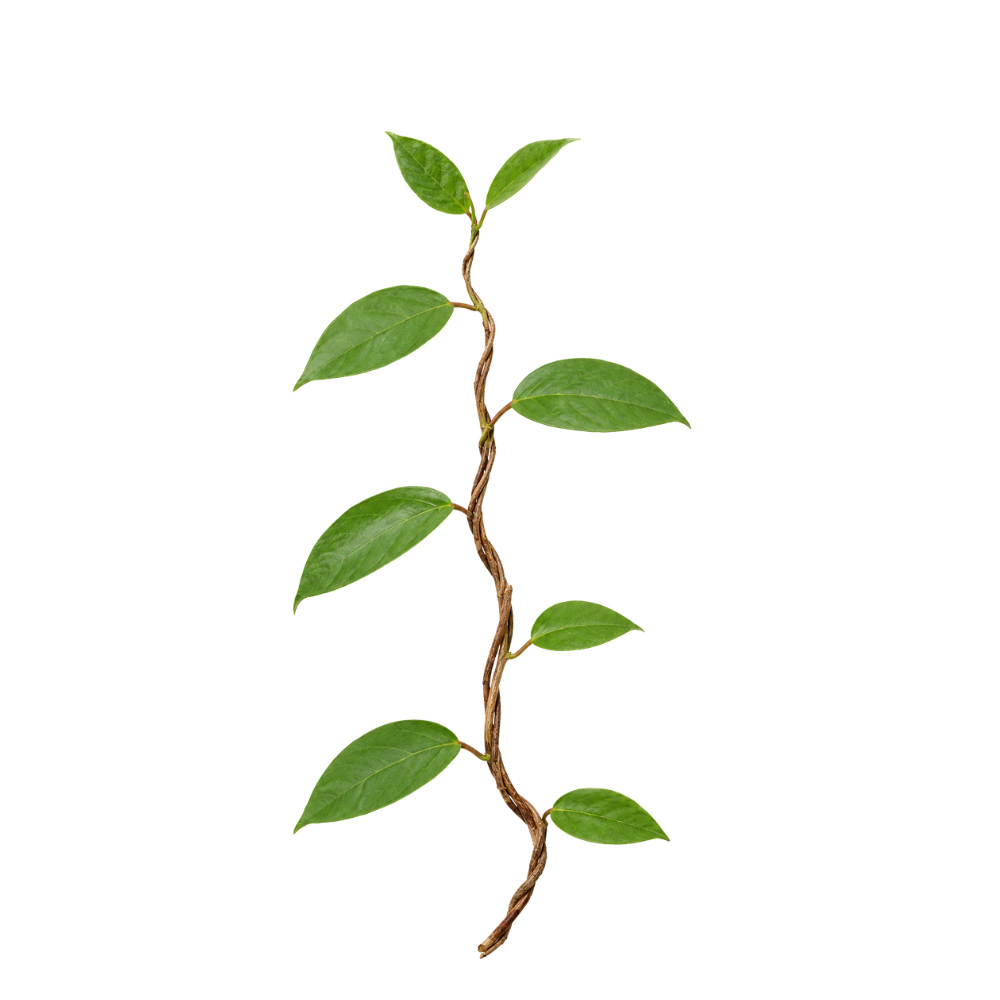
Ayahuasca vine is a giant woody climber of the Amazon rainforest and the main ingredient of the ayahuasca brew. Its stems are rich in harmala alkaloids such as harmine, which block the enzyme MAO-A and let the DMT from a companion plant take effect.
What Is Ayahuasca Vine?
The ayahuasca vine is a giant woody climber of the Amazon rainforest and one of the two plants in ayahuasca, the visionary brew of the western Amazon. Its Quechua name is usually translated “vine of the soul” 4Reference 4ReviewThe therapeutic potentials of ayahuasca: possible effects against various diseases of civilization — reviewView study →.
The vine grows wild in the rainforests of Brazil, Peru, Colombia, Ecuador, Bolivia and Venezuela, and indigenous peoples also cultivate it 29Reference 29Fern, K. (n.d.). Banisteriopsis caapi — habit, range, habitat, cultivation and uses — species database. Useful Tropical Plants Database. https://tropical.theferns.info/viewtropical.php?id=Banisteriopsis+caapiView study →. Its woody stems are boiled together with a second, DMT-bearing plant to make the brew 4Reference 4ReviewThe therapeutic potentials of ayahuasca: possible effects against various diseases of civilization — reviewView study →.
The stems are rich in harmala alkaloids, chiefly harmine, tetrahydroharmine and harmaline, which reversibly inhibit the enzyme monoamine oxidase-A (MAO-A) 4Reference 4ReviewThe therapeutic potentials of ayahuasca: possible effects against various diseases of civilization — reviewView study →. A placebo-controlled trial of the brew found a rapid antidepressant effect in treatment-resistant depression 7Reference 7RCTRapid antidepressant effects of the psychedelic ayahuasca in treatment-resistant depression — a randomized placebo-controlled trialView study →.
The vine and the brew share a name. “Ayahuasca vine”, or caapi, is the single plant, Banisteriopsis caapi. “Ayahuasca” is the brew made from the vine and a DMT-bearing plant.
What Is Ayahuasca? (The Two-Plant Brew)
Ayahuasca is a combination of two plants, decocted together into a thick, bitter brew 4Reference 4ReviewThe therapeutic potentials of ayahuasca: possible effects against various diseases of civilization — reviewView study →. Neither plant produces the full effect on its own.
The formula pairs:
- A monoamine-oxidase-inhibiting (MAOI) plant — almost always the ayahuasca vine, Banisteriopsis caapi, supplying the harmala β-carbolines (harmine, harmaline, tetrahydroharmine).
- A DMT-bearing plant — most often chacruna (Psychotria viridis), supplying N,N-dimethyltryptamine (DMT) 4Reference 4ReviewThe therapeutic potentials of ayahuasca: possible effects against various diseases of civilization — reviewView study →.
Swallowed on its own, DMT is broken down in the gut and liver by MAO before it can reach the brain, so it has little effect by mouth. The vine’s harmala alkaloids inhibit that enzyme, so the DMT survives digestion and reaches the brain 3,
Other regional names for the brew include yagé (or yajé), natema, hoasca and daime 4Reference 4ReviewThe therapeutic potentials of ayahuasca: possible effects against various diseases of civilization — reviewView study →.
Common Ayahuasca Admixture Plants
The vine is the constant; the DMT source varies by region and availability. The most common admixtures brewed alongside the caapi vine are:
| Admixture plant | Botanical name | Role in the brew |
|---|---|---|
| Chacruna | Psychotria viridis | The classic DMT-bearing leaf; the most widespread admixture |
| Chagropanga / Chaliponga | Diplopterys cabrerana | A DMT-rich vine leaf used especially in the north-west Amazon |
| Jurema | Mimosa spp. (e.g. M. tenuiflora) | DMT-rich root bark, the basis of Brazilian jurema preparations |
A handful of other DMT-containing plants are used occasionally. Outside South America, people sometimes use other harmala sources in place of the vine, most notably Syrian rue (Peganum harmala), whose seeds carry the same harmala alkaloids as caapi. They may also use another DMT source, such as bundleflower (Desmanthus illinoensis) root bark. These substitutes follow the same MAOI-plus-DMT pairing as the traditional brew, outside its Amazonian ceremonial setting.
How Is Ayahuasca Vine Used?
Within the brew. The pounded woody vine is simmered for hours with the leaves of a DMT plant. About 250 mL of the decoction is drunk. Effects begin after roughly an hour and build over the next three to four hours before tapering 3Reference 3ReviewThe scientific investigation of ayahuasca: a review of past and current research. Experienced practitioners prepare and give the brew in a structured ceremonial setting.
The vine alone. The vine is sometimes taken without a DMT plant. A brew made from the vine alone contains no DMT 28Reference 28Biodiversity of β-carboline profile of Banisteriopsis caapi and ayahuasca, a plant and a brew with neuropharmacological potential — chemical analysisView study →, and its effects come from the harmala alkaloids. Some Amazonian traditions use a vine-only decoction for purging and during dieta, and some modern practitioners take low doses of caapi on its own. Most use of the plant is as one half of the two-plant brew.
Traditional Uses
Traditional Amazonian Medicine
Indigenous and mestizo peoples across the western Amazon, in Peru, Colombia, Ecuador, Brazil, Bolivia and Venezuela, have long used ayahuasca in their medical and spiritual systems 4Reference 4ReviewThe therapeutic potentials of ayahuasca: possible effects against various diseases of civilization — reviewView study →. The brew is taken in shaman-led ceremonies to induce visions. In these cultures healing is understood as largely spiritual: the ayahuasca acts as a guide that carries the soul into a spirit world where healing can occur.
The brew is also used to diagnose illness, to let a shaman “see” where food or other medicines can be found, and in chronic or terminal illness and conditions that have not responded to other treatment.
Ayahuasca has been taken for addiction and substance dependence, depression and low mood, anxiety, and for spiritual, personal and community development.
Vomiting during a ceremony is seen in shamanic tradition as a purge that cleanses the body and expels troubling emotions 4Reference 4ReviewThe therapeutic potentials of ayahuasca: possible effects against various diseases of civilization — reviewView study →.
Brazilian Ayahuasca Religions
Ayahuasca is the sacrament of three Brazilian syncretic churches: the Santo Daime, the União do Vegetal (UDV) and the Barquinha 4Reference 4ReviewThe therapeutic potentials of ayahuasca: possible effects against various diseases of civilization — reviewView study →. The brew is called daime in Santo Daime and hoasca in the UDV.
Brazilian brewers recognise several types of vine, such as tucunacá, amarelinho and caupuri, and describe different effects from brews made with each 28Reference 28Biodiversity of β-carboline profile of Banisteriopsis caapi and ayahuasca, a plant and a brew with neuropharmacological potential — chemical analysisView study →.
Indications
- Depression [brew with a DMT-bearing plant]
- Addiction and substance dependence [brew; Amazonian ceremonial use]
- Anxiety [brew]
- Chronic and treatment-resistant illness [brew; Amazonian ceremonial use]
- Spiritual and personal development [brew; Amazonian ceremonial use]
- Purging and dieta [vine alone; Amazonian practice]
- Parkinson’s disease [vine tea and extract] Caution: The human use is historical and poorly documented. In the one modern animal test, the vine extract gave a mild improvement in marmosets but did not add to L-DOPA 16.
Botany
The ayahuasca vine is a giant woody climber, or liana, in the Malpighiaceae family 28,
Brazilian brewers sort the vine into types by its stems. Tucunacá, amarelinho and ourinho have smooth stems, and caupuri has swollen nodes along the stem 28Reference 28Biodiversity of β-carboline profile of Banisteriopsis caapi and ayahuasca, a plant and a brew with neuropharmacological potential — chemical analysisView study →.
The stem and bark are the parts used. In one analysis of leaves, stems and bark, most of the main alkaloids were most concentrated in the dried bark of large branches 2Reference 2In vitroComposition, standardization and chemical profiling of Banisteriopsis caapi — in vitroView study →.
It is a different plant from chacruna (Psychotria viridis), the leafy shrub usually brewed with it, which belongs to the coffee family, Rubiaceae 4Reference 4ReviewThe therapeutic potentials of ayahuasca: possible effects against various diseases of civilization — reviewView study →.
Distribution
The ayahuasca vine grows in the rainforests of northern and western South America, in Brazil, Bolivia, Peru, Colombia, Ecuador and Venezuela 29Reference 29Fern, K. (n.d.). Banisteriopsis caapi — habit, range, habitat, cultivation and uses — species database. Useful Tropical Plants Database. https://tropical.theferns.info/viewtropical.php?id=Banisteriopsis+caapiView study →. It grows from sea level up to about 1,000 m 29Reference 29Fern, K. (n.d.). Banisteriopsis caapi — habit, range, habitat, cultivation and uses — species database. Useful Tropical Plants Database. https://tropical.theferns.info/viewtropical.php?id=Banisteriopsis+caapiView study →.
The vine is harvested from the wild and is also cultivated by indigenous peoples 29Reference 29Fern, K. (n.d.). Banisteriopsis caapi — habit, range, habitat, cultivation and uses — species database. Useful Tropical Plants Database. https://tropical.theferns.info/viewtropical.php?id=Banisteriopsis+caapiView study →. In Brazil it is grown well outside the Amazon, in the Federal District and Goiás. Wild vines there had significantly more harmine than cultivated ones 28Reference 28Biodiversity of β-carboline profile of Banisteriopsis caapi and ayahuasca, a plant and a brew with neuropharmacological potential — chemical analysisView study →.
Growing Conditions
Cultivation snapshot for Ayahuasca Vine
- Strictly tropical: wants year-round warmth, high humidity and no frost — it cannot tolerate cold winters.
- A vigorous climbing liana that needs a strong support or tree to ascend, and plenty of vertical room over time.
- Prefers rich, moist, well-drained rainforest-type soil that never fully dries out.
- Does best in filtered light or part shade when young, tolerating more sun as it reaches for the canopy; usually grown from stem cuttings, since it flowers and seeds only rarely.
Grow it yourself
Farm Wiki is our cultivation-focused sister site, also run by Justin Cooke.
Pharmacology & Research
Most human research on Banisteriopsis caapi is on the ayahuasca brew, which combines the vine’s harmala alkaloids with DMT from a second plant. For depression it includes one double-blind, placebo-controlled trial in treatment-resistant depression, open-label pilots and biomarker studies 7,
The vine and its alkaloids have a separate line of research on MAO inhibition, the growth of new brain cells and Parkinson’s disease. This work is in animals and cells 14,
A 2025 systematic review of 14 animal studies of the brew found effects on motor and cognitive behaviour, and noted that the studies were few and used unstandardised doses 25Reference 25Systematic reviewEffects of ayahuasca in preclinical studies with animals: a systematic reviewView study →.
-
Best-supported: rapid antidepressant effect of the brew in treatment-resistant depression — one placebo-controlled RCT plus consistent open-label pilots 7,
8, .9Reference 7RCTRapid antidepressant effects of the psychedelic ayahuasca in treatment-resistant depression — a randomized placebo-controlled trialView study →Reference 8Clinical trialAntidepressant effects of a single dose of ayahuasca in patients with recurrent depression: a preliminary report — open-label trialView study →Reference 9Clinical trialAntidepressant effects of a single dose of ayahuasca in patients with recurrent depression: a SPECT study — open-label trialView study → -
Emerging, worth watching: the vine’s alkaloids stimulate adult neurogenesis in vitro, and a standardised B. caapi extract improved motor disability in a primate Parkinson’s model — both preclinical 14,
16Reference 14In vitroThe alkaloids of Banisteriopsis caapi stimulate adult neurogenesis in vitroView study →Reference 16AnimalThe effect of Banisteriopsis caapi on motor deficits in the MPTP-treated common marmoset model of Parkinson’s disease — animal modelView study → . -
Mechanistically thin: anti-inflammatory and anxiolytic claims rest on cell-line, biomarker and secondary-outcome data, not dedicated trials 12,
18Reference 12RCTChanges in inflammatory biomarkers are related to the antidepressant effects of ayahuasca — randomized placebo-controlled trialView study →Reference 18In vitroAnti-inflammatory effects of Banisteriopsis caapi and beta-carbolines in neuronal cells — in vitroView study → . One rat study found the extract increased brain inflammation 22Reference 22AnimalBanisteriopsis caapi extract: implications for neuroinflammatory pathways in a locus coeruleus lesion rodent model — animal modelView study →. -
The caveat: every human efficacy result is for the full DMT-containing brew under ceremonial or clinical supervision, not for caapi alone, and alkaloid content is highly variable 1,
28Reference 1Phytochemical analyses of Banisteriopsis caapi and Psychotria viridisView study →Reference 28Biodiversity of β-carboline profile of Banisteriopsis caapi and ayahuasca, a plant and a brew with neuropharmacological potential — chemical analysisView study → .
The human evidence is for the whole brew, not the vine taken alone. The vine’s alkaloid content also varies widely from plant to plant 28Reference 28Biodiversity of β-carboline profile of Banisteriopsis caapi and ayahuasca, a plant and a brew with neuropharmacological potential — chemical analysisView study →, so a result from one brew does not carry over to another preparation.
1. Antidepressant
A parallel-arm, double-blind, placebo-controlled RCT in 29 patients with treatment-resistant depression found that a single dose of the brew lowered depression scores (MADRS) more than placebo at 1, 2 and 7 days 7Reference 7RCTRapid antidepressant effects of the psychedelic ayahuasca in treatment-resistant depression — a randomized placebo-controlled trialView study →. The between-group effect size grew to Cohen’s d = 1.49 by day 7, and the response rate at day 7 was 64% against 27% 7Reference 7RCTRapid antidepressant effects of the psychedelic ayahuasca in treatment-resistant depression — a randomized placebo-controlled trialView study →.
Two open-label inpatient pilots from a Brazilian group came first. In 6 patients, depression scores fell by up to 82%, and in 17 patients scores fell from 80 minutes after dosing out to day 21 8,
Sub-studies of the RCT found that serum BDNF rose two days after the brew 11Reference 11RCTModulation of serum brain-derived neurotrophic factor by a single dose of ayahuasca: observation from a randomized controlled trialView study →. C-reactive protein fell, and larger falls went with lower depression scores at 48 hours 12Reference 12RCTChanges in inflammatory biomarkers are related to the antidepressant effects of ayahuasca — randomized placebo-controlled trialView study →. A secondary analysis found that suicidality scores fell over time, and the difference from placebo fell short of significance (p = 0.088) 10Reference 10RCTThe impact of ayahuasca on suicidality: results from a randomized controlled trialView study →.
A living meta-analysis pooled trials of psilocybin, ayahuasca and LSD in major depression and found a reduction in symptoms, with very low certainty of evidence 27Reference 27Meta-analysisEfficacy, all-cause discontinuation, and safety of serotonergic psychedelics and MDMA to treat mental disorders: a living systematic review with meta-analysisView study →. Systematic reviews rate ayahuasca as promising but preliminary 24,
In the brew, the vine’s harmine, tetrahydroharmine and harmaline supply the MAO inhibition that lets DMT act by mouth, and tetrahydroharmine also inhibits serotonin reuptake 4Reference 4ReviewThe therapeutic potentials of ayahuasca: possible effects against various diseases of civilization — reviewView study →.
Gap: No RCT has ever tested caapi or its alkaloids alone for depression; the human efficacy data cannot be attributed to the vine by itself.
2. Neuroprotective
Isolated harmine from caapi was tried for post-encephalitic Parkinsonism in the 1920s–30s, and the vine has been reported to help Parkinson’s symptoms when drunk as a tea, though these reports are poorly documented 16Reference 16AnimalThe effect of Banisteriopsis caapi on motor deficits in the MPTP-treated common marmoset model of Parkinson’s disease — animal modelView study →. Modern work has revisited it. In MPTP-treated common marmosets, an oral B. caapi extract improved motor disability at the two higher doses. It did not enhance the L-DOPA response or reduce dyskinesia, and injected harmine gave a milder improvement 16Reference 16AnimalThe effect of Banisteriopsis caapi on motor deficits in the MPTP-treated common marmoset model of Parkinson’s disease — animal modelView study →.
A standardised aqueous stem extract inhibits both MAO-A and MAO-B 2,
In a cell model of Parkinson’s disease, crude vine extracts, alkaloid fractions and harmine protected neuroblastoma cells 21Reference 21In vitroNeuroprotective potential of ayahuasca and untargeted metabolomics analyses: applicability to Parkinson’s disease — in vitroView study →.
Injected harmine protected rats against 3-nitropropionic acid, a toxin used to model Huntington’s disease, by enhancing NRF2 signalling 19Reference 19AnimalHarmine prevents 3-nitropropionic acid-induced neurotoxicity in rats via enhancing NRF2-mediated signaling — animal modelView study →.
Most of this concerns the vine or harmine alone, the forms in which caapi is sometimes used without a DMT plant.
Gap: All modern data is animal or in vitro; the human evidence is nearly a century old and anecdotal, and no controlled trial of caapi extract in Parkinson’s disease has been completed.
3. Neurogenic
In neurospheres grown from adult mouse brain, the three main caapi alkaloids (harmine, tetrahydroharmine and harmaline) and the harmine metabolite harmol stimulated neural stem-cell proliferation, migration and differentiation into neurons in vitro 14Reference 14In vitroThe alkaloids of Banisteriopsis caapi stimulate adult neurogenesis in vitroView study →. The authors suggest this may contribute to the antidepressant effect of ayahuasca 14Reference 14In vitroThe alkaloids of Banisteriopsis caapi stimulate adult neurogenesis in vitroView study →.
Separately, DMT (from the admixture plant, not the vine) activated the hippocampal neurogenic niche in vitro and in mice and improved memory tasks, through sigma-1 receptor signalling 15Reference 15In vitroN,N-dimethyltryptamine regulates adult neurogenesis in vitro and in vivo — mouse modelView study →.
Gap: Entirely preclinical and mostly in vitro; no evidence that oral caapi produces meaningful neurogenesis in humans at any realistic dose.
4. Anti-Addiction
Amazonian medicine has long used ayahuasca for addiction. At the accredited Takiwasi Center, a substance-use-disorder programme combines Amazonian medicine, including ayahuasca, with psychotherapy 13Reference 13ObservationalShort-term treatment effects of a substance use disorder therapy involving traditional Amazonian medicine — observational cohortView study →. Among 36 dependence-diagnosed men assessed at admission and discharge, drug and alcohol use, craving and emotional distress fell and quality of life rose 13Reference 13ObservationalShort-term treatment effects of a substance use disorder therapy involving traditional Amazonian medicine — observational cohortView study →.
A review describes ayahuasca as effective for substance dependence when used in a suitable therapeutic or ritual setting with preparation and integration 4Reference 4ReviewThe therapeutic potentials of ayahuasca: possible effects against various diseases of civilization — reviewView study →.
Gap: The Takiwasi data is uncontrolled and confounded by an intensive residential programme — the ayahuasca contribution cannot be isolated. No RCT for addiction exists.
5. Anxiolytic
Anxiety reduction comes mainly from the depression trials rather than dedicated anxiety studies. The first open-label pilot reported significant falls on the anxious-depression subscale of the Brief Psychiatric Rating Scale and concluded that the brew has fast-acting anxiolytic effects 8Reference 8Clinical trialAntidepressant effects of a single dose of ayahuasca in patients with recurrent depression: a preliminary report — open-label trialView study →.
A systematic review found anxiolytic effects of ayahuasca, harmine and harmaline in animal studies, and reductions in anxiety in human studies 24Reference 24ReviewAntidepressive and anxiolytic effects of ayahuasca: a systematic literature review of animal and human studiesView study →.
6. Anti-Inflammatory
In LPS-stimulated human SH-SY5Y neuronal cells, harmine and harmaline significantly reduced IL-6 and TNF-α. The vine extract lowered NF-κB and TNF-α but not IL-6 18Reference 18In vitroAnti-inflammatory effects of Banisteriopsis caapi and beta-carbolines in neuronal cells — in vitroView study →.
In mouse BV-2 microglial cells, harmaline, tetrahydroharmine and fractions of the extract reduced pro-inflammatory cytokines. Harmine was toxic to these cells at high concentrations 23Reference 23In vitroComponents of Banisteriopsis caapi induce immunomodulatory effects — in vitroView study →.
In the depression RCT, C-reactive protein fell after the brew but not after placebo 12Reference 12RCTChanges in inflammatory biomarkers are related to the antidepressant effects of ayahuasca — randomized placebo-controlled trialView study →.
One rat study found the opposite. In rats with lesions of the locus coeruleus, a brain region that makes noradrenaline, the vine extract depleted noradrenergic neurons and increased inflammatory microglia 22Reference 22AnimalBanisteriopsis caapi extract: implications for neuroinflammatory pathways in a locus coeruleus lesion rodent model — animal modelView study →.
Mechanisms
The vine’s main alkaloids, harmine, tetrahydroharmine and harmaline, are reversible inhibitors of MAO-A 4,
The alkaloids have also been studied for stimulating new nerve cells, for lowering inflammatory cytokines and for NRF2 signalling in cells and animals 14,
| Mechanism | Drives | Key compounds |
|---|---|---|
| Reversible MAO-A inhibition | antidepressant; enables oral DMT to survive digestion | harmine, harmaline, tetrahydroharmine |
| Weak MAO-B inhibition; antioxidant activity | neuroprotective | harmine, harmaline, epicatechin, procyanidin B2 |
| Neural stem-cell proliferation / adult neurogenesis | antidepressantneurogenic | harmine, tetrahydroharmine, harmol |
| Cytokine suppression (IL-6 ↓, TNF-α ↓), NRF2 ↑ | anti-inflammatoryneuroprotective | harmine, harmaline |
| Serotonin-reuptake inhibition | antidepressant | tetrahydroharmine |
| 5-HT2A agonism, sigma-1 receptor activation | antidepressantneurogenic | DMT (from the admixture plant, not the vine) |
Clinical Trials
At least a dozen trials of ayahuasca or its isolated alkaloids (harmine, and DMT with harmine) are registered. The depression evidence rests on a single completed placebo-controlled RCT, one recent psychedelic-assessment programme was terminated, and the rest are early-phase or test the whole brew.
The closest study of the vine rather than the brew is a Phase 1 single-ascending-dose study of pure oral harmine in 25 healthy volunteers. It set the maximum tolerated dose at 100–200 mg, and it tested safety and dose rather than efficacy 20Reference 20RCTA Phase 1 single ascending dose study of pure oral harmine in healthy volunteers — randomized dose-escalation trialView study →.
| Completed | Planned | Terminated | Preclinical |
|---|---|---|---|
| ~9 | ~4 | 1 | ~40+ |
Last checked: August 2026.
Phytochemistry
The main constituents of Banisteriopsis caapi are the β-carboline harmala alkaloids harmine, tetrahydroharmine and harmaline 1,
Levels vary widely between plants. Harmine ranged up to 18 mg/g and tetrahydroharmine up to 29 mg/g, and nine samples contained none of the three 28Reference 28Biodiversity of β-carboline profile of Banisteriopsis caapi and ayahuasca, a plant and a brew with neuropharmacological potential — chemical analysisView study →. During brewing, harmine is partly converted to harmaline and then to tetrahydroharmine 28Reference 28Biodiversity of β-carboline profile of Banisteriopsis caapi and ayahuasca, a plant and a brew with neuropharmacological potential — chemical analysisView study →.
The vine does not make DMT. The brew’s DMT comes from companion plants such as Psychotria viridis 1,
The stem extract also contains harmol, tetrahydronorharmine, two alkaloid glycosides called banistenosides A and B, and the proanthocyanidins epicatechin and procyanidin B2 17Reference 17In vitroBanisteriopsis caapi, a unique combination of MAO inhibitory and antioxidative constituents — in vitroView study →.
Constituent Summary
Amounts are for dried stem, from 159 Brazilian samples 28Reference 28Biodiversity of β-carboline profile of Banisteriopsis caapi and ayahuasca, a plant and a brew with neuropharmacological potential — chemical analysisView study →.
β-Carboline5 compounds3 with data
Dosage
The ayahuasca vine is taken in a ceremonial setting, where experienced practitioners control the ratio of vine to admixture, the brewing time and the amount taken. A typical brew is a single dose of about 250 mL of decoction 3Reference 3ReviewThe scientific investigation of ayahuasca: a review of past and current research. Its harmala and DMT content varies widely between batches 28Reference 28Biodiversity of β-carboline profile of Banisteriopsis caapi and ayahuasca, a plant and a brew with neuropharmacological potential — chemical analysisView study →.
The trials below dosed a finished brew by body weight, or pure harmine.
| Indication | Preparation | Dose | Source |
|---|---|---|---|
| Depression (treatment-resistant) | Ayahuasca brew, single dose | 1 mL/kg, giving about 0.36 mg/kg DMT and 1.9 mg/kg harmine | 7Reference 7RCTRapid antidepressant effects of the psychedelic ayahuasca in treatment-resistant depression — a randomized placebo-controlled trialView study → |
| Depression (recurrent) | Ayahuasca decoction, single dose | 2.2 mL/kg | 9Reference 9Clinical trialAntidepressant effects of a single dose of ayahuasca in patients with recurrent depression: a SPECT study — open-label trialView study → |
| Harmine tolerability (healthy volunteers) | Pure oral harmine HCl | Maximum tolerated dose 100–200 mg; dose-limiting effects above 2.7 mg/kg | 20Reference 20RCTA Phase 1 single ascending dose study of pure oral harmine in healthy volunteers — randomized dose-escalation trialView study → |
Traditional Dosage
| System | Preparation | Dose |
|---|---|---|
| Amazonian ceremonial (the brew) | Decoction of caapi stem + a DMT-bearing admixture leaf, simmered for hours | ~250 mL of the finished brew, as a single supervised dose 3Reference 3ReviewThe scientific investigation of ayahuasca: a review of past and current research |
| Amazonian (vine alone, dieta) | Low-dose caapi-only decoction | No standardised dose; set by the practitioner |
Safety & Pregnancy
The vine’s harmala alkaloids are reversible MAO-A inhibitors. This makes it hazardous with serotonergic drugs and unsuitable for people with heart disease or psychiatric illness.
- MAO-A inhibition. The harmala alkaloids reversibly inhibit MAO-A. Combined with SSRIs, other MAO inhibitors or St John’s wort, this can cause serotonin toxicity 4Reference 4ReviewThe therapeutic potentials of ayahuasca: possible effects against various diseases of civilization — reviewView study →.
- Dietary & blood-pressure risk. MAO inhibition makes tyramine-rich foods and many medications hazardous, with a risk of dangerous blood-pressure spikes.
- Heart disease and psychiatric illness. Avoid where there is existing heart or psychiatric disease. The brew raises blood pressure and pulse 4Reference 4ReviewThe therapeutic potentials of ayahuasca: possible effects against various diseases of civilization — reviewView study → and commonly causes vomiting 7,
9Reference 7RCTRapid antidepressant effects of the psychedelic ayahuasca in treatment-resistant depression — a randomized placebo-controlled trialView study →Reference 9Clinical trialAntidepressant effects of a single dose of ayahuasca in patients with recurrent depression: a SPECT study — open-label trialView study → . - Harmine becomes poorly tolerated above about 2.7 mg/kg. In a Phase 1 study of pure oral harmine, doses above that caused vomiting and drowsiness 20Reference 20RCTA Phase 1 single ascending dose study of pure oral harmine in healthy volunteers — randomized dose-escalation trialView study →.
- A subset develop persisting psychiatric complications. Prospective studies show mental-health improvement at the population level, alongside some participants with lasting psychiatric complications 26Reference 26Systematic reviewPreliminary effects of ayahuasca on mental and physical health: a systematic review of prospective studiesView study →.
- Avoid in pregnancy. No safety data, and the alkaloids are pharmacologically active.
- Legal status. Ayahuasca and DMT are controlled in many countries, with some religious exemptions.
- Ceremonial use only. Taken only in a knowledgeable, supported setting, never as a self-dosed remedy.
Full Safety & Interactions Detail
MAO-A inhibition. The vine’s harmine, harmaline and tetrahydroharmine are reversible inhibitors of MAO-A 1,
Blood pressure and foods. MAO inhibition makes the body sensitive to tyramine-rich foods and to many other medicines, with a risk of dangerous blood-pressure spikes. The brew itself raises blood pressure and pulse 4Reference 4ReviewThe therapeutic potentials of ayahuasca: possible effects against various diseases of civilization — reviewView study →.
Vomiting. In the RCT, 57% of people who drank the brew vomited and 71% had nausea 7Reference 7RCTRapid antidepressant effects of the psychedelic ayahuasca in treatment-resistant depression — a randomized placebo-controlled trialView study →. In the SPECT study, vomiting was the only adverse effect, reported by 47% 9Reference 9Clinical trialAntidepressant effects of a single dose of ayahuasca in patients with recurrent depression: a SPECT study — open-label trialView study →.
Harmine dose. In a Phase 1 study of pure oral harmine in healthy volunteers, adverse effects were mainly gastrointestinal and neurological and rose with dose. Doses below 2.7 mg/kg caused few or no adverse effects, and doses above it caused vomiting, drowsiness and limited psychoactivity 20Reference 20RCTA Phase 1 single ascending dose study of pure oral harmine in healthy volunteers — randomized dose-escalation trialView study →. The depression RCT brew gave about 1.9 mg/kg harmine 7Reference 7RCTRapid antidepressant effects of the psychedelic ayahuasca in treatment-resistant depression — a randomized placebo-controlled trialView study →. The vine’s alkaloid content varies widely between plants 28Reference 28Biodiversity of β-carboline profile of Banisteriopsis caapi and ayahuasca, a plant and a brew with neuropharmacological potential — chemical analysisView study →, so the same volume of decoction does not always give the same dose.
Psychiatric effects. Ayahuasca often brings on psychologically demanding experiences. Prospective studies found mental-health improvement across groups of users, and also some participants with persisting psychiatric complications linked to their use 26Reference 26Systematic reviewPreliminary effects of ayahuasca on mental and physical health: a systematic review of prospective studiesView study →.
Who should avoid it. People with heart disease or psychiatric vulnerability, including psychosis and bipolar risk. DMT and ayahuasca are controlled in many jurisdictions, with limited religious exemptions.
Avoid. There is no safety data for ayahuasca vine in pregnancy or while breastfeeding, and its harmala alkaloids are pharmacologically active MAO inhibitors. It is best avoided in both.
References
- Callaway, J. C., Brito, G. S., & Neves, E. S. (2005). Phytochemical analyses of Banisteriopsis caapi and Psychotria viridis. Journal of Psychoactive Drugs. https://pubmed.ncbi.nlm.nih.gov/16149327/
- Wang, Y. H., Samoylenko, V., Tekwani, B. L., et al. (2010). Composition, standardization and chemical profiling of Banisteriopsis caapi — in vitro. Journal of Ethnopharmacology. https://pubmed.ncbi.nlm.nih.gov/20219660/
- McKenna, D. J., Callaway, J. C., & Grob, C. S. (1998). The scientific investigation of ayahuasca: a review of past and current research. The Heffter Review of Psychedelic Research, 1, 65-77.
- Frecska, E., Bokor, P., & Winkelman, M. (2016). The therapeutic potentials of ayahuasca: possible effects against various diseases of civilization — review. Frontiers in Pharmacology. https://pubmed.ncbi.nlm.nih.gov/26973523/
- dos Santos, R. G. (2010). The pharmacology of ayahuasca: a review. Brasília Médica, 47(2), 188-195.
- Naranjo, C. (1967). Psychotropic properties of the harmala alkaloids. In D. H. Efron, B. Holmstedt, & N. S. Kline (Eds.), Ethnopharmacologic Search for Psychoactive Drugs (pp. 385-391). Washington, DC: US Public Health Service.
- Palhano-Fontes, F., Barreto, D., Onias, H., et al. (2019). Rapid antidepressant effects of the psychedelic ayahuasca in treatment-resistant depression — a randomized placebo-controlled trial. Psychological Medicine. https://pubmed.ncbi.nlm.nih.gov/29903051/
- Osório, F. L., Sanches, R. F., Macedo, L. R., et al. (2015). Antidepressant effects of a single dose of ayahuasca in patients with recurrent depression: a preliminary report — open-label trial. Braz J Psychiatry. https://pubmed.ncbi.nlm.nih.gov/25806551/
- Sanches, R. F., de Lima Osório, F., Dos Santos, R. G., et al. (2016). Antidepressant effects of a single dose of ayahuasca in patients with recurrent depression: a SPECT study — open-label trial. Journal of Clinical Psychopharmacology. https://pubmed.ncbi.nlm.nih.gov/26650973/
- Zeifman, R. J., Palhano-Fontes, F., Hallak, J., et al. (2019). The impact of ayahuasca on suicidality: results from a randomized controlled trial. Frontiers in Pharmacology. https://pubmed.ncbi.nlm.nih.gov/31798447/
- de Almeida, R. N., Galvão, A. C. M., da Silva, F. S., et al. (2019). Modulation of serum brain-derived neurotrophic factor by a single dose of ayahuasca: observation from a randomized controlled trial. Frontiers in Psychology. https://pubmed.ncbi.nlm.nih.gov/31231276/
- Galvão-Coelho, N. L., de Menezes Galvão, A. C., de Almeida, R. N., et al. (2020). Changes in inflammatory biomarkers are related to the antidepressant effects of ayahuasca — randomized placebo-controlled trial. Journal of Psychopharmacology. https://pubmed.ncbi.nlm.nih.gov/32648790/
- Berlowitz, I., Walt, H., Ghasarian, C., et al. (2019). Short-term treatment effects of a substance use disorder therapy involving traditional Amazonian medicine — observational cohort. Journal of Psychoactive Drugs. https://pubmed.ncbi.nlm.nih.gov/31043116/
- Morales-García, J. A., de la Fuente Revenga, M., Alonso-Gil, S., et al. (2017). The alkaloids of Banisteriopsis caapi stimulate adult neurogenesis in vitro. Scientific Reports. https://pubmed.ncbi.nlm.nih.gov/28706205/
- Morales-García, J. A., Calleja-Conde, J., Lopez-Moreno, J. A., et al. (2020). N,N-dimethyltryptamine regulates adult neurogenesis in vitro and in vivo — mouse model. Translational Psychiatry. https://pubmed.ncbi.nlm.nih.gov/32989216/
- Fisher, R., Lincoln, L., Jackson, M. J., et al. (2018). The effect of Banisteriopsis caapi on motor deficits in the MPTP-treated common marmoset model of Parkinson’s disease — animal model. Phytotherapy Research. https://pubmed.ncbi.nlm.nih.gov/29368409/
- Samoylenko, V., Rahman, M. M., Tekwani, B. L., et al. (2010). Banisteriopsis caapi, a unique combination of MAO inhibitory and antioxidative constituents — in vitro. Journal of Ethnopharmacology. https://pubmed.ncbi.nlm.nih.gov/19879939/
- Bianco, L. S., Nicoliche, T., Corrêa-Neto, N. F., et al. (2025). Anti-inflammatory effects of Banisteriopsis caapi and beta-carbolines in neuronal cells — in vitro. Frontiers in Pharmacology. https://pubmed.ncbi.nlm.nih.gov/41668808/
- Habib, M. Z., Tadros, M. G., Abd-Alkhalek, H. A., et al. (2022). Harmine prevents 3-nitropropionic acid-induced neurotoxicity in rats via enhancing NRF2-mediated signaling — animal model. European Journal of Pharmacology. https://pubmed.ncbi.nlm.nih.gov/35623405/
- Ables, J. L., Israel, L., Wood, O., et al. (2024). A Phase 1 single ascending dose study of pure oral harmine in healthy volunteers — randomized dose-escalation trial. Journal of Psychopharmacology. https://pubmed.ncbi.nlm.nih.gov/39301926/
- Katchborian-Neto, A., Santos, W. T., Nicácio, K. J., et al. (2020). Neuroprotective potential of ayahuasca and untargeted metabolomics analyses: applicability to Parkinson’s disease — in vitro. Journal of Ethnopharmacology. https://pubmed.ncbi.nlm.nih.gov/32171895/
- Graça, S. C., Bustelli, I. B., Santos, É. V. D., et al. (2025). Banisteriopsis caapi extract: implications for neuroinflammatory pathways in a locus coeruleus lesion rodent model — animal model. Journal of Ethnopharmacology. https://pubmed.ncbi.nlm.nih.gov/39244172/
- Santos, B. W. L., Moreira, D. C., Borges, T. K. D. S., et al. (2022). Components of Banisteriopsis caapi induce immunomodulatory effects — in vitro. Molecules. https://pubmed.ncbi.nlm.nih.gov/35458698/
- Dos Santos, R. G., Osório, F. L., Crippa, J. A., et al. (2016). Antidepressive and anxiolytic effects of ayahuasca: a systematic literature review of animal and human studies. Braz J Psychiatry. https://pubmed.ncbi.nlm.nih.gov/27111702/
- Walsh-Monteiro, A., Morato, S., Uribe, F. A. R., et al. (2025). Effects of ayahuasca in preclinical studies with animals: a systematic review. Brazilian Journal of Medical and Biological Research. https://pubmed.ncbi.nlm.nih.gov/40900463/
- Haupt, M. J., Carra, S., Boehnke, K. F., et al. (2026). Preliminary effects of ayahuasca on mental and physical health: a systematic review of prospective studies. Progress in Neuro-Psychopharmacology & Biological Psychiatry. https://pubmed.ncbi.nlm.nih.gov/41667049/
- Højlund, M., Kafali, H. Y., Kırmızı, B., et al. (2025). Efficacy, all-cause discontinuation, and safety of serotonergic psychedelics and MDMA to treat mental disorders: a living systematic review with meta-analysis. European Neuropsychopharmacology. https://pubmed.ncbi.nlm.nih.gov/41205366/
- Santos, B. W. L., Oliveira, R. C., Sonsin-Oliveira, J., Fagg, C. W., Barbosa, J. B. F., & Caldas, E. D. (2020). Biodiversity of β-carboline profile of Banisteriopsis caapi and ayahuasca, a plant and a brew with neuropharmacological potential — chemical analysis. Plants (Basel). https://pubmed.ncbi.nlm.nih.gov/32660098/
- Fern, K. (n.d.). Banisteriopsis caapi — habit, range, habitat, cultivation and uses — species database. Useful Tropical Plants Database. https://tropical.theferns.info/viewtropical.php?id=Banisteriopsis+caapi



