
Materia Medica
Simarouba
Simarouba amara
Simarouba is a tall rainforest tree of the American tropics whose intensely bitter bark is a traditional remedy for dysentery, diarrhoea, fevers and intestinal parasites. Its bitterness comes from quassinoids such as glaucarubinone, studied for their activity against malaria and amoebae.
What Is Simarouba?
Simarouba is a tall evergreen tree of the American tropics whose bark is one of the classic bitter remedies of the region. Amazonian and Caribbean folk medicine uses the bark for dysentery, diarrhoea, fevers and intestinal parasites, and it once had a place in British and American pharmacy as cortex simaruba 11,
Simarouba amara grows in lowland moist forest from Central America and the Caribbean to the Amazon basin 24,
The bitterness comes from quassinoids, among them glaucarubinone and ailanthinone 1Reference 1In vitroPlants as sources of antimalarial drugs, Part 6: activities of Simarouba amara fruits — in vitro and mouse in vivoView study →. Research has looked mainly at their activity against the malaria parasite and the amoeba behind amoebic dysentery, almost all of it in the laboratory and in rodents 1,
The closely related paradise tree, Simarouba glauca, shares much of the same chemistry, and much of the published research on “simarouba” uses that species 6,
How Is Simarouba Used?
Simarouba is used as the dried bark, and in older pharmacy the root bark. It is taken as a bitter decoction or tincture in short courses, for gut infections, fevers and a weak digestion 11,
- Bark decoction — 1–2 g of dried bark, up to three times daily.
- Tincture (1:5) — 1–3 mL two to three times daily.
- Infusion (Eclectic practice) — about a drachm of bark to half a pint of boiling water, a tablespoonful every two hours 22Reference 22Quassia (UView study →.
Traditional Uses
Amazonian & Caribbean Folk Medicine
In Brazil a decoction of the stem bark is taken for malaria, fever, inflammation, abdominal pain and diarrhoea, applied to wounds, and used as a tonic 11Reference 11AnimalHepatoprotective effect of the aqueous extract of Simarouba amara Aublet stem bark against carbon tetrachloride (CCl4)-induced hepatic damage in rats — in vivoView study →.
Across its range the bark and leaves are used for malaria, fevers and dysentery, and against parasites both inside and on the body. The bark is also taken as a bitter tonic and a digestive 25Reference 25Fern, K. (n.d.). Simarouba amara — species database entry. Useful Tropical Plants Database. https://tropical.theferns.info/viewtropical.php?id=Simarouba+amaraView study →. It is prepared as a decoction or tincture.
Eclectic & Early Western Pharmacy
The bark was known to eighteenth-century British physicians as cortex simaruba. In 1790 William Wright, Physician General in Jamaica, published a botanical and medical account of the tree 23Reference 23A botanical and medical account of the Quassia simaruba, or tree which produces the cortex simaruba — historical articleView study →.
King’s American Dispensatory (1898) records that simaruba was first introduced to physicians as a soothing astringent for chronic dysentery and diarrhoea. The Eclectics came to use it as a simple bitter tonic instead, for dyspepsia, loss of appetite and recovery from intermittent fevers, and as a substitute for quassia 22Reference 22Quassia (UView study →.
The root bark was the official part. In large doses it caused vomiting and purging, and by 1898 it was seldom used 22Reference 22Quassia (UView study →.
Indications
- Dysentery and diarrhoea [bark; Amazonian and Caribbean folk use, Eclectic medicine]
- Malaria and fevers [bark; Amazonian and Caribbean folk use] Caution: In mice, the purified quassinoid glaucarubinone only slowed deaths from malaria, and its toxicity ruled out further use 5. The bark has never been tested against malaria in people.
- Intestinal worms and other parasites [bark; folk use]
- Poor appetite and weak digestion [bark; bitter tonic, Eclectic medicine]
- Abdominal pain [stem bark decoction; Brazilian folk use]
- Wounds [stem bark; Brazilian folk use]
- Liver protection [aqueous stem-bark extract]
- Dry skin [aqueous extract, applied to the skin]
Botany
Simarouba is a large evergreen tree in the quassia family (Simaroubaceae). It can reach 42 m in height, though it is usually smaller 25Reference 25Fern, K. (n.d.). Simarouba amara — species database entry. Useful Tropical Plants Database. https://tropical.theferns.info/viewtropical.php?id=Simarouba+amaraView study →. Its trunk is straight, cylindrical and without buttresses, up to 50–60 cm across, and often bare of branches for 20–27 m 25Reference 25Fern, K. (n.d.). Simarouba amara — species database entry. Useful Tropical Plants Database. https://tropical.theferns.info/viewtropical.php?id=Simarouba+amaraView study →.
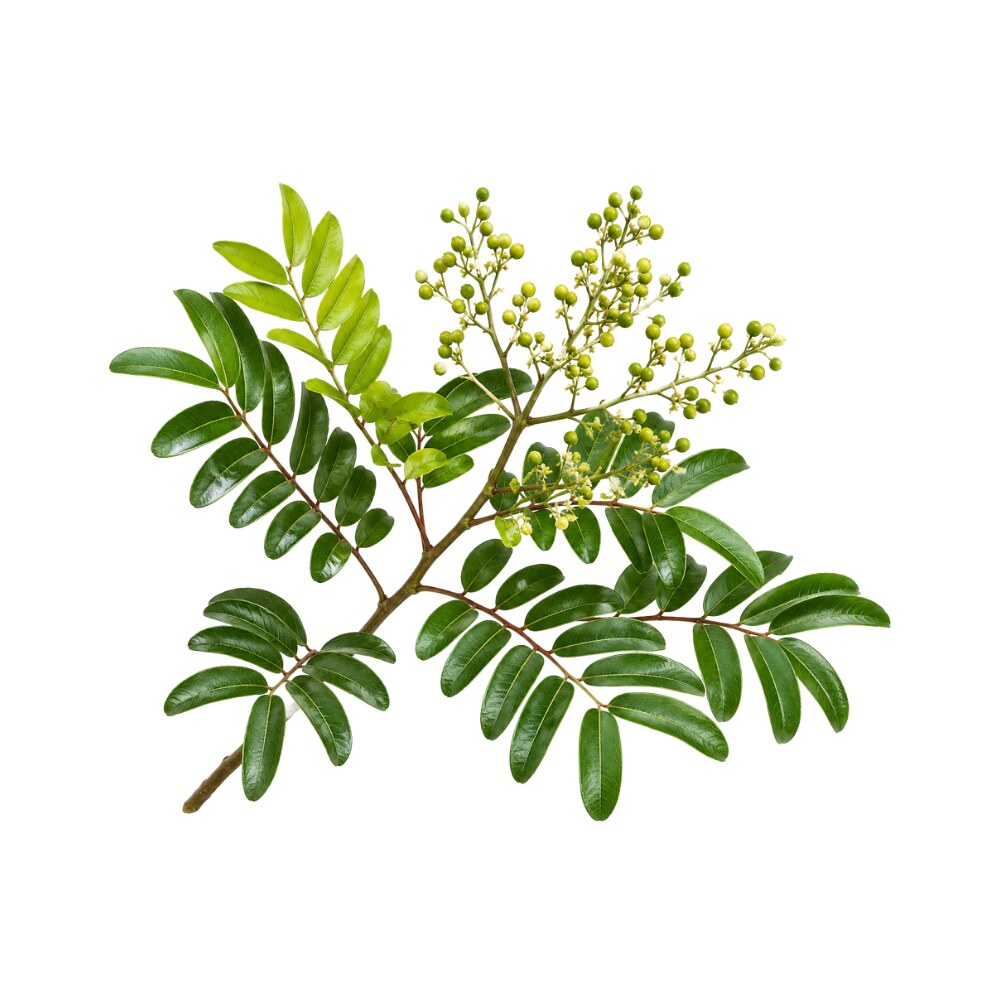
The leaves are alternate and compound, with 8–15 firm, oblong leaflets. Each leaflet is rounded at the tip, green above and pale or bluish-white beneath 26Reference 26TRAMIL. (n.d.). Simarouba amara Aubl. — botanical description. TRAMIL Caribbean Herbal Pharmacopoeia. https://www.tramil.net/en/plant/simarouba-amaraView study →.
The tree is dioecious: each tree bears either male or female flowers 24Reference 24Spatial genetic structure of Simarouba amara Aubl. (Simaroubaceae), a dioecious, animal-dispersed Neotropical tree, on Barro Colorado Island, Panama — population geneticsView study →. The small, pale flowers grow in large, much-branched clusters and are pollinated by insects 24,
The fruit is an oval drupe with thin white pulp. It is bright red at first and turns black when ripe, and animals spread the seed 24,
Distribution
Simarouba grows in lowland moist forest from Central America to the Amazon basin 24Reference 24Spatial genetic structure of Simarouba amara Aubl. (Simaroubaceae), a dioecious, animal-dispersed Neotropical tree, on Barro Colorado Island, Panama — population geneticsView study →. Its range covers Guatemala to Panama, the Caribbean from Trinidad to the Leeward Islands, and South America through Venezuela, the Guianas, Colombia, Ecuador, Peru, Bolivia and Brazil 25Reference 25Fern, K. (n.d.). Simarouba amara — species database entry. Useful Tropical Plants Database. https://tropical.theferns.info/viewtropical.php?id=Simarouba+amaraView study →.
It grows in both dense primary forest and more open secondary growth, up to about 850 m 25Reference 25Fern, K. (n.d.). Simarouba amara — species database entry. Useful Tropical Plants Database. https://tropical.theferns.info/viewtropical.php?id=Simarouba+amaraView study →. The bark is gathered from wild trees and sold in local markets and abroad 25Reference 25Fern, K. (n.d.). Simarouba amara — species database entry. Useful Tropical Plants Database. https://tropical.theferns.info/viewtropical.php?id=Simarouba+amaraView study →.
Growing Conditions
Cultivation snapshot for Simarouba
- Strictly tropical — a lowland rainforest tree that wants warmth year-round (roughly 22–29 °C) and no frost.
- Prefers generous, evenly distributed rainfall (around 2,000–3,000 mm a year), tolerating drier and wetter extremes.
- Fast-growing and light-demanding; young trees do best with good light in gaps or open ground rather than deep shade.
- Adaptable on soils, favoring free-draining sandy ground; not suited to temperate gardens except under glass.
Grow it yourself
Farm Wiki is our cultivation-focused sister site, also run by Justin Cooke.
Pharmacology & Research
The published research on Simarouba amara is small and almost entirely preclinical. Most of it concerns the chemistry of the quassinoids and their activity against protozoa. No controlled human trial of the bark exists.
The most consistent findings are antimalarial and amoebicidal activity in cell culture and rodents 1,
Much of the quassinoid work used purified molecules, often taken from related species (S. glauca, S. tulae) or other members of the family 2,
-
Best-supported: antimalarial and amoebicidal activity of the bark and its quassinoids, replicated across many in vitro and several rodent studies 1,
2, . This matches the plant’s core traditional use.3, 4, 7, 8Reference 1In vitroPlants as sources of antimalarial drugs, Part 6: activities of Simarouba amara fruits — in vitro and mouse in vivoView study →Reference 2In vitroAntimalarial activity of quassinoids against chloroquine-resistant Plasmodium falciparum in vitroView study →Reference 3In vitroIn vitro studies on the mode of action of quassinoids with activity against chloroquine-resistant Plasmodium falciparumView study →Reference 4In vitroComparison of the in vitro activities of quassinoids with activity against Plasmodium falciparum, anisomycin and other inhibitors of eukaryotic protein synthesisView study →Reference 7In vitroUse of microdilution to assess in vitro antiamoebic activities of Brucea javanica fruits, Simarouba amara stem, and quassinoidsView study →Reference 8In vitroQuassinoids exhibit greater selectivity against Plasmodium falciparum than against Entamoeba histolytica, Giardia intestinalis or Toxoplasma gondii in vitroView study → -
Emerging: single in vivo studies of the aqueous bark extract for infectious diarrhoea 10Reference 10AnimalMolecular mechanism of Escherichia coli H10407-induced diarrhoea and its control through immunomodulatory action of bioactives from Simarouba amara (Aubl.) — mouse in vivoView study → and liver protection 11Reference 11AnimalHepatoprotective effect of the aqueous extract of Simarouba amara Aublet stem bark against carbon tetrachloride (CCl4)-induced hepatic damage in rats — in vivoView study →, and a wider anticancer literature on glaucarubinone and simalikalactone D 12,
13, .14, 15Reference 12The isolation and structure of 13,18-dehydroglaucarubinone, a new antineoplastic quassinoid from Simarouba amaraView study →Reference 13In vitroGlaucarubinone and gemcitabine synergistically reduce pancreatic cancer growth via down-regulation of P21-activated kinases — in vitro and mouse xenograftView study →Reference 14In vitroSimalikalactone D, a potential anticancer compound from Simarouba tulae — in vitroView study →Reference 15In vitroMolecular basis of simalikalactone D sensitivity in triple-negative breast cancer cells — in vitroView study → - Thin: the antibacterial evidence rests largely on S. glauca screening 18Reference 18In vitroPlants used in Guatemala for the treatment of gastrointestinal disordersView study →, and the skin-barrier finding on a single cosmetic study 17Reference 17In vitroSimarouba amara extract increases human skin keratinocyte differentiation — in vitro with human hemiface testView study →.
- Limits: no human trials, no standardised bark dose, and the most potent effects come from isolated quassinoids rather than the whole-bark decoction.
Most of the potent findings are for purified quassinoids, not the bark. Several of those molecules were taken from other Simarouba species or other members of the family, and in animals their toxicity has repeatedly stopped further development 2,
1. Antimalarial
Extracts of S. amara fruit collected in Panama inhibited Plasmodium falciparum in vitro and P. berghei in mice. The activity was traced to four quassinoids: ailanthinone, 2’-acetylglaucarubinone, glaucarubinone and holacanthone 1Reference 1In vitroPlants as sources of antimalarial drugs, Part 6: activities of Simarouba amara fruits — in vitro and mouse in vivoView study →.
Purified quassinoids are potent against a chloroquine-resistant strain. Simalikalactone D gave complete inhibition in vitro at 0.005 µg/mL, and glaucarubinone was equally effective at 0.006 µg/mL 2Reference 2In vitroAntimalarial activity of quassinoids against chloroquine-resistant Plasmodium falciparum in vitroView study →.
Quassinoids rapidly block protein synthesis in the parasite, most likely at the ribosome 3Reference 3In vitroIn vitro studies on the mode of action of quassinoids with activity against chloroquine-resistant Plasmodium falciparumView study →. Chloroquine-sensitive and chloroquine-resistant strains were equally sensitive to them 4Reference 4In vitroComparison of the in vitro activities of quassinoids with activity against Plasmodium falciparum, anisomycin and other inhibitors of eukaryotic protein synthesisView study →.
In mice infected with P. berghei, low doses of glaucarubinone partly and briefly suppressed the parasites and delayed deaths. The authors concluded that its toxicity ruled out further use at the time 5Reference 5AnimalTherapeutic trials of experimental murine malaria with the quassinoid glaucarubinone — mouse studyView study →.
Methanol extracts of the related S. glauca reduced parasite levels in infected mice and inhibited both chloroquine-sensitive and chloroquine-resistant P. falciparum in vitro 6Reference 6In vitroIn vivo and in vitro antiplasmodial activities of some plants traditionally used in Guatemala against malariaView study →.
Gap: Every antimalarial result is preclinical, and the most active agents are isolated quassinoids that have not reached clinical development. The bark decoction has never been tested against malaria in humans.
2. Amoebicidal (Antidysenteric)
A microdilution assay found S. amara stem extract active against Entamoeba histolytica in vitro, with the activity concentrated in its quassinoid-containing fractions. Across the quassinoids tested, activity against amoebae was broadly similar to activity against the malaria parasite 7Reference 7In vitroUse of microdilution to assess in vitro antiamoebic activities of Brucea javanica fruits, Simarouba amara stem, and quassinoidsView study →.
Glaucarubinone, ailanthinone and related quassinoids are also active against Giardia and Toxoplasma. They are less selective against these parasites than against Plasmodium, relative to their toxicity to human cells 8Reference 8In vitroQuassinoids exhibit greater selectivity against Plasmodium falciparum than against Entamoeba histolytica, Giardia intestinalis or Toxoplasma gondii in vitroView study →.
The one piece of human evidence is historical and comes from the related species. Glaucarubin, a crystalline glycoside from S. glauca, was used to treat human colonic amoebiasis in a 1956 clinical series 9Reference 9Case reportThe use of glaucarubin (a crystalline glycoside from Simarouba glauca) in the treatment of human colonic amebiasis — clinical case seriesView study →.
Gap: The modern amoebicidal data are in vitro only. The sole human evidence is a 70-year-old uncontrolled series using a single purified glycoside from a different species, not the S. amara bark decoction.
3. Antidiarrhoeal
An aqueous bark extract of S. amara, the same kind of preparation as the traditional decoction, was tested in female BALB/c mice infected with enterotoxigenic E. coli (ETEC H10407). The extract reduced the diarrhoea, bacterial load in the gut and shedding in faeces. It lowered intestinal cAMP, PGE₂ and fluid accumulation, and raised markers of gut immune activity (intestinal alkaline phosphatase, myeloperoxidase, IL-1β and nitric oxide) 10Reference 10AnimalMolecular mechanism of Escherichia coli H10407-induced diarrhoea and its control through immunomodulatory action of bioactives from Simarouba amara (Aubl.) — mouse in vivoView study →.
cAMP-driven fluid loss is the classic pathway of secretory diarrhoea. This is a single animal study with no human data, and the extract was not standardised to any marker compound.
4. Hepatoprotective
Rats were given an aqueous S. amara stem-bark extract for 10 days before a carbon-tetrachloride liver injury. At all three doses (100, 250 and 500 mg/kg) the extract lowered serum liver-injury markers and lipid peroxidation, and staining suggested liver-cell regeneration. Catalase rose at the two higher doses. The authors linked the effect to catechins in the extract 11Reference 11AnimalHepatoprotective effect of the aqueous extract of Simarouba amara Aublet stem bark against carbon tetrachloride (CCl4)-induced hepatic damage in rats — in vivoView study →.
Gap: One rodent model of chemical liver injury, a single study, and no human data. The likely active fraction, catechins, is separate from the plant’s bitter quassinoids.
5. Anticancer
A study of S. amara collected in Guyana, looking for anticancer quassinoids, isolated 13,18-dehydroglaucarubinone. It significantly inhibited the growth of murine P388 lymphocytic leukaemia 12Reference 12The isolation and structure of 13,18-dehydroglaucarubinone, a new antineoplastic quassinoid from Simarouba amaraView study →.
Most of the anticancer work is on individual quassinoids. Glaucarubinone, first isolated from the seeds of S. glauca, reduced the growth of human pancreatic cancer cells in culture and as tumours in mice, and worked better combined with gemcitabine. It lowered the activity of the PAK1 and PAK4 kinases, which act downstream of KRas 13Reference 13In vitroGlaucarubinone and gemcitabine synergistically reduce pancreatic cancer growth via down-regulation of P21-activated kinases — in vitro and mouse xenograftView study →.
Simalikalactone D, isolated from the leaves of the Puerto Rican S. tulae, is cytotoxic to ovarian and breast cancer cell lines at nanomolar concentrations 14Reference 14In vitroSimalikalactone D, a potential anticancer compound from Simarouba tulae — in vitroView study →. In triple-negative breast cancer cells it triggered apoptosis and reduced cell migration 15Reference 15In vitroMolecular basis of simalikalactone D sensitivity in triple-negative breast cancer cells — in vitroView study →.
Glaucarubinone at 1 or 10 nanomolar also increased oxygen use, reduced body fat and extended lifespan in the roundworm Caenorhabditis elegans 16Reference 16AnimalThe phytochemical glaucarubinone promotes mitochondrial metabolism, reduces body fat, and extends lifespan of Caenorhabditis elegans — animal modelView study →.
Gap: No clinical oncology data and no whole-bark study. The effects belong to purified quassinoids, several from other species.
6. Skin-Barrier Support
An aqueous S. amara extract increased the differentiation of human skin keratinocytes in culture. It raised involucrin, transglutaminase activity and barrier lipids (cholesterol sulphate, cholesterol and ceramides). After four weeks applied to half the face of volunteers, skin capacitance and water-loss measurements pointed to better hydration 17Reference 17In vitroSimarouba amara extract increases human skin keratinocyte differentiation — in vitro with human hemiface testView study →.
Gap: A single study from a cosmetics company, with a cosmetic endpoint and no controlled clinical arm.
7. Antibacterial
Direct antibacterial evidence for S. amara is weak. In a Guatemalan screen of 84 plants against five enteric bacteria (E. coli, Salmonella and Shigella species), the Simarouba among the most active American plants was S. glauca, not S. amara 18Reference 18In vitroPlants used in Guatemala for the treatment of gastrointestinal disordersView study →.
The clearest result for S. amara itself is the anti-ETEC effect described under Antidiarrhoeal, which reduced the bacterial load in mice 10Reference 10AnimalMolecular mechanism of Escherichia coli H10407-induced diarrhoea and its control through immunomodulatory action of bioactives from Simarouba amara (Aubl.) — mouse in vivoView study →.
Mechanisms
The quassinoids are degraded triterpenes. In the malaria parasite they block protein synthesis within minutes, most likely at the ribosome, which is a different target from the quinoline antimalarials 3,
The antidiarrhoeal and liver findings for the aqueous bark extract have been linked to other fractions, including catechins 10,
| Mechanism | Drives | Key compounds |
|---|---|---|
| Ribosomal protein-synthesis inhibition | antimalarialamoebicidalanticancer | glaucarubinone, ailanthinone, holacanthone |
| PAK1 / PAK4 down-regulation (downstream of KRas) | anticancer | glaucarubinone |
| ↓ intestinal cAMP & PGE₂, immunomodulation | antidiarrhoeal | aqueous bark extract (fraction not resolved) |
| ↓ lipid peroxidation, ↑ catalase, hepatocyte regeneration | hepatoprotective | catechins (aqueous bark) |
| ↑ keratinocyte differentiation & barrier lipids | skin-barrier | aqueous bark extract |
Clinical Trials
No registered clinical trials were identified for Simarouba amara or its quassinoids (glaucarubinone, simalikalactone D) on ClinicalTrials.gov.
| Completed | Planned | Terminated | Preclinical |
|---|---|---|---|
| 0 | 0 | 0 | ~20+ |
Last checked: July 2026.
Phytochemistry
The bitterness of Simarouba amara comes from quassinoids, degraded triterpenes typical of the family Simaroubaceae. They have been characterised structurally rather than measured as a share of the bark.
A study of fruits collected in Panama identified four active quassinoids: ailanthinone, 2’-acetylglaucarubinone, glaucarubinone and holacanthone 1Reference 1In vitroPlants as sources of antimalarial drugs, Part 6: activities of Simarouba amara fruits — in vitro and mouse in vivoView study →. A study of plants from Guyana isolated 13,18-dehydroglaucarubinone and 2’-acetylglaucarubine, along with 2’-acetylglaucarubinone and glaucarubinone 12Reference 12The isolation and structure of 13,18-dehydroglaucarubinone, a new antineoplastic quassinoid from Simarouba amaraView study →.
Related species carry the same class of compounds. Glaucarubinone was first isolated from the seeds of S. glauca, and simalikalactone D has been isolated from the leaves of S. tulae 13,
In a separate analysis, bark collected in Barbados yielded eight tirucallane-type triterpenes, six of them new 21Reference 21Tirucallane, apotirucallane, and octanorapotirucallane triterpenes of Simarouba amara — phytochemistryView study →. The aqueous stem-bark extract contains catechins 11Reference 11AnimalHepatoprotective effect of the aqueous extract of Simarouba amara Aublet stem bark against carbon tetrachloride (CCl4)-induced hepatic damage in rats — in vivoView study →.
Research on quassinoids purified from other Simarouba species should be read separately from studies of S. amara bark 2,
Constituent Summary
Reported from Simarouba amara; amounts have not been measured.
Quassinoid7 compoundsno data
Indole Alkaloid1 compoundno data
Dosage
The research doses below come from animal studies and cell culture. The traditional doses are for the bark decoction, tincture and infusion.
| Indication | Preparation | Dose | Est. dried-herb equivalent | Source |
|---|---|---|---|---|
| Hepatoprotective (rat) | Aqueous stem-bark extract, oral | 100, 250 or 500 mg/kg/day × 10 days | Animal dose | 11Reference 11AnimalHepatoprotective effect of the aqueous extract of Simarouba amara Aublet stem bark against carbon tetrachloride (CCl4)-induced hepatic damage in rats — in vivoView study → |
| Antidiarrhoeal (mouse) | Aqueous bark extract, oral | Not standardised | Not quantified | 10Reference 10AnimalMolecular mechanism of Escherichia coli H10407-induced diarrhoea and its control through immunomodulatory action of bioactives from Simarouba amara (Aubl.) — mouse in vivoView study → |
| Antimalarial (in vitro) | Purified quassinoids | Complete inhibition at 0.005–0.006 µg/mL (simalikalactone D, glaucarubinone) | Purified compound | 2Reference 2In vitroAntimalarial activity of quassinoids against chloroquine-resistant Plasmodium falciparum in vitroView study → |
Traditional Dosage
| System | Preparation | Dose |
|---|---|---|
| Western herbal / Amazonian | Dried bark decoction | 1–2 g up to three times daily |
| Western herbal | Tincture (1:5) | 1–3 mL two to three times daily |
| Eclectic (1898) | Infusion, about 1 drachm (≈3.9 g) of bark to ½ pint of boiling water | A tablespoonful every 2 hours 22Reference 22Quassia (UView study → |
Safety & Pregnancy
Simarouba is an intensely bitter bark taken in short courses. Large doses cause vomiting and purging, and it is avoided in pregnancy.
- Avoid in pregnancy. Traditionally avoided, and its quassinoids are cytotoxic.
- Cytotoxic quassinoids. In mice with malaria, purified glaucarubinone proved too toxic for further use 5Reference 5AnimalTherapeutic trials of experimental murine malaria with the quassinoid glaucarubinone — mouse studyView study →.
- Dose-limited gut effects. Large doses cause vomiting and purging 22Reference 22Quassia (UView study →, so courses are kept short.
- Wood shavings. Bedding made from S. amara shavings was the suspected cause of mouth and skin ulcers in two dogs 19Reference 19Case reportSuspected wood poisoning caused by Simarouba amara (marupa/caixeta) shavings in two dogs with erosive stomatitis and dermatitis — case reportsView study →.
Full Safety & Interactions Detail
Gut effects. Large doses of the bark cause vomiting and purging 22Reference 22Quassia (UView study →. It is best kept to short courses.
Cytotoxic quassinoids. The quassinoids that carry much of the plant’s activity are cytotoxic. In mice with malaria, glaucarubinone slowed deaths only at low doses, and its toxicity ruled out further use 5Reference 5AnimalTherapeutic trials of experimental murine malaria with the quassinoid glaucarubinone — mouse studyView study →.
Contact with the wood. Two Labrador retrievers kept on bedding containing S. amara shavings developed bleeding ulcers of the mouth, lips, nose and skin. One also had blood results pointing to liver damage and signs of nerve disease. The skin healed once the bedding was removed, and wood poisoning was the probable diagnosis 19Reference 19Case reportSuspected wood poisoning caused by Simarouba amara (marupa/caixeta) shavings in two dogs with erosive stomatitis and dermatitis — case reportsView study →.
Leaf of the related species. An aqueous leaf extract of S. glauca had an oral LD₅₀ above 5,000 mg/kg in rats. Given daily for 30 days at up to 2,000 mg/kg, it caused no significant damage to the liver, kidneys or heart 20Reference 20AnimalOral acute and sub-chronic toxicity assessment of aqueous leaf extract of Simarouba glauca DC — rat studyView study →.
Interactions. No drug-interaction studies have been done.
Avoid. Simarouba is traditionally avoided in pregnancy, and its quassinoids are cytotoxic.
There is no data on use while breastfeeding, so it is best avoided.
References
- O’Neill, M. J., Bray, D. H., Boardman, P., Wright, C. W., Phillipson, J. D., Warhurst, D. C., Gupta, M. P., Correya, M., & Solis, P. (1988). Plants as sources of antimalarial drugs, Part 6: activities of Simarouba amara fruits — in vitro and mouse in vivo. Journal of Ethnopharmacology. https://pubmed.ncbi.nlm.nih.gov/3287009/
- Trager, W., & Polonsky, J. (1981). Antimalarial activity of quassinoids against chloroquine-resistant Plasmodium falciparum in vitro. American Journal of Tropical Medicine and Hygiene. https://pubmed.ncbi.nlm.nih.gov/7020445/
- Kirby, G. C., O’Neill, M. J., Phillipson, J. D., & Warhurst, D. C. (1989). In vitro studies on the mode of action of quassinoids with activity against chloroquine-resistant Plasmodium falciparum. Biochemical Pharmacology. https://pubmed.ncbi.nlm.nih.gov/2690830/
- Ekong, R. M., Kirby, G. C., Patel, G., Phillipson, J. D., & Warhurst, D. C. (1990). Comparison of the in vitro activities of quassinoids with activity against Plasmodium falciparum, anisomycin and other inhibitors of eukaryotic protein synthesis. Biochemical Pharmacology. https://pubmed.ncbi.nlm.nih.gov/2198027/
- Monjour, L., Rouquier, F., Alfred, C., & Polonsky, J. (1987). Therapeutic trials of experimental murine malaria with the quassinoid glaucarubinone — mouse study. Comptes Rendus de l’Academie des Sciences III. https://pubmed.ncbi.nlm.nih.gov/3103880/
- Franssen, F. F., Smeijsters, L. J., Berger, I., & Medinilla Aldana, B. E. (1997). In vivo and in vitro antiplasmodial activities of some plants traditionally used in Guatemala against malaria. Antimicrobial Agents and Chemotherapy. https://pubmed.ncbi.nlm.nih.gov/9210673/
- Wright, C. W., O’Neill, M. J., Phillipson, J. D., & Warhurst, D. C. (1988). Use of microdilution to assess in vitro antiamoebic activities of Brucea javanica fruits, Simarouba amara stem, and quassinoids. Antimicrobial Agents and Chemotherapy. https://pubmed.ncbi.nlm.nih.gov/2908094/
- Wright, C. W., Anderson, M. M., Allen, D., Phillipson, J. D., Kirby, G. C., Warhurst, D. C., & Chang, H. R. (1993). Quassinoids exhibit greater selectivity against Plasmodium falciparum than against Entamoeba histolytica, Giardia intestinalis or Toxoplasma gondii in vitro. Journal of Eukaryotic Microbiology. https://pubmed.ncbi.nlm.nih.gov/8508162/
- Van Assendelft, F., et al. (1956). The use of glaucarubin (a crystalline glycoside from Simarouba glauca) in the treatment of human colonic amebiasis — clinical case series. American Journal of Tropical Medicine and Hygiene. https://pubmed.ncbi.nlm.nih.gov/13327185/
- Veena, H., Gowda, S. K., Achur, R. N., & Thippeswamy, N. B. (2021). Molecular mechanism of Escherichia coli H10407-induced diarrhoea and its control through immunomodulatory action of bioactives from Simarouba amara (Aubl.) — mouse in vivo. Journal of Microbiology. https://pubmed.ncbi.nlm.nih.gov/33630248/
- Maranhao, H. M., Vasconcelos, C. F., Rolim, L. A., et al. (2014). Hepatoprotective effect of the aqueous extract of Simarouba amara Aublet stem bark against carbon tetrachloride (CCl4)-induced hepatic damage in rats — in vivo. Molecules. https://pubmed.ncbi.nlm.nih.gov/25365298/
- Polonsky, J., Varon, Z., Jacquemin, H., & Pettit, G. R. (1978). The isolation and structure of 13,18-dehydroglaucarubinone, a new antineoplastic quassinoid from Simarouba amara. Experientia. https://pubmed.ncbi.nlm.nih.gov/720499/
- Yeo, D., Huynh, N., Beutler, J. A., et al. (2014). Glaucarubinone and gemcitabine synergistically reduce pancreatic cancer growth via down-regulation of P21-activated kinases — in vitro and mouse xenograft. Cancer Letters. https://pubmed.ncbi.nlm.nih.gov/24491405/
- Mendez, B., Reyes, J., Conde, I., et al. (2020). Simalikalactone D, a potential anticancer compound from Simarouba tulae — in vitro. Plants (Basel). https://pubmed.ncbi.nlm.nih.gov/31940804/
- Sanchez-Alvarez, A. O., Nieves-Reyes, J., Borges-Velez, G., et al. (2025). Molecular basis of simalikalactone D sensitivity in triple-negative breast cancer cells — in vitro. Biomolecules. https://pubmed.ncbi.nlm.nih.gov/41301480/
- Zarse, K., Bossecker, A., Muller-Kuhrt, L., et al. (2011). The phytochemical glaucarubinone promotes mitochondrial metabolism, reduces body fat, and extends lifespan of Caenorhabditis elegans — animal model. Hormone and Metabolic Research. https://pubmed.ncbi.nlm.nih.gov/21264793/
- Bonte, F., Barre, P., Pinguet, P., Dusser, I., Dumas, M., & Meybeck, A. (1996). Simarouba amara extract increases human skin keratinocyte differentiation — in vitro with human hemiface test. Journal of Ethnopharmacology. https://pubmed.ncbi.nlm.nih.gov/8844461/
- Caceres, A., Cano, O., Samayoa, B., & Aguilar, L. (1990). Plants used in Guatemala for the treatment of gastrointestinal disorders. 1. Screening of 84 plants against enterobacteria — in vitro. Journal of Ethnopharmacology. https://pubmed.ncbi.nlm.nih.gov/2214824/
- Declercq, J. (2004). Suspected wood poisoning caused by Simarouba amara (marupa/caixeta) shavings in two dogs with erosive stomatitis and dermatitis — case reports. Veterinary Dermatology. https://pubmed.ncbi.nlm.nih.gov/15214956/
- Osagie-Eweka, S. E., Orhue, N. E. J., Omogbai, E. K. I., & Amaechina, F. C. (2021). Oral acute and sub-chronic toxicity assessment of aqueous leaf extract of Simarouba glauca DC — rat study. Toxicology Reports. https://pubmed.ncbi.nlm.nih.gov/33552922/
- Grosvenor, S. N., Mascoll, K., McLean, S., Reynolds, W. F., & Tinto, W. F. (2006). Tirucallane, apotirucallane, and octanorapotirucallane triterpenes of Simarouba amara — phytochemistry. Journal of Natural Products. https://pubmed.ncbi.nlm.nih.gov/16989526/
- Felter, H. W., & Lloyd, J. U. (1898). Quassia (U. S. P.) — Quassia; related entry Simaruba officinalis. King’s American Dispensatory. https://www.henriettes-herb.com/eclectic/kings/picraena.html
- Wright, W. (1790). A botanical and medical account of the Quassia simaruba, or tree which produces the cortex simaruba — historical article. The London Medical Journal, 11(Pt 1), 91–102. https://pubmed.ncbi.nlm.nih.gov/29139968/
- Hardesty, B. D., Dick, C. W., Kremer, A., Hubbell, S., & Bermingham, E. (2005). Spatial genetic structure of Simarouba amara Aubl. (Simaroubaceae), a dioecious, animal-dispersed Neotropical tree, on Barro Colorado Island, Panama — population genetics. Heredity, 95, 290–297. https://pubmed.ncbi.nlm.nih.gov/16094303/
- Fern, K. (n.d.). Simarouba amara — species database entry. Useful Tropical Plants Database. https://tropical.theferns.info/viewtropical.php?id=Simarouba+amara
- TRAMIL. (n.d.). Simarouba amara Aubl. — botanical description. TRAMIL Caribbean Herbal Pharmacopoeia. https://www.tramil.net/en/plant/simarouba-amara



