

Overview
Vermifuge at a Glance
A vermifuge expels intestinal worms.
It is the older word for an anthelmintic — Latin vermis, worm — and it survived in Eclectic and folk usage long after the Greek-derived term took over in medicine.
The distinction that sorts these herbs is whether the parasite the tradition named was actually a worm.
Helminths are the worms proper: roundworms, pinworms, hookworms, tapeworms. A plant that clears them earns the word.
Protozoa are single-celled — the amoebae, Giardia, the malaria parasite. A bitter bark that cured dysentery was often written down as a worm remedy on that basis alone, and those plants are examined under antiparasitic.
Epazote is the plant that earns the name. Its common name is wormseed, its old species epithet was anthelmintica, and it is one of very few herbs measured head-to-head against a licensed dewormer.
The exception is simarouba, the dysentery bark of the Guianas and the Caribbean, which the sources list for intestinal worms among the other complaints of the gut. Every parasite ever studied in it is a protozoan.
The word belongs to an era when worming was routine household medicine. Distilled “oil of chenopodium” was a standard vermifuge of nineteenth- and early twentieth-century practice, given by the drop and usually followed by a purgative to carry the worms out.
Simarouba’s worm use has never been tested against a helminth of any kind, and neither has most of what the older sources called a vermifuge.
Caution
Epazote oil has killed people — the effective dose sits close to the toxic one, so it is not for self-administration.
Not in pregnancy or young children — vermifuge preparations are contraindicated in pregnancy and in young children.
Confirm worms before treating — worms are diagnosed on stool examination, and a confirmed infestation is cleared by a single dose of a modern dewormer.
Mechanisms
How It Works
01
Endoperoxide Activation
An endoperoxide bridge is cleaved inside the parasite and releases reactive oxygen, with neuromuscular disruption following.
This is epazote’s mechanism, and the same chemistry that makes artemisinin an antimalarial.
Ascaridole is the endoperoxide monoterpene responsible, and it is the reason epazote is also one of the leading antiparasitic herbs.
Ascaridole is the active and the toxin at once. Its concentration swings from roughly 3% to 54% of the essential oil depending on chemotype, and it degrades with heat, so neither the effective nor the toxic dose is predictable from the label.
There is a second, water-soluble nematocide in ascaridole-free infusions of the plant, gentler on mammalian smooth muscle than the oil, which has never been identified.
Herbs: Epazote
Key compounds: Ascaridole
02
Quassinoid Protein-Synthesis Inhibition
The quassinoids are intensely bitter triterpene derivatives that block protein synthesis in eukaryotic cells.
That mechanism is what makes simarouba bark work against Plasmodium and Entamoeba, and it is measured well enough that the quassinoids are more selective against the malaria parasite than against amoebae, Giardia or Toxoplasma.
It is a protozoal mechanism. Nothing about it has been tested against a nematode, cestode or trematode.
Herbs: Simarouba
The Molecules
Pharmacology
What actually produces a vermifuge effect at the molecular level. The herbs below carry these molecules in different combinations and amounts, which is most of why their potency differs. Roles describe how central a molecule is to the action across plants generally, not how strong any one herb is.
Chiefly Other Alkaloids1
Carries the action largely on its own — the effect is attributed to the molecule, not just the extract it came from.
Adds to a plant's effect and is often present in quantity, but rarely accounts for it alone.
Real but narrow — one pathway, one tissue, or evidence too thin to lean on.
Pelletierine Other Alkaloids Primary mover Targets neuromuscular paralysis of the worm
Pelletierine is the pomegranate-bark alkaloid behind the plant’s historical use against tapeworm, and the expulsion-focused half of its anthelmintic action.
The recorded dose was 15 to 30 grams of decocted bark, given under supervision 16Reference 16ReviewA unique understanding of traditional medicine of pomegranate, Punica granatum L. and its current research status — ethnopharmacological reviewView study →.
The isolated alkaloid was given as the tannate salt, chosen because it is poorly soluble and therefore stays in the gut rather than being absorbed — the preparation detail is the whole of the safety margin.
Materia Medica
Vermifuge Herbs by Potency
The vermifuge herbs, ordered by the relative strength of the effect rather than by how well studied it is. Each herb is described by the mechanism behind its effect and the evidence for it.
None of this is a substitute for professional care.
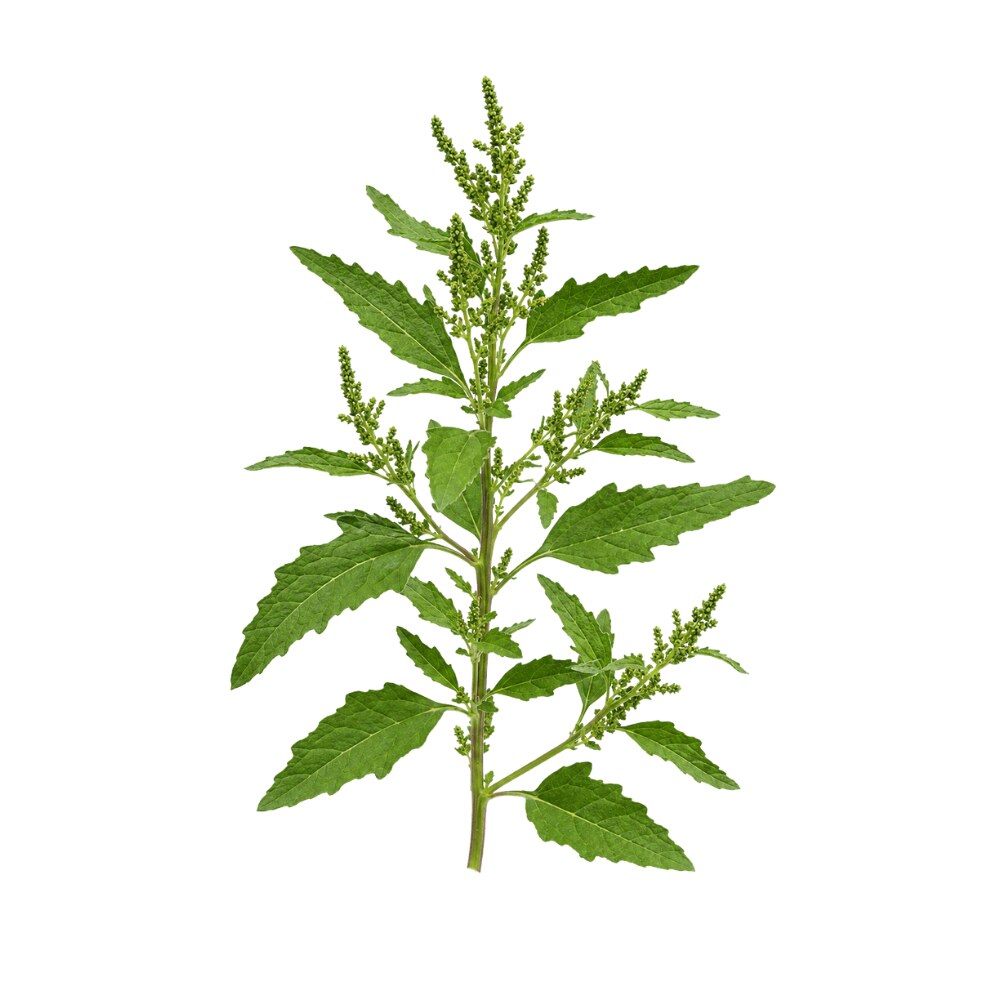 PotentPotentEpazoteDysphania ambrosioidesThe reference wormseed herb, and one of very few anthelmintic plants tested head-to-head against a licensed dewormer — fresh leaf juice matched albendazole against Ascaris in children.Mechanismendoperoxide (peroxide-bridge) activation → ROS; parasite neuromuscular blockade; a second water-soluble nematocideRead the evidenceShow lessMonograph →
In 60 children in Huaraz, Peru, fresh leaf juice — “paico”, 1–2 ml/kg for three days — matched a single 400 mg dose of albendazole against Ascaris lumbricoides, with an identical 86.7% qualitative cure and comparable egg-burden reduction (59.5% against 58.3%). The juice additionally cleared Hymenolepis 1Reference 1RCTLópez De Guimaraes D, Neyra Llanos RS, Romero Acevedo JH (2001). [Ascariasis: comparison of the therapeutic efficacy between paico and albendazole in children from Huaraz]. — [randomised clinical trial]. Rev Gastroenterol Peru. https://pubmed.ncbi.nlm.nih.gov/11818981/View study →.
The active principle is the endoperoxide monoterpene ascaridole 2Reference 2Ascaridole as a pharmacologically active principle of “Paico,” a medicinal Peruvian plant. — [isolation study]View study →, but ascaridole-free infusions carry a second, water-soluble nematocide that is gentler on mammalian smooth muscle than the oil 3Reference 3In vitroAscaridole-less infusions of Chenopodium ambrosioides contain a nematocide(s) that is(are) not toxic to mammalian smooth muscle. — [in vitro / animal]View study →. Extracts are also larvicidal against Toxocara canis 4Reference 4In vitroToxocara canis: potential activity of natural products against second-stage larvae in vitro and in vivo. — [in vitro and in vivo]View study →.
Preparation decides the outcome. A careful 1985 field study in Mayan farmers found dried, powdered plant essentially inert against adult Ascaris, Necator and Trichuris even at very high doses, and suggested the folk reputation may partly reflect the passage of senescent worms 5Reference 5Studies on the traditional herbal anthelmintic Chenopodium ambrosioides L.: ethnopharmacological evaluation and clinical field trials. — [clinical field trial]View study →.
Fresh juice and decoction carry the activity; dried powder does not.
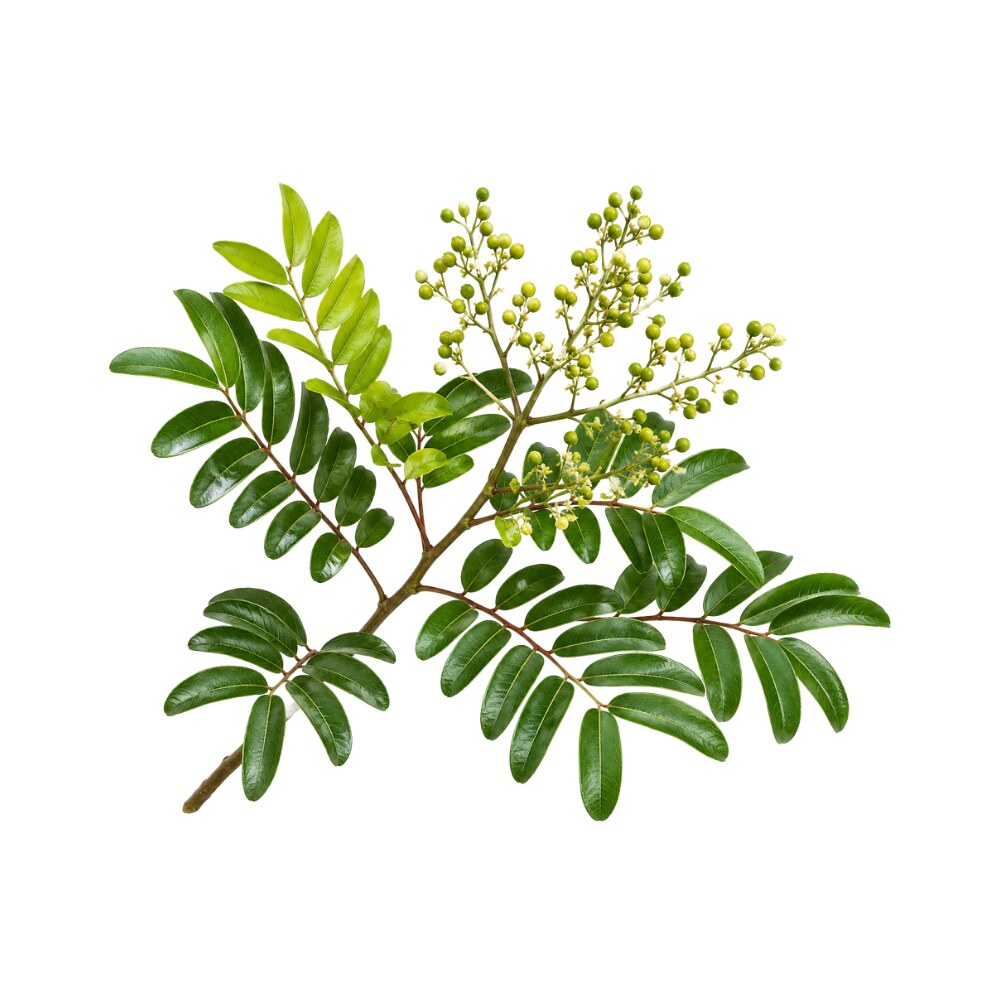 MildMildSimaroubaSimarouba amaraThe dysentery bark of the Guianas, listed for intestinal worms alongside the amoebic dysenteries its quassinoids actually treat.Read the evidenceShow lessMonograph →
Simarouba’s bark is an intense bitter, and the tradition reached for it across the gut infections: amoebic and bacillary dysentery, ordinary diarrhoea, intestinal worms and the fevers of malaria.
The quassinoids behind it inhibit eukaryotic protein synthesis and are active against Plasmodium, Entamoeba, Giardia and Toxoplasma 6,
The bark’s best-supported action is antidiarrheal, where the evidence uses the preparation people actually take.
No herbs match these filters.
Safety
- A vermifuge essential oil is never taken neat; distilled “oil of chenopodium” was the standard preparation and fatal poisonings are on record 14,
15Reference 14Case reportA Fatal Case Report of Chenopodium ambrosioides L. (M’khinza) Intoxication. — [case report]View study →Reference 15Case reportBadinga LPCL, et al. (2018). [M’khinza-related intoxication: about two observations]. — [case report]. Pan Afr Med J. https://pubmed.ncbi.nlm.nih.gov/30918546/View study → . - Ascaridole content swings from roughly 3% to 54% between samples, so potency and toxicity are both unpredictable.
- A culinary herb and the same plant given as a vermifuge are different exposures at different doses.
- Vermifuge preparations are contraindicated in pregnancy and in young children.
- Confirm the infestation on stool examination before treating it.
- Single-dose albendazole, mebendazole, ivermectin and praziquantel are cheap, effective and far better characterised.
- A plant with no helminth data used for worms means an untreated infection.
References
- López De Guimaraes D, Neyra Llanos RS, Romero Acevedo JH (2001). [Ascariasis: comparison of the therapeutic efficacy between paico and albendazole in children from Huaraz]. — [randomised clinical trial]. Rev Gastroenterol Peru. https://pubmed.ncbi.nlm.nih.gov/11818981/
- Okuyama E, et al. (1993). Ascaridole as a pharmacologically active principle of “Paico,” a medicinal Peruvian plant. — [isolation study]. Chem Pharm Bull (Tokyo). https://pubmed.ncbi.nlm.nih.gov/8374999/
- MacDonald D, et al. (2004). Ascaridole-less infusions of Chenopodium ambrosioides contain a nematocide(s) that is(are) not toxic to mammalian smooth muscle. — [in vitro / animal]. J Ethnopharmacol. https://pubmed.ncbi.nlm.nih.gov/15138003/
- Reis M, et al. (2010). Toxocara canis: potential activity of natural products against second-stage larvae in vitro and in vivo. — [in vitro and in vivo]. Exp Parasitol. https://pubmed.ncbi.nlm.nih.gov/20447397/
- Kliks MM (1985). Studies on the traditional herbal anthelmintic Chenopodium ambrosioides L.: ethnopharmacological evaluation and clinical field trials. — [clinical field trial]. Soc Sci Med. https://pubmed.ncbi.nlm.nih.gov/3906906/
- O’Neill, M. J., Bray, D. H., Boardman, P., Wright, C. W., Phillipson, J. D., Warhurst, D. C., Gupta, M. P., Correya, M., & Solis, P. (1988). Plants as sources of antimalarial drugs, Part 6: activities of Simarouba amara fruits — in vitro and mouse in vivo. Journal of Ethnopharmacology. https://pubmed.ncbi.nlm.nih.gov/3287009/
- Trager, W., & Polonsky, J. (1981). Antimalarial activity of quassinoids against chloroquine-resistant Plasmodium falciparum in vitro. American Journal of Tropical Medicine and Hygiene. https://pubmed.ncbi.nlm.nih.gov/7020445/
- Kirby, G. C., O’Neill, M. J., Phillipson, J. D., & Warhurst, D. C. (1989). In vitro studies on the mode of action of quassinoids with activity against chloroquine-resistant Plasmodium falciparum. Biochemical Pharmacology. https://pubmed.ncbi.nlm.nih.gov/2690830/
- Ekong, R. M., Kirby, G. C., Patel, G., Phillipson, J. D., & Warhurst, D. C. (1990). Comparison of the in vitro activities of quassinoids with activity against Plasmodium falciparum, anisomycin and other inhibitors of eukaryotic protein synthesis. Biochemical Pharmacology. https://pubmed.ncbi.nlm.nih.gov/2198027/
- Monjour, L., Rouquier, F., Alfred, C., & Polonsky, J. (1987). Therapeutic trials of experimental murine malaria with the quassinoid glaucarubinone — mouse study. Comptes Rendus de l’Academie des Sciences III. https://pubmed.ncbi.nlm.nih.gov/3103880/
- Franssen, F. F., Smeijsters, L. J., Berger, I., & Medinilla Aldana, B. E. (1997). In vivo and in vitro antiplasmodial activities of some plants traditionally used in Guatemala against malaria. Antimicrobial Agents and Chemotherapy. https://pubmed.ncbi.nlm.nih.gov/9210673/
- Wright, C. W., O’Neill, M. J., Phillipson, J. D., & Warhurst, D. C. (1988). Use of microdilution to assess in vitro antiamoebic activities of Brucea javanica fruits, Simarouba amara stem, and quassinoids. Antimicrobial Agents and Chemotherapy. https://pubmed.ncbi.nlm.nih.gov/2908094/
- Wright, C. W., Anderson, M. M., Allen, D., Phillipson, J. D., Kirby, G. C., Warhurst, D. C., & Chang, H. R. (1993). Quassinoids exhibit greater selectivity against Plasmodium falciparum than against Entamoeba histolytica, Giardia intestinalis or Toxoplasma gondii in vitro. Journal of Eukaryotic Microbiology. https://pubmed.ncbi.nlm.nih.gov/8508162/
- Elhaddadi H, et al. (2024). A Fatal Case Report of Chenopodium ambrosioides L. (M’khinza) Intoxication. — [case report]. Cureus. https://pubmed.ncbi.nlm.nih.gov/38883026/
- Badinga LPCL, et al. (2018). [M’khinza-related intoxication: about two observations]. — [case report]. Pan Afr Med J. https://pubmed.ncbi.nlm.nih.gov/30918546/
- Ge, S., Duo, L., Wang, J., et al. (2021). A unique understanding of traditional medicine of pomegranate, Punica granatum L. and its current research status — ethnopharmacological review. Journal of Ethnopharmacology. https://pubmed.ncbi.nlm.nih.gov/33515685/
Keep Exploring