
Materia Medica
Tinder Conk
Fomes fomentarius
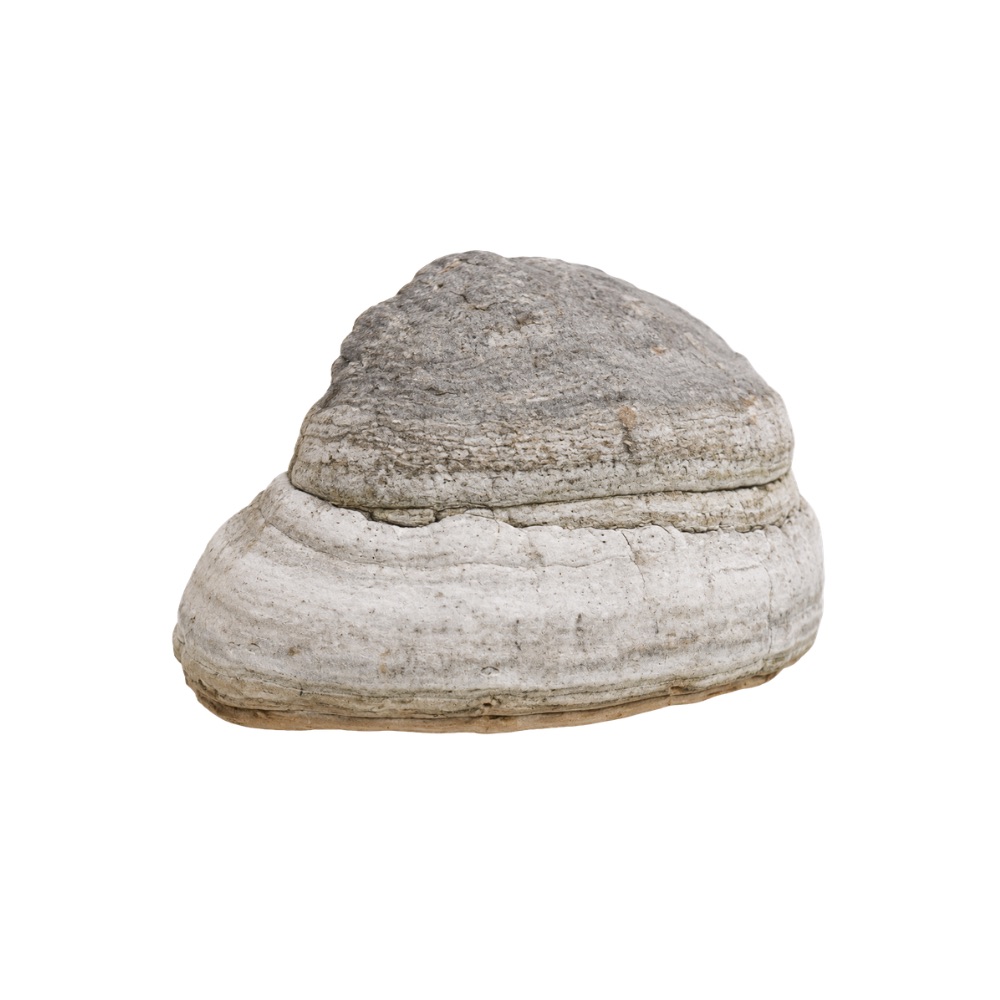
Tinder conk is a hard, hoof-shaped bracket fungus that grows on birch and beech. Its soft inner layer, amadou, was used for thousands of years to catch a spark and to dress bleeding wounds, and the fruiting body carries β-glucans and a red-brown pigment, fomentariol.
What Is Tinder Conk?
Tinder conk is a large, hard, hoof-shaped bracket fungus that grows on the trunks of birch, beech and other broadleaf trees. Its soft inner layer, processed into a felt called amadou, was used for thousands of years to catch a spark and start a fire, and to dress bleeding wounds 26,
The fungus is found in the forests of Europe, Asia and North America 24Reference 24ReviewMedicinal value and taxonomy of the tinder polypore, Fomes fomentarius: a reviewView study →. It is perennial, and one bracket can stay on a tree for years. Fragments of it were among the belongings of Ötzi the Iceman, who lived about 5,000 years ago and apparently carried it as tinder 29Reference 29Kuo, M. (2010, February). Fomes fomentarius — species description, ecology and distribution — mycological reference. MushroomExpert.Com. http://www.mushroomexpert.com/fomes_fomentarius.htmlView study →.
The fruiting body carries β-glucans, sterols and a red-brown pigment, fomentariol 9,
Mediterranean brackets that grow on oak look much the same but are now treated as a separate species, Fomes inzengae 30Reference 30How to resolve cryptic species of polypores: an example in Fomes — taxonomic studyView study →.
How Is Tinder Conk Used?
Tinder conk is used as the dried fruiting body. It is too hard and woody to eat, so it is powdered, decocted or extracted before use. In folk medicine around the world it has been used for wounds, digestive and liver complaints, and inflammation 9Reference 9ReviewMedicinal potential of the insoluble extracted fibers isolated from the Fomes fomentarius fruiting bodies — reviewView study →.
- Amadou — the soft inner layer, beaten into a felt and laid dry on a wound to stop bleeding 26Reference 26History of the therapeutic uses of the tinder polypore, Fomes fomentarius — historical articleView study →.
- Decoction or powder — of the dried fruiting body, taken in folk medicine 26Reference 26History of the therapeutic uses of the tinder polypore, Fomes fomentarius — historical articleView study →.
- Moxibustion — amadou has also been burned on the skin as a cautery 26Reference 26History of the therapeutic uses of the tinder polypore, Fomes fomentarius — historical articleView study →.
Traditional Uses
European Folk Medicine
The main traditional preparation is amadou, the soft, woolly inner layer of the fruiting body. In the 18th and 19th centuries it was used as a haemostatic dressing, and as a bandage to keep a part of the body warm and compressed 26Reference 26History of the therapeutic uses of the tinder polypore, Fomes fomentarius — historical articleView study →. It was also used as a cautery for moxibustion 26Reference 26History of the therapeutic uses of the tinder polypore, Fomes fomentarius — historical articleView study →.
Amadou served as tinder as well, and it was worked into clothing, frames and ornaments 9Reference 9ReviewMedicinal potential of the insoluble extracted fibers isolated from the Fomes fomentarius fruiting bodies — reviewView study →. Tinder conk was listed in the Hungarian pharmacopoeia 26Reference 26History of the therapeutic uses of the tinder polypore, Fomes fomentarius — historical articleView study →.
Chinese & Indian Medicine
Tinder conk appears in traditional Chinese and Indian pharmacopoeias 26Reference 26History of the therapeutic uses of the tinder polypore, Fomes fomentarius — historical articleView study →, and it is used in traditional Chinese medicine 15Reference 15AnimalThe HbA1c and blood glucose response to selenium-rich polysaccharide from Fomes fomentarius loaded solid lipid nanoparticles as a potential antidiabetic agent in rats — animal modelView study →.
Indications
- Minor wounds and bleeding [amadou, applied dry; European folk use]
- Gastrointestinal complaints [fruiting body; folk use]
- Liver complaints [fruiting body; folk use]
- Inflammation [fruiting body; folk use]
- Immune support [fruiting body polysaccharides]
Mycology
Tinder conk (Fomes fomentarius) is a wood-decay fungus of the polypore family (Polyporaceae) 29Reference 29Kuo, M. (2010, February). Fomes fomentarius — species description, ecology and distribution — mycological reference. MushroomExpert.Com. http://www.mushroomexpert.com/fomes_fomentarius.htmlView study →. It lives on standing and fallen broadleaf trees, especially birch and beech, both as a parasite on living trees and on dead wood, and it causes a white rot 29Reference 29Kuo, M. (2010, February). Fomes fomentarius — species description, ecology and distribution — mycological reference. MushroomExpert.Com. http://www.mushroomexpert.com/fomes_fomentarius.htmlView study →.
The fruiting body is a tough, perennial bracket up to about 20 cm across. It is shell-shaped at first and becomes hoof-shaped with age 29Reference 29Kuo, M. (2010, February). Fomes fomentarius — species description, ecology and distribution — mycological reference. MushroomExpert.Com. http://www.mushroomexpert.com/fomes_fomentarius.htmlView study →. The upper surface is dull and woody, zoned in grey and brownish grey 29Reference 29Kuo, M. (2010, February). Fomes fomentarius — species description, ecology and distribution — mycological reference. MushroomExpert.Com. http://www.mushroomexpert.com/fomes_fomentarius.htmlView study →.
The underside is a brownish pore surface with 2–5 tiny round pores per millimetre 29Reference 29Kuo, M. (2010, February). Fomes fomentarius — species description, ecology and distribution — mycological reference. MushroomExpert.Com. http://www.mushroomexpert.com/fomes_fomentarius.htmlView study →. Inside, the bracket is made up mostly of vaguely layered tubes, with only a thin layer of hard, brownish flesh 29Reference 29Kuo, M. (2010, February). Fomes fomentarius — species description, ecology and distribution — mycological reference. MushroomExpert.Com. http://www.mushroomexpert.com/fomes_fomentarius.htmlView study →. The spores are cylindrical and smooth, 12–20 × 4–7 µm 29Reference 29Kuo, M. (2010, February). Fomes fomentarius — species description, ecology and distribution — mycological reference. MushroomExpert.Com. http://www.mushroomexpert.com/fomes_fomentarius.htmlView study →.
DNA studies divide the species into three lineages: one from North America, one from Europe, and one from Europe and Asia 24Reference 24ReviewMedicinal value and taxonomy of the tinder polypore, Fomes fomentarius: a reviewView study →. The Mediterranean lineage that grows on oak has been described as a separate species, Fomes inzengae 30Reference 30How to resolve cryptic species of polypores: an example in Fomes — taxonomic studyView study →.
Distribution
Tinder conk grows in the temperate and northern forests of Europe, Asia and North America 24Reference 24ReviewMedicinal value and taxonomy of the tinder polypore, Fomes fomentarius: a reviewView study →. In North America it is widely distributed across the north and the north-temperate zone 29Reference 29Kuo, M. (2010, February). Fomes fomentarius — species description, ecology and distribution — mycological reference. MushroomExpert.Com. http://www.mushroomexpert.com/fomes_fomentarius.htmlView study →. It grows on broadleaf trees, most often birch and beech 29Reference 29Kuo, M. (2010, February). Fomes fomentarius — species description, ecology and distribution — mycological reference. MushroomExpert.Com. http://www.mushroomexpert.com/fomes_fomentarius.htmlView study →.
Habitat & Cultivation
- Grows as a hard, hoof-shaped bracket directly on the trunks of broadleaf trees, especially birch and beech 29Reference 29Kuo, M. (2010, February). Fomes fomentarius — species description, ecology and distribution — mycological reference. MushroomExpert.Com. http://www.mushroomexpert.com/fomes_fomentarius.htmlView study →.
- Lives on both living trees and dead wood, causing a white rot 29Reference 29Kuo, M. (2010, February). Fomes fomentarius — species description, ecology and distribution — mycological reference. MushroomExpert.Com. http://www.mushroomexpert.com/fomes_fomentarius.htmlView study →.
- The perennial bracket persists for years, so it can be found on a host tree in any season.
- Material is collected from wild brackets; the fruiting body is not farmed.
- Full detail lives on the companion farm-wiki page for Fomes fomentarius.
Pharmacology & Research
The research on tinder conk is almost entirely preclinical, and much of the wider literature concerns its biotechnology uses rather than medicine 24Reference 24ReviewMedicinal value and taxonomy of the tinder polypore, Fomes fomentarius: a reviewView study →. Its two best-replicated findings are antioxidant activity from melanin-like pigments and phenolics, and anti-inflammatory activity in rodents through NF-κB and COX-2 1,
No human trial has been completed. The first registered trial, of a periodontitis toothpaste, had not begun recruiting when it was registered in 2026 27Reference 27RCTTinder fungus (Fomes fomentarius) as an adjunct to non-surgical periodontal therapy for periodontitis: a randomised controlled trial (not yet recruiting)View study →.
-
Best-supported: anti-inflammatory and anti-nociceptive activity in rodents via NF-κB, iNOS and COX-2 suppression 1Reference 1AnimalAnti-inflammatory and anti-nociceptive effects of the methanol extract of Fomes fomentarius — animal model (rat/mouse in vivo)View study →, and consistent in vitro antioxidant capacity driven by phenolics and melanin-like pigments 4,
6Reference 4In vitroWild-growing lignicolous mushroom species as sources of novel agents with antioxidative and antibacterial potentials — in vitroView study →Reference 6In vitroChemical composition and ultraviolet absorption activity of an aqueous alkali extract from Fomes fomentarius fruiting bodies — in vitroView study → . -
Emerging, worth watching: apoptosis induction in cancer cell lines 10,
12Reference 10In vitroApoptotic properties of polysaccharide isolated from Fomes fomentarius in human lung carcinoma cell line — in vitroView study →Reference 12In vitroFomes fomentarius ethanol extract inhibits cell growth and motility and induces apoptosis via targeting AKT in MDA-MB-231 breast cancer cells — in vitroView study → , immunomodulation in mice 8Reference 8AnimalImmunomodulatory effects of Fomes fomentarius polysaccharides: an experimental study in mice — animal modelView study →, and antidiabetic leads (the pigment fomentariol; polysaccharide preparations lowered blood glucose and HbA1c in rats) 15,17Reference 15AnimalThe HbA1c and blood glucose response to selenium-rich polysaccharide from Fomes fomentarius loaded solid lipid nanoparticles as a potential antidiabetic agent in rats — animal modelView study →Reference 17In vitroIsolation and determination of fomentariol: novel potential antidiabetic drug from fungal material — in vitroView study → . -
Mechanistically thin: neuroprotection (single in vitro study on modified melanins) 22Reference 22In vitroAntioxidant, neuroprotective, and neuroblastoma (SH-SY5Y) differentiation effects of melanins and arginine-modified melanins from Daedaleopsis tricolor and Fomes fomentarius — in vitroView study → and antiviral activity (cell-culture only) 20,
21Reference 20In vitroIn vitro evaluation of the antiviral activity of some mushrooms from Turkey — in vitroView study →Reference 21In vitroAntiviral activity of basidiomycete mycelia against influenza type A (H1N1) and herpes simplex virus type 2 in cell culture — in vitroView study → . - The caveat: the entire evidence base is preclinical — no completed human trials, no standardised dose, and effects are extract- and strain-specific rather than properties of the whole fungus.
Almost every result comes from a specific extract. Methanol extracts, aqueous-alkali extracts and purified polysaccharides were tested rather than the whole dried bracket, and activity varies with the fungal strain, the host tree and the extraction method.
1. Anti-Inflammatory
A methanol extract of F. fomentarius (50 and 100 mg/kg/day, oral) reduced carrageenan-induced paw oedema in rats and blunted pain responses in the acetic-acid writhing and hot-plate tests in mice 1Reference 1AnimalAnti-inflammatory and anti-nociceptive effects of the methanol extract of Fomes fomentarius — animal model (rat/mouse in vivo)View study →.
In LPS-stimulated RAW 264.7 macrophages the extract suppressed nitric oxide, prostaglandin E2 and TNF-α by down-regulating iNOS and COX-2 through inhibition of NF-κB 1Reference 1AnimalAnti-inflammatory and anti-nociceptive effects of the methanol extract of Fomes fomentarius — animal model (rat/mouse in vivo)View study →.
Two individual constituents do the same in vitro. The benzotropolone pigment fomentariol suppressed nitric oxide, IL-1β and IL-6 via the ERK pathway 2Reference 2In vitroDifferential modulation of LPS-induced inflammatory cytokine production by and antioxidant activity of fomentariol in RAW264.7 cells — in vitroView study →, and a fatty-acid derivative, methyl 9-oxo-(10E,12E)-octadecadienoate, blocked NO and PGE2 by interfering with STAT3 phosphorylation 3Reference 3In vitroMethyl 9-oxo-(10E,12E)-octadecadienoate isolated from Fomes fomentarius attenuates LPS-induced inflammatory response by blocking STAT3 phosphorylation — in vitroView study →.
Gap: The in vivo work used a methanol extract, not the water decoction or powder the fungus is traditionally taken as, and there is no human data.
2. Antioxidant
Among four wild wood-growing fungi from Serbia, F. fomentarius extracts had the strongest radical-scavenging capacity (DPPH IC50 ≈ 10.7 µg/mL) and the highest total phenol and flavonoid content 4Reference 4In vitroWild-growing lignicolous mushroom species as sources of novel agents with antioxidative and antibacterial potentials — in vitroView study →.
Purified polysaccharides carry measurable antioxidant and anticholinesterase activity 5Reference 5In vitroStructural characterization and biological activities of polysaccharides from tree mushroom species — in vitroView study →. In an aqueous-alkali extract, the melanin-like pigments account for high antioxidant activity and a moderate UVB-absorbing capacity 6,
These hot-water and alkali extracts are close to the traditional preparation. Every measurement is a test-tube assay, and no in vivo study has been done.
3. Immunomodulatory
A polysaccharide fraction (FFP) given to mice at 25–100 mg/kg raised serum antibody levels, and at 50 and 100 mg/kg it enhanced macrophage phagocytosis 8Reference 8AnimalImmunomodulatory effects of Fomes fomentarius polysaccharides: an experimental study in mice — animal modelView study →. In cell culture the same fraction increased splenocyte secretion of TNF-α, IFN-γ and IL-2 8Reference 8AnimalImmunomodulatory effects of Fomes fomentarius polysaccharides: an experimental study in mice — animal modelView study →.
Reviews of the water-insoluble cell-wall fibres (25–38% glucans, mostly β-glucans) describe immune-modulating and gut-related effects in in vitro and ex vivo systems 9Reference 9ReviewMedicinal potential of the insoluble extracted fibers isolated from the Fomes fomentarius fruiting bodies — reviewView study →.
The in vivo evidence is a single mouse study, and the immune-support claim rests largely on the general pharmacology of β-glucans.
4. Antitumor
A 12-kDa water-extractable polysaccharide (MFKF-AP1β) inhibited A549 lung-carcinoma growth and induced apoptosis with single-stranded DNA breakage 10Reference 10In vitroApoptotic properties of polysaccharide isolated from Fomes fomentarius in human lung carcinoma cell line — in vitroView study →.
An aqueous-alkali extract was cytotoxic to cutaneous melanoma cells even at low concentrations, while leaving intestinal Caco-2 cells unaffected 11Reference 11In vitroIn vitro cytotoxic activity of an aqueous alkali extract of Fomes fomentarius on fibroblasts, colorectal adenocarcinoma and melanoma cells — in vitroView study →.
An ethanol extract induced apoptosis and blocked migration in MDA-MB-231 breast-cancer cells by targeting AKT 12Reference 12In vitroFomes fomentarius ethanol extract inhibits cell growth and motility and induces apoptosis via targeting AKT in MDA-MB-231 breast cancer cells — in vitroView study →.
A methanol extract also reversed multidrug resistance in P-glycoprotein-overexpressing breast-cancer lines 13Reference 13In vitroFomes fomentarius and Tricholoma anatolicum extracts exhibit multidrug-resistant modulation activity in drug-resistant breast cancer cells — in vitroView study →, and both fruiting-body and submerged-culture polysaccharides show in vitro antitumor activity 14Reference 14In vitroOptimization for the production of exopolysaccharide from Fomes fomentarius in submerged culture and its antitumor effect — in vitroView study →.
Gap: All results are in vitro, effect concentrations are high (often ~0.4–2 mg/mL), and results are not uniformly positive. There is no animal tumour-model or human evidence.
5. Antidiabetic
In diabetic rats, a polysaccharide from F. fomentarius, alone, selenium-enriched or loaded into solid lipid nanoparticles, lowered blood glucose by 48–60% over 28 days and reduced HbA1c; the nanoparticle forms lowered it most 15Reference 15AnimalThe HbA1c and blood glucose response to selenium-rich polysaccharide from Fomes fomentarius loaded solid lipid nanoparticles as a potential antidiabetic agent in rats — animal modelView study →. An exo-biopolymer from submerged culture also lowered blood glucose in streptozotocin-diabetic rats, though Coriolus versicolor was the most potent of the five mushrooms compared 16Reference 16AnimalHypoglycemic effects of exo-biopolymers produced by five medicinal mushrooms in STZ-induced diabetic rats — animal modelView study →.
Separately, the pigment fomentariol was isolated and characterised as a candidate antidiabetic molecule 17Reference 17In vitroIsolation and determination of fomentariol: novel potential antidiabetic drug from fungal material — in vitroView study →.
Gap: The in vivo effects come from culture polysaccharides and engineered formulations, not the whole fruiting body; the isolated-pigment work is in vitro; and no human glycaemic data exist.
6. Antimicrobial
A water-soluble melanin–glucan complex from the fruiting body completely suppressed Candida albicans in vitro and acted on Helicobacter pylori as strongly as erythromycin 18Reference 18In vitroAnti-infective properties of the melanin-glucan complex obtained from Fomes fomentarius — in vitro / animal modelView study →. Crude extracts also carry antibacterial activity that tracks their phenolic content 4Reference 4In vitroWild-growing lignicolous mushroom species as sources of novel agents with antioxidative and antibacterial potentials — in vitroView study →, and three newly isolated phenyl-ethanediols showed weak antibacterial effects 19Reference 19In vitroThree new phenyl-ethanediols from the fruiting bodies of Fomes fomentarius — in vitroView study →.
The activity varies with the preparation, from purified complexes to crude extracts, and no in vivo infection model has been tested for the herb alone.
8. Neuroprotective
Arginine-modified melanins from F. fomentarius protected SH-SY5Y neuroblastoma cells against Parkinsonian neurotoxins in vitro and showed mild DPPH scavenging 22Reference 22In vitroAntioxidant, neuroprotective, and neuroblastoma (SH-SY5Y) differentiation effects of melanins and arginine-modified melanins from Daedaleopsis tricolor and Fomes fomentarius — in vitroView study →.
Gap: A single in vitro study on a chemically modified pigment, not the native fungus, with no animal or human follow-up.
Mechanisms
Tinder conk’s β-glucans have been studied for their activation of macrophages and splenocytes, and its melanin-like pigments and phenolics for radical scavenging. Extract constituents suppress NF-κB, iNOS and COX-2 in macrophages.
The benzotropolone pigment fomentariol is the one compound specific to this species, and it has been studied for both anti-inflammatory and antidiabetic activity 2,
| Mechanism | Drives | Key compounds |
|---|---|---|
| NF-κB ↓, iNOS ↓, COX-2 ↓ | anti-inflammatoryanalgesic | methanol-extract phenolics, fomentariol |
| STAT3 ↓, ERK ↓ (IL-6, IL-1β) | anti-inflammatory | methyl 9-oxo-octadecadienoate, fomentariol |
| Free-radical scavenging (DPPH, FRAP, ROS) | antioxidantphotoprotection | melanin-like pigments, β-glucans, phenolics |
| β-glucan–driven macrophage/splenocyte activation | immunomodulatory | β-glucans, melanin–glucan complex |
| Apoptosis (ssDNA breakage, AKT ↓) | antitumor | polysaccharide fractions, ethanol-extract constituents |
| P-glycoprotein drug efflux ↓ | MDR reversal | methanol-extract constituents |
| Glucose / HbA1c lowering | antidiabetic | fomentariol, selenium-enriched polysaccharide |
Clinical Trials
The one registered trial is a randomised controlled study of a tinder-fungus toothpaste and oral powder as an adjunct to non-surgical periodontal therapy (NCT07482878, n = 70), not yet recruiting as of registration 27Reference 27RCTTinder fungus (Fomes fomentarius) as an adjunct to non-surgical periodontal therapy for periodontitis: a randomised controlled trial (not yet recruiting)View study →.
| Completed | Planned | Terminated | Preclinical |
|---|---|---|---|
| 0 | 1 | 0 | ~30 |
Last checked: July 2026.
Phytochemistry
The fruiting body of Fomes fomentarius carries a water-soluble polysaccharide fraction built on β-glucans and polysaccharide–protein complexes 8,
An aqueous-alkali extract is made up mostly of phenolics, carbohydrates, minerals and fat. About a third of its carbohydrate is β-glucan, and its phenolic part is a mixture of melanin-like pigments 6Reference 6In vitroChemical composition and ultraviolet absorption activity of an aqueous alkali extract from Fomes fomentarius fruiting bodies — in vitroView study →.
The sterols are of the ergostane type, chiefly ergosterol, along with four polyhydroxylated sterols first described from this species, fomentarol A, fomentarol B, fomentarol C and fomentarol D 23Reference 23Fomentarols A–D, sterols from the polypore macrofungus Fomes fomentariusView study →. The lupane triterpene betulin has also been reported 25Reference 25ReviewEuropean medicinal polypores — a modern view on traditional uses — reviewView study →.
The species yields the red-brown benzotropolone pigment fomentariol 2,
Constituent Summary
Reported from the fruiting body; amounts for individual compounds have not been published.
Polysaccharide1 compound1 with data
Triterpene1 compoundno data
Sterol5 compoundsno data
Quinone1 compoundno data
Dosage
There is no established human dose. The research doses below are animal doses of specific preparations, and tinder conk has no modern pharmacopoeial monograph.
| Indication | Preparation | Dose | Est. dried-herb equivalent | Source |
|---|---|---|---|---|
| Anti-inflammatory / analgesic | Methanol extract of fruiting body, oral (rat/mouse) | 50–100 mg/kg/day | — (extract-based animal dose) | 1Reference 1AnimalAnti-inflammatory and anti-nociceptive effects of the methanol extract of Fomes fomentarius — animal model (rat/mouse in vivo)View study → |
| Immunomodulatory | Polysaccharide fraction (FFP), mice | 25–100 mg/kg | — (purified fraction) | 8Reference 8AnimalImmunomodulatory effects of Fomes fomentarius polysaccharides: an experimental study in mice — animal modelView study → |
| Antidiabetic | Polysaccharide, selenium-enriched polysaccharide and nanoparticle forms, rats / exo-biopolymer, rats | formulation-specific, 28 days / 100 mg/kg/day × 2 wk | — (engineered formulation) | 15, |
Animal doses of specific preparations, not recommendations.
Traditional Dosage
| System | Preparation | Dose |
|---|---|---|
| European folk medicine | Decoction or powder of dried fruiting body; amadou applied to wounds | Not quantified 26Reference 26History of the therapeutic uses of the tinder polypore, Fomes fomentarius — historical articleView study → |
Safety & Pregnancy
Tinder conk has low toxicity in cell and insect studies. There are no human safety studies, and it must be identified correctly before use.
- Low toxicity in laboratory studies. Extracts showed weak or no toxicity to cells in vitro.
- No human safety data. Medicinal dosing and long-term safety have not been studied.
- Correct ID essential. As with all wild bracket fungi, identify it accurately before medicinal use.
- Mushroom allergy. People with mushroom allergies or sensitivities should avoid it.
Full Safety Detail
Laboratory toxicity. A melanin–glucan complex from the fruiting body showed weak toxicity in vitro 18Reference 18In vitroAnti-infective properties of the melanin-glucan complex obtained from Fomes fomentarius — in vitro / animal modelView study →, and an aqueous-alkali extract did not affect human intestinal Caco-2 cells 11Reference 11In vitroIn vitro cytotoxic activity of an aqueous alkali extract of Fomes fomentarius on fibroblasts, colorectal adenocarcinoma and melanoma cells — in vitroView study →.
DNA damage in fruit flies. In a Drosophila study, all four wood-decay fungi tested raised DNA damage at 0.5% of the diet; tinder conk extract caused the least 28Reference 28AnimalExtracts from four species of xylotrophic basidiomycetes revealed cytotoxic effects on Drosophila melanogaster — in vivo modelView study →.
Interactions. No human drug-interaction study has been published. A methanol extract modulated P-glycoprotein in drug-resistant cancer cells in vitro 13Reference 13In vitroFomes fomentarius and Tricholoma anatolicum extracts exhibit multidrug-resistant modulation activity in drug-resistant breast cancer cells — in vitroView study →, but no interaction has been seen in people.
Identification and preparation. Identify any wild bracket fungus correctly before use, and avoid it with a mushroom allergy. The fruiting body is too hard and woody to eat as food, and it is decocted, powdered or extracted before use.
Avoid. Tinder conk has not been studied in pregnancy or breastfeeding, and no reproductive-toxicity data exist.
References
- Park, Y. M., et al. (2004). Anti-inflammatory and anti-nociceptive effects of the methanol extract of Fomes fomentarius — animal model (rat/mouse in vivo). Biological & Pharmaceutical Bulletin. https://pubmed.ncbi.nlm.nih.gov/15467201/
- Seo, D. W., et al. (2015). Differential modulation of LPS-induced inflammatory cytokine production by and antioxidant activity of fomentariol in RAW264.7 cells — in vitro. Mycobiology. https://pubmed.ncbi.nlm.nih.gov/26839505/
- Choe, J. H., et al. (2015). Methyl 9-oxo-(10E,12E)-octadecadienoate isolated from Fomes fomentarius attenuates LPS-induced inflammatory response by blocking STAT3 phosphorylation — in vitro. Mycobiology. https://pubmed.ncbi.nlm.nih.gov/26539049/
- Karaman, M., et al. (2014). Wild-growing lignicolous mushroom species as sources of novel agents with antioxidative and antibacterial potentials — in vitro. International Journal of Food Sciences and Nutrition. https://pubmed.ncbi.nlm.nih.gov/24295284/
- Deveci, E., et al. (2019). Structural characterization and biological activities of polysaccharides from tree mushroom species — in vitro. Journal of Food Biochemistry. https://pubmed.ncbi.nlm.nih.gov/31489667/
- Kalitukha, L., & Sari, M. (2021). Chemical composition and ultraviolet absorption activity of an aqueous alkali extract from Fomes fomentarius fruiting bodies — in vitro. International Journal of Medicinal Mushrooms. https://pubmed.ncbi.nlm.nih.gov/33822505/
- Darkal, A. K., et al. (2021). Unleashing the biological potential of Fomes fomentarius via dry and wet milling — in vitro. Antioxidants. https://pubmed.ncbi.nlm.nih.gov/33669445/
- Gao, H. L., et al. (2009). Immunomodulatory effects of Fomes fomentarius polysaccharides: an experimental study in mice — animal model. Journal of Southern Medical University. https://pubmed.ncbi.nlm.nih.gov/19304524/
- Kalitukha, L., et al. (2023). Medicinal potential of the insoluble extracted fibers isolated from the Fomes fomentarius fruiting bodies — review. International Journal of Medicinal Mushrooms. https://pubmed.ncbi.nlm.nih.gov/37017659/
- Kim, S. H., et al. (2015). Apoptotic properties of polysaccharide isolated from Fomes fomentarius in human lung carcinoma cell line — in vitro. Saudi Journal of Biological Sciences. https://pubmed.ncbi.nlm.nih.gov/26150756/
- Storsberg, J., et al. (2022). In vitro cytotoxic activity of an aqueous alkali extract of Fomes fomentarius on fibroblasts, colorectal adenocarcinoma and melanoma cells — in vitro. International Journal of Medicinal Mushrooms. https://pubmed.ncbi.nlm.nih.gov/36004705/
- Lee, S. O., et al. (2019). Fomes fomentarius ethanol extract inhibits cell growth and motility and induces apoptosis via targeting AKT in MDA-MB-231 breast cancer cells — in vitro. International Journal of Molecular Sciences. https://pubmed.ncbi.nlm.nih.gov/30845749/
- Doğan, H. H., et al. (2020). Fomes fomentarius and Tricholoma anatolicum extracts exhibit multidrug-resistant modulation activity in drug-resistant breast cancer cells — in vitro. International Journal of Medicinal Mushrooms. https://pubmed.ncbi.nlm.nih.gov/32478999/
- Chen, W., et al. (2008). Optimization for the production of exopolysaccharide from Fomes fomentarius in submerged culture and its antitumor effect — in vitro. Bioresource Technology. https://pubmed.ncbi.nlm.nih.gov/17624770/
- Keshavarz-Rezaei, M., et al. (2022). The HbA1c and blood glucose response to selenium-rich polysaccharide from Fomes fomentarius loaded solid lipid nanoparticles as a potential antidiabetic agent in rats — animal model. Biomaterials Advances. https://pubmed.ncbi.nlm.nih.gov/36027667/
- Yang, B. K., et al. (2008). Hypoglycemic effects of exo-biopolymers produced by five medicinal mushrooms in STZ-induced diabetic rats — animal model. Mycobiology. https://pubmed.ncbi.nlm.nih.gov/23997607/
- Maljurić, N., et al. (2018). Isolation and determination of fomentariol: novel potential antidiabetic drug from fungal material — in vitro. Journal of Analytical Methods in Chemistry. https://pubmed.ncbi.nlm.nih.gov/29675285/
- Seniuk, O. F., et al. (2011). Anti-infective properties of the melanin-glucan complex obtained from Fomes fomentarius — in vitro / animal model. International Journal of Medicinal Mushrooms. https://pubmed.ncbi.nlm.nih.gov/22135899/
- Zhao, J. Y., et al. (2013). Three new phenyl-ethanediols from the fruiting bodies of Fomes fomentarius — in vitro. Journal of Asian Natural Products Research. https://pubmed.ncbi.nlm.nih.gov/23421717/
- Doğan, H. H., et al. (2018). In vitro evaluation of the antiviral activity of some mushrooms from Turkey — in vitro. International Journal of Medicinal Mushrooms. https://pubmed.ncbi.nlm.nih.gov/29717666/
- Krupodorova, T., et al. (2014). Antiviral activity of basidiomycete mycelia against influenza type A (H1N1) and herpes simplex virus type 2 in cell culture — in vitro. Virologica Sinica. https://pubmed.ncbi.nlm.nih.gov/25358999/
- Nguyen, H. A. T., et al. (2024). Antioxidant, neuroprotective, and neuroblastoma (SH-SY5Y) differentiation effects of melanins and arginine-modified melanins from Daedaleopsis tricolor and Fomes fomentarius — in vitro. BMC Biotechnology. https://pubmed.ncbi.nlm.nih.gov/39529092/
- Zang, Y., et al. (2013). Fomentarols A–D, sterols from the polypore macrofungus Fomes fomentarius. Phytochemistry. https://pubmed.ncbi.nlm.nih.gov/23747096/
- Gáper, J., et al. (2016). Medicinal value and taxonomy of the tinder polypore, Fomes fomentarius: a review. International Journal of Medicinal Mushrooms. https://pubmed.ncbi.nlm.nih.gov/27910753/
- Grienke, U., et al. (2014). European medicinal polypores — a modern view on traditional uses — review. Journal of Ethnopharmacology. https://pubmed.ncbi.nlm.nih.gov/24786572/
- Roussel, B., et al. (2002). History of the therapeutic uses of the tinder polypore, Fomes fomentarius — historical article. Revue d’Histoire de la Pharmacie. https://pubmed.ncbi.nlm.nih.gov/12712985/
- ClinicalTrials.gov (2026). Tinder fungus (Fomes fomentarius) as an adjunct to non-surgical periodontal therapy for periodontitis: a randomised controlled trial (not yet recruiting). NCT07482878. https://clinicaltrials.gov/study/NCT07482878
- Antosyuk, O. N., et al. (2024). Extracts from four species of xylotrophic basidiomycetes revealed cytotoxic effects on Drosophila melanogaster — in vivo model. International Journal of Medicinal Mushrooms. https://pubmed.ncbi.nlm.nih.gov/39704619/
- Kuo, M. (2010, February). Fomes fomentarius — species description, ecology and distribution — mycological reference. MushroomExpert.Com. http://www.mushroomexpert.com/fomes_fomentarius.html
- Peintner, U., Kuhnert-Finkernagel, R., Wille, V., Biasioli, F., Shiryaev, A., & Perini, C. (2019). How to resolve cryptic species of polypores: an example in Fomes — taxonomic study. IMA Fungus. https://pubmed.ncbi.nlm.nih.gov/32647621/



