

Overview
Prolactin Inhibitor at a Glance
Prolactin inhibitors are herbs that reduce prolactin secretion.
Prolactin is the pituitary hormone responsible for milk production.
When elevated outside pregnancy and breastfeeding, it can also disrupt ovulation, menstruation, libido, and fertility.
The main physiological brake on prolactin is dopamine.
Chaste tree is the clearest herbal example. Compounds in the berry act at dopamine D2 receptors in the pituitary, reducing prolactin release.
Jasmine appears to work differently.
Fresh jasmine flowers have traditionally been used to suppress lactation, and small clinical studies have found reductions in milk production and prolactin, although the mechanism has not been established.
This action is useful mainly where excess prolactin is contributing to menstrual irregularity, galactorrhoea, infertility, or unwanted lactation.
It also overlaps with the broader hormone-modulating action, but the target here is specifically prolactin rather than reproductive hormones more generally.
Both uses are old. Jasmine flowers have been laid on the breasts to stop milk in Indian practice, and the first clinical study of it measured what midwives were already doing.
Chaste tree has been used for menstrual complaints in European practice since Dioscorides described it, and it carried the name monk’s pepper through the Middle Ages for the same properties.
Neither effect has been measured in the preparations most people use. Every positive chaste-tree result came from a proprietary standardised extract, and the two jasmine studies used different species by different routes.
Caution
Lowers milk supply — both herbs reduce milk production, so neither belongs in a breastfeeding regimen or anywhere lactation is wanted.
Raised prolactin needs assessment — persistent galactorrhoea, amenorrhoea, infertility, headaches or visual changes need endocrine assessment and imaging, because a pituitary adenoma or a medication can be the cause.
Works against dopamine blockers — a dopamine agonist opposes antipsychotics and metoclopramide, and can confound dopaminergic therapy for Parkinson's disease.
Mechanisms
How It Works
01
Dopamine D2 Agonism
Dopamine restrains prolactin release from the pituitary lactotroph, so a dopamine agonist lowers prolactin.
Chaste tree’s labdane and clerodane diterpenes — chiefly rotundifuran and vitexilactone — act as D2 agonists at that cell.
Extracts inhibit both basal and TRH-stimulated prolactin secretion from rat pituitary cells, and the inhibition is abolished by dopamine-receptor antagonists, which pins the effect to the receptor rather than to a general hormone-balancing story.
Bromocriptine and cabergoline work through the same receptor at a far higher affinity, and they are what a prolactinoma is treated with.
The interactions follow from the mechanism. A dopamine agonist opposes dopamine antagonists, and can confound dopaminergic therapy for Parkinson’s disease.
Herbs: Chaste Tree
Key compounds: RotundifuranVitexilactone
02
Unresolved Lactifuge Action
Some preparations suppress milk production with the receptor route unidentified.
Jasmine is the example. Fresh flowers applied to the breasts reduced engorgement and milk volume about as well as bromocriptine, and an intranasal flower extract lowered prolactin in women taking antipsychotics.
The serum-prolactin fall was smaller than the drug’s in the comparative study, so the clinical effect may not be entirely a prolactin one.
No binding or receptor work has been published, and the two studies used different Jasminum species by different routes.
Herbs: Jasmine
Materia Medica
Prolactin-Inhibiting Herbs by Potency
The prolactin inhibitor herbs, ordered by the relative strength of the effect rather than by how well studied it is. Each herb is described by the mechanism behind its effect and the evidence for it.
None of this is a substitute for professional care.
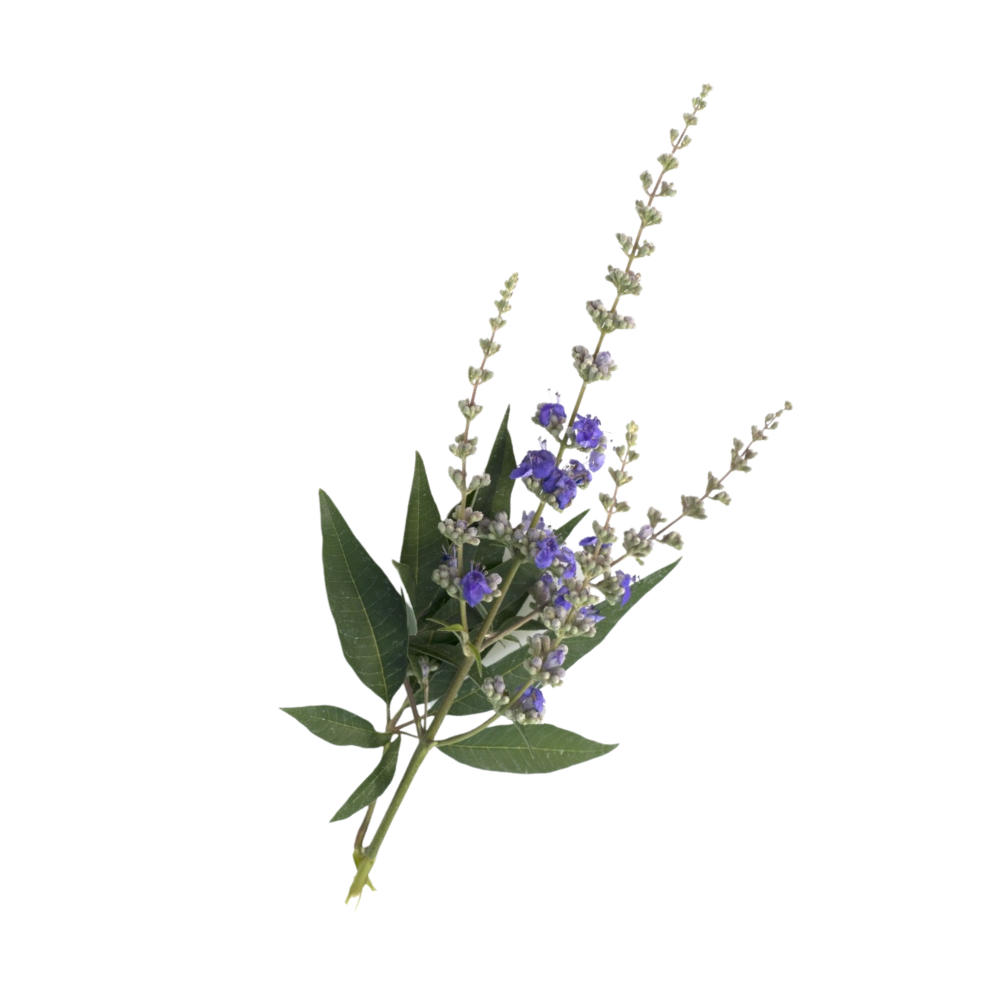 PotentPotentChaste TreeVitex agnus-castusBerry diterpenes act as dopamine D2 agonists on pituitary lactotrophs, inhibiting both basal and TRH-stimulated prolactin secretion.Mechanismdopamine D2-receptor agonism on pituitary lactotrophs; basal and TRH-stimulated prolactin secretion ↓Read the evidenceShow lessMonograph →
The labdane and clerodane diterpenes in the berry — chiefly rotundifuran and vitexilactone — act as dopamine D2-receptor agonists on the pituitary lactotroph. Extracts inhibit both basal and TRH-stimulated prolactin secretion from rat pituitary cells, and the inhibition is abolished by dopamine-receptor antagonists, which pins the effect to D2 1Reference 1AnimalAgnus castus extracts inhibit prolactin secretion of rat pituitary cellsView study →.
It translates clinically. A randomised double-blind placebo-controlled trial in 52 women with luteal-phase defect from latent hyperprolactinaemia gave 20 mg of standardised extract daily for three months, and it reduced pituitary prolactin release and normalised luteal-phase length and progesterone 2Reference 2Vitex agnus castus extract in the treatment of luteal phase defects due to latent hyperprolactinaemiaView study →.
A 2023 review judged it a plausible option in mild or idiopathic hyperprolactinaemia and in microprolactinoma 3Reference 3Vitex agnus castus effects on hyperprolactinaemiaView study →. In cyclic mastalgia the herb was non-inferior to pharmaceutical dopamine agonists across seven of 25 studies 4Reference 4Meta-analysisVitex agnus-castus for the treatment of cyclic mastalgia: a systematic review and meta-analysisView study →.
The human evidence is essentially that one small 1993 trial plus the mechanism, with no large replication 3Reference 3Vitex agnus castus effects on hyperprolactinaemiaView study →. Every positive result used a proprietary standardised extract — Strotan, Ze 440, BNO 1095 — at about 20 mg a day, and the 1:2 liquid extract the herb is usually dispensed as has never been tested for this.
A systematic review of adverse events found them mild and infrequent, with the interactions following from the dopaminergic mechanism and from the herb’s effect on the cycle: oral contraceptives, progesterone preparations and hormone therapy 8Reference 8Systematic reviewVitex agnus castus: a systematic review of adverse eventsView study →. It is not for use in pregnancy or lactation 8,
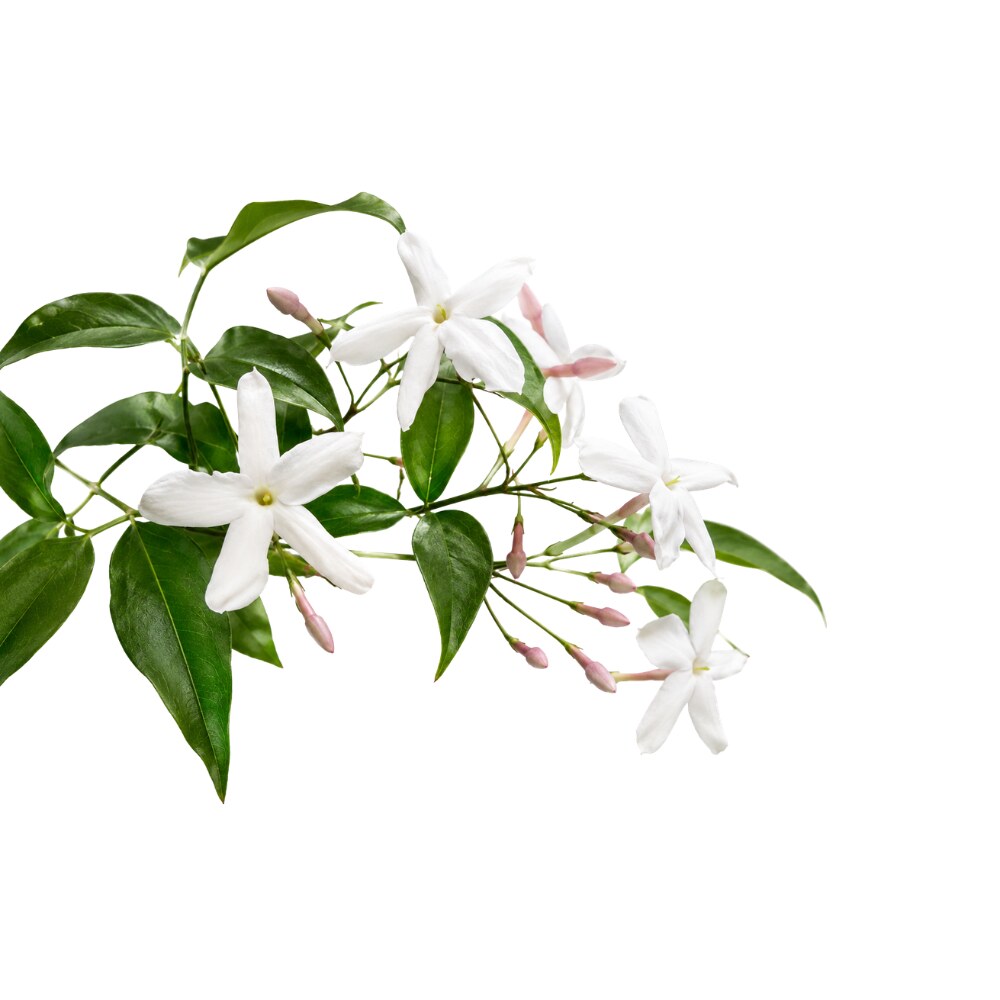 StrongStrongJasmineJasminum officinaleFresh flowers applied to the breasts suppressed puerperal milk production about as well as bromocriptine on clinical measures.Mechanismanti-prolactin / dopaminergic-type action carried in the flower — receptor target not establishedRead the evidenceShow lessMonograph →
In a comparative study, fresh J. sambac flowers applied to the breasts suppressed puerperal milk production about as effectively as the dopamine agonist bromocriptine on clinical measures — breast engorgement and milk volume — though the fall in serum prolactin was smaller than with the drug 5Reference 5Clinical trialSuppression of puerperal lactation using jasmine flowers (Jasminum sambac) — [comparative clinical study]View study →.
A later randomised controlled trial delivered an aqueous-ethanolic jasmine flower extract intranasally to antipsychotic-treated women with raised prolactin, and saw a clinically meaningful drop of 25 ng/mL or more in roughly a third of them 6Reference 6RCTJasmine flower extract lowers prolactin — [randomised controlled trial]View study →. The use as a lactifuge has a clinical literature going back decades 7Reference 7Acharya SR (1987). “Jasmine—the lactifuge” — [clinical report]. J Assoc Physicians India. https://pubmed.ncbi.nlm.nih.gov/3429440/View study →.
The comparator is an actual drug and one of the two studies is randomised, which is unusual for a herb with this little research behind it.
The samples are small, the two studies used different species by different routes — J. sambac topically, an unspecified flower extract intranasally — and the prolactin fall was partial. Anyone wishing to maintain a milk supply has reason to be careful with jasmine flower preparations.
No herbs match these filters.
Safety
- Both herbs lower milk supply, so neither belongs in a breastfeeding regimen.
- A raised prolactin level needs imaging and endocrine assessment, because a pituitary adenoma and a medication effect present the same way.
- A dopamine agonist opposes dopamine antagonists, including antipsychotics and metoclopramide, and can confound dopaminergic therapy for Parkinson’s disease.
- Avoid alongside combined oral contraceptives, progesterone preparations and hormone therapy.
- Avoid in pregnancy.
- Aromatic and inhalation use is a different exposure from the flower preparations that were studied, and is not implicated.
References
- Sliutz G, et al. Agnus castus extracts inhibit prolactin secretion of rat pituitary cells. Hormone and Metabolic Research. 1993;25(5):253–255. https://pubmed.ncbi.nlm.nih.gov/8330858/
- Milewicz A, et al. Vitex agnus castus extract in the treatment of luteal phase defects due to latent hyperprolactinaemia. Arzneimittel-Forschung. 1993;43(7):752–756. https://pubmed.ncbi.nlm.nih.gov/8369008/
- Puglia LT, et al. Vitex agnus castus effects on hyperprolactinaemia. Frontiers in Endocrinology. 2023. https://pubmed.ncbi.nlm.nih.gov/38075075/
- Ooi SL, et al. Vitex agnus-castus for the treatment of cyclic mastalgia: a systematic review and meta-analysis. Journal of Women’s Health. 2020;29(2):262–278. https://pubmed.ncbi.nlm.nih.gov/31464546/
- Shrivastav P et al. (1988). Suppression of puerperal lactation using jasmine flowers (Jasminum sambac) — [comparative clinical study]. Aust N Z J Obstet Gynaecol. https://pubmed.ncbi.nlm.nih.gov/3214386/
- Finny P et al. (2015). Jasmine flower extract lowers prolactin — [randomised controlled trial]. Trop Doct. https://pubmed.ncbi.nlm.nih.gov/25505191/
- Acharya SR (1987). “Jasmine—the lactifuge” — [clinical report]. J Assoc Physicians India. https://pubmed.ncbi.nlm.nih.gov/3429440/
- Daniele C, et al. Vitex agnus castus: a systematic review of adverse events. Drug Safety. 2005;28(4):319–332. https://pubmed.ncbi.nlm.nih.gov/15783241/
- Dugoua JJ, et al. Safety and efficacy of chastetree (Vitex agnus-castus) during pregnancy and lactation. Canadian Journal of Clinical Pharmacology. 2008;15(1):e74–e79. https://pubmed.ncbi.nlm.nih.gov/18204102/
Keep Exploring