

Overview
Analgesic at a Glance
Analgesics relieve pain. In pharmacology the term covers any drug that reduces pain without producing loss of consciousness, and the herbal analgesics reach that endpoint by several unrelated routes.
Relieving pain is not the same as treating what causes it. A herb that reduces inflammation, relaxes a cramping muscle or relieves a congested limb lowers pain as a consequence, and those effects are described under anti-inflammatory, antispasmodic and vascular tonic.
A herb that sedates makes pain easier to bear without changing it, and that belongs under sedative.
The analgesics proper act on the pain signal itself, at the nerve ending, along the nerve, in the spinal cord or in the brain.
The clearest herbal analgesics work where the signal starts. Clove and coca block the voltage-gated sodium channel and stop the nerve firing, the mechanism of every local anaesthetic, and a clove gel matched benzocaine in a dental trial.
Cayenne’s capsaicin activates the TRPV1 receptor and then exhausts the nerve ending that carries it, the basis of the prescription 8% patch for neuropathic pain.
Willow and meadowsweet carry salicin, the chemistry that became aspirin, and willow bark has randomised evidence in low-back pain.
Opium poppy’s morphine and codeine act at the µ-opioid receptor and remain the reference standard for severe pain; kratom’s mitragynine reaches the same receptor as a partial agonist and raised pain tolerance in a placebo-controlled trial.
Corydalis acts centrally through dopamine D2 antagonism and sodium-channel block, and in animals does so without developing tolerance.
A larger group relieves pain as a consequence of reducing inflammation. Devil’s claw, comfrey, arnica and ginger all have controlled trials with pain as the endpoint, and in each the analgesia follows from prostaglandin or cytokine suppression rather than from any action on the nerve.
Guava and yarrow reduce menstrual pain by relaxing the uterus, and horse chestnut reduces leg pain by reducing venous congestion.
These herbs help inflammatory, spasmodic or congestive pain and do little for pain of other origins.
Route matters more here than in most actions. Clove, coca, cayenne, peppermint, arnica, comfrey and licorice have their evidence as topical or mucosal preparations, and none of it transfers to swallowing the herb.
Caution
Salicylates carry aspirin's cautions — aspirin sensitivity, Reye's syndrome in children with viral illness, and additive bleeding risk with anticoagulants.
Opioid herbs bring dependence — the opioid-acting herbs produce tolerance, dependence and withdrawal, and add to prescription opioids, alcohol and sedatives.
Drowsiness comes before relief — several sedating analgesics cause drowsiness at doses below any pain relief, and drowsiness without relief is not a reason to take more.
Mechanisms
How It Works
01
Sodium-Channel Block
Blocking the voltage-gated sodium channel stops the axon firing, so the signal never reaches the brain.
This is the mechanism of every local anaesthetic in clinical use, and coca is the origin of the class: cocaine was the first local anaesthetic, and lidocaine, procaine and bupivacaine descend from it.
Clove reaches the same target through eugenol, which is why oil of cloves remains a dental first-aid standard.
Kava’s kavalactones, horopito’s polygodial and corydalis’s alkaloids block nociceptive sodium channels as well, and electric daisy’s spilanthol numbs the mucosa it touches.
Because the block interrupts the signal rather than modulating it, it works regardless of what caused the pain.
It is route-defined: these are topical and mucosal actions, and a systemic dose large enough to block nerves everywhere would be a different and more dangerous drug. Sodium channels are not confined to sensory nerves, so absorbed alkaloid reaches cardiac and central tissue too.
Herbs: CloveCocaCorydalisElectric DaisyHoropitoKava
Key compounds: CocaineEugenolKavainPolygodial
02
TRP Channels and Nociceptor Defunctionalisation
These compounds activate pain receptors rather than blocking them, and the analgesia follows.
TRPV1 is the capsaicin receptor, the heat and chemical-pain sensor on nociceptor terminals. Agonism produces burning, and with sustained exposure the terminal becomes defunctionalised: it depletes substance P and the epidermal nerve fibres retract from the skin.
High-concentration capsaicin patches are an approved treatment for neuropathic pain on this basis.
Horopito’s polygodial acts at TRPV1 and TRPA1 the same way, and menthol in peppermint oil works on the cold receptor TRPM8, which produces analgesia without the burn. Stinging nettle’s counter-irritation is the same principle by a cruder route.
The burning is the first half of the mechanism, not a side effect, and it is the main reason people stop treatment before the analgesia arrives.
Herbs: CannabisCayenneCloveHoropitoKratomMyrrhPeppermintStinging Nettle
Key compounds: CapsaicinPolygodialMenthol
03
Opioid Receptors
Agonism at the µ-opioid receptor is the reference mechanism for analgesia, and the one against which every other route is measured.
Opium poppy carries it directly through morphine and codeine.
Kratom’s mitragynine is a low-efficacy µ-opioid partial agonist, and CYP3A converts it to 7-hydroxymitragynine, a considerably more potent agonist, so the active drug is partly a metabolite and its production varies with everything else affecting that enzyme.
Myrrh’s furanoeudesma-1,3-diene and estafiate’s essential oil produce analgesia in mice that naloxone blocks, and corydalis, horopito and catuaba show naloxone-sensitive components alongside their primary mechanisms.
Opioid pharmacology brings opioid consequences. Tolerance, dependence and a withdrawal syndrome follow the mechanism, and a botanical source does not avoid them.
Herbs: CatuabaCorydalisEstafiateHoropitoKratomMyrrhOpium Poppy
Key compounds: Mitragynine7-HydroxymitragynineMorphineFuranoeudesma-1,3-diene
04
Prostaglandin Inhibition
Prostaglandins sensitise nociceptors so that ordinary stimuli register as painful; inhibiting COX removes the sensitisation rather than blocking the signal.
This is the route of the NSAIDs, and it works best on inflammatory pain and poorly on other kinds.
Willow is the direct ancestor of aspirin: salicin is metabolised to salicylic acid, the same active, delivered more slowly and at lower concentration, which makes it gentler on the stomach and weaker. Meadowsweet carries the same chemistry.
Ginger inhibits prostaglandin synthesis and matches NSAIDs in period pain, devil’s claw inhibits eicosanoids, and chilca, sarsaparilla, pine and curare’s curine all suppress PGE₂ in laboratory or animal work.
The class shares the NSAID interaction profile: additive antiplatelet effect at higher doses and the usual ulcer caution.
The salicylate herbs add the aspirin-allergy contraindication and the Reye’s-syndrome restriction in children with viral illness.
Herbs: ChilcaComfreyCurareDevil’s ClawGerman ChamomileGingerLicoriceMeadowsweetPineSarsaparillaWillowYarrow
Key compounds: SalicinSalicylic Acid6-GingerolCurine
05
Central and Inhibitory Routes
Analgesia produced centrally, by raising the threshold at which a signal becomes pain rather than by interfering with the signal itself.
The targets are inhibitory: GABA-A for California poppy, greater celandine and clavo huasca’s eugenol; adenosine receptors for lavender’s linalool; dopamine D2 antagonism for corydalis and dopaminergic signalling for catuaba.
California poppy and wild lettuce have both been shown to act without opioid receptors, wild lettuce through bitter sesquiterpene lactones with no target yet identified.
Caffeine, at its richest in guarana, is an established analgesic adjuvant through adenosine antagonism.
Sedation arrives before analgesia for most of this class. Wild lettuce and California poppy sedate at doses below any measured pain relief, and wild lettuce’s recorded poisonings came from people raising the dose in search of an analgesic effect.
Herbs: California PoppyCatuabaClavo HuascaCorydalisGreater CelandineGuaranaLavenderWild Lettuce
Key compounds: LactucopicrinLinaloolDehydrocorybulbineCaffeine
06
Downstream of Inflammation, Spasm and Congestion
The largest group relieves pain by removing what is producing it, without a measured nociceptive target.
Arnica, comfrey, German chamomile, licorice, rosewood, bael and wild bergamot have demonstrated anti-inflammatory effects, NF-κB suppression, cytokine reduction or PGE₂ inhibition, and the analgesia follows from them.
Guava and yarrow relax smooth muscle, so a cramp eases and the pain with it.
Horse chestnut and pine bark reduce capillary filtration, and the aching of a congested leg falls with the swelling.
Abuta and notoginseng carry traditional pain uses with the mechanism unresolved.
Less inflammation does mean less pain, and this is how devil’s claw and arnica are used. The inference predicts benefit only for inflammatory, spasmodic or congestive pain, and says nothing about a direct effect on the pain signal.
Arnica is topical only and toxic taken internally, and several others are topical preparations whose internal dosing has never been characterised in humans.
Herbs: AbutaArnicaBaelComfreyGerman ChamomileGuavaHorse ChestnutLicoriceNotoginsengPineRosewoodStinging NettleWild BergamotYarrow
The Molecules
Pharmacology
What produces an analgesic effect at the molecular level. The herbs carry these molecules in different combinations and amounts, which is most of why their potency differs. Roles describe how central a molecule is to the action across plants generally, not how strong any one herb is.
Chiefly Sesquiterpene Lactones2Indole Alkaloids2Diterpenes1Sesquiterpenes1Isoquinoline Alkaloids1
Carries the action largely on its own — the effect is attributed to the molecule, not just the extract it came from.
Adds to a plant's effect and is often present in quantity, but rarely accounts for it alone.
Real but narrow — one pathway, one tissue, or evidence too thin to lean on.
Lactucopicrin Sesquiterpene Lactones Primary mover Targets Non-opioid, target unidentified
Lactucopicrin is the reference molecule for wild lettuce’s analgesic reputation.
In mice, lactucin, lactucopicrin and 11β,13-dihydrolactucin all gave analgesia at 15 and 30 mg/kg in the hot-plate test comparable to ibuprofen 30 mg/kg, and at 30 mg/kg in the tail-flick test comparable to ibuprofen 60 mg/kg, with lactucopicrin the most potent of the three 1Reference 1AnimalAnalgesic and sedative activities of lactucin and some lactucin-like guaianolides in mice — animal in vivoView study →.
No target has been proposed for the antinociception.
The molecule is a nitrogen-free terpenoid, the comparator was an NSAID, and no opioid-receptor assay or naloxone-reversal experiment has been run, so the effect is not opioid.
The data are on the isolate, unreplicated in twenty years, with no dose–response beyond two points and no human data.
Found in wild lettuce.
Found in Wild Lettuce
Full Lactucopicrin profile →11β,13-Dihydrolactucin Sesquiterpene Lactones Contributor Targets unidentified — antinociception demonstrated behaviourally, target unknown
In the one study to test it, mice given 15 and 30 mg/kg showed hot-plate analgesia comparable to ibuprofen at 30 mg/kg, and at 30 mg/kg tail-flick analgesia comparable to ibuprofen at 60 mg/kg, the same performance as lactucin and lactucopicrin run head-to-head in the same experiment.
In the spontaneous locomotor-activity test, lactucin and lactucopicrin, but not 11β,13-dihydrolactucin, also showed sedative properties 1Reference 1AnimalAnalgesic and sedative activities of lactucin and some lactucin-like guaianolides in mice — animal in vivoView study →.
The reduced compound differs from lactucin only by the missing exocyclic α-methylene of the γ-lactone, so the experiment localises the sedation, but not the analgesia, to a structural feature this molecule lacks: thermal-nociception analgesia in a guaianolide is separable from CNS depression, and the class’s alkylating group is not required for it.
No target has been proposed, not opioid, COX or GABAergic; the plant’s “lettuce opium” nickname is nineteenth-century and the genus carries no opiate alkaloids.
The study is from 2006 and has not been replicated in any species, and the abstract reports doses for the analgesia assays only, so “not sedative” is a qualitative dissociation at unstated exposure rather than a dose-separated therapeutic index 1Reference 1AnimalAnalgesic and sedative activities of lactucin and some lactucin-like guaianolides in mice — animal in vivoView study →.
Found in wild lettuce, named with chicory as the two characteristic sources in the analgesia study itself 1Reference 1AnimalAnalgesic and sedative activities of lactucin and some lactucin-like guaianolides in mice — animal in vivoView study →; also in chicory (Cichorium intybus) and dandelion root 2Reference 2Further sesquiterpenoids and phenolics from Taraxacum officinaleView study →.
Caryophyllene Sesquiterpenes Contributor Targets CB2 receptor agonism
Oral β-caryophyllene reduced late-phase (inflammatory) formalin pain and neuropathic pain in mice, with the effect absent in CB2-knockouts or blocked by a CB2 antagonist, and it did not affect acute nociceptive pain 9Reference 9AnimalThe cannabinoid CB2 receptor-selective phytocannabinoid beta-caryophyllene exerts analgesic effects in mouse models of inflammatory and neuropathic pain — mouse modelView study →.
That selectivity makes it an anti-inflammatory and neuropathic analgesic mechanism rather than a general one.
Preclinical only, on the isolated compound at doses above dietary exposure.
Found in black pepper, clove, cannabis and copaiba.
Found in Bael, Black Pepper, Black Walnut, Cannabis, Cassia Cinnamon, Catnip, Ceylon Cinnamon, Chaste Tree, Chickweed, Chinese Skullcap, Chir Pine, Clove +17 more
Full Caryophyllene profile →Rosmanol Diterpenes Contributor Targets As above — GABA_A-mediated antinociception (supraspinal and spinal reflex endpoints)
Rosmanol was antinociceptive in both the tail-immersion and hot-plate tests in mice, alongside antidepressant and anxiolytic effects, through the shared GABA_A mechanism, with no signs of acute toxicity at 50–200 mg/kg 12Reference 12AnimalAntidepressant, anxiolytic and antinociceptive activities of constituents from Rosmarinus officinalis — miceView study →.
The antinociceptive, antidepressant and anxiolytic findings come from a single paper on a single compound set.
Positive results in both a spinal-reflex (tail immersion) and a supraspinal (hot plate) endpoint say something about site of action, and that is as far as the evidence goes.
The work is unreplicated, from a single laboratory, with no exposure data and no receptor-level confirmation, and no naloxone control is reported, so an opioid component has not been excluded 12Reference 12AnimalAntidepressant, anxiolytic and antinociceptive activities of constituents from Rosmarinus officinalis — miceView study →.
Akuammidine Indole Alkaloids Minor role Targets µ-opioid receptor (MOR); δ-/κ-opioid receptors
Akuammidine is a µ-opioid-preferring agonist: Ki 0.6 µM at µ, 2.4 µM at δ and 8.6 µM at κ, with agonist activity in the mouse isolated vas deferens abolished by naloxone and by the µ-selective peptide antagonist CTOP 3Reference 3Opioid activity of alkaloids extracted from Picralima nitida (famView study →.
It is the only akuamma alkaloid that is both µ-preferring and an agonist; akuammine binds µ as tightly but antagonises it, and akuammicine is the κ agonist 3Reference 3Opioid activity of alkaloids extracted from Picralima nitida (famView study →.
Micromolar affinity is two to three orders of magnitude weaker than a clinical opioid, the finding rests on one 1998 paper never replicated, and no pharmacokinetic data exist, so it is unknown whether plasma ever approaches 0.6 µM after ingesting the plant.
Akuammidine has never been given to a whole animal; when the structurally related akuamma alkaloids were tested in vivo they produced only limited antinociception, contradicting the traditional analgesic use of the seed 4Reference 4Isolation and pharmacological characterization of six opioidergic Picralima nitida alkaloidsView study →, and meaningful potency required semisynthetic modification 5Reference 5Modified akuamma alkaloids with increased potency at the mu-opioid receptorView study →.
The whole-seed analgesic tradition belongs to a mixture whose µ-agonist, µ-antagonist and κ-agonist components would partly oppose one another 3Reference 3Opioid activity of alkaloids extracted from Picralima nitida (famView study →.
No herb in the materia medica carries akuammidine as a significant constituent; the source is Picralima nitida, and the lesser-periwinkle listing is an enzyme-substrate artefact rather than a detection 6,
Apparicine Indole Alkaloids Minor role Targets Opiate receptor; adenosine receptors
Apparicine, purified from Tabernaemontana pachysiphon leaves, binds the opiate receptor with Ki 2.65 ± 1.56 µM and shows micromolar affinity for adenosine receptors, and the purified alkaloid produced analgesia in the mouse abdominal-constriction (writhing) test 8Reference 8Isolation of opioid-active compounds from Tabernaemontana pachysiphon leavesView study →.
It was one of two opioid-active constituents recovered by bioassay-guided centrifugal partition chromatography; the other, tubotaiwine, was slightly more potent (Ki 1.65 µM) 8Reference 8Isolation of opioid-active compounds from Tabernaemontana pachysiphon leavesView study →.
The receptor is named, the assay is on the isolate, and there is a whole-animal endpoint.
Micromolar affinity is roughly three orders of magnitude weaker than morphine’s; the receptor subtype was never resolved (µ, κ or δ), agonism versus antagonism was never established, and no pharmacokinetic data of any kind exist in any species, so there is no way to know whether an achievable exposure engages the receptor 6Reference 6Promiscuous and regiospecific Vinca minor hydroxylases for opioid akuammine biosynthesis and monoterpenoid indole alkaloid diversificationView study →.
One paper, 1999, unreplicated in 27 years.
Curine Isoquinoline Alkaloids Minor role Targets PGE₂ production (COX-2 expression unchanged)
Curine inhibited acetic-acid writhing, the inflammatory but not the neurogenic phase of the formalin test, and carrageenan-induced hyperalgesia in mice, and inhibited PGE₂ production in vitro without altering COX-2 expression, an indomethacin-like rather than morphine-like profile, with the analgesia secondary to anti-inflammatory action rather than to direct neuronal inhibition 10Reference 10AnimalCurine, an alkaloid isolated from Chondrodendron platyphyllum, inhibits prostaglandin E2 in experimental models of inflammation and pain — miceView study →.
The upstream target is unresolved (activity down, enzyme expression unchanged), and nothing establishes a primary antinociceptive mechanism.
A single Nav1.2/Nav1.6 blocking result (IC50 < 10 µM, reported under the synonym bebeerine) 11Reference 11In vitroScreening an in-house isoquinoline alkaloids library for new blockers of voltage-gated Na⁺ channels using voltage sensor fluorescent probes: hits and biases — in vitroView study → is one screening paper and reads as a safety signal rather than an analgesic mechanism.
Found in abuta and curare.
Found in Abuta
Full Curine profile →What It's For
Indications
- Aching muscles and joints
- Headache and neuralgia
- Period pain
- Toothache and mouth pain
- Injury and post-exertion soreness
Materia Medica
Analgesic Herbs by Potency
The analgesic herbs, ordered by the relative strength of the effect rather than by how well studied it is. Each herb is described by the mechanism behind its effect and the evidence for it.
None of this is a substitute for professional care.
 PotentPotentCayenneCapsicum annuumCapsaicin activates the TRPV1 receptor on pain-sensing nerve endings and then defunctionalises them; the high-concentration patch is an approved treatment for neuropathic pain, and low-strength creams reduce osteoarthritis pain.MechanismTRPV1 agonism; defunctionalisation of nociceptor terminals; epidermal nerve-fiber retractionRead the evidenceShow lessMonograph →
Sustained TRPV1 agonism depletes substance P and produces a reversible retraction of epidermal nerve fibres that outlasts the exposure. Relief therefore builds over days to weeks rather than minutes, and a single 30–60 minute application of the 8% patch can hold for about three months.
The initial burning is the nerve ending being activated before it is silenced.
A Cochrane review of the high-concentration (8%) patch found more responders than low-concentration control in postherpetic neuralgia and HIV neuropathy, with moderate benefit confined to a responder subset 27Reference 27Meta-analysisTopical capsaicin (high concentration) for chronic neuropathic pain in adults — Cochrane systematic review / meta-analysisView study →. Network meta-analysis supports it in postherpetic neuralgia 28Reference 28Meta-analysisThe treatment of topical drugs for postherpetic neuralgia: a network meta-analysis — systematic reviewView study →, an RCT in spinal-cord-injury focal neuropathic pain 29Reference 29RCTCapsaicin 8% patch for spinal cord injury focal neuropathic pain — randomised controlled trialView study →, and a systematic review in post-surgical neuropathic pain 30Reference 30Systematic reviewThe efficacy of topical 8% capsaicin patches for the treatment of postsurgical neuropathic pain (2024) — systematic review. Pain Management. https://pubmed.ncbi.nlm.nih.gov/39589498/View study →.
Painful diabetic neuropathy has weaker-quality evidence, with application-site burning the main barrier 31,
At the low end, repeated 0.025–0.075% creams applied three to four times a day reduce osteoarthritis pain versus placebo with a modest effect size 34,
The 8% patch is a supervised prescription device, and no evidence shows that cayenne cream, oil or plaster at herbal strengths produces the same defunctionalisation. The burn makes true blinding impossible, so the cream-strength effect sizes are probably overstated 35Reference 35ReviewCapsaicin for osteoarthritis pain — reviewView study →.
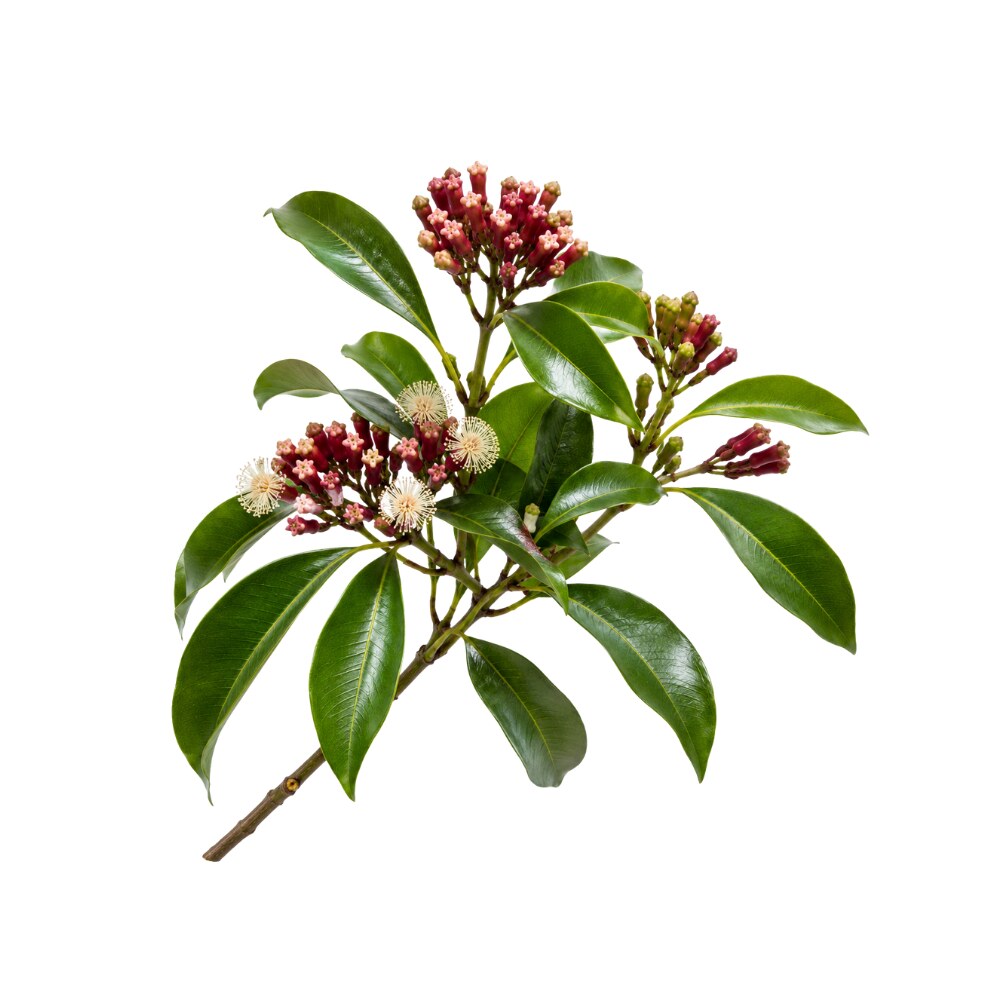 PotentPotentCloveSyzygium aromaticumEugenol blocks voltage-gated sodium channels, the target of lidocaine, and a clove gel matched benzocaine 20% as a topical anaesthetic on oral mucosa in a randomised trial.Mechanismvoltage-gated Na⁺ channel block; TRPV1 modulationRead the evidenceShow lessMonograph →
In a randomised, subject-blinded trial in 73 adults, a homemade eugenol-based clove gel produced significantly lower pain scores than placebo and was statistically indistinguishable from benzocaine 20% before needle insertion into oral mucosa 45Reference 45RCTThe effect of clove and benzocaine versus placebo as topical anesthetics — [randomised controlled trial]View study →.
Eugenol inhibits voltage-gated sodium channels, the same target class as lidocaine, with additional TRPV1 activity 46,
The effect is local anaesthesia at the site of application. No evidence supports clove taken internally for pain.
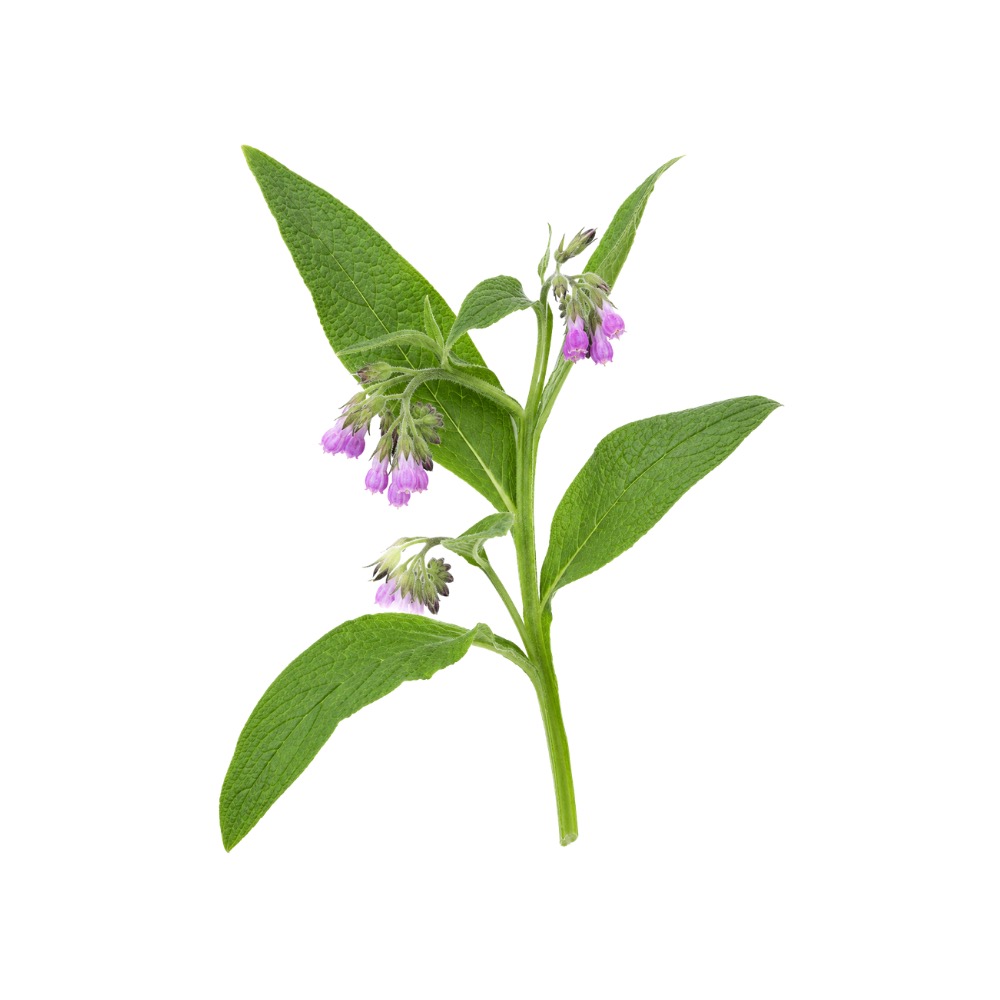 PotentPotentComfreySymphytum officinaleTopical comfrey root ointment cut movement pain by a median 95% against 38% on placebo in acute back pain, and by 55% against 11% in knee osteoarthritis, in double-blind trials.Mechanismtopical anti-inflammatory analgesia (two-step NF-κB inhibition, COX-2 ↓)Read the evidenceShow lessMonograph →
In acute back pain, a double-blind placebo-controlled multicentre trial (n=120, 4 g of 35% comfrey root ointment three times daily for 5 days) found pain on standardised active movement fell by a median of about 95% versus about 38% on placebo, consistently across every primary and secondary measure including the Oswestry disability index 49Reference 49RCTComfrey root extract ointment for acute upper or lower back pain — double-blind, randomised, placebo-controlled, multicentreView study →. In knee osteoarthritis, a double-blind placebo-controlled RCT (n=220, 6 g/day for 3 weeks) reported a VAS fall of 54.7% versus 10.7%, with WOMAC moving in parallel 50Reference 50RCTComfrey root extract ointment in painful osteoarthritis of the knee — double-blind, randomised, placebo-controlledView study →.
Cochrane reviews of herbal low-back-pain and topical osteoarthritis therapies both credit the comfrey evidence 51,
The mechanism is anti-inflammatory, a two-step inhibition of NF-κB with reduced COX-2 expression, and the pain relief follows from it.
The trials are short (5 days to 3 weeks) and acute, with nothing for chronic pain. The two most rigorous osteoarthritis trials combined comfrey with tannic acid and one back-pain trial co-formulated the rubefacient methyl nicotinate, so comfrey’s isolated contribution is uncertain.
The combination trial that did isolate an effect found it modest (VAS −9.9 mm), with no shift in IL-6 or CTX-2 and local rash in 21% versus 1.6% on placebo 53,
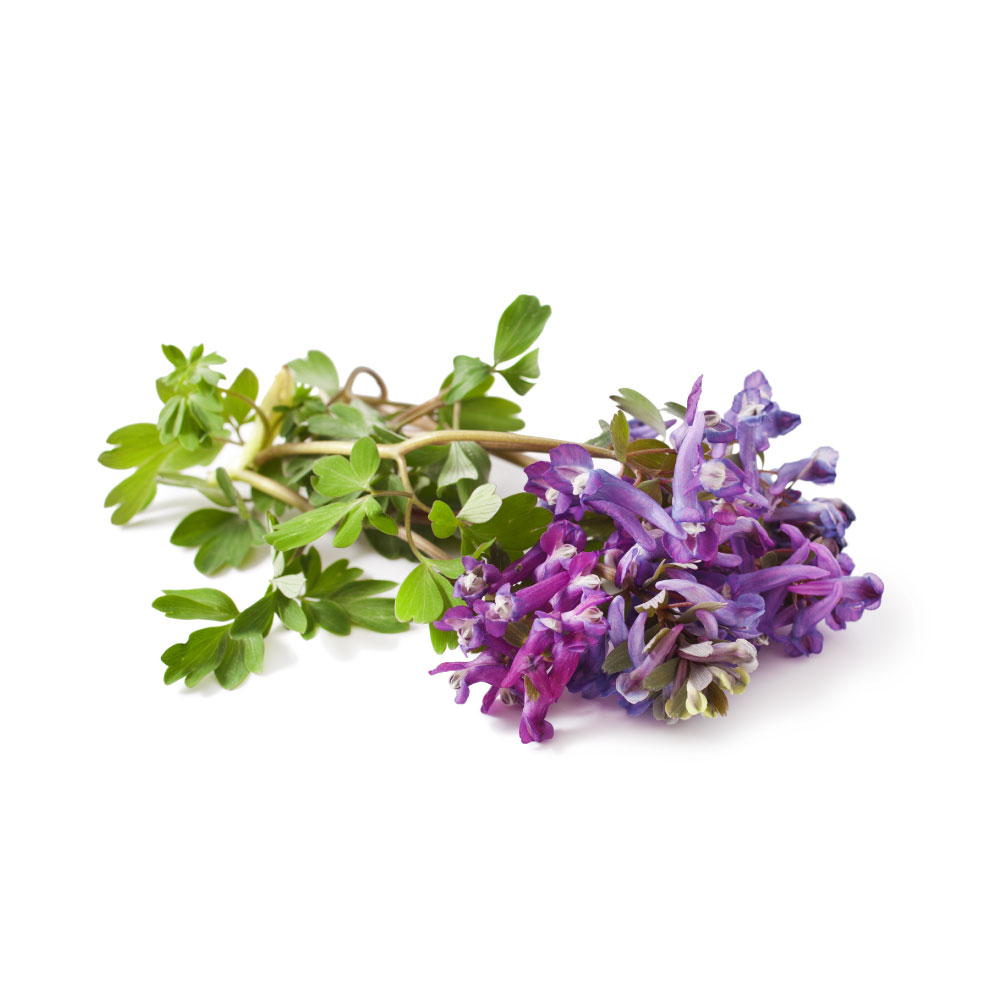 PotentPotentCorydalisCorydalis yanhusuoThe classical Chinese pain herb; relieves acute, inflammatory and neuropathic pain in animals through dopamine D2 antagonism and Nav1.7 sodium-channel block without developing tolerance, and its isolated alkaloid has decades of clinical use.Mechanismdopamine D2-receptor antagonism; Nav1.7 sodium-channel block; opioid-receptor engagement; spinal microglial M1→M2 shiftRead the evidenceShow lessMonograph →
A 2014 Current Biology screen isolated dehydrocorybulbine (DHCB), a moderate dopamine-receptor antagonist that relieved acute thermal, inflammatory and injury-induced neuropathic pain in mice primarily through D2 receptors, and did so without antinociceptive tolerance 56Reference 56AnimalA novel analgesic isolated from a traditional Chinese medicine — animal model, in vivoView study →. A whole-tuber C. yanhusuo extract reproduced non-tolerance-forming antinociception at non-sedative doses across the same three pain classes 57Reference 57AnimalThe Antinociceptive Properties of the Corydalis yanhusuo Extract — animal model, knock-out miceView study →.
The effect is multi-target. The main monomers (tetrahydropalmatine, corydaline, protopine, dehydrocorydaline) all inhibit Nav1.7 58Reference 58In vitroAnalgesic effect of the main components of Corydalis yanhusuo (yanhusuo in Chinese) is caused by inhibition of voltage gated sodium channels — in vivo, in vitroView study →.
Dehydrocorydaline’s inflammatory-pain effect is naloxone-reversible, with spinal TNF-α, IL-1β and IL-6 suppression 59Reference 59AnimalAntinociceptive effects of dehydrocorydaline in mouse models of inflammatory pain involve the opioid receptor and inflammatory cytokines — mouse, in vivoView study →, and it shifts spinal microglia to the M2 phenotype in bone-cancer and chronic-constriction-injury models 60,
There is no modern placebo-controlled trial of the whole tuber for any defined pain condition; the human record is decades of Chinese clinical use of isolated l-tetrahydropalmatine (rotundine). The D2 antagonism that gives tolerance-free analgesia is a neuroleptic-type action, so sedation and hypotension travel with the benefit.
 PotentPotentKratomMitragyna speciosaMitragynine is a partial agonist at the µ-opioid receptor and is converted to the more potent 7-hydroxymitragynine; a whole-leaf decoction more than doubled cold-pressor pain tolerance in a placebo-controlled trial.Mechanismµ-opioid partial agonism (mitragynine, low efficacy); CYP3A-mediated conversion to 7-hydroxymitragynine µ-opioid agonism; CB1/CB2/TRPV1 involvementRead the evidenceShow lessMonograph →
A randomised, double-blind, placebo-controlled inpatient study (n=26 regular male users) found a whole-leaf decoction raised cold-pressor pain tolerance from a mean 11.2 s to 24.9 s one hour after dosing, with no change on placebo 82Reference 82RCTKratom and Pain Tolerance: A Randomized, Placebo-Controlled, Double-Blind Study — randomised controlled trialView study →. Pain self-treatment is the leading reason for use in the largest survey (n=8049, 68%) 83Reference 83ObservationalPatterns of Kratom use and health impact in the US — Results from an online survey — observationalView study →, and a methanolic leaf extract (100–200 mg/kg, i.p.) gave dose-dependent antinociception across writhing, hot-plate and formalin tests in rodents 84Reference 84AnimalAnti-inflammatory and antinociceptive effects of Mitragyna speciosa Korth methanolic extract — rat/mouse animal modelView study →.
The parent alkaloid is a low-efficacy partial µ-agonist. CYP3A conversion to 7-hydroxymitragynine, a much more potent µ-agonist, appears sufficient to explain most opioid-mediated analgesia in mice 85,
The human evidence is one small acute study of experimental pain in experienced users, with no trial in pain patients and no standardised dose. The analgesia is inseparable from opioid-type dependence risk.
Because the potent agonist is a metabolite, effect size tracks metabolism, oxidation during drying and product concentration rather than the weight of leaf.
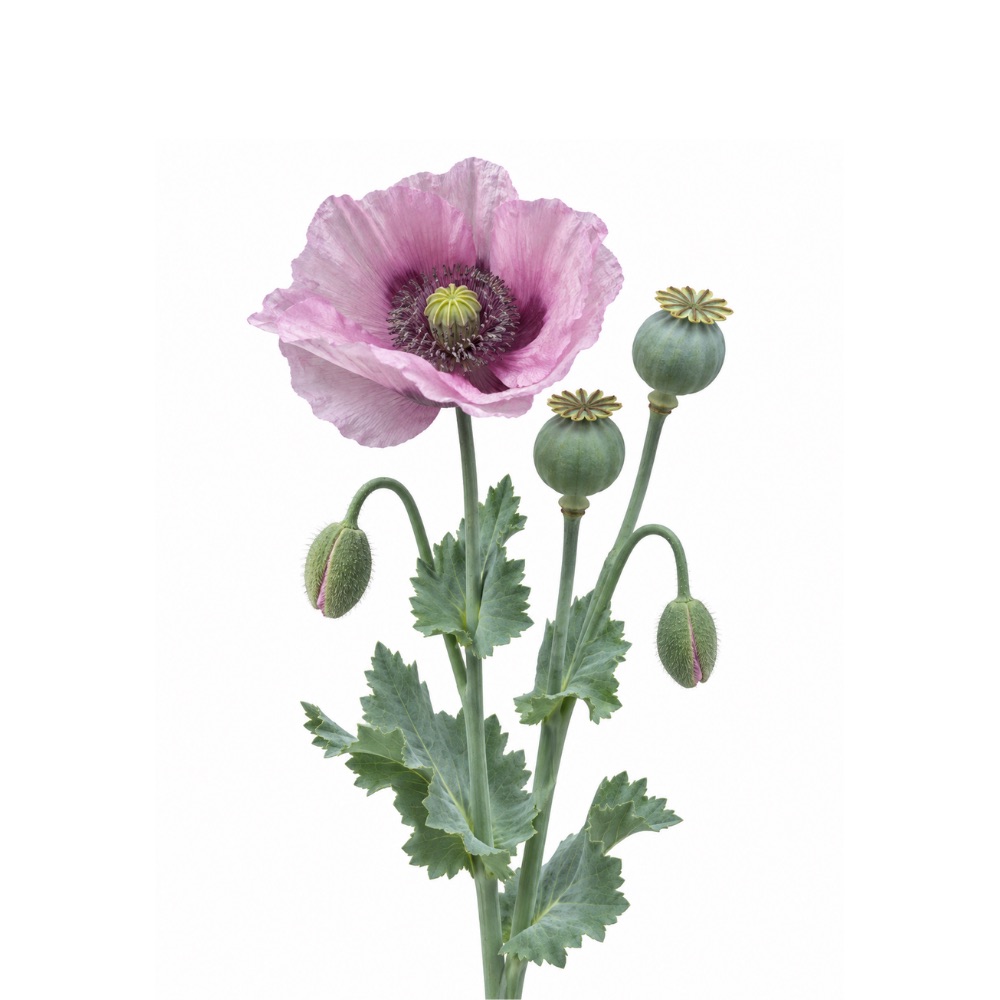 PotentPotentOpium PoppyPapaver somniferumMorphine and codeine, the principal alkaloids of the dried latex, act at the µ-opioid receptor; opium is the oldest effective analgesic in the materia medica and remains the reference standard for severe pain.Mechanismµ-opioid receptor agonism (morphine, codeine)Read the evidenceShow less
The dried latex contains morphine, codeine, thebaine, papaverine and noscapine. Morphine and codeine act on opioid receptors to relieve pain, suppress cough and slow the gut, and the plant’s traditional indications of pain, cough, diarrhoea and sleeplessness match that pharmacology exactly.
The clinical evidence is for standardised pharmaceutical morphine in moderate-to-severe and cancer pain, not for the herb. No controlled trial has evaluated a whole-herb or traditional poppy preparation, and the alkaloid content of the plant varies severalfold with cultivar, plant part and growing conditions.
Opioid pharmacology brings tolerance, dependence, respiratory depression and a withdrawal syndrome, and in poppy tea or whole capsule the alkaloid dose is uncontrolled.
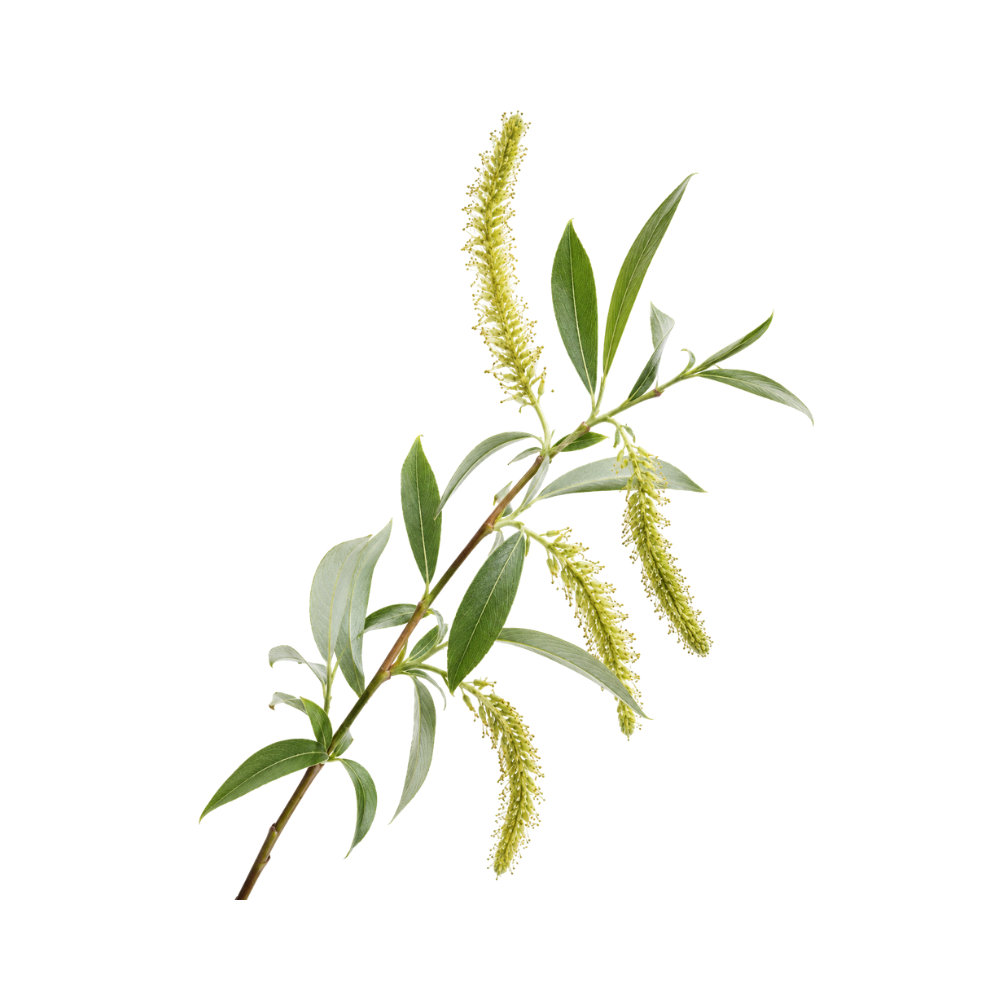 PotentPotentWillowSalix albaSalicin is converted to salicylic acid, the active of aspirin; 39% of patients on 240 mg salicin a day were pain-free after four weeks of chronic low-back pain versus 6% on placebo, evidence Cochrane rated moderate quality.Mechanismsalicin → salicylic acid; COX-2 inhibitionRead the evidenceShow lessMonograph →
In a 4-week double-blind trial of 210 patients with chronic low-back-pain exacerbation, 39% of the high-dose group (240 mg salicin) were pain-free in the final week versus 6% on placebo, with a dose-response visible within one week 121Reference 121RCTTreatment of low back pain exacerbations with willow bark extract: a randomized double-blind study — RCTView study →. An open randomised comparison found that dose broadly equivalent to rofecoxib 12.5 mg/day 122Reference 122RCTTreatment of low back pain with a herbal or synthetic anti-rheumatic: a randomized controlled study — RCTView study →, and the 2014 Cochrane review rated the low-back-pain evidence moderate quality 51Reference 51Meta-analysisHerbal medicine for low-back pain — systematic review and meta-analysis (Cochrane)View study →.
Salicin is metabolised to salicylic acid, which inhibits COX. It is the same active as aspirin, delivered more slowly and at lower concentration, which makes it gentler on the stomach and weaker.
In osteoarthritis one small trial was positive 123Reference 123RCTEfficacy and tolerability of a standardized willow bark extract in patients with osteoarthritis: randomized placebo-controlled, double-blind clinical trial — RCTView study → and a larger, better-powered trial was null while its diclofenac comparator worked 124Reference 124RCTEfficacy and safety of willow bark extract in the treatment of osteoarthritis and rheumatoid arthritis: results of 2 randomized double-blind controlled trials — RCTView study →. The salicylate cautions apply: aspirin sensitivity, the Reye’s-syndrome restriction in children with viral illness, and additive bleeding risk with anticoagulants.
 StrongStrongArnicaArnica montanaTopical arnica gel matched ibuprofen gel for pain and function in hand osteoarthritis and reduced muscle pain after eccentric exercise; the analgesia follows from NF-κB inhibition rather than from a nociceptive target.Mechanismanalgesia downstream of NF-κB p65 inhibition; no direct nociceptive target establishedRead the evidenceShow lessMonograph →
In hand osteoarthritis, arnica gel matched ibuprofen gel on pain and hand function 16Reference 16RCTChoosing between NSAID and arnica for topical treatment of hand osteoarthritis in a randomised, double-blind study — randomised, double-blindView study →, and an open multicentre trial in 79 knee-OA patients reported significant WOMAC pain, stiffness and function gains at 3 and 6 weeks 17Reference 17Clinical trialArnica montana gel in osteoarthritis of the knee: an open, multicenter clinical trial — clinical trialView study →.
In 20 well-trained men after downhill running, topical arnica reapplied every 4 waking hours produced less pain and muscle tenderness at 72 h, yet changed no performance measure (peak torque, jump height) and no damage or inflammatory marker (CK, myoglobin, IL-1β, IL-6, TNF-α, CRP) 18Reference 18RCTThe effects of topical Arnica on performance, pain and muscle damage after intense eccentric exercise — randomised, placebo-controlledView study →. The subjective analgesia had no biochemical correlate.
No analgesic target has been identified; the anti-inflammatory pathway is the presumed substrate. Neither osteoarthritis trial had a placebo arm, so the effect size against no treatment is unquantified, and the exercise study is a single n=20 trial.
Arnica is for unbroken skin and is not taken internally.
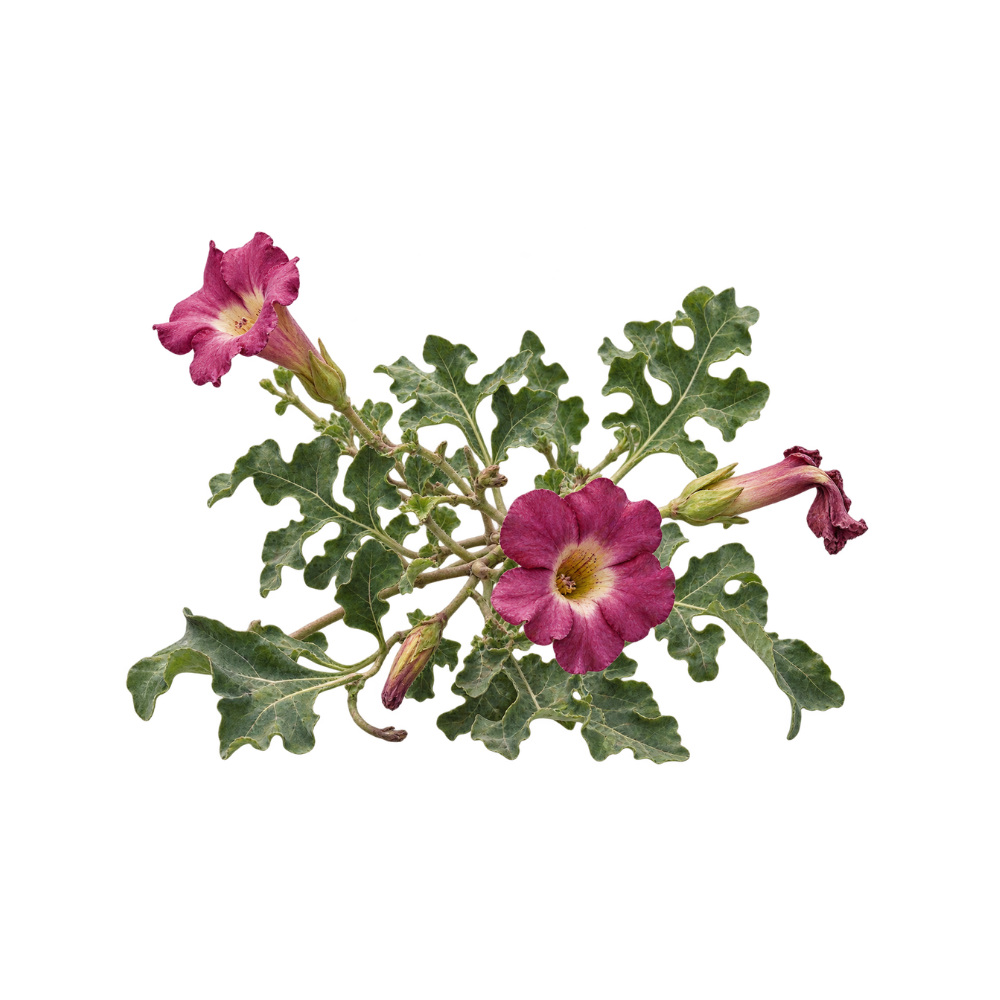 StrongStrongDevil’s ClawHarpagophytum procumbensStandardised extract delivering 50–100 mg harpagoside a day relieved chronic low-back pain in a placebo-controlled trial and matched rofecoxib in a pilot; animal work adds a separate effect on neuropathic pain.Mechanismeicosanoid inhibition; a distinct non-inflammatory analgesiaRead the evidenceShow lessMonograph →
A randomised, double-blind, placebo-controlled trial of the aqueous extract WS 1531 (n=197, 4 weeks) found dose-dependent relief of chronic low-back-pain exacerbations: 10 of 65 patients on 100 mg harpagoside/day were pain-free without rescue tramadol versus 3 of 65 on placebo 65Reference 65RCTEffectiveness of Harpagophytum extract WS 1531 in exacerbation of low back pain — a randomised, placebo-controlled, double-blind studyView study →. A double-blind pilot found the proprietary Doloteffin extract comparable to rofecoxib 66Reference 66RCTA randomised double-blind pilot study comparing Doloteffin and Vioxx (rofecoxib) in low back painView study →.
The main mechanism is eicosanoid inhibition. Animal work adds a separate effect relevant to non-inflammatory pain: extract reduced mechanical hypersensitivity in both post-operative and spared-nerve-injury (neuropathic) models 67Reference 67AnimalAnalgesic effect of Harpagophytum procumbens on postoperative and neuropathic pain in ratsView study →.
The evidence depends on standardised extracts delivering at least 50 mg harpagoside a day, not on crude root.
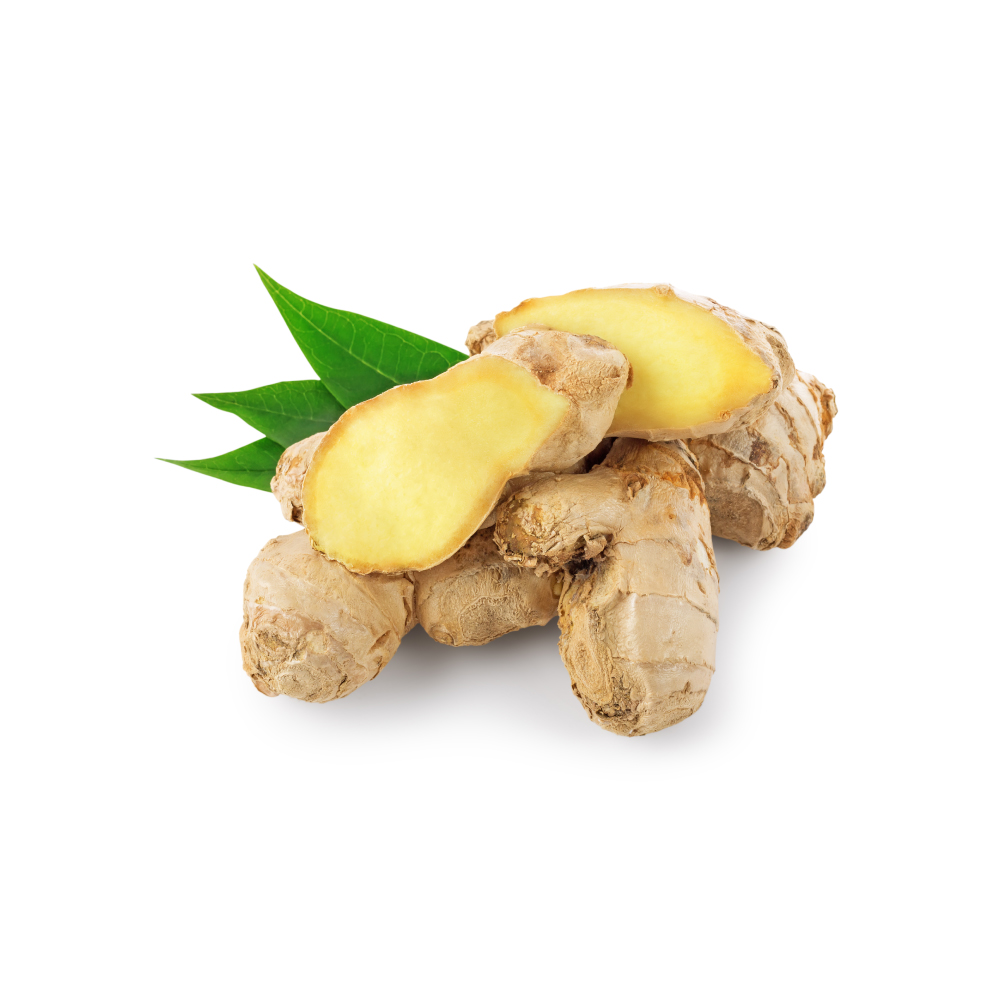 StrongStrongGingerZingiber officinaleReduces the pain of primary dysmenorrhoea as much as NSAIDs in two meta-analyses, at 750–2,000 mg/day of powder over the first days of menses, through prostaglandin inhibition.Mechanismprostaglandin/PGE₂ inhibition; COX-2 ↓Read the evidenceShow lessMonograph →
Two meta-analyses in primary dysmenorrhoea report a large reduction in pain intensity versus placebo, comparable to NSAIDs, at 750–2,000 mg/day of powder over the early days of menses 69,
The mechanism is inhibition of prostaglandin synthesis, the eicosanoid pathway NSAIDs block, with 6-gingerol among the actives. This is why the effect is strongest in prostaglandin-driven period pain and more modest in other pain.
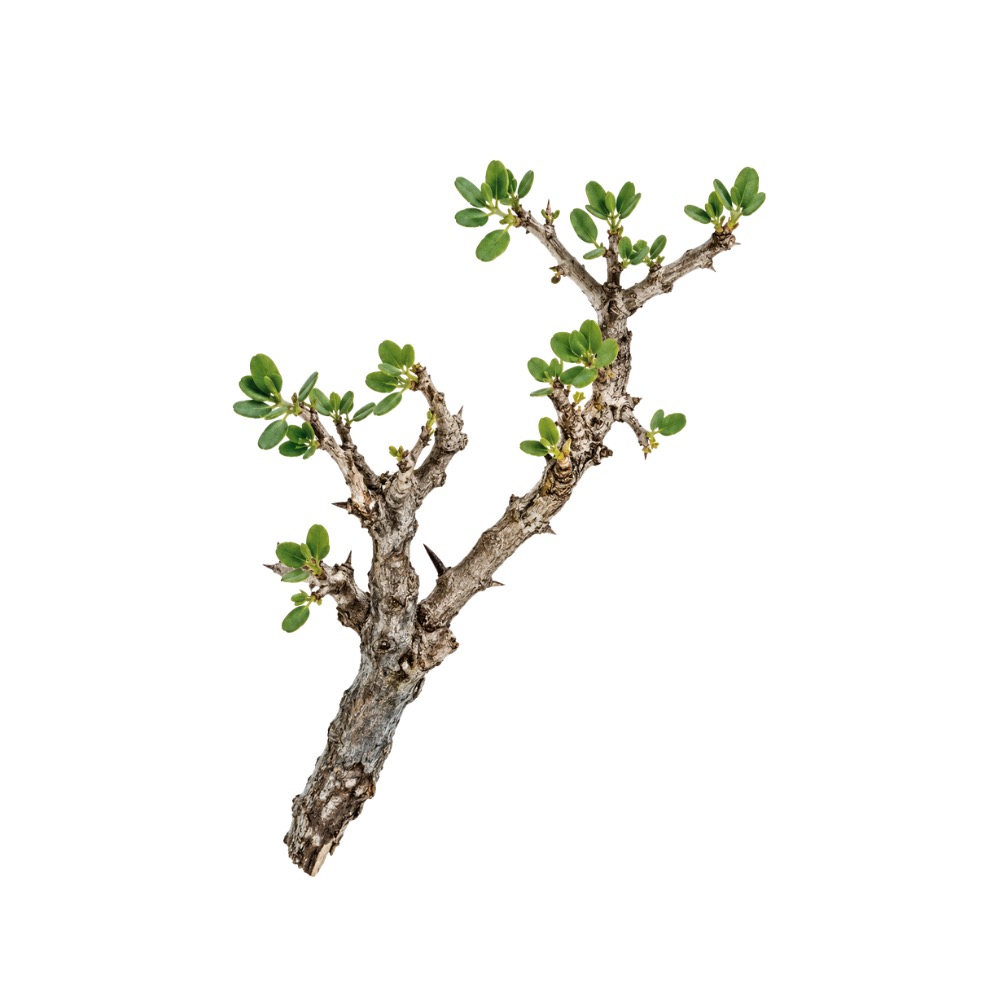 StrongStrongMyrrhCommiphora myrrhaSesquiterpenes of the resin, chiefly furanoeudesma-1,3-diene, produce analgesia in mice that naloxone blocks, an opioid mechanism shown in a living animal; the activity sits in the lipophilic fraction.Mechanismopioid-receptor engagement (naloxone-reversible, furanoeudesma-1,3-diene); TRPV1 and Nrf2 signaling in neuropathic painRead the evidenceShow lessMonograph →
Sesquiterpene fractions of the resin, principally furanoeudesma-1,3-diene, produce analgesia in mice that is blocked by naloxone 102Reference 102AnimalAnalgesic effects of myrrh — animal model, opioid mechanismView study →. Antagonist reversal shows the opioid receptor is carrying the response in a living animal, which is stronger evidence of mechanism than a binding assay.
Ethanolic and petroleum-ether extracts are analgesic in hot-plate and acetic-acid writhing tests, with activity concentrated in the terpene-rich lipophilic fraction 103,
The activity sits in the lipophilic furanodiene fraction, so an aqueous tincture is the wrong vehicle. The one human study used MyrLiq, standardised to curzerene, furanoeudesma-1,3-diene and lindestrene 108Reference 108RCTA pilot study on bioactive constituents and analgesic effects of MyrLiq, a Commiphora myrrha extract with high furanodiene content — placebo-controlled human pilotView study →, and it is a single unreplicated pilot with subjective endpoints and a sex-dependent dose response.
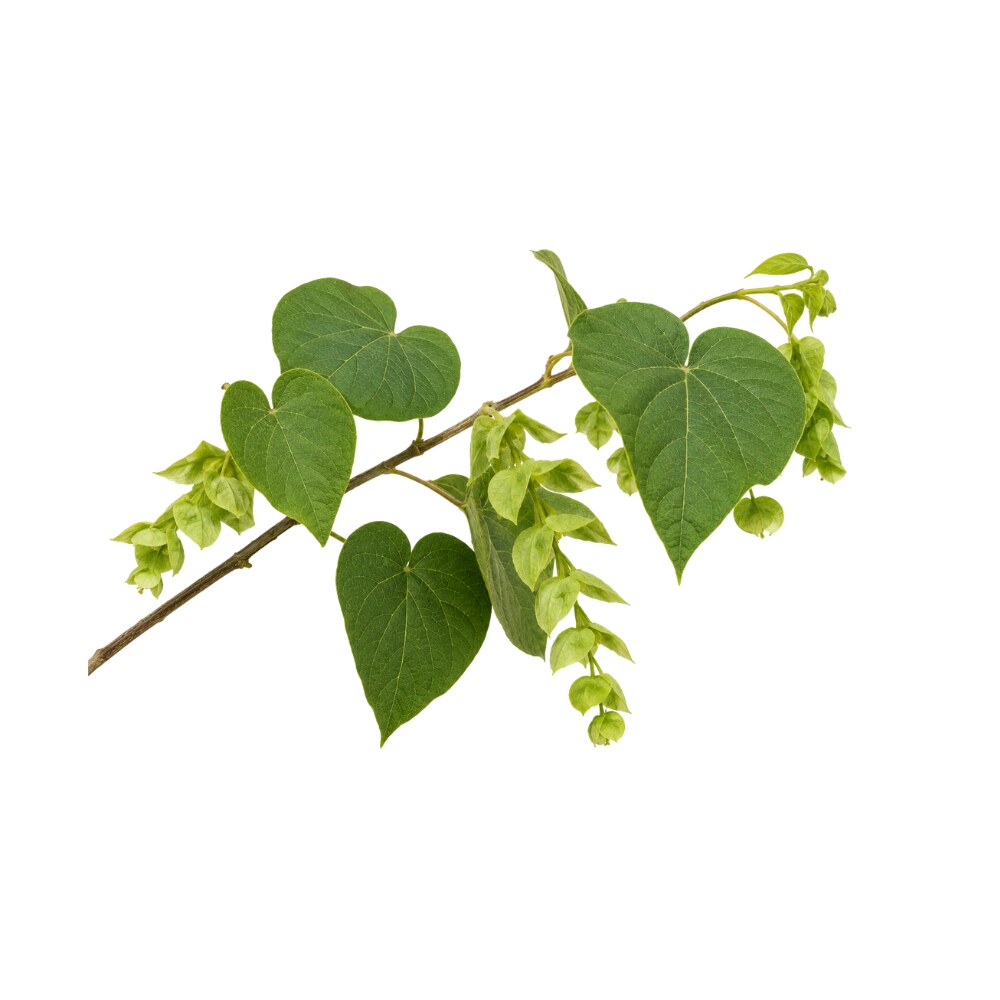 ModerateModerateAbutaCissampelos pareiraRoot extract halved acetic-acid writhing, tripled hot-plate latency and gave 71% protection against adjuvant arthritis in rodents; a traditional South American pain and fever remedy with no mechanism yet identified.Mechanismnot established (no receptor or pathway named); plausibly downstream of the anti-inflammatory action; behavioral readouts motor-confoundedRead the evidenceShow lessMonograph →
In mice a 50% aqueous-ethanolic root extract cut acetic-acid writhing by about 52% at 400 mg/kg and roughly tripled hot-plate latency, and it gave 71% protection against complete-Freund’s-adjuvant arthritis, approaching dexamethasone’s effect 13Reference 13AnimalAntinociceptive and antiarthritic activity of Cissampelos pareira roots — animal model (mouse/rat)View study →. An independent comparative study reproduced analgesia for both the crude powder and an ethanolic extract in radiant-heat and writhing models 14Reference 14AnimalComparative antipyretic and analgesic activities of Cissampelos pareira Linn. and Cyclea peltata — animal model (rat)View study →; that study is the one that separates C. pareira from Cyclea peltata, the plant that shares the Indian name Patha.
No opioid, COX, ion-channel or other target has been named or tested, and no naloxone reversal has been run. The alkaloid curine, which abuta shares with curare, suppresses PGE₂ production and inflammatory pain in mice 10Reference 10AnimalCurine, an alkaloid isolated from Chondrodendron platyphyllum, inhibits prostaglandin E2 in experimental models of inflammation and pain — miceView study →.
Writhing, hot-plate latency and radiant-heat withdrawal are all movement-dependent readouts, and the same plant produces measured skeletal-muscle relaxation 15Reference 15AnimalAnti-depressant, anxiolytic, and muscle relaxant activity of hydroalcoholic extract of Cissampelos pareira Linn. leaves — animal model (mice)View study →, with no locomotor control reported in either analgesic study. The relaxant finding was in leaf and the analgesic work in root.
The arthritis protection is most economically explained by the anti-inflammatory action, is unreplicated, and was obtained at high doses. There are no human data.
 ModerateModerateCannabisCannabis sativaCannabis-based medicines produce a small reduction in chronic neuropathic pain across many RCTs and a 2026 Cochrane review, through THC at CB1 and other cannabinoids at TRPV1 and TRPA1, with sedation and dizziness as routine trade-offs.MechanismCB1 receptor agonism; TRPV1/TRPV2 agonism; TRPA1 agonismRead the evidenceShow lessMonograph →
Across many RCTs and a 2026 Cochrane review, cannabis-based medicines produce a small reduction in chronic neuropathic pain, with sedation and dizziness as routine trade-offs 22Reference 22Systematic reviewCannabis-based medicines for chronic neuropathic pain in adults — Cochrane systematic reviewView study →; the umbrella JAMA meta-analysis rated the overall pain evidence moderate quality 23Reference 23Meta-analysisCannabinoids for Medical Use: A Systematic Review and Meta-analysisView study →.
Several routes contribute: THC at CB1, CBD at TRPV1/TRPV2, CBG and CBC at TRPA1, which is probably why the effect is broad but shallow.
In cancer pain specifically, a 2023 Cochrane review found little or no benefit over placebo 24Reference 24Systematic reviewCannabis-based medicines and medical cannabis for adults with cancer pain — Cochrane systematic reviewView study →.
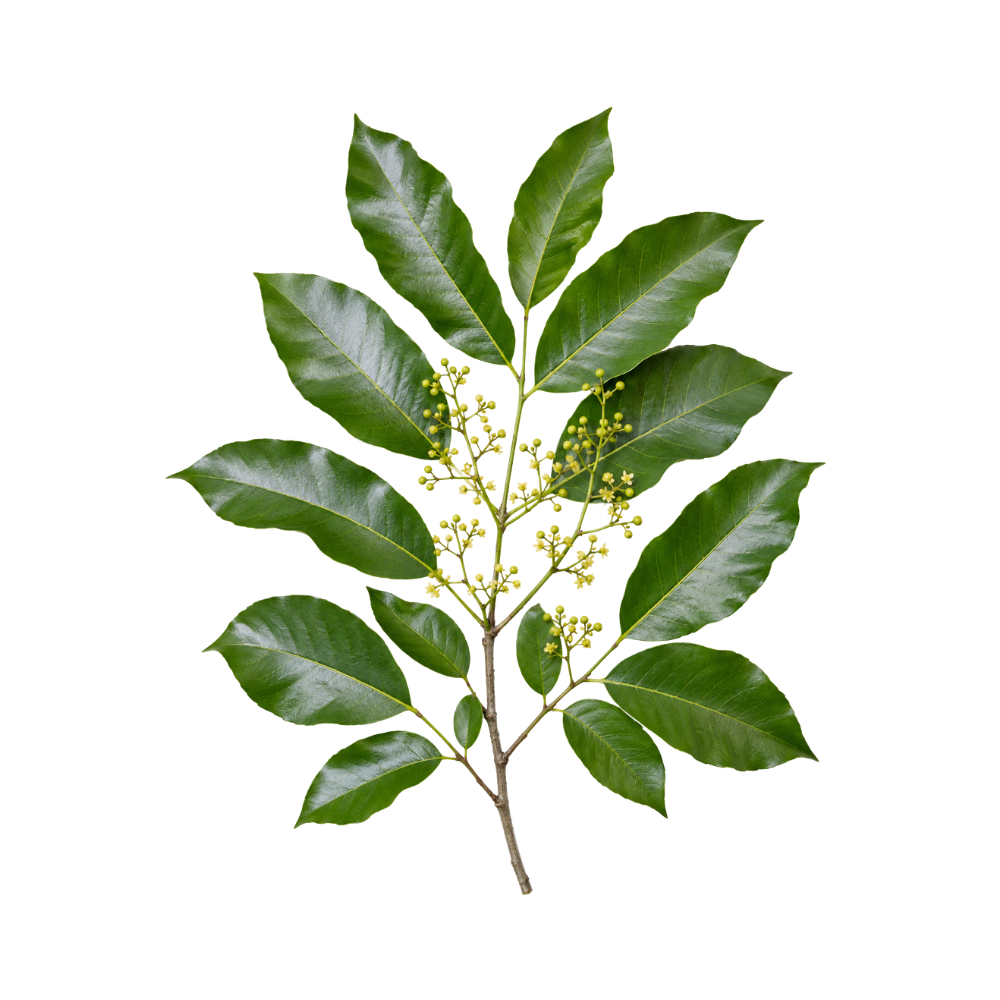 ModerateModerateCatuabaTrichilia catiguaA bark extract was antinociceptive in mice across hot-plate, writhing and von Frey tests through dopaminergic and, secondarily, opioid signalling; effective for inflammatory pain in rats and not for neuropathic pain.Mechanismdopaminergic signaling; opioid signaling (secondary)Read the evidenceShow lessMonograph →
A hydroalcoholic extract (200 mg/kg oral) produced antinociception in mice across hot-plate, writhing and von Frey tests, with blockade experiments implicating the dopaminergic system primarily and opioid signalling secondarily, the same dopaminergic theme as the antidepressant work 25Reference 25AnimalAntinociceptive activity of Trichilia catigua hydroalcoholic extract: new evidence on its dopaminergic effects — animal modelView study →.
The four-herb Catuama product reduced CFA- and LPS-induced inflammatory mechanical allodynia in rats but had no effect on neuropathic pain (nerve ligation, diabetic neuropathy) and did not lower pro-inflammatory cytokines 26Reference 26AnimalEvaluation of the effects of the herbal product Catuama in inflammatory and neuropathic models of nociception in rats — animal modelView study →.
Two rodent studies, one on a multi-herb product, and no human dose-ranging.
 ModerateModerateGerman ChamomileMatricaria chamomillaMatched conventional analgesics for musculoskeletal pain in a 2025 meta-analysis of eight studies, and a chamomile beverage cut menstrual pain scores by more than half; the anti-inflammatory sesquiterpenes are the presumed basis.Mechanismnot established for pain specifically; the sesquiterpene NF-κB/COX anti-inflammatory route is the presumed substrateRead the evidenceShow lessMonograph →
A 2025 systematic review and meta-analysis of eight studies concluded chamomile has an analgesic effect on musculoskeletal pain versus placebo, with no significant difference from conventional analgesics 37Reference 37Meta-analysisEffect of chamomile on musculoskeletal pain: a systematic review and meta-analysis of randomized controlled trialsView study →. The included studies were significantly heterogeneous, and several used combination products.
For menstrual pain, a double-blind RCT of a chamomile-and-L-theanine beverage in young women with primary dysmenorrhoea reported reductions in visual-analogue and numerical pain scores of roughly 55–57% from baseline 38Reference 38RCTEffects of chamomile and L-theanine beverage on menstrual pain, symptoms, mood and sleep quality in young women with primary dysmenorrhea: a randomized, double-blind, placebo-controlled studyView study →. The comparator was a chamomile-flavoured beverage and the active product also contained L-theanine, so the effect cannot be attributed to chamomile alone.
No mechanism is established for pain specifically. The presumed substrate is the herb’s anti-inflammatory activity (NF-κB and prostaglandin–COX inhibition), an inference rather than a measurement.
 ModerateModerateHoropitoPseudowintera colorataPolygodial, the pungent dialdehyde behind the Maori painkiller tradition, activates TRPV1 and TRPA1, defunctionalises sensory neurons and blocks NaV1.7 and NaV1.8; anti-hyperalgesic in rodents, partly through opioid involvement.MechanismTRPV1/TRPA1 agonism with sensory-neuron defunctionalisation; NaV1.7 and NaV1.8 block; naloxone-sensitive opioid involvementRead the evidenceShow lessMonograph →
In rodents polygodial is anti-hyperalgesic and 14- to 27-fold more potent than the crude bark extract in writhing models, with the effect partly reversed by naloxone, implying opioid involvement 73Reference 73AnimalAnti-hyperalgesic properties of the extract and of the main sesquiterpene polygodial isolated from the barks of Drimys winteri — animal (mouse/rat) in vivoView study →.
Polygodial is an agonist at the capsaicin receptor TRPV1 and the related TRPA1, and neonatal treatment mimics capsaicin by depleting sensory-neuron responses and reducing spinal resiniferatoxin binding 74Reference 74AnimalEvidence for the involvement of vanilloid receptor in the antinociception produced by the sesquiterpenes polygodial and drimanial in rats — animal in vivoView study →. Patch-clamp work separately shows block of the nociceptive voltage-gated sodium channels NaV1.7 and NaV1.8 75Reference 75In vitroPolygodial, a drimane sesquiterpenoid dialdehyde purified from Drimys winteri, inhibits voltage-gated sodium channels — in vitroView study →.
Every efficacy datum is injected purified polygodial in rodents, from Drimys winteri bark, and the study that gives the potency figure shows the crude extract is an order of magnitude weaker than the isolate.
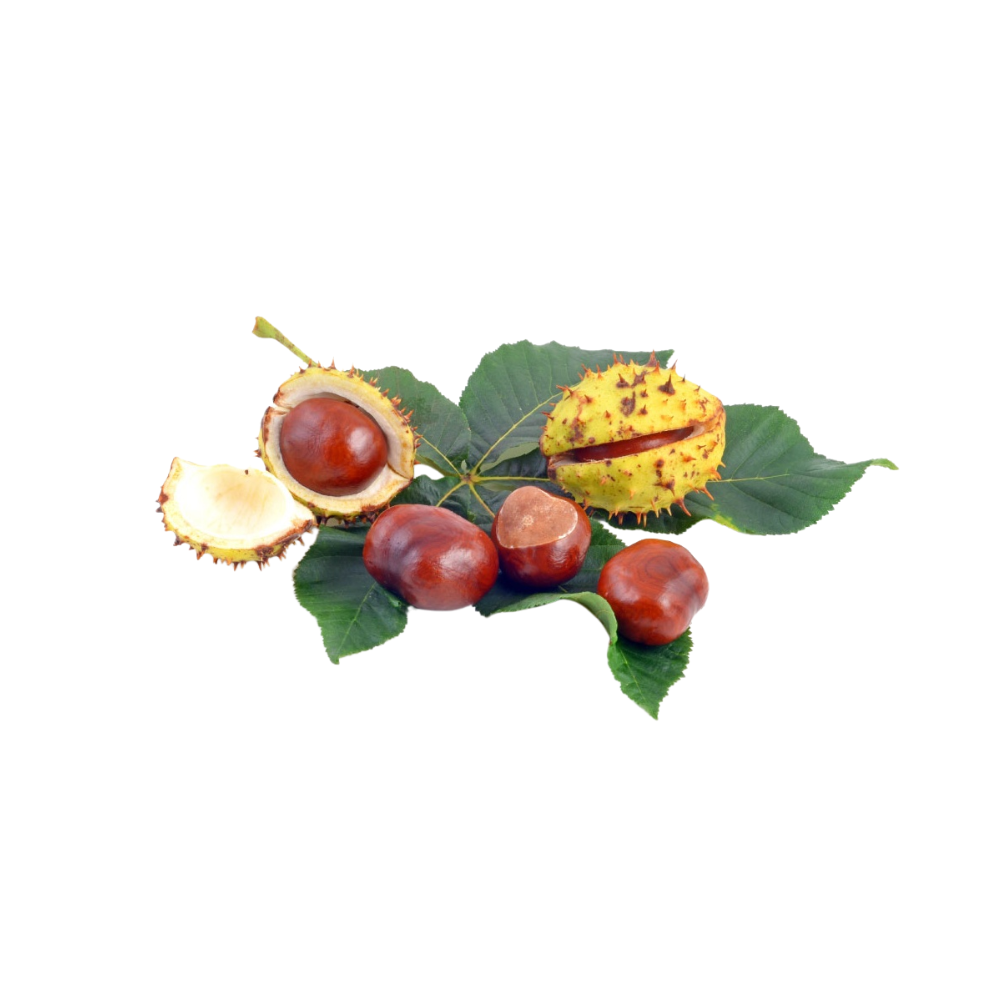 ModerateModerateHorse ChestnutAesculus hippocastanumStandardised seed extract reduced leg pain in six of seven placebo-controlled trials of chronic venous insufficiency; the pain falls because aescin reduces capillary leak and venous congestion.Mechanismcapillary filtration ↓ (aescin), indirect; antinociceptive pathway not establishedRead the evidenceShow lessMonograph →
Leg pain was reduced in six of seven placebo-controlled trials in the Cochrane pooling 76Reference 76Meta-analysisHorse chestnut seed extract for chronic venous insufficiency — systematic review and meta-analysisView study →, and the pain and heaviness signal held in the larger meta-analysis of RCTs plus observational cohorts 77Reference 77Meta-analysisEfficacy, routine effectiveness, and safety of horsechestnut seed extract in chronic venous insufficiency — meta-analysis of randomised controlled trials and observational studiesView study →.
There is no direct antinociceptive mechanism. The pain falls because the capillary leak, oedema and venous congestion driving it fall 78,
The relief is specific to aching, heavy, congested legs and to haemorrhoidal and post-traumatic swelling, and is not expected for pain of other origins.
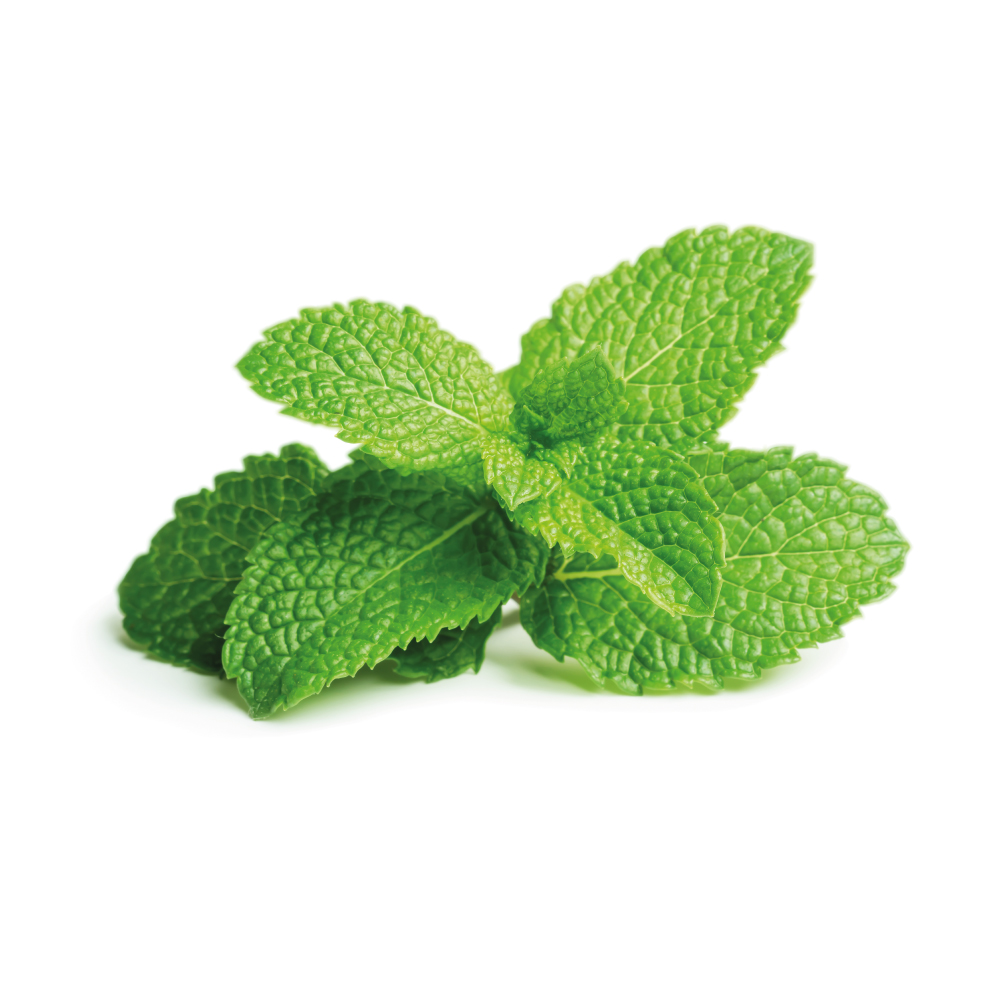 ModerateModeratePeppermintMentha × piperitaA 10% peppermint oil solution applied to the forehead and temples relieved tension-type headache comparably to paracetamol within 15–30 minutes; menthol acts on cold-sensitive TRPM8 receptors in the skin.Mechanismmenthol activation of cold-sensitive TRPM8 receptors in skin, cutaneous not systemic; antinociception dissociated from anti-edema activityRead the evidenceShow lessMonograph →
A 10% peppermint oil solution in ethanol dabbed on forehead and temples eased tension-type headache in small double-blind trials, with relief reported as comparable to paracetamol at 15–30 minutes 109,
The mechanism is local: menthol activating cold-sensitive TRPM8 receptors in the skin, producing analgesia and muscle relaxation without systemic action 110Reference 110ReviewPeppermint oil in the acute treatment of tension-type headache — reviewView study →. Separately, aqueous leaf extract reduced acetic-acid writhing in mice without a measurable anti-oedema effect 111Reference 111AnimalAntinociceptive activity of Mentha piperita leaf aqueous extract in mice — animal modelView study →, so the analgesia is not simply downstream of an anti-inflammatory action.
The human trials are few, old and largely from one research group, with no large independent replication. The evidence is for topical oil; nothing supports oral capsules or tea for pain.
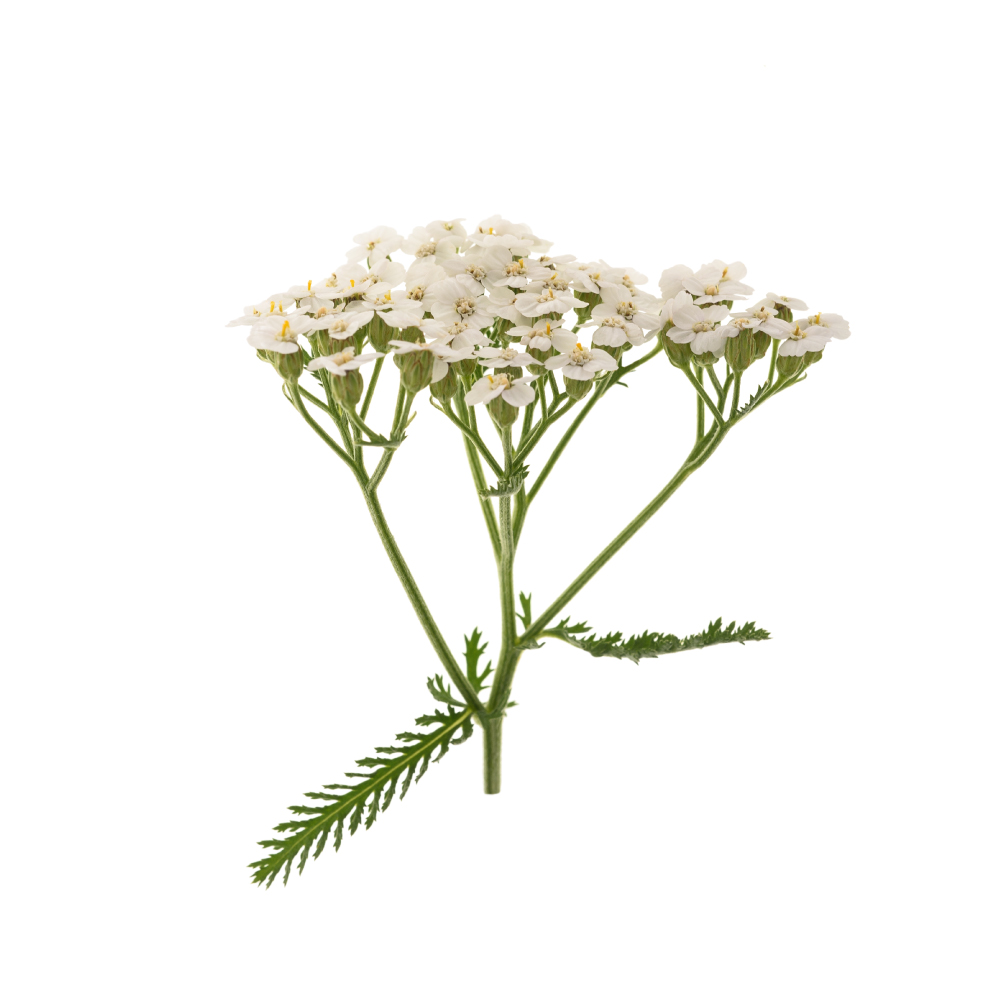 ModerateModerateYarrowAchillea millefoliumYarrow tea reduced menstrual pain more than placebo over two cycles in a double-blind trial, by combining a calcium-channel antispasmodic action with prostaglandin suppression.Mechanismantispasmodic + prostaglandin inhibition (uterine)Read the evidenceShow lessMonograph →
In a double-blind randomised study, students with primary dysmenorrhoea drank yarrow as a teabag preparation for three days across two cycles, with a significantly greater reduction in visual-analogue pain than placebo at one and two months 125Reference 125RCTEffect of Achillea millefolium on relief of primary dysmenorrhea: a double-blind randomized clinical trial — [double-blind randomised]View study →.
Yarrow acts on both drivers of period pain: the calcium-channel antispasmodic action 126Reference 126AnimalAntispasmodic effects of yarrow (Achillea millefolium L.) extract in the isolated ileum of rat — [rat in vivo]View study → and prostaglandin/COX-2 suppression by its guaianolides 127Reference 127In vitroGuaianolides from Achillea millefolium L. and their anti-inflammatory activity — [in vitro]View study →.
A single small trial in one indication.
Show 23 more herbs with a mild analgesic action
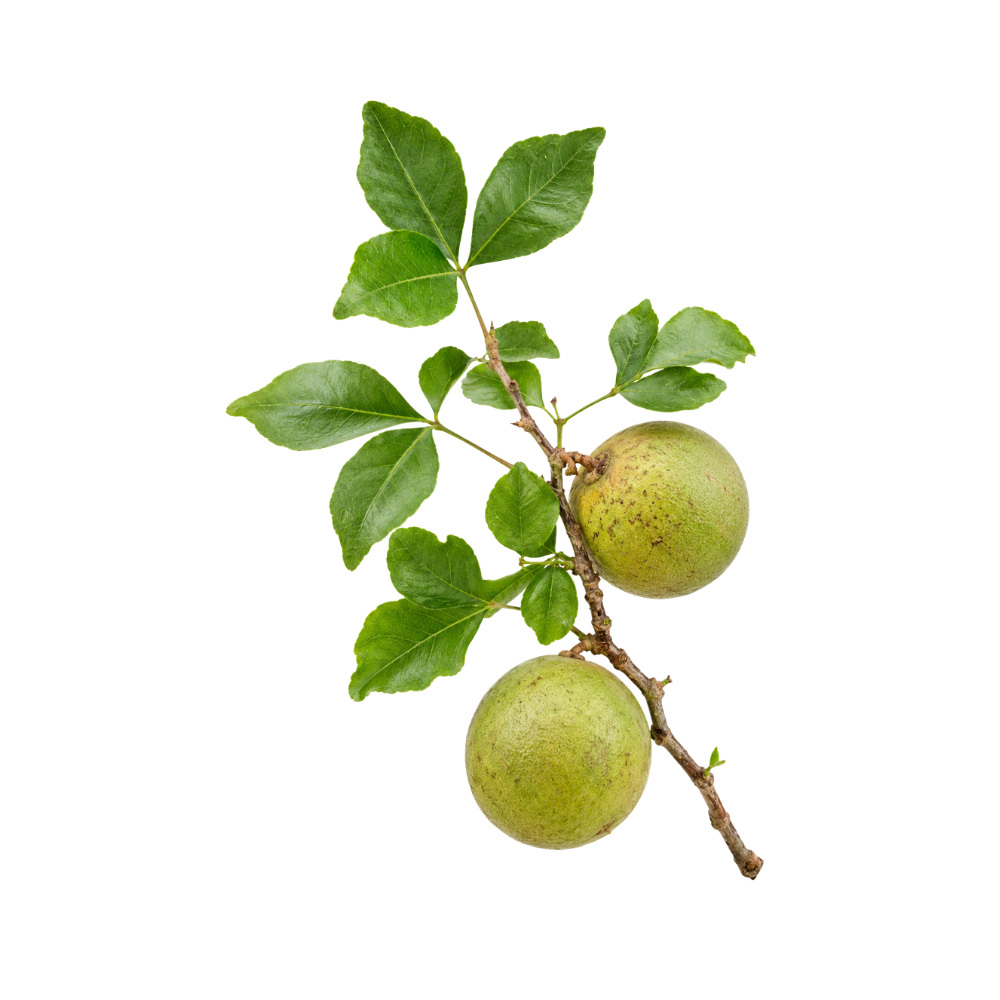 MildMildBaelAegle marmelosLeaf extract showed analgesic activity in rats alongside anti-inflammatory and antipyretic effects; the leaf is given for mild pain and fever in Ayurvedic practice.Mechanismnot establishedRead the evidenceShow lessMonograph →
Aqueous leaf extract showed analgesic activity in rats alongside anti-inflammatory and antipyretic effects 19Reference 19AnimalStudies on the anti-inflammatory, antipyretic and analgesic properties of the leaves of Aegle marmelos Corr. — animal model (rat)View study →. The leaf is a traditional Ayurvedic remedy for inflammatory and febrile complaints with mild pain.
No pathway, no dose–response detail and no human data.
 MildMildCalifornia PoppyEschscholzia californicaExtract produced peripheral analgesia in mice through the same benzodiazepine-site GABA-A route as its sedation, and not through opioid receptors; a traditional Californian remedy for pain and sleeplessness.MechanismGABA-A benzodiazepine-site modulation (peripheral); not opioid-receptor mediatedRead the evidenceShow lessMonograph →
In mice the extract produced peripheral analgesic effects that did not behave like an opioid, with the pain effect running through the same benzodiazepine-site GABAergic route as the sedation 20Reference 20Neurophysiological effects of an extract of Eschscholzia californica ChamView study →.
Eschscholzia californica contains no morphine and no phenanthrene opiates; its actives are the pavine alkaloids californidine and eschscholtzine and protopine-type alkaloids 21Reference 21Modulatory effects of Eschscholzia californica alkaloids on recombinant GABAA receptorsView study →.
One mouse study, no human analgesia trial and no established dose. Sedation arrives at doses below any measured pain relief.
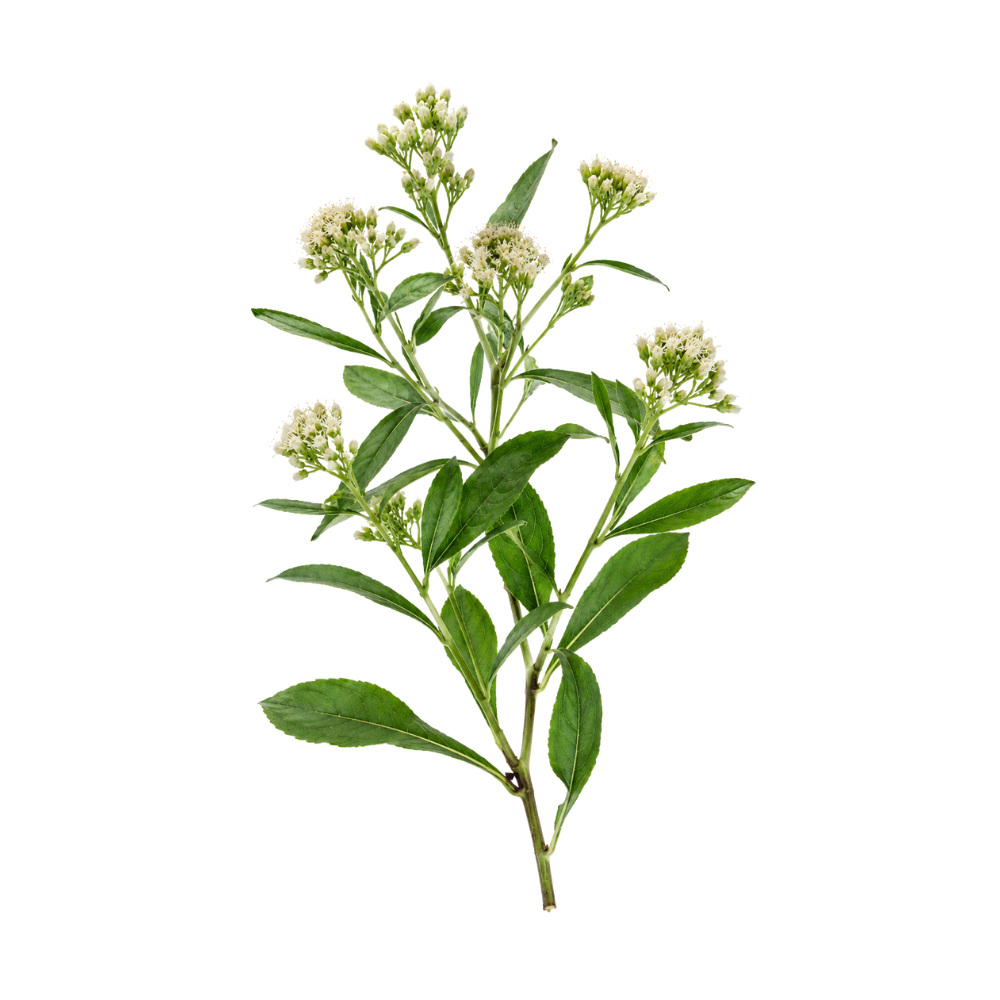 MildMildChilcaBaccharis latifoliaA traditional Andean pain poultice whose leaf inhibits COX-1 and COX-2, the peripheral prostaglandin route of the NSAIDs; no pain assay has been run.MechanismCOX inhibition → PGE₂ ↓ (peripheral; no nociception assay)Read the evidenceShow lessMonograph →
The traditional use is a poultice for pain, and the measured COX-1/COX-2 inhibition 41Reference 41Anti-inflammatory activity of four Bolivian Baccharis species (Compositae)View study → gives it the peripheral prostaglandin mechanism of the NSAIDs.
No writhing, hot-plate, formalin or mechanical-threshold assay exists for B. latifolia, so the effect size is unknown.
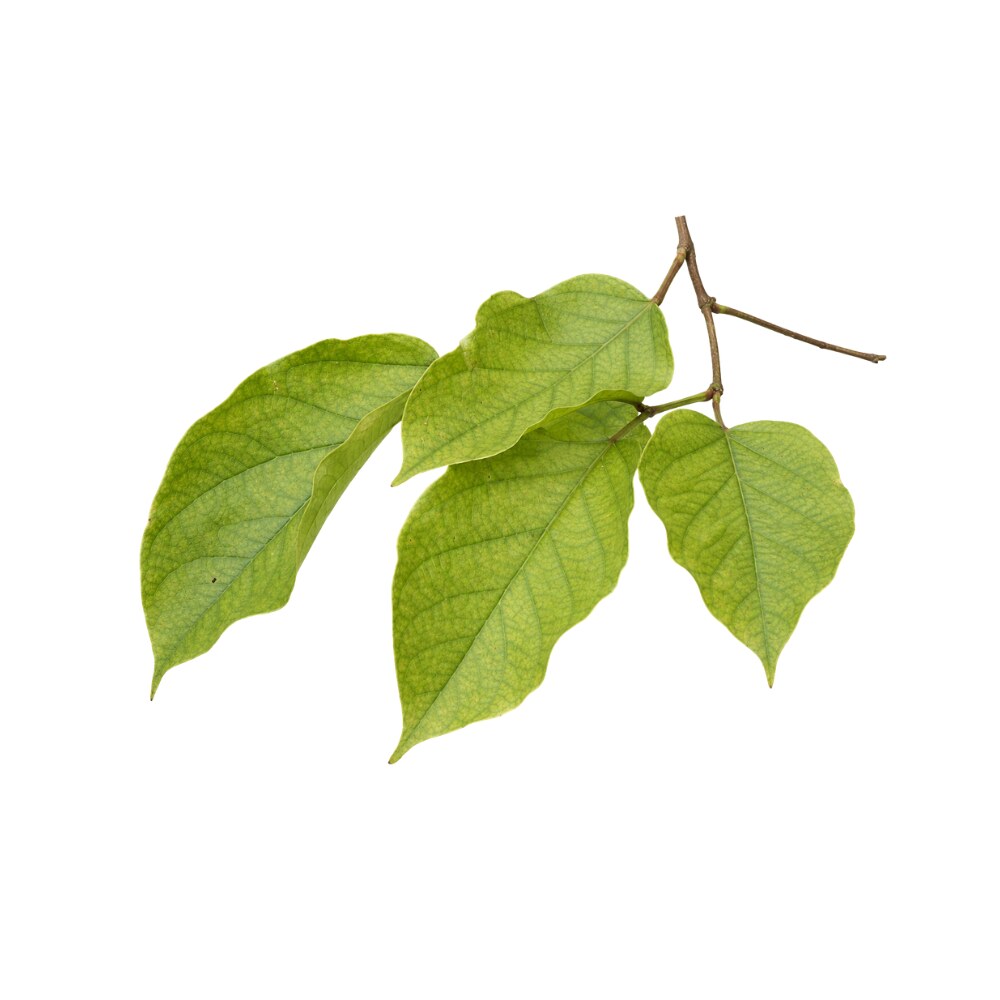 MildMildClavo HuascaTynanthus panurensisEugenol, the vine's aromatic principle, inhibits GABA-A currents in trigeminal ganglion neurons, the basis of packing the fresh root resin against an aching tooth; systemic use for rheumatic pain is traditional only.MechanismGABA-A receptor current inhibition (α1β2γ2 subtype, trigeminal ganglion neurons), eugenol isolateRead the evidenceShow lessMonograph →
Eugenol inhibits GABA-induced currents in rat trigeminal ganglion neurons and in HEK 293 cells expressing the α1β2γ2 GABA-A subtype 42Reference 42Eugenol Inhibits the GABAA Current in Trigeminal Ganglion NeuronsView study →, the mechanistic case for the traditional practice of packing fresh root resin against an aching tooth 43Reference 43The healing power of rainforest herbs: A guide to understanding and using herbal medicinals, the same local use eugenol has in dentistry.
This is purified eugenol in vitro; no study tests clavo huasca extract for analgesia, and the vine’s eugenol content is unquantified. Blocking GABA-A currents is ordinarily excitatory, and why inhibition at the trigeminal ganglion yields analgesia has not been explained.
The traditional systemic uses for arthritis, rheumatism and aching muscles 43,
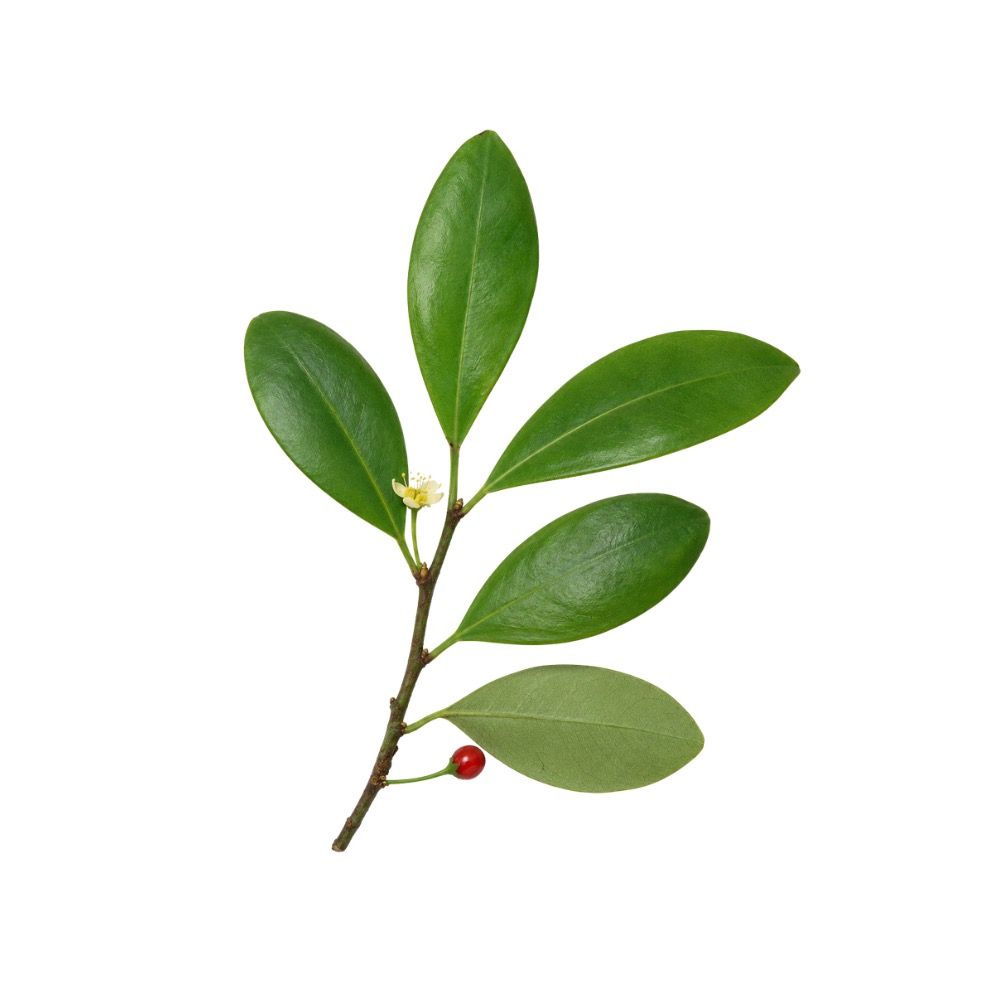 MildMildCocaErythroxylum cocaCocaine blocks voltage-gated sodium channels and halts nerve conduction, the property that made it the first local anaesthetic; in the chewed leaf this appears as numbing of the mouth, and in the traditional poultice for local pain.Mechanismvoltage-gated Na⁺-channel blockade (nerve-impulse propagation)Read the evidenceShow lessMonograph →
The purified alkaloid was the first surgical local anaesthetic and the ancestor of the entire “-caine” class, because sodium-channel block halts nerve-impulse conduction wherever it reaches 48Reference 48ReviewCocaine: an updated overview on chemistry, detection, biokinetics, and pharmacotoxicological aspects — reviewView study →.
In the leaf as used, this appears as mild numbing of the oral mucosa during chewing and in the traditional topical poultice for local pain 48Reference 48ReviewCocaine: an updated overview on chemistry, detection, biokinetics, and pharmacotoxicological aspects — reviewView study →.
No study evaluates whole-leaf preparations for pain relief; the anaesthetic literature concerns purified cocaine and its synthetic descendants. The whole leaf is a local, not a systemic, analgesic.
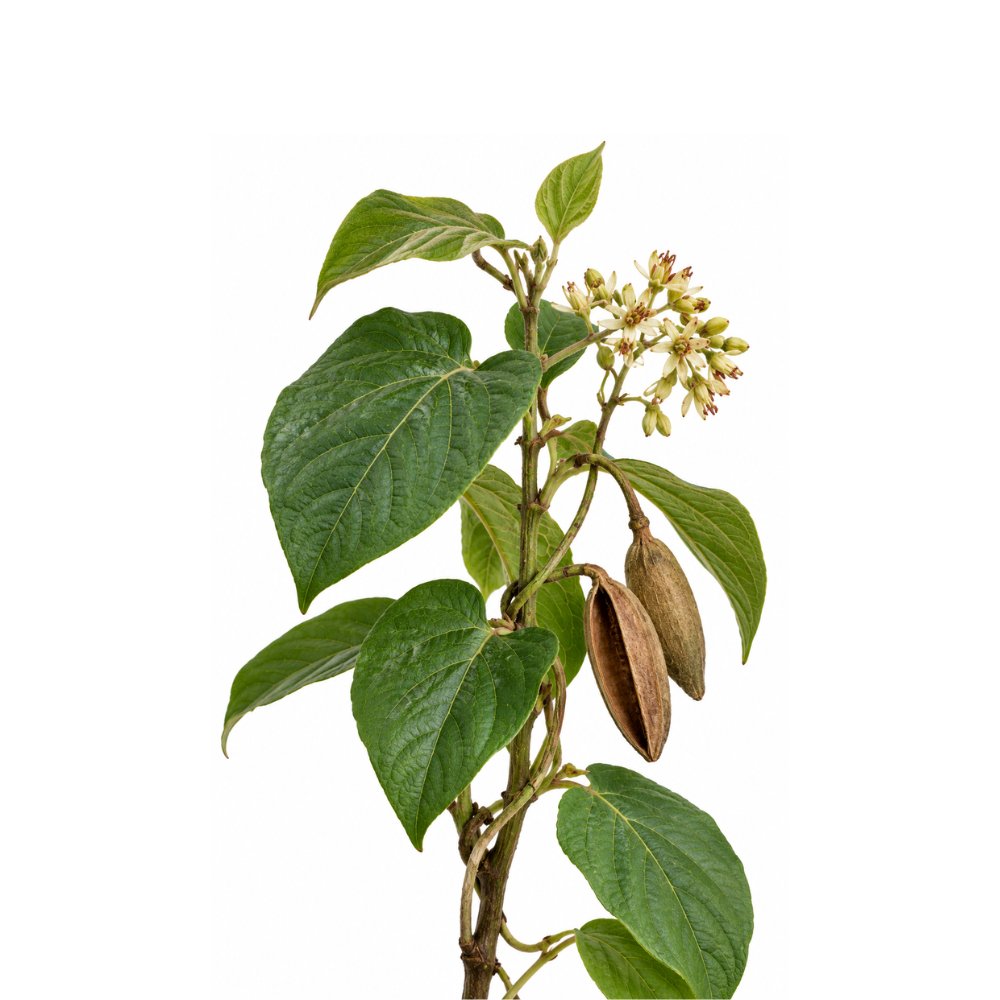 MildMildCurareChondrodendron tomentosumCurine, one of the vine's bisbenzylisoquinoline alkaloids, suppresses prostaglandin E2 and reduces inflammatory pain in mice; tubocurarine, the paralysing alkaloid, has no analgesic effect.MechanismPGE₂ suppression (curine); peripheral, from the isolated alkaloidRead the evidenceShow lessMonograph →
Curine inhibited acetic-acid writhing, the inflammatory but not the neurogenic phase of the formalin test, and carrageenan-induced hyperalgesia in mice, and it reduced PGE₂ production without altering COX-2 expression 10Reference 10AnimalCurine, an alkaloid isolated from Chondrodendron platyphyllum, inhibits prostaglandin E2 in experimental models of inflammation and pain — miceView study →, an indomethacin-like rather than morphine-like profile.
The finding is one animal study of an isolated alkaloid. Tubocurarine produces paralysis with no sedation, no analgesia and no loss of consciousness.
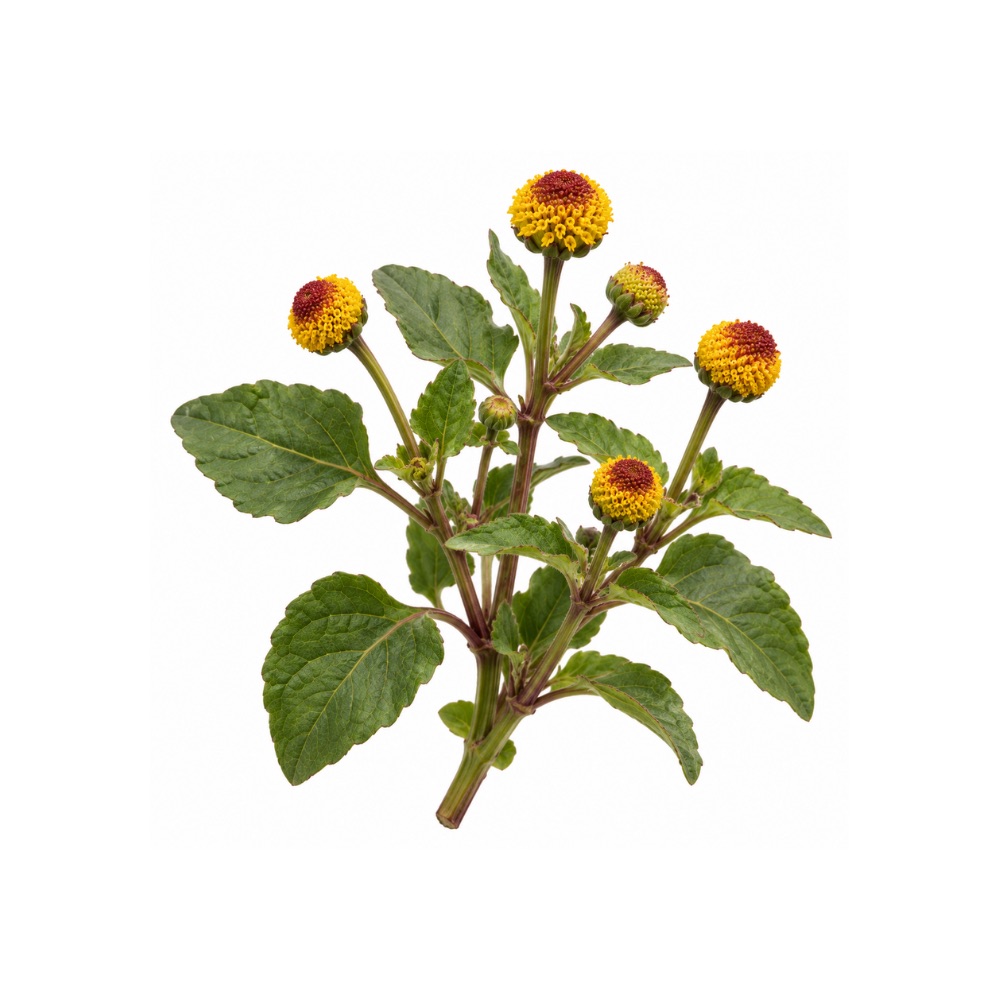 MildMildElectric DaisyAcmella oleraceaSpilanthol, the alkylamide of the flower heads, numbs the oral mucosa; a jambu gel gave intermediate topical anaesthesia in a randomised crossover trial, and the plant is the traditional toothache remedy across the tropics.Mechanismlocal anaesthesia of mucosa (spilanthol)Read the evidenceShow less
Chewed, a flower head floods the mouth with tingling, salivation and numbness, and the bud is held against an aching tooth or gum in traditional use across the tropics.
A mucoadhesive film of the extract produced topical anaesthesia in the mouse tail-flick test that scaled with spilanthol content 128Reference 128In vitroDevelopment and evaluation of a novel mucoadhesive film containing Acmella oleracea extract for oral mucosa topical anesthesia — in vitro permeation and mouse tail-flickView study →, and in a randomised crossover trial a 20% jambu extract gel gave intermediate topical anaesthesia, weaker than a lidocaine–prilocaine control, with no pulpal anaesthesia 129Reference 129RCTEfficacy of lidocaine-prilocaine combined with amitriptyline or Acmella oleracea in a liposomal cream for topical anesthesia: a randomized crossover clinical trial — randomised, blinded, crossoverView study →.
The effect is surface numbing of mucosa and skin, not deep dental anaesthesia and not a systemic analgesic.
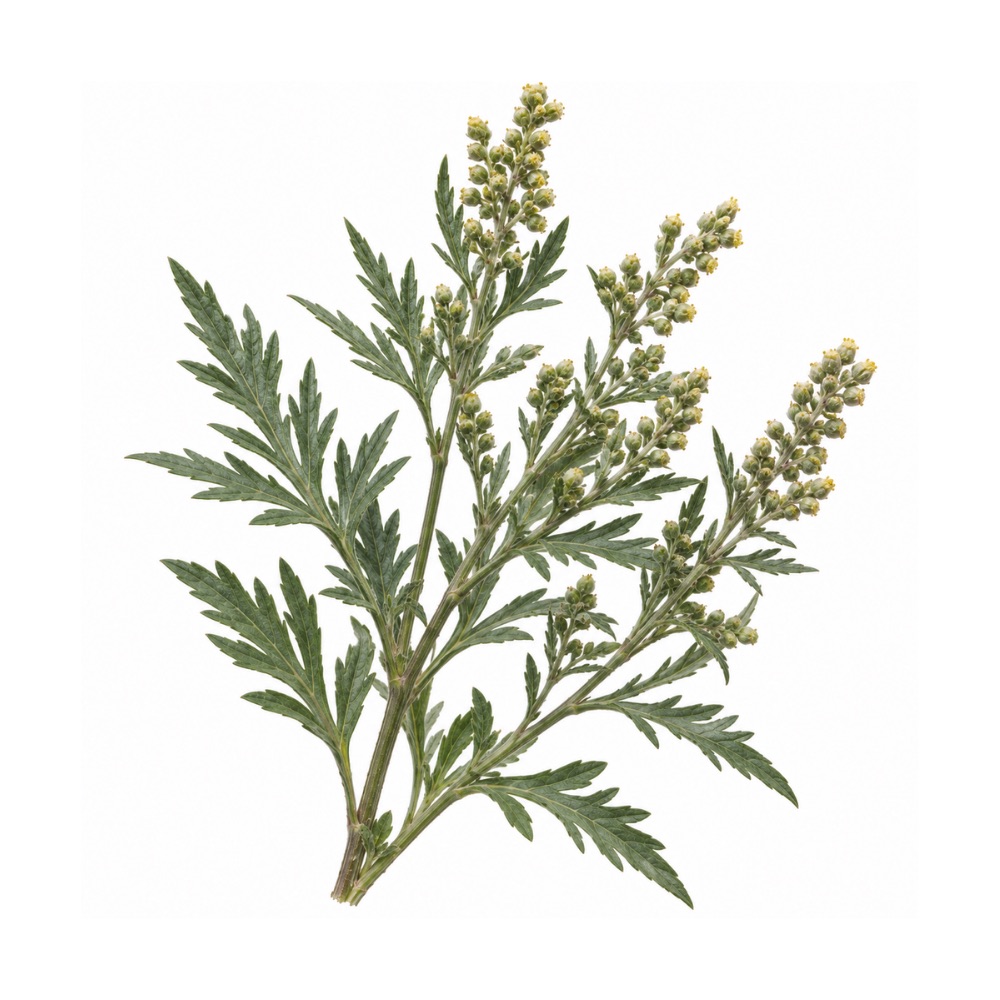 MildMildEstafiateArtemisia ludovicianaThe essential oil produces opioid-mediated antinociception in mice, abolished by naloxone, without sedation or motor impairment; the plant is applied externally for pain in Mexican practice.Mechanismopioid-mediated antinociception from the essential oilRead the evidenceShow less
Given intraperitoneally, the essential oil reduced both phases of the formalin test and prolonged hot-plate latency (ED50 about 25.9 mg/kg), and naloxone abolished the effect, implicating an opioid mechanism; rota-rod and open-field tests showed no sedation or motor impairment 68Reference 68AnimalAntinociceptive activity of the essential oil from Artemisia ludoviciana — animal modelView study →.
The work is rodent, on the injected essential oil rather than the drunk infusion, and it is a single line of research.
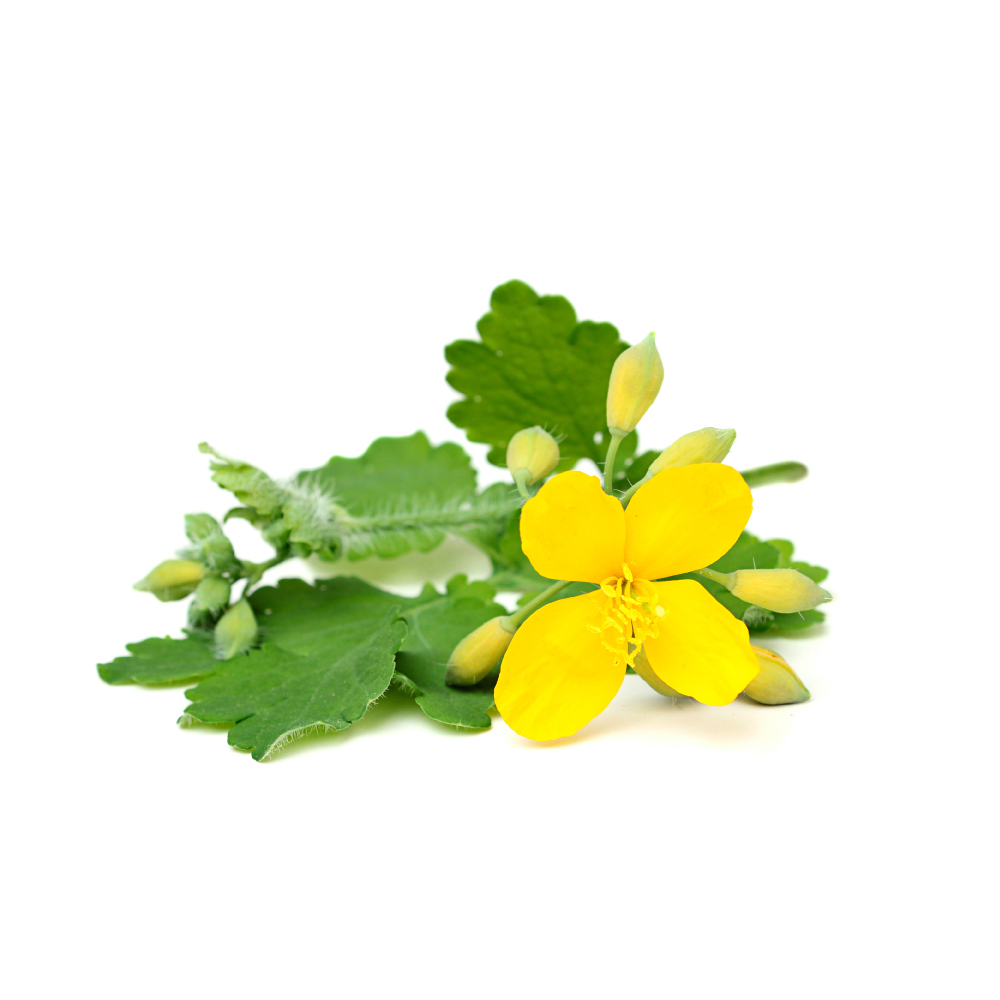 MildMildGreater CelandineChelidonium majusModulates glycine-, glutamate- and GABA-activated currents in rat periaqueductal-grey neurons, a core pain-modulating region; no human pain trial exists, and the same work found hERG potassium-channel block.Mechanismglycine/glutamate current modulation; GABA-A chloride current ↑Read the evidenceShow lessMonograph →
In rat periaqueductal-grey neurons, Chelidonii herba modulated glycine- and glutamate-activated currents 39Reference 39AnimalModulation of Chelidonii herba on glycine-activated and glutamate-activated ion currents in rat periaqueductal grey neurons — animalView study → and enhanced GABA-activated chloride current 40Reference 40AnimalModulation of Chelidonii herba on GABA-activated chloride current in rat PAG neurons — animalView study →, a specific and anatomically apt mechanism.
No human pain trial exists. The same work found that whole extracts and major alkaloids block hERG potassium channels and alter cardiac action potentials.
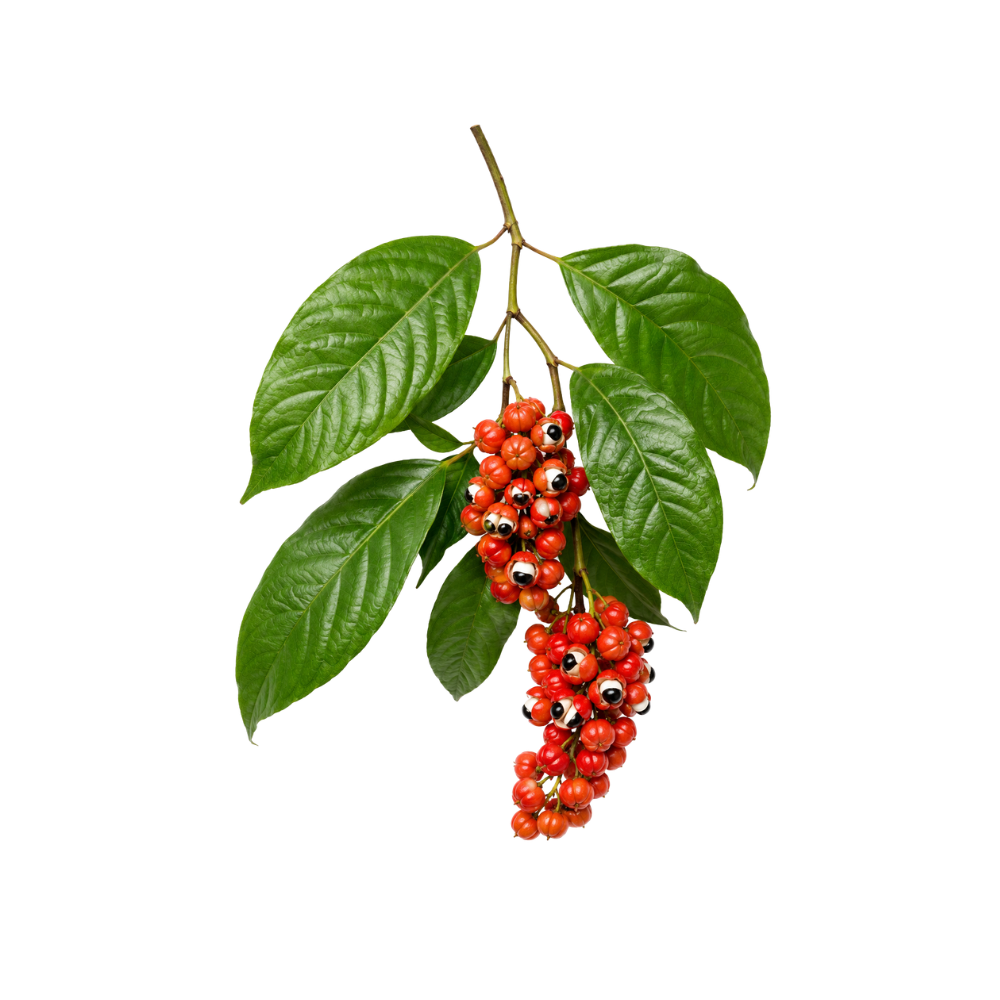 MildMildGuaranaPaullinia cupanaCaffeine is an established analgesic adjuvant that increases the effect of paracetamol and ibuprofen; guarana seed is the richest natural source of it, and Amazonian practice gives the seed for headache, migraine and neuralgia.Mechanismadenosine-receptor antagonism (caffeine); analgesic adjuvantRead the evidenceShow lessMonograph →
Guarana seed contains roughly 2.5–8% caffeine by weight, four to five times the content of coffee. In a Cochrane review of 20 acute-pain trials, adding 100 mg or more of caffeine to a standard dose of paracetamol or ibuprofen gave 5–10% more participants a good level of pain relief, a small but consistent benefit independent of the pain condition 130Reference 130Systematic reviewCaffeine as an analgesic adjuvant for acute pain in adults — Cochrane systematic reviewView study →.
Across Amazonian practice the seed is used as an analgesic and febrifuge, given for migraine and neuralgia. No trial has tested guarana itself for pain.
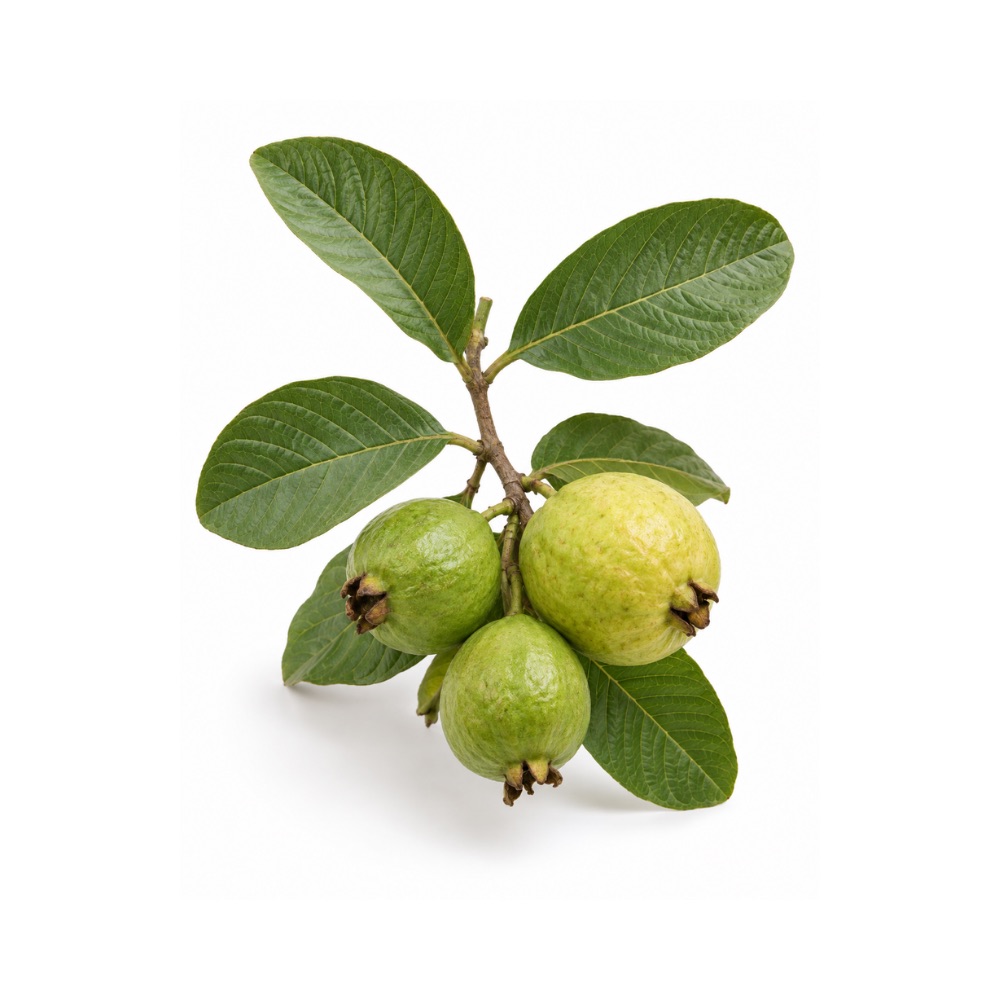 MildMildGuavaPsidium guajavaA standardised leaf flavonoid extract at 6 mg/day reduced menstrual pain in a double-blind trial of 197 women, and the quercetin-standardised QG-5 shortened diarrhoeal abdominal pain; both effects come from relaxing smooth muscle.Mechanismuterine and intestinal smooth-muscle relaxation (nociceptive pathway not established)Read the evidenceShow less
A double-blind randomised trial in 197 women with primary dysmenorrhoea compared a standardised Psidii guajavae folium flavonoid extract (3 or 6 mg/day) against ibuprofen and placebo over four cycles; the 6 mg/day dose significantly reduced pain intensity versus placebo 72Reference 72RCTEffect of a Psidii guajavae folium extract in the treatment of primary dysmenorrhea: a randomized clinical trial — randomised, double-blind, placebo-controlledView study →. The quercetin-standardised phytodrug QG-5 shortened the duration of diarrhoeal abdominal pain in a placebo-controlled trial 71Reference 71RCTIntestinal anti-spasmodic effect of a phytodrug of Psidium guajava folia in the treatment of acute diarrheic disease — randomised, double-blind clinical trialView study →.
In both settings the effect is spasmolytic: the cramp eases and the pain follows. No analgesic receptor or pathway has been proposed.
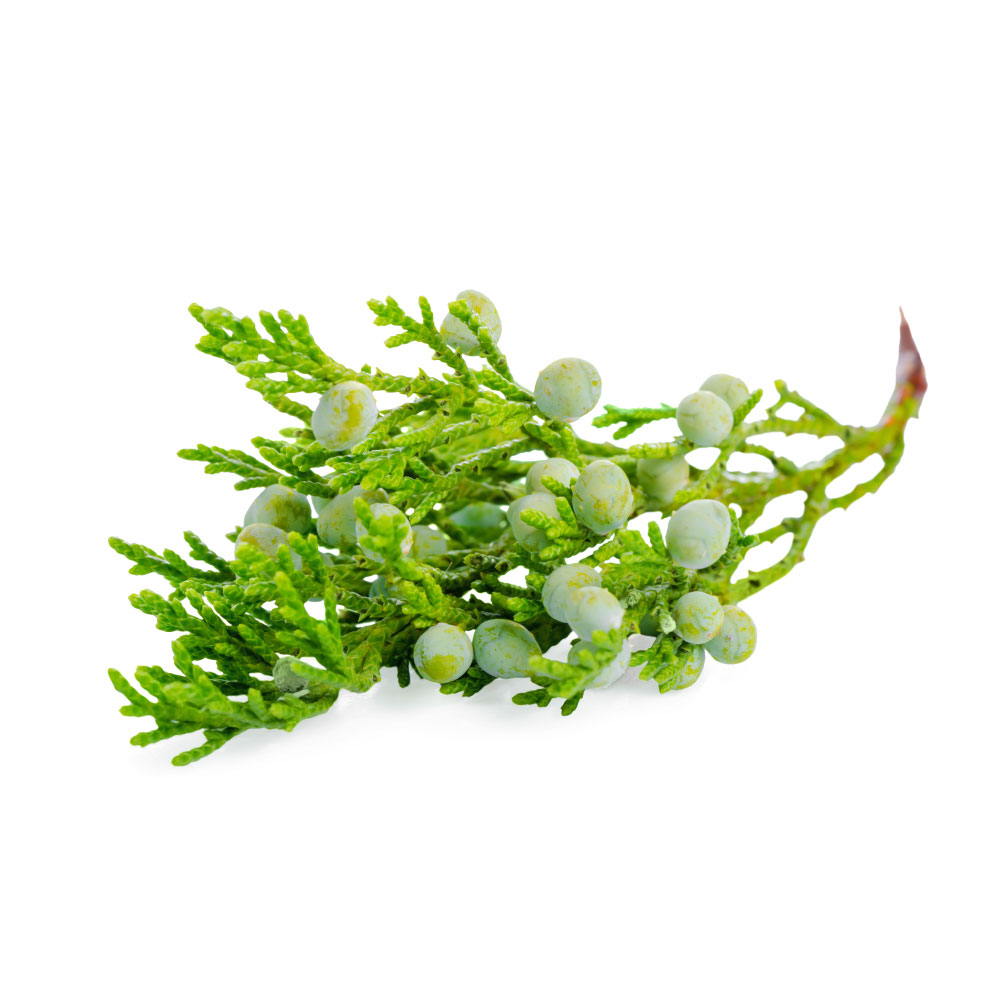 MildMildJuniperJuniperus communisThe British Herbal Pharmacopoeia classes juniper as anti-rheumatic, applied externally as an oil; the one study to test it found the medicinal variety inactive.Mechanismnot established for *J. communis* var. *communis* — the antinociceptive activity belonged to other taxa, and to a peripheral rather than a central modelRead the evidenceShow lessMonograph →
Juniper’s pain use is traditional, external and rheumatic. The British Herbal Pharmacopoeia classes the berry as diuretic, antiseptic, carminative, stomachic and anti-rheumatic, and the oil is rubbed in rather than taken.
A 2009 comparison tested five Turkish Juniperus taxa side by side, and the result is a variety problem 131Reference 131AnimalA comparative study on the antinociceptive and anti-inflammatory activities of five Juniperus taxa — animal model (mouse)View study →. Antinociceptive activity in the p-benzoquinone writhing test belonged to J. oxycedrus subsp. oxycedrus and to J. communis var. saxatilis.
The remaining extracts were inactive — including J. communis var. communis, which is the berry actually used.
Two further limits sit inside the positive half. All five taxa were inactive in the hot plate test, so what was measured is peripheral and inflammation-linked rather than central analgesia; and the active taxa are not substitutable, because only J. communis berries are used medicinally and several other junipers — savin above all — are toxic.
The effect the study did find tracks the same extracts’ activity in carrageenan and PGE₂ oedema, which places it under anti-inflammatory rather than here.
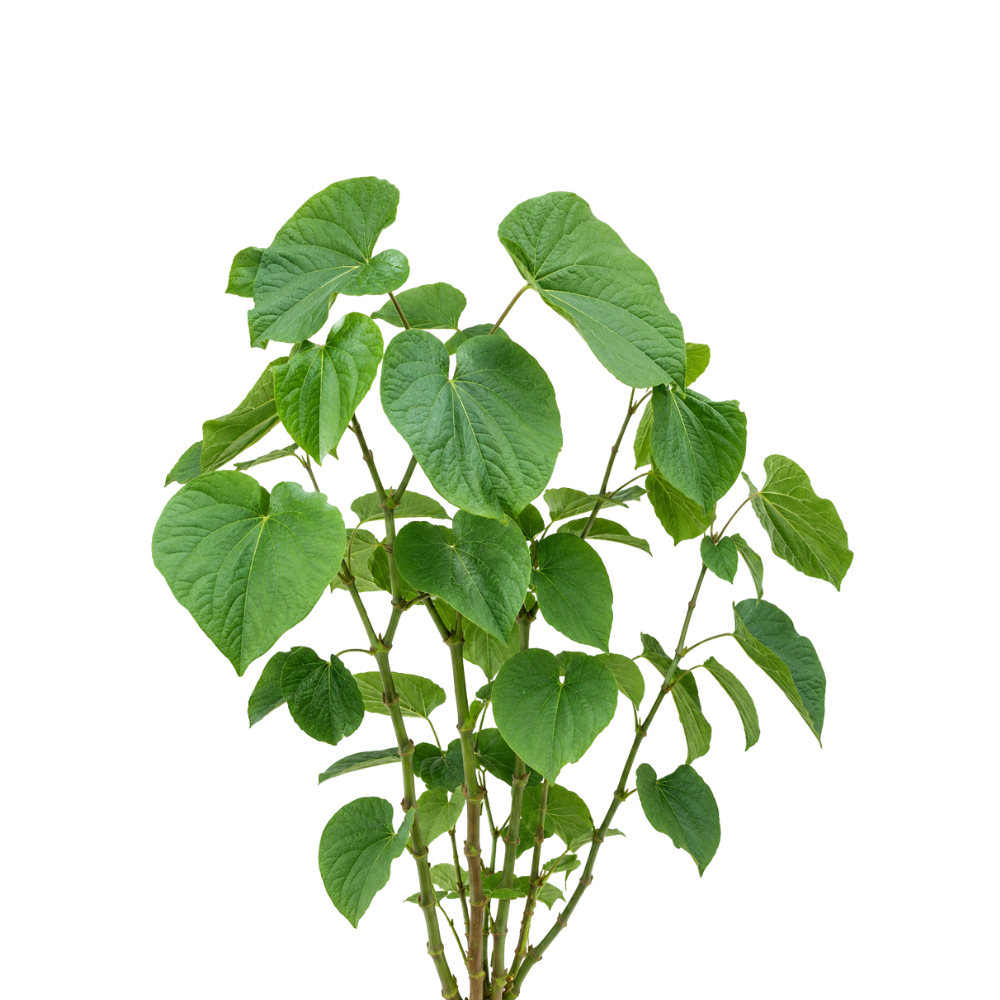 MildMildKavaPiper methysticumKavalactones block voltage-gated sodium channels and numb the mouth on drinking; kava dried extract and synthetic kavain were antinociceptive in acute rodent models, and Pacific practice uses it for neuralgia and joint pain.Mechanismvoltage-gated Na⁺ channel blockade (local-anaesthetic); central route not establishedRead the evidenceShow lessMonograph →
Analgesic and local-anaesthetic properties of the kavalactones were described in German rodent pharmacology in the 1960s; the numbing of the mouth on drinking is the everyday version. Medicinal-chemistry work on kavain analogues found several that reduced writhing in mice, and a 2022 study reported antinociception for kava dried extract and synthetic kavain in acute rodent models 80Reference 80Kavain analogues as potential analgesic agents [animal]View study →.
Traditional use for neuralgia, rheumatism, gout and joint pain is consistent 81Reference 81A Clinical Guide to Blending Liquid Herbs: Herbal Formulations for the Individual Patient. There has been no controlled human pain trial, and the rodent doses do not translate to a defined oral human dose.
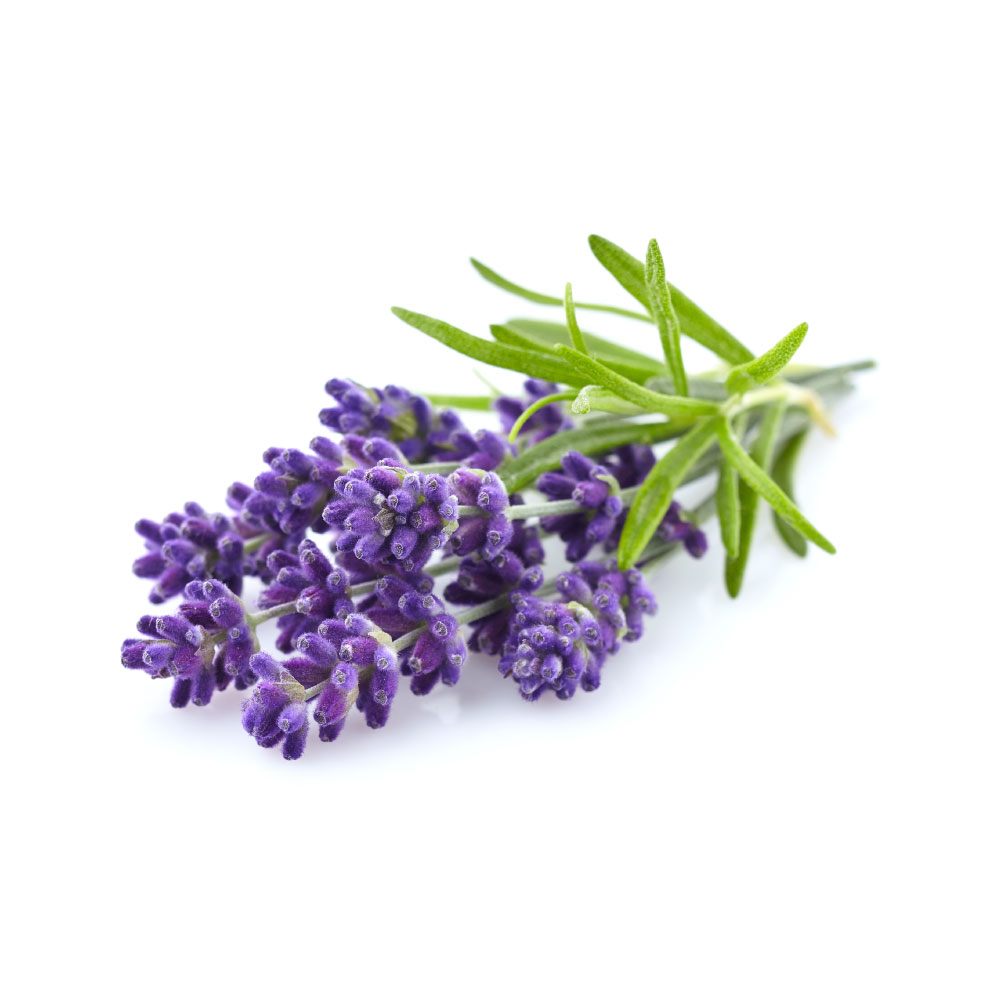 MildMildLavenderLavandula angustifoliaLinalool produces antinociception in rodents through adenosine A1/A2A receptors, nitric-oxide suppression and reduced glutamate signalling; inhaled lavender gives modest, mixed results for procedural pain in people.Mechanismadenosine A1/A2A signaling; nitric-oxide suppression; anti-glutamatergicRead the evidenceShow lessMonograph →
Linalool produced antinociception through adenosine A1/A2A receptors 88Reference 88AnimalInvolvement of adenosine A1 and A2A receptors in (−)-linalool-induced antinociception — animal modelView study → and nitric-oxide modulation 89Reference 89In vitroPeana, A. T., et al. (2006). (−)-Linalool inhibits in vitro NO formation: probable involvement in the antinociceptive activity — in vitro/animal model. Life Sciences. https://pubmed.ncbi.nlm.nih.gov/16137709/View study →, dampened glutamatergic signalling, and blunted carrageenan-induced hyperalgesia 90Reference 90AnimalEffects of (−)-linalool in the acute hyperalgesia induced by carrageenan, L-glutamate and prostaglandin E2 — rat modelView study →.
Inhaled aromatherapy for procedural and post-operative pain gives mixed, generally modest results, and an aroma cannot be blinded. Nothing supports the tincture for pain.
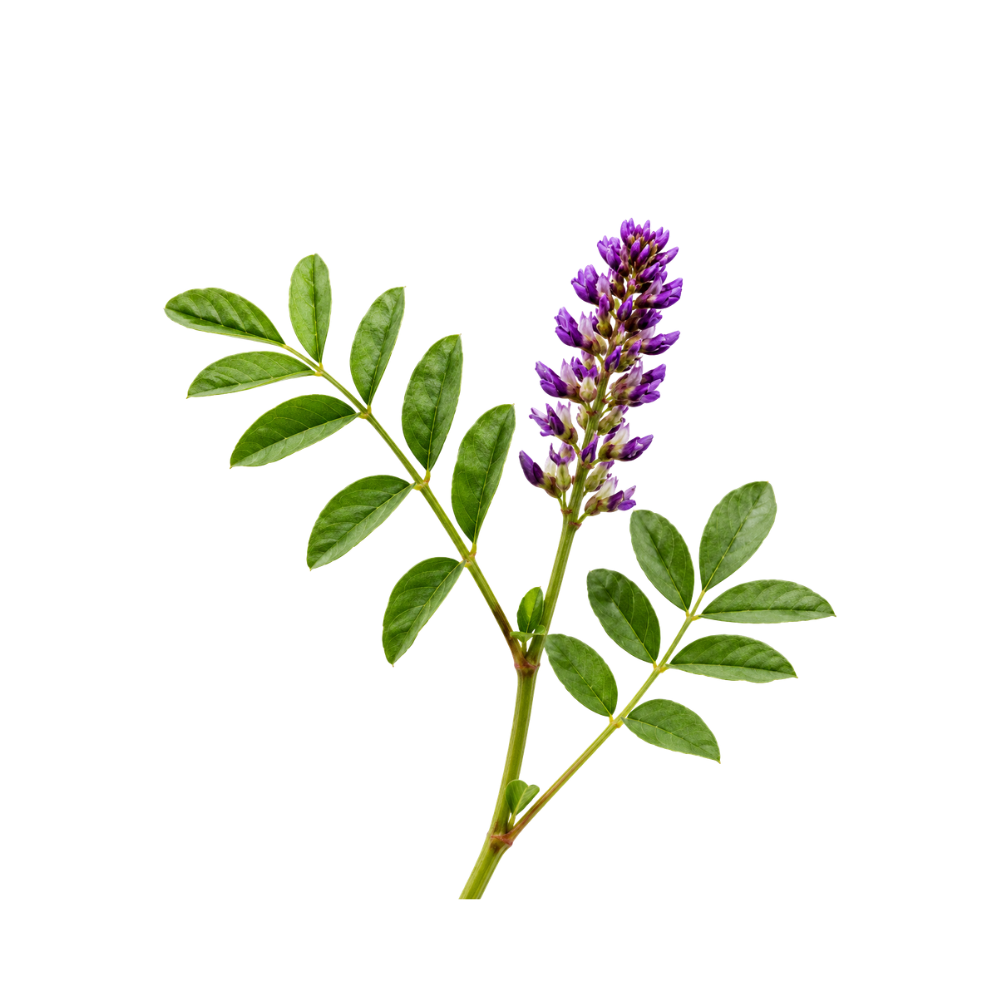 MildMildLicoriceGlycyrrhiza glabraLicorice gargles, patches and films reduce oral-mucosal pain in aphthous ulcers, radiotherapy mucositis and post-intubation sore throat across several randomised trials, through anti-inflammatory signalling and mucosal coating.MechanismCOX-2 ↓ / NF-κB ↓ (indirect); mucosal barrier coating; direct antinociception not establishedRead the evidenceShow lessMonograph →
Licorice reduced aphthous-ulcer pain on a visual-analogue scale after a gargle juice 91Reference 91RCTEffective licorice gargle juice for aphthous ulcer pain relief: a randomised double-blind placebo-controlled trialView study → and in a licorice-plus-diphenhydramine solution that beat diphenhydramine alone 92Reference 92RCTEffects of licorice-containing diphenhydramine solution on recurrent aphthous stomatitis: a double-blind randomised clinical trialView study →; a dissolving bioadhesive patch sped ulcer shrinkage 93Reference 93A controlled trial of a dissolving oral patch of glycyrrhiza (licorice) extract for aphthous ulcersView study →; a licorice film performed no worse than triamcinolone for radiotherapy mucositis pain 94Reference 94RCTTriamcinolone acetonide vs licorice mucoadhesive film on radiotherapy-induced oral mucositis: a randomised double-blinded clinical trialView study →; and a pre-anaesthesia gargle roughly halved post-operative sore throat in 236 intubated patients 95Reference 95RCTA randomised, double-blind comparison of licorice versus sugar-water gargle for prevention of postoperative sore throat and postextubation coughingView study →, replicated 96,
No receptor or channel target has been proposed. The relief is secondary to COX-2 and NF-κB anti-inflammatory signalling and to physical coating of the mucosa.
The evidence is topical and oral-mucosal, with no systemic or somatic pain data.
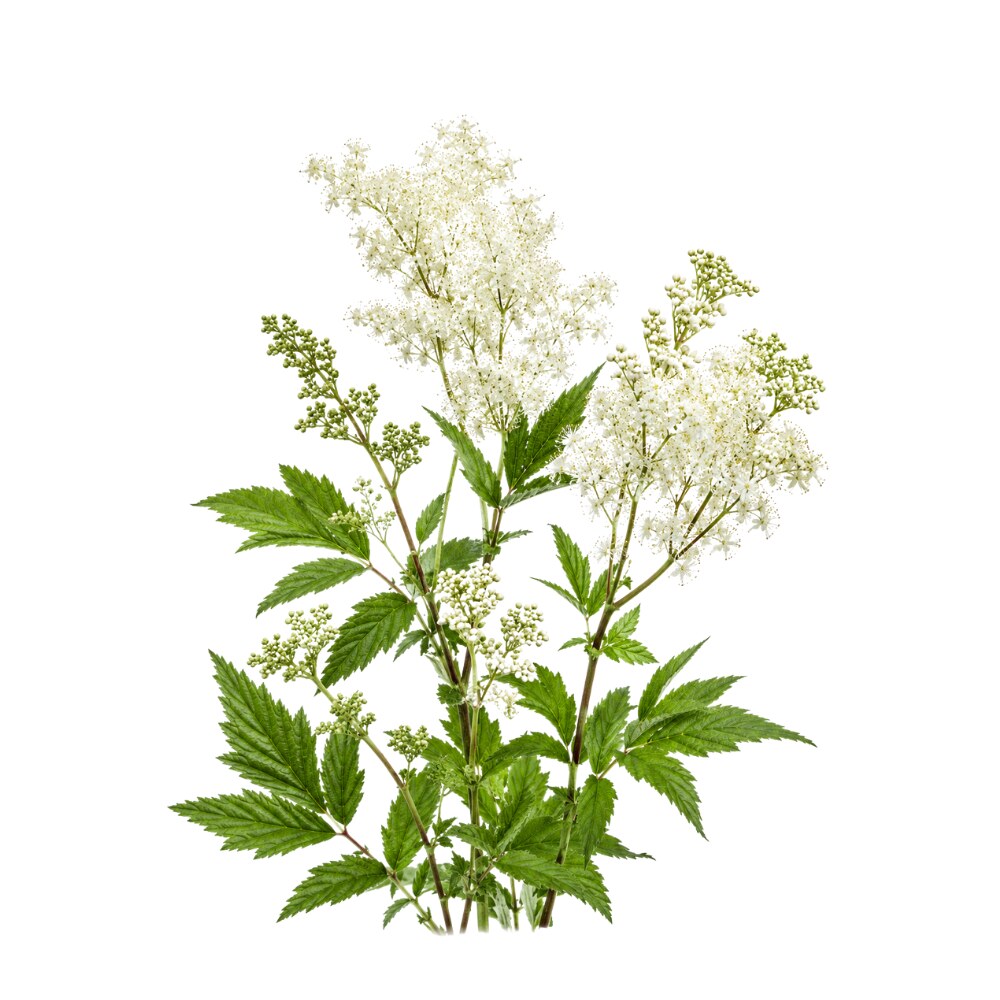 MildMildMeadowsweetFilipendula ulmariaCarries salicin, salicylic acid and methyl salicylate, the aspirin chemistry; extracts raised pain thresholds and reduced mechanical hyperalgesia in rats, and the herb is a traditional European remedy for rheumatic pain.MechanismCOX inhibition (salicylates); antihyperalgesic in rodentsRead the evidenceShow lessMonograph →
Methanolic aerial-part extract raised hot-plate pain thresholds alongside its anti-oedema effect 99Reference 99In vitroIn vitro and in vivo assessment of meadowsweet (Filipendula ulmaria) as anti-inflammatory agent — rat carrageenan modelView study →, and lyophilised flower infusions reduced mechanical hyperalgesia in the carrageenan model on Von Frey testing 100Reference 100AnimalAntihyperalgesic activity of Filipendula ulmaria and Filipendula vulgaris in a rat model of inflammation — animal modelView study →.
The salicylates give it the COX-inhibiting mechanism of willow, and the same cautions. No human analgesia data exist, and no study has compared the salicylate dose the herb delivers with an aspirin dose.
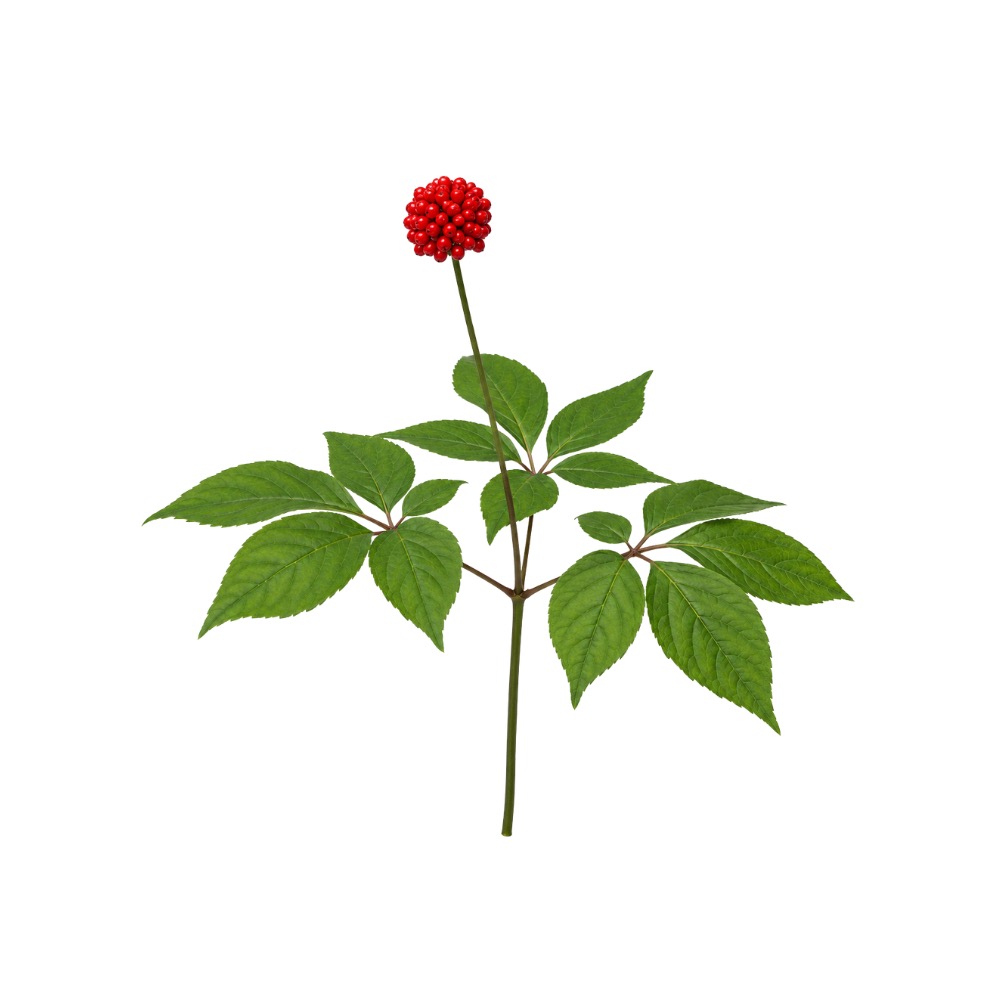 MildMildNotoginsengPanax notoginsengCarries the classical Chinese indication to alleviate pain, given for the pain of traumatic injury, bruising, swelling and chest pain; no analgesia study exists.Read the evidenceShow lessMonograph →
In Chinese practice notoginseng is the trauma herb, used to stop bleeding, disperse stasis, reduce swelling and relieve the pain of injury, and its classical indications include chest pain.
There is no analgesia study and no proposed analgesic mechanism; the nearest finding is reduced anginal symptoms, a cardiovascular result.
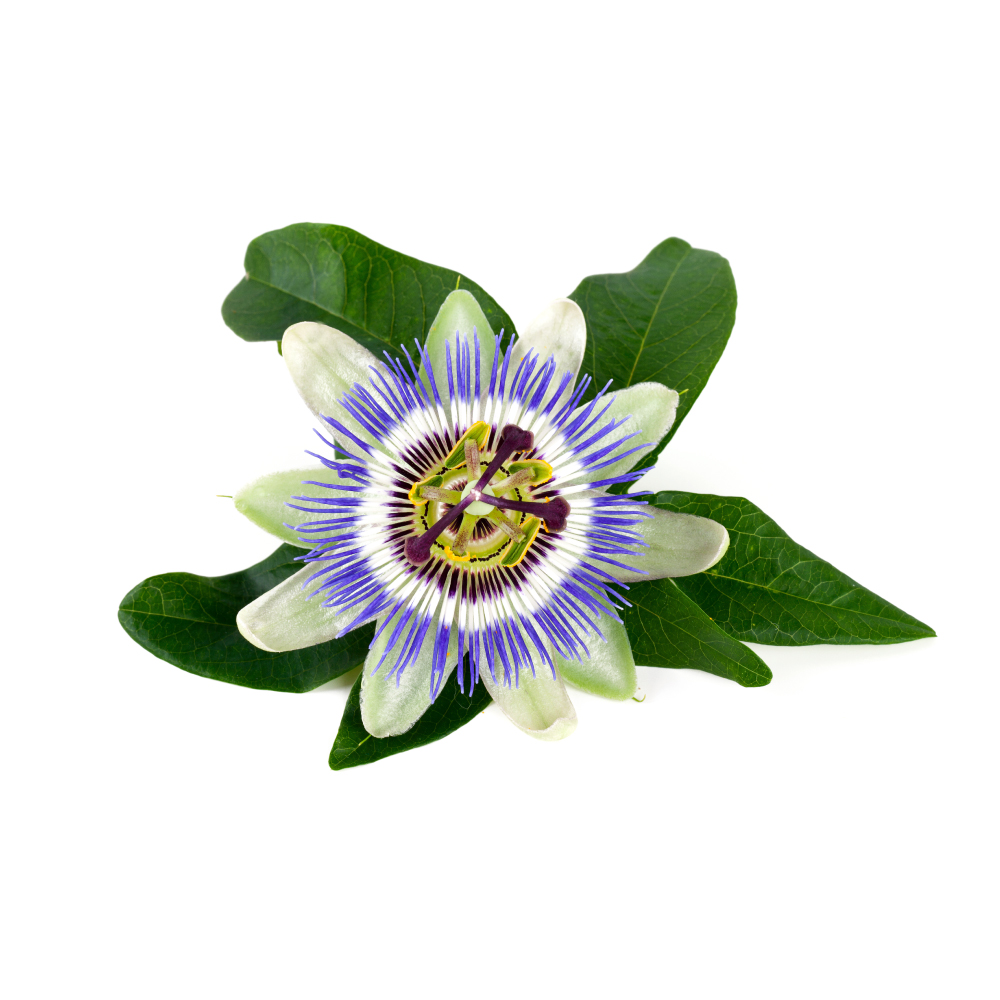 MildMildPassionflowerPassiflora incarnataThe nineteenth-century leaf infusion for headache and neuralgia, and a Cherokee root poultice for boils and inflammation.Mechanismnot established for P. incarnata — the frequently cited analgesic data belong to P. foetida, a different speciesRead the evidenceShow lessMonograph →
Nineteenth-century North American practice took the leaf infusion as a sedative for headaches, neuralgia and general pain, and the herb was also used for colic, dysmenorrhoea and muscle spasm. The Cherokee pounded the root into topical poultices for boils and inflammation.
A recurring confusion runs through the literature on this genus, and it matters here. The analgesic findings usually cited — an ethanol leaf extract comparable to morphine in a mouse model — are from P. foetida, a different species.
They are not P. incarnata results and should not be read as its own.
The traditional topical use of P. incarnata root is documented and untested. What has been measured for this species is anxiety and sleep, under anxiolytic and sedative.
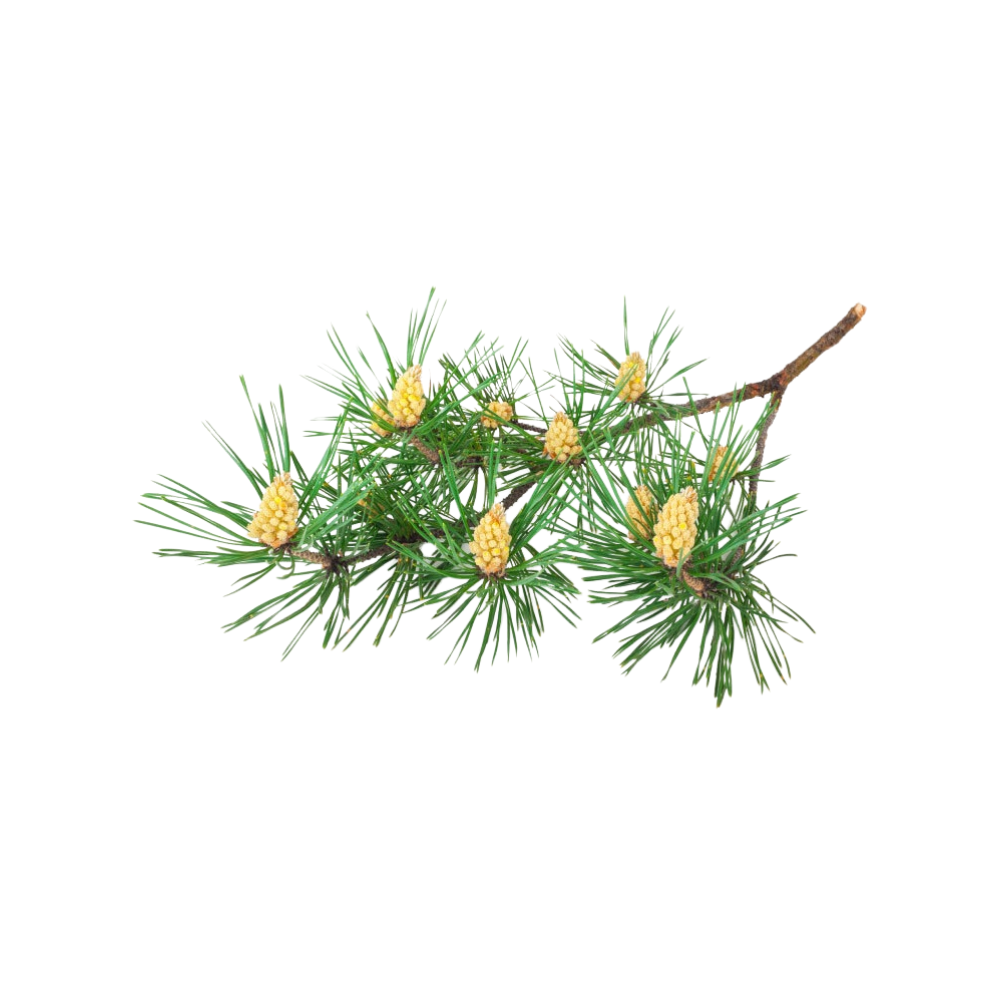 MildMildPinePinus spp.Pine bark extract (Pycnogenol) reduced osteoarthritis pain in small trials and leg pain in chronic venous insufficiency; the relief follows from its anti-inflammatory and capillary-sealing effects.MechanismCOX-2 ↓; iNOS/nitrosative stress ↓; capillary sealing/collagen stabilization (bark procyanidins)Read the evidenceShow lessMonograph →
A large systematic review and meta-analysis of dietary supplements for osteoarthritis included pine bark extract among agents with short-term effects on pain and function, at very low certainty 112Reference 112Meta-analysisDietary supplements for treating osteoarthritis: a systematic review and meta-analysis — meta-analysisView study →. In an animal gout model, Pycnogenol reduced urate-crystal-induced joint inflammation and nitrosative stress 113Reference 113AnimalPycnogenol attenuates the inflammatory and nitrosative stress on joint inflammation induced by urate crystals — animal modelView study →, and the chronic-venous-insufficiency trial recorded reduced leg heaviness and pain alongside the oedema effect 114Reference 114RCTPycnogenol in chronic venous insufficiency — randomised placebo-controlledView study →.
Pine has no direct antinociceptive pathway; the analgesia follows from the anti-inflammatory and vasoprotective actions of the bark procyanidins. No adequately powered independent RCT exists, and nothing supports needle, resin or pollen preparations for pain.
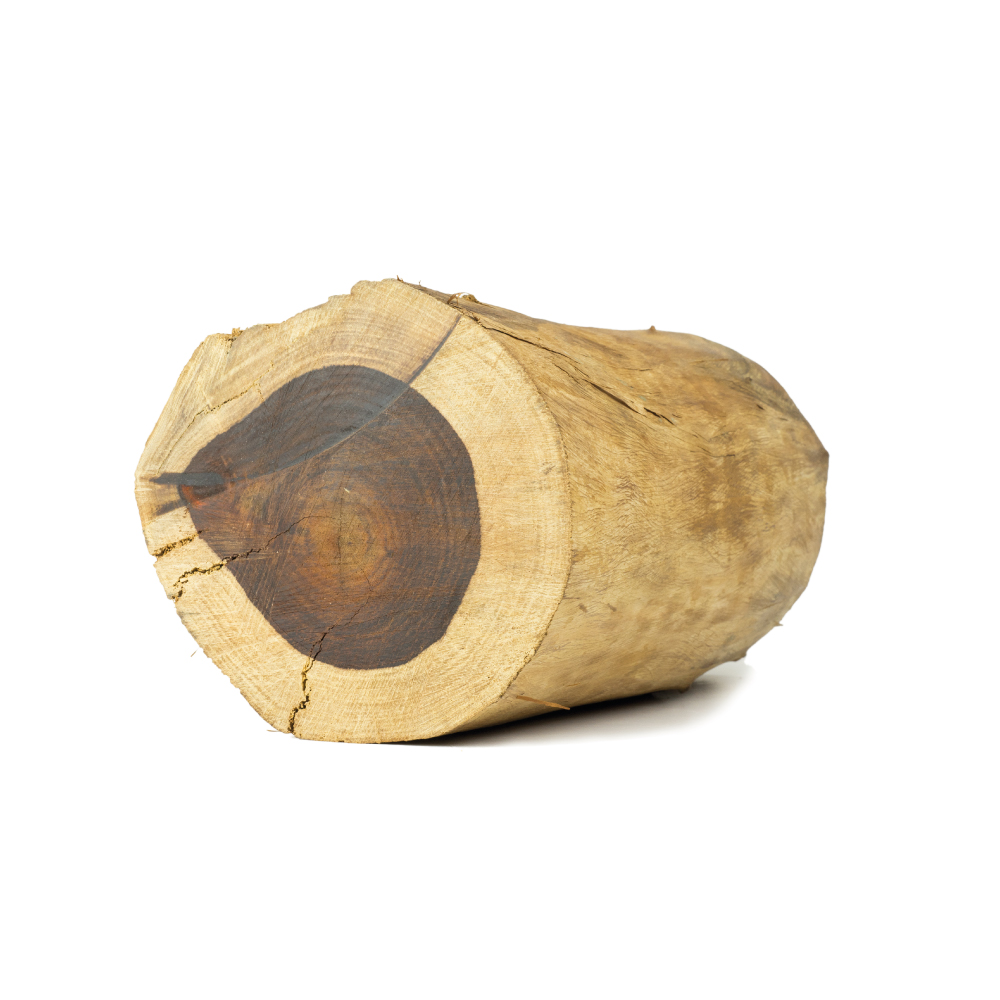 MildMildRosewoodAniba rosaeodoraLinalool, the dominant constituent of the oil, is antinociceptive across writhing, formalin and hot-plate tests in rodents, with peripheral and central components; rosewood oil itself has not been tested.MechanismTNF-α ↓ / leukocyte migration ↓ (linalool); central antinociceptive pathway not establishedRead the evidenceShow lessMonograph →
(–)-Linalool showed antinociception across acetic-acid writhing, formalin and hot-plate tests in rodents, implying peripheral and central components, with the effect improved when complexed with β-cyclodextrin to compensate for linalool’s poor stability 115Reference 115AnimalQuintans-Júnior LJ, et al. (2013). β-Cyclodextrin-complexed (–)-linalool produces antinociceptive effect in experimental pain protocols — animal model. Basic & Clinical Pharmacology & Toxicology. https://pubmed.ncbi.nlm.nih.gov/23692366/View study →.
Nothing was tested as rosewood oil, the inclusion complex is a formulation the herb does not come in, and the delivery was systemic rather than topical. The traditional use for headache rests on the constituent.
 MildMildSarsaparillaSmilax spp.Aqueous Smilax china extract reduced writhing and prolonged hot-plate latency in mice at 1,000 mg/kg, attributed to inhibition of prostaglandin-mediated pain signalling.MechanismCOX-2 ↓ → PGE₂-mediated nociception ↓Read the evidenceShow lessMonograph →
The same aqueous S. china extract at 1,000 mg/kg that produced the anti-inflammatory result significantly reduced acetic-acid writhing and prolonged hot-plate latency in mice, attributed to inhibition of prostaglandin-mediated pain signalling 116Reference 116AnimalAnti-inflammatory and anti-nociceptive activities of Smilax china L. aqueous extract — animal modelView study →.
One rodent study at a high dose, with the analgesia inseparable from the COX-2/PGE₂ action; no opioid, ion-channel or central component has been shown.
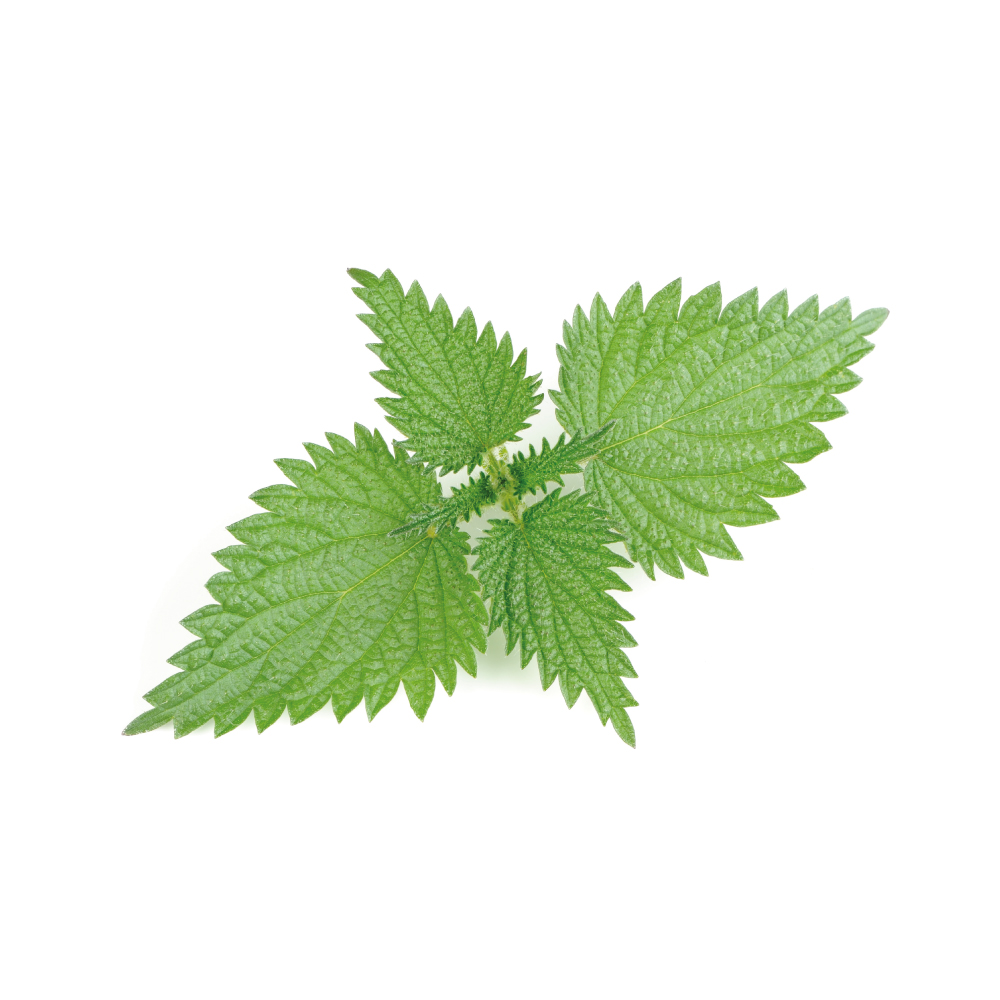 MildMildStinging NettleUrtica dioicaFresh nettle leaf applied daily to the base of the thumb reduced osteoarthritic pain and disability against a deadnettle placebo in a double-blind crossover trial; the sting works as counter-irritation.MechanismIL-1β-driven MMP suppression; cutaneous counter-irritation (histamine/serotonin/formic-acid sting)Read the evidenceShow lessMonograph →
A double-blind randomised crossover trial (n=27) applied fresh nettle leaf daily for one week to osteoarthritic pain at the base of the thumb, using white deadnettle as placebo, and found significantly greater reductions in pain and disability 117Reference 117RCTRandomised controlled trial of nettle sting for treatment of base-of-thumb pain — randomised controlled crossover trialView study →. A small nettle-cream study 118Reference 118Clinical trialStinging nettle cream for osteoarthritis — clinical trialView study → and a 13-patient pilot of a five-herb-plus-thiamine oral blend 119Reference 119Clinical trialFive herbs plus thiamine reduce pain and improve functional mobility in patients with pain — pilot studyView study → also reported pain relief, though the latter cannot isolate nettle.
The proposed mechanism borrows from the leaf’s MMP- and cytokine-suppression data 120Reference 120In vitroEffects of the antirheumatic remedy Hox alpha, a stinging nettle leaf extract, on matrix metalloproteinases in human chondrocytes — in vitroView study →; counter-irritation from the injected amines (histamine, serotonin, formic acid) is the more likely proximate driver.
A tiny trial, an unusual delivery route, and no oral analgesic evidence.
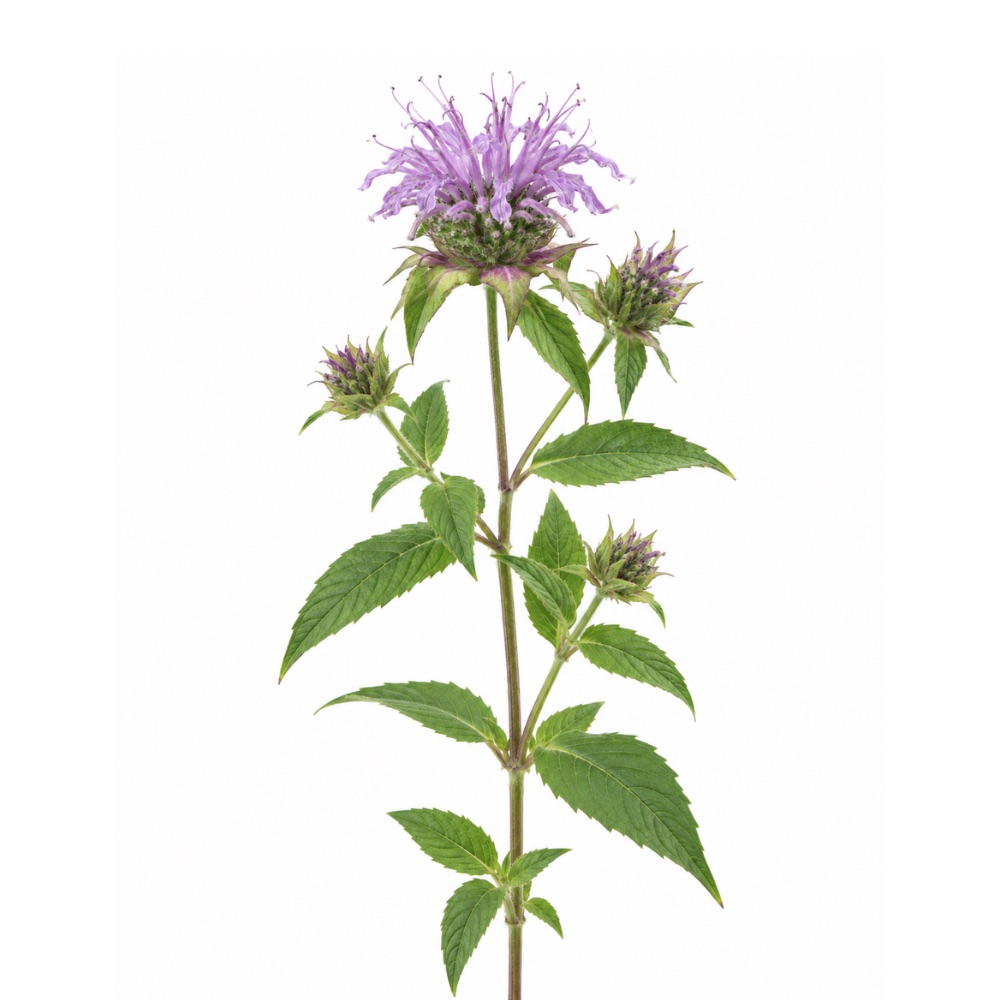 MildMildWild BergamotMonarda fistulosaA polyphenol-rich dry extract reduced acetic-acid writhing in mice in the one study to test it; the infusion was used for headache across the Plains and eastern woodlands.Mechanismpolyphenol fraction; writhing-test antinociceptionRead the evidenceShow less
The M. fistulosa dry extract significantly reduced acetic-acid-induced writhing in mice alongside its anti-oedema effect 101Reference 101AnimalPolyphenols and pharmacological screening of a Monarda fistulosa L. dry extract based on a hydrodistilled residue by-product — [in vivo animal model]View study →. TRPA1 activation by the oil offers a plausible sensory mechanism that has not been tested against a pain endpoint.
One unreplicated study, one model, and no dose–response for analgesia.
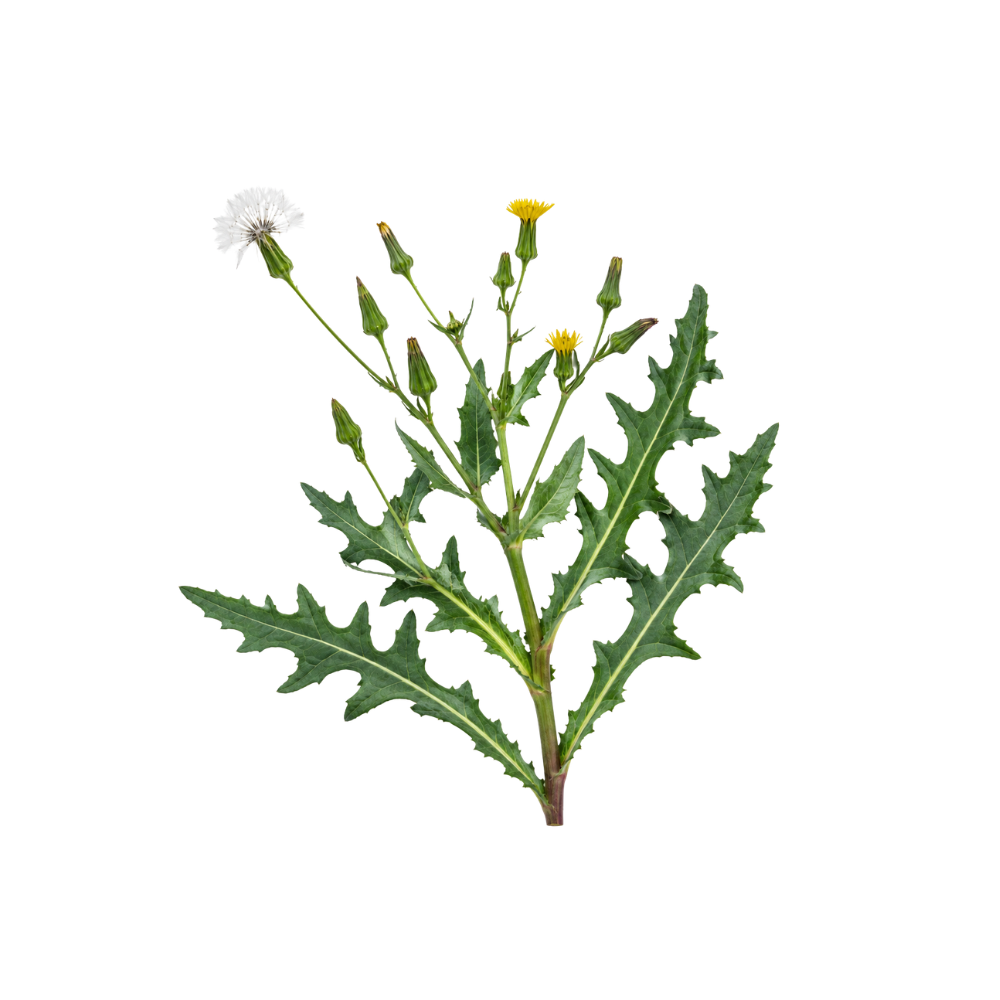 MildMildWild LettuceLactuca virosaLactucin, lactucopicrin and 11β,13-dihydrolactucin, the bitter lactones of lettuce opium, gave hot-plate and tail-flick analgesia in mice comparable to ibuprofen; the mechanism is not opioid, and the plant contains no opiate alkaloids.Mechanismguaianolide antinociception, target not established; not opioid-receptor mediatedRead the evidenceShow lessMonograph →
In one mouse study, lactucin, lactucopicrin and 11β,13-dihydrolactucin, the characteristic lactones of L. virosa and chicory, produced hot-plate and tail-flick analgesia at 15–30 mg/kg, comparable to ibuprofen at 30–60 mg/kg, with lactucopicrin the most potent 1Reference 1AnimalAnalgesic and sedative activities of lactucin and some lactucin-like guaianolides in mice — animal in vivoView study →.
The antinociception is non-opioid, from bitter sesquiterpene lactones. The plant contains no opiate alkaloids despite the “lettuce opium” name, and no receptor target has been identified.
The data are on isolated compounds rather than a wild-lettuce preparation, with no dose-response, no human analgesia data and no demonstration that a tea or tincture reaches analgesic exposure. Sedation arrives at doses below any measured pain relief.
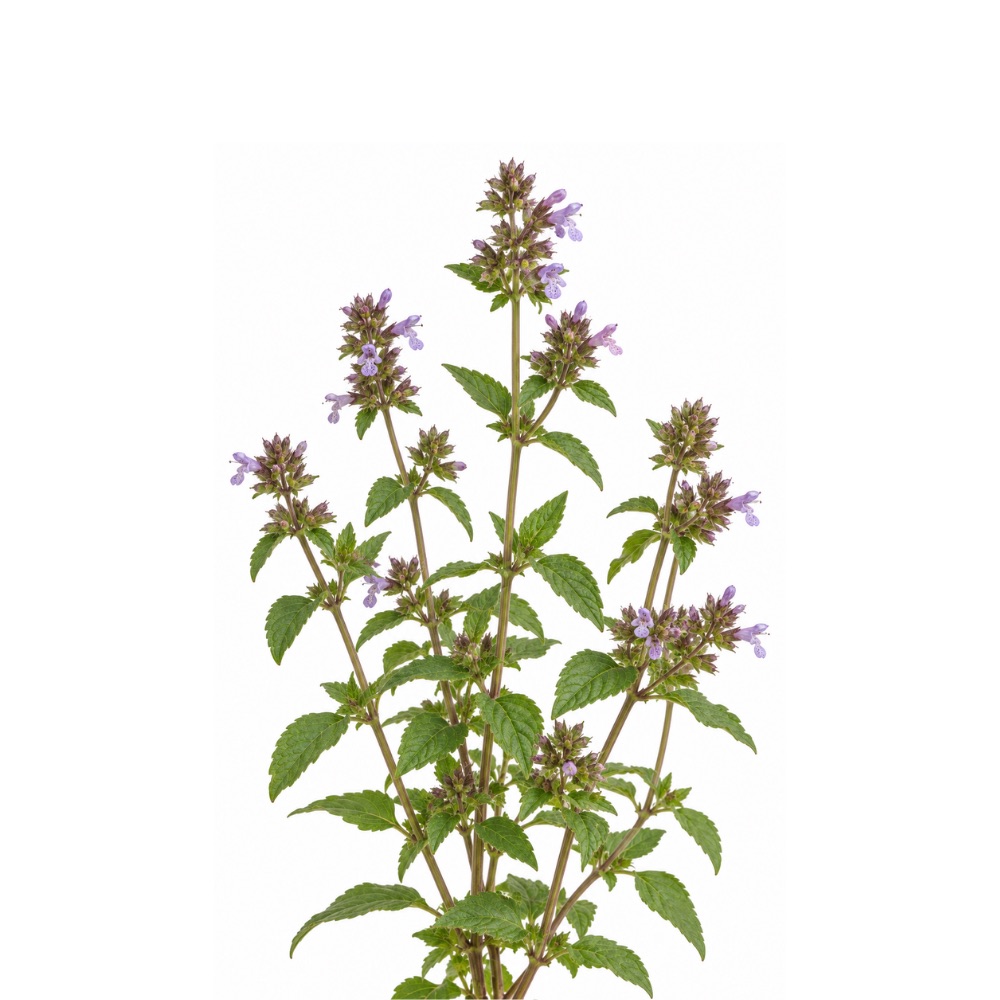 MildMildYerba BuenaClinopodium douglasiiLeaf preparations were used by Pacific-coast tribes for toothache, headache and the pain of childbirth, and the tea has a folk reputation as a mild analgesic; the species itself is untested.Mechanismnot resolved; aromatic monoterpene effectRead the evidenceShow less
The record for C. douglasii is ethnobotanical: toothache, headache and childbirth pain, and a household tea for minor pain and colds. Any analgesic action would plausibly track its aromatic monoterpenes (menthone, pulegone) and their cooling, counter-irritant behaviour.
The controlled analgesic study often attributed to “yerba buena” was conducted on the Philippine Mentha × villosa, a different species that shares the common name. No analgesic study exists for C. douglasii.
No herbs match these filters.
Also Tagged
3 more herbs carry an analgesic action.
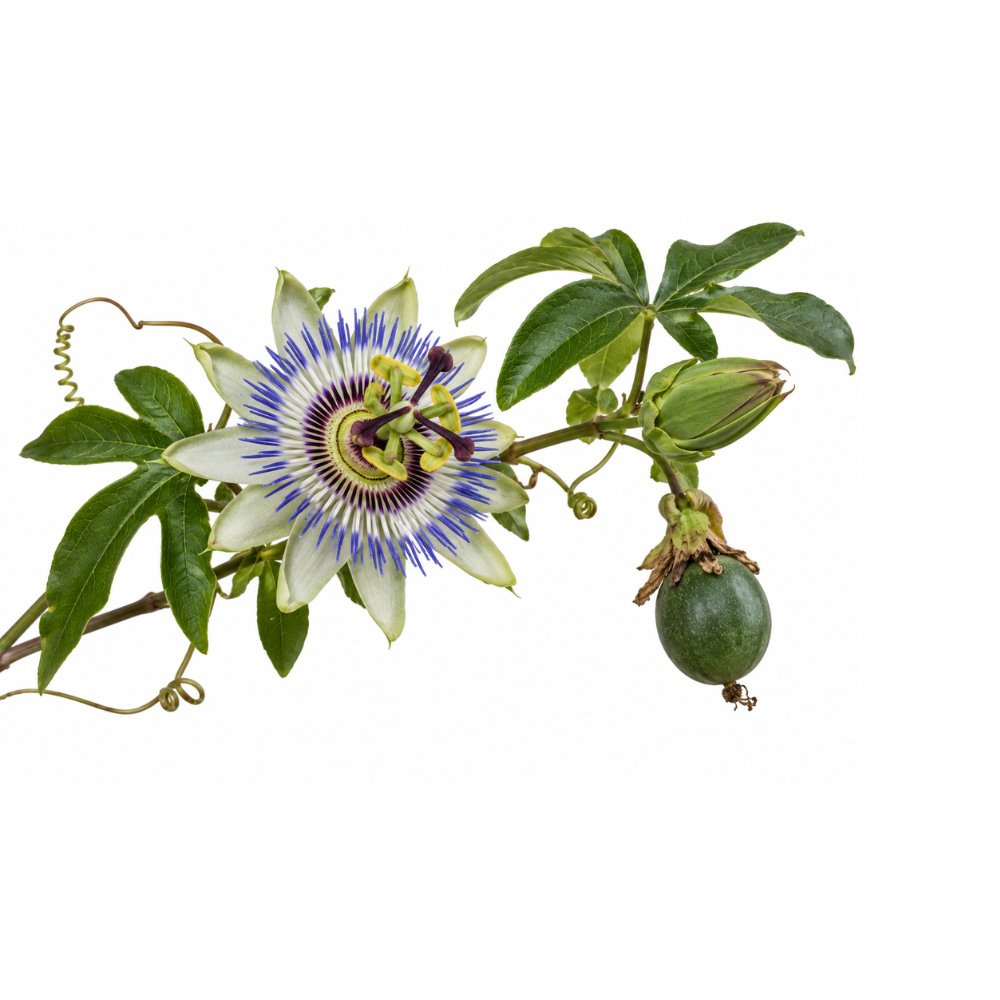
Blue Passionflower
Passiflora caerulea
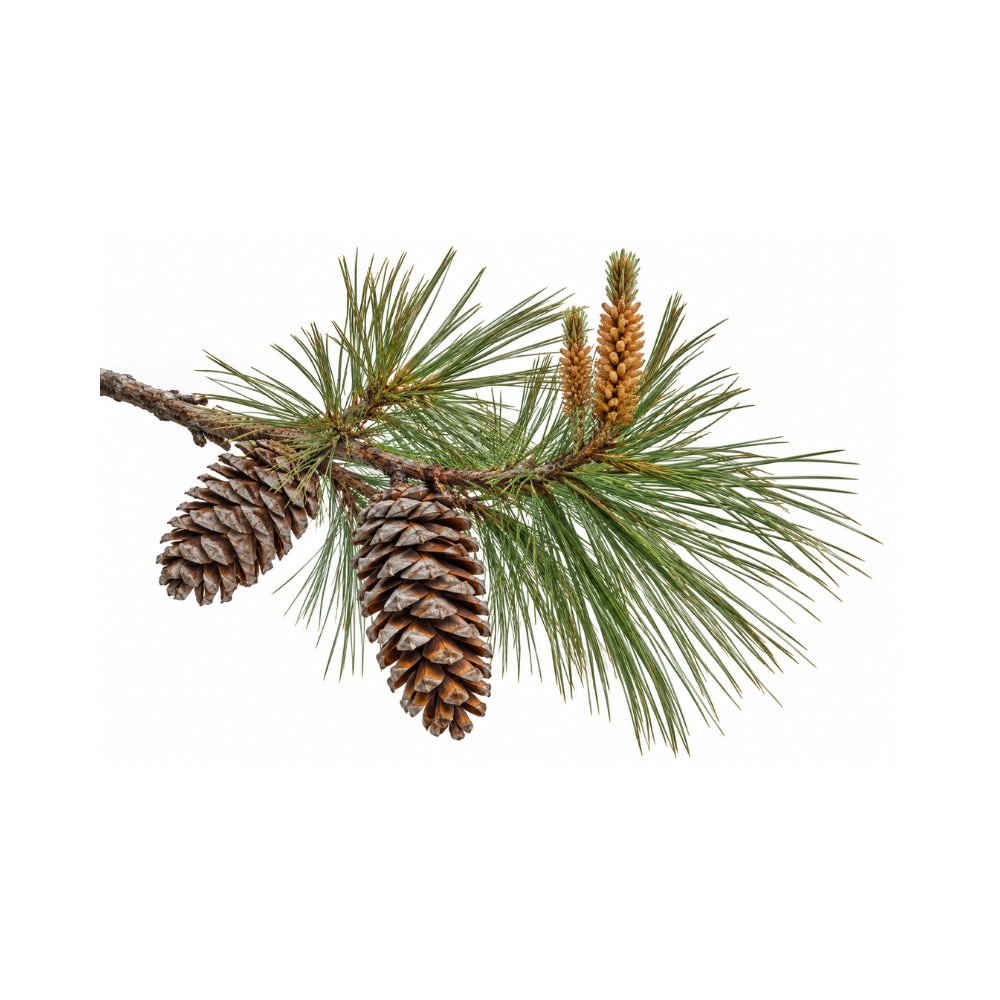
Chir Pine
Pinus roxburghii
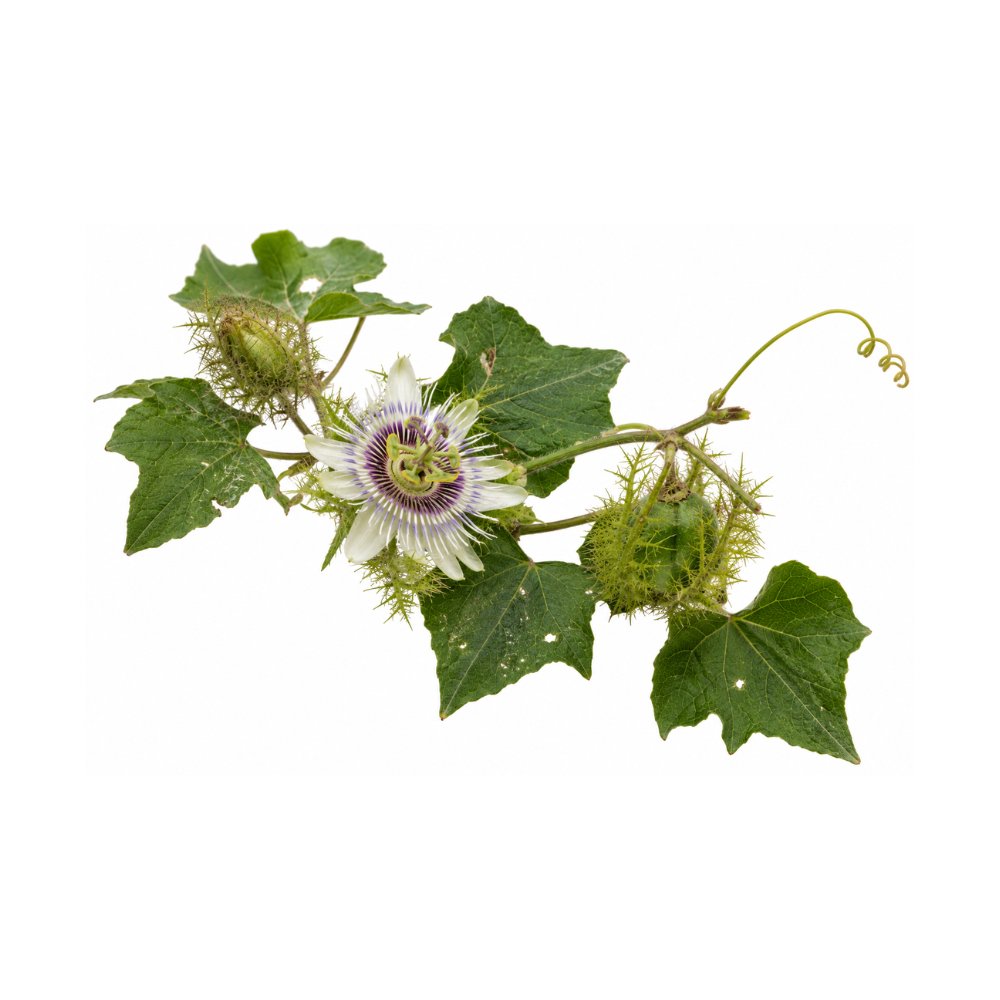
Stinking Passionflower
Passiflora foetida
Safety
- Relieving pain does not treat its cause; persistent, severe or unexplained pain needs assessment.
- Salicylate herbs carry aspirin’s cautions: aspirin sensitivity, Reye’s syndrome in children with viral illness, and additive bleeding risk with anticoagulants.
- Analgesic herbs that act on prostaglandins or platelets are additive with NSAIDs, aspirin and anticoagulants; stop them before surgery or dental work.
- Opioid-acting herbs produce tolerance, dependence and withdrawal, and are additive with prescription opioids, alcohol and sedatives.
- Several sedating analgesics cause drowsiness at doses below any pain relief; drowsiness without relief is not a reason to raise the dose.
- Topical and local-anaesthetic analgesics have their evidence by that route and are not oral pain remedies.
References
- Wesołowska A, Nikiforuk A, Michalska K, Kisiel W, Chojnacka-Wójcik E (2006). Analgesic and sedative activities of lactucin and some lactucin-like guaianolides in mice — animal in vivo. Journal of Ethnopharmacology. https://pubmed.ncbi.nlm.nih.gov/16621374/
- Kisiel W, Barszcz B (2000). Further sesquiterpenoids and phenolics from Taraxacum officinale. Fitoterapia. https://pubmed.ncbi.nlm.nih.gov/10844166/
- Menzies JR, Paterson SJ, Duwiejua M, Corbett AD (1998). Opioid activity of alkaloids extracted from Picralima nitida (fam. Apocynaceae). European Journal of Pharmacology 350(1):101–108. https://pubmed.ncbi.nlm.nih.gov/9683021/
- Creed SM, Gutridge AM, Argade MD, Hennessy MR, Friesen JB, Pauli GF, van Rijn RM, Riley AP (2021). Isolation and pharmacological characterization of six opioidergic Picralima nitida alkaloids. Journal of Natural Products 84(1):71–80. https://pubmed.ncbi.nlm.nih.gov/33326237/
- Hennessy MR, Gutridge AM, French AR, Rhoda ES, Meqbil YJ, Gill M, Kashyap Y, Appourchaux K, Paul B, Wang ZJ, van Rijn RM, Riley AP (2023). Modified akuamma alkaloids with increased potency at the mu-opioid receptor. Journal of Medicinal Chemistry 66(5):3312–3326. https://pubmed.ncbi.nlm.nih.gov/36827198/
- Mai Z, Richardson MB, Mann SGA, Greene J, Paul AA, Perley JO, Deslongchamps G, Qu Y (2025). Promiscuous and regiospecific Vinca minor hydroxylases for opioid akuammine biosynthesis and monoterpenoid indole alkaloid diversification. Plant Physiology and Biochemistry. https://pubmed.ncbi.nlm.nih.gov/40168857/
- Mann SGA, Paz-Galeano M, Shahsavarani M, Perley JO, Guo J, Garza-Garcia JJO, Qu Y (2025). Stereochemical insights into sarpagan and akuammiline alkaloid biosynthesis. New Phytologist 247(3):1335–1351. https://pubmed.ncbi.nlm.nih.gov/40458973/
- Ingkaninan K, Ijzerman AP, Taesotikul T, Verpoorte R (1999). Isolation of opioid-active compounds from Tabernaemontana pachysiphon leaves. Journal of Pharmacy and Pharmacology. https://pubmed.ncbi.nlm.nih.gov/10678501/
- Klauke AL, Rácz I, Pradier B, et al. (2014). The cannabinoid CB2 receptor-selective phytocannabinoid beta-caryophyllene exerts analgesic effects in mouse models of inflammatory and neuropathic pain — mouse model. European Neuropsychopharmacology. https://pubmed.ncbi.nlm.nih.gov/24210682/
- Leite FC, et al. (2014). Curine, an alkaloid isolated from Chondrodendron platyphyllum, inhibits prostaglandin E2 in experimental models of inflammation and pain — mice. Planta Medica. https://pubmed.ncbi.nlm.nih.gov/25197953/
- Coquerel Q, et al. (2022). Screening an in-house isoquinoline alkaloids library for new blockers of voltage-gated Na⁺ channels using voltage sensor fluorescent probes: hits and biases — in vitro. Molecules. https://pubmed.ncbi.nlm.nih.gov/35807390/
- Abdelhalim A, Karim N, Chebib M, Aburjai T, Khan I, Johnston GA, Hanrahan J. (2015). Antidepressant, anxiolytic and antinociceptive activities of constituents from Rosmarinus officinalis — mice. Journal of Pharmacy and Pharmaceutical Sciences. https://pubmed.ncbi.nlm.nih.gov/26626245/
- Amresh, G., et al. (2007). Antinociceptive and antiarthritic activity of Cissampelos pareira roots — animal model (mouse/rat). Journal of Ethnopharmacology. https://pubmed.ncbi.nlm.nih.gov/17240096/
- Singh, S. G., Nishteswar, K., Patel, B. R., et al. (2016). Comparative antipyretic and analgesic activities of Cissampelos pareira Linn. and Cyclea peltata — animal model (rat). Ayu. https://pubmed.ncbi.nlm.nih.gov/28827957/
- Asif M, Dwivedi J, Yadav S (2021). Anti-depressant, anxiolytic, and muscle relaxant activity of hydroalcoholic extract of Cissampelos pareira Linn. leaves — animal model (mice). Central Nervous System Agents in Medicinal Chemistry. https://pubmed.ncbi.nlm.nih.gov/33964866/
- Widrig, R., Suter, A., Saller, R., & Melzer, J. (2007). Choosing between NSAID and arnica for topical treatment of hand osteoarthritis in a randomised, double-blind study — randomised, double-blind. Rheumatology International. https://pubmed.ncbi.nlm.nih.gov/17318618/
- Knuesel, O., Weber, M., & Suter, A. (2002). Arnica montana gel in osteoarthritis of the knee: an open, multicenter clinical trial — clinical trial. Advances in Therapy. https://pubmed.ncbi.nlm.nih.gov/12539881/
- Pumpa, K. L., Fallon, K. E., Bensoussan, A., & Papalia, S. (2014). The effects of topical Arnica on performance, pain and muscle damage after intense eccentric exercise — randomised, placebo-controlled. European Journal of Sport Science. https://pubmed.ncbi.nlm.nih.gov/23947690/
- Arul, V., Miyazaki, S., & Dhananjayan, R. (2005). Studies on the anti-inflammatory, antipyretic and analgesic properties of the leaves of Aegle marmelos Corr. — animal model (rat). Journal of Ethnopharmacology, 96(1–2), 159–163. https://pubmed.ncbi.nlm.nih.gov/15588665/
- Rolland A, Fleurentin J, Lanhers MC, et al. Neurophysiological effects of an extract of Eschscholzia californica Cham. (Papaveraceae). Phytotherapy Research. 2001;15(5):377–381. https://pubmed.ncbi.nlm.nih.gov/11507727/
- Fedurco M, Gregorová J, Šebrlová K, et al. Modulatory effects of Eschscholzia californica alkaloids on recombinant GABAA receptors. Biochemistry Research International. 2015;2015:617620. https://pubmed.ncbi.nlm.nih.gov/26509084/
- Ateş G, Welsch P, Klose P, et al. (2026). Cannabis-based medicines for chronic neuropathic pain in adults — Cochrane systematic review. Cochrane Database of Systematic Reviews. https://pubmed.ncbi.nlm.nih.gov/41548880/
- Whiting, P. F., Wolff, R. F., Deshpande, S., et al. (2015). Cannabinoids for Medical Use: A Systematic Review and Meta-analysis. JAMA. https://pubmed.ncbi.nlm.nih.gov/26103030/
- Häuser W, Welsch P, Radbruch L, et al. (2023). Cannabis-based medicines and medical cannabis for adults with cancer pain — Cochrane systematic review. Cochrane Database of Systematic Reviews. https://pubmed.ncbi.nlm.nih.gov/37283486/
- Viana, A. F., et al. (2011). Antinociceptive activity of Trichilia catigua hydroalcoholic extract: new evidence on its dopaminergic effects — animal model. Evidence-Based Complementary and Alternative Medicine. https://pubmed.ncbi.nlm.nih.gov/19815648/
- Quintão, N. L. M., et al. (2008). Evaluation of the effects of the herbal product Catuama in inflammatory and neuropathic models of nociception in rats — animal model. Phytomedicine. https://pubmed.ncbi.nlm.nih.gov/17482443/
- Derry, S., Rice, A. S. C., Cole, P., Tan, T., & Moore, R. A. (2013). Topical capsaicin (high concentration) for chronic neuropathic pain in adults — Cochrane systematic review / meta-analysis. Cochrane Database of Systematic Reviews. https://pubmed.ncbi.nlm.nih.gov/23450576/
- Liu, X., et al. (2020). The treatment of topical drugs for postherpetic neuralgia: a network meta-analysis — systematic review. Pain Physician. https://pubmed.ncbi.nlm.nih.gov/33185370/
- Olusanya, A., et al. (2023). Capsaicin 8% patch for spinal cord injury focal neuropathic pain — randomised controlled trial. Pain Medicine. https://pubmed.ncbi.nlm.nih.gov/35799365/
- The efficacy of topical 8% capsaicin patches for the treatment of postsurgical neuropathic pain (2024) — systematic review. Pain Management. https://pubmed.ncbi.nlm.nih.gov/39589498/
- D’Souza, R. S., et al. (2022). Evidence-based treatment of painful diabetic neuropathy — systematic review. Current Pain and Headache Reports. https://pubmed.ncbi.nlm.nih.gov/35716275/
- Goodwin, B., et al. (2023). Topical capsaicin for the management of painful diabetic neuropathy — narrative systematic review. Pain Management. https://pubmed.ncbi.nlm.nih.gov/37435696/
- Goodwin, B. J., et al. (2026). 8% capsaicin patches for HIV-induced polyneuropathy — systematic review and meta-analysis. Pain Management. https://pubmed.ncbi.nlm.nih.gov/42237588/
- Tshering, G., et al. (2024). Efficacy and safety of topical capsaicin in the treatment of osteoarthritis pain — systematic review and meta-analysis. Phytotherapy Research. https://pubmed.ncbi.nlm.nih.gov/38761115/
- Laslett, L. L., & Jones, G. (2014). Capsaicin for osteoarthritis pain — review. Progress in Drug Research. https://pubmed.ncbi.nlm.nih.gov/24941673/
- Keitel, W., et al. (2001). Capsicum pain plaster in chronic non-specific low back pain — randomised controlled trial. Arzneimittelforschung. https://pubmed.ncbi.nlm.nih.gov/11765591/
- Ahmadi M, et al. (2025). Effect of chamomile on musculoskeletal pain: a systematic review and meta-analysis of randomized controlled trials. Caspian Journal of Internal Medicine. https://pubmed.ncbi.nlm.nih.gov/41394268/
- Soh Z, et al. (2025). Effects of chamomile and L-theanine beverage on menstrual pain, symptoms, mood and sleep quality in young women with primary dysmenorrhea: a randomized, double-blind, placebo-controlled study. Journal of Food and Drug Analysis. https://pubmed.ncbi.nlm.nih.gov/41525193/
- Shin MC, Jang MH, Chang HK, et al. (2003). Modulation of Chelidonii herba on glycine-activated and glutamate-activated ion currents in rat periaqueductal grey neurons — animal. Clin Chim Acta. https://pubmed.ncbi.nlm.nih.gov/14568185/
- Kim Y, Shin M, Chung J, et al. (2001). Modulation of Chelidonii herba on GABA-activated chloride current in rat PAG neurons — animal. Am J Chin Med. https://pubmed.ncbi.nlm.nih.gov/11527069/
- Abad MJ, Bessa AL, Ballarin B, et al. (2006). Anti-inflammatory activity of four Bolivian Baccharis species (Compositae). J Ethnopharmacol. 103(3):338–344. https://pubmed.ncbi.nlm.nih.gov/16202549/
- Lee SH, Moon JY, Jung SJ, Kang JG, Choi SP, Jang JH (2015) Eugenol Inhibits the GABAA Current in Trigeminal Ganglion Neurons. PLoS ONE 10(1): e0117316. doi:10.1371/journal.pone.0117316
- Taylor, L. (2005). The healing power of rainforest herbs: A guide to understanding and using herbal medicinals. Garden City Park, NY: Square One Publishers.
- Morales, L., Acero, N., Galán, A., Perez-García, C., Alguacil, L. F., & Muñoz-Mingarro, D. (2011). Bioactive properties of Tynanthus panurensis (Bureau) Sanwith bark extract, the Amazonian “clavo huasca” — in vitro and in vivo (rat carrageenan oedema) study. Journal of Medicinal Food, 14(9), 939–943. https://pubmed.ncbi.nlm.nih.gov/21488753/
- Alqareer A, Alyahya A, & Andersson L (2006). The effect of clove and benzocaine versus placebo as topical anesthetics — [randomised controlled trial]. Journal of Dentistry. https://pubmed.ncbi.nlm.nih.gov/16530911/
- Teixeira-Fonseca JL, et al. (2021). Eugenol interacts with cardiac sodium channel and reduces heart excitability and arrhythmias — [animal in vivo / in vitro]. Life Sciences. https://pubmed.ncbi.nlm.nih.gov/34217764/
- Tsuchiya H (2017). Anesthetic Agents of Plant Origin: A Review of Phytochemicals with Anesthetic Activity — [review]. Molecules. https://pubmed.ncbi.nlm.nih.gov/28820497/
- Roque Bravo R, Faria AC, Brito-da-Costa AM, et al. (2022). Cocaine: an updated overview on chemistry, detection, biokinetics, and pharmacotoxicological aspects — review. Toxins. https://pubmed.ncbi.nlm.nih.gov/35448887/
- Giannetti, B. M., et al. (2010). Comfrey root extract ointment for acute upper or lower back pain — double-blind, randomised, placebo-controlled, multicentre. British Journal of Sports Medicine. https://pubmed.ncbi.nlm.nih.gov/19460762/
- Grube, B., et al. (2007). Comfrey root extract ointment in painful osteoarthritis of the knee — double-blind, randomised, placebo-controlled. Phytomedicine. https://pubmed.ncbi.nlm.nih.gov/17169543/
- Oltean, H., et al. (2014). Herbal medicine for low-back pain — systematic review and meta-analysis (Cochrane). Cochrane Database of Systematic Reviews. https://pubmed.ncbi.nlm.nih.gov/25536022/
- Cameron, M., & Chrubasik, S. (2013). Topical herbal therapies for treating osteoarthritis — systematic review (Cochrane). Cochrane Database of Systematic Reviews. https://pubmed.ncbi.nlm.nih.gov/23728701/
- Pabst, H., et al. (2013). Comfrey root extract plus methyl nicotinate in acute back pain — randomised, placebo-controlled, three-arm. Phytotherapy Research. https://pubmed.ncbi.nlm.nih.gov/22887778/
- Laslett, L. L., et al. (2012). 4Jointz (comfrey extract + tannic acid) reduces knee pain over 12 weeks in clinical knee osteoarthritis — randomised, placebo-controlled. Osteoarthritis and Cartilage. https://pubmed.ncbi.nlm.nih.gov/22863612/
- Smith, D. B., & Jacobson, B. H. (2011). Comfrey root extract and tannic acid creams in osteoarthritis of the knee — randomised, placebo-controlled, double-blind. Journal of Chiropractic Medicine. https://pubmed.ncbi.nlm.nih.gov/22014903/
- Zhang Y et al. (2014). A novel analgesic isolated from a traditional Chinese medicine — animal model, in vivo. Curr Biol. https://pubmed.ncbi.nlm.nih.gov/24388848/
- Wang L et al. (2016). The Antinociceptive Properties of the Corydalis yanhusuo Extract — animal model, knock-out mice. PLoS One. https://pubmed.ncbi.nlm.nih.gov/27622550/
- Xu Y et al. (2021). Analgesic effect of the main components of Corydalis yanhusuo (yanhusuo in Chinese) is caused by inhibition of voltage gated sodium channels — in vivo, in vitro. J Ethnopharmacol. https://pubmed.ncbi.nlm.nih.gov/34329712/
- Yin ZY et al. (2016). Antinociceptive effects of dehydrocorydaline in mouse models of inflammatory pain involve the opioid receptor and inflammatory cytokines — mouse, in vivo. Sci Rep. https://pubmed.ncbi.nlm.nih.gov/27272194/
- Huo W et al. (2018). Dehydrocorydaline attenuates bone cancer pain by shifting microglial M1/M2 polarization toward the M2 phenotype — mouse model, in vivo. Mol Pain. https://pubmed.ncbi.nlm.nih.gov/29882480/
- Hou BL et al. (2025). Analgesic Effect of Dehydrocorydaline on Chronic Constriction Injury-Induced Neuropathic Pain via Alleviating Neuroinflammation — mouse, in vivo. Chin J Integr Med. https://pubmed.ncbi.nlm.nih.gov/39762501/
- Dehghani M et al. (2025). EXPRESS: Dehydrocorydaline can be a suitable candidate for analgesic purposes: a review on the current preclinical evidence — review. Mol Pain. https://pubmed.ncbi.nlm.nih.gov/40913244/
- Wu D et al. (2023). Levo-tetrahydropalmatine ameliorates neuropathic pain by inhibiting the activation of the Clec7a-MAPK/NF-κB-NLRP3 inflammasome axis — rat, in vivo. Phytomedicine. https://pubmed.ncbi.nlm.nih.gov/37741158/
- Huang JY et al. (2010). [Analgesic effect of Corydalis yanhusuo in a rat model of trigeminal neuropathic pain] — rat model, in vivo. Nan Fang Yi Ke Da Xue Xue Bao. https://pubmed.ncbi.nlm.nih.gov/20855279/
- Chrubasik, S., Junck, H., Breitschwerdt, H., et al. (1999). Effectiveness of Harpagophytum extract WS 1531 in exacerbation of low back pain — a randomised, placebo-controlled, double-blind study. European Journal of Anaesthesiology. https://pubmed.ncbi.nlm.nih.gov/10101629/
- Chrubasik, S., Model, A., Black, A., & Pollak, S. (2003). A randomised double-blind pilot study comparing Doloteffin and Vioxx (rofecoxib) in low back pain. Rheumatology (Oxford). https://pubmed.ncbi.nlm.nih.gov/12509627/
- Lim, D. W., Kim, J. G., Han, D., & Kim, Y. T. (2014). Analgesic effect of Harpagophytum procumbens on postoperative and neuropathic pain in rats. Molecules. https://pubmed.ncbi.nlm.nih.gov/24441655/
- Anaya-Eugenio, G. D., et al. (2016). Antinociceptive activity of the essential oil from Artemisia ludoviciana — animal model. J Ethnopharmacol. https://pubmed.ncbi.nlm.nih.gov/26792321/
- Moshfeghinia R et al. (2024). Ginger for pain management in primary dysmenorrhea: a systematic review and meta-analysis — meta-analysis. Journal of Integrative and Complementary Medicine. https://pubmed.ncbi.nlm.nih.gov/38770631/
- Daily JW et al. (2015). Efficacy of ginger for alleviating the symptoms of primary dysmenorrhea: a systematic review and meta-analysis of randomized clinical trials — meta-analysis. Pain Medicine. https://pubmed.ncbi.nlm.nih.gov/26177393/
- Lozoya, X., Reyes-Morales, H., Chávez-Soto, M. A., et al. (2002). Intestinal anti-spasmodic effect of a phytodrug of Psidium guajava folia in the treatment of acute diarrheic disease — randomised, double-blind clinical trial. Journal of Ethnopharmacology. https://pubmed.ncbi.nlm.nih.gov/12413703/
- Doubova, S. V., Morales, H. R., Hernández, S. F., et al. (2007). Effect of a Psidii guajavae folium extract in the treatment of primary dysmenorrhea: a randomized clinical trial — randomised, double-blind, placebo-controlled. Journal of Ethnopharmacology. https://pubmed.ncbi.nlm.nih.gov/17112693/
- Mendes, G. L., Santos, A. R., Campos, M. M., et al. (1998). Anti-hyperalgesic properties of the extract and of the main sesquiterpene polygodial isolated from the barks of Drimys winteri — animal (mouse/rat) in vivo. Life Sciences. https://pubmed.ncbi.nlm.nih.gov/9714424/
- André, E., Ferreira, J., Malheiros, A., Yunes, R. A., & Calixto, J. B. (2004). Evidence for the involvement of vanilloid receptor in the antinociception produced by the sesquiterpenes polygodial and drimanial in rats — animal in vivo. Neuropharmacology. https://pubmed.ncbi.nlm.nih.gov/14975683/
- Paz, C., Ortiz, L., Deuis, J. R., & Vetter, I. (2022). Polygodial, a drimane sesquiterpenoid dialdehyde purified from Drimys winteri, inhibits voltage-gated sodium channels — in vitro. Natural Product Research. https://pubmed.ncbi.nlm.nih.gov/35021940/
- Pittler, M. H., & Ernst, E. (2012). Horse chestnut seed extract for chronic venous insufficiency — systematic review and meta-analysis. Cochrane Database of Systematic Reviews. https://pubmed.ncbi.nlm.nih.gov/23152216/
- Siebert, U., Brach, M., Sroczynski, G., et al. (2002). Efficacy, routine effectiveness, and safety of horsechestnut seed extract in chronic venous insufficiency — meta-analysis of randomised controlled trials and observational studies. International Angiology. https://pubmed.ncbi.nlm.nih.gov/12518108/
- Bisler, H., Pfeifer, R., Klüken, N., et al. (1986). Effects of horse-chestnut seed extract on transcapillary filtration in chronic venous insufficiency — randomised placebo-controlled crossover trial. Deutsche Medizinische Wochenschrift. https://pubmed.ncbi.nlm.nih.gov/3527643/
- Sirtori, C. R. (2001). Aescin: pharmacology, pharmacokinetics and therapeutic profile — review. Pharmacological Research. https://pubmed.ncbi.nlm.nih.gov/11529685/
- Kormann, E. C., Amaral, P. de A., David, M., et al. (2012). Kavain analogues as potential analgesic agents [animal]. Pharmacol Rep. https://pubmed.ncbi.nlm.nih.gov/23406752/
- Bone, K. (2003). A Clinical Guide to Blending Liquid Herbs: Herbal Formulations for the Individual Patient. Edinburgh: Churchill Livingstone.
- Vicknasingam, B., et al. (2020). Kratom and Pain Tolerance: A Randomized, Placebo-Controlled, Double-Blind Study — randomised controlled trial. Yale J Biol Med. https://pubmed.ncbi.nlm.nih.gov/32607084/
- Grundmann, O. (2017). Patterns of Kratom use and health impact in the US — Results from an online survey — observational. Drug Alcohol Depend. https://pubmed.ncbi.nlm.nih.gov/28521200/
- Shaik Mossadeq, W. M., et al. (2009). Anti-inflammatory and antinociceptive effects of Mitragyna speciosa Korth methanolic extract — rat/mouse animal model. Med Princ Pract. https://pubmed.ncbi.nlm.nih.gov/19648761/
- Kruegel, A. C., et al. (2019). 7-Hydroxymitragynine Is an Active Metabolite of Mitragynine and a Key Mediator of Its Analgesic Effects — in vitro / mouse. ACS Cent Sci. https://pubmed.ncbi.nlm.nih.gov/31263758/
- Hiranita, T., et al. (2022). In vitro and in vivo pharmacology of kratom — review. Adv Pharmacol. https://pubmed.ncbi.nlm.nih.gov/35341571/
- Farkas, D. J., et al. (2023). Cannabinoid mechanisms contribute to the therapeutic efficacy of the kratom alkaloid mitragynine against neuropathic pain — mouse animal model. Life Sci. https://pubmed.ncbi.nlm.nih.gov/37392779/
- Peana, A. T., et al. (2006). Involvement of adenosine A1 and A2A receptors in (−)-linalool-induced antinociception — animal model. Life Sciences. https://pubmed.ncbi.nlm.nih.gov/16343551/
- Peana, A. T., et al. (2006). (−)-Linalool inhibits in vitro NO formation: probable involvement in the antinociceptive activity — in vitro/animal model. Life Sciences. https://pubmed.ncbi.nlm.nih.gov/16137709/
- Peana, A. T., et al. (2004). Effects of (−)-linalool in the acute hyperalgesia induced by carrageenan, L-glutamate and prostaglandin E2 — rat model. European Journal of Pharmacology. https://pubmed.ncbi.nlm.nih.gov/15336945/
- Liu HL, et al. (2022). Effective licorice gargle juice for aphthous ulcer pain relief: a randomised double-blind placebo-controlled trial. Pakistan Journal of Pharmaceutical Sciences. https://pubmed.ncbi.nlm.nih.gov/36451559/
- Akbari N, et al. (2020). Effects of licorice-containing diphenhydramine solution on recurrent aphthous stomatitis: a double-blind randomised clinical trial. Complementary Therapies in Medicine. https://pubmed.ncbi.nlm.nih.gov/32444056/
- Martin MD, et al. (2008). A controlled trial of a dissolving oral patch of glycyrrhiza (licorice) extract for aphthous ulcers. General Dentistry. https://pubmed.ncbi.nlm.nih.gov/18348383/
- Ghalayani P, et al. (2017). Triamcinolone acetonide vs licorice mucoadhesive film on radiotherapy-induced oral mucositis: a randomised double-blinded clinical trial. Asia-Pacific Journal of Clinical Oncology. https://pubmed.ncbi.nlm.nih.gov/25347930/
- Ruetzler K, et al. (2013). A randomised, double-blind comparison of licorice versus sugar-water gargle for prevention of postoperative sore throat and postextubation coughing. Anesthesia and Analgesia. https://pubmed.ncbi.nlm.nih.gov/23921656/
- Agarwal A, et al. (2009). Efficacy of licorice gargle for attenuating postoperative sore throat — randomised single-blind. Anesthesia and Analgesia. https://pubmed.ncbi.nlm.nih.gov/19535697/
- Honarmand A, et al. (2016). Efficacy of different doses of liquorice gargling for attenuating postoperative sore throat and cough after tracheal intubation — randomised. European Journal of Anaesthesiology. https://pubmed.ncbi.nlm.nih.gov/26716864/
- Singh NP, et al. (2020). Efficacy of topical agents for prevention of postoperative sore throat after single-lumen intubation: a Bayesian network meta-analysis. Canadian Journal of Anaesthesia. https://pubmed.ncbi.nlm.nih.gov/32820466/
- Katanić, J. (2016). In vitro and in vivo assessment of meadowsweet (Filipendula ulmaria) as anti-inflammatory agent — rat carrageenan model. J Ethnopharmacol, 193, 627–636. https://pubmed.ncbi.nlm.nih.gov/27721054/
- Samardžić, S. (2016). Antihyperalgesic activity of Filipendula ulmaria and Filipendula vulgaris in a rat model of inflammation — animal model. J Ethnopharmacol, 193, 652–656. https://pubmed.ncbi.nlm.nih.gov/27725238/
- Shanaida, M., et al. (2021). Polyphenols and pharmacological screening of a Monarda fistulosa L. dry extract based on a hydrodistilled residue by-product — [in vivo animal model]. Frontiers in Pharmacology. https://pubmed.ncbi.nlm.nih.gov/33995001/
- Dolara, P., et al. (1996). Analgesic effects of myrrh — animal model, opioid mechanism. Nature. https://pubmed.ncbi.nlm.nih.gov/8538737/
- Su, S., et al. (2011). Anti-inflammatory and analgesic activity of different extracts of Commiphora myrrha — mouse model. Journal of Ethnopharmacology. https://pubmed.ncbi.nlm.nih.gov/21167270/
- Shalaby, M. A., Hammouda, A. A., et al. (2014). Analgesic, anti-inflammatory and anti-hyperlipidemic activities of Commiphora molmol extract (myrrh) — rat/mouse model. Journal of Intercultural Ethnopharmacology. https://pubmed.ncbi.nlm.nih.gov/26401348/
- Alhijjaj, B. A., et al. (2023). An aqueous Commiphora myrrha extract ameliorates paclitaxel-induced peripheral neuropathic pain — mouse model. Frontiers in Pharmacology. https://pubmed.ncbi.nlm.nih.gov/38186647/
- Chen, Y. H., Chen, W. C., Tsai, K. S., et al. (2020). Efficacy of frankincense and myrrha in treatment of acute interstitial cystitis/painful bladder syndrome — rat model and in vitro. Chinese Journal of Integrative Medicine. https://pubmed.ncbi.nlm.nih.gov/32279153/
- Cao B, Wei XC, Xu XR, et al. (2019). Seeing the unseen of the combination of two natural resins, frankincense and myrrh — review. Molecules. https://pubmed.ncbi.nlm.nih.gov/31450584/
- Germano, A., et al. (2017). A pilot study on bioactive constituents and analgesic effects of MyrLiq, a Commiphora myrrha extract with high furanodiene content — placebo-controlled human pilot. BioMed Research International. https://pubmed.ncbi.nlm.nih.gov/28626756/
- Göbel, H., Fresenius, J., Heinze, A., et al. (1996). Effectiveness of Oleum menthae piperitae and paracetamol in therapy of headache of the tension type — randomised controlled trial. Der Nervenarzt. https://pubmed.ncbi.nlm.nih.gov/8805113/
- Göbel, H., Heinze, A., Heinze-Kuhn, K., et al. (2016). Peppermint oil in the acute treatment of tension-type headache — review. Schmerz. https://pubmed.ncbi.nlm.nih.gov/27106030/
- Taher, Y. A. (2012). Antinociceptive activity of Mentha piperita leaf aqueous extract in mice — animal model. Libyan Journal of Medicine. https://pubmed.ncbi.nlm.nih.gov/22468149/
- Liu X, Machado GC, Eyles JP, Ravi V, et al. (2018). Dietary supplements for treating osteoarthritis: a systematic review and meta-analysis — meta-analysis. Br J Sports Med, 52, 167-175. https://pubmed.ncbi.nlm.nih.gov/29018060/
- Peng YJ, Lee CH, Wang CC, Salter DM, et al. (2012). Pycnogenol attenuates the inflammatory and nitrosative stress on joint inflammation induced by urate crystals — animal model. Free Radic Biol Med, 52, 765-74. https://pubmed.ncbi.nlm.nih.gov/22198264/
- Arcangeli P (2000). Pycnogenol in chronic venous insufficiency — randomised placebo-controlled. Fitoterapia, 71, 236-44. https://pubmed.ncbi.nlm.nih.gov/10844161/
- Quintans-Júnior LJ, et al. (2013). β-Cyclodextrin-complexed (–)-linalool produces antinociceptive effect in experimental pain protocols — animal model. Basic & Clinical Pharmacology & Toxicology. https://pubmed.ncbi.nlm.nih.gov/23692366/
- Shu XS, Gao ZH, Yang XL. (2006). Anti-inflammatory and anti-nociceptive activities of Smilax china L. aqueous extract — animal model. J Ethnopharmacol. https://pubmed.ncbi.nlm.nih.gov/16387460/
- Randall C, Randall H, Dobbs F, et al. (2000). Randomised controlled trial of nettle sting for treatment of base-of-thumb pain — randomised controlled crossover trial. J R Soc Med. https://pubmed.ncbi.nlm.nih.gov/10911825/
- Rayburn K, Fleischbein E, Song J, et al. (2009). Stinging nettle cream for osteoarthritis — clinical trial. Altern Ther Health Med. https://pubmed.ncbi.nlm.nih.gov/19623834/
- Hedaya R (2017). Five herbs plus thiamine reduce pain and improve functional mobility in patients with pain — pilot study. Altern Ther Health Med. https://pubmed.ncbi.nlm.nih.gov/28160759/
- Schulze-Tanzil G, de Souza P, Behnke B, et al. (2002). Effects of the antirheumatic remedy Hox alpha, a stinging nettle leaf extract, on matrix metalloproteinases in human chondrocytes — in vitro. Histol Histopathol. https://pubmed.ncbi.nlm.nih.gov/11962753/
- Chrubasik, S., et al. (2000). Treatment of low back pain exacerbations with willow bark extract: a randomized double-blind study — RCT. The American Journal of Medicine. https://pubmed.ncbi.nlm.nih.gov/10936472/
- Chrubasik, S., et al. (2001). Treatment of low back pain with a herbal or synthetic anti-rheumatic: a randomized controlled study — RCT. Rheumatology (Oxford). https://pubmed.ncbi.nlm.nih.gov/11752510/
- Schmid, B., et al. (2001). Efficacy and tolerability of a standardized willow bark extract in patients with osteoarthritis: randomized placebo-controlled, double-blind clinical trial — RCT. Phytotherapy Research. https://pubmed.ncbi.nlm.nih.gov/11406860/
- Biegert, C., et al. (2004). Efficacy and safety of willow bark extract in the treatment of osteoarthritis and rheumatoid arthritis: results of 2 randomized double-blind controlled trials — RCT. The Journal of Rheumatology. https://pubmed.ncbi.nlm.nih.gov/15517622/
- Jenabi E, Fereidoony B (2015). Effect of Achillea millefolium on relief of primary dysmenorrhea: a double-blind randomized clinical trial — [double-blind randomised]. J Pediatr Adolesc Gynecol. https://pubmed.ncbi.nlm.nih.gov/26238568/
- Moradi MT, et al. (2013). Antispasmodic effects of yarrow (Achillea millefolium L.) extract in the isolated ileum of rat — [rat in vivo]. Afr J Tradit Complement Altern Med. https://pubmed.ncbi.nlm.nih.gov/24311877/
- Li H, et al. (2023). Guaianolides from Achillea millefolium L. and their anti-inflammatory activity — [in vitro]. Phytochemistry. https://pubmed.ncbi.nlm.nih.gov/36963706/
- Santana de Freitas-Blanco, V., Franz-Montan, M., Groppo, F. C., et al. (2016). Development and evaluation of a novel mucoadhesive film containing Acmella oleracea extract for oral mucosa topical anesthesia — in vitro permeation and mouse tail-flick. PLoS One. https://pubmed.ncbi.nlm.nih.gov/27626796/
- Monteiro, M. H. A., Alencar, J. A. S., Dos Santos, V. A. B., et al. (2025). Efficacy of lidocaine-prilocaine combined with amitriptyline or Acmella oleracea in a liposomal cream for topical anesthesia: a randomized crossover clinical trial — randomised, blinded, crossover. Journal of Dental Anesthesia and Pain Medicine. https://pubmed.ncbi.nlm.nih.gov/41377174/
- Derry, C. J., Derry, S., & Moore, R. A. (2014). Caffeine as an analgesic adjuvant for acute pain in adults — Cochrane systematic review. Cochrane Database of Systematic Reviews. https://pubmed.ncbi.nlm.nih.gov/25502052/
- Akkol, E. K., Güvenç, A., & Yesilada, E. (2009). A comparative study on the antinociceptive and anti-inflammatory activities of five Juniperus taxa — animal model (mouse). Journal of Ethnopharmacology, 125(2), 330–6. https://pubmed.ncbi.nlm.nih.gov/19505566/
Keep Exploring