

Overview
Thyroid Modulator at a Glance
Thyroid modulators are herbs that alter thyroid-hormone production or signalling.
The thyroid is controlled by a feedback loop between TSH from the pituitary and the thyroid hormones T4 and T3.
Some herbs stimulate the thyroid.
Ashwagandha has lowered TSH while raising T3 and T4 in people with subclinical hypothyroidism, suggesting an increase in thyroid activity.
Others act in the opposite direction.
Bugleweed can interfere with TSH signalling at the thyroid gland, reducing the stimulation that drives thyroid-hormone production.
This is why it has traditionally been used where symptoms resemble an overactive thyroid.
These herbs therefore do not simply “normalise” thyroid function.
Ashwagandha tends to push thyroid activity upward, while bugleweed pushes it downward.
Which direction is useful depends on the person’s actual thyroid status.
Thyroid modulators are used mainly in hypothyroid or hyperthyroid states, but the evidence is still limited and should be interpreted alongside thyroid blood tests rather than symptoms alone.
The Eclectics used bugleweed for palpitations, tremor and restlessness before the thyroid’s part in that picture was understood, classing it as a sedative to the circulation. The indication did not change when the explanation arrived.
Ashwagandha comes from Ayurveda, where it was never a thyroid herb at all.
Caution
Clashes with thyroid medication — thyroid-active herbs can interfere with thyroid medication and distort the blood tests used to manage treatment, including before radioiodine scanning.
The wrong direction worsens it — these herbs push in opposite directions, so a stimulating herb is contraindicated in hyperthyroidism and a blocking herb in hypothyroidism.
Test before and after — thyroid disease is diagnosed and monitored on bloodwork, so get a panel before treating and again afterwards rather than going by symptoms.
Mechanisms
How It Works
01
Thyroid Stimulation
Raising circulating T4 and T3 lowers TSH through the feedback loop, whatever the starting point.
Ashwagandha is the herb, and the direction is the whole finding.
It lowered TSH and raised T3 and T4 toward normal in adults with subclinical hypothyroidism, and a substudy in people not selected for thyroid disease found the same indices rising in them too.
Levothyroxine supplies the hormone itself at a titrated dose.
Ashwagandha changes how much the body makes, by a route nobody has identified, in a preparation whose active constituent is unknown.
The case reports are the confirmation that the effect is real. An inert preparation does not precipitate thyrotoxicosis.
Herbs: Ashwagandha
02
Antithyrotropic Action
Blocking the pituitary signal at the gland lowers hormone output without touching the hormone already circulating.
Bugleweed’s freeze-dried aqueous extracts produce dose-related, ultimately complete inhibition of TSH binding and of TSH-stimulated adenylate cyclase in human thyroid membranes.
The same extracts, and auto-oxidised products of their phenolic acids, disable the thyroid-stimulating immunoglobulins of Graves’ disease by forming weakly-binding adducts with them.
An oral extract in rats lowered T3, T4, TSH and LH together for over 24 hours, which implies a pituitary point of action rather than a purely thyroidal one.
The antithyroid drugs block hormone synthesis directly and are dosed against a blood test.
Bugleweed has never had a randomised trial, and every result is tied to a specific freeze-dried or hydroethanolic extract rather than to the tea or tincture people take.
Herbs: Bugleweed
Key compounds: Rosmarinic AcidLithospermic Acid
Materia Medica
Thyroid-Modulating Herbs by Potency
The thyroid modulator herbs, ordered by the relative strength of the effect rather than by how well studied it is. Each herb is described by the mechanism behind its effect and the evidence for it.
None of this is a substitute for professional care.
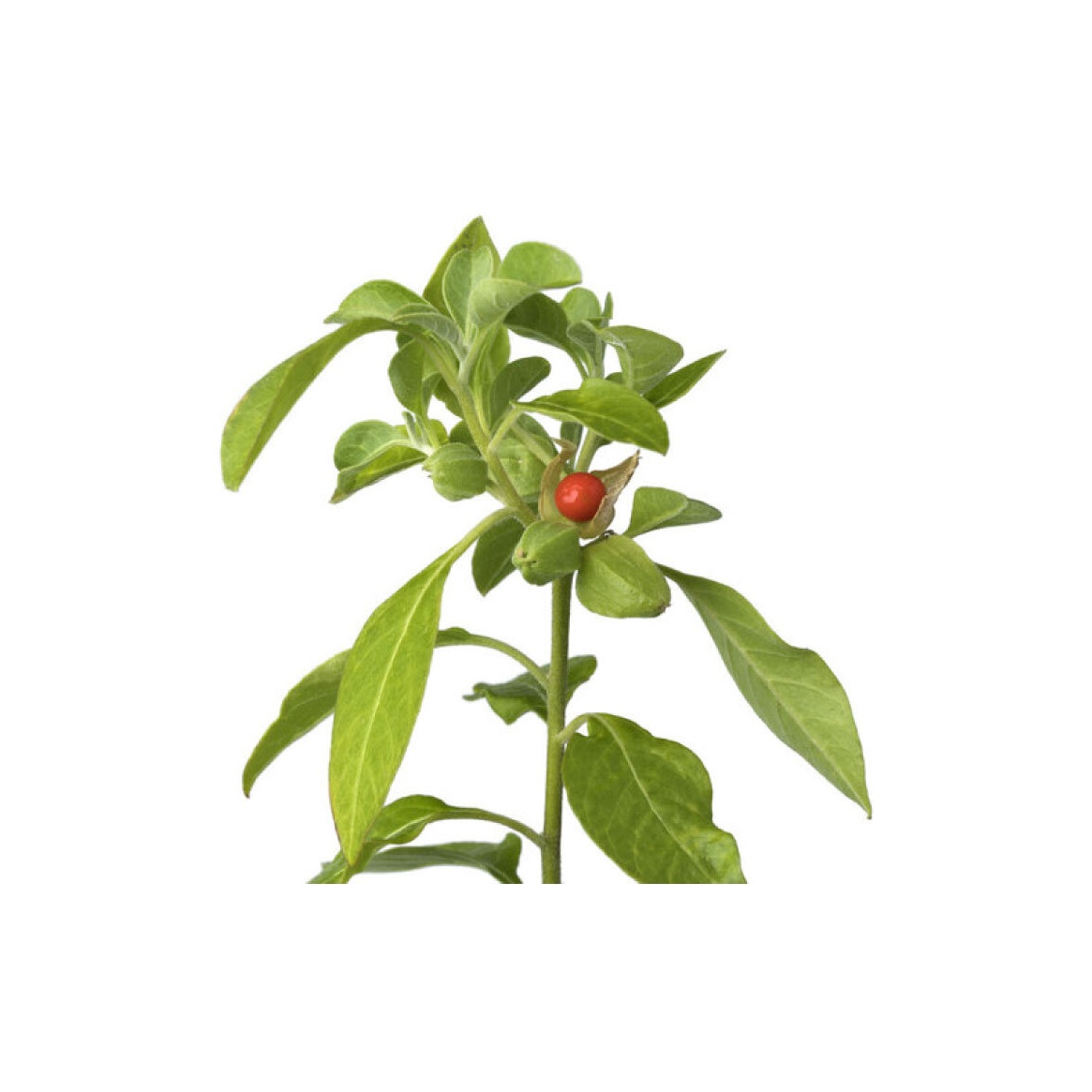 StrongStrongAshwagandhaWithania somniferaLowered TSH and raised T3 and T4 toward normal in subclinical hypothyroidism, and moved the same indices in people who had no thyroid problem.Mechanismthyroid stimulation — TSH ↓, T3/T4 ↑ (responsible constituent unresolved)Read the evidenceShow lessMonograph →
An 8-week randomised, double-blind, placebo-controlled trial gave 600 mg a day of root extract to adults with subclinical hypothyroidism. It significantly lowered TSH and raised T3 and T4 toward normal against placebo 1Reference 1RCTEfficacy and safety of ashwagandha root extract in subclinical hypothyroid patients — a double-blind, randomised placebo-controlled trialView study →.
A substudy inside a placebo-controlled trial in people with bipolar disorder, who were not selected for thyroid disease, found subtle rises in the same thyroid indices 2Reference 2RCTSubtle changes in thyroid indices during a placebo-controlled study of an extract of Withania somnifera in persons with bipolar disorderView study →. The axis moved in the same direction in people with nothing to correct.
Case reports document ashwagandha precipitating thyrotoxicosis, with painless thyroiditis reported in the same setting 3Reference 3Case reportThyrotoxicosis following the use of ashwagandha — case reportView study →. Case reports are weak evidence for benefit and strong evidence that the pharmacology is real.
There is one small efficacy trial, no data at all in overt hypothyroidism, and the active constituent has not been identified — so no chemotype, extract ratio or withanolide content can be preferred.
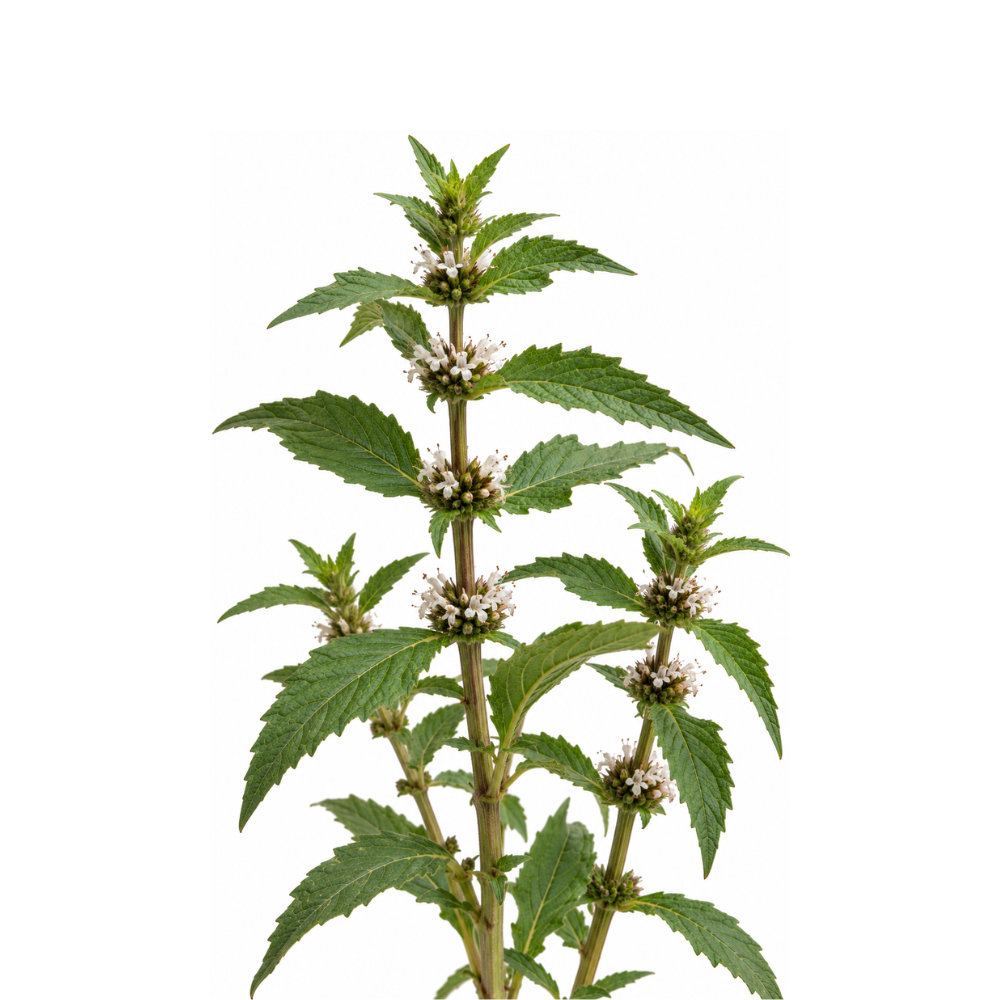 StrongStrongBugleweedLycopus virginicusFreeze-dried extracts inhibit TSH binding in human thyroid membranes completely, and disable the thyroid-stimulating antibodies of Graves' disease.MechanismTSH-receptor binding and TSH-stimulated adenylate cyclase ↓ (complete, dose-related); Graves' immunoglobulins inactivated by phenolic-acid adductsRead the evidenceShow less
In human thyroid plasma membranes, freeze-dried aqueous extracts of L. virginicus and L. europaeus produced dose-related, ultimately complete inhibition of TSH binding and of TSH-stimulated adenylate cyclase 4Reference 4In vitroInhibition by certain plant extracts of the binding and adenylate cyclase stimulatory effect of bovine thyrotropin in human thyroid membranes — in vitroView study →. A companion study showed the same extracts, and auto-oxidised products of their phenolic acids rosmarinic acid and lithospermic acid, also disable the thyroid-stimulating immunoglobulins of Graves’ disease, forming weakly-binding adducts with both TSH and the antibodies 5Reference 5In vitroExtracts and auto-oxidized constituents of certain plants inhibit the receptor-binding and the biological activity of Graves’ immunoglobulins — in vitroView study →.
An oral hydroethanolic L. europaeus extract in rats lowered T3, T4, TSH and LH for over 24 hours, which implies a central point of action rather than a purely thyroidal one 6Reference 6AnimalEndocrine effects of Lycopus europaeus L. following oral application — animal model (rat)View study →. A rat model of hyperthyroidism showed the extract reducing the cardiac signs 7Reference 7AnimalExtract of Lycopus europaeus L. reduces cardiac signs of hyperthyroidism in rats — animal model (rat)View study →.
The only human evidence is a small open-label, two-armed observational study in patients with suppressed TSH and hyperthyroid symptoms, in which a Lycopi europaei herba preparation significantly increased urinary T4 excretion and eased symptoms over three months 8Reference 8ObservationalLycopus europaeus (Gypsywort): effects on the thyroidal parameters and symptoms associated with thyroid function — human open-label observational studyView study →. It was not randomised and had no placebo arm.
Almost all the research is on the European species, L. europaeus, and the two Western species are documented as pharmacologically near-identical. No randomised trial exists for either, and every result is tied to a specific freeze-dried or hydroethanolic extract rather than to a tea or tincture.
No herbs match these filters.
Safety
- Thyroid disease is diagnosed and monitored on bloodwork, so get a panel before treating and again afterwards.
- A herb that measurably moves thyroid hormone distorts the tests used to manage thyroid disease, including before radioiodine scanning.
- These herbs push in opposite directions, and taking the wrong one worsens the condition it was taken for.
- A thyroid-stimulating herb is contraindicated in hyperthyroidism, in Graves’ disease and with an autonomous nodule.
- A thyroid-blocking herb is contraindicated in hypothyroidism and alongside thyroid replacement.
- Avoid both in pregnancy, where thyroid status is closely managed for the fetus.
- Palpitations, heat intolerance, tremor, unexplained weight loss or agitation in someone taking a thyroid-active herb should raise thyroid function as a question rather than be treated as anxiety.
References
- Sharma AK, et al. (2018). Efficacy and safety of ashwagandha root extract in subclinical hypothyroid patients — a double-blind, randomised placebo-controlled trial. Journal of Alternative and Complementary Medicine. https://pubmed.ncbi.nlm.nih.gov/28829155/
- Gannon JM, et al. (2014). Subtle changes in thyroid indices during a placebo-controlled study of an extract of Withania somnifera in persons with bipolar disorder. Journal of Ayurveda and Integrative Medicine. https://pubmed.ncbi.nlm.nih.gov/25624699/
- van der Hooft CS, et al. (2005). Thyrotoxicosis following the use of ashwagandha — case report. Nederlands Tijdschrift voor Geneeskunde. https://pubmed.ncbi.nlm.nih.gov/16355578/
- Auf’mkolk, M., Ingbar, J. C., Amir, S. M., et al. (1984). Inhibition by certain plant extracts of the binding and adenylate cyclase stimulatory effect of bovine thyrotropin in human thyroid membranes — in vitro. Endocrinology. https://pubmed.ncbi.nlm.nih.gov/6745167/
- Auf’mkolk, M., Ingbar, J. C., Kubota, K., Amir, S. M., & Ingbar, S. H. (1985). Extracts and auto-oxidized constituents of certain plants inhibit the receptor-binding and the biological activity of Graves’ immunoglobulins — in vitro. Endocrinology. https://pubmed.ncbi.nlm.nih.gov/2985357/
- Winterhoff, H., Gumbinger, H. G., Vahlensieck, U., et al. (1994). Endocrine effects of Lycopus europaeus L. following oral application — animal model (rat). Arzneimittel-Forschung. https://pubmed.ncbi.nlm.nih.gov/8135877/
- Vonhoff, C., Baumgartner, A., Hegger, M., et al. (2006). Extract of Lycopus europaeus L. reduces cardiac signs of hyperthyroidism in rats — animal model (rat). Life Sciences. https://pubmed.ncbi.nlm.nih.gov/16150466/
- Beer, A. M., Wiebelitz, K. R., & Schmidt-Gayk, H. (2008). Lycopus europaeus (Gypsywort): effects on the thyroidal parameters and symptoms associated with thyroid function — human open-label observational study. Phytomedicine. https://pubmed.ncbi.nlm.nih.gov/18083505/
Keep Exploring