
Materia Medica
Black Pepper
Piper nigrum
Black pepper is the dried fruit of a tropical climbing vine and one of the world's most widely used spices. Its pungent alkaloid, piperine, is used in traditional medicine for digestion and is added to supplements to improve the absorption of compounds such as curcumin.
What Is Black Pepper?
Black pepper is the dried fruit of Piper nigrum, a tropical climbing vine, and one of the world’s most widely used spices. Its hot, biting taste comes from the alkaloid piperine 7Reference 7ReviewBlack pepper and its pungent principle-piperine: a review of diverse physiological effects — reviewView study →.
The vine is native to tropical South and Southeast Asia and is now cultivated throughout the tropics 30,
Piperine slows the breakdown of many drugs and plant compounds in the gut and liver, which raises the amount that reaches the blood. For this reason, isolated piperine is added to supplements such as turmeric extracts to increase curcumin absorption 1,
Long pepper (Piper longum), the pippali of Ayurveda, is a different species that also contains piperine 5,
How Is Black Pepper Used?
Black pepper is used as the dried fruit, most often ground.
- Culinary spice — ground peppercorns as a condiment 31Reference 31Piper nigrum — species database entry (habit, range, cultivation, uses)View study →.
- Powdered fruit — in traditional medicine, usually as part of a formula, such as the Ayurvedic trikatu 32Reference 32AnimalDeciphering the impact and mechanism of Trikatu, a spices-based formulation, on alcoholic liver disease employing network pharmacology analysis and in vivo validation — animal / in silicoView study →.
- Isolated piperine — added in small amounts to supplements of curcumin and other poorly absorbed compounds 1,
6Reference 1Clinical trialInfluence of piperine on the pharmacokinetics of curcumin in animals and human volunteers — clinical trialView study →Reference 6ReviewSafety aspects of the use of isolated piperine ingested as a bolus — reviewView study → .
Most human trials of piperine are in fact curcumin-plus-piperine trials, in which piperine is added to raise curcumin absorption and curcumin is the compound being tested 16,
Traditional Uses
Ayurvedic Medicine
In Ayurveda black pepper is one of the three spices of trikatu, a fine powder of ginger rhizome, long pepper and black pepper 32Reference 32AnimalDeciphering the impact and mechanism of Trikatu, a spices-based formulation, on alcoholic liver disease employing network pharmacology analysis and in vivo validation — animal / in silicoView study →. Trikatu and its herbs are used for fever, asthma, nasal and respiratory complaints, poor appetite, indigestion, obesity and skin conditions 32Reference 32AnimalDeciphering the impact and mechanism of Trikatu, a spices-based formulation, on alcoholic liver disease employing network pharmacology analysis and in vivo validation — animal / in silicoView study →.
Black pepper is also used as a stimulating expectorant, and it is applied externally for nasal congestion, sinusitis and inflamed skin 31Reference 31Piper nigrum — species database entry (habit, range, cultivation, uses)View study →.
India has the most recorded traditional uses of the plant, mostly for menstrual and ear, nose and throat complaints in people and for digestive complaints in livestock. The fruit is usually taken as a powder, pill or paste 8Reference 8Systematic reviewA systematic review on black pepper (Piper nigrum L.): from folk uses to pharmacological applications — systematic reviewView study →.
Traditional Chinese Medicine
In Chinese medicine black pepper is hu jiao 30Reference 30Tseng, Y.-c., Xia, N., & Gilbert, M. G. (n.d.). Piper nigrum Linnaeus. In Wu, Z. Y., & Raven, P. H. (eds.), Flora of China, Vol. 4 — flora. http://www.efloras.org/florataxon.aspx?flora_id=2&taxon_id=200005581View study →. It is used as a warming herb for stomach chills, food poisoning, dysentery, diarrhoea and vomiting caused by cold 31Reference 31Piper nigrum — species database entry (habit, range, cultivation, uses)View study →.
Western Herbal Medicine
In Western herbal medicine black pepper is taken for indigestion and wind, and it is regarded as a stimulating expectorant 31Reference 31Piper nigrum — species database entry (habit, range, cultivation, uses)View study →.
Indications
- Indigestion and flatulence [fruit; Western herbal medicine, Ayurveda]
- Poor appetite [fruit; Ayurveda, in trikatu]
- Stomach chill, diarrhoea and vomiting from cold [fruit; TCM]
- Coughs and chest congestion [fruit; Western herbal medicine, Ayurveda]
- Nasal congestion and sinusitis [fruit, applied externally; Ayurveda]
- Improving absorption of curcumin and other compounds [isolated piperine]
Botany
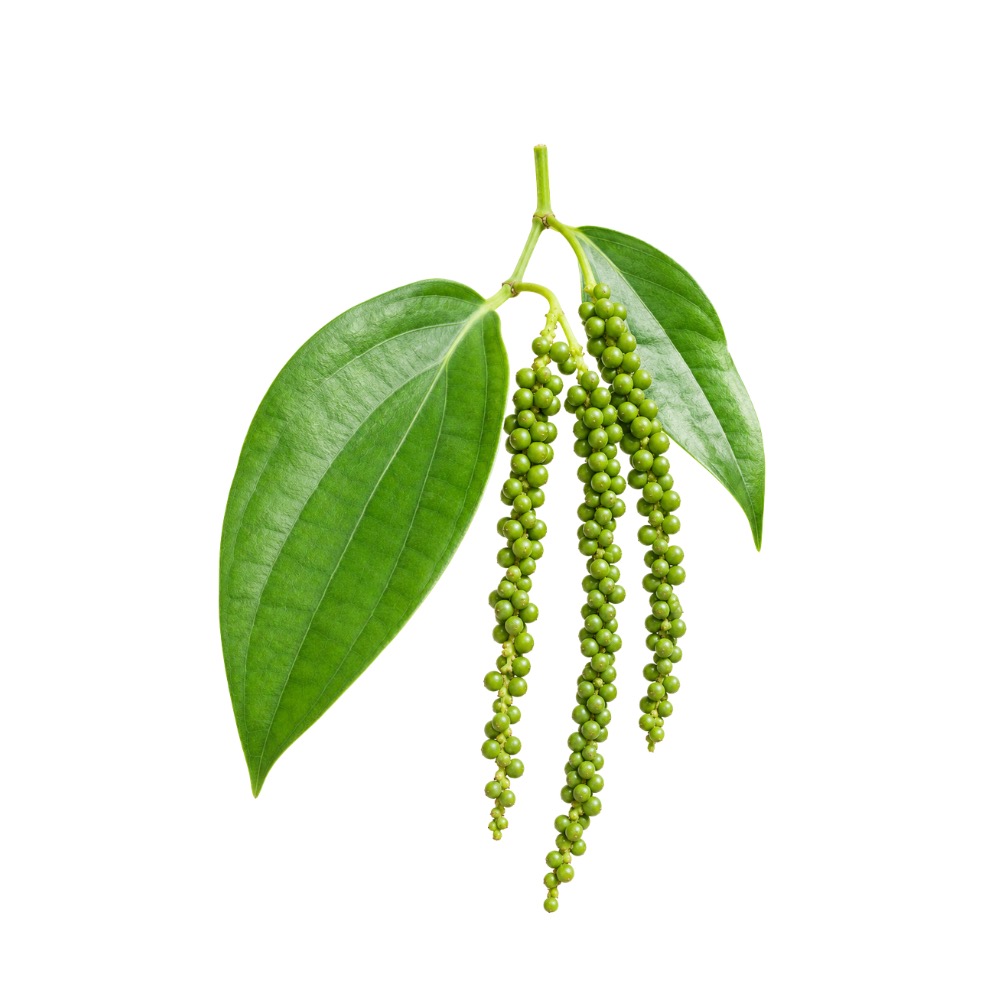
Black pepper is a woody climbing shrub in the pepper family (Piperaceae). Its stems can reach 10 m but are usually kept to 3–4 m in cultivation, and they cling to supports with roots that grow from the swollen nodes 30,
The leaves are ovate, thick and somewhat leathery, 10–15 cm long and 5–9 cm wide 30Reference 30Tseng, Y.-c., Xia, N., & Gilbert, M. G. (n.d.). Piper nigrum Linnaeus. In Wu, Z. Y., & Raven, P. H. (eds.), Flora of China, Vol. 4 — flora. http://www.efloras.org/florataxon.aspx?flora_id=2&taxon_id=200005581View study →.
The tiny flowers are borne on spikes that grow opposite the leaves 30Reference 30Tseng, Y.-c., Xia, N., & Gilbert, M. G. (n.d.). Piper nigrum Linnaeus. In Wu, Z. Y., & Raven, P. H. (eds.), Flora of China, Vol. 4 — flora. http://www.efloras.org/florataxon.aspx?flora_id=2&taxon_id=200005581View study →. They develop into small, round fruits, 3–6 mm across, which are red when ripe 30,
Black pepper is the unripe fruit, which turns black as it dries 30Reference 30Tseng, Y.-c., Xia, N., & Gilbert, M. G. (n.d.). Piper nigrum Linnaeus. In Wu, Z. Y., & Raven, P. H. (eds.), Flora of China, Vol. 4 — flora. http://www.efloras.org/florataxon.aspx?flora_id=2&taxon_id=200005581View study →. White pepper is made by removing the outer layers of the fruit, and green peppercorns are the unripe fruit, pickled or preserved 31Reference 31Piper nigrum — species database entry (habit, range, cultivation, uses)View study →. White pepper has a milder flavour, but both come from the same plant 31Reference 31Piper nigrum — species database entry (habit, range, cultivation, uses)View study →.
Several relatives in the same genus are also medicinal, including long pepper (Piper longum) and kava (Piper methysticum).
Distribution
Black pepper is native to tropical South and Southeast Asia 30,
It grows best in the hot, humid lowland tropics below about 500 m, though it can be grown up to 2,000 m. It prefers daytime temperatures of 22–35 °C and 2,500–4,000 mm of rain a year 31Reference 31Piper nigrum — species database entry (habit, range, cultivation, uses)View study →.
Growing Conditions
Cultivation snapshot for Black Pepper
Habitwoody evergreen climbing vine, usually 3–4 m in cultivation 31Reference 31Piper nigrum — species database entry (habit, range, cultivation, uses)View study →.
Lifetropical perennial; vines begin to bear in 3–4 years 31Reference 31Piper nigrum — species database entry (habit, range, cultivation, uses)View study →.
Sunsemi-shade, in a sheltered position 31Reference 31Piper nigrum — species database entry (habit, range, cultivation, uses)View study →.
Waterhigh rainfall and humidity 31Reference 31Piper nigrum — species database entry (habit, range, cultivation, uses)View study →.
Soilrich in organic matter, about pH 6–7 31Reference 31Piper nigrum — species database entry (habit, range, cultivation, uses)View study →.
Grow it yourself
Farm Wiki is our cultivation-focused sister site, also run by Justin Cooke.
Pharmacology & Research
Black pepper research centres on piperine and its effect on the absorption of other compounds. In a 1998 crossover study, piperine raised blood levels of curcumin in volunteers 1Reference 1Clinical trialInfluence of piperine on the pharmacokinetics of curcumin in animals and human volunteers — clinical trialView study →. Laboratory work has shown that it inhibits the drug transporter P-glycoprotein and the enzyme CYP3A4 2Reference 2In vitroPiperine, a major constituent of black pepper, inhibits human P-glycoprotein and CYP3A4 — in vitro (human microsomes, Caco-2)View study →, and in healthy volunteers it slowed the CYP3A4 breakdown of carbamazepine 34Reference 34Clinical trialEffect of piperine on the metabolism and pharmacokinetics of carbamazepine in healthy volunteers — clinical studyView study →.
Other effects, including anti-inflammatory, liver-protective, antioxidant, metabolic, antimicrobial and anticancer activity, have been studied mainly in rodents and cell lines 7,
The human trials that exist mostly test curcumin together with piperine 16,
- Best-supported: piperine as an absorption enhancer. It raised curcumin blood levels about 20-fold in volunteers 1Reference 1Clinical trialInfluence of piperine on the pharmacokinetics of curcumin in animals and human volunteers — clinical trialView study →, and it inhibits P-glycoprotein and CYP3A4 in human cells and liver tissue 2Reference 2In vitroPiperine, a major constituent of black pepper, inhibits human P-glycoprotein and CYP3A4 — in vitro (human microsomes, Caco-2)View study →.
-
Emerging, worth watching: anti-inflammatory and liver-protective effects of piperine in rodent and cell models 10,
11, , plus meta-analyses of curcumin-with-piperine trials on inflammatory markers and liver enzymes 20,13, 14, 15Reference 10Piperine suppresses inflammatory fibroblast-like synoviocytes from rheumatoid arthritis patients via NF-κB inhibition — ex vivo human cellsView study →Reference 11AnimalPiperine ameliorates lipopolysaccharide-induced acute lung injury via modulating NF-κB signalling — mouse in vivoView study →Reference 13In vitroEvaluation of the liver protective potential of piperine — mouse in vivo / in vitroView study →Reference 14AnimalThe hepatoprotective effect of piperine against thioacetamide-induced liver fibrosis in mice — animal modelView study →Reference 15AnimalPiperine as therapeutic agent in paracetamol-induced hepatotoxicity in mice — animal modelView study → 21Reference 20Meta-analysisCurcumin plus piperine co-administration on inflammation and oxidative stress — systematic review and meta-analysis of randomised controlled trialsView study →Reference 21Meta-analysisCurcuminoids plus piperine on liver enzymes and inflammation in adults — GRADE-assessed systematic review and meta-analysisView study → . -
Mechanistically thin: antioxidant, anti-obesity, antimicrobial, neuroprotective and anticancer effects rest on cell and animal work 22,
23, .24, 25, 26, 27, 28Reference 22Piperine improves obesity by inhibiting fatty-acid absorption and repairing intestinal barrier function — animal / cellView study →Reference 23AnimalPiperine attenuates hepatic steatosis and insulin resistance in high-fat-diet-induced obesity — ratView study →Reference 24In vitroAntioxidant and anti-inflammatory effects of piperine on UV-B-irradiated human HaCaT keratinocytes — in vitroView study →Reference 25Systematic reviewAntibacterial and immunological properties of piperine evidenced by preclinical studies — systematic reviewView study →Reference 26Systematic reviewPromising antituberculosis activity of piperine combined with antimicrobials — systematic reviewView study →Reference 27ReviewOverview of the anticancer potential of Piper nigrum and its main constituent piperine — reviewView study →Reference 28In vitroPiperine functions as a tumour suppressor for human ovarian tumour growth via JNK/p38 MAPK-mediated apoptosis — in vitroView study → - The caveat: nearly all human “efficacy” data come from curcumin-with-piperine combinations, so piperine’s own contribution cannot be separated.
The research uses isolated piperine, not pepper from a grinder. Supplements deliver concentrated piperine as a single dose, which is a different exposure from pepper eaten in food 6Reference 6ReviewSafety aspects of the use of isolated piperine ingested as a bolus — reviewView study →.
1. Bioavailability Enhancement
In volunteers given 2 g of curcumin alone, blood levels were undetectable or very low. Adding 20 mg of piperine raised curcumin bioavailability by 2000%, with no adverse effects. In rats the same combination raised it by 154% 1Reference 1Clinical trialInfluence of piperine on the pharmacokinetics of curcumin in animals and human volunteers — clinical trialView study →.
In human intestinal Caco-2 cells, piperine inhibited P-glycoprotein transport of digoxin and cyclosporine. In human liver microsomes, it inhibited CYP3A4 2Reference 2In vitroPiperine, a major constituent of black pepper, inhibits human P-glycoprotein and CYP3A4 — in vitro (human microsomes, Caco-2)View study →.
In rats, piperine given hours before curcumin raised curcumin exposure about sixfold, by temporarily reducing the liver and gut enzymes (UGTs and SULTs) that conjugate it. Given together at a 20:1 ratio, the increase was much smaller 3Reference 3AnimalSelective reduction in the expression of UGTs and SULTs by which piperine enhances curcumin bioavailability — ratView study →. In healthy volunteers, a curcumin product with 24 mg of piperine did not change how paracetamol was conjugated 36Reference 36Clinical trialEffect of a herbal extract containing curcumin and piperine on midazolam, flurbiprofen and paracetamol (acetaminophen) pharmacokinetics in healthy volunteers — clinical studyView study →.
Piperine itself is absorbed rapidly across the gut wall, and it may help other molecules cross by changing membrane properties 5Reference 5Permeability characteristics of piperine on oral absorption — animalView study →. In animal studies it also inhibits drug-metabolising enzymes in the liver and gut, including UDP-glucuronyl transferase 7Reference 7ReviewBlack pepper and its pungent principle-piperine: a review of diverse physiological effects — reviewView study →.
In people, piperine has raised blood levels of phenytoin 35Reference 35Clinical trialEffect of piperine on the steady-state pharmacokinetics of phenytoin in patients with epilepsy — clinical studyView study → and carbamazepine 34Reference 34Clinical trialEffect of piperine on the metabolism and pharmacokinetics of carbamazepine in healthy volunteers — clinical studyView study →, and short courses of isolated piperine have raised levels of several other drugs 6Reference 6ReviewSafety aspects of the use of isolated piperine ingested as a bolus — reviewView study →.
Gap: the effect is established for isolated piperine at defined doses. Its size depends on the drug, the dose ratio and the timing 3,
2. Anti-Inflammatory
Piperine suppresses the NF-κB inflammatory pathway in several models.
In fibroblast-like synoviocytes taken from 68 rheumatoid-arthritis patients, piperine reduced NF-κB activation, cell proliferation and inflammatory cytokines 10Reference 10Piperine suppresses inflammatory fibroblast-like synoviocytes from rheumatoid arthritis patients via NF-κB inhibition — ex vivo human cellsView study →.
In mice, it reduced LPS-induced acute lung injury, with lower TNF-α, IL-6 and IL-1β and less NF-κB activation 11Reference 11AnimalPiperine ameliorates lipopolysaccharide-induced acute lung injury via modulating NF-κB signalling — mouse in vivoView study →.
In microglia, it reduced inflammatory cytokines and PGE2, partly by activating the Nrf2/HO-1 pathway 12Reference 12In vitroPiperine attenuates LPS-induced inflammatory responses in BV2 microglia — in vitroView study →.
A meta-analysis of 13 trials of curcumin with piperine found lower TNF-α and IL-6 and less oxidative stress 20Reference 20Meta-analysisCurcumin plus piperine co-administration on inflammation and oxidative stress — systematic review and meta-analysis of randomised controlled trialsView study →. The design cannot separate piperine’s contribution from curcumin’s.
Gap: no trial has tested piperine or pepper alone against an inflammatory outcome in people.
3. Metabolic & Lipid Support
In a meta-analysis of trials in metabolic syndrome, curcumin with piperine lowered total and LDL cholesterol but did not change triglycerides 17Reference 17Meta-analysisCurcumin and piperine combination on lipid profile in metabolic syndrome — systematic review and meta-analysis of RCTsView study →.
A larger 2025 analysis of 16 trials found lower triglycerides and total cholesterol and higher HDL, but no significant change in LDL 19Reference 19Meta-analysisCurcuminoids plus piperine co-supplementation on serum lipid profile in adults — systematic review and meta-analysis of RCTsView study →.
For blood sugar, a meta-analysis of 15 trials found a small fall in fasting glucose but no change in HbA1c, insulin or insulin resistance, and rated the evidence low in certainty 18Reference 18Meta-analysisCurcumin plus piperine co-supplementation on glycemic control in adults — meta-analysis of randomised controlled trialsView study →.
Piperine-only evidence is preclinical. In obese rats it reduced weight gain, insulin, glucose and liver fat 23Reference 23AnimalPiperine attenuates hepatic steatosis and insulin resistance in high-fat-diet-induced obesity — ratView study →, and in cell and animal models it reduced fatty-acid absorption and repaired the gut barrier 22Reference 22Piperine improves obesity by inhibiting fatty-acid absorption and repairing intestinal barrier function — animal / cellView study →.
Gap: the human data test the combination with curcumin and are inconsistent. Piperine’s own metabolic effect in people is unmeasured.
4. Hepatoprotective
In a 1993 study, piperine protected mouse liver against tert-butyl hydroperoxide and carbon tetrachloride by reducing lipid peroxidation and preserving glutathione. It was less potent than silymarin 13Reference 13In vitroEvaluation of the liver protective potential of piperine — mouse in vivo / in vitroView study →.
Later mouse studies extended this to thioacetamide-induced fibrosis, through miR-17 and TGF-β/Smad signalling 14Reference 14AnimalThe hepatoprotective effect of piperine against thioacetamide-induced liver fibrosis in mice — animal modelView study →, and to paracetamol poisoning, where piperine worked best together with N-acetylcysteine 15Reference 15AnimalPiperine as therapeutic agent in paracetamol-induced hepatotoxicity in mice — animal modelView study →.
In a 12-week randomised trial in 70 people with fatty liver disease, 500 mg of curcuminoids with 5 mg of piperine daily improved disease severity on ultrasound compared with placebo. Liver enzymes fell within the treated group but did not differ significantly from placebo 16Reference 16RCTCurcuminoids plus piperine improve nonalcoholic fatty liver disease — randomised controlled trialView study →.
A meta-analysis of 18 trials of curcuminoids with piperine found lower AST and IL-6, while the fall in ALT was not significant overall 21Reference 21Meta-analysisCurcuminoids plus piperine on liver enzymes and inflammation in adults — GRADE-assessed systematic review and meta-analysisView study →.
Gap: every piperine-alone result is from animals.
5. Antioxidant
Piperine scavenges free radicals in vitro. In UV-B-irradiated human skin cells, it reduced reactive oxygen species and inflammatory signalling 24Reference 24In vitroAntioxidant and anti-inflammatory effects of piperine on UV-B-irradiated human HaCaT keratinocytes — in vitroView study →.
In microglia it activated the Nrf2/HO-1 antioxidant pathway 12Reference 12In vitroPiperine attenuates LPS-induced inflammatory responses in BV2 microglia — in vitroView study →, and it reduced lipid peroxidation in liver-injury models 13Reference 13In vitroEvaluation of the liver protective potential of piperine — mouse in vivo / in vitroView study →.
Gap: no clinical antioxidant outcome has been measured, and dietary pepper has not been shown to change antioxidant status in people.
6. Anti-Obesity
In cell and animal models, piperine reduced intestinal fatty-acid absorption by lowering FABP2 and CD36, and it strengthened the gut barrier 22Reference 22Piperine improves obesity by inhibiting fatty-acid absorption and repairing intestinal barrier function — animal / cellView study →.
In obese rats, 27 mg/kg of piperine a day for 8 weeks lowered body weight by 5.7% and reduced liver fat and insulin resistance 23Reference 23AnimalPiperine attenuates hepatic steatosis and insulin resistance in high-fat-diet-induced obesity — ratView study →.
Gap: no human trial has tested piperine or pepper alone for weight or body composition.
7. Antimicrobial
A systematic review of 40 preclinical studies found that piperine has antibacterial activity, inhibits bacterial efflux pumps and often strengthens antibiotics, mostly against Mycobacterium and Staphylococcus aureus 25Reference 25Systematic reviewAntibacterial and immunological properties of piperine evidenced by preclinical studies — systematic reviewView study →.
A second review of eight studies found promising activity against Mycobacterium tuberculosis, mainly when piperine was combined with antituberculosis drugs 26Reference 26Systematic reviewPromising antituberculosis activity of piperine combined with antimicrobials — systematic reviewView study →.
Gap: no clinical infection studies.
8. Neuroprotective
In microglia, piperine suppressed LPS-induced cytokines and PGE2 while activating Nrf2/HO-1 12Reference 12In vitroPiperine attenuates LPS-induced inflammatory responses in BV2 microglia — in vitroView study →. A review collects animal data on cognition, mood and neurodegeneration 9Reference 9ReviewPiperine: a review of its biological effects — reviewView study →.
Gap: no human neurological or cognitive trial of piperine or black pepper.
9. Anticancer
In cell lines and animal models, piperine slows cancer-cell growth and triggers cell death. In human ovarian cancer cells, it induced apoptosis through the JNK/p38 MAPK pathway without affecting normal ovarian cells 28Reference 28In vitroPiperine functions as a tumour suppressor for human ovarian tumour growth via JNK/p38 MAPK-mediated apoptosis — in vitroView study →. Reviews collect activity against breast, colon, prostate and other cancers 8,
Gap: preclinical only. Human studies are missing 27Reference 27ReviewOverview of the anticancer potential of Piper nigrum and its main constituent piperine — reviewView study →.
Mechanisms
Piperine is a pungent piperidine amide. It inhibits the drug transporter P-glycoprotein and the enzyme CYP3A4, which slows the breakdown of many drugs and plant compounds 2Reference 2In vitroPiperine, a major constituent of black pepper, inhibits human P-glycoprotein and CYP3A4 — in vitro (human microsomes, Caco-2)View study →. In rats it also temporarily lowered the conjugating enzymes UGT and SULT 3Reference 3AnimalSelective reduction in the expression of UGTs and SULTs by which piperine enhances curcumin bioavailability — ratView study →, but a curcumin product with piperine did not change paracetamol conjugation in healthy volunteers 36Reference 36Clinical trialEffect of a herbal extract containing curcumin and piperine on midazolam, flurbiprofen and paracetamol (acetaminophen) pharmacokinetics in healthy volunteers — clinical studyView study →.
Separately, piperine has been studied for anti-inflammatory activity through NF-κB suppression and for antioxidant activity through the Nrf2/HO-1 pathway 10,
| Mechanism | Drives | Key compounds |
|---|---|---|
| P-glycoprotein efflux ↓, CYP3A4 ↓, UGT/SULT ↓ (rat) | bioavailability enhancementdrug interactions | piperine |
| NF-κB ↓, TNF-α, IL-6, IL-1β ↓ | anti-inflammatoryhepatoprotectiveneuroprotective | piperine |
| Nrf2/HO-1 ↑, lipid peroxidation ↓, glutathione preserved | antioxidanthepatoprotective | piperine |
| Intestinal fatty-acid absorption ↓ (FABP2, CD36), gut-barrier repair | anti-obesitymetabolic | piperine |
| Pro-apoptotic (JNK/p38 MAPK); bacterial efflux-pump inhibition | anticancerantimicrobial | piperine |
Clinical Trials
Registered human trials involving piperine are almost all combination studies, mainly curcumin with piperine, in which piperine is the absorption enhancer rather than the treatment being tested. No trial has evaluated black pepper or piperine alone against a disease outcome.
| Completed | Planned | Terminated | Preclinical |
|---|---|---|---|
| ~30(nearly all combination) | 3(recruiting/not-yet) | 0 | ~majority of the literature |
Last checked: July 2026.
Phytochemistry
Black pepper contains about 2–7.4% piperine, the pungent alkaloid that gives pepper its bite, and total alkaloids of up to 9% 9,
Related amides include chavicine, piperettine and piperanine, along with piperic acid, pellitorine and piperlonguminine 8Reference 8Systematic reviewA systematic review on black pepper (Piper nigrum L.): from folk uses to pharmacological applications — systematic reviewView study →.
The aroma comes from an essential oil of terpenes and sesquiterpenes, including β-caryophyllene and camphene 31Reference 31Piper nigrum — species database entry (habit, range, cultivation, uses)View study →. Other volatile constituents include limonene, sabinene, α-pinene, β-pinene, caryophyllene oxide and piperonal. The fruit also contains about 11% protein 31Reference 31Piper nigrum — species database entry (habit, range, cultivation, uses)View study →.
Piperine also occurs in long pepper, and some piperine studies used material from Piper longum as well as P. nigrum 5,
Constituent Summary
Amounts are for the dried fruit.
Alkaloid4 compounds1 with data
Sesquiterpene1 compoundno data
Dosage
Human research doses are doses of isolated piperine, given alongside another compound.
Research Doses
| Indication | Preparation | Dose | Est. dried-herb equivalent | Source |
|---|---|---|---|---|
| Curcumin absorption | Isolated piperine with curcumin | 20 mg piperine with 2 g curcumin, single dose | ~0.3–1 g dried pepper | 1Reference 1Clinical trialInfluence of piperine on the pharmacokinetics of curcumin in animals and human volunteers — clinical trialView study → |
| Fatty liver disease | Curcuminoids with piperine | 500 mg curcuminoids + 5 mg piperine daily for 12 weeks | ~0.07–0.25 g dried pepper | 16Reference 16RCTCurcuminoids plus piperine improve nonalcoholic fatty liver disease — randomised controlled trialView study → |
Equivalents assume dried black pepper contains 2–7.4% piperine 9Reference 9ReviewPiperine: a review of its biological effects — reviewView study →.
Traditional Dosage
| System | Preparation | Dose |
|---|---|---|
| Western herbal medicine | Dried fruit powder | ~0.5–1 g |
| Ayurveda (in trikatu) | Dried fruit powder with long pepper and ginger | ~0.5–1.5 g |
| TCM (hu jiao) | Powdered fruit | ~1–3 g |
Safety & Pregnancy
Black pepper used in cooking is safe. The safety questions concern concentrated piperine supplements, mainly because they change how other drugs are absorbed and broken down 6,
- Safe as a spice. Animal studies support the safety of black pepper and piperine as food, and piperine is not genotoxic 7Reference 7ReviewBlack pepper and its pungent principle-piperine: a review of diverse physiological effects — reviewView study →.
- Drug interactions. Piperine inhibits P-glycoprotein and CYP3A4, and it has raised blood levels of phenytoin, carbamazepine, propranolol, theophylline and other drugs 6,
33, .34, 35Reference 6ReviewSafety aspects of the use of isolated piperine ingested as a bolus — reviewView study →Reference 33Effect of piperine on bioavailability and pharmacokinetics of propranolol and theophylline in healthy volunteers — crossover studyView study →Reference 34Clinical trialEffect of piperine on the metabolism and pharmacokinetics of carbamazepine in healthy volunteers — clinical studyView study →Reference 35Clinical trialEffect of piperine on the steady-state pharmacokinetics of phenytoin in patients with epilepsy — clinical studyView study → - Concentrated supplements. Isolated piperine taken as a single large dose is a different exposure from pepper in food, and high doses caused reproductive effects in animals 6Reference 6ReviewSafety aspects of the use of isolated piperine ingested as a bolus — reviewView study →.
Full Safety & Interactions Detail
Interactions. Piperine inhibits P-glycoprotein in the gut and CYP3A4 in the liver, both of which clear many drugs 2Reference 2In vitroPiperine, a major constituent of black pepper, inhibits human P-glycoprotein and CYP3A4 — in vitro (human microsomes, Caco-2)View study →. In 12 healthy volunteers, 20 mg of piperine a day for 10 days raised blood levels of the anti-epileptic carbamazepine by about half, by slowing its breakdown through CYP3A4 34Reference 34Clinical trialEffect of piperine on the metabolism and pharmacokinetics of carbamazepine in healthy volunteers — clinical studyView study →. A single 20 mg dose raised steady-state phenytoin levels in people with epilepsy 35Reference 35Clinical trialEffect of piperine on the steady-state pharmacokinetics of phenytoin in patients with epilepsy — clinical studyView study →. In a small crossover study in healthy volunteers, 20 mg of piperine a day for a week raised blood levels of propranolol and theophylline 33Reference 33Effect of piperine on bioavailability and pharmacokinetics of propranolol and theophylline in healthy volunteers — crossover studyView study →. Short courses of isolated piperine have raised levels of several other drugs 6Reference 6ReviewSafety aspects of the use of isolated piperine ingested as a bolus — reviewView study →. Anyone taking a medicine with a narrow safety margin should check with their prescriber before taking a piperine supplement.
Culinary pepper. Animal studies support the safety of black pepper and piperine as food, and piperine was not genotoxic 7Reference 7ReviewBlack pepper and its pungent principle-piperine: a review of diverse physiological effects — reviewView study →.
Isolated piperine. At higher daily doses than those used in human studies, isolated piperine disturbed sperm production and caused maternal reproductive and embryotoxic effects in animals. Human studies have rarely reported adverse effects, but few were designed to look for them 6Reference 6ReviewSafety aspects of the use of isolated piperine ingested as a bolus — reviewView study →.
Pepper in food is fine; avoid concentrated piperine supplements.
High daily doses of isolated piperine caused maternal reproductive and embryotoxic effects in animals, and no human study has assessed piperine supplements in pregnancy or breastfeeding 6Reference 6ReviewSafety aspects of the use of isolated piperine ingested as a bolus — reviewView study →.
References
- Shoba, G., et al. (1998). Influence of piperine on the pharmacokinetics of curcumin in animals and human volunteers — clinical trial. Planta Medica. https://pubmed.ncbi.nlm.nih.gov/9619120/
- Bhardwaj, R. K., et al. (2002). Piperine, a major constituent of black pepper, inhibits human P-glycoprotein and CYP3A4 — in vitro (human microsomes, Caco-2). J Pharmacol Exp Ther. https://pubmed.ncbi.nlm.nih.gov/12130727/
- Zeng, X., et al. (2017). Selective reduction in the expression of UGTs and SULTs by which piperine enhances curcumin bioavailability — rat. Biopharm Drug Dispos. https://pubmed.ncbi.nlm.nih.gov/27882569/
- Han, H. K. (2011). The effects of black pepper on the intestinal absorption and hepatic metabolism of drugs — review. Expert Opin Drug Metab Toxicol. https://pubmed.ncbi.nlm.nih.gov/21434835/
- Khajuria, A., et al. (1998). Permeability characteristics of piperine on oral absorption — animal. Indian J Exp Biol. https://pubmed.ncbi.nlm.nih.gov/9536651/
- Ziegenhagen, R., et al. (2021). Safety aspects of the use of isolated piperine ingested as a bolus — review. Foods. https://pubmed.ncbi.nlm.nih.gov/34574230/
- Srinivasan, K. (2007). Black pepper and its pungent principle-piperine: a review of diverse physiological effects — review. Crit Rev Food Sci Nutr. https://pubmed.ncbi.nlm.nih.gov/17987447/
- Takooree, H., et al. (2019). A systematic review on black pepper (Piper nigrum L.): from folk uses to pharmacological applications — systematic review. Crit Rev Food Sci Nutr. https://pubmed.ncbi.nlm.nih.gov/30740986/
- Haq, I. U., et al. (2021). Piperine: a review of its biological effects — review. Phytother Res. https://pubmed.ncbi.nlm.nih.gov/32929825/
- Baito, Q. N., et al. (2023). Piperine suppresses inflammatory fibroblast-like synoviocytes from rheumatoid arthritis patients via NF-κB inhibition — ex vivo human cells. Cell Immunol. https://pubmed.ncbi.nlm.nih.gov/37536000/
- Lu, Y., et al. (2016). Piperine ameliorates lipopolysaccharide-induced acute lung injury via modulating NF-κB signalling — mouse in vivo. Inflammation. https://pubmed.ncbi.nlm.nih.gov/26410851/
- Wang-Sheng, C., et al. (2017). Piperine attenuates LPS-induced inflammatory responses in BV2 microglia — in vitro. Int Immunopharmacol. https://pubmed.ncbi.nlm.nih.gov/27875748/
- Koul, I. B., & Kapil, A. (1993). Evaluation of the liver protective potential of piperine — mouse in vivo / in vitro. Planta Medica. https://pubmed.ncbi.nlm.nih.gov/8255933/
- Abdelhamid, A. M., et al. (2021). The hepatoprotective effect of piperine against thioacetamide-induced liver fibrosis in mice — animal model. Front Mol Biosci. https://pubmed.ncbi.nlm.nih.gov/34778375/
- Coelho, A. M., et al. (2022). Piperine as therapeutic agent in paracetamol-induced hepatotoxicity in mice — animal model. Pharmaceutics. https://pubmed.ncbi.nlm.nih.gov/36145547/
- Panahi, Y., et al. (2019). Curcuminoids plus piperine improve nonalcoholic fatty liver disease — randomised controlled trial. J Cell Biochem. https://pubmed.ncbi.nlm.nih.gov/31168845/
- Hosseini, H., et al. (2023). Curcumin and piperine combination on lipid profile in metabolic syndrome — systematic review and meta-analysis of RCTs. Phytother Res. https://pubmed.ncbi.nlm.nih.gov/36649934/
- Karimi, M., et al. (2025). Curcumin plus piperine co-supplementation on glycemic control in adults — meta-analysis of randomised controlled trials. J Diabetes Metab Disord. https://pubmed.ncbi.nlm.nih.gov/41393198/
- Karimi, M., et al. (2026). Curcuminoids plus piperine co-supplementation on serum lipid profile in adults — systematic review and meta-analysis of RCTs. Lipids. https://pubmed.ncbi.nlm.nih.gov/41057035/
- Hosseini, H., et al. (2025). Curcumin plus piperine co-administration on inflammation and oxidative stress — systematic review and meta-analysis of randomised controlled trials. Curr Med Chem. https://pubmed.ncbi.nlm.nih.gov/38561618/
- Karimi, M., et al. (2025). Curcuminoids plus piperine on liver enzymes and inflammation in adults — GRADE-assessed systematic review and meta-analysis. Food Sci Nutr. https://pubmed.ncbi.nlm.nih.gov/40661794/
- Wang, W., et al. (2021). Piperine improves obesity by inhibiting fatty-acid absorption and repairing intestinal barrier function — animal / cell. Plant Foods Hum Nutr. https://pubmed.ncbi.nlm.nih.gov/34591253/
- Wang, X., et al. (2022). Piperine attenuates hepatic steatosis and insulin resistance in high-fat-diet-induced obesity — rat. Nutr Res. https://pubmed.ncbi.nlm.nih.gov/36375392/
- Jaisin, Y., et al. (2020). Antioxidant and anti-inflammatory effects of piperine on UV-B-irradiated human HaCaT keratinocytes — in vitro. Life Sci. https://pubmed.ncbi.nlm.nih.gov/33091445/
- Murase, L. S., et al. (2023). Antibacterial and immunological properties of piperine evidenced by preclinical studies — systematic review. Future Microbiol. https://pubmed.ncbi.nlm.nih.gov/37882762/
- Hegeto, L. A., et al. (2019). Promising antituberculosis activity of piperine combined with antimicrobials — systematic review. Microb Drug Resist. https://pubmed.ncbi.nlm.nih.gov/30096263/
- Turrini, E., et al. (2020). Overview of the anticancer potential of Piper nigrum and its main constituent piperine — review. Toxins (Basel). https://pubmed.ncbi.nlm.nih.gov/33256185/
- Si, L., et al. (2018). Piperine functions as a tumour suppressor for human ovarian tumour growth via JNK/p38 MAPK-mediated apoptosis — in vitro. Biosci Rep. https://pubmed.ncbi.nlm.nih.gov/29717031/
- Derosa, G., et al. (2016). Piperine and its role in chronic diseases — review. Adv Exp Med Biol. https://pubmed.ncbi.nlm.nih.gov/27671817/
- Tseng, Y.-c., Xia, N., & Gilbert, M. G. (n.d.). Piper nigrum Linnaeus. In Wu, Z. Y., & Raven, P. H. (eds.), Flora of China, Vol. 4 — flora. http://www.efloras.org/florataxon.aspx?flora_id=2&taxon_id=200005581
- Fern, K. Piper nigrum — species database entry (habit, range, cultivation, uses). Useful Tropical Plants. https://tropical.theferns.info/viewtropical.php?id=Piper+nigrum
- Sharma, R., Jadhav, M., Choudhary, N., et al. (2022). Deciphering the impact and mechanism of Trikatu, a spices-based formulation, on alcoholic liver disease employing network pharmacology analysis and in vivo validation — animal / in silico. Frontiers in Nutrition, 9, 1063118. https://pubmed.ncbi.nlm.nih.gov/36466417/
- Bano, G., Raina, R. K., Zutshi, U., Bedi, K. L., Johri, R. K., & Sharma, S. C. (1991). Effect of piperine on bioavailability and pharmacokinetics of propranolol and theophylline in healthy volunteers — crossover study. European Journal of Clinical Pharmacology, 41(6), 615–617. https://pubmed.ncbi.nlm.nih.gov/1815977/
- Bedada, S. K., Appani, R., & Boga, P. K. (2017). Effect of piperine on the metabolism and pharmacokinetics of carbamazepine in healthy volunteers — clinical study. Drug Research. https://pubmed.ncbi.nlm.nih.gov/27776366/
- Pattanaik, S., Hota, D., Prabhakar, S., et al. (2006). Effect of piperine on the steady-state pharmacokinetics of phenytoin in patients with epilepsy — clinical study. Phytotherapy Research. https://pubmed.ncbi.nlm.nih.gov/16767797/
- Volak, L. P., Hanley, M. J., Masse, G., et al. (2013). Effect of a herbal extract containing curcumin and piperine on midazolam, flurbiprofen and paracetamol (acetaminophen) pharmacokinetics in healthy volunteers — clinical study. British Journal of Clinical Pharmacology. https://pubmed.ncbi.nlm.nih.gov/22725836/



