
Materia Medica
Dong Quai
Angelica sinensis
Dong quai is the aromatic root of Angelica sinensis, a blood tonic in Chinese medicine used for menstrual complaints, period pain and anaemia. The root is rich in ferulic acid and the phthalide ligustilide.
What Is Dong Quai?
Dong quai is the root of Angelica sinensis, one of the most widely used herbs in Chinese medicine. There it is a blood tonic, used to nourish and move the blood and given for irregular or absent periods, pain and constipation 25Reference 25ReviewAngelica sinensis in China — a review of botanical profile, ethnopharmacology, phytochemistry and chemical analysis — reviewView study →. Its place in women’s medicine is why it is known as “female ginseng” 26Reference 26The chromosome-level genome of female ginseng (Angelica sinensis) provides insights into molecular mechanisms and evolution of coumarin biosynthesisView study →.
The plant is a perennial of the carrot family from the mountains of central and western China, where it grows at 2,500–3,000 m 28Reference 28Angelica sinensis (Oliver) Diels — species description, habitat and distribution — floraView study →. Almost all dong quai sold today is cultivated, most of it in Gansu province 29,
The root carries ferulic acid, the phthalide Z-ligustilide and a polysaccharide fraction 25Reference 25ReviewAngelica sinensis in China — a review of botanical profile, ethnopharmacology, phytochemistry and chemical analysis — reviewView study →. Most research is in animals and cells, and the two human trials of dong quai on its own found it no better than placebo for hot flashes 1,
Dong quai is a different species from the European garden angelica (Angelica archangelica), and the two are used for different things.
How Is Dong Quai Used?
The dried root is the part used, usually decocted or taken as a liquid extract. In Chinese medicine it is most often one ingredient in a formula.
- Root decoction — 3–15 g of dried root a day in Western practice, or 6–12 g inside a Chinese formula.
- Liquid extract (1:2) — 30–60 mL a week.
- Classical formulas — Si Wu Tang for gynaecological complaints, and Dang Gui Buxue Tang, dong quai with astragalus in a 1:5 ratio 2Reference 2RCTA randomised, double-blind, placebo-controlled study of Dang Gui Buxue Tang on menopausal symptoms — RCTView study →.
- Menopause blends — combined with herbs such as black cohosh, red clover or chamomile 3,
4Reference 3RCTPhyto-Female Complex for hot flushes, night sweats and sleep quality: randomised, controlled, double-blind pilot study (RCT)View study →Reference 4RCTImmediate effect of Angelica sinensis and Matricaria chamomilla (Climex) for hot flushes — placebo-controlled RCTView study → .
Traditional Uses
Traditional Chinese Medicine
Dong quai (dang gui) is a blood tonic, used both to nourish the blood and to move it. It is traditionally used to tonify and invigorate the blood, relieve pain, moisten the intestines and treat irregular menstruation and absent periods 25Reference 25ReviewAngelica sinensis in China — a review of botanical profile, ethnopharmacology, phytochemistry and chemical analysis — reviewView study →.
It is very rarely given alone. Its classical place is inside formulas: Si Wu Tang (“Four Substance Decoction”), the base gynaecological prescription; Dang Gui Shao Yao San, for menstrual pain; and Dang Gui Buxue Tang, dong quai with astragalus in a 1:5 ratio, which has itself been tested in a clinical trial 2Reference 2RCTA randomised, double-blind, placebo-controlled study of Dang Gui Buxue Tang on menopausal symptoms — RCTView study →.
Different parts of the root are used for different purposes: the head to tonify and the tail to move and disperse. The root is often prepared in wine to strengthen its blood-moving action.
The main indications are absent or irregular periods, period pain, recovery after childbirth, anaemia and pallor, and constipation from dryness. It is also used for pain from blood stasis.
Indications
- Irregular or absent periods [root; TCM]
- Period pain [root; TCM]
- Recovery after childbirth [root; TCM]
- Anaemia and pallor [root; TCM]
- Constipation from dryness [root; TCM]
- Pain from blood stasis [root; TCM]
- Menopausal hot flashes [root] Caution: Two placebo-controlled trials of dong quai on its own, in 71 women and 22 men, found no effect on hot flashes. Positive results come only from multi-herb formulas 1,
2, .3, 4, 5
Botany
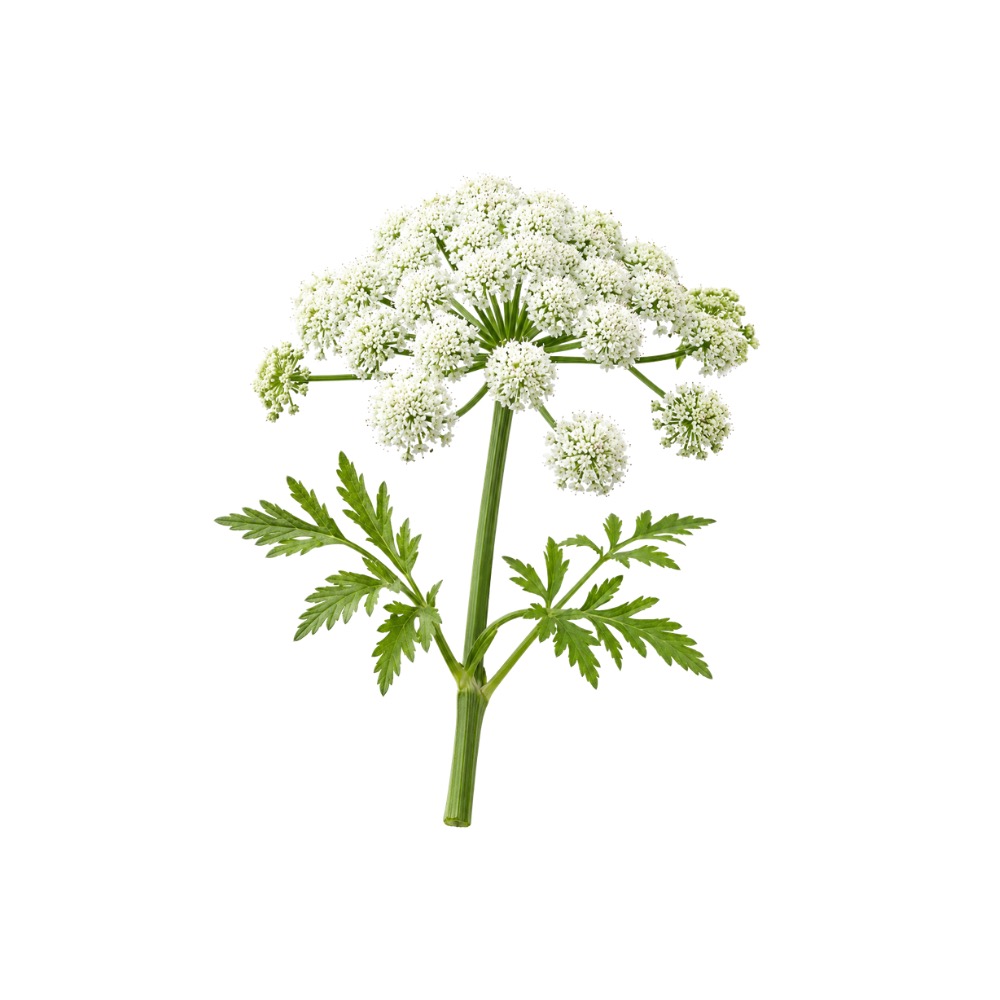
Dong quai is a herbaceous perennial in the carrot family (Apiaceae) that grows 0.4–1 m tall 28Reference 28Angelica sinensis (Oliver) Diels — species description, habitat and distribution — floraView study →. Its stems are purplish green, ribbed and branched towards the top 28Reference 28Angelica sinensis (Oliver) Diels — species description, habitat and distribution — floraView study →.
The leaves are large and divided two or three times into toothed leaflets, and their sheathing bases are purplish green 28Reference 28Angelica sinensis (Oliver) Diels — species description, habitat and distribution — floraView study →. The small flowers are usually white, rarely purplish red, and are carried in umbels of 10–30 rays 28Reference 28Angelica sinensis (Oliver) Diels — species description, habitat and distribution — floraView study →. They open in June and July 28Reference 28Angelica sinensis (Oliver) Diels — species description, habitat and distribution — floraView study →.
The fruit is oval to nearly round, 4–6 mm long, with thin wings along its sides 28Reference 28Angelica sinensis (Oliver) Diels — species description, habitat and distribution — floraView study →.
The root is cylindrical and branched, with many fleshy rootlets, and it is strongly aromatic 28Reference 28Angelica sinensis (Oliver) Diels — species description, habitat and distribution — floraView study →. This is the part harvested. A plant that flowers early loses root yield and ferulic acid as the root turns woody, so growers aim to lift the crop before it flowers 31Reference 31AsAP2 transcriptionally activates ferulate 5-hydroxylase, diverting ferulic acid metabolism toward lignin biosynthesis in Angelica sinensisView study →.
Familiar relatives in the same family include angelica, fennel and gotu kola.
Distribution
Dong quai grows in forests and shrubby thickets at 2,500–3,000 m in Gansu, Hubei, Shaanxi, Sichuan and Yunnan in China, both wild and in cultivation 28Reference 28Angelica sinensis (Oliver) Diels — species description, habitat and distribution — floraView study →.
Wild plants are now scarce, and nearly all the root on the market is cultivated 30Reference 30Combination of metabolomic analysis and transcriptomic analysis reveals differential mechanism of phenylpropanoid biosynthesis and flavonoid biosynthesis in wild and cultivated forms of Angelica sinensisView study →. Most is grown in Gansu, Qinghai, Sichuan and Yunnan, and Min County in Gansu is the traditional source of the best-regarded root 29Reference 29Location and growth period influence the bioactive compounds of Angelica sinensis (Oliv.) Diels: multi-omics insightsView study →. It is also sold as a health product in Japan and Korea 25Reference 25ReviewAngelica sinensis in China — a review of botanical profile, ethnopharmacology, phytochemistry and chemical analysis — reviewView study →.
Because the traded root is a farmed crop, buying dong quai puts little pressure on wild plants.
Growing Conditions
Cultivation snapshot for Dong Quai
Grow it yourself
Farm Wiki is our cultivation-focused sister site, also run by Justin Cooke.
Pharmacology & Research
Dong quai has a large research literature, most of it in cell cultures and rodents. It covers three parts of the root: the polysaccharides, studied for blood-building; the phthalides Z-ligustilide and butylidenephthalide, studied for anti-inflammatory, nerve-protective and muscle-relaxant effects; and ferulic acid, studied as an antioxidant and antiplatelet agent.
Menopausal hot flashes are the one use tested in randomised trials of the herb on its own, and those trials found no effect 1,
The blood-building work is the most consistent. The polysaccharide fraction sped recovery of blood counts in mice after blood loss and after chemotherapy 6,
-
Best-supported: hematopoietic/blood-building activity of the polysaccharide fraction, replicated across acute-blood-loss and chemotherapy rodent models 6,
8Reference 6AnimalHaematopoietic effect of water-soluble polysaccharides from Angelica sinensis on mice with acute blood loss — animal modelView study →Reference 8AnimalAngelica sinensis polysaccharides ameliorate 5-FU-induced stress anaemia via extramedullary erythropoiesis — mouse in vivoView study → — the aplastic-anaemia report has been retracted 9Reference 9AnimalAngelica sinensis polysaccharide prevents mitochondrial apoptosis by regulating the Treg/Th17 ratio in aplastic anaemia — mouse in vivoView study →; broad anti-inflammatory and antioxidant activity driven by ligustilide and ferulic acid 16,19, .20Reference 16AnimalAnti-inflammatory effects of Z-ligustilide nanoemulsion — rat in vivoView study →Reference 19In vitroAntioxidant and anti-inflammatory effects of different ratios of Angelica sinensis and Chuanxiong rhizoma extracts — in vitro / rodent in vivoView study →Reference 20In vitroEffects of ferulic acid on antioxidant activity in Angelicae Sinensis Radix and Chuanxiong Rhizoma — in vitroView study → - Emerging, worth watching: neuroprotection in cerebral-ischemia models 21Reference 21Systematic reviewOverview of the therapeutic potential of Angelica sinensis for ischaemic stroke — systematic review (preclinical)View study → and ligustilide-driven bone formation 17Reference 17In vitroLigustilide promotes bone formation via the GPR30/EGFR pathway — in vitro / zebrafishView study → — both wholly preclinical.
-
Mechanistically thin: antiplatelet/cardiovascular effects rest largely on the isolated drug sodium ferulate rather than the herb 14Reference 14ReviewPharmacological actions of sodium ferulate in the cardiovascular system — reviewView study →; osteoarthritis and bone claims are cell-line and animal only 22,
23Reference 22ReviewAngelica sinensis and osteoarthritis: a natural therapeutic link? — reviewView study →Reference 23Angelica polysaccharide promotes proliferation and osteoblast differentiation of mesenchymal stem cells via lncRNA H19 — animal studyView study → . -
The caveat: the marketed menopause use is not supported for dong quai alone 1,
5Reference 1RCTDoes dong quai have estrogenic effects in postmenopausal women? A double-blind, placebo-controlled randomised trial (RCT)View study →Reference 5RCTDong Quai for hot flashes in men on androgen-deprivation therapy: randomised double-blind placebo-controlled trial (RCT)View study → , and nearly every positive finding is from an isolated constituent or standardized extract, not the tincture or decoction in traditional use.
Most positive findings come from isolated fractions or concentrated extracts. Purified polysaccharide given by injection, ligustilide nanoemulsions and the drug sodium ferulate behave differently from the root decoction or tincture people take, so effect sizes do not carry over directly.
1. Hematopoietic
The active fraction is Angelica sinensis polysaccharide (ASP), not the small-molecule constituents. When a crude extract was split into fractions, the polysaccharide carried the blood-cell-stimulating activity, working by inducing spleen cells to secrete interleukin-6 and GM-CSF 6Reference 6AnimalHaematopoietic effect of water-soluble polysaccharides from Angelica sinensis on mice with acute blood loss — animal modelView study →.
In mice bled to cause acute anaemia, a low dose of ASP (2.3 mg/kg a day) sped the recovery of haemoglobin 6Reference 6AnimalHaematopoietic effect of water-soluble polysaccharides from Angelica sinensis on mice with acute blood loss — animal modelView study →.
In a 5-fluorouracil chemotherapy-anaemia model, ASP 100 mg/kg a day by injection sped the recovery of red-cell count, haemoglobin and haematocrit, acting on red-cell production in the spleen 8Reference 8AnimalAngelica sinensis polysaccharides ameliorate 5-FU-induced stress anaemia via extramedullary erythropoiesis — mouse in vivoView study →.
A study reporting that ASP restored blood counts in irradiated mice with aplastic anaemia 9Reference 9AnimalAngelica sinensis polysaccharide prevents mitochondrial apoptosis by regulating the Treg/Th17 ratio in aplastic anaemia — mouse in vivoView study → was later retracted.
Human data are limited to cells. An acidic ASP fraction protected human CD34⁺ cord-blood stem cells from a chemotherapy drug in vitro 7Reference 7In vitroHaematopoietic and myeloprotective activities of an acidic Angelica sinensis polysaccharide on human CD34⁺ stem cells — in vitroView study →.
Gap: all in-vivo efficacy is in rodents and uses purified polysaccharide by injection; there is no human trial and no evidence the orally-taken tincture or decoction delivers a hematopoietically relevant polysaccharide dose.
2. Anti-Inflammatory
Anti-inflammatory activity comes mainly from the phthalide Z-ligustilide and from ferulic acid. In rats with endotoxin-induced uveitis, an oral Z-ligustilide nanoemulsion lowered TNF-α, IL-1β, VEGF and IL-17 16Reference 16AnimalAnti-inflammatory effects of Z-ligustilide nanoemulsion — rat in vivoView study →.
In cell work, ligustilide, butylidenephthalide and a supercritical-fluid root extract activated Nrf2 antioxidant signalling, and the extract suppressed IL-1β and TNF-α in macrophages 18Reference 18In vitroEffects of Angelica sinensis phytochemicals on Nrf2-mediated phase-II enzyme expression and anti-inflammation — in vitroView study →.
A 2:1 extract of dong quai and chuanxiong (Ligusticum) reduced ear and paw swelling in rodents and lowered COX-2, PGE2 and TNF-α 19Reference 19In vitroAntioxidant and anti-inflammatory effects of different ratios of Angelica sinensis and Chuanxiong rhizoma extracts — in vitro / rodent in vivoView study →. Sodium ferulate blunted TNF/TNFR signalling in cartilage models 22Reference 22ReviewAngelica sinensis and osteoarthritis: a natural therapeutic link? — reviewView study →.
The nanoemulsion was designed to raise ligustilide’s low oral bioavailability, and it produced much higher blood levels than plain ligustilide 16Reference 16AnimalAnti-inflammatory effects of Z-ligustilide nanoemulsion — rat in vivoView study →.
There is no human anti-inflammatory data, and ligustilide’s poor oral bioavailability limits how much of this transfers to the whole root.
3. Antioxidant
Antioxidant capacity comes largely from ferulic acid. Removing ferulic acid from the root by preparative HPLC reduced its DPPH radical-scavenging activity, showing it to be one of the main antioxidant constituents 20Reference 20In vitroEffects of ferulic acid on antioxidant activity in Angelicae Sinensis Radix and Chuanxiong Rhizoma — in vitroView study →.
A dong quai and chuanxiong extract scavenged DPPH and ABTS radicals and protected endothelial cells from hydrogen-peroxide damage 19Reference 19In vitroAntioxidant and anti-inflammatory effects of different ratios of Angelica sinensis and Chuanxiong rhizoma extracts — in vitro / rodent in vivoView study →.
Ferulic acid also increased antioxidant-enzyme synthesis and reduced oxidative protein products in a mouse model of membranous nephropathy 24Reference 24AnimalFerulic acid, an Angelica sinensis-derived polyphenol, slows the progression of membranous nephropathy in a mouse model — animal modelView study →. Nrf2-driven induction of protective phase-II enzymes offers a cellular mechanism 18Reference 18In vitroEffects of Angelica sinensis phytochemicals on Nrf2-mediated phase-II enzyme expression and anti-inflammation — in vitroView study →.
The evidence is in vitro and at the constituent level, with no human biomarker data, and ferulic-acid content varies with cultivar, growing region and processing.
4. Neuroprotective
A PRISMA-guided review of the preclinical literature found A. sinensis extracts and compounds, among them Z-ligustilide, 3-n-butylphthalide and ferulic acid, protective in ischaemic-stroke models through anti-inflammatory, antioxidant and antiplatelet actions 21Reference 21Systematic reviewOverview of the therapeutic potential of Angelica sinensis for ischaemic stroke — systematic review (preclinical)View study →.
Much of this work used injectable Angelica preparations rather than oral root 21Reference 21Systematic reviewOverview of the therapeutic potential of Angelica sinensis for ischaemic stroke — systematic review (preclinical)View study →. It is entirely preclinical.
5. Antispasmodic
Butylidenephthalide is a non-specific antispasmodic. In the original study it inhibited rat uterine contractions induced by prostaglandin F2α, oxytocin and acetylcholine, and relaxed guinea-pig gut smooth muscle, though less potently than papaverine 13Reference 13A newly isolated antispasmodic — butylidenephthalide, isolated from Ligusticum wallichii (isolated-tissue study)View study →.
That compound was isolated from Ligusticum wallichii (chuanxiong), a related plant, not from dong quai 13Reference 13A newly isolated antispasmodic — butylidenephthalide, isolated from Ligusticum wallichii (isolated-tissue study)View study →. Butylidenephthalide and ligustilide are also constituents of dong quai root 18Reference 18In vitroEffects of Angelica sinensis phytochemicals on Nrf2-mediated phase-II enzyme expression and anti-inflammation — in vitroView study →.
The evidence is old and entirely on isolated tissue. There is no controlled human trial of dong quai on its own for period pain.
6. Hepatoprotective
The polysaccharide fraction again carries the activity. In mice with carbon-tetrachloride liver fibrosis, ASP lowered ALT by about half and the fibrotic area by about 70%, through the IL-22/STAT3 pathway 15Reference 15AnimalAngelica sinensis polysaccharide attenuates CCl₄-induced liver fibrosis — mouse in vivoView study →.
This rests on one animal model, with no human liver-disease data.
7. Antiplatelet
Dong quai’s cardiovascular reputation rests on ferulic acid, and specifically its sodium salt. Sodium ferulate has antithrombotic, platelet-aggregation-inhibiting and antioxidant activity, and is approved in China as a drug for cardiovascular and cerebrovascular disease 14Reference 14ReviewPharmacological actions of sodium ferulate in the cardiovascular system — reviewView study →.
The concentrations reached with a licensed sodium-ferulate product are not comparable to those from a dong quai tincture. This antiplatelet activity is the likely basis of the bleeding interaction with warfarin 11,
Gap: the evidence is for an isolated pharmaceutical constituent, not the whole herb as consumed; no herb-level human cardiovascular trial.
8. Bone Formation
Ligustilide promoted osteoblast differentiation in the MC3T3-E1 pre-osteoblast line and in bone-marrow mesenchymal stem cells, and rescued prednisolone-impaired bone formation in zebrafish, acting through the GPR30/EGFR pathway 17Reference 17In vitroLigustilide promotes bone formation via the GPR30/EGFR pathway — in vitro / zebrafishView study →.
Angelica polysaccharide promoted mesenchymal-stem-cell proliferation and osteoblast differentiation through lncRNA H19, PI3K/AKT and Wnt/β-catenin signalling, and an animal experiment in the same study found better bone formation 23Reference 23Angelica polysaccharide promotes proliferation and osteoblast differentiation of mesenchymal stem cells via lncRNA H19 — animal studyView study →.
In osteoarthritis models, sodium ferulate was anti-inflammatory in cartilage, and the polysaccharide fraction promoted proteoglycan synthesis in cartilage matrix 22Reference 22ReviewAngelica sinensis and osteoarthritis: a natural therapeutic link? — reviewView study →.
There are no human data.
9. Menopausal Hot Flashes
This is the use behind the “female ginseng” name, and the trials of dong quai alone do not support it. A 24-week double-blind, randomised, placebo-controlled trial in 71 postmenopausal women found no difference from placebo in hot flashes, menopausal symptom score, endometrial thickness or vaginal cell maturation, and no oestrogen-like effect 1Reference 1RCTDoes dong quai have estrogenic effects in postmenopausal women? A double-blind, placebo-controlled randomised trial (RCT)View study →.
A randomised, double-blind, placebo-controlled trial in 22 men with hot flashes from androgen-deprivation therapy found no difference in flash frequency, duration or severity 5Reference 5RCTDong Quai for hot flashes in men on androgen-deprivation therapy: randomised double-blind placebo-controlled trial (RCT)View study →.
Positive results come only from multi-herb products. A six-herb complex containing black cohosh, dong quai and red clover 3Reference 3RCTPhyto-Female Complex for hot flushes, night sweats and sleep quality: randomised, controlled, double-blind pilot study (RCT)View study → and a dong quai and chamomile preparation 4Reference 4RCTImmediate effect of Angelica sinensis and Matricaria chamomilla (Climex) for hot flushes — placebo-controlled RCTView study → each reduced hot flashes against placebo. Dang Gui Buxue Tang, dong quai with astragalus, did no better than placebo overall and was better only for mild flushes 2Reference 2RCTA randomised, double-blind, placebo-controlled study of Dang Gui Buxue Tang on menopausal symptoms — RCTView study →.
A 2026 systematic review of non-soy herbal supplements for menopause reported no measurable effect in the trials of black cohosh and dong quai 27Reference 27Systematic reviewThe effectiveness of non-soy oral herbal supplements for menopausal symptoms — systematic review. https://pubmed.ncbi.nlm.nih.gov/42451042/View study →.
Gap: the single-herb RCTs are negative; every positive result is a combination product, so dong quai’s independent efficacy for hot flashes is unproven.
Mechanisms
The root’s water-soluble polysaccharides have been studied for blood-building, through the release of IL-6 and GM-CSF and effects on red-cell production. The phthalides Z-ligustilide and butylidenephthalide have been studied for anti-inflammatory, nerve-protective and smooth-muscle-relaxant effects.
Ferulic acid has been studied as an antioxidant. Its sodium salt, sodium ferulate, is a licensed antiplatelet drug in China.
| Mechanism | Drives | Key compounds |
|---|---|---|
| IL-6 / GM-CSF secretion ↑, erythropoiesis ↑ | hematopoietic | polysaccharides (ASP) |
| NF-κB / TNF-α ↓, Nrf2-ARE ↑, phase-II enzymes ↑ | anti-inflammatoryantioxidant | Z-ligustilide, ferulic acid |
| IL-22/STAT3 ↑, stellate-cell activation ↓ | hepatoprotective | polysaccharides (ASP) |
| Radical scavenging (DPPH/ABTS), antioxidant-enzyme synthesis ↑ | antioxidant | ferulic acid |
| Anti-apoptotic / anti-oxidative neuronal protection | neuroprotective | Z-ligustilide, butylphthalide |
| Smooth-muscle relaxation (PGF2α/oxytocin/ACh contraction ↓) | antispasmodicuterine | butylidenephthalide, Z-ligustilide |
| Platelet aggregation ↓, antithrombotic | antiplatelet | sodium ferulate |
| GPR30/EGFR, PI3K/AKT, Wnt/β-catenin osteoblast signaling | bone formation | Z-ligustilide, polysaccharides |
Clinical Trials
Two randomised trials have tested dong quai on its own, and both were negative for hot flashes 1,
| Completed | Planned | Terminated | Preclinical |
|---|---|---|---|
| 2(single-herb; both negative) | 0(single-herb) | 0 | ~hundreds |
Last checked: July 2026.
Phytochemistry
The root’s main small molecules are the phenolic acid ferulic acid, used as the marker compound for quality control, and the phthalides Z-ligustilide and butylidenephthalide 18,
The phthalides are poorly absorbed by mouth. Much of the published work on them uses nanoemulsions or concentrated extracts 16,
The root also holds a polysaccharide fraction (ASP), a group of water-soluble polymers rather than a single molecule. An active fraction of it is built mainly from arabinose and galactose 7Reference 7In vitroHaematopoietic and myeloprotective activities of an acidic Angelica sinensis polysaccharide on human CD34⁺ stem cells — in vitroView study →.
The root contains coumarins, including furanocoumarins, whose biosynthesis has been mapped in the plant’s genome 26Reference 26The chromosome-level genome of female ginseng (Angelica sinensis) provides insights into molecular mechanisms and evolution of coumarin biosynthesisView study →.
Ferulic acid content varies with growing region and season. It falls sharply in plants that flower early, as the root turns woody 31Reference 31AsAP2 transcriptionally activates ferulate 5-hydroxylase, diverting ferulic acid metabolism toward lignin biosynthesis in Angelica sinensisView study →.
Constituent Summary
Reported from the dried root.
Phenolic Acid1 compound1 with data
Dosage
The one trial of dong quai on its own used a defined dose of root. The blood-building research used purified polysaccharide by injection, which has no whole-herb equivalent.
Research Doses
| Indication | Preparation | Dose | Est. dried-herb equivalent | Source |
|---|---|---|---|---|
| Menopausal hot flashes (negative result) | Dong quai extract, single herb | 4.5 g/day root equivalent, 24 weeks | ~4.5 g/day dried root | 1Reference 1RCTDoes dong quai have estrogenic effects in postmenopausal women? A double-blind, placebo-controlled randomised trial (RCT)View study → |
| Menopausal symptoms (combination formula) | Dang Gui Buxue Tang (Angelica:Astragalus 1:5 decoction) | Formula twice daily, 6 months | — (multi-herb; not attributable to dong quai) | 2Reference 2RCTA randomised, double-blind, placebo-controlled study of Dang Gui Buxue Tang on menopausal symptoms — RCTView study → |
| Anemia models (preclinical) | Purified A. sinensis polysaccharide (ASP), intraperitoneal | 100 mg/kg/day, mouse | — (rodent injection; no human equivalent) | 8Reference 8AnimalAngelica sinensis polysaccharides ameliorate 5-FU-induced stress anaemia via extramedullary erythropoiesis — mouse in vivoView study → |
Traditional Dosage
Traditional doses are for the whole root, decocted or as a liquid extract, and are usually given inside a formula.
| System | Preparation | Dose |
|---|---|---|
| Western herbal medicine | Liquid extract 1:2 | 30–60 mL/week (≈4.5–8.5 mL/day) |
| Western herbal medicine | Dried root, decoction | 3–15 g/day |
| Traditional Chinese Medicine | Dried root, decocted in formula | 6–12 g/day |
Safety & Pregnancy
Dong quai was well tolerated in the controlled trials of the herb on its own, which ran for 3 and 6 months 1,
- Bleeding risk. Avoid with warfarin and other anticoagulant or antiplatelet drugs, and stop before surgery. Dong quai is named among herbs linked to bleeding with warfarin 11,
12Reference 11ReviewHerb-drug interactions — reviewView study →Reference 12ReviewWarfarin interactions with medicinal herbs — reviewView study → . - Pregnancy. Avoid. It is traditionally used to bring on menstruation, and its phthalides act on uterine muscle in isolated-tissue studies 13Reference 13A newly isolated antispasmodic — butylidenephthalide, isolated from Ligusticum wallichii (isolated-tissue study)View study →.
- Hormone-sensitive cancers. A water extract stimulated the growth of breast-cancer cells in vitro; best avoided with these cancers 10Reference 10In vitroUse of dong quai (Angelica sinensis) in women with breast cancer: effect on ER-positive (MCF-7) and ER-negative (BT-20) cell proliferation — in vitroView study →.
- Photosensitivity. The root contains furanocoumarins, so topical or high-dose use carries a possible phototoxicity risk 26Reference 26The chromosome-level genome of female ginseng (Angelica sinensis) provides insights into molecular mechanisms and evolution of coumarin biosynthesisView study →.
- Short-term oral use. No serious side effects in the controlled single-herb trials, which ran 3 and 6 months 1,
5Reference 1RCTDoes dong quai have estrogenic effects in postmenopausal women? A double-blind, placebo-controlled randomised trial (RCT)View study →Reference 5RCTDong Quai for hot flashes in men on androgen-deprivation therapy: randomised double-blind placebo-controlled trial (RCT)View study → .
Full Safety & Interactions Detail
Bleeding. Ferulic acid has antithrombotic and antiplatelet activity, and its sodium salt is licensed in China as a cardiovascular drug on that basis 14Reference 14ReviewPharmacological actions of sodium ferulate in the cardiovascular system — reviewView study →. Interaction reviews name dong quai among the herbs linked to bleeding in people taking warfarin, from case reports 11,
Hormone-sensitive cancers. A water extract of dong quai stimulated the growth of both oestrogen-receptor-positive (MCF-7) and oestrogen-receptor-negative (BT-20) breast-cancer cells in vitro 10Reference 10In vitroUse of dong quai (Angelica sinensis) in women with breast cancer: effect on ER-positive (MCF-7) and ER-negative (BT-20) cell proliferation — in vitroView study →. This is a cell-culture finding. In postmenopausal women the herb had no oestrogen-like effect on the endometrium or vaginal cells 1Reference 1RCTDoes dong quai have estrogenic effects in postmenopausal women? A double-blind, placebo-controlled randomised trial (RCT)View study →. It is best avoided with hormone-sensitive cancers until human data exist.
Photosensitivity. The root contains furanocoumarins 26Reference 26The chromosome-level genome of female ginseng (Angelica sinensis) provides insights into molecular mechanisms and evolution of coumarin biosynthesisView study →, so topical or high-dose use carries a possible photosensitivity risk, as with other plants in the carrot family.
Drug metabolism. In laboratory tests on human liver enzymes, a dong quai extract inhibited CYP2C19, which clears several common drugs, though no study has measured this in people 32Reference 32In vitroRapid screening of commercially available herbal products for the inhibition of major human hepatic cytochrome P450 enzymes using the N-in-one cocktail — in vitro (human liver microsomes)View study →. In rats, a water extract raised CYP3A and CYP2D activity 33Reference 33AnimalEffect of the water extract and ethanol extract from traditional Chinese medicines Angelica sinensis (Oliv.) Diels, Ligusticum chuanxiong Hort. and Rheum palmatum L. on rat liver cytochrome P450 activity — rat in vivoView study →.
The warfarin interaction appears to work through clotting rather than drug levels. In rabbits, dong quai changed the clotting response to warfarin without changing warfarin levels in the blood 34Reference 34AnimalDanggui (Angelica sinensis) affects the pharmacodynamics but not the pharmacokinetics of warfarin in rabbits — rabbit in vivoView study →.
Avoid. Dong quai is traditionally used to bring on menstruation, and phthalides it contains act on uterine muscle in isolated-tissue studies 13Reference 13A newly isolated antispasmodic — butylidenephthalide, isolated from Ligusticum wallichii (isolated-tissue study)View study →. It also has antiplatelet activity 14Reference 14ReviewPharmacological actions of sodium ferulate in the cardiovascular system — reviewView study →.
Its safety in pregnancy has not been studied. It has not been studied while breastfeeding.
References
- Hirata, J. D., et al. (1997). Does dong quai have estrogenic effects in postmenopausal women? A double-blind, placebo-controlled randomised trial (RCT). Fertility and Sterility. https://pubmed.ncbi.nlm.nih.gov/9418683/
- Haines, C. J., et al. (2008). A randomised, double-blind, placebo-controlled study of Dang Gui Buxue Tang on menopausal symptoms — RCT. Climacteric. https://pubmed.ncbi.nlm.nih.gov/18568789/
- Rotem, C., & Kaplan, B. (2007). Phyto-Female Complex for hot flushes, night sweats and sleep quality: randomised, controlled, double-blind pilot study (RCT). Gynecological Endocrinology. https://pubmed.ncbi.nlm.nih.gov/17454163/
- Kupfersztain, C., et al. (2003). Immediate effect of Angelica sinensis and Matricaria chamomilla (Climex) for hot flushes — placebo-controlled RCT. Clinical and Experimental Obstetrics & Gynecology. https://pubmed.ncbi.nlm.nih.gov/14664413/
- Al-Bareeq, R. J., Ray, A. A., Nott, L., et al. (2010). Dong Quai for hot flashes in men on androgen-deprivation therapy: randomised double-blind placebo-controlled trial (RCT). Canadian Urological Association Journal. https://pubmed.ncbi.nlm.nih.gov/20165579/
- Liu, P. J., et al. (2010). Haematopoietic effect of water-soluble polysaccharides from Angelica sinensis on mice with acute blood loss — animal model. Experimental Hematology. https://pubmed.ncbi.nlm.nih.gov/20347925/
- Lee, J. G., Hsieh, W. T., Chen, S. U., et al. (2012). Haematopoietic and myeloprotective activities of an acidic Angelica sinensis polysaccharide on human CD34⁺ stem cells — in vitro. Journal of Ethnopharmacology. https://pubmed.ncbi.nlm.nih.gov/22155392/
- Wang, B., Jiang, H., Sun, N., et al. (2024). Angelica sinensis polysaccharides ameliorate 5-FU-induced stress anaemia via extramedullary erythropoiesis — mouse in vivo. International Immunopharmacology. https://pubmed.ncbi.nlm.nih.gov/39260313/
- Chen, Z., Cheng, L., Zhang, J., et al. (2020). Angelica sinensis polysaccharide prevents mitochondrial apoptosis by regulating the Treg/Th17 ratio in aplastic anaemia — mouse in vivo. BMC Complementary Medicine and Therapies. https://pubmed.ncbi.nlm.nih.gov/32571324/ ⚠ RETRACTED — retraction notice: BMC Complement Med Ther. 2022;22(1):277, https://pubmed.ncbi.nlm.nih.gov/36266649/
- Lau, C. B., et al. (2005). Use of dong quai (Angelica sinensis) in women with breast cancer: effect on ER-positive (MCF-7) and ER-negative (BT-20) cell proliferation — in vitro. Menopause. https://pubmed.ncbi.nlm.nih.gov/16278617/
- Fugh-Berman, A. (2000). Herb-drug interactions — review. The Lancet. https://pubmed.ncbi.nlm.nih.gov/10675182/
- Milić, N., et al. (2014). Warfarin interactions with medicinal herbs — review. Natural Product Communications. https://pubmed.ncbi.nlm.nih.gov/25233607/
- Ko, W. C. (1980). A newly isolated antispasmodic — butylidenephthalide, isolated from Ligusticum wallichii (isolated-tissue study). Japanese Journal of Pharmacology. https://pubmed.ncbi.nlm.nih.gov/7401411/
- Wang, B. H., & Ou-Yang, J. P. (2005). Pharmacological actions of sodium ferulate in the cardiovascular system — review. Cardiovascular Drug Reviews. https://pubmed.ncbi.nlm.nih.gov/16007232/
- Wang, K., et al. (2020). Angelica sinensis polysaccharide attenuates CCl₄-induced liver fibrosis — mouse in vivo. International Journal of Biological Macromolecules. https://pubmed.ncbi.nlm.nih.gov/32569681/
- Ma, Z., Bai, L., et al. (2013). Anti-inflammatory effects of Z-ligustilide nanoemulsion — rat in vivo. Inflammation. https://pubmed.ncbi.nlm.nih.gov/23007925/
- Yang, F., Lin, Z. W., Huang, T. Y., et al. (2019). Ligustilide promotes bone formation via the GPR30/EGFR pathway — in vitro / zebrafish. Scientific Reports. https://pubmed.ncbi.nlm.nih.gov/31061445/
- Saw, C. L., Wu, Q., Su, Z. Y., et al. (2013). Effects of Angelica sinensis phytochemicals on Nrf2-mediated phase-II enzyme expression and anti-inflammation — in vitro. Biopharmaceutics & Drug Disposition. https://pubmed.ncbi.nlm.nih.gov/23640758/
- Zhang, M., Geng, W., Guan, X., et al. (2024). Antioxidant and anti-inflammatory effects of different ratios of Angelica sinensis and Chuanxiong rhizoma extracts — in vitro / rodent in vivo. Journal of Ethnopharmacology. https://pubmed.ncbi.nlm.nih.gov/39002825/
- Wang, L. Y., Tang, Y. P., Liu, X., et al. (2015). Effects of ferulic acid on antioxidant activity in Angelicae Sinensis Radix and Chuanxiong Rhizoma — in vitro. Chinese Journal of Natural Medicines. https://pubmed.ncbi.nlm.nih.gov/26073335/
- Han, Y., Chen, Y., Zhang, Q., et al. (2021). Overview of the therapeutic potential of Angelica sinensis for ischaemic stroke — systematic review (preclinical). Phytomedicine. https://pubmed.ncbi.nlm.nih.gov/34362631/
- Magdalou, J., Chen, L. B., Wang, H., et al. (2015). Angelica sinensis and osteoarthritis: a natural therapeutic link? — review. Bio-Medical Materials and Engineering. https://pubmed.ncbi.nlm.nih.gov/25538068/
- Xie, X., Liu, M., Meng, Q., et al. (2019). Angelica polysaccharide promotes proliferation and osteoblast differentiation of mesenchymal stem cells via lncRNA H19 — animal study. Bone & Joint Research. https://pubmed.ncbi.nlm.nih.gov/31463041/
- Cheng, C. W., Chang, W. L., Chang, L. C., et al. (2012). Ferulic acid, an Angelica sinensis-derived polyphenol, slows the progression of membranous nephropathy in a mouse model — animal model. Evidence-Based Complementary and Alternative Medicine. https://pubmed.ncbi.nlm.nih.gov/22844329/
- Wei, W. L., et al. (2016). Angelica sinensis in China — a review of botanical profile, ethnopharmacology, phytochemistry and chemical analysis — review. Journal of Ethnopharmacology. https://pubmed.ncbi.nlm.nih.gov/27211015/
- Han, X., et al. (2022). The chromosome-level genome of female ginseng (Angelica sinensis) provides insights into molecular mechanisms and evolution of coumarin biosynthesis. The Plant Journal. https://pubmed.ncbi.nlm.nih.gov/36259135/
- Jing, G., Keane, C. M., Reynolds, C. M., et al. (2026). The effectiveness of non-soy oral herbal supplements for menopausal symptoms — systematic review. https://pubmed.ncbi.nlm.nih.gov/42451042/
- She, M., Pu, F., Pan, Z., Watson, M., Cannon, J. F. M., Holmes-Smith, I., Kljuykov, E. V., Phillippe, L. R., & Pimenov, M. G. (2005). Angelica sinensis (Oliver) Diels — species description, habitat and distribution — flora. In Wu, Z. Y., & Raven, P. H. (eds.), Flora of China, Vol. 14 (Apiaceae). http://www.efloras.org/florataxon.aspx?flora_id=2&taxon_id=200015389
- Gong, X., Chen, B., Yang, L., et al. (2026). Location and growth period influence the bioactive compounds of Angelica sinensis (Oliv.) Diels: multi-omics insights. BMC Plant Biology, 26(1), 427. https://pubmed.ncbi.nlm.nih.gov/41634580/
- Wang, Y., Zhang, J., Chen, Y., et al. (2025). Combination of metabolomic analysis and transcriptomic analysis reveals differential mechanism of phenylpropanoid biosynthesis and flavonoid biosynthesis in wild and cultivated forms of Angelica sinensis. Metabolites, 15(9), 633. https://pubmed.ncbi.nlm.nih.gov/41003016/
- Wu, Z., Fang, J., Liu, Q., et al. (2025). AsAP2 transcriptionally activates ferulate 5-hydroxylase, diverting ferulic acid metabolism toward lignin biosynthesis in Angelica sinensis. Scientific Reports, 16(1), 3517. https://pubmed.ncbi.nlm.nih.gov/41469473/
- Sevior, D. K., Hokkanen, J., Tolonen, A., et al. (2010). Rapid screening of commercially available herbal products for the inhibition of major human hepatic cytochrome P450 enzymes using the N-in-one cocktail — in vitro (human liver microsomes). Xenobiotica. https://pubmed.ncbi.nlm.nih.gov/20218935/
- Tang, J. C., Zhang, J. N., Wu, Y. T., et al. (2006). Effect of the water extract and ethanol extract from traditional Chinese medicines Angelica sinensis (Oliv.) Diels, Ligusticum chuanxiong Hort. and Rheum palmatum L. on rat liver cytochrome P450 activity — rat in vivo. Phytotherapy Research. https://pubmed.ncbi.nlm.nih.gov/17006975/
- Lo, A. C., Chan, K., Yeung, J. H., et al. (1995). Danggui (Angelica sinensis) affects the pharmacodynamics but not the pharmacokinetics of warfarin in rabbits — rabbit in vivo. European Journal of Drug Metabolism and Pharmacokinetics. https://pubmed.ncbi.nlm.nih.gov/7588995/



