

Overview
Uterine Tonic at a Glance
A uterine tonic is a herb said to strengthen the uterus and improve how it works, taken in long daily courses rather than for a symptom.
The distinction that sorts this corner of the materia medica is whether the herb names a direction.
The neighbouring actions all do. An emmenagogue brings on flow, an oxytocic drives contraction, a uterine antispasmodic relaxes cramp — each measurable against the direction it claims.
A tonic names no direction at all. It is a claim about capacity, that the muscle simply works better, and that is what makes it the hardest claim in this family to test.
Two herbs carry the action, and they come from opposite traditions.
Raspberry leaf is the pregnancy herb of English-speaking practice, taken daily through the third trimester in the belief that it prepares the uterus for labour. It has been a household women’s tonic in Britain and North America for generations.
Dong quai is the other, and the tonic being described there is the blood rather than the muscle. Dang gui is a bu xue, or blood-tonifying, herb, and it sits in more Chinese gynaecological formulas than any other single plant.
Both traditions are old and the measurement behind them is thin.
Raspberry leaf is the only herb here that has been tested properly, and dong quai’s effect on uterine tone has never been measured in any species.
Caution
Not assumed inert in pregnancy — these herbs are taken during pregnancy, and a preparation whose direction is unresolved cannot be assumed inert.
Bleeding in pregnancy needs a check — any bleeding in pregnancy, severe or worsening period pain, or a period that stops without explanation needs assessment rather than a tonic.
High-risk pregnancy needs guidance — a high-risk pregnancy, a planned caesarean or a previous fast labour needs professional guidance rather than self-prescription.
Mechanisms
How It Works
01
Uterine Smooth-Muscle Modulation
Changing the contractile behaviour of uterine muscle without pushing it consistently one way.
Raspberry leaf preparations have shown both stimulant and relaxant effects on uterine tissue, depending on the model, the species and the preparation 3Reference 3ReviewBiophysical effects, safety and efficacy of raspberry leaf use in pregnancy: a systematic integrative reviewView study →.
The only tissue-bath work on the leaf itself is relaxation of guinea-pig ileum, which is gut rather than uterus 5Reference 5In vitroRelaxant activity of raspberry (Rubus idaeus) leaf extract in guinea-pig ileum in vitroView study →, and fragarine, the compound historically credited, has never been isolated as a defined molecule.
Dong quai’s phthalides are better characterised. Butylidenephthalide inhibited uterine contractions induced by prostaglandin F2α, oxytocin and acetylcholine in isolated tissue, and relaxed smooth muscle non-specifically 6Reference 6A newly isolated antispasmodic — butylidenephthalide (isolated-tissue / comparative study)View study →.
A result that goes either way depending on the preparation is unresolved rather than self-regulating.
The thyroid modulator case shows why the “balancing” reading is risky: ashwagandha is often called normalising and is in fact directionally stimulating whatever the starting state.
Herbs: Dong QuaiRaspberry Leaf
Key compounds: Butylidenephthalide
02
Blood Tonification
The Chinese route to the same indications: building blood rather than acting on the muscle.
Angelica sinensis polysaccharide reproducibly accelerates blood-cell recovery in rodent models of acute blood loss 7Reference 7AnimalHematopoietic effect of water-soluble polysaccharides from Angelica sinensis on mice with acute blood loss — animal modelView study →, which is the closest modern correlate of the classical blood-tonic role.
This is a systemic mechanism rather than a uterine one, and the herb is almost always given in formula rather than alone, so its individual contribution is hard to isolate.
Herbs: Dong Quai
Materia Medica
Uterine Tonic Herbs by Potency
The uterine tonic herbs, ordered by the relative strength of the effect rather than by how well studied it is. Each herb is described by the mechanism behind its effect and the evidence for it.
None of this is a substitute for professional care.
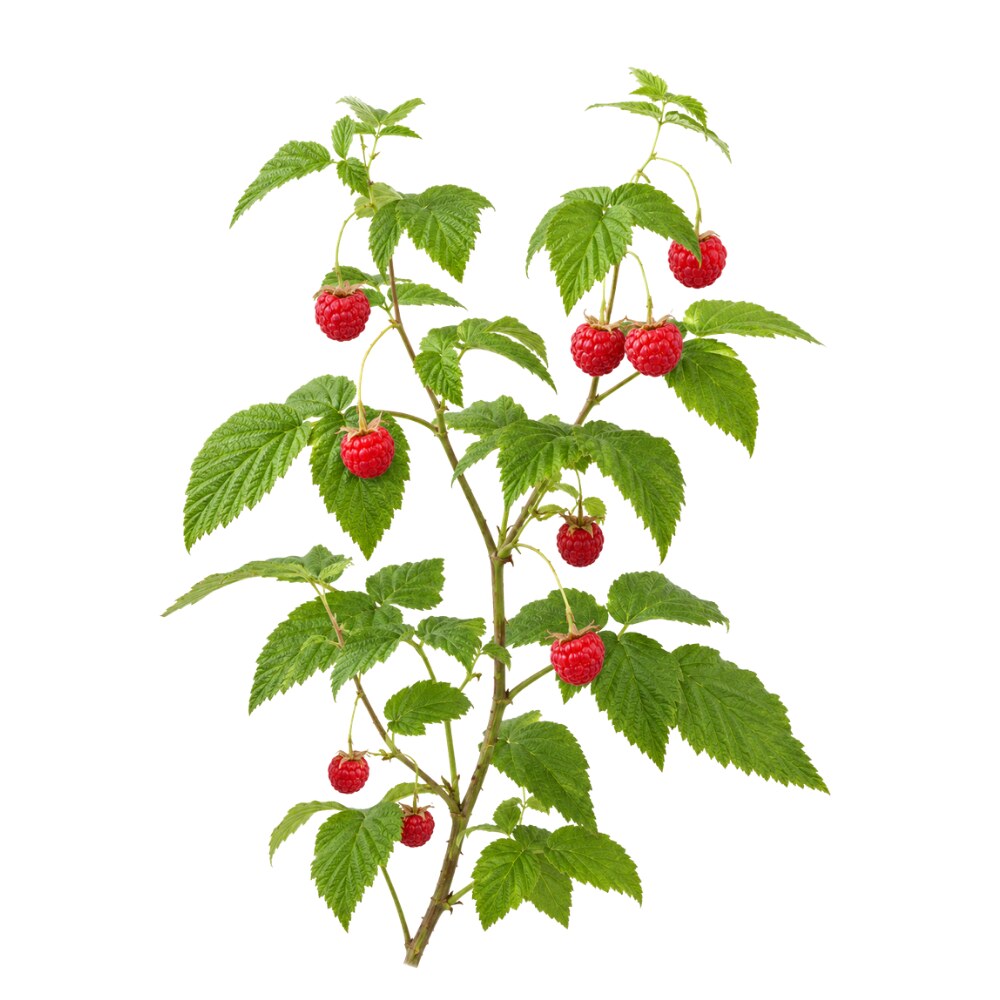 MildMildRaspberry LeafRubus idaeusThe most widely used pregnancy herb in the English-speaking world, taken daily from the third trimester to prepare the uterus for labour.Mechanismuterine smooth-muscle contractile modulation — biphasic, direction not established; no defined active moleculeRead the evidenceShow lessMonograph →
The one adequate trial was double-blind and placebo-controlled: 192 low-risk first-time mothers on 2 × 1.2 g a day of leaf tablets from 32 weeks. It found no shortening of the first stage of labour 1Reference 1RCTRaspberry leaf in pregnancy: its safety and efficacy in labor — randomised, double-blind, placebo-controlled trialView study →.
Its positive findings were secondary and unreplicated — a second stage about 9.6 minutes shorter, forceps delivery in 19.3% against 30.4% — and no adverse effects were recorded on mother or baby 1Reference 1RCTRaspberry leaf in pregnancy: its safety and efficacy in labor — randomised, double-blind, placebo-controlled trialView study →. A 2024 prospective observational study (n=91) reported less labour augmentation among users, a design that cannot separate the herb from the kind of woman who chooses it 2Reference 2ObservationalRaspberry leaf (Rubus idaeus) use in pregnancy: a prospective observational studyView study →.
Systematic reviews land where the trial does: activity on uterine smooth muscle is demonstrable in the lab, clinical efficacy is unproven 3,
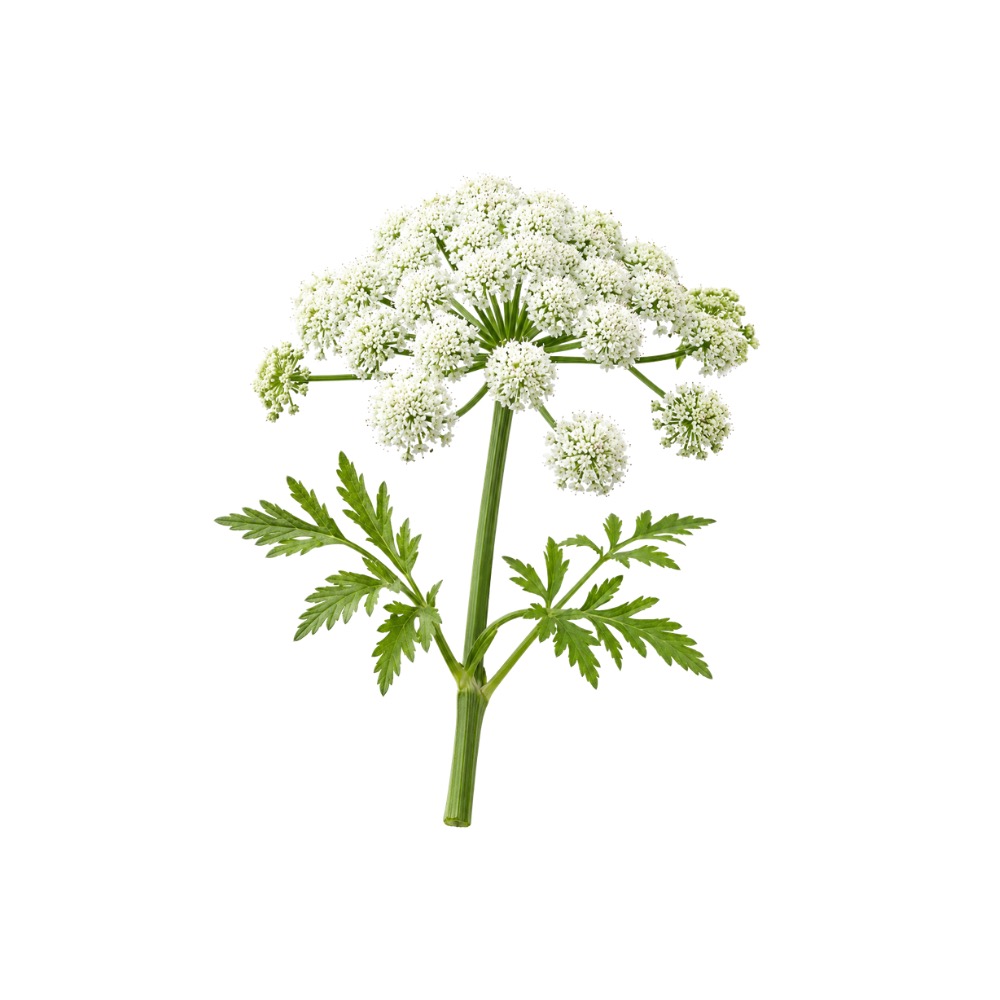 MildMildDong QuaiAngelica sinensisDang gui is the blood tonic of Chinese women's medicine, in more gynaecological formulas than any other single herb.Mechanismhaematopoietic (Angelica sinensis polysaccharide); uterine smooth-muscle relaxation (butylidenephthalide, isolated tissue)Read the evidenceShow lessMonograph →
The classical role is tonifying blood, and the modern correlate is haematopoietic: Angelica sinensis polysaccharide accelerates blood-cell recovery after acute blood loss in mice 7Reference 7AnimalHematopoietic effect of water-soluble polysaccharides from Angelica sinensis on mice with acute blood loss — animal modelView study →.
The one uterine measurement is a relaxant one. Butylidenephthalide inhibited uterine contractions induced by prostaglandin F2α, oxytocin and acetylcholine in isolated tissue 6Reference 6A newly isolated antispasmodic — butylidenephthalide (isolated-tissue / comparative study)View study →, which supports the dysmenorrhoea use rather than a claim about tone.
The root is almost always used in formula rather than alone, so its individual contribution is rarely isolated. Its documented pharmacology is coumarin-related, and the anticoagulant interaction is the practical caution.
No herbs match these filters.
Safety
- A uterine tonic is taken through pregnancy, so an unproven effect is not the same as an inert one.
- A preparation that relaxes uterine tissue in one model and stimulates it in another cannot be assumed safe in a pregnancy that is not straightforward.
- Late-pregnancy timing for these herbs comes from practice rather than trial data, and none of it extends to early pregnancy or to higher doses.
- A high-risk pregnancy, a planned caesarean, a previous fast labour or any bleeding in pregnancy needs professional guidance rather than self-prescription.
- Lactation is unstudied across this whole group, despite the folk galactagogue reputation attached to it.
- Any bleeding in pregnancy, severe or worsening period pain, or a period that stops without explanation needs assessment rather than a tonic.
References
- Simpson, M., Parsons, M., Greenwood, J., & Wade, K. (2001). Raspberry leaf in pregnancy: its safety and efficacy in labor — randomised, double-blind, placebo-controlled trial. Journal of Midwifery & Women’s Health, 46(2), 51–59. https://pubmed.ncbi.nlm.nih.gov/11370690/
- Bowman, R. L., Taylor, J., Davis, D. L., et al. (2024). Raspberry leaf (Rubus idaeus) use in pregnancy: a prospective observational study. BMC Complementary Medicine and Therapies, 24, 152. https://pubmed.ncbi.nlm.nih.gov/38649906/
- Bowman, R., Taylor, J., Muggleton, S., & Davis, D. (2021). Biophysical effects, safety and efficacy of raspberry leaf use in pregnancy: a systematic integrative review. BMC Complementary Medicine and Therapies, 21, 56. https://pubmed.ncbi.nlm.nih.gov/33563275/
- Dante, G., Pedrielli, G., Annessi, E., & Facchinetti, F. (2013). Herb remedies during pregnancy: a systematic review of controlled clinical trials. Journal of Maternal-Fetal & Neonatal Medicine, 26(3), 306–312. https://pubmed.ncbi.nlm.nih.gov/22928540/
- Rojas-Vera, J., Patel, A. V., & Dacke, C. G. (2002). Relaxant activity of raspberry (Rubus idaeus) leaf extract in guinea-pig ileum in vitro. Phytotherapy Research, 16(7), 665–668. https://pubmed.ncbi.nlm.nih.gov/12410549/
- Ko, W. C. (1980). A newly isolated antispasmodic — butylidenephthalide (isolated-tissue / comparative study). Japanese Journal of Pharmacology. https://pubmed.ncbi.nlm.nih.gov/7401411/
- Liu, P. J., Hsieh, W. T., Huang, S. H., Liao, H. F., & Chiang, B. H. (2010). Hematopoietic effect of water-soluble polysaccharides from Angelica sinensis on mice with acute blood loss — animal model. Experimental Hematology, 38(6), 437–445. https://pubmed.ncbi.nlm.nih.gov/20347925/
Keep Exploring