
Materia Medica
Myrrh
Commiphora myrrha
Myrrh is the aromatic resin of a spiny desert tree of the Horn of Africa and Arabia, used since antiquity as an antiseptic and astringent for the mouth, gums, throat and wounds. Its resin is rich in furanosesquiterpenoids such as furanoeudesma-1,3-diene.
What Is Myrrh?
Myrrh is the aromatic oleo-gum-resin of Commiphora myrrha, a spiny shrub or small tree of the Horn of Africa and southern Arabia. It is used as an antiseptic and astringent for the mouth, gums and throat, and for slow-healing wounds.
The resin seeps from wounds in the bark and hardens into reddish-brown “tears” 31,
Its signature chemistry is the furanosesquiterpenoids, chiefly furanoeudesma-1,3-diene 30,
Myrrh is a different resin from guggul, which comes from the related tree Commiphora wightii (also called C. mukul) 19Reference 19In vitroPhytochemical composition of Commiphora oleogum resins and cytotoxicity against skin cancer cells — in vitroView study →.
How Is Myrrh Used?
Myrrh is used as the resin itself, usually as a high-alcohol tincture, since its furanodienes barely extract into water 30Reference 30Chemical composition of the essential oil and supercritical CO₂ extract of Commiphora myrrha — analyticalView study →.
- Tincture — dabbed on or diluted as a mouthwash or gargle for gums, mouth ulcers and sore throats.
- Powdered resin — in capsules or pills.
- Mucoadhesive gels and mouthwashes — purpose-made preparations for the mouth 8,
9Reference 8RCTClinical efficacy of aloe vera- and myrrh-based oral mucoadhesive gels in minor recurrent aphthous stomatitis — randomised, double-blind, vehicle-controlled trialView study →Reference 9Clinical trialEfficacy of myrrh mouthwash on wound healing after tooth extraction — controlled clinical trialView study → . - Sitz baths — for perineal and post-surgical healing 12,
13Reference 12RCTEpisiotomy wound healing by Commiphora myrrha and Boswellia carteri in primiparous women — randomised controlled trialView study →Reference 13ObservationalMyrrh sitz bath for wound healing after haemorrhoidectomy — retrospective cohort studyView study → . - Combination formulas — taken internally, as in a myrrh, chamomile and coffee-charcoal preparation for ulcerative colitis 37Reference 37RCTRandomised clinical trial: a herbal preparation of myrrh, chamomile and coffee charcoal compared with mesalazine in maintaining remission in ulcerative colitis — double-blind, double-dummy studyView study →.
In Chinese medicine it is almost always combined with frankincense 35Reference 35ReviewSeeing the unseen of the combination of two natural resins, frankincense and myrrh — reviewView study →.
Traditional Uses
Western Herbal Medicine
Western herbal medicine classes myrrh as an antiseptic, astringent, vulnerary and emmenagogue, with a particular affinity for mucous membranes. The classic indications are gingivitis, spongy or bleeding gums, mouth ulcers, sore throat, and indolent or slow-healing wounds and ulcers.
It was also used to bring on delayed or scanty menstruation, for digestive complaints such as dyspepsia and loss of appetite, and as an expectorant for catarrh and bronchitis 39Reference 39Commiphora myrrha — botanic description, ecology, biophysical limits, native range and products — tree databaseView study →. It is a traditional ingredient of tooth powders and mouthwashes 39Reference 39Commiphora myrrha — botanic description, ecology, biophysical limits, native range and products — tree databaseView study →.
Traditional Chinese Medicine
In Chinese medicine myrrh is Mo Yao, a blood-moving and pain-relieving herb. It is almost always prescribed with frankincense (Ru Xiang) for traumatic injury, swelling, bruising, sores, and painful absent menstruation 35Reference 35ReviewSeeing the unseen of the combination of two natural resins, frankincense and myrrh — reviewView study →.
Ancient Egypt & the Near East
Myrrh is one of the oldest recorded medicines, and it was used extensively in ancient Egypt 40Reference 40Fern, K. (n.d.). Commiphora myrrha — habit, range, habitat, wild harvest and uses — plant database. Useful Tropical Plants Database. https://tropical.theferns.info/viewtropical.php?id=Commiphora+myrrhaView study →. Its scent has been used since antiquity as an aid to prayer and meditation 39Reference 39Commiphora myrrha — botanic description, ecology, biophysical limits, native range and products — tree databaseView study →.
Botany
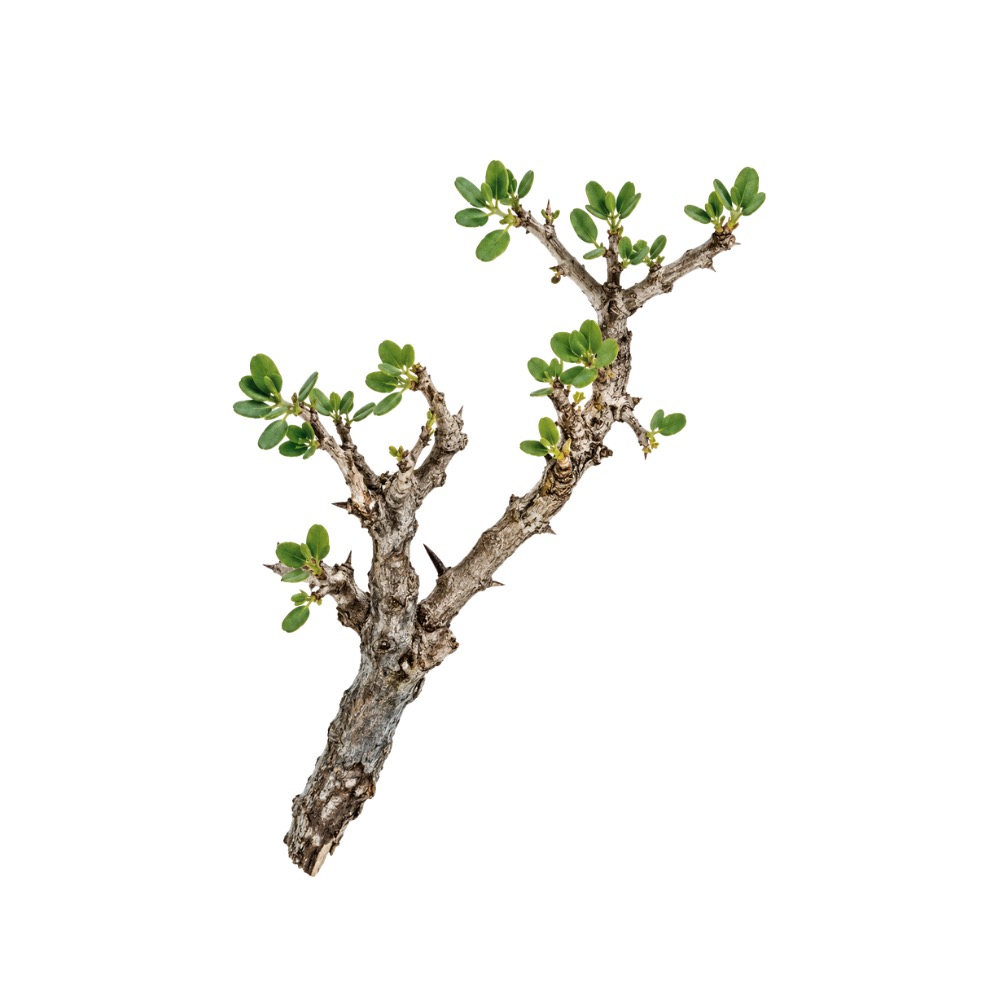
Myrrh is a sturdy, spiny shrub or small tree in the frankincense family (Burseraceae), usually 4–5 m tall with a short, distinct trunk 39,
The leaves are trifoliate and greyish green, and very variable in shape and size. The leaflets are 6–44 mm long 39Reference 39Commiphora myrrha — botanic description, ecology, biophysical limits, native range and products — tree databaseView study →.
The male flowers are small, borne in clusters of two to four, and usually appear before the leaves 39Reference 39Commiphora myrrha — botanic description, ecology, biophysical limits, native range and products — tree databaseView study →. The fruits are small, ovoid, flattened and beaked, 2–4 mm long 39Reference 39Commiphora myrrha — botanic description, ecology, biophysical limits, native range and products — tree databaseView study →.
When the bark is wounded it exudes an oleo-gum-resin. This combines a water-soluble gum, an alcohol-soluble resin and a volatile oil, and it hardens into the reddish-brown tears of commerce 31,
Commiphora myrrha is a very variable species 39Reference 39Commiphora myrrha — botanic description, ecology, biophysical limits, native range and products — tree databaseView study →. Commiphora molmol is a synonym of the same plant, and much of the pharmacological literature uses that name 3,
Distribution
Myrrh grows in the Horn of Africa and the south-west of the Arabian Peninsula: Ethiopia, Eritrea, Djibouti, Somalia, north-eastern Kenya, Saudi Arabia, Yemen and Oman 41Reference 41Commiphora myrrha (T.Nees) EnglView study →.
It grows in open Acacia–Commiphora bushland on shallow soils, mostly over limestone, at elevations of 250–1,300 m and with 230–300 mm of rain a year 39Reference 39Commiphora myrrha — botanic description, ecology, biophysical limits, native range and products — tree databaseView study →.
Myrrh is rarely cultivated. Most of it is collected from wild trees by cutting the bark 39,
Resin from different Commiphora species and regions differs in its furanodiene content, and several species are traded as myrrh 19,
Growing Conditions
Cultivation snapshot for Myrrh
- Not a garden crop — the resin is wild-tapped from natural desert stands rather than harvested from a planted bed.
Grow it yourself
Farm Wiki is our cultivation-focused sister site, also run by Justin Cooke.
Indications
- Gingivitis and bleeding gums [resin tincture or mouthwash; Western herbal medicine]
- Mouth ulcers [resin gel or mouthwash]
- Sore throat [resin tincture as a gargle; Western herbal medicine]
- Slow-healing wounds and ulcers [resin, applied topically; Western herbal medicine]
- Healing after dental surgery [myrrh mouthwash]
- Healing after episiotomy [myrrh sitz bath]
- Pain [standardised resin extract]
- Traumatic injury, bruising and swelling [resin, with frankincense; TCM]
- Painful or absent menstruation [resin; TCM]
- Ulcerative colitis, maintaining remission [resin in a combination formula] Caution: Tested only as part of a myrrh, chamomile and coffee-charcoal formula, so myrrh’s own contribution cannot be separated 37.
Pharmacology & Research
Myrrh has been studied in dozens of preclinical studies of its essential oil, cell lines and rodent models, and in a number of small human trials in dentistry and wound care. The human trials found that myrrh mouthwashes, gels and sitz baths speed the healing of oral, gingival and post-surgical wounds 7,
The furanodiene sesquiterpenes act on opioid pathways in mice, and a standardised extract reduced pain in a placebo-controlled human pilot 1,
The anti-inflammatory, antioxidant, antimicrobial and anticancer findings come from cell and rodent work using essential oils or ethanolic extracts. Many Commiphora studies of cholesterol-lowering and cancer used guggul (C. mukul/C. wightii), a different species.
-
Best-supported: topical/mucosal wound and gingival healing (oral rinses, gels, sitz-baths, several small RCTs and a meta-analysis) 7,
8, ; analgesia via furanodiene sesquiterpenes acting on opioid pathways, with a human pilot 1,12Reference 7Meta-analysisMyrrh in the management of periodontal disease and gingival healing — systematic review and meta-analysisView study →Reference 8RCTClinical efficacy of aloe vera- and myrrh-based oral mucoadhesive gels in minor recurrent aphthous stomatitis — randomised, double-blind, vehicle-controlled trialView study →Reference 12RCTEpisiotomy wound healing by Commiphora myrrha and Boswellia carteri in primiparous women — randomised controlled trialView study → 4Reference 1AnimalAnalgesic effects of myrrh — animal model, opioid mechanismView study →Reference 4RCTA pilot study on bioactive constituents and analgesic effects of MyrLiq, a Commiphora myrrha extract with high furanodiene content — placebo-controlled human pilotView study → . -
Emerging, worth watching: anti-inflammatory NF-κB/COX-2 suppression and Nrf2-driven organ protection in rodents 16,
21, ; cytotoxicity of isolated furanosesquiterpenoids against cancer cell lines 17,23Reference 16In vitroMyrrh induces apoptosis and inhibits proliferation and migration of gastric cancer cells via COX-2 downregulation — in vitro and mouse xenograftView study →Reference 21AnimalCommiphora myrrh supplementation protects and cures ethanol-induced oxidative gastric ulceration — rat modelView study →Reference 23AnimalMyrrh essential oil mitigates renal ischemia/reperfusion-induced injury — rat modelView study → 18Reference 17In vitroCytotoxic evaluation and anti-angiogenic effects of two furano-sesquiterpenoids from Commiphora myrrh resin — in vitro and zebrafishView study →Reference 18In vitroTerpenoids from myrrh and their cytotoxic activity against HeLa cells — in vitroView study → . - Mechanistically thin: systemic antimicrobial, antioxidant and anticancer use — signals exist in vitro/in vivo but no human efficacy data, and often in essential-oil forms unlike the tincture.
-
The caveat: most positive data are preclinical or use standardized/essential-oil preparations; the antischistosomal product (Mirazid) failed in rigorous human trials 27,
28Reference 27RCTEfficacy of myrrh (Mirazid) in the treatment of human Schistosomiasis mansoni — randomised controlled trialView study →Reference 28Clinical trialIneffectiveness of the myrrh-derivative Mirazid against schistosomiasis and fascioliasis in humans — clinical studyView study → .
The preparation matters. Most of the pharmacology used essential oils or ethanolic extracts rich in furanodienes, which differ from the dilute tinctures and rinses in everyday use 30Reference 30Chemical composition of the essential oil and supercritical CO₂ extract of Commiphora myrrha — analyticalView study →.
1. Wound Healing & Tissue Repair
A 2026 systematic review and meta-analysis of periodontal and gingival healing pooled 15 studies (eight RCTs, six in vitro, one animal) and found myrrh improves gingival and plaque indices and reduces post-surgical swelling and redness as an adjunct, though certainty was graded low-to-moderate and preparations varied widely 7Reference 7Meta-analysisMyrrh in the management of periodontal disease and gingival healing — systematic review and meta-analysisView study →.
In a double-blind vehicle-controlled trial in recurrent aphthous stomatitis (n=90), a 0.5% myrrh mucoadhesive gel produced the greatest pain reduction of the arms tested by day 6 8Reference 8RCTClinical efficacy of aloe vera- and myrrh-based oral mucoadhesive gels in minor recurrent aphthous stomatitis — randomised, double-blind, vehicle-controlled trialView study →.
Myrrh mouthwash accelerated wound healing after tooth extraction (reduced edema, tenderness, socket size) 9Reference 9Clinical trialEfficacy of myrrh mouthwash on wound healing after tooth extraction — controlled clinical trialView study → and matched chlorhexidine for early soft-tissue healing after implant placement 10,
Beyond the mouth, a myrrh sitz-bath outperformed frankincense and povidone-iodine for episiotomy healing on the REEDA scale in an RCT of 90 primiparous women 12Reference 12RCTEpisiotomy wound healing by Commiphora myrrha and Boswellia carteri in primiparous women — randomised controlled trialView study →, and a small retrospective cohort reported faster healing after hemorrhoidectomy — but with more complications in the self-treating myrrh group 13Reference 13ObservationalMyrrh sitz bath for wound healing after haemorrhoidectomy — retrospective cohort studyView study →.
In rodents, resin extracts raise circulating leukocytes and support the proliferative phase of repair 24Reference 24AnimalEffect of myrrh (Commiphora molmol) on leukocyte levels during healing from gastric ulcer or skin injury — rat modelView study →.
The trials are small, short, and heterogeneous in preparation — gels, rinses and sitz-baths at different concentrations, several inside combination products — and the optimal form and dose are unsettled.
2. Analgesic
Sesquiterpene fractions of the resin, principally furanoeudesma-1,3-diene, produce analgesia in mice that is blocked by the opioid antagonist naloxone, implicating opioid receptor engagement 1Reference 1AnimalAnalgesic effects of myrrh — animal model, opioid mechanismView study →.
Ethanolic and petroleum-ether extracts of C. myrrha are analgesic in the hot-plate and acetic-acid writhing tests and anti-inflammatory in formalin-induced paw edema, with the activity concentrated in the terpene-rich lipophilic fraction 2,
In humans, a placebo-controlled pilot of MyrLiq — a C. myrrha extract standardized to furanodienes (curzerene, furanoeudesma-1,3-diene, lindestrene) — reported pain relief across headache, joint, muscle, lower-back and menstrual pain at 200–400 mg/day over 20 days 4Reference 4RCTA pilot study on bioactive constituents and analgesic effects of MyrLiq, a Commiphora myrrha extract with high furanodiene content — placebo-controlled human pilotView study →.
An aqueous extract also reduced paclitaxel-induced neuropathic pain in mice, partly via TRPV1 and Nrf2 signaling 5Reference 5AnimalAn aqueous Commiphora myrrha extract ameliorates paclitaxel-induced peripheral neuropathic pain — mouse modelView study →, and a frankincense–myrrh combination raised pain tolerance in a rat cystitis model 6Reference 6In vitroEfficacy of frankincense and myrrha in treatment of acute interstitial cystitis/painful bladder syndrome — rat model and in vitroView study →.
Gap: the human evidence is a single unreplicated pilot with subjective endpoints and a sex-dependent dose response; the strongest data remain rodent, and effects are tied to lipophilic furanodiene-rich extracts rather than aqueous tinctures.
3. Anti-Inflammatory
C. myrrha extracts suppress formalin-induced paw edema and lower tissue PGE₂ in rodents 2,
The mechanism converges on NF-κB and COX-2 downregulation: myrrh reduces COX-2 in gastric-cancer models 16Reference 16In vitroMyrrh induces apoptosis and inhibits proliferation and migration of gastric cancer cells via COX-2 downregulation — in vitro and mouse xenograftView study → and blunts TLR4/NF-κB signaling with reduced TNF-α, IL-1β and IL-6 in a renal ischemia–reperfusion model 23Reference 23AnimalMyrrh essential oil mitigates renal ischemia/reperfusion-induced injury — rat modelView study →.
A resin water-extract and its polysaccharide fraction inhibit RANKL-induced osteoclastogenesis and reduce ovariectomy-induced bone loss in rats 25Reference 25In vitroAnti-osteoporotic effects of Commiphora myrrha and its polysaccharide via osteoclastogenesis inhibition — rat model and in vitroView study →.
In humans, a myrrh–chamomile–coffee-charcoal formula was non-inferior to mesalazine for maintaining remission in ulcerative colitis over 12 months 37Reference 37RCTRandomised clinical trial: a herbal preparation of myrrh, chamomile and coffee charcoal compared with mesalazine in maintaining remission in ulcerative colitis — double-blind, double-dummy studyView study →, but myrrh’s individual contribution can’t be isolated from the combination. The mechanistic work uses extracts and essential oils that don’t map directly onto traditional tincture dosing.
4. Antimicrobial
Ethanolic C. molmol extract inhibited the periodontal pathogens Porphyromonas gingivalis, Tannerella forsythia, Treponema denticola and Aggregatibacter actinomycetemcomitans, and acted synergistically with amoxicillin, metronidazole, tetracycline and azithromycin 14Reference 14In vitroSynergistic antibacterial activity of herbal extracts with antibiotics on periodontitis bacteria — in vitroView study →.
GC-MS-profiled essential oils show antibacterial and larvicidal activity attributed to the furanosesquiterpene and germacrane terpenoid fractions 15Reference 15In vitroGas chromatography–mass spectrometry chemical profiling of myrrh essential oil and antimicrobial activity — in vitroView study →.
Antimicrobial activity may contribute to the periodontal healing outcomes in the clinical meta-analysis 7Reference 7Meta-analysisMyrrh in the management of periodontal disease and gingival healing — systematic review and meta-analysisView study →.
Activity is largely in vitro, concentration- and essential-oil-dependent, and often weaker than reference antiseptics, with no human data on systemic antimicrobial use.
5. Antioxidant & Organ Protection
In ethanol-induced gastric ulceration in rats, myrrh extract (better than the oil) restored the Nrf2 axis — raising glutathione and lowering malondialdehyde — and improved mucosal healing 21Reference 21AnimalCommiphora myrrh supplementation protects and cures ethanol-induced oxidative gastric ulceration — rat modelView study →.
It protected against methotrexate-induced nephrotoxicity by upregulating Nrf2/ARE/HO-1 signaling and scavenged DPPH, superoxide and nitric-oxide radicals in vitro 22Reference 22In vitroCommiphora molmol protects against methotrexate-induced nephrotoxicity via Nrf2/ARE/HO-1 — rat model and in vitroView study →, and mitigated renal ischemia–reperfusion injury by raising SOD, CAT and GPx while lowering lipid peroxidation 23Reference 23AnimalMyrrh essential oil mitigates renal ischemia/reperfusion-induced injury — rat modelView study →.
Direct radical-scavenging potency data are stronger for other Commiphora species than for C. myrrha itself, and all organ-protection findings are rodent models with no human confirmation.
6. Anticancer (Cytotoxic)
Two furano-sesquiterpenoids from the resin — 2-methoxyfuranodiene and 2-acetoxyfuranodiene — were highly cytotoxic to HepG2 liver and MCF-7 breast cells (IC₅₀ ≈ 3.6–4.4 µM), inducing apoptosis and cell-cycle arrest, with anti-angiogenic activity in zebrafish 17Reference 17In vitroCytotoxic evaluation and anti-angiogenic effects of two furano-sesquiterpenoids from Commiphora myrrh resin — in vitro and zebrafishView study →.
Myrrh triterpenes are moderately cytotoxic to HeLa cervical cells 18Reference 18In vitroTerpenoids from myrrh and their cytotoxic activity against HeLa cells — in vitroView study →, and C. myrrha essential oil is active against skin-cancer lines 19Reference 19In vitroPhytochemical composition of Commiphora oleogum resins and cytotoxicity against skin cancer cells — in vitroView study →.
Whole myrrh downregulated COX-2 and Bcl-2 while raising Bax to induce apoptosis in gastric-cancer cells and slowed tumor growth in a mouse xenograft 16Reference 16In vitroMyrrh induces apoptosis and inhibits proliferation and migration of gastric cancer cells via COX-2 downregulation — in vitro and mouse xenograftView study →.
A network-pharmacology analysis proposes multiple candidate targets in breast cancer 20Reference 20The multifaceted roles of myrrha in the treatment of breast cancer: potential targets — network pharmacology (in silico)View study →.
Gap: no human or even whole-animal efficacy beyond a single xenograft; effects are cell-line specific and driven by purified compounds at concentrations far above what tinctures deliver.
7. Metabolic (Glycemic & Lipid)
The one placebo-controlled human trial testing a myrrh-containing product used a three-herb capsule (Terminalia chebula + C. mukul + C. myrrha) and reported lower fasting glucose, total and LDL cholesterol with higher HDL in hyperlipidemic diabetic women 26Reference 26RCTEffects of an herbal combination (Terminalia chebula, Commiphora mukul, Commiphora myrrha) on glycemic control and lipid profile in diabetic women — randomised, double-blind, placebo-controlled trialView study →. C. mukul (guggul) is the constituent with the established lipid-modifying pharmacology, and myrrh’s contribution can’t be separated. A rodent study of C. molmol extract found modest anti-hyperlipidemic effects on a high-fat diet 3Reference 3AnimalAnalgesic, anti-inflammatory and anti-hyperlipidemic activities of Commiphora molmol extract (myrrh) — rat/mouse modelView study →.
Gap: no trial has tested C. myrrha alone for glucose or lipids; the human signal belongs to a guggul-containing combination, so attributing it to myrrh is unjustified.
8. Antiparasitic (Antischistosomal)
A myrrh oleo-resin product (Mirazid) was marketed in Egypt from 2001 as an antischistosomal, and early open-label Egyptian studies reported high cure rates 38Reference 38Evaluation of myrrh (Mirazid) therapy in fascioliasis and intestinal schistosomiasis in children — open-label parasitological/immunological studyView study →.
Randomized and controlled evaluations found it largely ineffective: a randomized comparison against praziquantel reported a Mirazid cure rate of only 8.9% versus ~76% for praziquantel 27Reference 27RCTEfficacy of myrrh (Mirazid) in the treatment of human Schistosomiasis mansoni — randomised controlled trialView study →, and a dose-controlled study found negligible egg-count reduction against both schistosomiasis and fascioliasis 28Reference 28Clinical trialIneffectiveness of the myrrh-derivative Mirazid against schistosomiasis and fascioliasis in humans — clinical studyView study →.
The Cochrane review of drugs for S. mansoni provides no support for myrrh over praziquantel 29Reference 29Meta-analysisDrugs for treating Schistosoma mansoni infection — Cochrane systematic review and meta-analysisView study →.
Gap: the positive early reports came from methodologically weak studies; the better-controlled human trials are consistently negative, and myrrh should not be relied on for parasitic infection.
Mechanisms
The furanosesquiterpenoids of the resin’s volatile fraction are the most studied compounds. Furanoeudesma-1,3-diene produces naloxone-reversible analgesia in mice, and the terpenoid fraction has been studied for NF-κB and COX-2 suppression, Nrf2 activation and, as purified compounds, cytotoxicity in cancer cells.
The water-soluble polysaccharide of the resin has been studied separately for its effect on bone-resorbing cells. Resin extracts also raised the drug-metabolising enzymes CYP2C9, CYP2C8, CYP2C19 and CYP3A4 in liver cells.
| Mechanism | Drives | Key compounds |
|---|---|---|
| Opioid receptor engagement (naloxone-reversible) | analgesic | furanoeudesma-1,3-diene, curzerene |
| NF-κB ↓, COX-2 ↓, PGE₂ ↓, TLR4 ↓ | anti-inflammatoryanticancerorgan protection | furanoeudesma-1,3-diene, terpenoid fraction |
| Nrf2/ARE ↑, GSH ↑, lipid peroxidation ↓ | antioxidantgastro/nephroprotective | essential-oil terpenoids |
| RANKL-induced osteoclastogenesis ↓ (c-Fos, NFATc1) | anti-inflammatory (bone loss) | resin polysaccharide |
| Pro-apoptotic (Bax ↑, Bcl-2 ↓), G0/G1 arrest | anticancer (cytotoxic) | 2-methoxyfuranodiene, lindestrene |
| PXR activation → CYP2C9, 2C8, 2C19 and 3A4 induction | herb–drug interactions | resin-derived metabolites |
Clinical Trials
Published human trials cluster in dentistry and wound care (mouthwashes, gels, sitz baths), with a trial in incomplete abortion, and several test myrrh inside combination products. The antischistosomal programme (Mirazid) was abandoned after controlled trials found it ineffective.
| Completed | Planned | Terminated | Preclinical |
|---|---|---|---|
| ~10(mostly small; several combination products) | 1(osteoarthritis formula, protocol stage) | 0 | ~45 |
Last checked: July 2026.
Phytochemistry
Myrrh oleo-gum-resin has three parts: roughly a third water-soluble gum (polysaccharides and proteins), an alcohol-soluble resin of terpenoids that makes up most of the rest, and a volatile oil that carries the scent 31,
The main compound is furanoeudesma-1,3-diene, about 35% of the oil extracted with supercritical CO₂ 30Reference 30Chemical composition of the essential oil and supercritical CO₂ extract of Commiphora myrrha — analyticalView study →. Lindestrene, curzerene and the germacrane sesquiterpene germacrone are also major components 30Reference 30Chemical composition of the essential oil and supercritical CO₂ extract of Commiphora myrrha — analyticalView study →.
Curzerenone and myrrhone are used as marker compounds to tell Commiphora species apart 19Reference 19In vitroPhytochemical composition of Commiphora oleogum resins and cytotoxicity against skin cancer cells — in vitroView study →. Guggul, from C. wightii, is rich in guggulsterones instead of furanodienes 19Reference 19In vitroPhytochemical composition of Commiphora oleogum resins and cytotoxicity against skin cancer cells — in vitroView study →.
Two further furanosesquiterpenoids isolated from the resin, 2-methoxyfuranodiene and 2-acetoxyfuranodiene, are cytotoxic to liver and breast cancer cell lines 17Reference 17In vitroCytotoxic evaluation and anti-angiogenic effects of two furano-sesquiterpenoids from Commiphora myrrh resin — in vitro and zebrafishView study →. The water-soluble polysaccharide fraction inhibits RANKL-driven osteoclast formation 25Reference 25In vitroAnti-osteoporotic effects of Commiphora myrrha and its polysaccharide via osteoclastogenesis inhibition — rat model and in vitroView study →.
The furanodienes are lipophilic and concentrate in essential-oil and ethanolic-resin fractions rather than in water infusions, and yields vary with the extraction method 30Reference 30Chemical composition of the essential oil and supercritical CO₂ extract of Commiphora myrrha — analyticalView study →.
Constituent Summary
Amounts are percentages of the supercritical-CO₂-extracted volatile oil 30Reference 30Chemical composition of the essential oil and supercritical CO₂ extract of Commiphora myrrha — analyticalView study →.
Sesquiterpenoid8 compounds4 with data
Dosage
The clinical trials used whole oleo-gum-resin capsules, a standardised extract, or purpose-made topical preparations at stated concentrations. Traditional practice uses a resin tincture, powdered resin or a decoction.
Research Doses
| Indication | Preparation | Dose | Est. dried-herb equivalent | Source |
|---|---|---|---|---|
| Analgesic (general pain) | MyrLiq standardized extract (furanodienes) | 200–400 mg/day × 20 days (8–16 mg furanodienes) | ~2–5 g resin | 4Reference 4RCTA pilot study on bioactive constituents and analgesic effects of MyrLiq, a Commiphora myrrha extract with high furanodiene content — placebo-controlled human pilotView study → |
| Incomplete abortion | Myrrh oleo-gum-resin capsules | 500 mg 3×/day (1.5 g/day) × 2 weeks | ~1.5 g resin/day (whole resin used directly) | 36Reference 36RCTEfficacy and safety of myrrh in patients with incomplete abortion — randomised, double-blind, placebo-controlled clinical studyView study → |
| Anti-inflammatory (UC maintenance) | Myrrh + chamomile + coffee-charcoal fixed combination | product-specific (myrrh not isolable) | — | 37Reference 37RCTRandomised clinical trial: a herbal preparation of myrrh, chamomile and coffee charcoal compared with mesalazine in maintaining remission in ulcerative colitis — double-blind, double-dummy studyView study → |
| Wound healing (oral) | Myrrh mucoadhesive gel / mouthwash | 0.5% w/w gel, 4×/day; or rinse | — (topical) | 8, |
| Wound healing (perineal) | Myrrh extract sitz-bath | 10-min sitz-bath 2×/day × 1 week | — (topical) | 12Reference 12RCTEpisiotomy wound healing by Commiphora myrrha and Boswellia carteri in primiparous women — randomised controlled trialView study → |
The MyrLiq equivalent assumes roughly 4% total furanodiene content in raw resin, and is an order-of-magnitude guide rather than a recommendation.
Traditional Dosage
| System | Preparation | Dose |
|---|---|---|
| Western herbal medicine | Tincture (resin) 1:5 in 90% alcohol | 1–4 mL, up to 3×/day |
| Western herbal medicine | Powdered resin | 0.3–1.5 g/day |
| Western herbal medicine | Mouthwash / gargle | a few drops of tincture in water, topically as needed |
| Traditional Chinese Medicine (Mo Yao) | Decoction or pills, usually with frankincense (Ru Xiang) | 3–9 g/day |
Safety & Pregnancy
Myrrh was well tolerated in the short human trials, with no serious adverse effects reported for topical or mucosal use or for two weeks of oral resin capsules 12,
- Avoid in pregnancy. In a trial in incomplete abortion, oral myrrh significantly increased the rate of complete abortion.
- Possible drug interactions. Resin extracts raised CYP2C9, CYP2C8, CYP2C19 and CYP3A4 in liver cells, relevant to warfarin, sulfonylureas, phenytoin and many other medicines.
- Concentrated essential oil. Genotoxic in human lymphocytes at the highest concentration tested, and not mutagenic in the Ames test.
- Lactation unstudied. No safety data.
- Well tolerated short-term. No serious drug-related adverse effects in the topical, mucosal or two-week oral trials.
Full Safety & Interactions Detail
Tolerability. The short-term human trials reported no serious drug-related adverse effects for mouthwashes, gels and sitz baths, or for oral capsules of 500 mg three times daily over two weeks 12,
Drug-metabolising enzymes. An aqueous myrrh resin extract raised CYP2C9 in liver cells by activating the pregnane X receptor 33Reference 33In vitroCommiphora myrrha resin extract modulates CYP2C9 expression via Pregnane X receptor binding — in vitro (HepG2) and in silicoView study →. Water extracts made in the manner of a traditional decoction and maceration also raised the expression of CYP2C8, CYP2C19 and CYP3A4 in the same liver-cell line 42Reference 42In vitroCommiphora myrrha (Nees) Engl. resin extracts induce phase-I cytochrome P450 2C8, 2C9, 2C19, and 3A4 isoenzyme expressions in human hepatocellular carcinoma (HepG2) cells — in vitro (HepG2)View study →.
This could lower blood levels of drugs cleared by these enzymes, such as warfarin, sulfonylureas and phenytoin. No animal or human interaction study has been done, and transporters have not been assessed.
Essential oil. Myrrh essential oil was genotoxic in micronucleus and comet assays in human lymphocytes only at the highest concentration tested, and it was not mutagenic in the Ames test 32Reference 32In vitroIn vitro cytogenotoxic and mutagenic effects of Commiphora myrrha essential oil — in vitroView study →. The finding concerns the concentrated oil rather than dilute preparations.
Surgical wounds. In a retrospective post-hemorrhoidectomy cohort, the self-treating myrrh group healed faster but recorded more complications 13Reference 13ObservationalMyrrh sitz bath for wound healing after haemorrhoidectomy — retrospective cohort studyView study →.
Avoid taking myrrh internally in pregnancy. It is a traditional emmenagogue 39Reference 39Commiphora myrrha — botanic description, ecology, biophysical limits, native range and products — tree databaseView study →, and a randomized, double-blind, placebo-controlled trial found that 500 mg of oral myrrh three times daily raised the rate of complete abortion in women with incomplete abortion (82.9% vs 54.3% with placebo) 36Reference 36RCTEfficacy and safety of myrrh in patients with incomplete abortion — randomised, double-blind, placebo-controlled clinical studyView study →.
Myrrh has not been studied while breastfeeding.
References
- Dolara, P., et al. (1996). Analgesic effects of myrrh — animal model, opioid mechanism. Nature. https://pubmed.ncbi.nlm.nih.gov/8538737/
- Su, S., et al. (2011). Anti-inflammatory and analgesic activity of different extracts of Commiphora myrrha — mouse model. Journal of Ethnopharmacology. https://pubmed.ncbi.nlm.nih.gov/21167270/
- Shalaby, M. A., Hammouda, A. A., et al. (2014). Analgesic, anti-inflammatory and anti-hyperlipidemic activities of Commiphora molmol extract (myrrh) — rat/mouse model. Journal of Intercultural Ethnopharmacology. https://pubmed.ncbi.nlm.nih.gov/26401348/
- Germano, A., et al. (2017). A pilot study on bioactive constituents and analgesic effects of MyrLiq, a Commiphora myrrha extract with high furanodiene content — placebo-controlled human pilot. BioMed Research International. https://pubmed.ncbi.nlm.nih.gov/28626756/
- Alhijjaj, B. A., et al. (2023). An aqueous Commiphora myrrha extract ameliorates paclitaxel-induced peripheral neuropathic pain — mouse model. Frontiers in Pharmacology. https://pubmed.ncbi.nlm.nih.gov/38186647/
- Chen, Y. H., Chen, W. C., Tsai, K. S., et al. (2020). Efficacy of frankincense and myrrha in treatment of acute interstitial cystitis/painful bladder syndrome — rat model and in vitro. Chinese Journal of Integrative Medicine. https://pubmed.ncbi.nlm.nih.gov/32279153/
- Alnakhli RA, Alqalaleef SS, Alesawi JM, et al. (2026). Myrrh in the management of periodontal disease and gingival healing — systematic review and meta-analysis. Journal of the International Society of Preventive & Community Dentistry. https://pubmed.ncbi.nlm.nih.gov/42004991/
- Mansour, G., et al. (2014). Clinical efficacy of aloe vera- and myrrh-based oral mucoadhesive gels in minor recurrent aphthous stomatitis — randomised, double-blind, vehicle-controlled trial. Journal of Oral Pathology & Medicine. https://pubmed.ncbi.nlm.nih.gov/24164309/
- Eid RAA (2021). Efficacy of myrrh mouthwash on wound healing after tooth extraction — controlled clinical trial. The Saudi Dental Journal. https://pubmed.ncbi.nlm.nih.gov/33473242/
- Ibraheem WI, Hakami AA, Shafei AA, et al. (2022). Soft tissue healing after implant placement using myrrh vs chlorhexidine mouthwash — randomised controlled trial. Medicina (Kaunas). https://pubmed.ncbi.nlm.nih.gov/36295512/
- Casarin M, de Matos RS, da Silva Nolasco W, et al. (2023). Effect of mouthwashes on gingival healing after surgical procedures — systematic review. European Journal of Oral Sciences. https://pubmed.ncbi.nlm.nih.gov/37069833/
- Faraji A, Aghdaki M, Hessami K, et al. (2021). Episiotomy wound healing by Commiphora myrrha and Boswellia carteri in primiparous women — randomised controlled trial. Journal of Ethnopharmacology. https://pubmed.ncbi.nlm.nih.gov/32971163/
- Al Amri FS (2024). Myrrh sitz bath for wound healing after haemorrhoidectomy — retrospective cohort study. Health Science Reports. https://pubmed.ncbi.nlm.nih.gov/38868538/
- Abullais Saquib S, Abdullah AlQahtani N, Ahmad I, et al. (2021). Synergistic antibacterial activity of herbal extracts with antibiotics on periodontitis bacteria — in vitro. Journal of Infection in Developing Countries. https://pubmed.ncbi.nlm.nih.gov/34898497/
- Alanazi NAH, Alamri AA, Mashlawi AM, et al. (2024). Gas chromatography–mass spectrometry chemical profiling of myrrh essential oil and antimicrobial activity — in vitro. Molecules. https://pubmed.ncbi.nlm.nih.gov/38675598/
- Sun M, Hua J, Liu G, et al. (2020). Myrrh induces apoptosis and inhibits proliferation and migration of gastric cancer cells via COX-2 downregulation — in vitro and mouse xenograft. Bioscience Reports. https://pubmed.ncbi.nlm.nih.gov/32364228/
- S Alqahtani A, Nasr FA, Noman OM, et al. (2020). Cytotoxic evaluation and anti-angiogenic effects of two furano-sesquiterpenoids from Commiphora myrrh resin — in vitro and zebrafish. Molecules. https://pubmed.ncbi.nlm.nih.gov/32183153/
- Kuck K, Unterholzner A, Lipowicz B, et al. (2023). Terpenoids from myrrh and their cytotoxic activity against HeLa cells — in vitro. Molecules. https://pubmed.ncbi.nlm.nih.gov/36838624/
- Ulrich J, Stiltz S, St-Gelais A, et al. (2022). Phytochemical composition of Commiphora oleogum resins and cytotoxicity against skin cancer cells — in vitro. Molecules. https://pubmed.ncbi.nlm.nih.gov/35745024/
- Shams A, Alzahrani AA, Ayash TA, et al. (2024). The multifaceted roles of myrrha in the treatment of breast cancer: potential targets — network pharmacology (in silico). Integrative Cancer Therapies. https://pubmed.ncbi.nlm.nih.gov/39707884/
- Lebda MA, Mostafa RE, Taha NM, et al. (2021). Commiphora myrrh supplementation protects and cures ethanol-induced oxidative gastric ulceration — rat model. Antioxidants. https://pubmed.ncbi.nlm.nih.gov/34829707/
- Mahmoud AM, Germoush MO, Al-Anazi KM, et al. (2018). Commiphora molmol protects against methotrexate-induced nephrotoxicity via Nrf2/ARE/HO-1 — rat model and in vitro. Biomedicine & Pharmacotherapy. https://pubmed.ncbi.nlm.nih.gov/29990838/
- Younis NS (2023). Myrrh essential oil mitigates renal ischemia/reperfusion-induced injury — rat model. Current Issues in Molecular Biology. https://pubmed.ncbi.nlm.nih.gov/36826023/
- Haffor AS (2010). Effect of myrrh (Commiphora molmol) on leukocyte levels during healing from gastric ulcer or skin injury — rat model. Journal of Immunotoxicology. https://pubmed.ncbi.nlm.nih.gov/19995243/
- Hwang YH, Lee A, Kim T, et al. (2021). Anti-osteoporotic effects of Commiphora myrrha and its polysaccharide via osteoclastogenesis inhibition — rat model and in vitro. Plants. https://pubmed.ncbi.nlm.nih.gov/34068461/
- Shokoohi R, Kianbakht S, Faramarzi M, et al. (2017). Effects of an herbal combination (Terminalia chebula, Commiphora mukul, Commiphora myrrha) on glycemic control and lipid profile in diabetic women — randomised, double-blind, placebo-controlled trial. Journal of Evidence-Based Complementary & Alternative Medicine. https://pubmed.ncbi.nlm.nih.gov/29228822/
- Barakat, R., Elmorshedy, H., Fenwick, A., et al. (2005). Efficacy of myrrh (Mirazid) in the treatment of human Schistosomiasis mansoni — randomised controlled trial. American Journal of Tropical Medicine and Hygiene. https://pubmed.ncbi.nlm.nih.gov/16103605/
- Osman MM, El-Taweel HA, Shehab AY, et al. (2010). Ineffectiveness of the myrrh-derivative Mirazid against schistosomiasis and fascioliasis in humans — clinical study. Eastern Mediterranean Health Journal. https://pubmed.ncbi.nlm.nih.gov/21218718/
- Danso-Appiah A, Olliaro PL, Donegan S, et al. (2013). Drugs for treating Schistosoma mansoni infection — Cochrane systematic review and meta-analysis. Cochrane Database of Systematic Reviews. https://pubmed.ncbi.nlm.nih.gov/23450530/
- Marongiu B, Piras A, Porcedda S, et al. (2005). Chemical composition of the essential oil and supercritical CO₂ extract of Commiphora myrrha — analytical. Journal of Agricultural and Food Chemistry. https://pubmed.ncbi.nlm.nih.gov/16190653/
- Batiha GE, Wasef L, Teibo JO, et al. (2023). Commiphora myrrh: a phytochemical and pharmacological update — review. Naunyn-Schmiedeberg’s Archives of Pharmacology. https://pubmed.ncbi.nlm.nih.gov/36399185/
- Abdelsalam AH, Ila HB (2022). In vitro cytogenotoxic and mutagenic effects of Commiphora myrrha essential oil — in vitro. Drug and Chemical Toxicology. https://pubmed.ncbi.nlm.nih.gov/34607480/
- Alsharidah A, Alehaideb Z, Alghamdi SS, et al. (2025). Commiphora myrrha resin extract modulates CYP2C9 expression via Pregnane X receptor binding — in vitro (HepG2) and in silico. BMC Complementary Medicine and Therapies. https://pubmed.ncbi.nlm.nih.gov/40634953/
- Hanus LO, Rezanka T, Dembitsky VM, et al. (2005). Myrrh — Commiphora chemistry — review. Biomedical Papers of the Medical Faculty of Palacky University. https://pubmed.ncbi.nlm.nih.gov/16170385/
- Cao B, Wei XC, Xu XR, et al. (2019). Seeing the unseen of the combination of two natural resins, frankincense and myrrh — review. Molecules. https://pubmed.ncbi.nlm.nih.gov/31450584/
- Vafaei H, Ajdari S, Hessami K, et al. (2020). Efficacy and safety of myrrh in patients with incomplete abortion — randomised, double-blind, placebo-controlled clinical study. BMC Complementary Medicine and Therapies. https://pubmed.ncbi.nlm.nih.gov/32397980/
- Langhorst, J., et al. (2013). Randomised clinical trial: a herbal preparation of myrrh, chamomile and coffee charcoal compared with mesalazine in maintaining remission in ulcerative colitis — double-blind, double-dummy study. Alimentary Pharmacology & Therapeutics. https://pubmed.ncbi.nlm.nih.gov/23826890/
- Soliman OE, El-Arman M, Abdul-Samie ER, et al. (2004). Evaluation of myrrh (Mirazid) therapy in fascioliasis and intestinal schistosomiasis in children — open-label parasitological/immunological study. Journal of the Egyptian Society of Parasitology. https://pubmed.ncbi.nlm.nih.gov/15587320/
- Orwa, C., Mutua, A., Kindt, R., Jamnadass, R., & Anthony, S. (2009). Commiphora myrrha — botanic description, ecology, biophysical limits, native range and products — tree database. Agroforestree Database: a tree reference and selection guide, version 4.0. World Agroforestry Centre. https://apps.worldagroforestry.org/treedb/AFTPDFS/Commiphora_myrrha.PDF
- Fern, K. (n.d.). Commiphora myrrha — habit, range, habitat, wild harvest and uses — plant database. Useful Tropical Plants Database. https://tropical.theferns.info/viewtropical.php?id=Commiphora+myrrha
- GBIF Secretariat (n.d.). Commiphora myrrha (T.Nees) Engl. — accepted name, synonyms (including Commiphora molmol) and native distribution, from the World Checklist of Vascular Plants — species database. GBIF Backbone Taxonomy. https://www.gbif.org/species/3994082
- Alehaideb, Z., Alatar, G., Nehdi, A., et al. (2021). Commiphora myrrha (Nees) Engl. resin extracts induce phase-I cytochrome P450 2C8, 2C9, 2C19, and 3A4 isoenzyme expressions in human hepatocellular carcinoma (HepG2) cells — in vitro (HepG2). Saudi Pharmaceutical Journal. https://pubmed.ncbi.nlm.nih.gov/34135662/



