

Overview
Mucolytic at a Glance
Mucolytics make thick airway mucus easier to clear.
Strictly speaking, a true mucolytic changes the mucus itself — breaking down or loosening the gel so it becomes less viscous. N-acetylcysteine is the classic example.
Herbal remedies tend to reach the same practical result by slightly different routes.
Eucalyptus is more secretolytic: its 1,8-cineole helps produce a thinner, more mobile secretion and can improve mucociliary clearance.
Thyme works more on the clearance side. It increases ciliary activity, helping move mucus upward without necessarily thinning the mucus itself.
This makes mucolytics closely related to expectorants, but the emphasis is different. An expectorant helps the respiratory tract get mucus out; a mucolytic specifically makes thick secretions easier to move.
Herbs such as eucalyptus, thyme, hyssop, and the resinous conifers have long been used for thick phlegm, chest congestion, and productive coughs, usually as teas, syrups, or inhaled preparations.
Caution
Don't also suppress the cough — thinning secretions while strongly suppressing the cough that clears them works against itself.
Keep oils off a child's face — aromatic essential oils on or near an infant's or young child's face or nostrils have caused laryngospasm and apnoea.
Blood or breathlessness needs a check — blood in the sputum, fever, significant breathlessness or a productive cough beyond three weeks needs assessment.
Mechanisms
How It Works
01
Secretolysis
Diluting the secretion rather than cleaving the gel, so the same mucin is carried in a thinner medium.
Eucalyptus’s 1,8-cineole is a recognised secretolytic that raises airway surfactant and alters mucus rheology, and inhaled aromatics including cineole increased lung mucociliary clearance in patients with chronic obstructive airway disease 1Reference 1RCTEffect of aromatics on lung mucociliary clearance in patients with chronic airways obstruction — randomised clinical trialView study →.
That study is small and old, and the surfactant claim rests on cineole’s class status rather than on a eucalyptus trial. No measurement of mucus viscosity or elasticity exists for the herb.
Herbs: Eucalyptus
Key compounds: 1,8-Cineole
02
Mucokinesis
Speeding the ciliary escalator that carries mucus upward, without changing the mucus itself.
Thyme extract raised mucociliary beat frequency in primary airway cells from COPD patients 2Reference 2In vitroThyme extract increases mucociliary-beating frequency in primary cell lines from COPD patients — in vitroView study →, a human-derived cell system rather than the usual rodent trachea.
A thymol-high versus thymol-poor comparison showed thymol modulates but does not solely account for the antispasmodic and ciliary-clearance activity, part of which is beta-2-adrenoceptor mediated 3Reference 3Impact of thymol in thyme extracts on antispasmodic action and ciliary clearance — animal ex vivo studyView study →.
A thyme–primula combination produced anti-inflammatory and mucus-regulatory effects in vivo and in vitro 4Reference 4In vitroAnti-inflammatory and mucus-regulatory activities of a fixed combination of thyme and primula extracts — in vivo and in vitroView study →, and a thyme–ivy syrup reduced goblet-cell hyperplasia in LPS-induced bronchoalveolitis 5Reference 5AnimalBronchipret syrup containing thyme and ivy extracts suppresses bronchoalveolar inflammation and goblet-cell hyperplasia in experimental bronchoalveolitis — rat in vivo studyView study →, which is a production effect rather than a rheology one.
The clearance result is in vitro and the two combination studies cannot be assigned to thyme alone.
Herbs: Thyme
Key compounds: Thymol
03
Sensory Cooling
Cineole and menthol activate TRPM8, the cold receptor, and the brain reads nasal and airway cooling as airflow.
This is not a mucus effect at all, and it is the reason a preparation can feel powerfully clearing while shifting nothing measurable.
The same caution governs the decongestant herbs.
The subjective relief is real, and it helps someone who cannot sleep. It is simply a different endpoint from viscosity or clearance.
Herbs: Eucalyptus
Materia Medica
Mucolytic Herbs by Potency
The mucolytic herbs, ordered by the relative strength of the effect rather than by how well studied it is. Each herb is described by the mechanism behind its effect and the evidence for it.
None of this is a substitute for professional care.
 StrongStrongEucalyptusEucalyptus globulus1,8-Cineole is a recognised secretolytic that raises airway surfactant, and inhaled aromatics increased lung mucociliary clearance in a controlled study in chronic obstructive airway disease.Mechanismairway surfactant ↑ → mucus rheology altered (secretolysis); mucociliary clearance ↑ (1,8-cineole)Read the evidenceShow lessMonograph →
1,8-cineole increased lung mucociliary clearance in patients with chronic obstructive airway disease in a small randomised controlled study of inhaled aromatics 1Reference 1RCTEffect of aromatics on lung mucociliary clearance in patients with chronic airways obstruction — randomised clinical trialView study →, and cineole is a recognised secretolytic that raises airway surfactant and thins mucus. That mechanism connects its bronchitis, sinusitis and productive-cough uses.
The claim here is about the mucus itself rather than only about moving it, which separates eucalyptus from thyme.
The direct mucociliary-clearance evidence is one small, old study, and the surfactant claim rests on cineole’s class status rather than on a eucalyptus trial. No measurement of viscosity, elasticity or bond-cleaving exists.
The steam-inhalation route most people use has essentially no controlled efficacy data; the placebo-controlled bronchitis trial used oral 1,8-cineole capsules. The immediate sense of clearing is TRPM8 cold-receptor stimulation rather than measured decongestion.
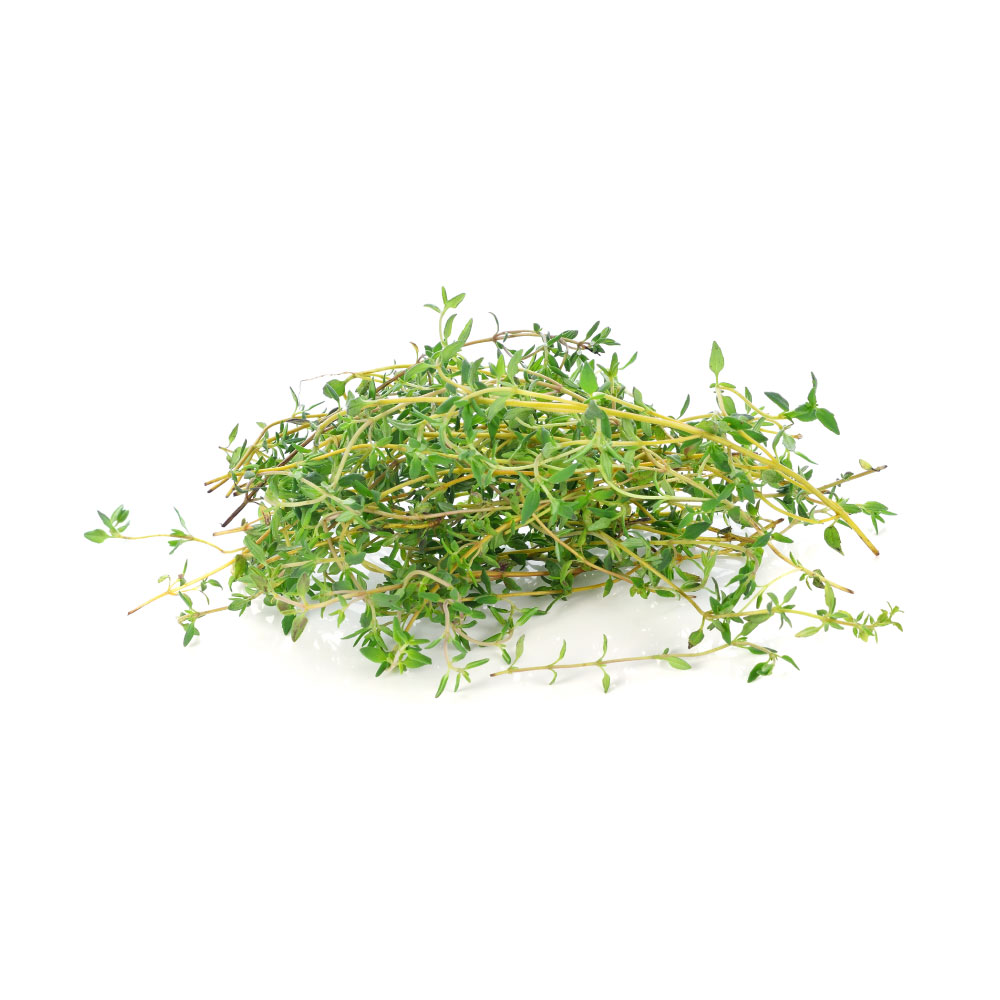 ModerateModerateThymeThymus vulgarisThyme extract raised ciliary beat frequency in airway cells from COPD patients through a partly beta-2-mediated route; it moves mucus rather than thinning it.Mechanismciliary beat frequency ↑ (β2-adrenoceptor-linked); goblet-cell hyperplasia ↓ (mucus-regulatory); no mucus-viscosity or bond-cleaving measurementRead the evidenceShow lessMonograph →
Thyme extract raised mucociliary beat frequency in primary airway cells from COPD patients 2Reference 2In vitroThyme extract increases mucociliary-beating frequency in primary cell lines from COPD patients — in vitroView study →, a human-derived cell system rather than the usual rodent-trachea preparation. A thymol-high versus thymol-poor comparison showed thymol modulates but does not solely account for the antispasmodic and ciliary-clearance activity, part of which is beta-2-adrenoceptor mediated 3Reference 3Impact of thymol in thyme extracts on antispasmodic action and ciliary clearance — animal ex vivo studyView study →.
A thyme–primula combination produced anti-inflammatory and mucus-regulatory effects in vivo and in vitro 4Reference 4In vitroAnti-inflammatory and mucus-regulatory activities of a fixed combination of thyme and primula extracts — in vivo and in vitroView study →, and a thyme–ivy syrup reduced goblet-cell hyperplasia in LPS-induced bronchoalveolitis 5Reference 5AnimalBronchipret syrup containing thyme and ivy extracts suppresses bronchoalveolar inflammation and goblet-cell hyperplasia in experimental bronchoalveolitis — rat in vivo studyView study →. Reducing the cells that make the mucus is a production effect rather than a rheology one.
No measurement of mucus viscosity, elasticity or disulfide-bond cleaving exists for thyme, so the NAC-style mechanism is not evidenced.
The two combination-product studies cannot be assigned to thyme alone, and the clearance result is in vitro. What thyme has is a clearance mechanism with a named receptor and a human-cell endpoint.
No herbs match these filters.
Safety
- Never apply an aromatic essential oil to or near the face or nostrils of an infant or young child; laryngospasm and apnoea are documented.
- Undiluted essential oils are toxic swallowed, and small volumes matter in a child; store them as medicines.
- Phenol-rich preparations irritate mucous membranes at concentration, and no essential oil here is for undiluted internal use.
- Steam inhalation scalds, and it is the commonest injury associated with these herbs.
- Thinning secretions while suppressing the cough that clears them works against itself.
- Blood in the sputum, fever with breathlessness, a productive cough beyond three weeks, or a sputum change in known lung disease needs assessment.
References
- Hasani, A., Pavia, D., Toms, N., et al. (2003). Effect of aromatics on lung mucociliary clearance in patients with chronic airways obstruction — randomised clinical trial. Journal of Alternative and Complementary Medicine. https://pubmed.ncbi.nlm.nih.gov/12804077/
- Nabissi, M., et al. (2018). Thyme extract increases mucociliary-beating frequency in primary cell lines from COPD patients — in vitro. Biomedicine & Pharmacotherapy. https://pubmed.ncbi.nlm.nih.gov/30021361/
- Begrow, F., et al. (2010). Impact of thymol in thyme extracts on antispasmodic action and ciliary clearance — animal ex vivo study. Planta Medica. https://pubmed.ncbi.nlm.nih.gov/19809973/
- Seibel, J., et al. (2018). Anti-inflammatory and mucus-regulatory activities of a fixed combination of thyme and primula extracts — in vivo and in vitro. Pulmonary Pharmacology & Therapeutics. https://pubmed.ncbi.nlm.nih.gov/29698781/
- Seibel, J., et al. (2015). Bronchipret syrup containing thyme and ivy extracts suppresses bronchoalveolar inflammation and goblet-cell hyperplasia in experimental bronchoalveolitis — rat in vivo study. Phytomedicine. https://pubmed.ncbi.nlm.nih.gov/26598916/
Keep Exploring