

Overview
Decongestant at a Glance
Decongestants help open a blocked nose.
Nasal congestion is caused mainly by swollen blood vessels in the nasal lining, not by mucus itself.
Some decongestants work by constricting those vessels, which reduces swelling and physically opens the airway.
Ephedra is the clearest herbal example. Its pseudoephedrine and ephedrine act through adrenergic pathways and produce the same basic vasoconstrictor effect as conventional oral decongestants.
Other herbs work more on sensation than anatomy.
Eucalyptus and other aromatic herbs can activate cold-sensitive receptors such as TRPM8, making the nose feel more open even when measured airflow changes little.
Eucalyptus may also help by reducing inflammation in the nasal lining, which gives it a second, slower route to improving congestion.
This makes decongestants different from expectorants and mucolytics, which act more on mucus, and from antiallergics, which act on the allergic response driving the swelling.
They are used mainly for colds, sinus congestion, and allergic nasal blockage.
Caution
Raises blood pressure — an adrenergic decongestant raises blood pressure and heart rate, so it is unsuitable with hypertension, cardiovascular disease, thyroid disease or diabetes.
Not with an enlarged prostate — alpha-agonism at the bladder neck can bring on urinary retention.
Some blockage needs assessment — persistent one-sided blockage, facial pain with fever or blood-stained discharge needs to be looked at.
Mechanisms
How It Works
01
Alpha-Adrenergic Vasoconstriction
Constricting the vessels of the nasal lining shrinks the swollen tissue and widens the airway.
Pseudoephedrine is the defining molecule of the oral-decongestant category, and ephedra’s stem carries it as its second major alkaloid.
The mechanism is largely indirect: the ephedrine-type stereoisomers act mainly as noradrenaline-transporter substrates, releasing noradrenaline rather than binding the alpha receptor themselves.
It differs from the drug in dose control rather than in chemistry. The trial data are for purified pseudoephedrine at a fixed dose, while the crude stem supplies the same molecule at a variable concentration inside a mostly-ephedrine alkaloid mixture.
The effect size is small even for the isolate. Cochrane puts multiple-dose decongestant monotherapy at SMD 0.49 (95% CI 0.07–0.92) against placebo for subjective congestion 7Reference 7Systematic reviewNasal decongestants in monotherapy for the common cold — systematic reviewView study →.
Herbs: Ephedra
Key compounds: PseudoephedrineEphedrine
02
Mucosal Anti-Inflammation
Settling the inflammation that causes the swelling, rather than constricting the vessels.
Eucalyptus’s 1,8-cineole suppresses arachidonic-acid metabolism and the pro-inflammatory cytokines LTB4, PGE2, IL-1β and TNF-α in stimulated human monocytes and rodent lung 15,
Two German double-blind placebo-controlled RCTs support oral cineole in acute non-purulent rhinosinusitis 12,
This is a slower route than vasoconstriction and it carries none of the cardiovascular cost.
The trials report symptom scores, and nasal patency and airway resistance were never measured.
Herbs: Eucalyptus
Key compounds: 1,8-Cineole
03
Sensory Cooling
Cineole and menthol activate TRPM8, the cold receptor, and the brain reads nasal cooling as airflow.
Inhaling them produces a strong, immediate sense of a nose opening. Measure nasal resistance and it is frequently unchanged.
The relief is real, and it helps someone who cannot sleep. Perceived and measured patency are different endpoints, and most aromatic decongestants are demonstrated only on the first.
The same caution governs the mucolytic herbs.
Herbs: EucalyptusYerba Santa
The Molecules
Pharmacology
What actually produces a decongestant effect at the molecular level. The herbs below carry these molecules in different combinations and amounts — which is most of why their potency differs. Roles describe how central a molecule is to the action across plants generally, not how strong any one herb is.
Chiefly Amines & Protoalkaloids2
Carries the action largely on its own — the effect is attributed to the molecule, not just the extract it came from.
Adds to a plant's effect and is often present in quantity, but rarely accounts for it alone.
Real but narrow — one pathway, one tissue, or evidence too thin to lean on.
Pseudoephedrine Amines & Protoalkaloids Primary mover Targets α-adrenoceptors (nasal mucosal vessels); NET
Pseudoephedrine is the defining molecule of the oral-decongestant category.
The alternatives are topical agents and oral phenylephrine, whose monograph-dose efficacy failed meta-analysis and which the FDA has proposed to remove from the OTC monograph as ineffective 3,
The mechanism is α-adrenergic constriction of the nasal mucosal vasculature, reducing mucosal swelling and nasal airway resistance 5Reference 5RCTComparison of the effects of D-(−)-ephedrine and L-(+)-pseudoephedrine on the cardiovascular and respiratory systems in man — double-blind studyView study →.
Importantly it is largely an indirect mechanism: profiling of the ephedrine-type stereoisomers found their most potent action is as substrates of the noradrenaline transporter (NET) — i.e. noradrenaline releasers — with only weak α2/5-HT₇ affinity and no meaningful direct α1 or β activity 6Reference 6In vitroIn vitro characterization of ephedrine-related stereoisomers at biogenic amine transporters and the receptorome reveals selective actions as norepinephrine transporter substratesView study →.
The limit is effect size rather than absorption.
Multiple-dose decongestant monotherapy beats placebo for subjective congestion by SMD 0.49 (95% CI 0.07–0.92), which the Cochrane reviewers themselves call a small clinical effect 7Reference 7Systematic reviewNasal decongestants in monotherapy for the common cold — systematic reviewView study →; in allergic rhinitis the trial evidence is for combinations (loratadine 5 mg + pseudoephedrine 120 mg twice daily) rather than the isolate 8Reference 8RCTEfficacy and safety of loratadine plus pseudoephedrine in patients with seasonal allergic rhinitis and mild asthma — randomised controlled trialView study →.
All of this is isolate data — Ephedra stem delivers pseudoephedrine only inside a variable, mostly-ephedrine alkaloid mixture, so the clean trial figures do not transfer to the herb 9,
It occurs in ephedra.
Found in Ephedra
Full Pseudoephedrine profile →Ephedrine Amines & Protoalkaloids Contributor Targets α₁-adrenergic vasoconstriction (nasal mucosa)
Mucosal vasoconstriction shrinks swollen nasal tissue, but ephedrine is not the molecule carrying the evidence.
The oral decongestant with the human trial record is its diastereomer pseudoephedrine; ephedrine’s decongestant use is largely topical and historical, and the FDA’s 2004 supplement ban explicitly left approved OTC/prescription decongestant drugs untouched 1Reference 1Final rule declaring dietary supplements containing ephedrine alkaloids adulterated because they present an unreasonable riskView study →.
The mechanism is also complicated by the same α finding as above: ephedrine alkaloids failed to activate α₁ or α₂ receptors directly in cultured human systems 2Reference 2In vitroPharmacological effects of ephedrine alkaloids on human alpha(1)- and alpha(2)-adrenergic receptor subtypes — in vitroView study →.
Ephedrine is a contributor to the plant-level decongestant action, and pseudoephedrine is the driver.
It occurs in ephedra.
Found in Ephedra
Full Ephedrine profile →Materia Medica
Decongestant Herbs by Potency
The decongestant herbs, ordered by the relative strength of the effect rather than by how well studied it is. Each herb is described by the mechanism behind its effect and the evidence for it.
None of this is a substitute for professional care.
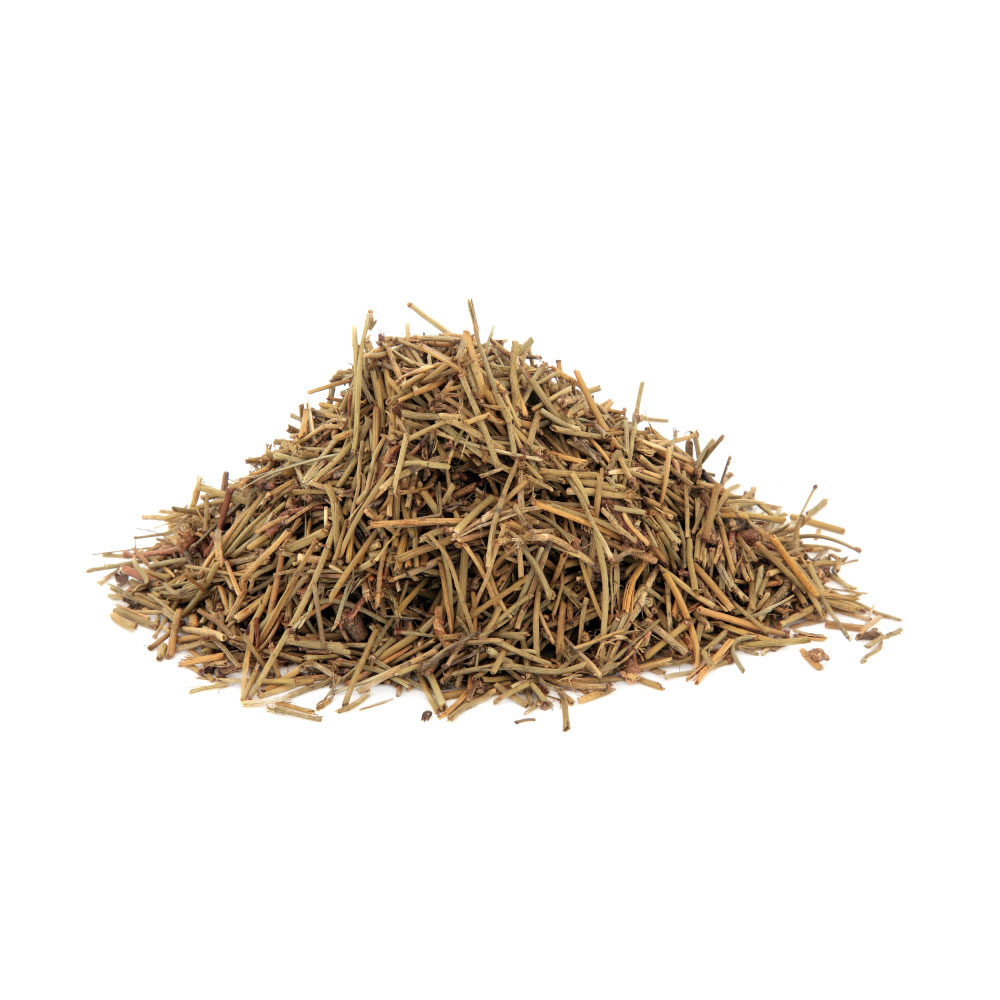 StrongStrongEphedraEphedra sinicaThe stem's second major alkaloid is pseudoephedrine, the standard over-the-counter oral decongestant, which constricts nasal mucosal vessels through alpha-adrenergic agonism.Mechanismα1-adrenergic agonism (pseudoephedrine); nasal mucosal vasoconstrictionRead the evidenceShow lessMonograph →
Pseudoephedrine has extensive human trial support as an oral decongestant, including a double-blind RCT of loratadine plus pseudoephedrine showing significant relief of nasal congestion versus placebo in seasonal allergic rhinitis 9,
What holds the herb back is preparation. The clean trial data are for purified pseudoephedrine at a controlled dose, while the crude stem supplies the same molecule at a variable, unstandardised concentration 9Reference 9ReviewChemical composition of various Ephedra species — reviewView study →.
Pseudoephedrine produces small dose-scalable rises in systolic pressure and heart rate 8Reference 8RCTEfficacy and safety of loratadine plus pseudoephedrine in patients with seasonal allergic rhinitis and mild asthma — randomised controlled trialView study →, with uncommon but serious reports of ischaemic colitis and haemorrhagic stroke, some after recommended doses 19,
Ephedra is the botanical source of an over-the-counter pharmaceutical rather than a herb with a decongestant trial base of its own.
 ModerateModerateEucalyptusEucalyptus globulusOral 1,8-cineole beat placebo in two randomised trials in acute viral rhinosinusitis, working by settling mucosal inflammation rather than by constricting vessels.Mechanismmucosal LTB4/PGE2/IL-1β/TNF-α synthesis ↓; TRPM8 sensory cooling (perceived patency, not measured)Read the evidenceShow lessMonograph →
Two German double-blind placebo-controlled RCTs support oral 1,8-cineole in acute non-purulent rhinosinusitis. Cineole at 200 mg three times daily beat placebo on a composite symptom score with benefit by day four (n=152) 12Reference 12RCTTherapy for acute nonpurulent rhinosinusitis with cineole: results of a double-blind, randomised, placebo-controlled trial — RCTView study →, and a second trial (n=150) favoured it over both placebo and a fixed herbal combination on symptom resolution 13Reference 13RCTThe value of herbal medicines in the treatment of acute non-purulent rhinosinusitis — randomised controlled trialView study →.
A 2023 systematic review and network meta-analysis ranked it among the better-performing single agents while flagging that all the data come from the standardised capsule 14Reference 14Meta-analysisHerbal medicines for rhinosinusitis: a systematic review and network meta-analysisView study →.
The route is anti-inflammatory rather than vasoconstrictive. Cineole suppresses arachidonic-acid metabolism and the pro-inflammatory cytokines LTB4, PGE2, IL-1β and TNF-α in stimulated human monocytes and rodent lung 15,
Nasal patency and airway resistance have never been measured. The trials report symptom scores, and the popular steam-inhalation route has essentially no controlled efficacy data.
The immediate sense of opening is TRPM8 cooling, which changes the feeling of airflow rather than the airway. The evidence is for acute viral sinusitis only, with no chronic-rhinosinusitis data.
Show 1 more herb with a mild decongestant action
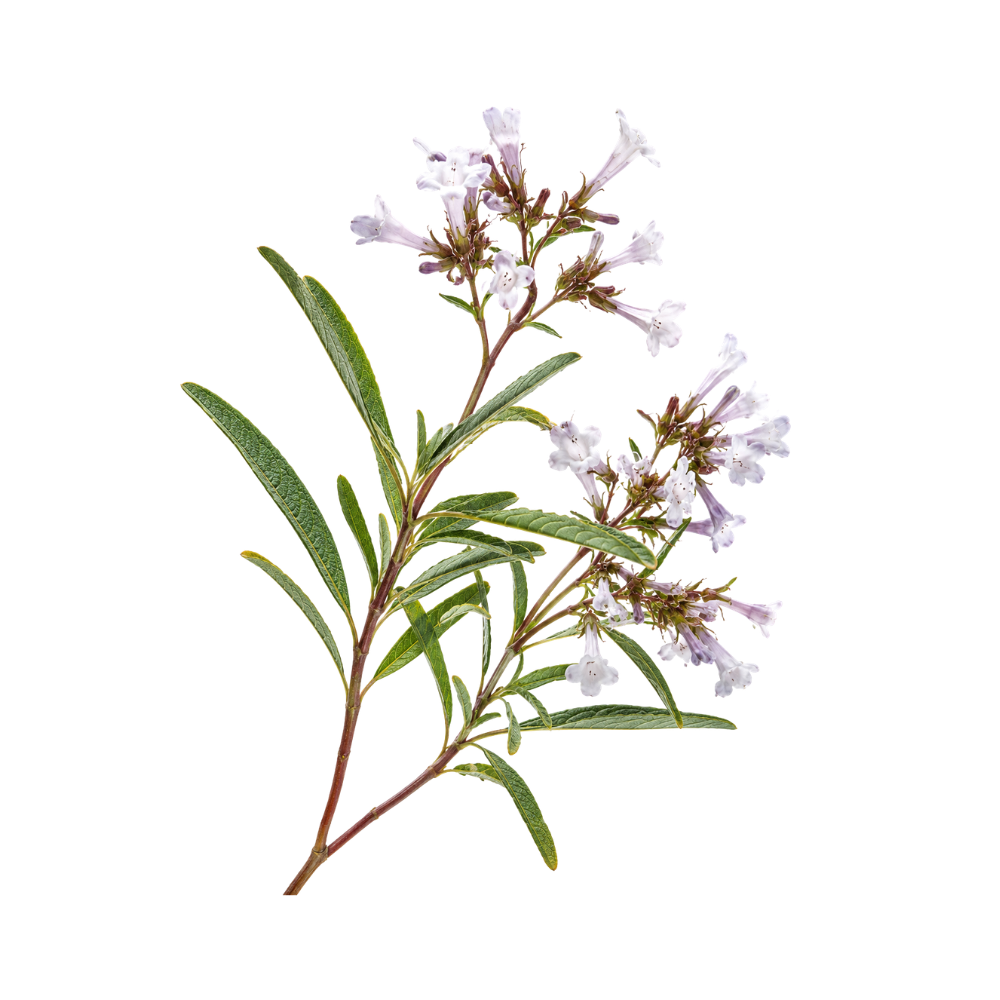 MildMildYerba SantaEriodictyon californicumTaken for nasal and bronchial congestion in Californian Indigenous and mission-era practice, on an aromatic balsamic resin; no research addresses the nose.Read the evidenceShow lessMonograph →
Yerba santa was used for coughs, colds and bronchial congestion in Californian Indigenous and mission-era practice, as a leaf infusion, chewed leaf, syrup or smoking blend.
The claim rests on the plant’s aromatic balsamic resin and on the same cineole inference that carries its expectorant reputation. No study addresses nasal congestion, patency or mucosal swelling.
Decongestant is a narrower form of that same expectorant idea, so one traditional respiratory use appears at two levels. Yerba santa’s distinctive modern research is neuroprotective, on the flavanone sterubin.
No herbs match these filters.
Safety
- An adrenergic decongestant raises blood pressure and heart rate, and is contraindicated in cardiovascular disease, hypertension, thyroid disease and diabetes.
- Alpha-agonism at the bladder neck makes prostate enlargement a specific contraindication, because urinary retention follows.
- Never combine an adrenergic decongestant with an MAO inhibitor.
- Never apply an aromatic essential oil to or near the face or nostrils of an infant or young child; laryngospasm and apnoea are documented 18Reference 18ObservationalEucalyptus oil poisoning among young children: mechanisms of access and the potential for prevention — observationalView study →.
- A nose that feels open through sensory cooling may have unchanged airway resistance, which matters when congestion is being monitored rather than endured.
- Facial pain with fever, one-sided blockage, blood-stained discharge, symptoms beyond ten days or worsening after improving, or congestion in an infant that interferes with feeding needs assessment.
References
- Food and Drug Administration (2004). Final rule declaring dietary supplements containing ephedrine alkaloids adulterated because they present an unreasonable risk. Federal Register 69(28):6788–6854 (effective 12 April 2004). https://www.govinfo.gov/content/pkg/FR-2004-02-11/html/04-2912.htm
- Ma G, Bavadekar SA, Davis YM, et al. (2007). Pharmacological effects of ephedrine alkaloids on human alpha(1)- and alpha(2)-adrenergic receptor subtypes — in vitro. Journal of Pharmacology and Experimental Therapeutics. https://pubmed.ncbi.nlm.nih.gov/17405867/
- Hatton RC, Winterstein AG, McKelvey RP, Shuster J, Hendeles L (2007). Efficacy and safety of oral phenylephrine: systematic review and meta-analysis. The Annals of Pharmacotherapy. https://pubmed.ncbi.nlm.nih.gov/17264159/
- US Food and Drug Administration (2024). Amending Over-the-Counter Monograph M012: Cold, Cough, Allergy, Bronchodilator, and Antiasthmatic Drug Products for Over-the-Counter Human Use (proposed order, Docket FDA-2024-N-4734). Federal Register, 8 November 2024. https://www.govinfo.gov/content/pkg/FR-2024-11-08/html/2024-25910.htm
- Drew CD, Knight GT, Hughes DT, Bush M (1978). Comparison of the effects of D-(−)-ephedrine and L-(+)-pseudoephedrine on the cardiovascular and respiratory systems in man — double-blind study. British Journal of Clinical Pharmacology. https://pubmed.ncbi.nlm.nih.gov/687500/
- Rothman RB, Vu N, Partilla JS, et al. (2003). In vitro characterization of ephedrine-related stereoisomers at biogenic amine transporters and the receptorome reveals selective actions as norepinephrine transporter substrates. Journal of Pharmacology and Experimental Therapeutics. https://pubmed.ncbi.nlm.nih.gov/12954796/
- Deckx L, De Sutter AI, Guo L, Mir NA, van Driel ML (2016). Nasal decongestants in monotherapy for the common cold — systematic review. Cochrane Database of Systematic Reviews. https://pubmed.ncbi.nlm.nih.gov/27748955/
- Corren J, Harris AG, Aaronson D, et al. (1997). Efficacy and safety of loratadine plus pseudoephedrine in patients with seasonal allergic rhinitis and mild asthma — randomised controlled trial. Journal of Allergy and Clinical Immunology. https://pubmed.ncbi.nlm.nih.gov/9438487/
- Ibragic S, Sofić E (2015). Chemical composition of various Ephedra species — review. Bosnian Journal of Basic Medical Sciences. https://pubmed.ncbi.nlm.nih.gov/26295290/
- Abourashed EA, El-Alfy AT, Khan IA, Walker L (2003). Ephedra in perspective — a current review. Phytotherapy Research. https://pubmed.ncbi.nlm.nih.gov/12916063/
- Hong H, Chen HB, Yang DH, et al. (2011). Comparison of contents of five ephedrine alkaloids in three official origins of Ephedra Herb in China by high-performance liquid chromatography. Journal of Natural Medicines. https://pubmed.ncbi.nlm.nih.gov/21465337/
- Kehrl, W., Sonnemann, U., & Dethlefsen, U. (2004). Therapy for acute nonpurulent rhinosinusitis with cineole: results of a double-blind, randomised, placebo-controlled trial — RCT. The Laryngoscope. https://pubmed.ncbi.nlm.nih.gov/15064633/
- Tesche, S., Metternich, F., Sonnemann, U., et al. (2008). The value of herbal medicines in the treatment of acute non-purulent rhinosinusitis — randomised controlled trial. European Archives of Oto-Rhino-Laryngology. https://pubmed.ncbi.nlm.nih.gov/18437408/
- Hoang, M. P., Seresirikachorn, K., Chitsuthipakorn, W., et al. (2023). Herbal medicines for rhinosinusitis: a systematic review and network meta-analysis. Current Allergy and Asthma Reports. https://pubmed.ncbi.nlm.nih.gov/36609950/
- Zhao, C., Sun, J., Fang, C., & Tang, F. (2014). 1,8-cineol attenuates LPS-induced acute pulmonary inflammation in mice — animal model. Inflammation. https://pubmed.ncbi.nlm.nih.gov/24197825/
- Yadav, N., & Chandra, H. (2017). Suppression of inflammatory and infection responses in lung macrophages by eucalyptus oil and its constituent 1,8-cineole — in vitro. PLoS ONE. https://pubmed.ncbi.nlm.nih.gov/29141025/
- Arooj, B., Asghar, S., Saleem, M., et al. (2023). Anti-inflammatory mechanisms of eucalyptol-rich Eucalyptus globulus essential oil — in vitro / animal model. Inflammopharmacology. https://pubmed.ncbi.nlm.nih.gov/37179510/
- Day, L. M., Ozanne-Smith, J., Parsons, B. J., et al. (1997). Eucalyptus oil poisoning among young children: mechanisms of access and the potential for prevention — observational. Australian and New Zealand Journal of Public Health. https://pubmed.ncbi.nlm.nih.gov/9270157/
- Dowd J, Bailey D, Moussa K, Nair S, Doyle R, Culpepper-Morgan JA (1999). Ischemic colitis associated with pseudoephedrine: four cases — case series. The American Journal of Gastroenterology. https://pubmed.ncbi.nlm.nih.gov/10484004/
- Sherid M, Samo S, Husein H, et al. (2014). Pseudoephedrine-induced ischemic colitis: case report and literature review. Journal of Digestive Diseases. https://pubmed.ncbi.nlm.nih.gov/24612436/
- Cantu C, Arauz A, Murillo-Bonilla LM, López M, Barinagarrementeria F (2003). Stroke associated with sympathomimetics contained in over-the-counter cough and cold drugs — case series. Stroke. https://pubmed.ncbi.nlm.nih.gov/12791938/
Keep Exploring