
Materia Medica
Linden Flower
Tilia spp.
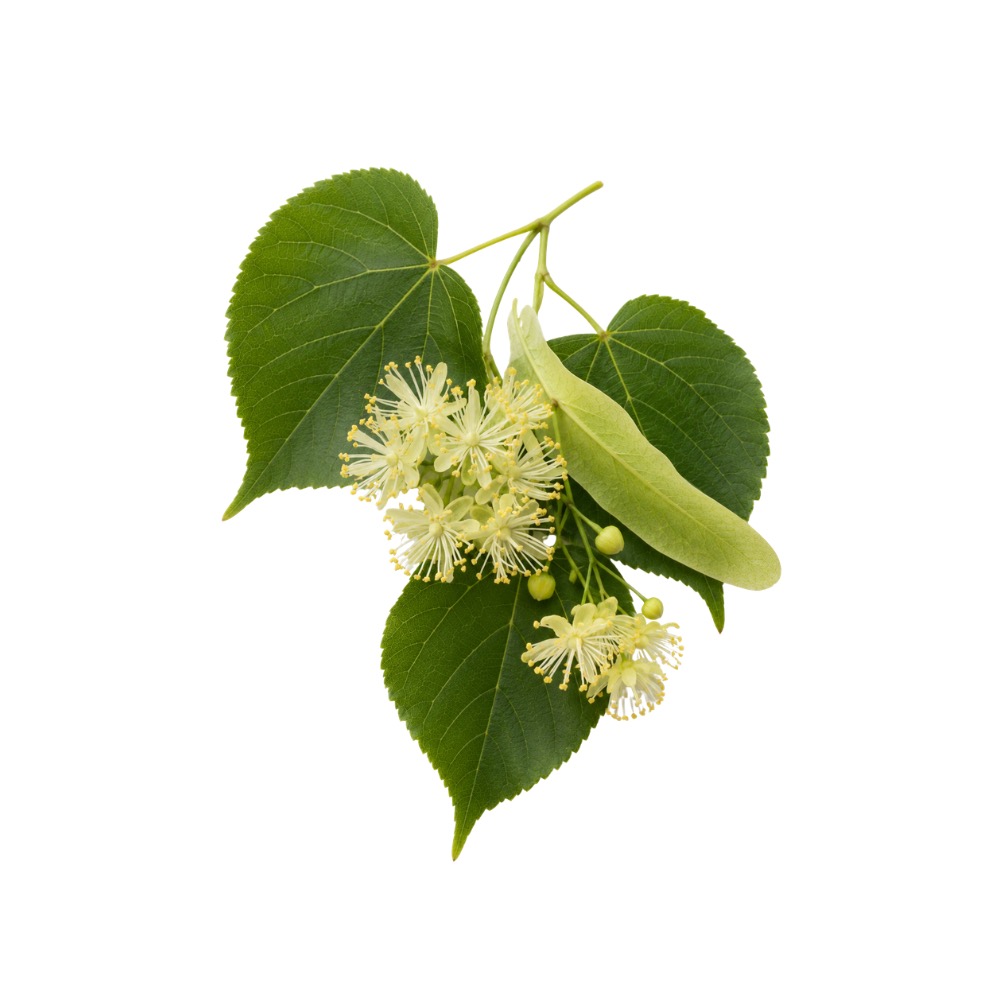
Linden flower is the fragrant blossom of the lime tree, dried with its papery bract. It is drunk as a hot tea for colds and fevers and as a calming tea for nervous tension and sleep.
What Is Linden Flower?
Linden flower is the fragrant, pale-yellow blossom of the lime or linden tree, dried together with the papery bract attached to its stalk. It is drunk as a hot tea at the start of a cold or fever, and as a calming tea for nervous tension and restless sleep 43Reference 43ReviewAssessment report on Tilia cordata Miller, Tilia platyphyllos Scop., Tilia × vulgaris Heyne or their mixtures, flos (EMA/HMPC/337067/2011) — regulatory monographView study →.
The medicinal flowers come from three European limes: small-leaved lime (Tilia cordata), large-leaved lime (T. platyphyllos) and their hybrid, common lime (T. × vulgaris) 43Reference 43ReviewAssessment report on Tilia cordata Miller, Tilia platyphyllos Scop., Tilia × vulgaris Heyne or their mixtures, flos (EMA/HMPC/337067/2011) — regulatory monographView study →. The trees grow wild across Europe and are widely planted. Lime flowers have been used to promote sweating since the Middle Ages 43Reference 43ReviewAssessment report on Tilia cordata Miller, Tilia platyphyllos Scop., Tilia × vulgaris Heyne or their mixtures, flos (EMA/HMPC/337067/2011) — regulatory monographView study →.
The flowers contain flavonoids, chiefly glycosides of quercetin and kaempferol including tiliroside, along with mucilage and a little volatile oil 43Reference 43ReviewAssessment report on Tilia cordata Miller, Tilia platyphyllos Scop., Tilia × vulgaris Heyne or their mixtures, flos (EMA/HMPC/337067/2011) — regulatory monographView study →. Research has focused on a mild sedative and anxiety-reducing effect, shown repeatedly in mice; no human trial has been published 1,
The “lime” of lime flower is the linden tree, not the citrus fruit. Silver lime (T. tomentosa) is the species most often found mixed into commercial lime flower 43Reference 43ReviewAssessment report on Tilia cordata Miller, Tilia platyphyllos Scop., Tilia × vulgaris Heyne or their mixtures, flos (EMA/HMPC/337067/2011) — regulatory monographView study →.
How Is Linden Flower Used?
Linden flower is taken almost always as a hot infusion of the dried flowers and bracts 43Reference 43ReviewAssessment report on Tilia cordata Miller, Tilia platyphyllos Scop., Tilia × vulgaris Heyne or their mixtures, flos (EMA/HMPC/337067/2011) — regulatory monographView study →.
- Herbal tea — 1.5 g of dried flower in 150 mL of boiling water, two to four times a day 43Reference 43ReviewAssessment report on Tilia cordata Miller, Tilia platyphyllos Scop., Tilia × vulgaris Heyne or their mixtures, flos (EMA/HMPC/337067/2011) — regulatory monographView study →.
- Cold and fever teas — in Germany it is part of a children’s influenza tea with willow bark, meadowsweet, chamomile and bitter orange peel. A Swiss sweating tea combines it with elderflower and mint leaves 43Reference 43ReviewAssessment report on Tilia cordata Miller, Tilia platyphyllos Scop., Tilia × vulgaris Heyne or their mixtures, flos (EMA/HMPC/337067/2011) — regulatory monographView study →.
- Liquid extract and tincture — a 1:1 liquid extract in 25% alcohol, or a 1:5 tincture in 45% alcohol 43Reference 43ReviewAssessment report on Tilia cordata Miller, Tilia platyphyllos Scop., Tilia × vulgaris Heyne or their mixtures, flos (EMA/HMPC/337067/2011) — regulatory monographView study →.
- Cough sweets — in Hungary the flowers were made into candies to relieve cough 43Reference 43ReviewAssessment report on Tilia cordata Miller, Tilia platyphyllos Scop., Tilia × vulgaris Heyne or their mixtures, flos (EMA/HMPC/337067/2011) — regulatory monographView study →.
Traditional Uses
Western Herbal Medicine
Since the Middle Ages lime flowers have been drunk to promote sweating in feverish colds. They were also used as a tranquilliser and for headaches, indigestion and diarrhoea 43Reference 43ReviewAssessment report on Tilia cordata Miller, Tilia platyphyllos Scop., Tilia × vulgaris Heyne or their mixtures, flos (EMA/HMPC/337067/2011) — regulatory monographView study →.
Traditionally the flowers were added to baths to quell hysteria, and steeped as a tea for anxiety-related indigestion, palpitations and vomiting 43Reference 43ReviewAssessment report on Tilia cordata Miller, Tilia platyphyllos Scop., Tilia × vulgaris Heyne or their mixtures, flos (EMA/HMPC/337067/2011) — regulatory monographView study →.
Later herbal texts list lime flower as sedative, antispasmodic, diaphoretic, hypotensive, emollient, diuretic and mildly astringent. It is given for migraine, feverish colds, irritable coughs and upper respiratory catarrh, and for raised blood pressure linked to nervous tension and hardening of the arteries 43Reference 43ReviewAssessment report on Tilia cordata Miller, Tilia platyphyllos Scop., Tilia × vulgaris Heyne or their mixtures, flos (EMA/HMPC/337067/2011) — regulatory monographView study →.
In Poland the infusion was used for fever with sore throat and bronchitis, and for nervousness and nervous tension. Germany’s Commission E approved it for colds and cold-related cough 43Reference 43ReviewAssessment report on Tilia cordata Miller, Tilia platyphyllos Scop., Tilia × vulgaris Heyne or their mixtures, flos (EMA/HMPC/337067/2011) — regulatory monographView study →.
Mexican Folk Medicine
In Mexico the dried inflorescences of the native Tilia americana var. mexicana are sold in local markets. Communities in the state of Michoacán use them as a sedative and tranquilliser 2Reference 2AnimalSedative and anxiolytic efficacy of Tilia americana var. mexicana inflorescences used traditionally by communities of the State of Michoacán, Mexico — animal in vivo studyView study →.
Botany
Linden trees are large deciduous trees in the mallow family (Malvaceae) 46Reference 46Tilia Linnaeus — genus description, species number, the non-native European limes and planting as shade trees — floraView study →. The genus Tilia holds about 20 species across the temperate Northern Hemisphere 46Reference 46Tilia Linnaeus — genus description, species number, the non-native European limes and planting as shade trees — floraView study →. The European limes used for the flowers can reach about 30 m 43Reference 43ReviewAssessment report on Tilia cordata Miller, Tilia platyphyllos Scop., Tilia × vulgaris Heyne or their mixtures, flos (EMA/HMPC/337067/2011) — regulatory monographView study →.
The leaves are heart-shaped at the base, often lopsided, with toothed edges and palmate veins 46Reference 46Tilia Linnaeus — genus description, species number, the non-native European limes and planting as shade trees — floraView study →. Small-leaved lime has rounded leaves 4–7 cm long with tufts of hair in the vein angles beneath. Large-leaved lime has leaves 7–10 cm long that are sparsely hairy beneath 46Reference 46Tilia Linnaeus — genus description, species number, the non-native European limes and planting as shade trees — floraView study →.
The flowers hang in small clusters, usually of two to seven and occasionally up to sixteen, from a long, strap-shaped, papery bract. The flower stalk is fused to the bract’s midrib for up to about half its length 43Reference 43ReviewAssessment report on Tilia cordata Miller, Tilia platyphyllos Scop., Tilia × vulgaris Heyne or their mixtures, flos (EMA/HMPC/337067/2011) — regulatory monographView study →. Each flower has five thin, yellowish-white petals up to 8 mm long and many stamens in five groups 43Reference 43ReviewAssessment report on Tilia cordata Miller, Tilia platyphyllos Scop., Tilia × vulgaris Heyne or their mixtures, flos (EMA/HMPC/337067/2011) — regulatory monographView study →. The flowers are fragrant and open in summer 47Reference 47Tilia cordata (Littleleaf Linden) — species description, native range and flowering — plant databaseView study →.
The fruit is a small, hard, nut-like capsule that does not split open 46Reference 46Tilia Linnaeus — genus description, species number, the non-native European limes and planting as shade trees — floraView study →. In large-leaved lime it is clearly ribbed 46Reference 46Tilia Linnaeus — genus description, species number, the non-native European limes and planting as shade trees — floraView study →.
The medicinal material is the whole dried inflorescence, bract included 43Reference 43ReviewAssessment report on Tilia cordata Miller, Tilia platyphyllos Scop., Tilia × vulgaris Heyne or their mixtures, flos (EMA/HMPC/337067/2011) — regulatory monographView study →. Silver lime (T. tomentosa) is the commonest adulterant. Its bract carries star-shaped hairs on the underside, which the European Pharmacopoeia uses to detect it 43Reference 43ReviewAssessment report on Tilia cordata Miller, Tilia platyphyllos Scop., Tilia × vulgaris Heyne or their mixtures, flos (EMA/HMPC/337067/2011) — regulatory monographView study →.
Distribution
Lime trees grow wild throughout Europe, as far north as about 65° latitude 43Reference 43ReviewAssessment report on Tilia cordata Miller, Tilia platyphyllos Scop., Tilia × vulgaris Heyne or their mixtures, flos (EMA/HMPC/337067/2011) — regulatory monographView study →. Small-leaved lime ranges from Europe east to western Siberia and Iran 47Reference 47Tilia cordata (Littleleaf Linden) — species description, native range and flowering — plant databaseView study →. Large-leaved lime is native to central and southern Europe and south-west Asia, and grows mainly in lowlands and low hills 48Reference 48Tilia platyphyllos (Bigleaf Linden) — species description and native range — plant databaseView study →.
Both are widely planted as shade and street trees, including in North America, where American basswood (T. americana) is the native species 46,
Most commercial lime flower comes from the Balkans (Bulgaria, Romania and the former Yugoslavia), Turkey and China 43Reference 43ReviewAssessment report on Tilia cordata Miller, Tilia platyphyllos Scop., Tilia × vulgaris Heyne or their mixtures, flos (EMA/HMPC/337067/2011) — regulatory monographView study →.
Growing Conditions
Cultivation snapshot for Linden Flower
- Full sun to part shade; tolerant of a wide range of well-drained soils once established.
- A hardy, long-lived shade tree suited to cool-temperate climates (roughly USDA zones 3–7).
- Needs room — these are large trees that mature to a broad, dense canopy.
- Flowers appear in early summer and are gathered, with their strap-like bracts, at peak bloom on a dry day.
Grow it yourself
Farm Wiki is our cultivation-focused sister site, also run by Justin Cooke.
Indications
- Colds and feverish chills [flower; EU traditional use]
- Mild nervous tension and stress [flower; EU traditional use]
- Restlessness and difficulty sleeping [flower; Western herbal medicine]
- Irritable cough and upper respiratory catarrh [flower; Western herbal medicine]
- Raised blood pressure linked to nervous tension [flower; Western herbal medicine]
- Migraine and headache [flower; Western herbal medicine]
- Nervous indigestion and palpitations [flower; European folk use]
- Anxiety [inflorescence; Mexican folk use]
Pharmacology & Research
Linden flower has about sixty laboratory studies and no registered human trial. The most replicated finding is a mild anxiolytic and sedative effect in mice, linked to flavonoids acting at GABA-A/benzodiazepine receptors and on serotonin pathways 1,
Antioxidant and anti-inflammatory findings are also consistent. Newer liver, pain and metabolic findings rely heavily on the marker flavonoid tiliroside rather than on the flower.
The European regulator recognises linden flower as a traditional herbal medicine for colds and mild stress, on the basis of long-standing use rather than clinical trials 43Reference 43ReviewAssessment report on Tilia cordata Miller, Tilia platyphyllos Scop., Tilia × vulgaris Heyne or their mixtures, flos (EMA/HMPC/337067/2011) — regulatory monographView study →.
-
Best-supported: mild anxiolytic/sedative activity, replicated across many rodent studies of flower and inflorescence extracts and mapped to GABA-A/benzodiazepine and serotonergic mechanisms 1,
2, ; consistent in-vitro antioxidant and anti-inflammatory activity 15,3, 4, 5, 6, 9Reference 1AnimalPharmacological evaluation of the anxiolytic and sedative effects of Tilia americana L. var. mexicana in mice — animal in vivo studyView study →Reference 2AnimalSedative and anxiolytic efficacy of Tilia americana var. mexicana inflorescences used traditionally by communities of the State of Michoacán, Mexico — animal in vivo studyView study →Reference 3AnimalFlavonoids from Tilia americana with anxiolytic activity in the plus-maze test — animal in vivo studyView study →Reference 4AnimalHPLC/MS analysis and anxiolytic-like effect of quercetin and kaempferol flavonoids from Tilia americana var. mexicana — animal in vivo studyView study →Reference 5AnimalIsolation of pharmacologically active benzodiazepine receptor ligands from Tilia tomentosa (Tiliaceae) — animal in vivo studyView study →Reference 6In vitroBud extracts from Tilia tomentosa Moench inhibit hippocampal neuronal firing through GABAA and benzodiazepine receptor activation — in vitro studyView study →Reference 9AnimalInteractions of a standardized flavonoid fraction from Tilia americana with serotonergic drugs in the elevated plus maze — animal in vivo studyView study → 22, .24Reference 15In vitroBio-guided isolation of anti-inflammatory compounds from Tilia tuan Szyszyl. flowers via in vitro and in silico study — in vitro studyView study →Reference 22In vitroAssessment of the anti-inflammatory activity and free-radical scavenger activity of tiliroside — in vitro study with in vivo mouse-ear modelView study →Reference 24In vitroRadical-scavenging and anti-acetylcholinesterase activities of ethanolic extracts of carob, clove and linden — in vitro studyView study → -
Emerging, worth watching: hepatoprotection against chemical liver injury 28,
29Reference 28AnimalHepatoprotective and antioxidant activity of linden (Tilia platyphyllos L.) infusion against ethanol-induced oxidative stress in rats — animal in vivo studyView study →Reference 29AnimalHepatoprotective principles from the flowers of Tilia argentea (linden): structure requirements of tiliroside and mechanisms of action — animal in vivo studyView study → and tiliroside-driven metabolic and anti-inflammatory effects 19,34Reference 19AnimalTiliroside ameliorates ulcerative colitis by restoring the M1/M2 macrophage balance — animal in vivo studyView study →Reference 34AnimalTiliroside, a glycosidic flavonoid, ameliorates obesity-induced metabolic disorders via adiponectin signaling and enhanced fatty-acid oxidation in obese-diabetic mice — animal in vivo studyView study → — real but preclinical. -
Mechanistically thin: anticancer and antimicrobial claims rest on cell-line and isolated-compound work with no in-vivo efficacy for the flower 36,
37, .38, 40Reference 36In vitroTilia cordata Mill. extracts and scopoletin: differential cell-growth effects on lymphocytes — in vitro studyView study →Reference 37In vitroHPLC fingerprint of a flower extract of Tilia × viridis and correlation with antiproliferative and antioxidant activity — in vitro studyView study →Reference 38In vitroTilia species (linden) exert anti-cancer effects on MIA PaCa-2 cells through modulation of oxidative stress and inflammation — in vitro studyView study →Reference 40In vitroAssessment of the anti-pathogenic effects of condensed tannin extracts using scanning electron microscopy — in vitro studyView study → -
The caveat: no human trials exist for any indication 12,
13Reference 12ReviewPlant-based medicines for anxiety disorders, Part 1: a review of preclinical studies — reviewView study →Reference 13ReviewManagement of insomnia: a place for traditional herbal remedies — reviewView study → ; species and extract type vary widely between studies, and animal doses far exceed what a tea delivers. The European regulator classifies linden flower on the basis of long-standing traditional use rather than clinical trial data 43Reference 43ReviewAssessment report on Tilia cordata Miller, Tilia platyphyllos Scop., Tilia × vulgaris Heyne or their mixtures, flos (EMA/HMPC/337067/2011) — regulatory monographView study →.
The studies use concentrated extracts of several Tilia species; the tea is a light infusion of European limes. Much of the animal work uses the Mexican T. americana or other species, and doses far above what a cup of tea provides 1,
1. Anxiolytic & Sedative
This is the herb’s most replicated action. Aqueous, ethanol and methanol extracts of Tilia inflorescences and bracts produce dose-dependent anxiolytic and sedative effects across standard rodent tests: the elevated plus-maze, hole-board, open-field and pentobarbital-sleep-potentiation models. Several studies report effects comparable to diazepam, and no toxicity at high doses 1,
The activity tracks with the flower’s flavonoids. Quercetin and kaempferol glycosides, the marker compound tiliroside and isoquercitrin are repeatedly identified as active, and one bioactivity-guided study isolated beta-sitosterol as a contributor 3,
T. tomentosa bud and inflorescence extracts bind and activate GABA-A/benzodiazepine receptors and silence hippocampal neuronal firing, while a standardised T. americana fraction acts through serotonergic 5-HT1A/5-HT2A signalling 5,
The effect is not confined to one species. Lyophilised T. europaea and T. petiolaris extracts are also sedative in mice 7,
A related T. americana extract is also anticonvulsant in the pentylenetetrazole seizure model 14Reference 14AnimalAnticonvulsant and antioxidant effects of Tilia americana var. mexicana and flavonoid constituents in pentylenetetrazole-induced seizures — animal in vivo studyView study →.
The active preparations are water and hydroethanolic flower extracts, close to the tea in kind. A preclinical review of plant anxiolytics lists Tilia among species with reproducible animal evidence but no clinical follow-through 12Reference 12ReviewPlant-based medicines for anxiety disorders, Part 1: a review of preclinical studies — reviewView study →.
Gap: every result is in animals or isolated tissue; there is no human trial, and a review of traditional insomnia remedies found no demonstrated clinical efficacy despite the herb’s safety 13Reference 13ReviewManagement of insomnia: a place for traditional herbal remedies — reviewView study →.
2. Anti-Inflammatory
Linden flower dampens inflammatory signalling in cell and tissue models. Bio-guided fractionation of T. tuan flowers yielded compounds that suppressed nitric oxide, TNF-α and IL-6 and inhibited COX-2/NF-κB in LPS-stimulated macrophages 15Reference 15In vitroBio-guided isolation of anti-inflammatory compounds from Tilia tuan Szyszyl. flowers via in vitro and in silico study — in vitro studyView study →.
Procyanidins isolated from T. cordata flowers cut reactive-oxygen production and IL-8 release in human neutrophils, and lime-flower pectins act as dual immunomodulators on phagocytes 17,
An ex-vivo study of Tiliae flos metabolites showed the extract shifts human gut microbiota toward short-chain-fatty-acid producers while lowering neutrophil TNF-α 16Reference 16Tiliae flos metabolites and their beneficial influence on human gut microbiota biodiversity ex vivo — ex vivo studyView study →.
The marker flavonoid tiliroside carries this action into whole animals, easing colitis by rebalancing M1/M2 macrophages and attenuating NLRP3-driven lung injury 19,
A 2025 review catalogues its inhibition of NF-κB and inflammatory mediators across arthritis, bowel and vascular models 20Reference 20ReviewMultifaceted role of tiliroside in inflammatory pathways: mechanisms and prospects — reviewView study →.
Gap: the flower-level data are in-vitro/ex-vivo; the in-vivo evidence is for isolated tiliroside, often sourced from other plants, so it shows constituent activity rather than efficacy of a linden tea.
3. Antioxidant
Antioxidant capacity is the most consistently reproduced laboratory property. Water and ethanol extracts and simple infusions of several Tilia species scavenge free radicals and show reducing power comparable to sage and black tea 24,
The effect maps onto the phenolic load of flavonoids and phenolic acids, and T. platyphyllos phenolics drove combined antioxidant, anti-inflammatory and antitumour activity in vitro 26Reference 26In vitroContribution of phenolic composition to the antioxidant, anti-inflammatory and antitumor potential of Equisetum giganteum and Tilia platyphyllos — in vitro studyView study →.
Isolated tiliroside is a potent radical scavenger (DPPH IC50 ≈ 6 µM) and an Nrf2/HO-1 activator 22,
It is in-vitro work, and no biomarker or outcome study exists.
4. Hepatoprotective
A small set of animal studies suggests the flower protects the liver against chemical injury. In rats given ethanol, a 2% T. platyphyllos flower infusion, about the strength of a strong tea, lowered the ethanol-induced rise in AST and LDH. It did not restore the oxidative-damage marker MDA, and the infusion given on its own raised AST and LDH 28Reference 28AnimalHepatoprotective and antioxidant activity of linden (Tilia platyphyllos L.) infusion against ethanol-induced oxidative stress in rats — animal in vivo studyView study →.
Methanolic T. argentea flower extract and its isolated tiliroside protected mice against D-galactosamine/LPS liver injury by suppressing TNF-α 29Reference 29AnimalHepatoprotective principles from the flowers of Tilia argentea (linden): structure requirements of tiliroside and mechanisms of action — animal in vivo studyView study →, and tiliroside guards against acetaminophen-induced liver injury in mice by activating NRF2 through KEAP1 inhibition 30Reference 30AnimalA novel KEAP1 inhibitor, tiliroside, activates NRF2 to protect against acetaminophen-induced oxidative stress and acute liver injury — animal in vivo studyView study →.
Gap: only a handful of studies, all in rodents and all using chemical-injury models; the whole-flower evidence is one ethanol-toxicity study with a mixed result, and no human liver-outcome data exist.
5. Analgesic
One rodent study supports a pain-relieving action. Aqueous T. americana inflorescence extract and isolated quercetin produced dose-dependent antinociception in the formalin test and in an arthritic-pain model in rats. The effect was mediated through 5-HT1A receptors, the same serotonergic route implicated in the anxiolytic work 31Reference 31AnimalAntinociceptive activity of Tilia americana var. mexicana inflorescences and quercetin in the formalin test and in an arthritic pain model in rats — animal in vivo studyView study →. It is a single unreplicated animal study with no human data.
6. Antispasmodic
Laboratory support for the traditional antispasmodic use in coughs and cramps is mixed. An alkaloid-enriched T. cordata flower fraction contracted murine airway smooth muscle via an acetylcholinesterase-linked mechanism, whereas a microencapsulated T. tomentosa flower extract kept its relaxant activity on intestinal tissue 32,
The direction of effect depends on the tissue and the fraction studied. Two in-vitro studies point in opposite directions, with no in-vivo or human evidence to settle them.
7. Metabolic & Antidiabetic
This signal belongs almost entirely to the isolated constituent tiliroside, not to the flower. In obese-diabetic mice, tiliroside (100 mg/kg/day) activated adiponectin signalling and enhanced fatty-acid oxidation in liver and muscle, lowering insulin, free fatty acids and triglycerides 34Reference 34AnimalTiliroside, a glycosidic flavonoid, ameliorates obesity-induced metabolic disorders via adiponectin signaling and enhanced fatty-acid oxidation in obese-diabetic mice — animal in vivo studyView study →. It also reduced blood glucose and kidney injury in streptozotocin-diabetic rats 35Reference 35AnimalTiliroside protects against diabetic nephropathy in streptozotocin-induced diabetic rats by attenuating oxidative stress and inflammation — animal in vivo studyView study →.
Gap: the data are in-vivo but use high doses of purified tiliroside. A linden infusion is not a concentrated tiliroside source, and the flower has no traditional metabolic use.
8. Anticancer
The work is mechanistic and confined to cell lines. T. cordata and T. × viridis flower extracts show selective antiproliferative and pro-apoptotic effects on lymphoma cells while sparing normal lymphocytes, with scopoletin identified as a contributor 36,
Separately, tiliroside induces ferroptosis in several cancer cell lines. A rodent toxicology study of a T. platyphyllos extract found it safe but did not show an anti-tumour outcome 39Reference 39AnimalToxicological and anti-tumor effects of a linden (Tilia platyphyllos) extract in HPV16-transgenic mice — animal in vivo studyView study →.
It is in-vitro, constituent-level work at concentrations far beyond anything a tea achieves, with no in-vivo efficacy shown for the flower.
9. Antimicrobial
Condensed-tannin extracts from linden show in-vitro bactericidal activity against Gram-positive and Gram-negative bacteria, with morphological damage visible by electron microscopy 40,
Gap: in-vitro only, with mixed direction of effect; no in-vivo, clinical, or infection-outcome evidence, and the active fraction (condensed tannins) is not what a flower infusion chiefly delivers.
Mechanisms
Linden’s flavonoids have been studied at the benzodiazepine site of the GABA-A receptor and at serotonin 5-HT1A and 5-HT2A receptors. These are the mechanisms linked to the sedative and anxiolytic effects in mice 5,
Tiliroside, often isolated from other plants, has been studied for anti-inflammatory, antioxidant and metabolic activity at doses above what an infusion provides 19,
| Mechanism | Drives | Key compounds |
|---|---|---|
| GABA-A / benzodiazepine receptor activation | anxiolyticsedative | tiliroside, quercetin, kaempferol, beta-sitosterol |
| Serotonergic 5-HT1A / 5-HT2A modulation | anxiolyticantidepressantanalgesic | quercetin, isoquercitrin |
| NF-κB ↓, COX-2 ↓, TNF-α / IL-6 ↓ | anti-inflammatoryhepatoprotective | tiliroside |
| Nrf2 / HO-1 activation, radical scavenging | antioxidanthepatoprotective | tiliroside, quercetin, rutin |
| Adiponectin signalling, fatty-acid oxidation | metabolic | tiliroside |
Clinical Trials
No registered clinical trials were found on ClinicalTrials.gov for linden flower or tiliroside in any indication. Reviews of plant medicines for anxiety and insomnia note the absence of human data 12,
| Completed | Planned | Terminated | Preclinical |
|---|---|---|---|
| 0 | 0 | 0 | ~60 |
Last checked: July 2026.
Phytochemistry
Linden flower’s main constituents are flavonoids: quercetin, kaempferol, myricetin and their glycosides, chiefly the kaempferol coumaroyl-glucoside tiliroside 43Reference 43ReviewAssessment report on Tilia cordata Miller, Tilia platyphyllos Scop., Tilia × vulgaris Heyne or their mixtures, flos (EMA/HMPC/337067/2011) — regulatory monographView study →. Other flavonol glycosides include rutin, isoquercitrin (quercetin 3-O-glucoside) and astragalin (kaempferol 3-O-glucoside) 44,
The flowers contain about 3% mucilage, made of polysaccharides that yield arabinose, galactose and rhamnose 43Reference 43ReviewAssessment report on Tilia cordata Miller, Tilia platyphyllos Scop., Tilia × vulgaris Heyne or their mixtures, flos (EMA/HMPC/337067/2011) — regulatory monographView study →. A volatile oil makes up 0.02–0.1% and includes farnesol along with monoterpenes such as citral, limonene and terpineol 43Reference 43ReviewAssessment report on Tilia cordata Miller, Tilia platyphyllos Scop., Tilia × vulgaris Heyne or their mixtures, flos (EMA/HMPC/337067/2011) — regulatory monographView study →. Condensed tannins are also present; small-leaved and large-leaved lime flowers contain relatively more tannin than mucilage, which affects the taste of the tea 43Reference 43ReviewAssessment report on Tilia cordata Miller, Tilia platyphyllos Scop., Tilia × vulgaris Heyne or their mixtures, flos (EMA/HMPC/337067/2011) — regulatory monographView study →.
The coumarin scopoletin and the phytosterol beta-sitosterol have been isolated from Tilia flowers 11,
The fragrant components break down quickly in damp conditions 43Reference 43ReviewAssessment report on Tilia cordata Miller, Tilia platyphyllos Scop., Tilia × vulgaris Heyne or their mixtures, flos (EMA/HMPC/337067/2011) — regulatory monographView study →. Constituent levels vary with Tilia species, origin and drying, and studies of the Mexican T. americana should be read separately from studies of the European limes 1,
Constituent Summary
Most constituents are reported qualitatively for the flower. † marks the flavonoid markers characteristic of linden flower 43Reference 43ReviewAssessment report on Tilia cordata Miller, Tilia platyphyllos Scop., Tilia × vulgaris Heyne or their mixtures, flos (EMA/HMPC/337067/2011) — regulatory monographView study →.
Flavonoid6 compounds1 with data
Mucilage1 compound1 with data
Sesquiterpene1 compound1 with data
Monoterpene1 compoundno data
Phenolic Acid4 compoundsno data
Flavanol1 compoundno data
Coumarin1 compoundno data
Phytosterol1 compoundno data
Dosage
| Indication | Preparation | Dose | Est. dried-herb equivalent | Source |
|---|---|---|---|---|
| Hepatoprotective (ethanol injury) | 2% aqueous flower infusion (rat) | 2 g flower / 100 mL water | ≈ direct — a 2% infusion is a strong human-scale tea (~2 g/cup) | 28Reference 28AnimalHepatoprotective and antioxidant activity of linden (Tilia platyphyllos L.) infusion against ethanol-induced oxidative stress in rats — animal in vivo studyView study → |
| Anxiolytic / sedative | Aqueous/methanol inflorescence extract (mouse) | typically 10–300 mg/kg extract | — (extract dose, no marker %) | 1, |
| Anxiolytic (standardized fraction) | Organic fraction F1C, HPLC-standardized (mouse) | ED50 ≈ 15 mg/kg | — (purified fraction) | 9Reference 9AnimalInteractions of a standardized flavonoid fraction from Tilia americana with serotonergic drugs in the elevated plus maze — animal in vivo studyView study → |
| Metabolic | Isolated tiliroside (mouse) | 100 mg/kg/day | — (purified compound; not achievable from tea) | 34Reference 34AnimalTiliroside, a glycosidic flavonoid, ameliorates obesity-induced metabolic disorders via adiponectin signaling and enhanced fatty-acid oxidation in obese-diabetic mice — animal in vivo studyView study → |
Traditional Dosage
| System | Preparation | Dose |
|---|---|---|
| EU traditional use (EMA/HMPC), adults and adolescents | Dried flower as infusion | 1.5 g in 150 mL boiling water, 2–4× daily (3–6 g a day) 43Reference 43ReviewAssessment report on Tilia cordata Miller, Tilia platyphyllos Scop., Tilia × vulgaris Heyne or their mixtures, flos (EMA/HMPC/337067/2011) — regulatory monographView study → |
| EU traditional use (EMA/HMPC), children 4–12, colds only | Dried flower as infusion | 1 g in 150 mL boiling water, 2–4× daily (2–4 g a day) 43Reference 43ReviewAssessment report on Tilia cordata Miller, Tilia platyphyllos Scop., Tilia × vulgaris Heyne or their mixtures, flos (EMA/HMPC/337067/2011) — regulatory monographView study → |
| EU traditional use (EMA/HMPC) | Liquid extract 1:1 (25% ethanol) | 2 mL, 1–2× daily (2–4 mL a day) 43Reference 43ReviewAssessment report on Tilia cordata Miller, Tilia platyphyllos Scop., Tilia × vulgaris Heyne or their mixtures, flos (EMA/HMPC/337067/2011) — regulatory monographView study → |
| EU traditional use (EMA/HMPC) | Tincture 1:5 (45% ethanol) | 1 mL, 1–2× daily (1–2 mL a day) 43Reference 43ReviewAssessment report on Tilia cordata Miller, Tilia platyphyllos Scop., Tilia × vulgaris Heyne or their mixtures, flos (EMA/HMPC/337067/2011) — regulatory monographView study → |
Safety & Pregnancy
Linden flower is a gentle, low-risk tea. The European assessment found no adverse effects other than occasional allergic reactions 43Reference 43ReviewAssessment report on Tilia cordata Miller, Tilia platyphyllos Scop., Tilia × vulgaris Heyne or their mixtures, flos (EMA/HMPC/337067/2011) — regulatory monographView study →.
- Gentle & low-risk. Regulated in Europe as a traditional herbal tea; no toxicity in mice at oral doses up to 5,000 mg/kg 2,
43Reference 2AnimalSedative and anxiolytic efficacy of Tilia americana var. mexicana inflorescences used traditionally by communities of the State of Michoacán, Mexico — animal in vivo studyView study →Reference 43ReviewAssessment report on Tilia cordata Miller, Tilia platyphyllos Scop., Tilia × vulgaris Heyne or their mixtures, flos (EMA/HMPC/337067/2011) — regulatory monographView study → . - Allergy. Allergic reactions have been reported, including to lime pollen and in one case of occupational exposure to the flowers 43Reference 43ReviewAssessment report on Tilia cordata Miller, Tilia platyphyllos Scop., Tilia × vulgaris Heyne or their mixtures, flos (EMA/HMPC/337067/2011) — regulatory monographView study →.
- Additive sedation (theoretical). Acts on GABA-A/serotonergic pathways in animals, so an additive effect with sedatives, anxiolytics or serotonergic drugs is plausible but unstudied.
- Children. The European monograph covers colds in children aged 4–12; use under 4 has not been established 43Reference 43ReviewAssessment report on Tilia cordata Miller, Tilia platyphyllos Scop., Tilia × vulgaris Heyne or their mixtures, flos (EMA/HMPC/337067/2011) — regulatory monographView study →.
Full Safety & Interactions Detail
Safety record. Linden flower is regulated in Europe as a traditional herbal medicine on the basis of long-standing use rather than trial data 43Reference 43ReviewAssessment report on Tilia cordata Miller, Tilia platyphyllos Scop., Tilia × vulgaris Heyne or their mixtures, flos (EMA/HMPC/337067/2011) — regulatory monographView study →. No serious adverse effects have been established, and the animal literature reports no toxicity even at very high extract doses (up to 5,000 mg/kg in mice) 2Reference 2AnimalSedative and anxiolytic efficacy of Tilia americana var. mexicana inflorescences used traditionally by communities of the State of Michoacán, Mexico — animal in vivo studyView study →.
Allergy. Allergy to lime pollen has been reported several times, and sensitisation to T. cordata pollen is thought to be among the more common tree-pollen allergies. One cosmetician developed occupational allergy from handling the flowers 43Reference 43ReviewAssessment report on Tilia cordata Miller, Tilia platyphyllos Scop., Tilia × vulgaris Heyne or their mixtures, flos (EMA/HMPC/337067/2011) — regulatory monographView study →.
Children. The European monograph supports use for colds in children aged 4–12. Use under 4 has not been established for lack of data 43Reference 43ReviewAssessment report on Tilia cordata Miller, Tilia platyphyllos Scop., Tilia × vulgaris Heyne or their mixtures, flos (EMA/HMPC/337067/2011) — regulatory monographView study →.
Interactions. Because linden acts on the central nervous system in animal models via GABA-A/benzodiazepine and serotonergic pathways 5,
The European regulator advises against using lime-flower medicines in pregnancy and while breastfeeding, because no safety data exist 43Reference 43ReviewAssessment report on Tilia cordata Miller, Tilia platyphyllos Scop., Tilia × vulgaris Heyne or their mixtures, flos (EMA/HMPC/337067/2011) — regulatory monographView study →.
No studies of fertility, reproductive toxicity or use in pregnancy have been published 43Reference 43ReviewAssessment report on Tilia cordata Miller, Tilia platyphyllos Scop., Tilia × vulgaris Heyne or their mixtures, flos (EMA/HMPC/337067/2011) — regulatory monographView study →.
References
- Aguirre-Hernández, E., et al. (2007). Pharmacological evaluation of the anxiolytic and sedative effects of Tilia americana L. var. mexicana in mice — animal in vivo study. J Ethnopharmacol. https://pubmed.ncbi.nlm.nih.gov/16930893/
- Pérez-Ortega, G., et al. (2008). Sedative and anxiolytic efficacy of Tilia americana var. mexicana inflorescences used traditionally by communities of the State of Michoacán, Mexico — animal in vivo study. J Ethnopharmacol. https://pubmed.ncbi.nlm.nih.gov/18242902/
- Herrera-Ruiz, M., et al. (2008). Flavonoids from Tilia americana with anxiolytic activity in the plus-maze test — animal in vivo study. J Ethnopharmacol. https://pubmed.ncbi.nlm.nih.gov/18539420/
- Aguirre-Hernández, E., et al. (2010). HPLC/MS analysis and anxiolytic-like effect of quercetin and kaempferol flavonoids from Tilia americana var. mexicana — animal in vivo study. J Ethnopharmacol. https://pubmed.ncbi.nlm.nih.gov/19799990/
- Viola, H., et al. (1994). Isolation of pharmacologically active benzodiazepine receptor ligands from Tilia tomentosa (Tiliaceae) — animal in vivo study. J Ethnopharmacol. https://pubmed.ncbi.nlm.nih.gov/7990504/
- Allio, A., et al. (2015). Bud extracts from Tilia tomentosa Moench inhibit hippocampal neuronal firing through GABAA and benzodiazepine receptor activation — in vitro study. J Ethnopharmacol. https://pubmed.ncbi.nlm.nih.gov/26144285/
- Coleta, M., et al. (2001). Comparative evaluation of Melissa officinalis, Tilia europaea, Passiflora edulis and Hypericum perforatum in the elevated plus-maze anxiety test — animal in vivo study. Pharmacopsychiatry. https://pubmed.ncbi.nlm.nih.gov/11518069/
- Loscalzo, L. M., et al. (2009). Neuroactive flavonoid glycosides from Tilia petiolaris DC. extracts — animal in vivo study. Phytother Res. https://pubmed.ncbi.nlm.nih.gov/19288528/
- Noguerón-Merino, M. C., et al. (2015). Interactions of a standardized flavonoid fraction from Tilia americana with serotonergic drugs in the elevated plus maze — animal in vivo study. J Ethnopharmacol. https://pubmed.ncbi.nlm.nih.gov/25656001/
- Martínez-Hernández, G. B., et al. (2021). A mixture of quercetin 4’-O-rhamnoside and isoquercitrin from Tilia americana var. mexicana with antidepressant activity in mice — animal in vivo study. J Ethnopharmacol. https://pubmed.ncbi.nlm.nih.gov/33248185/
- Aguirre-Hernández, E., et al. (2007). Bioactivity-guided isolation of β-sitosterol and some fatty acids as active compounds in the anxiolytic and sedative effects of Tilia americana var. mexicana — animal in vivo study. Planta Med. https://pubmed.ncbi.nlm.nih.gov/17823876/
- Sarris, J., et al. (2013). Plant-based medicines for anxiety disorders, Part 1: a review of preclinical studies — review. CNS Drugs. https://pubmed.ncbi.nlm.nih.gov/23436255/
- Prescrire International. (2005). Management of insomnia: a place for traditional herbal remedies — review. Prescrire Int. https://pubmed.ncbi.nlm.nih.gov/15984105/
- Cárdenas-Rodríguez, N., et al. (2014). Anticonvulsant and antioxidant effects of Tilia americana var. mexicana and flavonoid constituents in pentylenetetrazole-induced seizures — animal in vivo study. Oxid Med Cell Longev. https://pubmed.ncbi.nlm.nih.gov/25197430/
- Fan, R., et al. (2025). Bio-guided isolation of anti-inflammatory compounds from Tilia tuan Szyszyl. flowers via in vitro and in silico study — in vitro study. J Ethnopharmacol. https://pubmed.ncbi.nlm.nih.gov/39366498/
- Kruk, A., et al. (2022). Tiliae flos metabolites and their beneficial influence on human gut microbiota biodiversity ex vivo — ex vivo study. J Ethnopharmacol. https://pubmed.ncbi.nlm.nih.gov/35537603/
- Czerwińska, M. E., et al. (2018). The influence of procyanidins isolated from small-leaved lime flowers (Tilia cordata Mill.) on human neutrophils — ex vivo study. Fitoterapia. https://pubmed.ncbi.nlm.nih.gov/29447978/
- Georgiev, Y. N., et al. (2017). Tilia tomentosa pectins exhibit dual mode of action on phagocytes as β-glucuronic acid monomers are abundant in their rhamnogalacturonans I — in vitro study. Carbohydr Polym. https://pubmed.ncbi.nlm.nih.gov/28917854/
- Zhuang, H., et al. (2021). Tiliroside ameliorates ulcerative colitis by restoring the M1/M2 macrophage balance — animal in vivo study. Front Immunol. https://pubmed.ncbi.nlm.nih.gov/33868286/
- Kaur, G., et al. (2025). Multifaceted role of tiliroside in inflammatory pathways: mechanisms and prospects — review. Recent Adv Inflamm Allergy Drug Discov. https://pubmed.ncbi.nlm.nih.gov/41392910/
- Zhong, C., et al. (2023). Tiliroside attenuates NLRP3 inflammasome activation in macrophages and protects against acute lung injury in mice — animal in vivo study. Molecules. https://pubmed.ncbi.nlm.nih.gov/38005247/
- Sala, A., et al. (2003). Assessment of the anti-inflammatory activity and free-radical scavenger activity of tiliroside — in vitro study with in vivo mouse-ear model. Eur J Pharmacol. https://pubmed.ncbi.nlm.nih.gov/12568916/
- Velagapudi, R., et al. (2018). Activation of the Nrf2 pathway contributes to neuroprotection by the dietary flavonoid tiliroside — in vitro study. Mol Neurobiol. https://pubmed.ncbi.nlm.nih.gov/29508282/
- Güller, U., et al. (2021). Radical-scavenging and anti-acetylcholinesterase activities of ethanolic extracts of carob, clove and linden — in vitro study. Altern Ther Health Med. https://pubmed.ncbi.nlm.nih.gov/32619207/
- Yildirim, A., et al. (2000). Comparison of antioxidant and antimicrobial activities of tilia (Tilia argentea), sage and black tea extracts — in vitro study. J Agric Food Chem. https://pubmed.ncbi.nlm.nih.gov/11052773/
- Jabeur, I., et al. (2017). Contribution of phenolic composition to the antioxidant, anti-inflammatory and antitumor potential of Equisetum giganteum and Tilia platyphyllos — in vitro study. Food Funct. https://pubmed.ncbi.nlm.nih.gov/28164200/
- Romero-Jiménez, M., et al. (2005). Genotoxicity and anti-genotoxicity of some traditional medicinal herbs — in vitro study. Mutat Res. https://pubmed.ncbi.nlm.nih.gov/16005256/
- Yayalacı, Y., et al. (2014). Hepatoprotective and antioxidant activity of linden (Tilia platyphyllos L.) infusion against ethanol-induced oxidative stress in rats — animal in vivo study. J Membr Biol. https://pubmed.ncbi.nlm.nih.gov/24337514/
- Matsuda, H., et al. (2002). Hepatoprotective principles from the flowers of Tilia argentea (linden): structure requirements of tiliroside and mechanisms of action — animal in vivo study. Bioorg Med Chem. https://pubmed.ncbi.nlm.nih.gov/11814859/
- Cai, F., et al. (2025). A novel KEAP1 inhibitor, tiliroside, activates NRF2 to protect against acetaminophen-induced oxidative stress and acute liver injury — animal in vivo study. Hepatol Commun. https://pubmed.ncbi.nlm.nih.gov/40008899/
- Martínez, A. L., et al. (2009). Antinociceptive activity of Tilia americana var. mexicana inflorescences and quercetin in the formalin test and in an arthritic pain model in rats — animal in vivo study. Neuropharmacology. https://pubmed.ncbi.nlm.nih.gov/19027760/
- Hake, A., et al. (2022). Alkaloids from lime flower (Tiliae flos) exert spasmodic activity on murine airway smooth muscle involving acetylcholinesterase — in vitro study. Planta Med. https://pubmed.ncbi.nlm.nih.gov/34964956/
- Mainente, F., et al. (2022). Spray-drying microencapsulation of an extract from Tilia tomentosa Moench flowers: physicochemical characterization and in vitro intestinal activity — in vitro study. Plant Foods Hum Nutr. https://pubmed.ncbi.nlm.nih.gov/35947287/
- Goto, T., et al. (2012). Tiliroside, a glycosidic flavonoid, ameliorates obesity-induced metabolic disorders via adiponectin signaling and enhanced fatty-acid oxidation in obese-diabetic mice — animal in vivo study. J Nutr Biochem. https://pubmed.ncbi.nlm.nih.gov/21889885/
- Shang, Y., et al. (2024). Tiliroside protects against diabetic nephropathy in streptozotocin-induced diabetic rats by attenuating oxidative stress and inflammation — animal in vivo study. World J Diabetes. https://pubmed.ncbi.nlm.nih.gov/39582560/
- Barreiro Arcos, M. L., et al. (2006). Tilia cordata Mill. extracts and scopoletin: differential cell-growth effects on lymphocytes — in vitro study. Phytother Res. https://pubmed.ncbi.nlm.nih.gov/16397918/
- Marrassini, C., et al. (2011). HPLC fingerprint of a flower extract of Tilia × viridis and correlation with antiproliferative and antioxidant activity — in vitro study. Phytother Res. https://pubmed.ncbi.nlm.nih.gov/21953709/
- Yüksel, G., et al. (2025). Tilia species (linden) exert anti-cancer effects on MIA PaCa-2 cells through modulation of oxidative stress and inflammation — in vitro study. Sci Rep. https://pubmed.ncbi.nlm.nih.gov/39833445/
- Ferreira, T., et al. (2021). Toxicological and anti-tumor effects of a linden (Tilia platyphyllos) extract in HPV16-transgenic mice — animal in vivo study. Food Funct. https://pubmed.ncbi.nlm.nih.gov/33978005/
- Dakheel, M. M., et al. (2021). Assessment of the anti-pathogenic effects of condensed tannin extracts using scanning electron microscopy — in vitro study. Arch Microbiol. https://pubmed.ncbi.nlm.nih.gov/33399894/
- Dakheel, M. M., et al. (2020). Antimicrobial in vitro activities of condensed tannin extracts on avian pathogenic Escherichia coli — in vitro study. Lett Appl Microbiol. https://pubmed.ncbi.nlm.nih.gov/31782190/
- Samoilova, Z., et al. (2014). Medicinal plant extracts can variously modify biofilm formation in Escherichia coli — in vitro study. Antonie Van Leeuwenhoek. https://pubmed.ncbi.nlm.nih.gov/24500005/
- European Medicines Agency, Committee on Herbal Medicinal Products (HMPC). (2012). Assessment report on Tilia cordata Miller, Tilia platyphyllos Scop., Tilia × vulgaris Heyne or their mixtures, flos (EMA/HMPC/337067/2011) — regulatory monograph. EMA, London. https://www.ema.europa.eu/en/documents/herbal-report/final-assessment-report-tilia-cordata-miller-tilia-platyphyllos-scop-tilia-x-vulgaris-heyne-their_en.pdf
- Negri, G., Santi, D., & Tabach, R. (2013). Flavonol glycosides found in hydroethanolic extracts from Tilia cordata, a species used in Brazil. Revista Brasileira de Plantas Medicinais, 15(2), 217–224. doi:10.1590/S1516-05722013000200008
- Toker, G., Aslan, M., Yeşilada, E., Memişoğlu, M., & Ito, S. (2001). Comparative evaluation of the flavonoid content in officinal Tiliae flos and Turkish lime species for quality assessment. Journal of Pharmaceutical and Biomedical Analysis, 26(1), 111–121. doi:10.1016/S0731-7085(01)00351-X
- Strother, J. L. (2015). Tilia Linnaeus — genus description, species number, the non-native European limes and planting as shade trees — flora. In Flora of North America Editorial Committee (eds.), Flora of North America North of Mexico, Vol. 6. http://www.efloras.org/florataxon.aspx?flora_id=1&taxon_id=133008
- North Carolina State Extension (n.d.). Tilia cordata (Littleleaf Linden) — species description, native range and flowering — plant database. NC State Extension Gardener Plant Toolbox. https://plants.ces.ncsu.edu/plants/tilia-cordata/
- North Carolina State Extension (n.d.). Tilia platyphyllos (Bigleaf Linden) — species description and native range — plant database. NC State Extension Gardener Plant Toolbox. https://plants.ces.ncsu.edu/plants/tilia-platyphyllos/



