
Materia Medica
Meadowsweet
Filipendula ulmaria
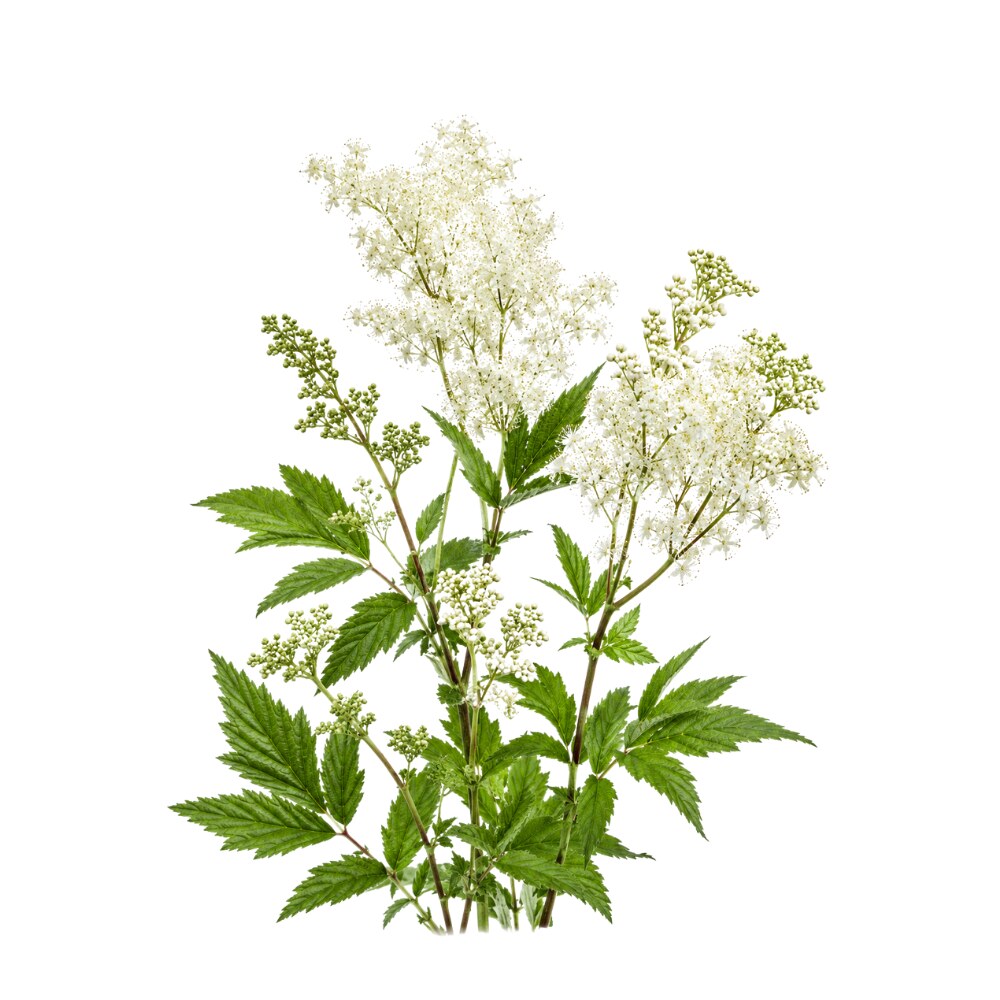
Meadowsweet is a tall perennial of damp meadows in Europe and northern Asia, with foaming heads of creamy flowers. Its flowering tops contain salicylates, flavonoids and tannins and are used for colds, minor joint pain and acid indigestion.
What Is Meadowsweet?
Meadowsweet is a tall perennial of damp meadows and riverbanks, with foaming heads of small creamy flowers. Its flowering tops are a traditional European remedy for colds, rheumatic pain and acid indigestion 37Reference 37ReviewAssessment report on Filipendula ulmaria (L.) Maxim., herba and Filipendula ulmaria (L.) Maxim., flos (EMA/HMPC/434892/2010) — regulatory reviewView study →.
Filipendula ulmaria is native from Atlantic Europe to eastern Siberia and grows in wet meadows, ditches and along rivers 38,
The flowering tops contain salicylates, the flavonoid spiraeoside and the tannin rugosin D 37Reference 37ReviewAssessment report on Filipendula ulmaria (L.) Maxim., herba and Filipendula ulmaria (L.) Maxim., flos (EMA/HMPC/434892/2010) — regulatory reviewView study →. Research on it is almost all laboratory and animal work, on inflammation, pain, the stomach lining and oxidative stress, with no controlled trial of the herb on its own 6Reference 6RCTAn in vivo study examining the anti-inflammatory effects of chamomile, meadowsweet, and willow bark in a novel functional beverage — randomised placebo-controlled trialView study →.
Meadowsweet was once classified as Spiraea ulmaria. In 1833 the chemist Löwig prepared salicylic acid from it and called it Spirsäure 41Reference 41ReviewMilestones of cardiovascular pharmacotherapy: salicylates and aspirin — historical review (in Czech). Časopis Lékařů Českých, 145(12), 901–904. https://pubmed.ncbi.nlm.nih.gov/17323609/View study →.
How Is Meadowsweet Used?
- Flowering tops — dried and taken as a tea, or as a powder in capsules 36Reference 36ReviewCommunity herbal monograph on Filipendula ulmaria (L.) Maxim., herba (EMA/HMPC/434881/2010) — regulatory monographView study →.
- Tincture — made from the flowering tops at 1:5 in 45% ethanol 36Reference 36ReviewCommunity herbal monograph on Filipendula ulmaria (L.) Maxim., herba (EMA/HMPC/434881/2010) — regulatory monographView study →.
- Flowers — used on their own in some traditions, much as the flowering tops are 37Reference 37ReviewAssessment report on Filipendula ulmaria (L.) Maxim., herba and Filipendula ulmaria (L.) Maxim., flos (EMA/HMPC/434892/2010) — regulatory reviewView study →.
Traditional Uses
Western Herbal Medicine
Meadowsweet has been used in European medicine since the late sixteenth and seventeenth centuries. The herb and the flowers were given for inflammatory complaints and as a diuretic. Over time the emphasis moved from the diuretic use towards rheumatism 37Reference 37ReviewAssessment report on Filipendula ulmaria (L.) Maxim., herba and Filipendula ulmaria (L.) Maxim., flos (EMA/HMPC/434892/2010) — regulatory reviewView study →.
It was taken for rheumatic and arthritic pain in muscles and joints, as an infusion, a liquid extract or a tincture, and was also applied to painful joints. The flowers were also used for gout 37Reference 37ReviewAssessment report on Filipendula ulmaria (L.) Maxim., herba and Filipendula ulmaria (L.) Maxim., flos (EMA/HMPC/434892/2010) — regulatory reviewView study →.
As a diaphoretic it was given in colds, flu and chills. The German Commission E listed the herb and the flowers as supportive treatment for colds 37Reference 37ReviewAssessment report on Filipendula ulmaria (L.) Maxim., herba and Filipendula ulmaria (L.) Maxim., flos (EMA/HMPC/434892/2010) — regulatory reviewView study →.
The British herbal tradition describes it as an antacid and stomachic. The British Herbal Pharmacopoeia lists it for indigestion with heartburn and excess acid, peptic ulcer, and acute cystitis, and the British Herbal Compendium for acid indigestion, gastritis and peptic ulcer 37Reference 37ReviewAssessment report on Filipendula ulmaria (L.) Maxim., herba and Filipendula ulmaria (L.) Maxim., flos (EMA/HMPC/434892/2010) — regulatory reviewView study →.
In France it is traditionally used to help the kidneys eliminate water, for fever and flu, for headache and toothache, and for minor joint pain 37Reference 37ReviewAssessment report on Filipendula ulmaria (L.) Maxim., herba and Filipendula ulmaria (L.) Maxim., flos (EMA/HMPC/434892/2010) — regulatory reviewView study →.
Botany
Meadowsweet is a clump-forming perennial herb in the rose family (Rosaceae). It grows 80–170 cm tall from a stout, horizontal rhizome 38,
Its leaves are pinnate, with two to five pairs of toothed lateral leaflets and smaller leaflets between them. The end leaflet is rounded and divided into three to five lobes 38,
The flowers grow in branched clusters of more than a hundred. Each is about 5 mm across, with five white to cream petals and stamens longer than the petals 38,
Each flower produces six to eight small fruits that twist together in a spiral 38,
Distribution
Meadowsweet grows across Europe and northern Asia. Its native range runs from Atlantic Europe to the Lena basin in eastern Siberia, and from the Arctic Circle south to the Altai Mountains 38Reference 38Schanzer, I. A. Filipendula ulmaria (Linnaeus) Maximowicz — species description, habitat and distribution — flora. In Flora of North America Editorial Committee (eds.), Flora of North America North of Mexico, Vol. 9. http://www.efloras.org/florataxon.aspx?flora_id=1&taxon_id=200010852View study →. It also reaches Mongolia, Central and Southwest Asia and Xinjiang in China 39Reference 39R., Boufford, DView study →.
It grows in moist meadows, thickets, riverbanks and ditches 38,
In North America it was brought in as a garden plant. It has escaped and become established in the Canadian Maritimes, and grows wild in scattered states from Maine and New Jersey west to Minnesota and Colorado 38Reference 38Schanzer, I. A. Filipendula ulmaria (Linnaeus) Maximowicz — species description, habitat and distribution — flora. In Flora of North America Editorial Committee (eds.), Flora of North America North of Mexico, Vol. 9. http://www.efloras.org/florataxon.aspx?flora_id=1&taxon_id=200010852View study →.
Growing Conditions
Cultivation snapshot for Meadowsweet
Meadowsweet grows 90–180 cm tall in cultivation and is hardy in USDA zones 3–9 40Reference 40Filipendula ulmaria (meadowsweet) — growing conditions, size and hardiness — plant databaseView study →. It needs moist to occasionally wet soil and does not tolerate drought. It grows in full sun where the soil stays moist, or in part shade 40Reference 40Filipendula ulmaria (meadowsweet) — growing conditions, size and hardiness — plant databaseView study →.
It prefers neutral to alkaline soil and grows in clay, loam or sand, including heavy clay 40Reference 40Filipendula ulmaria (meadowsweet) — growing conditions, size and hardiness — plant databaseView study →. It self-seeds freely and can spread, and cutting off the spent flower heads keeps it in check 40Reference 40Filipendula ulmaria (meadowsweet) — growing conditions, size and hardiness — plant databaseView study →.
Grow it yourself
Farm Wiki is our cultivation-focused sister site, also run by Justin Cooke.
Indications
- Common cold, as supportive treatment [flowering tops; European traditional use]
- Minor joint pain [flowering tops; European traditional use] Caution: No trial has tested meadowsweet on its own for joint pain. A drink combining it with chamomile and willow bark had no significant anti-inflammatory effect in healthy adults 6.
- Rheumatic and muscular pain [flowering tops; Western herbal medicine]
- Fever and chills [flowering tops; Western herbal medicine]
- Heartburn, acid indigestion and gastritis [flowering tops; British herbal tradition]
- Peptic ulcer [flowering tops; British herbal tradition] Caution: Animal results are mixed. A flower decoction protected rats against several kinds of stomach ulcer, but it made histamine-induced ulcers worse in guinea pigs. It has not been tested in people 8,
37 . - Gout [flowers; Western herbal medicine]
- Fluid retention [flowering tops; French traditional use]
Pharmacology & Research
Meadowsweet has about three dozen primary studies, mostly in vitro and in rodents. The most consistent findings are antioxidant and anti-inflammatory, linked to its phenolic profile: spiraeoside, ellagitannins such as rugosin D, and salicylates 2,
The gastroprotective work comes mainly from rats. A cluster of cancer-prevention studies in rats comes from a single Russian group 9,
One small randomised trial exists. It tested meadowsweet in a three-herb drink in 20 healthy adults and found no significant anti-inflammatory effect 6Reference 6RCTAn in vivo study examining the anti-inflammatory effects of chamomile, meadowsweet, and willow bark in a novel functional beverage — randomised placebo-controlled trialView study →.
-
Best-supported: antioxidant and free-radical-scavenging activity across many extracts 2,
13, ; anti-inflammatory action through COX and eicosanoid inhibition, shown in vitro and in rat paw-oedema models 2,14, 15, 16Reference 2AnimalAntioxidant, anti-inflammatory and gastroprotective activity of Filipendula ulmaria and Filipendula vulgaris — ex vivo and animal modelView study →Reference 13In vitroDNA-Protective, Antioxidant and Anti-Carcinogenic Potential of Meadowsweet (Filipendula ulmaria) Dry Tincture — in vitroView study →Reference 14In vitroStudy of the Antioxidant Properties of Filipendula ulmaria and Alnus glutinosa — in vitroView study →Reference 15In vitroVariation in Phenolic Compounds, Antioxidant and Antibacterial Activities of Extracts from Different Plant Organs of Meadowsweet — in vitroView study →Reference 16In vitroPhenolic extracts from meadowsweet and hawthorn flowers have antioxidative properties — in vitroView study → 3, .4Reference 2AnimalAntioxidant, anti-inflammatory and gastroprotective activity of Filipendula ulmaria and Filipendula vulgaris — ex vivo and animal modelView study →Reference 3In vitroIn vitro and in vivo assessment of meadowsweet (Filipendula ulmaria) as anti-inflammatory agent — rat carrageenan modelView study →Reference 4In vitroIn Vitro Biotransformation and Anti-Inflammatory Activity of Constituents and Metabolites of Filipendula ulmaria — in vitro NF-κB/COXView study → -
Emerging: protection of the stomach lining in rats 2,
8Reference 2AnimalAntioxidant, anti-inflammatory and gastroprotective activity of Filipendula ulmaria and Filipendula vulgaris — ex vivo and animal modelView study →Reference 8AnimalAnti-ulcer action of a decoction of the flowers of Filipendula ulmaria — animal modelView study → ; cancer prevention in rats given induced tumours 9,10, ; xanthine-oxidase inhibition by spiraeoside, relevant to gout 27Reference 27In vitroXanthine Oxidase Inhibitors from Filipendula ulmaria and Their Efficient Detection by HPTLC and HPLC — in vitroView study →.11, 12Reference 9AnimalThe inhibitory effect of meadowsweet (Filipendula ulmaria) on radiation-induced carcinogenesis in rats — animal modelView study →Reference 10AnimalThe inhibiting activity of meadowsweet extract on neurocarcinogenesis induced transplacentally in rats — animal modelView study →Reference 11AnimalInhibitory Effect of Filipendula ulmaria on Mammary Carcinogenesis Induced by Local Administration of Methylnitrosourea to Target Organ in Rats — animal modelView study →Reference 12AnimalThe inhibitory effect of Filipendula ulmaria on colorectal carcinogenesis induced in rats by methylnitrosourea — animal modelView study → -
Mechanistically thin: anticoagulant activity 30,
31Reference 30In vitroHeparin from the meadowsweet (Filipendula ulmaria) and its properties — animal/in vitroView study →Reference 31AnimalThe content of a heparin-like anticoagulant in the flowers of the meadowsweet (Filipendula ulmaria) — animal modelView study → ; antidiabetic and nootropic effects, several of which rest on the related species F. vulgaris or on isolated rutin 24,25, .29Reference 24AnimalNootropic effect of meadowsweet (Filipendula vulgaris) extracts — animal modelView study →Reference 25AnimalCorrection of experimental anxiety behavior by meadowsweet (Filipendula vulgaris) extracts — animal modelView study →Reference 29AnimalCharacterization and Biological Activity of Rutin Extracted from Filipendula ulmaria — in vivo rat modelView study →
Almost all of the evidence is preclinical, and results vary with species and preparation. Essential oil, infusion, tincture and isolated flavonoid are different materials. The European herbal monograph accepts meadowsweet on the basis of long traditional use, and the assessment behind it found no clinical data for joint pain or colds 36,
1. Antioxidant
Antioxidant activity has been reported across DPPH, hydroxyl-radical, FRAP and lipid-peroxidation assays in many independent extracts of flowers, aerial parts and roots 2,
The activity tracks the herb’s phenolic content. Total phenolics reach about 65 mg/g in leaves, flowers, fruits and roots, and flavonoids 117–167 mg/g in the upper leaves and flowers 15Reference 15In vitroVariation in Phenolic Compounds, Antioxidant and Antibacterial Activities of Extracts from Different Plant Organs of Meadowsweet — in vitroView study →. The flavonol spiraeoside showed strong hydroxyl-radical scavenging (IC₅₀ ≈ 5 µg/mL) 2Reference 2AnimalAntioxidant, anti-inflammatory and gastroprotective activity of Filipendula ulmaria and Filipendula vulgaris — ex vivo and animal modelView study →.
In rats, meadowsweet extract reduced oxidative stress and DNA damage in the liver and kidney after cisplatin 18Reference 18AnimalFilipendula ulmaria extracts attenuate cisplatin-induced liver and kidney oxidative stress in rats — in vivoView study →. A Bulgarian dry tincture was DNA-protective in vitro 13Reference 13In vitroDNA-Protective, Antioxidant and Anti-Carcinogenic Potential of Meadowsweet (Filipendula ulmaria) Dry Tincture — in vitroView study →.
Gap: no study has measured antioxidant markers in people taking the herb.
2. Anti-Inflammatory
Methanolic aerial-part extract inhibited both COX-1 and COX-2 in enzyme assays, about twice as strongly as the root extract. It reduced carrageenan-induced paw oedema in rats 3Reference 3In vitroIn vitro and in vivo assessment of meadowsweet (Filipendula ulmaria) as anti-inflammatory agent — rat carrageenan modelView study →.
Lyophilised flower infusions and flavonoids isolated from the related F. vulgaris reduced prostaglandin E₂ and 12-HETE production in human platelets ex vivo; spiraeoside was the strongest 12-HETE inhibitor 2Reference 2AnimalAntioxidant, anti-inflammatory and gastroprotective activity of Filipendula ulmaria and Filipendula vulgaris — ex vivo and animal modelView study →. In a model of gut digestion, the flavonoid metabolites formed in the colon, including quercetin, apigenin and kaempferol, also inhibited NF-κB and COX 4Reference 4In vitroIn Vitro Biotransformation and Anti-Inflammatory Activity of Constituents and Metabolites of Filipendula ulmaria — in vitro NF-κB/COXView study →.
In THP-1 macrophages, meadowsweet extract lowered IL-6 and TNF-α. It was less active than willow bark and more active than chamomile 5Reference 5In vitroInhibition of proinflammatory biomarkers in THP1 macrophages by polyphenols from chamomile, meadowsweet and willow bark — in vitroView study →.
The one human test gave a chamomile, meadowsweet and willow bark drink to 20 healthy adults for four weeks. IL-1β fell by about 22% against 3% on placebo, which was not significant, and there was no significant anti-inflammatory effect overall 6Reference 6RCTAn in vivo study examining the anti-inflammatory effects of chamomile, meadowsweet, and willow bark in a novel functional beverage — randomised placebo-controlled trialView study →.
Gap: the only human trial used a three-herb blend in healthy people, and meadowsweet on its own has not been tested clinically.
3. Gastroprotective
In rats, a flower decoction reduced ulcers caused by pylorus ligation, immobilisation, reserpine and phenylbutazone. It helped chronic ethanol-induced ulcers heal and prevented stomach lesions caused by aspirin 8Reference 8AnimalAnti-ulcer action of a decoction of the flowers of Filipendula ulmaria — animal modelView study →.
The same study found the decoction did not protect against cinchophen and made histamine-induced ulcers worse in guinea pigs 8Reference 8AnimalAnti-ulcer action of a decoction of the flowers of Filipendula ulmaria — animal modelView study →. The European assessment describes the effects on stomach ulcers as contradictory 37Reference 37ReviewAssessment report on Filipendula ulmaria (L.) Maxim., herba and Filipendula ulmaria (L.) Maxim., flos (EMA/HMPC/434892/2010) — regulatory reviewView study →.
A later study confirmed protection against ethanol-induced stomach injury with lyophilised flower infusions, and with isolated spiraeoside and tellimagrandin II 2Reference 2AnimalAntioxidant, anti-inflammatory and gastroprotective activity of Filipendula ulmaria and Filipendula vulgaris — ex vivo and animal modelView study →.
The effect is attributed to the tannins and flavonoids. The ellagitannins rugosin D, rugosin A and tellimagrandin II inhibit histidine decarboxylase, the enzyme that makes histamine 28Reference 28In vitroInhibitory activity of Filipendula ulmaria constituents on recombinant human histidine decarboxylase — in vitroView study →.
Gap: the evidence is from animals, largely from one older report, with no dose-finding and no human study.
4. Hepatoprotective
Meadowsweet aerial-part extract in 70% ethanol protected rat liver in the carbon-tetrachloride toxic hepatitis model. It normalised liver enzymes, lipid peroxidation and antioxidant defences, and on several measures did better than the silymarin product Carsil. The ethyl acetate and chloroform fractions were the most active 19,
A separate group showed that meadowsweet extracts reduced cisplatin-induced oxidative stress and tissue damage in rat liver and kidney 18Reference 18AnimalFilipendula ulmaria extracts attenuate cisplatin-induced liver and kidney oxidative stress in rats — in vivoView study →.
Gap: this is rodent chemical-injury work from a few labs, with no human data and no standardised fraction.
5. Analgesic
Methanolic aerial-part extract raised pain thresholds in the rat hot-plate test 3Reference 3In vitroIn vitro and in vivo assessment of meadowsweet (Filipendula ulmaria) as anti-inflammatory agent — rat carrageenan modelView study →. Lyophilised flower infusions reduced sensitivity to pressure in inflamed rat paws in a dose-dependent way, though they did not reduce the swelling 7Reference 7AnimalAntihyperalgesic activity of Filipendula ulmaria and Filipendula vulgaris in a rat model of inflammation — animal modelView study →.
Gap: the evidence is from rodents only, and there are no human pain data.
6. Anticancer
A series of rat studies from one group gave a meadowsweet flower decoction in place of drinking water after exposure to a carcinogen.
It lowered the incidence of malignant tumours and the number of tumours after whole-body γ-irradiation 9Reference 9AnimalThe inhibitory effect of meadowsweet (Filipendula ulmaria) on radiation-induced carcinogenesis in rats — animal modelView study →. It reduced brain and spinal-cord tumours after ethylnitrosourea given before birth 10Reference 10AnimalThe inhibiting activity of meadowsweet extract on neurocarcinogenesis induced transplacentally in rats — animal modelView study →. It reduced mammary 11Reference 11AnimalInhibitory Effect of Filipendula ulmaria on Mammary Carcinogenesis Induced by Local Administration of Methylnitrosourea to Target Organ in Rats — animal modelView study → and colorectal 12Reference 12AnimalThe inhibitory effect of Filipendula ulmaria on colorectal carcinogenesis induced in rats by methylnitrosourea — animal modelView study → tumours after methylnitrosourea.
In vitro, a meadowsweet dry tincture showed antiproliferative and DNA-protective activity 13Reference 13In vitroDNA-Protective, Antioxidant and Anti-Carcinogenic Potential of Meadowsweet (Filipendula ulmaria) Dry Tincture — in vitroView study →.
Gap: these are prevention models, not treatment of established tumours, and the animal work comes from a single research group.
7. Antimicrobial
Methanolic extracts inhibited E. coli and E. faecalis (MIC 0.156–0.625 mg/mL) and the fungi Penicillium cyclopium and Fusarium oxysporum 17Reference 17In vitroBioactivity, stability and phenolic characterization of Filipendula ulmaria — in vitro antimicrobial/antioxidantView study →. Extracts of the fruits and flowers were active against Bacillus subtilis and Pseudomonas aeruginosa 15Reference 15In vitroVariation in Phenolic Compounds, Antioxidant and Antibacterial Activities of Extracts from Different Plant Organs of Meadowsweet — in vitroView study →, and a compounding study found activity against Staphylococcus aureus 21Reference 21In vitroEvaluation of the Antibacterial Activity of Green Propolis Extract and Meadowsweet Extract Against Staphylococcus aureus — in vitroView study →.
Gap: all of this is in vitro, with no infection model or clinical data.
8. Neuroprotective
In rats, meadowsweet extract partly protected the hippocampus and prefrontal cortex against oxidative and pro-apoptotic damage from calcium-phosphate nanoparticles, with effects on BDNF and behaviour 22,
Nootropic and anxiolytic effects have been reported in the related species F. vulgaris, not F. ulmaria 24,
The flavonoids miquelianin and spiraeoside from meadowsweet reduced α-synuclein build-up in C. elegans and lowered inflammatory cytokines in human microglial cells 26Reference 26In vitroMiquelianin and spiraeoside from Filipendula ulmaria mitigate α-synuclein accumulation in C. elegans and reduce neuroinflammatory cytokines in human microglia — in vitroView study →.
Gap: the models vary, several use a different Filipendula species, and there are no human data.
9. Anti-Gout
A methanolic extract of the aerial parts inhibited xanthine oxidase, the enzyme that allopurinol targets in gout. After fractionation, spiraeoside was about 25 times more potent than allopurinol in the assay 27Reference 27In vitroXanthine Oxidase Inhibitors from Filipendula ulmaria and Their Efficient Detection by HPTLC and HPLC — in vitroView study →.
Gap: one in vitro study, with no animal or human uric-acid data.
10. Antidiabetic
Rutin extracted from meadowsweet normalised blood glucose, glycated haemoglobin and insulin resistance (HOMA-IR) and reduced fatty liver damage in rats fed a high-fat, high-carbohydrate diet 29Reference 29AnimalCharacterization and Biological Activity of Rutin Extracted from Filipendula ulmaria — in vivo rat modelView study →.
Gap: the result is for isolated rutin, a flavonoid found in many plants, and there are no whole-herb or human data.
Mechanisms
The aerial parts inhibit COX-1 and COX-2 and reduce prostaglandin and 12-HETE production, which has been studied as the basis of the anti-inflammatory and pain-relieving effects 2,
The ellagitannins inhibit histidine decarboxylase and so reduce histamine production, which has been studied in relation to the stomach 28Reference 28In vitroInhibitory activity of Filipendula ulmaria constituents on recombinant human histidine decarboxylase — in vitroView study →.
| Mechanism | Drives | Key compounds |
|---|---|---|
| COX-1/COX-2 ↓, PGE₂ & 12-HETE ↓ | anti-inflammatoryanalgesic | spiraeoside, salicylic acid |
| NF-κB ↓ (parent + colonic metabolites) | anti-inflammatory | quercetin, apigenin, kaempferol |
| Free-radical scavenging, FRAP, lipid-peroxidation ↓ | antioxidanthepatoprotective | spiraeoside, rutin, hyperoside |
| Histidine decarboxylase ↓ (histamine) | gastroprotective | rugosin D, tannins |
| Xanthine oxidase ↓ | anti-gout | spiraeoside |
Clinical Trials
One small randomised trial exists. It tested meadowsweet in a drink with chamomile and willow bark in 20 healthy adults and found no significant anti-inflammatory effect 6Reference 6RCTAn in vivo study examining the anti-inflammatory effects of chamomile, meadowsweet, and willow bark in a novel functional beverage — randomised placebo-controlled trialView study →. Two registry entries name multi-herb products, a topical gel and an anti-migraine supplement, rather than meadowsweet alone.
| Completed | Planned | Terminated | Preclinical |
|---|---|---|---|
| 1(herbal blend) | 0 | 0 | ~35 |
Last checked: July 2026.
Phytochemistry
The flowering tops contain salicylates, mostly as glycosides, at less than 0.5% 37Reference 37ReviewAssessment report on Filipendula ulmaria (L.) Maxim., herba and Filipendula ulmaria (L.) Maxim., flos (EMA/HMPC/434892/2010) — regulatory reviewView study →. Steam distillation of the dried flowers yields about 0.2% of a volatile oil that forms from these glycosides during drying and storage 37Reference 37ReviewAssessment report on Filipendula ulmaria (L.) Maxim., herba and Filipendula ulmaria (L.) Maxim., flos (EMA/HMPC/434892/2010) — regulatory reviewView study →.
Salicylates make up most of the flower oil. In a Lithuanian study, salicylaldehyde averaged 66–72% of the oil and methyl salicylate about 17–18%. When one rose, the other fell 1Reference 1Variations in Yield, Essential Oil, and Salicylates of Filipendula ulmaria Inflorescences at Different Blooming Stages — analytical studyView study →. Salicin and salicylic acid are also present 1,
Flavonoids make up 3–4% of the flowering herb and up to 6% of the fresh flowers. The main one is spiraeoside (quercetin-4′-glucoside), with hyperoside and other quercetin and kaempferol derivatives 37Reference 37ReviewAssessment report on Filipendula ulmaria (L.) Maxim., herba and Filipendula ulmaria (L.) Maxim., flos (EMA/HMPC/434892/2010) — regulatory reviewView study →. Rutin can be extracted from the herb at about 2.85% 29Reference 29AnimalCharacterization and Biological Activity of Rutin Extracted from Filipendula ulmaria — in vivo rat modelView study →.
The tannins are hydrolysable, chiefly the ellagitannin rugosin D. They range from 1% in ethanolic extracts to 12% in water extracts 37Reference 37ReviewAssessment report on Filipendula ulmaria (L.) Maxim., herba and Filipendula ulmaria (L.) Maxim., flos (EMA/HMPC/434892/2010) — regulatory reviewView study →. Rugosin A and tellimagrandin II occur in the petals 28Reference 28In vitroInhibitory activity of Filipendula ulmaria constituents on recombinant human histidine decarboxylase — in vitroView study →. Traces of coumarin, mucilage and vitamin C complete the profile 37Reference 37ReviewAssessment report on Filipendula ulmaria (L.) Maxim., herba and Filipendula ulmaria (L.) Maxim., flos (EMA/HMPC/434892/2010) — regulatory reviewView study →.
Several studies cited here used the related species F. vulgaris or an isolated flavonoid, and their results should be read separately from those on F. ulmaria flowering tops 2,
Constituent Summary
Oil figures are the share of the flower essential oil and shift with the stage of flowering.
Phenolic Acid7 compounds3 with data
Flavonoid5 compounds2 with data
Tannin2 compounds2 with data
Dosage
The European herbal monograph gives doses for adults and older people, for up to four weeks for joint pain 36Reference 36ReviewCommunity herbal monograph on Filipendula ulmaria (L.) Maxim., herba (EMA/HMPC/434881/2010) — regulatory monographView study →.
| Indication | Preparation | Dose | Source |
|---|---|---|---|
| Common cold; minor joint pain | Dried flowering tops, as tea | 1.5–6 g per cup; 2–18 g a day | 36Reference 36ReviewCommunity herbal monograph on Filipendula ulmaria (L.) Maxim., herba (EMA/HMPC/434881/2010) — regulatory monographView study → |
| Common cold; minor joint pain | Powdered flowering tops | 250–500 mg per dose; 250–1,500 mg a day | 36Reference 36ReviewCommunity herbal monograph on Filipendula ulmaria (L.) Maxim., herba (EMA/HMPC/434881/2010) — regulatory monographView study → |
| Minor joint pain | Tincture (1:5, 45% ethanol) | 2–4 mL per dose; 6–12 mL a day | 36Reference 36ReviewCommunity herbal monograph on Filipendula ulmaria (L.) Maxim., herba (EMA/HMPC/434881/2010) — regulatory monographView study → |
| Anti-inflammatory (rat) | Methanolic aerial-part extract | 100–200 mg/kg | 3Reference 3In vitroIn vitro and in vivo assessment of meadowsweet (Filipendula ulmaria) as anti-inflammatory agent — rat carrageenan modelView study → |
| Gastroprotection (rat) | Lyophilised flower infusion | 100–300 mg/kg by mouth | 2Reference 2AnimalAntioxidant, anti-inflammatory and gastroprotective activity of Filipendula ulmaria and Filipendula vulgaris — ex vivo and animal modelView study → |
| Hepatoprotection (rat) | 70% ethanol aerial-part extract | 100 mg/kg | 19Reference 19AnimalHepatoprotective and antioxidant activity of meadowsweet extract during experimental toxic hepatitis — animal modelView study → |
| Cancer prevention (rat) | Flower decoction as drinking water | ~1 g/kg/day dry herb | 9Reference 9AnimalThe inhibitory effect of meadowsweet (Filipendula ulmaria) on radiation-induced carcinogenesis in rats — animal modelView study → |
| Anti-inflammatory (human) | Chamomile / meadowsweet / willow drink | Per-herb amount not given, 4 weeks | 6Reference 6RCTAn in vivo study examining the anti-inflammatory effects of chamomile, meadowsweet, and willow bark in a novel functional beverage — randomised placebo-controlled trialView study → |
Traditional Dosage
| System | Preparation | Dose |
|---|---|---|
| European traditional use | Infusion of the flowering tops | 1.5–6 g per cup, up to 18 g a day 36Reference 36ReviewCommunity herbal monograph on Filipendula ulmaria (L.) Maxim., herba (EMA/HMPC/434881/2010) — regulatory monographView study → |
| European traditional use | Tincture (1:5, 45% ethanol) | 2–4 mL, up to 12 mL a day 36Reference 36ReviewCommunity herbal monograph on Filipendula ulmaria (L.) Maxim., herba (EMA/HMPC/434881/2010) — regulatory monographView study → |
| British herbal tradition | Liquid extract (1:1, 25% ethanol) | Not quantified 37Reference 37ReviewAssessment report on Filipendula ulmaria (L.) Maxim., herba and Filipendula ulmaria (L.) Maxim., flos (EMA/HMPC/434892/2010) — regulatory reviewView study → |
Safety & Pregnancy
Meadowsweet is well tolerated, and the European monograph lists no known side effects 36Reference 36ReviewCommunity herbal monograph on Filipendula ulmaria (L.) Maxim., herba (EMA/HMPC/434881/2010) — regulatory monographView study →. Its cautions come from the salicylates it contains.
- Salicylate allergy. Not for anyone allergic or sensitive to salicylates or aspirin 36Reference 36ReviewCommunity herbal monograph on Filipendula ulmaria (L.) Maxim., herba (EMA/HMPC/434881/2010) — regulatory monographView study →.
- Children and teenagers. Not recommended under 18 36Reference 36ReviewCommunity herbal monograph on Filipendula ulmaria (L.) Maxim., herba (EMA/HMPC/434881/2010) — regulatory monographView study →. Like other salicylates, it is also best avoided in children and teenagers with a viral illness because of Reye’s syndrome.
- Aspirin, other anti-inflammatory painkillers and blood thinners. Take advice before combining them 36Reference 36ReviewCommunity herbal monograph on Filipendula ulmaria (L.) Maxim., herba (EMA/HMPC/434881/2010) — regulatory monographView study →.
- Aspirin-triggered asthma. Best avoided by people whose asthma is set off by aspirin.
- Pregnancy and breastfeeding. Not recommended 36Reference 36ReviewCommunity herbal monograph on Filipendula ulmaria (L.) Maxim., herba (EMA/HMPC/434881/2010) — regulatory monographView study →.
- Salicylate content is low. A tea carries only small amounts 37Reference 37ReviewAssessment report on Filipendula ulmaria (L.) Maxim., herba and Filipendula ulmaria (L.) Maxim., flos (EMA/HMPC/434892/2010) — regulatory reviewView study →.
Full Safety & Interactions Detail
Salicylates. Meadowsweet contains salicylates, mostly as glycosides and at less than 0.5% of the herb. A tea contains only small amounts, and the European assessment considers aspirin-type side effects and interactions unlikely 37Reference 37ReviewAssessment report on Filipendula ulmaria (L.) Maxim., herba and Filipendula ulmaria (L.) Maxim., flos (EMA/HMPC/434892/2010) — regulatory reviewView study →. It is still contraindicated in anyone allergic to salicylates 36Reference 36ReviewCommunity herbal monograph on Filipendula ulmaria (L.) Maxim., herba (EMA/HMPC/434881/2010) — regulatory monographView study →.
Children and teenagers. The European monograph does not recommend meadowsweet under the age of 18, because there are not enough data 36Reference 36ReviewCommunity herbal monograph on Filipendula ulmaria (L.) Maxim., herba (EMA/HMPC/434881/2010) — regulatory monographView study →. On the same grounds as other salicylates, it is best avoided in children and teenagers during viral illnesses because of the risk of Reye’s syndrome.
Asthma. It is best avoided by people whose asthma is triggered by aspirin.
Other drugs. The monograph advises against combining it with aspirin or other anti-inflammatory painkillers without medical advice 36Reference 36ReviewCommunity herbal monograph on Filipendula ulmaria (L.) Maxim., herba (EMA/HMPC/434881/2010) — regulatory monographView study →. The flowers also contain a heparin-like anticoagulant, which thinned the blood in animals when injected 30,
Fever and joint pain. The monograph advises seeing a doctor if a fever goes above 39 °C, lasts or comes with a severe headache, and says the herb is not meant for acute arthritis 36Reference 36ReviewCommunity herbal monograph on Filipendula ulmaria (L.) Maxim., herba (EMA/HMPC/434881/2010) — regulatory monographView study →.
Not recommended. Safety in pregnancy and breastfeeding has not been established, and the European herbal monograph advises against use during both 36Reference 36ReviewCommunity herbal monograph on Filipendula ulmaria (L.) Maxim., herba (EMA/HMPC/434881/2010) — regulatory monographView study →. No fertility data exist 36Reference 36ReviewCommunity herbal monograph on Filipendula ulmaria (L.) Maxim., herba (EMA/HMPC/434881/2010) — regulatory monographView study →.
References
- Lozienė, K. (2023). Variations in Yield, Essential Oil, and Salicylates of Filipendula ulmaria Inflorescences at Different Blooming Stages — analytical study. Plants, 12(2), 300. https://pubmed.ncbi.nlm.nih.gov/36679011/
- Samardžić, S. (2018). Antioxidant, anti-inflammatory and gastroprotective activity of Filipendula ulmaria and Filipendula vulgaris — ex vivo and animal model. J Ethnopharmacol, 213, 132–137. https://pubmed.ncbi.nlm.nih.gov/29132911/
- Katanić, J. (2016). In vitro and in vivo assessment of meadowsweet (Filipendula ulmaria) as anti-inflammatory agent — rat carrageenan model. J Ethnopharmacol, 193, 627–636. https://pubmed.ncbi.nlm.nih.gov/27721054/
- Van der Auwera, A. (2023). In Vitro Biotransformation and Anti-Inflammatory Activity of Constituents and Metabolites of Filipendula ulmaria — in vitro NF-κB/COX. Pharmaceutics, 15(4), 1291. https://pubmed.ncbi.nlm.nih.gov/37111776/
- Drummond, EM. (2013). Inhibition of proinflammatory biomarkers in THP1 macrophages by polyphenols from chamomile, meadowsweet and willow bark — in vitro. Phytother Res, 27(4), 588–594. https://pubmed.ncbi.nlm.nih.gov/22711544/
- Drummond, EM. (2013). An in vivo study examining the anti-inflammatory effects of chamomile, meadowsweet, and willow bark in a novel functional beverage — randomised placebo-controlled trial. J Diet Suppl, 10(4), 370–380. https://pubmed.ncbi.nlm.nih.gov/24237191/
- Samardžić, S. (2016). Antihyperalgesic activity of Filipendula ulmaria and Filipendula vulgaris in a rat model of inflammation — animal model. J Ethnopharmacol, 193, 652–656. https://pubmed.ncbi.nlm.nih.gov/27725238/
- Barnaulov, OD. (1980). Anti-ulcer action of a decoction of the flowers of Filipendula ulmaria — animal model. Farmakol Toksikol, 43(6), 700–705. https://pubmed.ncbi.nlm.nih.gov/7450008/
- Bespalov, VG. (2017). The inhibitory effect of meadowsweet (Filipendula ulmaria) on radiation-induced carcinogenesis in rats — animal model. Int J Radiat Biol, 93(4), 394–399. https://pubmed.ncbi.nlm.nih.gov/27827272/
- Bespalov, VG. (2017). The inhibiting activity of meadowsweet extract on neurocarcinogenesis induced transplacentally in rats — animal model. J Neurooncol, 131(3), 459–467. https://pubmed.ncbi.nlm.nih.gov/27838807/
- Bespalov, VG. (2018). Inhibitory Effect of Filipendula ulmaria on Mammary Carcinogenesis Induced by Local Administration of Methylnitrosourea to Target Organ in Rats — animal model. Anticancer Agents Med Chem, 18(8), 1177–1183. https://pubmed.ncbi.nlm.nih.gov/29607788/
- Bespalov, VG. (2018). The inhibitory effect of Filipendula ulmaria on colorectal carcinogenesis induced in rats by methylnitrosourea — animal model. J Ethnopharmacol, 227, 1–9. https://pubmed.ncbi.nlm.nih.gov/30114518/
- Andonova, T. (2024). DNA-Protective, Antioxidant and Anti-Carcinogenic Potential of Meadowsweet (Filipendula ulmaria) Dry Tincture — in vitro. Antioxidants, 13(10), 1200. https://pubmed.ncbi.nlm.nih.gov/39456454/
- Sukhikh, S. (2022). Study of the Antioxidant Properties of Filipendula ulmaria and Alnus glutinosa — in vitro. Plants, 11(18), 2415. https://pubmed.ncbi.nlm.nih.gov/36145820/
- Savina, T. (2023). Variation in Phenolic Compounds, Antioxidant and Antibacterial Activities of Extracts from Different Plant Organs of Meadowsweet — in vitro. Molecules, 28(8), 3512. https://pubmed.ncbi.nlm.nih.gov/37110746/
- Sroka, Z. (2001). Phenolic extracts from meadowsweet and hawthorn flowers have antioxidative properties — in vitro. Z Naturforsch C, 56(9-10), 739–744. https://pubmed.ncbi.nlm.nih.gov/11724378/
- Katanić, J. (2015). Bioactivity, stability and phenolic characterization of Filipendula ulmaria — in vitro antimicrobial/antioxidant. Food Funct, 6(4), 1164–1175. https://pubmed.ncbi.nlm.nih.gov/25695410/
- Katanić, J. (2017). Filipendula ulmaria extracts attenuate cisplatin-induced liver and kidney oxidative stress in rats — in vivo. Food Chem Toxicol, 99, 86–102. https://pubmed.ncbi.nlm.nih.gov/27871982/
- Shilova, IV. (2006). Hepatoprotective and antioxidant activity of meadowsweet extract during experimental toxic hepatitis — animal model. Bull Exp Biol Med, 142(2), 216–218. https://pubmed.ncbi.nlm.nih.gov/17369943/
- Shilova, IV. (2008). Hepatoprotective properties of fractions from meadowsweet extract during experimental toxic hepatitis — animal model. Bull Exp Biol Med, 146(1), 49–53. https://pubmed.ncbi.nlm.nih.gov/19145348/
- Lupatini, NR. (2016). Evaluation of the Antibacterial Activity of Green Propolis Extract and Meadowsweet Extract Against Staphylococcus aureus — in vitro. Int J Pharm Compd, 20(5), 419–424. https://pubmed.ncbi.nlm.nih.gov/28333678/
- Arsenijević, N. (2021). Variable neuroprotective role of Filipendula ulmaria extract in rat hippocampus — animal model. J Integr Neurosci, 20(4), 889–898. https://pubmed.ncbi.nlm.nih.gov/34997711/
- Arsenijević, N. (2021). The Beneficial Role of Filipendula ulmaria Extract in Prevention of Prodepressant Effect and Cognitive Impairment Induced by Nanoparticles of Calcium Phosphates in Rats — animal model. Oxid Med Cell Longev, 2021, 6670135. https://pubmed.ncbi.nlm.nih.gov/33628375/
- Shilova, IV. (2015). Nootropic effect of meadowsweet (Filipendula vulgaris) extracts — animal model. Bull Exp Biol Med, 158(5), 659–663. https://pubmed.ncbi.nlm.nih.gov/25778665/
- Vengerovskiĭ, AI. (2011). Correction of experimental anxiety behavior by meadowsweet (Filipendula vulgaris) extracts — animal model. Eksp Klin Farmakol, 74(9), 3–5. https://pubmed.ncbi.nlm.nih.gov/22164438/
- Redl, M. (2025). Miquelianin and spiraeoside from Filipendula ulmaria mitigate α-synuclein accumulation in C. elegans and reduce neuroinflammatory cytokines in human microglia — in vitro. Front Pharmacol, 16, 1720314. https://pubmed.ncbi.nlm.nih.gov/41756116/
- Gainche, M. (2021). Xanthine Oxidase Inhibitors from Filipendula ulmaria and Their Efficient Detection by HPTLC and HPLC — in vitro. Molecules, 26(7), 1939. https://pubmed.ncbi.nlm.nih.gov/33808360/
- Nitta, Y. (2013). Inhibitory activity of Filipendula ulmaria constituents on recombinant human histidine decarboxylase — in vitro. Food Chem, 138(2-3), 1551–1556. https://pubmed.ncbi.nlm.nih.gov/23411280/
- Vesnina, A. (2026). Characterization and Biological Activity of Rutin Extracted from Filipendula ulmaria — in vivo rat model. BioTech, 15(1), 25. https://pubmed.ncbi.nlm.nih.gov/41892152/
- Kudriashov, BA. (1991). Heparin from the meadowsweet (Filipendula ulmaria) and its properties — animal/in vitro. Izv Akad Nauk SSSR Biol, (6), 939–943. https://pubmed.ncbi.nlm.nih.gov/1809785/
- Kudriashov, BA. (1990). The content of a heparin-like anticoagulant in the flowers of the meadowsweet (Filipendula ulmaria) — animal model. Farmakol Toksikol, 53(4), 39–41. https://pubmed.ncbi.nlm.nih.gov/2226759/
- Bijttebier, S. (2016). A First Step in the Quest for the Active Constituents in Filipendula ulmaria: Comprehensive Phytochemical Identification by LC-Q-Orbitrap MS — analytical study. Planta Med, 82(6), 559–572. https://pubmed.ncbi.nlm.nih.gov/26845709/
- Popowski, D. (2022). Gut Microbiota of Pigs Metabolizes Extracts of Filipendula ulmaria and Orthosiphon aristatus — in vitro biotransformation. Planta Med, 88(11), 1050–1062. https://pubmed.ncbi.nlm.nih.gov/34624904/
- Churin, AA. (2008). Effect of Filipendula ulmaria extract on immune system of CBA/CaLac and C57Bl/6 mice — animal model. Eksp Klin Farmakol, 71(3), 32–36. https://pubmed.ncbi.nlm.nih.gov/19093369/
- European Medicines Agency, Committee on Herbal Medicinal Products (HMPC). European Union herbal monograph on Filipendula ulmaria (L.) Maxim., herba (regulatory monograph; in HMPC inventory since 2007). https://www.ema.europa.eu/en/medicines/herbal/filipendulae-ulmariae-herba
- Committee on Herbal Medicinal Products (HMPC) (2011). Community herbal monograph on Filipendula ulmaria (L.) Maxim., herba (EMA/HMPC/434881/2010) — regulatory monograph. European Medicines Agency. https://www.ema.europa.eu/en/documents/herbal-monograph/final-community-herbal-monograph-filipendula-ulmaria-l-maxim-herba-first-version_en.pdf
- Committee on Herbal Medicinal Products (HMPC) (2011). Assessment report on Filipendula ulmaria (L.) Maxim., herba and Filipendula ulmaria (L.) Maxim., flos (EMA/HMPC/434892/2010) — regulatory review. European Medicines Agency. https://www.ema.europa.eu/en/documents/herbal-report/final-assessment-report-filipendula-ulmaria-l-maxim-herba-and-filipendula-ulmaria-l-maxim-flos-first-version_en.pdf
- Schanzer, I. A. Filipendula ulmaria (Linnaeus) Maximowicz — species description, habitat and distribution — flora. In Flora of North America Editorial Committee (eds.), Flora of North America North of Mexico, Vol. 9. http://www.efloras.org/florataxon.aspx?flora_id=1&taxon_id=200010852
- Gu, C., Li, C., Lu, L., Jiang, S., Alexander, C., Bartholomew, B., Brach, A. R., Boufford, D. E., Ikeda, H., Ohba, H., Robertson, K. R., & Spongberg, S. A. Filipendula ulmaria (Linnaeus) Maximowicz — species description and distribution — flora. In Wu, Z. Y., & Raven, P. H. (eds.), Flora of China, Vol. 9. http://www.efloras.org/florataxon.aspx?flora_id=2&taxon_id=200010852
- NC State Extension. Filipendula ulmaria (meadowsweet) — growing conditions, size and hardiness — plant database. North Carolina Extension Gardener Plant Toolbox. https://plants.ces.ncsu.edu/plants/filipendula-ulmaria/
- Jerie, P. (2006). Milestones of cardiovascular pharmacotherapy: salicylates and aspirin — historical review (in Czech). Časopis Lékařů Českých, 145(12), 901–904. https://pubmed.ncbi.nlm.nih.gov/17323609/



