

Overview
Deliriant at a Glance
Deliriants are plants that produce confusion, disordered attention, amnesia, and hallucinations that are experienced as real.
This is what separates them from psychedelics.
A person under a psychedelic usually knows their perception has been altered. In a deliriant state, that insight can disappear completely, and memory for the experience is often poor.
The classic herbal deliriants are anticholinergic nightshades such as datura and mandrake.
Their tropane alkaloids — atropine, hyoscyamine, and scopolamine — block muscarinic acetylcholine receptors, producing delirium alongside dilated pupils, dry mouth and skin, urinary retention, rapid heart rate, and impaired sweating.
Other plants can produce a similar confused or hallucinatory state through very different chemistry.
Fly agaric acts through GABA and glutamate signalling, while high doses of nutmeg produce a prolonged toxic state through its phenylpropene compounds and their metabolites.
These plants have long histories in ritual, intoxicating, and occasionally medical use, but today the action is primarily relevant as toxicology rather than therapy.
These are old plants with a long record and no modern use.
Dioscorides described mandrake wine given before surgery in the first century, the root was a component of the medieval soporific sponge, and datura has ritual and criminal uses across India, Mexico and West Africa going back centuries.
None of it has been measured in any modern sense. Neither datura nor mandrake has a controlled human study of any kind, and what is recorded about them is toxicological and historical rather than therapeutic.
Caution
A medical emergency — deliriant poisoning is not simply an intense psychoactive experience; someone confused, hot and dry with wide pupils and a racing pulse needs emergency services.
No safe dose exists — alkaloid content in datura, mandrake and related nightshades varies widely between species, plants, parts and seasons.
Stacks with anticholinergic drugs — antihistamines, tricyclics, some antipsychotics and antiparkinsonian drugs add to the same load.
Mechanisms
How It Works
01
Muscarinic Antagonism
Blocking muscarinic acetylcholine receptors in the brain and the periphery produces delirium together with the classic anticholinergic toxidrome.
Datura and mandrake carry the tropane alkaloids scopolamine, hyoscyamine and atropine.
The central effect is confusion, amnesia and hallucination the person cannot identify as unreal; the peripheral effects are hyperthermia, dilated pupils, dry flushed skin, urinary retention and tachycardia. The teaching phrase is hot, blind, dry, red and mad.
Atropine and scopolamine are also legitimate drugs, given by measured injection for bradycardia and for motion sickness. The plant delivers the same molecules with no control over the amount.
Alkaloid content varies between species, between individual plants, between leaf, seed and root, and across the season, so there is no reliable dose and there cannot be one. The seeds are usually the most concentrated part and the most commonly eaten.
Key compounds: ScopolamineHyoscyamineAtropine
02
Glutamatergic Excitotoxicity
Agonism at glutamate receptors overstimulates neurons rather than silencing them, and at high enough exposure it damages them.
Ibotenic acid is used in neuroscience precisely because it lesions neurons, and it drives the nausea, vomiting and neurological agitation of fly agaric’s early phase.
Clinically the mushroom then behaves as a cholinergic — sweating, salivation, hypotension, bradycardia, urination and vomiting — which is the exact inverse of the nightshade picture.
The two poisonings look alike at the bedside and are managed differently, and the antidote for one is not helpful in the other.
Decarboxylation during drying converts much of the ibotenic acid to muscimol and shifts the experience toward sedation, but the conversion is incomplete and variable, so the deliriant potential is never removed.
Herbs: Fly Agaric
Key compounds: Ibotenic AcidMuscimol
03
Metabolic Activation of Phenylpropenes
Some plant phenylpropenes are converted in the body into compounds more active than the ones eaten.
Nutmeg’s myristicin, elemicin and safrole are metabolised to amphetamine-like species, and myristicin is additionally activated to reactive metabolites that are directly toxic to nerve cells.
The syndrome that follows is slow to arrive, deliriant at its peak, and followed by a hangover measured in days.
The dose that does it is far above culinary use but is reachable with one or two whole seeds, which is why this is the deliriant most people could produce accidentally.
Herbs: Nutmeg
Key compounds: MyristicinElemicinSafrole
Materia Medica
Deliriant Herbs by Potency
The deliriant herbs, ordered by the relative strength of the effect rather than by how well studied it is. Each herb is described by the mechanism behind its effect and the evidence for it.
None of this is a substitute for professional care.
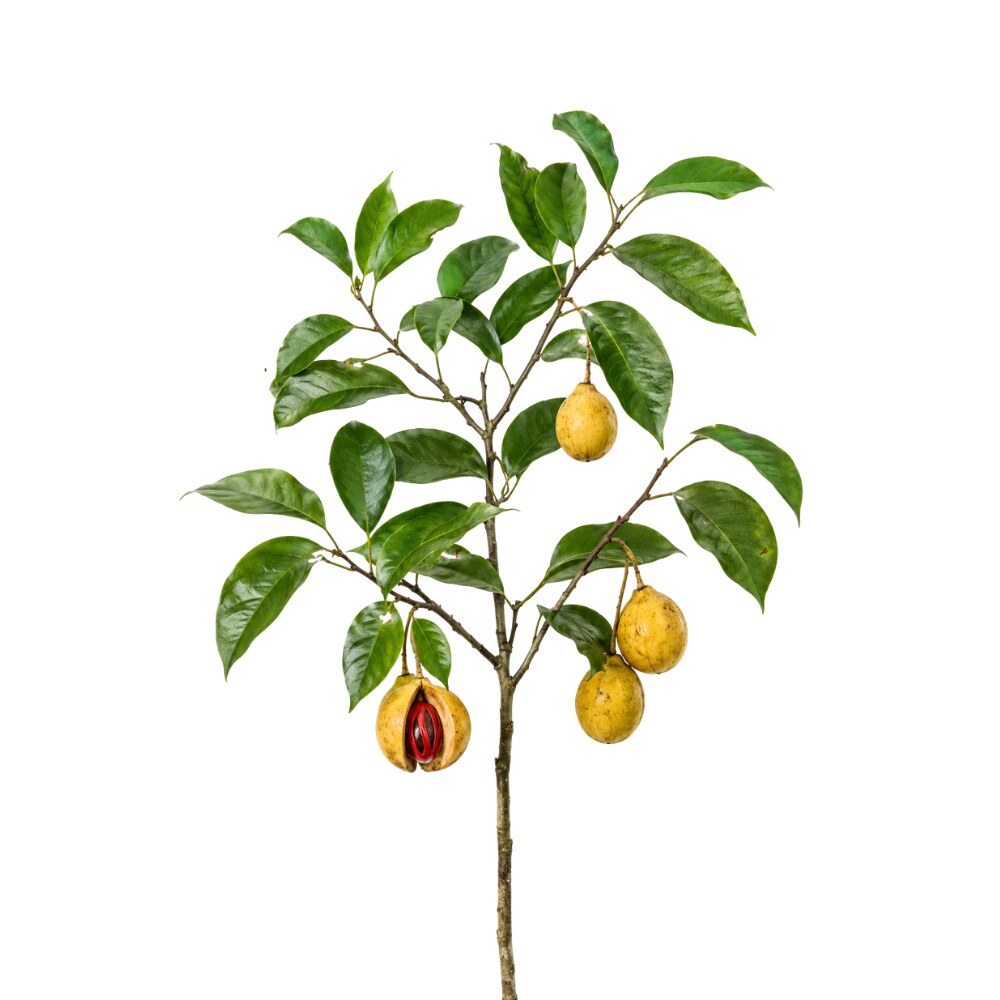 PotentPotentNutmegMyristica fragransOne or two whole seeds produce a slow, frightening deliriant state and a hangover lasting days.Mechanismmyristicin/elemicin/safrole metabolized to amphetamine-like and anticholinergic species; myristicin metabolically activated to reactive, neurotoxic metabolitesRead the evidenceShow lessMonograph →
Large doses produce a deliriant state that takes hours to arrive — severe nausea and vomiting, dry mouth, tachycardia, dizziness, agitation, confusion and frightening hallucinations — followed by a multi-day hangover 3,
Myristicin is metabolically activated to reactive species that mediate cellular toxicity 5Reference 5Metabolic activation of myristicin and its role in cellular toxicityView study →, and is directly neurotoxic to human neuroblastoma cells 6Reference 6Myristicin-induced neurotoxicity in human neuroblastoma SK-N-SH cellsView study →.
Origin changes the hazard. East Indian oils run higher in myristicin and safrole, West Indian higher in elemicin 7,
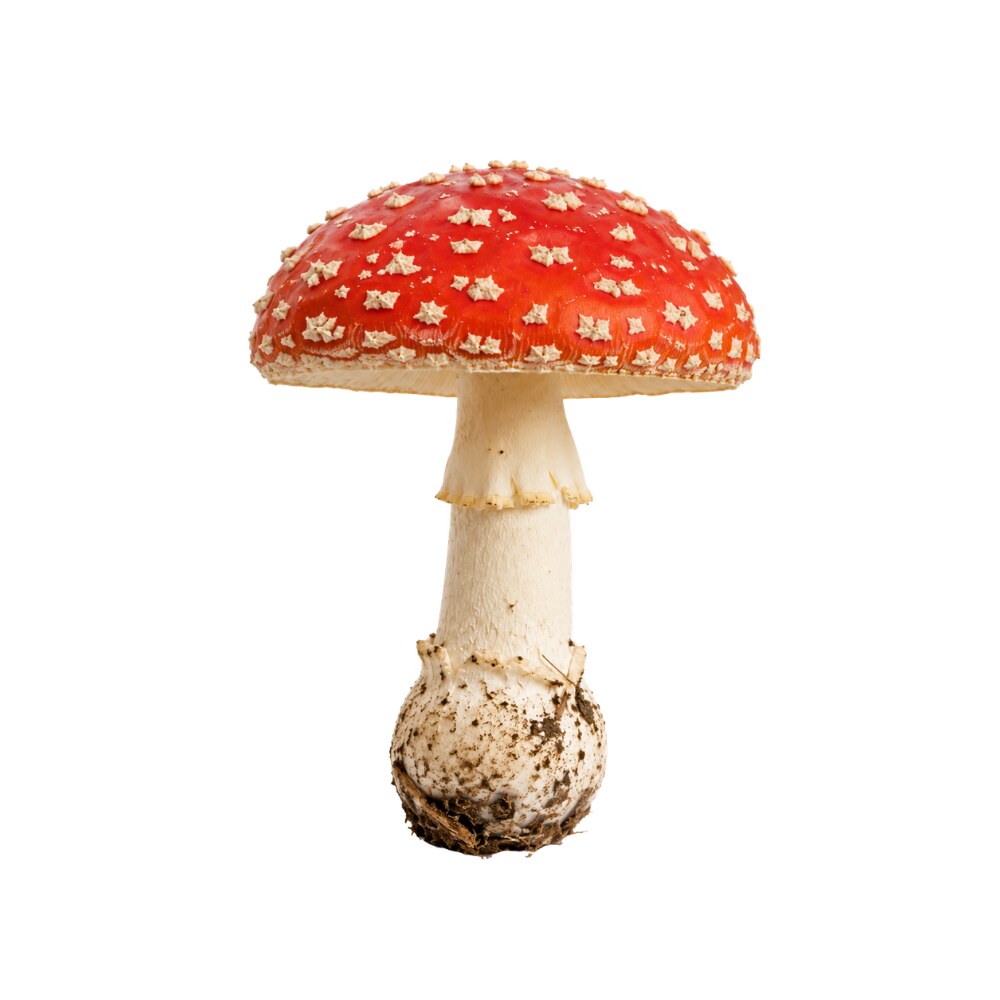 StrongStrongFly AgaricAmanita muscariaReaches delirium by a cholinergic, excitotoxic route that inverts the anticholinergic nightshade picture.Mechanismglutamate/NMDA receptor agonism (ibotenic acid); a clinical cholinergic (parasympathomimetic) tilt whose receptor basis is not established — muscarine is trace onlyRead the evidenceShow lessMonograph →
The delirium is a poisoning endpoint rather than a characteristic effect. It appears at large doses, alongside ataxia, agitation and rarely seizures, where the tropane plants produce delirium as the effect itself.
The mechanism is the mirror image of the rest of the class. Ibotenic acid is excitotoxic — it is used in neuroscience because it lesions neurons — and drives the nausea, vomiting and neurological agitation of the early phase 1,
Clinically the mushroom behaves as a cholinergic: sweating, salivation, hypotension, bradycardia, urination and vomiting.
Preparation is the modifier. Decarboxylation converts much of the ibotenic acid away and shifts the picture toward sedation, but the conversion is incomplete and variable.
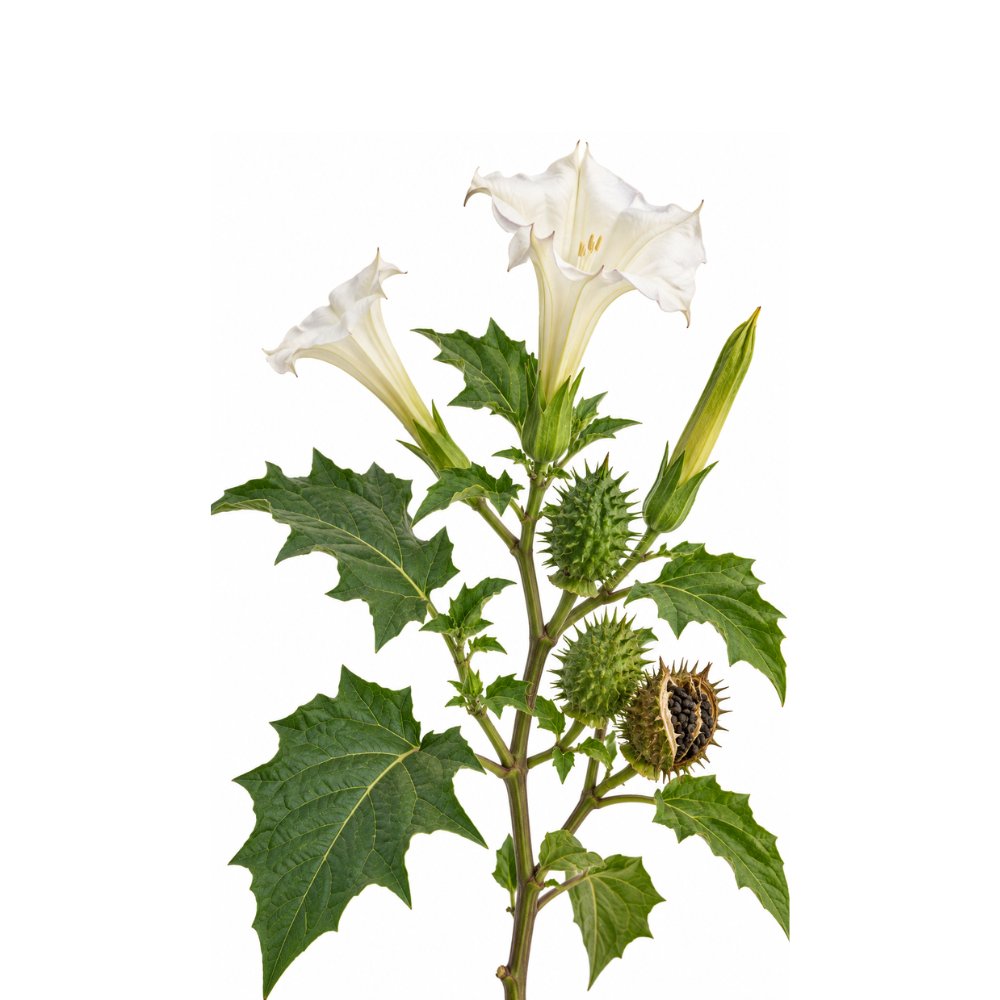 MildMildDaturaDatura stramoniumThe archetypal deliriant: tropane anticholinergics producing hallucinations the person cannot identify as unreal.Read the evidenceShow lessMonograph →
Scopolamine, hyoscyamine and atropine produce confusion, amnesia and hallucination without insight, which is what separates a deliriant from a psychedelic.
No controlled research on the plant exists. What is documented is poisoning: datura kills people, the margin between an active and a lethal amount is narrow and unpredictable between plants, and the experience is overwhelmingly reported as terrifying rather than sought.
Datura is routinely confused with Brugmansia, angel’s trumpet. Datura is a soft-stemmed annual with upward-facing flowers and spiny bursting pods; Brugmansia is woody, with hanging flowers and a smooth fruit.
Both are potently toxic.
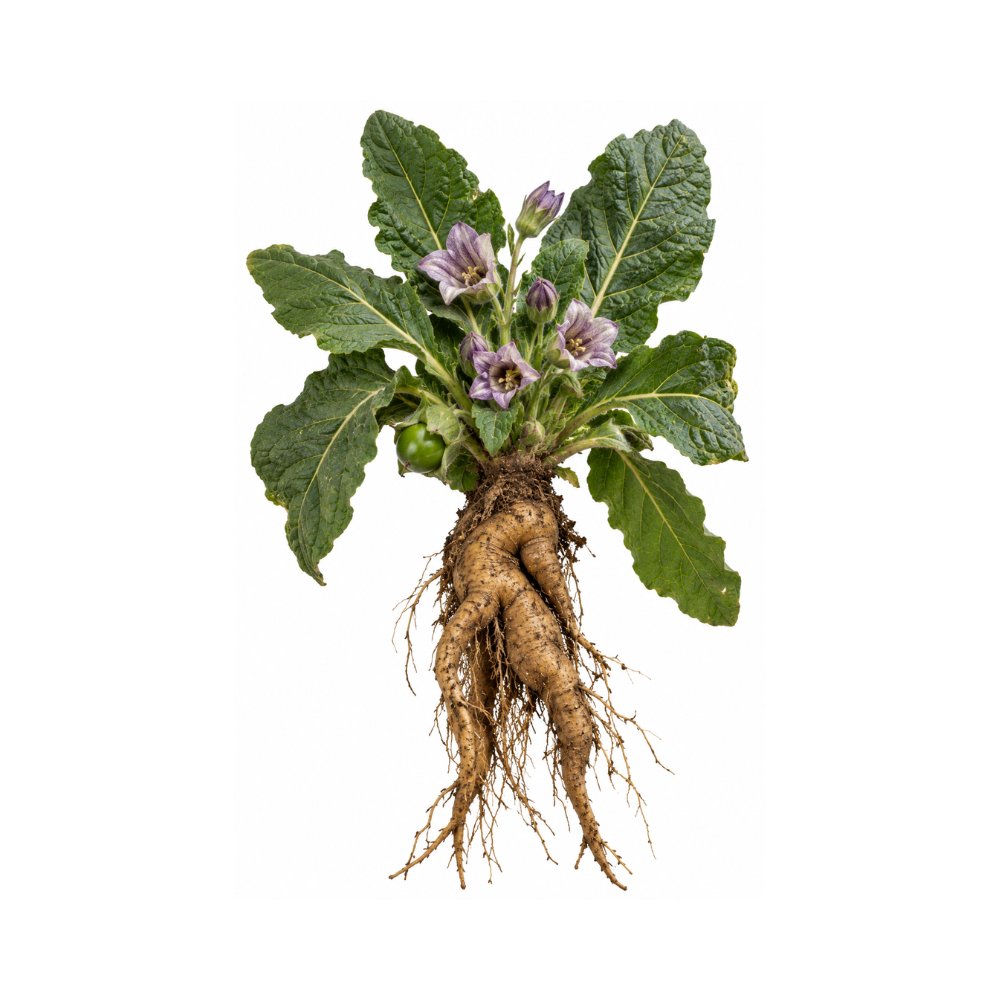 MildMildMandrakeMandragora officinarumThe same tropane alkaloids as datura, behind the longest magical and medical record of any plant in this class.Read the evidenceShow lessMonograph →
Mandragora carries scopolamine, hyoscyamine and atropine, as datura does, and produces the same anticholinergic delirium.
The European record is long: the mandrake root of folklore, and a genuine component of the medieval soporific sponge used before surgery.
No modern research exists, and the toxic margin is as narrow and as unpredictable as in every other tropane plant.
No herbs match these filters.
Safety
- Deliriant poisoning is a medical emergency; someone confused, agitated, hallucinating, hot and dry with wide pupils and a racing pulse needs emergency services, not a quiet room.
- The anticholinergic toxidrome — hyperthermia, dilated pupils, dry flushed skin, urinary retention, tachycardia and delirium — can progress to seizures, arrhythmia, coma and death, and specific medical treatment exists for it.
- A cholinergic presentation looks similar and is managed differently, so identifying the plant matters.
- There is no safe dose of a tropane plant and no way to estimate one, because alkaloid content varies by species, plant, part and season.
- Anticholinergics disable sweating, so warm weather or physical agitation turns fatal hyperthermia into a leading mechanism of death.
- Effects run a day or more, with blurred vision, impaired cognition and dense amnesia outlasting the point at which the person feels recovered.
- Anticholinergic load stacks with antihistamines, tricyclics, some antipsychotics and antiparkinsonian drugs, and is easy to reach accidentally.
- Older adults reach anticholinergic delirium at doses that would not produce it in anyone else.
References
- Michelot, D., & Melendez-Howell, L. M. (2003). Amanita muscaria: chemistry, biology, toxicology, and ethnomycology — review. Mycological Research. https://pubmed.ncbi.nlm.nih.gov/12747324/
- Jørgensen, C. G., Bräuner-Osborne, H., Nielsen, B., et al. (2007). Novel 5-substituted 1-pyrazolol analogues of ibotenic acid: synthesis and pharmacology at glutamate receptors. Bioorganic & Medicinal Chemistry. https://pubmed.ncbi.nlm.nih.gov/17376693/
- Beckerman, Persaud (2019). Nutmeg overdose: spice not so nice — case report. Complementary Therapies in Medicine. https://doi.org/10.1016/j.ctim.2019.07.011
- Truitt, E. B., et al. (1967). The pharmacology of myristicin and nutmeg. https://pubmed.ncbi.nlm.nih.gov/5615547/
- Zhu, Wang, Yang, et al. (2019). Metabolic activation of myristicin and its role in cellular toxicity. Journal of Agricultural and Food Chemistry. https://doi.org/10.1021/acs.jafc.9b00893
- Lee, Kim, Jung, et al. (2005). Myristicin-induced neurotoxicity in human neuroblastoma SK-N-SH cells. Toxicology Letters. https://doi.org/10.1016/j.toxlet.2005.01.012
- Ashokkumar, K., et al. (2022). Nutmeg (Myristica fragrans Houtt.) essential oil: a review on its composition, biological and pharmacological activities. Phytotherapy Research. https://doi.org/10.1002/ptr.7491
- Muchtaridi, et al. (2010). Identification of compounds in the essential oil of nutmeg seeds that inhibit locomotor activity in mice. International Journal of Molecular Sciences. https://doi.org/10.3390/ijms11114771
Keep Exploring