

Overview
Antiprostatic at a Glance
Antiprostatic herbs are used to relieve urinary symptoms associated with an enlarged prostate.
These include frequent or urgent urination, waking at night to urinate, a weak stream, difficulty starting, and the feeling that the bladder has not emptied completely.
Some herbs act on androgen signalling.
Dihydrotestosterone (DHT) helps drive prostate growth, and herbs such as nettle root and reishi can inhibit 5α-reductase, the enzyme that converts testosterone into DHT.
Others appear to act more directly within the prostate.
Saw palmetto has shown effects on programmed cell death in prostate tissue, while nettle root and fireweed may reduce inflammation and other processes contributing to urinary symptoms.
These mechanisms do not necessarily shrink the gland. In clinical studies, symptom improvement can occur without meaningful changes in prostate volume or PSA.
This makes the action primarily about improving lower urinary-tract symptoms associated with benign prostatic hyperplasia, rather than reversing prostate enlargement itself.
Saw palmetto, nettle root, reishi, and fireweed are among the main herbs used for this purpose.
An enlarging prostate was treated long before anyone knew what drove it. The Eclectics called saw palmetto “the old man’s friend”, nettle root is the traditional European remedy for the same complaint, and fireweed carries a European folk record for it that later became a registered indication.
Caution
Rule out prostate cancer first — enlargement and cancer produce similar urinary symptoms, so persistent or worsening symptoms are assessed before long-term use.
Some symptoms are urgent — acute urinary retention, blood in the urine, fever with urinary symptoms or unexplained bone pain need prompt medical attention.
Relief is not shrinkage — none of these herbs shrinks the prostate, so easing symptoms does not mean the enlargement has stopped progressing.
Mechanisms
How It Works
01
Androgen Handling
Lowering dihydrotestosterone, or lowering how much testosterone is free to act, slows the androgen drive behind prostatic growth.
Nettle root inhibits 5α-reductase and competes at sex-hormone-binding globulin, the carrier protein that holds testosterone in an inactive bound form.
Reishi’s ethanol extract was selected for its enzyme inhibition before it was trialled. Fireweed downregulates androgens in a testosterone-induced rat model.
Finasteride blocks the enzyme almost completely and roughly halves PSA. None of these herbs does either, which is why the screening marker stays readable on them.
The nettle binding work is old and in vitro, and no trial has measured DHT after any of these herbs.
Herbs: FireweedReishiStinging Nettle
Key compounds: SecoisolariciresinolBeta-Sitosterol
02
Pro-Apoptotic Action on Prostate Tissue
Pushing prostate epithelium toward programmed cell death reduces the tissue itself rather than the hormone acting on it.
Saw palmetto extract measurably shifted the prostatic bax/bcl-2 ratio and raised caspase-3 activity in men awaiting surgery. That is a human tissue endpoint rather than a cell-line one, which is unusual for a herbal mechanism.
It did not translate into symptom benefit in the two largest trials. A measured tissue effect and a measured clinical one are different results.
Herbs: Saw Palmetto
03
Inflammation in the Gland
Benign prostatic hyperplasia has an inflammatory component, and reducing it eases symptoms without touching gland size.
Fireweed’s butanol extract suppressed NF-κB-driven inflammation alongside its androgen effect in rats.
A nettle-root trial paired symptom improvement with falls in high-sensitivity CRP and malondialdehyde, and a mouse model showed blunted prostate-cell proliferation and reduced immune-cell infiltrate rather than gland shrinkage.
This is the mechanism most consistent with what the trials actually found — symptoms improving while prostate volume does not.
Herbs: FireweedStinging Nettle
Key compounds: Oenothein B
Materia Medica
Antiprostatic Herbs by Potency
The antiprostatic herbs, ordered by the relative strength of the effect rather than by how well studied it is. Each herb is described by the mechanism behind its effect and the evidence for it.
None of this is a substitute for professional care.
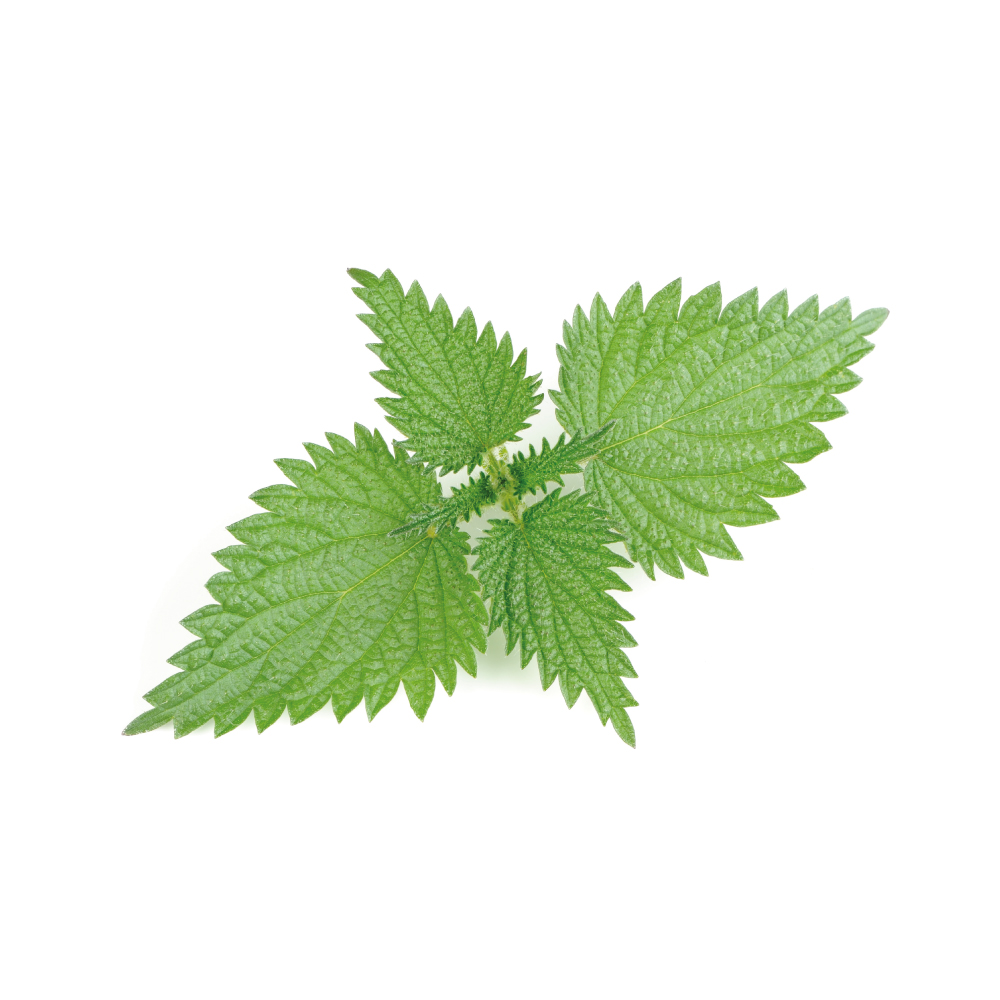 StrongStrongStinging NettleUrtica dioicaRoot extract improved lower-urinary-tract symptom scores against placebo in a 620-man crossover trial, leaving PSA and testosterone unchanged.MechanismSHBG competitive binding; 5α-reductase inhibitionRead the evidenceShow lessMonograph →
The root, not the leaf, carries this action. A six-month crossover trial in 620 men reported 81% of those on root extract improving against 16% on placebo, with the International Prostate Symptom Score falling from 19.8 to 11.8 and PSA and testosterone unchanged 12Reference 12RCTUrtica dioica for treatment of benign prostatic hyperplasia: a prospective, randomised, double-blind, placebo-controlled crossover study — randomised controlled trialView study →.
A 12-month German multicentre trial of Bazoton-uno, 459 mg of root dry extract, found a smaller but significant symptom-score advantage with no gain in flow rate or residual volume 13Reference 13RCTStinging nettle root extract (Bazoton-uno) in long-term treatment of benign prostatic syndrome — randomised, double-blind, placebo-controlled multicentre studyView study →. A 60-patient trial paired symptom improvement with falls in high-sensitivity CRP and malondialdehyde 14Reference 14RCTUrtica dioica root extract on clinical and biochemical parameters in patients with benign prostatic hyperplasia — randomised controlled trialView study →.
The mechanism usually invoked is competition for sex-hormone-binding globulin by the root lignans, chiefly secoisolariciresinol, and beta-sitosterol. That rests on older in-vitro binding work.
The harder experimental evidence points instead to blunted prostate-cell proliferation and inflammation: a mouse model showed lower prostate weight, Ki-67 and CD45+ infiltrate rather than gland shrinkage 15Reference 15AnimalCombined Sabal and Urtica extracts (WS 1541) exert anti-proliferative and anti-inflammatory effects in a mouse model of benign prostate hyperplasia — animal modelView study →.
Most of the trial literature tests nettle combined with saw palmetto or pygeum 16,
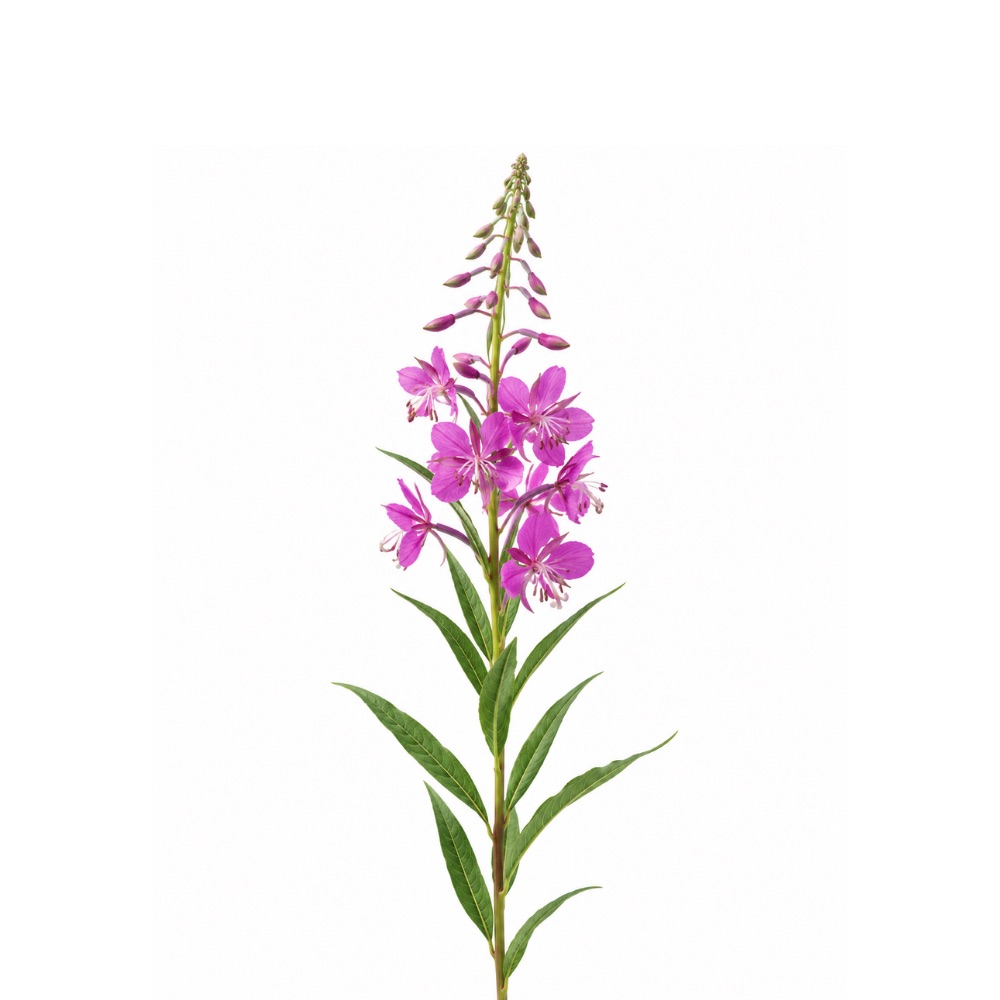 ModerateModerateFireweedChamerion angustifoliumA standardised high-oenothein B extract cut post-void residual urine and nocturia over six months, without moving prostate volume or PSA.Mechanismandrogen down-regulation; NF-κB suppression; partial antiandrogenic activityRead the evidenceShow less
A standardised extract high in oenothein B, 500 mg a day for six months, reduced post-void residual urine and nocturia and improved quality-of-life scores in 128 men 1Reference 1RCTEpilobium angustifolium L. extract with high content in oenothein B on benign prostatic hyperplasia: a monocentric, randomised, double-blind, placebo-controlled clinical trialView study →.
A butanol extract reduced prostate weight and prostate index in testosterone-induced rats, downregulating androgens and suppressing NF-κB-driven inflammation 2Reference 2AnimalEvaluation of the therapeutic effect against benign prostatic hyperplasia and the active constituents from Epilobium angustifolium L. — testosterone-induced rat model (in vivo)View study →.
Prostate volume and PSA did not move in the human trial, so the effect there is symptomatic.
The trial used a concentrated capsule rather than the EMA tea, and oenothein B content varies up to 40-fold between preparations.
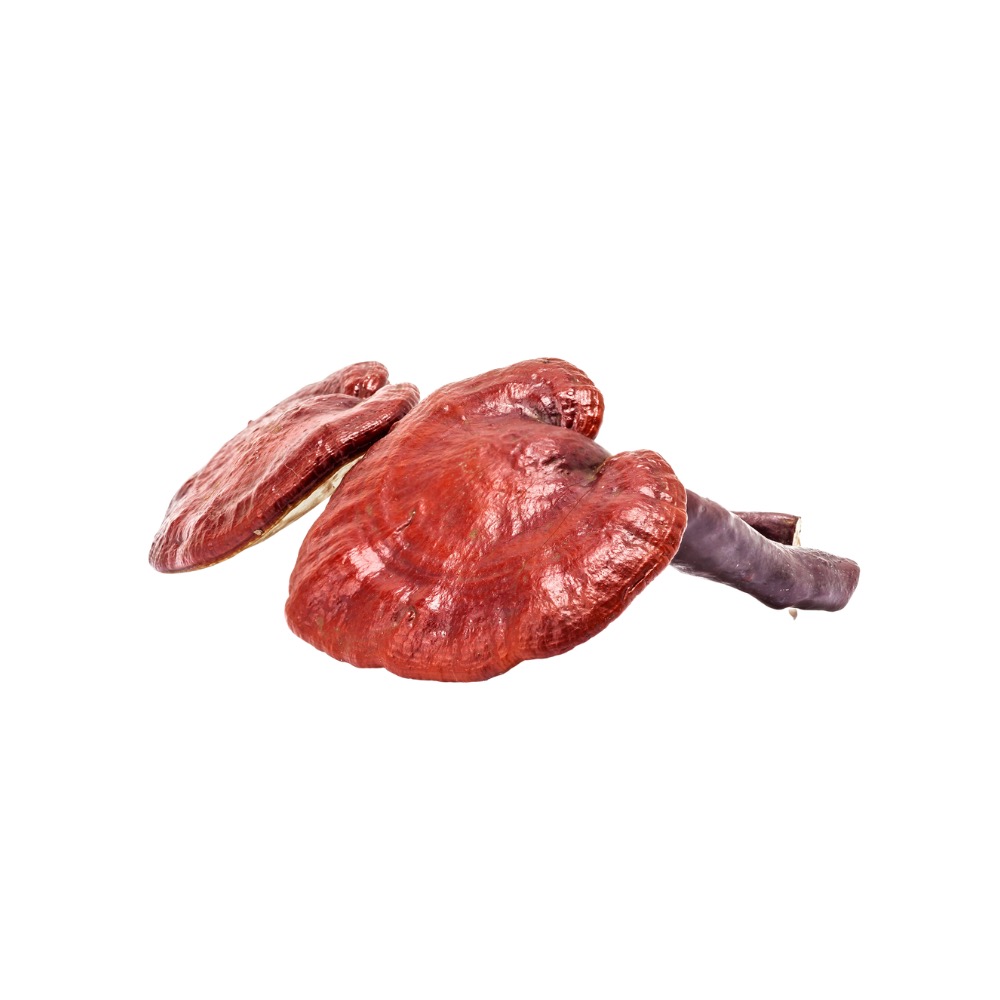 ModerateModerateReishiGanoderma lucidumAn ethanol extract selected for its 5α-reductase inhibition improved the International Prostate Symptom Score in two placebo-controlled trials.Mechanism5α-reductase inhibitionRead the evidenceShow lessMonograph →
Two 2008 double-blind, placebo-controlled trials from the same Japanese group tested a reishi ethanol extract chosen for the strongest 5α-reductase inhibition among 19 edible and medicinal mushrooms. A dose-ranging study identified 6 mg a day as effective 3Reference 3RCTEffect of an extract of Ganoderma lucidum in men with lower urinary tract symptoms: a double-blind, placebo-controlled, randomised dose-ranging study — randomised controlled trialView study →, and a second trial in 88 men found that dose improved the symptom score by 2.1 points against placebo, with no change in prostate volume, PSA or testosterone 4Reference 4RCTRandomized clinical trial of an ethanol extract of Ganoderma lucidum in men with lower urinary tract symptoms — randomised controlled trialView study →.
The effect is small, it comes from a single research group, and the extract was specially selected rather than a commercial preparation.
The enzyme target is named and the result is replicated, which is more than most herbal prostate claims have.
 ModerateModerateSaw PalmettoSerenoa repensShifts the prostatic bax/bcl-2 ratio and raises caspase-3 in men awaiting surgery, a pro-apoptotic effect on prostate epithelium.Mechanismbax/bcl-2 ratio ↑; caspase-3 activation (pro-apoptotic in prostate epithelium); 5α-reductase inhibition (weak, non-competitive)Read the evidenceShow lessMonograph →
In men awaiting surgery, the extract measurably shifted the prostatic bax/bcl-2 ratio and raised caspase-3 activity, a genuine pro-apoptotic effect on prostate epithelium 8Reference 8RCTSerenoa repens treatment modifies bax/bcl-2 index expression and caspase-3 activity in prostatic tissue — randomized controlled trial (RCT)View study →.
The two most rigorous trials found nothing. STEP randomised 225 men to 320 mg a day for a year with no change in symptom scores or urinary flow 5Reference 5RCTSaw palmetto for benign prostatic hyperplasia — randomized controlled trial (RCT)View study →, and CAMUS escalated to 960 mg a day in 369 men and still found no advantage over placebo 6Reference 6RCTEffect of increasing doses of saw palmetto extract on lower urinary tract symptoms — a randomized trial (RCT)View study → — a dose-response test the herb failed.
Cochrane, pooling all extract types, reached the same conclusion 7Reference 7Meta-analysisSerenoa repens for benign prostatic hyperplasia — systematic review and meta-analysis (superseded by the 2023 update)View study →.
A narrower clinical signal survives for one preparation. Meta-analyses restricted to the hexanic Permixon extract report modest reductions in nocturia and improvement in flow, with comparability to tamsulosin 9,
That effect is preparation-specific and modest, part of the supporting literature is industry-associated, and it does not carry over to teas, whole-berry powder or unstandardised capsules.
No herbs match these filters.
Safety
- Exclude prostate cancer before long-term use, because benign enlargement and cancer share the same symptoms and relief can delay a diagnosis.
- Acute urinary retention, blood in the urine, fever with urinary symptoms or bone pain are urgent and are not situations for a herb.
- None of these herbs shrinks the prostate, so symptom relief is not evidence that the enlargement has stopped progressing.
- Unlike finasteride, these herbs do not suppress PSA, so a screening result stays readable — tell the doctor interpreting it what is being taken.
- Effects on this action are theoretically additive with alpha-blockers and 5α-reductase inhibitors, and the combinations are unstudied.
- A result from a standardised extract does not carry over to a tea, a whole-berry powder or an unstandardised capsule.
References
- Esposito, C., Santarcangelo, C., Masselli, R., et al. (2021). Epilobium angustifolium L. extract with high content in oenothein B on benign prostatic hyperplasia: a monocentric, randomised, double-blind, placebo-controlled clinical trial. Biomedicine & Pharmacotherapy. https://pubmed.ncbi.nlm.nih.gov/33765581/
- Deng, L., Zong, W., Tao, X., et al. (2019). Evaluation of the therapeutic effect against benign prostatic hyperplasia and the active constituents from Epilobium angustifolium L. — testosterone-induced rat model (in vivo). Journal of Ethnopharmacology. https://pubmed.ncbi.nlm.nih.gov/30529422/
- Noguchi M, Kakuma T, Tomiyasu K, et al. (2008). Effect of an extract of Ganoderma lucidum in men with lower urinary tract symptoms: a double-blind, placebo-controlled, randomised dose-ranging study — randomised controlled trial. Asian J Androl. https://pubmed.ncbi.nlm.nih.gov/18097503/
- Noguchi M, Kakuma T, Tomiyasu K, et al. (2008). Randomized clinical trial of an ethanol extract of Ganoderma lucidum in men with lower urinary tract symptoms — randomised controlled trial. Asian J Androl. https://pubmed.ncbi.nlm.nih.gov/18097505/
- Bent, S., Kane, C., Shinohara, K., et al. (2006). Saw palmetto for benign prostatic hyperplasia — randomized controlled trial (RCT). New England Journal of Medicine. https://pubmed.ncbi.nlm.nih.gov/16467543/
- Barry, M. J., Meleth, S., Lee, J. Y., et al. (2011). Effect of increasing doses of saw palmetto extract on lower urinary tract symptoms — a randomized trial (RCT). JAMA. https://pubmed.ncbi.nlm.nih.gov/21954478/
- Tacklind, J., Macdonald, R., Rutks, I., Stanke, J. U., & Wilt, T. J. (2012). Serenoa repens for benign prostatic hyperplasia — systematic review and meta-analysis (superseded by the 2023 update). Cochrane Database of Systematic Reviews. https://pubmed.ncbi.nlm.nih.gov/23235581/
- Vela-Navarrete, R., Escribano-Burgos, M., Farré, A. L., et al. (2005). Serenoa repens treatment modifies bax/bcl-2 index expression and caspase-3 activity in prostatic tissue — randomized controlled trial (RCT). Journal of Urology. https://pubmed.ncbi.nlm.nih.gov/15643230/
- Novara, G., Giannarini, G., Alcaraz, A., et al. (2016). Efficacy and safety of hexanic lipidosterolic extract of Serenoa repens (Permixon) in LUTS due to BPH — systematic review and meta-analysis of randomized controlled trials. European Urology Focus. https://pubmed.ncbi.nlm.nih.gov/28723522/
- Vela-Navarrete, R., Alcaraz, A., Rodríguez-Antolín, A., et al. (2018). Efficacy and safety of a hexanic extract of Serenoa repens (Permixon) for LUTS/BPH — systematic review and meta-analysis of randomised controlled trials and observational studies. BJU International. https://pubmed.ncbi.nlm.nih.gov/29694707/
- Russo, G. I., Scandura, C., Di Mauro, M., et al. (2021). Clinical efficacy of Serenoa repens versus placebo versus alpha-blockers for LUTS/BPE — systematic review and network meta-analysis of randomized placebo-controlled trials. European Urology Focus. https://pubmed.ncbi.nlm.nih.gov/31952967/
- Safarinejad MR (2005). Urtica dioica for treatment of benign prostatic hyperplasia: a prospective, randomised, double-blind, placebo-controlled crossover study — randomised controlled trial. J Herb Pharmacother. https://pubmed.ncbi.nlm.nih.gov/16635963/
- Schneider T, Rübben H (2004). Stinging nettle root extract (Bazoton-uno) in long-term treatment of benign prostatic syndrome — randomised, double-blind, placebo-controlled multicentre study. Urologe A. https://pubmed.ncbi.nlm.nih.gov/15045190/
- Karami AA, Sheikhsoleimani M, Memarzadeh MR, et al. (2020). Urtica dioica root extract on clinical and biochemical parameters in patients with benign prostatic hyperplasia — randomised controlled trial. Pak J Biol Sci. https://pubmed.ncbi.nlm.nih.gov/32981268/
- Pigat N, Reyes-Gomez E, Boutillon F, et al. (2019). Combined Sabal and Urtica extracts (WS 1541) exert anti-proliferative and anti-inflammatory effects in a mouse model of benign prostate hyperplasia — animal model. Front Pharmacol. https://pubmed.ncbi.nlm.nih.gov/30984003/
- Sökeland J (2000). Combined sabal and urtica extract compared with finasteride in men with benign prostatic hyperplasia — randomised trial. BJU Int. https://pubmed.ncbi.nlm.nih.gov/10971268/
- Lopatkin N, Sivkov A, Schläfke S, et al. (2007). Efficacy and safety of a combination of Sabal and Urtica extract in lower urinary tract symptoms — placebo-controlled, double-blind, multicentre trial. Int Urol Nephrol. https://pubmed.ncbi.nlm.nih.gov/18038253/
- Oelke M, Berges R, Schläfke S, Burkart M (2014). Fixed-dose combination PRO 160/120 of sabal and urtica extracts improves nocturia in men with LUTS suggestive of BPH — re-evaluation of four randomised controlled trials. World J Urol. https://pubmed.ncbi.nlm.nih.gov/24938176/
- Krzeski T, Kazón M, Borkowski A, et al. (1993). Combined extracts of Urtica dioica and Pygeum africanum in the treatment of benign prostatic hyperplasia — double-blind randomised comparison of two doses. Clin Ther. https://pubmed.ncbi.nlm.nih.gov/7509261/
- Wilt TJ, Ishani A, Rutks I, MacDonald R (2000). Phytotherapy for benign prostatic hyperplasia — systematic review/meta-analysis. Public Health Nutr. https://pubmed.ncbi.nlm.nih.gov/11276294/
Keep Exploring