

Overview
HPG Axis Modulator at a Glance
HPG-axis modulators act on the hypothalamic–pituitary–gonadal axis, the feedback system that regulates reproductive hormones.
The hypothalamus releases GnRH, which signals the pituitary to release LH and FSH. These hormones then act on the ovaries or testes, which produce estrogen, progesterone, or testosterone and feed back into the same system.
A herb can influence this axis either upstream, by changing GnRH, LH, or FSH, or further downstream by altering the hormonal signals those glands produce.
Shatavari is the clearest herbal example with human data.
In a controlled trial in perimenopausal women, it lowered FSH and LH while increasing anti-Müllerian hormone, suggesting an effect somewhere within the reproductive feedback loop.
This is different from simply being estrogenic.
A phytoestrogen adds signal at the estrogen receptor, while an HPG-axis modulator changes the instructions controlling hormone production.
The resulting effect can therefore depend heavily on the hormonal state of the person taking it.
The exact mechanism for shatavari remains unclear. Its steroidal saponins are often described as phytoestrogenic, but direct estrogen-receptor activity has not been clearly demonstrated.
The axis was mapped in the twentieth century and no tradition names it.
Shatavari arrives here from Ayurveda, where it is the principal rasayana for women’s reproductive health; its Sanskrit name is usually glossed as “she who possesses a hundred husbands”.
Caution
Not with hormone therapy — a herb acting on the reproductive axis can interact unpredictably with hormone therapy or other endocrine treatment, so combine them only under supervision.
May affect fertility — anything that moves this axis affects fertility, so pregnancy and fertility treatment warrant particular care.
Not with hormone-sensitive conditions — the effect sits upstream of the hormones those conditions respond to.
Mechanisms
How It Works
01
Gonadotropin Feedback
Changing the pituitary’s output of LH and FSH changes the instruction the gonads are working from.
Shatavari’s trial measured exactly that. Serum FSH and LH fell over 120 days on a standardised root extract while anti-Müllerian hormone rose, alongside lower menopause-rating and hot-flush scores, and a second multicentre trial reproduced the symptomatic half.
Hormone therapy works the other way round, supplying the hormone and letting the axis fall silent.
An axis effect depends on the state the axis was in, which is why the same herb can read differently in different people.
A hormone level that moved says the axis responded. It does not say which receptor or enzyme made it respond.
Herbs: Shatavari
02
Undemonstrated Receptor Routes
The proposed mechanism for this action is estrogen-receptor binding by the steroidal saponins, and it has not been shown.
Shatavarin IV and the sarsasapogenin aglycone are routinely called phytoestrogenic. The supporting work is molecular docking — a computational prediction of how a molecule would sit in a binding site — with no binding or transactivation assay published for either.
Docking generates a hypothesis rather than settling one. A measured effect on the axis with an undemonstrated receptor mechanism is an axis effect, and that is all it is.
Herbs: Shatavari
Key compounds: Sarsasapogenin
Materia Medica
HPG-Axis-Modulating Herbs by Potency
The hpg axis modulator herbs, ordered by the relative strength of the effect rather than by how well studied it is. Each herb is described by the mechanism behind its effect and the evidence for it.
None of this is a substitute for professional care.
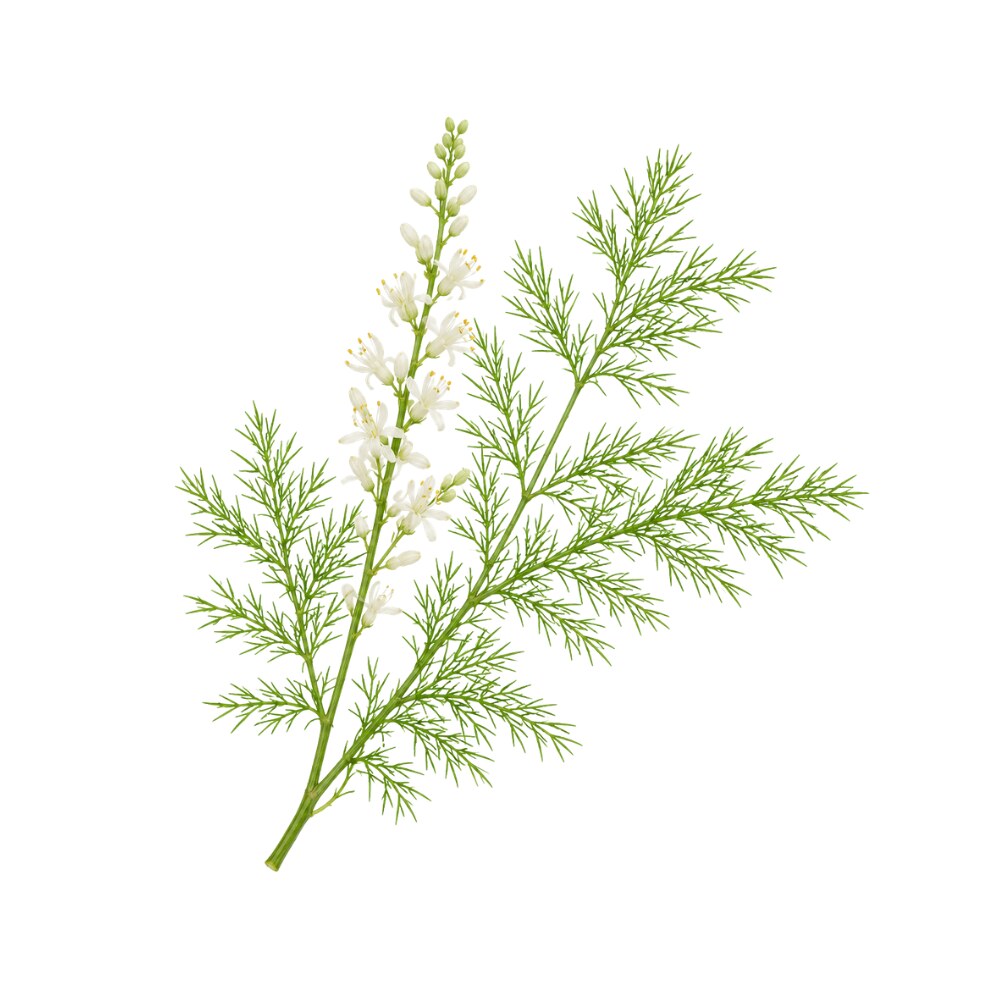 ModerateModerateShatavariAsparagus racemosusSerum FSH fell 56% and LH 34% over 120 days in a placebo-controlled trial in perimenopausal women, with anti-Müllerian hormone rising alongside.Mechanismfalling FSH and LH with rising AMH in trial subjects — measured clinical outcome, receptor mechanism never assayedRead the evidenceShow lessMonograph →
In a 120-day double-blind placebo-controlled trial of a standardised root extract at 200 mg a day in 50 perimenopausal women, serum FSH fell 56.3% and LH fell 34.3% while anti-Müllerian hormone rose, alongside reduced Menopause Rating Scale and hot-flush scores 1Reference 1RCTA standardized Asparagus racemosus root extract improves hormonal balance and menstrual health and reduces vasomotor symptoms — randomised placebo-controlled trialView study →. A separate multicentre trial in 70 women reproduced the symptomatic benefit 2Reference 2RCTEfficacy and safety of Shatavari root extract for the management of menopausal symptoms — double-blind, multicenter, randomised controlled trialView study →.
The axis effect was measured rather than assumed, which is unusual for this claim.
The steroidal saponins are routinely called phytoestrogenic, and no estrogen-receptor binding or transactivation assay has been published for shatavarin IV or the sarsasapogenin aglycone. The supporting work is molecular docking, so the gonadotropin shifts are clinical outcomes rather than evidence of a receptor mechanism.
Both trials are small, sponsor-run and use proprietary standardised extracts. There is no whole-root data and no head-to-head against hormone therapy.
No herbs match these filters.
Safety
- A herb acting on the reproductive axis should not be combined with hormone therapy without supervision.
- Avoid in hormone-sensitive conditions, since the effect sits upstream of the hormones those conditions respond to.
- Anything that moves this axis affects fertility in both directions, and neither effect has been established here.
- A result from a proprietary standardised extract does not carry over to whole root or a decoction.
- The gonadotropin measurements come from small, sponsor-run trials with no independent replication.
References
- Yadav P, Yadav S, Vedururu SS, et al. (2025). A standardized Asparagus racemosus root extract improves hormonal balance and menstrual health and reduces vasomotor symptoms — randomised placebo-controlled trial. Journal of the American Nutrition Association. https://pubmed.ncbi.nlm.nih.gov/40434025/
- Gudise VS, Dasari MP, Kuricheti SSK (2024). Efficacy and safety of Shatavari root extract for the management of menopausal symptoms — double-blind, multicenter, randomised controlled trial. Cureus. https://pubmed.ncbi.nlm.nih.gov/38725785/
Keep Exploring