

Overview
SHBG Inhibitor at a Glance
Freeing Testosterone Rather Than Making More
Most of the testosterone circulating in your blood is not doing anything. Roughly half is bound tightly to sex-hormone-binding globulin (SHBG) and another large share rides loosely on albumin; only a small free fraction is actually available to bind androgen receptors and produce an effect.
That makes SHBG a lever. An herb that lowers SHBG, or competes with testosterone for its binding site, raises the free fraction without changing total output at all — a blood test could show identical total testosterone before and after.
It is a different mechanism from the testosteromimetics, which mimic or raise the hormone itself, and different again from the 5α-reductase inhibitors, which change what testosterone is converted into rather than how much of it is free.
Why This Category Is Small, and Should Be
Search “SHBG” alongside almost any male-tonic herb and you will find the claim. Very little of it survives contact with the evidence, for a reason worth stating plainly: nearly all of it is binding-assay work.
Showing that a plant extract displaces testosterone from SHBG in a test tube is not difficult, and it is not the same as showing that drinking a decoction raises anyone’s free testosterone. The step from one to the other requires measuring serum free testosterone in people, and for these herbs that measurement has not been made.
So this is a mechanism that is well characterised in vitro and unverified in vivo.
The Part Matters
For nettle, the SHBG activity belongs to the root, not the leaf. Nettle leaf is a mineral-rich anti-inflammatory and antiallergic herb with an entirely separate profile; nettle root is the hormonal one.
Products, and readers, conflate them constantly. If an SHBG effect is what you are after, leaf tea will not deliver it.
Caution
Unstudied with hormone drugs — use alongside anti-androgens, testosterone therapy or 5α-reductase inhibitors is unstudied, and free hormone levels are exactly what those drugs are titrated against.
Root and leaf differ — the SHBG work belongs to nettle root, and nettle leaf's very different profile does not transfer to it.
Prostate symptoms need assessment first — nettle root is commonly taken for them, and it does not distinguish benign enlargement from anything else.
Materia Medica
SHBG-Inhibiting Herbs by Potency
The shbg inhibitor herbs, ordered by the relative strength of the effect rather than by how well studied it is. Each herb is described by the mechanism behind its effect and the evidence for it.
None of this is a substitute for professional care.
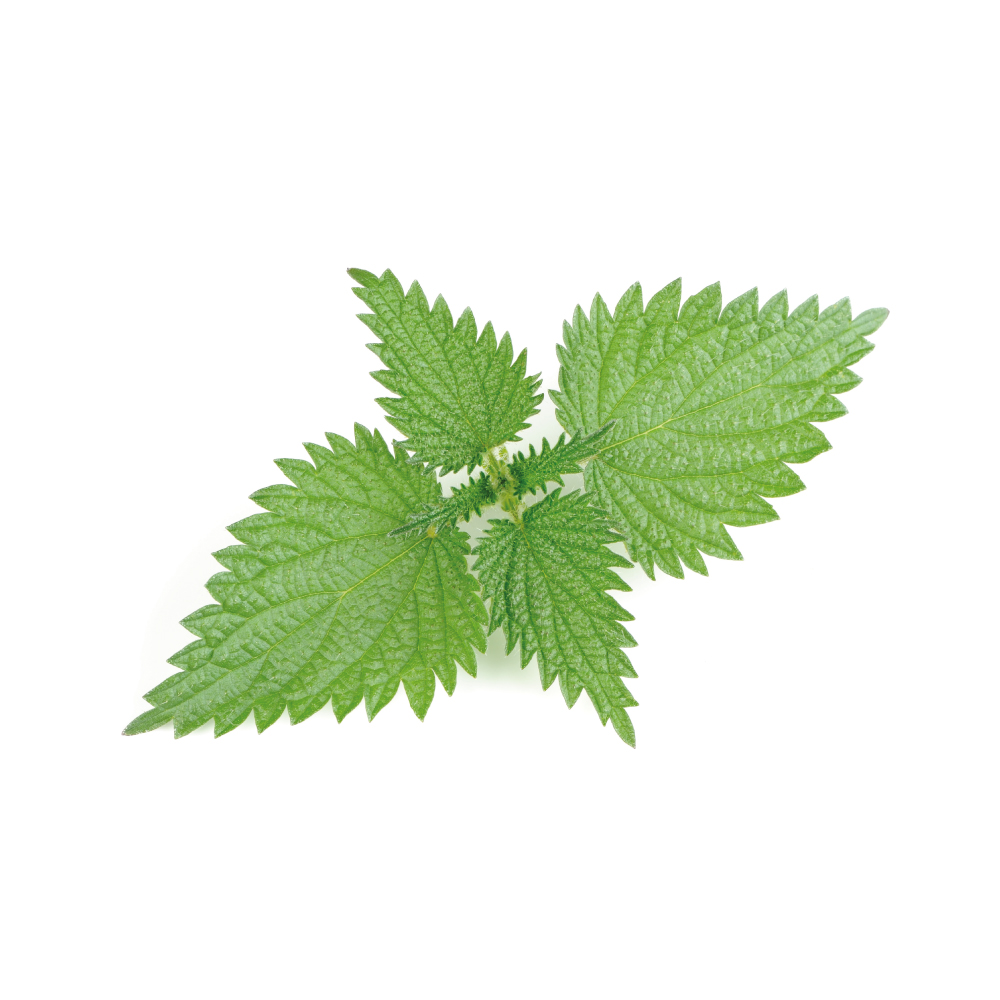 ModerateModerateStinging NettleUrtica dioicaThe mechanism nettle root is actually prescribed on — it frees bound testosterone rather than making more, but that step has only been shown in a binding assay.Mechanismcompetitive binding to sex-hormone-binding globulin, displacing bound testosterone — in-vitro binding, no serum free-T measurementRead the evidenceShow lessMonograph →
This is the mechanism nettle root is prescribed on, and its defining hormonal property — “the roots are mainly used to treat hormone-related dysfunctions for its ability to inhibit SHBG competitively.” SHBG is the carrier protein that holds testosterone in an inactive bound form; displacing it raises the free, biologically active fraction without changing total output, which is a genuinely different thing from a testosterone booster and the reason nettle sits in male-hormone formulas. The lignan secoisolariciresinol and beta-sitosterol are the constituents implicated, alongside the same fraction’s 5α-reductase inhibition 1Reference 1In vitroEvaluation of 5α-reductase inhibitory activity of certain herbs useful as antiandrogens — in vitroView study →.
The ceiling is specific: this is binding-assay evidence. No trial has measured serum free testosterone in people taking nettle root, so the step from “displaces testosterone from SHBG in vitro” to “raises free testosterone in a person” is inferred, not shown. It is also root, not leaf — the two parts do different things and are not interchangeable.
No herbs match these filters.
Safety
One herb, one mechanism, and the honest caution is about what has not been studied.
- Nettle root is well tolerated on its own; the safety question here is not toxicity.
- Because the mechanism is hormonal, treat concurrent use with anti-androgens, testosterone therapy or 5α-reductase inhibitors as unstudied rather than as safe. Displacing testosterone from sex hormone-binding globulin changes free hormone levels, which is exactly the variable those drugs are titrated against.
- Root and leaf are different medicines. The SHBG work belongs to the root; nettle leaf’s very different profile does not transfer to it.
- Urinary symptoms attributed to the prostate need assessment first. Nettle root is commonly taken for them, and it does not distinguish benign enlargement from anything else.
References
- Nahata A, Dixit VK (2014). Evaluation of 5α-reductase inhibitory activity of certain herbs useful as antiandrogens — in vitro. Andrologia. https://pubmed.ncbi.nlm.nih.gov/23710567/
Keep Exploring