
Materia Medica
Bitter Melon
Momordica charantia
Bitter melon is a tropical climbing vine of the cucumber family, grown for its warty, intensely bitter fruit. The fruit is eaten as a vegetable and taken across Asia, Africa and the Caribbean as a traditional remedy for high blood sugar. Its bitter cucurbitane triterpenoids are the main focus of research.
What Is Bitter Melon?
Bitter melon is a tropical climbing vine of the cucumber family, grown for its warty green fruit, which is eaten young as a vegetable. It is also called bitter gourd, karela and, in Chinese, ku gua (苦瓜) 32Reference 32Lu, A., & Jeffrey, C. (n.d.). Momordica charantia Linnaeus — species description and distribution — flora. In Wu, Z. Y., & Raven, P. H. (eds.), Flora of China, Vol. 19 (Cucurbitaceae). http://www.efloras.org/florataxon.aspx?flora_id=2&taxon_id=200022698View study →.
The vine is native to Africa and is now grown and naturalised throughout the tropics 32,
Its bitterness comes from cucurbitane-type triterpenoids, known as momordicosides, of which about 200 have been described 31Reference 31ReviewMomordica charantia L. — diabetes-related bioactivities, quality control, and safety considerations — reviewView study →. Human trials of fruit preparations for blood-sugar control have found small effects, and the results have been mixed 1,
How Is Bitter Melon Used?
- Unripe fruit — eaten as a bitter vegetable: stir-fried, stuffed, curried and juiced. The juice is the commonest traditional medicine 31Reference 31ReviewMomordica charantia L. — diabetes-related bioactivities, quality control, and safety considerations — reviewView study →.
- Dried fruit and extracts — powders and capsules, the preparations tested in trials 1,
8, .9Reference 1Meta-analysisMomordica charantia L. lowers elevated glycaemia in type 2 diabetes mellitus patients — systematic review and meta-analysisView study →Reference 8RCTMomordica charantia administration improves insulin secretion in type 2 diabetes mellitus — randomised, double-blind, placebo-controlled trialView study →Reference 9RCTBitter gourd (Momordica charantia L.) supplementation for twelve weeks improves biomarkers of glucose homeostasis in a prediabetic population — RCTView study → - Leaves and vines — made into a tea 31Reference 31ReviewMomordica charantia L. — diabetes-related bioactivities, quality control, and safety considerations — reviewView study →.
Traditional Uses
South & Southeast Asian Folk Medicine
Bitter melon is both a food and a medicine. The unripe fruit is cooked as a bitter vegetable, and the same fruit and its juice are the everyday folk treatment for diabetes and “high blood sugar”. The reputation has earned it the nicknames “plant insulin” and “vegetable insulin”.
It has long been used as a digestive bitter to sharpen appetite and settle sluggish digestion, and to expel intestinal worms. It is also taken internally or applied for skin complaints such as psoriasis, boils and eczema, and for fevers; in malarial regions it is used as a febrifuge.
Ayurvedic Medicine
Karela is a bitter, pungent, cooling herb used to reduce kapha and pitta. It is prescribed for madhumeha (diabetes), skin disease, worms and liver complaints.
Traditional Chinese Medicine
The fruit, kǔguā, is regarded as cold. It is used to clear summer-heat, drain heat and toxins, and brighten the eyes.
Indications
- High blood sugar in type 2 diabetes [fruit] Caution: Meta-analyses disagree. Several find small falls in fasting glucose and HbA1c, while a Cochrane review and a 2024 meta-analysis found no significant effect 1,
3, .4, 5 - Prediabetes [freeze-dried whole fruit]
- High cholesterol and triglycerides [fruit] Caution: One meta-analysis found small falls in total cholesterol and triglycerides; another found no effect on any blood lipid 5,
12 . - High blood pressure [fruit] Caution: A 2024 meta-analysis found no effect on blood pressure 5.
- Poor appetite and sluggish digestion [fruit; folk medicine]
- Intestinal worms [fruit; folk medicine, Ayurveda]
- Psoriasis, boils and eczema [fruit; folk medicine]
- Fever [fruit; folk medicine]
- Liver complaints [fruit; Ayurveda]
- Summer-heat [fruit; TCM]
Botany
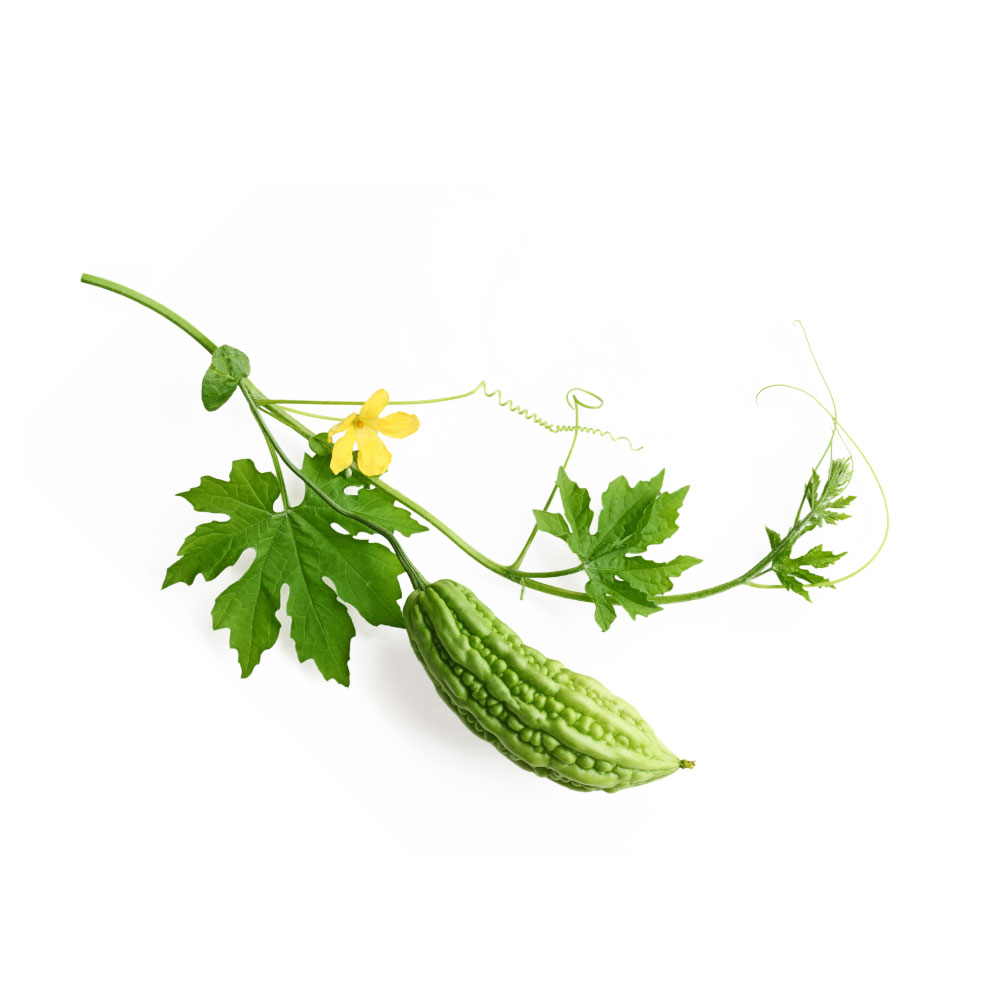
Bitter melon is an annual climbing vine of the cucumber family (Cucurbitaceae). Its stems are many-branched and hairy, and it climbs by simple tendrils up to 20 cm long 32Reference 32Lu, A., & Jeffrey, C. (n.d.). Momordica charantia Linnaeus — species description and distribution — flora. In Wu, Z. Y., & Raven, P. H. (eds.), Flora of China, Vol. 19 (Cucurbitaceae). http://www.efloras.org/florataxon.aspx?flora_id=2&taxon_id=200022698View study →.
The leaves are thin, kidney-shaped to nearly round, 4–12 cm across, and deeply cut into five to seven lobes 32Reference 32Lu, A., & Jeffrey, C. (n.d.). Momordica charantia Linnaeus — species description and distribution — flora. In Wu, Z. Y., & Raven, P. H. (eds.), Flora of China, Vol. 19 (Cucurbitaceae). http://www.efloras.org/florataxon.aspx?flora_id=2&taxon_id=200022698View study →.
Male and female flowers grow singly on the same plant. The petals are bright yellow and 7–25 mm long 32,
The fruit is spindle-shaped or cylindrical, 7–25 cm long, and covered in small warts or ridges. It turns orange to red when ripe and splits open from the tip into three parts 32,
The young fruit is picked and eaten before the extreme bitterness of the mature fruit develops 33Reference 33Nesom, G. L. (n.d.). Momordica charantia Linnaeus subsp. charantia — species description, habitat and distribution — flora. In Flora of North America Editorial Committee (eds.), Flora of North America North of Mexico, Vol. 6 (Cucurbitaceae). http://www.efloras.org/florataxon.aspx?flora_id=1&taxon_id=250100801View study →.
Distribution
Bitter melon is native to Africa. It is now pantropical and is grown as a crop in many countries; in China it is commonly cultivated 32,
In the Americas it grows as a weed of disturbed ground in the humid lowland tropics and subtropics: roadsides, fencerows, thickets, fields and ditches. It has naturalised in the southeastern United States and is becoming common in Florida 33Reference 33Nesom, G. L. (n.d.). Momordica charantia Linnaeus subsp. charantia — species description, habitat and distribution — flora. In Flora of North America Editorial Committee (eds.), Flora of North America North of Mexico, Vol. 6 (Cucurbitaceae). http://www.efloras.org/florataxon.aspx?flora_id=1&taxon_id=250100801View study →.
The weedy American form is rarely eaten. The cultivated forms seen in Asian markets do not escape into the wild 33Reference 33Nesom, G. L. (n.d.). Momordica charantia Linnaeus subsp. charantia — species description, habitat and distribution — flora. In Flora of North America Editorial Committee (eds.), Flora of North America North of Mexico, Vol. 6 (Cucurbitaceae). http://www.efloras.org/florataxon.aspx?flora_id=1&taxon_id=250100801View study →.
Growing Conditions
Cultivation snapshot for Bitter Melon
- Full sun and long, hot, humid days; it’s a true tropical vine and will not tolerate frost.
- Fertile, well-drained soil kept consistently moist through the growing season.
- Give it a trellis, fence or netting to climb — the tendrilled stems can run 15–20 ft.
- Grown as a warm-season annual; sow after all danger of frost, and expect it to perennialize only in frost-free (roughly USDA zone 10+) climates.
Grow it yourself
Farm Wiki is our cultivation-focused sister site, also run by Justin Cooke.
Pharmacology & Research
Bitter melon has been studied mostly for blood-sugar control. Several meta-analyses of randomised trials report small falls in fasting glucose and HbA1c 1,
The anti-inflammatory, antioxidant, anticancer and antiviral work is preclinical. Much of it uses isolated seed proteins (MAP30, the momorcharins) or concentrated extracts 14,
-
Best-supported: small falls in fasting glucose, post-meal glucose and HbA1c in type 2 diabetes and prediabetes, seen across several RCTs and meta-analyses of low-to-moderate quality 1,
2, ; a secondary signal for lower total cholesterol and triglycerides 2,3, 9Reference 1Meta-analysisMomordica charantia L. lowers elevated glycaemia in type 2 diabetes mellitus patients — systematic review and meta-analysisView study →Reference 2Meta-analysisEffects of Momordica charantia L. supplementation on glycemic control and lipid profile in type 2 diabetes — meta-analysis of RCTsView study →Reference 3Meta-analysisEfficacy of Momordica charantia in glycaemic control and insulin resistance — a GRADE-adherent meta-analysis of RCTsView study →Reference 9RCTBitter gourd (Momordica charantia L.) supplementation for twelve weeks improves biomarkers of glucose homeostasis in a prediabetic population — RCTView study → 12Reference 2Meta-analysisEffects of Momordica charantia L. supplementation on glycemic control and lipid profile in type 2 diabetes — meta-analysis of RCTsView study →Reference 12Meta-analysisThe effects of bitter melon (Momordica charantia) on lipid profile — meta-analysis of RCTsView study → . -
Emerging, worth watching: cucurbitane triterpenoids and the seed protein MAP30 as anti-inflammatory and anticancer leads in cells and mouse models 14,
15, .21, 22Reference 14In vitroMomordica charantia inhibits inflammatory responses in murine macrophages via suppression of TAK1 — in vitroView study →Reference 15In vitroInhibition of NF-κB and activation of PPARs in HepG2 cells by cucurbitane-type triterpene glycosides from Momordica charantia — in vitroView study →Reference 21In vitroRibosome-inactivating protein MAP30 isolated from Momordica charantia L. induces apoptosis in hepatocellular carcinoma cells — in vitroView study →Reference 22AnimalMAP30 protein from Momordica charantia is therapeutic and has synergic activity with cisplatin against ovarian cancer in vivo by altering metabolism and inducing ferroptosis — mouse modelView study → -
Mechanistically thin: antiviral activity is confined to isolated ribosome-inactivating proteins in vitro 23Reference 23ReviewRibosome-inactivating proteins (RIPs) from Momordica charantia for antiviral therapy — reviewView study →; the blood-pressure claim rests on one trial against glibenclamide and is null in pooled analysis 5,
10Reference 5Meta-analysisThe metabolic effect of Momordica charantia cannot be determined based on the available clinical evidence — meta-analysis of RCTsView study →Reference 10RCTLower hypoglycemic but higher antiatherogenic effects of bitter melon than glibenclamide in type 2 diabetic patients — RCTView study → . -
The caveat: human trials are short (mostly 4–16 weeks) and often underpowered, and results do not transfer between fruit, seed and leaf or between juice, powder and extract 4,
5Reference 4Systematic reviewMomordica charantia for type 2 diabetes mellitus — systematic reviewView study →Reference 5Meta-analysisThe metabolic effect of Momordica charantia cannot be determined based on the available clinical evidence — meta-analysis of RCTsView study → .
No standard preparation or dose exists. The trials used fruit juice, dried fruit, freeze-dried powder and extracts at different doses, and the Cochrane review called for standardised, quality-controlled preparations 1,
1. Antidiabetic (Glycemic Control)
A 2019 systematic review and meta-analysis (10 trials, n=1,045, 4–16 weeks) found that monoherbal M. charantia lowered fasting glucose (−0.72 mmol/L), post-meal glucose (−1.43 mmol/L) and HbA1c (−0.26%) against placebo. It rated the evidence low to very low quality 1Reference 1Meta-analysisMomordica charantia L. lowers elevated glycaemia in type 2 diabetes mellitus patients — systematic review and meta-analysisView study →.
A 2024 meta-analysis (8 trials, n=423) reported similar falls in fasting glucose (−0.85 mmol/L), post-meal glucose (−2.28 mmol/L) and HbA1c (−0.38%) 2Reference 2Meta-analysisEffects of Momordica charantia L. supplementation on glycemic control and lipid profile in type 2 diabetes — meta-analysis of RCTsView study →. A 2025 GRADE-adherent meta-analysis (25 trials) found lower fasting glucose, HbA1c, fasting insulin and HOMA-IR, with no change in β-cell function 3Reference 3Meta-analysisEfficacy of Momordica charantia in glycaemic control and insulin resistance — a GRADE-adherent meta-analysis of RCTsView study →.
Other analyses found no effect. The 2012 Cochrane review (4 trials, n=479) found no significant difference from placebo, metformin or glibenclamide 4Reference 4Systematic reviewMomordica charantia for type 2 diabetes mellitus — systematic reviewView study →. A 2024 meta-analysis of 9 trials (414 patients) found no effect on fasting glucose or HbA1c 5Reference 5Meta-analysisThe metabolic effect of Momordica charantia cannot be determined based on the available clinical evidence — meta-analysis of RCTsView study →. The first double-blind trial (n=40) found an HbA1c difference of 0.22% (p=0.48), and had only 11% power to detect the change it was designed for 6Reference 6RCTThe effect of Momordica charantia capsule preparation on glycemic control in type 2 diabetes mellitus — randomised, double-blind, placebo-controlled trialView study →.
Individual trials are split. A 12-week trial (n=90) lowered fasting glucose but not HbA1c 7Reference 7RCTHypoglycemic efficacy and safety of Momordica charantia in patients with type 2 diabetes — randomised, placebo-controlled trialView study →. In 24 patients, 2,000 mg/day for three months lowered HbA1c and raised insulin secretion 8Reference 8RCTMomordica charantia administration improves insulin secretion in type 2 diabetes mellitus — randomised, double-blind, placebo-controlled trialView study →.
In a 12-week prediabetes trial (n=38), 3.6 g/day of freeze-dried whole fruit lowered fasting glucose and HOMA-IR against control. A 4-week crossover trial of freeze-dried juice (n=30) found no difference from control 9Reference 9RCTBitter gourd (Momordica charantia L.) supplementation for twelve weeks improves biomarkers of glucose homeostasis in a prediabetic population — RCTView study →.
A single dose had no effect. In five overweight non-diabetic men, freeze-dried fruit taken before a glucose load did not change glucose, insulin, energy expenditure or appetite 11Reference 11RCTNo effect of acute, single-dose oral Momordica charantia on glycemia, energy expenditure and appetite — randomised pilot study in non-diabetic overweight menView study →.
Gap: no adequately powered, long-duration RCT with a standardised, characterised extract exists; short trials and incompatible preparations keep the effect size uncertain.
2. Hypolipidemic
A 2024 meta-analysis of 8 trials (n=423) found that bitter melon lowered total cholesterol (−9.71 mg/dL) and triglycerides (−10.24 mg/dL), with no overall change in LDL or HDL. In subgroups given ≤2,000 mg/day for ≤8 weeks, total cholesterol and LDL fell and HDL rose 12Reference 12Meta-analysisThe effects of bitter melon (Momordica charantia) on lipid profile — meta-analysis of RCTsView study →.
A glycaemic meta-analysis found a fall in total cholesterol (−0.38 mmol/L) but no change in triglycerides, LDL or HDL 2Reference 2Meta-analysisEffects of Momordica charantia L. supplementation on glycemic control and lipid profile in type 2 diabetes — meta-analysis of RCTsView study →. A 2024 meta-analysis of 9 trials found no effect on any blood lipid 5Reference 5Meta-analysisThe metabolic effect of Momordica charantia cannot be determined based on the available clinical evidence — meta-analysis of RCTsView study →.
In cholesterol-fed rats, the fruit extract raised antioxidant enzymes and prevented damage to the aorta, as atorvastatin did 13Reference 13AnimalEvaluation of the haematinic, antioxidant and anti-atherosclerotic potential of Momordica charantia in cholesterol-fed rats — animal modelView study →.
Gap: the lipid data come from short trials, mostly designed around blood sugar.
3. Anti-Inflammatory
In LPS-stimulated macrophages, a methanol fruit extract reduced nitric oxide and the expression of iNOS and COX-2. It acted by targeting TAK1, which lowered NF-κB and AP-1 activity 14Reference 14In vitroMomordica charantia inhibits inflammatory responses in murine macrophages via suppression of TAK1 — in vitroView study →.
Of 17 cucurbitane-type triterpene glycosides isolated from the fruit, two inhibited TNF-α-induced NF-κB activation in liver cells at an IC50 of 0.4 μM, more potently than the reference drug sulfasalazine (0.9 μM). One activated PPARγ 15Reference 15In vitroInhibition of NF-κB and activation of PPARs in HepG2 cells by cucurbitane-type triterpene glycosides from Momordica charantia — in vitroView study →.
Extracts of a wild bitter gourd variety (var. abbreviata) reduced nitric oxide, PGE2 and iNOS and inhibited NF-κB activation, in step with their phenolic content; COX-2 was not affected 16Reference 16In vitroSuppressive effects of wild bitter gourd (Momordica charantia var. abbreviata) fruit extracts on inflammatory responses in RAW264.7 macrophages — in vitroView study →.
In high-fat-diet mice, freeze-dried fruit juice reduced the recruitment of macrophages into fat tissue and lowered NLRP3 inflammasome signalling 17Reference 17AnimalMomordica charantia modulates adipose-tissue inflammasome gene expression and adipose–gut inflammatory cross-talk in high-fat-diet-fed mice — animal modelView study →.
Gap: no human trial has measured an anti-inflammatory endpoint.
4. Antioxidant
Aqueous extracts of the fruit pulp and flesh, and charantin, scavenged DPPH and hydroxyl radicals and chelated metals. All of them inhibited the formation of advanced glycation end-products (AGEs) and carboxymethyl-lysine in a dose-dependent way, with activity tracking total phenolic content 18Reference 18In vitroAntiglycation and antioxidant properties of Momordica charantia — in vitroView study →.
In cholesterol-fed rats, the fruit extract raised glutathione peroxidase and catalase activity 13Reference 13AnimalEvaluation of the haematinic, antioxidant and anti-atherosclerotic potential of Momordica charantia in cholesterol-fed rats — animal modelView study →.
Gap: the antiglycation finding, the one most relevant to diabetic complications, has only been shown in the test tube.
5. Anticancer
Whole-fruit extract inhibited proliferation and induced apoptosis in MCF-7 and MDA-MB-231 breast cancer cells, through p53 and p21 upregulation, caspase activation and G2–M arrest 19Reference 19In vitroBitter melon (Momordica charantia) extract inhibits breast cancer cell proliferation by modulating cell-cycle regulatory genes and promotes apoptosis — in vitroView study →.
A seed peptide, BG-4, induced apoptosis in HCT-116 and HT-29 colon cancer cells through Bax/Bcl-2 modulation and caspase-3 20Reference 20In vitroBG-4, a novel anticancer peptide from bitter gourd (Momordica charantia), promotes apoptosis in human colon cancer cells — in vitroView study →.
MAP30, a ribosome-inactivating seed protein, induced apoptosis in hepatocellular carcinoma cells 21Reference 21In vitroRibosome-inactivating protein MAP30 isolated from Momordica charantia L. induces apoptosis in hepatocellular carcinoma cells — in vitroView study →. In a mouse model of ovarian cancer, MAP30 injected with cisplatin reduced tumour growth and spread through AMPK activation and ferroptosis, without harming liver or kidney function 22Reference 22AnimalMAP30 protein from Momordica charantia is therapeutic and has synergic activity with cisplatin against ovarian cancer in vivo by altering metabolism and inducing ferroptosis — mouse modelView study →.
A widely cited 2016 paper on bitter melon extract overcoming cisplatin resistance in ovarian cancer cells was retracted in 2025 34Reference 34Retraction: “Bitter melon (Momordica charantia) extract inhibits tumorigenicity and overcomes cisplatin-resistance in ovarian cancer cells through targeting AMPK signaling cascade” — retraction noticeView study →.
Gap: there are no human trials. The effects rest on purified proteins or concentrated extracts, and one prominent supporting study has been retracted.
7. Antihypertensive
In a 10-week trial, 95 patients with type 2 diabetes took bitter melon (2 g/day or 4 g/day) or glibenclamide. Systolic blood pressure, blood lipids and the atherogenic index improved in both bitter-melon groups and worsened in the glibenclamide group 10Reference 10RCTLower hypoglycemic but higher antiatherogenic effects of bitter melon than glibenclamide in type 2 diabetic patients — RCTView study →.
A 2024 meta-analysis found no significant effect on systolic or diastolic blood pressure 5Reference 5Meta-analysisThe metabolic effect of Momordica charantia cannot be determined based on the available clinical evidence — meta-analysis of RCTsView study →.
Gap: no trial has been designed around blood pressure, and the pooled data are null.
Mechanisms
Bitter melon’s cucurbitane triterpenoids, the momordicosides, increased GLUT4 translocation in cells through AMPK, and some lowered blood glucose in animals 31Reference 31ReviewMomordica charantia L. — diabetes-related bioactivities, quality control, and safety considerations — reviewView study →. Triterpene glycosides from the fruit also inhibit NF-κB, and one activates PPARγ 15Reference 15In vitroInhibition of NF-κB and activation of PPARs in HepG2 cells by cucurbitane-type triterpene glycosides from Momordica charantia — in vitroView study →. The older candidate actives, charantin and polypeptide-p, lowered glucose only at very high doses or by injection 31Reference 31ReviewMomordica charantia L. — diabetes-related bioactivities, quality control, and safety considerations — reviewView study →.
The seeds contain a separate class of compounds, the ribosome-inactivating proteins MAP30 and the momorcharins. Their antiviral and anticancer activity has been studied with the purified proteins 21,
| Mechanism | Drives | Key compounds |
|---|---|---|
| Insulin-like polypeptide (active by injection); ↑ insulin secretion in trials | antidiabetic | polypeptide-p, charantin |
| AMPK activation, ↑ GLUT4 translocation, PPARγ activation | antidiabetichypolipidemic | cucurbitane triterpenoids, momordicoside |
| NF-κB ↓, iNOS ↓ (via TAK1) | anti-inflammatory | cucurbitane triterpene glycosides |
| NLRP3 inflammasome ↓, adipose macrophage recruitment ↓ | anti-inflammatorymetabolic | (whole-fruit fraction) |
| Radical scavenging, metal chelation, AGE/CML inhibition | antioxidantantiglycation | phenolics, charantin |
| Caspase/Bax–Bcl-2 apoptosis, p53/p21, cell-cycle arrest | anticancer | MAP30, BG-4 peptide |
| Ribosome inactivation (rRNA N-glycosidase) | antiviralanticancer | MAP30, alpha-momorcharin, beta-momorcharin |
Clinical Trials
Bitter melon has a real but limited registered- and published-trial base concentrated almost entirely on type 2 diabetes and prediabetes; there are no completed trials for its anticancer, antiviral or anti-inflammatory claims, which remain preclinical.
| Completed | Planned | Terminated | Preclinical |
|---|---|---|---|
| ~10–12(glycemic/metabolic RCTs) | few(ongoing metabolic) | 0identified | ~hundreds(in vitro / animal) |
Last checked: July 2026.
Phytochemistry
The fruit’s characteristic constituents are cucurbitane-type triterpenoids. About 200 structures have been reported from the plant, generally called momordicosides, and also karavilosides, kuguacins and goyaglycosides 31Reference 31ReviewMomordica charantia L. — diabetes-related bioactivities, quality control, and safety considerations — reviewView study →.
Charantin, the first proposed antidiabetic principle, is a mixture of two sterol glucosides, β-sitosterol 3-O-glucoside and stigmasterol 3-O-glucoside. It lowered blood glucose in rabbits only at doses equivalent to 180–315 g of fruit 31Reference 31ReviewMomordica charantia L. — diabetes-related bioactivities, quality control, and safety considerations — reviewView study →.
Polypeptide-p, also called p-insulin, is an 11 kDa polypeptide similar to bovine insulin. It lowered blood glucose in people with diabetes when injected under the skin 31Reference 31ReviewMomordica charantia L. — diabetes-related bioactivities, quality control, and safety considerations — reviewView study →.
The seeds contain vicine, a pyrimidine nucleoside that can cause favism in people with G6PD deficiency, and a mildly toxic lectin is reported in the seeds and the fruit rind 31Reference 31ReviewMomordica charantia L. — diabetes-related bioactivities, quality control, and safety considerations — reviewView study →. The seeds also hold the ribosome-inactivating proteins MAP30, alpha-momorcharin and beta-momorcharin 23Reference 23ReviewRibosome-inactivating proteins (RIPs) from Momordica charantia for antiviral therapy — reviewView study →, and the peptide BG-4 20Reference 20In vitroBG-4, a novel anticancer peptide from bitter gourd (Momordica charantia), promotes apoptosis in human colon cancer cells — in vitroView study →.
In a dry leaf extract, rutin was the main secondary metabolite on HPLC analysis 27Reference 27AnimalCytotoxicity and maternal toxicity attributed to exposure to Momordica charantia L. dry leaf extract — rat modelView study →.
The role of charantin, polypeptide-p and vicine in the fruit’s effects is now disputed, and research has turned to the cucurbitane triterpenoids 31Reference 31ReviewMomordica charantia L. — diabetes-related bioactivities, quality control, and safety considerations — reviewView study →.
Constituent Summary
Amounts vary with cultivar, ripeness and plant part.
Sterol1 compoundno data
Protein1 compoundno data
Alkaloid1 compound1 with data
Protein (RIP)3 compounds3 with data
Peptide1 compound1 with data
Flavonoid1 compound1 with data
Dosage
Human trials used the fruit, as extract capsules, dried powder or juice, at roughly 2–4 g a day taken for weeks. A single dose had no effect on blood glucose 11Reference 11RCTNo effect of acute, single-dose oral Momordica charantia on glycemia, energy expenditure and appetite — randomised pilot study in non-diabetic overweight menView study →. Preparations are not standardised to a marker compound.
| Indication | Preparation | Dose | Est. dried-herb equivalent | Source |
|---|---|---|---|---|
| Antidiabetic (T2DM) | Fruit extract capsules | 2,000 mg/day, 3 months | — | 8Reference 8RCTMomordica charantia administration improves insulin secretion in type 2 diabetes mellitus — randomised, double-blind, placebo-controlled trialView study → |
| Antidiabetic (T2DM) | Bitter melon | 2 g/day or 4 g/day, 10 weeks | — | 10Reference 10RCTLower hypoglycemic but higher antiatherogenic effects of bitter melon than glibenclamide in type 2 diabetic patients — RCTView study → |
| Prediabetes | Freeze-dried whole fruit | 3.6 g/day, 12 weeks | 3.6 g dried fruit | 9Reference 9RCTBitter gourd (Momordica charantia L.) supplementation for twelve weeks improves biomarkers of glucose homeostasis in a prediabetic population — RCTView study → |
| Prediabetes | Freeze-dried fruit juice | 2.4 g/day, 4 weeks (no effect) | — | 9Reference 9RCTBitter gourd (Momordica charantia L.) supplementation for twelve weeks improves biomarkers of glucose homeostasis in a prediabetic population — RCTView study → |
Traditional Dosage
| System | Preparation | Dose |
|---|---|---|
| Western herbal | Dried fruit / standardised extract | 1–2 g/day, divided before meals |
| Western herbal | Fresh fruit juice | About a small wineglass |
| Ayurveda / TCM | Fresh immature fruit / decoction | Culinary to medicinal quantities; not quantified |
Safety & Pregnancy
Bitter melon lowers blood sugar, so it can add to the effect of diabetes medicines. The fruit is an everyday food in Asian cooking, and no serious adverse events have been reported for the juice of the unripe fruit, the commonest traditional preparation 31Reference 31ReviewMomordica charantia L. — diabetes-related bioactivities, quality control, and safety considerations — reviewView study →. The cautions are for pregnancy, the seeds and G6PD deficiency.
- A common food. The fruit is widely eaten, and no serious adverse events have been reported for the juice of the unripe fruit 31Reference 31ReviewMomordica charantia L. — diabetes-related bioactivities, quality control, and safety considerations — reviewView study →.
- Hypoglycaemia and diabetes drugs. It adds to the effect of antidiabetic drugs, so glucose needs monitoring. Two children aged three and four fell into hypoglycaemic coma after drinking a tea of the leaves and vines before eating 24,
31Reference 24ReviewBitter melon (Momordica charantia) — a review of efficacy and safetyView study →Reference 31ReviewMomordica charantia L. — diabetes-related bioactivities, quality control, and safety considerations — reviewView study → . - Favism risk (G6PD deficiency). The seeds contain vicine, which can cause favism (acute haemolysis) in people with G6PD deficiency 24,
31Reference 24ReviewBitter melon (Momordica charantia) — a review of efficacy and safetyView study →Reference 31ReviewMomordica charantia L. — diabetes-related bioactivities, quality control, and safety considerations — reviewView study → . - Avoid in pregnancy. Seed proteins end early pregnancy in mice, seed extract is teratogenic to zebrafish embryos, and fresh fruit juice caused uterine bleeding in pregnant rats and rabbits 25,
26, .28, 31Reference 25AnimalThe inhibitory effects of beta-momorcharin on endometrial cells in the mouse — animal modelView study →Reference 26AnimalViability of alpha-momorcharin-treated mouse blastocysts in the pseudopregnant uterus — animal modelView study →Reference 28AnimalBitter gourd (Momordica charantia) possesses developmental toxicity as revealed by screening seed and fruit extracts in zebrafish embryos — animal modelView study →Reference 31ReviewMomordica charantia L. — diabetes-related bioactivities, quality control, and safety considerations — reviewView study → - One liver-injury report. A 2026 case report described liver injury in a man who had taken several herbal remedies, bitter melon among them, for two to three weeks 30Reference 30Case reportHerb-induced liver injury (HILI) associated with Asowosi (Momordica charantia) — case reportView study →.
Full Safety Detail
Blood sugar. Bitter melon lowers blood glucose and can add to the effect of insulin, sulfonylureas and other antidiabetic drugs, so glucose should be monitored when they are combined 24Reference 24ReviewBitter melon (Momordica charantia) — a review of efficacy and safetyView study →. Two children aged three and four developed hypoglycaemic coma after drinking a tea of the leaves and vines before eating 31Reference 31ReviewMomordica charantia L. — diabetes-related bioactivities, quality control, and safety considerations — reviewView study →.
G6PD deficiency. The seeds contain the pyrimidine nucleoside vicine, which can cause favism, an acute haemolysis, in people with glucose-6-phosphate dehydrogenase deficiency. Decoctions of the seeds call for particular care 31Reference 31ReviewMomordica charantia L. — diabetes-related bioactivities, quality control, and safety considerations — reviewView study →.
Fertility. High doses of seed extract caused infertility in male rats, damaging the seminiferous tubules and lowering testosterone 29Reference 29AnimalReproductive toxicity of Momordica charantia ethanol seed extracts in male rats — animal modelView study →. Seed and fruit extracts reduced spermatogenesis in male rats and dogs 31Reference 31ReviewMomordica charantia L. — diabetes-related bioactivities, quality control, and safety considerations — reviewView study →.
Liver. A 2026 case report described a 38-year-old man with liver injury after two to three weeks of several herbal remedies, including bitter melon. He recovered once they were stopped, and a liver biopsy supported herb-induced liver injury 30Reference 30Case reportHerb-induced liver injury (HILI) associated with Asowosi (Momordica charantia) — case reportView study →. Animal studies have reported rises in the liver enzymes GGT and alkaline phosphatase 24Reference 24ReviewBitter melon (Momordica charantia) — a review of efficacy and safetyView study →.
Other effects. Headaches have been reported 24Reference 24ReviewBitter melon (Momordica charantia) — a review of efficacy and safetyView study →. A mildly toxic lectin is present in the seeds and fruit rind 31Reference 31ReviewMomordica charantia L. — diabetes-related bioactivities, quality control, and safety considerations — reviewView study →.
Avoid, especially the seeds. In mice, beta-momorcharin from the seeds stopped the uterine lining from preparing for implantation, and embryos exposed to alpha-momorcharin often failed to implant; both proteins end early pregnancy 25,
Seed extract was lethal and teratogenic to zebrafish embryos, and fruit extract caused heart enlargement in them 28Reference 28AnimalBitter gourd (Momordica charantia) possesses developmental toxicity as revealed by screening seed and fruit extracts in zebrafish embryos — animal modelView study →. Fresh fruit juice caused uterine bleeding in pregnant rats and rabbits 31Reference 31ReviewMomordica charantia L. — diabetes-related bioactivities, quality control, and safety considerations — reviewView study →.
Dry leaf extract caused low maternal toxicity in pregnant rats, without affecting reproductive outcomes or causing skeletal malformations 27Reference 27AnimalCytotoxicity and maternal toxicity attributed to exposure to Momordica charantia L. dry leaf extract — rat modelView study →.
Breastfeeding has not been studied, and bitter melon is best avoided while nursing.
References
- Peter, E. L., Kasali, F. M., Deyno, S., et al. (2019). Momordica charantia L. lowers elevated glycaemia in type 2 diabetes mellitus patients — systematic review and meta-analysis. Journal of Ethnopharmacology. https://pubmed.ncbi.nlm.nih.gov/30385422/
- Zhang, X., Zhao, Y., Song, Y., & Miao, M. (2024). Effects of Momordica charantia L. supplementation on glycemic control and lipid profile in type 2 diabetes — meta-analysis of RCTs. Heliyon. https://pubmed.ncbi.nlm.nih.gov/38784554/
- Mkhize, S. A. L., Phoswa, W. N., Ngubane, P. S., & Mokgalaboni, K. (2025). Efficacy of Momordica charantia in glycaemic control and insulin resistance — a GRADE-adherent meta-analysis of RCTs. Metabolism Open. https://pubmed.ncbi.nlm.nih.gov/41280283/
- Ooi, C. P., Yassin, Z., & Hamid, T. A. (2012). Momordica charantia for type 2 diabetes mellitus — systematic review. Cochrane Database of Systematic Reviews. https://pubmed.ncbi.nlm.nih.gov/22895968/
- Laczkó-Zöld, E., Csupor-Löffler, B., Kolcsár, E. B., et al. (2024). The metabolic effect of Momordica charantia cannot be determined based on the available clinical evidence — meta-analysis of RCTs. Frontiers in Nutrition. https://pubmed.ncbi.nlm.nih.gov/38274207/
- Dans, A. M., Villarruz, M. V., Jimeno, C. A., et al. (2007). The effect of Momordica charantia capsule preparation on glycemic control in type 2 diabetes mellitus — randomised, double-blind, placebo-controlled trial. Journal of Clinical Epidemiology. https://pubmed.ncbi.nlm.nih.gov/17493509/
- Kim, S. K., Jung, J., Jung, J. H., et al. (2020). Hypoglycemic efficacy and safety of Momordica charantia in patients with type 2 diabetes — randomised, placebo-controlled trial. Complementary Therapies in Medicine. https://pubmed.ncbi.nlm.nih.gov/32951763/
- Cortez-Navarrete, M., Martínez-Abundis, E., Pérez-Rubio, K. G., et al. (2018). Momordica charantia administration improves insulin secretion in type 2 diabetes mellitus — randomised, double-blind, placebo-controlled trial. Journal of Medicinal Food. https://pubmed.ncbi.nlm.nih.gov/29431598/
- Mes, J. J., van den Belt, M., van der Haar, S., et al. (2025). Bitter gourd (Momordica charantia L.) supplementation for twelve weeks improves biomarkers of glucose homeostasis in a prediabetic population — RCT. Journal of Ethnopharmacology. https://pubmed.ncbi.nlm.nih.gov/40199408/
- Rahman, I. U., Khan, R. U., Rahman, K. U., & Bashir, M. (2015). Lower hypoglycemic but higher antiatherogenic effects of bitter melon than glibenclamide in type 2 diabetic patients — RCT. Nutrition Journal. https://pubmed.ncbi.nlm.nih.gov/25623883/
- Kasbia, G. S., Arnason, J. T., & Imbeault, P. (2009). No effect of acute, single-dose oral Momordica charantia on glycemia, energy expenditure and appetite — randomised pilot study in non-diabetic overweight men. Journal of Ethnopharmacology. https://pubmed.ncbi.nlm.nih.gov/19665538/
- Amini, M. R., Rasaei, N., Jalalzadeh, M., Pourreza, S., & Hekmatdoost, A. (2024). The effects of bitter melon (Momordica charantia) on lipid profile — meta-analysis of RCTs. Phytotherapy Research. https://pubmed.ncbi.nlm.nih.gov/39444254/
- Innih, S. O., Eze, I. G., & Omage, K. (2022). Evaluation of the haematinic, antioxidant and anti-atherosclerotic potential of Momordica charantia in cholesterol-fed rats — animal model. Toxicology Reports. https://pubmed.ncbi.nlm.nih.gov/35399217/
- Yang, W. S., Yang, E., Kim, M. J., et al. (2018). Momordica charantia inhibits inflammatory responses in murine macrophages via suppression of TAK1 — in vitro. American Journal of Chinese Medicine. https://pubmed.ncbi.nlm.nih.gov/29463104/
- Nhiem, N. X., Yen, P. H., Ngan, N. T., et al. (2012). Inhibition of NF-κB and activation of PPARs in HepG2 cells by cucurbitane-type triterpene glycosides from Momordica charantia — in vitro. Journal of Medicinal Food. https://pubmed.ncbi.nlm.nih.gov/22248180/
- Lii, C. K., Chen, H. W., Yun, W. T., & Liu, K. L. (2009). Suppressive effects of wild bitter gourd (Momordica charantia var. abbreviata) fruit extracts on inflammatory responses in RAW264.7 macrophages — in vitro. Journal of Ethnopharmacology. https://pubmed.ncbi.nlm.nih.gov/19330915/
- Nerurkar, P. V., Orias, D., Soares, N., Kumar, M., & Nerurkar, V. R. (2019). Momordica charantia modulates adipose-tissue inflammasome gene expression and adipose–gut inflammatory cross-talk in high-fat-diet-fed mice — animal model. Journal of Nutritional Biochemistry. https://pubmed.ncbi.nlm.nih.gov/31005847/
- Aljohi, A., Matou-Nasri, S., & Ahmed, N. (2016). Antiglycation and antioxidant properties of Momordica charantia — in vitro. PLoS One. https://pubmed.ncbi.nlm.nih.gov/27513747/
- Ray, R. B., Raychoudhuri, A., Steele, R., & Nerurkar, P. (2010). Bitter melon (Momordica charantia) extract inhibits breast cancer cell proliferation by modulating cell-cycle regulatory genes and promotes apoptosis — in vitro. Cancer Research. https://pubmed.ncbi.nlm.nih.gov/20179194/
- Dia, V. P., & Krishnan, H. B. (2016). BG-4, a novel anticancer peptide from bitter gourd (Momordica charantia), promotes apoptosis in human colon cancer cells — in vitro. Scientific Reports. https://pubmed.ncbi.nlm.nih.gov/27628414/
- Zhou, Y., Yang, D., Qiang, Z., et al. (2024). Ribosome-inactivating protein MAP30 isolated from Momordica charantia L. induces apoptosis in hepatocellular carcinoma cells — in vitro. Recent Patents on Anti-Cancer Drug Discovery. https://pubmed.ncbi.nlm.nih.gov/36330636/
- Chan, D. W., Yung, M. M., Chan, Y. S., et al. (2020). MAP30 protein from Momordica charantia is therapeutic and has synergic activity with cisplatin against ovarian cancer in vivo by altering metabolism and inducing ferroptosis — mouse model. Pharmacological Research. https://pubmed.ncbi.nlm.nih.gov/32814169/
- Puri, M., Kaur, I., Kanwar, R. K., et al. (2009). Ribosome-inactivating proteins (RIPs) from Momordica charantia for antiviral therapy — review. Current Molecular Medicine. https://pubmed.ncbi.nlm.nih.gov/19747115/
- Basch, E., Gabardi, S., & Ulbricht, C. (2003). Bitter melon (Momordica charantia) — a review of efficacy and safety. American Journal of Health-System Pharmacy. https://pubmed.ncbi.nlm.nih.gov/12625217/
- Chan, W. Y., Tam, P. P., So, K. C., & Yeung, H. W. (1985). The inhibitory effects of beta-momorcharin on endometrial cells in the mouse — animal model. Contraception. https://pubmed.ncbi.nlm.nih.gov/3987275/
- Tam, P. P., Chan, W. Y., & Yeung, H. W. (1984). Viability of alpha-momorcharin-treated mouse blastocysts in the pseudopregnant uterus — animal model. Journal of Reproduction and Fertility. https://pubmed.ncbi.nlm.nih.gov/6747964/
- Trautenmuller, A. L., de Almeida Soares, J., Behm, K. C., et al. (2023). Cytotoxicity and maternal toxicity attributed to exposure to Momordica charantia L. dry leaf extract — rat model. Journal of Toxicology and Environmental Health, Part A. https://pubmed.ncbi.nlm.nih.gov/36529899/
- Khan, M. F., Abutaha, N., Nasr, F. A., et al. (2019). Bitter gourd (Momordica charantia) possesses developmental toxicity as revealed by screening seed and fruit extracts in zebrafish embryos — animal model. BMC Complementary and Alternative Medicine. https://pubmed.ncbi.nlm.nih.gov/31340810/
- Tumkiratiwong, P., Ploypattarapinyo, R., Pongchairerk, U., & Thong-Asa, W. (2014). Reproductive toxicity of Momordica charantia ethanol seed extracts in male rats — animal model. Iranian Journal of Reproductive Medicine. https://pubmed.ncbi.nlm.nih.gov/25469128/
- Guerra, D., Shams, E., Igorra, P., Nickle, S., & Aziz, M. (2026). Herb-induced liver injury (HILI) associated with Asowosi (Momordica charantia) — case report. Cureus. https://pubmed.ncbi.nlm.nih.gov/41700226/
- Çiçek, S. S. (2022). Momordica charantia L. — diabetes-related bioactivities, quality control, and safety considerations — review. Frontiers in Pharmacology. https://pubmed.ncbi.nlm.nih.gov/35656300/
- Lu, A., & Jeffrey, C. (n.d.). Momordica charantia Linnaeus — species description and distribution — flora. In Wu, Z. Y., & Raven, P. H. (eds.), Flora of China, Vol. 19 (Cucurbitaceae). http://www.efloras.org/florataxon.aspx?flora_id=2&taxon_id=200022698
- Nesom, G. L. (n.d.). Momordica charantia Linnaeus subsp. charantia — species description, habitat and distribution — flora. In Flora of North America Editorial Committee (eds.), Flora of North America North of Mexico, Vol. 6 (Cucurbitaceae). http://www.efloras.org/florataxon.aspx?flora_id=1&taxon_id=250100801
- Integrative Cancer Therapies. (2025). Retraction: “Bitter melon (Momordica charantia) extract inhibits tumorigenicity and overcomes cisplatin-resistance in ovarian cancer cells through targeting AMPK signaling cascade” — retraction notice. Integrative Cancer Therapies. https://pubmed.ncbi.nlm.nih.gov/41128052/



