Materia Medica
Chá de Bugre
Cordia salicifolia
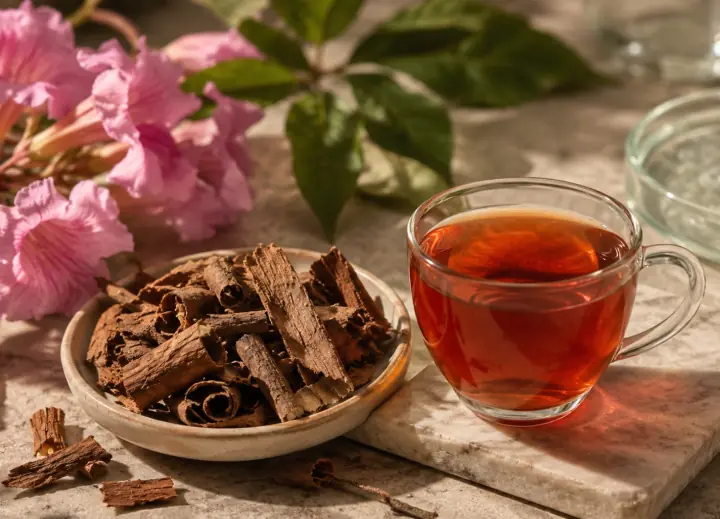
Chá de bugre is a small South American tree whose leaf is brewed as a tea for weight loss, fluid retention and fatigue. Its red fruit is roasted as a coffee substitute, and the plant contains caffeine.
What Is Chá de Bugre?
Chá de bugre is a small South American tree whose leaf is brewed as a slimming tea. In Brazil it is one of the best-known herbal weight-loss aids, sold in pharmacies and shops, and it is also taken for fluid retention, cough and fever 13Reference 13Fern, K. (n.d.). Cordia ecalyculata Vell. — habit, range, habitat, uses and cultivation, drawing on Lorenzi, Brazilian Trees Vol. 1 (2002) — species database. Useful Tropical Plants Database. https://tropical.theferns.info/viewtropical.php?id=Cordia+ecalyculataView study →.
The tree grows in the forests of southern and eastern Brazil, Paraguay and Argentina 13Reference 13Fern, K. (n.d.). Cordia ecalyculata Vell. — habit, range, habitat, uses and cultivation, drawing on Lorenzi, Brazilian Trees Vol. 1 (2002) — species database. Useful Tropical Plants Database. https://tropical.theferns.info/viewtropical.php?id=Cordia+ecalyculataView study →. Its small red fruit looks like a coffee bean and is roasted and brewed as a coffee substitute, which gives the plant its folk name café do mato, “coffee of the woods” 13Reference 13Fern, K. (n.d.). Cordia ecalyculata Vell. — habit, range, habitat, uses and cultivation, drawing on Lorenzi, Brazilian Trees Vol. 1 (2002) — species database. Useful Tropical Plants Database. https://tropical.theferns.info/viewtropical.php?id=Cordia+ecalyculataView study →.
The leaf contains caffeine, and one analysis of commercial raw material found it at levels comparable to green tea and guarana 12Reference 12Detection and determination of undeclared synthetic caffeine in weight loss formulations using HPLC-DAD and UHPLC-MS/MS — analytical studyView study →. Research on the plant has looked at appetite and body weight in rodents and at antiviral activity in cell culture, and no human trial has been published 1,
Chá de bugre is a different plant from Cordia verbenacea, another Brazilian medicinal Cordia.
How Is Chá de Bugre Used?
Chá de bugre is used mostly as the dried leaf, taken as a tea, tincture, liquid extract or capsule. In Brazil it is drunk before meals as an appetite suppressant during weight loss, and as a mild stimulant and diuretic 13Reference 13Fern, K. (n.d.). Cordia ecalyculata Vell. — habit, range, habitat, uses and cultivation, drawing on Lorenzi, Brazilian Trees Vol. 1 (2002) — species database. Useful Tropical Plants Database. https://tropical.theferns.info/viewtropical.php?id=Cordia+ecalyculataView study →.
- Leaf tea — one to two cups daily.
- Tincture or liquid extract — see Dosage below.
- Roasted fruit — brewed as a coffee substitute.
- Leaf, applied externally — used on wounds in folk practice 13Reference 13Fern, K. (n.d.). Cordia ecalyculata Vell. — habit, range, habitat, uses and cultivation, drawing on Lorenzi, Brazilian Trees Vol. 1 (2002) — species database. Useful Tropical Plants Database. https://tropical.theferns.info/viewtropical.php?id=Cordia+ecalyculataView study →.
Commercial slimming formulas often combine it with other caffeine-bearing herbs such as guarana, yerba mate and green tea.
Traditional Uses
Brazilian Folk Medicine
The dried leaf is taken as a simple infusion, which is why the plant is called a chá, a tea. The fruit is the other traditional preparation: the small red, coffee-bean-like drupes are roasted and brewed as café do mato, “coffee of the woods” 13Reference 13Fern, K. (n.d.). Cordia ecalyculata Vell. — habit, range, habitat, uses and cultivation, drawing on Lorenzi, Brazilian Trees Vol. 1 (2002) — species database. Useful Tropical Plants Database. https://tropical.theferns.info/viewtropical.php?id=Cordia+ecalyculataView study →.
Brazilian practice uses chá de bugre as a stimulant and a diuretic. It is given for fatigue and low energy, for fluid retention and renal oedema, to regulate kidney function, to lower uric acid, and for cough, fever and rheumatism 13,
Its best-known use is as an appetite suppressant, taken before meals through a period of weight loss 13Reference 13Fern, K. (n.d.). Cordia ecalyculata Vell. — habit, range, habitat, uses and cultivation, drawing on Lorenzi, Brazilian Trees Vol. 1 (2002) — species database. Useful Tropical Plants Database. https://tropical.theferns.info/viewtropical.php?id=Cordia+ecalyculataView study →.
Haitian Folk Medicine
In Haiti the leaf is used for cough and for kidney complaints, and it is applied to wounds.
Indications
- Weight loss and appetite suppression [leaf; Brazilian folk use] Caution: Rodent studies disagree. Extracts reduced food intake or weight gain at 300–500 mg/kg, but a study at 2,000 mg/kg found no effect on weight or food intake 1,
2, .3 - Fatigue and low energy [leaf tea; Brazilian folk use]
- Fluid retention and oedema [leaf; Brazilian folk use]
- Kidney and urinary complaints [leaf; Brazilian and Haitian folk use]
- Raised uric acid and gout [leaf infusion; Brazilian folk use]
- Cough [leaf; Brazilian and Haitian folk use]
- Wounds [leaf, applied externally; Haitian and Brazilian folk use]
Botany
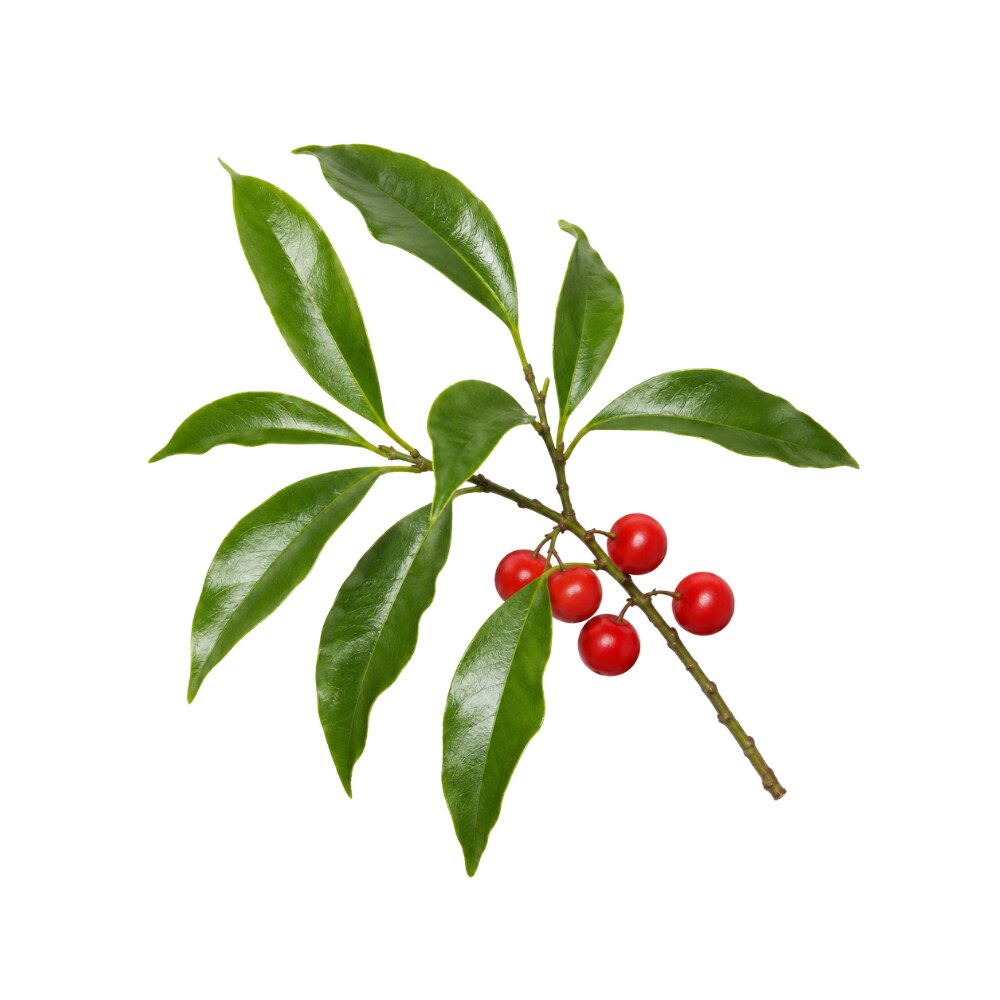
Chá de bugre is a small evergreen tree in the borage family, Boraginaceae. It grows 8–12 m tall, with a dense, oval crown and a trunk about 30–40 cm across 13Reference 13Fern, K. (n.d.). Cordia ecalyculata Vell. — habit, range, habitat, uses and cultivation, drawing on Lorenzi, Brazilian Trees Vol. 1 (2002) — species database. Useful Tropical Plants Database. https://tropical.theferns.info/viewtropical.php?id=Cordia+ecalyculataView study →.
Its fruit is a round red drupe up to 20 mm across, with a sticky, succulent pulp around the seed 13Reference 13Fern, K. (n.d.). Cordia ecalyculata Vell. — habit, range, habitat, uses and cultivation, drawing on Lorenzi, Brazilian Trees Vol. 1 (2002) — species database. Useful Tropical Plants Database. https://tropical.theferns.info/viewtropical.php?id=Cordia+ecalyculataView study →.
The herb is traded under the name Cordia salicifolia, from the Latin for “willow-leaved”. That name is now treated as a synonym of the accepted Cordia ecalyculata, and much of the research uses the newer name 13Reference 13Fern, K. (n.d.). Cordia ecalyculata Vell. — habit, range, habitat, uses and cultivation, drawing on Lorenzi, Brazilian Trees Vol. 1 (2002) — species database. Useful Tropical Plants Database. https://tropical.theferns.info/viewtropical.php?id=Cordia+ecalyculataView study →.
Distribution
Chá de bugre grows in South America, in southern and eastern Brazil, Paraguay and Argentina 13Reference 13Fern, K. (n.d.). Cordia ecalyculata Vell. — habit, range, habitat, uses and cultivation, drawing on Lorenzi, Brazilian Trees Vol. 1 (2002) — species database. Useful Tropical Plants Database. https://tropical.theferns.info/viewtropical.php?id=Cordia+ecalyculataView study →. It is an understorey tree of dense primary and secondary semi-deciduous forest, on moist, fertile soils 13Reference 13Fern, K. (n.d.). Cordia ecalyculata Vell. — habit, range, habitat, uses and cultivation, drawing on Lorenzi, Brazilian Trees Vol. 1 (2002) — species database. Useful Tropical Plants Database. https://tropical.theferns.info/viewtropical.php?id=Cordia+ecalyculataView study →.
The leaf in trade is largely harvested from wild trees 13Reference 13Fern, K. (n.d.). Cordia ecalyculata Vell. — habit, range, habitat, uses and cultivation, drawing on Lorenzi, Brazilian Trees Vol. 1 (2002) — species database. Useful Tropical Plants Database. https://tropical.theferns.info/viewtropical.php?id=Cordia+ecalyculataView study →, so it is worth asking a supplier where it was collected and whether it has been tested for heavy metals.
Growing Conditions
Cultivation snapshot for Chá de Bugre
- A tropical to subtropical tree; needs a warm, essentially frost-free climate and does not tolerate hard cold.
- Grows best in a sunny position, in moist but well-drained soil 13Reference 13Fern, K. (n.d.). Cordia ecalyculata Vell. — habit, range, habitat, uses and cultivation, drawing on Lorenzi, Brazilian Trees Vol. 1 (2002) — species database. Useful Tropical Plants Database. https://tropical.theferns.info/viewtropical.php?id=Cordia+ecalyculataView study →.
- Young trees can reach about 3 m within two years of planting 13Reference 13Fern, K. (n.d.). Cordia ecalyculata Vell. — habit, range, habitat, uses and cultivation, drawing on Lorenzi, Brazilian Trees Vol. 1 (2002) — species database. Useful Tropical Plants Database. https://tropical.theferns.info/viewtropical.php?id=Cordia+ecalyculataView study →.
- Grown for its leaf (and small red fruit), so it is treated as a long-lived woody perennial rather than a quick crop.
Grow it yourself
Farm Wiki is our cultivation-focused sister site, also run by Justin Cooke.
Pharmacology & Research
About a dozen primary papers have been published on chá de bugre (Cordia salicifolia, now Cordia ecalyculata). Several of them measure contamination or effects on blood-cell radiolabelling 7Reference 7In vitroAssessment of effects of a Cordia salicifolia extract on the radiolabeling of blood constituents and on the morphology of red blood cells — in vitro / animal studyView study → rather than therapeutic activity. No human trial has been published 1,
Three rodent studies have tested extracts for appetite and body weight, with conflicting results 1,
The leaf’s stimulant and diuretic uses are usually attributed to caffeine. One analysis of raw material sold to Brazilian compounding pharmacies found about 4.3% caffeine in material labelled C. ecalyculata, while a sample labelled C. salicifolia had none detectable 12Reference 12Detection and determination of undeclared synthetic caffeine in weight loss formulations using HPLC-DAD and UHPLC-MS/MS — analytical studyView study →.
-
Best-supported: appetite suppression / weight-gain prevention in rodents at low-to-moderate doses 1,
2Reference 1AnimalAnti-obesity, slimming, biochemical and genotoxic effects of Cordia ecalyculata in diet-induced obese rats — animal in vivo studyView study →Reference 2In vitroMutagenic potential of Cordia ecalyculata alone and in association with Spirulina maxima for their evaluation as candidate anti-obesity drugs — in vivo mouse and in vitro studyView study → ; near-complete inhibition of HSV-1 replication in vitro 4Reference 4In vitroAntiviral activity of an extract of Cordia salicifolia on herpes simplex virus type 1 — in vitro studyView study →. - Emerging, worth watching: a whole-plant extract neutralised snake-venom neuromuscular blockade and myotoxicity in isolated tissue 5Reference 5In vitroCordia salicifolia and Lafoensia pacari plant extracts against the local effects of Bothrops jararacussu and Philodryas olfersii snake venoms — in vitro / isolated-tissue studyView study →.
- Mechanistically thin: the stimulant and diuretic uses rest on the herb’s caffeine content rather than on direct study of the herb; the traditional wound-healing use is attributed to allantoin.
- The caveat: all data are preclinical and often contradictory; there is no standardised human dose; and commercial material carries heavy-metal concerns 8Reference 8The hazardous level of heavy metals in different medicinal plants and their decoctions in water: a public health problem in Brazil — analytical studyView study →.
The research uses crude and dry extracts at rodent doses. No study has tested the leaf tea that people actually drink, and the one caffeine measurement varied from high to undetectable between two samples of the same species 12Reference 12Detection and determination of undeclared synthetic caffeine in weight loss formulations using HPLC-DAD and UHPLC-MS/MS — analytical studyView study →.
1. Weight-Loss & Appetite Suppression
The animal data are mixed. In rats fed a standard or cafeteria diet, a dry C. ecalyculata extract given at 500, 1,000 or 2,000 mg/kg for 40 days was tested for weight gain. The lowest dose prevented weight gain on both diets, and in already-obese rats it reduced body weight and food intake. Liver, kidney and lipid markers were unchanged apart from a rise in serum albumin 1Reference 1AnimalAnti-obesity, slimming, biochemical and genotoxic effects of Cordia ecalyculata in diet-induced obese rats — animal in vivo studyView study →.
A mouse study found anorectic effects at 300 mg/kg, and for 500 mg/kg combined with 250 mg/kg Spirulina maxima, with no mutagenicity at any dose 2Reference 2In vitroMutagenic potential of Cordia ecalyculata alone and in association with Spirulina maxima for their evaluation as candidate anti-obesity drugs — in vivo mouse and in vitro studyView study →.
An earlier study in Swiss mice found that 2,000 mg/kg daily for 15 days did not reduce body-mass gain or food intake, and its authors concluded that the extract was not effective for obesity 3Reference 3AnimalEvaluation of the genotoxic and cytotoxic effects of crude extracts of Cordia ecalyculata and Echinodorus grandiflorus — animal (mouse) in vivo studyView study →.
The anorectic effect is generally attributed to caffeine, which one analysis found at high levels in commercial raw material 12Reference 12Detection and determination of undeclared synthetic caffeine in weight loss formulations using HPLC-DAD and UHPLC-MS/MS — analytical studyView study →.
Gap: the animal results contradict each other, and the null study used the highest dose. No human trial exists, and every study used a crude or dry extract at mg/kg rather than the leaf tea people drink.
3. Antivenom Adjuvant
Nerve–muscle preparations pretreated with a C. salicifolia extract were protected against more than 90% of the neuromuscular blockade caused by Bothrops jararacussu venom and 52–81% of that caused by Philodryas olfersii venom. The extract also inhibited venom-induced myonecrosis from both venoms, and was more effective against the haemorrhage caused by B. jararacussu 5Reference 5In vitroCordia salicifolia and Lafoensia pacari plant extracts against the local effects of Bothrops jararacussu and Philodryas olfersii snake venoms — in vitro / isolated-tissue studyView study →. The plant is used in folk medicine for snakebite 3Reference 3AnimalEvaluation of the genotoxic and cytotoxic effects of crude extracts of Cordia ecalyculata and Echinodorus grandiflorus — animal (mouse) in vivo studyView study →.
The work is on isolated tissue rather than a live envenomation model, the extract is chemically uncharacterised, and it is a single study.
4. CNS Stimulant
Chá de bugre’s use as a coffee substitute and its inclusion in thermogenic formulas both trace to its caffeine content 13Reference 13Fern, K. (n.d.). Cordia ecalyculata Vell. — habit, range, habitat, uses and cultivation, drawing on Lorenzi, Brazilian Trees Vol. 1 (2002) — species database. Useful Tropical Plants Database. https://tropical.theferns.info/viewtropical.php?id=Cordia+ecalyculataView study →. An HPLC analysis of bulk raw material used by Brazilian compounding pharmacies found 43,100 mg/kg (about 4.3%) caffeine in material labelled Cordia ecalyculata, higher than the green tea and guarana samples tested alongside it. A sample labelled C. salicifolia had no detectable caffeine 12Reference 12Detection and determination of undeclared synthetic caffeine in weight loss formulations using HPLC-DAD and UHPLC-MS/MS — analytical studyView study →.
No study has directly measured a central-nervous-system or thermogenic effect of the herb itself.
Gap: a single analysis of two commercial samples, with results that disagree. How much caffeine a cup of the leaf tea delivers has not been measured.
5. Diuretic
A mild diuretic action is one of the herb’s oldest uses in Brazilian folk medicine, including for renal oedema 14Reference 14ReviewNephroprotective plant species used in Brazilian traditional medicine for renal diseases: ethnomedical, pharmacological, and chemical insights — reviewView study →, and is the basis for its “water-retention” positioning in slimming products. It is generally attributed to caffeine and potassium 13Reference 13Fern, K. (n.d.). Cordia ecalyculata Vell. — habit, range, habitat, uses and cultivation, drawing on Lorenzi, Brazilian Trees Vol. 1 (2002) — species database. Useful Tropical Plants Database. https://tropical.theferns.info/viewtropical.php?id=Cordia+ecalyculataView study →.
No experimental study has measured urine output or sodium excretion for chá de bugre.
6. Anti-H. pylori
An apolar (dichloromethane) leaf extract contained a high level of the sesquiterpene spathulenol, 0.53% of the extract. The extract’s major component showed only very weak growth inhibition of Helicobacter pylori in vitro 6Reference 6In vitroPhytochemical investigation on leaf extract of Cordia salicifolia Cham. — in vitro studyView study →.
This is a single in-vitro assay, and it is the only study to quantify a constituent from the leaf extract.
Mechanisms
The stimulant and diuretic actions are attributed to caffeine, an adenosine-receptor antagonist, and to the leaf’s potassium content 12,
The antiviral and antivenom effects were found with extracts whose active molecules have not been identified 4,
| Mechanism | Drives | Key compounds |
|---|---|---|
| Adenosine-receptor antagonism → CNS stimulation, mild thermogenesis | CNS stimulantweight-loss support | caffeine |
| Osmotic / electrolyte effect on renal handling | diuretic | caffeine, potassium |
| Direct virucidal action + blockade of viral penetration (not adsorption) | antiviral | uncharacterised whole-plant fraction |
| Inhibition of venom-induced neuromuscular blockade & myotoxicity | antivenom adjuvant | uncharacterised extract |
| Sesquiterpene antimicrobial activity (weak) | anti-H. pylori | spathulenol |
| Tissue repair / cell proliferation (traditional topical use) | wound healing | allantoin, allantoic acid |
Clinical Trials
No registered clinical trials were identified on ClinicalTrials.gov, and no human study of chá de bugre appears in the literature. The published work is rodent and cell-culture research, plus analytical studies of contamination.
| Completed | Planned | Terminated | Preclinical |
|---|---|---|---|
| 0 | 0 | 0 | ~7 |
Last checked: July 2026.
Phytochemistry
The leaf contains the purine alkaloid caffeine. One HPLC analysis found 43,100 mg/kg (about 4.3%) in raw material labelled Cordia ecalyculata, and none detectable in a sample labelled C. salicifolia 12Reference 12Detection and determination of undeclared synthetic caffeine in weight loss formulations using HPLC-DAD and UHPLC-MS/MS — analytical studyView study →. The plant is also reported to contain potassium and the allantoin-related compounds allantoin and allantoic acid 13Reference 13Fern, K. (n.d.). Cordia ecalyculata Vell. — habit, range, habitat, uses and cultivation, drawing on Lorenzi, Brazilian Trees Vol. 1 (2002) — species database. Useful Tropical Plants Database. https://tropical.theferns.info/viewtropical.php?id=Cordia+ecalyculataView study →.
A dichloromethane leaf extract is rich in the sesquiterpene spathulenol, at 0.53% of the extract 6Reference 6In vitroPhytochemical investigation on leaf extract of Cordia salicifolia Cham. — in vitro studyView study →.
The sterol beta-sitosterol is also listed for the plant.
Constituent Summary
Reported from the leaf.
Purine Alkaloid1 compound1 with data
Mineral1 compoundno data
Other1 compoundno data
Organic Acid1 compoundno data
Sterol1 compoundno data
Sesquiterpene1 compound1 with data
Dosage
Doses follow traditional practice. The research doses below are for crude or dry extracts in rodents.
| Indication | Preparation | Dose | Est. dried-herb equivalent | Source |
|---|---|---|---|---|
| Weight/appetite (anti-obesity) | Dry extract, oral (rat) | 500 mg/kg (effective); 1,000 and 2,000 mg/kg also tested | — (rodent mg/kg) | 1Reference 1AnimalAnti-obesity, slimming, biochemical and genotoxic effects of Cordia ecalyculata in diet-induced obese rats — animal in vivo studyView study → |
| Weight/appetite (anorectic) | Extract, oral (mouse) | 300 mg/kg (effective); 500 mg/kg with Spirulina | — (rodent mg/kg) | 2Reference 2In vitroMutagenic potential of Cordia ecalyculata alone and in association with Spirulina maxima for their evaluation as candidate anti-obesity drugs — in vivo mouse and in vitro studyView study → |
| Weight/appetite (no effect) | Crude extract, oral (mouse) | 2,000 mg/kg/day for 15 days | — (rodent mg/kg) | 3Reference 3AnimalEvaluation of the genotoxic and cytotoxic effects of crude extracts of Cordia ecalyculata and Echinodorus grandiflorus — animal (mouse) in vivo studyView study → |
Research doses in animals, not recommendations.
Traditional Dosage
| System | Preparation | Dose |
|---|---|---|
| Brazilian folk / Western herbal | Leaf tea / infusion | 1–2 cups daily |
| Western herbal | Tincture | 2–5 mL, up to 3× daily |
| Western herbal | 1:2 liquid extract | 20–40 mL/week |
| Brazilian folk | Roasted fruit “coffee” | As a coffee substitute |
Safety & Pregnancy
Chá de bugre is generally well tolerated in moderate amounts. Its cautions are those of caffeine, plus the quality of the leaf on the market.
- Buy tested material. Brazilian-market leaf has exceeded USP lead limits, and a strong decoction delivered cadmium above the USP daily oral exposure value 8Reference 8The hazardous level of heavy metals in different medicinal plants and their decoctions in water: a public health problem in Brazil — analytical studyView study →.
- Contains caffeine. It can cause nervousness, insomnia, a raised heart rate, anxiety and stomach upset, and it adds to other stimulants 12Reference 12Detection and determination of undeclared synthetic caffeine in weight loss formulations using HPLC-DAD and UHPLC-MS/MS — analytical studyView study →.
- Heart and anxiety conditions. Use carefully with high blood pressure, heart disease, anxiety disorders or caffeine sensitivity.
- Pregnancy and breastfeeding. Avoid.
- Low toxicity in rodents. Extracts showed no genotoxic activity at 150–500 mg/kg in mice; DNA damage appeared only at 2,000 mg/kg 1,
2Reference 1AnimalAnti-obesity, slimming, biochemical and genotoxic effects of Cordia ecalyculata in diet-induced obese rats — animal in vivo studyView study →Reference 2In vitroMutagenic potential of Cordia ecalyculata alone and in association with Spirulina maxima for their evaluation as candidate anti-obesity drugs — in vivo mouse and in vitro studyView study → .
Full Safety & Interactions Detail
Toxicity. In mice, extracts at 150–500 mg/kg showed no clastogenic or genotoxic activity 2Reference 2In vitroMutagenic potential of Cordia ecalyculata alone and in association with Spirulina maxima for their evaluation as candidate anti-obesity drugs — in vivo mouse and in vitro studyView study →. At 2,000 mg/kg, one rat study found DNA damage in animals on a cafeteria diet 1Reference 1AnimalAnti-obesity, slimming, biochemical and genotoxic effects of Cordia ecalyculata in diet-induced obese rats — animal in vivo studyView study →, and a mouse study found a small rise in micronucleated red blood cells that its authors judged not significant 3Reference 3AnimalEvaluation of the genotoxic and cytotoxic effects of crude extracts of Cordia ecalyculata and Echinodorus grandiflorus — animal (mouse) in vivo studyView study →.
Caffeine. The stimulant cautions are those of caffeine: nervousness, insomnia, raised heart rate, anxiety and stomach upset, adding to other stimulants and caffeinated drugs. Caffeine speeds the kidneys’ clearance of lithium, so the herb may interact with lithium and with diuretics. Neither interaction has been studied for the herb itself.
Heavy metals. Dried chá de bugre leaf sold in Brazil contained lead above the US Pharmacopeia limit for oral products. A decoction of 40 g of leaf in a litre of water delivered cadmium above the USP daily oral exposure value, and the combined hazard index exceeded the safe threshold 8Reference 8The hazardous level of heavy metals in different medicinal plants and their decoctions in water: a public health problem in Brazil — analytical studyView study →. A separate survey of weight-loss supplements containing the herb found the highest metal levels in products made from other plants 9Reference 9Metals content in herbal supplements — analytical studyView study →.
Pesticides. Two methods have been developed to test the leaf for pesticide residues, because Brazil sets no residue limits for medicinal herbs 10,
Avoid. Chá de bugre contains caffeine and has not been studied in pregnancy.
It has not been studied in breastfeeding either, and caffeine passes into breast milk, so it is best avoided while nursing.
References
- Nunes, L. F., et al. (2022). Anti-obesity, slimming, biochemical and genotoxic effects of Cordia ecalyculata in diet-induced obese rats — animal in vivo study. Acta Scientiarum Polonorum Technologia Alimentaria. https://doi.org/10.17306/J.AFS.0998
- Araldi, R. P., et al. (2014). Mutagenic potential of Cordia ecalyculata alone and in association with Spirulina maxima for their evaluation as candidate anti-obesity drugs — in vivo mouse and in vitro study. Genetics and Molecular Research. https://doi.org/10.4238/2014.July.7.14
- da Silva, C. J., Bastos, J. K., & Takahashi, C. S. (2010). Evaluation of the genotoxic and cytotoxic effects of crude extracts of Cordia ecalyculata and Echinodorus grandiflorus — animal (mouse) in vivo study. Journal of Ethnopharmacology. https://doi.org/10.1016/j.jep.2009.10.015
- Hayashi, K., Hayashi, T., Morita, N., & Niwayama, S. (1990). Antiviral activity of an extract of Cordia salicifolia on herpes simplex virus type 1 — in vitro study. Planta Medica. https://doi.org/10.1055/s-2006-961006
- Schezaro-Ramos, R., et al. (2020). Cordia salicifolia and Lafoensia pacari plant extracts against the local effects of Bothrops jararacussu and Philodryas olfersii snake venoms — in vitro / isolated-tissue study. Journal of Venom Research. https://pubmed.ncbi.nlm.nih.gov/33024546/
- Menghini, L., Epifano, F., Leporini, L., Pagiotti, R., & Tirillini, B. (2008). Phytochemical investigation on leaf extract of Cordia salicifolia Cham. — in vitro study. Journal of Medicinal Food. https://doi.org/10.1089/jmf.2007.583
- Frydman, J. N., et al. (2008). Assessment of effects of a Cordia salicifolia extract on the radiolabeling of blood constituents and on the morphology of red blood cells — in vitro / animal study. Journal of Medicinal Food. https://doi.org/10.1089/jmf.2008.0045
- Tschinkel, P. F. S., et al. (2020). The hazardous level of heavy metals in different medicinal plants and their decoctions in water: a public health problem in Brazil — analytical study. BioMed Research International. https://doi.org/10.1155/2020/1465051
- Barrella, M. V., et al. (2017). Metals content in herbal supplements — analytical study. Biological Trace Element Research. https://doi.org/10.1007/s12011-016-0776-2
- de Carvalho, P. H., Prata, V. M., Alves, P. B., & Navickiene, S. (2009). Determination of six pesticides in the medicinal herb Cordia salicifolia by matrix solid-phase dispersion and GC/MS — analytical study. Journal of AOAC International. https://pubmed.ncbi.nlm.nih.gov/19714988/
- de Carvalho, P. H., et al. (2009). Two-dimensional coordination polymer matrix for solid-phase extraction of pesticide residues from the plant Cordia salicifolia — analytical study. Journal of Separation Science. https://doi.org/10.1002/jssc.200900076
- Viana, C., Zemolin, G. M., Dal Molin, T. R., Gobo, L., Ribeiro, S. M., Leal, G. C., Marcon, G. Z., & de Carvalho, L. M. (2018). Detection and determination of undeclared synthetic caffeine in weight loss formulations using HPLC-DAD and UHPLC-MS/MS — analytical study. Journal of Pharmaceutical Analysis, 8(6), 366–372. https://pubmed.ncbi.nlm.nih.gov/30595942/
- Fern, K. (n.d.). Cordia ecalyculata Vell. — habit, range, habitat, uses and cultivation, drawing on Lorenzi, Brazilian Trees Vol. 1 (2002) — species database. Useful Tropical Plants Database. https://tropical.theferns.info/viewtropical.php?id=Cordia+ecalyculata
- Moraes Carlesso, R., Cappellari, Y. L. R., Boeff, D. D., da Costa Pereira, A., Schmitt Rusch, E., de Souza Claudino, T., Ritter, M. R., & Konrath, E. L. (2025). Nephroprotective plant species used in Brazilian traditional medicine for renal diseases: ethnomedical, pharmacological, and chemical insights — review. Plants, 14(5), 648. https://pubmed.ncbi.nlm.nih.gov/40094548/