
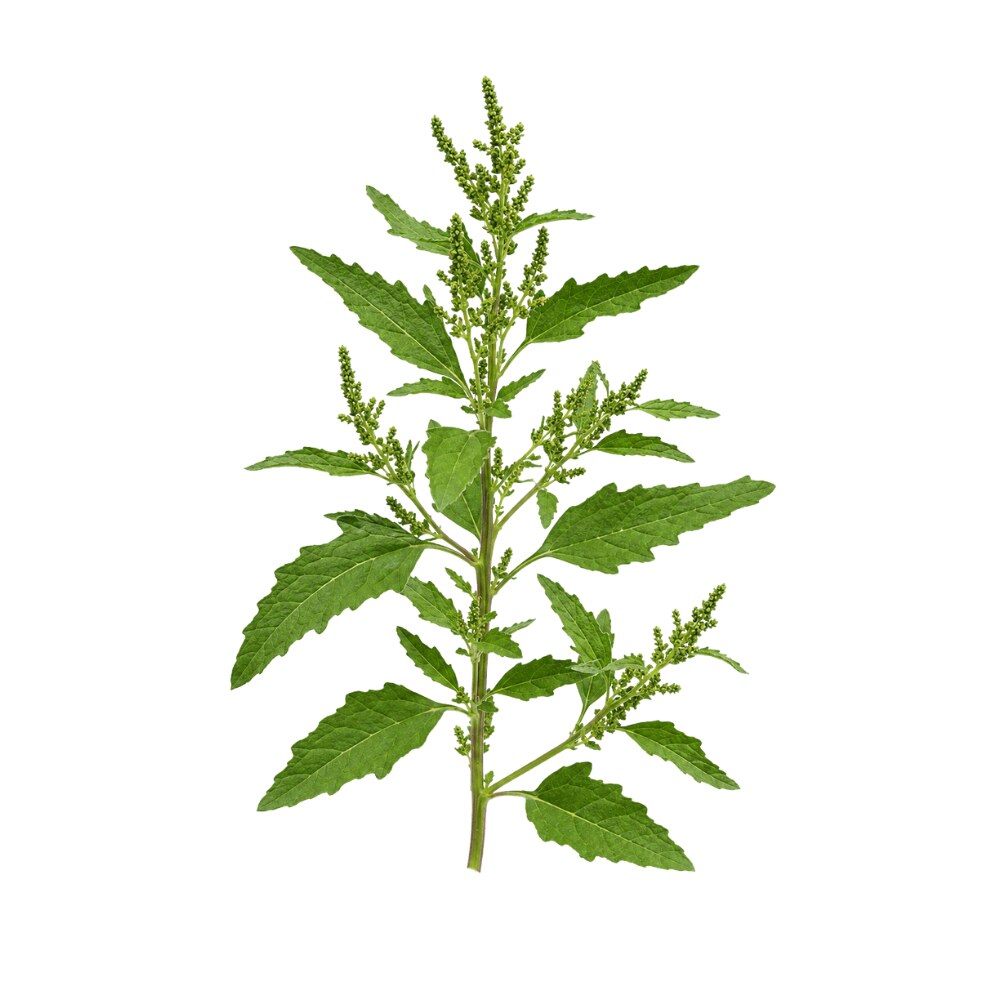
Materia Medica
Epazote
Dysphania ambrosioides
Epazote is a strongly aromatic herb of the Americas, used both as a seasoning in Mexican cooking and as a traditional remedy for intestinal worms, which gives it the English name wormseed. Its essential oil is rich in ascaridole, a monoterpene peroxide.
What Is Epazote?
Epazote is a strongly aromatic herb of the Americas, used both as a kitchen herb and as a traditional remedy for intestinal worms, which gives it the English name wormseed 2,
Dysphania ambrosioides grows wild from the southern United States to South America, and has become a weed through the warm regions of the world 41,
The essential oil is rich in ascaridole, a monoterpene peroxide 39Reference 39Combined analysis of the essential oil of Chenopodium ambrosioides by GC, GC-MS and 13C-NMR spectroscopy: quantitative determination of ascaridole, a heat-sensitive compound. — [analytical chemistry]View study →. In a trial in Peruvian children, fresh leaf juice cleared roundworm as often as albendazole 1Reference 1RCTLópez De Guimaraes D, Neyra Llanos RS, Romero Acevedo JH (2001). [Ascariasis: comparison of the therapeutic efficacy between paico and albendazole in children from Huaraz]. — [randomised clinical trial]. Rev Gastroenterol Peru. https://pubmed.ncbi.nlm.nih.gov/11818981/View study →. In a field trial in Mexico, dried powdered plant had no effect 2Reference 2Studies on the traditional herbal anthelmintic Chenopodium ambrosioides L.: ethnopharmacological evaluation and clinical field trials. — [clinical field trial]View study →. Most other research has been done on the essential oil, in animals and cell cultures.
How Is Epazote Used?
- Culinary herb — fresh or dried leaf, used in small amounts in bean dishes and other Mexican and Central American cooking.
- Leaf decoction or infusion — taken for a few days as a worm remedy 2,
4Reference 2Studies on the traditional herbal anthelmintic Chenopodium ambrosioides L.: ethnopharmacological evaluation and clinical field trials. — [clinical field trial]View study →Reference 4In vitroAscaridole-less infusions of Chenopodium ambrosioides contain a nematocide(s) that is(are) not toxic to mammalian smooth muscle. — [in vitro / animal]View study → . - Fresh leaf juice — paico juice, given to children for roundworm in Peru 1Reference 1RCTLópez De Guimaraes D, Neyra Llanos RS, Romero Acevedo JH (2001). [Ascariasis: comparison of the therapeutic efficacy between paico and albendazole in children from Huaraz]. — [randomised clinical trial]. Rev Gastroenterol Peru. https://pubmed.ncbi.nlm.nih.gov/11818981/View study →.
- Poultices and teas — used in Brazil for inflammation and bruises 16Reference 16AnimalFrom popular use to pharmacological validation: a study of the anti-inflammatory, anti-nociceptive and healing effects of Chenopodium ambrosioides extract. — [animal model]View study →.
- Essential oil — “oil of chenopodium”, once used in mass deworming campaigns and later abandoned because ascaridole caused deaths 2,
4Reference 2Studies on the traditional herbal anthelmintic Chenopodium ambrosioides L.: ethnopharmacological evaluation and clinical field trials. — [clinical field trial]View study →Reference 4In vitroAscaridole-less infusions of Chenopodium ambrosioides contain a nematocide(s) that is(are) not toxic to mammalian smooth muscle. — [in vitro / animal]View study → .
Traditional Uses
Mexican Folk Medicine
Native peoples of the Americas have used infusions and decoctions of the leaves, roots and flowering tops for centuries to treat intestinal worms, and the leaves as a seasoning 2Reference 2Studies on the traditional herbal anthelmintic Chenopodium ambrosioides L.: ethnopharmacological evaluation and clinical field trials. — [clinical field trial]View study →.
Among Mayan farmers in Chiapas, Mexico, decoctions of the plant were widely used and highly regarded for roundworm, at up to 300 mg of dried plant per kg of body weight 2Reference 2Studies on the traditional herbal anthelmintic Chenopodium ambrosioides L.: ethnopharmacological evaluation and clinical field trials. — [clinical field trial]View study →.
Mexican traditional medicine also uses epazote as an emmenagogue and abortifacient, and to bring on or speed labour 44Reference 44ReviewMexican traditional medicines for women’s reproductive health. — [review]View study →.
Peruvian Folk Medicine: Paico
In Peru, paico is a traditional medicine regarded as nervine, antirheumatic and anthelmintic 3Reference 3Ascaridole as a pharmacologically active principle of “Paico,” a medicinal Peruvian plant. — [isolation study]View study →. The fresh leaf juice is given to children for roundworm 1Reference 1RCTLópez De Guimaraes D, Neyra Llanos RS, Romero Acevedo JH (2001). [Ascariasis: comparison of the therapeutic efficacy between paico and albendazole in children from Huaraz]. — [randomised clinical trial]. Rev Gastroenterol Peru. https://pubmed.ncbi.nlm.nih.gov/11818981/View study →.
Brazilian Folk Medicine
In Brazil the plant is erva-de-santa-maria or mastruço. It is taken as tea or infusion, or applied as a poultice, for inflammation, bruises and lung infections, and used against worms and fungal infections 16Reference 16AnimalFrom popular use to pharmacological validation: a study of the anti-inflammatory, anti-nociceptive and healing effects of Chenopodium ambrosioides extract. — [animal model]View study →. The leaves, called mastruz, are also taken for a range of other diseases 27Reference 27AnimalAscitic and solid Ehrlich tumor inhibition by Chenopodium ambrosioides L. treatment. — [in vivo mouse model]View study →.
Moroccan Folk Medicine: M’khinza
In Morocco the plant is m’khinza. It is given as an infusion and applied as a poultice to bring down fever, and used as an antiseptic, painkiller and antispasmodic 34,
Western Herbal Medicine
Epazote entered Western and eclectic herbal practice as “wormseed”, a vermifuge for roundworm and other intestinal parasites. It was also used as a carminative, diaphoretic and mild laxative.
Its distilled oil, “oil of chenopodium”, and the purified ascaridole were used with considerable success in mass deworming campaigns 2Reference 2Studies on the traditional herbal anthelmintic Chenopodium ambrosioides L.: ethnopharmacological evaluation and clinical field trials. — [clinical field trial]View study →. Ascaridole also caused deaths, and the oil fell out of use 4Reference 4In vitroAscaridole-less infusions of Chenopodium ambrosioides contain a nematocide(s) that is(are) not toxic to mammalian smooth muscle. — [in vitro / animal]View study →.
Indications
- Roundworm (ascariasis) [fresh leaf juice; Peruvian folk use] Caution: A field trial in Mexico found that dried, powdered plant had no effect on roundworm, hookworm or whipworm, even at very high doses 2.
- Dwarf tapeworm (Hymenolepis nana) [fresh leaf juice]
- Intestinal worms [leaf decoction; Mexican folk use]
- Inflammation, bruises and lung infections [tea or poultice; Brazilian folk use]
- Rheumatism [leaf; Peruvian folk use]
- Wind and indigestion [leaf; Western herbal medicine]
- Fungal skin and vaginal infections [essential oil, applied to the skin]
- Joint pain and arthritis [leaf extract]
- Protozoal infections, including leishmaniasis, amoebiasis and malaria [essential oil]
- Insect repellent [essential oil]
Botany
Epazote is a strongly aromatic herb in the amaranth family (Amaranthaceae) 43Reference 43Dysphania ambrosioides (L.) Mosyakin & Clemants — accepted name and family (Amaranthaceae) — species databaseView study →. It was long classified as Chenopodium ambrosioides, and floras that keep the goosefoot family separate place it in Chenopodiaceae 41,
It is an annual, or a short-lived perennial in mild climates, usually 30–100 cm tall and occasionally up to 150 cm 41,
The leaves are oval to lance-shaped and 2–8 cm long, sometimes up to 12 cm. Their edges may be smooth, toothed or deeply cut. The leaves are aromatic and densely dotted with glands 41,
The flowers are tiny. They grow in small round clusters, 1.5–2.3 mm across, arranged in spikes 3–7 cm long among the upper leaves 41Reference 41Dysphania ambrosioides (Linnaeus) Mosyakin & Clemants — species description, habitat and distribution — floraView study →. Each flower has four or five small segments that close over the fruit as it ripens. The seeds are reddish-brown to black and under 1 mm across 41,
Dysphania ambrosioides in the broad sense is a complex of several closely related forms, and their taxonomy is not settled 42Reference 42Dysphania ambrosioides (Linnaeus) Mosyakin & Clemants — species description and distribution in China — floraView study →.
Distribution
Epazote is native to the Americas 41,
In North America it grows on river bottoms, dry lake beds, flower beds and waste ground, from sea level to 700 m 41Reference 41Dysphania ambrosioides (Linnaeus) Mosyakin & Clemants — species description, habitat and distribution — floraView study →.
In China it is naturalized in the southern provinces, where it is called tu jing jie, and is often cultivated for medicine in the north 42Reference 42Dysphania ambrosioides (Linnaeus) Mosyakin & Clemants — species description and distribution in China — floraView study →.
Growing Conditions
Cultivation snapshot for Epazote
- Wants full sun — six or more hours of direct light a day.
- Thrives in warm conditions; treat as an annual where winters are cold, though it may overwinter and return as a short-lived perennial in mild climates.
- Tolerant of poor, disturbed soils and reseeds vigorously — give it room and expect volunteers.
- Fast and undemanding from seed; harvest young leaves for the kitchen before heavy flowering.
Grow it yourself
Farm Wiki is our cultivation-focused sister site, also run by Justin Cooke.
Pharmacology & Research
Epazote has more than a hundred indexed studies. Almost all are in animals and cell cultures, and most use the steam-distilled essential oil.
Two human studies test its use against worms. In a randomised trial in Peruvian children, leaf juice (paico) cleared roundworm as often as albendazole 1Reference 1RCTLópez De Guimaraes D, Neyra Llanos RS, Romero Acevedo JH (2001). [Ascariasis: comparison of the therapeutic efficacy between paico and albendazole in children from Huaraz]. — [randomised clinical trial]. Rev Gastroenterol Peru. https://pubmed.ncbi.nlm.nih.gov/11818981/View study →. An older field trial in Mexico found dried, powdered plant had no effect 2Reference 2Studies on the traditional herbal anthelmintic Chenopodium ambrosioides L.: ethnopharmacological evaluation and clinical field trials. — [clinical field trial]View study →.
The most consistent laboratory findings are against protozoa, including Leishmania, Entamoeba and Plasmodium. They are largely attributed to ascaridole, a peroxide with a mechanism similar to artemisinin 6,
-
Best-supported: anthelmintic action against roundworm, backed by a small human RCT and centuries of traditional use 1,
2Reference 1RCTLópez De Guimaraes D, Neyra Llanos RS, Romero Acevedo JH (2001). [Ascariasis: comparison of the therapeutic efficacy between paico and albendazole in children from Huaraz]. — [randomised clinical trial]. Rev Gastroenterol Peru. https://pubmed.ncbi.nlm.nih.gov/11818981/View study →Reference 2Studies on the traditional herbal anthelmintic Chenopodium ambrosioides L.: ethnopharmacological evaluation and clinical field trials. — [clinical field trial]View study → ; broad antiprotozoal activity (leishmaniasis, amoebiasis, malaria) demonstrated in several in-vivo animal models 7,8, .11Reference 7AnimalAntileishmanial activity of essential oil from Chenopodium ambrosioides and its main components against experimental cutaneous leishmaniasis in BALB/c mice. — [in vivo mouse model]View study →Reference 8AnimalAmoebicidal Activity of Essential Oil of Dysphania ambrosioides (L.) Mosyakin & Clemants in an Amoebic Liver Abscess Hamster Model. — [in vivo hamster model]View study →Reference 11AnimalAntimalarial potential of leaves of Chenopodium ambrosioides L. — [in vivo mouse model]View study → -
Emerging, worth watching: antifungal activity of the essential oil, replicated in animal models of candidiasis and dermatophytosis 12,
13Reference 12AnimalAntifungal Properties of Chenopodium ambrosioides Essential Oil Against Candida Species. — [in vivo rat model]View study →Reference 13In vitroIn vitro and in vivo antifungal activity of essential oils of Cymbopogon martini and Chenopodium ambrosioides and their synergism against dermatophytes. — [in vivo guinea pig model]View study → ; anti-inflammatory and antinociceptive effects in rodent arthritis and osteoarthritis models 17,18Reference 17AnimalChenopodium ambrosioides LView study →Reference 18AnimalAnti-arthritic properties of crude extract from Chenopodium ambrosioides L. leaves. — [in vivo mouse model]View study → . - Mechanistically thin: antioxidant, cardioprotective and antidiabetic claims rest on single studies, cell-line assays, or constituent-level inference.
- The caveat: almost no human efficacy data beyond the anthelmintic trials, no standardized dose, and enormous chemotype variance in the active oil — the tea and the essential oil are effectively different medicines.
The tea and the essential oil are different medicines. Ascaridole ranged from about 3% to 55% of the oil in different samples 39,
1. Anthelmintic
This is the one indication with human data. A randomised trial in 60 children aged 3–14 in Huaraz, Peru, compared paico leaf juice with albendazole for Ascaris lumbricoides. The juice was given at 1 ml/kg (under 10 kg) or 2 ml/kg, once before breakfast for three days, and albendazole as a single dose 1Reference 1RCTLópez De Guimaraes D, Neyra Llanos RS, Romero Acevedo JH (2001). [Ascariasis: comparison of the therapeutic efficacy between paico and albendazole in children from Huaraz]. — [randomised clinical trial]. Rev Gastroenterol Peru. https://pubmed.ncbi.nlm.nih.gov/11818981/View study →.
Both cleared roundworm eggs from the stool in 86.7% of children, and cut the egg count by a similar amount (59.5% for paico, 58.3% for albendazole). Paico also cleared all cases of dwarf tapeworm (Hymenolepis nana). Side effects occurred in 23.3% of children in both groups 1Reference 1RCTLópez De Guimaraes D, Neyra Llanos RS, Romero Acevedo JH (2001). [Ascariasis: comparison of the therapeutic efficacy between paico and albendazole in children from Huaraz]. — [randomised clinical trial]. Rev Gastroenterol Peru. https://pubmed.ncbi.nlm.nih.gov/11818981/View study →.
A 1985 field study among Mayan farmers in Chiapas, Mexico, found that dried, powdered plant, even at up to 6,000 mg/kg, had no significant effect on adult Ascaris, Necator or Trichuris, although the plant contained the expected amount of ascaridole. The author suggested the traditional belief may partly reflect the natural passage of dying worms, or that higher-ascaridole plants were used in the past 2Reference 2Studies on the traditional herbal anthelmintic Chenopodium ambrosioides L.: ethnopharmacological evaluation and clinical field trials. — [clinical field trial]View study →.
Ascaridole is a potent anthelmintic. In laboratory tests on nematodes, however, almost 90% of the activity of the infusion came from a water-soluble compound other than ascaridole. Ascaridole reduced the contraction of rat gut muscle, while the infusion had no effect on it 4Reference 4In vitroAscaridole-less infusions of Chenopodium ambrosioides contain a nematocide(s) that is(are) not toxic to mammalian smooth muscle. — [in vitro / animal]View study →.
Extracts killed Toxocara canis larvae in vitro, but did not reduce the larval burden in infected mice 5Reference 5In vitroToxocara canis: potential activity of natural products against second-stage larvae in vitro and in vivo. — [in vitro and in vivo]View study →.
Gap: the only positive human trial is small, single-site and 25 years old; the effect is preparation-dependent, and the effective anthelmintic dose sits close to the toxic dose of ascaridole.
2. Antiprotozoal
The essential oil and ascaridole are active against both forms of Leishmania in vitro. They break down the parasite’s mitochondrial membrane potential, and the oil had the best selectivity 6Reference 6In vitroEssential oil from Chenopodium ambrosioides and main components: activity against Leishmania, their mitochondria and other microorganisms. — [in vitro]View study →.
In mice infected with L. amazonensis, the whole oil injected into the lesions prevented them from developing and worked better than the reference drug glucantime. Its purified components had no effect, and a mixture of them killed the mice 7Reference 7AnimalAntileishmanial activity of essential oil from Chenopodium ambrosioides and its main components against experimental cutaneous leishmaniasis in BALB/c mice. — [in vivo mouse model]View study →.
Oral essential oil cured amoebic liver abscess in hamsters at 8 and 80 mg/kg (IC50 0.7 mg/mL against trophozoites) 8Reference 8AnimalAmoebicidal Activity of Essential Oil of Dysphania ambrosioides (L.) Mosyakin & Clemants in an Amoebic Liver Abscess Hamster Model. — [in vivo hamster model]View study →.
Against Trypanosoma cruzi, the oil was the most active of three tested in vitro. In infected mice it cut parasite levels by only 6–12% 9Reference 9In vitroTrypanocidal Activity of Dysphania ambrosioides, Lippia alba, and Tetradenia riparia Essential Oils against Trypanosoma cruzi. — [in vitro and in vivo]View study →.
Ascaridole stopped the growth of Plasmodium falciparum at 0.05 µM, and its activity depends on its peroxide bridge, as artemisinin’s does 10Reference 10In vitroThe effect of ascaridole on the in vitro development of Plasmodium falciparum. — [in vitro]View study →. A leaf extract increased survival and lowered parasite levels in mice infected with P. berghei 11Reference 11AnimalAntimalarial potential of leaves of Chenopodium ambrosioides L. — [in vivo mouse model]View study →.
Gap: entirely preclinical, dominated by the concentrated oil at doses far above culinary exposure, and no human antiprotozoal trials exist.
3. Antifungal
One essential oil, rich in α-terpinene and p-cymene, inhibited Candida at 0.25–2 mg/mL and cleared induced vaginal candidiasis in rodents within 12 days 12Reference 12AnimalAntifungal Properties of Chenopodium ambrosioides Essential Oil Against Candida Species. — [in vivo rat model]View study →.
Oils of epazote and Cymbopogon martini inhibited dermatophytes at 150–500 ppm, against 1,000–5,500 ppm for standard antifungal drugs. Ointments made from them cleared ringworm in guinea pigs in 7–21 days 13Reference 13In vitroIn vitro and in vivo antifungal activity of essential oils of Cymbopogon martini and Chenopodium ambrosioides and their synergism against dermatophytes. — [in vivo guinea pig model]View study →.
Leaf oil completely inhibited Aspergillus flavus and its aflatoxin B1 production at 100 µg/mL, and protected stored wheat from fungi for a year 14Reference 14In vitroEvaluation of Chenopodium ambrosioides oil as a potential source of antifungal, antiaflatoxigenic and antioxidant activity. — [in vitro]View study →. A Brazilian oil rich in ascaridole completely inhibited eight post-harvest fungi at 0.3%, and ascaridole was its main antifungal component 15Reference 15In vitroComposition and antifungal activity of the essential oil of the Brazilian Chenopodium ambrosioides L. — [in vitro]View study →.
One study found no activity against the fungi it tested 6Reference 6In vitroEssential oil from Chenopodium ambrosioides and main components: activity against Leishmania, their mitochondria and other microorganisms. — [in vitro]View study →. All of this is the essential oil in vitro or in agricultural and animal models, with no human data.
4. Anti-Inflammatory
Ethanol extract of the leaves and stems, at 150–500 mg/kg in rodents, reduced pain responses to formalin, PGE2, capsaicin and bradykinin, reduced carrageenan paw swelling, and sped wound healing 16Reference 16AnimalFrom popular use to pharmacological validation: a study of the anti-inflammatory, anti-nociceptive and healing effects of Chenopodium ambrosioides extract. — [animal model]View study →.
In rats with chemically induced osteoarthritis, a hydroalcoholic leaf extract reduced knee swelling, synovial inflammation and pain. Molecular docking suggested ascaridole may act at the NMDA receptor 17Reference 17AnimalChenopodium ambrosioides LView study →. In mice with collagen-induced arthritis, the extract lowered IL-6 and TNF-α and preserved bone density 18Reference 18AnimalAnti-arthritic properties of crude extract from Chenopodium ambrosioides L. leaves. — [in vivo mouse model]View study →.
Monoterpenes isolated from the seeds, including two new ones, inhibited nitric-oxide production in macrophages 19Reference 19In vitroTwo New Highly Oxygenated Monoterpenes From the Seeds of Dysphania ambrosioides and Their Inflammatory Activity In Vitro and In Silico. — [in vitro and in silico]View study →. Ascaridole was identified as the sedative and analgesic principle of paico 3Reference 3Ascaridole as a pharmacologically active principle of “Paico,” a medicinal Peruvian plant. — [isolation study]View study →.
All of this is preclinical, with extract types and doses that differ between studies.
5. Insect Repellent
The essential oil was one of 12 oils from Argentine aromatic plants tested against Aedes aegypti mosquitoes, most of which were repellent. Across the oils, limonene and camphor were judged the main repellent components 30Reference 30In vitroMosquito repellent activity of essential oils of aromatic plants growing in Argentina. — [in vitro laboratory assay]View study →.
The oil also killed Biomphalaria snails and schistosome larvae, although it was toxic to fish at similar concentrations 23Reference 23In vitroMolluscicidal and cercaricidal activities of the essential oil of Dysphania ambrosioides (L.) Mosyakin & Clemants: Implications for the control of schistosomiasis. — [in vitro]View study →.
The evidence is laboratory testing of the oil, with no field trials against disease-carrying insects.
6. Anticancer
Kaempferitrin, the main flavonoid glycoside of the ethanol extract, reduced tumour volume and mass in mice carrying human liver-cancer (SMMC-7721) xenografts over 30 days. It induced tumour-cell death, stimulated B lymphocytes, and lowered liver enzymes rather than raising them 24Reference 24AnimalKaempferitrin, a major compound from ethanol extract of Chenopodium ambrosioides, exerts antitumour and hepatoprotective effects in the mice model of human liver cancer xenografts. — [in vivo mouse xenograft]View study →.
The essential oil induced caspase-dependent apoptosis and G0/G1 arrest in the same cell line, and was more toxic to the cancer cells than to normal liver cells 25Reference 25In vitroEssential Oil of Chenopodium ambrosioides Induced Caspase-Dependent Apoptosis in SMMC-7721 Cells. — [in vitro]View study →. A seed extract suppressed the migration and invasion of these cells in vitro 26Reference 26In vitroPossible Mechanism of Dysphania ambrosioides (L.) Mosyakin & Clemants Seed Extract Suppresses the Migration and Invasion of Human Hepatocellular Carcinoma Cells SMMC-7721. — [in vitro]View study →.
A leaf extract injected at 5 mg/kg inhibited Ehrlich ascitic and solid tumours in mice and increased survival, whether given before or after the tumour was implanted 27Reference 27AnimalAscitic and solid Ehrlich tumor inhibition by Chenopodium ambrosioides L. treatment. — [in vivo mouse model]View study →.
Gap: one isolated-compound xenograft plus cell-line and non-clinical tumor models; no human oncology data, and the essential oil’s own toxicity limits therapeutic translation.
7. Antioxidant
Leaf extracts scavenge free radicals in vitro, in line with their phenolic and flavonoid content. HPLC found rutin, myricetin and quercetin, and a methanolic leaf extract had a DPPH IC50 of 130.7 µg/mL 29Reference 29In vitroExtraction optimization, total phenolic, flavonoid contents, HPLC-DAD analysis and diverse pharmacological evaluations of Dysphania ambrosioides (L.) Mosyakin & Clemants. — [in vitro]View study →.
In Pacific red snapper fed the extract for two to four weeks, spleen cells showed higher viability and antioxidant-enzyme activity 28Reference 28In vitroAntioxidant, intestinal immune status and anti-inflammatory potential of Chenopodium ambrosioides L. in fish: In vitro and in vivo studies. — [in vitro and in vivo]View study →.
Oil composition, and with it antioxidant capacity, varies with soil and chemotype. Of three Ecuadorian oils, only one showed strong activity 40Reference 40In vitroImpact of Soil Nutrients on Chemical Composition and Antioxidant Activities of Dysphania ambrosioides Essential Oil in Southern Ecuador. — [analytical / in vitro]View study →.
There is no mammalian or human antioxidant-outcome data.
8. Antibacterial
Against Helicobacter pylori, the plant killed the bacteria in vitro (MIC 16 mg/L) and eradicated infection in 50–60% of infected mice, compared with 70% for standard triple therapy 20Reference 20In vitroAnti-Helicobacter pylori activities of Chenopodium ambrosioides L. in vitro and in vivo. — [in vitro and in vivo]View study →.
Against Staphylococcus aureus the essential oil had little direct activity (MIC ≥1024 µg/mL). It did lower the MIC of norfloxacin by inhibiting the bacterium’s NorA efflux pump 21Reference 21In vitroInhibition of the essential oil from Chenopodium ambrosioides L. and α-terpinene on the NorA efflux-pump of Staphylococcus aureus. — [in vitro]View study →. It had weak activity (MIC 1000 µg/mL) against tooth-decay bacteria, but killed all adult Schistosoma mansoni worms at 12.5–25 µg/mL 22Reference 22In vitroChemical Composition, Antibacterial, Schistosomicidal, and Cytotoxic Activities of the Essential Oil of Dysphania ambrosioides (L.) Mosyakin & Clemants (Chenopodiaceae). — [in vitro]View study →. It also killed schistosome larvae and the snails that carry them 23Reference 23In vitroMolluscicidal and cercaricidal activities of the essential oil of Dysphania ambrosioides (L.) Mosyakin & Clemants: Implications for the control of schistosomiasis. — [in vitro]View study →.
Apart from H. pylori, direct antibacterial activity is low, and there is no human data.
9. Cardioprotective
A 2026 study perfused isolated rat hearts and found that an aqueous leaf extract (10–40 µg/mL) reduced injury from interrupted and restored blood flow. The extract also had antioxidant and anticoagulant effects 31Reference 31AnimalCardioprotective Effects of Dysphania ambrosioides Leaves Against Ischemia/Reperfusion-Induced Myocardial Injury in Langendorff-Perfused Rat Heart. — [ex vivo animal model]View study →. It is a single study on isolated organs, with no whole-animal or human data.
10. Antidiabetic
One study found that ethyl-acetate and other fractions of the plant inhibited the carbohydrate-digesting enzymes α-amylase and α-glucosidase in vitro, alongside pain relief in animals 32Reference 32In vitroChemical Composition and Analgesic and Antidiabetic Activity of Chenopodium ambrosioides L. — [in vitro and animal]View study →. There are no blood-sugar results in animals or people.
Mechanisms
Ascaridole is a monoterpene with a peroxide bridge. When the bridge is activated it generates reactive oxygen species and disrupts mitochondria, much as artemisinin does, and this has been studied as the basis of its activity against worms, protozoa and cancer cells 10,
The monoterpene hydrocarbons, α-terpinene and p-cymene, have been studied for antifungal activity and bacterial efflux-pump inhibition. The leaf flavonoids have been studied for antioxidant, anti-inflammatory and antitumour effects.
| Mechanism | Drives | Key compounds |
|---|---|---|
| Peroxide-bridge activation → ROS, mitochondrial disruption (artemisinin-like); neuromuscular action on parasites | anthelminticantiprotozoal (leishmaniamalariaamoeba)antifungal | ascaridole |
| Membrane disruption; NorA efflux-pump modulation; repellency | antifungalantibacterial (efflux)insect repellent | α-terpinene, p-cymene, limonene |
| Radical scavenging; cytokine (IL-6, TNF-α) suppression; pro-apoptotic, immunomodulatory | antioxidantanti-inflammatoryanticancer | kaempferol, quercetin, kaempferitrin |
| Mitochondrial disruption in Leishmania | antiprotozoal | carvacrol, caryophyllene oxide |
Clinical Trials
Two human studies have been done, both on worms: a randomised comparison with albendazole in children 1Reference 1RCTLópez De Guimaraes D, Neyra Llanos RS, Romero Acevedo JH (2001). [Ascariasis: comparison of the therapeutic efficacy between paico and albendazole in children from Huaraz]. — [randomised clinical trial]. Rev Gastroenterol Peru. https://pubmed.ncbi.nlm.nih.gov/11818981/View study → and an earlier field trial 2Reference 2Studies on the traditional herbal anthelmintic Chenopodium ambrosioides L.: ethnopharmacological evaluation and clinical field trials. — [clinical field trial]View study →. No registered trial was found for any other use.
| Completed | Planned | Terminated | Preclinical |
|---|---|---|---|
| 2(both anthelmintic) | 0 | 0 | ~140indexed |
Last checked: July 2026.
Phytochemistry
The essential oil is made up mainly of monoterpenes. The main ones are ascaridole, a monoterpene peroxide, and the hydrocarbons α-terpinene and p-cymene 39Reference 39Combined analysis of the essential oil of Chenopodium ambrosioides by GC, GC-MS and 13C-NMR spectroscopy: quantitative determination of ascaridole, a heat-sensitive compound. — [analytical chemistry]View study →. Oil yields are low, from 0.03% to 0.8% of the plant 23,
Ascaridole is heat-sensitive and partly turns into its isomer isoascaridole during gas chromatography. In a Madagascan oil, ordinary GC measured 41.8% ascaridole, while combined GC and NMR showed the true figure was 55.3% 39Reference 39Combined analysis of the essential oil of Chenopodium ambrosioides by GC, GC-MS and 13C-NMR spectroscopy: quantitative determination of ascaridole, a heat-sensitive compound. — [analytical chemistry]View study →.
Composition varies widely between populations. Ascaridole ranged from about 3% of the oil in an Ecuadorian sample to 55% in the Madagascan one 39,
The leaves carry non-volatile flavonoids, including rutin, myricetin and quercetin 29Reference 29In vitroExtraction optimization, total phenolic, flavonoid contents, HPLC-DAD analysis and diverse pharmacological evaluations of Dysphania ambrosioides (L.) Mosyakin & Clemants. — [in vitro]View study → and the kaempferol glycoside kaempferitrin, the main flavonoid of the ethanol extract 24Reference 24AnimalKaempferitrin, a major compound from ethanol extract of Chenopodium ambrosioides, exerts antitumour and hepatoprotective effects in the mice model of human liver cancer xenografts. — [in vivo mouse xenograft]View study →.
The composition of the distilled oil does not describe the leaf as it is eaten or brewed, since most of an infusion’s worm-killing activity comes from water-soluble compounds 4Reference 4In vitroAscaridole-less infusions of Chenopodium ambrosioides contain a nematocide(s) that is(are) not toxic to mammalian smooth muscle. — [in vitro / animal]View study →.
Constituent Summary
Oil figures are a share of the essential oil.
Monoterpene6 compounds6 with data
Sesquiterpene1 compoundno data
Flavonoid3 compounds3 with data
Dosage
The one positive human trial used fresh leaf juice.
| Indication | Preparation | Dose | Est. dried-herb equivalent | Source |
|---|---|---|---|---|
| Ascariasis (children) | Fresh leaf juice (“paico”) | 1 ml/kg (under 10 kg) or 2 ml/kg, once daily before breakfast × 3 days | Not back-convertible — fresh juice | 1Reference 1RCTLópez De Guimaraes D, Neyra Llanos RS, Romero Acevedo JH (2001). [Ascariasis: comparison of the therapeutic efficacy between paico and albendazole in children from Huaraz]. — [randomised clinical trial]. Rev Gastroenterol Peru. https://pubmed.ncbi.nlm.nih.gov/11818981/View study → |
Traditional Dosage
Traditional use is a short course of leaf preparation, taken for a few days rather than long term.
| System | Preparation | Dose |
|---|---|---|
| Mayan (Chiapas, Mexico) | Decoction of the plant | Up to 300 mg dried plant per kg body weight 2Reference 2Studies on the traditional herbal anthelmintic Chenopodium ambrosioides L.: ethnopharmacological evaluation and clinical field trials. — [clinical field trial]View study → |
| Latin American folk (anthelmintic) | Leaf decoction, on an empty stomach | ~150 ml (½ cup) daily for 3–4 days, often with a mild laxative; repeat course after ~2 weeks |
| Culinary | Fresh or dried leaf as a seasoning | Small culinary amounts (e.g. in bean dishes) |
Safety & Pregnancy
Epazote has been eaten as a seasoning for centuries 2Reference 2Studies on the traditional herbal anthelmintic Chenopodium ambrosioides L.: ethnopharmacological evaluation and clinical field trials. — [clinical field trial]View study →. Medicinal doses carry real risk, which rises with the amount taken and with the oil content.
- Poisoning in children. Children in Morocco have died after large or repeated doses of the infusion given for fever 34,
35Reference 34Case reportA Fatal Case Report of Chenopodium ambrosioides L. (M’khinza) Intoxication. — [case report]View study →Reference 35Case reportBadinga LPCL, et al. (2018). [M’khinza-related intoxication: about two observations]. — [case report]. Pan Afr Med J. https://pubmed.ncbi.nlm.nih.gov/30918546/View study → . Do not give medicinal doses to infants or children. - Do not take the essential oil. The ascaridole-rich oil caused human deaths and fell out of use as a dewormer 4Reference 4In vitroAscaridole-less infusions of Chenopodium ambrosioides contain a nematocide(s) that is(are) not toxic to mammalian smooth muscle. — [in vitro / animal]View study →.
- Avoid in pregnancy. Used in Mexican traditional medicine as an emmenagogue and abortifacient 44Reference 44ReviewMexican traditional medicines for women’s reproductive health. — [review]View study →.
- Liver and chromosome effects. High doses of leaf extract raised liver enzymes in rats, and infusions damaged human chromosomes in vitro 36,
38Reference 36AnimalAcute and sub-chronic toxicity of aqueous extracts of Chenopodium ambrosioides leaves in rats. — [animal toxicity study]View study →Reference 38In vitroIn vitro genotoxic evaluation of the medicinal plant Chenopodium ambrosioides L. — [in vitro genotoxicity]View study → . - Interactions not studied. No human drug-interaction study has been done.
- Culinary amounts. The leaf has a long history as a seasoning.
Full Safety & Interactions Detail
Poisoning in children. In Morocco, a four-year-old girl was given four cups of m’khinza infusion and a whole-body poultice for a fever. Within four hours she had vomiting, diarrhoea and reduced consciousness, and she died in intensive care 34Reference 34Case reportA Fatal Case Report of Chenopodium ambrosioides L. (M’khinza) Intoxication. — [case report]View study →. A five-month-old infant and a ten-year-old girl died within 12 hours of drinking infusions given for fever 35Reference 35Case reportBadinga LPCL, et al. (2018). [M’khinza-related intoxication: about two observations]. — [case report]. Pan Afr Med J. https://pubmed.ncbi.nlm.nih.gov/30918546/View study →. The Moroccan Poison Control Centre ranked the plant fourth among plant causes of death between 2009 and 2020 34Reference 34Case reportA Fatal Case Report of Chenopodium ambrosioides L. (M’khinza) Intoxication. — [case report]View study →.
Essential oil. Ascaridole is a potent anthelmintic, but it caused human deaths, and the oil fell out of use as a dewormer 4Reference 4In vitroAscaridole-less infusions of Chenopodium ambrosioides contain a nematocide(s) that is(are) not toxic to mammalian smooth muscle. — [in vitro / animal]View study →. The ascaridole content of the oil varies from a few percent to over half, so the strength of any sample is unpredictable 39,
Liver and chromosomes. In rats, a single 3 g/kg dose of aqueous leaf extract raised liver enzymes, and 1 g/kg daily for 15 days raised ALT and creatinine and caused mild changes in liver cells 36Reference 36AnimalAcute and sub-chronic toxicity of aqueous extracts of Chenopodium ambrosioides leaves in rats. — [animal toxicity study]View study →. In mice, a hydroalcoholic extract at up to 500 mg/kg for 15 days caused no deaths but changed some organ weights and blood measures 37Reference 37AnimalEvaluation of the subchronic toxicity of oral treatment with Chenopodium ambrosioides in mice. — [animal toxicity study]View study →. Infusion and decoction increased chromosome damage in human lymphocytes in vitro 38Reference 38In vitroIn vitro genotoxic evaluation of the medicinal plant Chenopodium ambrosioides L. — [in vitro genotoxicity]View study →.
Interactions. No human drug-interaction or CYP450 study has been done. In the laboratory, the oil inhibited a bacterial efflux pump and boosted the effect of norfloxacin 21Reference 21In vitroInhibition of the essential oil from Chenopodium ambrosioides L. and α-terpinene on the NorA efflux-pump of Staphylococcus aureus. — [in vitro]View study →.
Avoid. Mexican traditional medicine uses epazote as an emmenagogue and abortifacient, and to bring on labour 44Reference 44ReviewMexican traditional medicines for women’s reproductive health. — [review]View study →. No controlled reproductive-toxicity study has been done.
It has not been studied while breastfeeding, so medicinal doses are best avoided.
References
- López De Guimaraes D, Neyra Llanos RS, Romero Acevedo JH (2001). [Ascariasis: comparison of the therapeutic efficacy between paico and albendazole in children from Huaraz]. — [randomised clinical trial]. Rev Gastroenterol Peru. https://pubmed.ncbi.nlm.nih.gov/11818981/
- Kliks MM (1985). Studies on the traditional herbal anthelmintic Chenopodium ambrosioides L.: ethnopharmacological evaluation and clinical field trials. — [clinical field trial]. Soc Sci Med. https://pubmed.ncbi.nlm.nih.gov/3906906/
- Okuyama E, et al. (1993). Ascaridole as a pharmacologically active principle of “Paico,” a medicinal Peruvian plant. — [isolation study]. Chem Pharm Bull (Tokyo). https://pubmed.ncbi.nlm.nih.gov/8374999/
- MacDonald D, et al. (2004). Ascaridole-less infusions of Chenopodium ambrosioides contain a nematocide(s) that is(are) not toxic to mammalian smooth muscle. — [in vitro / animal]. J Ethnopharmacol. https://pubmed.ncbi.nlm.nih.gov/15138003/
- Reis M, et al. (2010). Toxocara canis: potential activity of natural products against second-stage larvae in vitro and in vivo. — [in vitro and in vivo]. Exp Parasitol. https://pubmed.ncbi.nlm.nih.gov/20447397/
- Monzote L, et al. (2014). Essential oil from Chenopodium ambrosioides and main components: activity against Leishmania, their mitochondria and other microorganisms. — [in vitro]. Exp Parasitol. https://pubmed.ncbi.nlm.nih.gov/24184772/
- Monzote L, et al. (2014). Antileishmanial activity of essential oil from Chenopodium ambrosioides and its main components against experimental cutaneous leishmaniasis in BALB/c mice. — [in vivo mouse model]. Phytomedicine. https://pubmed.ncbi.nlm.nih.gov/24768411/
- Avila-Blanco ME, et al. (2014). Amoebicidal Activity of Essential Oil of Dysphania ambrosioides (L.) Mosyakin & Clemants in an Amoebic Liver Abscess Hamster Model. — [in vivo hamster model]. Evid Based Complement Alternat Med. https://pubmed.ncbi.nlm.nih.gov/24757495/
- Pagotti MC, et al. (2021). Trypanocidal Activity of Dysphania ambrosioides, Lippia alba, and Tetradenia riparia Essential Oils against Trypanosoma cruzi. — [in vitro and in vivo]. Chem Biodivers. https://pubmed.ncbi.nlm.nih.gov/34669244/
- Pollack Y, Segal R, Golenser J (1990). The effect of ascaridole on the in vitro development of Plasmodium falciparum. — [in vitro]. Parasitol Res. https://pubmed.ncbi.nlm.nih.gov/2217117/
- Cysne DN, et al. (2016). Antimalarial potential of leaves of Chenopodium ambrosioides L. — [in vivo mouse model]. Parasitol Res. https://pubmed.ncbi.nlm.nih.gov/27492200/
- Chekem MS, et al. (2010). Antifungal Properties of Chenopodium ambrosioides Essential Oil Against Candida Species. — [in vivo rat model]. Pharmaceuticals (Basel). https://pubmed.ncbi.nlm.nih.gov/27713382/
- Prasad CS, et al. (2010). In vitro and in vivo antifungal activity of essential oils of Cymbopogon martini and Chenopodium ambrosioides and their synergism against dermatophytes. — [in vivo guinea pig model]. Mycoses. https://pubmed.ncbi.nlm.nih.gov/19298359/
- Kumar R, et al. (2007). Evaluation of Chenopodium ambrosioides oil as a potential source of antifungal, antiaflatoxigenic and antioxidant activity. — [in vitro]. Int J Food Microbiol. https://pubmed.ncbi.nlm.nih.gov/17174000/
- Jardim CM, et al. (2008). Composition and antifungal activity of the essential oil of the Brazilian Chenopodium ambrosioides L. — [in vitro]. J Chem Ecol. https://pubmed.ncbi.nlm.nih.gov/18679750/
- TrivellatoGrassi L, et al. (2013). From popular use to pharmacological validation: a study of the anti-inflammatory, anti-nociceptive and healing effects of Chenopodium ambrosioides extract. — [animal model]. J Ethnopharmacol. https://pubmed.ncbi.nlm.nih.gov/23123797/
- Calado GP, et al. (2015). Chenopodium ambrosioides L. Reduces Synovial Inflammation and Pain in Experimental Osteoarthritis. — [in vivo rat model]. PLoS One. https://pubmed.ncbi.nlm.nih.gov/26524084/
- Pereira WS, et al. (2018). Anti-arthritic properties of crude extract from Chenopodium ambrosioides L. leaves. — [in vivo mouse model]. J Pharm Pharmacol. https://pubmed.ncbi.nlm.nih.gov/29708588/
- Ai NTV, et al. (2026). Two New Highly Oxygenated Monoterpenes From the Seeds of Dysphania ambrosioides and Their Inflammatory Activity In Vitro and In Silico. — [in vitro and in silico]. Chem Biodivers. https://pubmed.ncbi.nlm.nih.gov/42340131/
- Ye H, et al. (2015). Anti-Helicobacter pylori activities of Chenopodium ambrosioides L. in vitro and in vivo. — [in vitro and in vivo]. World J Gastroenterol. https://pubmed.ncbi.nlm.nih.gov/25892867/
- de Morais Oliveira-Tintino CD, et al. (2018). Inhibition of the essential oil from Chenopodium ambrosioides L. and α-terpinene on the NorA efflux-pump of Staphylococcus aureus. — [in vitro]. Food Chem. https://pubmed.ncbi.nlm.nih.gov/29751924/
- Soares MH, et al. (2017). Chemical Composition, Antibacterial, Schistosomicidal, and Cytotoxic Activities of the Essential Oil of Dysphania ambrosioides (L.) Mosyakin & Clemants (Chenopodiaceae). — [in vitro]. Chem Biodivers. https://pubmed.ncbi.nlm.nih.gov/28504841/
- Pereira LPLA, et al. (2022). Molluscicidal and cercaricidal activities of the essential oil of Dysphania ambrosioides (L.) Mosyakin & Clemants: Implications for the control of schistosomiasis. — [in vitro]. Acta Trop. https://pubmed.ncbi.nlm.nih.gov/35278368/
- Su M, et al. (2023). Kaempferitrin, a major compound from ethanol extract of Chenopodium ambrosioides, exerts antitumour and hepatoprotective effects in the mice model of human liver cancer xenografts. — [in vivo mouse xenograft]. J Pharm Pharmacol. https://pubmed.ncbi.nlm.nih.gov/37203217/
- Wang YN, et al. (2016). Essential Oil of Chenopodium ambrosioides Induced Caspase-Dependent Apoptosis in SMMC-7721 Cells. — [in vitro]. Zhong Yao Cai. https://pubmed.ncbi.nlm.nih.gov/30133197/
- Huang J, et al. (2023). Possible Mechanism of Dysphania ambrosioides (L.) Mosyakin & Clemants Seed Extract Suppresses the Migration and Invasion of Human Hepatocellular Carcinoma Cells SMMC-7721. — [in vitro]. Chem Biodivers. https://pubmed.ncbi.nlm.nih.gov/36694378/
- Nascimento FR, et al. (2006). Ascitic and solid Ehrlich tumor inhibition by Chenopodium ambrosioides L. treatment. — [in vivo mouse model]. Life Sci. https://pubmed.ncbi.nlm.nih.gov/16307762/
- Reyes-Becerril M, et al. (2019). Antioxidant, intestinal immune status and anti-inflammatory potential of Chenopodium ambrosioides L. in fish: In vitro and in vivo studies. — [in vitro and in vivo]. Fish Shellfish Immunol. https://pubmed.ncbi.nlm.nih.gov/30502468/
- Zohra T, et al. (2019). Extraction optimization, total phenolic, flavonoid contents, HPLC-DAD analysis and diverse pharmacological evaluations of Dysphania ambrosioides (L.) Mosyakin & Clemants. — [in vitro]. Nat Prod Res. https://pubmed.ncbi.nlm.nih.gov/29430965/
- Gillij YG, Gleiser RM, Zygadlo JA (2008). Mosquito repellent activity of essential oils of aromatic plants growing in Argentina. — [in vitro laboratory assay]. Bioresour Technol. https://pubmed.ncbi.nlm.nih.gov/17583499/
- Kadi M, et al. (2026). Cardioprotective Effects of Dysphania ambrosioides Leaves Against Ischemia/Reperfusion-Induced Myocardial Injury in Langendorff-Perfused Rat Heart. — [ex vivo animal model]. ScientificWorldJournal. https://pubmed.ncbi.nlm.nih.gov/42046312/
- Drioua S, et al. (2024). Chemical Composition and Analgesic and Antidiabetic Activity of Chenopodium ambrosioides L. — [in vitro and animal]. Cell Biochem Funct. https://pubmed.ncbi.nlm.nih.gov/39569936/
- Abadia ACM, Gnoatto SCB (2026). Chemistry and biological properties of Ascaridole: A systematic review. — [systematic review]. Fitoterapia. https://pubmed.ncbi.nlm.nih.gov/41213362/
- Elhaddadi H, et al. (2024). A Fatal Case Report of Chenopodium ambrosioides L. (M’khinza) Intoxication. — [case report]. Cureus. https://pubmed.ncbi.nlm.nih.gov/38883026/
- Badinga LPCL, et al. (2018). [M’khinza-related intoxication: about two observations]. — [case report]. Pan Afr Med J. https://pubmed.ncbi.nlm.nih.gov/30918546/
- da Silva MG, et al. (2014). Acute and sub-chronic toxicity of aqueous extracts of Chenopodium ambrosioides leaves in rats. — [animal toxicity study]. J Med Food. https://pubmed.ncbi.nlm.nih.gov/24892475/
- Pereira WS, et al. (2010). Evaluation of the subchronic toxicity of oral treatment with Chenopodium ambrosioides in mice. — [animal toxicity study]. J Ethnopharmacol. https://pubmed.ncbi.nlm.nih.gov/20026398/
- Gadano A, et al. (2002). In vitro genotoxic evaluation of the medicinal plant Chenopodium ambrosioides L. — [in vitro genotoxicity]. J Ethnopharmacol. https://pubmed.ncbi.nlm.nih.gov/12020922/
- Cavalli JF, et al. (2004). Combined analysis of the essential oil of Chenopodium ambrosioides by GC, GC-MS and 13C-NMR spectroscopy: quantitative determination of ascaridole, a heat-sensitive compound. — [analytical chemistry]. Phytochem Anal. https://pubmed.ncbi.nlm.nih.gov/15508830/
- Blacio S, Gadvay K, Rivas K, et al. (2026). Impact of Soil Nutrients on Chemical Composition and Antioxidant Activities of Dysphania ambrosioides Essential Oil in Southern Ecuador. — [analytical / in vitro]. Plants (Basel). https://pubmed.ncbi.nlm.nih.gov/41681538/
- Clemants, S. E., & Mosyakin, S. L. (2003). Dysphania ambrosioides (Linnaeus) Mosyakin & Clemants — species description, habitat and distribution — flora. In Flora of North America Editorial Committee (eds.), Flora of North America North of Mexico, Vol. 4. http://www.efloras.org/florataxon.aspx?flora_id=1&taxon_id=242414750
- Zhu, G., Mosyakin, S. L., & Clemants, S. E. (2003). Dysphania ambrosioides (Linnaeus) Mosyakin & Clemants — species description and distribution in China — flora. In Wu, Z. Y., & Raven, P. H. (eds.), Flora of China, Vol. 5. http://www.efloras.org/florataxon.aspx?flora_id=2&taxon_id=242414750
- GBIF Secretariat (n.d.). Dysphania ambrosioides (L.) Mosyakin & Clemants — accepted name and family (Amaranthaceae) — species database. GBIF Backbone Taxonomy. https://www.gbif.org/species/5568446
- Cabada-Aguirre P, López López AM, Mendoza KCO, Garay Buenrostro KD, Luna-Vital DA, Mahady GB (2023). Mexican traditional medicines for women’s reproductive health. — [review]. Sci Rep, 13, 2807. https://pubmed.ncbi.nlm.nih.gov/36797354/



