
Materia Medica
Japanese Knotweed
Reynoutria japonica
Japanese knotweed is a tall perennial of the knotweed family whose root and rhizome, Hu Zhang, is used in Chinese medicine for jaundice, joint pain and cough. The root is rich in polydatin, a bound form of resveratrol, and the plant is also a notorious invasive weed outside its native East Asia.
What Is Japanese Knotweed?
Japanese knotweed is a tall, fast-growing perennial whose root and rhizome is the Chinese medicine Hu Zhang. In Chinese medicine it is used to clear damp-heat jaundice, relieve joint pain, move stagnant blood and ease cough 23Reference 23China Medical Information Platform (中国医药信息查询平台). 虎杖 Hu Zhang (Polygoni Cuspidati Rhizoma et Radix) — materia medica entry, reviewed under the National Administration of Traditional Chinese Medicine terminology project. https://www.dayi.org.cn/cmedical/301276View study →.
It is native to China, Japan, Korea and Taiwan, where it grows in valley thickets and on mountain slopes 26Reference 26E., Hong, S., McNeill, J., Mosyakin, SView study →. Elsewhere it is known as an aggressive invasive weed 25,
The root carries the stilbene polydatin, a glucoside of resveratrol, along with smaller amounts of free resveratrol and the anthraquinone emodin 2,
The same plant appears in the literature under three names: Reynoutria japonica, Fallopia japonica and Polygonum cuspidatum 25,
How Is Japanese Knotweed Used?
The medicinal part is the dried root and rhizome. In Chinese medicine it is taken as a decoction, soaked in wine, or added to pills and powders, and it is applied to the skin as a powder, a strong decoction or an ointment 23Reference 23China Medical Information Platform (中国医药信息查询平台). 虎杖 Hu Zhang (Polygoni Cuspidati Rhizoma et Radix) — materia medica entry, reviewed under the National Administration of Traditional Chinese Medicine terminology project. https://www.dayi.org.cn/cmedical/301276View study →. It is usually part of a multi-herb formula 1Reference 1Meta-analysisReynoutria japonica Houtt for acute respiratory tract infections in adults and children — a systematic review and meta-analysis of randomised controlled trialsView study →.
- Decoction — 9–15 g of dried root and rhizome a day, the dose set by the Chinese Pharmacopoeia 28Reference 28In vitroInhibition of mitochondrial complex function — the hepatotoxicity mechanism of emodin based on quantitative proteomic analyses — in vitro study; states the Chinese Pharmacopoeia daily dose of 9–15 gView study →.
- External use — as a powder, wash or ointment for burns, sores and injuries 23Reference 23China Medical Information Platform (中国医药信息查询平台). 虎杖 Hu Zhang (Polygoni Cuspidati Rhizoma et Radix) — materia medica entry, reviewed under the National Administration of Traditional Chinese Medicine terminology project. https://www.dayi.org.cn/cmedical/301276View study →.
- Extracts and capsules — used in Western herbal practice, and as a source of resveratrol 6,
22Reference 6In vitroOptimisation of extraction and antioxidant activities of resveratrol from Polygonum cuspidatum — in vitroView study →Reference 22In vitroResveratrol-enriched Polygonum cuspidatum extract enhances functional bioactivity against non-small cell lung cancer through modulation of inflammatory signaling and mitochondrial apoptosis — in vitro, mouse xenograft and 28-day rat safety studyView study → .
Traditional Uses
Japanese knotweed belongs to Chinese medicine, where the dried root and rhizome is the drug Hu Zhang, used for damp-heat jaundice, blood stasis, joint pain and cough 23Reference 23China Medical Information Platform (中国医药信息查询平台). 虎杖 Hu Zhang (Polygoni Cuspidati Rhizoma et Radix) — materia medica entry, reviewed under the National Administration of Traditional Chinese Medicine terminology project. https://www.dayi.org.cn/cmedical/301276View study →. Its use in Western herbal practice is recent and narrow, built around herbal protocols for Lyme disease and the plant’s value as a source of resveratrol 17,
Traditional Chinese Medicine
Classification is for the dried root and rhizome: slightly bitter and slightly cold, entering the liver, gallbladder and lung channels [23].
In Chinese medicine the drug is Hu Zhang (虎杖), the dried rhizome and root of Reynoutria japonica, listed in the older literature as Polygonum cuspidatum 23Reference 23China Medical Information Platform (中国医药信息查询平台). 虎杖 Hu Zhang (Polygoni Cuspidati Rhizoma et Radix) — materia medica entry, reviewed under the National Administration of Traditional Chinese Medicine terminology project. https://www.dayi.org.cn/cmedical/301276View study →. It is slightly bitter and slightly cold, and it enters the liver, gallbladder and lung channels 23Reference 23China Medical Information Platform (中国医药信息查询平台). 虎杖 Hu Zhang (Polygoni Cuspidati Rhizoma et Radix) — materia medica entry, reviewed under the National Administration of Traditional Chinese Medicine terminology project. https://www.dayi.org.cn/cmedical/301276View study →.
Its functions follow from that profile: to drain dampness and clear jaundice, clear heat and resolve toxicity, disperse blood stasis and stop pain, and stop cough and transform phlegm 23Reference 23China Medical Information Platform (中国医药信息查询平台). 虎杖 Hu Zhang (Polygoni Cuspidati Rhizoma et Radix) — materia medica entry, reviewed under the National Administration of Traditional Chinese Medicine terminology project. https://www.dayi.org.cn/cmedical/301276View study →.
It is used for damp-heat jaundice, cloudy or painful urination, vaginal discharge, and painful joints. It is also used for sores and boils, burns and scalds, and for blood-stasis patterns such as absent periods, abdominal masses and injuries from falls and blows, as well as cough from lung heat 23Reference 23China Medical Information Platform (中国医药信息查询平台). 虎杖 Hu Zhang (Polygoni Cuspidati Rhizoma et Radix) — materia medica entry, reviewed under the National Administration of Traditional Chinese Medicine terminology project. https://www.dayi.org.cn/cmedical/301276View study →.
It is taken as a decoction of 9–15 g of the dried root and rhizome a day, and it is also soaked in wine or added to pills and powders 23,
Western Herbal Medicine
Western use of knotweed is recent. It entered Western herbal practice mainly through herbal protocols for Lyme disease, where the root extract is used as an antimicrobial and anti-inflammatory.
That reputation rests largely on a laboratory study in which Polygonum cuspidatum was one of the two most active of 12 botanicals tested against Borrelia burgdorferi 17Reference 17In vitroEvaluation of natural and botanical medicines for activity against growing and non-growing forms of Borrelia burgdorferi — in vitroView study →. The rhizome is also valued as a source of stilbenes, above all resveratrol 29Reference 29UHPLC analysis of Reynoutria japonica Houtt. rhizome preparations regarding stilbene and anthranoid composition and their antimycobacterial activity evaluation — analytical studyView study →.
Botany
Japanese knotweed is a herbaceous perennial in the knotweed family (Polygonaceae), a family that also includes buckwheat, rhubarb and the docks such as yellow dock 25Reference 25C., & Reveal, JView study →. It grows from thick, woody rhizomes 25,
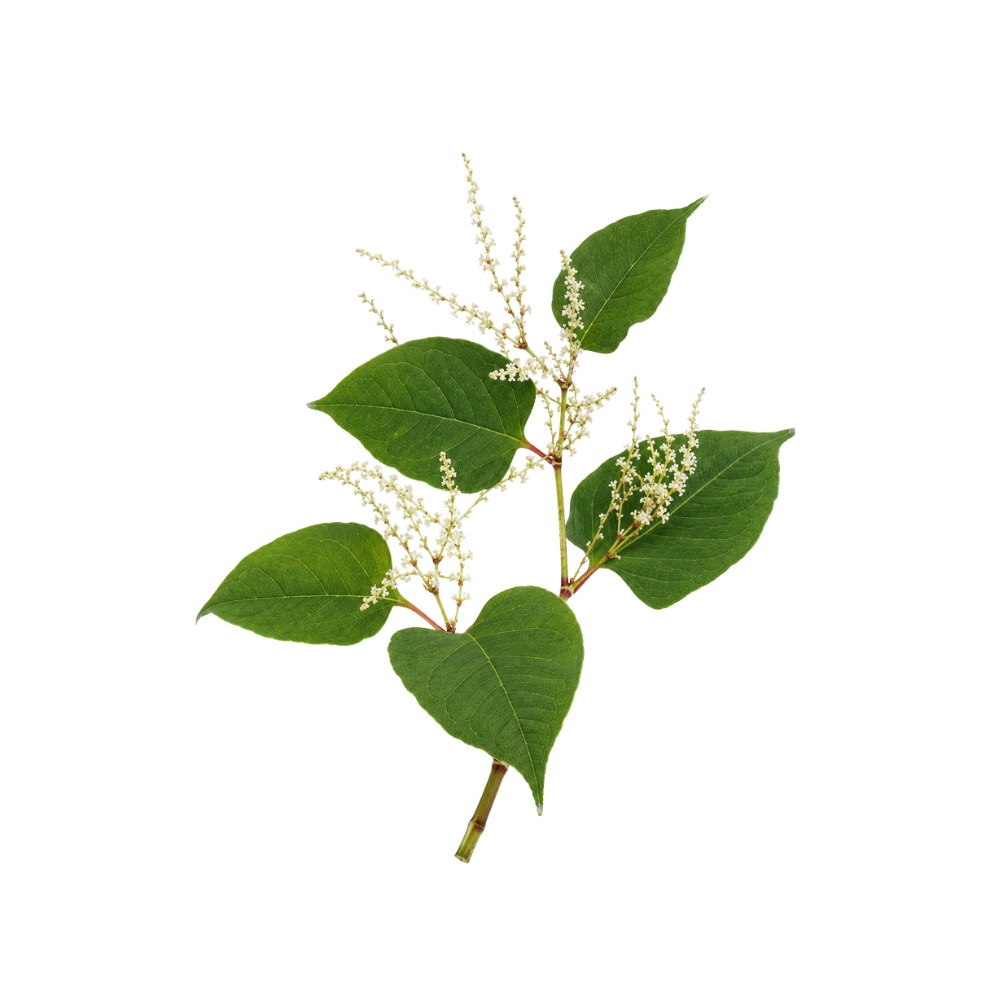
Its stems grow in clusters, stiff, upright and much branched, usually 1.5–2 m tall and sometimes 3 m. They are smooth, often with a bluish bloom and red or purple speckles 25,
The leaves are broadly oval, 5–15 cm long, with a squared-off base and an abruptly pointed tip 25Reference 25C., & Reveal, JView study →.
The flowers are small and white, greenish-white or pinkish, in branched sprays 4–12 cm long that grow from the leaf axils and stem tips in late summer 25Reference 25C., & Reveal, JView study →. Some plants carry bisexual flowers and others only female ones 25Reference 25C., & Reveal, JView study →. The three outer tepals develop wings as the fruit forms, enclosing a shiny, dark brown seed 25Reference 25C., & Reveal, JView study →.
Giant knotweed (Reynoutria sachalinensis) is a close relative, and the two cross to form Bohemian knotweed (Fallopia × bohemica) 25Reference 25C., & Reveal, JView study →.
Distribution
Japanese knotweed is native to East Asia. It grows across much of China, as well as in Japan, Korea, Taiwan and the Russian Far East, in valley thickets, field margins and mountain slopes from 100 to 2,000 m 26Reference 26E., Hong, S., McNeill, J., Mosyakin, SView study →.
It has been widely planted as a garden ornamental and has escaped. It is now established across Europe and North America, where it grows on disturbed ground and waste places from sea level to 1,800 m 25,
Its extensive woody rhizomes make it hard to eradicate once established, and it has been declared a noxious weed in several US states 25Reference 25C., & Reveal, JView study →. In the UK it is typically found on roadsides, waste ground, railway embankments, spoil tips and riverbanks, and it can regrow from a piece of rhizome as small as 1 cm 27Reference 27Japanese knotweed: prevent it from spreading — government guidanceView study →.
In the UK it is an offence to cause Japanese knotweed to spread into the wild, and soil or plant material containing it may be classed as controlled waste 27Reference 27Japanese knotweed: prevent it from spreading — government guidanceView study →.
Growing Conditions
Cultivation snapshot for Japanese Knotweed
Habitregrows from rhizome fragments as small as 1 cm 27Reference 27Japanese knotweed: prevent it from spreading — government guidanceView study →.
Soiltolerates almost any soil; thrives on disturbed ground.
This herb should not be planted. In the UK it is an offence to cause it to spread into the wild 27Reference 27Japanese knotweed: prevent it from spreading — government guidanceView study →, and it is a declared noxious weed in several US states 25Reference 25C., & Reveal, JView study →. The entries below describe why it is so hard to contain. Material for medicine can be dug from existing invasive stands, so harvesting helps rather than harms.
If you are harvesting from a wild stand, choose the site with care. Knotweed growing on polluted riverbank soils takes up metals such as lead and zinc 24Reference 24Phytoremediation potential of invasive plant species for potentially toxic elements along the Sava River upstream — field studyView study →.
Grow it yourself
Farm Wiki is our cultivation-focused sister site, also run by Justin Cooke.
Indications
- Damp-heat jaundice [root and rhizome; TCM]
- Cloudy or painful urination [root and rhizome; TCM]
- Vaginal discharge [root and rhizome; TCM]
- Joint pain [root and rhizome; TCM]
- Cough with thick phlegm [root and rhizome; TCM]
- Acute respiratory infections [root in multi-herb formulas] Caution: Every trial tested knotweed as one part of a herbal mixture, and in all but one the mixture was given alongside antibiotics 1.
- Absent periods [root and rhizome; TCM]
- Injuries from falls and blows [root and rhizome; TCM]
- Burns, scalds, sores and boils [root and rhizome, applied externally; TCM]
- Gout and raised uric acid [root; modern Chinese use] Caution: The treatment evidence is from rats, and the registered single-herb gout trial has carried “unknown” status since 2020 16.
- Colitis [root aqueous extract, root polysaccharide] Caution: Benefit has been shown only in mouse models of colitis 20,
21 . - Lyme disease [root extract; Western herbal use] Caution: The only evidence is a laboratory study. The extract was active against Borrelia burgdorferi but did not wipe out its dormant forms 17.
Pharmacology & Research
Research on Japanese knotweed is large in volume but almost entirely preclinical. It covers whole root-and-rhizome extracts, and also the isolated constituents polydatin, resveratrol and emodin.
The most consistent findings are anti-inflammatory and antioxidant, reproduced across macrophage, arthritis and lung-injury models 2,
The only registered trial of knotweed as a single herb, Huzhang granules for acute gouty arthritis (NCT04462666), has had “unknown” status since 2020 and has posted no results.
-
Best-supported: broad anti-inflammatory activity across macrophage, arthritis and lung-injury models 2,
3, , and symptom benefit in acute respiratory infection when knotweed is taken inside herbal formulas 1Reference 1Meta-analysisReynoutria japonica Houtt for acute respiratory tract infections in adults and children — a systematic review and meta-analysis of randomised controlled trialsView study →.4Reference 2In vitroAnti-inflammatory constituents in the root and rhizome of Polygonum cuspidatum by UPLC-PDA-QTOF/MS and LPS-activated RAW264.7 macrophages — in vitroView study →Reference 3In vitroReynoutria japonica and its component luteolin treat acute lung injury by targeting AKT1 — in vivo mouse and in vitro studyView study →Reference 4AnimalActivation of the NF-κB pathway by Reynoutria japonica Houtt ameliorates complete Freund’s adjuvant arthritis — rat modelView study → -
Emerging, worth watching: anti-atherosclerotic and vasoprotective effects of polydatin 8,
9, ; renoprotection in hyperuricaemia, with a registered gout trial 16Reference 16AnimalPolygonum cuspidatum alleviates hyperuricaemia-induced renal injury via rectifying amino-acid metabolism — human serum metabolomics with rat validationView study →; protection against experimental colitis from a whole aqueous extract and a root polysaccharide 20,10Reference 8AnimalNrf2-mediated inhibition of ferroptosis contributes to amelioration of atherosclerosis by polydatin — ApoE-knockout mouse, in vivoView study →Reference 9AnimalPanax ginseng–Polygonum cuspidatum alleviates atherosclerosis in ApoE(-/-) mice — in vivo animal modelView study →Reference 10AnimalPolydatin enhances blood-vessel relaxation and reduces NLRP3-mediated inflammation in hyperglycaemia — rat aorta, ex vivoView study → 21Reference 20AnimalPectic polysaccharides from Polygonum cuspidatum — structural characterisation and protective effects against DSS-induced colitis — mouse modelView study →Reference 21AnimalThe aqueous extract of Reynoutria japonica ameliorates damp-heat ulcerative colitis in mice by modulating gut microbiota — in vivoView study → . - Mechanistically thin: anticancer activity rests on isolated-polydatin review data 18Reference 18ReviewPolydatin — a natural compound with multifaceted anticancer properties — reviewView study → plus one resveratrol-enriched extract tested in cells and a mouse xenograft 22Reference 22In vitroResveratrol-enriched Polygonum cuspidatum extract enhances functional bioactivity against non-small cell lung cancer through modulation of inflammatory signaling and mitochondrial apoptosis — in vitro, mouse xenograft and 28-day rat safety studyView study →; most cardiovascular and antidiabetic results use the purified molecule, not the root.
-
The caveat: the whole-root human evidence is a single formula-confounded review, and the emodin content makes the hepatic and laxative picture dose-dependent and two-edged 14,
15Reference 14Meta-analysisThe efficacy and toxicity equilibrium of emodin for liver injury — a bidirectional meta-analysis and machine-learning study of rodent modelsView study →Reference 15Case reportA case report and literature review of drug-induced liver injury caused by Huzhang according to the updated RUCAMView study → .
Findings on isolated compounds do not describe the root. The root holds resveratrol at low levels, mostly as its glucoside polydatin, alongside the anthraquinone emodin, so results with purified resveratrol, polydatin or emodin do not transfer directly to a decoction or root extract 14,
1. Anti-Inflammatory
The mid-polarity fraction of an ethanol extract of the root most strongly reduced nitric oxide production in LPS-activated macrophages. It contained 31 identified compounds: 12 anthraquinones, 7 stilbenes, 9 phenols and 3 others 2Reference 2In vitroAnti-inflammatory constituents in the root and rhizome of Polygonum cuspidatum by UPLC-PDA-QTOF/MS and LPS-activated RAW264.7 macrophages — in vitroView study →. Of the five major constituents measured, resveratrol and two emodin glucosides lowered NO, TNF-α, IL-6 and MCP-1 2Reference 2In vitroAnti-inflammatory constituents in the root and rhizome of Polygonum cuspidatum by UPLC-PDA-QTOF/MS and LPS-activated RAW264.7 macrophages — in vitroView study →.
In mice with acute lung injury, a root extract reduced lung damage and inflammation, and its luteolin protected macrophages from cell death through AKT1 3Reference 3In vitroReynoutria japonica and its component luteolin treat acute lung injury by targeting AKT1 — in vivo mouse and in vitro studyView study →. In rats with complete Freund’s adjuvant arthritis, the root reduced paw swelling and arthritis scores and suppressed NF-κB signalling 4Reference 4AnimalActivation of the NF-κB pathway by Reynoutria japonica Houtt ameliorates complete Freund’s adjuvant arthritis — rat modelView study →. In a rat model of osteoarthritis it reduced pain and cartilage breakdown 5Reference 5AnimalInhibitory effects of Reynoutria japonica Houtt on pain and cartilage breakdown in osteoarthritis — animal modelView study →.
The effects are consistent, but active doses and fractions vary between studies.
Gap: No human trial has tested the root alone for any inflammatory condition.
2. Antioxidant
An extract made with a natural deep eutectic solvent, yielding about 3 mg of resveratrol per gram of root, scavenged ABTS, DPPH and hydroxyl radicals in vitro 6Reference 6In vitroOptimisation of extraction and antioxidant activities of resveratrol from Polygonum cuspidatum — in vitroView study →.
Polydatin activates the Nrf2 antioxidant pathway and suppresses ferroptosis in the blood vessels of mice 8Reference 8AnimalNrf2-mediated inhibition of ferroptosis contributes to amelioration of atherosclerosis by polydatin — ApoE-knockout mouse, in vivoView study →.
Gap: Almost entirely in vitro and constituent-level; whole-root antioxidant benefit has not been demonstrated in humans, and free-resveratrol data overstate what a polydatin-dominant root delivers.
3. Respiratory Infections
A systematic review pooled eight randomised trials (1,123 participants) of knotweed, under the name Fallopia japonica, for acute respiratory infections. In seven trials (1,013 participants), herbal mixtures containing it raised the rate of symptom improvement (risk ratio 1.14, 95% CI 1.09–1.20, I² = 0%). They also shortened fever and lowered Murray lung-injury scores, without more adverse events 1Reference 1Meta-analysisReynoutria japonica Houtt for acute respiratory tract infections in adults and children — a systematic review and meta-analysis of randomised controlled trialsView study →.
⚠ In every trial knotweed was one part of a multi-herb mixture, and in all but one the mixture was given alongside antibiotics 1Reference 1Meta-analysisReynoutria japonica Houtt for acute respiratory tract infections in adults and children — a systematic review and meta-analysis of randomised controlled trialsView study →.
Gap: No RCT has tested knotweed as a single herb for respiratory infection; the pooled benefit belongs to the formulas, not necessarily to R. japonica.
4. Cardiovascular
A whole knotweed extract lowered blood lipids in rats with high blood fats, acting through the PI3K/AKT/FOXO3 pathway. Twelve main active ingredients were identified, with polydatin and resveratrol as the leading ones 7Reference 7AnimalPolygonum cuspidatum extract exerts antihyperlipidemic effects by regulation of the PI3K/AKT/FOXO3 pathway — in vivo rat modelView study →.
Isolated polydatin reduced plaque in ApoE-knockout mice by blocking ferroptosis through Nrf2 8Reference 8AnimalNrf2-mediated inhibition of ferroptosis contributes to amelioration of atherosclerosis by polydatin — ApoE-knockout mouse, in vivoView study →. In rat aorta exposed to high glucose, it restored the relaxation of blood vessels and lowered NLRP3 and VCAM-1 10Reference 10AnimalPolydatin enhances blood-vessel relaxation and reduces NLRP3-mediated inflammation in hyperglycaemia — rat aorta, ex vivoView study →. A ginseng–knotweed herb pair also reduced plaque in ApoE-knockout mice, with changes in gut bacteria 9Reference 9AnimalPanax ginseng–Polygonum cuspidatum alleviates atherosclerosis in ApoE(-/-) mice — in vivo animal modelView study →.
Most of this work uses purified polydatin, not the whole root.
Gap: There are no human cardiovascular data for the root.
5. Hepatoprotective
A review of cholestatic liver injury found that polydatin, resveratrol, emodin and quercetin protect the liver in animal models, by regulating bile acids through FXR, PXR and the bile salt export pump 11Reference 11ReviewProtective effects of Polygonum cuspidatum bioactive constituents against cholestatic liver injury — a mechanistic reviewView study →. A whole extract protected liver mitochondria in rats with fatty liver disease 12Reference 12AnimalIn vivo identification of the pharmacodynamic ingredients of Polygonum cuspidatum for remedying mitochondria in MAFLD — rat modelView study →.
⚠ A meta-analysis of 28 rodent studies (537 animals) found that emodin is both protective and toxic to the liver. At controlled doses and durations it lowered liver-injury markers, mainly by suppressing CYP2E1 expression and activating the FXR/BSEP pathway. Higher doses and longer use raised liver injury markers, and the model put the tipping point in rodents at about 46 mg/kg a day or 30 days 14Reference 14Meta-analysisThe efficacy and toxicity equilibrium of emodin for liver injury — a bidirectional meta-analysis and machine-learning study of rodent modelsView study →.
In a 72-year-old patient, liver injury followed 14 days of a Hu Zhang–containing formula. It was scored as probable on the RUCAM scale, and liver function returned to normal after N-acetylcysteine and supportive treatment 15Reference 15Case reportA case report and literature review of drug-induced liver injury caused by Huzhang according to the updated RUCAMView study →.
Gap: Protection and harm both trace to the same anthraquinone chemistry; the dose and duration that invert the effect in humans are unknown.
6. Hyperuricemia & Gout
A 2026 study found that people with high uric acid had raised blood levels of leucine, phenylalanine and tyrosine. In rats with high uric acid, P. cuspidatum reversed these changes, reduced kidney damage and altered gut bacteria 16Reference 16AnimalPolygonum cuspidatum alleviates hyperuricaemia-induced renal injury via rectifying amino-acid metabolism — human serum metabolomics with rat validationView study →.
A registered Phase 2 trial, NCT04462666, planned to compare Huzhang granules with etoricoxib in 267 people with acute gouty arthritis.
Gap: The treatment data are from rats; the registered gout trial has carried “unknown” status since 2020 with no results posted.
7. Antimicrobial
Knotweed’s place in Lyme disease protocols rests on a laboratory study. Of 12 botanical extracts tested against Borrelia burgdorferi, Polygonum cuspidatum was one of the two most active. It inhibited growing bacteria (MIC 0.25–0.5%) and was also active against dormant, antibiotic-tolerant forms 17Reference 17In vitroEvaluation of natural and botanical medicines for activity against growing and non-growing forms of Borrelia burgdorferi — in vitroView study →.
In the same study, only Cryptolepis sanguinolenta (cryptolepis) wiped out the dormant forms on subculture. Knotweed did not 17Reference 17In vitroEvaluation of natural and botanical medicines for activity against growing and non-growing forms of Borrelia burgdorferi — in vitroView study →.
Gap: The anti-Borrelia data are entirely in vitro, at extract concentrations that may not be reached in tissue; there is no animal or human evidence that oral knotweed treats Lyme disease.
8. Anticancer
Anticancer research centres on isolated polydatin. A review compiles its reported effects on cancer cell growth, migration, spread and death across several cancer types 18Reference 18ReviewPolydatin — a natural compound with multifaceted anticancer properties — reviewView study →.
A knotweed extract converted by microbes to raise its resveratrol content slowed the growth of lung cancer cells in the laboratory and in mice. It worked better than the unconverted extract, and a 28-day rat study found no treatment-related harm 22Reference 22In vitroResveratrol-enriched Polygonum cuspidatum extract enhances functional bioactivity against non-small cell lung cancer through modulation of inflammatory signaling and mitochondrial apoptosis — in vitro, mouse xenograft and 28-day rat safety studyView study →.
Gap: There are no human cancer data.
9. Colitis
An acidic pectic polysaccharide of about 134 kDa, isolated from the root, relieved DSS-induced colitis in mice. It reduced colonic inflammation, helped restore the gut barrier and raised Alistipes and Akkermansia in the gut microbiota 20Reference 20AnimalPectic polysaccharides from Polygonum cuspidatum — structural characterisation and protective effects against DSS-induced colitis — mouse modelView study →.
An aqueous root extract eased a damp-heat model of ulcerative colitis in mice. It lowered inflammatory factors, reduced mucosal damage, shifted the gut bacteria and raised short-chain fatty acids 21Reference 21AnimalThe aqueous extract of Reynoutria japonica ameliorates damp-heat ulcerative colitis in mice by modulating gut microbiota — in vivoView study →.
Gap: Both results are from mouse models, with whole-root preparations rather than isolated stilbenes; there are no human data.
Mechanisms
The stilbenes polydatin and resveratrol have been studied for suppressing inflammatory signalling through NF-κB and activating the Nrf2 antioxidant pathway. Polydatin is the 3-O-glucoside of resveratrol, and most of the resveratrol in the root is held in that form 2,
The anthraquinone emodin has been studied for both protective and toxic effects on the liver, depending on dose and duration 14Reference 14Meta-analysisThe efficacy and toxicity equilibrium of emodin for liver injury — a bidirectional meta-analysis and machine-learning study of rodent modelsView study →. Emodin is also a stimulant laxative. Luteolin has been studied at AKT1 in lung injury 3Reference 3In vitroReynoutria japonica and its component luteolin treat acute lung injury by targeting AKT1 — in vivo mouse and in vitro studyView study →.
| Mechanism | Drives | Key compounds |
|---|---|---|
| NF-κB ↓, iNOS/NO ↓ | anti-inflammatoryrespiratory | luteolin, resveratrol, polydatin |
| Nrf2 ↑, ferroptosis ↓ | antioxidantcardiovascular | polydatin, resveratrol |
| AKT1 / PI3K–AKT–FOXO3 signaling | anti-inflammatory (lung injury)lipid lowering | luteolin |
| FXR / PXR / BSEP bile-acid regulation | hepatoprotective (cholestasis) | polydatin, emodin, quercetin |
| Gut-microbiota modulation | colitiscardiovascular | whole extract, root pectic polysaccharide |
| Anthraquinone stimulant-laxative & dose-dependent hepatic effect | laxative action; hepatotoxicity risk | emodin |
Pharmacokinetics
After rats were given an oral Huzhang root extract, polydatin, resveratrol and emodin were all found in the blood and in the heart, liver, spleen, lung, kidney and brain. Giving the root with cinnamon twig (Guizhi) significantly changed the blood and tissue levels of all three 19Reference 19AnimalComparative pharmacokinetics and tissue distribution of polydatin, resveratrol and emodin after oral Huzhang and Huzhang-Guizhi extracts — in vivo rat studyView study →.
Taken on its own, polydatin has an absolute oral bioavailability of about 2.9% in rats 32Reference 32AnimalPharmacokinetics and bioavailability study of polydatin in rat plasma by using a LC-MS/MS method — ratView study →. Emodin is itself metabolised by cytochrome P450 enzymes 31Reference 31In vitroInhibition of cytochrome p450 enzymes by quinones and anthraquinones — in vitroView study →. No human pharmacokinetic data exist for the whole root.
Clinical Trials
The only registered single-herb trial, Huzhang granules for acute gouty arthritis (NCT04462666, Phase 2), has had “unknown” status since 2020. The human respiratory evidence comes from trials of multi-herb formulas 1Reference 1Meta-analysisReynoutria japonica Houtt for acute respiratory tract infections in adults and children — a systematic review and meta-analysis of randomised controlled trialsView study →.
| Completed | Planned | Terminated | Preclinical |
|---|---|---|---|
| 8(formula RCTs) | 0 | 1(status unknown) | ~190 |
Last checked: October 2026.
Phytochemistry
The root and rhizome carry two main groups of compounds, stilbenes and anthraquinones. In the most anti-inflammatory fraction of an ethanol extract, 31 compounds were identified, 12 of them anthraquinones and 7 stilbenes 2Reference 2In vitroAnti-inflammatory constituents in the root and rhizome of Polygonum cuspidatum by UPLC-PDA-QTOF/MS and LPS-activated RAW264.7 macrophages — in vitroView study →. The five major constituents were polydatin, resveratrol, emodin-1-O-glucoside, emodin-8-O-glucoside and emodin 2Reference 2In vitroAnti-inflammatory constituents in the root and rhizome of Polygonum cuspidatum by UPLC-PDA-QTOF/MS and LPS-activated RAW264.7 macrophages — in vitroView study →.
Polydatin (piceid) is resveratrol-3-O-glucoside. The root holds resveratrol at low levels, mostly in this bound form 22Reference 22In vitroResveratrol-enriched Polygonum cuspidatum extract enhances functional bioactivity against non-small cell lung cancer through modulation of inflammatory signaling and mitochondrial apoptosis — in vitro, mouse xenograft and 28-day rat safety studyView study →. Polydatin has been studied for Nrf2 activation, ferroptosis suppression and the regulation of glucose and fat metabolism in diabetic rats 8,
How the root is prepared changes this balance. In one analysis of the rhizome, the decoction held the most anthranoids, while a 38% ethanol macerate held the most stilbenes and few anthranoids 29Reference 29UHPLC analysis of Reynoutria japonica Houtt. rhizome preparations regarding stilbene and anthranoid composition and their antimycobacterial activity evaluation — analytical studyView study →.
Emodin is the main anthraquinone. Related anthraquinones include physcion 23Reference 23China Medical Information Platform (中国医药信息查询平台). 虎杖 Hu Zhang (Polygoni Cuspidati Rhizoma et Radix) — materia medica entry, reviewed under the National Administration of Traditional Chinese Medicine terminology project. https://www.dayi.org.cn/cmedical/301276View study →, aloe-emodin and citreorosein.
The root also contains the flavonoids luteolin and quercetin 3,
Constituent Summary
Reported from the root and rhizome; amounts vary with source and extraction.
Anthraquinone3 compoundsno data
Dosage
Traditional doses come from Chinese medicine. The human trials used multi-herb formulas, and the animal studies used mg/kg doses or isolated polydatin.
Research Doses
| Indication | Preparation | Dose | Est. dried-herb equivalent | Source |
|---|---|---|---|---|
| Respiratory infection | Multi-herb decoctions/granules (knotweed one component) | Formula-level dosing | — | 1Reference 1Meta-analysisReynoutria japonica Houtt for acute respiratory tract infections in adults and children — a systematic review and meta-analysis of randomised controlled trialsView study → |
| Acute gouty arthritis | Huzhang granules (single-herb) | One sachet in 100 mL water per dose; strength not stated in registry | — | NCT04462666 |
| Hepatoprotective / MAFLD / cardiovascular / antidiabetic | Rodent extract or isolated polydatin | Animal mg/kg doses only | — | 7, |
Traditional Dosage
| System | Preparation | Dose |
|---|---|---|
| TCM (Hu Zhang) | Decoction of dried rhizome and root | 9–15 g/day (Chinese Pharmacopoeia) 28Reference 28In vitroInhibition of mitochondrial complex function — the hepatotoxicity mechanism of emodin based on quantitative proteomic analyses — in vitro study; states the Chinese Pharmacopoeia daily dose of 9–15 gView study → |
| TCM (Hu Zhang) | External use | Powder, strong decoction or ointment, as needed 23Reference 23China Medical Information Platform (中国医药信息查询平台). 虎杖 Hu Zhang (Polygoni Cuspidati Rhizoma et Radix) — materia medica entry, reviewed under the National Administration of Traditional Chinese Medicine terminology project. https://www.dayi.org.cn/cmedical/301276View study → |
| Western herbal medicine | Tincture / standardized extract | Product-dependent |
Extracts standardised to resveratrol can deliver far more stilbene than a traditional decoction.
Safety & Pregnancy
Japanese knotweed’s main safety concern is its emodin, which makes the root a stimulant laxative and can injure the liver at high doses or with long use 14Reference 14Meta-analysisThe efficacy and toxicity equilibrium of emodin for liver injury — a bidirectional meta-analysis and machine-learning study of rodent modelsView study →.
- Dose-dependent liver injury. Emodin protects the liver at controlled doses in animals but damages it at higher doses or with longer use 14Reference 14Meta-analysisThe efficacy and toxicity equilibrium of emodin for liver injury — a bidirectional meta-analysis and machine-learning study of rodent modelsView study →. A probable case of liver injury followed 14 days of a Hu Zhang formula 15Reference 15Case reportA case report and literature review of drug-induced liver injury caused by Huzhang according to the updated RUCAMView study →.
- Avoid with liver disease. Given the two-edged effect on the liver, avoid the root where liver function is already impaired 14,
15Reference 14Meta-analysisThe efficacy and toxicity equilibrium of emodin for liver injury — a bidirectional meta-analysis and machine-learning study of rodent modelsView study →Reference 15Case reportA case report and literature review of drug-induced liver injury caused by Huzhang according to the updated RUCAMView study → . - Stimulant laxative. The anthraquinone content makes it unsuitable for long-term use for constipation.
- No human interaction study. Its constituents emodin and resveratrol affect drug-metabolising enzymes in the laboratory and at high supplement doses 30,
31Reference 30Clinical trialResveratrol modulates drug- and carcinogen-metabolizing enzymes in a healthy volunteer study — clinical trialView study →Reference 31In vitroInhibition of cytochrome p450 enzymes by quinones and anthraquinones — in vitroView study → . - Wild-collected material. Knotweed takes up metals such as lead and zinc from polluted soils 24Reference 24Phytoremediation potential of invasive plant species for potentially toxic elements along the Sava River upstream — field studyView study →.
- Avoid in pregnancy. Chinese medicine cautions against it because it moves the blood 23Reference 23China Medical Information Platform (中国医药信息查询平台). 虎杖 Hu Zhang (Polygoni Cuspidati Rhizoma et Radix) — materia medica entry, reviewed under the National Administration of Traditional Chinese Medicine terminology project. https://www.dayi.org.cn/cmedical/301276View study →.
Full Safety Detail
Side effects. The most predictable effect at traditional doses is a laxative one, from the root’s anthraquinone emodin.
Liver. A meta-analysis of 28 rodent studies found that emodin protects the liver at controlled doses and durations and raises liver injury markers as either increases 14Reference 14Meta-analysisThe efficacy and toxicity equilibrium of emodin for liver injury — a bidirectional meta-analysis and machine-learning study of rodent modelsView study →. In a 72-year-old patient, probable drug-induced liver injury followed 14 days of a Hu Zhang–containing formula and resolved with N-acetylcysteine and supportive treatment 15Reference 15Case reportA case report and literature review of drug-induced liver injury caused by Huzhang according to the updated RUCAMView study →.
The authors advised caution in elderly patients, long-term users and people with a history of surgery 15Reference 15Case reportA case report and literature review of drug-induced liver injury caused by Huzhang according to the updated RUCAMView study →. Avoid it with existing liver disease.
Overdose. No human overdose data are published. The dose-dependent liver signal comes from rodent models and a single case report 14,
Liver-toxic drugs. An added strain on the liver with other hepatotoxic medicines is plausible but has not been tested.
Anticoagulant and antiplatelet drugs. Chinese medicine classes Hu Zhang as a herb that moves the blood 23Reference 23China Medical Information Platform (中国医药信息查询平台). 虎杖 Hu Zhang (Polygoni Cuspidati Rhizoma et Radix) — materia medica entry, reviewed under the National Administration of Traditional Chinese Medicine terminology project. https://www.dayi.org.cn/cmedical/301276View study →, so an added effect with anticoagulant or antiplatelet drugs is plausible. It has not been studied in people.
Laxatives and potassium-lowering drugs. As a stimulant laxative, the root could add to the effect of other laxatives and to potassium loss with diuretics or corticosteroids if taken for long periods. This has not been studied.
Drug metabolism. There is no human drug-interaction study of the whole root and no confirmed CYP450 effect. In the laboratory, emodin inhibited CYP1A1, CYP1A2 and CYP2B1 31Reference 31In vitroInhibition of cytochrome p450 enzymes by quinones and anthraquinones — in vitroView study →. In 42 healthy volunteers, purified resveratrol at 1 g a day for four weeks inhibited CYP3A4, CYP2D6 and CYP2C9 activity and induced CYP1A2 30Reference 30Clinical trialResveratrol modulates drug- and carcinogen-metabolizing enzymes in a healthy volunteer study — clinical trialView study →.
The root holds resveratrol at low levels, mostly as its glucoside polydatin 22Reference 22In vitroResveratrol-enriched Polygonum cuspidatum extract enhances functional bioactivity against non-small cell lung cancer through modulation of inflammatory signaling and mitochondrial apoptosis — in vitro, mouse xenograft and 28-day rat safety studyView study →, so neither finding has been confirmed for a decoction. In rats, giving knotweed together with cinnamon twig (Guizhi) changed the blood and tissue levels of polydatin, resveratrol and emodin 19Reference 19AnimalComparative pharmacokinetics and tissue distribution of polydatin, resveratrol and emodin after oral Huzhang and Huzhang-Guizhi extracts — in vivo rat studyView study →.
Children. Not specifically studied. The anthraquinone laxative content argues against routine use in children.
Wild-collected root. Knotweed growing on polluted riverbank soils takes up metals such as lead and zinc 24Reference 24Phytoremediation potential of invasive plant species for potentially toxic elements along the Sava River upstream — field studyView study →. In the UK it commonly grows on roadsides, waste ground, railway embankments and spoil tips 27Reference 27Japanese knotweed: prevent it from spreading — government guidanceView study →.
Preparation. What a preparation carries depends on how it is made. In one analysis of the rhizome, the decoction held the most anthranoids, while a 38% ethanol macerate held the most stilbenes and few anthranoids 29Reference 29UHPLC analysis of Reynoutria japonica Houtt. rhizome preparations regarding stilbene and anthranoid composition and their antimycobacterial activity evaluation — analytical studyView study →. Extracts standardised to resveratrol can deliver far more stilbene than a traditional decoction, and the traditional safety record comes from the decoction.
Avoid. Chinese medicine cautions against Hu Zhang in pregnancy, because it moves the blood 23Reference 23China Medical Information Platform (中国医药信息查询平台). 虎杖 Hu Zhang (Polygoni Cuspidati Rhizoma et Radix) — materia medica entry, reviewed under the National Administration of Traditional Chinese Medicine terminology project. https://www.dayi.org.cn/cmedical/301276View study →. Its emodin is also a stimulant laxative.
It has not been studied in breastfeeding, so it is best avoided.
References
- Wang, Z. J. et al. (2022). Reynoutria japonica Houtt for acute respiratory tract infections in adults and children — a systematic review and meta-analysis of randomised controlled trials. Frontiers in Pharmacology. https://pubmed.ncbi.nlm.nih.gov/35281919/
- Yu, M. et al. (2021). Anti-inflammatory constituents in the root and rhizome of Polygonum cuspidatum by UPLC-PDA-QTOF/MS and LPS-activated RAW264.7 macrophages — in vitro. Journal of Pharmaceutical and Biomedical Analysis. https://pubmed.ncbi.nlm.nih.gov/33388645/
- Huang, W. H. et al. (2026). Reynoutria japonica and its component luteolin treat acute lung injury by targeting AKT1 — in vivo mouse and in vitro study. Journal of Ethnopharmacology. https://pubmed.ncbi.nlm.nih.gov/41046083/
- Li, X. F. et al. (2025). Activation of the NF-κB pathway by Reynoutria japonica Houtt ameliorates complete Freund’s adjuvant arthritis — rat model. Inflammopharmacology. https://pubmed.ncbi.nlm.nih.gov/39971820/
- Jo, H. G. et al. (2024). Inhibitory effects of Reynoutria japonica Houtt on pain and cartilage breakdown in osteoarthritis — animal model. International Journal of Molecular Sciences. https://pubmed.ncbi.nlm.nih.gov/39408977/
- Guo, Y. et al. (2026). Optimisation of extraction and antioxidant activities of resveratrol from Polygonum cuspidatum — in vitro. Molecules. https://pubmed.ncbi.nlm.nih.gov/41683469/
- Tao, T. et al. (2021). Polygonum cuspidatum extract exerts antihyperlipidemic effects by regulation of the PI3K/AKT/FOXO3 pathway — in vivo rat model. Oxidative Medicine and Cellular Longevity. https://pubmed.ncbi.nlm.nih.gov/34925692/
- Wu, Y. Q. et al. (2025). Nrf2-mediated inhibition of ferroptosis contributes to amelioration of atherosclerosis by polydatin — ApoE-knockout mouse, in vivo. Toxicology and Applied Pharmacology. https://pubmed.ncbi.nlm.nih.gov/40886948/
- Wang, Y. et al. (2026). Panax ginseng–Polygonum cuspidatum alleviates atherosclerosis in ApoE(-/-) mice — in vivo animal model. Frontiers in Cardiovascular Medicine. https://pubmed.ncbi.nlm.nih.gov/42022531/
- Shah, W. et al. (2025). Polydatin enhances blood-vessel relaxation and reduces NLRP3-mediated inflammation in hyperglycaemia — rat aorta, ex vivo. Immunopharmacology and Immunotoxicology. https://pubmed.ncbi.nlm.nih.gov/41139474/
- Zhang, Z. et al. (2025). Protective effects of Polygonum cuspidatum bioactive constituents against cholestatic liver injury — a mechanistic review. Fitoterapia. https://pubmed.ncbi.nlm.nih.gov/41106787/
- Yu, L. P. et al. (2022). In vivo identification of the pharmacodynamic ingredients of Polygonum cuspidatum for remedying mitochondria in MAFLD — rat model. Biomedicine & Pharmacotherapy. https://pubmed.ncbi.nlm.nih.gov/36252355/
- Bi, S. et al. (2024). Polydatin from Polygoni Cuspidati Rhizoma et Radix regulates glucolipid metabolism in the liver of diabetic rats — in vivo, multi-omics. Phytomedicine. https://pubmed.ncbi.nlm.nih.gov/39216300/
- Hu, S. et al. (2025). The efficacy and toxicity equilibrium of emodin for liver injury — a bidirectional meta-analysis and machine-learning study of rodent models. Phytomedicine. https://pubmed.ncbi.nlm.nih.gov/40339537/
- Liang, X. et al. (2026). A case report and literature review of drug-induced liver injury caused by Huzhang according to the updated RUCAM. Medicine. https://pubmed.ncbi.nlm.nih.gov/41630279/
- Ma, Y. et al. (2026). Polygonum cuspidatum alleviates hyperuricaemia-induced renal injury via rectifying amino-acid metabolism — human serum metabolomics with rat validation. Phytomedicine. https://pubmed.ncbi.nlm.nih.gov/41365191/
- Feng, J. et al. (2020). Evaluation of natural and botanical medicines for activity against growing and non-growing forms of Borrelia burgdorferi — in vitro. Frontiers in Medicine. https://pubmed.ncbi.nlm.nih.gov/32154254/
- Imtiyaz, K. et al. (2025). Polydatin — a natural compound with multifaceted anticancer properties — review. Journal of Traditional and Complementary Medicine. https://pubmed.ncbi.nlm.nih.gov/40979480/
- Yang, J. et al. (2024). Comparative pharmacokinetics and tissue distribution of polydatin, resveratrol and emodin after oral Huzhang and Huzhang-Guizhi extracts — in vivo rat study. Journal of Ethnopharmacology. https://pubmed.ncbi.nlm.nih.gov/37557937/
- Fu, Y. P. et al. (2026). Pectic polysaccharides from Polygonum cuspidatum — structural characterisation and protective effects against DSS-induced colitis — mouse model. International Journal of Biological Macromolecules. https://pubmed.ncbi.nlm.nih.gov/42468595/
- Jiang, L. et al. (2025). The aqueous extract of Reynoutria japonica ameliorates damp-heat ulcerative colitis in mice by modulating gut microbiota — in vivo. Journal of Ethnopharmacology. https://pubmed.ncbi.nlm.nih.gov/39515678/
- Wang, H. L. et al. (2026). Resveratrol-enriched Polygonum cuspidatum extract enhances functional bioactivity against non-small cell lung cancer through modulation of inflammatory signaling and mitochondrial apoptosis — in vitro, mouse xenograft and 28-day rat safety study. Nutrients. https://pubmed.ncbi.nlm.nih.gov/42356251/
- China Medical Information Platform (中国医药信息查询平台). 虎杖 Hu Zhang (Polygoni Cuspidati Rhizoma et Radix) — materia medica entry, reviewed under the National Administration of Traditional Chinese Medicine terminology project. https://www.dayi.org.cn/cmedical/301276
- Miletić, Z., Jarić, S., Jonjev, M., Mitrović, M., Pavlović, D., Matić, M., & Pavlović, P. (2024). Phytoremediation potential of invasive plant species for potentially toxic elements along the Sava River upstream — field study. Heliyon, 10(13), e33798. https://pubmed.ncbi.nlm.nih.gov/39071575/
- Freeman, C. C., & Reveal, J. L. (accessed 2026). Fallopia japonica var. japonica. In: Flora of North America, Vol. 5 (Polygonaceae) — flora. http://www.efloras.org/florataxon.aspx?flora_id=1&taxon_id=250060604
- Li, A., Bao, B., Grabovskaya-Borodina, A. E., Hong, S., McNeill, J., Mosyakin, S. L., Ohba, H., & Park, C. (accessed 2026). Reynoutria japonica. In: Flora of China, Vol. 5 (Polygonaceae) — flora. http://www.efloras.org/florataxon.aspx?flora_id=2&taxon_id=242343249
- GOV.UK (Environment Agency). Japanese knotweed: prevent it from spreading — government guidance. https://www.gov.uk/guidance/prevent-japanese-knotweed-from-spreading
- Lin, L., Liu, Y., Fu, S., Qu, C., Li, H., & Ni, J. (2019). Inhibition of mitochondrial complex function — the hepatotoxicity mechanism of emodin based on quantitative proteomic analyses — in vitro study; states the Chinese Pharmacopoeia daily dose of 9–15 g. Cells, 8(3), 263. https://pubmed.ncbi.nlm.nih.gov/30897821/
- Alperth, F., Melinz, L., Fladerer, J. P., & Bucar, F. (2021). UHPLC analysis of Reynoutria japonica Houtt. rhizome preparations regarding stilbene and anthranoid composition and their antimycobacterial activity evaluation — analytical study. Plants (Basel), 10(9), 1809. https://pubmed.ncbi.nlm.nih.gov/34579341/
- Chow HH, Garland LL, Hsu CH, et al. (2010). Resveratrol modulates drug- and carcinogen-metabolizing enzymes in a healthy volunteer study — clinical trial. Cancer Prev Res (Phila). https://pubmed.ncbi.nlm.nih.gov/20716633/
- Sridhar J, Liu J, Foroozesh M, et al. (2012). Inhibition of cytochrome p450 enzymes by quinones and anthraquinones — in vitro. Chem Res Toxicol. https://pubmed.ncbi.nlm.nih.gov/22185593/
- Ding X, Hou X, Gao S, et al. (2014). Pharmacokinetics and bioavailability study of polydatin in rat plasma by using a LC-MS/MS method — rat. Pak J Pharm Sci. https://pubmed.ncbi.nlm.nih.gov/25362596/



