
Materia Medica
Mapacho
Nicotiana rustica
Mapacho is a high-nicotine tobacco native to South America and the ceremonial tobacco of the Amazon, smoked, blown as smoke, taken as rapé snuff and drunk as a strong infusion. It is also the tobacco of the smokeless products toombak and Maraş powder.
What Is Mapacho?
Mapacho is Nicotiana rustica, a coarse, yellow-flowered tobacco with a high nicotine content, and the ceremonial tobacco of the Amazon. It is smoked in thick hand-rolled cigars, blown as smoke in healing work, taken as rapé snuff and drunk as a strong infusion 1,
It is native to South America, in Peru and Bolivia, and it has been introduced nearly worldwide 23Reference 23Knapp, S. (n.d.). Nicotiana rustica Linnaeus — species description, habitat and distribution — flora. In Flora of North America Editorial Committee (eds.), Flora of North America North of Mexico, Vol. 14 (Solanaceae). http://www.efloras.org/florataxon.aspx?flora_id=1&taxon_id=200020549View study →. Before European settlers brought common tobacco (N. tabacum), it was probably the main tobacco of eastern North America, and it is recorded as the sacred tobacco of the Iroquois 23Reference 23Knapp, S. (n.d.). Nicotiana rustica Linnaeus — species description, habitat and distribution — flora. In Flora of North America Editorial Committee (eds.), Flora of North America North of Mexico, Vol. 14 (Solanaceae). http://www.efloras.org/florataxon.aspx?flora_id=1&taxon_id=200020549View study →. Its other common name is Aztec tobacco.
Nicotine is its main alkaloid, and it carries more of it than common tobacco 1,
Nicotiana rustica is a separate species from common tobacco, N. tabacum, with yellow rather than pink or white flowers 23,
How Is Mapacho Used?
- Ceremonial — smoked, blown as smoke over patients, and taken as a liquid preparation by mouth in Amazonian healing 15Reference 15Berlowitz, I., et al. (2020). “Tobacco is the chief medicinal plant in my work”: therapeutic uses of tobacco in Peruvian Amazonian medicine exemplified by the work of a maestro tabaquero — qualitative ethnographic study. Frontiers in Pharmacology. https://pubmed.ncbi.nlm.nih.gov/33117182/View study →.
- Rapé — a finely powdered snuff, usually blended with alkaline plant ash, blown into the nostrils 1Reference 1Comprehensive chemical characterization of rapé tobacco products: nicotine, un-ionized nicotine, tobacco-specific N’-nitrosamines, polycyclic aromatic hydrocarbons, and flavor constituents — analytical studyView study →.
- Smokeless tobacco — the leaf of Sudanese toombak and Turkish Maraş powder, held in the mouth 16,
18Reference 16ObservationalToombak: a major risk factor for cancer of the oral cavity in Sudan — observational study (N. rustica snuff)View study →Reference 18ObservationalThe effects of Maras powder (smokeless tobacco) on oxidative stress in users — observational study (N. rustica)View study → . - Insecticide — the leaf extract kills stored-grain pests, and in China the plant is grown for tobacco and as an insecticide 6,
24Reference 6Evaluation of insecticidal potentials of five plant extracts against the stored grain pest, Callosobruchus maculatus (Coleoptera: Bruchidae) — insect bioassayView study →Reference 24Y., Lu, A., & D’Arcy, WView study → .
Traditional Uses
Amazonian Ceremonial Practice
In the Peruvian Amazon, tobacco, and N. rustica especially, is regarded as a potent medicinal plant and the main healing tool of Amazonian healers 15Reference 15Berlowitz, I., et al. (2020). “Tobacco is the chief medicinal plant in my work”: therapeutic uses of tobacco in Peruvian Amazonian medicine exemplified by the work of a maestro tabaquero — qualitative ethnographic study. Frontiers in Pharmacology. https://pubmed.ncbi.nlm.nih.gov/33117182/View study →. A maestro tabaquero, a healer who specialises in tobacco, prepares his remedies mainly from cured N. rustica leaf 15Reference 15Berlowitz, I., et al. (2020). “Tobacco is the chief medicinal plant in my work”: therapeutic uses of tobacco in Peruvian Amazonian medicine exemplified by the work of a maestro tabaquero — qualitative ethnographic study. Frontiers in Pharmacology. https://pubmed.ncbi.nlm.nih.gov/33117182/View study →.
He uses it by mouth, through the nose and on the skin, and names “problems of the mind”, respiratory illness, intestinal and skin parasites and gout among its indications 15Reference 15Berlowitz, I., et al. (2020). “Tobacco is the chief medicinal plant in my work”: therapeutic uses of tobacco in Peruvian Amazonian medicine exemplified by the work of a maestro tabaquero — qualitative ethnographic study. Frontiers in Pharmacology. https://pubmed.ncbi.nlm.nih.gov/33117182/View study →. His most common preparation is a liquid taken by mouth. It produces an altered state of consciousness and deliberate vomiting, which the tradition treats as part of the cure 15Reference 15Berlowitz, I., et al. (2020). “Tobacco is the chief medicinal plant in my work”: therapeutic uses of tobacco in Peruvian Amazonian medicine exemplified by the work of a maestro tabaquero — qualitative ethnographic study. Frontiers in Pharmacology. https://pubmed.ncbi.nlm.nih.gov/33117182/View study →.
Tobacco enemas are a common practice in the Amazon, used for instance for intestinal parasites 15Reference 15Berlowitz, I., et al. (2020). “Tobacco is the chief medicinal plant in my work”: therapeutic uses of tobacco in Peruvian Amazonian medicine exemplified by the work of a maestro tabaquero — qualitative ethnographic study. Frontiers in Pharmacology. https://pubmed.ncbi.nlm.nih.gov/33117182/View study →. The healer stresses that a skilled tabaquero, who knows how to dose, administer and intervene, is essential, and that tobacco ingestion is otherwise dangerous 15Reference 15Berlowitz, I., et al. (2020). “Tobacco is the chief medicinal plant in my work”: therapeutic uses of tobacco in Peruvian Amazonian medicine exemplified by the work of a maestro tabaquero — qualitative ethnographic study. Frontiers in Pharmacology. https://pubmed.ncbi.nlm.nih.gov/33117182/View study →.
Mapacho is often used alongside ayahuasca, and shares its ceremonial setting with chacruna, yopo and jurema. Its role there is as a stimulant, emetic and purgative.
Smokeless Tobacco in Sudan & Turkey
In northern Sudan the finely ground leaf is mixed with sodium bicarbonate and water into a paste, toombak, which is held in the mouth for up to several hours and replaced 10–30 times a day 16Reference 16ObservationalToombak: a major risk factor for cancer of the oral cavity in Sudan — observational study (N. rustica snuff)View study →. In the Nile Province about 40% of men use it 16Reference 16ObservationalToombak: a major risk factor for cancer of the oral cavity in Sudan — observational study (N. rustica snuff)View study →.
In south-eastern Turkey the leaf is mixed with the ash of oak or grapevine wood to make Maraş powder, another smokeless tobacco 18Reference 18ObservationalThe effects of Maras powder (smokeless tobacco) on oxidative stress in users — observational study (N. rustica)View study →.
Botany
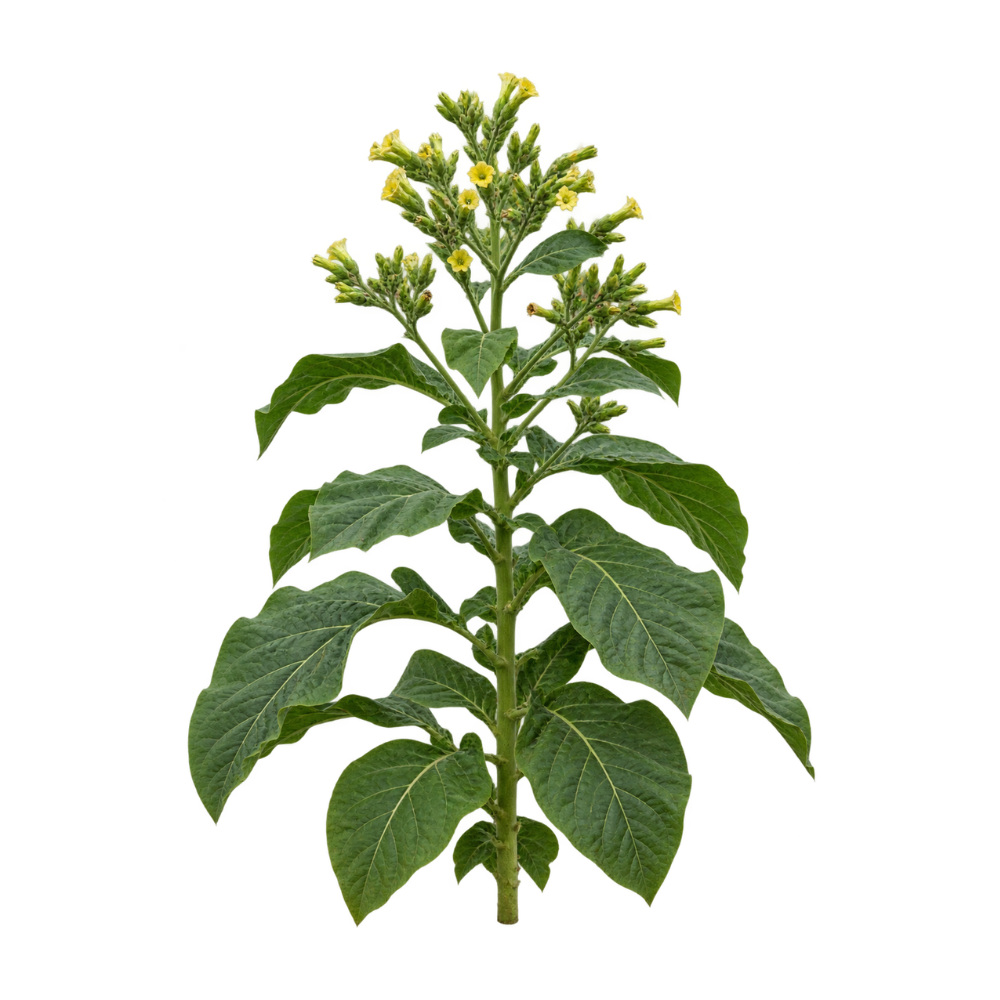
Mapacho is a coarse, sturdy annual herb of the nightshade family (Solanaceae), sometimes living longer than a year 23Reference 23Knapp, S. (n.d.). Nicotiana rustica Linnaeus — species description, habitat and distribution — flora. In Flora of North America Editorial Committee (eds.), Flora of North America North of Mexico, Vol. 14 (Solanaceae). http://www.efloras.org/florataxon.aspx?flora_id=1&taxon_id=200020549View study →. Its stem is usually single and 0.5–2 m tall, and the whole plant is sticky with glandular hairs 23,
The leaves are oval to elliptic, usually 10–15 cm long, and borne on distinct stalks that are shorter than the blade and have no wing 23Reference 23Knapp, S. (n.d.). Nicotiana rustica Linnaeus — species description, habitat and distribution — flora. In Flora of North America Editorial Committee (eds.), Flora of North America North of Mexico, Vol. 14 (Solanaceae). http://www.efloras.org/florataxon.aspx?flora_id=1&taxon_id=200020549View study →. Common tobacco, by contrast, has stalkless leaves whose bases half clasp the stem 25Reference 25Knapp, S. (n.d.). Nicotiana tabacum Linnaeus — species description, habitat and distribution — flora. In Flora of North America Editorial Committee (eds.), Flora of North America North of Mexico, Vol. 14 (Solanaceae). http://www.efloras.org/florataxon.aspx?flora_id=1&taxon_id=200020550View study →.
The flowers open by day in branched clusters. Each is a short tube 1.2–1.7 cm long, yellow to greenish yellow, with a small, pale yellowish-green five-sided face 6–9 mm across 23Reference 23Knapp, S. (n.d.). Nicotiana rustica Linnaeus — species description, habitat and distribution — flora. In Flora of North America Editorial Committee (eds.), Flora of North America North of Mexico, Vol. 14 (Solanaceae). http://www.efloras.org/florataxon.aspx?flora_id=1&taxon_id=200020549View study →.
The fruit is a rounded capsule 0.7–1.6 cm long, almost covered by the persistent calyx. The seeds are about 1 mm long 23Reference 23Knapp, S. (n.d.). Nicotiana rustica Linnaeus — species description, habitat and distribution — flora. In Flora of North America Editorial Committee (eds.), Flora of North America North of Mexico, Vol. 14 (Solanaceae). http://www.efloras.org/florataxon.aspx?flora_id=1&taxon_id=200020549View study →.
Distribution
Mapacho is native to South America, in Bolivia and Peru, and it has been introduced nearly worldwide 23Reference 23Knapp, S. (n.d.). Nicotiana rustica Linnaeus — species description, habitat and distribution — flora. In Flora of North America Editorial Committee (eds.), Flora of North America North of Mexico, Vol. 14 (Solanaceae). http://www.efloras.org/florataxon.aspx?flora_id=1&taxon_id=200020549View study →. In North America it is usually found in cultivation, often around Native American towns and villages, and it escapes onto field edges, roadsides and disturbed ground but probably does not persist 23Reference 23Knapp, S. (n.d.). Nicotiana rustica Linnaeus — species description, habitat and distribution — flora. In Flora of North America Editorial Committee (eds.), Flora of North America North of Mexico, Vol. 14 (Solanaceae). http://www.efloras.org/florataxon.aspx?flora_id=1&taxon_id=200020549View study →.
It is cultivated in several provinces of China 24Reference 24Y., Lu, A., & D’Arcy, WView study → and grown in Moldova among the local tobaccos 2Reference 2Comparative study of nicotine content in Moldavian tobacco by UV-Vis spectrophotometry and UHPLC and their mineral composition by ICP-OES — analytical study (includes Nicotiana rustica)View study →.
Growing Conditions
Cultivation snapshot for Mapacho
- Hardier and faster than common tobacco, tolerating cooler and shorter seasons.
- Full sun; rich, well-drained soil; a hungry feeder like the rest of the genus.
- Grown from the same dust-fine seed, surface-sown and transplanted once warm.
Grow it yourself
Farm Wiki is our cultivation-focused sister site, also run by Justin Cooke.
Pharmacology & Research
The research on Nicotiana rustica is toxicological, chemical and ethnographic. No controlled trial has tested the plant as a medicine, and no clinical trial of it has been registered.
The laboratory findings are narrow: the crude leaf extract kills stored-grain insects, a nicotine effect 5,
-
Best-supported: insecticidal activity of the crude leaf extract against stored-grain and other pests, well replicated in whole-organism bioassays and mechanistically driven by nicotine 5,
6Reference 5Evaluating the efficacy of plant extracts in managing the bruchid beetle, Callosobruchus maculatus (Coleoptera: Bruchidae) — insect bioassay (N. rustica leaf extract)View study →Reference 6Evaluation of insecticidal potentials of five plant extracts against the stored grain pest, Callosobruchus maculatus (Coleoptera: Bruchidae) — insect bioassayView study → . -
Emerging, worth watching: the β-carbolines harman and norharman are reversible MAO inhibitors — potentially relevant where mapacho is taken alongside MAOI-containing ayahuasca plants — but the threshold for meaningful inhibition, and the levels in N. rustica specifically, are unestablished 8,
9, .10Reference 8In vitroMonoamine oxidase inhibitors present in tobacco modulate dopamine balance via the dopamine transporter — in vitro / in silico studyView study →Reference 9ReviewA review of monoamine oxidase (MAO) inhibitors in tobacco or tobacco smoke — reviewView study →Reference 10ReviewMonoamine oxidase inhibition by plant-derived β-carbolines; implications for the psychopharmacology of tobacco and ayahuasca — reviewView study → -
Mechanistically thin or contradicted: no antioxidant benefit — N. rustica smokeless preparations raise oxidative stress and lower antioxidant enzymes in users 18,
19Reference 18ObservationalThe effects of Maras powder (smokeless tobacco) on oxidative stress in users — observational study (N. rustica)View study →Reference 19ObservationalPlasma paraoxonase and arylesterase activities in smokers and smokeless tobacco users as Maraş powder — observational study (N. rustica)View study → ; “medicinal” mental-health use rests on ethnography and a single case report only 14,15Reference 14Case reportIndigenous-Amazonian traditional medicine’s usage of the tobacco plant: a transdisciplinary ethnopsychological mixed-methods case study — case report (n=1, N. rustica ingestion)View study →Reference 15Berlowitz, I., et al. (2020). “Tobacco is the chief medicinal plant in my work”: therapeutic uses of tobacco in Peruvian Amazonian medicine exemplified by the work of a maestro tabaquero — qualitative ethnographic study. Frontiers in Pharmacology. https://pubmed.ncbi.nlm.nih.gov/33117182/View study → . - The caveat: there is no therapeutic dose and no efficacy trial. The plant’s defining feature is a nicotine load high enough to have caused fatal poisonings, and the analytical literature exists to characterise that hazard, not a benefit.
Its activity and its toxicity are the same pharmacology. The nicotine that kills insects is the nicotine that stimulates and poisons people, and the human data on this species come from its harms, not from trials of benefit.
1. Insecticidal / Botanical Pesticide
In stored-grain tests against the cowpea weevil (Callosobruchus maculatus), a 3% N. rustica extract killed about 86% of the beetles, against 100% for N. tabacum, 81% for neem and 72% for Thuja 6Reference 6Evaluation of insecticidal potentials of five plant extracts against the stored grain pest, Callosobruchus maculatus (Coleoptera: Bruchidae) — insect bioassayView study →. In a second study its LC50 was 0.98%, close to that of N. tabacum (0.69%), and the extracts reduced infestation, egg-laying and adult emergence 5Reference 5Evaluating the efficacy of plant extracts in managing the bruchid beetle, Callosobruchus maculatus (Coleoptera: Bruchidae) — insect bioassay (N. rustica leaf extract)View study →.
The activity tracks the plant’s alkaloids, nicotine with minor anabasine and nornicotine, which act on the insect nervous system. It is whole-organism evidence, but it is an agricultural activity, not a human indication.
Gap: all evidence is in insects, and there is no standardised extract. One often-cited stored-grain report on this pest (PMID 36072466) has been retracted, and the figures above come from the two studies that stand.
2. MAO Inhibition / Neuroactivity
Tobacco contains the β-carbolines harman and norharman, reversible monoamine-oxidase inhibitors from the same alkaloid family as the active compounds of the ayahuasca vine 9,
In cigarette smoke, harman and norharman together account for perhaps less than 10% of the MAO-A inhibition 9Reference 9ReviewA review of monoamine oxidase (MAO) inhibitors in tobacco or tobacco smoke — reviewView study →. Reversible inhibitors of this kind can hardly produce the complete, irreversible MAO inhibition of antidepressant MAOIs, and the level at which they affect neurotransmission has not been established 10Reference 10ReviewMonoamine oxidase inhibition by plant-derived β-carbolines; implications for the psychopharmacology of tobacco and ayahuasca — reviewView study →. This matters for mapacho because it is used alongside ayahuasca plants that also inhibit MAO.
Tested one by one in rats, non-nicotine tobacco compounds changed how much nicotine the animals self-administered: anabasine raised it at a low dose and cut it by over half at a high dose, and anatabine cut it by nearly half 11Reference 11AnimalDifferential effects of non-nicotine tobacco constituent compounds on nicotine self-administration in rats — animal modelView study →.
Gap: the effect is inferred from constituents, not shown for the whole plant. No study has measured β-carbolines in N. rustica or shown a clinically relevant MAO effect from mapacho use.
3. Antimicrobial
A 2026 study used extracts of 21 plants, N. rustica among them, to make zinc-oxide nanoparticles. The N. rustica particles were among the most effective against Escherichia coli and Staphylococcus aureus 7Reference 7In vitroPhytochemical-mediated synthesis of zinc oxide nanoparticles with enhanced antimicrobial properties — in vitro study (N. rustica among 21 extracts)View study →.
The antimicrobial activity belongs to the zinc-oxide particle. The plant extract shapes the particles’ size and surface charge.
Gap: no study has tested a plain N. rustica extract or preparation against microbes.
Mechanisms
Nicotine acts at nicotinic acetylcholine receptors. The same action kills insects, stimulates people and, at higher doses, poisons them.
The β-carbolines in tobacco reversibly inhibit MAO-A and MAO-B 8,
| Mechanism | Drives | Key compounds |
|---|---|---|
| Nicotinic acetylcholine receptor agonism (insect and mammalian) | insecticidal activity; stimulant and toxic effects | nicotine, anabasine, nornicotine |
| Reversible MAO-A / MAO-B inhibition | neuroactivity in ayahuasca co-use; dopamine modulation | harman, norharman, harmaline |
| Pro-oxidant load — lipid peroxidation up, SOD / catalase / arylesterase down | oxidative stress in smokeless-tobacco users | nicotine, tobacco-specific nitrosamines |
| Nitrosation of minor alkaloids during curing | carcinogenicity of smokeless preparations | nornicotine, anatabine |
Clinical Trials
No registered clinical trials of Nicotiana rustica or mapacho were identified. The human literature is one case study and one qualitative study of Amazonian tabaquero practice 14,
| Completed | Planned | Terminated | Preclinical |
|---|---|---|---|
| 0 | 0 | 0 | ~15 |
Last checked: February 2026.
Phytochemistry
Mapacho’s leaf carries the pyridine alkaloids of common tobacco: nicotine above all, with nornicotine, anabasine, anatabine and myosmine as minor alkaloids 3Reference 3Application of GC-MS/MS for the analysis of tobacco alkaloids in cigarette filler and various tobacco species — analytical study (N. rustica minor alkaloids)View study →. It is a high-nicotine species, with high levels of both nicotine and nornicotine 1,
In a study of Moldavian tobaccos, nicotine across ten local varieties and a local N. rustica ranged from 0.97% to 2.74% of the leaf, depending on the method of analysis 2Reference 2Comparative study of nicotine content in Moldavian tobacco by UV-Vis spectrophotometry and UHPLC and their mineral composition by ICP-OES — analytical study (includes Nicotiana rustica)View study →.
Preparation changes how much nicotine is taken up. Rapé snuffs measured 6.32–47.6 mg/g total nicotine. Most were mildly acidic, but hand-made rapés blended with alkaline plant ash reached pH 9.75–10.2, and they held the most un-ionized, free-base nicotine, up to 18.5 mg/g 1Reference 1Comprehensive chemical characterization of rapé tobacco products: nicotine, un-ionized nicotine, tobacco-specific N’-nitrosamines, polycyclic aromatic hydrocarbons, and flavor constituents — analytical studyView study →. Free-base nicotine is the form absorbed fastest through the lining of the nose. In the rapés that contained tobacco, the minor-alkaloid profile confirmed N. rustica 1Reference 1Comprehensive chemical characterization of rapé tobacco products: nicotine, un-ionized nicotine, tobacco-specific N’-nitrosamines, polycyclic aromatic hydrocarbons, and flavor constituents — analytical studyView study →.
The minor alkaloids are precursors of the tobacco-specific N-nitrosamines, which form during curing and are carcinogenic 3Reference 3Application of GC-MS/MS for the analysis of tobacco alkaloids in cigarette filler and various tobacco species — analytical study (N. rustica minor alkaloids)View study →. Rapé carries these nitrosamines and polycyclic aromatic hydrocarbons, several of them known or probable carcinogens 1Reference 1Comprehensive chemical characterization of rapé tobacco products: nicotine, un-ionized nicotine, tobacco-specific N’-nitrosamines, polycyclic aromatic hydrocarbons, and flavor constituents — analytical studyView study →. Toombak contains at least 100 times more of the nitrosamines than US and Swedish commercial snuff 16Reference 16ObservationalToombak: a major risk factor for cancer of the oral cavity in Sudan — observational study (N. rustica snuff)View study →, along with high levels of chromium, cobalt, copper and iron 17Reference 17The ultra-structural, metabolomic and metagenomic characterisation of the Sudanese smokeless tobacco ‘toombak’ — analytical study (N. rustica, heavy metals and TSNAs)View study →.
A spirovetivane-type sesquiterpene glucoside has been isolated from the leaf 4Reference 4A new sesquiterpene glucoside from Nicotiana rustica L. — phytochemical studyView study →.
The β-carbolines harman, norharman and harmalol belong to the same alkaloid family as those of Syrian rue and the ayahuasca vine, and harman and norharman are found in tobacco 9,
Dosage
Mapacho has no therapeutic dose. Nicotine is a potent poison with a narrow margin between a psychoactive and a toxic amount, and mapacho carries more of it than common tobacco.
The ceremonial routes, rapé, strong infusion and tobacco enema, deliver far more nicotine, far faster, than a commercial cigarette. Hand-made rapé, blended with alkaline ash, carries up to 18.5 mg/g of the rapidly absorbed free-base nicotine 1Reference 1Comprehensive chemical characterization of rapé tobacco products: nicotine, un-ionized nicotine, tobacco-specific N’-nitrosamines, polycyclic aromatic hydrocarbons, and flavor constituents — analytical studyView study →. Deaths have occurred when these preparations were used outside experienced traditional practice. Handling wet leaf can also cause nicotine poisoning through the skin (green tobacco sickness) 20Reference 20Meta-analysisGlobal burden of green tobacco sickness in farm workers: a systematic review and meta-analysis of prevalence, gender disparities, and socio-economic determinants — systematic reviewView study →.
Safety & Pregnancy
Mapacho is more dangerous than commercial tobacco because it contains more nicotine, and the preparations it is used in deliver it more efficiently 1,
- Stronger than commercial tobacco. It is a high-nicotine species, and alkaline rapé delivers much of its nicotine as fast-absorbed free base — a ceremonial dose is not comparable to a cigarette.
- Fatal poisonings documented. Rapé, strong infusions and tobacco enemas have killed people outside experienced traditional practice.
- Linked to oral cancer in smokeless use. Toombak and Maraş powder are made from this species, and toombak is a major risk factor for cancer of the mouth.
- Potent poison. Ingested leaf or concentrated preparation can cause severe, sometimes fatal poisoning.
- Highly addictive. Nicotine is strongly reinforcing and dependence-forming.
- Harms pregnancy. There is no safe level.
Full Safety Detail
Acute poisoning. Nicotine poisoning causes nausea, vomiting, sweating, salivation, abdominal pain, a racing or irregular heartbeat, confusion, seizures and, in severe cases, respiratory failure and death 12,
Vomiting in ceremony. Vomiting is a deliberate part of Amazonian tobacco treatment 15Reference 15Berlowitz, I., et al. (2020). “Tobacco is the chief medicinal plant in my work”: therapeutic uses of tobacco in Peruvian Amazonian medicine exemplified by the work of a maestro tabaquero — qualitative ethnographic study. Frontiers in Pharmacology. https://pubmed.ncbi.nlm.nih.gov/33117182/View study →, so early poisoning is harder to tell from the intended effect. The tabaquero tradition itself holds that a skilled healer who can dose and intervene is essential, and that without one the consequences can be fatal 15Reference 15Berlowitz, I., et al. (2020). “Tobacco is the chief medicinal plant in my work”: therapeutic uses of tobacco in Peruvian Amazonian medicine exemplified by the work of a maestro tabaquero — qualitative ethnographic study. Frontiers in Pharmacology. https://pubmed.ncbi.nlm.nih.gov/33117182/View study →.
Cancer. Smokeless preparations of this species carry tobacco-specific N-nitrosamines and heavy metals at high levels 16,
Oxidative stress. In 68 users of Maraş powder, lipid peroxidation was raised and the antioxidant enzymes superoxide dismutase and catalase were lower than in non-users 18Reference 18ObservationalThe effects of Maras powder (smokeless tobacco) on oxidative stress in users — observational study (N. rustica)View study →. Maraş powder users also had the lowest paraoxonase and arylesterase activity; the drop in arylesterase was significant, and the drop in paraoxonase was not 19Reference 19ObservationalPlasma paraoxonase and arylesterase activities in smokers and smokeless tobacco users as Maraş powder — observational study (N. rustica)View study →.
Green tobacco sickness. Nicotine absorbed through the skin from wet leaf causes an occupational illness in tobacco workers. A 2026 meta-analysis of 17 studies put its prevalence at about 24%, higher in women (37%) than in men (22%) 20Reference 20Meta-analysisGlobal burden of green tobacco sickness in farm workers: a systematic review and meta-analysis of prevalence, gender disparities, and socio-economic determinants — systematic reviewView study →. An outbreak with 107 cases has been documented in Brazil 21Reference 21ObservationalFirst reported outbreak of green tobacco sickness in Brazil — observational studyView study →.
Drug metabolism. Tobacco smoke, through its polycyclic aromatic hydrocarbons rather than nicotine, induces the liver enzyme CYP1A2 and speeds the clearance of drugs such as theophylline, caffeine, imipramine, haloperidol and propranolol 26Reference 26ReviewDrug interactions with tobacco smokingView study →. That evidence comes from cigarette smokers of common tobacco, and it has not been studied for mapacho smoke, rapé or infusions.
Nicotine itself is broken down mainly by the liver enzymes CYP2A6 and UGT, and other medicines can change how fast it is cleared 27Reference 27ReviewNicotine chemistry, metabolism, kinetics and biomarkers — reviewView study →. Anyone on medication should ask a pharmacist before any exposure.
Interactions. The β-carbolines in tobacco are reversible MAO inhibitors, which matters where mapacho is used alongside other MAO-inhibiting or serotonergic plants. The level of inhibition that matters, and the β-carboline content of N. rustica, have not been established 10Reference 10ReviewMonoamine oxidase inhibition by plant-derived β-carbolines; implications for the psychopharmacology of tobacco and ayahuasca — reviewView study →. No interaction study has used N. rustica preparations.
Avoid. Nicotine crosses the placenta and passes into breast milk, and there is no established safe level of exposure. Mapacho’s higher nicotine content makes it more dangerous in pregnancy than commercial tobacco. Avoid it while breastfeeding on the same grounds. It has not been studied in pregnancy specifically.
References
- Stanfill, S. B., et al. (2015). Comprehensive chemical characterization of rapé tobacco products: nicotine, un-ionized nicotine, tobacco-specific N’-nitrosamines, polycyclic aromatic hydrocarbons, and flavor constituents — analytical study. Food and Chemical Toxicology. https://pubmed.ncbi.nlm.nih.gov/25934468/
- Ciocarlan, A., et al. (2026). Comparative study of nicotine content in Moldavian tobacco by UV-Vis spectrophotometry and UHPLC and their mineral composition by ICP-OES — analytical study (includes Nicotiana rustica). Biological Trace Element Research. https://pubmed.ncbi.nlm.nih.gov/41236695/
- Lisko, J. G., et al. (2013). Application of GC-MS/MS for the analysis of tobacco alkaloids in cigarette filler and various tobacco species — analytical study (N. rustica minor alkaloids). Analytical Chemistry. https://pubmed.ncbi.nlm.nih.gov/23394466/
- Zhou, R., et al. (2013). A new sesquiterpene glucoside from Nicotiana rustica L. — phytochemical study. Natural Product Research. https://pubmed.ncbi.nlm.nih.gov/22974363/
- Akbar, R., et al. (2024). Evaluating the efficacy of plant extracts in managing the bruchid beetle, Callosobruchus maculatus (Coleoptera: Bruchidae) — insect bioassay (N. rustica leaf extract). Insects. https://pubmed.ncbi.nlm.nih.gov/39336659/
- Akbar, R., et al. (2022). Evaluation of insecticidal potentials of five plant extracts against the stored grain pest, Callosobruchus maculatus (Coleoptera: Bruchidae) — insect bioassay. Insects. https://pubmed.ncbi.nlm.nih.gov/36421950/
- Sohrabi, S., et al. (2026). Phytochemical-mediated synthesis of zinc oxide nanoparticles with enhanced antimicrobial properties — in vitro study (N. rustica among 21 extracts). Molecular Biotechnology. https://pubmed.ncbi.nlm.nih.gov/41076492/
- Saro, G., et al. (2025). Monoamine oxidase inhibitors present in tobacco modulate dopamine balance via the dopamine transporter — in vitro / in silico study. ACS Chemical Neuroscience. https://pubmed.ncbi.nlm.nih.gov/40033845/
- Hong, S. W., et al. (2022). A review of monoamine oxidase (MAO) inhibitors in tobacco or tobacco smoke — review. NeuroToxicology. https://pubmed.ncbi.nlm.nih.gov/36155069/
- Berlowitz, I., et al. (2022). Monoamine oxidase inhibition by plant-derived β-carbolines; implications for the psychopharmacology of tobacco and ayahuasca — review. Frontiers in Pharmacology. https://pubmed.ncbi.nlm.nih.gov/35600851/
- Hall, B. J., et al. (2014). Differential effects of non-nicotine tobacco constituent compounds on nicotine self-administration in rats — animal model. Pharmacology, Biochemistry, and Behavior. https://pubmed.ncbi.nlm.nih.gov/24560911/
- Drug and Therapeutics Bulletin (2014). Republished: nicotine and health — review. BMJ. https://pubmed.ncbi.nlm.nih.gov/25428425/
- Metz, C. N., et al. (2004). Metabolism and biochemical effects of nicotine for primary care providers — review. The Medical Clinics of North America. https://pubmed.ncbi.nlm.nih.gov/15464104/
- Berlowitz, I., et al. (2023). Indigenous-Amazonian traditional medicine’s usage of the tobacco plant: a transdisciplinary ethnopsychological mixed-methods case study — case report (n=1, N. rustica ingestion). Plants. https://pubmed.ncbi.nlm.nih.gov/36679060/
- Berlowitz, I., et al. (2020). “Tobacco is the chief medicinal plant in my work”: therapeutic uses of tobacco in Peruvian Amazonian medicine exemplified by the work of a maestro tabaquero — qualitative ethnographic study. Frontiers in Pharmacology. https://pubmed.ncbi.nlm.nih.gov/33117182/
- Idris, A. M., et al. (1994). Toombak: a major risk factor for cancer of the oral cavity in Sudan — observational study (N. rustica snuff). Preventive Medicine. https://pubmed.ncbi.nlm.nih.gov/7855117/
- Sami, A., et al. (2021). The ultra-structural, metabolomic and metagenomic characterisation of the Sudanese smokeless tobacco ‘toombak’ — analytical study (N. rustica, heavy metals and TSNAs). Toxicology Reports. https://pubmed.ncbi.nlm.nih.gov/34401360/
- Kilinc, M., et al. (2004). The effects of Maras powder (smokeless tobacco) on oxidative stress in users — observational study (N. rustica). Cell Biochemistry and Function. https://pubmed.ncbi.nlm.nih.gov/15248183/
- Kurtul, N., et al. (2014). Plasma paraoxonase and arylesterase activities in smokers and smokeless tobacco users as Maraş powder — observational study (N. rustica). Inhalation Toxicology. https://pubmed.ncbi.nlm.nih.gov/24568579/
- Jahromi, H. K., et al. (2026). Global burden of green tobacco sickness in farm workers: a systematic review and meta-analysis of prevalence, gender disparities, and socio-economic determinants — systematic review. Indian Journal of Occupational and Environmental Medicine. https://pubmed.ncbi.nlm.nih.gov/41970017/
- Oliveira, P. P., et al. (2010). First reported outbreak of green tobacco sickness in Brazil — observational study. Cadernos de Saúde Pública. https://pubmed.ncbi.nlm.nih.gov/21243221/
- Modnicki, D. (2007). Turkish (Aztec) tobacco (Nicotiana rustica L.) — an unnoticeable danger? — review. Przegląd Lekarski. https://pubmed.ncbi.nlm.nih.gov/18409339/
- Knapp, S. (n.d.). Nicotiana rustica Linnaeus — species description, habitat and distribution — flora. In Flora of North America Editorial Committee (eds.), Flora of North America North of Mexico, Vol. 14 (Solanaceae). http://www.efloras.org/florataxon.aspx?flora_id=1&taxon_id=200020549
- Zhang, Z. Y., Lu, A., & D’Arcy, W. G. (n.d.). Nicotiana rustica Linnaeus — species description, distribution and uses — flora. In Wu, Z. Y., & Raven, P. H. (eds.), Flora of China, Vol. 17 (Solanaceae). http://www.efloras.org/florataxon.aspx?flora_id=2&taxon_id=200020549
- Knapp, S. (n.d.). Nicotiana tabacum Linnaeus — species description, habitat and distribution — flora. In Flora of North America Editorial Committee (eds.), Flora of North America North of Mexico, Vol. 14 (Solanaceae). http://www.efloras.org/florataxon.aspx?flora_id=1&taxon_id=200020550
- Zevin, S., & Benowitz, N. L. (1999). Drug interactions with tobacco smoking. An update — review. Clinical Pharmacokinetics. https://pubmed.ncbi.nlm.nih.gov/10427467/
- Benowitz, N. L., Hukkanen, J., & Jacob, P. (2009). Nicotine chemistry, metabolism, kinetics and biomarkers — review. Handbook of Experimental Pharmacology. https://pubmed.ncbi.nlm.nih.gov/19184645/



