

Overview
Aromatase Inhibitor at a Glance
Aromatase inhibitors reduce the conversion of androgens into estrogens.
They do this by inhibiting aromatase, or CYP19 — the enzyme that converts testosterone to estradiol and androstenedione to estrone.
This is the same general pathway targeted by drugs such as anastrozole and letrozole.
Several plant compounds inhibit aromatase in laboratory studies.
Damiana, red clover, and pau d’arco have all shown this activity, while aromatase inhibition has also been proposed as one explanation for fenugreek’s effects on testosterone.
The difficulty is that a herb can act elsewhere in the endocrine system at the same time.
Red clover and damiana, for example, also contain compounds with estrogenic activity at the receptor, so inhibiting estrogen synthesis does not necessarily mean the whole plant produces an anti-estrogenic effect.
None of these herbs has yet been shown to meaningfully lower circulating estrogen in humans, so the action remains much better established at the enzyme level than at the whole-body level.
There is no tradition behind this action. Aromatase was characterised in the twentieth century and no herbalist ever selected a plant for it — every herb here arrived from a cell screen run after the drugs already existed.
The plants themselves carry long traditional reputations, but for the complaint rather than for the enzyme.
None of these four herbs has been shown to lower estrogen in a living body. No animal or human study has measured an estrogen level after any of them.
Caution
No substitute for prescribed therapy — no herb here replaces aromatase-inhibitor therapy in hormone-receptor-positive breast cancer.
Two are estrogenic themselves — red clover and damiana also act at the estrogen receptor, so their net hormonal effect is hard to predict.
Avoid in pregnancy — all four herbs are avoided in pregnancy.
Mechanisms
How It Works
01
CYP19 Inhibition
Aromatase converts androgens into estrogens, and blocking it lowers estrogen synthesis while leaving testosterone alone.
Damiana’s flavonoids pinocembrin and acacetin are the best-characterised herbal inhibitors, red clover’s biochanin A is a long-known one among the isoflavones, and a whole Tabebuia extract showed anti-aromatase activity in a breast-cancer cell model.
The gap against the drug class is about a thousandfold. Anastrozole, letrozole and exemestane work at nanomolar concentrations; these flavonoids work at micromolar ones, well above any exposure a tea or tincture would deliver to tissue.
An IC₅₀ in a plate is a research starting point rather than a dose, and none of these findings has been followed into an animal or a person.
Herbs: DamianaPau D’ArcoRed Clover
Key compounds: PinocembrinAcacetinBiochanin A
02
Opposing Estrogenic Activity
The same plant can inhibit the enzyme with one constituent and agonise the receptor with another.
Damiana’s screen reported both from the same leaf: aromatase inhibition from pinocembrin and acacetin, and estrogenic activity from apigenin-7-glucoside, Z-echinacin and pinocembrin itself.
Red clover’s case is not balanced at all — it is trialled to two and three years as a weak ERβ-preferring phytoestrogen, and the aromatase row is a constituent-level finding the clinical evidence outweighs.
Where a plant does both, the net endocrine direction is whichever effect reaches the tissue at a real concentration, and no study of either herb has measured that.
Herbs: DamianaRed Clover
Key compounds: PinocembrinBiochanin A
03
Proposed Routes
One herb has the clinical effect an aromatase inhibitor would produce, and the enzyme step is inferred rather than measured.
Fenugreek raises total testosterone in human meta-analysis, and aromatase inhibition is one of the explanations offered for it.
No enzyme assay, IC₅₀ or estradiol measurement supports it, and its own mechanism table labels the pathway proposed.
Several routes raise testosterone without touching aromatase, so a rise in testosterone is not evidence for this enzyme.
Herbs: Fenugreek
Key compounds: Diosgenin
Materia Medica
Aromatase-Inhibiting Herbs by Potency
The aromatase inhibitor herbs, ordered by the relative strength of the effect rather than by how well studied it is. Each herb is described by the mechanism behind its effect and the evidence for it.
None of this is a substitute for professional care.
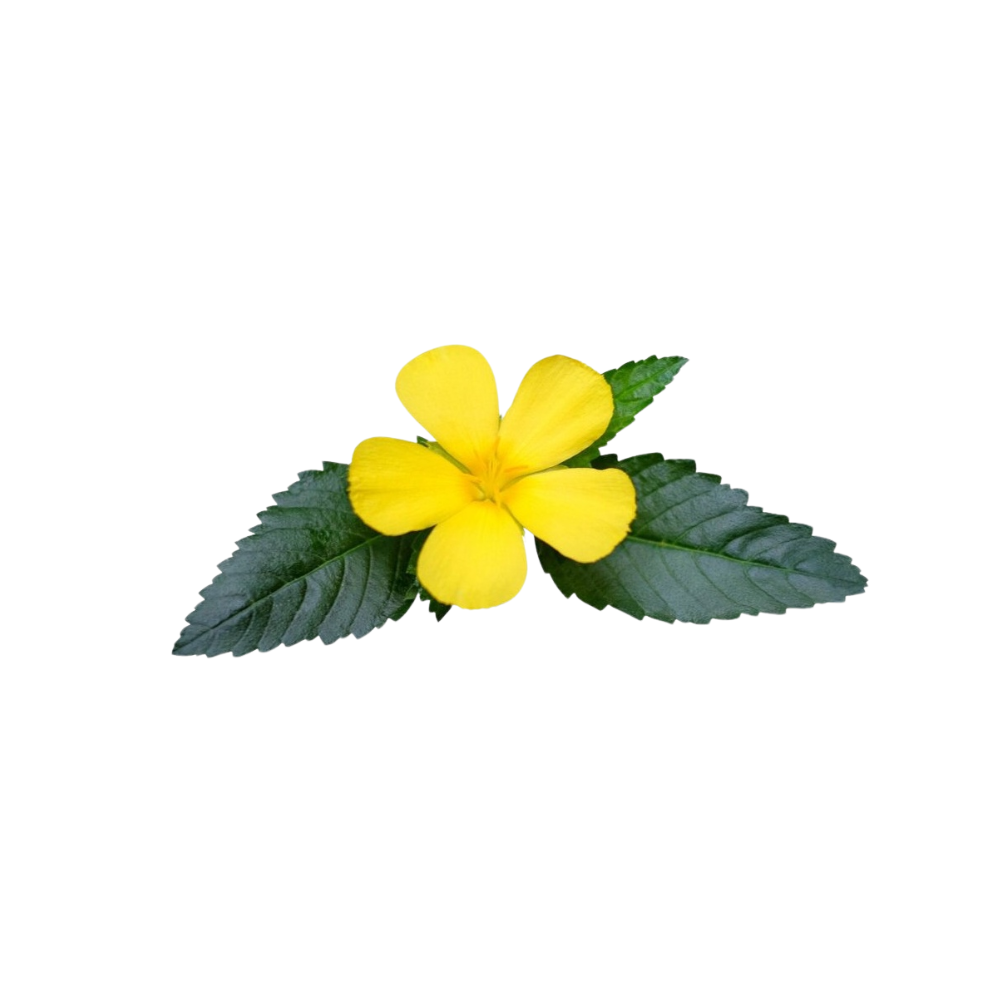 MildMildDamianaTurnera diffusaTwo purified leaf flavonoids, pinocembrin and acacetin, are the most potent aromatase inhibitors found in a screen of 24 damiana constituents.Mechanismaromatase (CYP19) inhibition; ER-α/β binding (same screen, opposite direction — see notes)Read the evidenceShow lessMonograph →
A screen of 24 compounds isolated from damiana leaves found pinocembrin and acacetin the most potent aromatase inhibitors of the set, at IC₅₀ 10.8 and 18.7 µM 1Reference 1In vitroAnti-aromatase activity of the constituents from damiana (Turnera diffusa) — in vitroView study →. Those are micromolar figures, far off a pharmaceutical aromatase inhibitor and well above any exposure a leaf tea or 1:2 tincture would plausibly deliver.
No whole-herb preparation was tested. No extract, animal or person was assayed, and the supporting estrogen-receptor work is molecular docking 2Reference 2A molecular docking study of phytochemical estrogen mimics from dietary herbal supplements — in silicoView study →, so no Turnera material was put in front of a receptor at all.
The same paper reported estrogenic activity in a yeast estrogen screen for apigenin-7-glucoside, Z-echinacin and pinocembrin 1Reference 1In vitroAnti-aromatase activity of the constituents from damiana (Turnera diffusa) — in vitroView study →. Inhibiting aromatase lowers estrogen synthesis; agonising the receptor adds estrogenic signal.
The net direction of the whole leaf is unmeasured.
This is the mechanism behind damiana’s avoid-in-pregnancy and hormone-sensitive-condition cautions 1,
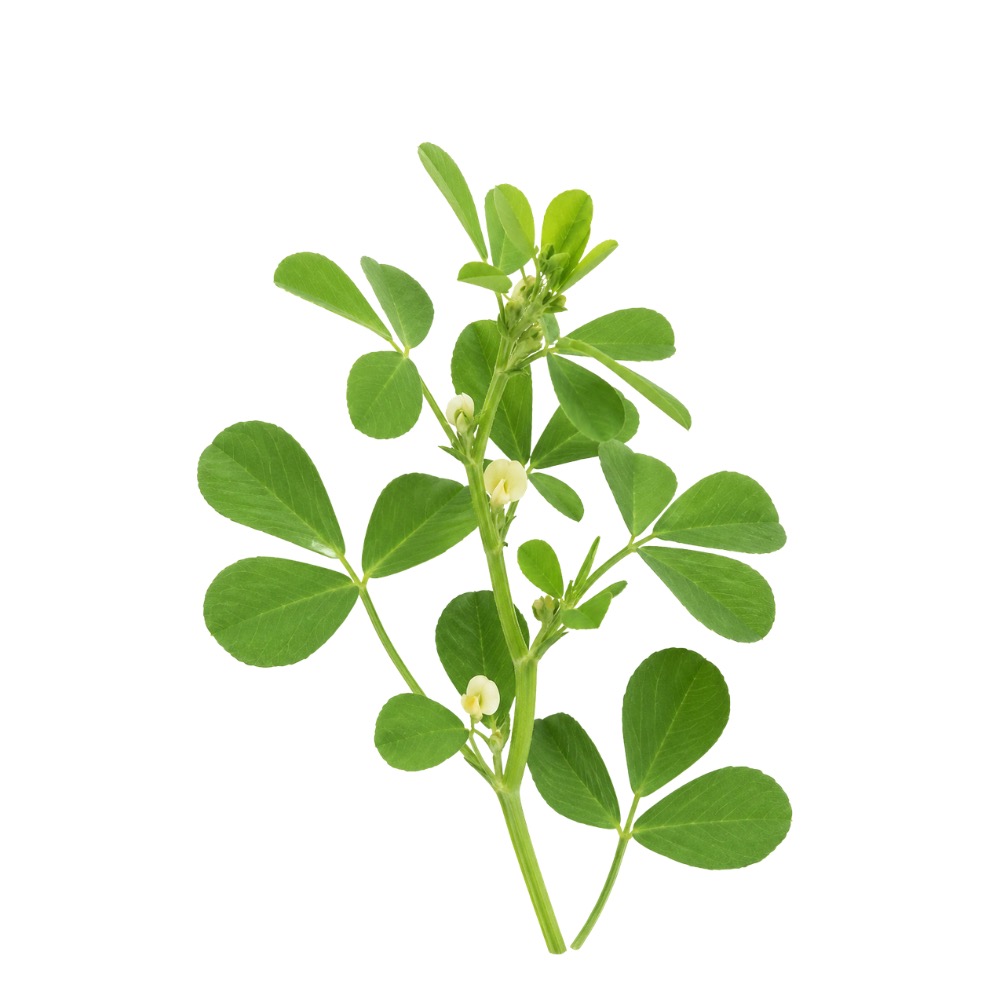 MildMildFenugreekTrigonella foenum-graecumRaises total testosterone in human meta-analysis; aromatase inhibition is the proposed explanation, and no trial measured an estrogen.Mechanismaromatase / 5-alpha-reductase modulation — explicitly proposed, never demonstratedRead the evidenceShow lessMonograph →
Fenugreek has human evidence for raising total testosterone. A meta-analysis of four trials found a significant increase, and an anabolic-focused meta-analysis covered seven studies in 449 participants.
Aromatase inhibition is offered as one explanation. Furostanol-saponin androgenic signalling is labelled aromatase and 5α-reductase modulation, proposed — there is no enzyme assay, no IC₅₀ and no estrogen measurement in any of the human trials.
The reasoning is inferential: blocking conversion of testosterone to estrogen would raise testosterone, and testosterone rose. Several mechanisms raise testosterone without touching this enzyme, and none of the trials measured estradiol.
This is the thinnest mechanistic basis of the four, attached to the best-evidenced clinical effect.
 MildMildPau D’ArcoTabebuia impetiginosaA whole bark extract showed anti-aromatase activity alongside growth inhibition in a post-menopausal Luminal A breast-cancer cell model.Mechanismanti-aromatase activity of a whole Tabebuia extract in a post-menopausal breast-cancer cell model — single in-vitro studyRead the evidenceShow lessMonograph →
A 2019 paper reported growth-inhibitory efficacy and anti-aromatase activity for Tabebuia avellanedae in a post-menopausal Luminal A breast-cancer model 5Reference 5In vitroGrowth inhibitory efficacy and anti-aromatase activity of Tabebuia avellanedae in a post-menopausal Luminal A breast cancer model — in vitroView study →. This is the one herb on the action tested as a whole extract rather than as purified compounds, which makes the preparation more relevant than damiana’s.
It remains a single cell model. No animal, no patient, and no estrogen measured in a body.
Luminal A is the hormone-receptor-positive subtype treated with pharmaceutical aromatase inhibitors, so the result sits exactly where it could be mistaken for an alternative to prescribed therapy.
The finding is also peripheral to the plant. Pau d’arco’s dominant pharmacology is beta-lapachone and NQO1-mediated cytotoxicity, and the anti-aromatase observation is a secondary readout inside an anticancer paper.
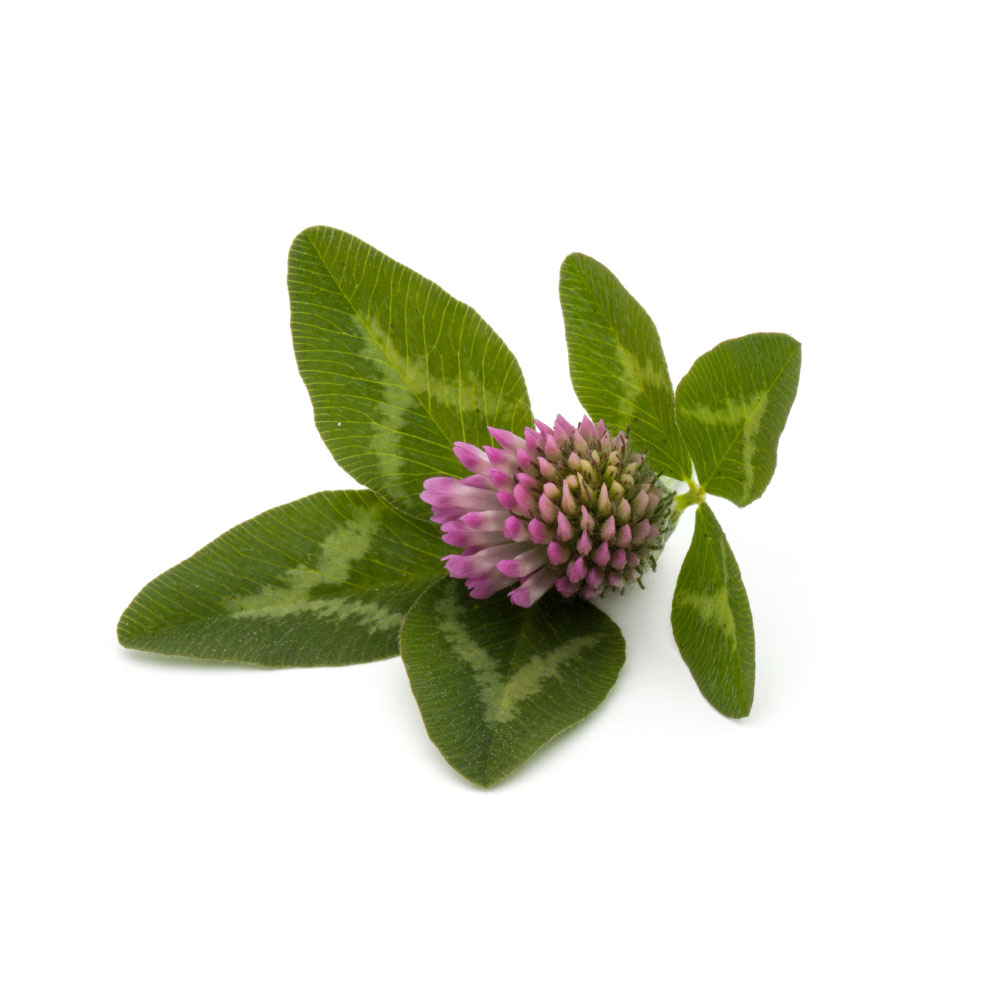 MildMildRed CloverTrifolium pratenseBiochanin A inhibits aromatase in vitro, but red clover's trialled effect is phytoestrogenic and runs in the opposite direction.Mechanismaromatase (CYP19) inhibition by biochanin A — against a dominant, well-trialled phytoestrogenic effect in the opposite directionRead the evidenceShow lessMonograph →
Red clover carries a genuine aromatase-inhibition finding, credited to biochanin A, a long-known in-vitro inhibitor among the isoflavones.
The herb’s clinical identity is the other direction. It is a weak ERβ-preferring phytoestrogen, used for menopausal symptoms because its isoflavones act at the estrogen receptor, with randomised human data running to two and three years.
Aromatase inhibition lowers estrogen synthesis; receptor agonism adds estrogenic signal. The clinical literature is entirely about the second, so the net endocrine direction of the whole herb is estrogenic.
The aromatase row is a constituent-level finding recorded for completeness, and it does not make red clover a way to lower estrogen.
No herbs match these filters.
Safety
- No herb here substitutes for prescribed aromatase-inhibitor therapy in hormone-receptor-positive breast cancer.
- Two of these herbs are estrogenic, so in hormone-sensitive disease the realistic risk runs opposite to the label.
- Anyone on endocrine therapy should tell their oncology team about these herbs, none of which has been studied alongside it.
- None of these will control estrogen conversion on an anabolic steroid cycle.
- Avoid all four in pregnancy.
- Unexplained breast changes, lumps or abnormal bleeding need assessment rather than a hormonal herb, in men as much as in women.
References
- Zhao, J., et al. (2008). Anti-aromatase activity of the constituents from damiana (Turnera diffusa) — in vitro. J Ethnopharmacol. https://pubmed.ncbi.nlm.nih.gov/18948180/
- Powers, C. N., & Setzer, W. N. (2015). A molecular docking study of phytochemical estrogen mimics from dietary herbal supplements — in silico. In Silico Pharmacol. https://pubmed.ncbi.nlm.nih.gov/25878948/
- Estrada-Reyes, R., et al. (2009). Turnera diffusa recovers sexual behavior in sexually exhausted males — animal study. J Ethnopharmacol. https://pubmed.ncbi.nlm.nih.gov/19501274/
- Estrada-Reyes, R., et al. (2013). Pro-sexual effects of Turnera diffusa in male rats involves the nitric oxide pathway — animal study. J Ethnopharmacol. https://pubmed.ncbi.nlm.nih.gov/23298455/
- Telang, N., Nair, H. B., & Wong, G. Y. C. (2019). Growth inhibitory efficacy and anti-aromatase activity of Tabebuia avellanedae in a post-menopausal Luminal A breast cancer model — in vitro. Biomedical Reports, 11(5), 222-229. https://pubmed.ncbi.nlm.nih.gov/31632670/
Keep Exploring