Materia Medica
Fenugreek
Trigonella foenum-graecum
Fenugreek is a Mediterranean and West Asian legume whose aromatic seed is used as both a spice and a medicine. The seed is rich in soluble fibre and steroidal saponins, and it is taken for blood sugar, cholesterol and breastfeeding support.
What Is Fenugreek?
Fenugreek is an annual legume grown for its small, hard, aromatic seeds, used as a spice and a medicine for thousands of years. In India the seed and the leaf are both called methi, and in Chinese medicine the seed is hu lu ba.
The plant grows 30–80 cm tall and is cultivated across South Asia, the Middle East, southern Europe, Ethiopia and China 45,
The seed is rich in a gel-forming soluble fibre, galactomannan, and carries steroidal saponins built on diosgenin, the amino acid 4-hydroxyisoleucine and the alkaloid trigonelline 35Reference 35ReviewDiosgenin, 4-hydroxyisoleucine, and fiber from fenugreek: mechanisms of actions and potential effects on metabolic syndrome — reviewView study →. Research has looked mainly at blood sugar and cholesterol, where several dozen trials have reported modest benefits, and at breastfeeding and testosterone, where the trials are smaller and the results more mixed 1,
Fenugreek’s maple-syrup smell comes from the compound sotolone, which can pass into the urine and, when taken during labour, to a newborn 22,
How Is Fenugreek Used?
Fenugreek is used mostly as the seed: whole, ground, as a tea or decoction, in capsules, or as a liquid extract. The fresh or dried leaf is mainly a vegetable and a culinary herb.
- Whole or ground seed — taken in grams per day. The soluble fibre gels in water and slows the absorption of sugar and fat from a meal 35Reference 35ReviewDiosgenin, 4-hydroxyisoleucine, and fiber from fenugreek: mechanisms of actions and potential effects on metabolic syndrome — reviewView study →.
- Seed tea or decoction — the traditional form for digestion and for milk supply.
- Standardized extracts — commercial extracts such as Testofen, Fenu-FG and Trigozim concentrate the saponin fraction and are taken in hundreds of milligrams. They are used for libido, testosterone and menopausal symptoms.
- Poultice — the soaked, ground seed is applied to inflamed skin in Western herbal practice.
Traditional Uses
Western Herbal Medicine
Western herbalists have used fenugreek seed as a demulcent and nutritive tonic: for irritated digestive and respiratory linings, for convalescence and poor appetite, and as a poultice for inflamed skin and wounds.
Its best-known traditional use is as a galactagogue to support milk supply while breastfeeding, and it remains one of the most popular over-the-counter herbs for that purpose.
Ayurvedic Medicine
Methi seed is a warming, bitter-pungent digestive and metabolic remedy, and the leaf is eaten as a vegetable.
Fenugreek also has a reputation in Ayurveda as a uterine stimulant, used to encourage labour.
Traditional Chinese Medicine
The seed is Hu Lu Ba, a warming kidney tonic used for cold, deficient patterns and for abdominal or hernial pain.
Indications
- Type 2 diabetes and prediabetes [seed powder]
- Raised cholesterol and triglycerides [seed powder]
- Metabolic syndrome [seed powder]
- Low milk supply [seed; Western herbal medicine] Caution: Trials are small and use mixed preparations. A network meta-analysis found fenugreek better than placebo but weaker than other galactagogues, and in a 2025 trial the extra milk seen on day 7 was no longer significant by day 15 21,
22, .23 - Perimenopausal hot flushes and night sweats [standardized seed extract]
- Period pain [seed powder]
- Appetite and satiety [seed fibre] Caution: The satiety effect comes from a single-meal study of isolated fibre. A meta-analysis of lipid trials found no change in body weight 6,
8 . - Low libido and low testosterone in men [standardized seed extract] Caution: Testosterone rises in the trials are small, free testosterone did not change significantly in a meta-analysis, and in a 2024 trial the rise was not significant against placebo 11,
15 . - Poor appetite and convalescence [seed; Western herbal medicine]
- Digestive complaints [seed; Ayurveda, Western herbal medicine]
- Abdominal and hernial pain [seed; TCM]
- Inflamed skin and wounds [seed poultice; Western herbal medicine]
Botany
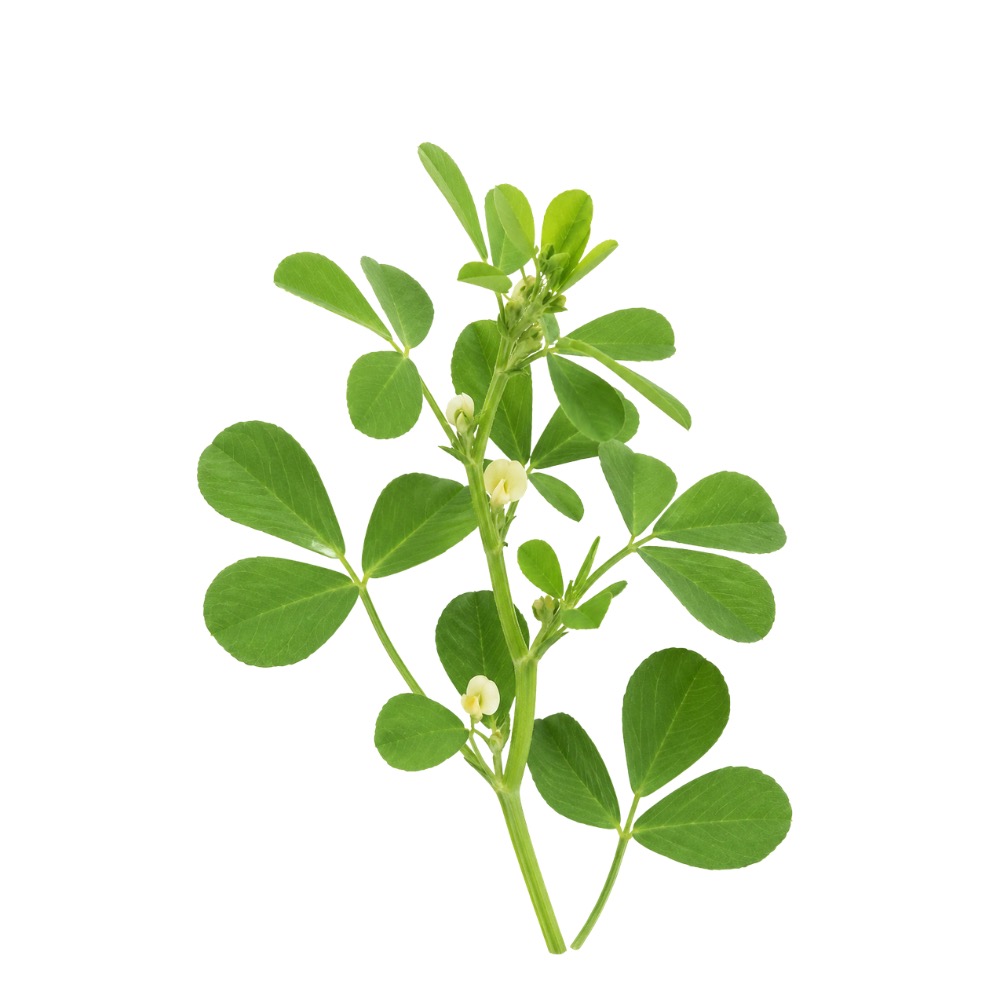
Fenugreek is an upright annual herb in the pea family (Fabaceae), growing 30–80 cm tall from a taproot that can reach 80 cm deep 45Reference 45Trigonella foenum-graecum Linnaeus — species description and distribution — floraView study →. Its medicinal relatives in the same family include licorice, astragalus and red clover.
The leaves are divided into three leaflets. Each leaflet is narrowly oval, 1.5–4 cm long, and toothed along its upper half 45Reference 45Trigonella foenum-graecum Linnaeus — species description and distribution — floraView study →.
The flowers sit singly or in pairs in the leaf axils, with no stalk. They are creamy white to pale yellow, 13–18 mm long, and violet at the base, sometimes tinged with lilac 45,
The pod is long and narrow, 7–12 cm, straight or slightly curved, and ends in a slender beak up to 2 cm long. Each pod holds 10–20 brown, oblong seeds, 3–5 mm long, with an uneven surface 45Reference 45Trigonella foenum-graecum Linnaeus — species description and distribution — floraView study →.
Distribution
Fenugreek’s origin is uncertain, because it has been cultivated for so long 46Reference 46Ali, S. I. Trigonella foenum-graecum Linn. — species description and distribution — flora. In Flora of Pakistan (Papilionaceae), p. 293. http://www.efloras.org/florataxon.aspx?flora_id=5&taxon_id=200012345View study →. Flora of China places its wild range in the Himalayan region and southwest Asia 45Reference 45Trigonella foenum-graecum Linnaeus — species description and distribution — floraView study →.
It is now grown across South Asia, the Middle East, southern Europe, Ethiopia and China. In China it has escaped from fields and grows as a semi-wild weed in many northern and western provinces 45,
Where it grows wild, fenugreek favours uncultivated ground, field edges and dry grassland 47Reference 47Trigonella foenum-graecum (fenugreek) — species profile, habitat and cultivation — plant databaseView study →. It fixes nitrogen and is also grown as a fodder and rotation crop to improve the soil 46,
Growing Conditions
Cultivation snapshot for Fenugreek
Grow it yourself
Farm Wiki is our cultivation-focused sister site, also run by Justin Cooke.
Pharmacology & Research
Several dozen randomized trials and multiple meta-analyses have tested fenugreek, most of them on blood sugar and blood lipids. There is also a large animal and cell literature.
The most consistent finding is a modest fall in HbA1c, and in most analyses fasting glucose, in people with type 2 diabetes or prediabetes 1,
-
Best-supported: modest lowering of HbA1c and fasting glucose in type 2 diabetes and prediabetes 1,
2, , and small reductions in total and LDL cholesterol and triglycerides 7,3Reference 1Meta-analysisEffect of Fenugreek on Hyperglycemia: A Systematic Review and Meta-AnalysisView study →Reference 2Meta-analysisThe Effect of Fenugreek in Type 2 Diabetes and Prediabetes: A Systematic Review and Meta-Analysis of Randomized Controlled TrialsView study →Reference 3Meta-analysisEffect of fenugreek on hyperglycaemia and hyperlipidemia in diabetes and prediabetes: A meta-analysisView study → 8Reference 7Meta-analysisEffect of fenugreek consumption on serum lipid profile: A systematic review and meta-analysisView study →Reference 8Meta-analysisEffect of fenugreek supplementation on blood lipids and body weight: A systematic review and meta-analysis of randomized controlled trialsView study → . -
Emerging, worth watching: standardized seed extracts for perimenopausal hot flushes 25Reference 25RCTEfficacy of a novel extract of fenugreek seeds in alleviating vasomotor symptoms and depression in perimenopausal women: A randomized, double-blinded, placebo-controlled studyView study →, and small testosterone and libido effects from proprietary extracts 11,
13Reference 11Meta-analysisThe Anabolic Effect of Fenugreek: A Systematic Review with Meta-analysisView study →Reference 13RCTTestofen, a specialised Trigonella foenum-graecum seed extract reduces age-related symptoms of androgen decrease — double-blind randomised clinical studyView study → . -
Mechanistically thin: anti-inflammatory and liver-protective effects (animal and cell studies only) 29,
30, ; exercise and muscle-building effects (mixed, small) 19,31, 32Reference 29In vitroAnti-inflammatory and anti-melanogenic steroidal saponin glycosides from Fenugreek (Trigonella foenum-graecum L.) seeds — in vitro studyView study →Reference 30AnimalAnti-inflammatory activity of fenugreek (Trigonella foenum-graecum) seed petroleum ether extract — animal (rat) studyView study →Reference 31AnimalAnti-inflammatory and antioxidant effects of fenugreek in preventing a mouse model of Alzheimer’s disease — animal studyView study →Reference 32AnimalFenugreek Seed Galactomannan and Aqueous Extract Protects against Diabetic Nephropathy and Liver Damage by Targeting NF-κB and Keap1/Nrf2 Axis — rat studyView study → 20Reference 19RCTThe effects of a commercially available botanical (fenugreek) supplement on strength, body composition, power output, and hormonal profiles in resistance-trained males — randomized double-blind trialView study →Reference 20RCTGlycogen resynthesis and exercise performance with the addition of fenugreek extract (4-hydroxyisoleucine) to post-exercise carbohydrate feeding — randomized crossover trialView study → . - The caveat: most positive extract trials are small and sponsored by the manufacturer.
Whole seed and standardized extracts are different preparations. The blood-sugar and cholesterol trials used whole or defatted seed in grams per day. The testosterone, libido and menopause trials used saponin-enriched extracts in hundreds of milligrams, and a result for one does not carry over to the other.
1. Glycemic Control
Meta-analyses of randomized trials in type 2 diabetes and prediabetes report reductions in HbA1c. Two of the three also found significant falls in fasting glucose and 2-hour post-load glucose 2,
A 2023 dose-response meta-analysis of 29 RCTs on the components of metabolic syndrome found fasting glucose fell by about 17 mg/dL 4Reference 4Meta-analysisEffects of fenugreek supplementation on the components of metabolic syndrome: A systematic review and dose-response meta-analysis of randomized clinical trialsView study →.
Two mechanisms are proposed: the soluble galactomannan fibre forms a viscous gel that slows gastric emptying and carbohydrate absorption, and the amino acid 4-hydroxyisoleucine stimulates glucose-dependent insulin secretion 35Reference 35ReviewDiosgenin, 4-hydroxyisoleucine, and fiber from fenugreek: mechanisms of actions and potential effects on metabolic syndrome — reviewView study →. A small 2025 crossover trial using continuous glucose monitoring found defatted seed flakes cut 24-hour glucose excursions in people with type 2 diabetes 5Reference 5RCTEffect of ‘Fenuflakes’ on 24-hour glycemic variability in adults with type 2 diabetes: A randomized crossover continuous glucose monitoring studyView study →.
Doses in these trials range from about 5 g to 100 g of whole or defatted seed a day 4Reference 4Meta-analysisEffects of fenugreek supplementation on the components of metabolic syndrome: A systematic review and dose-response meta-analysis of randomized clinical trialsView study →.
Gap: Trials are small, geographically clustered (largely India and Iran), varied in preparation and dose, and often at high risk of bias; no large multi-centre RCT has been done.
2. Lipid-Lowering
Pooled analyses of randomized trials report significant reductions in total cholesterol, LDL cholesterol and triglycerides, and a small rise in HDL cholesterol 7,
A cardiometabolic meta-analysis found improvements in fasting glucose and some blood-pressure measures alongside the lipid changes 9Reference 9Meta-analysisThe Effects of Fenugreek on Cardiometabolic Risk Factors in Adults: A Systematic Review and Meta-analysisView study →, and the metabolic-syndrome dose-response analysis reported higher HDL and lower triglycerides and waist circumference 4Reference 4Meta-analysisEffects of fenugreek supplementation on the components of metabolic syndrome: A systematic review and dose-response meta-analysis of randomized clinical trialsView study →.
The effect is attributed to the soluble fibre, which binds bile acids and reduces cholesterol absorption, and to the saponins, with diosgenin linked to reduced cholesterol handling in the liver 35Reference 35ReviewDiosgenin, 4-hydroxyisoleucine, and fiber from fenugreek: mechanisms of actions and potential effects on metabolic syndrome — reviewView study →. The changes are small, heterogeneity is high, and effects beyond a few months are untested.
3. Testosterone & Androgenic
A meta-analysis of four trials found a significant increase in total testosterone with fenugreek extract 10Reference 10Meta-analysisEffect of fenugreek extract supplement on testosterone levels in male: A meta-analysis of clinical trialsView study →. A meta-analysis of seven studies (449 participants) found a small effect on total testosterone (SMD 0.32) and no significant effect on free testosterone 11Reference 11Meta-analysisThe Anabolic Effect of Fenugreek: A Systematic Review with Meta-analysisView study →.
A systematic review of herbs and testosterone concluded fenugreek seed extract is one of only two herbs with positive human evidence 12Reference 12Systematic reviewExamining the Effects of Herbs on Testosterone Concentrations in Men: A Systematic ReviewView study →.
Positive trials use standardized extracts: Testofen 600 mg/day 13Reference 13RCTTestofen, a specialised Trigonella foenum-graecum seed extract reduces age-related symptoms of androgen decrease — double-blind randomised clinical studyView study →, a Fenu-FG glycoside fraction 18Reference 18RCTBeneficial effects of fenugreek glycoside supplementation in male subjects during resistance training: A randomized controlled pilot studyView study →, and Trigozim at up to 1800 mg/day 15Reference 15RCTEffect of a plant extract of fenugreek on testosterone in blood plasma and saliva — double blind randomized controlled intervention studyView study →. In the Trigozim trial, total testosterone rose against baseline but not significantly against placebo 15Reference 15RCTEffect of a plant extract of fenugreek on testosterone in blood plasma and saliva — double blind randomized controlled intervention studyView study →.
The proposed mechanism, aromatase and 5α-reductase modulation by furostanol saponins, is inferred rather than demonstrated in humans.
Gap: Effects are small, come from proprietary extracts, are often manufacturer-sponsored, and free-testosterone results are inconsistent; culinary seed has not been shown to raise testosterone.
4. Sexual Function & Libido
Standardized fenugreek seed extracts have improved self-reported sexual function in randomized trials in both sexes. In aging men, Testofen 600 mg/day for 12 weeks improved sexual function scores and morning erections alongside increases in testosterone 13Reference 13RCTTestofen, a specialised Trigonella foenum-graecum seed extract reduces age-related symptoms of androgen decrease — double-blind randomised clinical studyView study →. A 6-week trial reported gains in the arousal and orgasm subdomains, with serum testosterone staying within the normal range 14Reference 14RCTPhysiological aspects of male libido enhanced by standardized Trigonella foenum-graecum extract — randomized placebo-controlled trialView study →.
In healthy menstruating women reporting low drive, the Libifem extract raised free testosterone and estradiol and improved sexual-function scores over two cycles 17Reference 17RCTInfluence of a Specialized Trigonella foenum-graecum Seed Extract (Libifem) on Testosterone, Estradiol and Sexual Function in Healthy Menstruating Women — randomised placebo-controlled studyView study →. A perimenopausal-symptom trial also noted improvements in mood 25Reference 25RCTEfficacy of a novel extract of fenugreek seeds in alleviating vasomotor symptoms and depression in perimenopausal women: A randomized, double-blinded, placebo-controlled studyView study →.
The libido effect without a testosterone change in one male trial 14Reference 14RCTPhysiological aspects of male libido enhanced by standardized Trigonella foenum-graecum extract — randomized placebo-controlled trialView study → suggests the mechanism is not simply androgenic. The outcomes are questionnaires, the trials are small and short, and most use one manufacturer’s extract.
5. Menopausal Symptoms
A 42-day trial of a standardized fenugreek extract (250 mg twice daily) in 48 perimenopausal women reduced hot flushes, night sweats, insomnia and depression scores. Estradiol and progesterone rose and FSH fell, with no adverse changes in safety measures 25Reference 25RCTEfficacy of a novel extract of fenugreek seeds in alleviating vasomotor symptoms and depression in perimenopausal women: A randomized, double-blinded, placebo-controlled studyView study →.
A separate randomized trial compared a 5% fenugreek vaginal cream with low-dose conjugated estrogen cream for atrophic vaginitis in 60 postmenopausal women. The estrogen cream performed significantly better 26Reference 26RCTComparison of the Effects of Fenugreek Vaginal Cream and Ultra Low-Dose Estrogen on Atrophic Vaginitis — randomized controlled clinical trialView study →.
The proposed driver is phytoestrogenic activity linked to the steroidal saponin diosgenin. The oral evidence rests on one small, single-site trial of an industry-produced extract, with no replication and no long-term endometrial safety data.
6. Galactagogue
A network meta-analysis found fenugreek significantly increased breast-milk volume versus placebo, but it was substantially inferior to comparators such as Coleus amboinicus and palm date 21Reference 21Meta-analysisEffectiveness of fenugreek as a galactagogue: A network meta-analysisView study →.
A Cochrane review of oral galactagogues rated the certainty of evidence for natural galactagogues as very low and could not pool the milk-volume data 22Reference 22Systematic reviewOral galactagogues (natural therapies or drugs) for increasing breast milk production — systematic reviewView study →.
Individual trials diverge. A fenugreek-containing herbal tea increased measured milk volume and infant weight regain 24Reference 24RCTThe effect of galactagogue herbal tea on breast milk production and short-term catch-up of birth weight — randomized trialView study →. A 2025 trial in 68 mothers of preterm infants found higher milk volume on day 7, but no significant difference in milk volume or prolactin by day 15 23Reference 23RCTInvestigating the Effectiveness of Fenugreek on the Quantity of Breast Milk and the Level of Prolactin in Mothers of Preterm Newborns: A Randomized Controlled Clinical TrialView study →.
Gap: Trials are small, use inconsistent preparations (tea, capsule, blend) and short follow-up, and blinding is difficult given fenugreek’s distinctive odour; the effect versus a true placebo is uncertain.
7. Dysmenorrhea
A systematic review and meta-analysis of four studies concluded fenugreek reduces the severity of period pain 27Reference 27Meta-analysisThe Effect of Fenugreek on the Severity of Dysmenorrhea: A Systematic Review and Meta-analysisView study →. In one double-blind RCT, 900 mg of seed powder three times daily for the first three days of menstruation, over two cycles, reduced pain significantly more than placebo 28Reference 28RCTEffects of fenugreek seed on the severity and systemic symptoms of dysmenorrhea — double-blind randomized placebo-controlled trialView study →.
The proposed basis is anti-inflammatory and analgesic activity of seed constituents. The pooled result rests on few trials with small samples, short duration and variable quality.
8. Anti-Inflammatory
Anti-inflammatory activity has been shown in cells and animals but not tested as a standalone human endpoint. In vitro, steroidal saponin glycosides isolated from seeds suppressed TNF-α in cultured cells 29Reference 29In vitroAnti-inflammatory and anti-melanogenic steroidal saponin glycosides from Fenugreek (Trigonella foenum-graecum L.) seeds — in vitro studyView study →.
In rats, a petroleum-ether seed extract reduced carrageenan- and adjuvant-induced paw oedema and arthritis, an effect attributed to linolenic and linoleic acids 30Reference 30AnimalAnti-inflammatory activity of fenugreek (Trigonella foenum-graecum) seed petroleum ether extract — animal (rat) studyView study →. A 2025 mouse study reported anti-inflammatory and antioxidant effects with cognitive benefit in an Alzheimer’s model, linked to trigonelline-associated pathways 31Reference 31AnimalAnti-inflammatory and antioxidant effects of fenugreek in preventing a mouse model of Alzheimer’s disease — animal studyView study →.
Reported mechanisms centre on NF-κB downregulation and Nrf2 activation. Many of these studies used extracts unlike culinary or clinical fenugreek.
9. Appetite & Satiety
In a randomized crossover study in 18 obese adults, 8 g of isolated fenugreek fibre at breakfast increased ratings of satiety and fullness and reduced hunger. Energy intake at lunch was not significantly lower than on the control day, palatability fell, and blood-glucose response was unchanged 6Reference 6RCTEffect of fenugreek fiber on satiety, blood glucose and insulin response and energy intake in obese subjects — randomized crossover trialView study →.
A meta-analysis of lipid trials found no change in body weight or BMI 8Reference 8Meta-analysisEffect of fenugreek supplementation on blood lipids and body weight: A systematic review and meta-analysis of randomized controlled trialsView study →. The metabolic-syndrome meta-analysis found a small reduction in waist circumference 4Reference 4Meta-analysisEffects of fenugreek supplementation on the components of metabolic syndrome: A systematic review and dose-response meta-analysis of randomized clinical trialsView study →.
The satiety signal comes from a single-meal study of isolated fibre, and sustained weight-loss evidence is weak.
10. Exercise Performance & Body Composition
A meta-analysis of seven studies found a small effect on total testosterone and small, non-significant changes in lean mass, fat mass and leg-press performance in male athletes 11Reference 11Meta-analysisThe Anabolic Effect of Fenugreek: A Systematic Review with Meta-analysisView study →.
Individual RCTs conflict. A 500 mg standardized extract improved body composition and some strength measures in resistance-trained men 19Reference 19RCTThe effects of a commercially available botanical (fenugreek) supplement on strength, body composition, power output, and hormonal profiles in resistance-trained males — randomized double-blind trialView study →, and a 300 mg glycoside fraction (Fenu-FG) improved body fat and raised testosterone during an 8-week program 18Reference 18RCTBeneficial effects of fenugreek glycoside supplementation in male subjects during resistance training: A randomized controlled pilot studyView study →. Adding fenugreek 4-hydroxyisoleucine to post-exercise carbohydrate did not improve muscle glycogen resynthesis or subsequent time-trial performance 20Reference 20RCTGlycogen resynthesis and exercise performance with the addition of fenugreek extract (4-hydroxyisoleucine) to post-exercise carbohydrate feeding — randomized crossover trialView study →.
Between small samples, different proprietary extracts and at least one null endpoint, no consistent effect on performance has been established.
11. Hepatoprotective
In rats, fenugreek seed galactomannan and aqueous extract protected against diabetic kidney and liver damage by acting on NF-κB and the Keap1/Nrf2 axis 32Reference 32AnimalFenugreek Seed Galactomannan and Aqueous Extract Protects against Diabetic Nephropathy and Liver Damage by Targeting NF-κB and Keap1/Nrf2 Axis — rat studyView study →.
Seed extract reduced thioacetamide-induced liver injury and restored antioxidant enzymes 33Reference 33AnimalFenugreek seeds attenuate thioacetamide-induced liver damage — rat studyView study →.
A seed mixture containing fenugreek improved markers of non-alcoholic fatty liver in diabetic rats 34Reference 34AnimalEffects of fenugreek, Nigella, and termis seeds in nonalcoholic fatty liver in obese diabetic albino rats — animal studyView study →.
In the only related human report, a woman with breast cancer developed liver injury on ribociclib while also taking a fenugreek supplement. An interaction scale rated the herb–drug interaction as probable 41Reference 41Case reportRibociclib-Induced hepatotoxicity exacerbated by fenugreek supplement use: A case reportView study →.
Gap: No human efficacy data; the only human liver report is one of harm alongside a prescribed drug.
Mechanisms
Fenugreek’s effects come from two separate groups of compounds. The galactomannan fibre forms a gel in the gut that slows the absorption of carbohydrate and fat, and the amino acid 4-hydroxyisoleucine has been studied for stimulating insulin release.
The steroidal saponins built on diosgenin have been studied for hormonal effects linked to testosterone, libido and menopausal symptoms, and trigonelline for antioxidant and anti-inflammatory activity.
| Mechanism | Drives | Key compounds |
|---|---|---|
| Insulinotropic — glucose-dependent insulin secretion | glycemic control | 4-hydroxyisoleucine |
| Viscous soluble-fiber gel — delays gastric emptying & glucose/lipid absorption | glycemic controlappetite & satietylipid-lowering | galactomannan fiber |
| Bile-acid binding, ↓ hepatic cholesterol handling | lipid-lowering | saponins, diosgenin |
| Furostanol-saponin androgenic signaling (aromatase/5α-reductase modulation, proposed) | testosterone & androgenicsexual function | diosgenin (furostanol saponins) |
| Phytoestrogenic / steroid-backbone activity | menopausal symptoms | diosgenin |
| NF-κB ↓, Nrf2 ↑, TNF-α/IL-6 suppression | anti-inflammatoryhepatoprotective | trigonelline, saponin glycosides |
Clinical Trials
Dozens of interventional studies of fenugreek are registered, mostly on blood sugar, metabolism, testosterone, sexual function and lactation. Many are small and single-site, and two lactation and diabetes programmes were terminated.
| Completed | Planned | Terminated | Preclinical |
|---|---|---|---|
| ~38 | ~11ongoing/planned | 2(+2 withdrawn) | ~50+ |
Last checked: July 2026.
Phytochemistry
The seed’s main constituents are a soluble fibre, galactomannan, and a fraction of steroidal saponins whose sapogenin core is diosgenin 35,
The two named saponins are protodioscin, a furostanol form, and dioscin, its spirostanol counterpart. One standardized extract is made to a 3:1 ratio of protodioscin to trigonelline 25Reference 25RCTEfficacy of a novel extract of fenugreek seeds in alleviating vasomotor symptoms and depression in perimenopausal women: A randomized, double-blinded, placebo-controlled studyView study →. Protodioscin and dioscin also occur in tribulus.
The seed also contains the unusual amino acid 4-hydroxyisoleucine 35Reference 35ReviewDiosgenin, 4-hydroxyisoleucine, and fiber from fenugreek: mechanisms of actions and potential effects on metabolic syndrome — reviewView study → and the pyridine alkaloid trigonelline, which is also found in green coffee beans 36Reference 36ReviewPharmacological Activities, Therapeutic Effects, and Mechanistic Actions of Trigonelline — reviewView study →.
The lactone sotolone gives the seed its maple-syrup aroma, and the same compound gives maple syrup its smell 39Reference 39Pseudo-maple syrup urine disease due to maternal prenatal ingestion of fenugreekView study →. The seed’s fixed oil contains linolenic and linoleic acids 30Reference 30AnimalAnti-inflammatory activity of fenugreek (Trigonella foenum-graecum) seed petroleum ether extract — animal (rat) studyView study →.
Saponin and diosgenin content varies with cultivar, growing conditions and extraction method.
Constituent Summary
Amounts vary with cultivar, growing conditions and extraction method.
Amino Acid1 compoundno data
Steroidal Sapogenin1 compoundno data
Amine Alkaloid1 compoundno data
Lactone1 compoundno data
Dosage
The blood-sugar, cholesterol and lactation trials used whole or defatted seed in grams per day. The testosterone, libido and menopause trials used standardized extracts in hundreds of milligrams.
Research Doses
| Indication | Preparation | Dose | Est. dried-herb equivalent | Source |
|---|---|---|---|---|
| Glycemic control | Defatted fenugreek seed flakes | 30 g/day (added to diet) | ~30 g whole seed (defatted) | 5Reference 5RCTEffect of ‘Fenuflakes’ on 24-hour glycemic variability in adults with type 2 diabetes: A randomized crossover continuous glucose monitoring studyView study → |
| Glycemic control (metabolic syndrome pool) | Whole/defatted seed powder & extracts | ~5–100 g/day across RCTs | 5–100 g seed | 4Reference 4Meta-analysisEffects of fenugreek supplementation on the components of metabolic syndrome: A systematic review and dose-response meta-analysis of randomized clinical trialsView study → |
| Appetite & satiety | Isolated fenugreek fiber | 8 g at a meal | — (isolated fibre) | 6Reference 6RCTEffect of fenugreek fiber on satiety, blood glucose and insulin response and energy intake in obese subjects — randomized crossover trialView study → |
| Testosterone / libido | Standardized seed extract (Testofen) | 600 mg/day | — (proprietary, no marker %) | 13Reference 13RCTTestofen, a specialised Trigonella foenum-graecum seed extract reduces age-related symptoms of androgen decrease — double-blind randomised clinical studyView study → |
| Testosterone (dose-graded) | Standardized extract (Trigozim) | up to 1800 mg/day | — (proprietary, no marker %) | 15Reference 15RCTEffect of a plant extract of fenugreek on testosterone in blood plasma and saliva — double blind randomized controlled intervention studyView study → |
| Exercise / anabolic | Glycoside fraction (Fenu-FG) | 600 mg/day (300 mg ×2) | — (enriched fraction) | 18Reference 18RCTBeneficial effects of fenugreek glycoside supplementation in male subjects during resistance training: A randomized controlled pilot studyView study → |
| Menopausal symptoms | Standardized seed extract | 250 mg twice daily (500 mg) | — (standardized extract) | 25Reference 25RCTEfficacy of a novel extract of fenugreek seeds in alleviating vasomotor symptoms and depression in perimenopausal women: A randomized, double-blinded, placebo-controlled studyView study → |
| Galactagogue | Fenugreek seed capsule | 500 mg three times daily | ~1.5 g seed | 23Reference 23RCTInvestigating the Effectiveness of Fenugreek on the Quantity of Breast Milk and the Level of Prolactin in Mothers of Preterm Newborns: A Randomized Controlled Clinical TrialView study → |
| Dysmenorrhea | Fenugreek seed powder | 900 mg three times daily, first 3 days of menses | ~2.7 g seed | 28Reference 28RCTEffects of fenugreek seed on the severity and systemic symptoms of dysmenorrhea — double-blind randomized placebo-controlled trialView study → |
Dried-herb equivalents are a rough guide only. Seed-powder rows are taken at their own weight. Isolated fibre and proprietary extracts have no published conversion to whole seed.
Traditional Dosage
| System | Preparation | Dose |
|---|---|---|
| Western herbal medicine | Dried seed (decoction or powder) | 1–6 g three times daily |
| Western herbal medicine | Liquid extract 1:2 | 10–40 mL/week |
| Western herbal medicine | Tincture 1:5 | 3–9 mL three times daily |
| Ayurveda / TCM (Hu Lu Ba) | Dried or decocted seed | ~3–9 g/day |
Safety & Pregnancy
Fenugreek seed is widely eaten as a food and is generally well tolerated. As a legume it can cause allergy, particularly in people already allergic to peanut, and it can add to the effect of glucose-lowering and blood-thinning medicines.
- Legume allergy & cross-reactivity. Fenugreek proteins are allergenic and cross-react with peanut; avoid if you have a peanut or legume allergy 42,
43, .44Reference 42Allergenicity and antigenicity of fenugreek (Trigonella foenum-graecum) proteins in foodsView study →Reference 43Characterization of potential allergens in fenugreek (Trigonella foenum-graecum) using patient sera and MS-based proteomic analysisView study →Reference 44AnimalCross-allergic reactions to legumes in lupin and fenugreek-sensitized miceView study → - Additive blood-sugar lowering. Combining fenugreek with antidiabetic drugs or insulin can compound the effect and needs monitoring 1,
2, .3Reference 1Meta-analysisEffect of Fenugreek on Hyperglycemia: A Systematic Review and Meta-AnalysisView study →Reference 2Meta-analysisThe Effect of Fenugreek in Type 2 Diabetes and Prediabetes: A Systematic Review and Meta-Analysis of Randomized Controlled TrialsView study →Reference 3Meta-analysisEffect of fenugreek on hyperglycaemia and hyperlipidemia in diabetes and prediabetes: A meta-analysisView study → - Anticoagulants & antiplatelets. A probable INR rise was reported in a warfarin-treated patient using a boldo-fenugreek product 40Reference 40Case reportPotential interaction between warfarin and boldo-fenugreek — case reportView study →.
- Cancer treatment. A 2025 case report describes liver injury in a patient taking a fenugreek supplement with the cancer drug ribociclib 41Reference 41Case reportRibociclib-Induced hepatotoxicity exacerbated by fenugreek supplement use: A case reportView study →.
- Maple-syrup odour is harmless. The aroma compound sotolone can give urine a maple-syrup smell 22,
39Reference 22Systematic reviewOral galactagogues (natural therapies or drugs) for increasing breast milk production — systematic reviewView study →Reference 39Pseudo-maple syrup urine disease due to maternal prenatal ingestion of fenugreekView study → .
Full Safety & Interactions Detail
Digestive effects. The most common side effects in trials are mild digestive complaints 2,
Newborns. When mothers took fenugreek during labour, their newborns developed a maple-syrup odour, which led to a false suspicion of maple syrup urine disease 39Reference 39Pseudo-maple syrup urine disease due to maternal prenatal ingestion of fenugreekView study →.
Allergy. Fenugreek can trigger IgE-mediated allergy. In a study of 29 patients with peanut or legume allergy, most had high IgE levels to both peanut and fenugreek, and one reacted to about 2 mg of fenugreek in a food challenge 42Reference 42Allergenicity and antigenicity of fenugreek (Trigonella foenum-graecum) proteins in foodsView study →. Two of the main fenugreek allergens closely resemble major peanut allergens 43Reference 43Characterization of potential allergens in fenugreek (Trigonella foenum-graecum) using patient sera and MS-based proteomic analysisView study →, and cross-reactions with lupin have been shown in sensitised mice 44Reference 44AnimalCross-allergic reactions to legumes in lupin and fenugreek-sensitized miceView study →.
Glucose-lowering drugs. Fenugreek lowers blood glucose 1,
Anticoagulants. A woman on warfarin had a rise in INR while taking boldo and fenugreek products. It fell when she stopped them and rose again when she restarted them 40Reference 40Case reportPotential interaction between warfarin and boldo-fenugreek — case reportView study →.
Cancer drugs. A woman with breast cancer developed liver injury on ribociclib while also taking a fenugreek supplement, and an interaction scale rated a herb–drug interaction as probable. The authors suggested an effect on CYP3A4, the enzyme that clears ribociclib, but did not measure it 41Reference 41Case reportRibociclib-Induced hepatotoxicity exacerbated by fenugreek supplement use: A case reportView study →. High-dose or extract use during chemotherapy is best discussed with the treating team.
Drug metabolism. A week of fenugreek seed powder did not change CYP2D6 or CYP3A4 activity in six healthy volunteers 48Reference 48Effect of Trigonella foenum-graecum L. on metabolic activity of CYP2D6 and CYP3A4View study →. In rabbits, eight days of seed powder left blood levels of ciclosporin and carbamazepine, two drugs cleared by CYP3A, unchanged 49Reference 49Pharmacokinetic interaction studies of fenugreek with CYP3A substrates cyclosporine and carbamazepine — rabbit studyView study →.
Avoid medicinal doses in pregnancy. Fenugreek has a traditional reputation as a uterine stimulant. A toxicology review gathers animal reports, and some human ones, of birth defects and of anti-fertility and abortifacient effects linked to its saponins 38Reference 38ReviewToxicological properties of fenugreek (Trigonella foenum-graecum) — reviewView study →. Culinary amounts in food are a different matter from medicinal doses.
Breastfeeding. Fenugreek is one of the most widely used galactagogues, and in trials reported side effects were minor 22,
References
- Shabil, M., et al. (2023). Effect of Fenugreek on Hyperglycemia: A Systematic Review and Meta-Analysis. Medicina (Kaunas). https://pubmed.ncbi.nlm.nih.gov/36837450/
- Kim, J., et al. (2023). The Effect of Fenugreek in Type 2 Diabetes and Prediabetes: A Systematic Review and Meta-Analysis of Randomized Controlled Trials. Int J Mol Sci. https://pubmed.ncbi.nlm.nih.gov/37762302/
- Gong, J., et al. (2016). Effect of fenugreek on hyperglycaemia and hyperlipidemia in diabetes and prediabetes: A meta-analysis. J Ethnopharmacol. https://pubmed.ncbi.nlm.nih.gov/27496582/
- Fakhr, L., et al. (2023). Effects of fenugreek supplementation on the components of metabolic syndrome: A systematic review and dose-response meta-analysis of randomized clinical trials. Pharmacol Res. https://pubmed.ncbi.nlm.nih.gov/36470549/
- Deshpande, P. O., et al. (2025). Effect of ‘Fenuflakes’ on 24-hour glycemic variability in adults with type 2 diabetes: A randomized crossover continuous glucose monitoring study. Asia Pac J Clin Nutr. https://pubmed.ncbi.nlm.nih.gov/41038677/
- Mathern, J. R., et al. (2009). Effect of fenugreek fiber on satiety, blood glucose and insulin response and energy intake in obese subjects — randomized crossover trial. Phytother Res. https://pubmed.ncbi.nlm.nih.gov/19353539/
- Heshmat-Ghahdarijani, K., et al. (2020). Effect of fenugreek consumption on serum lipid profile: A systematic review and meta-analysis. Phytother Res. https://pubmed.ncbi.nlm.nih.gov/32385866/
- Askarpour, M., et al. (2020). Effect of fenugreek supplementation on blood lipids and body weight: A systematic review and meta-analysis of randomized controlled trials. J Ethnopharmacol. https://pubmed.ncbi.nlm.nih.gov/32087319/
- Khodamoradi, K., et al. (2020). The Effects of Fenugreek on Cardiometabolic Risk Factors in Adults: A Systematic Review and Meta-analysis. Complement Ther Med. https://pubmed.ncbi.nlm.nih.gov/32951700/
- Mansoori, A., et al. (2020). Effect of fenugreek extract supplement on testosterone levels in male: A meta-analysis of clinical trials. Phytother Res. https://pubmed.ncbi.nlm.nih.gov/32048383/
- Isenmann, E., et al. (2023). The Anabolic Effect of Fenugreek: A Systematic Review with Meta-analysis. Int J Sports Med. https://pubmed.ncbi.nlm.nih.gov/37253363/
- Smith, S. J., et al. (2021). Examining the Effects of Herbs on Testosterone Concentrations in Men: A Systematic Review. Adv Nutr. https://pubmed.ncbi.nlm.nih.gov/33150931/
- Rao, A., et al. (2016). Testofen, a specialised Trigonella foenum-graecum seed extract reduces age-related symptoms of androgen decrease — double-blind randomised clinical study. Aging Male. https://pubmed.ncbi.nlm.nih.gov/26791805/
- Steels, E., et al. (2011). Physiological aspects of male libido enhanced by standardized Trigonella foenum-graecum extract — randomized placebo-controlled trial. Phytother Res. https://pubmed.ncbi.nlm.nih.gov/21312304/
- Lee-Ødegård, S., et al. (2024). Effect of a plant extract of fenugreek on testosterone in blood plasma and saliva — double blind randomized controlled intervention study. PLoS One. https://pubmed.ncbi.nlm.nih.gov/39288153/
- Hausenblas, H. A., et al. (2020). Efficacy of fenugreek seed extract on men’s psychological and physical health: a randomized placebo-controlled double-blind clinical trial. J Complement Integr Med. https://pubmed.ncbi.nlm.nih.gov/32441668/
- Rao, A., et al. (2015). Influence of a Specialized Trigonella foenum-graecum Seed Extract (Libifem) on Testosterone, Estradiol and Sexual Function in Healthy Menstruating Women — randomised placebo-controlled study. Phytother Res. https://pubmed.ncbi.nlm.nih.gov/25914334/
- Wankhede, S., et al. (2016). Beneficial effects of fenugreek glycoside supplementation in male subjects during resistance training: A randomized controlled pilot study. J Sport Health Sci. https://pubmed.ncbi.nlm.nih.gov/30356905/
- Poole, C., et al. (2010). The effects of a commercially available botanical (fenugreek) supplement on strength, body composition, power output, and hormonal profiles in resistance-trained males — randomized double-blind trial. J Int Soc Sports Nutr. https://pubmed.ncbi.nlm.nih.gov/20979623/
- Slivka, D., et al. (2008). Glycogen resynthesis and exercise performance with the addition of fenugreek extract (4-hydroxyisoleucine) to post-exercise carbohydrate feeding — randomized crossover trial. Amino Acids. https://pubmed.ncbi.nlm.nih.gov/17710365/
- Khan, T. M., et al. (2018). Effectiveness of fenugreek as a galactagogue: A network meta-analysis. Phytother Res. https://pubmed.ncbi.nlm.nih.gov/29193352/
- Foong, S. C., et al. (2020). Oral galactagogues (natural therapies or drugs) for increasing breast milk production — systematic review. Cochrane Database Syst Rev. https://pubmed.ncbi.nlm.nih.gov/32421208/
- Rouhi, M., et al. (2025). Investigating the Effectiveness of Fenugreek on the Quantity of Breast Milk and the Level of Prolactin in Mothers of Preterm Newborns: A Randomized Controlled Clinical Trial. Curr Drug Res Rev. https://pubmed.ncbi.nlm.nih.gov/41239794/
- Turkyılmaz, C., et al. (2011). The effect of galactagogue herbal tea on breast milk production and short-term catch-up of birth weight — randomized trial. J Altern Complement Med. https://pubmed.ncbi.nlm.nih.gov/21261516/
- Khanna, A., et al. (2020). Efficacy of a novel extract of fenugreek seeds in alleviating vasomotor symptoms and depression in perimenopausal women: A randomized, double-blinded, placebo-controlled study. J Food Biochem. https://pubmed.ncbi.nlm.nih.gov/33025616/
- Safary, M., et al. (2020). Comparison of the Effects of Fenugreek Vaginal Cream and Ultra Low-Dose Estrogen on Atrophic Vaginitis — randomized controlled clinical trial. Curr Drug Deliv. https://pubmed.ncbi.nlm.nih.gov/32640956/
- Hassanzadeh, R., et al. (2024). The Effect of Fenugreek on the Severity of Dysmenorrhea: A Systematic Review and Meta-analysis. Curr Drug Res Rev. https://pubmed.ncbi.nlm.nih.gov/37594100/
- Younesy, S., et al. (2014). Effects of fenugreek seed on the severity and systemic symptoms of dysmenorrhea — double-blind randomized placebo-controlled trial. J Reprod Infertil. https://pubmed.ncbi.nlm.nih.gov/24695380/
- Kawabata, T., et al. (2011). Anti-inflammatory and anti-melanogenic steroidal saponin glycosides from Fenugreek (Trigonella foenum-graecum L.) seeds — in vitro study. Planta Med. https://pubmed.ncbi.nlm.nih.gov/20979021/
- Pundarikakshudu, K., et al. (2016). Anti-inflammatory activity of fenugreek (Trigonella foenum-graecum) seed petroleum ether extract — animal (rat) study. Indian J Pharmacol. https://pubmed.ncbi.nlm.nih.gov/27756958/
- Xiong, L., et al. (2025). Anti-inflammatory and antioxidant effects of fenugreek in preventing a mouse model of Alzheimer’s disease — animal study. J Alzheimers Dis Rep. https://pubmed.ncbi.nlm.nih.gov/40125337/
- Alsuliam, S. M., et al. (2022). Fenugreek Seed Galactomannan and Aqueous Extract Protects against Diabetic Nephropathy and Liver Damage by Targeting NF-κB and Keap1/Nrf2 Axis — rat study. Toxics. https://pubmed.ncbi.nlm.nih.gov/35878267/
- Fatima, S. N., et al. (2021). Fenugreek seeds attenuate thioacetamide-induced liver damage — rat study. Pak J Pharm Sci. https://pubmed.ncbi.nlm.nih.gov/34602416/
- Mohamed, W. S., et al. (2015). Effects of fenugreek, Nigella, and termis seeds in nonalcoholic fatty liver in obese diabetic albino rats — animal study. Arab J Gastroenterol. https://pubmed.ncbi.nlm.nih.gov/25670619/
- Fuller, S., et al. (2015). Diosgenin, 4-hydroxyisoleucine, and fiber from fenugreek: mechanisms of actions and potential effects on metabolic syndrome — review. Adv Nutr. https://pubmed.ncbi.nlm.nih.gov/25770257/
- Nguyen, V., et al. (2024). Pharmacological Activities, Therapeutic Effects, and Mechanistic Actions of Trigonelline — review. Int J Mol Sci. https://pubmed.ncbi.nlm.nih.gov/38542359/
- Semwal, P., et al. (2022). Diosgenin: An Updated Pharmacological Review and Therapeutic Perspectives — review. Oxid Med Cell Longev. https://pubmed.ncbi.nlm.nih.gov/35677108/
- Ouzir, M., et al. (2016). Toxicological properties of fenugreek (Trigonella foenum-graecum) — review. Food Chem Toxicol. https://pubmed.ncbi.nlm.nih.gov/27498339/
- Korman, S. H., et al. (2001). Pseudo-maple syrup urine disease due to maternal prenatal ingestion of fenugreek. J Paediatr Child Health. https://pubmed.ncbi.nlm.nih.gov/11532065/
- Lambert, J. P., et al. (2001). Potential interaction between warfarin and boldo-fenugreek — case report. Pharmacotherapy. https://pubmed.ncbi.nlm.nih.gov/11310527/
- Al Harrak, Y., et al. (2025). Ribociclib-Induced hepatotoxicity exacerbated by fenugreek supplement use: A case report. J Oncol Pharm Pract. https://pubmed.ncbi.nlm.nih.gov/40388649/
- Faeste, C. K., et al. (2009). Allergenicity and antigenicity of fenugreek (Trigonella foenum-graecum) proteins in foods. J Allergy Clin Immunol. https://pubmed.ncbi.nlm.nih.gov/18930518/
- Faeste, C. K., et al. (2010). Characterization of potential allergens in fenugreek (Trigonella foenum-graecum) using patient sera and MS-based proteomic analysis. J Proteomics. https://pubmed.ncbi.nlm.nih.gov/20219717/
- Vinje, N. E., et al. (2012). Cross-allergic reactions to legumes in lupin and fenugreek-sensitized mice. Scand J Immunol. https://pubmed.ncbi.nlm.nih.gov/22803695/
- Flora of China Editorial Committee. Trigonella foenum-graecum Linnaeus — species description and distribution — flora. In Flora of China, Vol. 10 (Fabaceae), pp. 558–559. http://www.efloras.org/florataxon.aspx?flora_id=2&taxon_id=200012345
- Ali, S. I. Trigonella foenum-graecum Linn. — species description and distribution — flora. In Flora of Pakistan (Papilionaceae), p. 293. http://www.efloras.org/florataxon.aspx?flora_id=5&taxon_id=200012345
- North Carolina Extension Gardener Plant Toolbox. Trigonella foenum-graecum (fenugreek) — species profile, habitat and cultivation — plant database. NC State Extension. https://plants.ces.ncsu.edu/plants/trigonella-foenum-graecum/
- Al-Jenoobi, F. I., Al-Thukair, A. A., Alam, M. A., et al. (2015). Effect of Trigonella foenum-graecum L. on metabolic activity of CYP2D6 and CYP3A4. Forsch Komplementmed. https://pubmed.ncbi.nlm.nih.gov/26335391/
- Al-Jenoobi, F. I., Alam, M. A., Alkharfy, K. M., et al. (2014). Pharmacokinetic interaction studies of fenugreek with CYP3A substrates cyclosporine and carbamazepine — rabbit study. Eur J Drug Metab Pharmacokinet. https://pubmed.ncbi.nlm.nih.gov/24022709/