
Materia Medica
Cacao
Theobroma cacao
Cacao is a small tropical tree whose seeds are the source of cocoa and chocolate. The seeds carry theobromine and flavanols such as epicatechin, studied for blood-vessel function and blood pressure.
What Is Cacao?
Cacao is a small evergreen tree of the American tropics whose seeds are the source of cocoa, chocolate and cocoa butter 38Reference 38Theobroma cacao — habit, range, habitat, cultivation and usesView study →. It has been used as a food and a medicine for more than 3,000 years, first by the Maya and Aztec civilisations 35Reference 35Cocoa Bioactive Compounds: Significance and Potential for the Maintenance of Skin Health.
Theobroma cacao grows wild as an understorey tree of evergreen rainforest in South and Central America, and it is now cultivated throughout the wet tropics 37,
The seeds carry theobromine, a methylxanthine related to caffeine but milder on the nervous system 31Reference 31A Modern Herbal | Cacao. (n.d.). Retrieved from https://www.botanical.com/botanical/mgmh/c/cacao-02.htmlView study →, and flavanols led by epicatechin. Human trials of flavanol-rich cocoa have found improved blood-vessel function and a small fall in blood pressure 1,
How Is Cacao Used?
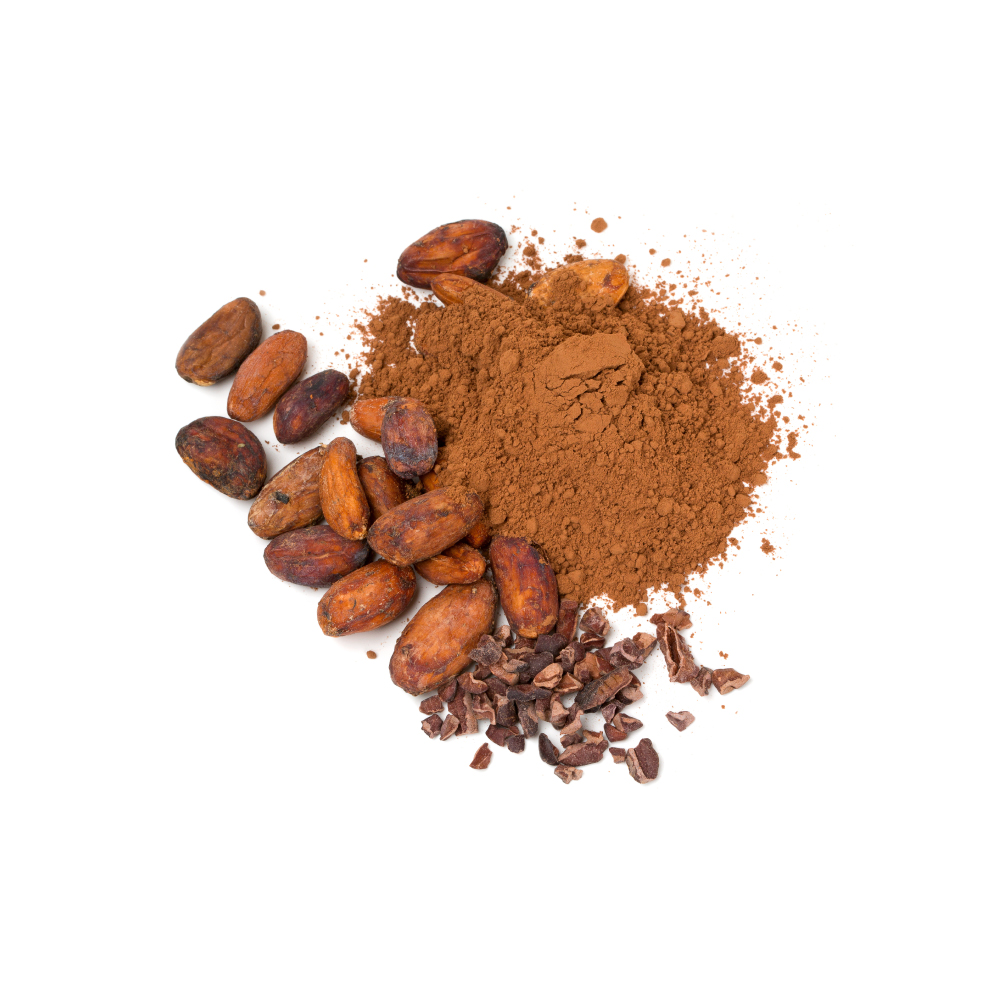
- Seeds (cacao beans) — fermented, dried, roasted and ground into cocoa and chocolate 31,
38Reference 31A Modern Herbal | Cacao. (n.d.). Retrieved from https://www.botanical.com/botanical/mgmh/c/cacao-02.htmlView study →Reference 38Theobroma cacao — habit, range, habitat, cultivation and usesView study → . In trials, the seeds are given as flavanol-standardised cocoa extract 15Reference 15RCTEffect of cocoa flavanol supplementation for the prevention of cardiovascular disease events: the COcoa Supplement and Multivitamin Outcomes Study (COSMOS) randomised controlled trialView study →. - Cocoa butter — pressed from the seeds. It softens chapped skin and lips and is a base for suppositories 31Reference 31A Modern Herbal | Cacao. (n.d.). Retrieved from https://www.botanical.com/botanical/mgmh/c/cacao-02.htmlView study →.
- Seed pulp — the thin, sweet pulp around the seeds is eaten as a snack and made into juices 38Reference 38Theobroma cacao — habit, range, habitat, cultivation and usesView study →. The earliest cacao drinks were probably fermented from it 36Reference 36Chemical and archaeological evidence for the earliest cacao beverages.
- Leaves, bark and flowers — used in folk medicine alongside the seeds 25Reference 25In vitroIn vitro antioxidant and antiproliferative activities of methanolic plant part extracts of Theobroma cacaoView study →.
Traditional Uses
Cacao’s medicinal tradition begins in Mesoamerica, where the Maya and Aztecs used it as both food and medicine, and cacao drinks were being made before 1000 BC 35,
Mesoamerican Traditional Medicine
Cacao drinks were being made before 1000 BC. Residues in pottery from Puerto Escondido, in present-day Honduras, date the practice at least 500 years earlier than it had been confirmed before 36Reference 36Chemical and archaeological evidence for the earliest cacao beverages.
The earliest of these drinks were probably made by fermenting the sweet pulp around the seeds. The later chocolate drink, served on special occasions and especially by elites, was made from the seeds 36Reference 36Chemical and archaeological evidence for the earliest cacao beverages.
The Maya and Aztecs used cacao as both food and medicine 35Reference 35Cocoa Bioactive Compounds: Significance and Potential for the Maintenance of Skin Health. The drink was held to build resistance and fight fatigue 24Reference 24In vitroImmunomodulatory properties of cacao extracts — potential consequences for medical applications — in vitro studyView study →.
Leaves, seeds, bark, flowers, pulp and cocoa butter have all been used medicinally 25Reference 25In vitroIn vitro antioxidant and antiproliferative activities of methanolic plant part extracts of Theobroma cacaoView study →.
In Aztec Mexico the seeds served as small coins, and Grieve recorded the practice as still in use in parts of Mexico 31Reference 31A Modern Herbal | Cacao. (n.d.). Retrieved from https://www.botanical.com/botanical/mgmh/c/cacao-02.htmlView study →.
Central American & Caribbean Folk Medicine
The seed is taken as a heart and kidney tonic. An infusion of the baked seed membranes is drunk for anaemia 38Reference 38Theobroma cacao — habit, range, habitat, cultivation and usesView study →.
Amazonian Folk Medicine
In Amazonas State, Brazil, rural people rub cocoa butter on bruises 38Reference 38Theobroma cacao — habit, range, habitat, cultivation and usesView study →.
Western Herbal Medicine
Cocoa butter was used to soften and protect chapped hands and lips, and as a base for suppositories 31Reference 31A Modern Herbal | Cacao. (n.d.). Retrieved from https://www.botanical.com/botanical/mgmh/c/cacao-02.htmlView study →.
Theobromine was given mainly as a diuretic, especially for fluid build-up caused by heart failure, often alongside digitalis. It was also used for high blood pressure, because it widens the blood vessels 31Reference 31A Modern Herbal | Cacao. (n.d.). Retrieved from https://www.botanical.com/botanical/mgmh/c/cacao-02.htmlView study →.
Botany
Cacao is a small evergreen tree, usually about 8 m tall, that can reach 12 m and exceptionally 20 m 37,
The leaves are large and simple, 20–30 cm long and 7–10 cm wide, with a long-pointed tip 37Reference 37Theobroma cacao Linnaeus — species and genus descriptionView study →.
The small flowers, about 18 mm across, grow directly on the trunk and the older branches 37,
The fruit is a large pod, 15–20 cm long and about 7 cm wide, with ten lengthwise grooves 37Reference 37Theobroma cacao Linnaeus — species and genus descriptionView study →. Each pod holds about 20–40 seeds in a thin, sweet pulp 38Reference 38Theobroma cacao — habit, range, habitat, cultivation and usesView study →. The seeds lose their viability within 5–7 days of being separated from the pulp 38Reference 38Theobroma cacao — habit, range, habitat, cultivation and usesView study →.
Linnaeus named the genus Theobroma, meaning “food of the gods” 31Reference 31A Modern Herbal | Cacao. (n.d.). Retrieved from https://www.botanical.com/botanical/mgmh/c/cacao-02.htmlView study →. In Mexico the pounded seeds were called chocolate 31Reference 31A Modern Herbal | Cacao. (n.d.). Retrieved from https://www.botanical.com/botanical/mgmh/c/cacao-02.htmlView study →.
Distribution
Cacao grows wild in Brazil, Peru, Colombia and the Guianas, and in Central America in Belize, Guatemala and southern Mexico 38Reference 38Theobroma cacao — habit, range, habitat, cultivation and usesView study →. It is an understorey tree of evergreen rainforest in the wet, humid tropics, usually below 300 m and occasionally up to 900 m 38Reference 38Theobroma cacao — habit, range, habitat, cultivation and usesView study →.
It is now cultivated throughout the wet tropics 37Reference 37Theobroma cacao Linnaeus — species and genus descriptionView study →, often on large estates under the shade of other trees such as banana 31Reference 31A Modern Herbal | Cacao. (n.d.). Retrieved from https://www.botanical.com/botanical/mgmh/c/cacao-02.htmlView study →.
Growing Conditions
Cultivation snapshot for Cacao
- Shade-tolerant understorey tree that grows best in dappled shade, in humid, consistently moist, well-drained soil 38Reference 38Theobroma cacao — habit, range, habitat, cultivation and usesView study →.
Grow it yourself
Farm Wiki is our cultivation-focused sister site, also run by Justin Cooke.
Harvesting, Collection & Preparation
The pods develop year-round but are usually picked in June and December 31Reference 31A Modern Herbal | Cacao. (n.d.). Retrieved from https://www.botanical.com/botanical/mgmh/c/cacao-02.htmlView study →. They are cut open, and the seeds in their pulp are left to ferment so that they separate more easily. The seeds are then dried, usually in the sun 31Reference 31A Modern Herbal | Cacao. (n.d.). Retrieved from https://www.botanical.com/botanical/mgmh/c/cacao-02.htmlView study →.
The dried seeds are roasted and ground 38Reference 38Theobroma cacao — habit, range, habitat, cultivation and usesView study →. Cocoa is made by mixing the ground paste with sugar and starch and removing part of the fat, while chocolate keeps the fat 31Reference 31A Modern Herbal | Cacao. (n.d.). Retrieved from https://www.botanical.com/botanical/mgmh/c/cacao-02.htmlView study →. Cocoa butter is pressed from the seeds 31Reference 31A Modern Herbal | Cacao. (n.d.). Retrieved from https://www.botanical.com/botanical/mgmh/c/cacao-02.htmlView study →.
Fermentation and roasting reduce the polyphenol content of the seeds 32Reference 32Roasting Effects on Phenolic content and Free-Radical Scavenging Activities of Pulp Pre-Conditioned and Fermented cocoa (Theobroma cacao) Beans.
Different parts of the plant have different chemistry. In one cell study, leaf extract was the most active against a breast-cancer cell line, while root extract had the strongest antioxidant activity 25Reference 25In vitroIn vitro antioxidant and antiproliferative activities of methanolic plant part extracts of Theobroma cacaoView study →.
Indications
- Poor blood-vessel function [flavanol-rich cocoa]
- Mild high blood pressure [flavanol-rich cocoa] Caution: The average fall is about 1.8 mmHg systolic, and it was significant only in people with raised blood pressure 5.
- Cardiovascular disease prevention [cocoa flavanol extract] Caution: In the 21,442-person COSMOS trial, total cardiovascular events were not significantly reduced. Cardiovascular deaths, a secondary endpoint, were 15.
- Insulin resistance [cocoa flavanols] Caution: Biomarkers improved in short trials, but cocoa extract did not lower the risk of type 2 diabetes over 3.5 years in COSMOS 8,
20 . - High cholesterol [cocoa products] Caution: LDL and total cholesterol fell by about 6 mg/dL in short trials 14.
- Memory and cognitive ageing [cocoa flavanols] Caution: The two COSMOS cognition studies, with 2,262 and 573 participants, found no overall benefit 9,
28 . - Low mood and mental fatigue [cocoa flavanols] Caution: The effects are mainly acute and come from small trials 21,
22 . - Sun sensitivity of the skin [high-flavanol cocoa] Caution: Two trials found protection against UV reddening. A third, larger trial found none 17,
18, .19 - Age-related macular degeneration [cocoa flavanol extract] Caution: COSMOS found no overall effect on macular degeneration 27.
- Cough [isolated theobromine] Caution: The human trial used isolated theobromine, not cacao 23.
- Fatigue and low stamina [seed drink; Mesoamerican use]
- Heart and kidney weakness [seed; Central American and Caribbean folk use]
- Anaemia [baked seed membranes; folk use]
- Chapped skin, lips and bruises [cocoa butter; topical]
- Fluid retention from heart failure [theobromine; Western herbal medicine]
Pharmacology & Research
Dozens of randomised trials have tested cacao’s flavanols, alongside several meta-analyses, a Cochrane review and COSMOS, a 21,442-person outcomes trial 5,
The most consistent effects are on the blood vessels. Cocoa flavanols improve flow-mediated dilation, and they lower blood pressure by a small margin 1,
Results for cognition, lipids, blood sugar, mood and skin are weaker or mixed. COSMOS did not significantly reduce total cardiovascular events, its primary endpoint 15Reference 15RCTEffect of cocoa flavanol supplementation for the prevention of cardiovascular disease events: the COcoa Supplement and Multivitamin Outcomes Study (COSMOS) randomised controlled trialView study →.
-
Best-supported: improved endothelial/flow-mediated dilation 1,
3Reference 1Meta-analysisDose-response relationship between cocoa flavanols and human endothelial function: a systematic review and meta-analysis of randomised trials — systematic review, meta-analysisView study →Reference 3RCTCocoa flavanol intake improves endothelial function and Framingham Risk Score in healthy men and women: a randomised, controlled, double-masked trialView study → and a small blood-pressure reduction, ~1.8 mmHg systolic in a Cochrane meta-analysis 5Reference 5Meta-analysisEffect of cocoa on blood pressure — Cochrane systematic review and meta-analysisView study →. -
Emerging, worth watching: memory in older adults with poorer baseline diet quality 13,
28Reference 13RCTInsights into the role of diet and dietary flavanols in cognitive aging: results of a randomised controlled trialView study →Reference 28RCTEffect of cocoa extract supplementation on cognitive function: results from the clinic subcohort of the COSMOS randomised trialView study → , plus a signal for reduced cardiovascular death (a secondary endpoint) in COSMOS 15,16Reference 15RCTEffect of cocoa flavanol supplementation for the prevention of cardiovascular disease events: the COcoa Supplement and Multivitamin Outcomes Study (COSMOS) randomised controlled trialView study →Reference 16RCTCocoa flavanol supplementation and prevention of cardiovascular disease: a novel analysis of the COSMOS randomised trialView study → . -
Mechanistically thin: anticancer and immunomodulatory claims rest on in vitro leaf and bean extract work with no human data 24,
25Reference 24In vitroImmunomodulatory properties of cacao extracts — potential consequences for medical applications — in vitro studyView study →Reference 25In vitroIn vitro antioxidant and antiproliferative activities of methanolic plant part extracts of Theobroma cacaoView study → . - The caveat: there is no single standardised medicinal dose, and the trials used flavanol amounts that ordinary chocolate does not reliably deliver.
Most positive results used flavanol-standardised extracts or high-flavanol cocoa. Conventional chocolate-making greatly reduces the flavanols, and fermentation and roasting reduce the polyphenols in the seeds 18,
1. Endothelial / Vascular Function
Flow-mediated dilation (FMD) is an ultrasound measure of how well an artery relaxes. A 2019 meta-analysis of 15 published studies with 18 intervention arms found cocoa flavanols raised FMD by 1.17%. The dose-response curve was an inverted U, with the largest effect at about 710 mg of total flavanols. Most of the studies carried a significant risk of bias 1Reference 1Meta-analysisDose-response relationship between cocoa flavanols and human endothelial function: a systematic review and meta-analysis of randomised trials — systematic review, meta-analysisView study →.
In six people with smoking-related endothelial dysfunction, a high-flavanol cocoa drink (3 × 306 mg flavanols a day) raised fasting FMD from 3.7% on day 1 to 6.6% on day 8. It fell back to 3.3% after a week without cocoa. Plasma nitrite rose in step with FMD 2Reference 2RCTSustained increase in flow-mediated dilation after daily intake of high-flavanol cocoa drink over 1 week — randomised crossover trialView study →.
In a randomised, double-masked trial, 100 healthy middle-aged adults took 450 mg of cocoa flavanols twice daily for a month. FMD rose by 1.2% over control, and blood pressure, total and LDL cholesterol and the Framingham Risk Score all fell 3Reference 3RCTCocoa flavanol intake improves endothelial function and Framingham Risk Score in healthy men and women: a randomised, controlled, double-masked trialView study →.
A single 1,350 mg dose of cocoa flavanols raised FMD in the leg (femoral) artery as well as the arm, in both healthy people and people with type 2 diabetes 4Reference 4RCTCocoa flavanol consumption improves lower extremity endothelial function in healthy individuals and people with type 2 diabetes — randomised controlled trialView study →.
Gap: FMD is a surrogate measure rather than a clinical outcome, and the consistent FMD signal has not translated into fewer cardiovascular events 15Reference 15RCTEffect of cocoa flavanol supplementation for the prevention of cardiovascular disease events: the COcoa Supplement and Multivitamin Outcomes Study (COSMOS) randomised controlled trialView study →.
2. Antihypertensive
The 2017 Cochrane review pooled 35 trials (40 comparisons, 1,804 mostly healthy participants) lasting 2–18 weeks, with 30–1,218 mg of flavanols a day. Systolic and diastolic pressure each fell by 1.76 mmHg against flavanol-free or low-flavanol control 5Reference 5Meta-analysisEffect of cocoa on blood pressure — Cochrane systematic review and meta-analysisView study →.
The effect depended on baseline pressure. Systolic pressure fell significantly, by about 4 mmHg, in people with hypertension, but not in people with normal blood pressure 5Reference 5Meta-analysisEffect of cocoa on blood pressure — Cochrane systematic review and meta-analysisView study →. An earlier meta-analysis likewise found the fall significant only in hypertensive and prehypertensive groups 6Reference 6Meta-analysisDoes chocolate reduce blood pressure? A meta-analysis — systematic review, meta-analysisView study →, and a third, of 10 trials in 297 people, found a mean fall of 4.5/2.5 mmHg 7Reference 7Meta-analysisEffect of cocoa products on blood pressure: systematic review and meta-analysisView study →.
Cocoa flavanols are thought to act by increasing nitric oxide formation in the blood-vessel lining, which widens the vessels 5Reference 5Meta-analysisEffect of cocoa on blood pressure — Cochrane systematic review and meta-analysisView study →.
Gap: the average fall is small, and outcome trials have not shown that it prevents cardiovascular events 15Reference 15RCTEffect of cocoa flavanol supplementation for the prevention of cardiovascular disease events: the COcoa Supplement and Multivitamin Outcomes Study (COSMOS) randomised controlled trialView study →.
3. Antioxidant / Cardiometabolic Biomarkers
A 2016 meta-analysis of 19 randomised trials (1,131 participants, 166–2,110 mg flavanols a day for 2–52 weeks) found cocoa flavanols improved several cardiometabolic markers. Fasting insulin, HOMA-IR, triglycerides and C-reactive protein fell, and HDL cholesterol rose slightly 8Reference 8Meta-analysisCocoa flavanol intake and biomarkers for cardiometabolic health: a systematic review and meta-analysis of randomised controlled trialsView study →.
Standard markers of oxidative stress and antioxidant status in the blood did not change after cocoa flavanols in one detailed study 2Reference 2RCTSustained increase in flow-mediated dilation after daily intake of high-flavanol cocoa drink over 1 week — randomised crossover trialView study →.
In the laboratory, bean polyphenol extracts scavenge free radicals 26Reference 26In vitroIn vitro studies on the antioxidant property and inhibition of alpha-amylase, alpha-glucosidase, and angiotensin-I-converting enzyme by polyphenol-rich extracts from cocoa (Theobroma cacao) beanView study →. Among the other plant parts, root extract had the strongest antioxidant activity 25Reference 25In vitroIn vitro antioxidant and antiproliferative activities of methanolic plant part extracts of Theobroma cacaoView study →.
Gap: the human data are blood biomarkers rather than disease outcomes, and the direct oxidative-stress markers measured in people did not change 2Reference 2RCTSustained increase in flow-mediated dilation after daily intake of high-flavanol cocoa drink over 1 week — randomised crossover trialView study →.
4. Cognitive Function
In healthy adults aged 50–69, three months of a high-flavanol diet improved dentate gyrus function on MRI and performance on a memory task linked to it 10Reference 10RCTEnhancing dentate gyrus function with dietary flavanols improves cognition in older adults — randomised controlled trialView study →.
In 90 cognitively healthy older people, eight weeks of cocoa drinks with 993 or 520 mg of flavanols improved scores on the Trail Making and verbal fluency tests, though not the Mini-Mental State Examination 11Reference 11RCTCocoa flavanol consumption improves cognitive function, blood pressure control, and metabolic profile in elderly subjects: the Cocoa, Cognition, and Aging (CoCoA) randomised trialView study →.
In 211 adults aged 50–75, twelve weeks of 260–770 mg of flavanols a day did not improve the trial’s primary memory task. A list-learning task did improve, most clearly in people whose baseline diet quality was poorest 13Reference 13RCTInsights into the role of diet and dietary flavanols in cognitive aging: results of a randomised controlled trialView study →.
The two large COSMOS studies found no overall benefit. In COSMOS-Mind, 2,262 older adults took 500 mg of flavanols a day for three years with no effect on global cognition 9Reference 9RCTEffects of cocoa extract and a multivitamin on cognitive function: a randomised clinical trial (COSMOS-Mind)View study →. In the COSMOS clinic subcohort, 573 people tested in person over two years also showed no benefit, although an uncorrected subgroup analysis suggested one for those with poorer diets 28Reference 28RCTEffect of cocoa extract supplementation on cognitive function: results from the clinic subcohort of the COSMOS randomised trialView study →.
A systematic review of 12 trials found effects on memory and executive function at 500–750 mg a day, and noted how varied the studies were 12Reference 12Systematic reviewEffects of cocoa-derived polyphenols on cognitive function in humans — systematic reviewView study →.
Gap: the largest trials were null. The positive results cluster in smaller studies and in subgroups with poor baseline diets.
5. Lipid Modulation
A 2011 meta-analysis of 10 trials (320 participants, 2–12 weeks) found dark chocolate and cocoa products lowered LDL cholesterol by 5.9 mg/dL and total cholesterol by 6.2 mg/dL. HDL cholesterol and triglycerides did not change 14Reference 14Meta-analysisEffects of cocoa products/dark chocolate on serum lipids: a meta-analysisView study →.
A later meta-analysis of cocoa flavanol trials found a small rise in HDL and a small fall in triglycerides 8Reference 8Meta-analysisCocoa flavanol intake and biomarkers for cardiometabolic health: a systematic review and meta-analysis of randomised controlled trialsView study →, and one month of flavanols raised HDL in healthy adults 3Reference 3RCTCocoa flavanol intake improves endothelial function and Framingham Risk Score in healthy men and women: a randomised, controlled, double-masked trialView study →.
Gap: the effects are small, and the trials were short.
6. Cardiovascular Event Prevention
COSMOS is the largest trial: a randomised, double-blind, placebo-controlled study of 21,442 older US adults given 500 mg/day cocoa flavanols (including 80 mg epicatechin) or placebo 15Reference 15RCTEffect of cocoa flavanol supplementation for the prevention of cardiovascular disease events: the COcoa Supplement and Multivitamin Outcomes Study (COSMOS) randomised controlled trialView study →.
Over a median 3.6 years, the primary composite of total cardiovascular events was not significantly reduced (HR 0.90; 95% CI 0.78–1.02; P = 0.11). A secondary endpoint, cardiovascular death, was 27% lower (HR 0.73; 95% CI 0.54–0.98). A per-protocol analysis that stopped counting at non-adherence found fewer total events (HR 0.85; 95% CI 0.72–0.99) 15Reference 15RCTEffect of cocoa flavanol supplementation for the prevention of cardiovascular disease events: the COcoa Supplement and Multivitamin Outcomes Study (COSMOS) randomised controlled trialView study →.
A 2026 reanalysis weighting the events by severity (“win ratio”) found a significant reduction in cardiovascular disease 16Reference 16RCTCocoa flavanol supplementation and prevention of cardiovascular disease: a novel analysis of the COSMOS randomised trialView study →.
Gap: the primary endpoint missed significance. The cardiovascular-death benefit is a secondary finding and needs independent confirmation.
7. Skin Photoprotection
In women drinking high-flavanol cocoa (326 mg flavanols a day) for 12 weeks, skin reddening after a fixed UV dose fell by 15% at six weeks and 25% at twelve. Skin blood flow, density and hydration rose, and roughness fell 17Reference 17RCTLong-term ingestion of high-flavanol cocoa provides photoprotection against UV-induced erythema and improves skin condition in women — randomised controlled trialView study →.
In 30 people eating 20 g of high-flavanol chocolate daily, the UV dose needed to redden the skin more than doubled in 12 weeks, while conventional chocolate had no effect 18Reference 18RCTEating chocolate can significantly protect the skin from UV light — randomised controlled trialView study →.
A larger trial in 74 women eating 30 g of high-flavanol chocolate daily for 12 weeks found no difference from low-flavanol chocolate in UV sensitivity 19Reference 19RCTChocolate flavanols and skin photoprotection: a parallel, double-blind, randomised clinical trialView study →.
Gap: the trials are small and their results disagree, with the largest finding no effect.
8. Glycemic Control
Pooled trials show cocoa flavanols lower fasting insulin and HOMA-IR 8Reference 8Meta-analysisCocoa flavanol intake and biomarkers for cardiometabolic health: a systematic review and meta-analysis of randomised controlled trialsView study →. In the laboratory, bean polyphenol extracts inhibit the starch-digesting enzymes α-amylase and α-glucosidase 26Reference 26In vitroIn vitro studies on the antioxidant property and inhibition of alpha-amylase, alpha-glucosidase, and angiotensin-I-converting enzyme by polyphenol-rich extracts from cocoa (Theobroma cacao) beanView study →.
In COSMOS, among 18,381 people without diabetes at the start, cocoa extract did not reduce the incidence of type 2 diabetes over a median 3.5 years (HR 1.04; 95% CI 0.91–1.20) 20Reference 20RCTCocoa extract supplementation and risk of type 2 diabetes: the Cocoa Supplement and Multivitamin Outcomes Study (COSMOS) randomised controlled trialView study →.
Gap: the markers improve in short trials, but the one large incidence trial was null.
9. Mood
In 40 young adults, a single 250 mg dose of cocoa flavanols eased self-rated mental fatigue and improved one serial-subtraction task. Four weeks of daily use showed no effect 21Reference 21RCTThe acute and sub-chronic effects of cocoa flavanols on mood, cognitive and cardiovascular health in young healthy adults — randomised controlled trialView study →.
In a pilot trial in 60 women aged 40–60 who reported fatigue, 240 mg of cacao flavanols a day for eight weeks lowered negative mood scores and raised vigour compared with placebo. The fatigue scale did not change 22Reference 22RCTEffect of flavanol-rich cacao extract on the profile of mood state in healthy middle-aged Japanese women: a randomised controlled trialView study →.
Gap: the trials are few and small, and the clearest effects are acute.
10. Antitussive (Theobromine)
Theobromine suppressed citric-acid-induced cough in guinea pigs. In a randomised, double-blind, placebo-controlled human study, it suppressed capsaicin-induced cough with no adverse effects 23Reference 23RCTTheobromine inhibits sensory nerve activation and cough — randomised controlled trialView study →.
It also blocked capsaicin-induced activation of guinea-pig and human vagus nerve, which points to an action on the sensory nerves rather than the brain 23Reference 23RCTTheobromine inhibits sensory nerve activation and cough — randomised controlled trialView study →.
Gap: the study used isolated theobromine, not cacao, and no trial has tested whether cocoa or chocolate reduces cough.
11. Immunomodulatory
In stimulated human blood immune cells, aqueous and ethanolic cacao extracts suppressed tryptophan breakdown by indoleamine-2,3-dioxygenase (IDO) and the formation of neopterin and interferon-γ, in a dose-dependent way. The effect tracked the extracts’ antioxidant capacity 24Reference 24In vitroImmunomodulatory properties of cacao extracts — potential consequences for medical applications — in vitro studyView study →.
Gap: this is cell-based work; no human immune outcome has been measured.
12. Anticancer
In a single cell study, methanolic extracts of eight cacao plant parts were tested against cancer cell lines. Leaf extract was the most active against MCF-7 breast-cancer cells and had little effect on normal liver cells. The leaf extract contained flavonoids, saponins, condensed tannins and triterpenes, and no alkaloids 25Reference 25In vitroIn vitro antioxidant and antiproliferative activities of methanolic plant part extracts of Theobroma cacaoView study →.
Gap: this is one cell study of the leaf, not the seed, with no animal or human work.
Mechanisms
Cacao’s flavanols, epicatechin and the procyanidins, have been studied for raising nitric oxide in the lining of the blood vessels. This relates to the vascular, blood-pressure and skin findings 2,
The methylxanthines, theobromine and caffeine, block adenosine receptors and inhibit phosphodiesterase. Theobromine also stimulates heart muscle and relaxes bronchial smooth muscle 35Reference 35Cocoa Bioactive Compounds: Significance and Potential for the Maintenance of Skin Health, and it acts on the sensory nerves behind cough 23Reference 23RCTTheobromine inhibits sensory nerve activation and cough — randomised controlled trialView study →.
| Mechanism | Drives | Key compounds |
|---|---|---|
| ↑ Nitric oxide bioavailability, endothelial NO synthase | endothelial functionantihypertensiveskin blood flow | epicatechin, catechin, procyanidins |
| Free-radical scavenging | antioxidant/cardiometabolicphotoprotection | epicatechin, procyanidins, polyphenols |
| Adenosine-receptor antagonism, phosphodiesterase inhibition, bronchial smooth-muscle relaxation | mild stimulantbronchodilationvasodilation | theobromine, caffeine |
| Inhibition of sensory (vagal) nerve activation | antitussive | theobromine |
| α-amylase / α-glucosidase / ACE inhibition (in vitro) | glycemicantihypertensive | cocoa polyphenols, procyanidins |
| IDO inhibition, ↓ tryptophan degradation | immunomodulatory | cacao polyphenol extract |
Pharmacokinetics
The flavan-3-ols circulate mainly as metabolites rather than as the parent molecules. A systematic review of 49 human studies counted up to 180 metabolites in blood and urine, chiefly phase-2 conjugates (glucuronides, sulfates and methyl forms) of epicatechin and of phenyl-γ-valerolactones made by gut bacteria 41Reference 41Systematic reviewRevisiting the bioavailability of flavan-3-ols in humans: A systematic review and comprehensive data analysis — systematic reviewView study →.
These two groups peak in the blood about 1.8 and 5.3 hours after intake. Mean bioavailability of flavan-3-ols is moderate, about 31%, and about 25% after tea, cocoa, apples and grapes 41Reference 41Systematic reviewRevisiting the bioavailability of flavan-3-ols in humans: A systematic review and comprehensive data analysis — systematic reviewView study →.
Absorption and metabolism vary with the food matrix, processing, amount, age, sex and genotype 43Reference 43ReviewFactors Affecting the Absorption, Metabolism, and Excretion of Cocoa Flavanols in Humans — reviewView study →. Young and elderly men handled the same cocoa flavanol dose with only small differences 42Reference 42Clinical trialInfluence of age on the absorption, metabolism, and excretion of cocoa flavanols in healthy subjects — clinical trialView study →. In five healthy women, a chocolate matrix lowered the blood levels of the galloylated catechins in green tea taken with it 45Reference 45Clinical trialChocolate as a food matrix reduces the bioavailability of galloylated catechins from green tea in healthy women — clinical trialView study →.
Theobromine and caffeine are handled differently. The methylxanthines are extensively metabolised by the liver, with less than 2% of a caffeine dose excreted unchanged. Their clearance is slowed by oral contraceptives and pregnancy, and changed by smoking and by drugs that induce or inhibit CYP1A2 44Reference 44ReviewPharmacokinetics and metabolism of natural methylxanthines in animal and man — reviewView study →.
Clinical Trials
The human trial base centres on the COSMOS trial and its ancillary studies, and on the Cochrane blood-pressure review. COSMOS did not significantly reduce total cardiovascular events, type 2 diabetes or macular degeneration 15,
| Completed | Planned | Terminated | Preclinical |
|---|---|---|---|
| 25+ | ongoing(COSMOS ancillary analyses) | 0 | ~dozens(in vitro/animal) |
Last checked: October 2026.
Phytochemistry
Cacao seeds are 40–60% fat and contain about 2% theobromine. The shells contain about 1% theobromine, with mucilage 31Reference 31A Modern Herbal | Cacao. (n.d.). Retrieved from https://www.botanical.com/botanical/mgmh/c/cacao-02.htmlView study →.
The seeds have two main groups of active compounds. The first is the purine alkaloids (methylxanthines): theobromine, with smaller amounts of caffeine, whose levels depend on the genotype of the tree 35Reference 35Cocoa Bioactive Compounds: Significance and Potential for the Maintenance of Skin Health. Theobromine acts like caffeine but is milder on the central nervous system, with a stronger action on the muscles, kidneys and heart 31Reference 31A Modern Herbal | Cacao. (n.d.). Retrieved from https://www.botanical.com/botanical/mgmh/c/cacao-02.htmlView study →.
The second is a large polyphenol fraction of flavan-3-ols, led by epicatechin and catechin and their procyanidins, including procyanidin B2, along with anthocyanins and proanthocyanidins 32Reference 32Roasting Effects on Phenolic content and Free-Radical Scavenging Activities of Pulp Pre-Conditioned and Fermented cocoa (Theobroma cacao) Beans. Trace phenethylamine is also present.
The seeds are a source of minerals, above all magnesium, along with copper, potassium and iron 35Reference 35Cocoa Bioactive Compounds: Significance and Potential for the Maintenance of Skin Health.
Methanolic leaf extract contains flavonoids, saponins, condensed tannins, triterpenes and steroids, and no alkaloids 25Reference 25In vitroIn vitro antioxidant and antiproliferative activities of methanolic plant part extracts of Theobroma cacaoView study →.
Fermentation and roasting lower the polyphenol content of the seeds, so figures for raw beans do not apply to cocoa or chocolate 32Reference 32Roasting Effects on Phenolic content and Free-Radical Scavenging Activities of Pulp Pre-Conditioned and Fermented cocoa (Theobroma cacao) Beans.
Constituent Summary
Figures are for the dried bean unless noted, and vary with genotype and processing.
Purine Alkaloid2 compounds2 with data
Amine1 compound1 with data
Flavanol3 compounds3 with data
Phenolic1 compound1 with data
Dosage
In research, cacao is given as a flavanol-standardised cocoa extract or a high-flavanol cocoa drink, dosed by flavanol content. These doses are not interchangeable with whole-food amounts.
| Indication | Preparation | Dose | Est. dried-herb equivalent | Source |
|---|---|---|---|---|
| CVD prevention / vascular | Flavanol-standardised cocoa extract | 500 mg cocoa flavanols/day (incl. 80 mg epicatechin) | ~25 g raw cacao/day; far more for processed cocoa | 15Reference 15RCTEffect of cocoa flavanol supplementation for the prevention of cardiovascular disease events: the COcoa Supplement and Multivitamin Outcomes Study (COSMOS) randomised controlled trialView study → |
| Endothelial function | High-flavanol cocoa drink/extract | ~700–900 mg flavanols/day | ~35–45 g raw cacao equiv. | 1, |
| Blood pressure | Flavanol-rich cocoa / dark chocolate | 30–1,218 mg flavanols/day across trials | varies widely | 5Reference 5Meta-analysisEffect of cocoa on blood pressure — Cochrane systematic review and meta-analysisView study → |
| Cognition (older adults) | High-flavanol cocoa drink | 520–993 mg flavanols/day | ~26–50 g raw cacao equiv. | 11Reference 11RCTCocoa flavanol consumption improves cognitive function, blood pressure control, and metabolic profile in elderly subjects: the Cocoa, Cognition, and Aging (CoCoA) randomised trialView study → |
| Skin photoprotection | High-flavanol cocoa | 326 mg flavanols/day | ~16 g raw cacao equiv. | 17Reference 17RCTLong-term ingestion of high-flavanol cocoa provides photoprotection against UV-induced erythema and improves skin condition in women — randomised controlled trialView study → |
| Antitussive | Isolated theobromine | Single oral dose | — isolated compound, not cacao | 23Reference 23RCTTheobromine inhibits sensory nerve activation and cough — randomised controlled trialView study → |
Raw-cacao equivalents assume about 2% total flavanols in raw, unfermented beans. Fermented, roasted and alkalised cocoa contains far less, so the equivalent amounts of processed products are much higher.
Traditional Dosage
Traditionally, cacao is used as a whole food rather than a dosed medicine.
| System | Preparation | Dose |
|---|---|---|
| Western herbal / dietary | Raw cacao (ground seed) | ~30–100 g/day as a general tonic (whole-food use; not a standardised medicinal dose) |
| Mesoamerican | Fermented, roasted, ground seed as a water drink | Not quantified |
Safety & Pregnancy
Cacao is well tolerated as a food, and its practical cautions are its stimulant content and the cadmium and lead found in some cocoa products 39Reference 39Cadmium and lead in cocoa powder and chocolate products in the US market — analytical surveyView study →. In COSMOS, cocoa flavanol extract was taken daily for a median of 3.6 years with no safety concerns 15Reference 15RCTEffect of cocoa flavanol supplementation for the prevention of cardiovascular disease events: the COcoa Supplement and Multivitamin Outcomes Study (COSMOS) randomised controlled trialView study →.
- Well tolerated as a food. Cocoa flavanol extract at 500 mg/day raised no safety concerns over a median 3.6 years 15Reference 15RCTEffect of cocoa flavanol supplementation for the prevention of cardiovascular disease events: the COcoa Supplement and Multivitamin Outcomes Study (COSMOS) randomised controlled trialView study →.
- Stimulant content. Theobromine and caffeine can cause insomnia, restlessness, headache or palpitations when taken late in the day or in large amounts.
- Cadmium and lead. Levels rise with the percentage of cocoa solids, and cadmium is higher in some cocoa from Latin America 39Reference 39Cadmium and lead in cocoa powder and chocolate products in the US market — analytical surveyView study →.
- Cardiac and stimulant medication. Use cautiously alongside stimulant or heart-rhythm drugs; the interaction is inferred, not studied.
- Allergy and migraine. Chocolate can cause allergies and migraine in some people 38Reference 38Theobroma cacao — habit, range, habitat, cultivation and usesView study →.
Full Safety Detail
Side effects. Theobromine and a smaller amount of caffeine can cause insomnia, restlessness, headache or palpitations when cacao is taken late in the day or in large amounts.
Stimulant and heart-rhythm drugs. Theobromine stimulates heart muscle 35Reference 35Cocoa Bioactive Compounds: Significance and Potential for the Maintenance of Skin Health, so people on stimulant or heart-rhythm medication should use cacao with care. The interaction is inferred from the pharmacology of theobromine and caffeine, not measured.
Blood-pressure medicines. Cocoa flavanols lower blood pressure by a small margin, mainly in people with hypertension 5Reference 5Meta-analysisEffect of cocoa on blood pressure — Cochrane systematic review and meta-analysisView study →, so a small added effect with antihypertensive drugs is plausible. It has not been studied.
Drug metabolism. No herb–drug interaction study of cocoa exists. Its theobromine and caffeine are cleared mainly by the liver, and their clearance changes with drugs that induce or inhibit CYP1A2 and with smoking. Pregnancy and oral contraceptives slow it 44Reference 44ReviewPharmacokinetics and metabolism of natural methylxanthines in animal and man — reviewView study →.
The cocoa flavanols are handled mainly by conjugation and by gut bacteria 41Reference 41Systematic reviewRevisiting the bioavailability of flavan-3-ols in humans: A systematic review and comprehensive data analysis — systematic reviewView study →. In one small study, a chocolate matrix lowered the absorption of the galloylated catechins in green tea taken with it 45Reference 45Clinical trialChocolate as a food matrix reduces the bioavailability of galloylated catechins from green tea in healthy women — clinical trialView study →.
Allergy and migraine. Chocolate can cause allergies and migraine in some people 38Reference 38Theobroma cacao — habit, range, habitat, cultivation and usesView study →. Anyone with a known sensitivity to cocoa or chocolate should avoid it.
Cadmium and lead. Cocoa and chocolate can contain cadmium and lead from the environment. In US retail products, cadmium ranged from 0.004 to 3.15 mg/kg and lead up to 0.38 mg/kg. Both rose with the percentage of cocoa solids, and cadmium was higher in products from Latin America than from Africa 39Reference 39Cadmium and lead in cocoa powder and chocolate products in the US market — analytical surveyView study →. For people who eat a lot of high-percentage products, it is worth choosing brands that test for heavy metals.
Fine as a food in moderation; concentrated extracts not assessed. Cocoa and chocolate are eaten in pregnancy in normal food amounts. Their theobromine and caffeine add to the day’s total stimulant intake, so moderate amounts are best. Pregnancy also slows the clearance of these methylxanthines 44Reference 44ReviewPharmacokinetics and metabolism of natural methylxanthines in animal and man — reviewView study →.
In 131 pregnant women at risk of pre-eclampsia, 30 g a day of high-flavanol, high-theobromine chocolate for 12 weeks did not change endothelial function, arterial stiffness or blood pressure compared with low-flavanol chocolate 30Reference 30RCTChanges in endothelial function, arterial stiffness and blood pressure in pregnant women after consumption of high-flavanol and high-theobromine chocolate — double-blind randomised controlled trial, n=131View study →.
Concentrated flavanol supplements have not been assessed in pregnancy or breastfeeding. Cadmium and lead in high-percentage products are a further reason for moderation 39Reference 39Cadmium and lead in cocoa powder and chocolate products in the US market — analytical surveyView study →.
References
- Sun Y, Zimmermann D, et al. (2019). Dose-response relationship between cocoa flavanols and human endothelial function: a systematic review and meta-analysis of randomised trials — systematic review, meta-analysis. Food Funct. https://pubmed.ncbi.nlm.nih.gov/31524216/
- Heiss C, Finis D, et al. (2007). Sustained increase in flow-mediated dilation after daily intake of high-flavanol cocoa drink over 1 week — randomised crossover trial. J Cardiovasc Pharmacol. https://pubmed.ncbi.nlm.nih.gov/17312446/
- Sansone R, Rodriguez-Mateos A, et al. (2015). Cocoa flavanol intake improves endothelial function and Framingham Risk Score in healthy men and women: a randomised, controlled, double-masked trial. Br J Nutr. https://pubmed.ncbi.nlm.nih.gov/26348767/
- Bapir M, Untracht GR, et al. (2022). Cocoa flavanol consumption improves lower extremity endothelial function in healthy individuals and people with type 2 diabetes — randomised controlled trial. Food Funct. https://pubmed.ncbi.nlm.nih.gov/36164983/
- Ried K, Fakler P, et al. (2017). Effect of cocoa on blood pressure — Cochrane systematic review and meta-analysis. Cochrane Database Syst Rev. https://pubmed.ncbi.nlm.nih.gov/28439881/
- Ried K, Sullivan T, et al. (2010). Does chocolate reduce blood pressure? A meta-analysis — systematic review, meta-analysis. BMC Med. https://pubmed.ncbi.nlm.nih.gov/20584271/
- Desch S, Schmidt J, et al. (2010). Effect of cocoa products on blood pressure: systematic review and meta-analysis. Am J Hypertens. https://pubmed.ncbi.nlm.nih.gov/19910929/
- Lin X, Zhang I, et al. (2016). Cocoa flavanol intake and biomarkers for cardiometabolic health: a systematic review and meta-analysis of randomised controlled trials. J Nutr. https://pubmed.ncbi.nlm.nih.gov/27683874/
- Baker LD, Manson JE, et al. (2023). Effects of cocoa extract and a multivitamin on cognitive function: a randomised clinical trial (COSMOS-Mind). Alzheimers Dement. https://pubmed.ncbi.nlm.nih.gov/36102337/
- Brickman AM, Khan UA, et al. (2014). Enhancing dentate gyrus function with dietary flavanols improves cognition in older adults — randomised controlled trial. Nat Neurosci. https://pubmed.ncbi.nlm.nih.gov/25344629/
- Mastroiacovo D, Kwik-Uribe C, et al. (2015). Cocoa flavanol consumption improves cognitive function, blood pressure control, and metabolic profile in elderly subjects: the Cocoa, Cognition, and Aging (CoCoA) randomised trial. Am J Clin Nutr. https://pubmed.ncbi.nlm.nih.gov/25733639/
- Barrera-Reyes PK, de Lara JC, et al. (2020). Effects of cocoa-derived polyphenols on cognitive function in humans — systematic review. Plant Foods Hum Nutr. https://pubmed.ncbi.nlm.nih.gov/31933112/
- Sloan RP, Wall M, et al. (2021). Insights into the role of diet and dietary flavanols in cognitive aging: results of a randomised controlled trial. Sci Rep. https://pubmed.ncbi.nlm.nih.gov/33589674/
- Tokede OA, Gaziano JM, et al. (2011). Effects of cocoa products/dark chocolate on serum lipids: a meta-analysis. Eur J Clin Nutr. https://pubmed.ncbi.nlm.nih.gov/21559039/
- Sesso HD, Manson JE, et al. (2022). Effect of cocoa flavanol supplementation for the prevention of cardiovascular disease events: the COcoa Supplement and Multivitamin Outcomes Study (COSMOS) randomised controlled trial. Am J Clin Nutr. https://pubmed.ncbi.nlm.nih.gov/35294962/
- Ogata S, Manson JE, et al. (2026). Cocoa flavanol supplementation and prevention of cardiovascular disease: a novel analysis of the COSMOS randomised trial. Eur J Epidemiol. https://pubmed.ncbi.nlm.nih.gov/41849087/
- Heinrich U, Neukam K, et al. (2006). Long-term ingestion of high-flavanol cocoa provides photoprotection against UV-induced erythema and improves skin condition in women — randomised controlled trial. J Nutr. https://pubmed.ncbi.nlm.nih.gov/16702322/
- Williams S, Tamburic S, et al. (2009). Eating chocolate can significantly protect the skin from UV light — randomised controlled trial. J Cosmet Dermatol. https://pubmed.ncbi.nlm.nih.gov/19735513/
- Mogollon JA, Boivin C, et al. (2014). Chocolate flavanols and skin photoprotection: a parallel, double-blind, randomised clinical trial. Nutr J. https://pubmed.ncbi.nlm.nih.gov/24970388/
- Li J, Sesso HD, et al. (2023). Cocoa extract supplementation and risk of type 2 diabetes: the Cocoa Supplement and Multivitamin Outcomes Study (COSMOS) randomised controlled trial. Diabetes Care. https://pubmed.ncbi.nlm.nih.gov/37816167/
- Massee LA, Ried K, et al. (2015). The acute and sub-chronic effects of cocoa flavanols on mood, cognitive and cardiovascular health in young healthy adults — randomised controlled trial. Front Pharmacol. https://pubmed.ncbi.nlm.nih.gov/26042037/
- Murakami R, Natsume M, et al. (2023). Effect of flavanol-rich cacao extract on the profile of mood state in healthy middle-aged Japanese women: a randomised controlled trial. Nutrients. https://pubmed.ncbi.nlm.nih.gov/37686875/
- Usmani OS, Belvisi MG, et al. (2005). Theobromine inhibits sensory nerve activation and cough — randomised controlled trial. FASEB J. https://pubmed.ncbi.nlm.nih.gov/15548587/
- Becker K, Geisler S, et al. (2013). Immunomodulatory properties of cacao extracts — potential consequences for medical applications — in vitro study. Front Pharmacol. https://pubmed.ncbi.nlm.nih.gov/24376420/
- Baharum Z, Akim AM, et al. (2014). In vitro antioxidant and antiproliferative activities of methanolic plant part extracts of Theobroma cacao. Molecules. https://pubmed.ncbi.nlm.nih.gov/25389662/
- Oboh G, Ademosun AO, et al. (2014). In vitro studies on the antioxidant property and inhibition of alpha-amylase, alpha-glucosidase, and angiotensin-I-converting enzyme by polyphenol-rich extracts from cocoa (Theobroma cacao) bean. Patholog Res Int. https://pubmed.ncbi.nlm.nih.gov/25295218/
- Christen WG, Rist PM, et al. (2025). Cocoa flavanol supplementation and risk of age-related macular degeneration: an ancillary study of the COSMOS randomised controlled trial. JAMA Ophthalmol. https://pubmed.ncbi.nlm.nih.gov/40146119/
- Vyas CM, Manson JE, et al. (2024). Effect of cocoa extract supplementation on cognitive function: results from the clinic subcohort of the COSMOS randomised trial. Am J Clin Nutr. https://pubmed.ncbi.nlm.nih.gov/38070683/
- Rusin M, Dziekan A, et al. (2025). The concentrations of selected trace elements (Cd, Pb, As, Zn, Fe) in traditional food products and in food products containing house crickets (Acheta domesticus) — preliminary analytical study. Biol Trace Elem Res. https://pubmed.ncbi.nlm.nih.gov/40261545/
- Babar A, Bujold E, et al. (2018). Changes in endothelial function, arterial stiffness and blood pressure in pregnant women after consumption of high-flavanol and high-theobromine chocolate — double-blind randomised controlled trial, n=131. Hypertens Pregnancy. https://pubmed.ncbi.nlm.nih.gov/29658370/
- A Modern Herbal | Cacao. (n.d.). Retrieved from https://www.botanical.com/botanical/mgmh/c/cacao-02.html
- E. O Afoakwa, E. Ofosu-Ansah, A. S. Budu, H. Mensah-Brown, J. F. Takrama. (2015). Roasting Effects on Phenolic content and Free-Radical Scavenging Activities of Pulp Pre-Conditioned and Fermented cocoa (Theobroma cacao) Beans. African Journal of Food, Agriculture, Nutrition and Development. Vol 15. No, 1.
- Erika B. Laconi and Anuraga Jayanegara. (2015). Improving Nutritional Quality of Cocoa Pod (Theobroma cacao) through Chemical and Biological Treatments for Ruminant Feeding: In vitro and In vivo Evaluation. Asian Australas. J. Anim. Sci. Vol. 28, No. 3 : 343-350
- Franzen, M., & Mulder, M. B. (2007). Ecological, economic and social perspectives on cocoa production worldwide. Biodiversity and Conservation, 16(13).
- Giovanni Scapagnini, Sergio Davinelli, Laura Di Renzo, Antonino De Lorenzo, Hector Hugo Olarte, Giuseppe Micali, Arrigo F. Cicero and Salvador Gonzalez. (2014). Cocoa Bioactive Compounds: Significance and Potential for the Maintenance of Skin Health. Nutrients. 6. 3202-3213.
- John S. Henderson, Rosemary A. Joyce, Gretchen R. Hall, W. Jeffrey Hurst, and Patrick E. McGovern. (2007). Chemical and archaeological evidence for the earliest cacao beverages. PNAS.vol 104. 18937-18940
- Tang, Y., Gilbert, M. G., & Dorr, L. J. (2007). Theobroma cacao Linnaeus — species and genus description. In Flora of China, Vol. 12, Sterculiaceae. eFloras.org. http://www.efloras.org/florataxon.aspx?flora_id=2&taxon_id=200013872
- Fern, K. (2014). Theobroma cacao — habit, range, habitat, cultivation and uses. Useful Tropical Plants Database. https://tropical.theferns.info/viewtropical.php?id=Theobroma+cacao
- Abt, E., Fong Sam, J., Gray, P., & Robin, L. P. (2018). Cadmium and lead in cocoa powder and chocolate products in the US market — analytical survey. Food Additives & Contaminants: Part B, 11(2), 92–102. https://pubmed.ncbi.nlm.nih.gov/29310543/
- GBIF Secretariat. (n.d.). Theobroma cacao L. — accepted name and family (Malvaceae). GBIF Backbone Taxonomy. https://www.gbif.org/species/3152205
- Di Pede G, Mena P, Bresciani L, et al. (2023). Revisiting the bioavailability of flavan-3-ols in humans: A systematic review and comprehensive data analysis — systematic review. Mol Aspects Med. https://pubmed.ncbi.nlm.nih.gov/36207170/
- Rodriguez-Mateos A, Cifuentes-Gomez T, Gonzalez-Salvador I, et al. (2015). Influence of age on the absorption, metabolism, and excretion of cocoa flavanols in healthy subjects — clinical trial. Mol Nutr Food Res. https://pubmed.ncbi.nlm.nih.gov/25981347/
- Cifuentes-Gomez T, Rodriguez-Mateos A, Gonzalez-Salvador I, et al. (2015). Factors Affecting the Absorption, Metabolism, and Excretion of Cocoa Flavanols in Humans — review. J Agric Food Chem. https://pubmed.ncbi.nlm.nih.gov/25711140/
- Arnaud MJ (2011). Pharmacokinetics and metabolism of natural methylxanthines in animal and man — review. Handb Exp Pharmacol. https://pubmed.ncbi.nlm.nih.gov/20859793/
- Mukai R, Fukuda T, Ohnishi A, et al. (2021). Chocolate as a food matrix reduces the bioavailability of galloylated catechins from green tea in healthy women — clinical trial. Food Funct. https://pubmed.ncbi.nlm.nih.gov/33393957/



