

Overview
Dopaminergic at a Glance
Dopaminergic herbs increase dopamine signalling in the brain.
Dopamine is involved in movement, motivation, reward, attention, and the regulation of prolactin, so “dopaminergic” describes a mechanism rather than one particular therapeutic use.
One route is to supply L-DOPA, the immediate precursor to dopamine.
Velvet bean is naturally rich in L-DOPA, which can cross the blood-brain barrier and then be converted into dopamine. This is the same molecule used in the treatment of Parkinson’s disease.
Another route is to keep dopamine active for longer once it has been released.
Catuaba has shown inhibition of dopamine reuptake and monoamine oxidase A (MAO-A) in experimental studies, which may increase dopaminergic tone without supplying dopamine directly.
These mechanisms can overlap with stimulant, antidepressant, aphrodisiac, and prolactin-lowering actions, depending on where the increased dopamine signalling has its most noticeable effect.
Velvet bean has the much clearer human pharmacology, while catuaba’s dopaminergic effects remain based largely on laboratory and animal research.
The oldest use here is Ayurvedic. Velvet bean, kapikacchu, was given for Kampavata, a tremor disorder now generally read as Parkinson’s disease, and that classical indication is what prompted the modern investigation of the seed.
Catuaba’s record is Brazilian and Tupi, where the bark was taken as a tonic for vigour and libido.
Catuaba’s side of it has never been measured in a person. Everything known about its dopamine pharmacology comes from rodent synaptosomes and animal behaviour, and no human trial of any kind exists.
Caution
Adds to levodopa — herbal levodopa is additive with prescribed Parkinson's medication and interacts with MAO inhibitors and antipsychotics.
Interacts like an antidepressant — catuaba's MAO-A and reuptake inhibition clash with SSRIs, MAO inhibitors, triptans, tramadol, stimulants and tyramine-rich foods.
Can provoke psychosis or mania — raising dopamine tone can aggravate psychosis or mania and drive impulse-control problems.
Mechanisms
How It Works
01
Precursor Supply
L-DOPA crosses the blood-brain barrier and is decarboxylated to dopamine inside the brain.
Velvet bean seed carries levodopa at roughly 4–6% of dry weight, which is the same molecule prescribed for Parkinson’s disease rather than an analogue of it 13,
Randomised crossover trials against levodopa/carbidopa have found faster onset, longer “on” time, and at matched doses fewer dyskinesias 15,
This is a pharmaceutical mechanism delivered by a plant, and the difference from the tablet is not the molecule but the dose. Content swings about tenfold across the four botanical varieties, boiling destroys up to 70% of it, and commercial products are inconsistently controlled 13,
Herbs: Velvet Bean
Key compounds: Levodopa
02
Reuptake Inhibition and Monoamine Oxidase
Blocking the dopamine transporter keeps dopamine in the synapse; inhibiting MAO-A slows its destruction.
Catuaba does both. Synaptosomal work shows preferential, long-lasting inhibition of dopamine uptake over serotonin or noradrenaline 7Reference 7AnimalAntidepressant-like effects of Trichilia catigua (Catuaba) extract: evidence for dopaminergic-mediated mechanisms — animal modelView study →, and the aqueous extract additionally inhibits MAO-A 10Reference 10In vitroIn vitro multimodal-effect of Trichilia catigua AView study →.
That combination is the profile of a monoamine antidepressant, which is why the same pharmacology reads as mood, drive and libido depending on which effect is being described.
It also means the therapeutic mechanism and the interaction hazard are the same thing. A plant inhibiting MAO-A and blocking dopamine reuptake has the interaction profile of a drug that does those things.
Herbs: Catuaba
The Molecules
Pharmacology
What produces a dopaminergic effect at the molecular level. The herbs carry these molecules in different combinations and amounts, which is most of why their potency differs. Roles describe how central a molecule is to the action across plants generally, not how strong any one herb is.
Chiefly Amines & Protoalkaloids1
Carries the action largely on its own — the effect is attributed to the molecule, not just the extract it came from.
Adds to a plant's effect and is often present in quantity, but rarely accounts for it alone.
Real but narrow — one pathway, one tissue, or evidence too thin to lean on.
Phenethylamine Amines & Protoalkaloids Contributor Targets TAAR1; dopamine D2; monoamine transporters
Phenethylamine is one of the endogenous ligands that led to the cloning of trace amine-associated receptor 1 (TAAR1).
That receptor is Gs-coupled, raising cAMP and engaging PKA/PKC and β-arrestin2 signalling, and it is positioned to restrain dopamine and serotonin neuronal firing and release 1,
In rat striatum, locally applied phenethylamine lowers acetylcholine release through a dopamine D2 mechanism, while systemic doses of 25–50 mg/kg raise it 4Reference 4AnimalBeta-phenylethylamine modulates acetylcholine release in the rat striatum: involvement of a dopamine D2 receptor mechanismView study →.
The mechanism is established; the limit is concentration.
A review of physiologically relevant concentrations concludes the amphetamine-like transporter effects appear only at levels orders of magnitude above normal 5Reference 5Mammalian central nervous system trace aminesView study →, and the endogenous pool is made in place and destroyed locally by MAO-B 6Reference 6Phenethylamine is a substrate of monoamine oxidase B in the paraventricular thalamic nucleusView study →.
Ingested phenethylamine has not been shown to reach these targets.
Cacao is the plant source.
Found in Cacao
Full Phenethylamine profile →Materia Medica
Dopaminergic Herbs by Potency
The dopaminergic herbs, ordered by the relative strength of the effect rather than by how well studied it is. Each herb is described by the mechanism behind its effect and the evidence for it.
None of this is a substitute for professional care.
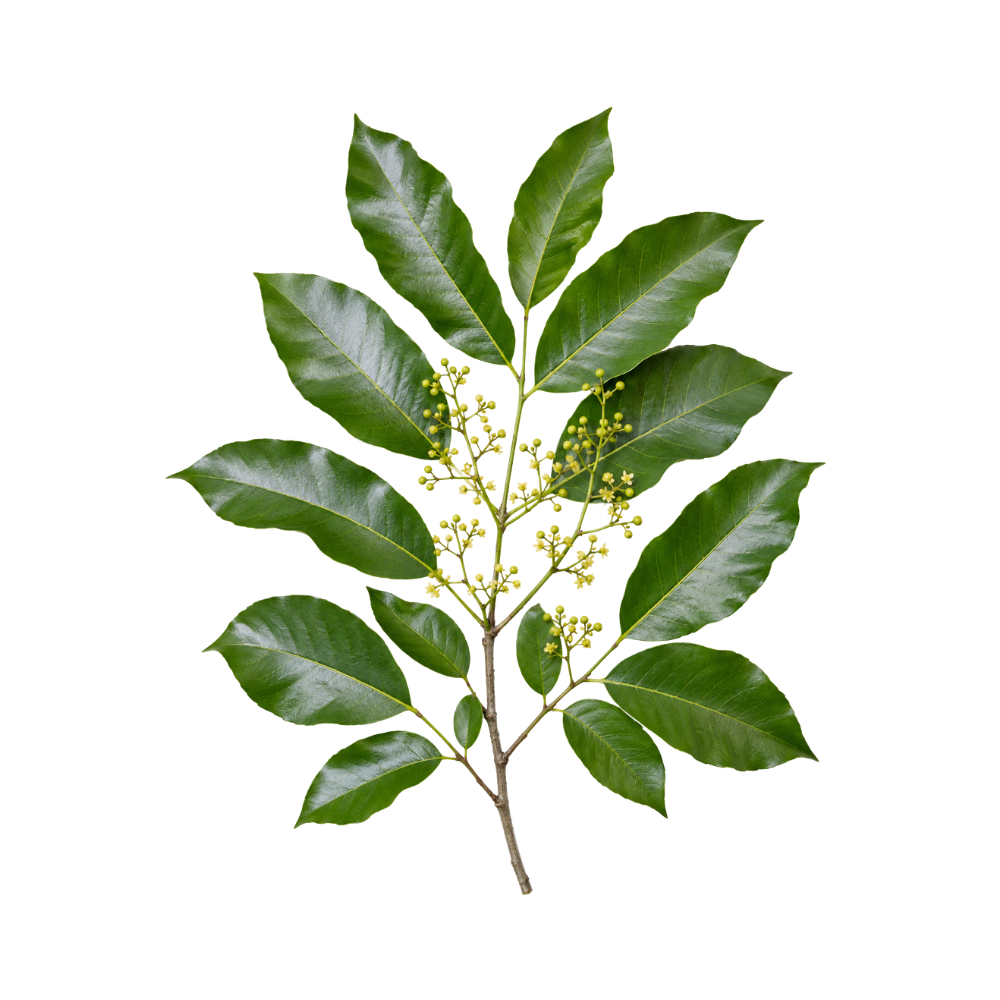 StrongStrongCatuabaTrichilia catiguaDirect synaptosomal evidence of dopamine reuptake inhibition, with MAO-A inhibition alongside it.Mechanismdopamine reuptake inhibition; MAO-A inhibitionRead the evidenceShow lessMonograph →
Synaptosomal work shows preferential, long-lasting inhibition of dopamine uptake over serotonin or noradrenaline 7Reference 7AnimalAntidepressant-like effects of Trichilia catigua (Catuaba) extract: evidence for dopaminergic-mediated mechanisms — animal modelView study →. The same signature reappears in the analgesia work, where pharmacological blockade implicated the dopaminergic system as the primary route 8Reference 8AnimalAntinociceptive activity of Trichilia catigua hydroalcoholic extract: new evidence on its dopaminergic effects — animal modelView study →, and again in the four-herb Catuama product 9Reference 9AnimalPharmacological and neurochemical evidence for antidepressant-like effects of the herbal product Catuama — animal modelView study →.
The aqueous extract also inhibits MAO-A, so the effect is plausibly dual 10Reference 10In vitroIn vitro multimodal-effect of Trichilia catigua AView study →.
Very few herbs have direct synaptosomal dopamine-uptake data rather than an inferred dopaminergic label, and that is what separates catuaba from the rest of the field.
The active constituent has not been isolated. The effect is attributed to the flavalignan fraction as a whole rather than to a named molecule, and no human study of any kind exists.
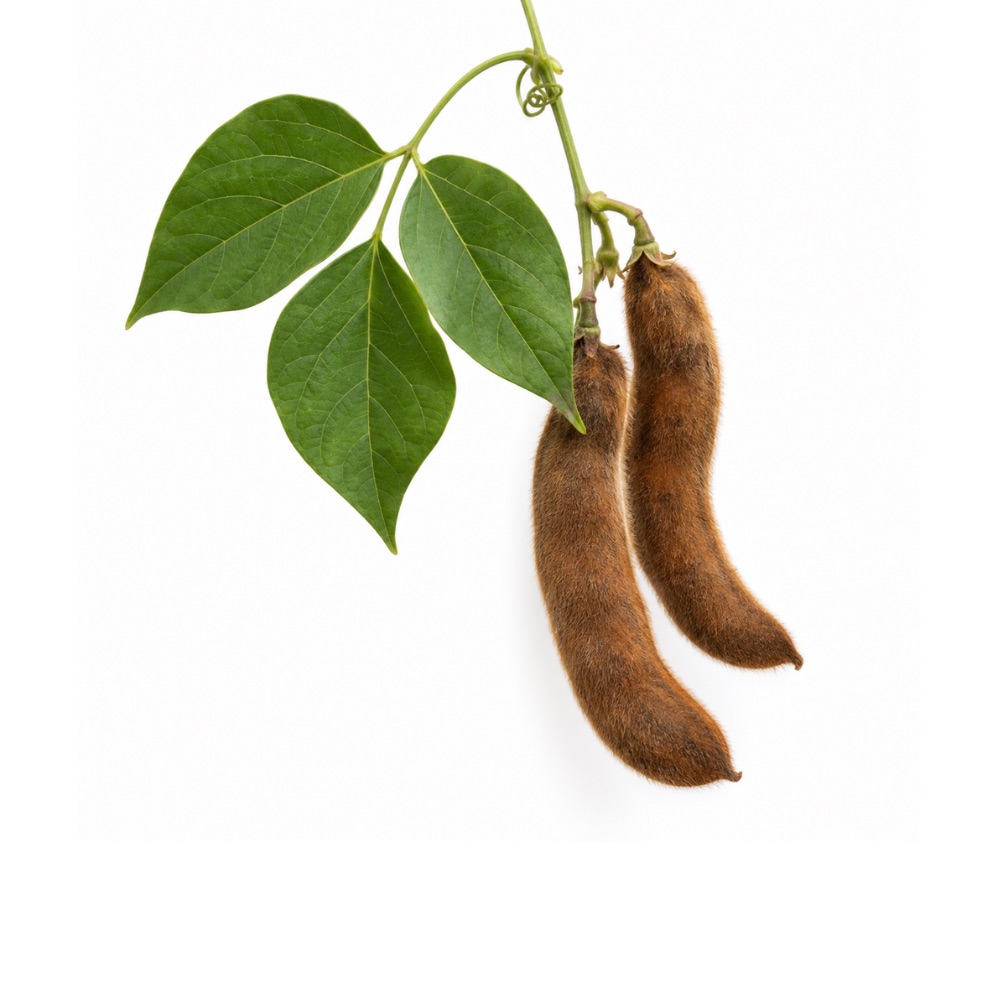 MildMildVelvet BeanMucuna pruriensThe richest natural source of levodopa, at 4–6% of dry seed weight, with randomised trials against the prescription drug behind it.Read the evidenceShow less
Mucuna pruriens seed carries levodopa at typically 4–6% of dry weight — the same molecule prescribed as standard treatment for Parkinson’s disease, not an analogue of it 13,
Double-blind crossover trials have compared seed powder against levodopa/carbidopa and found faster onset, longer “on” time, and at matched doses fewer dyskinesias 15,
The evidence is strong for the molecule and much weaker for any particular jar of powder. L-DOPA content swings roughly tenfold across the four botanical varieties, and boiling — the step that makes the bean edible — destroys up to about 70% of it 13,
An HPLC survey found commercial products poorly controlled and frequently unlike their labels 17Reference 17Analysis of levodopa content in commercial Mucuna pruriens products using high-performance liquid chromatography with fluorescence detectionView study →.
It behaves as a variable-dose source of a potent drug rather than as a gentle tonic, with the interactions to match: MAO inhibitors, antipsychotics and prescribed levodopa.
No herbs match these filters.
Safety
- A herbal source of levodopa is additive with prescribed Parkinson’s medication, and combining them needs neurological supervision.
- Parkinson’s disease is not a self-managed diagnosis, and no herbal levodopa source changes that.
- A herb that inhibits MAO-A and blocks dopamine reuptake carries an antidepressant’s interaction profile: SSRIs, SNRIs, MAO inhibitors, triptans, tramadol, dextromethorphan, stimulants and tyramine-rich foods.
- Dopaminergic herbs are inappropriate in pregnancy, because dopamine suppresses prolactin.
- Raising dopamine tone can precipitate psychosis or mania and can drive impulse-control problems, both documented with dopamine agonist therapy.
- Under non-selective MAO inhibition, phenethylamine’s dopaminergic and sympathomimetic profile becomes a pressor risk 6,
11, .12Reference 6Phenethylamine is a substrate of monoamine oxidase B in the paraventricular thalamic nucleusView study →Reference 11ReviewDietary tyramine and other pressor amines in MAOI regimens: a reviewView study →Reference 12The prescriber’s guide to the MAOI diet — thinking through tyramine troublesView study →
References
- Borowsky B, et al. (2001). Trace amines: identification of a family of mammalian G protein-coupled receptors. Proceedings of the National Academy of Sciences USA. https://pubmed.ncbi.nlm.nih.gov/11459929/
- Bunzow JR, et al. (2001). Amphetamine, 3,4-methylenedioxymethamphetamine, lysergic acid diethylamide, and metabolites of the catecholamine neurotransmitters are agonists of a rat trace amine receptor. Molecular Pharmacology. https://pubmed.ncbi.nlm.nih.gov/11723224/
- Pei Y, Asif-Malik A, Canales JJ (2016). Trace amines and the trace amine-associated receptor 1: pharmacology, neurochemistry, and clinical implications. Frontiers in Neuroscience. https://pubmed.ncbi.nlm.nih.gov/27092049/
- Kato M, et al. (2001). Beta-phenylethylamine modulates acetylcholine release in the rat striatum: involvement of a dopamine D2 receptor mechanism. European Journal of Pharmacology. https://pubmed.ncbi.nlm.nih.gov/11334866/
- Berry MD (2004). Mammalian central nervous system trace amines. Pharmacologic amphetamines, physiologic neuromodulators. Journal of Neurochemistry. https://pubmed.ncbi.nlm.nih.gov/15228583/
- Obata Y, et al. (2022). Phenethylamine is a substrate of monoamine oxidase B in the paraventricular thalamic nucleus. Scientific Reports. https://pubmed.ncbi.nlm.nih.gov/34996979/
- Campos, M. M., Fernandes, E. S., Ferreira, J., Santos, A. R. S., & Calixto, J. B. (2005). Antidepressant-like effects of Trichilia catigua (Catuaba) extract: evidence for dopaminergic-mediated mechanisms — animal model. Psychopharmacology (Berl). https://pubmed.ncbi.nlm.nih.gov/15991001/
- Viana, A. F., et al. (2011). Antinociceptive activity of Trichilia catigua hydroalcoholic extract: new evidence on its dopaminergic effects — animal model. Evidence-Based Complementary and Alternative Medicine. https://pubmed.ncbi.nlm.nih.gov/19815648/
- Campos, M. M., et al. (2004). Pharmacological and neurochemical evidence for antidepressant-like effects of the herbal product Catuama — animal model. Pharmacology, Biochemistry, and Behavior. https://pubmed.ncbi.nlm.nih.gov/15301932/
- Bernardo, J., et al. (2018). In vitro multimodal-effect of Trichilia catigua A. Juss. (Meliaceae) bark aqueous extract in CNS targets — in vitro. Journal of Ethnopharmacology. https://pubmed.ncbi.nlm.nih.gov/28970152/
- McCabe BJ (1986). Dietary tyramine and other pressor amines in MAOI regimens: a review. Journal of the American Dietetic Association. https://pubmed.ncbi.nlm.nih.gov/3525654/
- Van den Eynde V, Gillman PK, Blackwell BB (2022). The prescriber’s guide to the MAOI diet — thinking through tyramine troubles. Psychopharmacology Bulletin. https://pubmed.ncbi.nlm.nih.gov/35721816/
- Cassani E, Cilia R, Laguna J, et al. (2016). Mucuna pruriens for Parkinson’s disease: low-cost preparation method, laboratory measures and pharmacokinetics profile. Journal of the Neurological Sciences. https://pubmed.ncbi.nlm.nih.gov/27206902/
- Pulikkalpura H, Kurup R, Mathew PJ, et al. (2015). Levodopa in Mucuna pruriens and its degradation. Scientific Reports. https://pubmed.ncbi.nlm.nih.gov/26058043/
- Katzenschlager R, Evans A, Manson A, et al. (2004). Mucuna pruriens in Parkinson’s disease: a double-blind clinical and pharmacological study — randomised controlled crossover trial. Journal of Neurology, Neurosurgery & Psychiatry. https://pubmed.ncbi.nlm.nih.gov/15548480/
- Cilia R, Laguna J, Cassani E, et al. (2017). Mucuna pruriens in Parkinson disease: a double-blind, randomized, controlled, crossover study. Neurology. https://pubmed.ncbi.nlm.nih.gov/28679598/
- Soumyanath A, Denne T, Hiller A, et al. (2018). Analysis of levodopa content in commercial Mucuna pruriens products using high-performance liquid chromatography with fluorescence detection. Journal of Alternative and Complementary Medicine. https://pubmed.ncbi.nlm.nih.gov/28922612/
Keep Exploring