
Materia Medica
Neem
Azadirachta indica
Neem is a fast-growing evergreen tree of the mahogany family, regarded in India as a pharmacy in its own right. Its bitter leaf, bark and twigs are used in Ayurveda for skin disease, parasites and dental care, and its seed oil is a botanical insecticide rich in azadirachtin.
What Is Neem?
Neem is a fast-growing evergreen tree of the mahogany family, regarded in India as a pharmacy in its own right because every part of it is used 30Reference 30Fern, K. (n.d.). Azadirachta indica — habit, range, habitat, uses, hazards and cultivation — species database. Useful Tropical Plants Database. https://tropical.theferns.info/viewtropical.php?id=Azadirachta+indicaView study →. In Ayurveda it is a leading bitter, used for skin disease, parasites, fevers and the care of the teeth and gums 30Reference 30Fern, K. (n.d.). Azadirachta indica — habit, range, habitat, uses, hazards and cultivation — species database. Useful Tropical Plants Database. https://tropical.theferns.info/viewtropical.php?id=Azadirachta+indicaView study →.
Azadirachta indica comes from South and Southeast Asia and has been planted throughout the tropics for shade, timber and insect control 29,
The tree’s bitter compounds are limonoids. Azadirachtin from the seed is the basis of commercial neem insecticides, and nimbolide from the leaf is the most studied in the laboratory 13,
Neem is sometimes confused with chinaberry (Melia azedarach), a related tree of the same family that contains limonoids toxic to mammals 26Reference 26Identification of meliatoxins in Melia azedarach extracts using mass spectrometry for quality controlView study →.
How Is Neem Used?
Neem is used in several separate ways, and each uses a different part of the tree.
- Leaf — taken as a tea or decoction, and applied as a paste or juice to boils, wounds and eczema 30Reference 30Fern, K. (n.d.). Azadirachta indica — habit, range, habitat, uses, hazards and cultivation — species database. Useful Tropical Plants Database. https://tropical.theferns.info/viewtropical.php?id=Azadirachta+indicaView study →.
- Bark — taken as a bitter decoction. A freeze-dried bark extract has been studied for stomach acid and ulcers 9Reference 9Clinical trialClinical studies on the effect of neem (Azadirachta indica) bark extract on gastric secretion and gastroduodenal ulcer — clinical studyView study →.
- Twigs — chewed as a toothbrush to clean the teeth and firm the gums 30Reference 30Fern, K. (n.d.). Azadirachta indica — habit, range, habitat, uses, hazards and cultivation — species database. Useful Tropical Plants Database. https://tropical.theferns.info/viewtropical.php?id=Azadirachta+indicaView study →.
- Mouthwash, gel and toothpaste — made with neem extract and held in the mouth rather than swallowed 1,
2, .3, 4Reference 1Systematic reviewEffectiveness of Azadirachta indica (neem) mouthrinse in plaque and gingivitis control — systematic reviewView study →Reference 2RCTEffect of neem-containing toothpaste on plaque and gingivitis — a randomized double-blind clinical trialView study →Reference 3RCTComparative evaluation of neem mouthwash on plaque and gingivitis — a double-blind crossover randomized controlled trialView study →Reference 4RCTMicrobiological and clinical evaluation of neem gel and chlorhexidine gel on dental plaque and gingivitis — randomized clinical trialView study → - Seed oil — applied to the skin and scalp only 30Reference 30Fern, K. (n.d.). Azadirachta indica — habit, range, habitat, uses, hazards and cultivation — species database. Useful Tropical Plants Database. https://tropical.theferns.info/viewtropical.php?id=Azadirachta+indicaView study →.
- Insect control — dried leaves are used like mothballs, and the seed oil and azadirachtin concentrates are sold as botanical insecticides 22,
31Reference 22ReviewBotanical insecticides, deterrents, and repellents in modern agriculture — reviewView study →Reference 31Abdulla, P. (n.d.). Azadirachta indica Adr. Juss. — species description, distribution and uses — flora. In Flora of Pakistan (Meliaceae). http://www.efloras.org/florataxon.aspx?flora_id=5&taxon_id=220001427View study → .
Traditional Uses
Ayurvedic Medicine
Neem (nimba) is one of the principal bitters of Ayurveda. It is regarded as cooling and drying, and as one of the most important detoxifying herbs and a strong remedy for fevers 30Reference 30Fern, K. (n.d.). Azadirachta indica — habit, range, habitat, uses, hazards and cultivation — species database. Useful Tropical Plants Database. https://tropical.theferns.info/viewtropical.php?id=Azadirachta+indicaView study →.
Its traditional indications centre on skin disease, itching, boils and eruptions, on intestinal worms, on fevers including malarial fevers, and on sluggish digestion where a bitter is wanted. Leaf teas are used for malaria, peptic ulcers and intestinal worms 30Reference 30Fern, K. (n.d.). Azadirachta indica — habit, range, habitat, uses, hazards and cultivation — species database. Useful Tropical Plants Database. https://tropical.theferns.info/viewtropical.php?id=Azadirachta+indicaView study →.
The leaf juice is applied to ulcers, wounds, boils and eczema, and a bark decoction is applied to haemorrhoids 30Reference 30Fern, K. (n.d.). Azadirachta indica — habit, range, habitat, uses, hazards and cultivation — species database. Useful Tropical Plants Database. https://tropical.theferns.info/viewtropical.php?id=Azadirachta+indicaView study →. The seed oil is used on the skin as an antifungal and antiseptic, and in leprosy 30Reference 30Fern, K. (n.d.). Azadirachta indica — habit, range, habitat, uses, hazards and cultivation — species database. Useful Tropical Plants Database. https://tropical.theferns.info/viewtropical.php?id=Azadirachta+indicaView study →.
Neem twigs are chewed as toothbrushes to clean the teeth and firm the gums 30Reference 30Fern, K. (n.d.). Azadirachta indica — habit, range, habitat, uses, hazards and cultivation — species database. Useful Tropical Plants Database. https://tropical.theferns.info/viewtropical.php?id=Azadirachta+indicaView study →.
It is traditionally not given to the very young, the old or the weak 30Reference 30Fern, K. (n.d.). Azadirachta indica — habit, range, habitat, uses, hazards and cultivation — species database. Useful Tropical Plants Database. https://tropical.theferns.info/viewtropical.php?id=Azadirachta+indicaView study →.
Folk Use in South and Southeast Asia and Africa
Across South and Southeast Asia, and in much of Africa where it has been planted, neem is used as a household antiseptic, a skin wash, a remedy for fevers including malaria, and an insect and stored-grain repellent.
In Pakistan the leaves are used as a poultice for boils, and the dried leaves are kept among clothes in place of mothballs. The seed oil has been used as a purgative and to expel worms 31Reference 31Abdulla, P. (n.d.). Azadirachta indica Adr. Juss. — species description, distribution and uses — flora. In Flora of Pakistan (Meliaceae). http://www.efloras.org/florataxon.aspx?flora_id=5&taxon_id=220001427View study →.
Indications
- Skin disease, boils and eczema [leaf and leaf juice, applied; Ayurveda]
- Dental plaque and gingivitis [leaf-extract mouthwash, gel or toothpaste; twigs as chewing sticks]
- Intestinal worms [leaf tea; Ayurveda]
- Fungal and bacterial skin infection [seed oil and leaf, applied]
- Sluggish digestion [leaf and bark, as a bitter; Ayurveda]
- Stomach hyperacidity and peptic ulcer [bark extract; leaf tea in Ayurveda]
- Fevers, including malaria [leaf and bark; Ayurveda] Caution: In infected mice, leaf and bark preparations only partly suppressed the malaria parasite and cured none. The authors estimated that an adult would need at least 48 g of powdered plant a day 21.
- Diabetes [leaf; traditional use]
- Head lice and skin parasites [seed oil, applied]
- Haemorrhoids [bark decoction, applied; Ayurveda]
Botany
Neem is a fast-growing, long-lived evergreen tree in the mahogany family (Meliaceae) 30Reference 30Fern, K. (n.d.). Azadirachta indica — habit, range, habitat, uses, hazards and cultivation — species database. Useful Tropical Plants Database. https://tropical.theferns.info/viewtropical.php?id=Azadirachta+indicaView study →. It usually grows to about 15 m tall, with occasional trees reaching 25 m 30Reference 30Fern, K. (n.d.). Azadirachta indica — habit, range, habitat, uses, hazards and cultivation — species database. Useful Tropical Plants Database. https://tropical.theferns.info/viewtropical.php?id=Azadirachta+indicaView study →.
It has a short, straight trunk up to 100 cm across, and long spreading branches that form a dense, rounded crown 30Reference 30Fern, K. (n.d.). Azadirachta indica — habit, range, habitat, uses, hazards and cultivation — species database. Useful Tropical Plants Database. https://tropical.theferns.info/viewtropical.php?id=Azadirachta+indicaView study →.
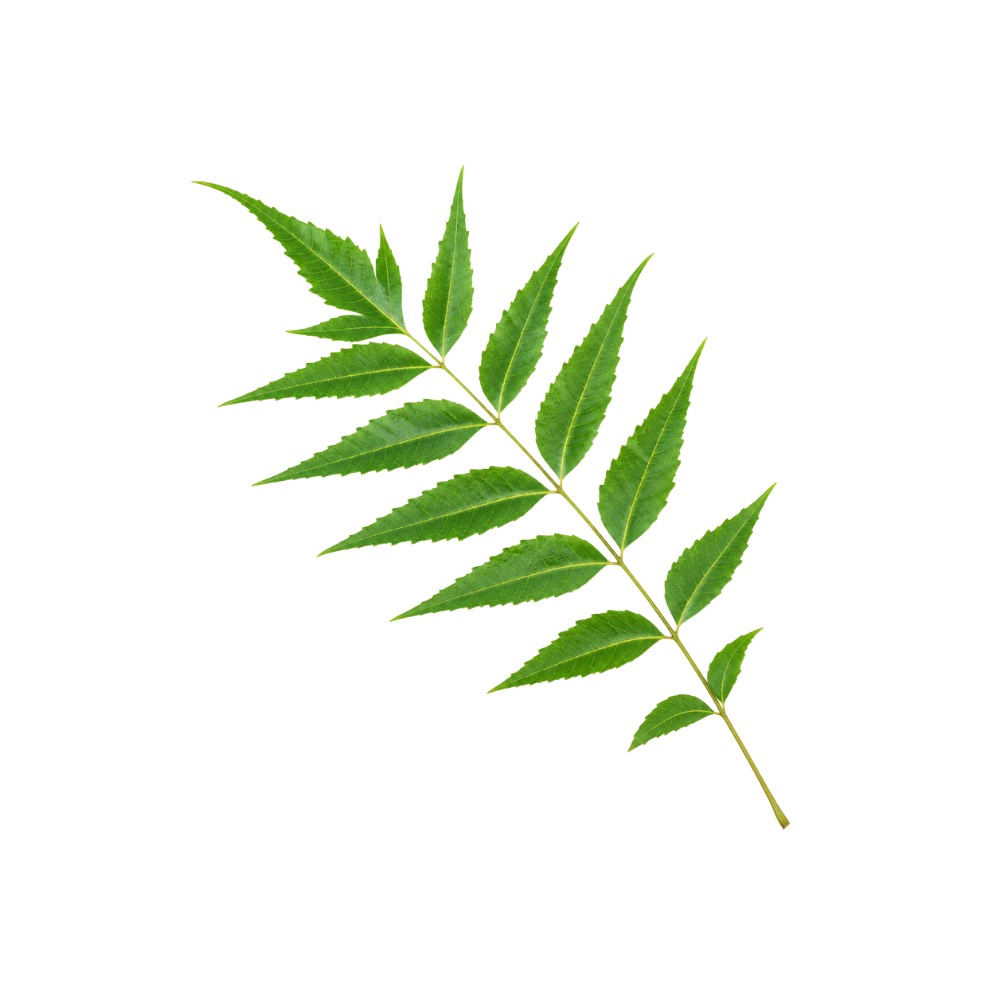
The leaves are pinnate and end in a single leaflet. The leaflets are oval and pointed, 2.5–7 cm long, and set alternately or in opposite pairs along the stalk 31Reference 31Abdulla, P. (n.d.). Azadirachta indica Adr. Juss. — species description, distribution and uses — flora. In Flora of Pakistan (Meliaceae). http://www.efloras.org/florataxon.aspx?flora_id=5&taxon_id=220001427View study →.
The flowers are small, white and sweetly scented, with petals about 6 mm long. In Pakistan they bloom in April and May 31Reference 31Abdulla, P. (n.d.). Azadirachta indica Adr. Juss. — species description, distribution and uses — flora. In Flora of Pakistan (Meliaceae). http://www.efloras.org/florataxon.aspx?flora_id=5&taxon_id=220001427View study →.
The fruit is an oblong drupe, 1.3–2 cm long, greenish-yellow when ripe, with a single seed 31Reference 31Abdulla, P. (n.d.). Azadirachta indica Adr. Juss. — species description, distribution and uses — flora. In Flora of Pakistan (Meliaceae). http://www.efloras.org/florataxon.aspx?flora_id=5&taxon_id=220001427View study →. Oil is pressed from the seed 30Reference 30Fern, K. (n.d.). Azadirachta indica — habit, range, habitat, uses, hazards and cultivation — species database. Useful Tropical Plants Database. https://tropical.theferns.info/viewtropical.php?id=Azadirachta+indicaView study →.
Neem was once placed in the same genus as chinaberry, as Melia azadirachta 31Reference 31Abdulla, P. (n.d.). Azadirachta indica Adr. Juss. — species description, distribution and uses — flora. In Flora of Pakistan (Meliaceae). http://www.efloras.org/florataxon.aspx?flora_id=5&taxon_id=220001427View study →. Chinaberry (Melia azedarach) contains the same kind of insecticidal limonoids as neem, and also meliatoxins, which are toxic to mammals 26Reference 26Identification of meliatoxins in Melia azedarach extracts using mass spectrometry for quality controlView study →. Material sold as neem should be confirmed as Azadirachta indica.
Distribution
Neem grows naturally in the mixed and evergreen lowland forests of South and Southeast Asia 30Reference 30Fern, K. (n.d.). Azadirachta indica — habit, range, habitat, uses, hazards and cultivation — species database. Useful Tropical Plants Database. https://tropical.theferns.info/viewtropical.php?id=Azadirachta+indicaView study →. Its exact native range is uncertain because it has been planted for so long.
The World Checklist of Vascular Plants treats it as native from Assam and Bangladesh through Myanmar, Thailand, Laos, Cambodia and Vietnam, and as introduced in the rest of India, Pakistan, Nepal and Sri Lanka 29Reference 29Azadirachta indica A.Juss. — native and introduced distribution — species databaseView study →. Other floras count India as part of its native range 30,
It has been planted throughout the tropics and subtropics, and has been introduced to much of tropical Africa, the Arabian Peninsula, Iran, the Caribbean, Mexico, Central and South America, Hawaii and parts of Southeast Asia 29,
It is common and widely planted.
Growing Conditions
Cultivation snapshot for Neem
Grow it yourself
Farm Wiki is our cultivation-focused sister site, also run by Justin Cooke.
Pharmacology & Research
Neem has a very large laboratory literature, covering antibacterial, antifungal, antimalarial, anti-inflammatory, antidiabetic, liver-protective and anticancer activity, mostly in cells and rodents 7Reference 7ReviewA comprehensive review of phytochemical profile and pharmacological attributes of Azadirachta indica — reviewView study →.
The human research is concentrated in the mouth. Small randomised trials of neem mouthwashes, gels and toothpastes have found them about as effective as chlorhexidine for plaque and gum inflammation 1,
Outside medicine, neem is one of the few botanical insecticides that is well established commercially 22Reference 22ReviewBotanical insecticides, deterrents, and repellents in modern agriculture — reviewView study →.
-
Best-supported: anti-plaque and anti-gingivitis effect of neem mouthrinse/gel, roughly comparable to chlorhexidine in small RCTs 1,
2, ; antibacterial activity against oral and enteric organisms in vitro 6,3Reference 1Systematic reviewEffectiveness of Azadirachta indica (neem) mouthrinse in plaque and gingivitis control — systematic reviewView study →Reference 2RCTEffect of neem-containing toothpaste on plaque and gingivitis — a randomized double-blind clinical trialView study →Reference 3RCTComparative evaluation of neem mouthwash on plaque and gingivitis — a double-blind crossover randomized controlled trialView study → 7Reference 6In vitroAntibacterial property of Azadirachta indica against oral pathogens — in vitro studyView study →Reference 7ReviewA comprehensive review of phytochemical profile and pharmacological attributes of Azadirachta indica — reviewView study → . -
Emerging, worth watching: the leaf limonoid nimbolide as an anticancer lead (apoptosis, NF-κB suppression) across many cell and animal models 12,
13Reference 12Systematic reviewThe anti-cancer properties of neem (Azadirachta indica) through its antioxidant activity — systematic reviewView study →Reference 13ReviewInsights into nimbolide molecular crosstalk and its anticancer properties — reviewView study → ; a human study suggesting neem bark extract lowers gastric acid secretion 9Reference 9Clinical trialClinical studies on the effect of neem (Azadirachta indica) bark extract on gastric secretion and gastroduodenal ulcer — clinical studyView study →. -
Mechanistically thin: antimalarial, antidiabetic and hepatoprotective claims rest on animal and in vitro data with no controlled human trials 15,
18, .21Reference 15Systematic reviewAntioxidative hypoglycemic herbal medicines with in vivo and in vitro activity against C-reactive protein in T2DM — systematic review of animal modelsView study →Reference 18AnimalPossible mechanism of hepatoprotective activity of Azadirachta indica leaf extract against paracetamol-induced damage in rats — animal modelView study →Reference 21AnimalEvaluation of the antimalarial properties and standardization of tablets of Azadirachta indica in mice — animal modelView study → - The caveat: almost no modern human efficacy trials outside dentistry, no standardized extract or dose, and the toxic seed oil is a different material from the leaf/bark preparations most claims are built on.
“Neem” covers several different materials. Water-based leaf and bark extracts, the fatty seed oil and isolated limonoids such as nimbolide differ in chemistry and in toxicity, and a result for one rarely carries over to another. There is no standardised human dose.
1. Oral & Dental Health
A systematic review of three randomised controlled trials found neem mouthwash, used alongside toothbrushing, reduced plaque and gum inflammation about as well as chlorhexidine. The trials differed too much to be pooled, and their quality of reporting was poor 1Reference 1Systematic reviewEffectiveness of Azadirachta indica (neem) mouthrinse in plaque and gingivitis control — systematic reviewView study →.
In a double-blind trial in 30 dental students, neem toothpaste reduced plaque and gingival scores more than the control toothpaste 2Reference 2RCTEffect of neem-containing toothpaste on plaque and gingivitis — a randomized double-blind clinical trialView study →.
In a double-blind crossover trial in 40 adults, 2% neem mouthwash and 0.2% chlorhexidine did not differ significantly 3Reference 3RCTComparative evaluation of neem mouthwash on plaque and gingivitis — a double-blind crossover randomized controlled trialView study →.
Over 90 days in 60 adults, a 2.5% neem gel reduced plaque, gum inflammation and counts of Streptococcus mutans and Lactobacillus as much as a 0.2% chlorhexidine gel 4Reference 4RCTMicrobiological and clinical evaluation of neem gel and chlorhexidine gel on dental plaque and gingivitis — randomized clinical trialView study →.
A 2026 systematic review of traditional oral-hygiene practices found herbal toothpastes and mouthwashes containing neem, clove, turmeric and ginger about as effective as fluoride products, with methodological limits 5Reference 5Systematic reviewTraditional oral hygiene practices and their effectiveness — a systematic reviewView study →.
The trials are small, short and mostly from one region, and they use extracts that are not standardised. There are no long-term data on gum disease.
2. Antibacterial
Neem extracts inhibited bacteria isolated from the mouth in vitro, including Enterococcus faecalis 6Reference 6In vitroAntibacterial property of Azadirachta indica against oral pathogens — in vitro studyView study →.
Reviews catalogue antibacterial, antifungal and antiviral activity against many organisms, and credit the antifungal activity to azadirachtin and nimbin 7Reference 7ReviewA comprehensive review of phytochemical profile and pharmacological attributes of Azadirachta indica — reviewView study →.
Almost all of this is plate and MIC work on extracts of varying composition. Outside the mouth there is no controlled human evidence of antibacterial benefit.
3. Antioxidant
Neem extracts scavenge free radicals and restore the body’s own antioxidant defences in animal tissue.
In rats with paracetamol-induced liver damage, leaf extract reversed changes in glutathione, Na⁺/K⁺-ATPase activity and lipid-peroxidation markers 18Reference 18AnimalPossible mechanism of hepatoprotective activity of Azadirachta indica leaf extract against paracetamol-induced damage in rats — animal modelView study →. In rats given lead acetate, neem raised antioxidant enzymes and lowered markers of oxidative damage 8Reference 8AnimalAntioxidant and chemopreventive effects of Azadirachta indica on lead-acetate-induced hepatotoxicity in male Wistar rats — animal modelView study →.
All of it is preclinical, measured as tissue and enzyme changes in rodents.
4. Antiulcer / Gastroprotective
A clinical study gave people with acid-related problems and ulcers a freeze-dried aqueous extract of neem bark. At 30 mg twice daily for 10 days, it reduced gastric acid secretion by 77%, the volume of secretion by 63% and pepsin activity by 50% 9Reference 9Clinical trialClinical studies on the effect of neem (Azadirachta indica) bark extract on gastric secretion and gastroduodenal ulcer — clinical studyView study →.
At 30–60 mg twice daily for 10 weeks, duodenal ulcers almost completely healed on X-ray or endoscopy. Blood markers of organ toxicity stayed close to normal 9Reference 9Clinical trialClinical studies on the effect of neem (Azadirachta indica) bark extract on gastric secretion and gastroduodenal ulcer — clinical studyView study →.
In rats, a stem-bark extract protected against indomethacin-induced stomach ulcers and reduced basal and histamine-stimulated acid secretion, probably through histamine H2 receptors 10Reference 10AnimalEffects of Azadirachta indica extract on gastric ulceration and acid secretion in rats — animal modelView study →. A review by the same research group summarises the work 11Reference 11ReviewThe use of neem for controlling gastric hyperacidity and ulcer — reviewView study →.
The human findings come from a single research group and have not been tested in an independent trial.
5. Anti-Inflammatory
Neem compounds suppress inflammatory signalling in cells and animals, mainly through the NF-κB pathway. This is documented most thoroughly for nimbolide 13Reference 13ReviewInsights into nimbolide molecular crosstalk and its anticancer properties — reviewView study →.
Reviews list anti-inflammatory and fever-reducing activity among neem’s preclinical effects 7Reference 7ReviewA comprehensive review of phytochemical profile and pharmacological attributes of Azadirachta indica — reviewView study →.
There is no human trial, and it is not known which preparation and dose would have an anti-inflammatory effect in the body.
6. Anticancer
Most of the anticancer work concerns nimbolide, a limonoid of the leaf. In many cell lines and rodent models it triggers cancer-cell death, slows growth, and suppresses spread and new blood-vessel formation 13Reference 13ReviewInsights into nimbolide molecular crosstalk and its anticancer properties — reviewView study →.
A literature review links neem’s anticancer effects to restored antioxidant balance in the liver, NF-κB suppression, raised p53 and PTEN and lowered c-Myc 12Reference 12Systematic reviewThe anti-cancer properties of neem (Azadirachta indica) through its antioxidant activity — systematic reviewView study →. Another review covers cervical, ovarian and breast cancers 14Reference 14ReviewAn overview on the anticancer activity of Azadirachta indica in gynaecological cancers — reviewView study →.
Gap: entirely in vitro and animal; no clinical trials, no human pharmacokinetic or safety data for nimbolide as a drug.
7. Antidiabetic
Neem leaf is one of the plants most often reported in folk medicine for diabetes worldwide 16Reference 16Systematic reviewEthnomedicinal plants for the management of diabetes worldwide — systematic reviewView study →.
A systematic review of animal studies includes neem among plants that lowered blood sugar, C-reactive protein and oxidative stress in rodent models of type 2 diabetes 15Reference 15Systematic reviewAntioxidative hypoglycemic herbal medicines with in vivo and in vitro activity against C-reactive protein in T2DM — systematic review of animal modelsView study →. Neem extracts inhibit carbohydrate-digesting enzymes such as α-glucosidase and α-amylase 17Reference 17ReviewEnzyme inhibitors from natural sources with antidiabetic activity — reviewView study →.
There is no robust randomised human trial, so the human dose, the effect and the risk of adding to diabetes medication are unknown.
8. Hepatoprotective
Neem leaf extract protects rodent liver against several chemical injuries. It reversed paracetamol-induced changes in glutathione and membrane-enzyme activity in rats 18Reference 18AnimalPossible mechanism of hepatoprotective activity of Azadirachta indica leaf extract against paracetamol-induced damage in rats — animal modelView study →.
In mice, an aqueous leaf extract reduced DMBA-induced liver injury, improving liver clearance, liver enzymes and markers of genetic damage 19Reference 19AnimalAzadirachta indica mitigates DMBA-induced hepatotoxicity: a biochemical and radiometric study — mouse in vivoView study →. In rats, it limited liver injury from lead acetate 8Reference 8AnimalAntioxidant and chemopreventive effects of Azadirachta indica on lead-acetate-induced hepatotoxicity in male Wistar rats — animal modelView study →.
Gap: rodent-only; no human data, and neem seed oil has caused fatty liver in poisoned infants 27Reference 27Case reportMargosa oil poisoning as a cause of Reye’s syndrome — case series (13 infants) with mouse studyView study →.
9. Antifertility / Contraceptive
Neem has long been studied as a plant contraceptive. Reviews of antifertility plants include neem among those with anti-implantation activity in animals, and among plants used traditionally to prevent or end pregnancy 20Reference 20ReviewAntifertility activity of medicinal plants — reviewView study →.
It has not been developed into a tested human contraceptive. The same activity is why neem is avoided in pregnancy. The evidence is animal and traditional only.
10. Antimalarial
Neem has a long traditional reputation for malaria. In mice infected with Plasmodium yoelii, tablet suspensions of neem leaf and bark gave strong protection when given beforehand and moderately suppressed the parasite once infection was under way 21Reference 21AnimalEvaluation of the antimalarial properties and standardization of tablets of Azadirachta indica in mice — animal modelView study →.
They cured none of the mice and did little to extend survival. The authors estimated that an adult would need at least 48 g of powdered plant a day for a comparable effect 21Reference 21AnimalEvaluation of the antimalarial properties and standardization of tablets of Azadirachta indica in mice — animal modelView study →.
Gap: animal effect is suppressive but not curative; no human antimalarial trial; activity far below reference drugs.
Mechanisms
Neem’s activities belong to different limonoids in different parts of the tree. Nimbolide from the leaf has been studied for NF-κB suppression, antioxidant effects and the induction of cancer-cell death 12,
Azadirachtin from the seed acts on insects as a feeding deterrent and growth disruptor, the basis of neem insecticides 22Reference 22ReviewBotanical insecticides, deterrents, and repellents in modern agriculture — reviewView study →. A water extract of the bark reduces stomach acid secretion 9,
| Mechanism | Drives | Key compounds |
|---|---|---|
| NF-κB ↓, COX-2 ↓ | anti-inflammatoryanticancerhepatoprotective | nimbolide, azadirachtin |
| Free-radical scavenging, ↑ glutathione / SOD | antioxidanthepatoprotective | nimbolide, quercetin |
| Apoptosis induction, p53 ↑, anti-proliferation | anticancer | nimbolide |
| Membrane disruption / broad antimicrobial | antibacterialantifungal | nimbidin, azadirachtin |
| Gastric acid secretion ↓ (H⁺ output, pepsin) | antiulcer | aqueous bark-extract fraction |
| α-glucosidase / α-amylase inhibition | antidiabetic | flavonoid / limonoid fraction |
| Insect antifeedant & growth disruption (ecdysone antagonism) | insecticidal | azadirachtin |
Clinical Trials
Human trials are essentially confined to dentistry — several small randomized mouthrinse/gel/toothpaste studies and one small gastric-acid study — with no registered late-phase programmes for any systemic indication; the rest of the evidence base is preclinical.
| Completed | Planned | Terminated | Preclinical |
|---|---|---|---|
| ~6(mostly oral-care, small) | 0identified | 0 | thousands |
Last checked: July 2026.
Phytochemistry
Neem’s main compounds are limonoids, highly oxidised triterpenoids typical of the mahogany family and the source of the tree’s bitterness 7Reference 7ReviewA comprehensive review of phytochemical profile and pharmacological attributes of Azadirachta indica — reviewView study →. The tree also contains tannins and flavonoids 30Reference 30Fern, K. (n.d.). Azadirachta indica — habit, range, habitat, uses, hazards and cultivation — species database. Useful Tropical Plants Database. https://tropical.theferns.info/viewtropical.php?id=Azadirachta+indicaView study →.
Azadirachtin is concentrated in the seed kernel and its oil. It acts on insects as a feeding deterrent and growth disruptor, and it is the basis of neem’s commercial insecticides 22Reference 22ReviewBotanical insecticides, deterrents, and repellents in modern agriculture — reviewView study →.
Nimbolide is a leaf limonoid and the subject of most of the anticancer and anti-inflammatory research 12,
Nimbidin and nimbin are bitter limonoids credited with antibacterial, antifungal, anti-inflammatory and antiulcer activity 7Reference 7ReviewA comprehensive review of phytochemical profile and pharmacological attributes of Azadirachta indica — reviewView study →. Salannin adds to the insect-deterrent effect, gedunin has reported antimalarial and antifungal activity, and azadiradione is another anti-inflammatory limonoid 7,
Azadirachtin is present only in traces in the leaf, and its content varies with the tree’s origin and the extraction solvent 22Reference 22ReviewBotanical insecticides, deterrents, and repellents in modern agriculture — reviewView study →. The fatty seed oil is a different product from the water-based leaf and bark extracts 23Reference 23Case reportNeem oil poisoning — case report of refractory seizures and metabolic acidosis in a childView study →.
Constituent Summary
Amounts vary with plant part, origin and extraction method.
Limonoid (Triterpene)7 compounds2 with data
Flavonoid1 compoundno data
Dosage
The mouth-care preparations with the best evidence are rinses and gels, not swallowed doses. The one internal preparation with human data is a freeze-dried water extract of the bark.
Research doses
| Indication | Preparation | Dose | Est. dried-herb equivalent | Source |
|---|---|---|---|---|
| Oral / dental health | 2% neem mouthwash | rinse, compared with 0.2% chlorhexidine | — (topical rinse, not ingested) | 3Reference 3RCTComparative evaluation of neem mouthwash on plaque and gingivitis — a double-blind crossover randomized controlled trialView study → |
| Oral / dental health | Neem toothpaste; 2.5% neem gel | used daily; gel over 90 days | — (topical) | 2, |
| Gastric hyperacidity | Freeze-dried aqueous bark extract | 30 mg twice daily × 10 days | — | 9Reference 9Clinical trialClinical studies on the effect of neem (Azadirachta indica) bark extract on gastric secretion and gastroduodenal ulcer — clinical studyView study → |
| Duodenal ulcer | Freeze-dried aqueous bark extract | 30–60 mg twice daily × 10 weeks | — | 9Reference 9Clinical trialClinical studies on the effect of neem (Azadirachta indica) bark extract on gastric secretion and gastroduodenal ulcer — clinical studyView study → |
Traditional Dosage
| System | Preparation | Dose |
|---|---|---|
| Western herbal medicine | Dried leaf infusion | ~2–4 g dried leaf, as tea |
| Western herbal medicine | Tincture 1:5 | small volumes (intensely bitter) |
| Ayurveda | Leaf or bark decoction (nimba) | taken as a bitter blood-purifier; dose by preparation |
| Topical (all systems) | Neem oil or leaf paste | external application for skin conditions |
Neem oil is for external use only.
Safety & Pregnancy
Neem leaf and bark have been well tolerated in short human studies. The serious hazard is neem seed oil taken by mouth, which has poisoned infants and young children.
- Never give neem oil by mouth to infants or children. It has caused vomiting, drowsiness, metabolic acidosis, seizures and a Reye-like encephalopathy, with lasting damage and deaths 23,
24, .27, 28Reference 23Case reportNeem oil poisoning — case report of refractory seizures and metabolic acidosis in a childView study →Reference 24Case reportNeem oil poisoning — case series in infantsView study →Reference 27Case reportMargosa oil poisoning as a cause of Reye’s syndrome — case series (13 infants) with mouse studyView study →Reference 28Case reportReye-like syndrome due to margosa oil poisoning: report of a case with postmortem findings — case reportView study → - Pregnancy and conception. Neem has antifertility and anti-implantation activity in animals and is used traditionally to end pregnancy 20Reference 20ReviewAntifertility activity of medicinal plants — reviewView study →.
- The parts are not interchangeable. The seed oil is a different material from the leaf and bark preparations, and their safety records differ.
- Diabetes medication. Neem may add to the effect of diabetes drugs; this has not been studied in people 15,
17Reference 15Systematic reviewAntioxidative hypoglycemic herbal medicines with in vivo and in vitro activity against C-reactive protein in T2DM — systematic review of animal modelsView study →Reference 17ReviewEnzyme inhibitors from natural sources with antidiabetic activity — reviewView study → .
Full Safety & Interactions Detail
Neem oil in children. Thirteen infants in Malaysia developed vomiting, drowsiness, metabolic acidosis and encephalopathy within hours of being given margosa (neem) oil. Their illness resembled Reye’s syndrome, with fatty liver and swelling of the brain 27Reference 27Case reportMargosa oil poisoning as a cause of Reye’s syndrome — case series (13 infants) with mouse studyView study →. A fatal case has been described at post-mortem 28Reference 28Case reportReye-like syndrome due to margosa oil poisoning: report of a case with postmortem findings — case reportView study →.
A previously healthy 5-year-old developed seizures that were hard to control and metabolic acidosis after swallowing neem oil, and was left with problems of hearing, vision and balance 23Reference 23Case reportNeem oil poisoning — case report of refractory seizures and metabolic acidosis in a childView study →. Further infant cases have been reported 24Reference 24Case reportNeem oil poisoning — case series in infantsView study →. Neem oil must never be given by mouth to children.
Leaf. A case of poisoning after eating neem leaf has been reported 25Reference 25Case reportNeem leaf poisoning — case reportView study →. Traditionally, neem is not given to the very young, the old or the weak 30Reference 30Fern, K. (n.d.). Azadirachta indica — habit, range, habitat, uses, hazards and cultivation — species database. Useful Tropical Plants Database. https://tropical.theferns.info/viewtropical.php?id=Azadirachta+indicaView study →.
Pregnancy and conception. Neem has anti-implantation activity in animals and is used traditionally to prevent or end pregnancy, so it is avoided by anyone trying to conceive and throughout pregnancy 20Reference 20ReviewAntifertility activity of medicinal plants — reviewView study →.
Diabetes medication. Neem lowers blood sugar in animals, so it may add to the effect of diabetes medication. This has not been studied in people 15,
Leaf and bark in short studies. The leaf and bark preparations used for mouth care and in traditional medicine have not been linked to the severe poisoning seen with the seed oil. In the bark-extract study, blood markers of organ toxicity stayed close to normal over 10 weeks 9Reference 9Clinical trialClinical studies on the effect of neem (Azadirachta indica) bark extract on gastric secretion and gastroduodenal ulcer — clinical studyView study →.
Interactions. No CYP450 or anticoagulant interaction data exist.
Avoid. Neem has antifertility and anti-implantation activity in animals and is used traditionally to end pregnancy. Avoid it when trying to conceive and throughout pregnancy 20Reference 20ReviewAntifertility activity of medicinal plants — reviewView study →.
It has not been studied during breastfeeding. Neem oil should never be used by nursing mothers or given to infants 23,
References
- Dhingra, K., & Vandana, K. L. (2017). Effectiveness of Azadirachta indica (neem) mouthrinse in plaque and gingivitis control — systematic review. International Journal of Dental Hygiene. https://pubmed.ncbi.nlm.nih.gov/26876277/
- Abhishek, K. N., et al. (2015). Effect of neem-containing toothpaste on plaque and gingivitis — a randomized double-blind clinical trial. Journal of Contemporary Dental Practice. https://pubmed.ncbi.nlm.nih.gov/26718296/
- Jalaluddin, M., et al. (2017). Comparative evaluation of neem mouthwash on plaque and gingivitis — a double-blind crossover randomized controlled trial. Journal of Contemporary Dental Practice. https://pubmed.ncbi.nlm.nih.gov/28713109/
- Nimbulkar, G., et al. (2020). Microbiological and clinical evaluation of neem gel and chlorhexidine gel on dental plaque and gingivitis — randomized clinical trial. Journal of Pharmacy and Bioallied Sciences. https://pubmed.ncbi.nlm.nih.gov/33149484/
- Shahzad, M., et al. (2026). Traditional oral hygiene practices and their effectiveness — a systematic review. Oral Health & Preventive Dentistry. https://pubmed.ncbi.nlm.nih.gov/41670379/
- Kalita, C., et al. (2019). Antibacterial property of Azadirachta indica against oral pathogens — in vitro study. Journal of Conservative Dentistry. https://pubmed.ncbi.nlm.nih.gov/33088074/
- Saleem, S., et al. (2018). A comprehensive review of phytochemical profile and pharmacological attributes of Azadirachta indica — review. Phytotherapy Research. https://pubmed.ncbi.nlm.nih.gov/29671907/
- Asenuga, E. R., et al. (2022). Antioxidant and chemopreventive effects of Azadirachta indica on lead-acetate-induced hepatotoxicity in male Wistar rats — animal model. Nigerian Journal of Physiological Sciences. https://pubmed.ncbi.nlm.nih.gov/38243572/
- Bandyopadhyay, U., et al. (2004). Clinical studies on the effect of neem (Azadirachta indica) bark extract on gastric secretion and gastroduodenal ulcer — clinical study. Life Sciences. https://pubmed.ncbi.nlm.nih.gov/15454339/
- Raji, Y., et al. (2004). Effects of Azadirachta indica extract on gastric ulceration and acid secretion in rats — animal model. Journal of Ethnopharmacology. https://pubmed.ncbi.nlm.nih.gov/14698526/
- Maity, P., et al. (2009). The use of neem for controlling gastric hyperacidity and ulcer — review. Phytotherapy Research. https://pubmed.ncbi.nlm.nih.gov/19140119/
- Iman, M., et al. (2022). The anti-cancer properties of neem (Azadirachta indica) through its antioxidant activity — systematic review. Journal of Complementary & Integrative Medicine. https://pubmed.ncbi.nlm.nih.gov/33964199/
- Shaheen, S., et al. (2024). Insights into nimbolide molecular crosstalk and its anticancer properties — review. Medical Oncology. https://pubmed.ncbi.nlm.nih.gov/38761317/
- Moga, M. A., et al. (2018). An overview on the anticancer activity of Azadirachta indica in gynaecological cancers — review. International Journal of Molecular Sciences. https://pubmed.ncbi.nlm.nih.gov/30563141/
- Mirahmad, M., et al. (2023). Antioxidative hypoglycemic herbal medicines with in vivo and in vitro activity against C-reactive protein in T2DM — systematic review of animal models. Phytomedicine. https://pubmed.ncbi.nlm.nih.gov/36610136/
- Aumeeruddy, M. Z., & Mahomoodally, M. F. (2021). Ethnomedicinal plants for the management of diabetes worldwide — systematic review. Current Medicinal Chemistry. https://pubmed.ncbi.nlm.nih.gov/33475054/
- Alam, F., et al. (2019). Enzyme inhibitors from natural sources with antidiabetic activity — review. Phytotherapy Research. https://pubmed.ncbi.nlm.nih.gov/30417583/
- Chattopadhyay, R. R. (2003). Possible mechanism of hepatoprotective activity of Azadirachta indica leaf extract against paracetamol-induced damage in rats — animal model. Journal of Ethnopharmacology. https://pubmed.ncbi.nlm.nih.gov/14611885/
- Koul, A., Mohan, V., & Bharati, S. (2014). Azadirachta indica mitigates DMBA-induced hepatotoxicity: a biochemical and radiometric study — mouse in vivo. Indian Journal of Biochemistry & Biophysics. https://pubmed.ncbi.nlm.nih.gov/24791415/
- Daniyal, M., & Akram, M. (2015). Antifertility activity of medicinal plants — review. Journal of the Chinese Medical Association. https://pubmed.ncbi.nlm.nih.gov/25921562/
- Isah, A. B., et al. (2003). Evaluation of the antimalarial properties and standardization of tablets of Azadirachta indica in mice — animal model. Phytotherapy Research. https://pubmed.ncbi.nlm.nih.gov/12916083/
- Isman, M. B. (2006). Botanical insecticides, deterrents, and repellents in modern agriculture — review. Annual Review of Entomology. https://pubmed.ncbi.nlm.nih.gov/16332203/
- Dhongade, R. K., et al. (2008). Neem oil poisoning — case report of refractory seizures and metabolic acidosis in a child. Indian Pediatrics. https://pubmed.ncbi.nlm.nih.gov/18250509/
- Sundaravalli, N., et al. (1982). Neem oil poisoning — case series in infants. Indian Journal of Pediatrics. https://pubmed.ncbi.nlm.nih.gov/7141505/
- Tiwary, B. S. (1985). Neem leaf poisoning — case report. Journal of the Association of Physicians of India. https://pubmed.ncbi.nlm.nih.gov/3837008/
- Cornelio, V. E., Forim, M. R., Perlatti, B., Fernandes, J. B., Vieira, P. C., Napolitano, M. P., Yost, R. A., & da Silva, M. F. G. (2017). Identification of meliatoxins in Melia azedarach extracts using mass spectrometry for quality control. Planta Medica, 83(3-04), 312-317. https://pubmed.ncbi.nlm.nih.gov/27599262/
- Sinniah, D., & Baskaran, G. (1981). Margosa oil poisoning as a cause of Reye’s syndrome — case series (13 infants) with mouse study. Lancet, 1(8218), 487–489. https://pubmed.ncbi.nlm.nih.gov/6110100/
- Sinniah, D., Baskaran, G., Looi, L. M., & Leong, K. L. (1982). Reye-like syndrome due to margosa oil poisoning: report of a case with postmortem findings — case report. American Journal of Gastroenterology, 77(3), 158–161. https://pubmed.ncbi.nlm.nih.gov/7081175/
- Govaerts, R. (2026). Azadirachta indica A.Juss. — native and introduced distribution — species database. The World Checklist of Vascular Plants (WCVP), Royal Botanic Gardens, Kew, via GBIF. https://www.gbif.org/species/3190474
- Fern, K. (n.d.). Azadirachta indica — habit, range, habitat, uses, hazards and cultivation — species database. Useful Tropical Plants Database. https://tropical.theferns.info/viewtropical.php?id=Azadirachta+indica
- Abdulla, P. (n.d.). Azadirachta indica Adr. Juss. — species description, distribution and uses — flora. In Flora of Pakistan (Meliaceae). http://www.efloras.org/florataxon.aspx?flora_id=5&taxon_id=220001427



