
Condition
Dementia
Dementia is a progressive decline in memory and other cognitive abilities severe enough to interfere with daily functioning.

Overview
Aetiology
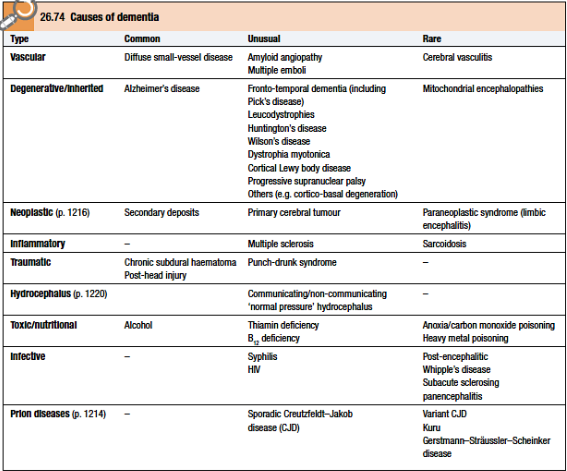
There are a number of causative and risk factors associated with Dementia:
- Old age (>65)
- Cardiovascular disease
- Stroke
- Hypertension
- Hypercholesterolemia
- Low folate intake
- Down’s Syndrome
- Diabetes
- APOE e4
- Obesity
- Depression
- High caloric intake
- Poor excercize
- Social isolation
- B Vitamin deficiencies
- Environmental toxicity
- Chronic lack of social stimulation
- Chronic depression
Alzheimer’s Disease
A progressive neurodegenerative disorder marked by the accumulation of amyloid plaques and neurofibrillary tangles in the brain. It is the most common form of dementia, accounting for about 70% of cases, and presents with gradual loss of memory and cognition.
More on Alzheimer’s disease.
Vascular Dementia
Cognitive decline resulting from reduced blood flow to the brain, often following one or more strokes or chronic small-vessel disease. Symptoms may appear in a stepwize pattern as further vascular damage occurs.
Wernicke Korsakoff Disease
A condition caused by severe vitamin B1 (thiamine) deficiency, most often associated with chronic alcoholism. It combines acute confusion and eye movement abnormalities with longer-term memory impairment.
Fronto-Temporal Dementia
A set of relatively rare disorders affecting the frontal and temporal lobes of the brain. It typically presents with changes in personality, behavior, and language rather than early memory loss.
Lewy Body Dementia
A form of dementia caused by abnormal protein deposits (Lewy bodies) in the brain, closely related to Parkinson’s disease. It is characterized by fluctuating cognition, visual hallucinations, and movement difficulties.
Diabetic Dementia
Diabetes is associated with a higher risk of dementia, thought to relate to vascular damage and impaired glucose metabolism affecting the brain.
HIV Associated Dementia
A cognitive disorder occurring in advanced HIV infection, caused by the effect of the virus on the central nervous system. It presents with slowed thinking, memory problems, and motor impairment.
Presentation
Symptoms
Common symptoms of dementia include progressive memory loss, difficulty with language and communication, impaired reasoning and judgment, disorientation to time and place, and changes in mood, personality, and behavior. As the condition advances, individuals increasingly require assistance with everyday tasks.
Assessment
Diagnostic Considerations
The presence of an acquired impairment in memory, associated with impairment in one or more cognitive domains, including:
- Executive function (e.g., abstract thinking, reasoning, judgment)
- Language (expressive or receptive)
- Praxis (learned motor sequences)
- Gnosis (ability to recognize objects, faces or other sensory information)
Impairments in cognition must be severe enough to interfere with work, usual social activities or relationships with others.
Other Factors To Consider For Diagnosis:
- Family history of Dementia
- Altered social behavior
- Memory impairment
Testing For Dementia:
- Imaging of head (CT and/or MRI)
- Blood tests
- Full blood count, ESR
- Urea and electrolytes, glucose
- Calcium, liver function tests
- Thyroid function tests
- Vitamin B12
- Syphilis, ANA, HIV serology
- Chest X-ray
- EEG
Assessment
Differential Diagnosis
- Creutzfeldt-Jakob Disease
- Parkinson’s Disease
The Herbs
Materia Medica (13)
Herbs traditionally or clinically used for dementia.












Supplementation
Supplementation (14)
Supplements, nutrients and compounds used for dementia.
Alpha-GPC
Cholinergic
A choline-dense phospholipid used to raise acetylcholine — the best evidence is in dementia and stroke recovery, and it is much thinner for healthy-brain enhancement.
Aniracetam
Racetam
A fat-soluble racetam — a more potent relative of piracetam used for memory, focus and mood, with mild anxiolytic effects.
Centrophenoxine
Cholinergic (DMAE ester)
A synthetic DMAE-ester nootropic marketed for "brain energy" and lipofuscin reduction — on evidence that is mostly old, animal, or low-quality clinical work.
Cerebrolysin
Neurotrophic peptide preparation (porcine-brain hydrolysate)
A porcine-brain-derived peptide mixture injected for stroke, brain injury and dementia — prescription in parts of Europe and Asia, unapproved in the US and EU.
Citicoline (CDP-Choline)
Cholinergic
A choline-donor nootropic with real placebo-controlled memory data in older adults — and two large negative trials that the marketing leaves out.
DHA (Docosahexaenoic acid)
Omega-3 fatty acid
DHA is a long-chain omega-3 fatty acid and the dominant structural fat in the brain and retina, studied for neurodevelopment and vision.
Dihexa
Angiotensin IV analogue (HGF/c-Met positive modulator)
A synthetic angiotensin IV-derived tripeptide studied in rodents for synaptogenesis; an unapproved research chemical with no human data.
Huperzine-A
Alkaloid (acetylcholinesterase inhibitor)
A club-moss alkaloid and potent reversible acetylcholinesterase inhibitor, used as a memory-support nootropic and studied in Alzheimer's disease — where the independent Western trial was negative.
Noopept
Nootropic
A potent synthetic dipeptide nootropic (active at ~10–40 mg) with strong rodent data but only small, open-label human trials, and unapproved in most Western markets.
Oxiracetam
Nootropic (racetam)
A water-soluble synthetic racetam studied for cognitive recovery after brain injury, with weak evidence for enhancement in healthy people.
Phosphatidylserine
Phospholipid
A phospholipid building block of neuronal cell membranes — supplemented to support memory, focus and the stress response, especially with age. The pivotal older data used bovine-cortex PS; the modern soy/sunflower product has weaker evidence.
Piracetam
Nootropic (racetam)
The original nootropic (1964) and prototype racetam — mild cognitive support that works mainly in impaired brains, with a very high safety margin.
Pramiracetam
Racetam / nootropic
A synthetic, fat-soluble racetam studied mainly for memory recovery after brain injury; the everyday-enhancement claims outrun the evidence.
Vinpocetine
Alkaloid derivative (vasodilator)
A semi-synthetic periwinkle alkaloid that dilates cerebral arteries — a prescription drug abroad (Cavinton) and a contested OTC nootropic in the US, where the FDA warns it may cause fetal harm.