
Materia Medica
Marjoram
Origanum majorana
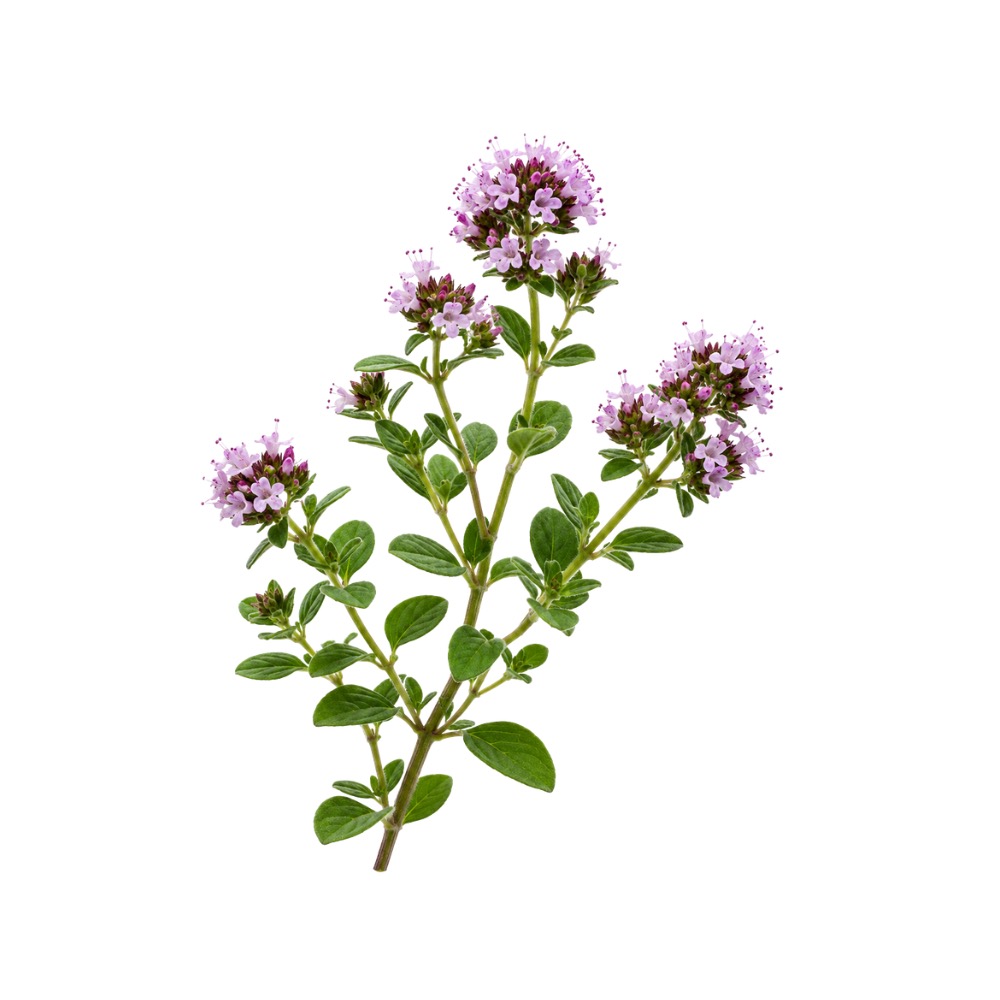
Marjoram is a sweet, aromatic Mediterranean herb of the mint family, used in cooking and as a tea for digestion, cramps and nervous tension. Its essential oil is rich in terpinen-4-ol and sabinene hydrate, and its leaves in rosmarinic acid.
What Is Marjoram?
Sweet marjoram is an aromatic herb of the mint family, grown worldwide for its sweet, mild leaves. It is used first as a kitchen herb, and as a tea for digestion, cramps, coughs and nervous tension.
Origanum majorana is a small, bushy subshrub with soft, grey-green leaves. It is native to the eastern Mediterranean and is cultivated across Europe, North Africa and Asia 1,
Its essential oil is rich in terpinen-4-ol and sabinene hydrate, and its leaves carry rosmarinic acid 1Reference 1ReviewSweet Marjoram: A Review of Ethnopharmacology, Phytochemistry, and Biological Activities — reviewView study →. Small human trials have tested marjoram tea in polycystic ovary syndrome and Parkinson’s disease, and the inhaled oil for stress 4,
Marjoram is a close relative of oregano (Origanum vulgare), with a milder, sweeter aroma.
How Is Marjoram Used?
Marjoram is used mostly as a culinary herb, fresh or dried.
- Tea — the dried leaf and flowering top, infused in hot water, for digestion, cramps, coughs and tension. In the clinical trials the tea was drunk once or twice a day 4,
5Reference 4RCTEffect of Origanum majorana tea on oxidative stress biomarkers in Parkinson’s disease: a randomised placebo-controlled pilot study — randomised controlled trialView study →Reference 5RCTThe effect of marjoram (Origanum majorana) tea on the hormonal profile of women with polycystic ovary syndrome: a randomised controlled pilot study — randomised controlled trialView study → . - Essential oil — used in aromatherapy, inhaled or diluted in a carrier oil on the skin. It is not taken internally.
Traditional Uses
Western Herbal Medicine
The dried leaf and flowering top are taken as an infusion. Marjoram is given as a carminative for gas, bloating and digestive cramps, as a mild nervine for tension and sleeplessness, as an antispasmodic for menstrual and muscle cramps, and as a warming remedy for coughs and colds.
In English folk use the leaves were taken for colds, bronchial coughs and whooping cough 1Reference 1ReviewSweet Marjoram: A Review of Ethnopharmacology, Phytochemistry, and Biological Activities — reviewView study →.
Persian Medicine
In traditional Iranian medicine the leaves are used as a carminative, an antitussive, an antiseptic and an antidote. They are also taken for digestive disorders, headache, epilepsy, melancholy with flatulence, facial paralysis, ear pain, shortness of breath, heart pain and irregular heartbeat, and to bring on menstruation 1Reference 1ReviewSweet Marjoram: A Review of Ethnopharmacology, Phytochemistry, and Biological Activities — reviewView study →.
Middle Eastern & North African Folk Medicine
In Morocco marjoram is used for infant colic, abdominal discomfort and diarrhoea, and the leaves as a remedy for high blood pressure 1,
It is reputed in local folk medicine to restore hormonal balance and regulate the menstrual cycle 5,
In Turkey the essential oil is used for asthma, indigestion, headache and rheumatism, and in Azerbaijan for flatulence and nervousness and as a diuretic and sedative 1Reference 1ReviewSweet Marjoram: A Review of Ethnopharmacology, Phytochemistry, and Biological Activities — reviewView study →.
Indian Folk Medicine
In India marjoram essential oil is used for toothache and to soothe sore joints and muscles 1Reference 1ReviewSweet Marjoram: A Review of Ethnopharmacology, Phytochemistry, and Biological Activities — reviewView study →.
Indications
- Indigestion, gas and bloating [leaf, flowering top; Western herbal medicine, Persian medicine]
- Abdominal colic and diarrhoea [leaf; Moroccan and Egyptian folk use]
- Menstrual cramps and irregular periods [leaf; Western herbal medicine, Persian medicine]
- Polycystic ovary syndrome [leaf tea] Caution: In a one-month pilot trial in 25 women, the tea lowered DHEA-S compared with placebo (P = 0.05), but the fall in fasting insulin was not significant against placebo 5.
- Nervous tension and poor sleep [leaf; Western herbal medicine]
- Anxiety and stress [essential oil, inhaled] Caution: In the one trial, nurses who inhaled marjoram oil were less anxious after their shift than before, but no less anxious than the control group 7.
- Coughs and colds [leaf; Western herbal medicine, Egyptian folk use]
- Headache, muscle and joint pain [essential oil; Turkish and Indian folk use]
Botany
Sweet marjoram is a small, bushy subshrub in the mint family (Lamiaceae) 1,
The stems are covered in fine grey hairs that point upward 31Reference 31Origanum majorana LView study →. The leaves are small, up to 25 mm long, oblong to almost round and blunt-tipped. They are greyish-white with short, flat-lying hairs and grow on short stalks 31Reference 31Origanum majorana LView study →.
The flowers are held in compact, rounded or four-sided spikes about 6 mm long, among broad, greyish-white, gland-dotted bracts 31Reference 31Origanum majorana LView study →. The small flowers are white, 3–7 mm long, and open in summer 30,
Distribution
Sweet marjoram has a small native range in the eastern Mediterranean. The Flora of Pakistan treats it as native only to Cyprus, while other sources extend its range to Turkey and the countries around the Mediterranean 1,
It is cultivated as a culinary herb in many countries of Europe, North Africa and Asia, including Spain, Hungary, Portugal, Germany, Egypt, Poland and France 1Reference 1ReviewSweet Marjoram: A Review of Ethnopharmacology, Phytochemistry, and Biological Activities — reviewView study →. It is a tender perennial that rarely survives winter north of USDA zone 9, so in cooler climates it is grown as an annual 30Reference 30Origanum majorana (sweet marjoram) — description, native range, hardiness and cultivation — [species database]View study →.
Growing Conditions
Cultivation snapshot for Marjoram
Lifetender perennial (USDA zones 9–10); grown as a warm-season annual in cooler zones.
Waterdry-to-medium, well-drained soil; dislikes wet feet.
Habitcompact mound; pinch to keep bushy and delay flowering.
Grow it yourself
Farm Wiki is our cultivation-focused sister site, also run by Justin Cooke.
Pharmacology & Research
Sweet marjoram has a few dozen preclinical studies and a small group of human pilot trials. Two tested marjoram tea in Parkinson’s disease, one tested it in polycystic ovary syndrome, and one tested a marjoram-and-cinnamon tea in the same condition. A further trial tested the inhaled essential oil for stress in nurses 4,
Antioxidant and anti-inflammatory activity recur across the animal models, linked to rosmarinic acid and the terpinen-4-ol-rich oil 1,
The anticancer, antimicrobial and inhaled-anxiety results come from the essential oil. The PCOS and Parkinson’s trials used the tea.
-
Best-supported: antioxidant activity, confirmed in a placebo-controlled human trial of the tea 4Reference 4RCTEffect of Origanum majorana tea on oxidative stress biomarkers in Parkinson’s disease: a randomised placebo-controlled pilot study — randomised controlled trialView study →; hormonal/metabolic benefit in PCOS, with a human pilot RCT plus replicated rodent models 5,
9, ; broad anti-inflammatory activity across multiple animal models 12,10Reference 5RCTThe effect of marjoram (Origanum majorana) tea on the hormonal profile of women with polycystic ovary syndrome: a randomised controlled pilot study — randomised controlled trialView study →Reference 9AnimalThe ameliorative effects of marjoram in dehydroepiandrosterone-induced polycystic ovary syndrome in rats — animal modelView study →Reference 10AnimalProtective effect of marjoram against letrozole-induced ovarian damage in rats with polycystic ovarian syndrome (Nrf2 activation, NF-κB suppression) — animal modelView study → 13, .14Reference 12AnimalPhytochemical analysis of Origanum majorana L. extract and its antioxidant, anti-inflammatory and immunomodulatory effects against experimentally induced colitis, downregulating Th17 cells — animal modelView study →Reference 13AnimalAntioxidant and anti-inflammatory effects of Origanum majorana L. methanolic extract on bile-duct ligation in male rats — animal modelView study →Reference 14AnimalOriganum majorana L. extract protects against isoproterenol-induced cardiotoxicity in rats — animal modelView study → -
Emerging, worth watching: neuroprotective and cognitive signals via acetylcholinesterase inhibition 18,
19, ; gastroprotective/antiulcer activity 17Reference 17AnimalProtective effect of Origanum majorana L. ‘Marjoram’ on various models of gastric mucosal injury in rats — animal modelView study →.20Reference 18AnimalOriganum majorana L. protects against neuroinflammation-mediated cognitive impairment: a phyto-pharmacological study — animal modelView study →Reference 19AnimalNeuroprotective potential of Origanum majorana L. essential oil against scopolamine-induced memory deficits and oxidative stress in a zebrafish model — animal modelView study →Reference 20In vitroInhibitory effect of ursolic acid purified from Origanum majorana L. on the acetylcholinesterase — in vitroView study → -
Mechanistically thin: anticancer and antimicrobial effects rest almost entirely on the essential oil in cell lines — a preparation the herb isn’t used as 22,
23, .24Reference 22In vitroOriganum majorana essential oil decreases lung tumor growth and metastasis in vitro and in vivo — animal modelView study →Reference 23In vitroOriganum majorana essential oil triggers p38-MAPK-mediated protective autophagy, apoptosis and caspase-dependent cleavage of P70S6K in colorectal cancer cells — in vitroView study →Reference 24In vitroPhenolic compounds from Origanum majorana with biofilm-inhibitory activity against methicillin-resistant Staphylococcus aureus and Escherichia coli strains — in vitroView study → - The caveat: there is no established therapeutic dose, no pharmacopoeial monograph, and the strongest cell-line results use the oil, not the tea.
The tea and the essential oil are different materials. A drunk tea and a concentrated oil do not carry the same compounds in the same amounts, and a result for one does not transfer to the other.
1. Antioxidant
In a randomised, double-blind, placebo-controlled pilot trial in people with Parkinson’s disease, 30 drank rosmarinic acid-rich marjoram tea and 25 a placebo tea once daily for 30 days. The tea group had higher superoxide dismutase and catalase and lower carbonylated (oxidatively damaged) proteins than the placebo group at the end 4Reference 4RCTEffect of Origanum majorana tea on oxidative stress biomarkers in Parkinson’s disease: a randomised placebo-controlled pilot study — randomised controlled trialView study →.
Methanolic and aqueous leaf extracts show strong free-radical scavenging in DPPH, ABTS and FRAP assays 1Reference 1ReviewSweet Marjoram: A Review of Ethnopharmacology, Phytochemistry, and Biological Activities — reviewView study →. The same antioxidant effect appears in marjoram’s protection against cisplatin- and ciprofloxacin-induced kidney damage 15,
Gap: The human trial was a small pilot (n = 55) in one disease population; there is no dose-ranging or general-population antioxidant trial.
2. PCOS & Hormonal Balance
In a randomised, double-blind, placebo-controlled pilot trial, 25 women with polycystic ovary syndrome drank marjoram tea (14) or a placebo tea (11) twice daily for one month. The tea lowered DHEA-S, an adrenal androgen, compared with placebo (P = 0.05). Fasting insulin fell within the tea group, but not significantly against placebo (P = 0.08), and HOMA-IR insulin resistance improved against placebo without a significant fall within the group 5Reference 5RCTThe effect of marjoram (Origanum majorana) tea on the hormonal profile of women with polycystic ovary syndrome: a randomised controlled pilot study — randomised controlled trialView study →.
A second pilot trial gave 60 women a marjoram-and-cinnamon tea or a placebo tea twice daily for three months, and 36 completed it. FSH rose and anti-Müllerian hormone fell in the tea group, but AMH also fell in the placebo group. No major side effects were reported 8Reference 8RCTSafety and effectiveness of marjoram and cinnamon herbal tea supplementation in managing polycystic ovary syndrome: a pilot randomised, double-blind, controlled trial — randomised controlled trialView study →.
In rat models of PCOS induced by DHEA or letrozole, marjoram extract improved the hormonal profile, raised adiponectin (a marker of insulin sensitivity), raised ovarian antioxidant enzymes and lowered inflammation. The letrozole study traced the effect to Nrf2 activation and NF-κB suppression 9,
Gap: Both human trials are small pilots, one of them testing a two-herb combination, and no trial has measured clinical endpoints such as ovulation or cycle regularity.
3. Anti-Inflammatory
In acetic-acid-induced ulcerative colitis in rats, a methanolic extract suppressed NF-κB, TNF-α, IL-1β, IL-6 and COX-2, downregulated the JAK2/STAT3 axis and the Th17 response, and acted through Nrf2/HO-1. The extract and the drug sulfasalazine both improved the disease activity index 12Reference 12AnimalPhytochemical analysis of Origanum majorana L. extract and its antioxidant, anti-inflammatory and immunomodulatory effects against experimentally induced colitis, downregulating Th17 cells — animal modelView study →.
In isoproterenol cardiotoxicity in rats it lowered CRP, IL-6, IL-13 and TNF-α 14Reference 14AnimalOriganum majorana L. extract protects against isoproterenol-induced cardiotoxicity in rats — animal modelView study →, and in LPS-induced neuroinflammation in mice it reduced COX-2 in the brain 18Reference 18AnimalOriganum majorana L. protects against neuroinflammation-mediated cognitive impairment: a phyto-pharmacological study — animal modelView study →. In bile-duct-ligated rats, of the inflammatory and fibrosis genes measured, it significantly reduced only TGF-β 13Reference 13AnimalAntioxidant and anti-inflammatory effects of Origanum majorana L. methanolic extract on bile-duct ligation in male rats — animal modelView study →.
Rosmarinic acid and its derivatives are the main phenolics of the extract, and rosmarinic acid on its own protected microglial cells from oxidative stress 18Reference 18AnimalOriganum majorana L. protects against neuroinflammation-mediated cognitive impairment: a phyto-pharmacological study — animal modelView study →.
Every dataset is rodent or cell-based, at extract doses (often 100–500 mg/kg) far above culinary intake, with no human trial for any inflammatory condition.
4. Gastroprotective
In rats, an ethanol extract at 250 and 500 mg/kg reduced gastric ulcers caused by cold-restraint stress, indomethacin, ethanol, concentrated salt and sodium hydroxide. It lowered basal acid secretion, replenished protective gastric mucus and non-protein sulfhydryls, and lowered lipid peroxidation. An acute toxicity test in mice showed a wide margin of safety 17Reference 17AnimalProtective effect of Origanum majorana L. ‘Marjoram’ on various models of gastric mucosal injury in rats — animal modelView study →.
A methanol extract of the herb inhibited Helicobacter pylori in vitro at an MIC of 50 µg/mL 25Reference 25In vitroIn vitro susceptibility of Helicobacter pylori to botanical extracts used traditionally for the treatment of gastrointestinal disorders — in vitroView study →, and the essential oil was more potent, at 11.4 µg/mL 26Reference 26In vitroGC/MS analysis and potential synergistic effect of mandarin and marjoram oils on Helicobacter pylori — in vitroView study →.
All of it is preclinical at doses far above tea strength, and the H. pylori work is test-tube only.
5. Neuroprotective & Cognitive
In a screen of 139 herbs and spices, marjoram ethanol extract was the strongest acetylcholinesterase (AChE) inhibitor, and the activity was traced to ursolic acid 20Reference 20In vitroInhibitory effect of ursolic acid purified from Origanum majorana L. on the acetylcholinesterase — in vitroView study →.
The essential oil improved memory and inhibited AChE in a scopolamine-amnesia zebrafish model 19Reference 19AnimalNeuroprotective potential of Origanum majorana L. essential oil against scopolamine-induced memory deficits and oxidative stress in a zebrafish model — animal modelView study →.
A hydroalcoholic extract, given by injection, protected mice against LPS-induced neuroinflammation and memory loss, reducing astrogliosis and COX-2 18Reference 18AnimalOriganum majorana L. protects against neuroinflammation-mediated cognitive impairment: a phyto-pharmacological study — animal modelView study →.
In a Parkinson’s disease pilot trial in which 51 of 60 patients completed 30 days, marjoram tea improved non-motor symptom and depression scores. The motor score did not change significantly (p = 0.07) 6Reference 6RCTThe effect of Origanum majorana tea on motor and non-motor symptoms in patients with idiopathic Parkinson’s disease: a randomised controlled pilot study — randomised controlled trialView study →.
Gap: The human trial improved secondary endpoints only, and the AChE and cognition work is entirely animal, in vitro or on the essential oil.
6. Anxiolytic & Stress
In a randomised controlled trial, 57 nurses in a COVID-19 intensive care unit inhaled 3% marjoram essential oil (29) or almond oil (28) for two hours during a shift. State anxiety and anxiety ratings did not differ between the groups after the shift. Within the marjoram group, state anxiety, anxiety ratings and stress ratings were lower after the shift than before, and heart rate rose slightly 7Reference 7RCTInhalation of Origanum majorana L. essential oil while working reduces perceived stress and anxiety levels of nurses in a COVID-19 intensive care unit — randomised controlled trialView study →.
The trial tested inhaled essential oil, not the tea or the culinary herb.
Gap: A single small trial of essential-oil inhalation, with no difference from control; no study of the tea or oral herb for anxiety.
7. Hepatoprotective
In bile-duct-ligation cholestasis in rats, a methanolic extract (300 mg/kg for 7 days) raised catalase and reduced the fibrosis marker TGF-β. It lowered ALT and AST, but not significantly, and had a minor effect on liver histology. The authors described the effect as moderate 13Reference 13AnimalAntioxidant and anti-inflammatory effects of Origanum majorana L. methanolic extract on bile-duct ligation in male rats — animal modelView study →.
A toxicology study reported lower ALT, AST and LDH in treated rats 28Reference 28In vitroToxicological assessment of Origanum majorana L.: evaluation of its cytotoxicity, genotoxicity and acute oral toxicity — animal model / in vitroView study →.
Gap: The main study was partly null on the key liver enzymes; no human data exist.
8. Antispasmodic & Antidiarrheal
In isolated mouse and rat intestine, an aqueous marjoram extract relaxed intestinal smooth muscle, blocked forskolin-driven chloride secretion and stimulated sodium (and so water) absorption, each in a concentration-dependent way 21Reference 21In vitroOriganum majorana L. extract exhibits positive cooperative effects on the main mechanisms involved in acute infectious diarrhea — in vitro / ex vivoView study →. Moroccan folk medicine uses the herb for infant colic, abdominal discomfort and diarrhoea 21Reference 21In vitroOriganum majorana L. extract exhibits positive cooperative effects on the main mechanisms involved in acute infectious diarrhea — in vitro / ex vivoView study →.
This is tissue-bath pharmacology; no whole-animal or human antidiarrhoeal trial has been done.
9. Anticancer
Marjoram essential oil reduced the viability and colony growth of two human non-small-cell lung cancer lines, partly through caspase-dependent cell death and survivin downregulation. It slowed xenograft tumour growth and lymph-node metastasis in mice, and three months of treatment did not affect blood, liver or kidney function 22Reference 22In vitroOriganum majorana essential oil decreases lung tumor growth and metastasis in vitro and in vivo — animal modelView study →.
In colorectal cancer cells the oil triggered p38-MAPK-mediated apoptosis and protective autophagy 23Reference 23In vitroOriganum majorana essential oil triggers p38-MAPK-mediated protective autophagy, apoptosis and caspase-dependent cleavage of P70S6K in colorectal cancer cells — in vitroView study →.
Gap: All data are from cell lines and mice using the essential oil, not the tea or culinary herb, and there is no human evidence.
10. Antimicrobial
A methanol leaf extract inhibited a panel of bacteria and fungi 27Reference 27In vitroAntimicrobial activity of methanol extract of Origanum majorana L. (Sweet marjoram) — in vitroView study →.
Isolated phenolics including arbutin and rosmarinic acid inhibited biofilm formation and efflux pumps in MRSA and E. coli 24Reference 24In vitroPhenolic compounds from Origanum majorana with biofilm-inhibitory activity against methicillin-resistant Staphylococcus aureus and Escherichia coli strains — in vitroView study →.
The herb and its oil inhibited H. pylori 25,
The essential oil is consistently more potent than the water-soluble herb. The work is in vitro, with no infection model and no clinical data.
Mechanisms
Marjoram’s leaf is rich in rosmarinic acid, a phenolic acid shared with rosemary, sage and other culinary mints. It has been studied for free-radical scavenging and for lowering NF-κB and COX-2 activity in animal models.
The essential oil is a separate chemistry of monoterpenes such as terpinen-4-ol. The anticancer and antimicrobial findings come from the oil, while the gut-relaxing effect was measured with a water extract.
| Mechanism | Drives | Key compounds |
|---|---|---|
| Free-radical scavenging, ↑SOD/catalase/GSH, ↓MDA | antioxidantnephroprotectioncardioprotection | rosmarinic acid, caffeic acid |
| NF-κB ↓, COX-2 ↓, TNF-α/IL-6 ↓, Nrf2/HO-1 ↑ | anti-inflammatoryhepatoprotectivePCOS | rosmarinic acid, leaf extract |
| Acetylcholinesterase inhibition | neuroprotectivecognitive | ursolic acid, essential oil |
| Smooth-muscle relaxation, ↓Cl⁻ secretion, ↑Na⁺ absorption | antispasmodicantidiarrhealcarminative | aqueous extract (Ca²⁺-channel mediated) |
| Caspase-dependent apoptosis, p38-MAPK, survivin ↓ | anticancer (preclinical) | essential-oil monoterpenes |
| Insulin sensitisation (↑adiponectin), androgen ↓ | PCOSmetabolic | leaf tea and extract |
Clinical Trials
The published human trials are small pilots: three of marjoram tea (one in PCOS and two in Parkinson’s disease), one of a marjoram-and-cinnamon tea for PCOS, and one of the inhaled oil for workplace stress 4,
| Completed | Planned | Terminated | Preclinical |
|---|---|---|---|
| 6 | 1 | 0 | ~60 |
Last checked: August 2026.
Phytochemistry
Marjoram’s essential oil is dominated by two oxygenated monoterpenes, terpinen-4-ol and cis-sabinene hydrate 1,
The oil’s make-up varies. An Egyptian marjoram oil was 36% trans-sabinene hydrate and 18% terpinen-4-ol, with linalyl acetate at 9% and caryophyllene oxide at 8% 26Reference 26In vitroGC/MS analysis and potential synergistic effect of mandarin and marjoram oils on Helicobacter pylori — in vitroView study →.
The leaves carry phenolic acids, among them rosmarinic acid and caffeic acid, together with flavonoids such as apigenin and the phenolic glycoside arbutin 1Reference 1ReviewSweet Marjoram: A Review of Ethnopharmacology, Phytochemistry, and Biological Activities — reviewView study →. Rosmarinic acid and its derivatives are the main phenolics in a hydroalcoholic leaf extract 18Reference 18AnimalOriganum majorana L. protects against neuroinflammation-mediated cognitive impairment: a phyto-pharmacological study — animal modelView study →.
Constituent Summary
Figures are share of leaf essential oil and vary with origin and growth stage; the phenolic acids are qualitative 1,
Monoterpene6 compounds5 with data
Sesquiterpene1 compoundno data
Dosage
Marjoram is taken in culinary amounts and as a tea made from the dried leaf. In the clinical trials the tea was drunk once or twice a day for one to three months 4,
The essential oil is a different, far more concentrated material. It is used diluted in a carrier oil on the skin or inhaled, and is not taken internally.
Safety & Pregnancy
As a culinary herb and tea, marjoram is very low-risk and well tolerated. The essential oil should not be swallowed, and concentrated extracts are best kept to modest doses.
- Essential oil. Dilute the oil for use on the skin, and do not swallow it.
- ★ Concentrated extracts. A methanolic leaf extract caused dose-dependent DNA damage in fibroblast cells, although the same extract caused no deaths or visible toxicity in rats at up to 2,000 mg/kg 28Reference 28In vitroToxicological assessment of Origanum majorana L.: evaluation of its cytotoxicity, genotoxicity and acute oral toxicity — animal model / in vitroView study →.
- Pregnancy and breastfeeding. Culinary amounts are fine. Avoid the essential oil and high medicinal doses 1Reference 1ReviewSweet Marjoram: A Review of Ethnopharmacology, Phytochemistry, and Biological Activities — reviewView study →.
- Culinary use is very safe. No serious side effects were reported in the small human tea trials 4,
5, .6, 8Reference 4RCTEffect of Origanum majorana tea on oxidative stress biomarkers in Parkinson’s disease: a randomised placebo-controlled pilot study — randomised controlled trialView study →Reference 5RCTThe effect of marjoram (Origanum majorana) tea on the hormonal profile of women with polycystic ovary syndrome: a randomised controlled pilot study — randomised controlled trialView study →Reference 6RCTThe effect of Origanum majorana tea on motor and non-motor symptoms in patients with idiopathic Parkinson’s disease: a randomised controlled pilot study — randomised controlled trialView study →Reference 8RCTSafety and effectiveness of marjoram and cinnamon herbal tea supplementation in managing polycystic ovary syndrome: a pilot randomised, double-blind, controlled trial — randomised controlled trialView study →
Full Safety & Interactions Detail
The culinary herb and tea. Marjoram is very low-risk as a food and a dried-leaf tea. No serious side effects were reported in the small human trials of the tea 4,
Concentrated extracts. In an OECD-guideline acute oral toxicity study, a methanolic leaf extract caused no deaths or visible toxicity in rats at up to 2,000 mg/kg, with liver and kidney function preserved. This places it in GHS Category 5, the lowest acute-hazard class. In the same study, comet and micronucleus tests on fibroblast cells showed dose-dependent DNA damage, and the authors placed the extract in GHS Category 2 for germ-cell mutagenicity 28Reference 28In vitroToxicological assessment of Origanum majorana L.: evaluation of its cytotoxicity, genotoxicity and acute oral toxicity — animal model / in vitroView study →. This applies to concentrated extracts at high doses, not to cooking or tea.
The essential oil. The oil is far more concentrated than the herb. Use it diluted in a carrier oil or by inhalation, and do not take it internally.
Blood thinners. Marjoram extracts inhibited platelet adhesion and aggregation in laboratory tests 1Reference 1ReviewSweet Marjoram: A Review of Ethnopharmacology, Phytochemistry, and Biological Activities — reviewView study →. No study has looked at the herb alongside anticoagulant drugs, and no clinical drug-interaction study of marjoram exists.
Avoid concentrated forms. Culinary amounts of marjoram are part of a normal diet. Marjoram is traditionally used to bring on menstruation, so high medicinal doses are best avoided in pregnancy, and the essential oil should not be used during pregnancy or while breastfeeding 1Reference 1ReviewSweet Marjoram: A Review of Ethnopharmacology, Phytochemistry, and Biological Activities — reviewView study →.
No human study has looked at marjoram in pregnancy or breastfeeding.
References
- Bina, F., & Rahimi, R. (2017). Sweet Marjoram: A Review of Ethnopharmacology, Phytochemistry, and Biological Activities — review. Journal of Evidence-Based Complementary & Alternative Medicine. https://pubmed.ncbi.nlm.nih.gov/27231340/
- Vági, E., Simándi, B., Suhajda, Á., & Héthelyi, É. (2005). Essential oil composition and antimicrobial activity of Origanum majorana L. extracts obtained with supercritical carbon dioxide. Food Research International, 38(1), 51–57. doi:10.1016/j.foodres.2004.07.006
- Bouyahya, A., et al. (2021). Traditional use, phytochemistry, toxicology, and pharmacology of Origanum majorana L. — review. Journal of Ethnopharmacology. https://pubmed.ncbi.nlm.nih.gov/32882360/
- Chbili, C., et al. (2025). Effect of Origanum majorana tea on oxidative stress biomarkers in Parkinson’s disease: a randomised placebo-controlled pilot study — randomised controlled trial. Neuroscience. https://pubmed.ncbi.nlm.nih.gov/41052623/
- Haj-Husein, I., Tukan, S., & Alkazaleh, F. (2016). The effect of marjoram (Origanum majorana) tea on the hormonal profile of women with polycystic ovary syndrome: a randomised controlled pilot study — randomised controlled trial. Journal of Human Nutrition and Dietetics. https://pubmed.ncbi.nlm.nih.gov/25662759/
- Chbili, C., et al. (2021). The effect of Origanum majorana tea on motor and non-motor symptoms in patients with idiopathic Parkinson’s disease: a randomised controlled pilot study — randomised controlled trial. Parkinsonism & Related Disorders. https://pubmed.ncbi.nlm.nih.gov/34455218/
- Lee, S. W., Shin, Y. K., Lee, J. M., & Seol, G. H. (2023). Inhalation of Origanum majorana L. essential oil while working reduces perceived stress and anxiety levels of nurses in a COVID-19 intensive care unit — randomised controlled trial. Frontiers in Psychiatry. https://pubmed.ncbi.nlm.nih.gov/38045619/
- Majeed, N. G., et al. (2025). Safety and effectiveness of marjoram and cinnamon herbal tea supplementation in managing polycystic ovary syndrome: a pilot randomised, double-blind, controlled trial — randomised controlled trial. Annals of Medicine and Surgery. https://pubmed.ncbi.nlm.nih.gov/41377384/
- Rababa’h, A. M., Matani, B. R., & Ababneh, M. A. (2020). The ameliorative effects of marjoram in dehydroepiandrosterone-induced polycystic ovary syndrome in rats — animal model. Life Sciences. https://pubmed.ncbi.nlm.nih.gov/32877649/
- Al-Harbi, L. N., et al. (2025). Protective effect of marjoram against letrozole-induced ovarian damage in rats with polycystic ovarian syndrome (Nrf2 activation, NF-κB suppression) — animal model. Pharmaceuticals. https://pubmed.ncbi.nlm.nih.gov/41011162/
- Elfiky, A. M., et al. (2025). Exploring the therapeutic potential of marjoram (Origanum majorana L.) in polycystic ovary syndrome: serum metabolomics, network pharmacology and experimental validation — animal model. BMC Complementary Medicine and Therapies. https://pubmed.ncbi.nlm.nih.gov/39984989/
- Taha, M., et al. (2023). Phytochemical analysis of Origanum majorana L. extract and its antioxidant, anti-inflammatory and immunomodulatory effects against experimentally induced colitis, downregulating Th17 cells — animal model. Journal of Ethnopharmacology. https://pubmed.ncbi.nlm.nih.gov/37348796/
- Gheitasi, I., et al. (2021). Antioxidant and anti-inflammatory effects of Origanum majorana L. methanolic extract on bile-duct ligation in male rats — animal model. Evidence-Based Complementary and Alternative Medicine. https://pubmed.ncbi.nlm.nih.gov/34035827/
- Rababa’h, A. M., & Alzoubi, M. A. (2021). Origanum majorana L. extract protects against isoproterenol-induced cardiotoxicity in rats — animal model. Cardiovascular Toxicology. https://pubmed.ncbi.nlm.nih.gov/33786740/
- Soliman, A. M., et al. (2016). Origanum majorana attenuates nephrotoxicity of cisplatin anticancer drug through ameliorating oxidative stress — animal model. Nutrients. https://pubmed.ncbi.nlm.nih.gov/27164131/
- Hussein, Z., & Yasir, S. M. (2022). Origanum majorana attenuates ciprofloxacin-induced nephropathy in rats — animal model. Wiadomości Lekarskie. https://pubmed.ncbi.nlm.nih.gov/36723325/
- Al-Howiriny, T., et al. (2009). Protective effect of Origanum majorana L. ‘Marjoram’ on various models of gastric mucosal injury in rats — animal model. American Journal of Chinese Medicine. https://pubmed.ncbi.nlm.nih.gov/19606513/
- Wagdy, R., et al. (2023). Origanum majorana L. protects against neuroinflammation-mediated cognitive impairment: a phyto-pharmacological study — animal model. BMC Complementary Medicine and Therapies. https://pubmed.ncbi.nlm.nih.gov/37210483/
- Brinza, I., et al. (2025). Neuroprotective potential of Origanum majorana L. essential oil against scopolamine-induced memory deficits and oxidative stress in a zebrafish model — animal model. Biomolecules. https://pubmed.ncbi.nlm.nih.gov/39858532/
- Chung, Y. K., et al. (2001). Inhibitory effect of ursolic acid purified from Origanum majorana L. on the acetylcholinesterase — in vitro. Molecules and Cells. https://pubmed.ncbi.nlm.nih.gov/11355692/
- Makrane, H., et al. (2019). Origanum majorana L. extract exhibits positive cooperative effects on the main mechanisms involved in acute infectious diarrhea — in vitro / ex vivo. Journal of Ethnopharmacology. https://pubmed.ncbi.nlm.nih.gov/30217790/
- Arafat, K., et al. (2022). Origanum majorana essential oil decreases lung tumor growth and metastasis in vitro and in vivo — animal model. Biomedicine & Pharmacotherapy. https://pubmed.ncbi.nlm.nih.gov/36182733/
- Athamneh, K., et al. (2020). Origanum majorana essential oil triggers p38-MAPK-mediated protective autophagy, apoptosis and caspase-dependent cleavage of P70S6K in colorectal cancer cells — in vitro. Biomolecules. https://pubmed.ncbi.nlm.nih.gov/32155920/
- Kincses, A., et al. (2025). Phenolic compounds from Origanum majorana with biofilm-inhibitory activity against methicillin-resistant Staphylococcus aureus and Escherichia coli strains — in vitro. Pharmaceutical Biology. https://pubmed.ncbi.nlm.nih.gov/40457736/
- Mahady, G. B., et al. (2005). In vitro susceptibility of Helicobacter pylori to botanical extracts used traditionally for the treatment of gastrointestinal disorders — in vitro. Phytotherapy Research. https://pubmed.ncbi.nlm.nih.gov/16317658/
- Elkousy, R. H., et al. (2022). GC/MS analysis and potential synergistic effect of mandarin and marjoram oils on Helicobacter pylori — in vitro. Journal of Enzyme Inhibition and Medicinal Chemistry. https://pubmed.ncbi.nlm.nih.gov/35642325/
- Leeja, L., & Thoppil, J. E. (2007). Antimicrobial activity of methanol extract of Origanum majorana L. (Sweet marjoram) — in vitro. Journal of Environmental Biology. https://pubmed.ncbi.nlm.nih.gov/17718003/
- Beceren, A., et al. (2025). Toxicological assessment of Origanum majorana L.: evaluation of its cytotoxicity, genotoxicity and acute oral toxicity — animal model / in vitro. International Journal of Molecular Sciences. https://pubmed.ncbi.nlm.nih.gov/41096727/
- Méabed, E. M. H., et al. (2018). Chemical analysis of aqueous extracts of Origanum majorana and Foeniculum vulgare and their efficacy on Blastocystis spp. cysts — in vitro. Phytomedicine. https://pubmed.ncbi.nlm.nih.gov/29747749/
- NC State Extension (n.d.). Origanum majorana (sweet marjoram) — description, native range, hardiness and cultivation — [species database]. North Carolina Extension Gardener Plant Toolbox. https://plants.ces.ncsu.edu/plants/origanum-majorana/
- Hedge IC (n.d.). Origanum majorana L. — species description and distribution — [flora]. In Flora of Pakistan (Labiatae). http://www.efloras.org/florataxon.aspx?flora_id=5&taxon_id=242423554



