
Materia Medica
Shepherd's Purse
Capsella bursa-pastoris
Shepherd's purse is a small, common weed of the mustard family, named for its flat, heart-shaped seedpods. Its flowering tops are a traditional remedy to stop bleeding, above all heavy menstrual bleeding, and are rich in flavonoids and amines such as choline.
What Is Shepherd’s Purse?
Shepherd’s purse is a small, common weed of the mustard family, named for the flat, heart-shaped seedpods strung along its stems. Its flowering tops are a traditional remedy to stop bleeding, above all heavy menstrual bleeding 2,
It grows on roadsides, in gardens and on field edges almost everywhere in the world, and it is said to be the second most common weed on Earth 24,
The herb carries flavonoids such as rutin and diosmin, and amines such as choline and acetylcholine 2Reference 2ReviewAssessment report on Capsella bursa-pastoris (L.) Medikus, herba — regulatory monograph (traditional use)View study →. One small trial has tested it for heavy menstrual bleeding, alongside a standard drug 1Reference 1RCTEffect of hydroalcoholic extracts of Capsella bursa-pastoris on heavy menstrual bleeding — a triple-blind, randomised, placebo-controlled clinical trialView study →.
How Is Shepherd’s Purse Used?
Shepherd’s purse is used as the fresh or dried flowering tops.
- Tea — an infusion of the dried aerial parts, taken for heavy periods and other bleeding 2,
23Reference 2ReviewAssessment report on Capsella bursa-pastoris (L.) Medikus, herba — regulatory monograph (traditional use)View study →Reference 23ReviewCommunity herbal monograph on Capsella bursa-pastoris (L.) Medikus, herba — regulatory monograph (traditional use; confirmed on periodic review, 2019)View study → . - Liquid extract — taken by mouth for the same uses 2,
23Reference 2ReviewAssessment report on Capsella bursa-pastoris (L.) Medikus, herba — regulatory monograph (traditional use)View study →Reference 23ReviewCommunity herbal monograph on Capsella bursa-pastoris (L.) Medikus, herba — regulatory monograph (traditional use; confirmed on periodic review, 2019)View study → . - Applied externally — an infusion or ointment for nosebleeds and small bleeding wounds 2Reference 2ReviewAssessment report on Capsella bursa-pastoris (L.) Medikus, herba — regulatory monograph (traditional use)View study →.
- As food — the young leaves are eaten raw or cooked 15,
26Reference 15AnimalAntihemorrhoidal activity of organic acids of Capsella bursa-pastoris on croton-oil-induced hemorrhoid in rats — rat modelView study →Reference 26Capsella bursa-pastoris — plant profile (habit, life cycle, origin, seedpods, edible parts)View study → .
Traditional Uses
Western Herbal Medicine
Shepherd’s purse is used in European herbal medicine to stop or slow bleeding. An infusion was described as cooling, diuretic and astringent, and was taken for bloody diarrhoea, piles, heavy periods, dropsy, bladder complaints and coughing up blood 2Reference 2ReviewAssessment report on Capsella bursa-pastoris (L.) Medikus, herba — regulatory monograph (traditional use)View study →. Its liquid extract was used in place of ergot to stop bleeding from the lungs, stomach, uterus and kidneys 2Reference 2ReviewAssessment report on Capsella bursa-pastoris (L.) Medikus, herba — regulatory monograph (traditional use)View study →.
Eclectic physicians in the United States used it for passive bleeding and for heavy, frequent periods 2Reference 2ReviewAssessment report on Capsella bursa-pastoris (L.) Medikus, herba — regulatory monograph (traditional use)View study →. The British Herbal Pharmacopoeia lists it for uterine bleeding, heavy periods and blood in the urine, and for cystitis 2Reference 2ReviewAssessment report on Capsella bursa-pastoris (L.) Medikus, herba — regulatory monograph (traditional use)View study →.
Applied externally, it was used for nosebleeds and bleeding wounds 2Reference 2ReviewAssessment report on Capsella bursa-pastoris (L.) Medikus, herba — regulatory monograph (traditional use)View study →. Folk medicine also uses it for painful periods, and it has been used to lower blood pressure 2Reference 2ReviewAssessment report on Capsella bursa-pastoris (L.) Medikus, herba — regulatory monograph (traditional use)View study →.
Traditional Chinese Medicine
In China shepherd’s purse (荠, qi) is eaten as a vegetable and used for eye diseases and dysentery 25Reference 25Y., Lu, L., Yang, G., Al-Shehbaz, I., & Dorofeev, VView study →. A decoction of the whole plant is taken for high blood pressure and to stop bleeding in the urine 2Reference 2ReviewAssessment report on Capsella bursa-pastoris (L.) Medikus, herba — regulatory monograph (traditional use)View study →.
It is valued for reducing fever, improving eyesight and calming the liver, and the Compendium of Materia Medica records it for cataract 12Reference 12In vitroCapsella bursa-pastoris extract alleviates cataract development by regulating the mitochondrial apoptotic pathway of lens epithelial cells — rat and in vitroView study →.
Tibetan Medicine
In Tibetan medicine shepherd’s purse is used to stop vomiting, for fluid retention, and for disorders of the kidneys, lungs and nerves 2Reference 2ReviewAssessment report on Capsella bursa-pastoris (L.) Medikus, herba — regulatory monograph (traditional use)View study →.
Indian Medicine
In Indian medicine it is used for heavy periods and bleeding from the kidneys and urinary tract, for diarrhoea and dysentery, and as a diuretic 2Reference 2ReviewAssessment report on Capsella bursa-pastoris (L.) Medikus, herba — regulatory monograph (traditional use)View study →.
Anatolian Folk Medicine
In Anatolia and the Middle East shepherd’s purse is widely used to treat haemorrhoids 15Reference 15AnimalAntihemorrhoidal activity of organic acids of Capsella bursa-pastoris on croton-oil-induced hemorrhoid in rats — rat modelView study →. In Hatay, in southern Turkey, a mixture of shepherd’s purse and Inula viscosa is used as an antiseptic and to stop bleeding 16Reference 16AnimalHemostatic effects of a traditional Inula viscosa and Capsella bursa-pastoris plant mixture extract on a rat liver parenchymal bleeding model — rat modelView study →.
Indications
- Heavy menstrual bleeding [aerial parts; Western herbal medicine, EU traditional use]
- Bleeding between periods [aerial parts; Western herbal medicine]
- Blood in the urine [aerial parts; Western herbal medicine, TCM]
- Nosebleeds and small bleeding wounds [aerial parts, applied externally; Western herbal medicine]
- Painful periods [aerial parts; European folk use]
- Cystitis and urinary complaints [aerial parts; Western herbal medicine]
- Fluid retention [aerial parts; Western herbal medicine, Tibetan medicine]
- Diarrhoea and dysentery [aerial parts; Indian medicine, TCM]
- Haemorrhoids [aerial parts; Anatolian folk use]
- Eye complaints [aerial parts; TCM]
- High blood pressure [aerial parts; TCM, Western herbal medicine] Caution: Given by injection to animals, the herb both lowered and raised blood pressure depending on the dose, and it contains the pressor amine tyramine. No study has tested it by mouth 2.
Botany
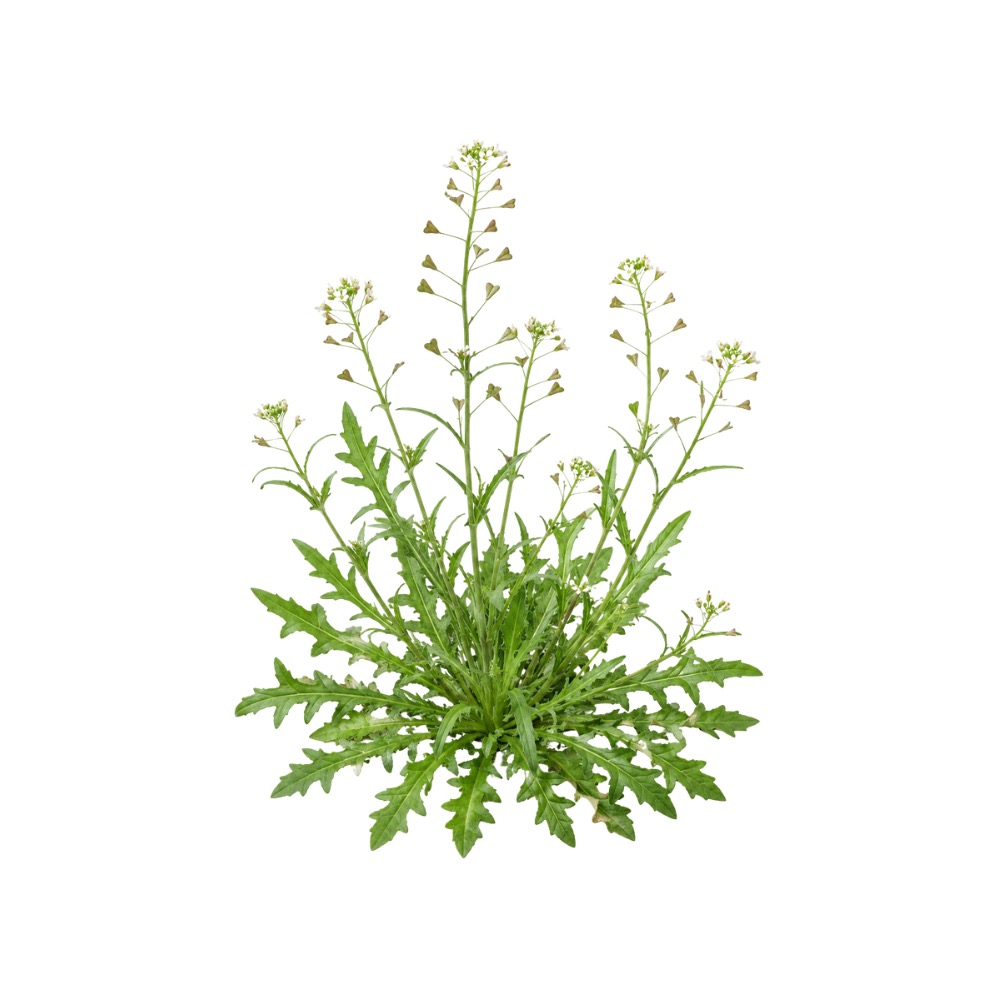
Shepherd’s purse is a small annual herb of the mustard family (Brassicaceae) 26Reference 26Capsella bursa-pastoris — plant profile (habit, life cycle, origin, seedpods, edible parts)View study →. It usually grows 10–50 cm tall, and the plant is covered in tiny star-shaped hairs 25Reference 25Y., Lu, L., Yang, G., Al-Shehbaz, I., & Dorofeev, VView study →.
Its seeds germinate in both spring and autumn, so it grows as a winter annual as well as a summer one 26Reference 26Capsella bursa-pastoris — plant profile (habit, life cycle, origin, seedpods, edible parts)View study →. It starts as a flat rosette of basal leaves 1.5–10 cm long, which may be deeply lobed, toothed or nearly entire 25Reference 25Y., Lu, L., Yang, G., Al-Shehbaz, I., & Dorofeev, VView study →.
The stem leaves are narrow and clasp the stem with an arrow-shaped base 25Reference 25Y., Lu, L., Yang, G., Al-Shehbaz, I., & Dorofeev, VView study →. The flowers are tiny, with four white petals 2–4 mm long, and are borne in loose clusters 25,
The fruit is a flat, triangular pod 4–9 mm long, notched at its broad top and held out on a slender stalk 25Reference 25Y., Lu, L., Yang, G., Al-Shehbaz, I., & Dorofeev, VView study →. This is the “purse” that gives the plant its name, likened to the leather purse of a medieval shepherd 26Reference 26Capsella bursa-pastoris — plant profile (habit, life cycle, origin, seedpods, edible parts)View study →. Each pod holds about 20 small brown seeds 26Reference 26Capsella bursa-pastoris — plant profile (habit, life cycle, origin, seedpods, edible parts)View study →.
Distribution
Shepherd’s purse is native to Europe and south-western Asia 25Reference 25Y., Lu, L., Yang, G., Al-Shehbaz, I., & Dorofeev, VView study →. It has spread as a weed to nearly every part of the world, including North and South America, Africa, Australia and the Pacific islands 24Reference 24Al-Shehbaz, I. A. (n.d.). Capsella bursa-pastoris (Linnaeus) Medikus — species description, habitat and distribution — flora. In Flora of North America Editorial Committee (eds.), Flora of North America North of Mexico, Vol. 7 (Brassicaceae). http://www.efloras.org/florataxon.aspx?flora_id=1&taxon_id=200009292View study →.
It grows on roadsides, in gardens, fields, lawns, orchards, vineyards and waste ground, and on mountain slopes, from sea level to 2,800 m 24Reference 24Al-Shehbaz, I. A. (n.d.). Capsella bursa-pastoris (Linnaeus) Medikus — species description, habitat and distribution — flora. In Flora of North America Editorial Committee (eds.), Flora of North America North of Mexico, Vol. 7 (Brassicaceae). http://www.efloras.org/florataxon.aspx?flora_id=1&taxon_id=200009292View study →.
Growing Conditions
Cultivation snapshot for Shepherd's Purse
- Thrives in full sun on open, disturbed or recently broken ground — it is a pioneer of bare soil rather than a plant you coddle.
- Tolerates a wide range of soils, from poor and compacted to rich; plants stay stunted on thin ground and grow tall and lush where soil is fertile.
- Self-sows freely and germinates readily in cool weather, making it a reliable winter-annual crop that mostly plants itself.
- Little to no care is needed; the main task is harvesting the flowering tops before the plant scatters its abundant seed.
Grow it yourself
Farm Wiki is our cultivation-focused sister site, also run by Justin Cooke.
Pharmacology & Research
Most research on shepherd’s purse is in cell cultures and rodents, using water or alcohol extracts of the aerial parts. Its chemistry, including flavonoids, phenolic acids, sulfur compounds and amines, has been mapped in detail 3Reference 3ReviewTraditional uses, bioactive compounds, and new findings on pharmacological, nutritional, cosmetic and biotechnology utility of Capsella bursa-pastoris — reviewView study →.
One small randomised trial has tested the herb for heavy menstrual bleeding, added to a standard drug 1Reference 1RCTEffect of hydroalcoholic extracts of Capsella bursa-pastoris on heavy menstrual bleeding — a triple-blind, randomised, placebo-controlled clinical trialView study →. The most consistent preclinical findings are antioxidant and anti-inflammatory activity 5,
In the European Union it is registered as a traditional herbal medicine for heavy menstrual bleeding, on the basis of long-standing use 23Reference 23ReviewCommunity herbal monograph on Capsella bursa-pastoris (L.) Medikus, herba — regulatory monograph (traditional use; confirmed on periodic review, 2019)View study →. It was recently added to the European Pharmacopoeia 3Reference 3ReviewTraditional uses, bioactive compounds, and new findings on pharmacological, nutritional, cosmetic and biotechnology utility of Capsella bursa-pastoris — reviewView study →.
-
Best-supported: reduction of heavy menstrual bleeding, from one adjunctive RCT plus long traditional and pharmacopoeial documentation 1,
2Reference 1RCTEffect of hydroalcoholic extracts of Capsella bursa-pastoris on heavy menstrual bleeding — a triple-blind, randomised, placebo-controlled clinical trialView study →Reference 2ReviewAssessment report on Capsella bursa-pastoris (L.) Medikus, herba — regulatory monograph (traditional use)View study → ; antioxidant and anti-inflammatory activity, replicated across cell and rodent models 5,8, .4Reference 5In vitroShepherd’s purse polyphenols exert anti-inflammatory and antioxidative effects by suppressing MAPK and NF-κB pathways and activating heme oxygenase-1 — in vitro and mouseView study →Reference 8In vitroPhytochemical constituents from the seeds of Capsella bursa-pastoris and their antioxidant activities — in vitroView study →Reference 4In vitroAnti-inflammatory and anti-superbacterial properties of sulforaphane from shepherd’s purse — in vitroView study → -
Emerging, worth watching: protection against doxorubicin-induced cardiotoxicity and against fructose- and cholesterol-driven liver/metabolic injury — both striking but preclinical 11,
13, .14Reference 11In vitroWater extract of Capsella bursa-pastoris mitigates doxorubicin-induced cardiotoxicity by upregulating antioxidant enzymes — in vitro and mouseView study →Reference 13AnimalWater extract of shepherd’s purse prevents high-fructose-induced liver injury by regulating glucolipid metabolism and gut microbiota — mouseView study →Reference 14In vitroThe cholesterol-lowering effect of Capsella bursa-pastoris is mediated via SREBP2- and HNF-1α-regulated PCSK9 inhibition in obese mice and HepG2 cells — mouse and in vitroView study → -
Mechanistically thin: diuretic and blood-pressure-lowering effects rest on a single old animal study and constituent-level inference (choline, acetylcholine, tyramine), not modern data 18,
22Reference 18AnimalStudies on Capsella bursa-pastoris II: diuretic, anti-inflammatory and anti-ulcer action of ethanol extracts of the herb — animal modelView study →Reference 22In vitroPhysiologically active substance in Capsella bursa-pastoris — animal/in vitroView study → . -
The caveat: no standardised dose, wide preparation variance, and — apart from the one bleeding trial — no human efficacy data. The antifungal shepherin peptides come from the root, not the aerial parts that are used medicinally 19,
20Reference 19In vitroZn(II) induces fibril formation and antifungal activity in shepherin I, an antimicrobial peptide from Capsella bursa-pastoris — in vitroView study →Reference 20In vitroChemical synthesis, structure–activity relationship and properties of shepherin I, a fungicidal peptide — in vitroView study → .
Results depend on the preparation. Fresh and dried herb, tea, tincture and standardised capsules differ widely, and an effect shown for one extract does not carry over to another.
1. Antihaemorrhagic
A 2018 triple-blind randomised trial (n=84, 42 per arm) tested the herb in women with heavy menstrual bleeding. All took mefenamic acid, plus either a hydroalcoholic Capsella extract capsule or placebo, for up to seven days a cycle over two cycles. Bleeding fell in both groups, and significantly more with Capsella (p<0.001) 1Reference 1RCTEffect of hydroalcoholic extracts of Capsella bursa-pastoris on heavy menstrual bleeding — a triple-blind, randomised, placebo-controlled clinical trialView study →.
Because the herb was added to an effective drug rather than tested alone, the trial shows an added benefit but cannot isolate the herb’s own effect, and the authors call for further study 1Reference 1RCTEffect of hydroalcoholic extracts of Capsella bursa-pastoris on heavy menstrual bleeding — a triple-blind, randomised, placebo-controlled clinical trialView study →.
The EU monograph accepts shepherd’s purse as a traditional herbal medicine for heavy menstrual bleeding in women with regular cycles, once serious causes have been ruled out 23Reference 23ReviewCommunity herbal monograph on Capsella bursa-pastoris (L.) Medikus, herba — regulatory monograph (traditional use; confirmed on periodic review, 2019)View study →. Well-established use was not accepted, because clinical studies were missing 2Reference 2ReviewAssessment report on Capsella bursa-pastoris (L.) Medikus, herba — regulatory monograph (traditional use)View study →. Germany’s Commission E listed it for mild heavy or irregular uterine bleeding 2Reference 2ReviewAssessment report on Capsella bursa-pastoris (L.) Medikus, herba — regulatory monograph (traditional use)View study →.
In a rat liver-wound model, an extract applied to the cut gave effective bleeding control, higher post-operative haemoglobin and less tissue damage than the comparison products. It was a mixture of shepherd’s purse and Inula viscosa, so the effect cannot be attributed to Capsella alone 16Reference 16AnimalHemostatic effects of a traditional Inula viscosa and Capsella bursa-pastoris plant mixture extract on a rat liver parenchymal bleeding model — rat modelView study →.
In an old study on isolated rabbit and guinea-pig uterus, shepherd’s purse infusion raised uterine tone, but it ranked sixth of the seven herbs that had an effect 17Reference 17Uterotonic action of extracts from a group of medicinal plants — isolated-uterus animal studyView study →.
Gap: the only human trial is single, small, and adjunctive to a conventional drug; no placebo-alone comparison exists, and the uterine and haemostatic mechanism remains poorly defined.
2. Antioxidant
Methanolic and aqueous extracts scavenge DPPH, peroxyl and hydroxyl radicals and hydrogen peroxide. Their flavonoids are glycosides of quercetin, chrysoeriol, kaempferol and isorhamnetin 9Reference 9In vitroAntioxidant activity of extracts and HPLC analysis of flavonoids from Capsella bursa-pastoris (L.) Medik — in vitroView study →.
Seed extracts and compounds isolated from them show DPPH and ferric-reducing (FRAP) activity close to or above the trolox control, and several protect HT-22 neuronal cells from H₂O₂ injury 8Reference 8In vitroPhytochemical constituents from the seeds of Capsella bursa-pastoris and their antioxidant activities — in vitroView study →.
The effect also appears in animals as raised antioxidant-enzyme activity. In a rat selenite cataract model the flavonoid fraction increased lens GSH-Px and SOD and lowered malondialdehyde 12Reference 12In vitroCapsella bursa-pastoris extract alleviates cataract development by regulating the mitochondrial apoptotic pathway of lens epithelial cells — rat and in vitroView study →, and a water extract raised superoxide dismutase and cut reactive oxygen species in cardiomyocytes 11Reference 11In vitroWater extract of Capsella bursa-pastoris mitigates doxorubicin-induced cardiotoxicity by upregulating antioxidant enzymes — in vitro and mouseView study →.
A comparative study identified luteolin, apigenin and phenolic acids in the extracts it tested 10Reference 10In vitroComparative phytochemical profiling and in vitro antioxidant and antimicrobial potential of Arnica montana, Melissa officinalis and Capsella bursa-pastoris extracts — in vitroView study →.
It is all cell- and animal-level: there is no human antioxidant-biomarker data, and activity varies with extract solvent and plant part.
3. Anti-Inflammatory
A polyphenol-rich aerial-part extract suppressed nitric oxide, PGE₂, TNF-α and IL-6, upregulated heme oxygenase-1, and blocked p38 MAPK phosphorylation and NF-κB activation in RAW 264.7 macrophages, with confirmation in a carrageenan-induced mouse paw-oedema model 5Reference 5In vitroShepherd’s purse polyphenols exert anti-inflammatory and antioxidative effects by suppressing MAPK and NF-κB pathways and activating heme oxygenase-1 — in vitro and mouseView study →.
Sulforaphane isolated from the herb lowered NO, IL-1β, IL-6, iNOS and COX-2 in the same macrophage system 4Reference 4In vitroAnti-inflammatory and anti-superbacterial properties of sulforaphane from shepherd’s purse — in vitroView study →. Organosulfur compounds from the seeds 7Reference 7In vitroFour organosulfur compounds from the seeds of Capsella bursa-pastoris and their anti-inflammatory activities — in vitroView study → and phenolic glycosides from the aerial parts 6Reference 6In vitroPhenolic glycosides from Capsella bursa-pastoris (L.) Medik and their anti-inflammatory activity — in vitroView study → also reduced NO release and inflammatory-gene expression in vitro.
All readouts are in vitro or in a single acute rodent model, with no chronic-inflammation or human data and no established anti-inflammatory dose.
4. Hepatoprotective
A water extract given to high-fructose-fed mice for eight weeks curbed weight gain and liver fat, downregulated the fat-making enzymes FAS and ACC, and eased high blood sugar, oxidative stress and inflammation through NF-κB. It also partly corrected the gut dysbiosis caused by fructose 13Reference 13AnimalWater extract of shepherd’s purse prevents high-fructose-induced liver injury by regulating glucolipid metabolism and gut microbiota — mouseView study →.
Separately, an ethanol extract containing 17.5 mg of icaritin per kg of extract lowered serum total and LDL cholesterol in obese mice. In HepG2 liver cells it suppressed PCSK9 through the SREBP2 and HNF-1α transcription factors, an effect attributed to icaritin, and it added to a statin’s effect on LDL receptors 14Reference 14In vitroThe cholesterol-lowering effect of Capsella bursa-pastoris is mediated via SREBP2- and HNF-1α-regulated PCSK9 inhibition in obese mice and HepG2 cells — mouse and in vitroView study →.
Gap: the work is rodent and cell only, and the cholesterol effect rests on a minor constituent, icaritin.
5. Cardioprotective
One preclinical study tested a hot-water extract against doxorubicin cardiotoxicity in three systems: rat H9c2 cardiomyocytes, C57BL/6 mice, and human iPSC-derived cardiomyocytes 11Reference 11In vitroWater extract of Capsella bursa-pastoris mitigates doxorubicin-induced cardiotoxicity by upregulating antioxidant enzymes — in vitro and mouseView study →.
The extract raised superoxide dismutase in a dose-dependent way, cut reactive oxygen species and restored oxygen consumption. In mice it normalised heart rate and QT and ST changes, and reduced collagen build-up and cell death in the heart 11Reference 11In vitroWater extract of Capsella bursa-pastoris mitigates doxorubicin-induced cardiotoxicity by upregulating antioxidant enzymes — in vitro and mouseView study →. It did not protect breast-cancer cells from doxorubicin 11Reference 11In vitroWater extract of Capsella bursa-pastoris mitigates doxorubicin-induced cardiotoxicity by upregulating antioxidant enzymes — in vitro and mouseView study →.
The extract was flavonoid-rich, with luteolin-7-O-glucoside and isoorientin as its major compounds 11Reference 11In vitroWater extract of Capsella bursa-pastoris mitigates doxorubicin-induced cardiotoxicity by upregulating antioxidant enzymes — in vitro and mouseView study →. This is a single study, with no independent replication and no human data on use alongside chemotherapy.
6. Antimicrobial
A sulforaphane-containing fraction inhibited vancomycin-resistant enterococci (MIC 250 µg/mL) and Bacillus anthracis (MIC 1000 µg/mL) 4Reference 4In vitroAnti-inflammatory and anti-superbacterial properties of sulforaphane from shepherd’s purse — in vitroView study →.
A 2026 comparative study found whole ethanolic extracts only weakly active against Staphylococcus aureus and Streptococcus pneumoniae (MIC above 250 mg/L, far higher than the co-tested Melissa) 10Reference 10In vitroComparative phytochemical profiling and in vitro antioxidant and antimicrobial potential of Arnica montana, Melissa officinalis and Capsella bursa-pastoris extracts — in vitroView study →.
The shepherin peptides are glycine- and histidine-rich antimicrobial peptides that act selectively against Candida, an activity switched on when zinc makes them form fibrils 19,
Gap: whole-herb potency is low, the strongest antimicrobials come from a plant part that isn’t used, and there are no in vivo infection data.
7. Ophthalmologic
In a rat selenite cataract model the flavonoid fraction slowed cataract development by lowering lens malondialdehyde and raising GSH-Px and SOD. In vitro it protected SRA01/04 lens-epithelial cells from H₂O₂ injury by shifting the Bcl-2/Bax balance and reducing caspase-3 12Reference 12In vitroCapsella bursa-pastoris extract alleviates cataract development by regulating the mitochondrial apoptotic pathway of lens epithelial cells — rat and in vitroView study →.
It rests on one animal-plus-cell study of an induced cataract model, with no clinical eye data and no defined eye preparation or dose.
8. Diuretic
A 1969 study found diuretic, anti-inflammatory and anti-ulcer effects from an ethanol extract of the herb in rodents 18Reference 18AnimalStudies on Capsella bursa-pastoris II: diuretic, anti-inflammatory and anti-ulcer action of ethanol extracts of the herb — animal modelView study →.
Gap: there is no dose-response study, no modern confirmation and no human data.
9. Antihypertensive
Early work identified a quaternary ammonium compound as the herb’s physiologically active substance 2,
Given by injection to animals, extracts had muscarine-like effects, lowering or raising blood pressure depending on the dose 2Reference 2ReviewAssessment report on Capsella bursa-pastoris (L.) Medikus, herba — regulatory monograph (traditional use)View study →.
Gap: no modern study has measured the effect of the whole herb on blood pressure in animals or people.
Mechanisms
The herb’s flavonoids have been studied for radical scavenging and for raising antioxidant enzymes, and together with sulforaphane and other phenolics for suppressing NF-κB and COX-2 4,
Its amines, choline, acetylcholine and tyramine, have been linked to its effects on the uterus, blood pressure and urine flow, but these are the least studied 2Reference 2ReviewAssessment report on Capsella bursa-pastoris (L.) Medikus, herba — regulatory monograph (traditional use)View study →.
| Mechanism | Drives | Key compounds |
|---|---|---|
| NF-κB ↓, COX-2 ↓, iNOS ↓, MAPK ↓ | anti-inflammatoryhepatoprotective | sulforaphane, luteolin, apigenin |
| Radical scavenging; SOD/GSH-Px ↑, MDA ↓; HO-1 ↑ | antioxidantophthalmologiccardioprotective | quercetin, rutin, luteolin-7-O-glucoside |
| PCSK9 ↓ (SREBP2 / HNF-1α), FAS ↓, ACC ↓ | hepatoprotectivemetabolic | icaritin |
| Mitochondrial anti-apoptosis (Bcl-2 ↑, Bax/caspase-3 ↓) | ophthalmologiccardioprotective | flavonoid fraction |
| Zn(II)-dependent antifungal fibrils | antimicrobial (antifungal) | shepherin peptides (root) |
| Cholinergic / biogenic-amine signalling | uterinediureticblood-pressure | choline, acetylcholine, tyramine |
Clinical Trials
One randomised controlled trial has been completed, in heavy menstrual bleeding, with the herb added to a standard drug 1Reference 1RCTEffect of hydroalcoholic extracts of Capsella bursa-pastoris on heavy menstrual bleeding — a triple-blind, randomised, placebo-controlled clinical trialView study →. No other registered trials were identified.
| Completed | Planned | Terminated | Preclinical |
|---|---|---|---|
| 1 | 0 | 0 | ~20 |
Last checked: July 2026.
Phytochemistry
The aerial parts carry flavonoids, including quercetin, kaempferol, luteolin and their glycosides such as rutin and diosmin 2Reference 2ReviewAssessment report on Capsella bursa-pastoris (L.) Medikus, herba — regulatory monograph (traditional use)View study →. Glycosides of chrysoeriol and isorhamnetin have also been identified 9Reference 9In vitroAntioxidant activity of extracts and HPLC analysis of flavonoids from Capsella bursa-pastoris (L.) Medik — in vitroView study →.
A water extract studied for heart protection contained seven flavonoids, chiefly luteolin-7-O-glucoside and isoorientin 11Reference 11In vitroWater extract of Capsella bursa-pastoris mitigates doxorubicin-induced cardiotoxicity by upregulating antioxidant enzymes — in vitro and mouseView study →.
The herb contains the amines choline, at about 1%, and acetylcholine, and tyramine is among its 22 amino acids 2Reference 2ReviewAssessment report on Capsella bursa-pastoris (L.) Medikus, herba — regulatory monograph (traditional use)View study →. It also carries phenolic and aliphatic acids including fumaric acid 2Reference 2ReviewAssessment report on Capsella bursa-pastoris (L.) Medikus, herba — regulatory monograph (traditional use)View study →.
A fraction of the water extract studied for haemorrhoids was made up of citric acid (36%), malic acid (36%) and quinic acid (18%) 15Reference 15AnimalAntihemorrhoidal activity of organic acids of Capsella bursa-pastoris on croton-oil-induced hemorrhoid in rats — rat modelView study →.
Like other mustard-family plants it contains the mustard-oil glucoside sinigrin, most of it in the flowers 2Reference 2ReviewAssessment report on Capsella bursa-pastoris (L.) Medikus, herba — regulatory monograph (traditional use)View study →. A plant enzyme breaks sinigrin down to the irritant allyl isothiocyanate 2Reference 2ReviewAssessment report on Capsella bursa-pastoris (L.) Medikus, herba — regulatory monograph (traditional use)View study →, and the isothiocyanate sulforaphane has been isolated from the herb 4Reference 4In vitroAnti-inflammatory and anti-superbacterial properties of sulforaphane from shepherd’s purse — in vitroView study →.
The antifungal peptide shepherin I comes from the root, not the aerial parts 19Reference 19In vitroZn(II) induces fibril formation and antifungal activity in shepherin I, an antimicrobial peptide from Capsella bursa-pastoris — in vitroView study →.
Constituent Summary
Documented constituents by class. Amounts vary with growth stage and harvest, and most have not been measured.
Flavonoid9 compoundsno data
Isothiocyanate1 compound1 with data
Amine3 compounds1 with data
Organic Acid4 compounds3 with data
Glucosinolate1 compoundno data
Peptide1 compound1 with data
Dosage
The EU monograph doses below are for heavy menstrual bleeding, started 3–5 days before a period and continued through it 23Reference 23ReviewCommunity herbal monograph on Capsella bursa-pastoris (L.) Medikus, herba — regulatory monograph (traditional use; confirmed on periodic review, 2019)View study →. The one human trial used a hydroalcoholic extract capsule whose strength was not reported 1Reference 1RCTEffect of hydroalcoholic extracts of Capsella bursa-pastoris on heavy menstrual bleeding — a triple-blind, randomised, placebo-controlled clinical trialView study →.
| Indication | Preparation | Dose | Est. dried-herb equivalent | Source |
|---|---|---|---|---|
| Heavy menstrual bleeding | Hydroalcoholic extract capsules (adjunctive to mefenamic acid) | 2 capsules every 12 h, days 1–7 of the cycle, for 2 cycles | — (capsule strength not reported) | 1Reference 1RCTEffect of hydroalcoholic extracts of Capsella bursa-pastoris on heavy menstrual bleeding — a triple-blind, randomised, placebo-controlled clinical trialView study → |
Traditional Dosage
| System | Preparation | Dose |
|---|---|---|
| EU traditional use | Dried aerial parts, as tea | 1–5 g per cup, 2–4 times daily (3–20 g a day) 23Reference 23ReviewCommunity herbal monograph on Capsella bursa-pastoris (L.) Medikus, herba — regulatory monograph (traditional use; confirmed on periodic review, 2019)View study → |
| EU traditional use | Liquid extract (1:1 in 25% alcohol) | 1–4 mL three times daily (3–12 mL a day) 23Reference 23ReviewCommunity herbal monograph on Capsella bursa-pastoris (L.) Medikus, herba — regulatory monograph (traditional use; confirmed on periodic review, 2019)View study → |
| Western herbal | Tincture (1:5 in 25% alcohol) | 2–10 mL three times daily |
Safety & Pregnancy
Shepherd’s purse has no serious side effects on record from traditional use, and the EU monograph lists none 2,
- Avoid in pregnancy. Traditionally regarded as a uterine stimulant, and not recommended in pregnancy by the EU monograph 2,
23Reference 2ReviewAssessment report on Capsella bursa-pastoris (L.) Medikus, herba — regulatory monograph (traditional use)View study →Reference 23ReviewCommunity herbal monograph on Capsella bursa-pastoris (L.) Medikus, herba — regulatory monograph (traditional use; confirmed on periodic review, 2019)View study → . - Heart, blood-pressure and thyroid medication. In animals its constituents have shown effects on blood pressure, the heart and thyroid function; no interaction has been reported in people 2Reference 2ReviewAssessment report on Capsella bursa-pastoris (L.) Medikus, herba — regulatory monograph (traditional use)View study →.
- Kidney stones. Take care with a history of kidney stones 2Reference 2ReviewAssessment report on Capsella bursa-pastoris (L.) Medikus, herba — regulatory monograph (traditional use)View study →.
- Mustard-family allergy and clean ground. It may cause reactions in people sensitive to the mustard family, and it takes up heavy metals from polluted soil 2,
3Reference 2ReviewAssessment report on Capsella bursa-pastoris (L.) Medikus, herba — regulatory monograph (traditional use)View study →Reference 3ReviewTraditional uses, bioactive compounds, and new findings on pharmacological, nutritional, cosmetic and biotechnology utility of Capsella bursa-pastoris — reviewView study → . - Under 18. Not recommended, because heavy periods at this age need a doctor’s assessment 23Reference 23ReviewCommunity herbal monograph on Capsella bursa-pastoris (L.) Medikus, herba — regulatory monograph (traditional use; confirmed on periodic review, 2019)View study →.
Full Safety Detail
Side effects. No serious side effects have been reported from documented traditional use, and the EU monograph lists no known side effects or interactions 2,
Medicines. In animal studies, mostly by injection of isolated constituents, the herb has shown effects on blood pressure and the heart, and on thyroid function 2Reference 2ReviewAssessment report on Capsella bursa-pastoris (L.) Medikus, herba — regulatory monograph (traditional use)View study →. Its amines include the pressor amine tyramine 2Reference 2ReviewAssessment report on Capsella bursa-pastoris (L.) Medikus, herba — regulatory monograph (traditional use)View study →. Take care alongside heart, blood-pressure, thyroid and MAOI medication, although no interaction has been seen in people.
Kidney stones. Take care with a history of kidney stones 2Reference 2ReviewAssessment report on Capsella bursa-pastoris (L.) Medikus, herba — regulatory monograph (traditional use)View study →.
Allergy. As a member of the mustard family, it may cause reactions in people sensitive to Brassicaceae.
Heavy metals. Shepherd’s purse takes up lead, cadmium, zinc and copper from the soil and has been used to monitor polluted urban areas 2Reference 2ReviewAssessment report on Capsella bursa-pastoris (L.) Medikus, herba — regulatory monograph (traditional use)View study →. Wild material should come from clean ground 3Reference 3ReviewTraditional uses, bioactive compounds, and new findings on pharmacological, nutritional, cosmetic and biotechnology utility of Capsella bursa-pastoris — reviewView study →.
Age. The EU monograph does not recommend it under 18, because heavy bleeding at that age calls for medical advice 23Reference 23ReviewCommunity herbal monograph on Capsella bursa-pastoris (L.) Medikus, herba — regulatory monograph (traditional use; confirmed on periodic review, 2019)View study →.
Avoid. Shepherd’s purse is traditionally regarded as a uterine stimulant 2Reference 2ReviewAssessment report on Capsella bursa-pastoris (L.) Medikus, herba — regulatory monograph (traditional use)View study →, and the EU monograph does not recommend it in pregnancy or while breastfeeding, because safety has not been established and reproductive-toxicity data are missing 2,
References
- Naafe M, Kariman N, Keshavarz Z, et al. (2018). Effect of hydroalcoholic extracts of Capsella bursa-pastoris on heavy menstrual bleeding — a triple-blind, randomised, placebo-controlled clinical trial. J Altern Complement Med. 24(7):694–700. https://pubmed.ncbi.nlm.nih.gov/29641247/
- European Medicines Agency, Committee on Herbal Medicinal Products (HMPC). Assessment report on Capsella bursa-pastoris (L.) Medikus, herba — regulatory monograph (traditional use). EMA/HMPC/262767/2010, adopted 12 July 2011. https://www.ema.europa.eu/en/documents/herbal-report/final-assessment-report-capsella-bursa-pastoris-l-medikus-herba-first-version_en.pdf
- Łukaszyk A, Kwiecień I, Szopa A. (2024). Traditional uses, bioactive compounds, and new findings on pharmacological, nutritional, cosmetic and biotechnology utility of Capsella bursa-pastoris — review. Nutrients. 16(24):4390. https://pubmed.ncbi.nlm.nih.gov/39771011/
- Choi WJ, et al. (2014). Anti-inflammatory and anti-superbacterial properties of sulforaphane from shepherd’s purse — in vitro. Korean J Physiol Pharmacol. 18(1):33–9. https://pubmed.ncbi.nlm.nih.gov/24634594/
- Peng J, et al. (2019). Shepherd’s purse polyphenols exert anti-inflammatory and antioxidative effects by suppressing MAPK and NF-κB pathways and activating heme oxygenase-1 — in vitro and mouse. Oxid Med Cell Longev. 2019:7202695. https://pubmed.ncbi.nlm.nih.gov/30733853/
- Cha JM, et al. (2017). Phenolic glycosides from Capsella bursa-pastoris (L.) Medik and their anti-inflammatory activity — in vitro. Molecules. 22(6):1023. https://pubmed.ncbi.nlm.nih.gov/28632189/
- Wei ZZ, et al. (2023). Four organosulfur compounds from the seeds of Capsella bursa-pastoris and their anti-inflammatory activities — in vitro. Nat Prod Res. 37(16):2688–2696. https://pubmed.ncbi.nlm.nih.gov/36200729/
- Zhou TQ, et al. (2023). Phytochemical constituents from the seeds of Capsella bursa-pastoris and their antioxidant activities — in vitro. Plant Foods Hum Nutr. 78(4):776–782. https://pubmed.ncbi.nlm.nih.gov/37668768/
- Kubínová R, et al. (2013). Antioxidant activity of extracts and HPLC analysis of flavonoids from Capsella bursa-pastoris (L.) Medik — in vitro. Ceska Slov Farm. 62(4):174–6. https://pubmed.ncbi.nlm.nih.gov/24047146/
- Mînz SO, et al. (2026). Comparative phytochemical profiling and in vitro antioxidant and antimicrobial potential of Arnica montana, Melissa officinalis and Capsella bursa-pastoris extracts — in vitro. Molecules. 31(10):1735. https://pubmed.ncbi.nlm.nih.gov/42197290/
- Jeong Y, et al. (2023). Water extract of Capsella bursa-pastoris mitigates doxorubicin-induced cardiotoxicity by upregulating antioxidant enzymes — in vitro and mouse. Int J Mol Sci. 24(21):15912. https://pubmed.ncbi.nlm.nih.gov/37958893/
- Xie LK, et al. (2022). Capsella bursa-pastoris extract alleviates cataract development by regulating the mitochondrial apoptotic pathway of lens epithelial cells — rat and in vitro. J Ethnopharmacol. 284:114783. https://pubmed.ncbi.nlm.nih.gov/34715300/
- Lu Y, et al. (2021). Water extract of shepherd’s purse prevents high-fructose-induced liver injury by regulating glucolipid metabolism and gut microbiota — mouse. Food Chem. 342:128536. https://pubmed.ncbi.nlm.nih.gov/33189481/
- Hwang JT, et al. (2021). The cholesterol-lowering effect of Capsella bursa-pastoris is mediated via SREBP2- and HNF-1α-regulated PCSK9 inhibition in obese mice and HepG2 cells — mouse and in vitro. Foods. 10(2):408. https://pubmed.ncbi.nlm.nih.gov/33673187/
- Apaydin Yildirim B, et al. (2020). Antihemorrhoidal activity of organic acids of Capsella bursa-pastoris on croton-oil-induced hemorrhoid in rats — rat model. J Food Biochem. 44(9):e13343. https://pubmed.ncbi.nlm.nih.gov/32588462/
- Öztürk OU, et al. (2022). Hemostatic effects of a traditional Inula viscosa and Capsella bursa-pastoris plant mixture extract on a rat liver parenchymal bleeding model — rat model. Ulus Travma Acil Cerrahi Derg. 28(8):1059–1065. https://pubmed.ncbi.nlm.nih.gov/35920433/
- Shipochliev T. (1981). Uterotonic action of extracts from a group of medicinal plants — isolated-uterus animal study. Vet Med Nauki. 18(4):94–8. https://pubmed.ncbi.nlm.nih.gov/7314446/
- Kuroda K, Takagi K. (1969). Studies on Capsella bursa-pastoris II: diuretic, anti-inflammatory and anti-ulcer action of ethanol extracts of the herb — animal model. Arch Int Pharmacodyn Ther. 178(2):392–9. https://pubmed.ncbi.nlm.nih.gov/4390992/
- Wątły J, et al. (2023). Zn(II) induces fibril formation and antifungal activity in shepherin I, an antimicrobial peptide from Capsella bursa-pastoris — in vitro. Inorg Chem. 62(48):19786–19794. https://pubmed.ncbi.nlm.nih.gov/37983127/
- Remuzgo C, et al. (2014). Chemical synthesis, structure–activity relationship and properties of shepherin I, a fungicidal peptide — in vitro. Amino Acids. 46(11):2573–86. https://pubmed.ncbi.nlm.nih.gov/25106507/
- Kurt BZ, et al. (2018). Anticholinesterase, antioxidant, antiaflatoxigenic activities of ten edible wild plants from Ordu, Turkey — in vitro. Iran J Pharm Res. 17(3):1047–1056. https://pubmed.ncbi.nlm.nih.gov/30127827/
- Kuroda K, Kaku T. (1968). Physiologically active substance in Capsella bursa-pastoris — animal/in vitro. Nature. 220(5168):707–8. https://pubmed.ncbi.nlm.nih.gov/5688144/
- European Medicines Agency, Committee on Herbal Medicinal Products (HMPC). (2011). Community herbal monograph on Capsella bursa-pastoris (L.) Medikus, herba — regulatory monograph (traditional use; confirmed on periodic review, 2019). EMA/HMPC/262766/2010. https://www.ema.europa.eu/en/documents/herbal-monograph/final-community-herbal-monograph-capsella-bursa-pastoris-l-medikus-herba-first-version_en.pdf
- Al-Shehbaz, I. A. (n.d.). Capsella bursa-pastoris (Linnaeus) Medikus — species description, habitat and distribution — flora. In Flora of North America Editorial Committee (eds.), Flora of North America North of Mexico, Vol. 7 (Brassicaceae). http://www.efloras.org/florataxon.aspx?flora_id=1&taxon_id=200009292
- Cheo, T. Y., Lu, L., Yang, G., Al-Shehbaz, I., & Dorofeev, V. (n.d.). Capsella bursa-pastoris (Linnaeus) Medikus — species description, distribution and uses — flora. In Wu, Z. Y., & Raven, P. H. (eds.), Flora of China, Vol. 8 (Brassicaceae). http://www.efloras.org/florataxon.aspx?flora_id=2&taxon_id=200009292
- North Carolina Extension Gardener Plant Toolbox (n.d.). Capsella bursa-pastoris — plant profile (habit, life cycle, origin, seedpods, edible parts). NC State Extension. https://plants.ces.ncsu.edu/plants/capsella-bursa-pastoris/



