
Materia Medica
Tick Trefoil
Desmodium spp.
Tick trefoil is the common name for Desmodium, a large genus of tropical legumes with clinging seed pods. Two species are used in medicine: D. adscendens, a West African and South American remedy for asthma, and D. gangeticum, the Ayurvedic root Salaparni.
What Is Tick Trefoil?
Tick trefoil is the common name for Desmodium, a genus of about 280 species of herbs and shrubs in the pea family, found mostly in the tropics and subtropics 34Reference 34Huang, P., & Ohashi, H. (n.d.). Desmodium Desvaux. In Wu, Z. Y., Raven, P. H., & Hong, D. Y. (eds.), Flora of China, Vol. 10 — flora. http://www.efloras.org/florataxon.aspx?flora_id=2&taxon_id=109693View study →. Its flat, jointed seed pods are covered in tiny hooked hairs that cling to clothing and animal fur, which gives the plants names such as beggar’s lice 35Reference 35Grona adscendens (synView study →.
Two species carry most of the medicinal record. Desmodium adscendens is a traditional remedy for asthma in Ghana and is used for asthma and allergies in tropical America 3,
The asthma research on D. adscendens led to dehydrosoyasaponin I, a saponin that opens the potassium channels that help set airway muscle tone 3Reference 3In vitroAn activator of calcium-dependent potassium channels isolated from a medicinal herb — in vitro studyView study →. Research on D. gangeticum has focused on the heart, stomach ulcers and inflammation, in animals and cell cultures 14,
The two species differ in chemistry, so research on one does not apply to the other 30Reference 30ReviewAn ethnomedicinal, phytochemical and pharmacological profile of Desmodium gangeticum and Desmodium adscendens — reviewView study →.
How Is Tick Trefoil Used?
- Leaf or aerial-part decoction — D. adscendens, taken for asthma in Ghana 2,
4Reference 2In vitroEffect of Desmodium adscendens fractions on antigen- and arachidonic acid-induced contractions of guinea pig airways — in vitro studyView study →Reference 4AnimalEffects of the extracts of Desmodium adscendens on anaphylaxis — animal model (guinea pig)View study → . - Leaf tea or decoction — D. adscendens, in tropical American folk medicine 35Reference 35Grona adscendens (synView study →.
- Root — D. gangeticum, mainly as an ingredient of Ayurvedic formulas such as Dashamoola and Laghupanchamoola 33Reference 33ReviewA brief review on chemoprofiling and pharmacological potential of Desmodium gangeticum — reviewView study →.
- Supplements — D. adscendens is sold in commercial products, including combination products 29Reference 29Clinical trialFeasibility single-arm study of a medical device containing Desmodium adscendens and Lithothamnium calcareum combined with chemotherapy in head and neck cancer patients — human studyView study →.
Traditional Uses
West African Herbal Medicine (D. adscendens)
In Ghana, Desmodium adscendens is a traditional treatment for asthma 2,
It is also used in Ghana for psychosis 25Reference 25AnimalAn ethanolic extract of Desmodium adscendens exhibits antipsychotic-like activity in mice — animal modelView study →.
Tropical American Folk Medicine (D. adscendens)
D. adscendens has a long history of use in tropical America. It is valued above all for asthma and allergies, and for muscle spasms and back pain 35Reference 35Grona adscendens (synView study →.
A leaf decoction is taken for bronchial asthma, constipation, dysentery and colic, and as an aid to digestion. The plant is usually harvested from the wild 35Reference 35Grona adscendens (synView study →.
Ayurvedic Medicine (D. gangeticum)
Desmodium gangeticum is Salaparni, a component of the Ayurvedic root formulas Laghupanchamoola and Dashamoola 33Reference 33ReviewA brief review on chemoprofiling and pharmacological potential of Desmodium gangeticum — reviewView study →.
It is used as a tonic, to reduce fever, as a digestive, for catarrh and nausea, and for inflammatory conditions of the chest 30Reference 30ReviewAn ethnomedicinal, phytochemical and pharmacological profile of Desmodium gangeticum and Desmodium adscendens — reviewView study →. It is also used for neurological disorders 24Reference 24AnimalAntiamnesic effects of Desmodium gangeticum in mice — animal modelView study → and is an ingredient of Ayurvedic formulas for diabetes 27Reference 27In vitroEffect of Desmodium gangeticum extract on blood glucose in rats and on insulin secretion in vitro — animal modelView study →.
Taiwanese Folk Medicine (D. gangeticum)
In Taiwan, D. gangeticum is used externally to remove blood stasis, improve circulation and reduce inflammation 28Reference 28In vitroCrude extract of Desmodium gangeticum shows anticancer activity by arresting the cell cycle in A549 human lung carcinoma cells — in vitro studyView study →.
Indications
- Asthma [D. adscendens leaf and aerial parts; Ghanaian and tropical American folk use] Caution: No controlled human trial has tested the plant for asthma. The support comes from guinea-pig airway studies and from a saponin that opens airway potassium channels in the laboratory 1,
2, .3, 4, 5 - Allergies [D. adscendens; tropical American folk use]
- Muscle spasms and back pain [D. adscendens; tropical American folk use]
- Digestive complaints, colic and constipation [D. adscendens leaf; tropical American folk use]
- Psychosis [D. adscendens; Ghanaian traditional use]
- Liver protection [D. adscendens leaf decoction] Caution: In rats, the decoction protected the liver when given before chemical damage, but it did not reverse damage already done 19.
- Fever and debility [D. gangeticum root; Ayurveda]
- Catarrh and inflammatory chest complaints [D. gangeticum; Ayurveda]
- Nausea and weak digestion [D. gangeticum; Ayurveda]
- Diabetes [D. gangeticum; Ayurvedic formulas]
Botany
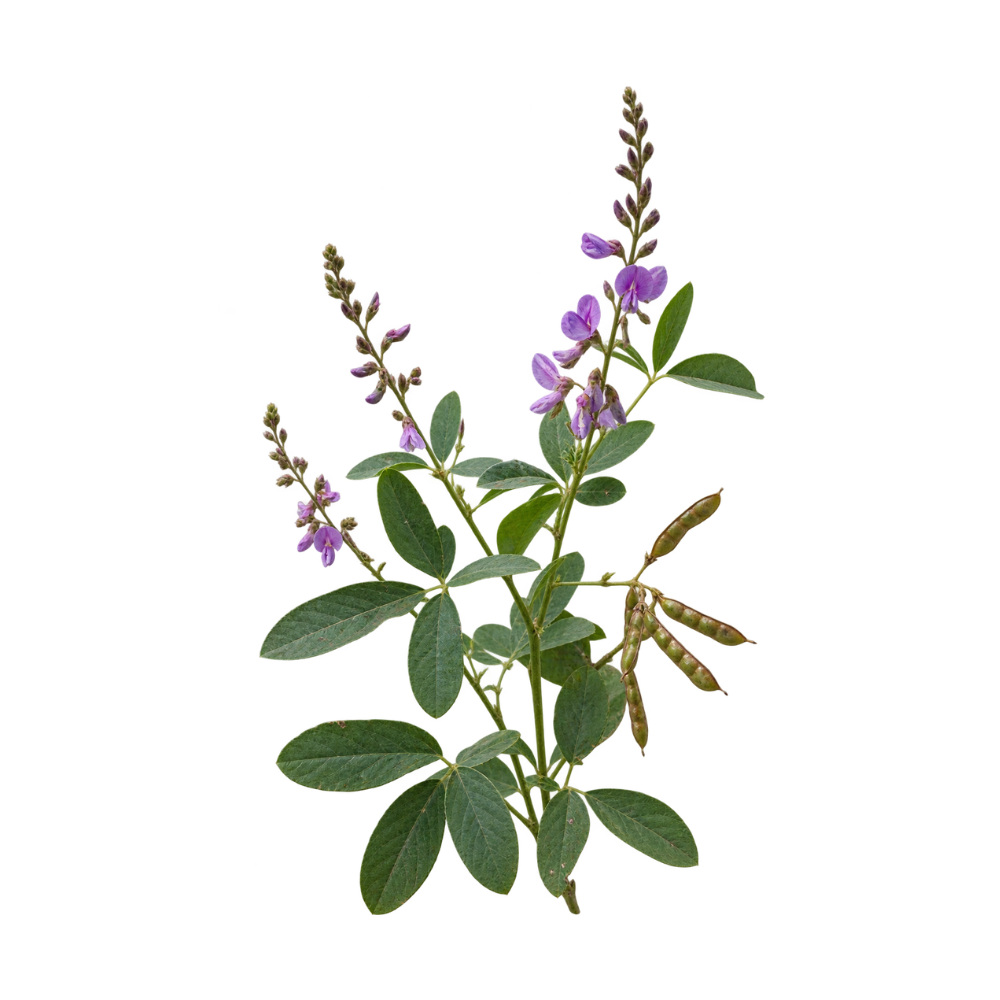
Tick trefoil is the genus Desmodium, in the pea family (Fabaceae). Its members are herbs, subshrubs and shrubs 34Reference 34Huang, P., & Ohashi, H. (n.d.). Desmodium Desvaux. In Wu, Z. Y., Raven, P. H., & Hong, D. Y. (eds.), Flora of China, Vol. 10 — flora. http://www.efloras.org/florataxon.aspx?flora_id=2&taxon_id=109693View study →.
The leaves usually have three leaflets, but in some species they are reduced to a single leaflet 34Reference 34Huang, P., & Ohashi, H. (n.d.). Desmodium Desvaux. In Wu, Z. Y., Raven, P. H., & Hong, D. Y. (eds.), Flora of China, Vol. 10 — flora. http://www.efloras.org/florataxon.aspx?flora_id=2&taxon_id=109693View study →.
The small pea-flowers are white, greenish-white, pink, purple or violet, and grow in spikes or branching clusters 34Reference 34Huang, P., & Ohashi, H. (n.d.). Desmodium Desvaux. In Wu, Z. Y., Raven, P. H., & Hong, D. Y. (eds.), Flora of China, Vol. 10 — flora. http://www.efloras.org/florataxon.aspx?flora_id=2&taxon_id=109693View study →.
The seed pod is flat and usually does not split open. Instead it is divided crosswise into segments, and in most species it is covered with tiny hooked hairs 34,
Desmodium adscendens is a perennial herb with creeping to upright stems, often much branched from the base, that can become somewhat woody. It grows up to 1 m tall, and its stems sometimes root at the lower nodes 35Reference 35Grona adscendens (synView study →. It is now often classified as Grona adscendens 35Reference 35Grona adscendens (synView study →.
Desmodium gangeticum is a shrub up to 1 m tall. Unlike most tick trefoils it has a single leaflet per leaf, 3–13 cm long, and small greenish-white flowers. Its pods have six to eight hooked-hairy segments 36Reference 36Huang, P., & Ohashi, H. (n.d.). Desmodium gangeticum (Linnaeus) Candolle. In Wu, Z. Y., Raven, P. H., & Hong, D. Y. (eds.), Flora of China, Vol. 10 — flora. http://www.efloras.org/florataxon.aspx?flora_id=2&taxon_id=200012099View study →.
Like many legumes, D. adscendens hosts nitrogen-fixing bacteria in root nodules 35Reference 35Grona adscendens (synView study →.
Distribution
Tick trefoils grow mostly in tropical and subtropical regions around the world 34Reference 34Huang, P., & Ohashi, H. (n.d.). Desmodium Desvaux. In Wu, Z. Y., Raven, P. H., & Hong, D. Y. (eds.), Flora of China, Vol. 10 — flora. http://www.efloras.org/florataxon.aspx?flora_id=2&taxon_id=109693View study →.
Desmodium adscendens grows widely in tropical South and Central America, the Caribbean and tropical Africa. It favours humid, shady places such as swamp forest, stream banks and the banks of rice fields, and it also grows in grassland and disturbed vegetation. It has become a weed in many tropical areas 35Reference 35Grona adscendens (synView study →. It is assessed as Least Concern on the IUCN Red List 35Reference 35Grona adscendens (synView study →.
Desmodium gangeticum grows in secondary forest and grassy waste ground at 300–900 m in southern China. It is also found across South and Southeast Asia, tropical Africa, Australia and the Pacific islands, and it has naturalised in the West Indies 36Reference 36Huang, P., & Ohashi, H. (n.d.). Desmodium gangeticum (Linnaeus) Candolle. In Wu, Z. Y., Raven, P. H., & Hong, D. Y. (eds.), Flora of China, Vol. 10 — flora. http://www.efloras.org/florataxon.aspx?flora_id=2&taxon_id=200012099View study →.
Growing Conditions
Cultivation snapshot for Tick Trefoil
- Warm-climate legumes: they need tropical to subtropical conditions and are not frost-hardy.
- Grow in full sun to part shade; several species tolerate the light shade of orchards and plantations.
- Adaptable to a range of soils, and — being nitrogen-fixers — they improve fertility, which is why many are grown as cover crops and green manure in tea, coffee and rubber estates.
- Easily raised from seed (the hard coat germinates readily, helped by scarification); vigorous enough that they can become locally weedy.
Grow it yourself
Farm Wiki is our cultivation-focused sister site, also run by Justin Cooke.
Phytochemistry
Desmodium adscendens contains triterpenoid saponins, β-phenylethylamines and indole-3-alkylamines 30Reference 30ReviewAn ethnomedicinal, phytochemical and pharmacological profile of Desmodium gangeticum and Desmodium adscendens — reviewView study →. Three saponins act on airway potassium channels: dehydrosoyasaponin I, soyasaponin I and soyasaponin III 3Reference 3In vitroAn activator of calcium-dependent potassium channels isolated from a medicinal herb — in vitro studyView study →. The plant also contains a tetrahydroisoquinoline alkaloid 6Reference 6In vitroSome secondary plant metabolites in Desmodium adscendens and their effects on arachidonic acid metabolism — in vitro studyView study →.
The leaves of D. adscendens are rich in flavonoids, about 12.8 mg per gram of dry leaf, with quercitrin as the main phenolic compound in one analysis 7Reference 7In vitroChemical composition and cellular evaluation of the antioxidant activity of Desmodium adscendens leaves — in vitro studyView study →. In another, the most active antioxidant fraction was dominated by vitexin, isovitexin and their xylosides 8Reference 8In vitroActivity-guided isolation and quantification of biologically active isomeric compounds from Desmodium adscendens — in vitro studyView study →.
A water decoction of D. adscendens leaves and twigs contains the sugar alcohol D-pinitol as its main constituent 19Reference 19AnimalAntihepatotoxic activity of a quantified Desmodium adscendens decoction and D-pinitol against chemically-induced liver damage — animal model (rat)View study →.
Desmodium gangeticum has a different chemistry, with alkaloids, pterocarpans, phospholipids, sterols, flavones and flavonoid glycosides 30Reference 30ReviewAn ethnomedicinal, phytochemical and pharmacological profile of Desmodium gangeticum and Desmodium adscendens — reviewView study →. Its pterocarpans include gangetin 32Reference 32AnimalA multi-modal approach to investigate Desmodium gangeticum’s influence on stress-induced male infertility — animal model and in silico studyView study →. Its root and aerial parts also yield the bisindole alkaloid gangenoid 13Reference 13In vitroNovel anti-inflammatory phytoconstituents from Desmodium gangeticum — in vitro studyView study →, and its phenolic fraction contains caffeic acid and chlorogenic acid 10Reference 10AnimalAntioxidant activity of Desmodium gangeticum and its phenolics in arthritic rats — animal modelView study →.
Constituent Summary
Amounts have not been published for most constituents.
Isoquinoline Alkaloid1 compoundno data
Flavonoid5 compounds2 with data
Saponin1 compoundno data
Pharmacology & Research
About 25 Desmodium species are used in traditional medicine, and research has concentrated on two of them: D. adscendens and D. gangeticum 30Reference 30ReviewAn ethnomedicinal, phytochemical and pharmacological profile of Desmodium gangeticum and Desmodium adscendens — reviewView study →. The work is almost all preclinical, in cells, isolated tissues and rodents.
The most developed line is the asthma research on D. adscendens. Its extracts reduced allergic contractions of guinea-pig airways, and its saponin dehydrosoyasaponin I opens large-conductance calcium-activated potassium (maxi-K) channels from airway muscle 2,
D. gangeticum has a separate body of work on heart protection in ischaemia–reperfusion models, much of it from one research group 14,
The only human data come from an uncontrolled 12-patient study of a combination product 29Reference 29Clinical trialFeasibility single-arm study of a medical device containing Desmodium adscendens and Lithothamnium calcareum combined with chemotherapy in head and neck cancer patients — human studyView study →.
-
Best-supported: anti-allergic and airway-relaxing activity of D. adscendens, with a defined potassium-channel mechanism and repeated guinea-pig tissue studies 1,
2, ; antioxidant activity in both species 7,3, 4, 5Reference 1In vitroEffect of Desmodium adscendens fraction 3 on contractions of respiratory smooth muscle — in vitro studyView study →Reference 2In vitroEffect of Desmodium adscendens fractions on antigen- and arachidonic acid-induced contractions of guinea pig airways — in vitro studyView study →Reference 3In vitroAn activator of calcium-dependent potassium channels isolated from a medicinal herb — in vitro studyView study →Reference 4AnimalEffects of the extracts of Desmodium adscendens on anaphylaxis — animal model (guinea pig)View study →Reference 5AnimalDose-response effects of Desmodium adscendens aqueous extract on histamine response and anaphylactic reactions in the guinea pig — animal modelView study → 8, .9, 10Reference 7In vitroChemical composition and cellular evaluation of the antioxidant activity of Desmodium adscendens leaves — in vitro studyView study →Reference 8In vitroActivity-guided isolation and quantification of biologically active isomeric compounds from Desmodium adscendens — in vitro studyView study →Reference 9In vitroStudies on the antioxidant activities of Desmodium gangeticum — in vitro studyView study →Reference 10AnimalAntioxidant activity of Desmodium gangeticum and its phenolics in arthritic rats — animal modelView study → -
Emerging, worth watching: heart protection in ischaemia–reperfusion models 14,
15, , anti-inflammatory effects of the D. gangeticum decoction 11,16, 17, 18Reference 14AnimalEffect of aqueous extract of the Desmodium gangeticum DC root in the severity of myocardial infarction — animal model (rat)View study →Reference 15AnimalAntioxidant effects of ethyl acetate extract of Desmodium gangeticum root on myocardial ischemia reperfusion injury — animal model (isolated rat heart)View study →Reference 16AnimalRole of mitochondrial enzymes and sarcoplasmic ATPase in cardioprotection by Desmodium gangeticum root on ischemic reperfusion injury — animal modelView study →Reference 17AnimalMethanol extract of Desmodium gangeticum root mimetic post-conditioning effect via muscarinic receptors — animal model (isolated rat heart)View study →Reference 18In vitroDesmodium gangeticum exhibits antihypertrophic effect in isoproterenol-induced cardiomyoblasts — in vitro studyView study → 12, , and liver protection by the D. adscendens decoction and D-pinitol 19Reference 19AnimalAntihepatotoxic activity of a quantified Desmodium adscendens decoction and D-pinitol against chemically-induced liver damage — animal model (rat)View study →.13Reference 11AnimalAnti-inflammatory and anti-nociceptive activity of the water decoction Desmodium gangeticum — animal model (rat)View study →Reference 12AnimalAntiinflammatory and antioxidant activities of Desmodium gangeticum fractions in carrageenan-induced inflamed rats — animal modelView study →Reference 13In vitroNovel anti-inflammatory phytoconstituents from Desmodium gangeticum — in vitro studyView study → -
Mechanistically thin: anticancer (one cell-line study and one uncontrolled combination study) 28,
29Reference 28In vitroCrude extract of Desmodium gangeticum shows anticancer activity by arresting the cell cycle in A549 human lung carcinoma cells — in vitro studyView study →Reference 29Clinical trialFeasibility single-arm study of a medical device containing Desmodium adscendens and Lithothamnium calcareum combined with chemotherapy in head and neck cancer patients — human studyView study → and antidiabetic (one study) 27Reference 27In vitroEffect of Desmodium gangeticum extract on blood glucose in rats and on insulin secretion in vitro — animal modelView study →. - The caveat: almost everything is preclinical, specific to one species and dependent on the extract used; there is no controlled human trial. Recent work follows the same pattern, such as a 2024 animal and computer-modelling study of D. gangeticum in stress-induced male infertility 32Reference 32AnimalA multi-modal approach to investigate Desmodium gangeticum’s influence on stress-induced male infertility — animal model and in silico studyView study →.
Each finding belongs to one species. The asthma work is on D. adscendens, and the heart, ulcer and antileishmanial work is on D. gangeticum. The two differ in chemistry, and a product labelled only “Desmodium” may be either 30Reference 30ReviewAn ethnomedicinal, phytochemical and pharmacological profile of Desmodium gangeticum and Desmodium adscendens — reviewView study →.
1. Antiasthmatic
In guinea-pig airway tissue, fractions of an aqueous D. adscendens extract reduced allergen-induced contractions in a dose-dependent way. Some fractions also blocked leukotriene-dependent contractions, which suggests the plant acts at several points, including leukotriene production 2Reference 2In vitroEffect of Desmodium adscendens fractions on antigen- and arachidonic acid-induced contractions of guinea pig airways — in vitro studyView study →.
A leaf fraction inhibited both early and late phases of allergen-induced contraction but had no effect on contractions triggered by arachidonic acid, which suggests it may reduce the release of arachidonic acid 1Reference 1In vitroEffect of Desmodium adscendens fraction 3 on contractions of respiratory smooth muscle — in vitro studyView study →.
A 1993 study isolated three saponins from the plant that act on large-conductance calcium-activated potassium (maxi-K) channels, which help regulate airway muscle tone and the release of bronchoconstricting substances. The most potent, dehydrosoyasaponin I, increased the opening of these channels from airway muscle at concentrations as low as 10 nM, but only when applied to the inside of the membrane 3Reference 3In vitroAn activator of calcium-dependent potassium channels isolated from a medicinal herb — in vitro studyView study →.
Taken by mouth, aqueous and ethanolic extracts reduced allergic contractions and the release of smooth-muscle-stimulating substances from guinea-pig lung 4Reference 4AnimalEffects of the extracts of Desmodium adscendens on anaphylaxis — animal model (guinea pig)View study →. In drinking water, a hot-water extract lowered lung histamine content in a dose-dependent way 5Reference 5AnimalDose-response effects of Desmodium adscendens aqueous extract on histamine response and anaphylactic reactions in the guinea pig — animal modelView study →.
Further work traced activity to the plant’s saponins, β-phenylethylamines and a tetrahydroisoquinoline, acting on ion channels and on arachidonic-acid metabolism 6Reference 6In vitroSome secondary plant metabolites in Desmodium adscendens and their effects on arachidonic acid metabolism — in vitro studyView study →.
Gap: every study used isolated tissue or animals. No controlled human trial has tested whether the plant relieves asthma.
2. Antioxidant
D. adscendens leaves are rich in flavonoids and scavenge free radicals in DPPH, ABTS and cell-based tests 7Reference 7In vitroChemical composition and cellular evaluation of the antioxidant activity of Desmodium adscendens leaves — in vitro studyView study →. Activity-guided fractionation identified vitexin, isovitexin and their xylosides as the main compounds in the most active fraction 8Reference 8In vitroActivity-guided isolation and quantification of biologically active isomeric compounds from Desmodium adscendens — in vitro studyView study →.
D. gangeticum extract scavenged DPPH, nitric oxide, hypochlorous acid and ferryl radicals and reduced lipid peroxidation in vitro 9Reference 9In vitroStudies on the antioxidant activities of Desmodium gangeticum — in vitro studyView study →. In arthritic rats, the extract (100 mg/kg) and its phenolic fraction (50 mg/kg), which yielded caffeic acid and chlorogenic acid, raised superoxide dismutase, catalase and glutathione and lowered lipid peroxides 10Reference 10AnimalAntioxidant activity of Desmodium gangeticum and its phenolics in arthritic rats — animal modelView study →.
Gap: in-vitro and rodent work only, with no human biomarker study.
3. Anti-Inflammatory
In rats, a water decoction of D. gangeticum root and aerial parts (5–20 mg/kg) reduced carrageenan paw swelling and cotton-pellet granuloma in a dose-dependent way, and it reduced pain responses 11Reference 11AnimalAnti-inflammatory and anti-nociceptive activity of the water decoction Desmodium gangeticum — animal model (rat)View study →.
A follow-up found the flavonoid fraction a stronger antioxidant than the alkaloid fraction in inflamed rats 12Reference 12AnimalAntiinflammatory and antioxidant activities of Desmodium gangeticum fractions in carrageenan-induced inflamed rats — animal modelView study →.
Two new compounds from the root and aerial parts, including the bisindole alkaloid gangenoid, were tested for effects on TNF-α and IL-6 production in stimulated macrophages 13Reference 13In vitroNovel anti-inflammatory phytoconstituents from Desmodium gangeticum — in vitro studyView study →.
Gap: no human anti-inflammatory study.
4. Cardioprotective
In rats with isoproterenol-induced heart attack, an aqueous D. gangeticum root extract given daily for 30 days prevented the rise in cardiac enzymes and lowered lipid peroxidation in heart tissue 14Reference 14AnimalEffect of aqueous extract of the Desmodium gangeticum DC root in the severity of myocardial infarction — animal model (rat)View study →.
In isolated rat hearts, ethyl acetate (100 mg/kg) and aqueous (50 mg/kg) root extracts improved recovery of heart function after ischaemia, reduced enzyme release and preserved mitochondrial and sarcoplasmic ATPase activity 15,
In H9c2 heart cells, a methanolic root extract reduced isoproterenol-induced enlargement by lowering reactive oxygen species and stabilising mitochondria 18Reference 18In vitroDesmodium gangeticum exhibits antihypertrophic effect in isoproterenol-induced cardiomyoblasts — in vitro studyView study →.
Gap: the work comes largely from one laboratory and rests mainly on the extract’s antioxidant capacity.
5. Hepatoprotective
A water decoction of D. adscendens leaves and twigs, standardised on D-pinitol, protected rats against D-galactosamine liver damage, lowering AST and ALT. Pure D-pinitol reproduced part of the effect 19Reference 19AnimalAntihepatotoxic activity of a quantified Desmodium adscendens decoction and D-pinitol against chemically-induced liver damage — animal model (rat)View study →.
Against ethanol damage, the decoction did not significantly lower liver enzymes, although there was a trend toward lower mortality. Neither the decoction nor D-pinitol reversed liver damage once it had occurred 19Reference 19AnimalAntihepatotoxic activity of a quantified Desmodium adscendens decoction and D-pinitol against chemically-induced liver damage — animal model (rat)View study →.
In cell culture, low concentrations of a D. adscendens extract did not harm liver or kidney cells and protected kidney cells against oxidative stress 20Reference 20In vitroSafety of Desmodium adscendens extract on hepatocytes and renal cells; protective effect against oxidative stress — in vitro studyView study →.
Gap: protective only, not curative, with results that depend on the model. No human liver data.
6. Antiulcer
An ethanolic D. gangeticum extract (200 mg/kg by mouth) reduced ulcers in four rat stomach-ulcer models (cold-restraint stress, aspirin, alcohol and pyloric ligation) and in a guinea-pig duodenal-ulcer model. It cut acid secretion by 42%, close to omeprazole’s 43%, and raised mucin secretion by 56% 21Reference 21AnimalDesmodium gangeticum: a potent anti-ulcer agent — animal model (rat)View study →.
Gap: one study in one species, not replicated.
7. Antileishmanial
In hamsters, an ethanolic D. gangeticum extract inhibited Leishmania donovani multiplication by 41%, and its n-butanol fraction by 67%. The fraction also made macrophages more resistant to infection 22Reference 22AnimalEfficacy of Desmodium gangeticum extract and its fractions against experimental visceral leishmaniasis — animal model (hamster)View study →.
Compounds isolated from the whole plant, a new aminoglucosyl glycerolipid and a cerebroside, showed antileishmanial and immune-stimulating activity in infected macrophages 23Reference 23In vitroGlycolipids and other constituents from Desmodium gangeticum with antileishmanial and immunomodulatory activities — in vitro studyView study →.
Gap: two studies, with no clinical follow-up.
8. Neuroprotective
An aqueous D. gangeticum extract (50–200 mg/kg for seven days) improved learning and memory in mice, reversed amnesia caused by scopolamine and by ageing, and lowered brain acetylcholinesterase activity 24Reference 24AnimalAntiamnesic effects of Desmodium gangeticum in mice — animal modelView study →.
An ethanolic D. adscendens extract showed antipsychotic-like activity in mice, reducing apomorphine-induced climbing, and caused sedation 25Reference 25AnimalAn ethanolic extract of Desmodium adscendens exhibits antipsychotic-like activity in mice — animal modelView study →. An earlier study found the leaf extract lowered body temperature, relieved pain and protected against chemically induced seizures 26Reference 26AnimalEffects of an ethanolic extract of Desmodium adscendens on central nervous system in rodents — animal modelView study →.
Gap: single rodent studies of three unrelated effects, none replicated.
9. Antidiabetic
In diabetic rats, an extract of D. gangeticum aerial parts (100 and 250 mg/kg for three weeks) lowered blood glucose and improved the lipid profile. It also increased insulin secretion from MIN6 pancreatic cells 27Reference 27In vitroEffect of Desmodium gangeticum extract on blood glucose in rats and on insulin secretion in vitro — animal modelView study →.
Gap: one study, with no replication.
10. Anticancer
A water extract of D. gangeticum stopped A549 human lung-cancer cells in the G1 phase of the cell cycle 28Reference 28In vitroCrude extract of Desmodium gangeticum shows anticancer activity by arresting the cell cycle in A549 human lung carcinoma cells — in vitro studyView study →.
In a single-arm study, 12 patients with stage IV head-and-neck cancer took a product combining D. adscendens and the calcified seaweed Lithothamnium calcareum alongside chemotherapy. Pain and fatigue improved, but the authors could not tell whether the product or the chemotherapy was responsible 29Reference 29Clinical trialFeasibility single-arm study of a medical device containing Desmodium adscendens and Lithothamnium calcareum combined with chemotherapy in head and neck cancer patients — human studyView study →.
Gap: one cell-line study and one small uncontrolled combination study.
Mechanisms
D. adscendens contains saponins, led by dehydrosoyasaponin I, that open large-conductance calcium-activated potassium channels in airway muscle, and its extracts also act on leukotriene production 2,
The other activities studied, mostly in D. gangeticum, are antioxidant: radical scavenging, raised antioxidant enzymes and protection of mitochondria 9,
| Mechanism | Drives | Key compounds |
|---|---|---|
| Maxi-K channel opening (airway smooth muscle) | antiasthmatic | dehydrosoyasaponin I, soyasaponin I |
| Leukotriene synthesis or activity ↓ | antiasthmatic | D. adscendens fractions |
| Radical scavenging, ↑ SOD/catalase/glutathione, ↓ lipid peroxidation | antioxidantcardioprotective | vitexin, isovitexin, caffeic acid, chlorogenic acid |
| Mitochondrial and sarcoplasmic ATPase preservation; muscarinic post-conditioning | cardioprotective | D. gangeticum root extracts |
| Acetylcholinesterase inhibition | antiamnesic | D. gangeticum aqueous extract |
| Liver-cell protection (D-galactosamine model) | hepatoprotective | D-pinitol |
Clinical Trials
ClinicalTrials.gov lists only multi-herb combination products, such as an anti-hangover formula and a dietary-supplement survey, with no single-agent efficacy trial of either species.
| Completed | Planned | Terminated | Preclinical |
|---|---|---|---|
| 1(combination, uncontrolled) | 0 | 0 | ~35 |
Last checked: August 2026.
Dosage
The doses below are from animal and tissue studies. No human dose has been tested.
| Indication | Preparation | Dose | Est. dried-herb equivalent | Source |
|---|---|---|---|---|
| Antiasthmatic (airway relaxation) | D. adscendens extract fractions and isolated saponins, isolated tissue | Laboratory concentrations | — | 1, |
| Anti-inflammatory | D. gangeticum water decoction, oral (rat) | 5–20 mg/kg | — | 11Reference 11AnimalAnti-inflammatory and anti-nociceptive activity of the water decoction Desmodium gangeticum — animal model (rat)View study → |
| Cardioprotective | D. gangeticum root extracts (rat) | 50–100 mg/kg | — | 15, |
| Acute toxicity | D. adscendens leaf extract, oral (rat) | LD₅₀ ≈ 1122 mg/kg | — | 31Reference 31AnimalAcute and subchronic toxicity studies of aqueous extract of Desmodium adscendens — animal model (rat)View study → |
| Acute toxicity | D. adscendens ethanolic extract (mouse) | LD₅₀ > 3000 mg/kg | — | 25Reference 25AnimalAn ethanolic extract of Desmodium adscendens exhibits antipsychotic-like activity in mice — animal modelView study → |
Traditional Dosage
| System | Preparation | Dose |
|---|---|---|
| West African (D. adscendens) | Water extract of leaf and aerial parts, for asthma | Not quantified |
| Ayurveda (D. gangeticum, Salaparni) | Root, within compound formulas such as Dashamoola | Not quantified |
Safety & Pregnancy
Human safety data for tick trefoil are very limited, and each species has its own chemistry.
- Know which species. The asthma research is on D. adscendens; the heart and ulcer research is on D. gangeticum 30Reference 30ReviewAn ethnomedicinal, phytochemical and pharmacological profile of Desmodium gangeticum and Desmodium adscendens — reviewView study →.
- Possible drug interactions. In rats, repeated doses of D. adscendens leaf extract induced liver drug-metabolising (CYP) enzymes 31Reference 31AnimalAcute and subchronic toxicity studies of aqueous extract of Desmodium adscendens — animal model (rat)View study →.
- Amines. D. adscendens contains β-phenylethylamines 30Reference 30ReviewAn ethnomedicinal, phytochemical and pharmacological profile of Desmodium gangeticum and Desmodium adscendens — reviewView study →. Amines of this type can interact with MAO-inhibiting drugs and plants such as Syrian rue.
- Pregnancy. No reproductive safety data exist for the genus.
- Low acute toxicity. The oral LD₅₀ of D. adscendens leaf extract was about 1122 mg/kg in rats 31Reference 31AnimalAcute and subchronic toxicity studies of aqueous extract of Desmodium adscendens — animal model (rat)View study →, and above 3000 mg/kg for an ethanolic extract in mice 25Reference 25AnimalAn ethanolic extract of Desmodium adscendens exhibits antipsychotic-like activity in mice — animal modelView study →.
Full Safety & Interactions Detail
Toxicity. Formal toxicity studies exist only for D. adscendens. In rats, the oral LD₅₀ of a leaf extract was about 1122 mg/kg. The authors judged the extract safe at the doses people take 31Reference 31AnimalAcute and subchronic toxicity studies of aqueous extract of Desmodium adscendens — animal model (rat)View study →. In mice, an ethanolic extract had an LD₅₀ above 3000 mg/kg and caused sedation, with motor side effects only at high doses 25Reference 25AnimalAn ethanolic extract of Desmodium adscendens exhibits antipsychotic-like activity in mice — animal modelView study →.
Liver and kidney cells. In cell culture, a D. adscendens extract did not harm liver or kidney cells at 1–10 mg/mL but reduced cell viability by about 40% at 100 mg/mL 20Reference 20In vitroSafety of Desmodium adscendens extract on hepatocytes and renal cells; protective effect against oxidative stress — in vitro studyView study →.
Interactions. Repeated dosing of D. adscendens leaf extract shortened zoxazolamine paralysis and prevented thiopentone-induced sleep in rats, a sign of induced CYP enzymes 31Reference 31AnimalAcute and subchronic toxicity studies of aqueous extract of Desmodium adscendens — animal model (rat)View study →. This could change how other medicines are cleared, though it has not been studied in people.
Identification. “Tick trefoil” covers about 280 species 34Reference 34Huang, P., & Ohashi, H. (n.d.). Desmodium Desvaux. In Wu, Z. Y., Raven, P. H., & Hong, D. Y. (eds.), Flora of China, Vol. 10 — flora. http://www.efloras.org/florataxon.aspx?flora_id=2&taxon_id=109693View study →, and the medicinal species differ in chemistry 30Reference 30ReviewAn ethnomedicinal, phytochemical and pharmacological profile of Desmodium gangeticum and Desmodium adscendens — reviewView study →. Material of uncertain species is best avoided.
Avoid. No study has assessed tick trefoil in pregnancy or breastfeeding, and no reproductive toxicity data exist for the genus.
References
- Addy, M. E., & Burka, J. F. (1990). Effect of Desmodium adscendens fraction 3 on contractions of respiratory smooth muscle — in vitro study. Journal of Ethnopharmacology. https://pubmed.ncbi.nlm.nih.gov/2120518/
- Addy, M. E., & Burka, J. F. (1988). Effect of Desmodium adscendens fractions on antigen- and arachidonic acid-induced contractions of guinea pig airways — in vitro study. Canadian Journal of Physiology and Pharmacology. https://pubmed.ncbi.nlm.nih.gov/3139272/
- McManus, O. B., et al. (1993). An activator of calcium-dependent potassium channels isolated from a medicinal herb — in vitro study. Biochemistry. https://pubmed.ncbi.nlm.nih.gov/7685635/
- Addy, M. E., & Awumey, E. M. (1984). Effects of the extracts of Desmodium adscendens on anaphylaxis — animal model (guinea pig). Journal of Ethnopharmacology. https://pubmed.ncbi.nlm.nih.gov/6482479/
- Addy, M. E., & Dzandu, W. K. (1986). Dose-response effects of Desmodium adscendens aqueous extract on histamine response and anaphylactic reactions in the guinea pig — animal model. Journal of Ethnopharmacology. https://pubmed.ncbi.nlm.nih.gov/2434805/
- Addy, M. E. (1992). Some secondary plant metabolites in Desmodium adscendens and their effects on arachidonic acid metabolism — in vitro study. Prostaglandins, Leukotrienes, and Essential Fatty Acids. https://pubmed.ncbi.nlm.nih.gov/1438471/
- Muanda, F. N., et al. (2011). Chemical composition and cellular evaluation of the antioxidant activity of Desmodium adscendens leaves — in vitro study. Evidence-Based Complementary and Alternative Medicine. https://pubmed.ncbi.nlm.nih.gov/20976084/
- Zielińska-Pisklak, M. A., et al. (2015). Activity-guided isolation and quantification of biologically active isomeric compounds from Desmodium adscendens — in vitro study. Journal of Pharmaceutical and Biomedical Analysis. https://pubmed.ncbi.nlm.nih.gov/25240729/
- Govindarajan, R., et al. (2003). Studies on the antioxidant activities of Desmodium gangeticum — in vitro study. Biological & Pharmaceutical Bulletin. https://pubmed.ncbi.nlm.nih.gov/14519948/
- Govindarajan, R., et al. (2006). Antioxidant activity of Desmodium gangeticum and its phenolics in arthritic rats — animal model. Acta Pharmaceutica. https://pubmed.ncbi.nlm.nih.gov/19839141/
- Rathi, A., et al. (2004). Anti-inflammatory and anti-nociceptive activity of the water decoction Desmodium gangeticum — animal model (rat). Journal of Ethnopharmacology. https://pubmed.ncbi.nlm.nih.gov/15507346/
- Govindarajan, R., et al. (2007). Antiinflammatory and antioxidant activities of Desmodium gangeticum fractions in carrageenan-induced inflamed rats — animal model. Phytotherapy Research. https://pubmed.ncbi.nlm.nih.gov/17604372/
- Yadav, A. K., et al. (2013). Novel anti-inflammatory phytoconstituents from Desmodium gangeticum — in vitro study. Natural Product Research. https://pubmed.ncbi.nlm.nih.gov/23336435/
- Kurian, G. A., Philip, S., & Varghese, T. (2005). Effect of aqueous extract of the Desmodium gangeticum DC root in the severity of myocardial infarction — animal model (rat). Journal of Ethnopharmacology. https://pubmed.ncbi.nlm.nih.gov/15740881/
- Kurian, G. A., et al. (2010). Antioxidant effects of ethyl acetate extract of Desmodium gangeticum root on myocardial ischemia reperfusion injury — animal model (isolated rat heart). Chinese Medicine. https://pubmed.ncbi.nlm.nih.gov/20180993/
- Kurian, G. A., & Paddikkala, J. (2010). Role of mitochondrial enzymes and sarcoplasmic ATPase in cardioprotection by Desmodium gangeticum root on ischemic reperfusion injury — animal model. Indian Journal of Pharmaceutical Sciences. https://pubmed.ncbi.nlm.nih.gov/21969747/
- Kurian, G. A., & Paddikkala, J. (2012). Methanol extract of Desmodium gangeticum root mimetic post-conditioning effect via muscarinic receptors — animal model (isolated rat heart). Asian Pacific Journal of Tropical Medicine. https://pubmed.ncbi.nlm.nih.gov/22575976/
- Sankar, V., et al. (2013). Desmodium gangeticum exhibits antihypertrophic effect in isoproterenol-induced cardiomyoblasts — in vitro study. Journal of Cardiovascular Pharmacology. https://pubmed.ncbi.nlm.nih.gov/23052030/
- Magielse, J., et al. (2013). Antihepatotoxic activity of a quantified Desmodium adscendens decoction and D-pinitol against chemically-induced liver damage — animal model (rat). Journal of Ethnopharmacology. https://pubmed.ncbi.nlm.nih.gov/23291573/
- François, C., et al. (2015). Safety of Desmodium adscendens extract on hepatocytes and renal cells; protective effect against oxidative stress — in vitro study. Journal of Intercultural Ethnopharmacology. https://pubmed.ncbi.nlm.nih.gov/26401376/
- Dharmani, P., et al. (2005). Desmodium gangeticum: a potent anti-ulcer agent — animal model (rat). Indian Journal of Experimental Biology. https://pubmed.ncbi.nlm.nih.gov/15991576/
- Singh, N., et al. (2005). Efficacy of Desmodium gangeticum extract and its fractions against experimental visceral leishmaniasis — animal model (hamster). Journal of Ethnopharmacology. https://pubmed.ncbi.nlm.nih.gov/15763367/
- Mishra, P. K., et al. (2005). Glycolipids and other constituents from Desmodium gangeticum with antileishmanial and immunomodulatory activities — in vitro study. Bioorganic & Medicinal Chemistry Letters. https://pubmed.ncbi.nlm.nih.gov/16099649/
- Joshi, H., & Parle, M. (2006). Antiamnesic effects of Desmodium gangeticum in mice — animal model. Yakugaku Zasshi. https://pubmed.ncbi.nlm.nih.gov/16946593/
- Amoateng, P., et al. (2017). An ethanolic extract of Desmodium adscendens exhibits antipsychotic-like activity in mice — animal model. Journal of Basic and Clinical Physiology and Pharmacology. https://pubmed.ncbi.nlm.nih.gov/28710881/
- N’gouemo, P., et al. (1996). Effects of an ethanolic extract of Desmodium adscendens on central nervous system in rodents — animal model. Journal of Ethnopharmacology. https://pubmed.ncbi.nlm.nih.gov/8735451/
- Govindarajan, R., et al. (2007). Effect of Desmodium gangeticum extract on blood glucose in rats and on insulin secretion in vitro — animal model. Planta Medica. https://pubmed.ncbi.nlm.nih.gov/17431824/
- Chen, Y. F., Lu, Y. H., & Tsai, H. Y. (2022). Crude extract of Desmodium gangeticum shows anticancer activity by arresting the cell cycle in A549 human lung carcinoma cells — in vitro study. BioMedicine (Taipei). https://pubmed.ncbi.nlm.nih.gov/35836974/
- Imperatori, L., et al. (2018). Feasibility single-arm study of a medical device containing Desmodium adscendens and Lithothamnium calcareum combined with chemotherapy in head and neck cancer patients — human study. Cancer Management and Research. https://pubmed.ncbi.nlm.nih.gov/30519091/
- Rastogi, S., Pandey, M. M., & Rawat, A. K. (2011). An ethnomedicinal, phytochemical and pharmacological profile of Desmodium gangeticum and Desmodium adscendens — review. Journal of Ethnopharmacology. https://pubmed.ncbi.nlm.nih.gov/21530632/
- Quaye, O., et al. (2017). Acute and subchronic toxicity studies of aqueous extract of Desmodium adscendens — animal model (rat). Journal of Evidence-Based Complementary & Alternative Medicine. https://pubmed.ncbi.nlm.nih.gov/29228815/
- Alqahtani, Y. S., et al. (2024). A multi-modal approach to investigate Desmodium gangeticum’s influence on stress-induced male infertility — animal model and in silico study. Biomedicine & Pharmacotherapy. https://pubmed.ncbi.nlm.nih.gov/38430634/
- Das, M., et al. (2026). A brief review on chemoprofiling and pharmacological potential of Desmodium gangeticum — review. Natural Product Research. https://pubmed.ncbi.nlm.nih.gov/39865705/
- Huang, P., & Ohashi, H. (n.d.). Desmodium Desvaux. In Wu, Z. Y., Raven, P. H., & Hong, D. Y. (eds.), Flora of China, Vol. 10 — flora. http://www.efloras.org/florataxon.aspx?flora_id=2&taxon_id=109693
- Fern, K. Grona adscendens (syn. Desmodium adscendens) — species database entry (habit, range, habitat, uses). Useful Tropical Plants. https://tropical.theferns.info/viewtropical.php?id=Desmodium+adscendens
- Huang, P., & Ohashi, H. (n.d.). Desmodium gangeticum (Linnaeus) Candolle. In Wu, Z. Y., Raven, P. H., & Hong, D. Y. (eds.), Flora of China, Vol. 10 — flora. http://www.efloras.org/florataxon.aspx?flora_id=2&taxon_id=200012099



