

Overview
Bronchodilator at a Glance
Bronchodilators open the airways by relaxing the smooth muscle around them.
They are used where bronchoconstriction is contributing to wheezing, chest tightness, or difficulty breathing.
The two main herbal routes are beta-2 adrenergic stimulation and methylxanthine activity.
Ephedra contains ephedrine, which activates beta receptors on airway smooth muscle.
It produces genuine bronchodilation, but also stimulates the heart and blood vessels, making it much less selective than modern inhaled bronchodilators.
Coffee and cacao contain the methylxanthines caffeine and theobromine. These raise cyclic AMP and interfere with adenosine signalling, producing a milder relaxation of airway smooth muscle.
Bronchodilation only addresses the narrowing of the airway. It does not necessarily reduce the inflammation underneath asthma or help clear mucus, which belong under the antiasthmatic, anti-inflammatory, expectorant, and mucolytic actions.
Ma huang has a long history of use for wheezing in Chinese medicine, and ephedrine isolated from the plant later became an important early asthma drug.
Caution
Not a rescue inhaler — no herbal bronchodilator replaces a rescue inhaler or prescribed asthma treatment.
Worsening breathing is urgent — worsening breathlessness or a reliever that stops working normally needs urgent medical care.
Never with an MAO inhibitor — adrenergic bronchodilators are never combined with an MAO inhibitor; allow 14 days after stopping one.
Mechanisms
How It Works
01
Beta-2 Adrenergic Agonism
Activating the beta-2 receptor on airway smooth muscle relaxes it, which is the mechanism of every relief inhaler.
Ephedrine is a partial agonist at the cloned human beta-2 receptor with sub-micromolar potency, and it is orally active, which no inhaled agonist is.
Ephedrine and pseudoephedrine together make up more than 80% of ephedra’s total alkaloid fraction, so the crude stem does deliver the molecule.
It differs from the drug class in two ways that matter. Ephedrine is non-selective, so alpha and beta-1 activation raise blood pressure and heart rate at the same doses that open the airway, and it is swallowed, so it reaches every adrenergic receptor in the body to deliver a drug to the lungs. Selective inhaled agonists fixed both at once.
The same non-selectivity is why ephedrine must never be taken with an MAO inhibitor, an interaction that has been fatal 10,
Herbs: Ephedra
Key compounds: EphedrinePseudoephedrine
02
Methylxanthines
Blocking adenosine receptors and inhibiting phosphodiesterase raises cyclic AMP inside the airway muscle cell, relaxing it without touching a surface receptor.
This is theophylline’s mechanism, and caffeine and theobromine are its close relatives.
Pooled crossover trials in mild to moderate asthma find caffeine modestly improves lung function for up to two hours and mid-expiratory flow for up to four, which is why lung-function testing asks people to avoid it beforehand 15Reference 15Meta-analysisCaffeine for asthma — Cochrane systematic review and meta-analysisView study →.
Theobromine is a substantially weaker airway relaxant than theophylline.
The class effect is not in doubt and the herb-level dose is. A strong coffee is a weak bronchodilator, real enough to confound a spirometry result and nowhere near enough to treat an attack.
Theophylline itself was abandoned partly because its effective dose sits close to its toxic one.
Key compounds: CaffeineTheobromineTheophylline
The Molecules
Pharmacology
What produces a bronchodilator effect at the molecular level. The herbs carry these molecules in different combinations and amounts, which is most of why their potency differs. Roles describe how central a molecule is to the action across plants generally, not how strong any one herb is.
Chiefly Amines & Protoalkaloids2
Carries the action largely on its own — the effect is attributed to the molecule, not just the extract it came from.
Adds to a plant's effect and is often present in quantity, but rarely accounts for it alone.
Real but narrow — one pathway, one tissue, or evidence too thin to lean on.
Ephedrine Amines & Protoalkaloids Primary mover Targets β₂-adrenergic receptor
Ephedrine is the molecule that made “herbal bronchodilator” a real category.
At the cloned human β₂-adrenergic receptor the natural (1R,2S) isomer is a partial agonist with sub-micromolar potency (EC50 ~0.36 µM, 78% of maximal response), relaxing bronchial smooth muscle by the same receptor route as modern inhaled β₂-agonists 1,
It is orally active and non-selective, so cardiac β₁ and central stimulation arrive with the airway effect, and in a randomised paediatric trial adding ephedrine to individualised theophylline produced no significant extra efficacy while causing insomnia, nervousness and gastrointestinal complaints 3Reference 3RCTInteraction of ephedrine and theophylline — randomised controlled trialView study →.
Selective inhaled β₂-agonists superseded it for that reason.
The evidence throughout is for the isolate; the whole herb delivers the same molecule at an unstandardised dose, with total stem alkaloids spanning roughly 0.7–3.4% dry weight across overlapping species ranges 4Reference 4Comparison of contents of five ephedrine alkaloids in three official origins of Ephedra Herb in China by high-performance liquid chromatographyView study →.
It occurs in ephedra.
Found in Ephedra
Full Ephedrine profile →Pseudoephedrine Amines & Protoalkaloids Minor role Targets β2-adrenoceptors (indirect, via released noradrenaline)
Pseudoephedrine is real but weak, and it shows what the stereochemistry costs.
In a double-blind comparison in patients with reversible airway obstruction, 210 mg pseudoephedrine produced less than half the FEV₁ improvement of 60 mg ephedrine, at three and a half times the dose 5Reference 5RCTComparison of the effects of D-(−)-ephedrine and L-(+)-pseudoephedrine on the cardiovascular and respiratory systems in man — double-blind studyView study →.
The receptor data explain it: neither compound has meaningful direct β activity, so airway relaxation depends entirely on released noradrenaline, and pseudoephedrine is the weaker noradrenaline-transporter substrate of the pair 6Reference 6In vitroIn vitro characterization of ephedrine-related stereoisomers at biogenic amine transporters and the receptorome reveals selective actions as norepinephrine transporter substratesView study →.
It was superseded clinically by selective inhaled β2-agonists, and Ephedra’s bronchodilator reputation belongs to ephedrine rather than to this isomer.
It occurs in ephedra.
Found in Ephedra
Full Pseudoephedrine profile →Materia Medica
Bronchodilator Herbs by Potency
The bronchodilator herbs, ordered by the relative strength of the effect rather than by how well studied it is. Each herb is described by the mechanism behind its effect and the evidence for it.
None of this is a substitute for professional care.
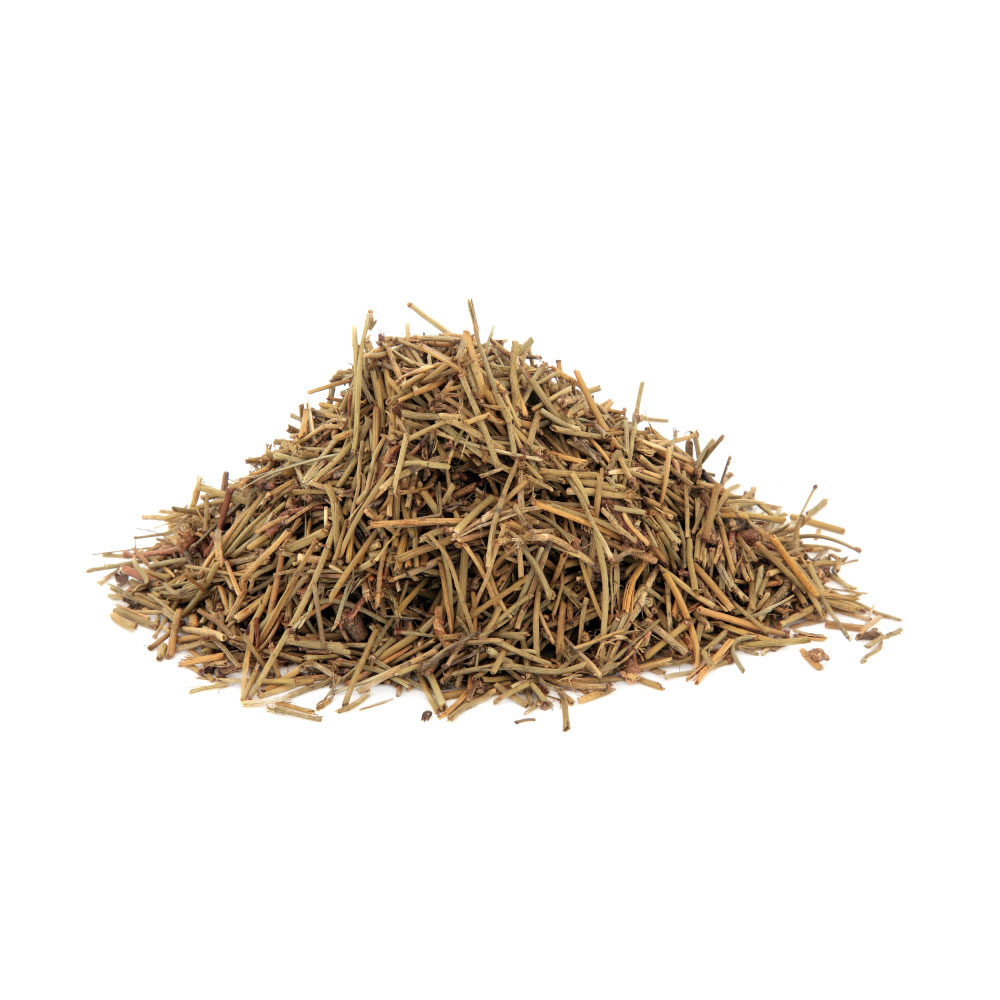 PotentPotentEphedraEphedra sinicaEphedrine is a mixed alpha and beta adrenergic agonist that relaxes bronchial smooth muscle by the same receptor route as a modern inhaler, with the difference that it is orally active.Mechanismmixed α/β-adrenergic agonism (ephedrine); β2-mediated bronchial smooth-muscle relaxationRead the evidenceShow lessMonograph →
The stem’s majority alkaloid ephedrine relaxes bronchial smooth muscle and opens the airways through the same receptor as modern β-agonist inhalers, and unlike them it works by mouth 9,
The pharmacology aligns with millennia of ma huang use for wind-cold patterns with wheezing, given classically to diffuse the lungs and relieve wheezing 12,
The controlled evidence is for the isolated alkaloid rather than a standardised whole-herb preparation. Dried stem runs roughly 0.5–2.5% total alkaloids, so a tea or tincture delivers an unstandardised dose 11Reference 11ReviewChemical composition of various Ephedra species — reviewView study →, and ephedrine was displaced from asthma care by selective inhaled β2-agonists because its non-selective α/β action drives cardiac and central effects 9Reference 9ReviewEphedra in perspective — a current review — reviewView study →.
Species matters absolutely. This is Ephedra sinica, Asian ma huang.
The North American E. nevadensis and E. viridis, sold as Mormon tea, are low in or essentially free of ephedrine-type alkaloids and are not a substitute.
Show 2 more herbs with a mild bronchodilator action
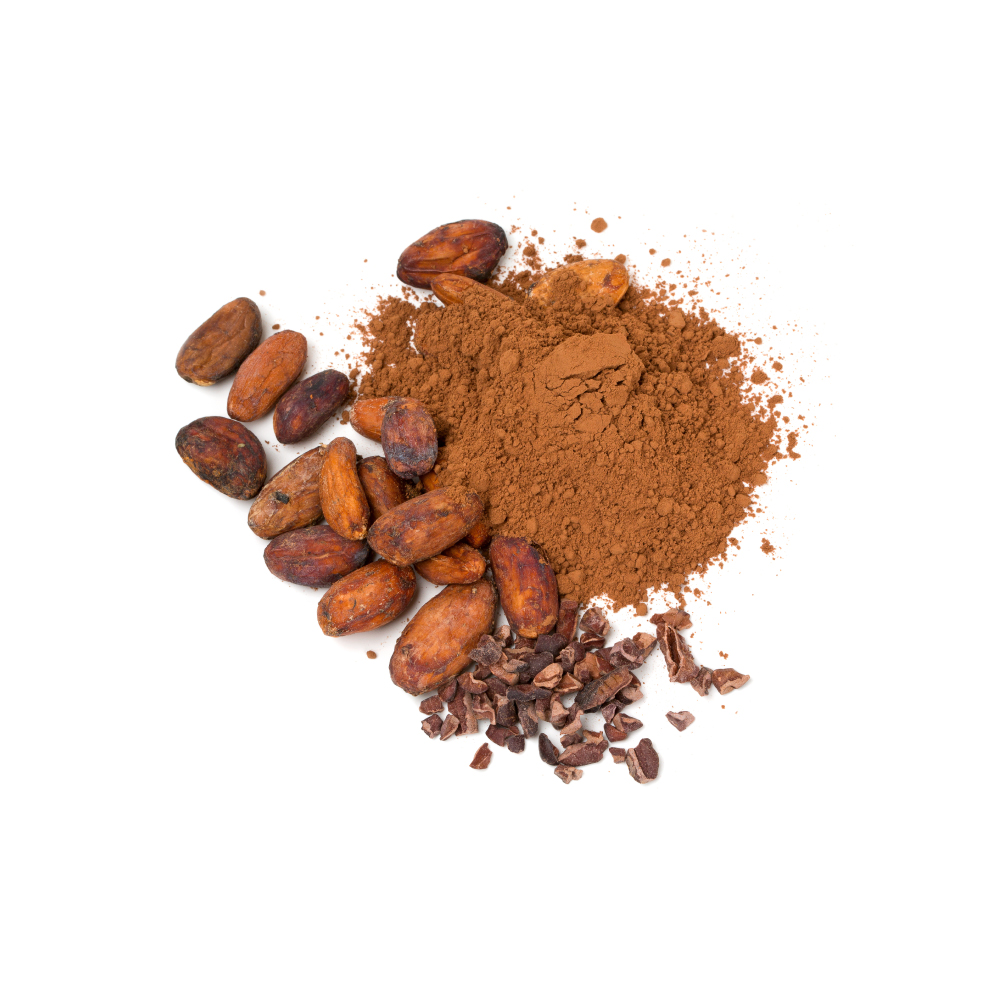 MildMildCacaoTheobroma cacaoTheobromine is a methylxanthine that blocks adenosine receptors and inhibits phosphodiesterase, the theophylline mechanism, and it is a substantially weaker airway relaxant than theophylline is.Mechanismadenosine-receptor antagonism; phosphodiesterase inhibition (theobromine); vagal sensory-nerve activation ↓Read the evidenceShow lessMonograph →
Bronchodilation is attributed to theobromine’s adenosine antagonism and phosphodiesterase inhibition, the same family mechanism as theophylline, and the classical source describes theobromine relaxing bronchial smooth muscle 7Reference 7A Modern Herbal | Cacao. (n.d.). Retrieved from https://www.botanical.com/botanical/mgmh/c/cacao-02.htmlView study →.
The one piece of human airway evidence points somewhere adjacent. A mechanistic RCT found isolated theobromine inhibited vagal sensory-nerve activation and suppressed citric-acid-induced cough comparably to codeine without central side effects 8Reference 8RCTTheobromine inhibits sensory nerve activation and cough — randomised controlled trialView study →.
That is an antitussive result through sensory-afferent suppression rather than smooth-muscle relaxation, and it used about 1000 mg of the purified alkaloid rather than cacao as eaten.
No bronchodilation study of cacao itself exists, and theobromine is a substantially weaker airway relaxant than theophylline.
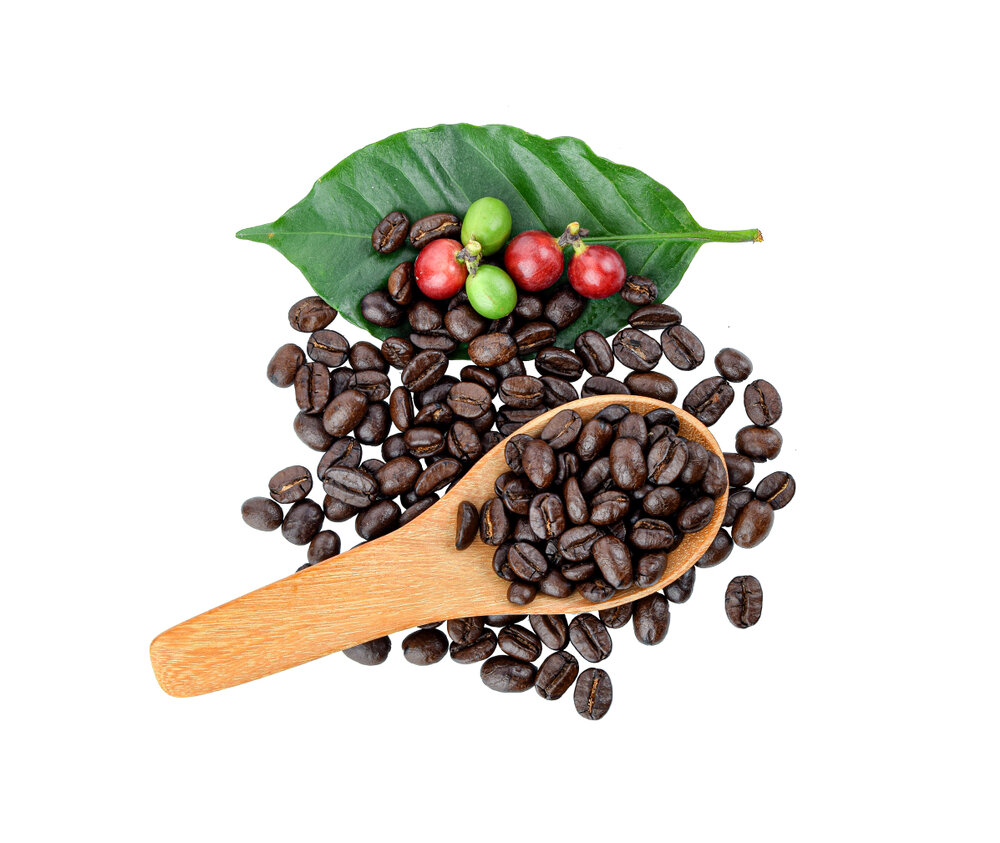 MildMildCoffeeCoffea arabicaCaffeine modestly improves lung function in asthma for up to four hours in pooled crossover trials, enough to confound a spirometry result and far short of treating an attack.Mechanismadenosine-receptor antagonism; phosphodiesterase inhibition (caffeine)Read the evidenceShow lessMonograph →
Caffeine is a methylxanthine related to theophylline, and its adenosine-antagonist and phosphodiesterase-inhibiting actions are the same ones that made theophylline an asthma drug.
A Cochrane review of seven crossover trials in 75 people with mild to moderate asthma found that caffeine, even below 5 mg/kg, improves lung function for up to two hours. The FEV1 gain was small (SMD 0.72, 95% CI 0.25 to 1.20, about a 5% mean difference, though 12% and 18% in two of the studies), and improved mid-expiratory flow was sustained to four hours 15Reference 15Meta-analysisCaffeine for asthma — Cochrane systematic review and meta-analysisView study →.
Its practical conclusion is that people should avoid caffeine for at least four hours before lung-function testing.
The trials tested caffeine, and in one case coffee against decaffeinated coffee for exhaled nitric oxide, where it made no difference 15Reference 15Meta-analysisCaffeine for asthma — Cochrane systematic review and meta-analysisView study →. A strong coffee is a weak bronchodilator, and the effect is nowhere near enough to treat an attack.
No herbs match these filters.
Safety
- No herbal bronchodilator is a rescue inhaler or a substitute for a preventer inhaler.
- Worsening breathlessness, a reliever that stops working, difficulty speaking in full sentences or a falling peak flow is an emergency.
- A non-selective adrenergic bronchodilator raises blood pressure and heart rate, and is contraindicated in cardiovascular disease, hypertension, thyroid disease, diabetes and prostate enlargement.
- Adrenergic bronchodilators must never be combined with an MAO inhibitor; allow 14 days after stopping one.
- Tachycardia and palpitations are the dose-limiting effect of a non-selective bronchodilator.
- Caffeine should be avoided for at least four hours before lung-function testing, because it changes the result.
References
- Vansal SS, Feller DR (1999). Direct effects of ephedrine isomers on human beta-adrenergic receptor subtypes — in vitro. Biochemical Pharmacology. https://pubmed.ncbi.nlm.nih.gov/10449190/
- Statler AK, Maani CV, Kohli A (2023). Ephedrine — clinical pharmacology review. StatPearls (NCBI Bookshelf, NBK547661). https://www.ncbi.nlm.nih.gov/books/NBK547661/
- Weinberger M, Bronsky E, Bensch GW, Bock GN, Yecies JJ (1975). Interaction of ephedrine and theophylline — randomised controlled trial. Clinical Pharmacology and Therapeutics. https://pubmed.ncbi.nlm.nih.gov/1092514/
- Hong H, Chen HB, Yang DH, et al. (2011). Comparison of contents of five ephedrine alkaloids in three official origins of Ephedra Herb in China by high-performance liquid chromatography. Journal of Natural Medicines. https://pubmed.ncbi.nlm.nih.gov/21465337/
- Drew CD, Knight GT, Hughes DT, Bush M (1978). Comparison of the effects of D-(−)-ephedrine and L-(+)-pseudoephedrine on the cardiovascular and respiratory systems in man — double-blind study. British Journal of Clinical Pharmacology. https://pubmed.ncbi.nlm.nih.gov/687500/
- Rothman RB, Vu N, Partilla JS, et al. (2003). In vitro characterization of ephedrine-related stereoisomers at biogenic amine transporters and the receptorome reveals selective actions as norepinephrine transporter substrates. Journal of Pharmacology and Experimental Therapeutics. https://pubmed.ncbi.nlm.nih.gov/12954796/
- A Modern Herbal | Cacao. (n.d.). Retrieved from https://www.botanical.com/botanical/mgmh/c/cacao-02.html
- Usmani OS, Belvisi MG, et al. (2005). Theobromine inhibits sensory nerve activation and cough — randomised controlled trial. FASEB J. https://pubmed.ncbi.nlm.nih.gov/15548587/
- Abourashed, E. A., El-Alfy, A. T., Khan, I. A., & Walker, L. (2003). Ephedra in perspective — a current review — review. Phytother Res. https://pubmed.ncbi.nlm.nih.gov/12916063/
- Tang, S., Ren, J., Kong, L., et al. (2023). Ephedrae Herba: a review of its phytochemistry, pharmacology, clinical application and alkaloid toxicity — review. Molecules. https://pubmed.ncbi.nlm.nih.gov/36677722/
- Ibragic, S., & Sofić, E. (2015). Chemical composition of various Ephedra species — review. Bosn J Basic Med Sci. https://pubmed.ncbi.nlm.nih.gov/26295290/
- Yang, J., Huang, H., Zhu, L-J., & Chen, Y. (2013). Introduction to Chinese Materia Medica (3rd ed.). (Pg. 36-40).
- Wu, J. N. (2005). An Illustrated Chinese Materia Medica. New York: Oxford University Press. (Pg. 280-281).
- Zhang, B. M., Wang, Z. B., Xin, P., et al. (2018). Phytochemistry and pharmacology of the genus Ephedra — review. Chin J Nat Med. https://pubmed.ncbi.nlm.nih.gov/30502763/
- Welsh, E. J., Bara, A., Barley, E., & Cates, C. J. (2010). Caffeine for asthma — Cochrane systematic review and meta-analysis. Cochrane Database of Systematic Reviews. https://pubmed.ncbi.nlm.nih.gov/20091514/
Keep Exploring