What Is Winged-Stem Passionflower?
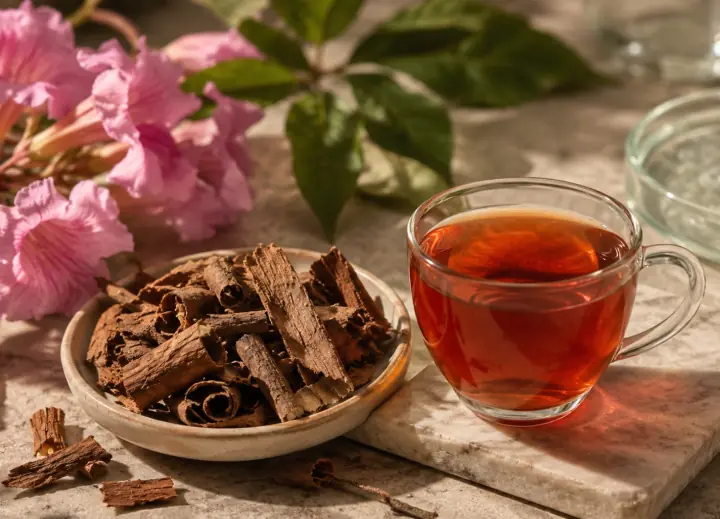
Winged-stem passionflower is a vigorous South American passionflower vine, used in Brazil as a sedative and calming herb. Its leaves and aerial parts are dried for infusions or made into a standardised extract sold in capsules 1,
It has been an official species of the Brazilian Pharmacopoeia since 1929 13Reference 13In vitroCytotoxic, antitumor and toxicological profile of Passiflora alata leaf extract — in vitro / animal modelView study →, and it goes into many of the sedative phytomedicines sold in Brazil 14Reference 14AnimalToxicity and genotoxicity evaluation of Passiflora alata Curtis (Passifloraceae) — animal modelView study →. Along with passion fruit, it is one of only two native Brazilian Passiflora species of commercial value 4Reference 4AnimalAssessment of sedative effects of Passiflora edulis f. flavicarpa and Passiflora alata extracts in mice, measured by telemetry — animal modelView study →. Its sweet, fragrant fruit gives it the name maracujá-doce 2Reference 2AnimalComparative pharmacological study of hydroethanol extracts of Passiflora alata and Passiflora edulis leaves — animal modelView study →.
Its leaf flavonoids differ markedly from those of the European and North American passionflower, P. incarnata 17,
How Is Winged-Stem Passionflower Used?
Winged-stem passionflower is used for anxiety, nervous agitation and restless sleep. The leaves are also used as an antispasmodic 17Reference 17LC and UV determination of flavonoids from Passiflora alata medicinal extracts and leaves — analyticalView study →.
- Standardised dry leaf extract — capsules standardised to total flavonoids expressed as apigenin, 500 mg to 2 g a day depending on the severity of the anxiety 1Reference 1RCTClinical, humanistic, and economic outcomes of Passiflora alata Curtis use in participants with mild to moderate anxiety — open-label, non-randomised human studyView study →.
- Leaf infusion — the traditional form, taken in the evening 2,
10Reference 2AnimalComparative pharmacological study of hydroethanol extracts of Passiflora alata and Passiflora edulis leaves — animal modelView study →Reference 10AnimalChemical investigation and effects of the tea of Passiflora alata on biochemical parameters in rats — animal modelView study → .
Other Passionflowers
Passiflora holds roughly 500 species. Four besides this one are used medicinally or are often confused with one that is.
- Passionflower (P. incarnata) — the species of the European and North American pharmacopoeias, and the one tested in the human anxiety and sleep trials.
- Passion fruit (P. edulis) — the fruit crop, with three separate medicines: a sedative leaf, a fruit peel with human blood-sugar data, and a seed rich in stilbenes.
- Stinking passionflower (P. foetida) — a tropical weed used for pain rather than calm.
- Blue passionflower (P. caerulea) — a hardy ornamental from southern South America, grown widely in gardens, with chrysin among its flavonoids.
Traditional Uses
Brazilian Folk Medicine
In Brazil, several Passiflora species share the name maracujá, and they are widely used as sedatives and tranquillisers 2Reference 2AnimalComparative pharmacological study of hydroethanol extracts of Passiflora alata and Passiflora edulis leaves — animal modelView study →. P. alata is maracujá-doce, the sweet one, for its edible fruit.
The leaf infusion is the traditional preparation, taken in the evening for nervousness, agitation and difficulty sleeping 2,
The plant entered the Brazilian Pharmacopoeia in 1929 13Reference 13In vitroCytotoxic, antitumor and toxicological profile of Passiflora alata leaf extract — in vitro / animal modelView study →. Its leaves are used for anxiety and as a sedative and antispasmodic 17Reference 17LC and UV determination of flavonoids from Passiflora alata medicinal extracts and leaves — analyticalView study →, and the modern standardised extracts are sold for the same uses 1Reference 1RCTClinical, humanistic, and economic outcomes of Passiflora alata Curtis use in participants with mild to moderate anxiety — open-label, non-randomised human studyView study →.
Indications
- Anxiety and nervous agitation [leaf extract; Brazilian use]
- Difficulty falling asleep from restlessness [leaf infusion; Brazilian folk use]
- Smooth-muscle spasm and nervous digestive complaints [leaf; Brazilian use]
- Inflammation [leaf extract]
- Protection of insulin-producing cells in type 1 diabetes [aqueous leaf extract]
Botany
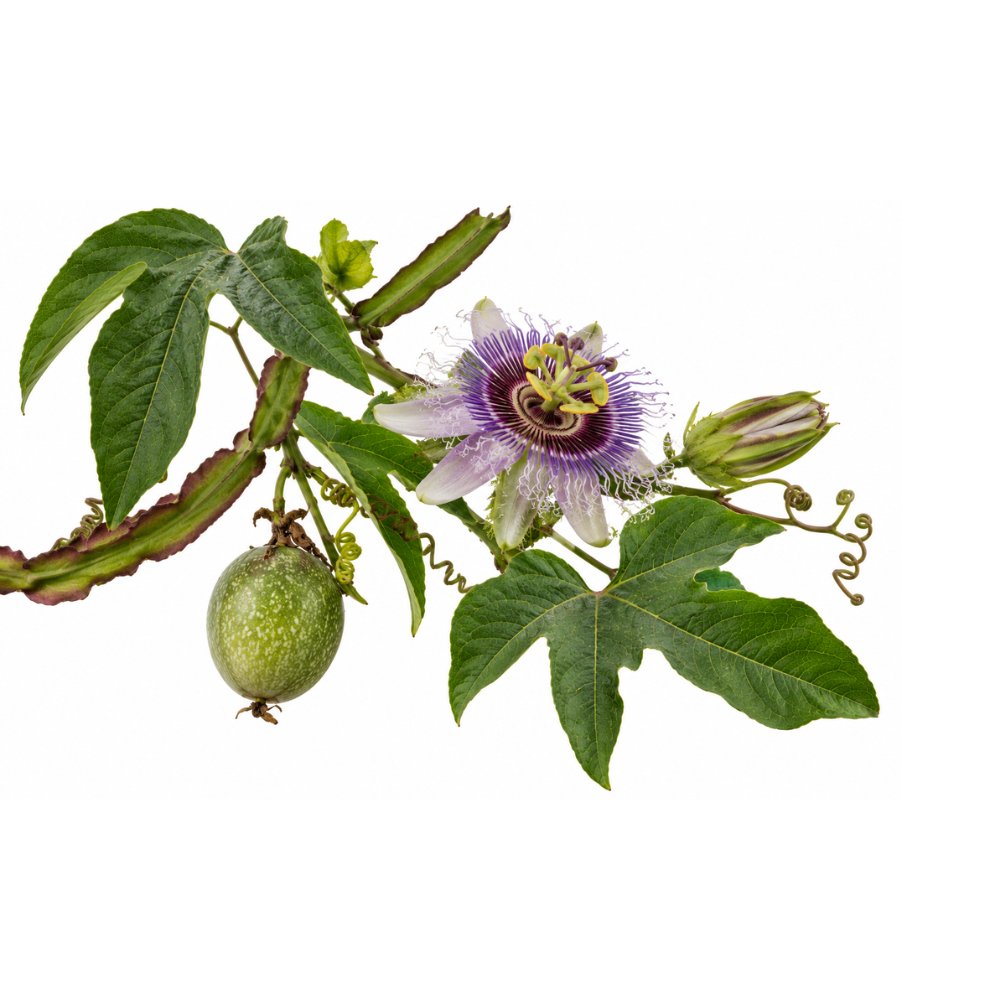
Winged-stem passionflower is an evergreen climbing plant in the passionflower family (Passifloraceae) 23Reference 23Tropical Plants Database: Passiflora alata — species databaseView study →. The species name alata means “winged”. Its stems are stout and four-angled, 3–15 m long, and scramble over the ground or climb into surrounding vegetation by coiling tendrils 23Reference 23Tropical Plants Database: Passiflora alata — species databaseView study →.
The flowers are large and very fragrant 23Reference 23Tropical Plants Database: Passiflora alata — species databaseView study →.
The fruit is greenish-yellow to light yellow and egg- to pear-shaped, about 8–11 cm long and 5–8 cm wide. Its juicy pulp is sweet and pleasant, and the fruit is valued for drinks 23Reference 23Tropical Plants Database: Passiflora alata — species databaseView study →.
Distribution
Winged-stem passionflower is native to South America. Its range centres on Brazil, from the Amazon to the southern states, and extends into Peru, Ecuador, Paraguay and north-eastern Argentina 24Reference 24Passiflora alata Curtis — native and introduced distribution, via GBIF — species databaseView study →. It grows in rainforest and on river levees near the coast 23Reference 23Tropical Plants Database: Passiflora alata — species databaseView study →.
It is widely cultivated as an ornamental and for its fruit, and it has been introduced to Mexico, Costa Rica, French Guiana and the islands of Mauritius and Réunion 23,
Growing Conditions
Cultivation snapshot for Winged-Stem Passionflower
WaterRegular; it is a wet-tropics plant and does not tolerate drought the way P. incarnata does.
ZoneUSDA 10–11; grown under glass in temperate climates.
Grow it yourself
Farm Wiki is our cultivation-focused sister site, also run by Justin Cooke.
Phytochemistry
The leaf’s flavonoid profile is very different from that of P. incarnata. Isovitexin, the marker the European pharmacopoeial methods test for, is present at 0.018 g% in a P. alata fluid extract, against 1.198 g% in a P. incarnata fluid extract made the same way 17Reference 17LC and UV determination of flavonoids from Passiflora alata medicinal extracts and leaves — analyticalView study →.
Several P. incarnata markers are absent from P. alata. Orientin, swertisin and rutin were not detected in the fluid extract, and only traces of vitexin were found 17Reference 17LC and UV determination of flavonoids from Passiflora alata medicinal extracts and leaves — analyticalView study →. Chromatographic comparisons of P. alata, P. edulis, P. incarnata and P. caerulea give four distinct fingerprints 18,
The aqueous leaf extract contains catechin, epicatechin and rutin as its main phenolics 8Reference 8AnimalAqueous leaf extract of Passiflora alata Curtis promotes antioxidant and anti-inflammatory effects and consequently preservation of NOD mice beta cells — animal modelView study →, along with isoorientin and other C-glycosyl flavones 12Reference 12In vitroAntiproliferative and pro-oxidant effect of polyphenols in aqueous leaf extract of Passiflora alata Curtis on activated T lymphocytes from non-obese diabetic mice — in vitroView study →. A study of the leaf tea also identified luteolin and chrysoeriol derivatives and two saponins 10Reference 10AnimalChemical investigation and effects of the tea of Passiflora alata on biochemical parameters in rats — animal modelView study →. The leaves also carry triterpene saponins 21Reference 21In vitroAnti-Trichomonas vaginalis activity of saponins from Quillaja, Passiflora, and Ilex species — in vitroView study →.
Brazilian commercial extracts are standardised to total flavonoids expressed as apigenin, not to isovitexin 1Reference 1RCTClinical, humanistic, and economic outcomes of Passiflora alata Curtis use in participants with mild to moderate anxiety — open-label, non-randomised human studyView study →. Rutin appears in the aqueous leaf extract but not in the fluid extract, so the amount found depends on the preparation 8,
Constituent Summary
Reported from the leaf and its extracts.
| Constituent | Class | Note |
|---|---|---|
| Isovitexin | C-glycosyl flavone | 0.018 g% in the fluid extract, about 60 times lower than in P. incarnata 17Reference 17LC and UV determination of flavonoids from Passiflora alata medicinal extracts and leaves — analyticalView study → |
| Vitexin | C-glycosyl flavone | Traces only 17Reference 17LC and UV determination of flavonoids from Passiflora alata medicinal extracts and leaves — analyticalView study → |
| Isoorientin | C-glycosyl flavone | In the aqueous leaf extract 12Reference 12In vitroAntiproliferative and pro-oxidant effect of polyphenols in aqueous leaf extract of Passiflora alata Curtis on activated T lymphocytes from non-obese diabetic mice — in vitroView study → |
| Luteolin, chrysoeriol | Flavone aglycones | As C-glycoside derivatives in the leaf tea 10Reference 10AnimalChemical investigation and effects of the tea of Passiflora alata on biochemical parameters in rats — animal modelView study → |
| Catechin, epicatechin | Flavan-3-ols | Main phenolics of the aqueous leaf extract 8Reference 8AnimalAqueous leaf extract of Passiflora alata Curtis promotes antioxidant and anti-inflammatory effects and consequently preservation of NOD mice beta cells — animal modelView study → |
| Rutin | Flavonol glycoside | In the aqueous leaf extract 8Reference 8AnimalAqueous leaf extract of Passiflora alata Curtis promotes antioxidant and anti-inflammatory effects and consequently preservation of NOD mice beta cells — animal modelView study →; not detected in the fluid extract 17Reference 17LC and UV determination of flavonoids from Passiflora alata medicinal extracts and leaves — analyticalView study → |
| Apigenin | Flavone | Reference compound for standardising commercial extracts 1Reference 1RCTClinical, humanistic, and economic outcomes of Passiflora alata Curtis use in participants with mild to moderate anxiety — open-label, non-randomised human studyView study → |
| Saponins | Triterpene glycosides | In the leaf 10, |
Pharmacology & Research
About two dozen studies have been published on P. alata, almost all Brazilian and almost all in animals or cell cultures. Anxiolytic and sedative effects have been found by several independent groups using three different behavioural methods.
Other work covers antioxidant and anti-inflammatory activity, prevention of type 1 diabetes in NOD mice, and scattered liver, antiproliferative and antimicrobial findings. The human evidence is a single 90-day open-label study in 30 adults 1Reference 1RCTClinical, humanistic, and economic outcomes of Passiflora alata Curtis use in participants with mild to moderate anxiety — open-label, non-randomised human studyView study →.
-
Best-supported: anxiolysis, from a replicated animal elevated-plus-maze signal plus one uncontrolled human study 1,
2, ; dose-dependent sedation in animals 4Reference 4AnimalAssessment of sedative effects of Passiflora edulis f. flavicarpa and Passiflora alata extracts in mice, measured by telemetry — animal modelView study →; antioxidant and anti-inflammatory activity across several models 6,3Reference 1RCTClinical, humanistic, and economic outcomes of Passiflora alata Curtis use in participants with mild to moderate anxiety — open-label, non-randomised human studyView study →Reference 2AnimalComparative pharmacological study of hydroethanol extracts of Passiflora alata and Passiflora edulis leaves — animal modelView study →Reference 3AnimalThe aqueous extracts of Passiflora alata and Passiflora edulis reduce anxiety-related behaviors without affecting memory process in rats — animal modelView study → 7, .9Reference 6AnimalPassiflora alata and Passiflora edulis spray-dried aqueous extracts inhibit inflammation in mouse model of pleurisy — animal modelView study →Reference 7AnimalAntioxidant and anti-diabetic potential of Passiflora alata Curtis aqueous leaves extract in type 1 diabetes mellitus (NOD-mice) — animal modelView study →Reference 9AnimalProtective effects of Passiflora alata extract pretreatment on carbon tetrachloride induced oxidative damage in rats — animal modelView study → -
Emerging, worth watching: prevention of type-1 diabetes onset in NOD mice through islet immunomodulation and a regulatory-T-cell shift 7,
8, .11Reference 7AnimalAntioxidant and anti-diabetic potential of Passiflora alata Curtis aqueous leaves extract in type 1 diabetes mellitus (NOD-mice) — animal modelView study →Reference 8AnimalAqueous leaf extract of Passiflora alata Curtis promotes antioxidant and anti-inflammatory effects and consequently preservation of NOD mice beta cells — animal modelView study →Reference 11In vitroAqueous extract of Passiflora alata leaves modulates in vitro the indoleamine 2,3-dioxygenase (IDO) and CD86 expression in antigen-presenting cells polarizing NOD mice T cells to a Treg profile — in vitroView study → -
Mechanistically thin: the antispasmodic use is pharmacopoeial with no modern experimental test in this species; antimicrobial activity is in vitro and constituent-level 20,
21Reference 20In vitroBiological activities of extracts from cultivated granadilla Passiflora alata — in vitroView study →Reference 21In vitroAnti-Trichomonas vaginalis activity of saponins from Quillaja, Passiflora, and Ilex species — in vitroView study → . -
The caveat: the chemistry differs so far from P. incarnata that its human trials do not carry over 17,
18Reference 17LC and UV determination of flavonoids from Passiflora alata medicinal extracts and leaves — analyticalView study →Reference 18A HPTLC densitometric determination of flavonoids from Passiflora alata, P. edulis, P. incarnata and P. caerulea and comparison with HPLC method — analyticalView study → , the only human study is open-label and uncontrolled 1Reference 1RCTClinical, humanistic, and economic outcomes of Passiflora alata Curtis use in participants with mild to moderate anxiety — open-label, non-randomised human studyView study →, and no receptor target has been demonstrated for the calming effect.
The human trials of P. incarnata do not apply to this species. The two plants’ leaf flavonoids differ by about sixtyfold in their marker compound, and P. alata’s own human evidence is one uncontrolled study 1,
1. Anxiolytic
The human study was a 90-day, open-label, non-randomised before-and-after study in 30 adults with mild to moderate anxiety 1Reference 1RCTClinical, humanistic, and economic outcomes of Passiflora alata Curtis use in participants with mild to moderate anxiety — open-label, non-randomised human studyView study →. It used a commercial dry leaf extract standardised to 0.07% total flavonoids as apigenin, dosed by severity from 500 mg/day up to 1,500–2,000 mg/day.
GAD-7 scores fell substantially. At baseline 53% scored in the severe band, and at the final visit 3% did, with 30% scoring in the no-anxiety band. The authors reported clinical effectiveness in 29 of the 30 participants 1Reference 1RCTClinical, humanistic, and economic outcomes of Passiflora alata Curtis use in participants with mild to moderate anxiety — open-label, non-randomised human studyView study →. With no control group, regression to the mean and expectation cannot be separated from a drug effect.
The animal evidence is better replicated. Hydroethanolic leaf extracts were anxiolytic on the elevated plus-maze at about 50, 100 and 150 mg/kg 2Reference 2AnimalComparative pharmacological study of hydroethanol extracts of Passiflora alata and Passiflora edulis leaves — animal modelView study →. Aqueous extracts injected into rats reproduced the effect at 100 and 150 mg/kg. Diazepam disrupted performance on a memory test, and neither passionflower extract did 3Reference 3AnimalThe aqueous extracts of Passiflora alata and Passiflora edulis reduce anxiety-related behaviors without affecting memory process in rats — animal modelView study →. The earliest crude-extract work had reported the same depressant profile 5Reference 5AnimalPharmacological trials of crude extract of Passiflora alata — animal modelView study →.
Passion fruit was active at a lower dose in the same rat experiment, which the authors attributed to its roughly doubled flavonoid content 3Reference 3AnimalThe aqueous extracts of Passiflora alata and Passiflora edulis reduce anxiety-related behaviors without affecting memory process in rats — animal modelView study →.
Gap: no controlled human trial exists. The entire human case rests on one uncontrolled study.
2. Antioxidant
Antioxidant activity is the most consistently reproduced biochemical effect in the species.
Oral pretreatment for 30 days protected rat liver against carbon-tetrachloride injury, lowering lipid peroxidation and raising catalase and superoxide dismutase 9Reference 9AnimalProtective effects of Passiflora alata extract pretreatment on carbon tetrachloride induced oxidative damage in rats — animal modelView study →. In non-obese diabetic mice, long-term aqueous leaf extract raised glutathione in liver and kidney 7,
The phenolics credited are catechin, epicatechin, rutin and related flavonoids. No human antioxidant endpoint has been measured.
3. Anti-Inflammatory
Spray-dried aqueous leaf extract at 100–300 mg/kg suppressed leukocyte migration and exudate in carrageenan-induced mouse pleurisy, with falls in myeloperoxidase, adenosine deaminase and serum C-reactive protein 6Reference 6AnimalPassiflora alata and Passiflora edulis spray-dried aqueous extracts inhibit inflammation in mouse model of pleurisy — animal modelView study →.
In the NOD-mouse diabetes model the extract reduced inflammatory-cell infiltration of the pancreatic islets 7,
All of this work is in animals and cells.
4. Sedative
Radiotelemetry in mice compared P. alata and passion-fruit extracts against midazolam and caffeine. All extracts cut spontaneous locomotor activity dose-dependently across 300–1,200 mg/kg. P. alata extracts were more active than passion-fruit extracts, and extracts of the fruit rind (pericarp) were more active than leaf extracts 4Reference 4AnimalAssessment of sedative effects of Passiflora edulis f. flavicarpa and Passiflora alata extracts in mice, measured by telemetry — animal modelView study →. Older crude-extract trials reported the same depressant profile 5Reference 5AnimalPharmacological trials of crude extract of Passiflora alata — animal modelView study →.
Repeated 14-day dosing up to 250 mg/kg produced no central cumulative effect, which suggests the sedation does not build up with continued use 15Reference 15AnimalRepeated administration of an aqueous spray-dried extract of the leaves of Passiflora alata Curtis inhibits body weight gain without altering mice behavior — animal modelView study →. No human study has measured a sedation endpoint directly.
5. Antidiabetic — Type 1, Preclinical
Two long feeding studies gave aqueous leaf extract to non-obese diabetic mice for 28 and 30 weeks. Both found a lower incidence of diabetes, 28.6% lower in the second, with fewer inflammatory cells infiltrating the pancreatic islets, more insulin-positive cells, and raised antioxidant defences in liver and kidney 7,
The mechanism appears immunomodulatory: the extract polarises antigen-presenting cells toward tolerance and expands regulatory T cells in vitro 11Reference 11In vitroAqueous extract of Passiflora alata leaves modulates in vitro the indoleamine 2,3-dioxygenase (IDO) and CD86 expression in antigen-presenting cells polarizing NOD mice T cells to a Treg profile — in vitroView study →.
Gap: this is prevention of onset in a genetically predisposed mouse, not reversal of established disease, and it has never been tested in a person.
6. Hepatoprotective
Thirty days of oral pretreatment with the leaf extract at 1 and 5 mg/kg protected rat liver against carbon-tetrachloride damage, with less necrosis, lower lipid peroxidation and higher catalase and superoxide dismutase. The higher dose also protected the heart 9Reference 9AnimalProtective effects of Passiflora alata extract pretreatment on carbon tetrachloride induced oxidative damage in rats — animal modelView study →.
A repeated-dosing study found that 14 days at 25 and 250 mg/kg reduced relative liver weight, caused mild hepatic hydropic degeneration and lowered serum ALT in mice. Its authors called for a study of liver toxicity 15Reference 15AnimalRepeated administration of an aqueous spray-dried extract of the leaves of Passiflora alata Curtis inhibits body weight gain without altering mice behavior — animal modelView study →.
Gap: the protective and the harmful findings come from different doses and different models. The effect of sustained use on the liver is not known.
7. Anticancer
The leaf extract inhibited proliferation of prostate and sarcoma cell lines below 30 µg/mL 13Reference 13In vitroCytotoxic, antitumor and toxicological profile of Passiflora alata leaf extract — in vitro / animal modelView study →. Given by injection to mice with sarcoma, it cut tumour growth by 37–45% at 100–150 mg/kg a day. The mice also ate less and lost weight, and showed an enlarged spleen and a shifted white-cell count 13Reference 13In vitroCytotoxic, antitumor and toxicological profile of Passiflora alata leaf extract — in vitro / animal modelView study →.
In vitro, the extract’s polyphenols — isoorientin, vitexin, catechin and rutin — were antiproliferative against activated T lymphocytes through a pro-oxidant, apoptosis-inducing mechanism 12Reference 12In vitroAntiproliferative and pro-oxidant effect of polyphenols in aqueous leaf extract of Passiflora alata Curtis on activated T lymphocytes from non-obese diabetic mice — in vitroView study →.
This is early cell-line and single-model work.
8. Antimicrobial
Ethanol, acetone and ethyl-acetate extracts of cultivated P. alata inhibited mainly Gram-positive bacteria and some fungi in vitro, the ethyl-acetate fraction most strongly 20Reference 20In vitroBiological activities of extracts from cultivated granadilla Passiflora alata — in vitroView study →. Isolated leaf saponins showed strong activity against Trichomonas vaginalis at a minimum inhibitory concentration of 0.025%, and also lysed red blood cells 21Reference 21In vitroAnti-Trichomonas vaginalis activity of saponins from Quillaja, Passiflora, and Ilex species — in vitroView study →.
Gap: all of it is in vitro and comes from solvent extracts or isolated saponins, not from the leaf preparations used as a sedative.
9. Antispasmodic
The leaves are used as an antispasmodic as well as a sedative 17Reference 17LC and UV determination of flavonoids from Passiflora alata medicinal extracts and leaves — analyticalView study →.
No modern experimental study has tested a smooth-muscle or spasmolytic endpoint in this species.
Mechanisms
No receptor target has been identified for the calming effect of P. alata. The research has stayed behavioural, showing that the anxiolytic effect is dose-dependent, separable from general sedation, and does not impair memory 3Reference 3AnimalThe aqueous extracts of Passiflora alata and Passiflora edulis reduce anxiety-related behaviors without affecting memory process in rats — animal modelView study →.
The leaf’s flavonoids and phenolics have been studied for antioxidant and immunomodulatory activity, which relates to the liver, anti-inflammatory and type 1 diabetes findings. The triterpene saponins have been studied separately for membrane-lytic antimicrobial activity 21Reference 21In vitroAnti-Trichomonas vaginalis activity of saponins from Quillaja, Passiflora, and Ilex species — in vitroView study →.
| Mechanism | Drives | Key compounds |
|---|---|---|
| Free-radical scavenging; catalase ↑, SOD ↑, glutathione ↑ | antioxidanthepatoprotection | catechin, epicatechin, rutin, quercetin |
| Myeloperoxidase ↓, adenosine deaminase ↓, CRP ↓ | anti-inflammatory | isoorientin, vitexin, rutin |
| Indoleamine-2,3-dioxygenase ↑, CD86 ↓, Treg shift, IL-6 and IFN-γ ↓ | immunomodulationtype-1 diabetes prevention | aqueous leaf extract, unresolved to a constituent |
| Pro-oxidant, apoptosis-inducing antiproliferation in immune and tumour cells | anticancerimmunomodulation | triterpene saponins, polyphenols |
| Membrane-lytic saponin activity | antimicrobialantiprotozoal | triterpene saponins |
Clinical Trials
No trials are registered on ClinicalTrials.gov. The single human study was an open-label, uncontrolled before-and-after study registered in the Brazilian Clinical Trials Registry 1Reference 1RCTClinical, humanistic, and economic outcomes of Passiflora alata Curtis use in participants with mild to moderate anxiety — open-label, non-randomised human studyView study →. Everything else is preclinical.
| Completed | Planned | Terminated | Preclinical |
|---|---|---|---|
| 1(uncontrolled) | 0 | 0 | ~20 |
Last checked: September 2026.
Dosage
Research Doses
The 90-day human study used a commercial dry extract standardised to 0.07% total flavonoids as apigenin, in 500 mg capsules, with the daily amount set by anxiety severity 1Reference 1RCTClinical, humanistic, and economic outcomes of Passiflora alata Curtis use in participants with mild to moderate anxiety — open-label, non-randomised human studyView study →:
| Anxiety severity | Daily dose |
|---|---|
| Mild | 500 mg once daily |
| Moderate | 1,000 mg, split every 12 hours |
| Severe | 1,500–2,000 mg across 3–4 doses |
Traditional Dosage
| System | Preparation | Dose |
|---|---|---|
| Brazilian folk | Leaf infusion, taken in the evening | Not quantified 2, |
Safety & Pregnancy
Winged-stem passionflower was well tolerated in the one human study. Its main cautions are drowsiness, which is its intended effect, and an unresolved genotoxicity finding in mice.
- Well tolerated short-term. Only 3 of 30 participants reported any effect over 90 days, all mild 1Reference 1RCTClinical, humanistic, and economic outcomes of Passiflora alata Curtis use in participants with mild to moderate anxiety — open-label, non-randomised human studyView study →.
- Drowsiness. It is a sedative, so avoid driving, alcohol, benzodiazepines and other sedatives until you know how it affects you 1Reference 1RCTClinical, humanistic, and economic outcomes of Passiflora alata Curtis use in participants with mild to moderate anxiety — open-label, non-randomised human studyView study →.
- Unresolved genotoxicity finding. No mouse died at a single oral dose of 4,800 mg/kg, but the same extract caused dose-dependent DNA damage on comet and micronucleus tests from 50 mg/kg, growing over three days of dosing 14Reference 14AnimalToxicity and genotoxicity evaluation of Passiflora alata Curtis (Passifloraceae) — animal modelView study →.
- Liver changes at repeated higher doses. Fourteen days at 25–250 mg/kg reduced relative liver weight, lowered serum ALT and caused mild hepatic hydropic degeneration in mice 15Reference 15AnimalRepeated administration of an aqueous spray-dried extract of the leaves of Passiflora alata Curtis inhibits body weight gain without altering mice behavior — animal modelView study →.
- Occupational allergy is documented. IgE-mediated asthma and rhinitis to P. alata were confirmed in a pharmacy worker handling the extract 16Reference 16Case reportOccupational respiratory allergic disease induced by Passiflora alata and Rhamnus purshiana — case reportView study →.
- Avoid in pregnancy and breastfeeding. There are no data in either.
Full Safety Detail
Tolerability. Over 90 days in the human study, three of thirty participants reported mild effects: one had drowsiness and two had passing stomach or bowel discomfort. Nothing serious was recorded 1Reference 1RCTClinical, humanistic, and economic outcomes of Passiflora alata Curtis use in participants with mild to moderate anxiety — open-label, non-randomised human studyView study →.
Genotoxicity. A Brazilian toxicology study found no deaths in mice at a single oral dose of 4,800 mg/kg. Rats given 300 mg/kg daily for 14 days showed no biochemical, blood or tissue changes, though they were irritable and did not gain weight 14Reference 14AnimalToxicity and genotoxicity evaluation of Passiflora alata Curtis (Passifloraceae) — animal modelView study →.
On DNA-damage tests the same extract behaved differently. The comet test found damage in blood cells after single doses of 50 mg/kg and above. Mice dosed at 12.5, 25 or 50 mg/kg daily for three days showed dose-dependent comet and micronucleus damage 14Reference 14AnimalToxicity and genotoxicity evaluation of Passiflora alata Curtis (Passifloraceae) — animal modelView study →. The authors concluded that the species needs further toxicity testing before its safety in people can be assumed. There are no human genotoxicity data.
Liver. Low-dose pretreatment protected rat liver against carbon tetrachloride 9Reference 9AnimalProtective effects of Passiflora alata extract pretreatment on carbon tetrachloride induced oxidative damage in rats — animal modelView study →. Repeated dosing at 25–250 mg/kg caused mild hydropic degeneration and a fall in ALT in mice, and its authors asked for a liver-toxicity study 15Reference 15AnimalRepeated administration of an aqueous spray-dried extract of the leaves of Passiflora alata Curtis inhibits body weight gain without altering mice behavior — animal modelView study →.
Allergy. Occupational IgE-mediated asthma and rhinitis to P. alata were confirmed in a pharmacy worker who handled the extract, by skin-prick test, Western blot and bronchial challenge 16Reference 16Case reportOccupational respiratory allergic disease induced by Passiflora alata and Rhamnus purshiana — case reportView study →. People with a known passionflower allergy, and anyone handling bulk extract, should take this into account.
Interactions. No pharmacokinetic, CYP450 or P-glycoprotein study exists for this species. Its sedative action may add to that of sedative drugs, alcohol and benzodiazepines.
Avoid. There are no pregnancy or breastfeeding data for this species. The unresolved genotoxicity finding in mice 14Reference 14AnimalToxicity and genotoxicity evaluation of Passiflora alata Curtis (Passifloraceae) — animal modelView study → makes it a poor choice in pregnancy.
References
- Barros, T. B., Wiens, A., Reis, T. M. D. (2026). Clinical, humanistic, and economic outcomes of Passiflora alata Curtis use in participants with mild to moderate anxiety — open-label, non-randomised human study. Daru. https://pubmed.ncbi.nlm.nih.gov/41636991/
- Petry, R. D., Reginatto, F., de-Paris, F., et al. (2001). Comparative pharmacological study of hydroethanol extracts of Passiflora alata and Passiflora edulis leaves — animal model. Phytother Res. https://pubmed.ncbi.nlm.nih.gov/11268119/
- Barbosa, P. R., Valvassori, S. S., Bordignon, C. L. Jr., et al. (2008). The aqueous extracts of Passiflora alata and Passiflora edulis reduce anxiety-related behaviors without affecting memory process in rats — animal model. J Med Food. https://pubmed.ncbi.nlm.nih.gov/18598170/
- Klein, N., Gazola, A. C., de Lima, T. C., et al. (2014). Assessment of sedative effects of Passiflora edulis f. flavicarpa and Passiflora alata extracts in mice, measured by telemetry — animal model. Phytother Res. https://pubmed.ncbi.nlm.nih.gov/23893399/
- Oga, S., de Freitas, P. C., Gomes da Silva, A. C., Hanada, S. (1984). Pharmacological trials of crude extract of Passiflora alata — animal model. Planta Med. https://pubmed.ncbi.nlm.nih.gov/6505080/
- Vargas, A. J., Geremias, D. S., Provensi, G., et al. (2007). Passiflora alata and Passiflora edulis spray-dried aqueous extracts inhibit inflammation in mouse model of pleurisy — animal model. Fitoterapia. https://pubmed.ncbi.nlm.nih.gov/17215089/
- Colomeu, T. C., Figueiredo, D., Cazarin, C. B., et al. (2014). Antioxidant and anti-diabetic potential of Passiflora alata Curtis aqueous leaves extract in type 1 diabetes mellitus (NOD-mice) — animal model. Int Immunopharmacol. https://pubmed.ncbi.nlm.nih.gov/24269180/
- Figueiredo, D., Colomeu, T. C., Schumacher, N. S. G., et al. (2016). Aqueous leaf extract of Passiflora alata Curtis promotes antioxidant and anti-inflammatory effects and consequently preservation of NOD mice beta cells — animal model. Int Immunopharmacol. https://pubmed.ncbi.nlm.nih.gov/27039211/
- Rudnicki, M., Silveira, M. M., Pereira, T. V., et al. (2007). Protective effects of Passiflora alata extract pretreatment on carbon tetrachloride induced oxidative damage in rats — animal model. Food Chem Toxicol. https://pubmed.ncbi.nlm.nih.gov/17169472/
- Doyama, J. T., Rodrigues, H. G., Novelli, E. L., et al. (2005). Chemical investigation and effects of the tea of Passiflora alata on biochemical parameters in rats — animal model. J Ethnopharmacol. https://pubmed.ncbi.nlm.nih.gov/15619554/
- Schumacher, N. S. G., Fernandes, L. G. R., de Lima Zollner, R. (2022). Aqueous extract of Passiflora alata leaves modulates in vitro the indoleamine 2,3-dioxygenase (IDO) and CD86 expression in antigen-presenting cells polarizing NOD mice T cells to a Treg profile — in vitro. Cytokine. https://pubmed.ncbi.nlm.nih.gov/35202987/
- Colomeu, T. C., de Figueiredo, D., de Matos da Silva, P., et al. (2022). Antiproliferative and pro-oxidant effect of polyphenols in aqueous leaf extract of Passiflora alata Curtis on activated T lymphocytes from non-obese diabetic mice — in vitro. Antioxidants (Basel). https://pubmed.ncbi.nlm.nih.gov/36009222/
- Amaral, R. G., Gomes, S. V. F., Andrade, L. N., et al. (2020). Cytotoxic, antitumor and toxicological profile of Passiflora alata leaf extract — in vitro / animal model. Molecules. https://pubmed.ncbi.nlm.nih.gov/33092066/
- Boeira, J. M., Fenner, R., Betti, A. H., et al. (2010). Toxicity and genotoxicity evaluation of Passiflora alata Curtis (Passifloraceae) — animal model. J Ethnopharmacol. https://pubmed.ncbi.nlm.nih.gov/19799991/
- Braga, A., Stein, A. C., Dischkaln Stolz, E., et al. (2013). Repeated administration of an aqueous spray-dried extract of the leaves of Passiflora alata Curtis inhibits body weight gain without altering mice behavior — animal model. J Ethnopharmacol. https://pubmed.ncbi.nlm.nih.gov/23107823/
- Giavina-Bianchi, P. F. Jr., Castro, F. F., Machado, M. L., Duarte, A. J. (1997). Occupational respiratory allergic disease induced by Passiflora alata and Rhamnus purshiana — case report. Ann Allergy Asthma Immunol. https://pubmed.ncbi.nlm.nih.gov/9396980/
- Müller, S. D., Vasconcelos, S. B., Coelho, M., Biavatti, M. W. (2005). LC and UV determination of flavonoids from Passiflora alata medicinal extracts and leaves — analytical. J Pharm Biomed Anal. https://pubmed.ncbi.nlm.nih.gov/15708685/
- Pereira, C. A., Yariwake, J. H., Lanças, F. M., et al. (2004). A HPTLC densitometric determination of flavonoids from Passiflora alata, P. edulis, P. incarnata and P. caerulea and comparison with HPLC method — analytical. Phytochem Anal. https://pubmed.ncbi.nlm.nih.gov/15311844/
- McCullagh, M., Goshawk, J., Eatough, D., et al. (2021). Profiling of the known-unknown Passiflora variant complement by liquid chromatography-ion mobility-mass spectrometry — analytical. Talanta. https://pubmed.ncbi.nlm.nih.gov/33076047/
- Vasic, S. M., Stefanovic, O. D., Licina, B. Z., et al. (2012). Biological activities of extracts from cultivated granadilla Passiflora alata — in vitro. EXCLI J. https://pubmed.ncbi.nlm.nih.gov/27385958/
- Rocha, T. D., de Brum Vieira, P., Gnoatto, S. C., et al. (2012). Anti-Trichomonas vaginalis activity of saponins from Quillaja, Passiflora, and Ilex species — in vitro. Parasitol Res. https://pubmed.ncbi.nlm.nih.gov/22218924/
- Ulmer, T., & MacDougal, J. M. (2004). Passiflora: Passionflowers of the World. Timber Press.
- Fern, K. Tropical Plants Database: Passiflora alata — species database. Useful Tropical Plants. https://tropical.theferns.info/viewtropical.php?id=Passiflora+alata
- World Checklist of Vascular Plants (WCVP). Passiflora alata Curtis — native and introduced distribution, via GBIF — species database. https://www.gbif.org/species/2874181