
Materia Medica
Sage
Salvia officinalis
Sage is a grey-leaved Mediterranean shrublet of the mint family, grown as a kitchen herb and used as a tea and gargle for sore throats and digestion. Its leaf oil is rich in thujone, and its antioxidant phenolics include rosmarinic and carnosic acid.
What Is Sage?
Sage is a grey-leaved, aromatic shrublet of the mint family, grown worldwide as a kitchen herb and used for centuries as a medicine for the mouth, throat and digestion. Its genus name, Salvia, comes from the Latin word “to heal” 37Reference 37Salvia officinalis — description, native range, size and plant traits — species databaseView study →.
Salvia officinalis is native to the northern Mediterranean and has naturalised far beyond it 1,
The leaf holds an essential oil led by α-thujone, 1,8-cineole and camphor, and antioxidant phenolics such as rosmarinic acid and carnosic acid 1,
Common sage is a different plant from white sage (Salvia apiana), the smudging herb, and from the psychoactive Salvia divinorum. Fresh “sage” sold in shops is often Greek sage (Salvia fruticosa), which has leaves divided into three leaflets 37Reference 37Salvia officinalis — description, native range, size and plant traits — species databaseView study →.
How Is Sage Used?
- Leaf tea — dried leaf infused in hot water, drunk for digestion or used as a gargle and mouthwash 1,
23Reference 1ReviewPharmacological properties of Salvia officinalis and its components — reviewView study →Reference 23Antioxidant capacity and polyphenolic composition as quality indicators for aqueous infusions of Salvia officinalis L. (sage tea)View study → . - Throat spray and lozenges — sage extract, alone or with echinacea, for acute sore throat 19,
20, .21Reference 19RCTEfficacy and tolerability of a spray with Salvia officinalis in the treatment of acute pharyngitis — a randomised, double-blind, placebo-controlled studyView study →Reference 20RCTEchinacea/sage or chlorhexidine/lidocaine for treating acute sore throats: a randomised double-blind trialView study →Reference 21Clinical trialReduction of viral load in patients with acute sore throats: results from an observational clinical trial with echinacea/salvia lozenges — observational, n=74View study → - Leaf extracts and tablets — standardised extracts for memory, and fresh-leaf tablets for hot flushes 3,
11, .16Reference 3RCTAn extract of Salvia (sage) with anticholinesterase properties improves memory and attention in healthy older volunteers — randomised controlled trialView study →Reference 11Clinical trialFirst-time proof of sage’s tolerability and efficacy in menopausal women with hot flushes — clinical trialView study →Reference 16RCTImproved glycemic control and lipid profile in hyperlipidemic type-2 diabetic patients consuming Salvia officinalis L. leaf extract: a randomised placebo-controlled clinical trialView study → - Tincture and liquid extract — in Western herbal practice.
- Essential oil — distilled from the leaf; used in flavouring and aromatherapy, and in some memory trials 4,
10Reference 4Clinical trialPositive modulation of mood and cognitive performance following administration of acute doses of Salvia lavandulifolia essential oil to healthy young volunteers — clinical trialView study →Reference 10RCTDifferential effects of the aromas of Salvia species on memory and mood — randomised controlled trialView study → . - Culinary herb — fresh or dried leaves in cooking.
Traditional Uses
European Herbal Medicine
In European traditional medicine, sage is used for mild indigestion such as heartburn and bloating, for excessive sweating, for age-related memory problems, and for inflammation of the throat and skin 1Reference 1ReviewPharmacological properties of Salvia officinalis and its components — reviewView study →. Germany’s Commission E approved it for inflammation and indigestion 1Reference 1ReviewPharmacological properties of Salvia officinalis and its components — reviewView study →.
Sage tea and gargles are used for inflammation in the mouth and throat, and the tea for minor skin inflammation 23Reference 23Antioxidant capacity and polyphenolic composition as quality indicators for aqueous infusions of Salvia officinalis L. (sage tea)View study →. Sage is also used to dry up breast milk at weaning.
Folk Medicine in Asia and Latin America
In folk medicine in Asia and Latin America, sage has been used for seizures, ulcers, gout, rheumatism, inflammation, dizziness, tremor, paralysis, diarrhoea and high blood sugar 1Reference 1ReviewPharmacological properties of Salvia officinalis and its components — reviewView study →.
Indications
- Sore throat and acute pharyngitis [leaf extract spray; lozenges]
- Mouth and gum inflammation [leaf infusion, as a gargle; European traditional use]
- Mild indigestion and bloating [leaf; European traditional use]
- Excessive sweating [leaf; European traditional use]
- Menopausal hot flushes [fresh-leaf tablet; leaf extract] Caution: A meta-analysis of four trials reported fewer hot flushes, but its pooled confidence interval crossed zero and the effect on severity was not significant. The largest single study had no placebo group 11,
12 . - Memory and attention [standardised leaf extract]
- Mild to moderate Alzheimer’s disease [leaf extract]
- High cholesterol and triglycerides [leaf extract]
- High blood sugar in type 2 diabetes [leaf extract]
- Blood lipids and oxidative stress in polycystic ovary syndrome [leaf extract]
- Drying up breast milk at weaning [leaf; European traditional use]
Botany
Sage is a bushy, spreading perennial with stems that turn woody at the base. It grows up to about 60 cm tall and 60–90 cm wide 37,
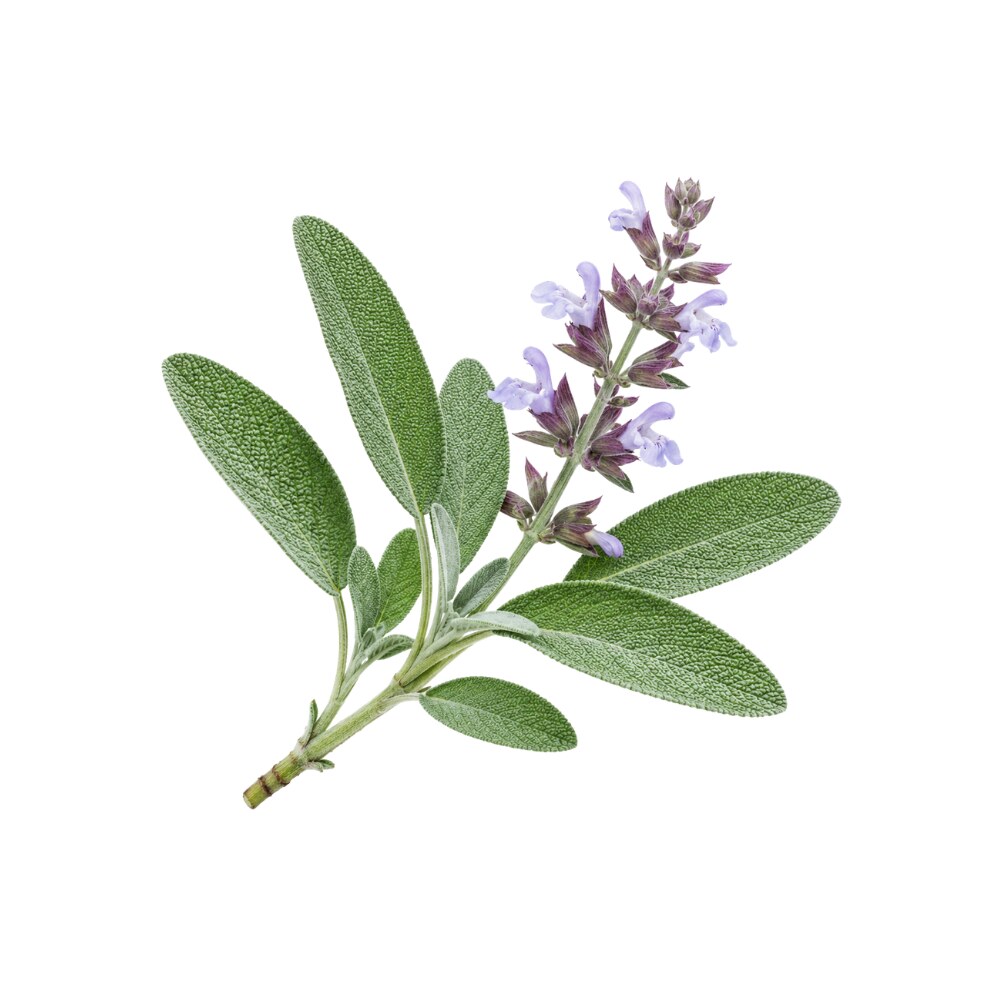
The young stems are square and covered in fine white hairs. The leaves grow in opposite pairs. They are oblong to ovate, 1–8 cm long, grey-green and finely wrinkled, with a soft, felted surface 37,
The flowers grow in whorls of 2–18 along upright spikes 4–18 cm long. Each is two-lipped, purple or blue, and 1.8–1.9 cm long, and sits in a calyx often tinged purple. The fruit splits into dark brown nutlets about 2.5 mm across 37,
Sage flowers in early summer, and the blooms attract bees and butterflies 37Reference 37Salvia officinalis — description, native range, size and plant traits — species databaseView study →.
Salvia is the largest genus in the mint family (Lamiaceae), with nearly 900 species 1Reference 1ReviewPharmacological properties of Salvia officinalis and its components — reviewView study →. It includes dan shen (Salvia miltiorrhiza), whose red root is used in Chinese medicine.
Distribution
Sage grows wild in the northern Mediterranean. Its native range runs from Spain and France through Italy, Switzerland and Germany to Slovenia, the western Balkans and Greece 37Reference 37Salvia officinalis — description, native range, size and plant traits — species databaseView study →. It grows on hillsides and mountains in shrubland and grassland 37Reference 37Salvia officinalis — description, native range, size and plant traits — species databaseView study →.
It has naturalised throughout the world, particularly in Europe and North America 1Reference 1ReviewPharmacological properties of Salvia officinalis and its components — reviewView study →. It is cultivated in China as a medicinal and aromatic herb 38Reference 38Salvia officinalis Linnaeus — species description — floraView study →.
Growing Conditions
Cultivation snapshot for Sage
- Full sun and sharp, well-drained soil are essential; sage rots in wet or heavy ground far more readily than it suffers from cold.
- Drought-tolerant once established and happiest on the lean, dry side — avoid rich soil and overwatering.
- Hardy roughly through USDA zones 4–8, surviving cold winters if drainage is good.
- Evergreen and long-lived; woody old plants can be renewed by cutting back in spring or replaced every few years as they get leggy.
Grow it yourself
Farm Wiki is our cultivation-focused sister site, also run by Justin Cooke.
Phytochemistry
Sage leaf contains an essential oil and a non-volatile phenolic fraction. In three sage oil samples analysed in one study, the main components were α-thujone at 17.2–27.4%, 1,8-cineole at 11.9–26.9% and camphor at 12.8–21.4% 2Reference 2The chemotaxonomy of common sage (Salvia officinalis) based on the volatile constituents — analyticalView study →. The oil also contains borneol 1Reference 1ReviewPharmacological properties of Salvia officinalis and its components — reviewView study →, β-thujone 2Reference 2The chemotaxonomy of common sage (Salvia officinalis) based on the volatile constituents — analyticalView study → and bornyl acetate.
Oil composition varies widely. A cluster analysis of 185 published sage oil compositions, plus those three samples, found five chemotypes. The most common is α-thujone > camphor > 1,8-cineole; the others are rich in α-humulene, in β-thujone, in 1,8-cineole and camphor, or in sclareol and α-thujone 2Reference 2The chemotaxonomy of common sage (Salvia officinalis) based on the volatile constituents — analyticalView study →. Some commercial sage oils contain no thujone at all 36Reference 36A rapid GC-FID method for determination of sabinene, β-pinene, α-thujone and β-thujone in the essential oil of kitchen sage (Salvia officinalis L.)View study →.
The strongest antioxidants in the leaf are carnosol, rosmarinic acid and carnosic acid, followed by caffeic acid, rosmanol and cirsimaritin 1Reference 1ReviewPharmacological properties of Salvia officinalis and its components — reviewView study →. Carnosic acid oxidises readily to carnosol and to further abietane diterpenes, including epirosmanol, isorosmanol and galdosol.
Alcoholic and water extracts are rich in rosmarinic acid and luteolin-7-glucoside (galuteolin). In sage tea, rosmarinic acid and ellagic acid are the most abundant phenolics, followed by rutin, chlorogenic acid and quercetin 1Reference 1ReviewPharmacological properties of Salvia officinalis and its components — reviewView study →. Rosmarinic acid content varied up to 20-fold between commercial sage teas 23Reference 23Antioxidant capacity and polyphenolic composition as quality indicators for aqueous infusions of Salvia officinalis L. (sage tea)View study →.
The flavonoids luteolin and cirsiliol have been isolated from the leaf 32Reference 32In vitroAnalyses of putative anti-cancer potential of three STAT3 signalling inhibitory compounds derived from Salvia officinalis — in vitroView study →. The leaf also contains ursolic acid, apigenin, hispidulin and salvianolic acid.
Research on Spanish sage (S. lavandulifolia) and on combined-species extracts should be read separately from studies of S. officinalis itself 4,
Constituent Summary
Oil figures are from three sage oil samples; the full range across chemotypes is wider 2Reference 2The chemotaxonomy of common sage (Salvia officinalis) based on the volatile constituents — analyticalView study →.
Monoterpene5 compounds5 with data
Phenolic Acid3 compounds2 with data
Diterpene2 compounds2 with data
Flavonoid4 compounds3 with data
Pharmacology & Research
Sage has been tested in human trials for memory, menopause, sore throat and metabolic health. Small placebo-controlled trials and a systematic review cover memory and attention 3,
The rest is preclinical: antioxidant, anti-inflammatory, antimicrobial and anticancer work in cells and animals 24,
-
Best-supported: short-term memory and attention gains from standardised leaf extracts in healthy adults 3,
5, ; fewer hot flushes in menopause 11,6, 7Reference 3RCTAn extract of Salvia (sage) with anticholinesterase properties improves memory and attention in healthy older volunteers — randomised controlled trialView study →Reference 5RCTEffects of cholinesterase-inhibiting sage (Salvia officinalis) on mood, anxiety and performance on a psychological stressor battery — randomised controlled trialView study →Reference 6RCTMonoterpenoid extract of sage (Salvia lavandulifolia) with cholinesterase-inhibiting properties improves cognitive performance and mood in healthy adults — randomised controlled trialView study →Reference 7RCTThe acute and chronic cognitive effects of a sage extract: a randomised, placebo-controlled study in healthy humansView study → 12Reference 11Clinical trialFirst-time proof of sage’s tolerability and efficacy in menopausal women with hot flushes — clinical trialView study →Reference 12Meta-analysisThe effect of Salvia officinalis on hot flashes in postmenopausal women: a systematic review and meta-analysisView study → ; relief of acute sore throat from a sage spray 19Reference 19RCTEfficacy and tolerability of a spray with Salvia officinalis in the treatment of acute pharyngitis — a randomised, double-blind, placebo-controlled studyView study →. -
Emerging, worth watching: improved glucose and lipid profiles in type 2 diabetes and high cholesterol 15,
16Reference 15RCTAntihyperlipidemic effects of Salvia officinalis L. leaf extract in patients with hyperlipidemia: a randomised double-blind placebo-controlled clinical trialView study →Reference 16RCTImproved glycemic control and lipid profile in hyperlipidemic type-2 diabetic patients consuming Salvia officinalis L. leaf extract: a randomised placebo-controlled clinical trialView study → , and antioxidant markers in a PCOS trial 18Reference 18RCTExploring the therapeutic impact of Salvia officinalis on lipid and oxidative stress markers in patients with polycystic ovary syndrome — a randomised placebo-controlled clinical trialView study →. -
Mechanistically thin: antimicrobial and anticancer claims rest almost entirely on in vitro work with no human dosing data 28,
29, .30, 31, 32, 33Reference 28In vitroPotential of Ocimum basilicum L. and Salvia officinalis L. essential oils against biofilms of P. aeruginosa clinical isolates — in vitroView study →Reference 29In vitroSynergistic antibacterial activity of Salvia officinalis and Cichorium intybus extracts and antibiotics — in vitroView study →Reference 30In vitroAnti-Helicobacter pylori and anti-inflammatory potential of Salvia officinalis metabolites — in vitro and in silicoView study →Reference 31In vitroAntiproliferative effects of extracts from Salvia officinalis L. and Salvia miltiorrhiza Bunge on hepatocellular carcinoma cells — in vitroView study →Reference 32In vitroAnalyses of putative anti-cancer potential of three STAT3 signalling inhibitory compounds derived from Salvia officinalis — in vitroView study →Reference 33In vitroPharmacological perspectives from Brazilian Salvia officinalis (Lamiaceae): antioxidant and antitumor in mammalian cells — in vitroView study → -
The caveat: most human trials are small and short, and the effects belong to specific standardised extracts, not to tea or whole leaf 9,
23Reference 9Systematic reviewSystematic review of clinical trials assessing pharmacological properties of Salvia species on memory, cognitive impairment and Alzheimer’s diseaseView study →Reference 23Antioxidant capacity and polyphenolic composition as quality indicators for aqueous infusions of Salvia officinalis L. (sage tea)View study → .
The trials used several different preparations, and they are not interchangeable. Standardised leaf extract, fresh-leaf tablets, essential oil, throat spray and tea each deliver a different mix of compounds, and several memory trials used Spanish sage rather than common sage 4,
1. Cognitive & Memory
A series of small double-blind, placebo-controlled crossover trials from one UK group tested single doses of sage. In 20 volunteers over 65, a standardised Salvia officinalis extract improved secondary memory at every test point at 333 mg, the best of four doses tested from 167 to 1,332 mg 3Reference 3RCTAn extract of Salvia (sage) with anticholinesterase properties improves memory and attention in healthy older volunteers — randomised controlled trialView study →. In 30 young adults, 300 and 600 mg of dried sage leaf improved mood, and the higher dose improved performance on a demanding multitasking battery 5Reference 5RCTEffects of cholinesterase-inhibiting sage (Salvia officinalis) on mood, anxiety and performance on a psychological stressor battery — randomised controlled trialView study →.
Spanish sage (S. lavandulifolia) essential oil produced similar acute gains in memory and mood 4,
A 2021 trial in 94 adults aged 30–60 tested a combined S. officinalis polyphenol and S. lavandulifolia terpenoid extract at 600 mg a day. It improved working memory and accuracy both acutely and after 29 days, one of the few trials to run beyond a single dose 7Reference 7RCTThe acute and chronic cognitive effects of a sage extract: a randomised, placebo-controlled study in healthy humansView study →.
In mild to moderate Alzheimer’s disease, a 4-month Iranian trial in 42 patients aged 65–80 found better cognitive scores on sage extract than placebo 8Reference 8RCTSalvia officinalis extract in the treatment of patients with mild to moderate Alzheimer’s disease: a double-blind, randomised and placebo-controlled trialView study →. A systematic review found consistent benefit in healthy and cognitively impaired people, but noted methodological problems and poorly described preparations 9Reference 9Systematic reviewSystematic review of clinical trials assessing pharmacological properties of Salvia species on memory, cognitive impairment and Alzheimer’s diseaseView study →.
Sage extracts and Spanish sage oil inhibit acetylcholinesterase and butyrylcholinesterase in vitro 5,
The same α-thujone found in the oil is also the herb’s principal toxin at high doses, acting on the GABA-A receptor 34,
Gap: most trials are acute or short and small (20–94 people), and use different extracts or essential oils. None tested sage tea, so the effect cannot be assumed for ordinary culinary use.
2. Antioxidant
The antioxidant activity tracks the non-volatile phenolic fraction, chiefly rosmarinic acid and the diterpenes carnosic acid and carnosol 1,
In sage teas, antioxidant capacity depended heavily on rosmarinic acid, which varied up to 20-fold between commercial products 23Reference 23Antioxidant capacity and polyphenolic composition as quality indicators for aqueous infusions of Salvia officinalis L. (sage tea)View study →.
In a placebo-controlled trial in women with polycystic ovary syndrome, 330 mg of sage extract daily for eight weeks lowered malondialdehyde, a marker of lipid peroxidation, and improved total antioxidant capacity 18Reference 18RCTExploring the therapeutic impact of Salvia officinalis on lipid and oxidative stress markers in patients with polycystic ovary syndrome — a randomised placebo-controlled clinical trialView study →.
In rats, sage reduced oxidative-stress markers and raised superoxide dismutase and catalase activity 25Reference 25AnimalThe anti-inflammatory and antioxidant effects of Salvia officinalis on lipopolysaccharide-induced inflammation in rats — animal modelView study →.
Human data are limited to biomarker changes in disease-specific trials. No study shows that dietary sage raises antioxidant status in healthy people, and tea strength is unstandardised.
3. Menopausal Hot Flushes
A 2023 systematic review and meta-analysis of four trials (310 women) reported that Salvia officinalis reduced the frequency of hot flushes compared with placebo, though the pooled confidence interval crossed zero. The effect on severity was not significant 12Reference 12Meta-analysisThe effect of Salvia officinalis on hot flashes in postmenopausal women: a systematic review and meta-analysisView study →.
The largest single study was an open multicentre trial in 69 menopausal women in Switzerland. A once-daily fresh-sage tablet cut the intensity-weighted hot-flush score by 50% within four weeks and 64% within eight 11Reference 11Clinical trialFirst-time proof of sage’s tolerability and efficacy in menopausal women with hot flushes — clinical trialView study →.
A pilot study in 10 men on androgen-deprivation therapy for prostate cancer found that 150 mg of sage extract three times daily roughly halved hot-flush scores, with no side effects 13Reference 13Clinical trialEvaluation of the efficacy and safety of Salvia officinalis in controlling hot flashes in prostate cancer patients treated with androgen deprivation — clinical trialView study →.
In vitro, a sage tincture showed no oestrogenic activity, but one of its sub-extracts did. The active compounds were the flavonoids luteolin-7-O-glucuronide and luteolin-7-O-glucoside (galuteolin). The tincture had no serotonin-reuptake or acetylcholinesterase activity 14Reference 14In vitroSalvia officinalis for hot flushes: towards determination of mechanism of activity and active principles — in vitroView study →.
Gap: four trials, one of them uncontrolled, with different preparations. The long-term safety of medicinal-strength dosing in menopause has not been studied.
4. Sore Throat & Oral Inflammation
In a double-blind, placebo-controlled trial in 286 patients with acute pharyngitis, a 15% sage-extract throat spray relieved throat pain within two hours of first use 19Reference 19RCTEfficacy and tolerability of a spray with Salvia officinalis in the treatment of acute pharyngitis — a randomised, double-blind, placebo-controlled studyView study →.
In a trial in 154 patients, an echinacea and sage spray matched a chlorhexidine and lidocaine spray for acute sore throat 20Reference 20RCTEchinacea/sage or chlorhexidine/lidocaine for treating acute sore throats: a randomised double-blind trialView study →.
In an observational study of 74 patients, echinacea and sage lozenges reduced throat pain by 48% after one lozenge. In the 18 patients who tested positive for a virus, viral load fell by 96% over four days 21Reference 21Clinical trialReduction of viral load in patients with acute sore throats: results from an observational clinical trial with echinacea/salvia lozenges — observational, n=74View study →.
In human gingival fibroblasts, the anti-inflammatory action of a sage infusion came from its volatile constituents, 1,8-cineole, borneol, camphor and thujone, rather than from rosmarinic acid 22Reference 22In vitroIdentification of 1,8-cineole, borneol, camphor, and thujone as anti-inflammatory compounds in a Salvia officinalis L. infusion using human gingival fibroblasts — in vitroView study →.
Gap: the effects are local (spray, gargle, lozenge), and two of the three trials combined sage with echinacea.
5. Glycaemic & Lipid Control
Several small human trials, mostly from one Iranian group, report metabolic benefits. In 80 people with type 2 diabetes and high blood lipids, three months of sage leaf extract (500 mg three times daily) lowered fasting glucose, HbA1c, total cholesterol, triglycerides and LDL and raised HDL, with no adverse effects 16Reference 16RCTImproved glycemic control and lipid profile in hyperlipidemic type-2 diabetic patients consuming Salvia officinalis L. leaf extract: a randomised placebo-controlled clinical trialView study →.
An earlier trial in 67 people with high blood lipids showed the same lipid pattern after two months 15Reference 15RCTAntihyperlipidemic effects of Salvia officinalis L. leaf extract in patients with hyperlipidemia: a randomised double-blind placebo-controlled clinical trialView study →. In 100 people with type 2 diabetes already taking atorvastatin, adding sage extract improved blood sugar and lipids further, with no adverse effects 17Reference 17RCTSalvia officinalis (sage) leaf extract as add-on to statin therapy in hypercholesterolemic type-2 diabetic patients: a randomised clinical trialView study →.
The 2025 PCOS trial also lowered triglycerides 18Reference 18RCTExploring the therapeutic impact of Salvia officinalis on lipid and oxidative stress markers in patients with polycystic ovary syndrome — a randomised placebo-controlled clinical trialView study →.
Proposed mechanisms include PPAR-γ agonism, inhibition of pancreatic lipase and lipid absorption, and antioxidant protection 15Reference 15RCTAntihyperlipidemic effects of Salvia officinalis L. leaf extract in patients with hyperlipidemia: a randomised double-blind placebo-controlled clinical trialView study →.
The human trials are small, short and largely from a single research group, and the effects belong to a specific leaf extract, not tea or whole herb.
6. Anti-Inflammatory
In human primary intestinal and blood-brain-barrier cells, sage extract reduced the release of most pro-inflammatory cytokines and chemokines and reduced reactive-oxygen overproduction 26Reference 26In vitroEvidence for anti-inflammatory effects and modulation of neurotransmitter metabolism by Salvia officinalis L. — in vitroView study →.
In rats given bacterial lipopolysaccharide, sage lowered NF-κB and TNF-α and improved antioxidant enzyme activity 25Reference 25AnimalThe anti-inflammatory and antioxidant effects of Salvia officinalis on lipopolysaccharide-induced inflammation in rats — animal modelView study →.
Reviews attribute the effect to phenolics and diterpenes acting on the NF-κB and arachidonic-acid pathways 27Reference 27ReviewAnti-inflammatory and antioxidant agents from Salvia genus (Lamiaceae): an assessment of the current state of knowledge — reviewView study →. In a Helicobacter pylori study, the extract suppressed COX-2 expression about as well as celecoxib in vitro 30Reference 30In vitroAnti-Helicobacter pylori and anti-inflammatory potential of Salvia officinalis metabolites — in vitro and in silicoView study →.
The clearest human-relevant signal is local, from the throat and gum studies above 22Reference 22In vitroIdentification of 1,8-cineole, borneol, camphor, and thujone as anti-inflammatory compounds in a Salvia officinalis L. infusion using human gingival fibroblasts — in vitroView study →.
No dedicated human anti-inflammatory trial exists.
7. Antimicrobial
Sage essential oil inhibited biofilm formation by clinical Pseudomonas aeruginosa isolates 28Reference 28In vitroPotential of Ocimum basilicum L. and Salvia officinalis L. essential oils against biofilms of P. aeruginosa clinical isolates — in vitroView study →. Sage extracts acted synergistically with amoxicillin and chloramphenicol, cutting antibiotic MICs several-fold against most tested bacteria 29Reference 29In vitroSynergistic antibacterial activity of Salvia officinalis and Cichorium intybus extracts and antibiotics — in vitroView study →.
A 2023 study reported strong anti-Helicobacter pylori activity for the total ethanolic extract, approaching clarithromycin in potency, with carnosic acid the best-fitting inhibitor in silico 30Reference 30In vitroAnti-Helicobacter pylori and anti-inflammatory potential of Salvia officinalis metabolites — in vitro and in silicoView study →.
The lozenge study also recorded a fall in throat viral load 21Reference 21Clinical trialReduction of viral load in patients with acute sore throats: results from an observational clinical trial with echinacea/salvia lozenges — observational, n=74View study →.
All antibacterial and antifungal data are in vitro. There are no systemic human antimicrobial trials, and the effective concentrations may not be reached in the body from normal use.
8. Anticancer
Ethanol and acetone extracts of sage leaf and root inhibited the growth of hepatocellular carcinoma (HepG2) cells and induced apoptosis 31Reference 31In vitroAntiproliferative effects of extracts from Salvia officinalis L. and Salvia miltiorrhiza Bunge on hepatocellular carcinoma cells — in vitroView study →.
Three sage compounds, cirsiliol, luteolin and carnosol, inhibited STAT3 signalling, with additive effects alongside the drug gefitinib 32Reference 32In vitroAnalyses of putative anti-cancer potential of three STAT3 signalling inhibitory compounds derived from Salvia officinalis — in vitroView study →.
Brazilian sage extracts were selectively cytotoxic to several tumour cell lines 33Reference 33In vitroPharmacological perspectives from Brazilian Salvia officinalis (Lamiaceae): antioxidant and antitumor in mammalian cells — in vitroView study →.
No animal-tumour or human data exist. The findings are from cell lines, at concentrations well above what dietary or medicinal use would produce.
Mechanisms
Sage’s two fractions act differently. Extracts and terpenoid-rich oils inhibit acetylcholinesterase and butyrylcholinesterase, the enzymes that break down acetylcholine, which has been studied as the basis of the memory findings 5,
The phenolics, led by rosmarinic acid, carnosic acid and carnosol, are antioxidants, and luteolin glycosides show mild oestrogenic activity in vitro 1,
| Mechanism | Drives | Key compounds |
|---|---|---|
| Acetylcholinesterase / butyrylcholinesterase inhibition | cognitive & memory | terpenoid fraction of extract and oil |
| Free-radical scavenging, lipid-peroxidation inhibition | antioxidant | rosmarinic acid, carnosic acid, carnosol |
| NF-κB ↓, COX-2 ↓, cytokine suppression | anti-inflammatorysore throat | 1,8-cineole, borneol, camphor |
| Oestrogen-receptor activation (mild, in vitro) | menopausal hot flushes | galuteolin, luteolin-7-O-glucuronide |
| PPAR-γ agonism, pancreatic-lipase inhibition | glycaemic & lipid control | phenolic acids, flavonoids |
| GABA-A receptor blockade (high dose) | thujone toxicity (safety) | α-thujone |
Clinical Trials
A search of ClinicalTrials.gov (July 2026) identified registered Salvia officinalis trials in cognition, menopausal hot flushes and oral and throat health. One menopause sage-tablet trial (NCT02032862) was terminated for insufficient recruitment.
| Completed | Planned | Terminated | Preclinical |
|---|---|---|---|
| ~8 | 1 | 1 | ~100s |
Last checked: July 2026.
Dosage
- Standardised leaf extract — 333 mg as a single dose for memory in older adults; 500 mg three times daily for two to three months for blood lipids and sugar 3,
15, .16Reference 3RCTAn extract of Salvia (sage) with anticholinesterase properties improves memory and attention in healthy older volunteers — randomised controlled trialView study →Reference 15RCTAntihyperlipidemic effects of Salvia officinalis L. leaf extract in patients with hyperlipidemia: a randomised double-blind placebo-controlled clinical trialView study →Reference 16RCTImproved glycemic control and lipid profile in hyperlipidemic type-2 diabetic patients consuming Salvia officinalis L. leaf extract: a randomised placebo-controlled clinical trialView study → - Throat spray — a 15% sage-extract spray, used as needed 19Reference 19RCTEfficacy and tolerability of a spray with Salvia officinalis in the treatment of acute pharyngitis — a randomised, double-blind, placebo-controlled studyView study →.
- Tea — see the traditional doses below. Tea strength varies widely between products 23Reference 23Antioxidant capacity and polyphenolic composition as quality indicators for aqueous infusions of Salvia officinalis L. (sage tea)View study →.
| Indication | Preparation | Dose | Est. dried-herb equivalent | Source |
|---|---|---|---|---|
| Cognition (older adults) | Standardised leaf extract | 333 mg single dose (167–1,332 mg tested) | — | 3Reference 3RCTAn extract of Salvia (sage) with anticholinesterase properties improves memory and attention in healthy older volunteers — randomised controlled trialView study → |
| Mood and performance (young adults) | Dried sage leaf | 300 or 600 mg single dose | 0.3–0.6 g | 5Reference 5RCTEffects of cholinesterase-inhibiting sage (Salvia officinalis) on mood, anxiety and performance on a psychological stressor battery — randomised controlled trialView study → |
| Cognition (chronic) | Combined S. officinalis / S. lavandulifolia extract | 600 mg/day, 29 days | — | 7Reference 7RCTThe acute and chronic cognitive effects of a sage extract: a randomised, placebo-controlled study in healthy humansView study → |
| Alzheimer’s disease | Leaf extract | Fixed daily dose, 4 months | — | 8Reference 8RCTSalvia officinalis extract in the treatment of patients with mild to moderate Alzheimer’s disease: a double-blind, randomised and placebo-controlled trialView study → |
| Menopausal hot flushes | Fresh-sage leaf tablet | 1 tablet once daily, 8 weeks | — | 11Reference 11Clinical trialFirst-time proof of sage’s tolerability and efficacy in menopausal women with hot flushes — clinical trialView study → |
| Hot flushes on androgen-deprivation therapy | Leaf extract | 150 mg three times daily | — | 13Reference 13Clinical trialEvaluation of the efficacy and safety of Salvia officinalis in controlling hot flashes in prostate cancer patients treated with androgen deprivation — clinical trialView study → |
| Hyperlipidaemia / type 2 diabetes | Leaf extract | 500 mg three times daily, 2–3 months | — | 15, |
| PCOS | Leaf extract | 330 mg daily, 8 weeks | — | 18Reference 18RCTExploring the therapeutic impact of Salvia officinalis on lipid and oxidative stress markers in patients with polycystic ovary syndrome — a randomised placebo-controlled clinical trialView study → |
| Acute pharyngitis | 15% sage-extract throat spray (140 µL extract per dose) | Topical, as needed | — (topical) | 19Reference 19RCTEfficacy and tolerability of a spray with Salvia officinalis in the treatment of acute pharyngitis — a randomised, double-blind, placebo-controlled studyView study → |
Traditional Dosage
| System | Preparation | Dose |
|---|---|---|
| Western herbal (Bone & Mills) | Dried leaf infusion | 1–4 g, up to 3× daily |
| Western herbal | Liquid extract (1:2) | 1–4 mL up to 3× daily |
| Western herbal | Tincture (1:5, 45% ethanol) | 2–6 mL up to 3× daily |
| Western herbal (topical) | Infusion as gargle / mouthwash | ~3 g leaf in 150 mL water, as needed for sore throat/gingivitis |
Safety & Pregnancy
Sage is safe as a culinary herb and an ordinary tea. The substantive caution is thujone, which concentrates in the essential oil.
- Safe as food and tea. Trials of leaf extract at up to 1,500 mg a day for up to four months reported no significant adverse effects 3,
8, .16Reference 3RCTAn extract of Salvia (sage) with anticholinesterase properties improves memory and attention in healthy older volunteers — randomised controlled trialView study →Reference 8RCTSalvia officinalis extract in the treatment of patients with mild to moderate Alzheimer’s disease: a double-blind, randomised and placebo-controlled trialView study →Reference 16RCTImproved glycemic control and lipid profile in hyperlipidemic type-2 diabetic patients consuming Salvia officinalis L. leaf extract: a randomised placebo-controlled clinical trialView study → - Thujone. Neurotoxic and seizure-provoking in large amounts. Avoid the concentrated essential oil and prolonged high doses 34,
35Reference 34ReviewThujone and thujone-containing herbal medicinal and botanical products: toxicological assessment — reviewView study →Reference 35Höld, K. M., et al. (2000). α-Thujone (the active component of absinthe): γ-aminobutyric acid type-A receptor modulation and metabolic detoxification — animal. Proc Natl Acad Sci USA, 97(8), 3826–3831. https://pubmed.ncbi.nlm.nih.gov/10725394/View study → . - Oils vary. Some commercial sage oils are thujone-rich and others contain none, so the risk of an oil depends on its analysis 2,
36Reference 2The chemotaxonomy of common sage (Salvia officinalis) based on the volatile constituents — analyticalView study →Reference 36A rapid GC-FID method for determination of sabinene, β-pinene, α-thujone and β-thujone in the essential oil of kitchen sage (Salvia officinalis L.)View study → . - Drug interactions. Additive effects with cholinergic or blood-sugar-lowering drugs are possible, though none has been documented 16Reference 16RCTImproved glycemic control and lipid profile in hyperlipidemic type-2 diabetic patients consuming Salvia officinalis L. leaf extract: a randomised placebo-controlled clinical trialView study →.
- Pregnancy & breastfeeding. Avoid medicinal-strength sage and the essential oil 1Reference 1ReviewPharmacological properties of Salvia officinalis and its components — reviewView study →.
Full Safety & Interactions Detail
Culinary and tea use. Sage is safe as a culinary herb and ordinary tea. Human trials of leaf extracts at up to 1,500 mg a day for up to four months reported no significant adverse effects 3,
Thujone. Thujone is the main safety concern. In animals it blocks the GABA-A receptor and causes excitation and convulsions in a dose-dependent way 34,
Variable oils. Thujone content differs widely between sage chemotypes and commercial oils. Some oils are thujone-dominant and others contain none, which makes essential-oil dosing unpredictable 2,
Drug interactions. Sage extracts inhibit acetylcholinesterase and may lower blood sugar and lipids, so additive effects with cholinergic or antidiabetic drugs are possible 5,
In mice, two weeks of sage tea raised the liver enzyme CYP2E1 and worsened liver injury from carbon tetrachloride, a toxin that CYP2E1 activates 39Reference 39AnimalDrinking of Salvia officinalis tea increases CCl(4)-induced hepatotoxicity in mice — mouse in vivoView study →. No human drug-interaction study has been done, and no clinically significant interaction has been documented.
Avoid medicinal-strength sage and its essential oil in pregnancy and while breastfeeding. Camphor and thujone are considered the most toxic compounds in sage and may harm the fetus and newborn 1Reference 1ReviewPharmacological properties of Salvia officinalis and its components — reviewView study →.
Sage is also used traditionally to reduce milk supply, which is another reason to avoid concentrated preparations while breastfeeding.
Culinary amounts are regarded as safe.
References
- Ghorbani, A., & Esmaeilizadeh, M. (2017). Pharmacological properties of Salvia officinalis and its components — review. J Tradit Complement Med, 7(4), 433–440. https://pubmed.ncbi.nlm.nih.gov/29034191/
- Craft, J. D., Satyal, P., & Setzer, W. N. (2017). The chemotaxonomy of common sage (Salvia officinalis) based on the volatile constituents — analytical. Medicines (Basel), 4(3), 47. https://pubmed.ncbi.nlm.nih.gov/28930262/
- Scholey, A. B., et al. (2008). An extract of Salvia (sage) with anticholinesterase properties improves memory and attention in healthy older volunteers — randomised controlled trial. Psychopharmacology (Berl), 198(1), 127–139. https://pubmed.ncbi.nlm.nih.gov/18350281/
- Tildesley, N. T., et al. (2005). Positive modulation of mood and cognitive performance following administration of acute doses of Salvia lavandulifolia essential oil to healthy young volunteers — clinical trial. Physiol Behav, 83(5), 699–709. https://pubmed.ncbi.nlm.nih.gov/15639154/
- Kennedy, D. O., et al. (2006). Effects of cholinesterase-inhibiting sage (Salvia officinalis) on mood, anxiety and performance on a psychological stressor battery — randomised controlled trial. Neuropsychopharmacology, 31(4), 845–852. https://pubmed.ncbi.nlm.nih.gov/16205785/
- Kennedy, D. O., et al. (2011). Monoterpenoid extract of sage (Salvia lavandulifolia) with cholinesterase-inhibiting properties improves cognitive performance and mood in healthy adults — randomised controlled trial. J Psychopharmacol, 25(8), 1088–1100. https://pubmed.ncbi.nlm.nih.gov/20937617/
- Wightman, E. L., et al. (2021). The acute and chronic cognitive effects of a sage extract: a randomised, placebo-controlled study in healthy humans. Nutrients, 13(1), 218. https://pubmed.ncbi.nlm.nih.gov/33466627/
- Akhondzadeh, S., et al. (2003). Salvia officinalis extract in the treatment of patients with mild to moderate Alzheimer’s disease: a double-blind, randomised and placebo-controlled trial. J Clin Pharm Ther, 28(1), 53–59. https://pubmed.ncbi.nlm.nih.gov/12605619/
- Miroddi, M., et al. (2014). Systematic review of clinical trials assessing pharmacological properties of Salvia species on memory, cognitive impairment and Alzheimer’s disease. CNS Neurosci Ther, 20(6), 485–495. https://pubmed.ncbi.nlm.nih.gov/24836739/
- Moss, L., et al. (2010). Differential effects of the aromas of Salvia species on memory and mood — randomised controlled trial. Hum Psychopharmacol, 25(5), 388–396. https://pubmed.ncbi.nlm.nih.gov/20589925/
- Bommer, S., Klein, P., & Suter, A. (2011). First-time proof of sage’s tolerability and efficacy in menopausal women with hot flushes — clinical trial. Adv Ther, 28(6), 490–500. https://pubmed.ncbi.nlm.nih.gov/21630133/
- Moradi, M., et al. (2023). The effect of Salvia officinalis on hot flashes in postmenopausal women: a systematic review and meta-analysis. Int J Community Based Nurs Midwifery, 11(3), 169–181. https://pubmed.ncbi.nlm.nih.gov/37489230/
- Vandecasteele, K., et al. (2012). Evaluation of the efficacy and safety of Salvia officinalis in controlling hot flashes in prostate cancer patients treated with androgen deprivation — clinical trial. Phytother Res, 26(2), 208–213. https://pubmed.ncbi.nlm.nih.gov/21630361/
- Rahte, S., et al. (2013). Salvia officinalis for hot flushes: towards determination of mechanism of activity and active principles — in vitro. Planta Med, 79(9), 753–760. https://pubmed.ncbi.nlm.nih.gov/23670626/
- Kianbakht, S., et al. (2011). Antihyperlipidemic effects of Salvia officinalis L. leaf extract in patients with hyperlipidemia: a randomised double-blind placebo-controlled clinical trial. Phytother Res, 25(12), 1849–1853. https://pubmed.ncbi.nlm.nih.gov/21506190/
- Kianbakht, S., & Dabaghian, F. H. (2013). Improved glycemic control and lipid profile in hyperlipidemic type-2 diabetic patients consuming Salvia officinalis L. leaf extract: a randomised placebo-controlled clinical trial. Complement Ther Med, 21(5), 441–446. https://pubmed.ncbi.nlm.nih.gov/24050577/
- Kianbakht, S., et al. (2016). Salvia officinalis (sage) leaf extract as add-on to statin therapy in hypercholesterolemic type-2 diabetic patients: a randomised clinical trial. Int J Mol Cell Med, 5(3), 141–148. https://pubmed.ncbi.nlm.nih.gov/27942500/
- Maleki-Hajiagha, A., et al. (2025). Exploring the therapeutic impact of Salvia officinalis on lipid and oxidative stress markers in patients with polycystic ovary syndrome — a randomised placebo-controlled clinical trial. BMC Complement Med Ther, 25(1), 114. https://pubmed.ncbi.nlm.nih.gov/40141012/
- Hubbert, M., et al. (2006). Efficacy and tolerability of a spray with Salvia officinalis in the treatment of acute pharyngitis — a randomised, double-blind, placebo-controlled study. Eur J Med Res, 11(1), 20–26. https://pubmed.ncbi.nlm.nih.gov/16504956/
- Schapowal, A., et al. (2009). Echinacea/sage or chlorhexidine/lidocaine for treating acute sore throats: a randomised double-blind trial. Eur J Med Res, 14(9), 406–412. https://pubmed.ncbi.nlm.nih.gov/19748859/
- Weishaupt, R., et al. (2023). Reduction of viral load in patients with acute sore throats: results from an observational clinical trial with echinacea/salvia lozenges — observational, n=74. Complement Med Res, 30(4), 299–306. https://pubmed.ncbi.nlm.nih.gov/36889292/
- Ehrnhöfer-Ressler, M. M., et al. (2013). Identification of 1,8-cineole, borneol, camphor, and thujone as anti-inflammatory compounds in a Salvia officinalis L. infusion using human gingival fibroblasts — in vitro. J Agric Food Chem, 61(14), 3451–3459. https://pubmed.ncbi.nlm.nih.gov/23488631/
- Walch, S. G., et al. (2011). Antioxidant capacity and polyphenolic composition as quality indicators for aqueous infusions of Salvia officinalis L. (sage tea). Front Pharmacol, 2, 79. https://pubmed.ncbi.nlm.nih.gov/22194722/
- Mervić, M., et al. (2022). Comparative antioxidant, anti-acetylcholinesterase and anti-α-glucosidase activities of Mediterranean Salvia species — in vitro. Plants (Basel), 11(5), 625. https://pubmed.ncbi.nlm.nih.gov/35270095/
- Kolac, U. K., et al. (2017). The anti-inflammatory and antioxidant effects of Salvia officinalis on lipopolysaccharide-induced inflammation in rats — animal model. J Med Food, 20(12), 1193–1200. https://pubmed.ncbi.nlm.nih.gov/29131698/
- Margetts, G., et al. (2022). Evidence for anti-inflammatory effects and modulation of neurotransmitter metabolism by Salvia officinalis L. — in vitro. BMC Complement Med Ther, 22(1), 131. https://pubmed.ncbi.nlm.nih.gov/35550086/
- Bonesi, M., et al. (2017). Anti-inflammatory and antioxidant agents from Salvia genus (Lamiaceae): an assessment of the current state of knowledge — review. Antiinflamm Antiallergy Agents Med Chem, 16(2), 70–86. https://pubmed.ncbi.nlm.nih.gov/28464779/
- Stojanović-Radić, Z., et al. (2016). Potential of Ocimum basilicum L. and Salvia officinalis L. essential oils against biofilms of P. aeruginosa clinical isolates — in vitro. Cell Mol Biol (Noisy-le-grand), 62(9), 27–33. https://pubmed.ncbi.nlm.nih.gov/27585258/
- Stefanović, O. D., et al. (2012). Synergistic antibacterial activity of Salvia officinalis and Cichorium intybus extracts and antibiotics — in vitro. Acta Pol Pharm, 69(3), 457–463. https://pubmed.ncbi.nlm.nih.gov/22594260/
- Alomar, H. A., et al. (2023). Anti-Helicobacter pylori and anti-inflammatory potential of Salvia officinalis metabolites — in vitro and in silico. Metabolites, 13(1), 136. https://pubmed.ncbi.nlm.nih.gov/36677061/
- Jiang, Y., et al. (2017). Antiproliferative effects of extracts from Salvia officinalis L. and Salvia miltiorrhiza Bunge on hepatocellular carcinoma cells — in vitro. Biomed Pharmacother, 85, 57–67. https://pubmed.ncbi.nlm.nih.gov/27930987/
- Yanagimichi, M., et al. (2021). Analyses of putative anti-cancer potential of three STAT3 signalling inhibitory compounds derived from Salvia officinalis — in vitro. Biochem Biophys Rep, 25, 100882. https://pubmed.ncbi.nlm.nih.gov/33392396/
- Garcia, C. S., et al. (2016). Pharmacological perspectives from Brazilian Salvia officinalis (Lamiaceae): antioxidant and antitumor in mammalian cells — in vitro. An Acad Bras Cienc, 88(1), 281–292. https://pubmed.ncbi.nlm.nih.gov/26839997/
- Pelkonen, O., et al. (2013). Thujone and thujone-containing herbal medicinal and botanical products: toxicological assessment — review. Regul Toxicol Pharmacol, 65(1), 100–107. https://pubmed.ncbi.nlm.nih.gov/23201408/
- Höld, K. M., et al. (2000). α-Thujone (the active component of absinthe): γ-aminobutyric acid type-A receptor modulation and metabolic detoxification — animal. Proc Natl Acad Sci USA, 97(8), 3826–3831. https://pubmed.ncbi.nlm.nih.gov/10725394/
- Rasmussen, L. H., et al. (2020). A rapid GC-FID method for determination of sabinene, β-pinene, α-thujone and β-thujone in the essential oil of kitchen sage (Salvia officinalis L.). J Chromatogr B, 1149, 122159. https://pubmed.ncbi.nlm.nih.gov/32447252/
- North Carolina Extension Gardener Plant Toolbox (n.d.). Salvia officinalis — description, native range, size and plant traits — species database. NC State University. https://plants.ces.ncsu.edu/plants/salvia-officinalis/
- Li, X., & Hedge, I. C. (1994). Salvia officinalis Linnaeus — species description — flora. In Wu, Z. Y., & Raven, P. H. (eds.), Flora of China, Vol. 17. http://www.efloras.org/florataxon.aspx?flora_id=2&taxon_id=200020236
- Lima, C. F., Fernandes-Ferreira, M., & Pereira-Wilson, C. (2007). Drinking of Salvia officinalis tea increases CCl(4)-induced hepatotoxicity in mice — mouse in vivo. Food and Chemical Toxicology. https://pubmed.ncbi.nlm.nih.gov/17084954/



