Materia Medica
Sarsaparilla
Smilax spp.
Sarsaparilla is the root and rhizome of several climbing Smilax vines from the tropics of the Americas and Asia. It is a traditional remedy for psoriasis and other skin complaints, gout and rheumatism, and chronic infection, and is rich in steroidal saponins and the flavonoid astilbin.
What Is Sarsaparilla?
Sarsaparilla is the dried root and rhizome of several climbing Smilax vines, used across the tropics as a remedy for the skin, the joints and chronic infection. The main species are S. glabra (the Chinese tu fu ling), S. china, S. aristolochiifolia, S. ornata and S. riparia 28,
Smilax grows throughout the tropics and subtropics 32Reference 32Holmes, W. C. Smilax Linnaeus — genus description and distribution — flora. In Flora of North America Editorial Committee (eds.), Flora of North America North of Mexico, Vol. 26 (Smilacaceae). http://www.efloras.org/florataxon.aspx?flora_id=1&taxon_id=130567View study →. Across China, Southeast Asia, the Caribbean and Central and South America, the root has been taken for psoriasis and other skin disorders, for rheumatism and gout, and for syphilis and other infections 28,
The root is rich in steroidal saponins such as sarsasaponin, and in the flavonoid astilbin 24,
The species differ in chemistry, so a product’s botanical name matters as much as the word “sarsaparilla” on the label.
How Is Sarsaparilla Used?
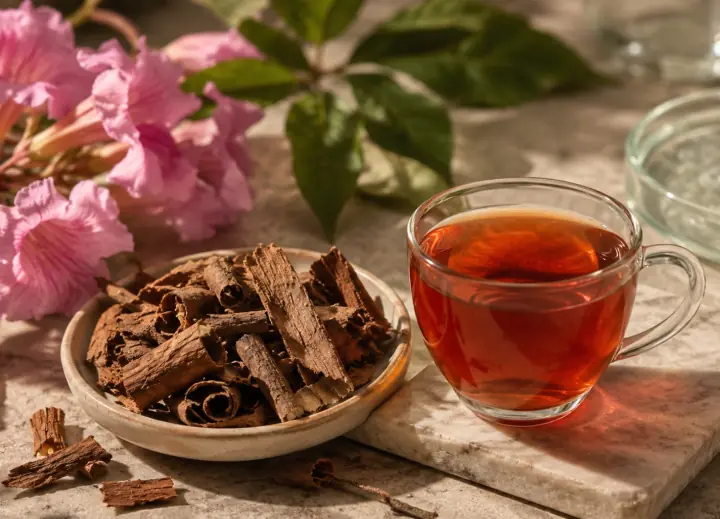
- Root decoction — the dried root or rhizome simmered in water, the usual form, since most of its constituents are water-soluble.
- Liquid extract or tincture — a low-alcohol extract of the root.
- Food and drink — S. glabra rhizome is used in soups and teas in China 29Reference 29ReviewSmilax glabra Roxb.: A Review of Its Traditional Usages, Phytochemical Constituents, Pharmacological Properties, and Clinical Applications — reviewView study →, and sarsaparilla root was used in root beer for its foam 30Reference 30The Healing Power of Rainforest Herbs: A Guide to Understanding and Using Herbal Medicinals.
Traditional Uses
Western Herbal Medicine
Sarsaparilla has been used as a blood cleanser and for abscesses, ulcers, syphilis, shingles, wound washes, asthma, rheumatism, digestive weakness, gout, gonorrhoea, arthritis, fever, cough, scrofula, hypertension, psoriasis, skin diseases and cancer 30Reference 30The Healing Power of Rainforest Herbs: A Guide to Understanding and Using Herbal Medicinals.
In Europe it was considered a tonic, blood purifier, diuretic and diaphoretic. After its introduction in the 1500s it became a popular treatment for syphilis, which had reached epidemic proportions and was otherwise treated with mercury 30Reference 30The Healing Power of Rainforest Herbs: A Guide to Understanding and Using Herbal Medicinals. It is mentioned in Monardes (1577), Gerard (1597), Hill (1751), Parke-Davis (1890) and the works of the Eclectics.
It was traditionally said to work better alongside sassafras and burdock, and to “carry” or enhance the other herbs in a formula 30Reference 30The Healing Power of Rainforest Herbs: A Guide to Understanding and Using Herbal Medicinals.
The root is nearly tasteless. Its use in root beer was largely for foam, since its saponins make water froth 30Reference 30The Healing Power of Rainforest Herbs: A Guide to Understanding and Using Herbal Medicinals.
Traditional Chinese Medicine
Smilax glabra rhizome is tu fu ling. The Song-dynasty Ben Cao Tu Jing first recorded it as sweet, neutral in nature and non-toxic, and the Ming-dynasty Ben Cao Gang Mu recorded its use for syphilitic skin lesions 29Reference 29ReviewSmilax glabra Roxb.: A Review of Its Traditional Usages, Phytochemical Constituents, Pharmacological Properties, and Clinical Applications — reviewView study →.
Later texts describe it as removing rheumatism, promoting urination, stopping diarrhoea and treating the muscles and bones. The 2020 Chinese Pharmacopoeia lists it for syphilis, turbid urine, carbuncles, scrofula and scabies 29Reference 29ReviewSmilax glabra Roxb.: A Review of Its Traditional Usages, Phytochemical Constituents, Pharmacological Properties, and Clinical Applications — reviewView study →.
It is also eaten in soups and teas to clear heat and dampness 29Reference 29ReviewSmilax glabra Roxb.: A Review of Its Traditional Usages, Phytochemical Constituents, Pharmacological Properties, and Clinical Applications — reviewView study →.
Thai Traditional Medicine
In Thailand, traditional practitioners use S. glabra for cancer and for infectious diseases 29Reference 29ReviewSmilax glabra Roxb.: A Review of Its Traditional Usages, Phytochemical Constituents, Pharmacological Properties, and Clinical Applications — reviewView study →.
South American Traditional Medicine
In South America, Smilax has been used for centuries for sexual impotence, rheumatism and skin ailments, and as a tonic for weakness and convalescence. In Peru the root was taken for headaches, joint pain and fevers such as influenza 30Reference 30The Healing Power of Rainforest Herbs: A Guide to Understanding and Using Herbal Medicinals.
Throughout the Amazon, healers used it for leprosy and other skin disorders, including psoriasis. In formulas it was valued as a “carrier” that helps deliver the other herbs it is combined with 30Reference 30The Healing Power of Rainforest Herbs: A Guide to Understanding and Using Herbal Medicinals.
Indications
- Psoriasis and chronic skin complaints [root; TCM, South American and Western use]
- Gout and rheumatic complaints [root; Western, South American and Chinese use]
- Syphilis and other chronic infections [rhizome; TCM, historical European use]
- Fevers and influenza [root; Peruvian use]
- Headaches [root; Peruvian use]
- Impotence, weakness and convalescence [root; South American use]
- Asthma and cough [root; Western folk use]
- High blood pressure [root; Western folk use]
- Cancer [rhizome; Thai and Chinese use]
- Elevated uric acid [rhizome extract]
- High blood sugar and metabolic syndrome [root and rhizome extracts]
Botany
Sarsaparilla comes from several climbing species of Smilax, a genus in the catbrier family (Smilacaceae) 32Reference 32Holmes, W. C. Smilax Linnaeus — genus description and distribution — flora. In Flora of North America Editorial Committee (eds.), Flora of North America North of Mexico, Vol. 26 (Smilacaceae). http://www.efloras.org/florataxon.aspx?flora_id=1&taxon_id=130567View study →. The genus holds about 350 species 32Reference 32Holmes, W. C. Smilax Linnaeus — genus description and distribution — flora. In Flora of North America Editorial Committee (eds.), Flora of North America North of Mexico, Vol. 26 (Smilacaceae). http://www.efloras.org/florataxon.aspx?flora_id=1&taxon_id=130567View study →.
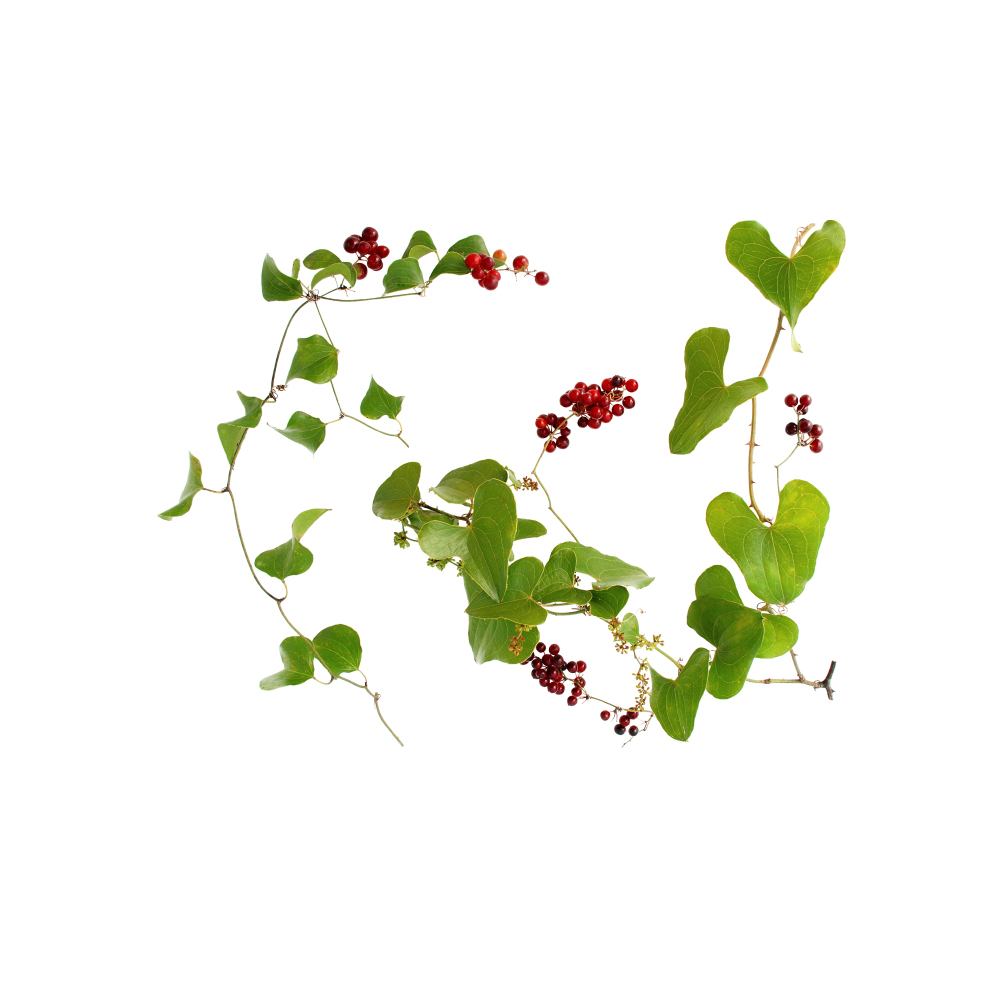
Smilax plants are shrubs, vines or herbs with woody rhizomes that are tuberous or creeping. The stems usually climb and are often armed with prickles. Paired tendrils often grow from the leaf stalks 32Reference 32Holmes, W. C. Smilax Linnaeus — genus description and distribution — flora. In Flora of North America Editorial Committee (eds.), Flora of North America North of Mexico, Vol. 26 (Smilacaceae). http://www.efloras.org/florataxon.aspx?flora_id=1&taxon_id=130567View study →.
The leaves are unusual for a monocot. They have three to seven main veins joined by a network of cross veins 32,
Each plant is either male or female. The small flowers are greenish, yellow or bronze and grow in umbels, and the fruit is a berry that is black, blue, purple, red or orange, depending on the species 32,
Smilax glabra, the Chinese tu fu ling, is an unarmed climber with woody stems 1–4 m long. Its leaves are 6–15 cm long, and its berries are blue-black with a white bloom, 6–10 mm across. The tuber-like rhizomes are the medicinal part 34Reference 34Smilax glabra Roxburgh — species description, habitat and distribution — floraView study →.
Commercial sarsaparilla comes from several species: S. officinalis, S. japicanga and S. febrifuga from South America, S. ornata and S. aristolochiifolia from Mexico and Central America, and S. glabra and S. china from China 30Reference 30The Healing Power of Rainforest Herbs: A Guide to Understanding and Using Herbal Medicinals.
S. regelii is a synonym of S. ornata, the Honduran or Jamaican sarsaparilla. A supplier list that names both is naming one species twice 31,
Distribution
Smilax grows throughout the tropics and subtropics, and some species extend into temperate regions 32Reference 32Holmes, W. C. Smilax Linnaeus — genus description and distribution — flora. In Flora of North America Editorial Committee (eds.), Flora of North America North of Mexico, Vol. 26 (Smilacaceae). http://www.efloras.org/florataxon.aspx?flora_id=1&taxon_id=130567View study →. Twenty species occur in North America north of Mexico 32Reference 32Holmes, W. C. Smilax Linnaeus — genus description and distribution — flora. In Flora of North America Editorial Committee (eds.), Flora of North America North of Mexico, Vol. 26 (Smilacaceae). http://www.efloras.org/florataxon.aspx?flora_id=1&taxon_id=130567View study →.
S. ornata is native from Mexico through Central America to Nicaragua and Costa Rica, and has been introduced to Jamaica 35Reference 35Smilax ornata LemView study →. S. aristolochiifolia grows from Mexico to El Salvador and Honduras, and S. officinalis from Honduras to Colombia and Ecuador 35Reference 35Smilax ornata LemView study →.
S. glabra grows in forests, thickets and riverbanks at 300–1,800 m across much of southern and central China, including Taiwan, and in India, Myanmar, Thailand and Vietnam 34Reference 34Smilax glabra Roxburgh — species description, habitat and distribution — floraView study →.
Most sarsaparilla root is wild-collected from forest vines rather than cultivated, and digging the root takes the plant. Because the name covers several species with different chemistry, a label that names the Smilax species is the most useful thing to look for, along with a supplier who can say where and how the root was collected.
Growing Conditions
Cultivation snapshot for Sarsaparilla
Grow it yourself
Farm Wiki is our cultivation-focused sister site, also run by Justin Cooke.
Harvesting, Collection & Preparation
The medicinal part is the root and rhizome. Most of its constituents are water-soluble, so it is usually prepared as a decoction. For a tincture, a low-alcohol menstruum of roughly 25% alcohol to 75% water is used.
Phytochemistry
The root and rhizome are rich in steroidal saponins. The main glycoside is sarsasaponin (parillin), which on hydrolysis releases the aglycones sarsasapogenin and its 25-epimer smilagenin 24,
In S. glabra and S. china the main phenolic is the flavanonol glycoside astilbin, with its stereoisomers neoastilbin, isoastilbin and neoisoastilbin. Astilbin makes up about 1–2% of S. glabra rhizome 29Reference 29ReviewSmilax glabra Roxb.: A Review of Its Traditional Usages, Phytochemical Constituents, Pharmacological Properties, and Clinical Applications — reviewView study →. Engeletin, resveratrol and related stilbenes occur alongside it 3,
S. glabra also contains phenylpropanoid esters, a mannose-binding lectin and glycoproteins, protocatechuic aldehyde, chlorogenic acid, caffeic acid, 5-O-caffeoylshikimic acid, polydatin, oxyresveratrol, rutin and isoengeletin 20,
Two markers are specific to other species. The saponin glycoside pallidifloside D comes from S. riparia, and the phenolic amide N-trans-feruloyl-tyramine is the standardisation marker of a S. aristolochiifolia root extract 5,
Steroidal saponins and their aglycones have been confirmed in S. aspera, S. lebrunii, S. excelsa, S. officinalis, S. medica (also known as S. aristolochiifolia), S. menispermoidea, S. riparia, S. ornata and S. sieboldii 24Reference 24In vitroSteroidal saponins from the roots of Smilax sp.: structure and bioactivity — in vitroView study →.
Constituent Summary
Most entries are qualitative, since sarsaparilla is sold as several species.
Saponin3 compounds1 with data
Sterol4 compoundsno data
Flavonoid4 compounds1 with data
Stilbene3 compoundsno data
Phenolic Acid3 compoundsno data
Phenylpropanoid2 compounds1 with data
Protein/Peptide1 compoundno data
Pharmacology & Research
Research on sarsaparilla covers several species, mainly S. glabra, S. china, S. aristolochiifolia and S. riparia, and is almost entirely preclinical 28,
The best-developed findings are uric-acid lowering and anti-inflammatory activity. Both have been reproduced in several rodent models, through xanthine-oxidase inhibition, urate-transporter effects and NF-κB/COX-2 suppression 1,
No randomised trial of sarsaparilla as a single herb exists. The only human uric-acid data come from a multi-herb Chinese granule in which Smilax is one of several ingredients 7Reference 7Clinical trialEffects of Rebixiao granules on blood uric acid in patients with repeatedly attacking acute gouty arthritis — clinical (multi-herb formula)View study →.
-
Best-supported: lowering uric acid and easing gouty inflammation in rodents, via xanthine-oxidase inhibition and improved urate excretion 1,
3, ; broad anti-inflammatory activity through NF-κB/COX-2 suppression 8,6Reference 1AnimalAnti-hyperuricemic and nephroprotective effects of Smilax china L. — animal modelView study →Reference 3AnimalThe anti-hyperuricemic effect of four astilbin stereoisomers in Smilax glabra on hyperuricemic mice — animal modelView study →Reference 6AnimalPotential anti-gout properties of total saponins from Smilax nipponica, determined by UPLC-Q/TOF-MS — animal modelView study → 9Reference 8AnimalAnti-inflammatory and anti-nociceptive activities of Smilax china L. aqueous extract — animal modelView study →Reference 9In vitroThe flavonoid-enriched extract from the root of Smilax china L. inhibits inflammatory responses via the TLR-4-mediated signaling pathway — animal model / in vitroView study → . -
Emerging, worth watching: astilbin-driven hepatoprotection against drug- and toxin-induced liver injury 12,
13Reference 12AnimalOral administration of astilbin mitigates acetaminophen-induced acute liver injury in mice by modulating the gut microbiota — animal modelView study →Reference 13AnimalProtective effects of the flavonoid-rich fraction from rhizomes of Smilax glabra Roxb. on carbon tetrachloride-induced hepatotoxicity — animal modelView study → , and correction of high-fat-diet metabolic dysfunction 16,19Reference 16AnimalHypoglycemic and hypotensive activity of a root extract of Smilax aristolochiifolia, standardized on N-trans-feruloyl-tyramine — animal modelView study →Reference 19AnimalAstilbin from Smilax glabra Roxb. alleviates high-fat diet-induced metabolic dysfunction — animal modelView study → . -
Mechanistically thin: anticancer claims rest entirely on tumor cell lines 24,
25, ; antimicrobial activity is in-vitro only 20Reference 20In vitroChemical constituents from the rhizomes of Smilax glabra and their antimicrobial activity — in vitroView study →.26, 27Reference 24In vitroSteroidal saponins from the roots of Smilax sp.: structure and bioactivity — in vitroView study →Reference 25In vitroCytotoxic polyphenols against breast tumor cell in Smilax china L. — in vitroView study →Reference 26In vitroSmilax china L. rhizome extract inhibits nuclear factor-κB and induces apoptosis in ovarian cancer cells — in vitroView study →Reference 27In vitroExtracellular signal-regulated kinase inhibition is required for methanol extract of Smilax china L. induced apoptosis through death receptor 5 in human oral mucoepidermoid carcinoma cells — in vitroView study → - The caveat: everything is animal or cell-line data on species-specific, mostly aqueous/flavonoid-enriched extracts — no human trials, no standardized dose, and the traditional liquid extract is the least-studied form.
Results do not transfer cleanly between species or preparations. Most of the anti-inflammatory and metabolic work used aqueous or flavonoid-enriched extracts of one species, not the tincture the herb is often taken as.
1. Anti-Hyperuricemic
In potassium-oxonate-induced hyperuricemic mice, Smilax china extract lowered serum uric acid by inhibiting xanthine oxidase and increasing renal urate excretion, through several distinct constituents 1Reference 1AnimalAnti-hyperuricemic and nephroprotective effects of Smilax china L. — animal modelView study →.
S. glabra (tu fu ling) water extract repeated the effect, and also reduced paw swelling and kidney injury in a combined potassium-oxonate and monosodium-urate gout model 2Reference 2AnimalProtective effects of Rhizoma smilacis glabrae extracts on potassium oxonate- and monosodium urate-induced hyperuricemia and gout in mice — animal modelView study →. The four astilbin stereoisomers were identified as the active uric-acid-lowering fraction, acting on renal urate transporters 3Reference 3AnimalThe anti-hyperuricemic effect of four astilbin stereoisomers in Smilax glabra on hyperuricemic mice — animal modelView study →.
A related species, S. riparia, and its saponin pallidifloside D enhanced allopurinol’s uric-acid lowering in mice 4,
The only human data come from Rebixiao granules, a multi-herb formula containing Smilax. In 90 patients with recurrent acute gout, it lowered blood uric acid compared with diclofenac 7Reference 7Clinical trialEffects of Rebixiao granules on blood uric acid in patients with repeatedly attacking acute gouty arthritis — clinical (multi-herb formula)View study →.
Gap: every single-herb result is in rodents, the human result is from a multi-ingredient formula, and the effective fraction is a saponin- or flavonoid-rich extract rather than the traditional tincture.
2. Anti-Inflammatory
An aqueous S. china extract (1,000 mg/kg) had an anti-inflammatory effect on egg-albumin-induced oedema in rats similar to acetylsalicylic acid (200 mg/kg), and inhibited both COX-2 activity and expression in macrophages 8Reference 8AnimalAnti-inflammatory and anti-nociceptive activities of Smilax china L. aqueous extract — animal modelView study →.
A flavonoid-enriched S. china root extract suppressed xylene-induced ear swelling and cotton-pellet granuloma in rodents, and reduced LPS-driven cytokine release in macrophages through the TLR-4 pathway 9Reference 9In vitroThe flavonoid-enriched extract from the root of Smilax china L. inhibits inflammatory responses via the TLR-4-mediated signaling pathway — animal model / in vitroView study →.
Phenolic-enriched S. glabra extract reduced nitric oxide, TNF-α and other mediators in LPS-stimulated cells 10Reference 10In vitroAntioxidant and Anti-Inflammatory Activities of Phenolic-Enriched Extracts of Smilax glabra — in vitroView study →. Among six isolated S. glabra flavonoids — astilbin, neoastilbin, isoastilbin, neoisoastilbin, engeletin and epicatechin — several reduced IL-1β, IL-6 and nitric oxide production 11Reference 11In vitroAntioxidant and Anti-Inflammatory Activities of Six Flavonoids from Smilax glabra Roxb. — in vitroView study →.
The findings are consistent across animals and cells but entirely preclinical. The aspirin comparison is a single high-dose rat study.
3. Hepatoprotective
Astilbin (50 mg/kg orally for 7 days) reduced paracetamol-induced acute liver injury in mice. It worked partly through the gut microbiota, since it is poorly absorbed and accumulates in the intestine 12Reference 12AnimalOral administration of astilbin mitigates acetaminophen-induced acute liver injury in mice by modulating the gut microbiota — animal modelView study →.
A flavonoid-rich S. glabra fraction protected rat liver against carbon-tetrachloride toxicity 13Reference 13AnimalProtective effects of the flavonoid-rich fraction from rhizomes of Smilax glabra Roxb. on carbon tetrachloride-induced hepatotoxicity — animal modelView study →.
In a cell and enzyme model, the resveratrol and oxyresveratrol in S. china reduced nicotine-driven oxidative damage and induced CYP2A6, the enzyme that clears nicotine 14Reference 14In vitroSmilax china root extract detoxifies nicotine by reducing reactive oxygen species and inducing CYP2A6 — in vitroView study →.
In the kidney, S. glabra eased cisplatin-induced acute kidney injury in mice through the Nrf2/HO-1 pathway 15Reference 15AnimalSmilax glabra Roxb. alleviates cisplatin-induced acute kidney injury in mice by activating the Nrf2/HO-1 signalling pathway — animal modelView study →.
Gap: the strongest data are for isolated astilbin, not whole root. No human liver-function studies exist, and the CYP2A6 finding is in vitro.
4. Antioxidant
Phenolic-enriched S. glabra extract showed strong DPPH and ABTS radical scavenging and ferric-reducing power, matching or exceeding ascorbic acid for ABTS in vitro 10Reference 10In vitroAntioxidant and Anti-Inflammatory Activities of Phenolic-Enriched Extracts of Smilax glabra — in vitroView study →.
Screening of six purified S. glabra flavonoids identified astilbin and its stereoisomers as the main antioxidant contributors 11Reference 11In vitroAntioxidant and Anti-Inflammatory Activities of Six Flavonoids from Smilax glabra Roxb. — in vitroView study →. Catechins and epicatechin are also present 10Reference 10In vitroAntioxidant and Anti-Inflammatory Activities of Phenolic-Enriched Extracts of Smilax glabra — in vitroView study →.
The data are almost entirely chemical and cell assays. They do not establish an antioxidant effect in the body, and no human biomarker study exists.
5. Antidiabetic & Metabolic
A S. aristolochiifolia root extract standardised on N-trans-feruloyl-tyramine reduced metabolic-syndrome markers in mice. The extract and its fractions cut weight gain by about 30%, the fraction rich in the marker lowered triglycerides by 60%, insulin resistance fell by about 40%, and systolic and diastolic pressure fell by 31% and 37% 16Reference 16AnimalHypoglycemic and hypotensive activity of a root extract of Smilax aristolochiifolia, standardized on N-trans-feruloyl-tyramine — animal modelView study →.
Rhizome extracts of S. glabra lowered blood glucose in normal and diabetic mice 17Reference 17AnimalHypoglycemic effect of the rhizomes of Smilax glabra in normal and diabetic mice — animal modelView study →. An ethyl-acetate fraction that inhibits α-glucosidase and α-amylase reduced glucose and insulin resistance in a type-2 model 18Reference 18AnimalHypoglycemic activity of the ethyl acetate extract from Smilax glabra Roxb in mice — animal modelView study →.
Astilbin itself reduced body weight, insulin resistance and inflammation in high-fat-diet mice while improving the balance of the gut microbiota 19Reference 19AnimalAstilbin from Smilax glabra Roxb. alleviates high-fat diet-induced metabolic dysfunction — animal modelView study →.
Gap: the studies use different species and different standardised fractions, there are no human metabolic endpoints, and the headline percentages come from one mouse study.
6. Antimicrobial
A phytochemical survey of S. glabra rhizome isolated 63 phenolic compounds, six of them new. Thirty were tested against three Gram-negative bacteria, three Gram-positive bacteria and one fungus; 18 were active, with MICs of 0.08–3.1 mM. The strongest named hits were against Candida albicans and Staphylococcus aureus 20Reference 20In vitroChemical constituents from the rhizomes of Smilax glabra and their antimicrobial activity — in vitroView study →.
This is in-vitro isolated-compound data, with no whole-extract, animal-infection or clinical confirmation.
7. Antipsoriatic
Quercetin isolated from S. china rhizome improved epidermal thickness and orthokeratosis in the mouse-tail psoriasis model 21Reference 21AnimalScreening of flavonoid “quercetin” from the rhizome of Smilax china Linn. for anti-psoriatic activity — animal modelView study →.
Network pharmacology combined with an imiquimod-induced mouse model showed that S. glabra reduces psoriatic skin inflammation by regulating T-cell differentiation 22Reference 22AnimalIntegrated network pharmacological analysis revealed that Smilax glabra Roxb. alleviates IMQ-induced psoriatic skin inflammation through regulating T cell immune response — animal modelView study →. An ethyl-acetate fraction of S. china reduced imiquimod psoriasis severity by inhibiting IL-17-driven T-cell responses, compared against methotrexate 23Reference 23AnimalSmilacis Chinae Rhizoma ethyl acetate fraction alleviates IMQ-induced psoriasis by inhibiting IL-17-driven T-cell immune responses — animal modelView study →.
Gap: all rodent or mechanistic work on isolated flavonoids or fractions, with no controlled human trial.
8. Anticancer
Antiproliferative activity is documented only in cell lines. Steroidal saponins from a commercial sarsaparilla (S. ornata), including a new furostanol saponin, were antiproliferative across six tumour lines, most active against HT29 colon cancer 24Reference 24In vitroSteroidal saponins from the roots of Smilax sp.: structure and bioactivity — in vitroView study →.
Polyphenols from S. china were cytotoxic to breast tumour cells and acted partly as antiestrogenic phytoestrogens 25Reference 25In vitroCytotoxic polyphenols against breast tumor cell in Smilax china L. — in vitroView study →.
S. china rhizome extract inhibited NF-κB and induced apoptosis in ovarian cancer cells 26Reference 26In vitroSmilax china L. rhizome extract inhibits nuclear factor-κB and induces apoptosis in ovarian cancer cells — in vitroView study →.
A methanol extract triggered ERK-dependent, death-receptor-5-mediated apoptosis in oral carcinoma cells 27Reference 27In vitroExtracellular signal-regulated kinase inhibition is required for methanol extract of Smilax china L. induced apoptosis through death receptor 5 in human oral mucoepidermoid carcinoma cells — in vitroView study →.
Gap: in-vitro cytotoxicity only, with no animal tumour models, no evidence that these concentrations are reachable in the body, and no human data.
9. Analgesic
In the same study that measured anti-inflammatory activity, an aqueous S. china extract (1,000 mg/kg) reduced acetic-acid-induced writhing and prolonged hot-plate latency in mice, an effect attributed to reduced prostaglandin production 8Reference 8AnimalAnti-inflammatory and anti-nociceptive activities of Smilax china L. aqueous extract — animal modelView study →. This rests on one rodent study and follows from the same COX/PGE₂ action as the anti-inflammatory effect.
Mechanisms
The phenolics, above all the flavanonol astilbin, have been studied for xanthine-oxidase inhibition, effects on renal urate transporters, NF-κB/COX-2 suppression and Nrf2 activation. These relate to the uric-acid, anti-inflammatory, antioxidant and metabolic findings.
The steroidal saponins have been studied mainly for cytotoxic activity in cancer cell lines 24Reference 24In vitroSteroidal saponins from the roots of Smilax sp.: structure and bioactivity — in vitroView study →.
| Mechanism | Drives | Key compounds |
|---|---|---|
| Xanthine oxidase ↓, renal urate transporter modulation | anti-hyperuricemicanti-gout | astilbin, pallidifloside D |
| NF-κB ↓, COX-2 ↓, TLR-4 ↓, PGE₂ ↓ | anti-inflammatoryanalgesic | astilbin, engeletin, quercetin |
| Radical scavenging, Nrf2/HO-1 ↑ | antioxidanthepatoprotectivenephroprotective | astilbin, epicatechin, oxyresveratrol |
| α-glucosidase/α-amylase ↓, gut-microbiota shift | antidiabeticmetabolic | astilbin, phenolic acids |
| Apoptosis induction (caspase-3, ERK/DR5), antiestrogenic binding | anticancer (in vitro) | steroidal saponins, quercetin |
Clinical Trials
No registered clinical trial of sarsaparilla as a single herb was identified. ClinicalTrials.gov entries that mention Smilax are multi-herb traditional-formula studies, and the only published human uric-acid data come from one such granule 7Reference 7Clinical trialEffects of Rebixiao granules on blood uric acid in patients with repeatedly attacking acute gouty arthritis — clinical (multi-herb formula)View study →.
| Completed | Planned | Terminated | Preclinical |
|---|---|---|---|
| 0(single-herb) | 0 | 0 | ~40+ |
Last checked: July 2026.
Dosage
The research doses below come from animal and isolated-compound studies.
| Indication | Preparation | Dose | Est. dried-herb equivalent | Source |
|---|---|---|---|---|
| Anti-inflammatory / analgesic | S. china aqueous extract (rodent) | 1,000 mg/kg (mouse/rat) | — (animal mg/kg; no human back-conversion) | 8Reference 8AnimalAnti-inflammatory and anti-nociceptive activities of Smilax china L. aqueous extract — animal modelView study → |
| Anti-hyperuricemic | S. glabra water extract / total flavonoids (rodent) | not standardized to human dose | — | 1, |
| Hepatoprotective | Isolated astilbin (mouse) | 50 mg/kg/day, 7 days | — (isolated compound, not whole root) | 12Reference 12AnimalOral administration of astilbin mitigates acetaminophen-induced acute liver injury in mice by modulating the gut microbiota — animal modelView study → |
| Metabolic syndrome | S. aristolochiifolia standardized root extract (mouse) | dose per N-trans-feruloyl-tyramine standardization | — | 16Reference 16AnimalHypoglycemic and hypotensive activity of a root extract of Smilax aristolochiifolia, standardized on N-trans-feruloyl-tyramine — animal modelView study → |
No dried-herb equivalents are given: every row is an animal dose or an isolated-compound or standardised-extract dose.
Traditional Dosage
Traditional use is of the whole root as a decoction or tincture.
| System | Preparation | Dose |
|---|---|---|
| Western herbal | Liquid extract (1:2) | 20–40 mL/week |
| Western herbal | Dried root decoction | 1–4 g root, simmered |
| TCM (tu fu ling) | Decoction of dried rhizome | ~15–60 g/day in formula |
Safety & Pregnancy
Sarsaparilla has a long food and folk-medicine history. It has not had formal human toxicology testing, so its safety rests on that record.
- Long food use. The root is eaten in soups and teas and was used in root beer 29,
30Reference 29ReviewSmilax glabra Roxb.: A Review of Its Traditional Usages, Phytochemical Constituents, Pharmacological Properties, and Clinical Applications — reviewView study →Reference 30The Healing Power of Rainforest Herbs: A Guide to Understanding and Using Herbal Medicinals . - Not anabolic. It contains no testosterone or anabolic steroids.
- Gut irritation. Its saponins can irritate the gut and cause nausea at high doses.
- Possible interactions. Saponins may alter the absorption of other drugs. In laboratory tests, astilbin and its isomers inhibited CYP3A4 and CYP2D6, and S. china induced CYP2A6 14,
36Reference 14In vitroSmilax china root extract detoxifies nicotine by reducing reactive oxygen species and inducing CYP2A6 — in vitroView study →Reference 36In vitroInhibitory effects of astilbin, neoastilbin and isoastilbin on human cytochrome CYP3A4 and 2D6 activities — in vitroView study → . - Variable product. Commercial sarsaparilla comes from several Smilax species of differing chemistry.
Full Safety Detail
Not a steroid. Sarsaparilla was marketed to bodybuilders in the 1980s as a steroidal supplement 30Reference 30The Healing Power of Rainforest Herbs: A Guide to Understanding and Using Herbal Medicinals. Its plant sterols and steroidal saponins can be converted into steroid hormones in a laboratory, but not in the body, and there is no evidence of an anabolic effect 24,
The gut. The saponins act as surfactants, which is what made the root foam in root beer 30Reference 30The Healing Power of Rainforest Herbs: A Guide to Understanding and Using Herbal Medicinals. At high doses they can irritate the gut and cause nausea.
Other medicines. Saponins can reduce the absorption of some drugs and nutrients taken at the same time.
Drug metabolism. In laboratory tests, astilbin and its isomers neoastilbin and isoastilbin inhibited the drug-metabolising enzymes CYP3A4 and CYP2D6 36Reference 36In vitroInhibitory effects of astilbin, neoastilbin and isoastilbin on human cytochrome CYP3A4 and 2D6 activities — in vitroView study →. S. china root extract induced the nicotine-clearing enzyme CYP2A6 in liver cells 14Reference 14In vitroSmilax china root extract detoxifies nicotine by reducing reactive oxygen species and inducing CYP2A6 — in vitroView study →. None of these effects has been studied in animals or people.
Product variation. Commercial sarsaparilla spans several Smilax species with different chemistry and potency, so products vary.
Not studied. There are no pregnancy or breastfeeding safety data for any Smilax species, and its steroidal saponins have not been evaluated for reproductive safety.
References
- Chen L, Yin H, Lan Z, Ma S, Zhang C, Yang Z, Li P, Lin B. (2011). Anti-hyperuricemic and nephroprotective effects of Smilax china L. — animal model. J Ethnopharmacol. https://pubmed.ncbi.nlm.nih.gov/21420478/
- Liang G, et al. (2019). Protective effects of Rhizoma smilacis glabrae extracts on potassium oxonate- and monosodium urate-induced hyperuricemia and gout in mice — animal model. Phytomedicine. https://pubmed.ncbi.nlm.nih.gov/31005813/
- Huang L, et al. (2019). The anti-hyperuricemic effect of four astilbin stereoisomers in Smilax glabra on hyperuricemic mice — animal model. J Ethnopharmacol. https://pubmed.ncbi.nlm.nih.gov/30851369/
- Wu XH, et al. (2015). Anti-hyperuricemia effects of allopurinol are improved by Smilax riparia — animal model. J Ethnopharmacol. https://pubmed.ncbi.nlm.nih.gov/25617746/
- Hou PY, et al. (2015). Pallidifloside D from Smilax riparia enhanced allopurinol effects in hyperuricemia mice — animal model. Fitoterapia. https://pubmed.ncbi.nlm.nih.gov/26051087/
- Yuan C, et al. (2025). Potential anti-gout properties of total saponins from Smilax nipponica, determined by UPLC-Q/TOF-MS — animal model. Nat Prod Res. https://pubmed.ncbi.nlm.nih.gov/41051190/
- Ji W, et al. (2005). Effects of Rebixiao granules on blood uric acid in patients with repeatedly attacking acute gouty arthritis — clinical (multi-herb formula). Chin J Integr Med. https://pubmed.ncbi.nlm.nih.gov/15975301/
- Shu XS, Gao ZH, Yang XL. (2006). Anti-inflammatory and anti-nociceptive activities of Smilax china L. aqueous extract — animal model. J Ethnopharmacol. https://pubmed.ncbi.nlm.nih.gov/16387460/
- Feng H, et al. (2020). The flavonoid-enriched extract from the root of Smilax china L. inhibits inflammatory responses via the TLR-4-mediated signaling pathway — animal model / in vitro. J Ethnopharmacol. https://pubmed.ncbi.nlm.nih.gov/32222576/
- Lu CL, Zhu W, Wang M, Xu XJ, Lu CJ. (2014). Antioxidant and Anti-Inflammatory Activities of Phenolic-Enriched Extracts of Smilax glabra — in vitro. Evid Based Complement Alternat Med. https://pubmed.ncbi.nlm.nih.gov/25477999/
- Zhao X, et al. (2020). Antioxidant and Anti-Inflammatory Activities of Six Flavonoids from Smilax glabra Roxb. — in vitro. Molecules. https://pubmed.ncbi.nlm.nih.gov/33202848/
- Yang Q, et al. (2025). Oral administration of astilbin mitigates acetaminophen-induced acute liver injury in mice by modulating the gut microbiota — animal model. Acta Pharmacol Sin. https://pubmed.ncbi.nlm.nih.gov/39313515/
- Xia D, et al. (2013). Protective effects of the flavonoid-rich fraction from rhizomes of Smilax glabra Roxb. on carbon tetrachloride-induced hepatotoxicity — animal model. J Membr Biol. https://pubmed.ncbi.nlm.nih.gov/23681353/
- Kim KM, et al. (2014). Smilax china root extract detoxifies nicotine by reducing reactive oxygen species and inducing CYP2A6 — in vitro. J Food Sci. https://pubmed.ncbi.nlm.nih.gov/25220663/
- Zhao L, et al. (2025). Smilax glabra Roxb. alleviates cisplatin-induced acute kidney injury in mice by activating the Nrf2/HO-1 signalling pathway — animal model. Phytomedicine. https://pubmed.ncbi.nlm.nih.gov/40043544/
- Amaro CA, et al. (2014). Hypoglycemic and hypotensive activity of a root extract of Smilax aristolochiifolia, standardized on N-trans-feruloyl-tyramine — animal model. Molecules. https://pubmed.ncbi.nlm.nih.gov/25090124/
- Fukunaga T, et al. (1997). Hypoglycemic effect of the rhizomes of Smilax glabra in normal and diabetic mice — animal model. Biol Pharm Bull. https://pubmed.ncbi.nlm.nih.gov/9013805/
- Nguyen PTM, et al. (2020). Hypoglycemic activity of the ethyl acetate extract from Smilax glabra Roxb in mice — animal model. Iran J Basic Med Sci. https://pubmed.ncbi.nlm.nih.gov/33489029/
- Wang T, et al. (2022). Astilbin from Smilax glabra Roxb. alleviates high-fat diet-induced metabolic dysfunction — animal model. Food Funct. https://pubmed.ncbi.nlm.nih.gov/35388843/
- Xu S, et al. (2013). Chemical constituents from the rhizomes of Smilax glabra and their antimicrobial activity — in vitro. Molecules. https://pubmed.ncbi.nlm.nih.gov/23698042/
- Vijayalakshmi A, Ravichandiran V, Malarkodi V, Nirmala S, Jayakumari S (2012). Screening of flavonoid “quercetin” from the rhizome of Smilax china Linn. for anti-psoriatic activity — animal model. Asian Pac J Trop Biomed. https://pubmed.ncbi.nlm.nih.gov/23569912/
- Guo Y, et al. (2024). Integrated network pharmacological analysis revealed that Smilax glabra Roxb. alleviates IMQ-induced psoriatic skin inflammation through regulating T cell immune response — animal model. J Ethnopharmacol. https://pubmed.ncbi.nlm.nih.gov/38301985/
- Wang Y, et al. (2026). Smilacis Chinae Rhizoma ethyl acetate fraction alleviates IMQ-induced psoriasis by inhibiting IL-17-driven T-cell immune responses — animal model. J Ethnopharmacol. https://pubmed.ncbi.nlm.nih.gov/42219068/
- Challinor VL, et al. (2012). Steroidal saponins from the roots of Smilax sp.: structure and bioactivity — in vitro. Steroids. https://pubmed.ncbi.nlm.nih.gov/22285850/
- Wu LS, et al. (2010). Cytotoxic polyphenols against breast tumor cell in Smilax china L. — in vitro. J Ethnopharmacol. https://pubmed.ncbi.nlm.nih.gov/20669365/
- Hu LL, et al. (2015). Smilax china L. rhizome extract inhibits nuclear factor-κB and induces apoptosis in ovarian cancer cells — in vitro. Chin J Integr Med. https://pubmed.ncbi.nlm.nih.gov/25511428/
- Yu HJ, et al. (2014). Extracellular signal-regulated kinase inhibition is required for methanol extract of Smilax china L. induced apoptosis through death receptor 5 in human oral mucoepidermoid carcinoma cells — in vitro. Mol Med Rep. https://pubmed.ncbi.nlm.nih.gov/24270523/
- Hua S, et al. (2018). Ethnomedicine, Phytochemistry and Pharmacology of Smilax glabra: An Important Traditional Chinese Medicine — review. Am J Chin Med. https://pubmed.ncbi.nlm.nih.gov/29433390/
- Wu H, et al. (2022). Smilax glabra Roxb.: A Review of Its Traditional Usages, Phytochemical Constituents, Pharmacological Properties, and Clinical Applications — review. Drug Des Devel Ther. https://pubmed.ncbi.nlm.nih.gov/36277602/
- Taylor, L. (2005). The Healing Power of Rainforest Herbs: A Guide to Understanding and Using Herbal Medicinals. Square One Publishers (sarsaparilla / Smilax).
- Plants of the World Online (Kew Science). Smilax ornata Lem. — accepted name; Smilax regelii Killip & C.V.Morton listed as a synonym. https://powo.science.kew.org/taxon/urn:lsid:ipni.org:names:541693-1
- Holmes, W. C. Smilax Linnaeus — genus description and distribution — flora. In Flora of North America Editorial Committee (eds.), Flora of North America North of Mexico, Vol. 26 (Smilacaceae). http://www.efloras.org/florataxon.aspx?flora_id=1&taxon_id=130567
- Chen, X., & Koyama, T. Smilax Linnaeus — genus description — flora. In Wu, Z. Y., & Raven, P. H. (eds.), Flora of China, Vol. 24 (Liliaceae). http://www.efloras.org/florataxon.aspx?flora_id=2&taxon_id=130567
- Chen, X., & Koyama, T. Smilax glabra Roxburgh — species description, habitat and distribution — flora. In Wu, Z. Y., & Raven, P. H. (eds.), Flora of China, Vol. 24 (Liliaceae). http://www.efloras.org/florataxon.aspx?flora_id=2&taxon_id=200027918
- GBIF Backbone Taxonomy, with native ranges from the World Checklist of Vascular Plants (WCVP). Smilax ornata Lem. (with S. regelii Killip & C.V.Morton as a synonym), Smilax aristolochiifolia Mill. and Smilax officinalis Kunth — accepted names and distribution — species database. https://www.gbif.org/species/5295217 · https://www.gbif.org/species/5295364 · https://www.gbif.org/species/5295116
- Shi Y, Xie J, Chen R, et al. (2021). Inhibitory effects of astilbin, neoastilbin and isoastilbin on human cytochrome CYP3A4 and 2D6 activities — in vitro. Biomed Chromatogr. https://pubmed.ncbi.nlm.nih.gov/33238041/