

Overview
Xanthine Oxidase Inhibitor at a Glance
Xanthine oxidase inhibitors lower uric acid by blocking its production.
Xanthine oxidase is the enzyme that converts hypoxanthine to xanthine, and then xanthine to uric acid. Drugs such as allopurinol and febuxostat work by blocking this same enzyme.
There is another way to lower uric acid: help the kidneys excrete more of it.
Those herbs are classed as uricosurics.
Some plants, including black ant, sarsaparilla, and chanca piedra, appear to do both — reducing uric acid production while also increasing its excretion.
This is different again from herbs used during a gout attack simply to reduce pain and inflammation. Those may help the symptoms without changing uric acid itself.
The better herbal evidence is still preclinical.
Black ant, sarsaparilla, and celery seed have lowered uric acid while inhibiting xanthine oxidase in animal models. Meadowsweet also contains compounds that directly inhibit the enzyme.
Other herbs, including chickweed, goldenrod, and wireweed, have only shown xanthine oxidase inhibition in laboratory antioxidant assays.
That is a much weaker claim.
An extract can inhibit the enzyme in a test tube without lowering uric acid in a person.
No herb in this group currently has good human evidence for lowering serum uric acid. There are no established doses, treatment targets, or data showing that these herbs prevent gout attacks or reduce tophi.
Caution
Not with azathioprine or theophylline — xanthine oxidase clears azathioprine, 6-mercaptopurine and theophylline, so a herb that inhibits it should not be added to those drugs.
Not with allopurinol or febuxostat — do not stack these herbs with the prescription urate-lowering drugs.
Gout needs proper treatment — no herb here has been tested against uric acid in a person, so gout still needs proper treatment and monitoring.
Mechanisms
How It Works
01
Xanthine Oxidase Inhibition
Blocking the enzyme that converts hypoxanthine to xanthine and xanthine to urate, so that less uric acid is made.
Black ant inhibited the enzyme in the liver and serum of hyperuricaemic rats, and sarsaparilla and celery did so in hyperuricaemic mice.
Chanca piedra’s methanol extract inhibits it in vitro at an IC₅₀ of about 39 µg/mL, and meadowsweet’s inhibitors were isolated and characterised in a dedicated study.
Allopurinol and febuxostat are dosed to a target serum urate by blood test. No herb here has a dose, an onset or a measured serum-urate target in people.
Herbs: Black AntCeleryChanca PiedraMeadowsweetSarsaparilla
Key compounds: ApigeninAstilbinPhyllanthin
02
Renal Urate Excretion
Cutting the reabsorption of filtered urate in the kidney, which is the uricosuric mechanism, alongside the enzyme inhibition.
Black ant down-regulated the renal urate transporters URAT1 and GLUT9 in the same 12-week rat study, and sarsaparilla’s astilbin stereoisomers act on renal urate transport.
Chanca piedra lowers urate mainly this way, raising urinary uric-acid output 1.7-fold in hyperuricaemic rats, with the enzyme inhibition secondary.
In pharmaceutical practice, combining production and excretion is a deliberate act of prescribing. Here it arrives as a property of a plant, and the balance between the two at any dose is unknown.
The excretion half is examined among the uricosuric herbs.
03
Enzyme Inhibition in Antioxidant Screens
Xanthine oxidase generates superoxide, so it is routinely included in antioxidant enzyme batteries alongside lipoxygenase.
Chickweed, goldenrod and wireweed inhibited the enzyme in vitro in that setting, an activity attributed to their flavonoids.
Inhibition in a cuvette shows that the extract carries radical-scavenging polyphenols. None of the three has a serum urate, a hyperuricaemia model or a clinical measurement.
The Molecules
Pharmacology
What actually produces a xanthine-oxidase-inhibiting effect at the molecular level. The herbs below carry these molecules in different combinations and amounts, which is most of why their potency differs. Roles describe how central a molecule is to the action across plants generally, not how strong any one herb is.
Chiefly Coumarins1
Carries the action largely on its own — the effect is attributed to the molecule, not just the extract it came from.
Adds to a plant's effect and is often present in quantity, but rarely accounts for it alone.
Real but narrow — one pathway, one tissue, or evidence too thin to lean on.
Scopoletin Coumarins Primary mover Targets xanthine oxidase; renal urate handling
Scopoletin works on both sides of the urate balance.
It inhibits xanthine oxidase, reducing production, and adds a uricosuric action that increases excretion — lowering uric acid in rodents 9Reference 9AnimalHypouricemic action of scopoletin arising from xanthine oxidase inhibition and uricosuric activity — animal modelView study →.
Found in Bael, Broom, Cleavers, Cramp Bark, Linden Flower, Lobelia, Marshmallow, Meadowsweet, Mexican Tarragon, Mugwort, Passionflower, Stevia +2 more
Full Scopoletin profile →A micelle formulation reproduced the effect in hyperuricaemic mice, which is the only work addressing its absorption 10Reference 10AnimalAntihyperuricemic efficacy of scopoletin-loaded Soluplus micelles in hyperuricemic mice — animal modelView study →.
It occurs across a wide spread of plants, among them cleavers, marshmallow, stinging nettle, cramp bark, Mexican tarragon and passionflower — none of which is used or dosed as a urate-lowering herb.
Materia Medica
Xanthine-Oxidase-Inhibiting Herbs by Potency
The xanthine oxidase inhibitor herbs, ordered by the relative strength of the effect rather than by how well studied it is. Each herb is described by the mechanism behind its effect and the evidence for it.
None of this is a substitute for professional care.
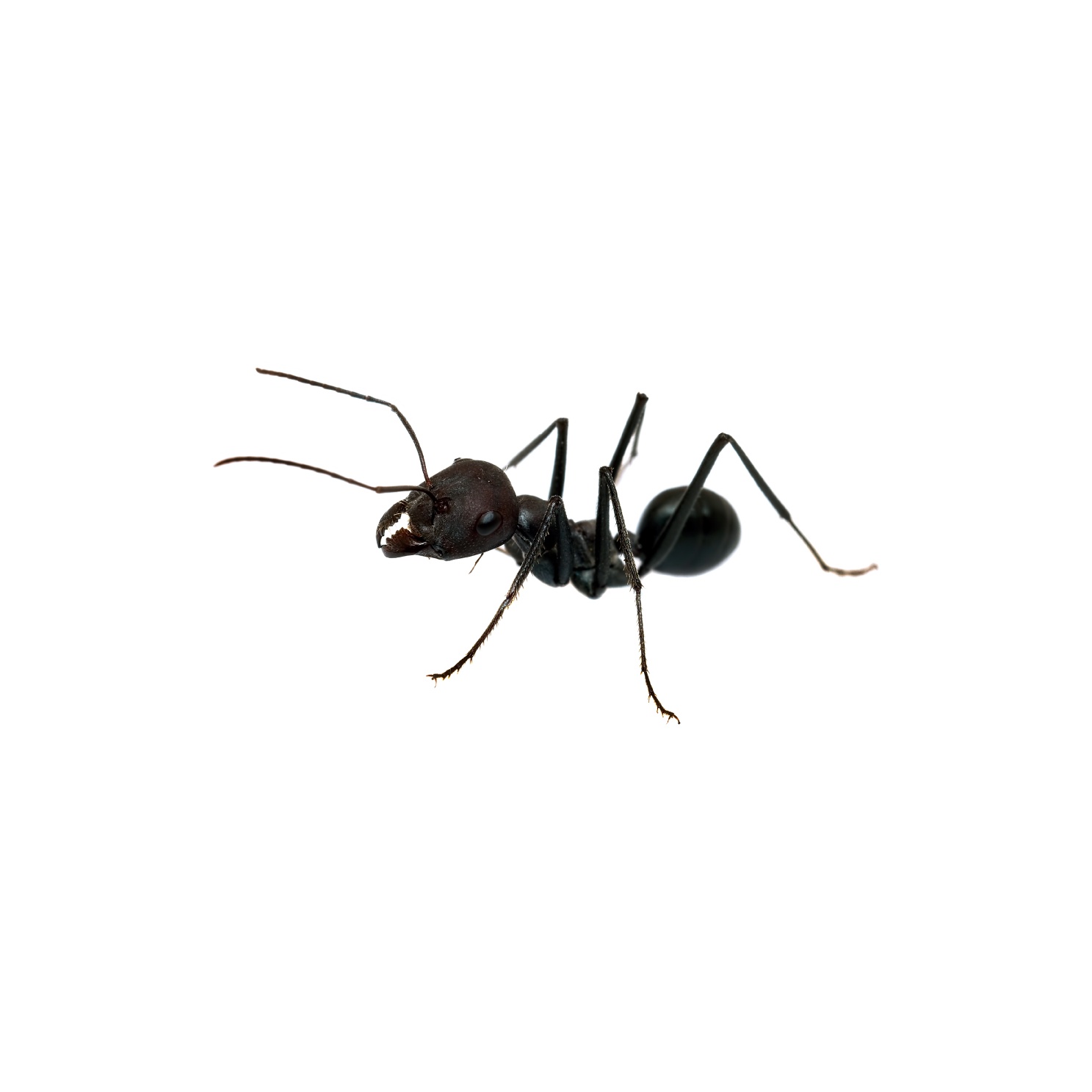 StrongStrongBlack AntPolyrhachis spp.Twelve weeks of oral extract lowered serum uric acid in hyperuricaemic rats, inhibiting xanthine oxidase in liver and serum while down-regulating the renal urate transporters URAT1 and GLUT9.Mechanismhepatic and serum xanthine oxidase inhibited, plus renal urate transporters URAT1 and GLUT9 down-regulated — 12-week in-vivo hyperuricemia modelRead the evidenceShow lessMonograph →
In potassium-oxonate-induced hyperuricaemic rats, 12 weeks of an oral active fraction of Polyrhachis vicina lowered serum uric acid, inhibited xanthine oxidase in both liver and serum, reduced creatinine and BUN, and down-regulated the renal urate transporters URAT1 and GLUT9 while up-regulating OAT1 2Reference 2AnimalHypouricemic and nephroprotective effects of an active fraction from Polyrhachis vicina Roger on potassium-oxonate-induced hyperuricemia in rats — animal model (rat)View study →.
Enzyme inhibition cuts urate production, and suppressing URAT1 and GLUT9 cuts its renal reabsorption, so the extract works the same two levers as allopurinol and a uricosuric together. The renal markers improved alongside, where hyperuricaemia models often trade one endpoint against the other.
The study is a long-duration in-vivo model with the enzyme measured in tissue rather than in a plate. It is a single rodent study of a concentrated solvent fraction rather than the whole-ant powder people take, and there are no human data.
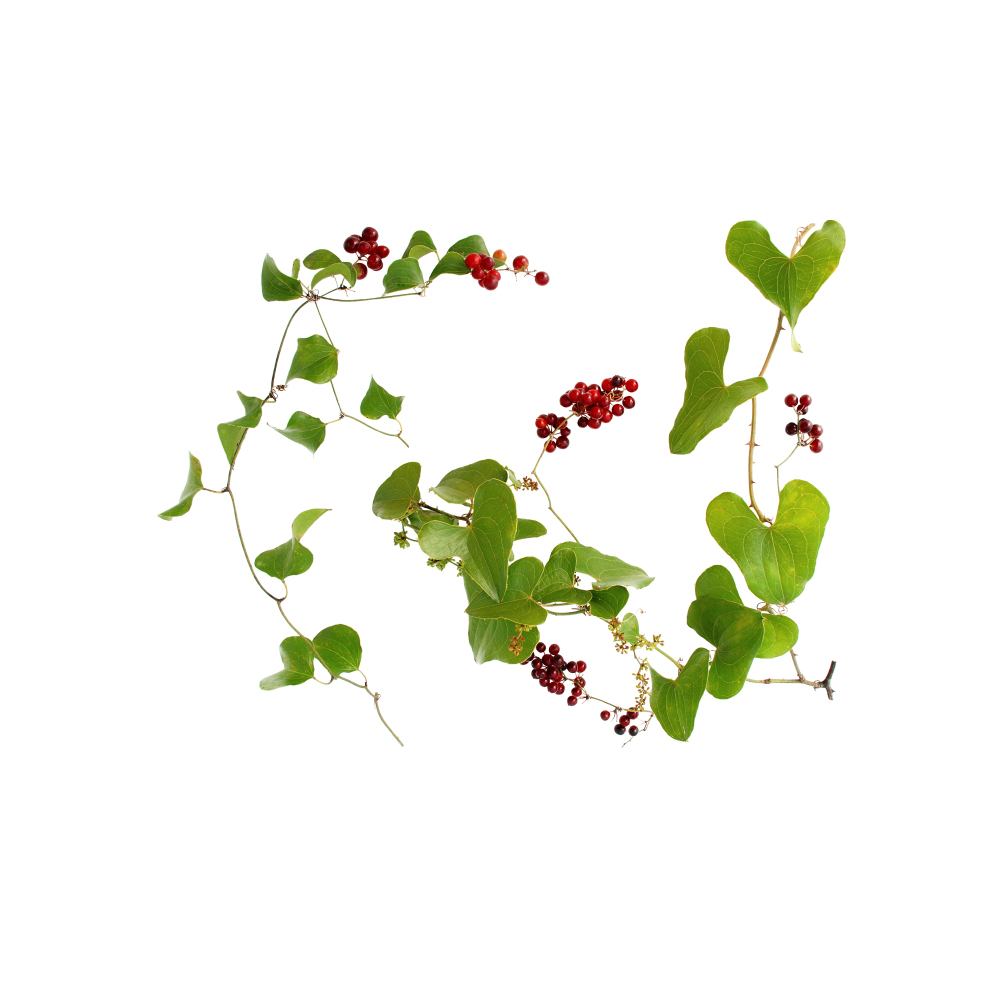 StrongStrongSarsaparillaSmilax spp.Smilax extracts lower serum uric acid in hyperuricaemic mice by inhibiting xanthine oxidase and enhancing renal urate excretion, replicated across several species and research groups; the traditional use for gout matches the pharmacology.Mechanismxanthine oxidase inhibition plus enhanced renal urate excretion via transporter modulation — in-vivo hyperuricemia modelRead the evidenceShow lessMonograph →
Sarsaparilla has a long Western and Chinese record for gout and rheumatic complaints, and lowering uric acid is the most thoroughly reproduced pharmacology in the genus. In potassium-oxonate-induced hyperuricaemic mice, Smilax china extract lowered serum uric acid by inhibiting xanthine oxidase while enhancing renal urate excretion through several constituents 3Reference 3AnimalAnti-hyperuricemic and nephroprotective effects of Smilax china L. — animal model (mouse)View study →.
S. glabra (tu fu ling) water extract repeated the effect and also reduced paw oedema and renal injury in a combined potassium-oxonate and monosodium-urate gout model 4Reference 4AnimalProtective effects of Rhizoma smilacis glabrae extracts on potassium oxonate- and monosodium urate-induced hyperuricemia and gout in mice — animal model (mouse)View study →, and the four astilbin stereoisomers were identified as the active uric-acid-lowering fraction, acting on renal urate transporters 5Reference 5AnimalThe anti-hyperuricemic effect of four astilbin stereoisomers in Smilax glabra on hyperuricemic mice — animal model (mouse)View study →.
Like black ant, it works production and excretion together rather than acting as a pure enzyme inhibitor.
The hyperuricaemia work is largely on S. china and S. glabra, while “sarsaparilla” commercially spans several Smilax species and is frequently substituted. All of it is animal work, and the only human uric-acid data come from a multi-herb granule.
ModerateCeleryApium graveolensCelery seed is an old Western and Ayurvedic gout remedy; seed extract inhibits xanthine oxidase and lowers serum uric acid in hyperuricaemic mice, with apigenin and luteolin as the likely actives.Mechanismxanthine oxidase inhibition; serum uric acid ↓ (hyperuricaemic mouse); apigenin, luteolinRead the evidenceShow less
Celery seed, the ajmoda of Ayurveda, is a warming diuretic seed given for gout, rheumatic complaints and fluid retention in Western herbal practice, often combined with juniper or nettle. The gout use is its oldest and most specific.
Celery extract inhibits xanthine oxidase activity and lowers serum uric acid in hyperuricaemic mice, the mechanism allopurinol shares 7Reference 7AnimalInhibitory effects of Apium graveolens on xanthine oxidase activity and serum uric acid levels in hyperuricemic mice — animal model (mouse)View study →. The activity is attributed to the flavonoids, chiefly apigenin and luteolin.
There is no monotherapy human trial for gout. The one randomised trial gave celery seed extract together with Boswellia serrata in osteoarthritis, so celery’s contribution cannot be separated.
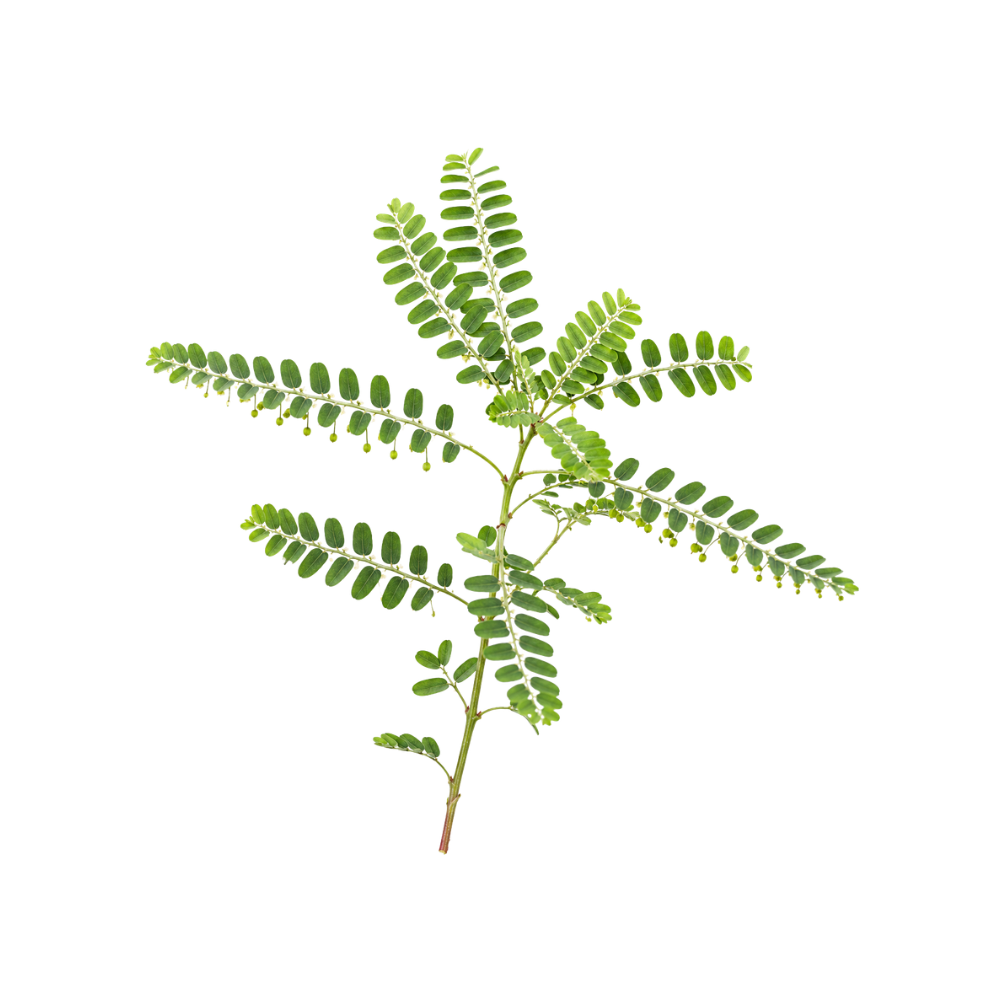 ModerateModerateChanca PiedraPhyllanthus niruriMethanol extract inhibits xanthine oxidase in vitro at an IC₅₀ of about 39 µg/mL; the herb lowers uric acid mainly by raising its excretion, so the enzyme inhibition is its secondary mechanism.Mechanismxanthine oxidase inhibited (IC50 ~39 ug/mL in vitro) — the herb's dominant urate mechanism is uricosuricRead the evidenceShow lessMonograph →
In hyperuricaemic rats the methanol extract raised urinary uric-acid excretion 1.7-fold and inhibited xanthine oxidase in vitro with an IC₅₀ of about 39 µg/mL 6Reference 6In vitroMechanisms of antihyperuricemic effect of Phyllanthus niruri and its lignan constituents — animal model (rat) and in vitroView study →.
The lignans phyllanthin, hypophyllanthin and phyltetralin were weak xanthine oxidase inhibitors but strong uricosurics, and phyllanthin’s effect was blocked by pyrazinamide, the signature of transporter-mediated excretion 6Reference 6In vitroMechanisms of antihyperuricemic effect of Phyllanthus niruri and its lignan constituents — animal model (rat) and in vitroView study →. The enzyme inhibition sits alongside the transporter effect rather than explaining it.
Chanca piedra is examined in full among the uricosuric herbs. No human study has measured its effect on xanthine oxidase.
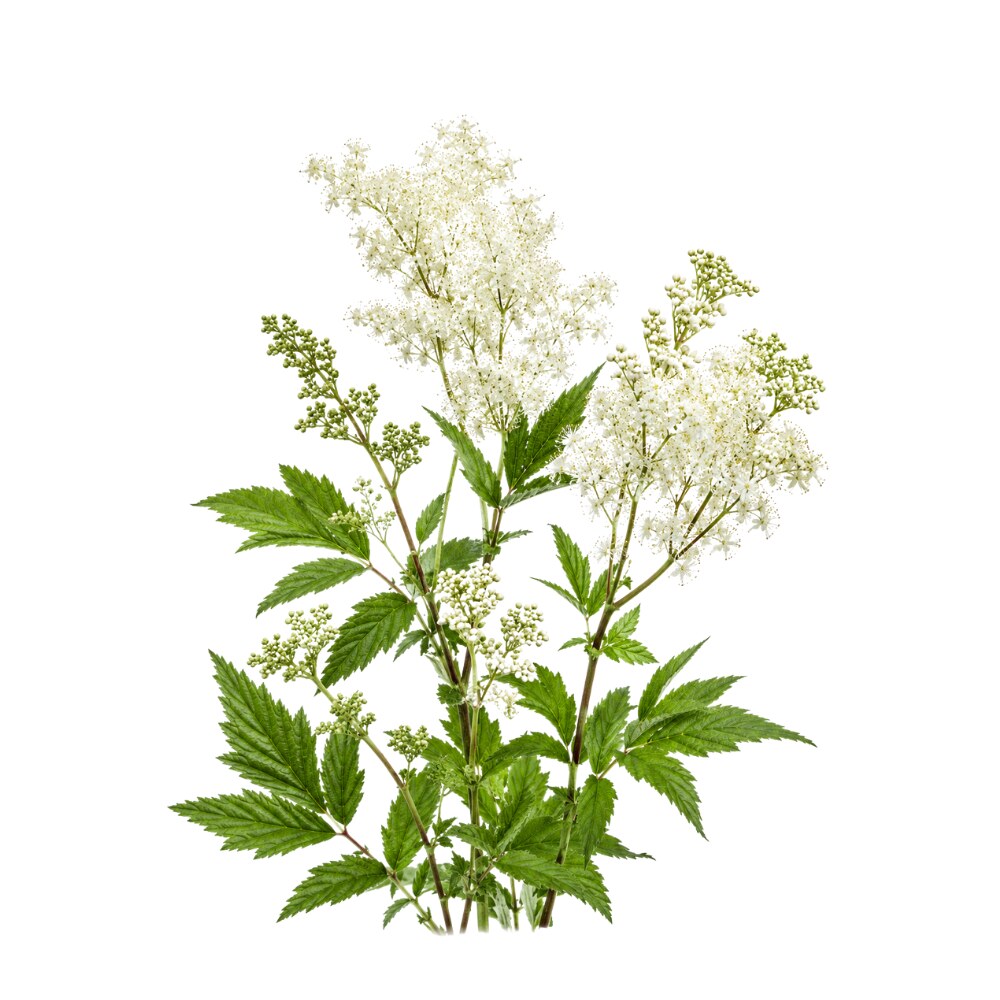 ModerateModerateMeadowsweetFilipendula ulmariaThe one herb whose xanthine oxidase inhibitors were deliberately isolated and characterised, with detection methods established for them; no urate endpoint exists.Mechanismxanthine oxidase inhibition by isolated constituents — dedicated isolation study, in vitroRead the evidenceShow lessMonograph →
A 2021 study set out to isolate the xanthine oxidase inhibitors of Filipendula ulmaria and established HPTLC and HPLC methods for detecting them 1Reference 1In vitroXanthine oxidase inhibitors from Filipendula ulmaria and their efficient detection by HPTLC and HPLC — in vitroView study →. The compounds were sought, found and characterised rather than turning up in an antioxidant panel.
There is no urate endpoint: no hyperuricaemic animal, no serum uric acid and no clinical measurement.
Meadowsweet’s salicylates are the reason its traditional use covers rheumatic pain in general rather than gout specifically.
Show 3 more herbs with a mild xanthine oxidase inhibitor action
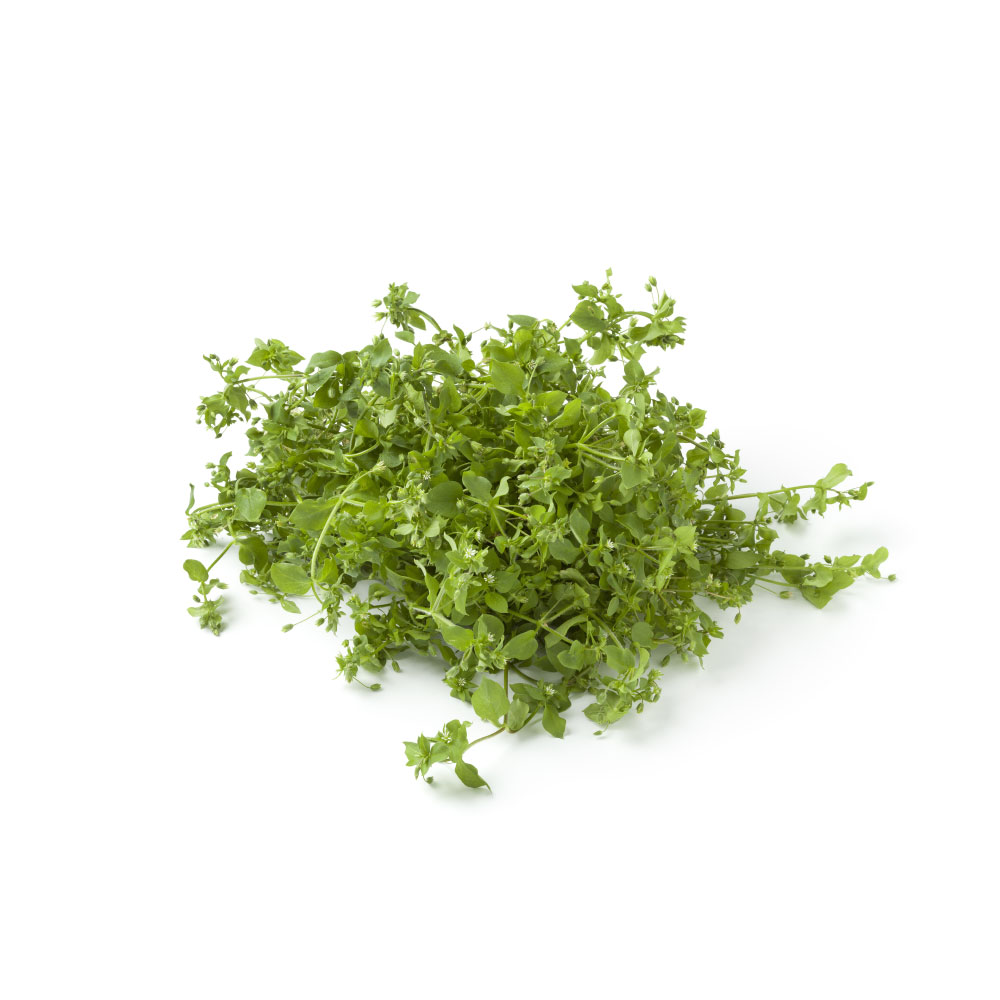 MildMildChickweedStellaria mediaInhibited xanthine oxidase in vitro in a screen of wild edible greens, alongside radical scavenging; uric acid has not been measured.Mechanismxanthine oxidase inhibited in vitro as part of an antioxidant enzyme panel — no urate endpointRead the evidenceShow lessMonograph →
In a screen of wild edible greens, chickweed extract showed strong in-vitro inhibition of xanthine oxidase alongside free-radical scavenging in the DPPH assay. The activity tracks the flavonoid C-glycosides, of which orientin and isoorientin are the antioxidant ones.
The enzyme was tested as part of an antioxidant panel. No serum urate, hyperuricaemia model or clinical measurement exists for the herb.
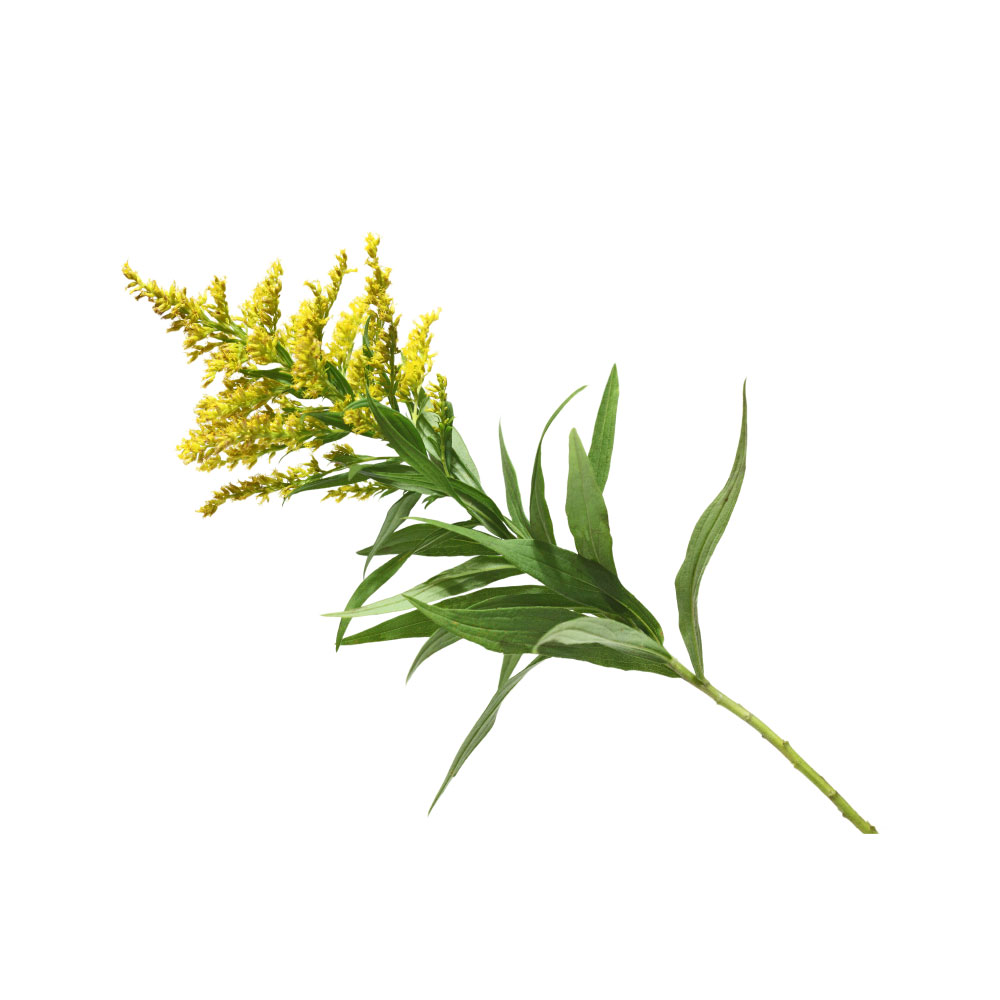 MildMildGoldenrodSolidago virgaureaHydroalcoholic and phenolic-rich extracts inhibit xanthine oxidase, lipoxygenase and photodynamic oxidation in vitro, an activity attributed to the flavonoids; uric acid has not been measured.Mechanismxanthine oxidase inhibited in vitro as part of an antioxidant enzyme panel — no urate endpointRead the evidenceShow lessMonograph →
Hydroalcoholic and phenolic-rich goldenrod extracts scavenge free radicals and inhibit a battery of oxidative enzyme systems in vitro, xanthine oxidase, lipoxygenase and photodynamic reactions together, an activity attributed to the quercetin, kaempferol and isorhamnetin glycosides and the caffeoylquinic acids.
The measurement is cell-free. No serum urate, hyperuricaemia model or clinical measurement exists for the herb, and its evidenced urinary use is as an aquaretic, examined among the diuretic herbs.
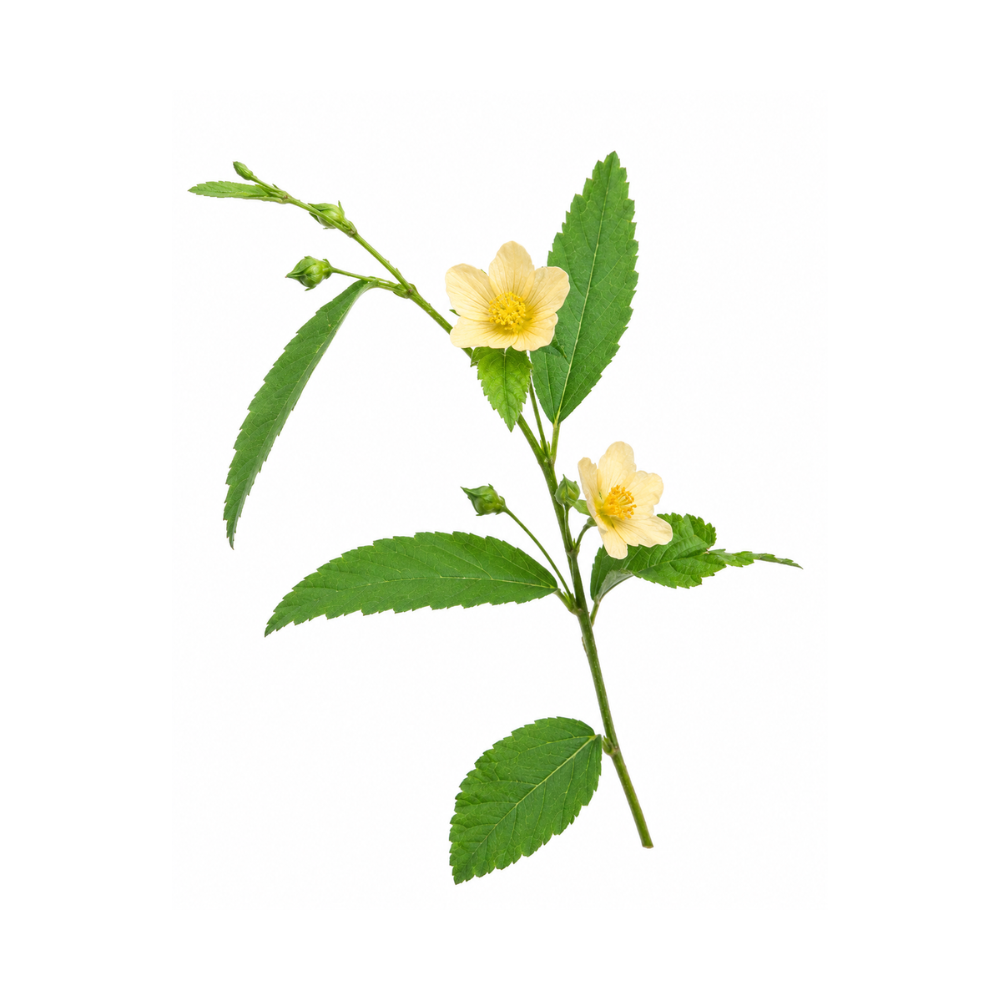 MildMildWireweedSida acutaEthyl-acetate and dichloromethane fractions inhibited xanthine oxidase and lipoxygenase in vitro alongside the strongest radical scavenging, tracking polyphenol content; uric acid has not been measured.Mechanismxanthine oxidase inhibited in vitro as part of an antioxidant enzyme panel — no urate endpointRead the evidenceShow lessMonograph →
In a comparative fractionation study of three Malvaceae, the ethyl-acetate and dichloromethane fractions of Sida acuta carried the highest total phenolics and the strongest DPPH, ABTS and FRAP activity, alongside inhibition of lipoxygenase and xanthine oxidase 8Reference 8In vitroIn vitro antioxidant, lipoxygenase and xanthine oxidase inhibitory activities of fractions from Cienfuegosia digitata, Sida alba and Sida acuta — in vitroView study →. The enzyme inhibition tracks the polyphenol content.
The measurement is in vitro and part of an antioxidant panel. No serum urate, hyperuricaemia model or clinical measurement exists for the herb.
No herbs match these filters.
Safety
- No herb here has been tested against uric acid in a person, and none has a dose or a target serum urate.
- Starting or changing a urate-lowering agent during an attack can prolong it, so urate lowering is begun between attacks.
- Xanthine oxidase clears azathioprine, 6-mercaptopurine and theophylline, so a herb named for inhibiting it should not be added to those drugs.
- Do not stack these herbs with allopurinol or febuxostat.
- A hot, swollen joint with fever needs same-day assessment, because septic arthritis presents like gout.
- Urate handling is renal, and reduced kidney function is not a setting for self-managed urate lowering.
References
- Gainche, M., et al. (2021). Xanthine oxidase inhibitors from Filipendula ulmaria and their efficient detection by HPTLC and HPLC — in vitro. Molecules, 26(7), 1939. https://pubmed.ncbi.nlm.nih.gov/33808360/
- Su, Q., Su, H., Nong, Z., et al. (2018). Hypouricemic and nephroprotective effects of an active fraction from Polyrhachis vicina Roger on potassium-oxonate-induced hyperuricemia in rats — animal model (rat). Kidney & Blood Pressure Research. https://pubmed.ncbi.nlm.nih.gov/29490297/
- Chen, L., Yin, H., Lan, Z., et al. (2011). Anti-hyperuricemic and nephroprotective effects of Smilax china L. — animal model (mouse). Journal of Ethnopharmacology. https://pubmed.ncbi.nlm.nih.gov/21420478/
- Liang, G., Nie, Y., Chang, Y., et al. (2019). Protective effects of Rhizoma smilacis glabrae extracts on potassium oxonate- and monosodium urate-induced hyperuricemia and gout in mice — animal model (mouse). Phytomedicine. https://pubmed.ncbi.nlm.nih.gov/31005813/
- Huang, L., Deng, J., Chen, G., et al. (2019). The anti-hyperuricemic effect of four astilbin stereoisomers in Smilax glabra on hyperuricemic mice — animal model (mouse). Journal of Ethnopharmacology. https://pubmed.ncbi.nlm.nih.gov/30851369/
- Murugaiyah, V., & Chan, K. L. (2009). Mechanisms of antihyperuricemic effect of Phyllanthus niruri and its lignan constituents — animal model (rat) and in vitro. Journal of Ethnopharmacology. https://pubmed.ncbi.nlm.nih.gov/19397979/
- Dolati, K., Rakhshandeh, H., Golestani, M., et al. (2018). Inhibitory effects of Apium graveolens on xanthine oxidase activity and serum uric acid levels in hyperuricemic mice — animal model (mouse). Preventive Nutrition and Food Science. https://pubmed.ncbi.nlm.nih.gov/30018891/
- Konaté, K., Souza, A., Coulibaly, A. Y., et al. (2010). In vitro antioxidant, lipoxygenase and xanthine oxidase inhibitory activities of fractions from Cienfuegosia digitata, Sida alba and Sida acuta — in vitro. Pakistan Journal of Biological Sciences. https://pubmed.ncbi.nlm.nih.gov/21313883/
- Ding, Z., Dai, Y., & Wang, Z. (2005). Hypouricemic action of scopoletin arising from xanthine oxidase inhibition and uricosuric activity — animal model. Planta Medica. https://pubmed.ncbi.nlm.nih.gov/15729630/
- Zeng, Y., Ma, Y., Yang, Z., et al. (2020). Antihyperuricemic efficacy of scopoletin-loaded Soluplus micelles in hyperuricemic mice — animal model. Drug Development and Industrial Pharmacy. https://pubmed.ncbi.nlm.nih.gov/32811191/
Keep Exploring