
Materia Medica
Catechu
Senegalia catechu
Catechu is an astringent extract made by boiling the heartwood of Senegalia catechu, a thorny tree of South and Southeast Asia. Rich in catechin and tannins, it is used in Ayurveda for the mouth, the gut and chronic skin disease.
What Is Catechu?
Catechu is an astringent extract made by boiling the heartwood of Senegalia catechu, a thorny tree of South and Southeast Asia. In Ayurveda it is khadira, a principal remedy for the mouth, the gut and chronic skin disease 26Reference 26ReviewMinistry of Health & Family Welfare, Government of India.
The tree grows in the dry forests and hills of the Indian subcontinent, Myanmar, Thailand and southwest China 29,
The extract is rich in catechin, epicatechin and condensed tannins 11Reference 11ReviewAntioxidant, anti-inflammatory, and chemoprotective properties of Acacia catechu heartwood extracts — reviewView study →. Catechin, and the catechin class of compounds, take their name from it. Research on catechu has looked at dental rinses and gels, and at flavocoxid, a joint product that combines catechu with Chinese skullcap 1,
Catechu was formerly Acacia catechu, the name most research still uses (see acacia). Red cutch, from Senegalia chundra, gives a similar extract and is often sold under the same names 28Reference 28ReviewBritish Herbal Medicine Association.
How Is Catechu Used?
Catechu is a strong astringent. On a mucous membrane it tightens the tissue, stops weeping and slows bleeding, so most of its uses are on surfaces.
- Mouth and throat — gargles, rinses and lozenges for mouth ulcers, a sore or relaxed throat, and spongy or bleeding gums.
- Gut — the powdered extract or a decoction, taken for loose stool and dysentery.
- Skin — dusted on as a powder for weeping skin conditions and slow-healing sores.
- Chronic skin disease — in Ayurveda, taken internally over weeks, most often as the fermented decoction khadirarishta 26Reference 26ReviewMinistry of Health & Family Welfare, Government of India.
- Dental products — modern catechu mouthrinses and gels 4,
5, .6Reference 4RCTA clinical and microbiological study to assess the efficacy of Acmella oleracea and Acacia catechu gels as local drug delivery in chronic periodontitis — randomised split-mouth controlled trialView study →Reference 5RCTComparison of antimicrobial efficacy of Acacia catechu mouthrinse and HiOra herbal mouthrinse and their influence on Streptococcus mutans count and Lactobacillus spp. count in children with early childhood caries — double-blind randomised trialView study →Reference 6RCTClinicalTrials.gov NCT02154594View study → - Flavocoxid — a concentrated blend of catechu catechins with baicalin from Chinese skullcap, sold for knee osteoarthritis 1,
2Reference 1RCTA combination of Scutellaria baicalensis and Acacia catechu extracts for short-term symptomatic relief of joint discomfort associated with osteoarthritis of the knee — randomised controlled trialView study →Reference 2RCTThe safety of flavocoxid, a medical food, in the dietary management of knee osteoarthritis — randomised placebo-controlled trialView study → .
Traditional Uses
Catechu has a documented history in Ayurveda, Chinese medicine and the European pharmacopoeias. In each it is the same product: a boiled-down water extract of the mature heartwood 24,
Ayurvedic Medicine
Catechu is khadira (खदिर), the extract known as khadira sara or kattha. It is the drug most associated with kushtha, the broad classical category of chronic skin disease 26Reference 26ReviewMinistry of Health & Family Welfare, Government of India.
The Ayurvedic Pharmacopoeia of India classifies it as tikta (bitter) and kashaya (astringent) in rasa, sheeta (cooling) in virya, katu (pungent) in vipaka, and laghu-ruksha (light, dry) in guna, pacifying kapha and pitta 26Reference 26ReviewMinistry of Health & Family Welfare, Government of India.
Its main role is raktashodhaka (blood-purifying), and it is given internally over weeks. The classical vehicle is khadirarishta, a fermented decoction taken after meals as a sustained course for eczema, chronic itching and non-healing lesions 26Reference 26ReviewMinistry of Health & Family Welfare, Government of India.
Its second use is in the mouth and throat. Khadiradi vati are small lozenges of catechu with aromatics, held in the mouth for ulcers, hoarseness and bleeding gums, and a heartwood decoction is gargled for the same complaints 26Reference 26ReviewMinistry of Health & Family Welfare, Government of India.
Internally it is also given for diarrhoea and dysentery, and in astringent formulas for excessive menstrual bleeding and leucorrhoea 24,
Traditional Chinese Medicine
Catechu entered Chinese practice as an import and is an official drug of the Chinese Pharmacopoeia under the name er cha (儿茶). It is bitter and astringent in taste, cooling in nature, and enters the lung and heart channels 27Reference 27ReviewChinese Pharmacopoeia Commission.
TCM uses it mostly externally. It stops bleeding, dries dampness, clears heat and generates flesh, promoting granulation in wounds that will not close 27Reference 27ReviewChinese Pharmacopoeia Commission. It is dusted onto sores, ulcers, eczema and bleeding wounds, often with other drying agents.
Internally it is used for coughing of blood and for persistent damp-type diarrhoea 27Reference 27ReviewChinese Pharmacopoeia Commission.
Western Herbal Medicine
Catechu reached Western practice through the East India trade and entered the official pharmacopoeias. The British Pharmacopoeia included a compound tincture of catechu and a compound catechu powder, both dispensed for chronic diarrhoea and as gargles for a relaxed throat and spongy gums 28Reference 28ReviewBritish Herbal Medicine Association.
It was used as a simple astringent for lax and weeping membranes. It left the pharmacopoeias in the twentieth century along with the other simple astringents, and remains a minor gut and throat astringent in Western herbal practice 28Reference 28ReviewBritish Herbal Medicine Association.
South Asian Betel Quid (Paan)
Across South Asia the pale kattha grade is spread as a paste inside a betel leaf with slaked lime and areca nut to make paan. It is a stimulant and social custom rather than a remedy, and it is where most of the world’s catechu is consumed.
Betel quid chewing carries a well-documented oral cancer risk. That risk is attributed to the areca nut, and to the tobacco often added to the quid, not to the catechu.
Botany
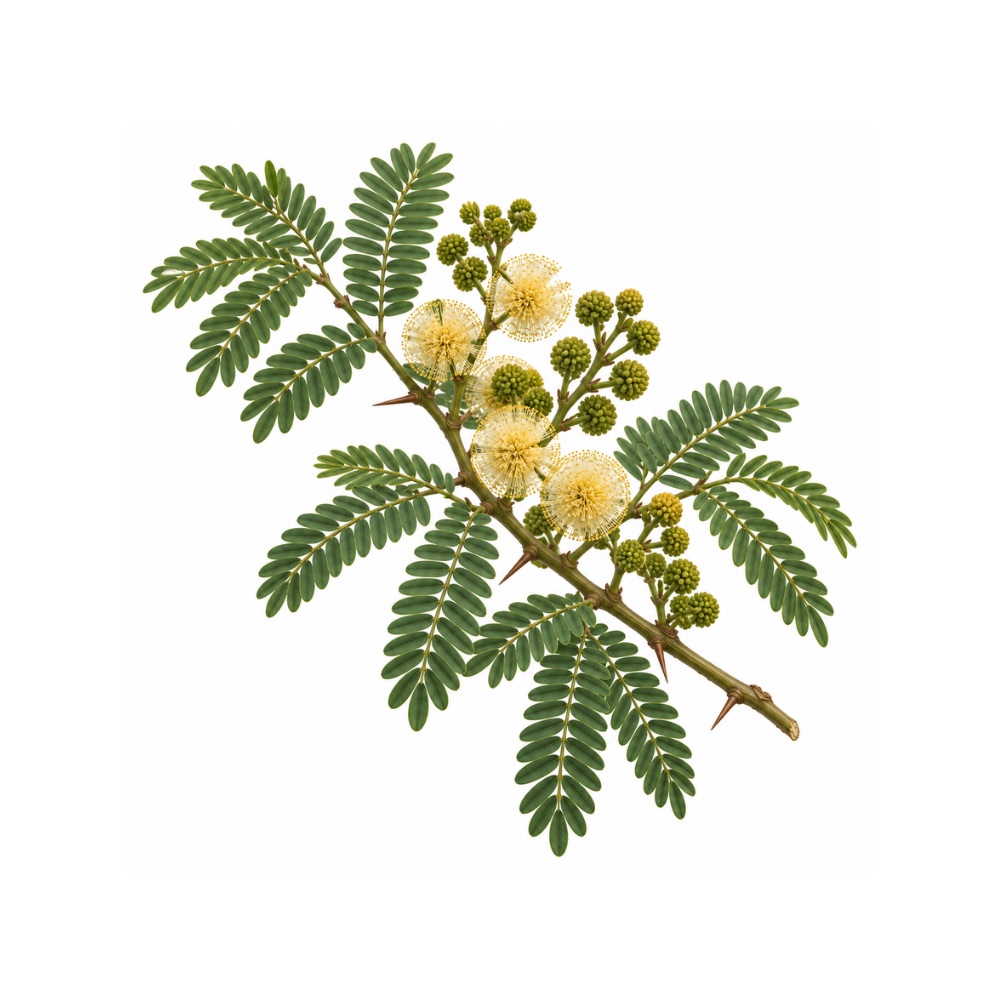
Catechu is a small to medium deciduous tree in the legume family (Fabaceae), up to 15 m tall 29,
The leaves are bipinnate and very fine, with 10–30 pairs of side branches, each carrying 16–50 pairs of narrow leaflets 3–6 mm long 29Reference 29Ali, S. I. Acacia catechu (Linn. f.) Willd. — species description and distribution — flora. In Flora of Pakistan, No. 36 (Mimosaceae). http://www.efloras.org/florataxon.aspx?flora_id=5&taxon_id=200011847View study →. A pair of flat, hooked prickles, up to 8 mm long, sits at the base of each leaf 29,
The flowers are pale yellow to white, in narrow spikes 2.5–10 cm long that grow from the leaf axils 29,
The heartwood is light red to reddish-brown, darkening with exposure, and sharply marked off from the pale yellowish sapwood 31Reference 31Senegalia catechu — habit, range, habitat, cultivation, cutch and katha production — species databaseView study →. Only the heartwood is used to make catechu. Trees are generally felled for it after about 30 years on good sites, and later on poorer ones 31Reference 31Senegalia catechu — habit, range, habitat, cultivation, cutch and katha production — species databaseView study →.
Distribution
Catechu grows in the Indian subcontinent and mainland Southeast Asia: Pakistan, India, Nepal, Bhutan, Bangladesh, Sri Lanka, Myanmar and Thailand, and in Yunnan in southwest China 30Reference 30Acacia catechu (Linnaeus f.) Willdenow — species description and distribution — floraView study →. In Pakistan it grows scattered on the foothills of the western Himalayas, at about 900–1,200 m 29Reference 29Ali, S. I. Acacia catechu (Linn. f.) Willd. — species description and distribution — flora. In Flora of Pakistan, No. 36 (Mimosaceae). http://www.efloras.org/florataxon.aspx?flora_id=5&taxon_id=200011847View study →.
It grows in mixed deciduous forest and savannah on low mountains and hills, especially in drier regions on the sandy soils of riverbanks 31Reference 31Senegalia catechu — habit, range, habitat, cultivation, cutch and katha production — species databaseView study →.
Catechu is both harvested from the wild and cultivated in Asia, and it is traded internationally 31Reference 31Senegalia catechu — habit, range, habitat, cultivation, cutch and katha production — species databaseView study →. It is also cultivated in southern China beyond its native range 30Reference 30Acacia catechu (Linnaeus f.) Willdenow — species description and distribution — floraView study →.
Growing Conditions
Cultivation snapshot for Catechu
- Dry to seasonally dry subtropical and tropical climates; full sun.
- Strongly drought-tolerant once established and a nitrogen fixer; tolerates poor, shallow and stony soils.
- Frost-sensitive when young.
Grow it yourself
Farm Wiki is our cultivation-focused sister site, also run by Justin Cooke.
Indications
- Bleeding, spongy gums and mouth ulcers [heartwood extract; Ayurveda, TCM, Western]
- Sore or relaxed throat [heartwood extract; Ayurveda, Western]
- Chronic diarrhoea and dysentery [heartwood extract; Ayurveda, TCM, Western]
- Chronic skin disease, including eczema and chronic itching [heartwood extract, khadirarishta; Ayurveda]
- Weeping sores and slow-healing wounds [powder, topical; TCM, Ayurveda]
- Excessive menstrual bleeding and leucorrhoea [heartwood extract; Ayurveda]
- Knee osteoarthritis [catechu–skullcap combination] Caution: The trials tested flavocoxid, a combination with Chinese skullcap, so the effect cannot be attributed to catechu alone. The product was later linked to reversible liver injury 1,
2, .3
Pharmacology & Research
The largest human trials tested flavocoxid (Limbrel, UP446), a blend of catechu heartwood catechins with baicalin from Chinese skullcap, in knee osteoarthritis 1,
Trials of catechu on its own are small dental studies of rinses and gels 4,
-
Best-supported: small human trials of catechu rinses and gels for plaque, gingivitis and caries organisms 4,
5, ; consistently demonstrated antioxidant activity in vitro 11Reference 11ReviewAntioxidant, anti-inflammatory, and chemoprotective properties of Acacia catechu heartwood extracts — reviewView study →; and replicated rodent hepatoprotection against two separate toxins 13,6Reference 4RCTA clinical and microbiological study to assess the efficacy of Acmella oleracea and Acacia catechu gels as local drug delivery in chronic periodontitis — randomised split-mouth controlled trialView study →Reference 5RCTComparison of antimicrobial efficacy of Acacia catechu mouthrinse and HiOra herbal mouthrinse and their influence on Streptococcus mutans count and Lactobacillus spp. count in children with early childhood caries — double-blind randomised trialView study →Reference 6RCTClinicalTrials.gov NCT02154594View study → 14Reference 13AnimalSeed and bark extracts of Acacia catechu protects liver from acetaminophen induced hepatotoxicity by modulating oxidative stress, antioxidant enzymes and liver function enzymes in Wistar rat model — animal modelView study →Reference 14AnimalStudy of the protective effects of Katha (heartwood extract of Acacia catechu) in liver damage induced by iron overload — animal modelView study → . -
Emerging, worth watching: dual COX-2 and 5-LOX inhibition behind the joint-support use 8,
9Reference 8In vitroFlavocoxid, a dual inhibitor of cyclooxygenase and 5-lipoxygenase, blunts pro-inflammatory phenotype activation in endotoxin-stimulated macrophages — in vitroView study →Reference 9ReviewFlavocoxid, a nutraceutical approach to blunt inflammatory conditions — reviewView study → , and antimicrobial and antispasmodic mechanisms consistent with the traditional astringent indications 16,17Reference 16In vitroAntioxidant, urobactericidal and antibiotic modulating activity of the methanolic extract of the stem and resin of Acacia catechu (L.f.) Willd. — in vitroView study →Reference 17Newer insights into the antidiarrheal effects of Acacia catechu Willd. extract in guinea pig — ex vivoView study → . -
Mechanistically thin: the anticancer signal is cell-line only and comes from the seed, not the medicinal heartwood 15,
18, .19Reference 15In vitroAcacia catechu seed extract provokes cytotoxicity via apoptosis by intrinsic pathway in HepG2 cells — in vitroView study →Reference 18In vitroAcacia catechu ethanolic seed extract triggers apoptosis of SCC-25 cells — in vitroView study →Reference 19Systematic reviewA systematic review exploring the phytochemical composition and anticancer activities of Acacia catechu — systematic reviewView study → - The caveat: every osteoarthritis and cognition trial is of the skullcap combination, and that combination carries a documented liver-injury signal 3Reference 3ObservationalAcute liver injury due to flavocoxid (Limbrel), a medical food for osteoarthritis: a case series — observational case seriesView study →.
No adequately powered trial has tested catechu on its own for its traditional gut and skin uses. The human trials of catechu alone are small dental studies, and their results are modest.
1. Oral & Periodontal Health
This is the closest catechu comes to human evidence for itself.
A split-mouth randomised trial (n=30, 90 sites) applied a 1% Acacia catechu gel alongside scaling and root planing in chronic periodontitis and found reductions in gingival, plaque and bleeding indices and pocket depth over six months — though on intergroup comparison the gel was not consistently better than scaling alone 4Reference 4RCTA clinical and microbiological study to assess the efficacy of Acmella oleracea and Acacia catechu gels as local drug delivery in chronic periodontitis — randomised split-mouth controlled trialView study →.
A double-blind trial in children with early childhood caries (n=60) found a catechu mouthrinse reduced both Streptococcus mutans and Lactobacillus counts, but by less than a multi-herb comparator 5Reference 5RCTComparison of antimicrobial efficacy of Acacia catechu mouthrinse and HiOra herbal mouthrinse and their influence on Streptococcus mutans count and Lactobacillus spp. count in children with early childhood caries — double-blind randomised trialView study →. A further double-blind trial tested a catechu mouthrinse for plaque and gingivitis in orthodontic-appliance patients 6Reference 6RCTClinicalTrials.gov NCT02154594View study →.
A 12-week study in beagle dogs with ligature-induced periodontitis showed the catechu–Scutellaria blend reduced gingivitis, pocket depth, attachment loss and bleeding 10Reference 10AnimalProtective effect of UP446 on ligature-induced periodontitis in beagle dogs — animal modelView study →.
The rinse and gel are close to the traditional gargle.
Gap: the trials are small and the results modest; in two of the three, catechu was not better than the comparator it was tested against.
2. Antioxidant
Antioxidant activity is the most consistently reproduced property of the plant.
Heartwood extracts, rich in catechin and epicatechin, show potent radical scavenging across DPPH, hydroxyl, nitric-oxide and hypochlorous-acid assays, frequently exceeding reference standards 11Reference 11ReviewAntioxidant, anti-inflammatory, and chemoprotective properties of Acacia catechu heartwood extracts — reviewView study →. Leaf extracts add gallic acid and taxifolin to the flavan-3-ol pool and show both antioxidant and acetylcholinesterase-inhibiting activity 12Reference 12In vitroEffect of Acacia catechu (L.f.) Willd. on oxidative stress with possible implications in alleviating selected cognitive disorders — in vitroView study →.
Gap: well established chemically and in animals, and never measured as a clinical endpoint in a person.
3. Hepatoprotective
Two independent rodent studies found liver protection, both using extracts given by mouth.
Seed and bark extracts at 400 mg/kg protected rat liver against acetaminophen toxicity, normalising ALT, AST and ALP and restoring glutathione, with the seed extract performing comparably to N-acetylcysteine 13Reference 13AnimalSeed and bark extracts of Acacia catechu protects liver from acetaminophen induced hepatotoxicity by modulating oxidative stress, antioxidant enzymes and liver function enzymes in Wistar rat model — animal modelView study →. A heartwood extract dose-dependently reduced liver iron, lipid peroxidation and fibrosis in iron-overloaded mice, acting as an iron chelator 14Reference 14AnimalStudy of the protective effects of Katha (heartwood extract of Acacia catechu) in liver damage induced by iron overload — animal modelView study →.
The one human liver signal runs the other way: the concentrated flavocoxid product caused acute idiosyncratic liver injury in people 3Reference 3ObservationalAcute liver injury due to flavocoxid (Limbrel), a medical food for osteoarthritis: a case series — observational case seriesView study →. The exposures differ, the product contains a second ingredient, and idiosyncratic injury does not follow dose, so the rodent results do not speak to the safety of the concentrated product.
4. Anti-Inflammatory
Flavocoxid inhibits both cyclooxygenase and 5-lipoxygenase in endotoxin-stimulated macrophages, acting on two arms of the eicosanoid cascade rather than the single arm an NSAID addresses 8Reference 8In vitroFlavocoxid, a dual inhibitor of cyclooxygenase and 5-lipoxygenase, blunts pro-inflammatory phenotype activation in endotoxin-stimulated macrophages — in vitroView study →. That dual action is the stated rationale for the product 9Reference 9ReviewFlavocoxid, a nutraceutical approach to blunt inflammatory conditions — reviewView study →.
Catechu supplies the flavan-3-ol fraction of the blend — catechin and epicatechin. In vivo, a methanolic bark extract suppressed NF-κB, COX-2, iNOS and IL-6 in a rat colon model 23Reference 23AnimalColono-protective potentiality of methanolic bark extract of Acacia catechu: a medicinal plant against 1,2-dimethylhydrazine-induced toxicity in Wistar rats — animal modelView study →.
Gap: the macrophage work uses the finished combination, so the split between the catechu catechins and the Scutellaria baicalin is unresolved.
5. Osteoarthritis (Joint)
A randomised controlled trial (n=79) compared the UP446 catechu–Scutellaria blend at 500 mg/day against naproxen over one week and found reductions in perceived knee pain and stiffness with improved range of motion 1Reference 1RCTA combination of Scutellaria baicalensis and Acacia catechu extracts for short-term symptomatic relief of joint discomfort associated with osteoarthritis of the knee — randomised controlled trialView study →. A separate 12-week randomised trial assessed the safety of flavocoxid in knee osteoarthritis and found it well tolerated against placebo 2Reference 2RCTThe safety of flavocoxid, a medical food, in the dietary management of knee osteoarthritis — randomised placebo-controlled trialView study →.
The product is a combination, so nothing here can be attributed to catechu on its own. Flavocoxid later accumulated a case series of acute idiosyncratic liver injury 3Reference 3ObservationalAcute liver injury due to flavocoxid (Limbrel), a medical food for osteoarthritis: a case series — observational case seriesView study → and was removed from the US market.
Gap: no trial isolates catechu from the co-ingredient, and the safety signal arrived after the efficacy trials.
6. Antimicrobial & Antidiarrheal
Methanolic stem and resin extracts were urobactericidal against E. coli, Enterococcus faecalis, Pseudomonas aeruginosa, Proteus vulgaris and Staphylococcus aureus, and modulated antibiotic activity 16Reference 16In vitroAntioxidant, urobactericidal and antibiotic modulating activity of the methanolic extract of the stem and resin of Acacia catechu (L.f.) Willd. — in vitroView study →.
In the antidiarrhoeal work the extract was active against Campylobacter jejuni, E. coli and Salmonella while sparing Bifidobacterium and Lactobacillus. In isolated guinea-pig tissue it reduced colonic contraction in a calcium-antagonistic manner at concentrations well below those affecting gut flora, and the authors proposed it as a candidate for non-bacterial diarrhea 17Reference 17Newer insights into the antidiarrheal effects of Acacia catechu Willd. extract in guinea pig — ex vivoView study →.
The antimicrobial activity is attributed to tannins binding the surface proteins of microbes on contact.
Gap: all in vitro or ex vivo. Never formally tested in people, in any tradition’s preparation.
7. Anticancer & Cognition
Anticancer. An ethanolic seed extract triggered apoptosis in SCC-25 oral squamous carcinoma cells at 25–50 µg/mL and was cytotoxic to HepG2 liver-carcinoma cells via the intrinsic mitochondrial pathway 15,
Cognition. A randomised, double-blind, placebo-controlled trial in 85 healthy adults gave 240 mg of Scutellaria baicalensis extract with 51 mg of catechu heartwood extract for four weeks. Cognitive scores improved in both arms, with no difference between supplement and placebo 7Reference 7RCTEffects of Acacia catechu and Scutellaria baicalensis extract on cognitive function in a healthy adult population: a double-blind, randomized, placebo-controlled trial — randomised controlled trialView study →. Catechu leaf extract inhibits acetylcholinesterase in vitro 12Reference 12In vitroEffect of Acacia catechu (L.f.) Willd. on oxidative stress with possible implications in alleviating selected cognitive disorders — in vitroView study →.
Mechanisms
Catechu’s condensed tannins precipitate proteins on contact, tightening and drying the surface they touch. This has been studied in relation to its astringent, antidiarrhoeal, hemostatic and topical antibacterial uses.
Its flavan-3-ols, catechin and epicatechin, have been studied for COX-2 and 5-LOX inhibition, radical scavenging and, in seed extracts, apoptosis in cancer cell lines. Much of the enzyme work used the flavocoxid combination rather than catechu alone.
| Mechanism | Drives | Key compounds |
|---|---|---|
| Protein precipitation on mucosal surfaces | astringenthemostaticantidiarrhealvulnerary | condensed tannins (proanthocyanidins) |
| COX-2 ↓ and 5-LOX ↓ in stimulated macrophages | anti-inflammatoryjoint | catechin, epicatechin |
| Radical scavenging | antioxidanttissue-protective | flavan-3-ols, gallic acid, taxifolin |
| Calcium-antagonist smooth-muscle relaxation | antidiarrheal (antispasmodic) | catechins |
| Tannin binding of microbial surface proteins | antibacterial (topical) | condensed tannins |
| Caspase-8/9 and Bax ↑, Bcl-2 ↓ | anticancer (in vitro only) | seed extract, constituent unresolved |
Clinical Trials
Nine registered trials have been identified. Three name Acacia catechu directly — two dental 6,
| Completed | Planned | Terminated | Preclinical |
|---|---|---|---|
| 9 | 0 | 0 | ~50 |
Last checked: September 2026.
Phytochemistry
Catechu is rich in the flavan-3-ols catechin and epicatechin and in condensed tannins. The extract usually contains 55–60% tannins 31Reference 31Senegalia catechu — habit, range, habitat, cultivation, cutch and katha production — species databaseView study →.
The two commercial grades differ. The pale kattha grade is largely crystalline catechin and epicatechin, which can make up a third or more of its weight 11Reference 11ReviewAntioxidant, anti-inflammatory, and chemoprotective properties of Acacia catechu heartwood extracts — reviewView study →. The dark cutch grade is mostly condensed tannins (historically called catechutannic acid), polymers built from the same units, and it is the tanning and dyeing material 31Reference 31Senegalia catechu — habit, range, habitat, cultivation, cutch and katha production — species databaseView study →.
Alongside these are the flavonols quercetin and kaempferol, the dihydroflavonol taxifolin, and the phenolic acids gallic acid and protocatechuic acid.
The anticancer studies used seed extracts and the acetylcholinesterase work used leaf extracts, and results from those parts should be read separately from the heartwood extract used in the traditional preparation 12,
Constituent Summary
Amounts vary with the grade and with how far the extract was concentrated.
Flavanol2 compounds2 with data
Tannin3 compounds3 with data
Flavonoid3 compounds3 with data
Phenolic Acid2 compounds2 with data
Catechutannic acid, the proanthocyanidin oligomers and the flavan-3-ol fraction as a whole are classes and fractions rather than discrete tagged molecules, and are described above.
Dosage
- Powdered extract, internally — 0.3–2 g daily in divided doses, for a course of days to weeks 26Reference 26ReviewMinistry of Health & Family Welfare, Government of India.
- Khadirarishta — 12–24 mL after meals, over weeks 26Reference 26ReviewMinistry of Health & Family Welfare, Government of India.
- Gargle — 1–3 g of extract to a cup of warm water.
- Topical powder — dusted onto sores as needed 27Reference 27ReviewChinese Pharmacopoeia Commission.
The trials used other preparations. The joint trials used the UP446 blend at 500 mg/day for a week 1Reference 1RCTA combination of Scutellaria baicalensis and Acacia catechu extracts for short-term symptomatic relief of joint discomfort associated with osteoarthritis of the knee — randomised controlled trialView study → and flavocoxid at 250–500 mg twice daily for twelve weeks 2Reference 2RCTThe safety of flavocoxid, a medical food, in the dietary management of knee osteoarthritis — randomised placebo-controlled trialView study →. The cognition trial used 51 mg of catechu heartwood extract with 240 mg of skullcap extract 7Reference 7RCTEffects of Acacia catechu and Scutellaria baicalensis extract on cognitive function in a healthy adult population: a double-blind, randomized, placebo-controlled trial — randomised controlled trialView study →. The dental trials used a 1% gel 4Reference 4RCTA clinical and microbiological study to assess the efficacy of Acmella oleracea and Acacia catechu gels as local drug delivery in chronic periodontitis — randomised split-mouth controlled trialView study → and a twice-daily mouthrinse 5Reference 5RCTComparison of antimicrobial efficacy of Acacia catechu mouthrinse and HiOra herbal mouthrinse and their influence on Streptococcus mutans count and Lactobacillus spp. count in children with early childhood caries — double-blind randomised trialView study →.
Traditional Dosage
| System | Preparation | Dose |
|---|---|---|
| Ayurveda | Powdered extract, internally | 0.3–2 g, in divided doses 26Reference 26ReviewMinistry of Health & Family Welfare, Government of India |
| Ayurveda | Khadirarishta (fermented decoction) | 12–24 mL after meals, over weeks 26Reference 26ReviewMinistry of Health & Family Welfare, Government of India |
| Ayurveda / Western | Decoction or infusion as a gargle | 1–3 g to a cup, used warm |
| TCM | Powder, applied topically | Dusted onto the surface as needed 27Reference 27ReviewChinese Pharmacopoeia Commission |
| Western (historic) | Compound tincture of catechu | 2–4 mL 28Reference 28ReviewBritish Herbal Medicine Association |
Catechu is strongly astringent at any dose. It is traditionally taken in short courses, and internally it is often combined with aromatics.
Safety & Pregnancy
Catechu has a long food and medicinal history and no toxicity record at traditional doses. Its cautions are the tannin load, and a liver-injury signal from one concentrated combination product.
- Long food and medicinal history. Consumed daily across South Asia in betel quid and used medicinally for centuries, with no toxicity record of its own.
- No toxicity in animal testing. A seed extract produced no adverse effect up to 1,000 mg/kg/day over 28 days in rats — no deaths, no change in body or organ weight, no blood, liver or kidney signal 20Reference 20AnimalEvaluation of the sub-acute toxicity of Acacia catechu Willd seed extract in a Wistar albino rat model — animal modelView study →.
- Liver injury with flavocoxid. The concentrated catechu–skullcap combination caused acute, reversible drug-induced liver injury in a documented case series 3Reference 3ObservationalAcute liver injury due to flavocoxid (Limbrel), a medical food for osteoarthritis: a case series — observational case seriesView study →.
- Very high tannin load. Internal use is kept to short courses. It can irritate the stomach, add to constipation, and reduce absorption of iron and other minerals.
- Separate from medication. Tannins bind alkaloid and protein drugs in the gut — take medicines an hour before or two hours after.
- Not assessed in pregnancy, lactation, or for herb–drug interactions. There are no controlled data and no CYP450 study for catechu itself.
Full Safety & Interactions Detail
Toxicology. A 28-day study in rats found no adverse effect at oral doses up to 1,000 mg/kg/day, the highest tested 20Reference 20AnimalEvaluation of the sub-acute toxicity of Acacia catechu Willd seed extract in a Wistar albino rat model — animal modelView study →. That study used a seed extract over four weeks, not the heartwood extract over the weeks-to-months of a khadirarishta course.
Tannin effects. Taken internally, catechu can irritate an empty stomach and add to constipation with prolonged use. It reduces absorption of dietary iron and other minerals, which matters most for anyone already iron-deficient.
Medicines. Tannins bind alkaloid and protein drugs in the gut, so medication is best taken an hour or two apart. This is a known effect of tannins as a class; no herb–drug interaction study or CYP450 data exist for catechu.
Flavocoxid. Flavocoxid (Limbrel), a concentrated combination of catechu catechins with Scutellaria baicalensis baicalin, caused clinically significant acute liver injury in four patients in a case series from the Drug-Induced Liver Injury Network. Injury appeared one to three months after starting the product, was cholestatic or mixed, and reversed on stopping 3Reference 3ObservationalAcute liver injury due to flavocoxid (Limbrel), a medical food for osteoarthritis: a case series — observational case seriesView study →. The product was later removed from the US market.
The traditional heartwood decoction has no comparable record, and rodent studies found the extract protected the liver 13,
Betel quid. Betel quid chewing is a well-established cause of oral cancer. The risk is attributed to the areca nut and the tobacco commonly added to the quid, not to the catechu.
Mouth and skin use — traditional practice uses catechu in the mouth and on the skin during pregnancy without recorded concern, and a gargle or topical powder gives little systemic exposure.
Internal use — sustained internal courses have not been assessed in pregnancy. The tannin load reduces iron absorption, which is already under pressure in pregnancy.
Breastfeeding — no data.
References
- Arjmandi, B. H., Ormsbee, L. T., Elam, M. L., et al. (2014). A combination of Scutellaria baicalensis and Acacia catechu extracts for short-term symptomatic relief of joint discomfort associated with osteoarthritis of the knee — randomised controlled trial. J Med Food. https://pubmed.ncbi.nlm.nih.gov/24611484/
- Morgan, S. L., Baggott, J. E., Moreland, L., et al. (2009). The safety of flavocoxid, a medical food, in the dietary management of knee osteoarthritis — randomised placebo-controlled trial. J Med Food. https://pubmed.ncbi.nlm.nih.gov/19857081/
- Chalasani, N., Vuppalanchi, R., Navarro, V., et al. (2012). Acute liver injury due to flavocoxid (Limbrel), a medical food for osteoarthritis: a case series — observational case series. Ann Intern Med. https://pubmed.ncbi.nlm.nih.gov/22711078/
- Verma, K., Dhruvakumar, D., & Pande, M. (2022). A clinical and microbiological study to assess the efficacy of Acmella oleracea and Acacia catechu gels as local drug delivery in chronic periodontitis — randomised split-mouth controlled trial. J Indian Soc Periodontol. https://pubmed.ncbi.nlm.nih.gov/35602538/
- Joshi, M., et al. (2025). Comparison of antimicrobial efficacy of Acacia catechu mouthrinse and HiOra herbal mouthrinse and their influence on Streptococcus mutans count and Lactobacillus spp. count in children with early childhood caries — double-blind randomised trial. GMS Hyg Infect Control. https://pubmed.ncbi.nlm.nih.gov/40417280/
- The efficacy of Acacia catechu mouthrinse as an antiplaque and antigingivitis agent in fixed-orthodontic-appliance patients — double-blind randomised controlled trial. ClinicalTrials.gov NCT02154594. https://clinicaltrials.gov/study/NCT02154594
- Krieger, J. M., et al. (2025). Effects of Acacia catechu and Scutellaria baicalensis extract on cognitive function in a healthy adult population: a double-blind, randomized, placebo-controlled trial — randomised controlled trial. Nutr Neurosci. https://pubmed.ncbi.nlm.nih.gov/39701593/
- Altavilla, D., Squadrito, F., Bitto, A., et al. (2009). Flavocoxid, a dual inhibitor of cyclooxygenase and 5-lipoxygenase, blunts pro-inflammatory phenotype activation in endotoxin-stimulated macrophages — in vitro. Br J Pharmacol. https://pubmed.ncbi.nlm.nih.gov/19681869/
- Bitto, A., Squadrito, F., Irrera, N., et al. (2014). Flavocoxid, a nutraceutical approach to blunt inflammatory conditions — review. Mediators Inflamm. https://pubmed.ncbi.nlm.nih.gov/25242871/
- Yimam, M., et al. (2019). Protective effect of UP446 on ligature-induced periodontitis in beagle dogs — animal model. Dent J (Basel). https://pubmed.ncbi.nlm.nih.gov/30925801/
- Stohs, S. J., & Bagchi, D. (2015). Antioxidant, anti-inflammatory, and chemoprotective properties of Acacia catechu heartwood extracts — review. Phytother Res. https://pubmed.ncbi.nlm.nih.gov/25802170/
- Saha, M. R., et al. (2016). Effect of Acacia catechu (L.f.) Willd. on oxidative stress with possible implications in alleviating selected cognitive disorders — in vitro. PLoS One. https://pubmed.ncbi.nlm.nih.gov/26949964/
- Lakshmi, T., et al. (2018). Seed and bark extracts of Acacia catechu protects liver from acetaminophen induced hepatotoxicity by modulating oxidative stress, antioxidant enzymes and liver function enzymes in Wistar rat model — animal model. Biomed Pharmacother. https://pubmed.ncbi.nlm.nih.gov/30372895/
- Hazra, B., et al. (2013). Study of the protective effects of Katha (heartwood extract of Acacia catechu) in liver damage induced by iron overload — animal model. J Environ Pathol Toxicol Oncol. https://pubmed.ncbi.nlm.nih.gov/24266409/
- Thangavelu, L., et al. (2022). Acacia catechu seed extract provokes cytotoxicity via apoptosis by intrinsic pathway in HepG2 cells — in vitro. Environ Toxicol. https://pubmed.ncbi.nlm.nih.gov/34800081/
- Panigrahy, L., et al. (2025). Antioxidant, urobactericidal and antibiotic modulating activity of the methanolic extract of the stem and resin of Acacia catechu (L.f.) Willd. — in vitro. BMC Complement Med Ther. https://pubmed.ncbi.nlm.nih.gov/40011866/
- Micucci, M., et al. (2017). Newer insights into the antidiarrheal effects of Acacia catechu Willd. extract in guinea pig — ex vivo. J Med Food. https://pubmed.ncbi.nlm.nih.gov/28422543/
- Lakshmi, T., Ezhilarasan, D., Nagaich, U., & Vijayaragavan, R. (2017). Acacia catechu ethanolic seed extract triggers apoptosis of SCC-25 cells — in vitro. Pharmacogn Mag. https://pubmed.ncbi.nlm.nih.gov/29142391/
- Rana, N., et al. (2025). A systematic review exploring the phytochemical composition and anticancer activities of Acacia catechu — systematic review. Med Sci (Basel). https://pubmed.ncbi.nlm.nih.gov/40981159/
- Thangavelu, L., et al. (2020). Evaluation of the sub-acute toxicity of Acacia catechu Willd seed extract in a Wistar albino rat model — animal model. Regul Toxicol Pharmacol. https://pubmed.ncbi.nlm.nih.gov/32169672/
- Sunil, M. A., et al. (2019). Immunomodulatory activities of Acacia catechu, a traditional thirst quencher of South India — animal model. J Ayurveda Integr Med. https://pubmed.ncbi.nlm.nih.gov/29502869/
- Nakhate, V. P., et al. (2023). Wound healing potential of Acacia catechu in streptozotocin-induced diabetic mice using in vivo and in silico approach — animal model. J Tradit Complement Med. https://pubmed.ncbi.nlm.nih.gov/37693096/
- Shree, A., et al. (2018). Colono-protective potentiality of methanolic bark extract of Acacia catechu: a medicinal plant against 1,2-dimethylhydrazine-induced toxicity in Wistar rats — animal model. J Environ Pathol Toxicol Oncol. https://pubmed.ncbi.nlm.nih.gov/30806235/
- Kunwar, R. M., Shrestha, K. P., & Bussmann, R. W. (2010). Traditional herbal medicine in far-west Nepal: a pharmacological appraisal — ethnobotanical review. J Ethnobiol Ethnomed. https://pubmed.ncbi.nlm.nih.gov/21144003/
- Evaluation of Acacia catechu and low-level laser in the treatment of stage II periodontitis — randomised controlled trial. ClinicalTrials.gov NCT06805292. https://clinicaltrials.gov/study/NCT06805292
- The Ayurvedic Pharmacopoeia of India, Part I — Khadira (Acacia catechu Willd., heartwood) monograph. Ministry of Health & Family Welfare, Government of India.
- Pharmacopoeia of the People’s Republic of China — Er Cha (Catechu) monograph. Chinese Pharmacopoeia Commission.
- British Herbal Pharmacopoeia — Catechu monograph. British Herbal Medicine Association.
- Ali, S. I. Acacia catechu (Linn. f.) Willd. — species description and distribution — flora. In Flora of Pakistan, No. 36 (Mimosaceae). http://www.efloras.org/florataxon.aspx?flora_id=5&taxon_id=200011847
- Flora of China Editorial Committee. Acacia catechu (Linnaeus f.) Willdenow — species description and distribution — flora. In Flora of China, Vol. 10 (Fabaceae), pp. 55, 57. http://www.efloras.org/florataxon.aspx?flora_id=2&taxon_id=200011847
- Fern, K. (2024). Senegalia catechu — habit, range, habitat, cultivation, cutch and katha production — species database. Useful Tropical Plants Database. https://tropical.theferns.info/viewtropical.php?id=Senegalia+catechu



