
Materia Medica
Babul
Vachellia nilotica
Babul is a thorny acacia tree of Africa, Arabia and South Asia whose tannin-rich bark is used as an astringent. It is a traditional gargle for bleeding gums, a wash for wounds and a remedy for loose stool, and its twigs are chewed as toothbrushes.
What Is Babul?
Babul is a thorny acacia tree whose tannin-rich bark is used as an astringent. In Ayurveda, Unani and Sahelian folk practice it is a gargle for bleeding gums and sore throat, a wash for wounds, and a short-course remedy for loose stool 27Reference 27ReviewThe Acacia (Vachellia nilotica (L.) P.J.HView study →.
Vachellia nilotica grows across the drier parts of Africa and the Arabian Peninsula, east through western Asia to India 32Reference 32Vachellia nilotica — habit, range, habitat, cultivation and uses — species databaseView study →. In India it is called kikar or babul, and its twigs are chewed into a brush and used as a toothbrush 32Reference 32Vachellia nilotica — habit, range, habitat, cultivation and uses — species databaseView study →.
The bark and pods are rich in condensed tannins 27,
One of its common names is “gum arabic tree”, but commercial gum arabic comes from its relatives Senegalia senegal and Vachellia seyal (see acacia). Babul was formerly Acacia nilotica, and earlier Acacia arabica, and both names are still used on labels and in research papers.
How Is Babul Used?
Babul is used mostly on the surfaces it treats: the mouth, the skin and the gut.
- Bark decoction as a gargle and mouth rinse — for spongy, bleeding or inflamed gums, mouth ulcers and sore throat.
- Chewing sticks — fresh twigs, chewed to a brush at one end and used daily to clean the teeth.
- Bark decoction as a wash — for wounds, ulcers and burns.
- Bark decoction taken internally — a short course for diarrhoea and dysentery, and in traditional practice for heavy menstrual bleeding and leucorrhoea.
- Pods (garad) — used much like the bark, and also a major tanning material.
- Gum — the gum that seeps from the bark is a local demulcent and a famine food. It is a lower grade than commercial gum arabic 32Reference 32Vachellia nilotica — habit, range, habitat, cultivation and uses — species databaseView study →.
Traditional Uses
Babul’s uses are much the same from the Sahel to India: an astringent for bleeding gums, sore throats, wounds and loose stool 27,
Ayurvedic Medicine
Babul is babbula. Its taste is astringent (kashaya), its potency cooling (sheeta virya), and it is classed as drying, reducing kapha and pitta.
Its main use is in the mouth. A bark decoction is used for gandusha and kavala, the classical mouth-holding and gargling procedures, for loose or bleeding gums, mouth ulcers and throat complaints 27Reference 27ReviewThe Acacia (Vachellia nilotica (L.) P.J.HView study →. Babul-bark toothpowders are still made commercially.
It is also given internally for atisara and pravahika (diarrhoea and dysentery), and in astringent formulas for raktapradara (excessive uterine bleeding) and shweta pradara (leucorrhoea). Externally, the decoction dresses wounds and ulcers 27,
African & Middle Eastern Traditions
Across the Sahel, Sudan and Egypt the tree is a household remedy, and the pods are used as much as the bark. The pods, called garad, are decocted for dysentery, coughs and sore throats. Bark decoctions are used for diarrhoea, as a wound wash and as a mouth rinse, and the gum is eaten and given as a demulcent for irritated throats 27Reference 27ReviewThe Acacia (Vachellia nilotica (L.) P.J.HView study →.
Ethnobotanical fieldwork in North Darfur records the leaf and bark used topically to stop bleeding, and internally for diarrhoea, dysentery, leucorrhoea and gonorrhoea 28Reference 28Ethnobotanical study on medicinal plants in Melit area (North Darfur), Western Sudan — ethnobotanical surveyView study →. The tree is valued at least as much for fodder, fuel and tannin as for medicine. In Egypt its pods have been used since antiquity.
Unani Medicine
In Unani practice the thickened juice of the unripe pods is aqaqia, a strong habis (a restrainer or arrester). It is used for diarrhoea and dysentery, for bleeding, and as a local application to relaxed and inflamed membranes 27Reference 27ReviewThe Acacia (Vachellia nilotica (L.) P.J.HView study →.
The bark is used the same way in decoction. Its temperament is cold and dry.
Pod preparations are also used in Unani gynaecology, as a sitz-bath for abnormal vaginal discharge (sayalan al-rahim) 29Reference 29RCTEfficacy of Acacia nilotica pod’s sitz bath plus vaginal pessary in syndromic management of abnormal vaginal discharge — randomised controlled trialView study →.
Botany
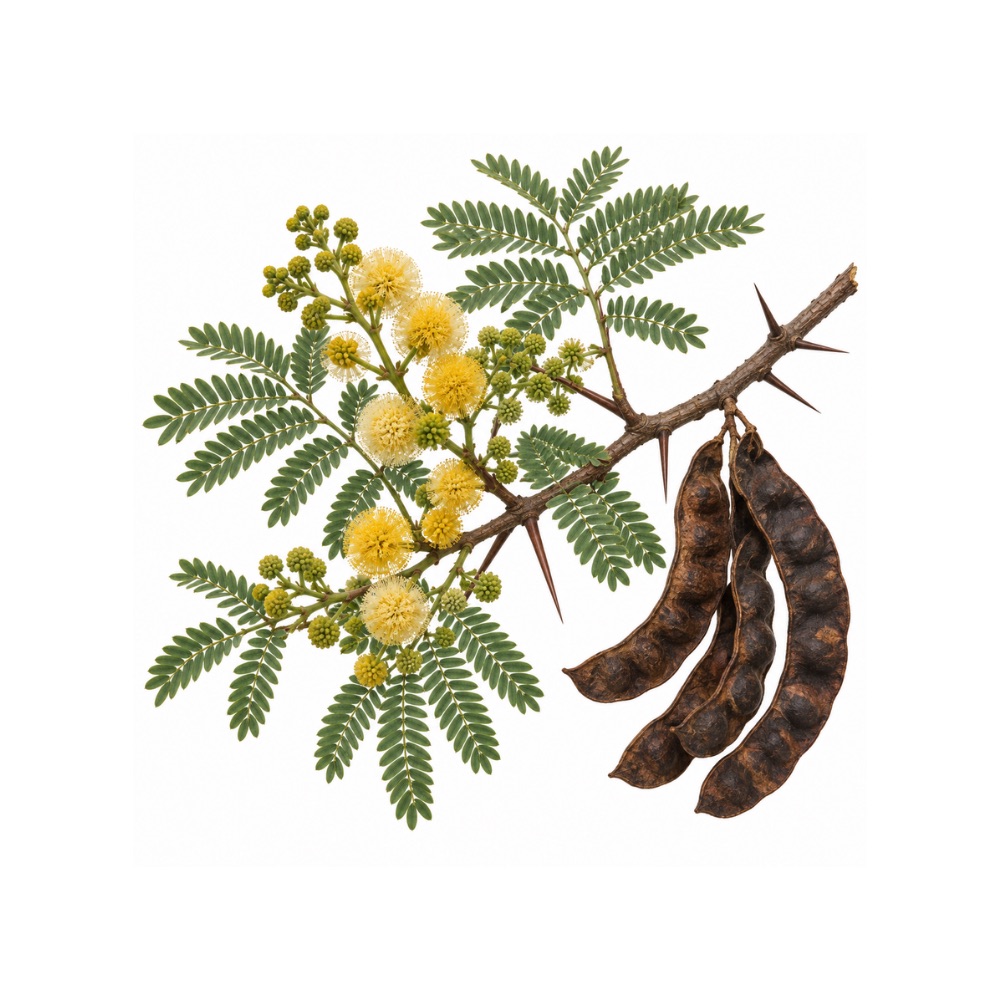
Babul is a thorny tree in the legume family (Fabaceae). It is a very variable species, from about 1.2 m to 18 m tall 31Reference 31Ali, S. I. Acacia nilotica (Linn.) Delile, with subspecies nilotica, indica, cupressiformis, hemispherica, astringens and subalata — species description and distribution — flora. In Flora of Pakistan, No. 36 (Mimosaceae). http://www.efloras.org/florataxon.aspx?flora_id=5&taxon_id=200011856View study →, usually with a broad, rounded crown 32Reference 32Vachellia nilotica — habit, range, habitat, cultivation and uses — species databaseView study →. The bark on the trunk is rough, fissured, and blackish, grey or brown 31Reference 31Ali, S. I. Acacia nilotica (Linn.) Delile, with subspecies nilotica, indica, cupressiformis, hemispherica, astringens and subalata — species description and distribution — flora. In Flora of Pakistan, No. 36 (Mimosaceae). http://www.efloras.org/florataxon.aspx?flora_id=5&taxon_id=200011856View study →, and a sticky reddish gum oozes from wounds in the bark 32Reference 32Vachellia nilotica — habit, range, habitat, cultivation and uses — species databaseView study →.
Its spines are modified stipules, up to 8 cm long, growing in pairs at the base of each leaf 31,
The leaves are bipinnate, with 2–11 pairs of side branches, each carrying 7–25 pairs of small leaflets 1.5–7 mm long 31Reference 31Ali, S. I. Acacia nilotica (Linn.) Delile, with subspecies nilotica, indica, cupressiformis, hemispherica, astringens and subalata — species description and distribution — flora. In Flora of Pakistan, No. 36 (Mimosaceae). http://www.efloras.org/florataxon.aspx?flora_id=5&taxon_id=200011856View study →. The flowers are bright yellow, in round heads 6–15 mm across on stalks from the leaf axils 31Reference 31Ali, S. I. Acacia nilotica (Linn.) Delile, with subspecies nilotica, indica, cupressiformis, hemispherica, astringens and subalata — species description and distribution — flora. In Flora of Pakistan, No. 36 (Mimosaceae). http://www.efloras.org/florataxon.aspx?flora_id=5&taxon_id=200011856View study →.
The pods vary widely, from 4 to 22 cm long, and do not split open 31Reference 31Ali, S. I. Acacia nilotica (Linn.) Delile, with subspecies nilotica, indica, cupressiformis, hemispherica, astringens and subalata — species description and distribution — flora. In Flora of Pakistan, No. 36 (Mimosaceae). http://www.efloras.org/florataxon.aspx?flora_id=5&taxon_id=200011856View study →. In the Indian subspecies they are grey-green, finely hairy and deeply constricted between the seeds, like a string of beads 31,
Distribution
Babul grows in the drier parts of Africa, the Arabian Peninsula and western Asia, east to northern India 32Reference 32Vachellia nilotica — habit, range, habitat, cultivation and uses — species databaseView study →. Its subspecies range from Senegal and Nigeria across Sudan and Egypt to East Africa, and through Pakistan into India 31Reference 31Ali, S. I. Acacia nilotica (Linn.) Delile, with subspecies nilotica, indica, cupressiformis, hemispherica, astringens and subalata — species description and distribution — flora. In Flora of Pakistan, No. 36 (Mimosaceae). http://www.efloras.org/florataxon.aspx?flora_id=5&taxon_id=200011856View study →.
It grows in woodland, wooded grassland, scrub and thickets, often on riverbanks that flood from time to time, from sea level to about 1,300 m 32Reference 32Vachellia nilotica — habit, range, habitat, cultivation and uses — species databaseView study →.
It has become invasive where it has been introduced. In Australia the Indian subspecies, known as prickly acacia, is a Weed of National Significance and covers large tracts of Queensland grassland 33Reference 33Prickly acacia (Vachellia nilotica subspView study →.
Growing Conditions
Cultivation snapshot for Babul
- Hot, semi-arid to arid climates; full sun.
- Very drought-tolerant and a nitrogen fixer; tolerates saline, alkaline and periodically waterlogged soils that defeat most trees.
- Fast-growing and freely self-seeding — invasive outside its native range.
Grow it yourself
Farm Wiki is our cultivation-focused sister site, also run by Justin Cooke.
Indications
- Bleeding, spongy or inflamed gums [bark, twigs; Ayurveda, Unani]
- Mouth ulcers and sore throat [bark decoction; Ayurveda, Sahelian folk use]
- Wounds, ulcers and burns [bark decoction, topical]
- Diarrhoea and dysentery [bark, pods; Ayurveda, Unani, Sahelian folk use]
- Excessive menstrual bleeding [bark, pods, gum; Ayurveda, Unani]
- Leucorrhoea and abnormal vaginal discharge [bark, pods; Ayurveda, Unani]
- Coughs [pods; Sahelian folk use]
Pharmacology & Research
Seven small human trials have been published, all of them topical or in the mouth. Four tested Acacia arabica gum, gel, powder and toothpaste for plaque and gingivitis 1,
The rest is preclinical: about fifty papers on rodent diabetes, obesity and organ injury, and on antimicrobial, antiviral, antiplasmodial and anticancer activity in the laboratory. Much of it uses the pod, leaf, flower or root rather than the bark.
-
Best-supported: oral antiplaque and antigingivitis activity — four small human RCTs agreeing with in vitro inhibition of periodontal pathogens 1,
2, — and a reproducible antidiarrheal effect in rodent gut models that matches the bark decoction 18,3, 4, 5, 6Reference 1RCTThe finding of antiplaque features in Acacia Arabica type of chewing gum — randomised crossover clinical trialView study →Reference 2RCTAnti-gingivitis effects of Acacia arabica-containing toothpaste — randomised controlled crossover trialView study →Reference 3RCTEfficacy of Acacia arabica gum as an adjunct to scaling and root planing in the treatment of chronic periodontitis: a randomized controlled clinical trial — randomised controlled clinical trialView study →Reference 4RCTClinical and microbiologic effects of commercially available gel and powder containing Acacia arabica on gingivitis — randomised controlled trialView study →Reference 5In vitroAntimicrobial efficacy of Acacia nilotica, Murraya koenigii LView study →Reference 6In vitroAntimicrobial activity of Acacia nilotica (L.) Willd. ex Del. var. nilotica (Mimosaceae) — in vitroView study → 19Reference 18AnimalGC-MS analysis and in vivo and ex vivo antidiarrheal and antispasmodic effects of the methanolic extract of Acacia nilotica — animal model, ex vivoView study →Reference 19AnimalEvaluation of five medicinal plants used in diarrhoea treatment in Nigeria — animal model, ex vivoView study → . -
Emerging, worth watching: consistent rodent antidiabetic signals 9,
10, , antioxidant-driven hepato- and nephroprotection 9,11Reference 9AnimalAcacia nilotica leaf improves insulin resistance and hyperglycemia associated acute hepatic injury and nephrotoxicity by improving systemic antioxidant status in diabetic mice — animal modelView study →Reference 10AnimalAcacia nilotica stem bark extract ameliorates obesity, hyperlipidemia, and insulin resistance in a rat model of high fat diet-induced obesity — animal modelView study →Reference 11AnimalEffect of Acacia nilotica leaves extract on hyperglycaemia, lipid profile and platelet aggregation in streptozotocin induced diabetic rats — animal modelView study → 16, , potent in vitro antiplasmodial activity 21,17Reference 9AnimalAcacia nilotica leaf improves insulin resistance and hyperglycemia associated acute hepatic injury and nephrotoxicity by improving systemic antioxidant status in diabetic mice — animal modelView study →Reference 16AnimalAntimicrobial and hepatoprotective properties of pods of Acacia nilotica (L.) Willd. ex Delile: in vivo and in silico approaches — animal modelView study →Reference 17AnimalPotential protective effects of Acacia nilotica (L.) against gentamicin-induced nephrotoxicity by suppressing renal redox imbalance, inflammatory stress and caspase-dependent apoptosis in Wistar rats — animal modelView study → 22Reference 21In vitroAntiplasmodial activity of selected sudanese medicinal plants with emphasis on Acacia nilotica — in vitroView study →Reference 22In vitroIn vitro antioxidant and antimalarial activities of leaves, pods and bark extracts of Acacia nilotica (L.) Del. — in vitroView study → . -
Mechanistically thin: the anticancer and antiviral findings rest on cell lines and isolated constituents 7,
8, , not the whole bark.20Reference 7In vitroThe traditional use of Vachellia nilotica for sexually transmitted diseases is substantiated by the antiviral activity of its bark extract against sexually transmitted viruses — in vitroView study →Reference 8In vitroAntiviral activity of Acacia nilotica against Hepatitis C Virus in liver infected cells — in vitroView study →Reference 20In vitroEvaluation of the cytotoxic, anticancer, and genotoxic activities of Acacia nilotica flowers and their effects on N-methyl-N-nitrosourea-induced genotoxicity in mice — in vitro and animal modelView study → - The caveat: no controlled trial has tested babul bark for any internal indication, and no standardised dose exists.
No trial has tested the traditional bark decoction, and none has tested anything swallowed. The human trials used gum, gel, powder, toothpaste, a paste, a pod sitz-bath and a gum suppository.
1. Oral Health
Oral health is the only indication tested repeatedly in people. It matches the tree’s oldest uses, the chewed twig and the bark gargle.
A 1991 blind crossover of a chewing gum made from this species, published as Acacia arabica, found lower plaque scores than a sugar-free control 1Reference 1RCTThe finding of antiplaque features in Acacia Arabica type of chewing gum — randomised crossover clinical trialView study →. Since then a toothpaste crossover (n=60) reduced plaque, gingival and bleeding-on-probing indices over 28 days 2Reference 2RCTAnti-gingivitis effects of Acacia arabica-containing toothpaste — randomised controlled crossover trialView study →; a triple-blind trial (n=80) of a gel used alongside scaling and root planing produced pocket-depth reduction and attachment gain at 90 days 3Reference 3RCTEfficacy of Acacia arabica gum as an adjunct to scaling and root planing in the treatment of chronic periodontitis: a randomized controlled clinical trial — randomised controlled clinical trialView study →; and a four-arm trial (n=120) found a gel and powder approaching chlorhexidine on gingival and plaque indices 4Reference 4RCTClinical and microbiologic effects of commercially available gel and powder containing Acacia arabica on gingivitis — randomised controlled trialView study →.
Ethanolic extracts inhibit Fusobacterium nucleatum and Porphyromonas gingivalis in vitro 5,
Gap: every trial uses a gum, gel, powder or toothpaste; none tests the traditional bark rinse, and none runs beyond 90 days.
2. Antioxidant
Radical scavenging is the plant’s most consistently reproduced property, and it is linked to most of its organ-protective effects.
Leaf, pod, bark and wood extracts show DPPH scavenging, ferric-reducing power and inhibition of lipid peroxidation, the leaf generally out-scoring pod and bark 22Reference 22In vitroIn vitro antioxidant and antimalarial activities of leaves, pods and bark extracts of Acacia nilotica (L.) Del. — in vitroView study →. A polyphenolic fraction at 452 mg gallic-acid equivalents per gram restored brain acetylcholinesterase and antioxidant markers in arsenic-exposed mice 15Reference 15AnimalPolyphenolics with strong antioxidant activity from Acacia nilotica ameliorate some biochemical signs of arsenic-induced neurotoxicity and oxidative stress in mice — animal modelView study →. Activity tracks phenolic content — gallic acid, catechin, ellagic acid.
Gap: every measurement is chemical or animal. No human oxidative-stress endpoint exists.
3. Antidiabetic & Hypolipidemic
Rodent studies of blood sugar and lipids are numerous and consistent.
Leaf extract lowered blood glucose by around 65% in alloxan-diabetic mice while improving HbA1c and glucose tolerance 9Reference 9AnimalAcacia nilotica leaf improves insulin resistance and hyperglycemia associated acute hepatic injury and nephrotoxicity by improving systemic antioxidant status in diabetic mice — animal modelView study →, and at 300 mg/kg in streptozotocin-diabetic rats matched glyburide on glucose and lipids 11Reference 11AnimalEffect of Acacia nilotica leaves extract on hyperglycaemia, lipid profile and platelet aggregation in streptozotocin induced diabetic rats — animal modelView study →. The stem-bark ethyl-acetate fraction cut weight, glucose, lipids and inflammatory cytokines in diet-induced obese rats 10Reference 10AnimalAcacia nilotica stem bark extract ameliorates obesity, hyperlipidemia, and insulin resistance in a rat model of high fat diet-induced obesity — animal modelView study →.
Gap: no human trial, and babul is not used for diabetes in any of its own traditions.
4. Astringent & Antidiarrheal
This work uses an extract taken by mouth, the closest match to the traditional bark or fruit decoction.
A methanolic extract reduced castor-oil and magnesium-sulphate diarrhoea and enteropooling in mice, slowed intestinal transit and inhibited contraction in isolated rat ileum, with dose-dependent protection at 200 and 400 mg/kg 18Reference 18AnimalGC-MS analysis and in vivo and ex vivo antidiarrheal and antispasmodic effects of the methanolic extract of Acacia nilotica — animal model, ex vivoView study →. In a Nigerian comparison of five antidiarrhoeal plants it gave complete protection against castor-oil diarrhoea 19Reference 19AnimalEvaluation of five medicinal plants used in diarrhoea treatment in Nigeria — animal model, ex vivoView study →.
The antispasmodic component is calcium-dependent 12Reference 12AnimalStudies on antihypertensive and antispasmodic activities of methanol extract of Acacia nilotica pods — animal modelView study →. The main effect is tannin astringency: the tannins precipitate mucosal proteins into a tighter, less permeable layer. The same action applies to the gargle, the wound wash and the antidiarrhoeal use.
Gap: rodent and ex vivo only. No human trial of the decoction for diarrhea, and no dose-finding.
5. Antibacterial (Topical)
Beyond the oral pathogens, extracts of bark, pod, leaf and flower inhibit a broad range of Gram-positive and Gram-negative bacteria and several fungi in vitro 6,
The action is not a targeted antibiotic effect. Condensed tannins precipitate bacterial surface and secreted proteins indiscriminately, inhibiting the organism while tightening the tissue it sits on.
The one human trial of a topical preparation is surgical rather than infective: an A. nilotica paste matched povidone iodine as an escharotic for conservative closure of omphalocele major in infants 24Reference 24RCTComparative study between Acacia nilotica versus povidone iodine in topical treatment of omphalocele major — randomised controlled trialView study →.
Gap: no clinical infection endpoint for the crude bark.
6. The Preclinical Tail
Five further lines of research have no human data.
Anti-inflammatory and analgesic. Aqueous bark and pod extract inhibited carrageenan-induced paw edema, raised hot-plate reaction time and reduced yeast-induced pyrexia in rodents 14Reference 14AnimalInvestigation of the anti-inflammatory activity of Acacia nilotica and Hibiscus sabdariffa — animal modelView study →.
Hepato- and nephroprotective. Pod extracts at 250 and 500 mg/kg protected rat liver against paracetamol toxicity 16Reference 16AnimalAntimicrobial and hepatoprotective properties of pods of Acacia nilotica (L.) Willd. ex Delile: in vivo and in silico approaches — animal modelView study →; a gentamicin study found protection against nephrotoxicity 17Reference 17AnimalPotential protective effects of Acacia nilotica (L.) against gentamicin-induced nephrotoxicity by suppressing renal redox imbalance, inflammatory stress and caspase-dependent apoptosis in Wistar rats — animal modelView study →; leaf extract protected against diabetes-associated hepatic injury 9Reference 9AnimalAcacia nilotica leaf improves insulin resistance and hyperglycemia associated acute hepatic injury and nephrotoxicity by improving systemic antioxidant status in diabetic mice — animal modelView study →. Every model pre-treats before a known toxin rather than treating established injury.
Cardiovascular. A methanol extract of the pods dropped arterial blood pressure at 3–30 mg/kg in anaesthetised animals and blocked potassium-induced contraction, implicating calcium-channel blockade 12Reference 12AnimalStudies on antihypertensive and antispasmodic activities of methanol extract of Acacia nilotica pods — animal modelView study →; the same extract blocks platelet aggregation by that route in vitro 13Reference 13In vitroThe antiplatelet aggregatory activity of Acacia nilotica is due to blockade of calcium influx through membrane calcium channels — in vitroView study →.
Anticancer. Flower extract was cytotoxic to A549 lung, MCF-7 breast and THP-1 leukaemia cells and reduced chemically-induced genotoxicity in mice 20Reference 20In vitroEvaluation of the cytotoxic, anticancer, and genotoxic activities of Acacia nilotica flowers and their effects on N-methyl-N-nitrosourea-induced genotoxicity in mice — in vitro and animal modelView study →, the activity attributed to isolated polyphenols rather than the crude bark. This is not evidence that babul treats any cancer.
Antiplasmodial and antiviral. An ethyl-acetate fraction reached an IC50 of about 1.5 µg/mL against chloroquine-sensitive and resistant Plasmodium falciparum 21,
7. Antihemorrhagic
A double-dummy randomised trial (n=62) tested a vaginal suppository of Acacia arabica gum and Cinnamomum camphora camphor against oral tranexamic acid over three cycles, and reported reduced pictorial blood-loss scores in the suppository arm 23Reference 23RCTEfficacy of a vaginal suppository formulation prepared with Acacia arabica (Lam.) Willd. gum and Cinnamomum camphora (L.) JView study →. This corresponds to the Ayurvedic use of astringent babul preparations for raktapradara.
A single-blind randomised trial of a pod sitz-bath plus vaginal pessary improved abnormal vaginal discharge against placebo 29Reference 29RCTEfficacy of Acacia nilotica pod’s sitz bath plus vaginal pessary in syndromic management of abnormal vaginal discharge — randomised controlled trialView study →.
Gap: the suppository used the gum, not the bark, together with camphor, so the result cannot be attributed to babul alone. It says nothing about the bark taken by mouth for menorrhagia.
Mechanisms
Babul’s bark and pods are rich in condensed tannins and other polyphenols. The tannins precipitate proteins on contact, which has been studied in relation to the astringent, hemostatic, antidiarrhoeal and topical antibacterial uses. The polyphenols scavenge free radicals, which has been studied in rodent models of organ injury.
A separate calcium-channel-blocking activity has been found in extracts of the pods, in studies of gut and blood-vessel muscle and of platelets.
| Mechanism | Drives | Key compounds |
|---|---|---|
| Protein precipitation on mucosa and open wounds | astringenthemostaticvulneraryantidiarrheal | condensed tannins (proanthocyanidins) |
| Binding of bacterial surface and secreted proteins | antibacterial (topicaloral) | condensed tannins, gallic acid |
| Free-radical scavenging, lipid peroxidation ↓ | antioxidanthepatoprotectivenephroprotective | ellagic acid, catechin, epicatechin |
| α-glucosidase and α-amylase inhibition | antidiabetichypolipidemic (preclinical) | kaempferol, quercetin |
| Calcium-channel blockade | antispasmodicantihypertensiveantiplatelet (preclinical) | pod polyphenol fraction |
| Polysaccharide film (gum) | demulcentlocal soothing | bark gum exudate |
Clinical Trials
Seven controlled human trials of babul preparations exist: four oral-hygiene 1,
| Completed | Planned | Terminated | Preclinical |
|---|---|---|---|
| 7 | 0 | 0 | ~50 |
Last checked: September 2026.
Phytochemistry
Babul bark and pods are rich in condensed tannins. The inner bark contains about 18–23% tannin, and whole pods 12–19%, rising to 18–27% once the seeds are removed 32Reference 32Vachellia nilotica — habit, range, habitat, cultivation and uses — species databaseView study →. The tannins are polymers of flavan-3-ol units such as catechin and epicatechin, alongside gallic acid and ellagic acid 27Reference 27ReviewThe Acacia (Vachellia nilotica (L.) P.J.HView study →.
The leaf and flower contain flavonoids, including quercetin, kaempferol, rutin and naringenin 27Reference 27ReviewThe Acacia (Vachellia nilotica (L.) P.J.HView study →. The bark also contains the triterpene lupeol and the cassane diterpene niloticane, first isolated from the bark of subspecies kraussiana 27Reference 27ReviewThe Acacia (Vachellia nilotica (L.) P.J.HView study →.
A GC-MS analysis of a methanol extract of the fruit found pyrogallol as its largest peak 18Reference 18AnimalGC-MS analysis and in vivo and ex vivo antidiarrheal and antispasmodic effects of the methanolic extract of Acacia nilotica — animal model, ex vivoView study →. The gum that seeps from the bark is of poorer quality than commercial gum arabic 32Reference 32Vachellia nilotica — habit, range, habitat, cultivation and uses — species databaseView study →.
Much of the research uses the leaf, flower, pod or root, and results from those parts should be read separately from the bark used in the traditional preparation 18,
Constituent Summary
Amounts vary with subspecies, plant part and season.
Tannin4 compounds4 with data
Flavanol3 compounds3 with data
Phenolic Acid2 compounds2 with data
Flavonoid5 compounds5 with data
Coumarin1 compound1 with data
Triterpene1 compound1 with data
Diterpene1 compound1 with data
Vitamin1 compound1 with data
The hydrolysable tannins as a class, the bark gum, and the terpenoid fraction that carries the antiplasmodial activity are compound classes and fractions rather than discrete tagged molecules, and are described above.
Dosage
- Bark gargle or mouth rinse — 5–10 g of bark to a cup, used warm two to three times daily.
- Bark decoction or powder, internally — a short course of days for an acute complaint.
- Chewing stick and wound wash — used daily, or as needed.
The human trials used topical and intra-cavity preparations: twice-daily toothpaste or gel over 28 to 90 days 2,
Traditional Dosage
| System | Preparation | Dose |
|---|---|---|
| Ayurveda / Unani | Bark decoction as gargle or mouth rinse (gandusha, kavala) | 5–10 g to a cup, used warm, 2–3× daily |
| Ayurveda | Bark decoction, internally for diarrhea | 20–30 mL of decoction, short course |
| Ayurveda | Bark powder | 1–3 g |
| Unani | Aqaqia — thickened pod juice | Small amounts |
| Across the range | Fresh twig chewing stick | Daily, as a toothbrush |
| Across the range | Bark decoction as a wound and ulcer wash | Applied as needed |
Safety & Pregnancy
Babul has no toxicity record. Its pods and gum are eaten as fodder and famine food across its range, and the bark has centuries of use as a mouth rinse. Its cautions are those of any very tannin-rich bark.
- No toxicity record. Long food, fodder and medicinal use across three continents with nothing reported, and rodent studies show low toxicity 25,
26Reference 25AnimalA study on the toxicology of Acacia nilotica — animal modelView study →Reference 26AnimalToxicological studies of aqueous extract of Acacia nilotica root — animal modelView study → . - Topical and oral-cavity use is well tolerated. Mouth rinse, chewing stick and wound wash involve minimal systemic exposure.
- Heavy tannin load. Internal use is kept to short courses, as it can irritate the stomach and add to constipation 26Reference 26AnimalToxicological studies of aqueous extract of Acacia nilotica root — animal modelView study →.
- Reduces iron absorption. Like all high-tannin herbs it reduces iron uptake, which matters for anyone already deficient 26Reference 26AnimalToxicological studies of aqueous extract of Acacia nilotica root — animal modelView study →.
- Separate from medication. Tannins bind alkaloid and protein drugs in the gut — take medicines an hour before or two hours after.
- Internal use has not been studied in people. Every human trial has been topical or in a body cavity, and there is no interaction data 27Reference 27ReviewThe Acacia (Vachellia nilotica (L.) P.J.HView study →.
Full Safety & Interactions Detail
Toxicology. Rats fed 2% and 8% dietary extract showed no deaths, with modest, reversible falls in body weight, haemoglobin and serum protein, consistent with a very tannin-rich diet 25Reference 25AnimalA study on the toxicology of Acacia nilotica — animal modelView study →. An acute and 28-day study of the root extract found no deaths at single oral doses up to 2,000 mg/kg 26Reference 26AnimalToxicological studies of aqueous extract of Acacia nilotica root — animal modelView study →.
Tannin effects. Taken internally, the bark can irritate an empty stomach and add to constipation with continued use. It reduces absorption of dietary iron and other minerals 26Reference 26AnimalToxicological studies of aqueous extract of Acacia nilotica root — animal modelView study →, so it is best spaced several hours from an iron supplement, especially in anyone already iron-deficient.
Medicines. Tannins bind alkaloid and protein drugs in the gut, so medication is best taken separately. This is a known effect of tannins as a class. There is no herb–drug interaction study, CYP450 work or pharmacokinetic data for babul itself 27Reference 27ReviewThe Acacia (Vachellia nilotica (L.) P.J.HView study →.
Human data. The seven controlled trials report good tolerability, and all were topical, intra-oral or intravaginal 1,
Name confusion. This species is sold as “gum arabic tree” bark, but the gum arabic sold as a soluble fibre comes from other trees. Babul bark is a strong astringent rather than a soothing fibre.
Mouth and skin use — the mouth rinse, chewing stick and wound wash have a long traditional record with no restriction attached, and give little systemic exposure.
Internal use has not been assessed in pregnancy. A rat screen found the flowers did not cause birth defects at the doses tested 30Reference 30AnimalCommonly used Indian abortifacient plants with special reference to their teratologic effects in rats — animal modelView study →, which covers one plant part in one species. The tannin load reduces iron absorption, which is already under pressure in pregnancy 26Reference 26AnimalToxicological studies of aqueous extract of Acacia nilotica root — animal modelView study →.
Breastfeeding — no data.
References
- Gazi, M. I. (1991). The finding of antiplaque features in Acacia Arabica type of chewing gum — randomised crossover clinical trial. J Clin Periodontol. https://pubmed.ncbi.nlm.nih.gov/2045522/
- Tangade, P. S. (2012). Anti-gingivitis effects of Acacia arabica-containing toothpaste — randomised controlled crossover trial. Chin J Dent Res. https://pubmed.ncbi.nlm.nih.gov/22866283/
- Singhal, R. (2018). Efficacy of Acacia arabica gum as an adjunct to scaling and root planing in the treatment of chronic periodontitis: a randomized controlled clinical trial — randomised controlled clinical trial. Saudi Dent J. https://pubmed.ncbi.nlm.nih.gov/30166872/
- Pradeep, A. R. (2012). Clinical and microbiologic effects of commercially available gel and powder containing Acacia arabica on gingivitis — randomised controlled trial. Aust Dent J. https://pubmed.ncbi.nlm.nih.gov/22924354/
- Chandra Shekar, B. R. (2018). Antimicrobial efficacy of Acacia nilotica, Murraya koenigii L. Sprengel, Eucalyptus hybrid, Psidium guajava extracts and their combinations on Fusobacterium nucleatum and Porphyromonas gingivalis — in vitro. Indian J Dent Res. https://pubmed.ncbi.nlm.nih.gov/30409946/
- Abd el Nabi, O. M. (1992). Antimicrobial activity of Acacia nilotica (L.) Willd. ex Del. var. nilotica (Mimosaceae) — in vitro. J Ethnopharmacol. https://pubmed.ncbi.nlm.nih.gov/1453705/
- Donalisio, M. (2018). The traditional use of Vachellia nilotica for sexually transmitted diseases is substantiated by the antiviral activity of its bark extract against sexually transmitted viruses — in vitro. J Ethnopharmacol. https://pubmed.ncbi.nlm.nih.gov/29203273/
- Rehman, S. (2011). Antiviral activity of Acacia nilotica against Hepatitis C Virus in liver infected cells — in vitro. Virol J. https://pubmed.ncbi.nlm.nih.gov/21569385/
- Saha, M. R. (2018). Acacia nilotica leaf improves insulin resistance and hyperglycemia associated acute hepatic injury and nephrotoxicity by improving systemic antioxidant status in diabetic mice — animal model. J Ethnopharmacol. https://pubmed.ncbi.nlm.nih.gov/28859934/
- Khalaf, S. S. (2023). Acacia nilotica stem bark extract ameliorates obesity, hyperlipidemia, and insulin resistance in a rat model of high fat diet-induced obesity — animal model. J Tradit Complement Med. https://pubmed.ncbi.nlm.nih.gov/37396158/
- Asad, M. (2011). Effect of Acacia nilotica leaves extract on hyperglycaemia, lipid profile and platelet aggregation in streptozotocin induced diabetic rats — animal model. J Ayub Med Coll Abbottabad. https://pubmed.ncbi.nlm.nih.gov/24800330/
- Gilani, A. H. (1999). Studies on antihypertensive and antispasmodic activities of methanol extract of Acacia nilotica pods — animal model. Phytother Res. https://pubmed.ncbi.nlm.nih.gov/10594935/
- Shah, B. H. (1997). The antiplatelet aggregatory activity of Acacia nilotica is due to blockade of calcium influx through membrane calcium channels — in vitro. Gen Pharmacol. https://pubmed.ncbi.nlm.nih.gov/9251908/
- Dafallah, A. A. (1996). Investigation of the anti-inflammatory activity of Acacia nilotica and Hibiscus sabdariffa — animal model. Am J Chin Med. https://pubmed.ncbi.nlm.nih.gov/8982438/
- Foyzun, T. (2022). Polyphenolics with strong antioxidant activity from Acacia nilotica ameliorate some biochemical signs of arsenic-induced neurotoxicity and oxidative stress in mice — animal model. Molecules. https://pubmed.ncbi.nlm.nih.gov/35164302/
- Idrees, M. (2024). Antimicrobial and hepatoprotective properties of pods of Acacia nilotica (L.) Willd. ex Delile: in vivo and in silico approaches — animal model. Dose Response. https://pubmed.ncbi.nlm.nih.gov/39679261/
- Goel, R. (2025). Potential protective effects of Acacia nilotica (L.) against gentamicin-induced nephrotoxicity by suppressing renal redox imbalance, inflammatory stress and caspase-dependent apoptosis in Wistar rats — animal model. Drug Chem Toxicol. https://pubmed.ncbi.nlm.nih.gov/39155660/
- Rehman, N. U. (2022). GC-MS analysis and in vivo and ex vivo antidiarrheal and antispasmodic effects of the methanolic extract of Acacia nilotica — animal model, ex vivo. Molecules. https://pubmed.ncbi.nlm.nih.gov/35408506/
- Agunu, A. (2005). Evaluation of five medicinal plants used in diarrhoea treatment in Nigeria — animal model, ex vivo. J Ethnopharmacol. https://pubmed.ncbi.nlm.nih.gov/15908152/
- Diab, K. A. (2022). Evaluation of the cytotoxic, anticancer, and genotoxic activities of Acacia nilotica flowers and their effects on N-methyl-N-nitrosourea-induced genotoxicity in mice — in vitro and animal model. Mol Biol Rep. https://pubmed.ncbi.nlm.nih.gov/35934768/
- El-Tahir, A. (1999). Antiplasmodial activity of selected sudanese medicinal plants with emphasis on Acacia nilotica — in vitro. Phytother Res. https://pubmed.ncbi.nlm.nih.gov/10479756/
- Sadiq, M. B. (2017). In vitro antioxidant and antimalarial activities of leaves, pods and bark extracts of Acacia nilotica (L.) Del. — in vitro. BMC Complement Altern Med. https://pubmed.ncbi.nlm.nih.gov/28720134/
- Fazmiya, M. J. A. (2024). Efficacy of a vaginal suppository formulation prepared with Acacia arabica (Lam.) Willd. gum and Cinnamomum camphora (L.) J. Presl. in heavy menstrual bleeding analyzed using a machine learning technique — randomised controlled trial. Front Pharmacol. https://pubmed.ncbi.nlm.nih.gov/38410133/
- Ali, M. S. (2022). Comparative study between Acacia nilotica versus povidone iodine in topical treatment of omphalocele major — randomised controlled trial. Mymensingh Med J. https://pubmed.ncbi.nlm.nih.gov/36189534/
- Al-Mustafa, Z. H. (2000). A study on the toxicology of Acacia nilotica — animal model. Am J Chin Med. https://pubmed.ncbi.nlm.nih.gov/10794124/
- Alli, L. A. (2015). Toxicological studies of aqueous extract of Acacia nilotica root — animal model. Interdiscip Toxicol. https://pubmed.ncbi.nlm.nih.gov/27486360/
- Hafez, L. O. (2024). The Acacia (Vachellia nilotica (L.) P.J.H. Hurter & Mabb.): traditional uses and recent advances on its pharmacological attributes and potential activities — review. Nutrients. https://pubmed.ncbi.nlm.nih.gov/39770900/
- Muhakr, M. A. Y. M. (2024). Ethnobotanical study on medicinal plants in Melit area (North Darfur), Western Sudan — ethnobotanical survey. J Ethnobiol Ethnomed. https://pubmed.ncbi.nlm.nih.gov/38172804/
- Saeedi, R. (2022). Efficacy of Acacia nilotica pod’s sitz bath plus vaginal pessary in syndromic management of abnormal vaginal discharge — randomised controlled trial. Evid Based Complement Alternat Med. https://pubmed.ncbi.nlm.nih.gov/35664940/
- Nath, D. (1992). Commonly used Indian abortifacient plants with special reference to their teratologic effects in rats — animal model. J Ethnopharmacol. https://pubmed.ncbi.nlm.nih.gov/1608272/
- Ali, S. I. Acacia nilotica (Linn.) Delile, with subspecies nilotica, indica, cupressiformis, hemispherica, astringens and subalata — species description and distribution — flora. In Flora of Pakistan, No. 36 (Mimosaceae). http://www.efloras.org/florataxon.aspx?flora_id=5&taxon_id=200011856
- Fern, K. (2024). Vachellia nilotica — habit, range, habitat, cultivation and uses — species database. Useful Tropical Plants Database. https://tropical.theferns.info/viewtropical.php?id=Vachellia+nilotica
- Weeds Australia, Centre for Invasive Species Solutions. Prickly acacia (Vachellia nilotica subsp. indica) — identification, habitat and weed status — weed profile. https://weeds.org.au/profiles/prickly-acacia/
- Hassan, R. A., & Hamdy, R. S. (2021). Synoptic overview of exotic Acacia, Senegalia and Vachellia (Caesalpinioideae, mimosoid clade, Fabaceae) in Egypt — taxonomic review. Plants (Basel), 10(7), 1344. https://pubmed.ncbi.nlm.nih.gov/34371547/



