
Materia Medica
Haritaki
Terminalia chebula
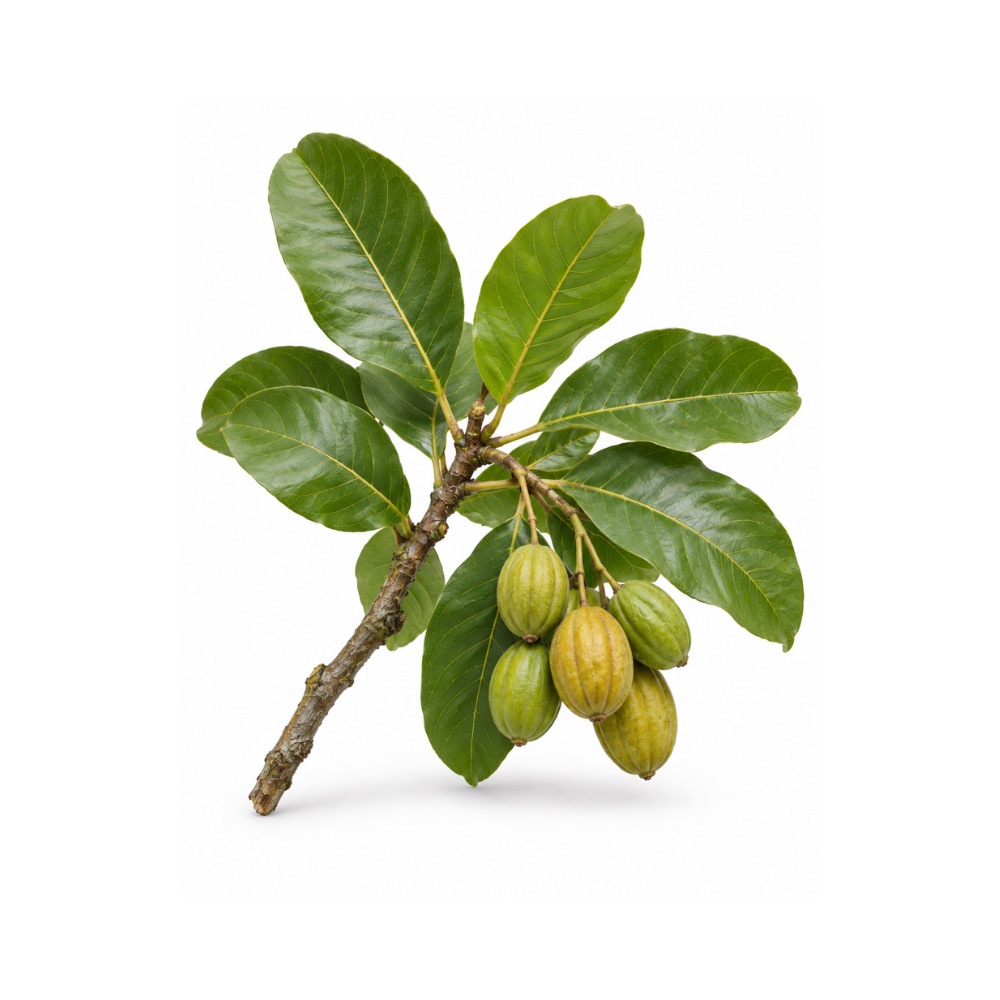
Haritaki is the dried fruit of Terminalia chebula, a large tree of South and Southeast Asia, and one of the most valued herbs in Ayurveda. Rich in tannins, it is used as a digestive tonic that binds the bowel at low doses and loosens it at higher ones, and it is one of the three fruits in Triphala.
What Is Haritaki?
Haritaki is the dried fruit of Terminalia chebula, a large deciduous tree, and one of the most valued herbs in Ayurveda. It is called the “king of medicines” and is classed as a rasayana, a rejuvenating tonic taken for digestion, longevity and vitality. It is best known in the West as one of the three fruits in Triphala, with bibhitaki (Terminalia bellirica) and amalaki (amla).
The tree is a member of the Combretaceae and grows wild from India and Nepal east to Indochina and southwest China 38Reference 38Terminalia chebula Retzius — species description, habitat and distribution — floraView study →. Its fruit is used in Ayurveda, Traditional Chinese Medicine (as he zi) and Tibetan medicine.
The fruit is exceptionally rich in hydrolysable tannins, chiefly chebulinic and chebulagic acids, corilagin, gallic acid and ellagic acid 1Reference 1ReviewThe development of Terminalia chebula Retz. (Combretaceae) in clinical research — reviewView study →. Research has looked most closely at its antioxidant activity and at oral health, and small human trials have tested extracts for blood-sugar and cardiovascular markers and joint comfort 2,
The dose changes how the fruit acts on the bowel. At low doses the astringent tannins bind and check loose stools, and at higher doses the fruit acts as a laxative 1Reference 1ReviewThe development of Terminalia chebula Retz. (Combretaceae) in clinical research — reviewView study →.
How Is Haritaki Used?
- Churna (powder) — the most common form, 1–6 g/day mixed with warm water, honey or ghee. The dose and the vehicle are chosen for the effect wanted.
- Decoction (kwath) — the fruit simmered in water, used for coughs, sore throat and as a laxative.
- Triphala — haritaki combined with bibhitaki and amalaki as a powder, tablet or decoction, taken as an everyday digestive and eye tonic.
- Standardised extracts — modern capsules of 250–500 mg twice daily, the form used in most clinical trials.
Traditional Uses
Ayurvedic Medicine
The drug is haritaki, the dried fruit. Ayurveda ranks it as the leading rasayana, or rejuvenative, and as a principal digestive. It is considered tridoshic, acting on all three doshas, and it pacifies vata in particular.
It is given for constipation and slow digestion, bloating, and ama, the residue of incomplete digestion. Beyond the gut it is used for the eyes and the skin, and as a general rejuvenative taken over long periods.
It is taken as churna, the plain powder, with warm water, honey or ghee, and the vehicle is part of the prescription. Most often it is taken as one third of Triphala, with bibhitaki and amalaki.
Traditional Chinese Medicine
The same fruit is used in Chinese medicine as he zi. It is classed as sour and astringent, a binding herb.
It astringes the Lungs, and is given for chronic cough and hoarseness. It binds the Intestines, and is given for chronic diarrhoea.
Tibetan Medicine (Sowa Rigpa)
In Sowa Rigpa the fruit is the most venerated of all medicinal plants. It is shown in the hand of the Medicine Buddha, and it forms the base of a great many compound formulas rather than being used on its own.
Indications
- Constipation and a sluggish bowel [fruit powder, higher doses; Ayurveda; Triphala] Caution: No randomised trial has tested haritaki on its own for constipation or diarrhoea. The evidence is traditional, with support from animal studies.
- Chronic diarrhoea and dysentery [fruit, low doses; Ayurveda, TCM]
- Indigestion, bloating and poor appetite [fruit powder; Ayurveda]
- Dental plaque and gingivitis [fruit extract or Triphala, as a mouthrinse]
- Chronic cough, hoarseness and sore throat [fruit; TCM, Ayurveda]
- Type 2 diabetes and blood lipids [standardised fruit extract; Triphala] Caution: Positive results come from small trials and combination products. A trial of guggulu with Triphala found no effect on cholesterol 2,
6, .11, 12 - Knee discomfort with activity [standardised fruit extract]
- Cognitive symptoms of schizophrenia [fruit powder]
- Ringworm (tinea corporis) [fruit powder in vinegar, applied to the skin]
- Eye and skin complaints [fruit; Ayurveda]
- Rejuvenative tonic [fruit; Ayurveda, Tibetan medicine]
Botany
Haritaki is a tree that grows up to 30 m tall, with a trunk up to 1 m across 38Reference 38Terminalia chebula Retzius — species description, habitat and distribution — floraView study →. Its bark is grayish black to gray, thick and coarsely split.
The leaves are elliptic, 7–18 cm long, and grow alternately or nearly opposite along the branchlets. Each leaf stalk carries two small glands just below the blade 38Reference 38Terminalia chebula Retzius — species description, habitat and distribution — floraView study →.
The flowers are small, bisexual and slightly fragrant. They are borne on simple spikes 5–10 cm long, sometimes grouped at the branch tips 38Reference 38Terminalia chebula Retzius — species description, habitat and distribution — floraView study →.
The fruit is the part used in medicine. It is an egg-shaped to cylindrical drupe, 2–4.5 cm long, with five blunt ridges. It ripens blackish brown and becomes deeply wrinkled when dried 38Reference 38Terminalia chebula Retzius — species description, habitat and distribution — floraView study →. The dried fruits are the chebulic myrobalans of commerce, and they yield a black dye 38Reference 38Terminalia chebula Retzius — species description, habitat and distribution — floraView study →.
Distribution
Haritaki grows wild in India, Nepal, Bhutan, Bangladesh, Sri Lanka, Myanmar, Thailand, Laos, Cambodia and Vietnam. In China it is native only to western Yunnan and is cultivated further south and east 38Reference 38Terminalia chebula Retzius — species description, habitat and distribution — floraView study →.
It grows in open forests, secondary bamboo forest, sunny forest margins and thickets, and is often planted on village commons. It is found from lowland sites up to about 1,800 m 38Reference 38Terminalia chebula Retzius — species description, habitat and distribution — floraView study →.
Growing Conditions
Cultivation snapshot for Haritaki
Haritaki tolerates a range of soils but prefers well-drained ground with a distinct dry season; it is drought-hardy once established and frost-sensitive when young. Fruits are collected when mature and sun-dried, with market grades reflecting fruit maturity (immature “baby harad” versus fully ripe).
Grow it yourself
Farm Wiki is our cultivation-focused sister site, also run by Justin Cooke.
Pharmacology & Research
Haritaki has a large preclinical literature, with hundreds of laboratory and animal studies on its hydrolysable tannins 1Reference 1ReviewThe development of Terminalia chebula Retz. (Combretaceae) in clinical research — reviewView study →. Human trials are fewer and cover oral health, cardiometabolic markers, joint comfort and cognition.
The strongest human evidence is for the mouthrinse. A haritaki rinse matched chlorhexidine for plaque and gum inflammation, and the Triphala rinse has been pooled in a meta-analysis 3,
Six human trials are registered as completed, in oral health, gut and skin, and cardiometabolic health.
-
Best-supported: oral anti-plaque and anti-gingivitis use, with the rinse comparable to chlorhexidine and Triphala reaching meta-analysis 3,
4Reference 3Meta-analysisEffect of triphala mouthrinse on plaque and gingival inflammation: a systematic review and meta-analysis of randomised controlled trials — meta-analysisView study →Reference 4RCTComparative evaluation of Terminalia chebula extract mouthwash and chlorhexidine mouthwash on plaque and gingival inflammation — 4-week randomised controlled trialView study → ; dense tannin antioxidant capacity 5Reference 5In vitroComparative study of the antioxidant and reactive oxygen species scavenging properties in the extracts of the fruits of Terminalia chebula, Terminalia belerica and Emblica officinalis — in vitro and animalView study →; cardiometabolic markers in diabetics 2,6Reference 2RCTEffect of an aqueous extract of Terminalia chebula on endothelial dysfunction, systemic inflammation, and lipid profile in type 2 diabetes mellitus: a randomised, double-blind, placebo-controlled clinical study — RCTView study →Reference 6Systematic reviewEffects of Triphala on lipid and glucose profiles and anthropometric parameters: a systematic reviewView study → . - Emerging, worth watching: a joint-comfort RCT in overweight adults 7Reference 7RCTEffects of dietary supplementation with a standardised aqueous extract of Terminalia chebula fruit (AyuFlex) on joint mobility, comfort, and functional capacity in healthy overweight subjects: a randomised placebo-controlled clinical trial — RCTView study →, and early cognition signals including a trial in schizophrenia 8Reference 8RCTEvaluating the effect of black myrobalan on cognitive, positive, and negative symptoms in patients with chronic schizophrenia: a randomised, double-blind, placebo-controlled trial — RCTView study →.
- Mechanistically thin: the antiviral and anticancer activity rests on isolated tannins in cell culture, with no human data.
- The caveat: most human trials use standardised extracts or Triphala, not whole dried fruit, and no pure-haritaki RCT exists for the herb’s signature bowel effects.
Almost every trial used a standardised extract or the three-fruit Triphala blend. Few have tested the whole dried fruit taken as churna, the traditional preparation, so results from extracts may not carry over to it.
1. Oral Health (Anti-Plaque / Anti-Gingivitis)
A 4-week double-blind trial found a T. chebula mouthrinse cut plaque and gingival inflammation as effectively as 0.2% chlorhexidine and better than placebo 4Reference 4RCTComparative evaluation of Terminalia chebula extract mouthwash and chlorhexidine mouthwash on plaque and gingival inflammation — 4-week randomised controlled trialView study →.
A 2-week trial found the same on periodontal indices while neutralising salivary pH 9Reference 9RCTEffect of Terminalia chebula extract and chlorhexidine on salivary pH and periodontal health: 2-week randomised controlled trial — RCTView study →.
Most of the meta-analytic weight sits with Triphala: seven pooled RCTs found the rinse improved gingival and plaque indices comparably to chlorhexidine at lower cost 3Reference 3Meta-analysisEffect of triphala mouthrinse on plaque and gingival inflammation: a systematic review and meta-analysis of randomised controlled trials — meta-analysisView study →, echoed in a paediatric meta-analysis 10Reference 10Meta-analysisComparative anti-plaque and anti-gingivitis efficiency of Triphala versus chlorhexidine mouthwashes in children: a systematic review and meta-analysis — meta-analysisView study →.
The activity tracks the astringent gallic acid and ellagitannin fraction. The rinse matches chlorhexidine without its staining and taste.
Gap: The strongest pooled data are for the three-fruit Triphala formula used as a rinse, not haritaki alone; there are no trials of oral (swallowed) haritaki for gum disease.
2. Antioxidant
In a head-to-head comparison of the three Triphala fruits, T. chebula ranked highest, with very low antioxidant IC50 values and dose-dependent rises in hepatic antioxidant enzymes in rats, reflecting its dense hydrolysable-tannin content 5Reference 5In vitroComparative study of the antioxidant and reactive oxygen species scavenging properties in the extracts of the fruits of Terminalia chebula, Terminalia belerica and Emblica officinalis — in vitro and animalView study →.
In the type 2 diabetes RCT the extract lowered malondialdehyde and raised glutathione against placebo 2Reference 2RCTEffect of an aqueous extract of Terminalia chebula on endothelial dysfunction, systemic inflammation, and lipid profile in type 2 diabetes mellitus: a randomised, double-blind, placebo-controlled clinical study — RCTView study →.
The active molecules are the ellagitannins and phenolic acids — chebulagic acid, chebulinic acid, corilagin and ellagic acid. What has been measured in people is a surrogate biomarker, not a disease endpoint.
3. Metabolic & Cardiometabolic
The 60-patient diabetic RCT above is the main human trial for this indication 2Reference 2RCTEffect of an aqueous extract of Terminalia chebula on endothelial dysfunction, systemic inflammation, and lipid profile in type 2 diabetes mellitus: a randomised, double-blind, placebo-controlled clinical study — RCTView study →.
An RCT of a haritaki-containing combination in women with hyperlipidaemic type 2 diabetes improved fasting glucose and LDL 11Reference 11RCTEffects of an herbal combination on glycemic control and lipid profile in diabetic women: a randomised, double-blind, placebo-controlled clinical trial — RCTView study →, and a systematic review of twelve Triphala RCTs (749 patients) found reductions in LDL, total cholesterol, triglycerides, body weight and waist circumference 6Reference 6Systematic reviewEffects of Triphala on lipid and glucose profiles and anthropometric parameters: a systematic reviewView study →.
A placebo-controlled trial of guggulu plus Triphala in hypercholesterolaemia found no benefit 12Reference 12RCTGuggulu and Triphala for the treatment of hypercholesterolaemia: a placebo-controlled, double-blind, randomised trial — RCTView study →.
HbA1c effects are inconsistent throughout.
Gap: The positive lipid and glucose signals mostly come from combination formulas or small trials; there is no large, well-powered RCT of haritaki alone, and at least one good trial was null.
4. Anti-Inflammatory
Chebulagic acid is a dual COX-2 and 5-LOX inhibitor (COX-2 IC50 ~0.9 µM) 13Reference 13In vitroChebulagic acid, a COX-LOX dual inhibitor isolated from the fruits of Terminalia chebula Retz., induces apoptosis in COLO-205 cell line — in vitroView study →, and the whole tannin fraction suppresses NO, ROS and cytokine release in macrophages via NF-κB and MAPK 14Reference 14In vitroModulation of NF-κB and MAPK signalling pathways by hydrolysable tannin fraction from Terminalia chebula fruits contributes to its anti-inflammatory action in RAW 264.7 cells — in vitroView study →.
In animals, chebulinic acid reduced paw swelling and joint pathology in collagen-induced arthritis by blocking VEGF-driven angiogenesis 15Reference 15AnimalChebulinic acid is a safe and effective antiangiogenic agent in collagen-induced arthritis in mice — mouseView study →, and chebulagic acid eased DSS colitis 16Reference 16AnimalChebulagic acid ameliorates DSS-induced colitis in mice by improving oxidative stress, inflammation and the gut microbiota — mouseView study →.
The one human read-out is a 105-subject placebo-controlled trial of a standardised extract (AyuFlex, 250–500 mg twice daily) in overweight adults, which improved knee-joint comfort, function and 6-minute walk over 12 weeks 7Reference 7RCTEffects of dietary supplementation with a standardised aqueous extract of Terminalia chebula fruit (AyuFlex) on joint mobility, comfort, and functional capacity in healthy overweight subjects: a randomised placebo-controlled clinical trial — RCTView study →.
Gap: The joint-comfort RCT was in healthy overweight people with activity-related discomfort, not diagnosed osteoarthritis or rheumatoid arthritis; the anti-inflammatory disease evidence remains preclinical.
5. Hepatoprotective
Animal protection has been replicated across several different liver insults. A water extract protected mice against tert-butylhydroperoxide liver injury, lowering AST/ALT and restoring antioxidant enzymes 17Reference 17AnimalHepatoprotective effect of Terminalia chebula against t-BHP-induced acute liver injury in C57/BL6 mice — mouseView study →.
An ethanolic fruit extract prevented liver toxicity from 12 weeks of the anti-tuberculosis drugs rifampicin, isoniazid and pyrazinamide in rats 18Reference 18AnimalTerminalia chebula (fruit) prevents liver toxicity caused by sub-chronic administration of rifampicin, isoniazid and pyrazinamide in combination — animal modelView study →.
Chebulinic acid protected against acetaminophen and carbon-tetrachloride damage in cells, zebrafish and mice via Nrf2/HO-1 19Reference 19AnimalIn vivo hepatoprotective activity and the underlying mechanism of chebulinic acid from Terminalia chebula fruit — mouseView study →.
Every one of these studies is preclinical, and the traditional liver-tonic use has not been tested in people.
6. Gut Regulation & Laxative
Astringent tannins bind and tone the gut at low doses, while anthraquinone glycosides produce a laxative-to-purgative action at higher ones 1Reference 1ReviewThe development of Terminalia chebula Retz. (Combretaceae) in clinical research — reviewView study →.
Oral T. chebula (100 mg/kg for 15 days) increased gastric emptying in rats, more than a single injected dose of metoclopramide 20Reference 20AnimalEffect of oral administration of Terminalia chebula on gastric emptying: an experimental study — ratView study →, and the colitis and microbiota work on chebulagic acid shows an effect on the intestinal wall 16Reference 16AnimalChebulagic acid ameliorates DSS-induced colitis in mice by improving oxidative stress, inflammation and the gut microbiota — mouseView study →.
Human bowel-regularity evidence sits mainly with Triphala.
Gap: Despite being the herb’s central traditional use, there are no direct randomised trials of pure haritaki for constipation or diarrhoea — the human data are all on Triphala or absent.
7. Neuroprotective & Cognitive
In a double-blind placebo-controlled trial in chronic schizophrenia, six 500 mg capsules a day, taken in two doses for 4 weeks, improved cognitive impairment, negative symptoms and excitement/activity scores against placebo 8Reference 8RCTEvaluating the effect of black myrobalan on cognitive, positive, and negative symptoms in patients with chronic schizophrenia: a randomised, double-blind, placebo-controlled trial — RCTView study →.
A proof-of-concept RCT of a Boswellia-plus-T. chebula blend in adults with memory complaints improved verbal learning, processing speed, sleep and serum BDNF 21Reference 21RCTA standardised combination of Boswellia serrata and Terminalia chebula extracts to improve cognition in adults with subjective memory complaints: a randomised controlled proof-of-concept study — RCTView study →.
In animals, the extract protected memory and hippocampal synapses against restraint stress 22Reference 22AnimalTerminalia chebula attenuates restraint stress-induced memory impairment and synaptic loss in the hippocampus and amygdala by inhibiting oxidative damage — ratView study →. The fruit contains acetylcholinesterase inhibitors 23Reference 23In vitroScreening of acetylcholinesterase inhibitory and antioxidant active compounds from Terminalia chebula fruits by spectrum-effect relationship and LC-MS analysis — in vitroView study →, and its polyphenols reduced injury in a mouse stroke model 24Reference 24AnimalNeuroprotective effect of polyphenol extracts from Terminalia chebula Retz. against cerebral ischemia-reperfusion injury — mouseView study →.
Gap: The evidence is early and heterogeneous — one monotherapy RCT in a specific psychiatric population, one combination trial, and otherwise animal models; no trials in dementia or age-related cognitive decline.
8. Antimicrobial & Anti-Enteric
Haritaki is broadly antibacterial, tracking its tannin and gallic acid fraction 1Reference 1ReviewThe development of Terminalia chebula Retz. (Combretaceae) in clinical research — reviewView study →.
A 2024 study of Terminalia fruit extracts against gastrointestinal pathogens found MICs of ~94–755 µg/mL against Shigella and Salmonella Typhimurium, and the extracts potentiated conventional antibiotics 25Reference 25In vitroPhytochemical analysis and antimicrobial activity of Terminalia bellirica and Terminalia chebula fruit extracts against gastrointestinal pathogens — in vitro. https://pubmed.ncbi.nlm.nih.gov/39770866/View study →.
These results bear on its traditional use in dysentery and diarrhoeal disease. An MIC in a dish is not clinical efficacy, and no trial has tested haritaki as an antimicrobial in people.
9. Skin, Wound & Photoaging
In rats an extract accelerated dermal wound healing, raising collagen, protein and DNA content and tensile strength 26Reference 26AnimalInfluence of Terminalia chebula on dermal wound healing in rats — ratView study →.
In culture it promoted keratinocyte and fibroblast proliferation 27Reference 27In vitroEffect of extracts of Terminalia chebula on proliferation of keratinocytes and fibroblasts cells: an alternative approach for wound healing — in vitroView study →.
In reconstituted human skin a tannin-rich extract shifted gene expression opposite to UV and wounding, raising collagen and barrier genes and inhibiting matrix metalloproteinases 28Reference 28In vitroA standardised Terminalia chebula fruit extract alters the expression of genes associated with skin architecture and barrier formation — in vitroView study →.
Two small human trials exist: a non-inferiority RCT found topical fruit powder in vinegar not inferior to 1% terbinafine cream for tinea corporis 29Reference 29RCTEvaluation of the efficacy of topical Terminalia chebula Retz. with vinegar in the treatment of tinea corporis: a non-inferiority randomised controlled trial — RCTView study →, and a randomised trial of a bakuchiol-plus-T. chebula serum improved wrinkle, elasticity and barrier measures in sensitive skin over 28 days 30Reference 30RCTProspective, randomised, double-blind assessment of supramolecular bakuchiol and Terminalia chebula extract for facial photoaging in Chinese sensitive skin — RCTView study →.
Both are small, both are topical and cosmetic, and the second tests a combination.
10. Anticancer
Anticancer interest centres on the isolated tannins. Chebulinic acid is anti-proliferative and pro-apoptotic in colorectal lines via PI3K/AKT and MAPK/ERK 31Reference 31In vitroChebulinic acid derived from triphala is a promising antitumour agent in human colorectal carcinoma cell lines — in vitroView study →, and kills triple-negative breast cancer cells by downregulating SOD1 33Reference 33In vitroChebulinic acid inhibits MDA-MB-231 breast cancer metastasis and promotes cell death through down-regulation of SOD1 and induction of autophagy — in vitroView study →.
Chebulagic acid induces apoptosis in colon cancer cells 13Reference 13In vitroChebulagic acid, a COX-LOX dual inhibitor isolated from the fruits of Terminalia chebula Retz., induces apoptosis in COLO-205 cell line — in vitroView study → and suppressed gastric tumour growth in mice via AURKA/β-catenin/Wnt inhibition 32Reference 32AnimalChebulagic acid suppresses gastric cancer by inhibiting the AURKA/β-catenin/Wnt pathway — mouseView study →.
Whole-fruit extract reduced chemically-induced skin tumorigenesis in mice 34Reference 34AnimalTerminalia chebula attenuates DMBA/croton oil-induced oxidative stress and inflammation in Swiss albino mouse skin — mouseView study →.
Gap: This is almost entirely cell-line and constituent-level work with a handful of mouse models; there is no human oncology evidence, and cytotoxicity in a dish is not clinical anticancer activity.
Mechanisms
The fruit’s hydrolysable tannins have been studied as radical scavengers, as activators of the Nrf2/HO-1 antioxidant pathway, and as suppressors of the inflammatory signals NF-κB, COX-2 and iNOS. In cell studies the same tannins also block viruses from binding to cells 13,
The bowel effect has two sides. Tannins bind the gut lining at low doses, and anthraquinone glycosides stimulate the bowel at higher doses 1Reference 1ReviewThe development of Terminalia chebula Retz. (Combretaceae) in clinical research — reviewView study →.
| Mechanism | Drives | Key compounds |
|---|---|---|
| NF-κB ↓, COX-2 ↓, iNOS ↓ | anti-inflammatoryhepatoprotectiveanticancer | chebulagic acid, chebulinic acid, corilagin |
| COX-2 & 5-LOX dual inhibition | anti-inflammatoryanticancer | chebulagic acid |
| Nrf2/HO-1 activation, ROS scavenging | antioxidanthepatoprotectiveneuroprotective | chebulinic acid, gallic acid, ellagic acid |
| VEGF ↓ (antiangiogenic) | anti-inflammatory (arthritis)anticancer | chebulinic acid |
| Viral glycoprotein–glycosaminoglycan block; neuraminidase inhibition | antiviral | chebulagic acid, punicalagin, chebulinic acid |
| Astringent tannin binding vs. anthraquinone-glycoside stimulation | gut duality (antidiarrhoeal ↔ laxative) | hydrolysable tannins; anthraquinone glycosides |
Clinical Trials
Much of the human work uses the Triphala formula rather than haritaki alone.
| Completed | Planned | Terminated | Preclinical |
|---|---|---|---|
| 6 | 1 | 0 | ~200+ |
Last checked: August 2026.
Phytochemistry
Haritaki fruit is one of the richest natural sources of hydrolysable tannins 1Reference 1ReviewThe development of Terminalia chebula Retz. (Combretaceae) in clinical research — reviewView study →. The main ellagitannins are chebulinic acid, chebulagic acid, corilagin, punicalagin and the terflavins. They occur alongside the phenolic acids gallic acid, ellagic acid and chebulic acid.
The fruit also contains anthraquinone glycosides, which act as laxatives 1Reference 1ReviewThe development of Terminalia chebula Retz. (Combretaceae) in clinical research — reviewView study →.
The triterpenoid glycoside chebuloside II has been used as the marker compound for a standardised ethanolic fruit extract 18Reference 18AnimalTerminalia chebula (fruit) prevents liver toxicity caused by sub-chronic administration of rifampicin, isoniazid and pyrazinamide in combination — animal modelView study →.
In macrophage studies, the whole hydrolysable-tannin fraction suppressed NF-κB and MAPK signalling more strongly than isolated chebulagic acid or corilagin 14Reference 14In vitroModulation of NF-κB and MAPK signalling pathways by hydrolysable tannin fraction from Terminalia chebula fruits contributes to its anti-inflammatory action in RAW 264.7 cells — in vitroView study →.
Tannin content varies with the maturity of the fruit, from immature “baby harad” to the fully ripe fruit, and with where it was grown.
Constituent Summary
Reported from the dried fruit.
Hydrolysable Tannin5 compoundsno data
Phenolic Acid3 compoundsno data
Triterpenoid Glycoside1 compoundno data
Dosage
The dose changes what haritaki does. About 1–2 g of powder is astringent and binding, while 3–6 g taken as a single evening dose is laxative. Most human trials used a standardised aqueous extract at a few hundred milligrams, which is a different preparation from the traditional powder.
| Indication | Preparation | Dose | Est. dried-herb equivalent | Source |
|---|---|---|---|---|
| Type 2 diabetes (endothelial, oxidative, lipid markers) | Standardised aqueous fruit extract | 250–500 mg twice daily, 12 wk | ~2.5–10 g dried fruit/day | 2Reference 2RCTEffect of an aqueous extract of Terminalia chebula on endothelial dysfunction, systemic inflammation, and lipid profile in type 2 diabetes mellitus: a randomised, double-blind, placebo-controlled clinical study — RCTView study → |
| Joint comfort (overweight adults) | Standardised aqueous fruit extract (AyuFlex) | 250 or 500 mg twice daily, 12 wk | ~2.5–10 g dried fruit/day | 7Reference 7RCTEffects of dietary supplementation with a standardised aqueous extract of Terminalia chebula fruit (AyuFlex) on joint mobility, comfort, and functional capacity in healthy overweight subjects: a randomised placebo-controlled clinical trial — RCTView study → |
| Cognition (schizophrenia) | Fruit powder capsules | 3 g/day (6 × 500 mg, in two doses), 4 wk | 3 g (the powder itself) | 8Reference 8RCTEvaluating the effect of black myrobalan on cognitive, positive, and negative symptoms in patients with chronic schizophrenia: a randomised, double-blind, placebo-controlled trial — RCTView study → |
| Cognition / memory (subjective complaints) | Boswellia + T. chebula blend (LN19184) | 300 mg once daily, 120 d | — | 21Reference 21RCTA standardised combination of Boswellia serrata and Terminalia chebula extracts to improve cognition in adults with subjective memory complaints: a randomised controlled proof-of-concept study — RCTView study → |
| Oral plaque & gingivitis | Extract mouthrinse | Twice daily, 2–4 wk | Topical — not applicable | 4, |
| Tinea corporis | Fruit powder + vinegar, topical | Applied to the lesion | Topical — not applicable | 29Reference 29RCTEvaluation of the efficacy of topical Terminalia chebula Retz. with vinegar in the treatment of tinea corporis: a non-inferiority randomised controlled trial — RCTView study → |
The dried-herb equivalent assumes standardised aqueous extracts are roughly 5–10 times as concentrated as the dried fruit. It is a rough guide for reading the trials, not a dosing recommendation.
Traditional Dosage
| System | Preparation | Dose |
|---|---|---|
| Ayurveda | Fruit powder (churna) | 1–6 g/day — ~1–2 g astringent/tonic; ~3–6 g laxative as a single night dose |
| Ayurveda | Triphala (haritaki = one-third) | 2–5 g/day, powder or tablet |
| Ayurveda / TCM | Decoction (kwath) | Simmer ~3–5 g dried fruit |
| TCM (He Zi) | Dried fruit, in decoction | Astringent for chronic cough and diarrhoea, per formula |
The laxative effect grows with the dose, so it is best to start low and build up gradually.
Safety & Pregnancy
Haritaki is well tolerated at food and traditional doses. It has low acute toxicity in animal studies, and no serious adverse events were reported in the 12-week joint-comfort trial or the schizophrenia trial 7,
- Laxative at higher doses. High or prolonged doses can cause cramping, loose stools, dehydration and electrolyte loss. Not for long-term use as a stimulant laxative.
- Additive blood-sugar lowering. The fruit reduced fasting glucose in diabetic trials 2,
11Reference 2RCTEffect of an aqueous extract of Terminalia chebula on endothelial dysfunction, systemic inflammation, and lipid profile in type 2 diabetes mellitus: a randomised, double-blind, placebo-controlled clinical study — RCTView study →Reference 11RCTEffects of an herbal combination on glycemic control and lipid profile in diabetic women: a randomised, double-blind, placebo-controlled clinical trial — RCTView study → — monitor blood sugar alongside antidiabetic drugs. - Drug-absorption timing. The tannins can bind co-ingested drugs and minerals, iron included — take other oral medicines about two hours apart.
- Avoid the laxative doses in active diarrhoea or dehydration.
- Avoid in pregnancy. Traditionally contraindicated, with no human safety data.
- Low acute toxicity. No serious adverse events reported in the human trials to date 7Reference 7RCTEffects of dietary supplementation with a standardised aqueous extract of Terminalia chebula fruit (AyuFlex) on joint mobility, comfort, and functional capacity in healthy overweight subjects: a randomised placebo-controlled clinical trial — RCTView study →.
Full Safety & Interactions Detail
Skin rash. Two of 46 people taking a combination of guggulu and Triphala developed a hypersensitivity rash, against none on placebo 12Reference 12RCTGuggulu and Triphala for the treatment of hypercholesterolaemia: a placebo-controlled, double-blind, randomised trial — RCTView study →. Haritaki is one of several herbs in that product, so the rash cannot be attributed to it.
Blood sugar. The fruit lowered blood glucose in trials in people with diabetes 2,
Other medicines. The tannins can bind drugs and minerals in the gut, so other oral medicines are best taken about two hours apart. No pharmacokinetic or CYP450 interaction study of haritaki has been published.
Avoid. Haritaki is traditionally contraindicated in pregnancy because of its purgative action, and there are no human safety data.
There are no data on use while breastfeeding, so it is best avoided.
References
- Bag, A., Bhattacharyya, S. K., & Chattopadhyay, R. R. (2013). The development of Terminalia chebula Retz. (Combretaceae) in clinical research — review. Asian Pacific Journal of Tropical Biomedicine. https://pubmed.ncbi.nlm.nih.gov/23620847/
- Pingali, U., Sukumaran, D., & Nutalapati, C. (2020). Effect of an aqueous extract of Terminalia chebula on endothelial dysfunction, systemic inflammation, and lipid profile in type 2 diabetes mellitus: a randomised, double-blind, placebo-controlled clinical study — RCT. Phytotherapy Research. https://pubmed.ncbi.nlm.nih.gov/32618037/
- AlJameel, A. H., & Almalki, S. A. (2020). Effect of triphala mouthrinse on plaque and gingival inflammation: a systematic review and meta-analysis of randomised controlled trials — meta-analysis. International Journal of Dental Hygiene. https://pubmed.ncbi.nlm.nih.gov/32383334/
- Gupta, D., Gupta, R. K., Bhaskar, D. J., & Gupta, V. (2015). Comparative evaluation of Terminalia chebula extract mouthwash and chlorhexidine mouthwash on plaque and gingival inflammation — 4-week randomised controlled trial. Oral Health & Preventive Dentistry. https://pubmed.ncbi.nlm.nih.gov/25386630/
- Hazra, B., Sarkar, R., Biswas, S., & Mandal, N. (2010). Comparative study of the antioxidant and reactive oxygen species scavenging properties in the extracts of the fruits of Terminalia chebula, Terminalia belerica and Emblica officinalis — in vitro and animal. BMC Complementary and Alternative Medicine. https://pubmed.ncbi.nlm.nih.gov/20462461/
- Phimarn, W., Sungthong, B., & Itabe, H. (2021). Effects of Triphala on lipid and glucose profiles and anthropometric parameters: a systematic review. Journal of Evidence-Based Integrative Medicine. https://pubmed.ncbi.nlm.nih.gov/33886393/
- Lopez, H. L., Habowski, S. M., Sandrock, J. E., et al. (2017). Effects of dietary supplementation with a standardised aqueous extract of Terminalia chebula fruit (AyuFlex) on joint mobility, comfort, and functional capacity in healthy overweight subjects: a randomised placebo-controlled clinical trial — RCT. BMC Complementary and Alternative Medicine. https://pubmed.ncbi.nlm.nih.gov/28969626/
- Banazadeh, M., Mehrabani, M., Banazadeh, N., et al. (2022). Evaluating the effect of black myrobalan on cognitive, positive, and negative symptoms in patients with chronic schizophrenia: a randomised, double-blind, placebo-controlled trial — RCT. Phytotherapy Research. https://pubmed.ncbi.nlm.nih.gov/34814232/
- Gupta, D., Bhaskar, D. J., Gupta, R. K., et al. (2014). Effect of Terminalia chebula extract and chlorhexidine on salivary pH and periodontal health: 2-week randomised controlled trial — RCT. Phytotherapy Research. https://pubmed.ncbi.nlm.nih.gov/24123617/
- Minervini, G., Marrapodi, M. M., Tirupathi, S., et al. (2024). Comparative anti-plaque and anti-gingivitis efficiency of Triphala versus chlorhexidine mouthwashes in children: a systematic review and meta-analysis — meta-analysis. Journal of Clinical Pediatric Dentistry. https://pubmed.ncbi.nlm.nih.gov/39275820/
- Shokoohi, R., Kianbakht, S., Faramarzi, M., et al. (2017). Effects of an herbal combination on glycemic control and lipid profile in diabetic women: a randomised, double-blind, placebo-controlled clinical trial — RCT. Journal of Evidence-Based Complementary & Alternative Medicine. https://pubmed.ncbi.nlm.nih.gov/29228822/
- Donato, F., Raffetti, E., Toninelli, G., et al. (2021). Guggulu and Triphala for the treatment of hypercholesterolaemia: a placebo-controlled, double-blind, randomised trial — RCT. Complementary Medicine Research. https://pubmed.ncbi.nlm.nih.gov/33242870/
- Reddy, D. B., Reddy, T. C., Jyotsna, G., et al. (2009). Chebulagic acid, a COX-LOX dual inhibitor isolated from the fruits of Terminalia chebula Retz., induces apoptosis in COLO-205 cell line — in vitro. Journal of Ethnopharmacology. https://pubmed.ncbi.nlm.nih.gov/19481594/
- Ekambaram, S. P., Aruldhas, J., Srinivasan, A., & Erusappan, T. (2022). Modulation of NF-κB and MAPK signalling pathways by hydrolysable tannin fraction from Terminalia chebula fruits contributes to its anti-inflammatory action in RAW 264.7 cells — in vitro. Journal of Pharmacy and Pharmacology. https://pubmed.ncbi.nlm.nih.gov/35134979/
- Lu, K., Iwenofu, O. H., Mitra, R., et al. (2020). Chebulinic acid is a safe and effective antiangiogenic agent in collagen-induced arthritis in mice — mouse. Arthritis Research & Therapy. https://pubmed.ncbi.nlm.nih.gov/33225986/
- Zhang, S., Ren, Y., Li, M., et al. (2025). Chebulagic acid ameliorates DSS-induced colitis in mice by improving oxidative stress, inflammation and the gut microbiota — mouse. American Journal of Translational Research. https://pubmed.ncbi.nlm.nih.gov/40672593/
- Choi, M. K., Kim, H. G., Han, J. M., et al. (2015). Hepatoprotective effect of Terminalia chebula against t-BHP-induced acute liver injury in C57/BL6 mice — mouse. Evidence-Based Complementary and Alternative Medicine. https://pubmed.ncbi.nlm.nih.gov/25691908/
- Tasduq, S. A., Singh, K., Satti, N. K., et al. (2006). Terminalia chebula (fruit) prevents liver toxicity caused by sub-chronic administration of rifampicin, isoniazid and pyrazinamide in combination — animal model. Human & Experimental Toxicology. https://pubmed.ncbi.nlm.nih.gov/16634329/
- Feng, X. H., Xu, H. Y., Wang, J. Y., et al. (2021). In vivo hepatoprotective activity and the underlying mechanism of chebulinic acid from Terminalia chebula fruit — mouse. Phytomedicine. https://pubmed.ncbi.nlm.nih.gov/33561764/
- Tamhane, M. D., Thorat, S. P., Rege, N. N., & Dahanukar, S. A. (1997). Effect of oral administration of Terminalia chebula on gastric emptying: an experimental study — rat. Journal of Postgraduate Medicine. https://pubmed.ncbi.nlm.nih.gov/10740705/
- Salter, D., Gupta, S. V. B., Sairam, B., et al. (2025). A standardised combination of Boswellia serrata and Terminalia chebula extracts to improve cognition in adults with subjective memory complaints: a randomised controlled proof-of-concept study — RCT. Frontiers in Nutrition. https://pubmed.ncbi.nlm.nih.gov/41438191/
- Khazani, H., Jalali Kondori, B., Sahraei, H., & Meftahi, G. H. (2024). Terminalia chebula attenuates restraint stress-induced memory impairment and synaptic loss in the hippocampus and amygdala by inhibiting oxidative damage — rat. Brain Research Bulletin. https://pubmed.ncbi.nlm.nih.gov/38734185/
- Zhao, H. H., Li, Y. J., Guo, Z. H., & Chen, J. (2022). Screening of acetylcholinesterase inhibitory and antioxidant active compounds from Terminalia chebula fruits by spectrum-effect relationship and LC-MS analysis — in vitro. Journal of Separation Science. https://pubmed.ncbi.nlm.nih.gov/35819997/
- Lin, K., Zhou, M., Leng, C., et al. (2022). Neuroprotective effect of polyphenol extracts from Terminalia chebula Retz. against cerebral ischemia-reperfusion injury — mouse. Molecules. https://pubmed.ncbi.nlm.nih.gov/36234986/
- Tiwana, G., Cock, I. E., Cheesman, M. J., et al. (2024). Phytochemical analysis and antimicrobial activity of Terminalia bellirica and Terminalia chebula fruit extracts against gastrointestinal pathogens — in vitro. https://pubmed.ncbi.nlm.nih.gov/39770866/
- Suguna, L., Singh, S., Sivakumar, P., et al. (2002). Influence of Terminalia chebula on dermal wound healing in rats — rat. Phytotherapy Research. https://pubmed.ncbi.nlm.nih.gov/12164266/
- Singh, D., Singh, D., Choi, S. M., et al. (2014). Effect of extracts of Terminalia chebula on proliferation of keratinocytes and fibroblasts cells: an alternative approach for wound healing — in vitro. Evidence-Based Complementary and Alternative Medicine. https://pubmed.ncbi.nlm.nih.gov/24719644/
- Swindell, W. R., Bojanowski, K., & Chaudhuri, R. K. (2020). A standardised Terminalia chebula fruit extract alters the expression of genes associated with skin architecture and barrier formation — in vitro. European Journal of Dermatology. https://pubmed.ncbi.nlm.nih.gov/33021480/
- Tasneem Parapur, S., Husain, N., Khalid, M., et al. (2023). Evaluation of the efficacy of topical Terminalia chebula Retz. with vinegar in the treatment of tinea corporis: a non-inferiority randomised controlled trial — RCT. Drug Metabolism and Personalized Therapy. https://pubmed.ncbi.nlm.nih.gov/37012894/
- Shi, X., Wang, Y., Zhang, H., & Zhang, T. (2025). Prospective, randomised, double-blind assessment of supramolecular bakuchiol and Terminalia chebula extract for facial photoaging in Chinese sensitive skin — RCT. Health Science Reports. https://pubmed.ncbi.nlm.nih.gov/41424674/
- Wang, M., Li, Y., & Hu, X. (2018). Chebulinic acid derived from triphala is a promising antitumour agent in human colorectal carcinoma cell lines — in vitro. BMC Complementary and Alternative Medicine. https://pubmed.ncbi.nlm.nih.gov/30587184/
- Zhao, J., Shi, Y., Ma, Y., et al. (2023). Chebulagic acid suppresses gastric cancer by inhibiting the AURKA/β-catenin/Wnt pathway — mouse. Frontiers in Pharmacology. https://pubmed.ncbi.nlm.nih.gov/36937887/
- Sharma, A., Mishra, T., Thacker, G., et al. (2020). Chebulinic acid inhibits MDA-MB-231 breast cancer metastasis and promotes cell death through down-regulation of SOD1 and induction of autophagy — in vitro. Cell Biology International. https://pubmed.ncbi.nlm.nih.gov/32902904/
- Majed, F., Nafees, S., Rashid, S., et al. (2015). Terminalia chebula attenuates DMBA/croton oil-induced oxidative stress and inflammation in Swiss albino mouse skin — mouse. Toxicology International. https://pubmed.ncbi.nlm.nih.gov/26862256/
- Lin, L.-T., Chen, T.-Y., Chung, C.-Y., et al. (2011). Hydrolysable tannins (chebulagic acid and punicalagin) target viral glycoprotein–glycosaminoglycan interactions to inhibit herpes simplex virus type 1 entry and cell-to-cell spread — in vitro. Journal of Virology. https://pubmed.ncbi.nlm.nih.gov/21307190/
- Lin, L.-T., Chen, T.-Y., Lin, S.-C., et al. (2013). Broad-spectrum antiviral activity of chebulagic acid and punicalagin against viruses that use glycosaminoglycans for entry — in vitro. BMC Microbiology. https://pubmed.ncbi.nlm.nih.gov/23924316/
- Li, P., Du, R., Wang, Y., et al. (2020). Identification of chebulinic acid and chebulagic acid as novel influenza viral neuraminidase inhibitors — in vitro. Frontiers in Microbiology. https://pubmed.ncbi.nlm.nih.gov/32256457/
- Chen, J., & Turland, N. J. (2007). Terminalia chebula Retzius — species description, habitat and distribution — flora. In Wu, Z. Y., Raven, P. H., & Hong, D. Y. (eds.), Flora of China, Vol. 13. http://www.efloras.org/florataxon.aspx?flora_id=2&taxon_id=200014747



